Using segmented regression analysis of
interrupted time series data to assess
colonoscopy quality outcomes of a
web-enhanced implementation toolkit to support
evidence-based practices for bowel preparation:
a study protocol
Ramsey
et al.
Ramseyet al. Implementation Science (2015) 10:85
S T U D Y P R O T O C O L
Open Access
Using segmented regression analysis of
interrupted time series data to assess
colonoscopy quality outcomes of a
web-enhanced implementation toolkit to support
evidence-based practices for bowel preparation:
a study protocol
Alex T. Ramsey
1*, Julia Maki
2, Beth Prusaczyk
1, Yan Yan
2, Jean Wang
2and Rebecca Lobb
2Abstract
Background:While there is convincing evidence on interventions to improve bowel preparation for patients, the evidence on how to implement these evidence-based practices (EBPs) in outpatient colonoscopy settings is less certain. The Strategies to Improve Colonoscopy (STIC) study compares the effect of two implementation strategies, physician education alone versus physician education plus an implementation toolkit for staff, on adoption of three EBPs (split-dosing of bowel preparation, low-literacy education, teach-back) to improve pre-procedure and intra-procedure quality measures. The implementation toolkit contains a staff education module, website containing tools to support staff in delivering EBPs, tailored patient education materials, and brief consultation with staff to determine how the EBPs can be integrated into the existing workflow. Given adaptations to the implementation plan and intentional flexibility in the delivery of the EBPs, we utilize a pragmatic study to balance external validity with demonstrating effectiveness of the implementation strategies.
Methods/Design:Participants will include all outpatient colonoscopy physicians, staff, and patients from a
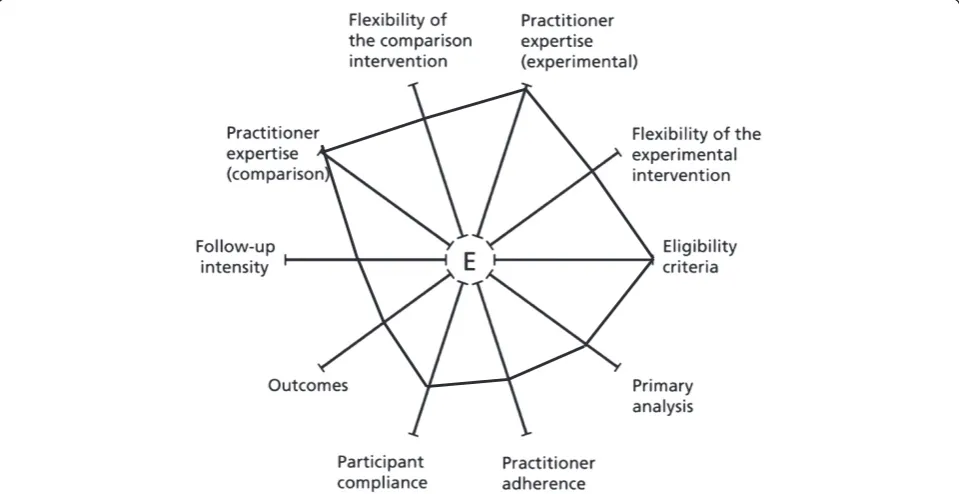
convenience sample of six endoscopy settings. Aim #1 will explore the relative effect of two strategies to implement patient-level EBPs on adoption and clinical quality outcomes. We will assess the change in level and trends of clinical quality outcomes (i.e., adequacy of bowel preparation, adenoma detection) using segmented regression analysis of interrupted time series data with two groups (intervention and delayed start). Aim #2 will examine the influence of organizational readiness to change on EBP implementation. We use a PRECIS diagram to reflect the extent to which each indicator of the study was pragmatic versus explanatory, revealing a largely pragmatic study.
(Continued on next page)
* Correspondence:[email protected]
1
Washington University Brown School of Social Work, 1 Brookings Dr., St. Louis, MO 63130, USA
Full list of author information is available at the end of the article
Implementation Science
© 2015 Ramsey et al. This is an Open Access article distributed under the terms of the Creative Commons Attribution License (http://creativecommons.org/licenses/by/4.0), which permits unrestricted use, distribution, and reproduction in any medium, provided the original work is properly credited. The Creative Commons Public Domain Dedication waiver (http://creativecommons.org/publicdomain/zero/1.0/) applies to the data made available in this article, unless otherwise stated.
(Continued from previous page)
Discussion:Implementation challenges have already motivated several adaptations to the original plan, reflecting the nature of implementation in real-world healthcare settings. The pragmatic study responds to the evolving needs of its healthcare partners and allows for flexibility in intervention delivery, thereby informing clinical decision-making in real-world settings. The current study will provide information aboutwhatworks (intervention effectiveness),for whomit works (influence of Medicaid versus other insurance), inwhich contextsit works (setting characteristics that influence implementation), andhowit works best (comparison of implementation strategies).
Keywords:Colonoscopy care, Evidence-based practice, Implementation strategies, Web-based, Toolkits, Pragmatic trial, PRECIS
Background
In 2002, more than 14 million colonoscopies were per-formed in the United States of America [1] and annual procedures are on the rise [2] due to increased physician recommendation [3, 4] and patient preferences for colon-oscopy, over fecal occult blood test or sigmoidoscopy for colorectal cancer screening [2]. Inadequate bowel prepar-ation and substantial variability in adenoma detection [5–7] from 7.5 to 33.3 % [6, 8] are critical colonoscopy quality issues [5]. To improve the quality of colonos-copy, the American Society for Gastrointestinal Endos-copy and the American College of Gastroenterology recommend that for asymptomatic patients more than 50 years of age, adenoma detection should be >30 % for men and >20 % for women [5, 9], and inadequate bowel preparation should be <15 % [10, 11]. Inadequate bowel preparation is a primary cause of low adenoma detec-tion [12] and can occur in over 30 % of patients, or 4.2 million persons per year [13]. In addition, inadequate bowel preparation increases complication rates [14] and cost of colonoscopy by 12–22 % [12]. Patients’age, sex, and comorbidities are associated with adequacy of bowel preparation [6]. However, Medicaid insurance is among the strongest risk factors for inadequate bowel preparation (odds ratios 1.846–8.707 compared to other insurance). Given that only 39 % of Medicaid-insured adults read at or above an 8th grade level, low-literacy education for bowel preparation might be particularly beneficial to the quality of colonoscopy for patients in-sured by Medicaid [15].
Despite these grim statistics, randomized controlled tri-als of two interventions (one clinical and one behavioral) hold promise for improving bowel preparation and aden-oma detection. Irrespective of the bowel preparation [16], split-dosing can improve the adequacy of bowel prepar-ation by 10 percentage points (p< 0.0001) and adenoma detection by six percentage points (p< 0.001) and is more highly accepted [17] by patients compared to taking a full dose on the same day [18–20]. In addition, an al-most fourfold improvement in adequacy of bowel prep-aration has been found among patients who receive low-literacy education compared to education written
for 6th grade or higher [21]. However, written instructions are more effective when combined with verbal instructions [18, 22], signaling the importance of confirming patient understanding of bowel preparation instructions. Repre-senting a third evidence-based practice (EBP) for improv-ing bowel preparation, teach-back is the practice of reviewing instructions with patients, ensuring that patients can repeat key points (i.e., teach back), and addressing any barriers to completion of instructions. Both low-literacy education and teach-back are in accordance with the Agency for Healthcare Research and Quality’s and the Na-tional Quality Council’s recommendation for using univer-sal precautions to improve health literacy in all patients.
Addressing barriers to implementation of EBPs for bowel preparation can help reduce the substantial vari-ation in colonoscopy outcomes found across healthcare settings. Several frameworks of implementation for in-terventions to improve health have emerged over the last decade [24, 25]. The Promoting Action on Research Im-plementation in Health Services (PARIHS) framework is among the most researched frameworks of implementa-tion [26]. There is evidence to suggest that key factors of the PARIHS framework—perceptions of the evidence, context, and facilitation—are critical precursors to suc-cessful implementation of complex changes in healthcare settings (Fig. 1) [27, 24]. Two aspects of scientific evi-dence, relative advantage of the new intervention over an existing intervention [27] and compatibility with existing values and past experiences, are strongly corlated with adoption of interventions [28, 29]. Context re-fers to organizational culture and leadership [29, 25]. These contextual factors affect staffs’capacity to facili-tate implementation by encouraging analytical engage-ment in quality improveengage-ment processes [30]. Facilitation refers to the structures and processes in place to support change in clinical practice [29, 31]. When implementa-tion efforts are interdependent across multiple levels of healthcare providers, as is expected in this study, context and facilitation are highly influenced by the structure and quality of the physician-staff relationship. As in-formed by leader-member exchange (LMX) theory, em-ployees (i.e., staff ) and supervisors (i.e., physicians) establish unique exchange relationships that contribute to employee work attitudes and performance (i.e., imple-mentation of evidence-based colonoscopy care) [32]. To-gether, evidence, context, and facilitation contribute to organizations’ readiness to successfully implement change [24, 31]. Published reports on complex change initiatives suggest a median implementation success rate of only 33 % [24] due to factors such as false start of an
intervention, staff resistance to implementation, or fail-ure to implement an intervention [27]. Understanding the structure and quality of relationships between the physicians and implementers of patient education in en-doscopy settings is important to developing strategies to increase adoption of EBPs. Our study 1) compares the effect of two implementation strategies on the adoption of EBPs to improve patient bowel preparation and 2) ex-amines whether physician-team level aspects of readi-ness to change are associated with colonoscopy quality, patient, and implementation outcomes to gain a better understanding of the nature of implementation of pre-colonoscopy patient interventions in endoscopy settings.
Present study
The Strategies to Improve Colonoscopy (STIC) study compares the effect of two implementation strategies, physician education alone versus physician education plus an implementation toolkit for staff (i.e., education, website, tailored patient education materials, and a brief consultation), on adoption of three EBPs to improve pre-procedure quality measures (patient experience, ad-equacy of bowel preparation) and intra-procedure qual-ity measures (cecal intubation, adenoma detection). The EBPs are as follows: 1) split-dosing of bowel preparation, 2) low-literacy education, and 3) teach-back. The goal of the physician education is to improve perceptions of the EBPs and to motivate change among physicians [33], whereas the goal of the implementation toolkit is to im-prove perceptions of the EBPs, motivate change, and en-able change among staff [30]. The toolkit will assist endoscopy staff to implement the three EBPs to improve education for bowel preparation for patients. The imple-mentation toolkit contains 1) staff education module, 2) a website containing tools to support staff in learning teach-back and providing low-literacy education mate-rials for patients, 3) patient education matemate-rials includ-ing a 5-month supply of printed patient education brochures tailored to their site and bowel preparation preferences, and a laminated pocket card and poster to remind and help staff to use teach-back, and 4) a brief consultation with study staff to determine how the EBPs can be integrated into the existing workflow. Education alone is a weak strategy to change physician behavior [34, 35], and there is limited evidence on the effect of implementation toolkits on staff implementation of EBPs. Therefore, the STIC study aims to test the effect of physician education versus physician education plus an implementation toolkit for staff on the implementa-tion and quality outcomes. In light of several adaptaimplementa-tions made to the implementation plan and the intentional flexibility in the delivery of the EBPs, this study utilizes a pragmatic study to balance external validity with demon-strated effectiveness of the implementation strategies.
Fig. 1Conceptual model of STIC study. Adapted from the Proctor et al. conceptual model of implementation research [36, 37]
Methods/Design
Strategic partners
Our strategic partners include physician champions from six endoscopy settings in the St. Louis area. All settings are affiliated with BJC HealthCare, one of the largest non-profit healthcare organizations in the United States of America with 13 hospitals. Despite the affiliation, each hospital is run as a separate organization. Quality im-provement initiatives are not routinely implemented across BJC. However, BJC has a Center for Clinical Excel-lence that provides decision support, analytic teams, and performance improvement services to affiliated hospitals, and they have a strong interest in learning how to imple-ment widespread change throughout BJC to improve qual-ity of care. Two of the settings are teaching hospitals where colonoscopies are performed by physicians from the university. At two other partnering hospitals, colonos-copies are performed by physicians in private practice.
Study overview
We adapted Proctor et al.’s conceptual model of implemen-tation evaluation to show the relationships among factors that influence variability in success of quality improvement of colonoscopy (Fig. 1) [36, 37]. Aim #1 will explore the relative effect of two strategies to implement patient-level EBPs on quality outcomes. Aim #2 will assess aspects of en-doscopy settings (i.e., perceptions of the evidence, the qual-ity and structure of the relationship between physician and implementers) that influence implementation, patient, and colonoscopy quality outcomes in endoscopy settings.
Aim #1 Compare the effect of physician education ver-sus physician education plus a staff implementation tool-kit on staff adoption of evidence-based practices and colonoscopy quality outcomes (i.e., adequacy of bowel preparation, adenoma detection).
To accomplish aim #1, we will compare change in colon-oscopy quality outcomes from before to after implementa-tion of intervenimplementa-tions for the two study groups: a) overall and b) Medicaid versus other insurance using administra-tive and medical record data with interrupted time series analysis.
Settings and subjects
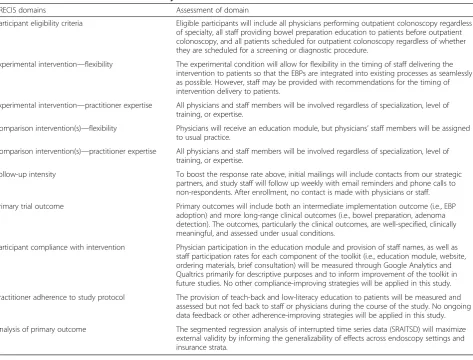
This study will be conducted with a convenience sample of six endoscopy settings. Our study is highly pragmatic with regard to eligibility. We will invite all 70 physicians that perform outpatient colonoscopy, regardless of their specialty (i.e., gastroenterology, surgery), and all of their staff that provide bowel preparation education to patients before outpatient colonoscopy. All patients scheduled for outpatient colonoscopy will be included, regardless of whether they are scheduled for a screening or diagnostic procedure. The PRECIS diagram illustrated in Fig. 2 re-flects the extent to which each indicator of the study was pragmatic versus explanatory. Table 1 explains the PRE-CIS diagram by providing an assessment of each PREPRE-CIS domain for this study [38]. Our strategic partners will fa-cilitate recruitment of physicians by co-signing recruit-ment letters and, if recruitrecruit-ment challenges occurs, by sending emails, calling physicians, and introducing the
study at department meetings. Based on previous experi-ence with physician recruitment to studies, we anticipate participation from at least 80 % of eligible physicians (70*0.80 = 56 physicians) and that each physician will have at least two staff that provide education for bowel prepar-ation (56*2 =n= 112 staff). To minimize the potential for diffusion of treatment to our comparison group, we will assign physicians’staff either to usual care or to receive the implementation toolkit. Physicians in both study groups will receive education. Assignment will be based on baseline adequacy of bowel preparation, balance of pa-tient units and structure of physician-staff relationship. Over 10,000 outpatient colonoscopies per year are per-formed in our sample. Overall, 23 % of patients are cov-ered by Medicaid. We anticipate inclusion of more than 10,000 patients in the study (20,000 over 2 years*15/ 24 months observation = 12,500*0.80 minimum physician participation = 10,000 total, >600 per month).
Delivery of patient interventions
We will allow for flexibility in the timing of staff deliver-ing the intervention to patients so that the EBPs are
integrated into existing processes as seamless as possible. However, when relevant during consultations (e.g., staff seeking advice), we will provide staff with recommenda-tions for the timing of intervention delivery to patients. We will recommend that clinical staff mail the instruc-tions for bowel preparation with an appointment reminder approximately 2 weeks prior to the procedure and call pa-tients to use the teach-back method 1 week prior to the procedure.
Implementation strategies
The primary aim of this study is to test the additive effect of physician education plus an implementation toolkit (compared to physician education alone) for endoscopy staff providing pre-colonoscopy bowel preparation educa-tion to patients on colonoscopy quality outcomes (i.e., adequacy of bowel preparation, adenoma detection). The implementation toolkit consists of four components: 1) staff education module including clinical goals for colonoscopy quality for adequacy of bowel preparation, adenoma detection, and cecal intubation, 2)staff support website, including information on the EBPs of split-dosing,
Table 1 PRECIS assessment of the STIC study
PRECIS domains Assessment of domain
Participant eligibility criteria Eligible participants will include all physicians performing outpatient colonoscopy regardless of specialty, all staff providing bowel preparation education to patients before outpatient colonoscopy, and all patients scheduled for outpatient colonoscopy regardless of whether they are scheduled for a screening or diagnostic procedure.
Experimental intervention—flexibility The experimental condition will allow for flexibility in the timing of staff delivering the intervention to patients so that the EBPs are integrated into existing processes as seamlessly as possible. However, staff may be provided with recommendations for the timing of intervention delivery to patients.
Experimental intervention—practitioner expertise All physicians and staff members will be involved regardless of specialization, level of training, or expertise.
Comparison intervention(s)—flexibility Physicians will receive an education module, but physicians’staff members will be assigned to usual practice.
Comparison intervention(s)—practitioner expertise All physicians and staff members will be involved regardless of specialization, level of training, or expertise.
Follow-up intensity To boost the response rate above, initial mailings will include contacts from our strategic partners, and study staff will follow up weekly with email reminders and phone calls to non-respondents. After enrollment, no contact is made with physicians or staff.
Primary trial outcome Primary outcomes will include both an intermediate implementation outcome (i.e., EBP adoption) and more long-range clinical outcomes (i.e., bowel preparation, adenoma detection). The outcomes, particularly the clinical outcomes, are well-specified, clinically meaningful, and assessed under usual conditions.
Participant compliance with intervention Physician participation in the education module and provision of staff names, as well as staff participation rates for each component of the toolkit (i.e., education module, website, ordering materials, brief consultation) will be measured through Google Analytics and Qualtrics primarily for descriptive purposes and to inform improvement of the toolkit in future studies. No other compliance-improving strategies will be applied in this study.
Practitioner adherence to study protocol The provision of teach-back and low-literacy education to patients will be measured and assessed but not fed back to staff or physicians during the course of the study. No ongoing data feedback or other adherence-improving strategies will be applied in this study.
Analysis of primary outcome The segmented regression analysis of interrupted time series data (SRAITSD) will maximize external validity by informing the generalizability of effects across endoscopy settings and insurance strata.
teach-back, and low-literacy education, 3)patient educa-tion materials, including a 5-month supply of printed pa-tient education brochures tailored to their practice and bowel preparation of their choice, plus a laminated pocket card and poster to remind and support staff to use teach-back, and 4)brief consultationwith study staff to identify how EBPs can be integrated into existing workflow. The comparison group will receive the physician education module, but not the staff implementation toolkit.
Measures
The Center for Clinical Excellence at BJC will obtain all data required for aim #1 from clinical and administrative systems at the endoscopy settings. The primary out-comes for aim #1 are adoption of EBPs, adequacy of bowel preparation, and adenoma detection. We will measure adoption of the EBPs (i.e., split-dosing, use of low-literacy education materials, teach-back) using a structured survey administered to staff and patients at baseline and follow-up. Sample questions on adoption will assess whether staff asked patients to “take half of the bowel preparation medication” (the day before/the morning of the test), with response options including
“No,” “Yes,” and “I don’t know/Not applicable.” Ques-tions will also be asked about whether or not staff pro-vided the recommended low-literacy paper instructions and whether or not staff asked patients to “repeat in-structions for bowel preparation in their own words.” Both clinical outcomes (adequacy of bowel preparation, adenoma detection) are standard elements of colonos-copy reports [10], and earlier research suggests that these data are routinely recorded in electronic records [39]. Bowel preparation is commonly described using the Aronchick scale (Kappa ICC 0.77) [40] as excellent, good, fair, or poor. Excellent or good ratings are consid-ered adequate [5, 39]. Excellent refers to no or minimal solid stool and only small amounts of clear fluid requir-ing suctionrequir-ing. Good refers to no or minimal solid stool with large amounts of clear fluid requiring suctioning. Fair refers to collections of semisolid debris that are cleared with difficulty. Poor refers to solid or semisolid debris that cannot be effectively cleared. We will also capture information about factors that are associated with adequacy of bowel preparation and adenoma detec-tion including characteristics of the patient (age, gender, type of insurance, co-morbid conditions (i.e., history of constipation, diabetes), body mass index, use of narcotic medications) [41], primary language [14], and procedure
(i.e., physician specialty, type of bowel preparation, indi-cation for procedure, date of procedure [8]).
Analysis
To assess change in clinical outcomes, we will use seg-mented regression analysis of interrupted time series data (SRAITSD). SRAITSD is an excellent analysis method for pragmatic studies because it minimizes threats to internal validity while maximizing external validity. For our appli-cation, individual patient outcomes are aggregated into proportion of adequate bowel preparation or proportion with adenoma detection in 2-week intervals, the time representing our unit of analysis. A sequence of the proportions over time generates time series data, with segments separated by two different interventions (i.e., comparative effectiveness and a replication study). The observation period for the time series analysis (Table 2) consists of three segments: baseline, comparative-effectiveness intervention, and replication study. Each segment is ~5 months in length. Two parameters de-fine each segment of a time series: level and trend (see Additional file 1 for additional information on the analytic model) [42]. This model can be fit and tested using SAS software. We have a sufficient number of observations per segment (10 observations) and individual patient out-comes per observation (>100 units) for robust estimates of change in level and trend for outcomes [42, 43].
To test intervention effects in each group, we first examine the plots of 2-week proportions over time. Then, we will fit the model separately in each group.β2 and β3 are the change in level and in trend of outcome, respectively, due to the comparative-effectiveness inter-vention.β4 andβ5, which only apply to group 1, are the change in level and in trend of outcome, respectively, due to the replication study beyond the comparative-effectiveness intervention. For each group, statistical sig-nificance of these changes can be tested using the ratios of these regression coefficients to their estimated stand-ard errors (pvalue). Because our study adopts a parallel design, we can also examine the statistical significance of the difference in these changes across groups by comput-ing the difference in the regression coefficients divided by a standard error of the coefficient difference (p value), which can be easily obtained from standard errors of the regression coefficients in two separate models. A statisti-cally significant (p< 0.05) difference in change in the level of outcome for group 1 versus group 2 will inform us about the comparative effectiveness of the physician
Table 2Interrupted time series study design—15-month observation period
Segments Baseline Comparative-effectiveness Replication
Group 1 O1 … O10 X1 O11 … O20 X1X2 O21 … O30
Group 2 O1 … O10 X1X2 O11 … … … O30
education versus the physician educationplus implemen-tation toolkit. Alternatively, a statistically significant (p< 0.05) difference in trends of outcomes for group 1 versus group 2 will inform us about potential threats to validity due to outside events or program drift that occurs when fidelity to implementation protocols weaken over time. Fi-nally, a statistically significant (p< 0.05) difference in the level of outcomes for group 1 in segment 2 versus group 1 in segment 3 will inform us about the generalizability of the comparative-effectiveness study effects across endos-copy settings. In order to examine modifying intervention effect by insurance status, we will stratify our study sub-jects by Medicaid versus other insurance status. Therefore, we will have 4 time series—two groups by two insurance strata. These series have the same time definition and the same segments, so the regression coefficients have the same interpretation. We will fit SRAITSD to each of the 4 time series and compare the relevant regression coeffi-cients between Medicaid versus other insurance.
To assess the extent to which the implementation toolkit influenced adoption of EBPs over time, we will model adop-tion at follow-up as a funcadop-tion of study group assignment, controlling for the baseline measure of adoption. We will assess adoption for each EBP (i.e., split-dosing, low-literacy education, teach-back) separately and use separate statis-tical models for adoption measured from the perspective of the following: 1) staff, 2) physicians, and 3) patients. The re-gression coefficient for study group assignment will quan-tify the effect of different approaches on the outcome.
Aim #2 Examine aspects of organizational readiness to change that facilitate or deter implementation of patient interventions to improve quality of colonoscopy
To accomplish aim #2, we will identify aspects of readi-ness to change (i.e., evidence, context, facilitation) associ-ated with implementation (i.e., fidelity, dose, cost), patient (i.e., experience, attendance, adherence), and colonoscopy quality outcomes (aim #1) using structured surveys.
Subjects
We will recruit physician teams and patient-level sub-jects for aim #2. The physician team will include physi-cians recruited for aim #1 and their staff who provide pre-colonoscopy education to patients. We anticipate recruiting a total of 56 physician teams (70 physicians total*0.80 participation) with at least two staff respon-dents per physician team (56*2 = 112 staff ). The study coordinator will send an email to physician team mem-bers including a link to an online survey and invitation to participate. The survey invitation will include a per-sonal online code that physician team members can use to complete the online survey. To boost the response rate above, initial mailings will include contacts from our strategic partners, and study staff will follow up
weekly with email reminders and phone calls to non-respondents.
Measures
We will measure both implementation and patient out-comes for aim #2. Implementation outout-comes include fidel-ity, dose, and cost. Fidelity will be measured as the percent of intervention activities delivered as planned with regard to receipt of the tailored patient education material that was provided to sites in the toolkit group. We will use methods published by Rex et al. to measure the cost of care [12]. The estimate will be based on the cost of the initial examination and assumptions about the first round of surveillance taking into consideration the ad-equacy of bowel preparation at the initial exam, clinical guidelines for surveillance, and Medicare charges for colonoscopy [10]. Patient outcomes include experience, attendance, and adherence. We will use an abbreviated version of the Ambulatory Care Experiences Survey (ACES), a validated survey that measures patients’ ex-perience with a specific physician’s service including perceptions of health promotion support (2 items), service access (4 items), care coordination (2 items), and office staff interactions (2 items) [44]. Patient experience will be a composite score of these scales measured as a con-tinuous variable. We will measure the context, facilitation, and evidence components of organizational readiness to change using an instrument administered to physician teams. Evidence will be measured using 8 items to assess the relative advantage and compatibility of the split-dose bowel preparation and low-literacy patient education in-terventions. Cronbach’s alpha for reliability of the evidence scale is 0.89 [45]. Sample items from this scale will ask physicians and staff their perceptions about whether using split-dose bowel preparation and low-literacy education with teach-back “is effective based on scientific evidence” and“takes into consideration the needs of patients.”These items will be measured on a Likert-type scale, with response options ranging from 1 = strongly disagree to 5 = strongly agree, and an “I don’t know/Not applicable” option. The context and facilitation components of organizational readiness to change will be assessed through a measure of quality of leader-member exchange (LMX) [32]. Staff will indicate the extent to which each item char-acterizes their exchange relationships with their supervi-sors. Sample items will include “How well does your supervisor understand your job problems and needs?”(1 = not at all, to 5 = fully) and “How would you characterize your working relationship with your supervisor?” (1 = ex-tremely ineffective, to 5 = exex-tremely effective).
Google Analytics measures
To understand how the staff support website is used, we will leverage data tracked and analyzed via Google
Analytics. As part of our pragmatic study, endoscopy staff members have flexibility in how they interact with the web-enhanced implementation toolkit. It is, there-fore, particularly important to use rigorous yet unobtru-sive measurements of staff website use. These data will serve as 1) an intervention check to assess whether or not staff members are using the website as intended and 2) an exploratory measure of website usability and useful-ness that will inform future versions of the web-enhanced implementation toolkit. We will assess aggregated data on a number of use indicators, including sessions (i.e., period of time a user is actively engaged with the website), unique users (i.e., first-time users during the selected date range), pages per session, average session duration, average time per page, and website flow (i.e., illustration of the range of website interaction patterns). These data will also help in-form qualitative assessment of the acceptability of the web-enhanced implementation toolkit. For instance, short session durations, low usage patterns for certain pages, and intended website flow behaviors will prompt targeted interview questions to expand on these initial quantitative findings.
Analysis
If we find group-level effects, then we will dichotomize the readiness to change variables at mid-point (high, low) for the sample and analyze readiness to change at the physician-team level. We will examine the distribution of responses to the patient-experience survey for respon-dents overall and stratified by attendance. Our primary analysis for aim #2 will examine associations between each implementation and patient outcome and readiness to change using linear or logistic generalized estimating equations, depending on the distribution of the outcome, adjusted for patient and procedure characteristics. All ana-lyses will be performed using SAS version 9.2. In addition, we will summarize data from aim #2 as six endoscopy setting case studies based on variability of clinical quality outcomes (aim #1) [46]. If we identify significant relation-ships between aspects of readiness to change and imple-mentation, patient, or colonoscopy quality outcomes, then we will develop plans to analyze the patterns of these relations in a subsequent study that will be powered to address questions about pathways to readiness to change.
Dissemination
We will disseminate study findings to scientific and prac-tice stakeholders through manuscripts, presentations, and lay reports. We will also consult with our strategic part-ners to create physician-level reports that present colonos-copy quality outcomes compared to peers and quality goals. We will also adapt the implementation toolkit based on information gathered from follow-up surveys to im-prove its usefulness for ongoing support after the study is
over and for use in a subsequent study that will examine wide dissemination of the toolkit to outpatient colonos-copy settings based on lessons learned.
Ethical approval
Our study was found to be in compliance with the Helsinki Declaration and was approved by the Institutional Review Board (IRB) at Washington University’s Human Research Protection Office (IRB ID#: 201401089).
Discussion
This study will uniquely test the effectiveness of two im-plementation strategies (physician education versus phys-ician education plus an implementation toolkit for staff) in delivering three bundled EBPs (split-dosing of bowel preparation, low-literacy education, and teach-back) within a pragmatic study. Implementation challenges have already motivated several adaptations to the original plan, reflecting the nature of implementation in real-world healthcare settings. The pragmatic study responds to the evolving needs of its healthcare partners and allows for flexibility in intervention delivery, thereby informing clin-ical decision-making in real-world settings. Additionally, this comparative-effectiveness study accelerates the trans-lation of research to practice by simultaneously informing stakeholders about the relative advantage of interventions and the strategic processes associated with successful implementation of the interventions. The current study will provide information about what works (effectiveness of the interventions), for whom it works (effectiveness for patients with Medicaid versus other insurance), in which contexts it works (aspects of the setting that influence implementation), and how it works best (physician edu-cation versus physician eduedu-cation plus staff training and support).
Consent
Written informed consent was obtained from participants for the publication of this report and any accompanying images.
Additional file
Additional file 1:Additional information on the analytic model for the segmented regression analysis of interrupted time series data.
Competing interests
The authors declare that they have no competing interests.
Authors’contributions
ATR contributed to the design and methods of the study and drafted the protocol manuscript. JM, BP, and JW contributed to the design and methods of the study and provided substantial input on the manuscript. YY contributed to the analytic plan of the study and provided substantial input on the manuscript. RL conceived the study, led the design and methodological plan of the study, and provided substantial input on the manuscript. All authors read and approved the final manuscript.
Acknowledgments
We acknowledge the National Cancer Institute (NCI) for funding this study under 5R21CA184282-02. Preparation of this manuscript was also supported in part by NIMH (T32MH019960) and NIDDK (P30DK052574).
Author details
1Washington University Brown School of Social Work, 1 Brookings Dr., St.
Louis, MO 63130, USA.2Washington University School of Medicine, 660 S. Euclid Ave, St. Louis, MO 63110, USA.
Received: 7 May 2015 Accepted: 2 June 2015
References
1. Seeff LC, Richards TB, Shapiro JA, Nadel MR, Manninen DL, Given LS, et al. How many endoscopies are performed for colorectal cancer screening? Results from CDC’s survey of endoscopic capacity. Gastroenterology. 2004;127(6):1670–7.
2. Oliver JS, Worley CB, DeCoster J, Palardy L, Kim G, Reddy A, et al. Disparities in colorectal cancer screening behaviors: implications for African American men. Gastroenterol Nurs. 2012;35(2):93–8. doi:10.1097/SGA.0b013e31824e2d7a.
3. Zapka J, Klabunde CN, Taplin S, Yuan G, Ransohoff D, Kobrin S. Screening colonoscopy in the US: attitudes and practices of primary care physicians. J Gen Intern Med. 2012;27(9):1150–8. doi:10.1007/s11606-012-2051-3. 4. Zapka JM, Klabunde CN, Arora NK, Yuan G, Smith JL, Kobrin SC.
Physicians’colorectal cancer screening discussion and recommendation patterns. Cancer Epidemiol Biomark Prev. 2011;20(3):509–21.
doi:10.1158/1055-9965.EPI-10-0749.
5. Rex DK, Petrini JL, Baron TH, Chak A, Cohen J, Deal SE, et al. Quality indicators for colonoscopy. Gastrointest Endosc. 2006;63(4 Suppl):S16–28. doi:10.1016/j.gie.2006.02.021.
6. Adler A, Wegscheider K, Lieberman D, Aminalai A, Aschenbeck J, Drossel R, et al. Factors determining the quality of screening colonoscopy: a prospective study on adenoma detection rates, from 12,134 examinations (Berlin colonoscopy project 3, BECOP-3). Gut. 2013;62(2):236–41. doi:10.1136/gutjnl-2011-300167.
7. Hewett DG, Kahi CJ, Rex DK. Does colonoscopy work? J Natl Compr Canc Netw. 2010;8(1):67–76.
8. de Jonge V, Nicolaas JS, Cahen DL, Moolenaar W, Rob JT, Tang TJ, et al. Quality evaluation of colonoscopy reporting and colonoscopy performance in daily clinical practice. Gastrointest Endosc. 2012;75(1):98–106.
9. Bjorkman DJ, Popp Jr JW. Measuring the quality of endoscopy. Am J Gastroenterol. 2006;101(4):864–5. doi:10.1111/j.1572-0241.2006.00667.x. 10. Lieberman D, Nadel M, Smith RA, Atkin W, Duggirala SB, Fletcher R, et al.
Standardized colonoscopy reporting and data system: report of the Quality
Assurance Task Group of the National Colorectal Cancer Roundtable. Gastrointest Endosc. 2007;65(6):757–66. doi:10.1016/j.gie.2006.12.055. 11. Rex DK, Schoenfeld PS, Cohen J, Pike IM, Adler DG, Fennerty MB, et al.
Quality indicators for colonoscopy. Gastrointest Endosc. 2015;81(1):31–53. doi:10.1016/j.gie.2014.07.058.
12. Rex DK, Imperiale TF, Latinovich DR, Bratcher LL. Impact of bowel preparation on efficiency and cost of colonoscopy. Am J Gastroenterol. 2002;97(7):1696–700. doi:10.1111/j.1572-0241.2002.05827.x.
13. Kazarian ES, Carreira FS, Toribara NW, Denberg TD. Colonoscopy completion in a large safety net health care system. Clin Gastroenterol Hepatol. 2008;6(4):438–42. doi:10.1016/j.cgh.2007.12.003.
14. Nguyen DL, Wieland M. Risk factors predictive of poor quality preparation during average risk colonoscopy screening: the importance of health literacy. J Gastrointestin Liver Dis. 2010;19(4):369–72.
15. Weiss BD, Blanchard JS, McGee DL, Hart G, Warren B, Burgoon M, et al. Illiteracy among Medicaid recipients and its relationship to health care costs. J Health Care Poor Underserved. 1994;5(2):99–111.
16. Cohen LB, Kastenberg DM, Mount DB, Safdi AV. Current issues in optimal bowel preparation: excerpts from a roundtable discussion among colon-cleansing experts. Gastroenterol Hepatol. 2009;5(11 Supplement):3. 17. Gurudu SR, Ramirez FC, Harrison ME, Leighton JA, Crowell MD. Increased
adenoma detection rate with system-wide implementation of a split-dose preparation for colonoscopy. Gastrointest Endosc. 2012;76(3):603–8. doi:10.1016/j.gie.2012.04.456.
18. Van Dongen M. Enhancing bowel preparation for colonoscopy: an integrative review. Gastroenterol Nurs. 2012;35(1):36–44. doi:10.1097/SGA.0b013e3182403413.
19. Romero RV, Mahadeva S. Factors influencing quality of bowel preparation for colonoscopy. World J Gastrointest Endosc. 2013;5(2):39–46.
doi:10.4253/wjge.v5.i2.39.
20. Rex DK, Katz PO, Bertiger G, Vanner S, Hookey LC, Alderfer V, et al. Split-dose administration of a dual-action, low-volume bowel cleanser for colonoscopy: the SEE CLEAR I study. Gastrointest Endosc. 2013;78(1):132–41. doi:10.1016/j.gie.2013.02.024.
21. Spiegel BM, Talley J, Shekelle P, Agarwal N, Snyder B, Bolus R, et al. Development and validation of a novel patient educational booklet to enhance colonoscopy preparation. Am J Gastroenterol. 2011;106(5):875–83. doi:10.1038/ajg.2011.75.
22. Rosenfeld G, Krygier D, Enns RA, Singham J, Wiesinger H, Bressler B. The impact of patient education on the quality of inpatient bowel preparation for colonoscopy. Can J Gastroenterol. 2010;24(9):543–6.
23. Elder NC, Jacobson CJ, Bolon SK, Fixler J, Pallerla H, Busick C, et al. Patterns of relating between physicians and medical assistants in small family medicine offices. Ann Fam Med. 2014;12(2):150–7.
24. Helfrich CD, Blevins D, Smith JL, Kelly PA, Hogan TP, Hagedorn H, et al. Predicting implementation from organizational readiness for change: a study protocol. Implement Sci. 2011;6:76. doi:10.1186/1748-5908-6-76. 25. Helfrich CD, Li YF, Sharp ND, Sales AE. Organizational readiness to change
assessment (ORCA): development of an instrument based on the Promoting Action on Research in Health Services (PARIHS) framework. Implement Sci. 2009;4:38. doi:10.1186/1748-5908-4-38.
26. Kitson AL, Rycroft-Malone J, Harvey G, McCormack B, Seers K, Titchen A. Evaluating the successful implementation of evidence into practice using the PARiHS framework: theoretical and practical challenges. Implement Sci. 2008;3:1. doi:10.1186/1748-5908-3-1.
27. Weiner BJ, Amick H, Lee SY. Conceptualization and measurement of organizational readiness for change: a review of the literature in health services research and other fields. Med Care Res Rev. 2008;65(4):379–436. doi:10.1177/1077558708317802.
28. Rogers E. Diffusion of innovations. 5th ed. New York, NY: The Free Press: A division of Simon & Schuster, Inc; 2003.
29. Helfrich CD, Damschroder LJ, Hagedorn HJ, Daggett GS, Sahay A, Ritchie M, et al. A critical synthesis of literature on the promoting action on research implementation in health services (PARIHS) framework. Implement Sci. 2010;5:82. doi:10.1186/1748-5908-5-82.
30. Aarons GA, Sommerfeld DH. Leadership, innovation climate, and attitudes toward evidence-based practice during a statewide implementation. J Am Acad Child Adolesc Psychiatry. 2012;51(4):423–31. doi:10.1016/j.jaac.2012.01.018. 31. Stetler CB, Damschroder LJ, Helfrich CD, Hagedorn HJ. A guide for applying
a revised version of the PARIHS framework for implementation. Implement Sci. 2011;6:99. doi:10.1186/1748-5908-6-99.
32. Janssen O, Van Yperen NW. Employees’goal orientations, the quality of leader-member exchange, and the outcomes of job performance and job satisfaction. Acad Manage J. 2004;47(3):368–84.
33. Michie S, van Stralen MM, West R. The behaviour change wheel: a new method for characterising and designing behaviour change interventions. Implement Sci. 2011;6(1):42.
34. Davis DA, Taylor-Vaisey A. Translating guidelines into practice: a systematic review of theoretic concepts, practical experience and research evidence in the adoption of clinical practice guidelines. Can Med Assoc J.
1997;157(4):408–16.
35. Ivers NM, Grimshaw JM, Jamtvedt G, Flottorp S, O’Brien MA, French SD, et al. Growing literature, stagnant science? Systematic review, meta-regression and cumulative analysis of audit and feedback interventions in health care. J Gen Intern Med. 2014;29(11):1534–41.
36. Proctor EK, Landsverk J, Aarons G, Chambers D, Glisson C, Mittman B. Implementation research in mental health services: an emerging science with conceptual, methodological, and training challenges. Adm Policy Ment Health. 2009;36(1):24–34.
37. Proctor E, Silmere H, Raghavan R, Hovmand P, Aarons G, Bunger A, et al. Outcomes for implementation research: conceptual distinctions, measurement challenges, and research agenda. Adm Policy Ment Health. 2010;38(2):65–76.
38. Thorpe KE, Zwarenstein M, Oxman AD, Treweek S, Furberg CD, Altman DG, et al. A pragmatic-explanatory continuum indicator summary (PRECIS): a tool to help trial designers. J Clin Epidemiol. 2009;62(5):464–75. 39. Chokshi RV, Hovis CE, Hollander T, Early DS, Wang JS. Prevalence of
missed adenomas in patients with inadequate bowel preparation on screening colonoscopy. Gastrointest Endosc. 2012;75(6):1197–203. doi:10.1016/j.gie.2012.01.005.
40. Rostom A, Jolicoeur E. Validation of a new scale for the assessment of bowel preparation quality. Gastrointest Endosc. 2004;59(4):482–6. 41. Lebwohl B, Wang TC, Neugut AI. Socioeconomic and other predictors of
colonoscopy preparation quality. Dig Dis Sci. 2010;55(7):2014–20. doi:10.1007/s10620-009-1079-7.
42. Wagner AK, Soumerai SB, Zhang F, Ross-Degnan D. Segmented regression analysis of interrupted time series studies in medication use research. J Clin Pharm Ther. 2002;27(4):299–309.
43. Shadish WR, Cook TD, Campbell DT. Experimental and quasi-experimental designs for generalized causal inference. Boston, MA: Houghton Mifflin Company; 2002.
44. Rodriguez HP, von Glahn T, Chang H, Rogers WH, Safran DG. Measuring patients’experiences with individual specialist physicians and their practices. Am J Med Qual. 2009;24:35–44.
45. Pankratz M, Hallfors D, Cho H. Measuring perceptions of innovation adoption: the diffusion of a federal drug prevention policy. Health Educ Res. 2002;17(3):315–26.
46. Kuzel AJ. Sampling in qualitative inquiry. In: Crabtree BFMW, editor. Doing Qualitative Research (2nd edition). 2nd ed. Thousand Oaks, CA: Sage Publications; 1999. p. 33–45.
47. Morse JM. Approaches to qualitative-quantitative methodological triangulation. Nurs Res. 1991;40(2):120–3.
48. Mitchell ES. Multiple triangulation: a methodology for nursing science. ANS Adv Nurs Sci. 1986;8(3):18–26.
49. Cohen DJ, Crabtree BF. Evaluative criteria for qualitative research in health care: controversies and recommendations. Ann Fam Med. 2008;6(4):331–9. doi:10.1370/afm.818.
50. Creswell JW, Klassen AC, Plano Clark VL, Clegg Smith K, Meissner HI. Best practices for mixed methods research in the health sciences. Bethesda, MD:
National Institution of Health, Research OoBaSS; 2011. Submit your next manuscript to BioMed Central
and take full advantage of:
• Convenient online submission
• Thorough peer review
• No space constraints or color figure charges
• Immediate publication on acceptance
• Inclusion in PubMed, CAS, Scopus and Google Scholar
• Research which is freely available for redistribution
![Fig. 1 Conceptual model of STIC study. Adapted from the Proctor et al.conceptual model of implementation research [36, 37]](https://thumb-us.123doks.com/thumbv2/123dok_us/695121.1565760/4.595.57.291.565.705/conceptual-model-stic-adapted-proctor-conceptual-implementation-research.webp)