ISSN (Online): 2320-9364, ISSN (Print): 2320-9356
www.ijres.org Volume 5 Issue 11 ǁ November. 2017 ǁ PP. 54-70
Improvement of Supply Chain Management By Using Various
Methods
*1
Ramendra Kumar Visen,
2Sharmistha Singh,
3Anurag Shrivastava
1(Mechanical , Sritm,India)
2(Mechanical, Bbdnitm,India)
3(SRITM, Mechanical, lucknow)Corresponding Author : *Ramendra Kumar Visen
ABSTRACT:
The Supply Chain Management is all about managing the “flow” of materials and informationamong respective departments in the industry. The key elements of Supply Chain are people and processes. In fact, the Supply Chain Management (SCM) is all about managing people and processes to ensure fulfillment of customer needs and desires. Whether it is procurement, production planning, manufacturing, inventory management, distribution, warehousing, waste management or logistics including (reverse), it is absolutely imperative that people and process focus help achieve customer results. Thus, if Supply Chain Management is all about people and processes, there cannot be any better improvement model than Total Quality Management (TQM) which focuses on people and processes. The integration of Total Quality Management principles with Supply Chain Management would be a significant enabler for sigma level improvements in Supply Chain Management performance Thus, with these factors, a general model is prepared in this thesis to understand the total production plan of any industry and improve the existing model of the industry by the application of various improvement methods such as Six Sigma, Lean Management, Taguchi’s Method, Quality Circle, Decision Theory, Method Study, Time Study, Market Survey and Operational Research methods to develop a model which gives optimal production in minimum time and increases the entire productivity of the organization with customer satisfaction.
Keywords:
About supply chain management,total quality management,taguchi method, six sigma,production---
Date of Submission: 24-11-2017 Date of acceptance: 09-12-2017
---I.
INTRODUCTION
The trends of supply chain management have increasingly influenced independent companies or autonomous divisions along the supply chain to move away from adversarial towards cooperative arrangements. These trends stem from several driving forces on both the demand and supply sides of the chain. There are two key driving forces on the demand side, namely globalisation and mass customisation. They provide plentiful opportunities to multinational firms to capitalise on economies of scale and scope in research, product development, and manufacturing. To tap these potential opportunities, they must deal with logistics problems such as long delivery lead times, outsourcing vendors who are located on a different side of the globe, complex transportation costs, high buffer stock, and complex transaction costs including tax and foreign exchange Supply Chain Management (SCM) defines all the activities undertaken by management including “design, maintenance and operation of supply chain processes for the satisfaction of end-user needs”.
Fig 1.1 : Figure of Supply Chain Management
II.
LITERATURE REVIEW
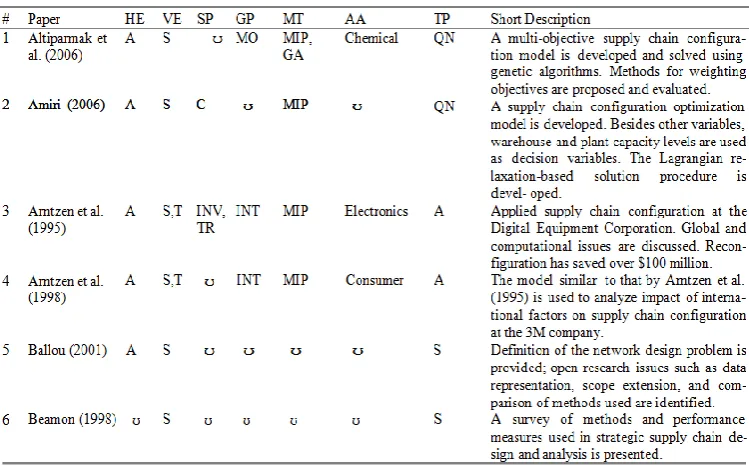
The objectives of this survey are to provide a comprehensive overview of the supply chain configuration problem, to identify main scientific and industrial focus areas, and to quantify the importance of different dimensions of the supply chain configuration problem. The state-of-the-art review focuses on papers dealing directly with the supply chain configuration. It covers conceptual, model-based, and applied papers to provide a comprehensive overview of different aspects of supply chain configuration. However, it maintains an industrial engineering and computational emphasis.
The main sources of information for the survey are the Scientific Citation Index and Scopus. The main keywords searched for are combinations of “supply chain” or “supply network” with “configuration,” “design,” and “structure.” Some papers found according to these keywords were omitted because they cover issues beyond the scope of definition used in this thesis. That often occurred with papers found by using the “design” key-word. Preconditions for including model-based papers in the review are consideration of at least two supply chain tiers and evaluation of multiple alternative supply chain configurations. The second precondition particularly affected inclusion of papers using simulation. Although several papers deal with issues related to strategic supply chain configuration, configuration is often treated as a fixed input parameter without considering any alternatives.
Identification Of Problems And Issues
The supply chain problem domain can be analysed at various levels of decomposition. At the first level, the overall problem of supply chain management consists of multiple sub-problems such as product design, network design, logistics management, customer service, and others. For purposes of further discussion, we define these problems as general and specific. Specific problems occur at the vertical direction of problem decomposition and deal with one particular issue, for instance, inventory management. General problems cross multiple specific problems horizontally. Dealing with these problems requires solving multiple specific problems, for instance, ensuring customer service involves solving problems from logistics and sales areas. A common problem encountered is that of “information sharing” among various members/partners in an enterprise. This often leads to misallocation of resources and impacts scarce resources such as capacity and inventory.
General problems:
1. Competitiveness: The house of supply chain management considers solving this problem as the ultimate goal
of supply chain management. To maintain competitiveness, a supply chain must outperform competing supply chains in at least some aspects such as prices, quality, or delivery responsiveness.
2. Customer service: It characterizes the ability of supply chains to meet customer requirements. Approaches to addressing this problem are as diverse as the customer requirements representing such aspects as cost, quality, and responsiveness.
3. Coordination: The coordination of decisions by each supply chain member is made with regard to the impact
these decisions will have on the performance of other supply chain members.
4. Collaboration: Joint activities performed by supply chain members to achieve common goals include product design and planning. In the case of collaborative product design, manufacturers, suppliers, and potential customers work together to design product that best suits market requirements and the capabilities of parties involved.
5. Integration: Addressing the integration problem enables customer service improvements, coordination, and collaboration. Information sharing is an important integration sub-problem.
6. Robustness: Supply chains operate in uncertain environments. Operations need to be planned and executed
with respect to this uncertainty Flexibility and agility. Customer requirements and operating environments are dynamically changing. Addressing flexibility and agility issues implies the ability of reactive and proactive response to change.
7. Risk/benefit sharing: Implemented supply chain decisions have different impacts on supply chain members.
Some of the units may assume larger risks and incur additional costs in the name of overall supply chain benefit. Risk and benefit sharing is essential for building trust and enforcing commitment among supply chain members. 8. Globalization: This presents both opportunities and challenges. Cost reduction and expansion in new markets have become possible. On the other hand, increasing competition, local regulations, and cultural adjustments cause additional difficulties.
9. Outsourcing: Firms focus on their core competencies to achieve a high level of competitiveness in specific areas while allocating supporting functions to partners.
10. Mass customization: Customers demand individualized products with similar cost and delivery time characteristics as those of standardized products
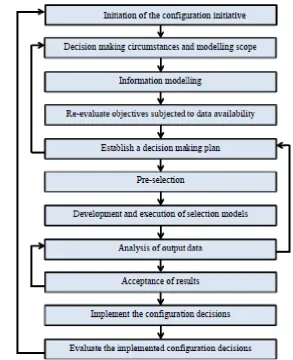
Fig 3.1 : Figure of schematic representation of the configuration methodology
Decision-Making Circumstances And Model Scope
Modeling scope describes configuration objectives, objects, parameters, costs involved and relevant constraints. The decision-making circumstances are also defined at this step. This information provides the basis for further formalization of the decision-making problem during the information modeling step. Values of the power structure attribute are similar to those of the broker. However, the decision-making situation is defined by a combination of power structure and broker. For instance, the supply chain configuration initiative is put forward by a broker representing the minority unit in the supply chain environment with the dominating unit. The specialized dominating unit power structure implies that a dominating unit concentrates just on its core competencies while the non-specialized dominating unit power structure implies that a dominating unit assumes various functions and different supply chain stages. For instance, many automotive Original Equipment Manufacturers (OEM's) are transforming themselves from a non-specialized dominating unit to a specialized dominating unit by out- sourcing the manufacturing of many components and abandoning plans to enter distribution.
Decision-making is greatly influenced by the initial state of the supply chain. The initial state influences collaborative decision-making processes because the level of trust among potential partners might vary substantially. This attribute also relates to the information availability attribute. In the case of a new supply chain, little information is available for appraisal of parameters characterizing links between supply chain units. The number of alternatives characterizes such factors as number of alternative suppliers, number of alternative locations for manufacturing and distribution facilities, and number of transportation modes. The number of alternatives substantially influences the selection of decision-making models. A large number of alternative suppliers usually require pre-selection of suppliers and a large number of alternative locations requires initial continuous search for optimal locations. This abundance of alternatives complicates data gathering and model-solving tasks. Thus, the product variety needs to be accounted for decision making as this aggregation of products is usually considered in the case of high product variety.
Table 3.2:Table of scope parameter and values
Fig 3.2: Figure of an example of processes in a reconfigurable Supply Chain
Selection
This is the key step of the methodology. It includes three major tasks of developing supply chain configuration models, validation of the models developed, and application of these models. Completion of these tasks depends upon the type of models used for selection purposes, such as statistical, knowledge-based, optimization, and simulation. Statistical models are mainly used for pre-selection purposes. However, they can be used for establishing the final supply chain configuration as well, if further refinement of results is not deemed possible or necessary. Availability of information is crucial to applicability of statistical models. Statistical models are designated for situations with a large number of alternatives and a few fixed units. Knowledge-based and optimization models still should perform better in this quadrant, although model development and solving, respectively, could be a major obstacle for applicability of these models
.
Fig 3.4: Figure of architecture of the Supply Chain configuration decision support system
III.
SOLUTION APPROACHES AND CASE STUDY
Information Modelling Approach
An understanding of information flows and processing functions is essential for any decision modeling effort. Traditionally, these information flows are described in terms that are specific to particular decision modeling techniques. Therefore, a more unified approach to representing information flows and their processing functions is required. Information modeling techniques long-used for information systems development is well-suited for these purposes. Supply chain management is an area where interactions between Decision Sciences and Information Systems Engineering are most profound. The main purpose of the model is to simplify development & maintenance complexity of large information systems by describing the system using less abstract concepts. The objective of this chapter is to describe the application of information modeling techniques for supply chain configuration purposes. The general approach is to use well approbated information modeling techniques that would enable potential model driven implementation of decision modeling components.
One of the main objectives of using information modeling is providing a relatively easily understandable representation of a problem. Several information modeling techniques are usually applied to obtain a comprehensive representation of the problem. The choice of techniques and modeling concepts depends upon objectives of the information modeling application.
INTEGRATION OF THE DECISION MAKING PROCESS WITH THE OVERALL
INFORMATION PROCESSING SYSTEM:
This is similar to the second objective, although a decisionFig4.1: Figure Of Interactions Between Information Systems Development And Decision Modeling
Process Modelling Approach
: Process modeling can be used to achieve all four of the stated informationmodeling application objectives. However, description and exploration of the decision-making problem is the most classical application objective. There are two important sources of information supporting the supply chain configuration process modeling.
1. Supply Chain Operations Reference (SCOR) model 2. ERP reference models
Case Study
The case studies for the implementation of supply chain management are discussed:
1. Heavy Engineering Industries – SCOOTERS INDIA LIMITED, Sarojani Nagar Lucknow- 226012
2. Medium Scale Industry – OMAX AUTOS LIMITED, Tata Motors Vendor Park, Chinhat Industrial area,
Deva Road, Lucknow-226019 (U.P.)
Scooters India Limited
Scooters India limited is a well-established company which produces 2-wheeler and 3-wheeler of world recognized standards and exported to even in developed countries like UK, USA etc. Backed by technical know-how from original lambretta company of Italy which had world right with brand lambretta .It had very good market in 2-wheeler and 3-wheeler marker in India during 1974-1980.
Due to certain upward souring of prices in the world market of petrol the market dwindle to the lowest level and this company had to divert its attention towards development of diesel vehicle to keep its leadership in 3-wheeler market segment.
In spite of R&D efforts of new version of vehicle diesel direct drive 3-wheeler having edge over all the 3-wheeler product on the road of India, Due to unavoidable circumstances its supply chain system is badly affected because of uncertain financial crises created by financial institution and internal resource collection. The relation between ancillary units and finished suppliers were not able to continuous supply of bought out, semi-finished, finished and raw material were not supply in planned and scheduled manner which badly effect the schedule of production. Due to which productivity was badly affected and intern its market got squeezed to the bottom level and thus with the broken supply chain system the organization was pushed to heavy losses and institution was referred to BIFR (Bureau of Industrial financial and rehabilitation).
Fig4.2: Figure of actual layout of Scooters India Limited
Fig4.3: Figure of modified layout of Scooters India Limited
Implementation Of Decision Making Components:
If decision making is to be performedroutinely, a software application needs to be developed. Information modeling is an essential part of almost every software development project. In this company we linked the industrial engineering department with other department .
Definition Of Links Between Decision-Modelling And Other Parts Of The Enterprise
Wide Information System:
Decision making models rely on data provided from other parts of theinformation system and can also use some functions provided by the supply chain information system. Information modeling is used to map data between components and identify available functions.
Integration Of The Decision Making Process With The Overall Information Processing
System:
This is similar to the second objective, although a decision-making component becomes an integralused in a similar manner as in the development of information systems. This approach is mainly applicable if decision- making components are implemented using general purpose programming languages.
Omax Autos Limited
OMAX AUTOS LIMITED is a company that does the automobile sheet metal works for TATA motors. One of the several product is 278231207123 (product code) and the material used is E-46 SS 4012A.
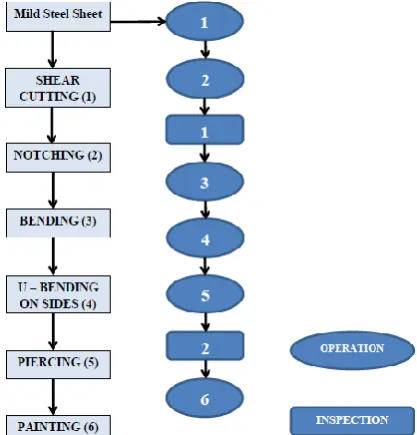
The operations for production are as follows:
1. First of all, cold-rolled hot-drawn Mild Steel sheet of thickness 7mm is cut from shearing press machine as per the drawing dimensions/specifications.
2. After shear cutting, notching is done with the help of a press machine
3. After notching, the Mild Steel sheet is processed forward for bending operation followed by U-bending on each side as per the drawing specifications.
4. After the completion of bending operation, the semi-finished item is moved forward for the piercing operation as per the drawing specifications.
5. This finished part from the raw material (mild steel sheet) after the above mentioned operations is painted in the paint shop.
6. The operations are performed as per the following diagram.
Fig4.4: Figure of flow process of product
Various Problem Areas Of The Industry
In this industry the setup of the machines are well and good but there are some things can be improved so that easy supply can be occur
Fig4.6: Figure of improper arrangement of raw material after first cutting
Fig4.7: Figure of root blockages due to raw material
Fig4.9: Figure of material handling problems
Fig4.10: Figure of modified layout of Omax Autos Limited
Improvement methods
Changes in existing model: There are several changes in existing model which we made in order to increase the productivity. They are as follows:
Industrial Engineering Department: In this department when volume of the products and types of the products increases many problems arises such as:
1. Machine problems 2. Tool problems 3. Workers problems
4. Material handling problems
Objectives of this department: To reduce these problems, we add the following methodologies to this department:
3. Arrange the machinery in proper order.
4. Reduce the time by using work study and method study. 5. Make good relation between workers and management.
6. Select the proper machines by proper machine selection by using existing technology.
Temporary inventory of raw materials: For the documentation of raw materials in this industry with this model a department is added for the proper documentation using CIM. 51
Advantages of this department:
1. In case of a new job order design, one can just search the previous samples and modify them as per the requirements to make a new one.
2. Reduces the design procedures. 3. Saves time.
4. Directly connects it to the design department to make designs and procedures
Mathematical Programming Approach
Mathematical programming is one of the most important techniques available for quantitative decision making. The general purpose of mathematical programming is finding an optimal solution for allocation of limited re- sources to perform competing activities. The optimality is defined with respect to important performance evaluation criteria, such as cost, time, and profit. Mathematical programming uses a compact mathematical model for describing the problem of concern. The solution is searched among all feasible alternatives. The search is executed in an intelligent manner, allowing the evaluation of problems with a large number of feasible solutions. Mathematical programming finds many applications in supply chain management, at all decision-making levels. It is also widely used for supply chain configuration purposes. Out of several classes of mathematical programming models, mixed-integer programming models are used most frequently. Other types of models, such as stochastic and multi-objective programming models, are also emerging to handle more complex supply chain configuration problems. Although these models are often more appropriate, computational complexity remains an important issue in the application of mathematical programming models for supply chain configuration. This chapter is aimed to describe application of mathematical programming for supply chain configuration. It is followed by a description of generic supply chain configuration mixed integer programming model. Computational approaches for solving problems of large size are also discussed along with typical modifications of the generic model, especially, concerning global factors.
Generic Formulation
Objective Function:
The objective function minimizes the total cost (TC). As indicated in the previous chapter, minimization of the total cost is considered more often than profit maximization. The total cost consists of production cost, materials purchasing and transportation cost, products transportation cost from plants to distribution centres, product handling and transportation cost from distribution centres to customers, and fixed costs for opening and operating plants and distribution centres.Equation (2) enforces the balance between products sold and demand. The balance between incoming and outgoing flows at distribution centres is defined by Equation (3). The balance between products produced and products shipped to distribution centres is enforced by Equation (4). Equation (5) restricts capacity availability. Availability of materials to produce products is checked by Equation (6) and Equation (7) states that product flows are allowed only through open distribution centres
Generic Formulation Of Scooters India Limited
IV.
CONCLUSION
Supply Chain is all about managing the “flow” of materials and information among the respective departments in industry. The key elements of the above dissertation are people and processes. In fact, Supply Chain Management (SCM) is all about managing people and processes to ensure fulfillment of customer needs and desires. Whether it is procurement, production planning, manufacturing, inventory management, distribution, warehousing, waste management or logistics including (reverse), it is absolutely imperative that people and process focus help achieve customer results. Thus, if SCM is all about people and processes, there cannot be any better improvement model than TQM which focuses on people and processes. The integration of TQM principles with SCM would be a significant enabler for sigma level improvements in SCM performance.
Initially, I prepared a general model by which we can understand the total production plan of Scooters India Limited. Due to certain upward sourcing of petrol prices in the world, the market dwindle to the lowest level and this company had to divert its attention towards development of diesel vehicle to keep its leadership in 3-wheeler market segment in order to survive the market-competition.
It had a very good market for 2-wheeler and 3-wheeler in India during 1974-1980. In spite of research &development efforts for the new version of diesel vehicle i.e. direct diesel drive, the 3-wheeler company failed to have an upper edge among its counter parts in the 3-wheeler manufacturing segment in India. Also, due to many unavoidable circumstances its supply chain system was badly affected. The main reason accounted for the bad loop was considered to be the uncertain financial crisis created by financial institution and internal resource collection. The relations between ancillary units and finished suppliers were not able to provide continuous supply for the bought outs. The semi-finished, finished and raw materials were not supplied in planned and scheduled manner which badly affected the schedule of production. This broken Supply Chain system led to the downfall of company’s productivity and in-turn its market got squeezed to the bottom level and incurred heavy losses. Hence, the institution was referred to the BIFR (Bureau of Industrial financial and rehabilitation). 66
Since, the organization is under the Ministry of Heavy Industries, so the tri-party committee was set-up and it decided to reinforce the organization with fresh financial assistant to restart the organization. After this financial assistance from the ministry, the company has improved day-by-day but there is still a lot of scope for the improvements in the industry, particularly in its supply chain system. So, with this improvement-scope in mind, we make some improvements in the existing model of the industry to improve the productivity which were discussed in the previous chapters as well as below:
Industrial Engineering Department: In this department, when volume and types (variety) of products increases many problems are created such as:
1. Machine problems 2. Tool problems 3. Workers problems
4. Material handling problems
Objectives of this department: To reduce these problems, we add the following methodologies to this department:
1. To fulfill all the machine requirements. 2. To make strategic planning.
3. To arrange the machinery in proper order.
4. To reduce the time by using work study and method study. 5. To make the good relation between workers and management.
6. To select the proper machines by proper machine selection by using existing technology.
Documentation of raw material: Documentation of the raw material is a necessity for any industry and so is here. Thus, for the proper documentation from the raw materials to the finished products we use Computer Integrated Manufacturing (CIM).
Advantages of this department:
1. In case of a new job order design, one can just search the previous samples and modify them as per the requirements to make a new one.
2. Reduces the design procedures. 3. Saves time.
4. Directly connects it to the design department to make designs and procedures.
volume for the required production. Also, the Scrap Store should always be connected with the Maintenance Department.
Implementation Of Decision Making Components
If decision making is to be performed routinely, a software application needs to be developed. Information modeling is an essential part of almost any software development project. In this company we made a system to make a proper link between industrial engineering departments to other department.
Definition Of Links Between Decision-Modelling And Other Parts Of The Enterprise Wide
Information System
Decision making models rely on data provided from other parts of the information system and can also use some functions provided by the supply chain information system. Information modeling is used to map data between components and identify available functions.
Integration Of The Decision Making Process With The Overall Information Processing System
This is similar to the second objective, although a decision-making component becomes an integral part of the supply chain information system in this case. The main problem is ensuring that changes made in both decision-making component and supply chain information system are properly represented in related components. In the case of implementation of decision-making components, information modeling methods are used in a similar manner as in the development of information systems. This approach is mainly applicable if decision- making components are implemented using general purpose programming languages. If a specialized decision-modeling environment and programming languages are used, application of information modeling is not common and the majority of available tools do not support such an approach. In the second model of my thesis, the case study of OMAX AUTOS LIMITED was discussed and the supply chain management methodologies were applied on it. In this industry, out of the several problems the problem of raw material management is the primary problem that needs to be taken special care of. Thus, for the solution of this problem we change the existing layout of the industry and made a temporary inventory of raw materials and documented them. By this initiative, proper flow of raw materials was managed effectively by the application of some important SCM techniques in order to improve the SCM model of Omax Autos Limited. The other information on supply work study, time study and motion study was also taken into account.Apart from the above mentioned applications of SCM methodologies, we use the Mathematical programming for the analysis in the model, which is one of the most prominent tool used in supply chain configuration, specifically for establishing the supply chain network, because of its ability to deal with spatial issues effectively. It presents the generic mixed integer-programming model used in configuration. Application of this model, computational issues, and modifications of the generic model are also discussed. It also briefly discusses non-linear, dynamic and stochastic programming formulations of the configuration problem so that analytical analysis can be done easily. After visiting and studying the model layout of both the industries discussed above, we came to a conclusion that if we use a proper model and information supply system with the SCM methodologies, then the cost of material and labor can be managed effectively as it plays an important role in the further responsibility of the industry’s cost management department.
REFERENCES
[1]. Gurdeep Singh And Nabsiah Abdul Wahid, 2014. “Supply Chain Risk Management: A Review”. International Journal Of Supply Chain Management [Ijscm], Issn: 2050-7399 (Online), 2051-3771 (Print) Vol.3, No. 3, September 2014.
[2]. Jayashankar M. Swaminathan And Sridhar R. Tayur, 2003. “Models For Supply Chains In E-Business”. Management Science © 2003 Informs Vol. 49, No. 10, October 2003, Pp. 1387-1406.
[3]. Arni Halldorsson, Herbert Kotzab, Juliana H. Mikkola And Tage Skjott-Larsen, 2007. “Complementary Theories To Supply Chain Management”. Supply Chain Management: An International Journal 12/4 (2007) 284–296 [Issn 1359-8546] Vol. 12, No. 4, 2007, 284–296.
[4]. Simon Croom, Pietro Romano And Mihalis Giannakis, 2000. “Supply Chain Management: An Analytical Framework For Critical Literature Review”. European Journal Of Purchasing & Supply Management 6 (2000) Vol. 67{83}.
[5]. Babbar And S. Prasad, 1998. “International Purchasing, Inventory Management And Logistics Research: An Assessment And Agenda”. International Journal Of Operations And Production Management Vol. 18 (1), 6-36, 1998.