Fast Fourier Transform-Based Steganalysis
of Covert Communications over Streaming
Media
Jinghui Peng, Shanyu Tang, Jia Li
Abstract—Steganalysis seeks to detect the presence of secret data embedded in cover objects, and there is an imminent demand to detect hidden messages in streaming media.
This paper shows how a new steganalysis algorithm based on Fast Fourier Transform
(FFT) can be used to detect the existence of secret data embedded in streaming media.
The proposed algorithm uses machine parameter characteristics and a network sniffer to
determine whether the Internet traffic contains streaming channels. The detected
streaming data is then transferred from the time domain to the frequency domain through
FFT. The distributions of power spectra in the frequency domain between original VoIP
streams and stego VoIP streams are compared in turn using t-test, achieving the p-value
of 7.5686E-176 which is below the threshold. Results indicate that the proposed
FFT-based steganalysis algorithm is effective in detecting the secret data embedded in VoIP
streaming media.1
Keywords—Steganalysis, Security, Fast Fourier Transform (FFT), Streaming media
I. INTRODUCTION
C
OVERT communication can be used to transmit confidential information on mobiletelecommunications. There are three main ways to implement it: secure channel,
encryption technology and information hiding. The secure channel is a private
communications path established by the communicating parties, which is not accessible
for others. It has high security but high cost and poor extensibility. Encryption
technology largely depends on the length of the key used for encryption and decryption.
As computer processing capabilities increase rapidly, it becomes less reliable to increase
system security by increasing the key length. Digital steganography has drawn people’s
attention in the field of information hiding. Based on encryption technology, it embeds
confidential information into seemingly innocuous transmissions, that is, the encrypted
confidential information is “invisible”, which is unlikely to be detected by attackers, thus
reducing the probability of confidential information being attacked. From the perspective
of information transmission security, steganography is one of the most advanced
S. Tang is with the School of Computing and Engineering, University of West London, London, UK (email: shanyu.tang@ uwl.ac.uk).
information hiding technologies.
A new generation of mobile telecommunications has emerged as a result of advances in
wireless communications and mobile terminal technology. The third generation of mobile
telecommunications technology (referred to as 3G) adopts the IMT-2000 international
standard, which offers voice service, higher data transfer rates (200 Kbps), broadband
multimedia communications, and wireless access to the Internet. The fourth generation of
mobile telecommunications (referred to as 4G), using OFDMA and MIMO (TD-LTE), is
designed to provide high-speed (100 Mbps) data transmission services such as VoIP and
IP Multimedia Subsystem (IMS), with a fibre broadband experience similar to a
fixed-line network. With the advent of the era of 3G and 4G, streaming media such as VoIP has
been widely used on the mobile Internet, providing a new dynamic cover object for
information hiding, especially steganography.
Streaming media steganography has attracted the attention of information security
experts all over the world. On the one hand, streaming media contain plenty of
redundancy, which can be used to hide confidential information. Compared with image,
audio, text and other multimedia files and network channels, streaming media are better
cover objects. On the other hand, the widespread use of streaming media on mobile
telecommunications networks has portrayed a variety of new mobile Internet services:
mobile instant messaging, mobile TV, mobile content sharing, mobile E-reading, mobile
social, mobile advertising and so on. Therefore, steganography in streaming media has
Steganalysis, the countermeasure technology of covert communication in the field of
information hiding, is developing rapidly with the strong demand of investigation into
covert communication. Steganographic technology is very likely to be exploited by
hostile agents, terrorists and evil forces. By hiding their secret information in streaming
media, they intend to avoid content scrutinising and tracing, and use it to organise crimes
and terrorist activities, and steal military and commercial information. It would endanger
national and public security, and undermine social stability. Therefore, with the rapid
development of mobile Internet, it is imminent to develop steganalysis technology for
mobile networks, especially steganalysis of streaming media steganography. At present,
research in streaming media steganalysis on the mobile Internet is at an early stage, and
few preliminary results have been published.
This study was aimed to devise a new steganalysis method for streaming media that are
ubiquitous on the mobile Internet and explore ways of universal and real-time detection
and countermeasure of steganography in streaming media on the mobile Internet.
II. RELATED WORK
Properly speaking, scientific research in steganalysis (information hiding detection) has
lapsed. Steganalysis is to detect the statistical differences between cover object and stego
object, such as histogram analysis for LSB steganography, chi-square analysis, RS
(semantic information layer analysis). Steganalysis of multimedia carriers includes
analysis of communications data between specific monitored objects, a large amount of
abnormal traffic, abnormal behaviour and status of users, etc., which is called pragmatic
information layer steganalysis. It makes a search easier by narrowing the scope of
specific analysis [1].
In recent years, the crime of using steganography in streaming media is increasing
gradually [2], so it is urgent to study steganalysis technology for streaming media.
Kraetzer and Dittmann first proposed a VoIP steganalysis method based on voice feature
vector Mel-Cepstrum [3]. Assuming that secret information is not fixedly and
continuously embedded into the voice carrier from the beginning to the end of the call, it
used χ2 statistical analysis to analyse the Mel feature of the hidden channel. Later, their
work was extended to VoIP steganalysis using Support Vector Machine (SVM) classifier
[4].Liu et al. also studied speech steganalysis based on time derivative spectrum and Mel
eigenvector [5] [6]. By calculating the distance between the speech signal and its
denoising residue, Takahasi and Lee use SVM classifier to detect the hidden information
[7]. This method could detect LSB, direct sequence spread spectrum (DSSS), frequency
hopping spread spectrum (FHSS) and echo steganography. Garateguy et al. put forward a
steganalysis method that relies on RTP packet classification and random projection
matrix [8]. It detected the VoIP packets with hidden information through knowing normal
data stream structure, and the disadvantage of this method is time-consuming.
Arackaparambil et al. presented a statistical distribution-based steganalysis method for
window seriously affect the success rate of detection. For low bit rate G.723.1 codec, Li
and Huang suggested a voice stream steganalysis algorithm based on Complementary
Neighbour Vertex - Quantization Index Modulation (CNV-QIM) [10], which used a
distributed histogram, state transition model and time-consuming SVM classifier. Li et al.
designed a mechanism for extracting the spread spectrum of hiding data from digital
media by using multi-carrier/signature iterated generalised least squares (M-IGLS) [11],
but it can only detect image hiding effectively. Janicki et al. studied the steganalysis
method of VoIP transcoding information [12], but this method was only valid for G.711
codec. Ren et al. pointed out that data hiding in AMR codec would increase the
probability of the same pulse position in the same track, and proposed a speech
steganalysis algorithm based on SVM classifier [13], but this method was effective only
when the embedding rate was more than 30%. Huang et al. proposed a steganalysis
method for VoIP streaming media using a sliding window mechanism to improve RS
algorithm [14]. Compared with RS algorithm, the detection time was reduced by 64%,
but the detection experiment used G.711 codec and VoIP data streams stored in a
database, so the computation was heavy. In addition, for G723.1 codec, they also
presented a steganalysis method based on quadratic statistics and regression analysis [15],
which can be used to analyse the compressed VoIP voice stream stored in the database
and estimate the size of embedded secret information.
Research in streaming media steganography is in its infancy, and the technical
approaches still follow image steganography. Most of the research results are limited to
of mobile Internet, it should take into account the time-varying of steganographic
capacity and the dynamic delay of, the mobile network, which is caused by the
time-variance characteristics of streaming media in the process of steganography, so that a
real-time covert communication over streaming media is hard to realise. Traditional
information theory and existing steganographic theory cannot describe the time-variance
characteristics of steganographic capacity and the dynamic delay characteristics of
mobile Internet. Therefore, it is imminent to establish a new theoretical model and
method for covert streaming media communications on the mobile Internet.
Steganalysis of streaming media steganography is far from mature. Some existing
steganalysis methods need classifiers such as SVM and conventional statistical analysis,
which are computationally intensive and time-consuming, thus not meeting the
requirements of real-time detection of streaming media steganography on the mobile
network. Other steganalysis methods are designed for a certain codec or rely on specific
steganographic algorithms, which mean they are not universal and difficult to put into
practical applications. Therefore, it is imperative to explore a new steganalysis method
for streaming media on the mobile Internet.
To take on the challenges mentioned above, we seek new ways to provide a universal
(independent of specific steganographic algorithm and codec) and real-time detection
scheme for steganalysis of streaming media on the mobile Internet, through identifying
code streams and examining speech cepstrum feature vectors of streaming media with
III. PROPOSED STEGANALYSIS ALGORITHM BASED ON FFT
Steganalysis is a technology used to detect whether steganography has used to hide
secret data in cover objects. The purpose of steganalysis is to identify disguised cover
objects containing secret data from ordinary cover objects with little or no knowledge of
steganographic algorithms. The simplest steganalysis method is to compare the message
or file to be tested with the known message or original file. The difference between the
stego object containing secret data and the original payload can be examined through
comparisons. Nowadays, steganalysis is becoming important for computer forensics, such
as tracking and scanning suspicious documents/audio clips /video clips to effectively
prevent criminal and terrorist activities, as well as stopping unauthorised data leakage to
protect data privacy. Due to the broad application of streaming media on the mobile
Internet, steganalysis of streaming media becomes more and more complex. To cope with
this challenge, a novel steganalysis method that uses speech cepstrum feature vectors and
Fast Fourier Transform (FFT) is devised in this paper to detect streaming media with
messages embedded.
The process of detecting whether secret data is hidden in the cover object is usually
modelled as a classification problem. The steganalysis algorithm receives the objects to
be tested as input, and classify them into original cover objects and stego objects with
data embedded. Steganalysis algorithms can be divided into two categories: Blind
possible covert channels without knowing steganography algorithms or whether
steganography exists. Targeted steganalysis is detection of a specific steganographic
algorithm. In both cases, steganalysis is modelled as a classification problem, and
techniques available include pattern recognition, classification and machine learning.
Classification and machine learning require high computational power and are
time-consuming, so the preferred method is pattern recognition. Because of the diversity of
streaming media codec and steganographic algorithm, this research focuses on blind
steganalysis of streaming media.
For mobile Internet, VoIP streaming media is the main reliable cover object for covert
communication. Through close analysis of VoIP streaming media signals, it is known that
the effective characteristic parameters of VoIP audio signals include pitch period, linear
prediction parameter (LPC), line spectrum pair parameter (LSP), Cepstrum Coefficient,
Perceptual Linear Predictive parameters (PLP) and WV spectrum parameters. The main
difficulty in pitch detection is that it is impossible to accurately determine each pitch
period, the beginning and ending positions in the voiced segment. The pitch period varies
from person to person and has a wide range of variation. Linear predictive parameters are
widely used in the fields of speech recognition, speech coding and speech synthesis.
Lattice method proposed by Makhoul is particularly effective. Line spectrum pair
parameter is another form of linear prediction parameter, which is closely related to the
spectral characteristics of speech signals, and its quantisation and interpolation
characteristics are superior to reflection coefficients. Perceptual Linear Predictive
easily interfered by the frequency response of the communication channel. WV spectrum
is a high-order, non-stationary signal spectrum, which involves complex time and
frequency domain transformation, and is related to the choice of frame length. There are
three kinds of cepstrum parameters for VoIP audio signals: LPCC parameters, MFCC
parameters, and ASCC parameters. The preliminary idea proposed in this paper is to
analyse the characteristic changes in three cepstrum parameters of VoIP streaming media
packets before and after data embedding, use FFT calculation to process the cepstrum
parameters by frequency transformation, and extract the characteristic threshold of the
cepstrum parameters, which is then used to detect the existence of steganography in
streaming media, so as to establish a general steganalysis technique for detecting stream
media steganography.
In this section, we identify the changes in three cepstrum parameters (LPCC
parameters, ASCC parameters and MFCC parameters) of VoIP audio signals caused by
steganography in streaming media on the mobile Internet. FFT is used to calculate the
characteristic threshold of cepstrum parameters of VoIP streaming media, and a general
steganalysis system that uses the cepstrum FFT feature vector to detect stego VoIP
streaming media packets with data embedded. The flow chat of the steganalysis system is
Fig.1 Steganalysis using speech Cepstrum FFT features
The Linear Predictive Cepstrum Coefficient (LPCC) is the representation of LPC in the
cepstrum domain. LPCC assumes that an audio signal is an autoregressive signal with
low computational complexity. It describes vowels well, but has poor ability to describe
consonants and has poor anti-noise performance.
The Accent Sensitive Cepstrum Coefficient (ASCC) is the energy spectrum of audio
signals calculated by the filter set method. Though a filter set consists of 16 filters, the
filter banks are divided into different frequencies according to the accent sensitive scale.
The ASCC coefficients are calculated using modified inverse discrete cosine transform.
Based on the auditory characteristics of the human ear, the Mel Frequency Cepstrum
Coefficient (MFCC) first converts a speech spectrum into a non-linear spectrum based on
Mel frequency standard, and then converts it into the cepstrum domain. MFCC has no
premise assumptions, good speech recognition ability and anti-noise ability, and requires
high computational complexity and accuracy. Preliminary research shows that MFCC has
better performance than LPCC in some language recognition. The filter set is used to
Hz follows an approximate linear relationship on the logarithmic frequency coordinates,
these filters are of equal width at the Mel frequency coordinates. The Mel cepstrum
coefficient Cmel (n) is affected by various factors such as the number, shape, distribution and energy spectrum of the filters in the filter set. It can be obtained by modified inverse
discrete cosine transform (IDCT):
(1)
In the formula, denotes the output energy of the kth filter, and p is the order of MFCC parameters.
The Fourier Transform is one of the most widely used tools for spectrum data analysis,
which was used to transform data from the time domain to the frequency domain (and
vice versa). The Fast Fourier Transform (FFT) algorithm was devised as a means of
reducing the number of computations involved in (and therefore the time required for)
finding regular discrete Fourier transforms. The frequency information can be
investigated by Fourier transformation of the autocorrelation function into the frequency
domain to give power spectral density functions. Autocorrelation measurements are used
to extract regularities or periodic deterministic data from noise. The autocorrelation
function (R(τ)) is defined as the product of the values of signal x(t) at time t and x(t+τ) at
€
R(τ)=limT→ ∞ 1
T −T/ 2x(t)x(t+τ)dt T/ 2
∫
(2)According to the Weiner-Khintchine theorem [16], the power spectral density functions
(G(f)) and the autocorrelation function (R(τ)) are related by Fourier transformation:
(3)
where j and ω are time parameters.
With the designed data processing system, 81920 points data in the time domain
(intensity- time) were acquired for audio streaming signals (8 seconds), and used to
determine the frequency by Fast Fourier Transform (FFT). The frequencies (f) of the
signals were computed with the follow equation [16]:
n = 0, 1, ... N-1 (4)
where N is the number of data points collected from the signal (here equal to 81920), Δt
the sampling period, and n is the data point number corresponding to the peaks of the
power spectral density in the frequency domain after FFT. The power spectral densities
IV. RESULTS AND DISCUSSION
In this study, we identify VoIP streaming media channel from mobile Internet
communication through machine parameter characteristics, then use a network sniffer to
analyse SIP data packets to determine the existence of VoIP channel; use FFT method to
transfer VoIP audio data from the time domain to the frequency domain, and then
compare the distribution of power spectra in the frequency domain between original VoIP
streams and VoIP streams to be tested, determining whether the current streaming media
packet contains any secret information; the next streaming media packet is detected in
turn to realise real-time detection of covert channel in mobile interconnected streaming
media.
The mute parameters and interrupt parameters in machine parameters are two unique
characteristics of streaming media signals passing through VoIP channel. This study
proposes to recognise VoIP channel by these two parameters. The signal level of natural
speech does not exhibit sharp changes in the convex and concave peaks (i.e., mute), but
after compression coding these peaks would be effected due to computational
inaccuracies and packet switching. If a signal level has a steep or falling point, the signal
contains a mute, and the presence of a mute indicates that it has passed through the VoIP
channel. Similarly, the natural voice level signal does not appear to suddenly stop in the
termination of voice occurs due to the influence of calculation error and packet loss. This
feature can be used to recognise the existence of VoIP streaming media channel.
In addition, through a network sniffer and analyser (such as Wireshark, WildPacket
original datagram capturer and analyser), VoIP media streams are analysed, protocol
decoding is carried out, and SIP data packets are examined to identify the existence of
VoIP streaming media channel. In the process of streaming media VoIP communication,
online measurement of various voice quality parameters, such as PESQ, MOS-PSQM,
PAMS, can also be used with network sniffers.
The main purpose of steganography is to convey secret information in seemingly
ordinary channels without causing any suspicion. The security performance of a
steganographic system is usually evaluated by statistical undetectability, which refers to
the difficulty of reliably determining the secret information embedded in the cover object.
In other words, a secure steganographic system means statistical undetectability.
In this study, a steganalysis method based on Fast Fourier Transform (FFT) is proposed
to detect the covert channel of mobile streaming media in real time. FFT is a method of
converting data from time domain to frequency domain. By comparing the distribution
differences of two groups of audio streams in the frequency domain, we recognise
whether they are different, and then determine whether the audio streams to be detected
In our experiments, steganalysis tests on VoIP communications were implemented on
original VoIP streams and VoIP Streams to be detected. We detected whether the VoIP
streams contain secret data by comparing the distribution of two groups of audio
streaming data in the frequency domain. The experimental results are discussed in detail
below.
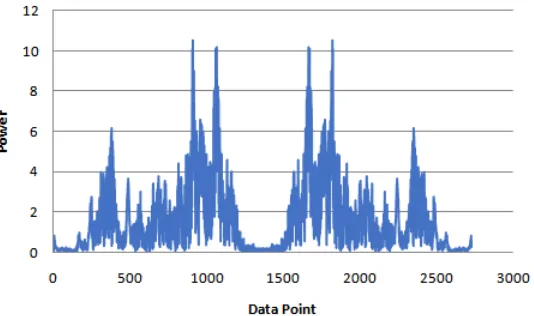
Fig. 2 Power spectra in frequency domain of the original VoIP streams
Figures 2 and 3 show the results of the audio samples of VoIP streams. The original
data was obtained from the experiments published in [17]. We collected data points from
the original VoIP streams and the VoIP streams to be detected, and then transferred them
from the time domain to the frequency domain by the proposed FFT algorithm. As the
figures show, their power spectra were similar, but the peaks changed significantly,
which indicates the possibility of secret information embedded in the VoIP streams to be
detected. We further tested the difference between them by t-test to determine whether
the streams to be detected contain secret information.
The test is a statistical hypothesis test in which the test statistic follows a Student's
t-distribution under the null hypothesis. It uses t-t-distribution theory to infer the probability
of difference occurrence, thereby comparing whether the difference between the two
means is significant.
A two-sample t-test is to test whether the difference between the means of two samples
and the population represented by them is significant. This test is used when it can be
assumed that the two distributions have the same variance. The t statistic used to test
whether the means are different can be calculated as follows:
€
t = X1−X2
(n1−1)S12
+(n2−1)S22 n1+n2−2 (
1
n1+
1
n2)
(5)
Usually, we used the default alpha of 0.05 as the threshold. When the calculated
p-value is below the threshold, then there is significant difference between the two samples.
Fig. 4 Results of T-test
Among the variables that appear in the results sheet (Figure 4), depending on our
experiment, the most important result is the p-value, highlighted in the figure in the green
cell. Since we chose the alpha value of 0.05, if the p-value is less than 0.05, then there is
a statistically significant difference between the means of two trials. In this experiment, p
= 7.5686E-176, which is < 0.05, so the difference is significant.
The experimental results show there is significant difference between the power spectra
in the frequency domain of the original VoIP streams and the VoIP stream to be detected,
indicating that the VoIP streams to be detected contain hidden data and our steganalysis
V. CONCLUSION
In the study, we proposed a FFT-based steganalysis algorithm for covert
communications over streaming media on the mobile Internet, thereby realising the
detection of secret data hidden in streaming media. The proposed steganalysis algorithm
can identify VoIP streaming media channel from mobile internet communications, and
determine whether the current streaming media packet contains secret information by
comparing the power spectra generated using FFT. Our experimental results have shown
that the proposed steganalysis algorithm is effective in detecting hidden message in
streaming media. Further studies should investigate how to accurately acquire the media
packets needed for detection when heavy packet lose occurs.
ACKNOWLEDGMENT
This work was supported in part by various industrial sponsors under Grant 28801.
REFERENCES
[1] X. Niu, Y. Yang (2006). Study on the Frame of Information Steganography and
[2] J. Lubacz, W. Mazurczyk, and K. Szczypiorski (2010). Voice over IP. IEEE
Spectrum, 40-45.
[3] C. Kraetzer, and J. Dittmann (Jan. 2007). Mel-Cepstrum based steganalysis for
VoIP-steganography. Proc. IS&T/SPIE Symposium on Electronic Imaging, Security,
Steganography, and Watermarking of Multimedia Contents VIII, San Jose, USA, pp.
650-661.
[4] C. Kraetzer, and J. Dittmann (2007). Pros and cons of Mel-Cepstrum based audio
steganalysis using SVM classification. Information Hiding, Springer Berlin
Heidelberg, 359-377.
[5] Q. Liu, A. H. Sung, and M. Qiao (2009). Temporal derivative-based spectrum and
mel-cepstrum audio steganalysis. IEEE Transactions on Information Forensics and
Security, 4(3), 359-368.
[6] Q. Liu, A. H. Sung, and M. Qiao (2011). Derivative-based audio steganalysis. ACM
Transactions on Multimedia Computing, Communications and Applications, 7(3),
1-19.
[7] T. Takahashi T, and W. Lee (2007). An assessment of VoIP covert channel threats.
Proc. 3rd Int Conf Security and Privacy in Communication Networks, Nice, France,
[8] G. Garateguy, G. Arce, and J. Pelaez (2011). Covert channel detection in VoIP
streams. Proc. 45th Annual Conference on Information Sciences and Systems,
Baltimore, Maryland, 1-6.
[9] C. Arackaparambil, G. Yan, S. Bratus, and A. Caglayan (2012). On tuning the knobs
of distribution-based methods for detecting VoIP covert channels. Proc. Hawaii
International Conference on System Sciences, Hawaii, 2431-2440.
[10] S. Li, H. Tao, and Y. Huang (2012). Detection of quantization index modulation
steganography in G. 723.1 bit stream based on quantization index sequence analysis.
Journal of Zhejiang University Science C, 13(8), 624-634.
[11] M. Li, M. K. Kulhandjian, D. A. Pados, S. N. Batalama, and M. J. Medley (2013).
Extracting spread-spectrum hidden data from digital media. IEEE Transactions on
Information Forensics and Security, 8(7) 1201-1210.
[12] A. Janicki, W. Mazurczyk, and K. Szczypiorski (2014). Steganalysis of transcoding
steganography. Ann. Telecommun., vol. 69, 449-460.
[13] Y. Ren, T. Cai, M. Tang, and L. Wang (2015) AMR steganalysis based on the
probability of same pulse position. IEEE Transactions on Information Forensics and
Security, 10(9), 1801-1811.
[14] Y. F. Huang, S. Tang, and Y. Zhang (2011). Detection of covert Voice over Internet
Protocol communications using sliding window-based steganalysis. IET
[15] Y. Huang, S. Tang, C. Bao, and Y. J. Yip (2011). Steganalysis of compressed speech
to detect covert Voice over Internet Protocol channels. IET Information Security, 5(1),
26-32.
[16] E.O. Brigham, (1988). The Fast Fourier Transform and Its Applications.
Prentice-Hall Inc., NJ, USA.
[17] S. Tang, Y. Jiang, L. Zhang, Z. Zhou, Audio steganography with AES for
real-time covert voice over Internet protocol communications, Science China Information