Canada
Part I: Archibald B. West, DC, Samuel H. West,
DC and Stephen E. West, DC:
The Founding Father, his Son and Grandson
Douglas M. Brown, DC*
* 281 Ridgewood Road, Toronto, ON M1C 2X3. Tel: 416-284-1168. Email: [email protected] © JCCA 2010.
Ce traité historique documente la contribution toujours intacte des West, une famille de chiropraticiens qui a prospéré au Canada pendant plus de 100 ans. La première partie révèle les origines, le développement et les carrières d’Archibald West, le fondateur de cette dynastie, son fi ls Samuel et son petit-fi ls Stephen. La deuxième partie, qui n’est pas encore prête à publier, plongera dans les vies de Samson, frère d’Archibald, et sa progéniture chiropraticienne, ainsi que d’un des neveux de Stephen et d’un autre membre de la famille de Frederick West.
(JCCA 2010; 54(3):187–199)
m o t s c l é s : West, chiropratique, Canada, généalogie This historical treatise documents the unbroken legacy of
the West family of chiropractors which has fl ourished in Canada for over 100 years. Part I, unearths the origins, development and careers of Archibald West, the founder of this dynasty, his son Samuel and grandson Stephen. Part II, not yet ready for publication, will delve into the lives of Archibald’s brother Samson and his chiropractic progeny, as well as a nephew of Stephen and another relative of Frederick West.
(JCCA 2010; 54(3):187–199)
k e y w o r d s: West, chiropractic, Canada, genealogy
Genealogy
The heritage of this prolifi c chiropractic family hails back to c. 1763, with the marriage of William West to Mary (maiden name unknown), in the town of Tonbridge, Kent County, England. William and Mary sired seven children. Their sixth, Henry, married Harriett Crowhurst who gave them 10 offspring. Several of their sons and daughters would leave Tonbridge for North America. In 1834, Ste-phen and his brother George were the fi rst of this tribe to immigrate to Canada. They probably landed at Québec City and made their way to Kingston, Ontario, where the brothers temporarily separated. George likely moved to the Niagara region of Upper Canada while Stephen, an ap-prenticed carpenter, stayed to work in the Kingston ship-yards and to marry a local woman, Mary Ann Thomas.
Stephen and Mary Ann spent the fi rst ten years of their marriage moving from place to place before settling down
the acreage he needed to support his family, which would grow to 12 children, Frederick and Mary Ann headed by ship to the District of Algoma, disembarking at Bruce Mines, where affordable crown land was opening up. The family “secured land in Plummer Township, where they cleared the land and struggled with mother nature for many years on their farm, eventually retiring to a little white frame house in Bruce Mines ... One advantage that Frederick’s children had over his father’s was the fact that a school was set up in time for the children. And like Ste-phen’s, most of them would also leave the home area. To-day their descendents are scattered all across Canada and
the United States.” [Notes and genealogical records col-lected by Jean MacDougall, great, great, granddaughter of the above Stephen West]
Archibald B. West, DC: The Founder
Background
clear pictures of the stormy voyage and its aftermath. “We came on the Manitoba and landed at the dock about mid-night, and a very dark night it was, so dark in fact that three of the cattle and a colt walked over the dock and were drowned.” The next day while moving their effects into a rented house, Archie fell off the side of the wagon “into a rut hole and the bind wheel came in on the side of my head making a gash about six inches long,” which his mother promptly sewed up with a needle and linen thread. “I remember quite distinctly the time when there was no communication with the outside world except by dog team for six months, and when the fi rst boat came in, it was a welcome sight, and most of the young folks and
lots of the older ones would go down to the dock and stay until the boat came in and unloaded whatever cargo was for our town and watch her go out again.”1
Archie left home at age 14, working at various jobs around the country before marrying Charlotte Marshall of Fort William, Ontario. In 1908 the couple returned to Sault Ste. Marie where Archie found employment as an engineer with an American fi rm, supervising the installa-tion of the large rolling engines at Algoma Steel. Archie wrenched his back and was off work at home with severe sciatica. Charlotte was pressing heat into his back with a towel and a fl at iron, when a close friend, originally from Michigan, dropped by. He told Archie that while visiting California he had consulted a chiropractor for a similar problem. American co-workers at Algoma Steel directed him to WJ Robbins, MD, DC, a medical doctor who had also graduated from the Palmer School of Chiropractic, in Davenport, Iowa, and was practicing in Plainwell, Mich-igan. Archie made the arduous trip to Michigan where he received the “magic touch” from Dr. Robbins. Archie was a “persuasive” man and convinced Robbins to fol-low him back to the Sault, where in late 1908 he “set up an offi ce in a new business block on the main street” and soon became so busy he sent for AE Lemon, BA, MD, an American medical colleague with chiropractic train-ing. [West SH. History of chiropractic in Canada, Jan. 19, 1970. Unpublished]
The Robbins Chiropractic Institute
BJ delivering his premier public address in Canada titled, “After tomorrow, what?”4
In that era boys and girls often started working in their early teens, so had little or no secondary school educa-tion. Not much is known of the entrance requirements for the Robbins Institute except they included the ability to read and write, good morals and a positive personal-ity.5 Archie’s chiropractic education was completed in six months. It cost $300 and presumably consisted of three months of home study and three months in residence. Vear, Lee and Keating have written that, “Since Robbins was an early graduate of the PSC, it is likely that he fol-lowed his alma mater’s pattern which by 1910 offered a maximum curriculum of barely nine months.”6
Isa L. Brundage, DC, was on the faculty of the RCI and also a member of the inaugural class, delivering the val-edictory address and preparing a “History of Our School,” for the occasion. She praises Dr. Robbins for his ability to combine his chiropractic skills with his experience as a medical doctor and surgeon, providing the students with valuable practical knowledge and ‘‘making this Institute a very desirable seat of learning.”7 Dr. Brundage lists the
subjects taught directly by Robbins as, symptoms and analysis, pathology, orthopedics, principles and practice of chiropractic, and the art of adjusting. Robbins wife, GS Robbins, DC, was another PSC graduate, and ‘‘had charge of Nerve Tracing and Palpation.” Dr. Lemon, “a regular practitioner in the State of Michigan,” provided in-struction in gynecology, obstetrics and venereal diseases. “Besides the subjects already mentioned, the course in-cluded Anatomy, Physiology, Embryology, Histology and Chiropractic Physiology.” The school operated a gratuit-ous daily clinic which afforded the students “splendid practice in palpation and adjusting, and also does a great deal of good, by benefi ting, free of charge, a large number of worthy persons.” The RCI closed in 1913 and Robbins moved back to the United States.
Archie’s Professional Career
Following Robbins’ departure, Archie took over his pa-tients and maintained a large practice at 221 Gloucester Street (where the building still stands) for over 25 years. He also made trips to outlying areas as far away as Sud-bury. His patients included farmers, loggers, fi shermen, steelworkers, businessmen, members of parliament, min-isters, lawyers, judges, teachers, and their families. Ac-cording to his son Sam, “Archie used Specifi c Upper Cervical technique only; no adjuncts or other therapeutic devices. At fi rst he used a wooden, two-piece adjusting table which could be left open in the middle, but later he imported the fi rst Zenith ‘Hylo’ tables manufactured in the United States.”
Every few years, Archie would travel to the PSC, in Davenport, Iowa, or the National College of Chiroprac-tic (NCC), Chicago Illinois, to further his education and in 1923, was presented with an honourary Specialist of Chiropractic (SpC) degree from NCC. In 1915, the hospi-tal in the Sault became the fi rst institution in the district to have X-ray facilities and in 1916, Archie followed suit by purchasing his own Fisher machine. Although advised to wear a lead apron, Archie didn’t comply, which may have been the cause of subsequent chest symptoms. He died of cancer, July 18, 1936.
The Canadian Chiropractic College
In 1913, when the RCI closed, John A. Henderson, DC, a 1911 Robbins graduate, purchased the Institute’s charter and in 1914, used it to help found the Canadian Chiro-Figure 2 Board of Directors of Chiropractic, 1982.
Front row L to R: Dr. Frederick Barnes, Vice-Chair, Dr. Stephen West, Chair, Dr. Kenneth Wood, Secretary-Treasurer. Back row L to R: Dr. Robert Wingfi eld,
practic College (CCC); probably assisted by Albert L. Price, DC, a 1912 RCI graduate.8 Dr. Henderson’s next move was to convince Ernst DuVal, DC, to return to Can-ada and become President of the CCC. Dr. DuVal was a PSC graduate c. 1911, who had served as Chair of Chiropractic Philosophy at both Palmer and the Universal Chiropractic Colleges. This ensured that CCC’s “orien-tation was straight and patterned after the PSC.” DuVal and fi ve of his family members so dominated the school’s teaching and administration, that it has occasionally been misnamed “The DuVal College of Chiropractic.” In 1922,
the CCC’s devotion to Palmer principles was recognized when it was listed among the six chiropractic colleges en-dorsed by the Universal Chiropractic Association in the United States (an organization created by BJ Palmer).
1923, the CCC 1923 Prospectus pictures it then at 2477– 2492 Dundas Street West.9 The Class photo taken in April that year, shows 39 students and seven faculty.
Samuel H. West, DC: The Founder’s Second of Six Children
“Sam,” was born November 14, 1900, in Port Arthur, On-tario, but moved with his family to the Sault, when he was two years old. As previously mentioned, he was just 10 when his father Archie, graduated from the RCI in 1910. In September 1918, at age 17, Sam was the youngest of the 20 students on campus, when he entered the CCC,
then located on Main Street, in Hamilton. The course dur-ation was 12 months, could be taken incrementally and cost him $600. Sam had attended for about three months before a fl u epidemic closed the school, along with all public buildings and theatres in the area. He remembered seeing death notices hung on the doorknobs of numerous homes. Sam returned for another three months of instruc-tion in the falls of 1919, 1920 and 1921. During the sum-mers he worked for his father Archie, at his offi ce in the Sault.
On March 9, 1921, Sam received a Doctor of Chiro-practic (DC) Diploma from the American College, De-partment of Chiropractic, Chicago, Illinois, and graduated from the CCC with a DC Diploma on December 19, the same year. The CCC also awarded him a SpC (Special-ist of Chiropractic) Diploma. SpC recipients were re-Figure 4 Canadian Chiropractic College, 2nd home –
Formerly Hamilton Library.
quired to sign a “Declaration,” pledging themselves “to abide implicitly by the spirit and letter of the Diploma. ... Neither will I use any adjunct, method or system, whether artifi cial or by hand, than that which is directly and specifi cally for the relieving of nerve impingement at the Neuroskeletal frame, strictly by hand, as taught at the Canadian Chiropractic College.” In 1921 the College contained 70 students.
Sam’s Professional Career
Following graduation, Sam began working for his fath-er in the Sault and was sent to Thessalon to look aftfath-er a judge, his family, and people in the surrounding area. Sam would travel to Thessalon by bus, work for a few days in the parlor of someone’s home, then go back to the Sault, to care for his patients there. After a while Sam moved his headquarters to Thessalon, from where he visited places such as Blind River, Bruce Mines, Iron Bridge and Dean Lake. In his main offi ce he had a power-driven Palmer-Evans table, but on the road he used a small, wooden, two-piece portable adjusting table, that fi t into a suitcase (David West keeps a similar table, owned by his grand-father Samson West, among his treasured memorabilia). After a year, Sam moved back to the Sault, opening his own offi ce at 478 Queen Street East.
Sam and Archie were both committed to continuing education. In 1924, father and son attended the eighth An-nual Palmer Chiropractic Lyceum, which attracted 7,000 people. This fi gure likely included the 4,000 students currently enrolled in the PSC, as well as chiropractors from North America and other parts of the world. Sam remembers David Palmer, BJ Palmer’s only son, deliv-ering his “maiden” speech titled, “What does that make me?” David’s talk recounted the accomplishments of his grandfather DD Palmer, the “discoverer” of chiropractic, his father BJ, known as its “developer,” and his mother Mabel, who among other things, served as the school’s anatomist, and ended with David’s musings on what his role might prove to be. At this Lyceum, Sam received a side-posture, upper cervical adjustment from BJ Palmer, which he described as “the same adjustment which my father gave me in 1910.” In 1928, Sam received certifi -cates for Post-Graduate Studies, Dissection and X-ray, from the National College of Chiropractic (NCC) and another certifi cate for a course in Physiotherapy, from the Chicago General Health Services. Panoramic photos
taken at PSC Lyceums in 1929, 1930 and 1935, show Sam and Archie present.
Sam was also interested in research and was selected to head the fi rst Canadian chiropractic research associa-tion. Although it dissolved after a few sessions, he was ap-pointed executive member for Canada of the International Chiropractic Biophysical Research Society, which held meetings in Denver, Chicago and Los Angeles and was headed by George Wilson, DC, former research director of the Spears Hospital.
Sam was 74 when interviewed by David West, DC, in 1974. At that time he was practicing afternoons and one hour most evenings. Formerly he had seen from 75 to 100 patients, fi ve days a week, often working weekends as well. In the beginning, fees were $1 per adjustment or $5 for six adjustments, however during the depression he often received eggs, chickens, fruit and vegetables, in lieu of money. Many had nothing to offer and were treated without charge. Sam would not ask for payment but sim-ply say, “God bless you.” He believed one of the reasons chiropractic prospered in that area was because its fi rst two practitioners, Robbins and Lemon, were MDs as well as DCs, muting medical opposition.
Sam and his wife, May Wright, traveled extensively, visiting chiropractors across Canada, from Victoria, BC to Charlottetown, PEI. They also journeyed into the United States as far south as Key West, Florida, and in Europe to Ireland, Scotland, Germany, Switzerland, Italy and France, where they attended the European Chiropractic convention in Paris. In 1957, Sam semi-retired, moving his offi ce from the Imperial Bank Building at Spring and Queen Streets, to 183 Albert Street, where he continued to practice until 1980. Sam died on January 4, 1986.
The Canadian Memorial Chiropractic College
Three of CMCC’s initial leaders were educated at the RCI or CCC. As noted, Dr. Henderson graduated from the RCI in 1911, assisted in starting the CCC in 1914, can-vassed Ontario chiropractors for donations and in 1945 became CMCC’s fi rst Registrar and Business Adminis-trator. Samuel F. Sommacal, DC, lived in Archie West’s home during his training in the Sault and graduated from the RCI in 1912. Dr. Sommacal worked on CMCC’s Or-ganization Committee and was its third President from 1947–51. John S. Clubine, DC, has been called the “Fath-er of CMCC.” Graduating from the CCC in 1919, he co-founded the Toronto Chiropractic College in 1920, and served as its President until it closed in 1926. Dr. Clubine
became CMCC’s fi rst Dean and President in 1945, doing “more than any other individual, in services and fi nancial donations in the early years, towards the establishment of CMCC.”10
Stephen E. West, DC: A Grandson of the Founder
Samuel West married May Wright, in the Sault, on Sep-tember 21, 1927. Their fi rst child Stephen, was born, on June 24, 1928, followed by their daughter, Phyllis, Feb-ruary 12, 1931. During childhood, Stephen seldom saw his father, because Sam worked almost every day of the week and made house calls at night. This made Stephen wary of emulating his father. A precocious lad, Stephen Figure 6 Dr. John A. Clubine, c. 1925.
Figure 7 May and Sam West, 50th Wedding
skipped two grades in primary school. By 1944, age 16, he was in his last year of high school and a member of the drama club. On Friday evenings club members would read scripts they had prepared, over CJIC Radio, Sault Ste. Marie. Following Stephen’s high school graduation, this expanded into a part-time job until 1945, when he was replaced by a returning World War II veteran who had previously held this position.
Shortly after his departure from CJIC he was named News Editor at CKPR in Fort William and was developing a promising career until his father came to town to en-courage him to enroll in the recently opened CMCC in Toronto. Stephen said that he was “quite happy following his own path,” but his father asked him to try college life for a few months to see if he liked it. Stephen relented, somewhat reluctantly, and began classes in September 1946. One day he was relaxing in his room in the CMCC dormitory, on the third fl oor of the College, listening to CHUM Radio, when the idea occurred that he could do a much better job than the present announcer and sent a letter of application to Larry Mann, the Station Manager.
Stephen worked at CHUM for the next three years, after classes, on weekends and holidays. He performed with future stars such as Monte Hall, Phil Stone and John-ny Lombardi and created his own “Stephen West Show,” featuring music and celebrity interviews. This was an ex-citing era for Stephen, so when he graduated in 1950 it
was diffi cult for him to decide whether to stay with broad-casting or go back to the Sault to practice with his fath-er. Returning to the Sault, he soon realized he had made the right decision, although he was doing the nightly 10 o’clock news on CJIC-TV until 1951, when his practice became too busy for him to continue. Stephen remained in the Queen Street offi ce until 1966, then moved into a new clinic constructed at 66 March Street, through the collaborative efforts of Stephen and his wife Daphne, whom he had married in 1951. [Stephen West interview by Brown, May 22, 2008]
Stephen’s Professional Career
In the early 1950s the Canadian Council of Chiropractic Roentgenology (CCCR) was formed by Howard What-mough, DC, Donald MacMillan, DC, William Sundy, DC, and Colin Greenshields, DC, to fi ll a need for more so-phisticated chiropractic X-ray studies and Stephen became a founding member. The CCCR began holding seminars which became the largest conventions in Canadian chiro-practic. Stephen served as Publicity Director and later President of its Ontario division and was instrumental in having CCCR Diplomate Status recognized by the CCA.11
The Ontario Government had created the Board of Dir-ectors of Chiropractic (BDC) in 1952. It was chiroprac-tic’s fi rst independent regulatory body in this province. Stephen was elected to the Ontario Chiropractic Asso-ciation (OCA) Board in 1964 and in 1966 was appointed as a member to the BDC. This year the Ontario Govern-ment formed the Committee on the Healing Arts (CHA) to study all Ontario health care providers and report on how legislation affecting the healing arts could be pro-tected and improved. July 1, 1970, chiropractic services were included under the Ontario Health Insurance Plan (OHIP), thanks primarily to concerted lobbying by the OCA, and the support of Thomas Wells, MPP, the current Minister of Health. This added a new dimension to BDC responsibilities as it struggled to cooperate with OHIP in the regulation and adjudication of chiropractic claims for approved services.
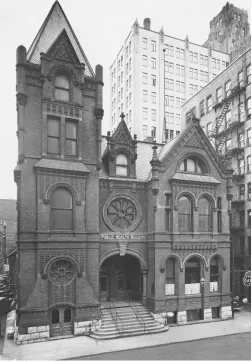
Stephen became Chair of the BDC in 1974, when the fi rst six parts of the Health Disciplines Act (HDA), covering dentistry, medicine, nursing, optometry and pharmacy, were passed into legislation. The Ministry of Health (MOH) then struck a committee to make recom-mendations for professions not yet included; specifi cally, Figure 8 Robbins Chiropractic Institute, 2nd home,
chiropractors, optometrists, chiropodists and osteopaths (COCO). In 1975 a Chiropractic Liaison group was es-tablished to meet with senior MOH offi cials to discuss the chiropractic part of the HDA. From then until he stepped down as Chair in 1984, Stephen and Frederick Barnes, DC, BDC Vice-Chair 1976–84, Chair 1984–86, “worked long and hard with OCA reps Drs. Leo Rosenberg and Lloyd Taylor, and CMCC reps Drs. Donald Sutherland and Herbert Vear, to negotiate with the Ministry of Health for new chiropractic legislation.” [Interview, Stephen
Brown, Jan. 29, 2009]. Robert Wingfi eld, DC, BDC Dir-ector 1980–88, Chair 1986–88, recalls that, “Many meet-ings were held over a span of 18 years. It was like a great waltz. The government played the music while we danced on and on. We were getting nowhere but didn’t want to stop the discussions.” [Robert Wingfi eld interview by Brown, July 10, 2008]
Stephen stepped down as BDC Chair in 1984, and was invited to join the Board’s Education Committee, headed by Bertram L. Brandon, DC. This Committee evaluated graduates applying for licensure in Ontario, primarily on their clinical skills. Initially four candidates at a time were brought into a CMCC classroom, to sit around a table and answer questions for about 40 minutes. Stephen can’t remember anyone failing this oral exam. In 1985 a more comprehensive system was created and Dr. Wing-fi eld joined Dr. Brandon and Stephen on the Commit-tee. These exams were held fi rst at CMCC, then Osgood Hall, and fi nally the Mount Sinai Hospital Rehabilitation Centre. The system involved testing nine candidates at a time, but in separate rooms, by nine examiners and nine patient-actors who simulated the same specifi c condition. Each room contained video-tape equipment and an ad-justing table and the candidate was given a scenario to be played by the patient-actor. The candidate was expected to conduct a consultation and examination, and after ar-riving at a diagnosis to simulate an adjustment and/or provide appropriate advice regarding, nutrition, exercise,
home remedies and future treatment. All proceedings were video-taped and the candidates graded by the at-tending examiners. Afterward, the examiners themselves were evaluated on the appropriateness of their fi ndings. Although more thorough, the system was complicated, time-consuming and expensive.
By 1988 Stephen believed passage of the Regulated Health Professions Act (RHPA) was imminent. “The inad-equacies of the outdated Drugless Practitioners Act have made it diffi cult for past Boards of Directors of Chiro-practic to effectively regulate chiroChiro-practic in the best interest of the public and the profession. After 15 years of negotiation; the past fi ve with the HPLR, it appears that resolution of major issues has been accomplished and should result in chiropractic joining the legislative mainstream in health care in this province.”12 However, it wasn’t until November 25, 1991, that the RHPA, con-taining the Chiropractic Act, was proclaimed. This gave Ontario chiropractors a defi ned scope of practice that in-cluded diagnosis and the right to use the title “doctor.”13 Stephen knew that once chiropractic was included within the RHPA, the BDC as it existed, would be replaced by a new body. That occurred in March 1994, when the Col-lege of Chiropractors of Ontario (CCO) held its inaugural meeting. Finally, in 1999 the Education Committee was disbanded, ending Stephen’s 33 year involvement with this regulatory body. On October 29 that year, Stephen sold his clinic and retired from practice.
Refl ections
Stephen understood that, “Our biggest problems with the BDC revolved around inconsistencies in the DPA. The laws were vague, not specifi c and the Ministry of Health lacked enforcement. We were pretty well on our own and had to make up regulations as we went along. Fortunately our lawyers, John Pallett and Donald Brown, provided ex-cellent assistance with appeals to our decisions.” Donald J. Brown, QC, admired Stephen’s capabilities. “I wanted to write you personally to indicate how impressed I have been with your handling of the hearings, your knowledge of proper procedure and your obvious concern as a health care professional. The Province of Ontario and your pro-fession have indeed been well served by your time on the Board.” [Letter, DJ Brown to West, Feb. 10, 1984]
Barnes found that, “Steve was a conscientious worker, witty and pleasant to be with during these contentious, Figure 10 Stephen presents Samuel West Life
occasionally abusive deliberations. Our biggest problem was protecting what we had while developing the new act. The scope the Ministry of Health repeatedly offered us was inappropriate to our needs, however we were ada-mant and refused to back down.”
Wingfi eld’s early impressions of Stephen go back prior to 1970, when he was on the OCA Board. He remembers Stephen was the spokesman for the BDC, even before he was Chair and led all the meetings at Queen’s Park and the resource sessions from 1966, as Vice-Chair of the BDC until he stepped down as Chair in 1984. “Steve was always thoroughly prepared, had a grasp of the issues and recognized the necessity of developing a scope of practice for chiropractic under the new legislation.” Because joint meetings of our professional organizations were “multi-faceted, there was diffi culty developing consensus in order to present a unifi ed front to government representa-tives. Steve was able to express his views in a logical, reasonable, non-confrontational manner. He understood what was appropriate and achievable and had a degree of erudition greater than many. Steve’s well-grounded sense of fairness and duty enabled him to stand fi rmly for what he believed would be in the best interests of the public and the profession.”
James W. Ellison, DC, was appointed Secretary-Treas-urer of the BDC in 1952, remaining in that capacity until his retirement in 1980. Dr. Ellison writes: “I have been struggling to fi nd the words that will express to you my feelings about your chairmanship of the BDC ... You have been the best chairman this Board has ever had, with your skills in communicating, your reliability, your depend-ability and your honesty in addressing the problems and situations that seem to come in an unending stream to the Board.” [Letter, Ellison to West, Jan. 22, 1984]
In 1995 Stephen was asked to describe his greatest pro-fessional satisfaction. “He thought for a while and said that after attending the (1995) centennial celebrations he felt that our policies and our future are in good hands and that he was proud to have been a part of the process.”
Recognition
On December 9, 1995, the OCA named Dr. Stephen E. West, Chiropractor of the Year. In presenting the award, Silvano A. Mior, DC, declared: “It is befi tting that in this, our Centennial Year, we acknowledge an individual who has made a tremendous contribution to this profession.”
Dr. Mior reminded us that Dr. West had been intimately involved with chiropractic organizations since his gradua-tion in 1950, and 45 years later, “at the young age of 67, continues to practice four days a week ... and continues to be committed to excellence.”14 In 2000, CMCC made Stephen a Life Member and in 2006 the OCA presented him with an Honorary Membership.
Wingfi eld has described Stephen “as a natural com-municator with a fl air for humour whose skills had been honed while working as a radio broadcaster.” October 1, 1972, Stephen combined this talent with his personal knowledge of the origins of chiropractic in Ontario, while presenting Life Memberships to 12 Ontario pioneers who had been in practice 40 years or more and were able to attend the OCA’s annual meeting.15
Stephen mentioned “the political, professional and societal ostracism the early chiropractors faced” while introducing “a new philosophy to this Province – a phil-osophy which brought health to thousands of people who had no alternative until that time.”
Then he briefl y reviewed the history of chiropractic in Ontario, citing some of the giants of our profession, and reminding us of the gratitude we owe our predecessors, not just for the indignities they endured in the past, but for “the position of respect and increasing infl uence in the health delivery system” we enjoy today, because of their devotion.
Stephen closed with these thoughts: “For those who are alive and who do remain here to-day, might I say to you that in no way are these certifi cates to be considered a reward. The accomplishments of four or more decades in practice, the contributions to the public and the pro-fession, and hopefully your satisfaction in the legacy you have helped to foster are reward enough. And so these certifi cates are only in a small way evidence of the OCA’s recognition of a span of service and dedication and sacri-fi ce that few, if any of us, can ever hope to match.”
Fittingly, the last certifi cate Stephen handed out that day was to his father, Samuel H. West.
References
1 West AB. Letter to JB Dobie, Esq. The Bruce Mines Spectator, Jan 1, 1924.
2 Sault Ste. Marie City Directory, 1910–1911. 3 Sault Ste. Marie City Directory, 1911–1912.
5 Ibid.
6 Vear HJ, Lee HK, Keating JC. Early Canadian chiropractic colleges. Chiropractic History. 1997; 17(2):60.
7 Brundage IL. Memory lane. 1944. Self published, 1944: 8. CMCC Archives.
8 Vear HJ, Lee HK, Keating J. Early colleges. Chiropractic History. 1997; 17(2):61.
9 Canadian Chiropractic College 1923 Prospectus. CMCC Archives.
10 HK Lee. History of manipulation. JCCA, 1981; 25(2):75. 11 CCA News 1996, 18(4):13.
12 BDC Information for Ontario Chiropractors, December 1988: 1(2):2.
13 Chiropractic Self-Regulation Timeline. CCO, June 2000. 14 CCA News 1996, 18(4):13.
15 Life members honoured. JCCA. 1972; 16(4):12–14.
Help us reach our goals! In 2010, the Research Foundation will see up to 2 more university-based Chiropractic Research Chairs/Professorships become available. Each Chair/Professorship requires $500,000 so please be generous.
Each Foundation member will receive a tax receipt for full donation amount, the Chiropractic Research Newsletter, a listing in the Newsletter if you wish, and a Membership Certificate for your office.
Every dollar you donate helps us reach our goals!
Bronze Membership $125 Silver Membership $500
Gold Membership $1,000 Platinum Membership $5,000
Benefactor Membership $10,000 Heritage Membership $25,000
żLess than 1% of chiropractors in Canada are actively engaged in research
ż Chiropractic researchers in Canada are substantially under-funded.
ż Many chiropractic researchers and graduate students are solely self-funded.
ż There is an urgent need to continue to build chiropractic research capacity.
Membership Information (please enclose with your membership payment):
Name: __________________________________________________ Address: __________________________________________________ City: __________Province: ________ Postal Code: ____________ Tel: __________________________ Fax: __________________ E-mail: _______________________ Amount: __________________
Please send completed membership form to:
#600-30 St. Patrick St. 416-585-7902/ 1-877-222-9303 Tel.