Advances in the care of critically ill children and neonates have created a growing population of children with complex chronic multiorgan system diseases.1 The care of these patients is costly and complex, characterized by multiple procedures, heavy reliance on technology and multispecialist care, and frequent hospitalizations. Care for such challenging patients should
be consistent, effective, cost-efficient, outcomes-driven, patient-centered, and family-focused. Thus, a high level of coordination and an integrated team approach is necessary to provide the highest level of care in an efficient manner.
The effectiveness of coordinated complex care clinics has been
Structure and Functions of
Pediatric Aerodigestive Programs:
A Consensus Statement
R. Paul Boesch, DO, a Karthik Balakrishnan, MD, a Sari Acra, MD, b Dan T. Benscoter, DO, c Shelagh A. Cofer, MD, a
Joseph M. Collaco, MD, d John P. Dahl, MD, e Cori L. Daines, MD, f Alessandro DeAlarcon, MD, c Emily M. DeBoer, MD, g
Robin R. Deterding, MD, g Joel A. Friedlander, MD, MA-Bioethics, g Benjamin D. Gold, MD, h Rayna M. Grothe, MD, a
Catherine K. Hart, MD, c Mikhail Kazachkov, MD, i Maureen A. Lefton-Greif, PhD, d Claire Kane Miller, PhD, c Paul E. Moore, MD, b
Scott Pentiuk, MD, c Stacey Peterson-Carmichael, MD, e Joseph Piccione, DO, j Jeremy D. Prager, MD, g Philip E.
Putnam, MD, c Rachel Rosen, MD, k Michael J. Rutter, MD, c Matthew J. Ryan, MD, j Margaret L. Skinner, MD, d Cherie
Torres-Silva, MD, c Christopher T. Wootten, MD, b Karen B. Zur, MD, j Robin T. Cotton, MD, c Robert E. Wood, MDc
Aerodigestive programs provide coordinated interdisciplinary care to pediatric patients with complex congenital or acquired conditions affecting breathing, swallowing, and growth. Although there has been a proliferation of programs, as well as national meetings, interest groups and early research activity, there is, as of yet, no consensus definition of an aerodigestive patient, standardized structure, and functions of an aerodigestive program or a blueprint for research prioritization. The Delphi method was used by a multidisciplinary and multi-institutional panel of aerodigestive providers to obtain consensus on 4 broad content areas related to aerodigestive care: (1) definition of an aerodigestive patient, (2) essential construct and functions of an aerodigestive program, (3) identification of aerodigestive research priorities, and (4) evaluation and recognition of aerodigestive programs and future directions. After 3 iterations of survey, consensus was obtained by either a supermajority of 75% or stability in median ranking on 33 of 36 items. This included a standard definition of an aerodigestive patient, level of participation of specific pediatric disciplines in a program, essential components of the care cycle and functions of the program, feeding and swallowing assessment and therapy, procedural scope and volume, research priorities and outcome measures, certification, coding, and funding. We propose the first consensus definition of the aerodigestive care model with specific recommendations regarding associated personnel, infrastructure, research, and outcome measures. We hope that this may provide an initial framework to further standardize care, develop clinical guidelines, and improve outcomes for aerodigestive patients.
abstract
To cite: Boesch RP, Balakrishnan K, Acra S, et al. Structure and Functions of Pediatric Aerodigestive Programs: A Consensus Statement. Pediatrics. 2018; 141(3):e20171701
aMayo Clinic Children’s Center, Rochester, Minnesota; bMonroe Carell Jr. Children’s Hospital at Vanderbilt,
Nashville, Tennessee; cCincinnati Children’s Hospital
Medical Center, Cincinnati, Ohio; dJohns Hopkins Medical
Institutions, Baltimore, Maryland; eDepartment of
Pediatrics, School of Medicine, Indiana University, Riley Hospital for Children, Indianapolis, Indiana; fDepartment
of Pediatrics, University of Arizona, Tucson, Arizona;
gDepartment of Pediatrics, School of Medicine, University of
Colorado, Children’s Hospital Colorado, Aurora, Colorado;
hChildren’s Center for Digestive Healthcare, LLC, GI Care
for Kids, LLC, Aerodigestive Center, Children’s Healthcare of Atlanta, Atlanta, Georgia; iNew York University Langone
Medical Center, New York, New York; jChildren’s Hospital
of Philadelphia, Philadelphia, Pennsylvania; and kBoston
Children’s Hospital, Boston, Massachusetts
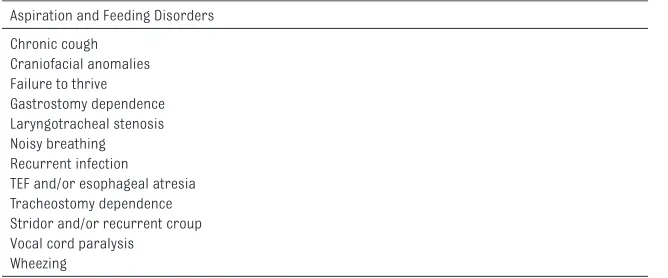
demonstrated in several pediatric populations. In one study of the impact of a comprehensive primary care clinic for children with special health care needs, the authors demonstrated a decrease in non-ICU length of stay but no improvement in cost of care (cost shifted from inpatient to outpatient).2 In another study, authors reported a reduction in hospitalization rates and total costs billed to Medicaid for medically complex patients in the year following enrollment (in a complex care management program) compared with the previous year.3 Others have demonstrated improved parent satisfaction and decreased caregiver strain with a coordinated multidisciplinary model of care.4, 5 An example of such a model is the “aerodigestive” clinic. Aerodigestive clinics provide coordinated interdisciplinary care to children with complex congenital or acquired conditions affecting breathing, swallowing, and growth to various degrees (Fig 1). These conditions include structural or physiologic airway disease, chronic parenchymal lung disease, lung injury from aspiration or infection, gastroesophageal reflux, eosinophilic esophagitis, esophageal dysmotility or stricture, dysphagia, and behavioral feeding problems. Examples of disorders commonly evaluated in aerodigestive programs are listed in Table 1.
Since the development of the first aerodigestive program at Cincinnati Children’s Hospital Medical Center in 1999, a further 50 such centers have been established in 32 states. As these programs have developed, they serve as a valuable resource for pediatricians and other primary care providers; many of the conditions and presenting symptoms in Table 1 lead to frequent visits to the primary care office or frequent hospital admissions and may be frustrating for pediatricians to manage alone. However, there is yet no accepted or standard definition of patients most appropriate for aerodigestive programs, or clearly defined structure and functions of an aerodigestive program to guide referral and establish expectations. Nevertheless, there is greater recognition of aerodigestive care as a definable model of care with value to patients and medical centers as evidenced by the growing number of programs, the success of an annual aerodigestive conference, aerodigestive sessions at pediatric subspecialty conferences, and development of an aerodigestive listserv. Along with these advances in clinical care, early publications have revealed clinical effectiveness, decreased cost, reduction in anesthetic episodes and resource use, and reduced caregiver burden by aerodigestive programs.6–10 Furthermore, given the relatively
low volumes and heterogeneity of these complex patients, research aims might best be identified and coordinated across multiple collaborating centers. We sought to use a broad base of aerodigestive expertise to develop a standard definition of a patient with an aerodigestive disorder, define the construct and essential functions FIGURE 1
General algorithm for patient flow through the aerodigestive program. a Telephone or electronic
acquisition of comprehensive patient history and parent and/or caregiver goals. b Coordinated
multispecialty clinic visits, radiographic and nonradiographic testing and procedures, com-bined airway, and gastrointestinal endoscopy.
TABLE 1 Common Conditions Evaluated and Treated Through Aerodigestive Programs Aspiration and Feeding Disorders
Chronic cough Craniofacial anomalies Failure to thrive Gastrostomy dependence Laryngotracheal stenosis Noisy breathing Recurrent infection TEF and/or esophageal atresia Tracheostomy dependence Stridor and/or recurrent croup Vocal cord paralysis
Wheezing
of aerodigestive programs, identify research priorities, and investigate future directions for maturation of the field.
METhods
We used the Delphi method to obtain consensus over a range of topics related to aerodigestive care. The Delphi method is an iterative, questionnaire-based method of obtaining consensus, which has been adapted to use in health care.11–17 This process has particular strengths in situations in which more quantitative evidence is either lacking or cannot be developed easily.
We sought to find common themes and recommendations that would attain a high level of consensus, with consensus defined as a supermajority of >75% or a median response rate that did not change with repeated surveys. We identified a priori 4 broad content areas: (1) definition of an aerodigestive patient, (2) essential construct and functions of an aerodigestive program, (3) identification of aerodigestive research priorities, and (4) evaluation and recognition of aerodigestive programs and future directions. Descriptive statistics were performed by using Excel 2014 (Microsoft Corp, Redmond, WA). This study was reviewed and exempted by the Mayo Clinic Institutional Review Board.
Thirty-three specialists from 11 well-established aerodigestive centers in the United States were recruited to participate based on their national and international recognition in aerodigestive care (12 pediatric pulmonologists, 11 pediatric otolaryngologists, 8 pediatric gastroenterologists, and 2 speech-language pathologists). Participants were invited by the corresponding author based on active participation in long-standing or well-established programs, leadership in program creation, involvement at meetings
and conferences, or in publication. A series of 3 questionnaires was administered electronically, with target participation of 100% for each questionnaire. The questionnaires started with more open solicitation of aerodigestive program processes, construct and research priorities. Results were grouped into themes and ranked based on frequency of response. Ranked results and summary statistics were returned to participants. Subsequent
questionnaires requested ranking to achieve supermajority. By completion of the third questionnaire, each item had either achieved consensus by a supermajority of 75% or did not change by more than 1 rank, so no further questionnaires were administered.
REsULTs
Despite surveying a range of aerodigestive programs, differing by region, size, and duration of formal operation, consensus was achieved on almost all questions, with a supermajority of >75% agreement or stable median response. Response rates for questionnaires 1 to 3 were 100%, 97%, and 100%, respectively.
definition of Patient With Aerodigestive disorder
A 2-sentence structure for the definition of an aerodigestive patient was chosen. The definition developed and preferred by the majority (75.8%) of respondents is as follows: “A pediatric aerodigestive patient is a child with a combination of multiple and interrelated congenital and/or acquired conditions affecting airway, breathing, feeding, swallowing, or growth that require a coordinated interdisciplinary diagnostic and therapeutic approach to achieve optimal outcomes.
This includes (but is not limited to) structural and functional airway and
upper gastrointestinal tract disease, lung disease because of congenital or developmental abnormality or injury, swallowing dysfunction, feeding problems, genetic diseases, and neurodevelopmental disability.” Essential Construct and Functions of Aerodigestive Program
features of the care cycle of an aerodigestive program. These results are summarized in Table 3. During further clarification, 84% of respondents rated performance of combined endoscopy with all providers present together at the same time (ear, nose, and throat [ENT], gastroenterology, pulmonology) as essential. This allows all providers to directly observe all portions of the evaluation and maintain a dialogue with each other. They were split on having all shared clinic visits performed together, in the same clinic space, with 55% citing this as “essential” and 45% as “beneficial but nonessential.” Seventy percent of respondents supported a target time frame for completion of initial diagnostic evaluation, defined as the time from the first appointment for diagnostic evaluation until wrap-up from the first diagnostic evaluation. The median time for this evaluation was 7 days with an interquartile range (IQR) of 5 to 17.5 days. It was acknowledged that this is modified by the urgency and specific needs of the patient. Ninety-one percent of participants cited wrap-up visits could occur either in person or over the phone. The experience of seeing the team working together was cited as making a strong impact on caregivers.
Feeding and swallowing disorders are recognized to be highly prevalent in patients with aerodigestive disorders; therefore, clinical swallowing evaluations, fiberoptic endoscopic evaluations of swallowing (FEES), videofluoroscopic swallow studies (VFSS), and provision of direct feeding therapy were all identified as essential components of a program (97%, 97%, 100%, and 100%, respectively). Clinical swallowing evaluations and VFSS were reported as essential for “majority of aerodigestive evaluations.” Speech-language pathologists were identified as the
provider of choice for each of these assessments and/or therapies (100% for clinical swallowing evaluation, 81% for FEES, 81% for VFSS, and 91% for feeding therapy), although the role for otolaryngologists in the performance of FEES was supported (78%). A role for occupational therapists for development,
instruction, and modeling of feeding plans was well supported (78%), although responses were mixed for their role in clinical swallowing
evaluations (70%), VFSS (39%), and FEES (34%). Forty-five percent of participating programs use occupational therapists for feeding and swallowing evaluations (clinical or instrumental).
Operative diagnosis and intervention are recognized as fundamental to aerodigestive care. Overall, respondents cited interventional procedures as performed by pediatric pulmonologists to be
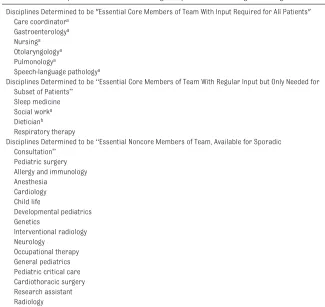
TABLE 2 Relative Importance of Medical and Surgical Specialties in Aerodigestive Programs Disciplines Determined to be "Essential Core Members of Team With Input Required for All Patients"
Care coordinatora
Gastroenterologya
Nursinga
Otolaryngologya
Pulmonologya
Speech-language pathologya
Disciplines Determined to be “Essential Core Members of Team With Regular Input but Only Needed for Subset of Patients”
Sleep medicine Social worka
Dieticianb
Respiratory therapy
Disciplines Determined to be “Essential Noncore Members of Team, Available for Sporadic Consultation”
Pediatric surgery Allergy and immunology Anesthesia
Cardiology Child life
Developmental pediatrics Genetics
Interventional radiology Neurology
Occupational therapy General pediatrics Pediatric critical care Cardiothoracic surgery Research assistant Radiology
a Core team members identified by >75% of respondents to be present at multidisciplinary team meeting. b Dietitian attendance at team meeting was supported by 68% of respondents.
TABLE 3 Essential Defining Functions and Features of Aerodigestive Care Cycle Functions Supported by >75% of Respondents
Care coordination Team meeting Previsit intake
Prescheduling of appointments and procedures Shared clinic
Combined endoscopy Wrap-up visit with family Summary document
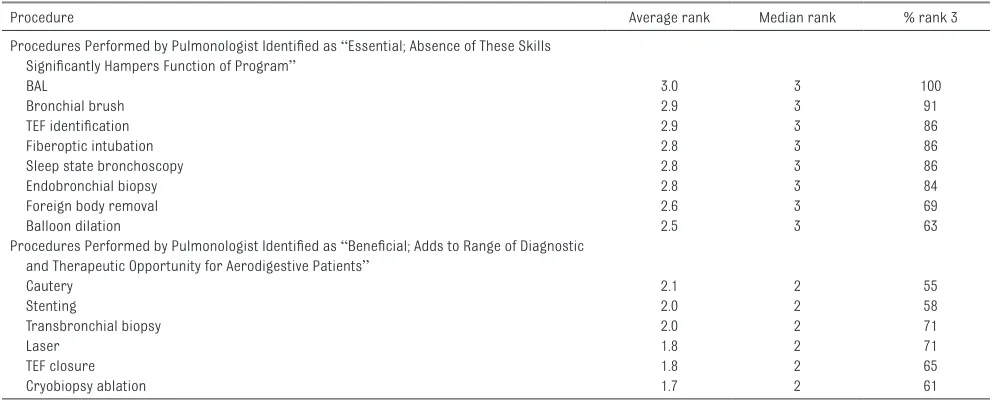
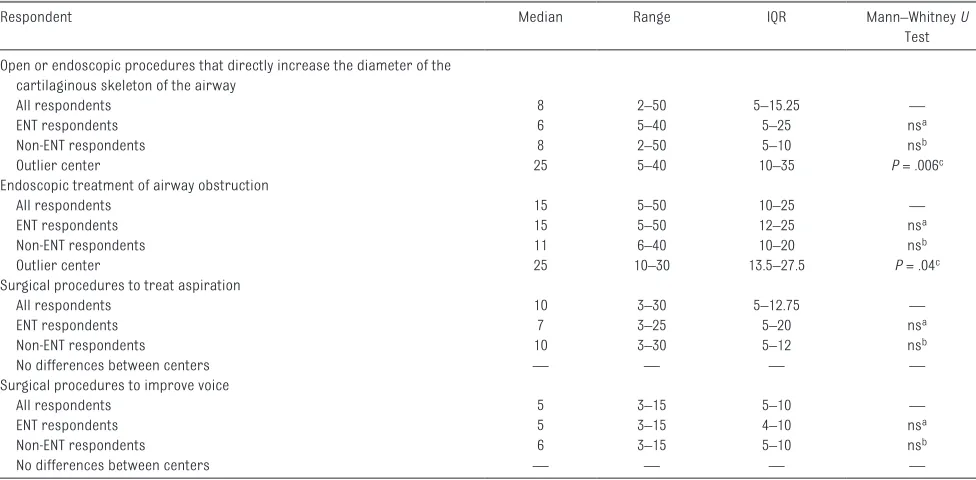
beneficial to aerodigestive program function but essential for pediatric gastroenterologists. Consensus for these rankings was achieved based on unchanging median response over serial surveys, although some reached a supermajority of 75% at same rank. The importance of specific procedures cited is listed in Tables 4 and 5 and generally suggest the importance of a high level of procedural skill and expertise for pulmonologists and gastroenterologists, even if all proceduralists do not routinely perform all listed procedures. Respondents strongly endorsed the essential nature of proficiency in open and endoscopic airway reconstruction for otolaryngologists in aerodigestive programs (81%). This includes the following categories: (1) open or endoscopic procedures that directly increase the diameter of the cartilaginous skeleton of the airway, (2) endoscopic
treatment of airway obstruction, (3) surgical procedures to treat aspiration, (4) surgical procedures to improve voice, (5) tracheostomy, and (6) foreign body removal. Respondents were then asked to identify a target minimum annual number for surgical categories 1 to 4
for a program to perform to maintain competency (Table 6). There was general agreement across disciplines and programs regarding these targets, with the exception of 1 center recommending higher volumes for open or endoscopic procedures that directly increase the diameter of the airway and endoscopic treatment of airway obstruction. Comparison of median responses from that program to other ENT respondents showed a significant difference in these categories (median 25 vs 6 [IQR 10–35 vs 5–25] and 25 vs 15 [IQR 13.5–27.5 vs 12–25]; Mann– Whitney U test P = .006 and P = .044, respectively).
Identify Aerodigestive Research Priorities
For this aim, participants were asked to list and then rank research areas that were of the greatest immediate importance and should be prioritized, as well as outcome measures of greatest importance to be used in aerodigestive research. The responses for top research priorities were stable with regards to ranking with the top 10 being cited by 55% to 97% of respondents and the second 10 by 9% to 36%, with rankings not changing from questionnaire 2 to 3
(Table 7). If taken as a group, issues related to aspiration (diagnosis, treatment, microbiome, and sequela) ranked in the top 10 for 91% of respondents. The responses for most important outcome measures were stable with regards to ranking with the top 10 being cited by 67% to 100% of respondents and the second 10 by 30% to 64% (Table 7). Sixty-one percent cited multicenter research as an essential function of aerodigestive programs, whereas 39% cited this as beneficial but nonessential.
Recognition of Aerodigestive Programs
Ninety-seven percent of participants stated that current understanding of which patients are appropriate for aerodigestive program and what an aerodigestive program does only exists within large academic centers. Eighty-one percent strongly agree that aerodigestive care is a definable model of care, distinct and distinguishable from routine specialty care for complex pediatric patients. To this point, 91% of respondents agreed (64% strongly agreed) that this definable care model was worthy of program certification, similar to the
TABLE 4 Recommended Procedures, Pediatric Pulmonologist
Procedure Average rank Median rank % rank 3
Procedures Performed by Pulmonologist Identified as “Essential; Absence of These Skills Significantly Hampers Function of Program”
BAL 3.0 3 100
Bronchial brush 2.9 3 91
TEF identification 2.9 3 86
Fiberoptic intubation 2.8 3 86
Sleep state bronchoscopy 2.8 3 86
Endobronchial biopsy 2.8 3 84
Foreign body removal 2.6 3 69
Balloon dilation 2.5 3 63
Procedures Performed by Pulmonologist Identified as “Beneficial; Adds to Range of Diagnostic and Therapeutic Opportunity for Aerodigestive Patients”
Cautery 2.1 2 55
Stenting 2.0 2 58
Transbronchial biopsy 2.0 2 71
Laser 1.8 2 71
TEF closure 1.8 2 65
Cryobiopsy ablation 1.7 2 61
clinical care center models certified by the Cystic Fibrosis or Primary Ciliary Dyskinesia foundations. Respondents acknowledge that this is a future goal that must be founded on validated, outcome-based care guidelines. Ninety-seven percent of respondents agreed (67% strongly
agreed) that aerodigestive care, as a defined subspecialty, was worthy of dedicated funding streams for research, and 88% strongly agreed that diagnostic coding should be modified to incorporate the time and complexity of delivering care in an integrated manner.
dIsCUssIon
The results of this Delphi study indicate a broad consensus among providers from different subspecialties and across multiple geographic regions on the definitions, structure, functions, and priorities
TABLE 5 Recommended Procedures, Pediatric Gastroenterologist
Procedure Average rank Median rank % rank 3
Procedures Performed by Gastroenterologist Identified as “Essential; Absence of These Skills Significantly Hampers Function of Program”
Biopsy 3.0 3 100
Dilation 3.0 3 97
Motility studies 2.9 3 91
Cautery 2.8 3 87
PEG placement 2.8 3 75
GJ tube placement 2.7 3 68
Procedures Performed by Gastroenterologist Identified as “Beneficial; Adds to Range of Diagnostic and Therapeutic Opportunity for Aerodigestive Patients”
Botox injection 2.3 2 58
Steroid injection 2.3 2 68
Stenting 2.2 2 52
Polypectomy 2.4 2 52
Banding 2.1 2 74
Transnasal EGD 2.1 2 65
Clipping 2.0 2 84
Needle knife 1.8 2 84
Rankings are as follows: (3) Essential; absence of these skills significantly hampers function of program, (2) Beneficial; adds to range of diagnostic and therapeutic opportunity for aerodigestive patients, (1) Not beneficial; may be beneficial to others, but not necessary for aerodigestive patients. EGD, esophagogastroduodenoscopy; GJ, gastrojejunostomy; PEG, percutaneous esophagogastrostomy.
TABLE 6 Recommended Minimum Surgical Airway Procedures to be Performed by Aerodigestive Programs Annually
Respondent Median Range IQR Mann–Whitney U
Test
Open or endoscopic procedures that directly increase the diameter of the cartilaginous skeleton of the airway
All respondents 8 2–50 5–15.25 —
ENT respondents 6 5–40 5–25 nsa
Non-ENT respondents 8 2–50 5–10 nsb
Outlier center 25 5–40 10–35 P = .006c
Endoscopic treatment of airway obstruction
All respondents 15 5–50 10–25 —
ENT respondents 15 5–50 12–25 nsa
Non-ENT respondents 11 6–40 10–20 nsb
Outlier center 25 10–30 13.5–27.5 P = .04c
Surgical procedures to treat aspiration
All respondents 10 3–30 5–12.75 —
ENT respondents 7 3–25 5–20 nsa
Non-ENT respondents 10 3–30 5–12 nsb
No differences between centers — — — —
Surgical procedures to improve voice
All respondents 5 3–15 5–10 —
ENT respondents 5 3–15 4–10 nsa
Non-ENT respondents 6 3–15 5–10 nsb
No differences between centers — — — —
ns, not significant; —, not applicable.
a Not statistically significant compared with all respondents or non-ENT respondents. b Not statistically significant compared with all respondents or ENT respondents.
for aerodigestive care. In the context of limited published evidence, these results create a framework and an initial foundational definition for the model of pediatric aerodigestive care based on expert consensus.
There is evidence of the value and benefit of a coordinated consistent approach to the care of children with complex chronic conditions. Substantially improved outcomes for children with cystic fibrosis have been achieved through standardization of definitions, multicenter research, development and dissemination of clinical care guidelines, and tracking and reporting of patient outcomes.18–20 Similarly, the ImproveCareNow Network has improved outcomes for inflammatory bowel disease via a similar approach.21–23 Aerodigestive programs provide diagnostic evaluation, treatment, and often
longitudinal coordinated care to complex pediatric patients, similar to pediatric cardiovascular centers, for which there are established, iteratively revised guidelines for diagnosis, treatment, and program composition.24 Although accumulating evidence supports positive impacts of aerodigestive programs, development of a coordinated care model for this population is in its infancy. Further development of guidelines is aspirational and will need basis in evidence and proven outcomes. This Delphi study leverages the knowledge and experience of a broad panel of subject matter experts; this is a specific strength of this process. Despite the range of disciplines, geography, and program history across the participant group, a supermajority consensus of 75% or stable median was achieved
for all but 3 items, suggesting that our findings are robust. The panel remained split on the necessity for shared clinic visits to occur all together in the same physical space and on individual provider certification in aerodigestive care. Also, a recommendation for a target time frame for completion of an aerodigestive evaluation did not reach a supermajority (70%). An additional strength was the high response rate, with only 1 in 33 respondents failing to return 1 of 3 questionnaires.
Major limitations arise from a lack of solid evidence on which to grade these recommendations, relying instead on expert opinion. Until such evidence exists, there is no better alternative. The use of iterative questionnaires without open group discussion, is both a strength and a limitation. In this format there was some impairment in achieving deeper clarity in some responses that remain vague, such as “requirement for respiratory support” as an outcome measure. It is possible that this means something different to different respondents. The strength is that, because responses were pooled and anonymous, there was no single persuasive voice to dominate. We also recognize that the use of a 75% supermajority as the criterion for consensus differs from other Delphi studies. The original descriptions by the Rand Corporation did not specify criteria for consensus, and a wide range of criteria have been used in health care-related studies using this approach, suggesting that this method itself might benefit from standardization.
We believe that development of a robust and well-defined care model requires an initial step to define the population, structure and processes of the model. A trend toward formalizing and developing the aerodigestive care model is evident in the proliferation of programs, inclusion in the US
TABLE 7 Results of Ranking of Aerodigestive Research Priorities and Outcome Measures Priorities for Aerodigestive Research
1. Outcomes, disease-specific 2. Validation of aerodigestive approach 3. Care pathways, development and validation 4. Aerodigestive patient registry
5. Diagnosis of aspiration
6. Standardization of diagnostic procedures 7. Treatment of aspiration
8. GERD, risks and evaluation of extra-esophageal disease 9. Factors for success of airway reconstruction 10. Value
Most Cited Outcome Measures for Aerodigestive Research 1. Quality of life
2. Tracheostomy status and/or decannulation 3. Cost of care
4. Hospitalization and/or acute care use
5. Oral feeding status (multiple indices) and gastrostomy removal 6. Respiratory symptoms
7. Swallowing indices, by VFSS and FEES 8. Control of aspiration
9. Airway symptoms
10. Functional and developmental scores 11. Impact on caregivers
12. Family satisfaction 13. Growth indices
14. Requirement for respiratory support 15. Polysomnogram indices
16. Mortality
17. Respiratory infections 18. Aspiration biomarkers 19. Airway inflammatory biomarkers 20. Pulmonary function testing indices
News & World Report Best Pediatric Hospitals survey, the formation of aerodigestive interest groups at subspecialty meetings, development of an aerodigestive society,
publication of aerodigestive-specific research, and the continued increase in attendance at aerodigestive conferences. These definitions are necessary for consistency in future research and development within aerodigestive care and, more pragmatically, to guide primary providers in determining which conditions and patients might benefit from care through such a model. We acknowledge that further refinements and development of care guidelines will require more rigorous evidence on many of the elements examined here and others outside of the scope of this study. Given that aerodigestive disorders encompass heterogeneous rare disease states,
fulfillment of this aim will require coordinated research between centers, perhaps based on the priorities identified here. One could envision a roadmap to maturation of the aerodigestive care model similar to the development of the chILD Research Network for diffuse lung diseases or efforts led by the Cystic Fibrosis Foundation.25–29 The results of this study provide an initial crucial step toward this larger goal by providing definition and framework to the care model and identifying research goals and direction for further maturation.
On the basis of our findings, we suggest that there exists a definable aerodigestive care model, which merits further development and maturation, and which comprises specific personnel, infrastructure, research, and outcomes. Through a
growing body of evidence, we suggest that this model delivers consistent, efficacious, cost-effective, outcomes-driven, patient-centered, and family-focused care. In the coming years, with continued effort, this may lead to documented improvement in outcomes, development and dissemination of care guidelines, standardization of approach, accreditation of aerodigestive care centers, an aerodigestive registry, and potentially aerodigestive-specific training opportunities.
ABBREvIATIons
ENT: ear, nose, and throat FEES: fiberoptic endoscopic
eval-uation of swallowing IQR: interquartile range
VFSS: videofluoroscopic swallow study
doI: https:// doi. org/ 10. 1542/ peds. 2017- 1701 Accepted for publication Nov 29, 2017
Address correspondence to R. Paul Boesch, DO, MS, FAAP, Division of Pediatric Pulmonology, Mayo Clinic Children’s Center, 200 First St SW, Rochester, MN 55905. E-mail: [email protected]
PEDIATRICS (ISSN Numbers: Print, 0031-4005; Online, 1098-4275). Copyright © 2018 by the American Academy of Pediatrics
FInAnCIAL dIsCLosURE: The authors have indicated they have no financial relationships relevant to this article to disclose. FUndInG: No external funding.
PoTEnTIAL ConFLICT oF InTEREsT: Drs Deboer, Prager, Friedlander, and Deterding are co-founders (Secretary, Treasurer, President, and Vice-President, respectively) and board members of Triple Endoscopy, Inc. They are also co-inventors with University of Colorado on Patent Cooperation Treaty application “Pediatric Nasal Endoscope PCT/US16/39352.” They have not received funding from these entities for this project or at the time of the writing of this manuscript; Dr Rutter serves as consultant to Bryan Medical, which produces and markets an airway balloon of his patent. This is unrelated to the current study and he receives no revenue from this stent; Dr Gold has received grants and funding from Johnson and Johnson, Takeda Pharmaceuticals, Nestle Nutrition, Nutricia Nutrition, and Mead Johnson (unrelated to the current study); Dr Putnam has received payment for lectures including service on speaker bureaus for Abbott Nutrition (unrelated to the current study); the other authors have indicated they have no potential conflicts of interest to disclose.
REFEREnCEs
1. Burns KH, Casey PH, Lyle RE, Bird TM, Fussell JJ, Robbins JM. Increasing prevalence of medically complex children in US hospitals. Pediatrics. 2010;126(4):638–646
2. Berman S, Rannie M, Moore L, Elias E, Dryer LJ, Jones MD Jr. Utilization and costs for children who have special health care needs and are enrolled in a hospital-based comprehensive primary care clinic. Pediatrics. 2005;115(6).
Available at: www. pediatrics. org/ cgi/ content/ full/ 115/ 6/ e637
3. Casey PH, Lyle RE, Bird TM, et al. Effect of hospital-based comprehensive care clinic on health costs for Medicaid-insured medically complex children. Arch Pediatr Adolesc Med. 2011;165(5):392–398
4. Palfrey JS, Sofis LA, Davidson EJ, Liu J, Freeman L, Ganz ML; Pediatric Alliance
for Coordinated Care. The Pediatric Alliance for Coordinated Care: evaluation of a medical home model. Pediatrics. 2004;113(suppl 5): 1507–1516
6. Collaco JM, Aherrera AD, Au Yeung KJ, Lefton-Greif MA, Hoch J, Skinner ML. Interdisciplinary pediatric aerodigestive care and reduction in health care costs and burden. JAMA Otolaryngol Head Neck Surg. 2015;141(2):101–105
7. Skinner ML, Lee SK, Collaco JM, Lefton-Greif MA, Hoch J, Au Yeung KJ. Financial and health impacts of multidisciplinary aerodigestive care. Otolaryngol Head Neck Surg. 2016;154(6):1064–1067
8. DeBoer EM, Prager JD, Ruiz AG, et al. Multidisciplinary care of children with repaired esophageal atresia and tracheoesophageal fistula. Pediatr Pulmonol. 2016;51(6):576–581 9. Garcia JA, Mistry B, Hardy S, et al.
Time-driven activity-based costing to estimate cost of care at multidisciplinary aerodigestive centers. Laryngoscope. 2017;127(9):2152–2158
10. Rotsides JM, Krakovsky GM, Pillai DK, et al. Is a multidisciplinary aerodigestive clinic more effective at treating recalcitrant aerodigestive complaints than a single specialist? Ann Otol Rhinol Laryngol.
2017;126(7):537–543 11. Brown BB. Delphi Process: A
Methodology Used for the Elicitation of Opinions of Experts. Santa Monica, CA: RAND Corporation; 1968
12. Dalkey NC. The Delphi Method: An Experimental Study of Group Opinion. Santa Monica, CA: RAND
Corporation; 1969
13. Fink A, Kosecoff J, Chassin M, Brook RM. Consensus Methods: Characteristics and Guidelines for Use. Santa Monica, CA: RAND Corporation; 1991
14. Cline A. Prioritization Process Using Delphi Technique. Dublin, OH: Carolla Development; 2000
15. Rhee JS, Weaver EM, Park SS, et al. Clinical consensus statement: diagnosis and management of nasal valve compromise. Otolaryngol Head Neck Surg. 2010;143(1):48–59 16. Balakrishnan K, Bauman N, Chun
RH, et al. Standardized outcome and reporting measures in pediatric head and neck lymphatic malformations. Otolaryngol Head Neck Surg. 2015;152(5):948–953
17. Lucas JS, Barbato A, Collins SA, et al. European Respiratory Society guidelines for the diagnosis of primary ciliary dyskinesia. Eur Respir J. 2017;49(1):1601090
18. Flume PA, O’Sullivan BP, Robinson KA, et al; Cystic Fibrosis Foundation, Pulmonary Therapies Committee. Cystic fibrosis pulmonary guidelines: chronic medications for maintenance of lung health. Am J Respir Crit Care Med. 2007;176(10):957–969
19. Moore BM, Laguna TA, Liu M, McNamara JJ. Increased adherence to CFF practice guidelines for pulmonary medications correlates with improved FEV1. Pediatr Pulmonol. 2013;48(8):747–753
20. Siracusa CM, Weiland JL, Acton JD, et al. The impact of transforming healthcare delivery on cystic fibrosis outcomes: a decade of quality improvement at Cincinnati Children’s Hospital. BMJ Qual Saf. 2014;23(suppl 1):i56–i63
21. Siegel CA, Allen JI, Melmed GY. Translating improved quality of care into an improved quality of life for patients with inflammatory bowel disease. Clin Gastroenterol Hepatol. 2013;11(8):908–912
22. Forrest CB, Crandall WV, Bailey LC, et al. Effectiveness of anti-TNFα for Crohn disease: research in a pediatric learning health system. Pediatrics. 2014;134(1):37–44
23. Savarino JR, Kaplan JL, Winter HS, Moran CJ, Israel EJ. Improving clinical remission rates in pediatric inflammatory bowel disease with previsit planning. BMJ Qual Improv Rep. 2016;5(1):u211063.w4361 24. Moore JWM, Beekman RH III, Case
CL, et al; Section on Cardiology and Cardiac Surgery; American Academy of Pediatrics. Guidelines for pediatric cardiovascular centers. Pediatrics. 2002;109(3):544–549
25. Deutsch GH, Young LR, Deterding RR, et al; Pathology Cooperative Group; ChILD Research Co-operative. Diffuse lung disease in young children: application of a novel classification scheme. Am J Respir Crit Care Med. 2007;176(11):1120–1128
26. Fan LL, Dishop MK, Galambos C, et al; Children’s Interstitial and Diffuse Lung Disease Research Network (chILDRN). Diffuse lung disease in biopsied children 2 to 18 years of age. Application of the chILD classification scheme. Ann Am Thorac Soc. 2015;12(10):1498–1505 27. Popler J, Lesnick B, Dishop MK,
Deterding RR. New coding in the international classification of diseases, ninth revision, for children’s interstitial lung disease. Chest. 2012;142(3):774–780
28. Kurland G, Deterding RR, Hagood JS, et al; American Thoracic Society Committee on Childhood Interstitial Lung Disease (chILD) and the chILD Research Network. An official American Thoracic Society clinical practice guideline: classification, evaluation, and management of childhood interstitial lung disease in infancy. Am J Respir Crit Care Med. 2013;188(3):376–394
DOI: 10.1542/peds.2017-1701 originally published online February 7, 2018;
2018;141;
Pediatrics
Karen B. Zur, Robin T. Cotton and Robert E. Wood
Matthew J. Ryan, Margaret L. Skinner, Cherie Torres-Silva, Christopher T. Wootten,
Piccione, Jeremy D. Prager, Philip E. Putnam, Rachel Rosen, Michael J. Rutter,
Kane Miller, Paul E. Moore, Scott Pentiuk, Stacey Peterson-Carmichael, Joseph
M. Grothe, Catherine K. Hart, Mikhail Kazachkov, Maureen A. Lefton-Greif, Claire
Emily M. DeBoer, Robin R. Deterding, Joel A. Friedlander, Benjamin D. Gold, Rayna
Cofer, Joseph M. Collaco, John P. Dahl, Cori L. Daines, Alessandro DeAlarcon,
R. Paul Boesch, Karthik Balakrishnan, Sari Acra, Dan T. Benscoter, Shelagh A.
Statement
Structure and Functions of Pediatric Aerodigestive Programs: A Consensus
Services
Updated Information &
http://pediatrics.aappublications.org/content/141/3/e20171701
including high resolution figures, can be found at:
References
http://pediatrics.aappublications.org/content/141/3/e20171701#BIBL
This article cites 25 articles, 7 of which you can access for free at:
Subspecialty Collections
_sub
http://www.aappublications.org/cgi/collection/system-based_practice
System-Based Practice
s_sub
http://www.aappublications.org/cgi/collection/interdisciplinary_team
Interdisciplinary Teams
_management_sub
http://www.aappublications.org/cgi/collection/administration:practice
Administration/Practice Management
following collection(s):
This article, along with others on similar topics, appears in the
Permissions & Licensing
http://www.aappublications.org/site/misc/Permissions.xhtml
in its entirety can be found online at:
Information about reproducing this article in parts (figures, tables) or
Reprints
http://www.aappublications.org/site/misc/reprints.xhtml
DOI: 10.1542/peds.2017-1701 originally published online February 7, 2018;
2018;141;
Pediatrics
Karen B. Zur, Robin T. Cotton and Robert E. Wood
Matthew J. Ryan, Margaret L. Skinner, Cherie Torres-Silva, Christopher T. Wootten,
Piccione, Jeremy D. Prager, Philip E. Putnam, Rachel Rosen, Michael J. Rutter,
Kane Miller, Paul E. Moore, Scott Pentiuk, Stacey Peterson-Carmichael, Joseph
M. Grothe, Catherine K. Hart, Mikhail Kazachkov, Maureen A. Lefton-Greif, Claire
Emily M. DeBoer, Robin R. Deterding, Joel A. Friedlander, Benjamin D. Gold, Rayna
Cofer, Joseph M. Collaco, John P. Dahl, Cori L. Daines, Alessandro DeAlarcon,
R. Paul Boesch, Karthik Balakrishnan, Sari Acra, Dan T. Benscoter, Shelagh A.
Statement
Structure and Functions of Pediatric Aerodigestive Programs: A Consensus
http://pediatrics.aappublications.org/content/141/3/e20171701
located on the World Wide Web at:
The online version of this article, along with updated information and services, is
by the American Academy of Pediatrics. All rights reserved. Print ISSN: 1073-0397.