An Extension of the Technology Acceptance Model:
The Case of Bruneian Managers
Afzaal H. Seyal*1and Mohd Noah A. Rahman**
Abstract
The study highlights the factors that encourage the Internet usage behaviour of 105 Bruneian business managers. The study modifies the existing Technology Acceptance Model (TAM) to describe the Internet usage behaviour. Perceived usefulness (PU) was modified with perceived near term usefulness and perceived long-term usefulness and was hypothesised with experience with the Internet and facilitating condition at the organisational level. A Structural Equation Modeling (SEM) technique was used to statistically validate the new model. The data from business managers confirmed that only prior experience with the Internet has a strong impact with the utilisation of the Internet and 49 per cent of the variance is explained toward utilisation. Based upon the results some recommendations were made.
Keywords: Business Managers, Internet Usage, Structural Equation Model, Technology Acceptance Model
JEL Classification: O33
1. Introduction
For the past twenty years, Internet technologies have been spreading in all segments of society even among the senior citizens, in general, and managers and senior executives of the private as well as public organisations, in particular. Until year 1994, the Internet had experienced a slow but steady growth. The number of hosts on the Internet roughly tripled from 2.2 millions in January 1994 to 9.5 millions in January 1996 (www.isc.org/ops/ds). According to the CIA World Factbook, the Internet
* Corresponding author. Afzaal H. Seyal is a Senior Lecturer at the Department of Computing and Information Systems, Faculty of Business Management and IT, Institut Teknologi Brunei, email: [email protected].
connectivity in Africa is growing at a pace faster than any other region worldwide.1
The subject of Internet usage and the various factors influencing it has been an important issue for the last ten years. Palvia (1998) has suggested that studies on the success of global Information Technology (IT) should seriously consider the inclusion of broad categories of independent variables such as consideration of the economic, technological, cultural, political and regulatory environments. Some studies in the past have focused on the Internet Service Provider (ISP) and on the issues related to the lack of infrastructure, technological impediments and other intra and inter-organisational factors (Pliskin & Romm, 1990; Enns & Huff, 2001).
Anandarajan et al. (2000) studied the Internet usage among students in northeast US to examine the factors influencing its usage and the individual perception of the consequences of such use. The results suggest that personal factors of Web skills and playfulness are associated with perceived Internet usefulness and the degree of the Internet usage, perceived usefulness was positively related to increased use and Internet impact. Similarly, Tan and Teo (1998) in their Singapore-based study examined the business organisations’ acceptance of the Internet. In another study, Teo et al. (1999) examined the Internet users in Singapore and found that both intrinsic (perceived enjoyment) and extrinsic (perceived usefulness) had consistently strong effects on all usage dimensions. However, one of the biggest constraints in these studies is that they severely lack theoretical and psychometric justifications (Sproull, 1991).
The multi-dimensionality of the IS literature were re-examined by a series of studies providing a framework for Information Technology Acceptance (Chau, 1996, 2001; Igbaria et al., 1995; Lee et al., 1995; Teo et al., 1999). The technology acceptance model (TAM) became one of the most influential research models in studies as determinants of Information Systems acceptance. In TAM, perceived usefulness (PU) and perceived ease of use (PEOU) have become the main supporters of technology usage. In the western literature, investigating information systems’ usage holds an important venue for the researches (Venkatesh & Davis, 2000). TAM is widely acknowledged in the western world as an explanation of the determinants of IS acceptance and has gained considerable validity and parsimony.
However, in developing countries, there are comparatively fewer studies regarding IS usage. In the western world, most of the studies on
TAM have investigated the role of the external variables with the behavioural components to determine behavioural intention or actual use of the IS systems or use of a particular technology such as e-mail, voice mail or WWW (Straub et al., 1995, 1997; Hubona & Kennick, 1996; Fenech, 1998; Brown, 2002). Nevertheless, very few studies (Chau, 1996; Straub et al., 1997; Jiang et al., 2000) attempted to modify TAM and to test the new model for the suitability of adoption for further generalisation. Furthermore, none of these studies have covered the business domains especially within the context of small business organisations in South-East Asia.
In Brunei Darussalam, several studies were conducted focusing on the use of the Internet in business and further testing TAM with a variety of antecedent variables (Seyal & Pijpers, 2006; Seyal & Rahman, 2007). In the first study, Seyal & Pijpers surveyed 123 senior business executives and tested TAM with the task variety and task uncertainty in the use of the Internet. The results indicate that task variety contribute towards both belief components of TAM: perceived usefulness (PU) and perceived ease of use (PEOU). Finally, PEOU contributes towards determining the attitude that further predicts Internet usage. Seyal and Rahman (2007) found that the variables computer self-efficacy and personality (risk-taking) contribute to perceived usefulness (PU) and in their final model the use of the Internet is determined by the PU component of the belief.
These research initiatives have opened a venue for the forthcoming researches to overcome the acute shortage and dearth of studies in the developing nations of the South East Asia. Further, the double digit growth in the telecom service market in the Asia-Pacific region in 2005 (www.idc.com.sg) put pressure on the use of internet in Brunei businesses. Therefore, there is a critical need to undertake more studies in the small sultanate of Brunei. It has also been noticed that gradually the perceived ease of use component of TAM is losing its impact and the need to substitute this variable has become apparent.
This consideration has therefore provided a basic motivation for this research with the key assumption that governments of developing countries are facing a similar situation with their e-government programmes. It is argued that the success of e-Business programme cannot be determined or gauged without studying the techno-literacy of the senior executives in the private sector. The results of this study could further be generalised to the other developing nations of Asia-Pacific with similar cultural and geographical environments.
to determine the role of the antecedent variables with the modified TAM components; and (iii) to further test the parsimony and assess the suitability of the model for the Bruneian business managers’ use of the Internet.
2. Review of Literature
2.1 Technology Acceptance Model
Researchers have proposed several models based upon the innovation diffusion theory (Rogers, 1995), the Theory of Reasoned Action (TRA) by Ajzen and Fishbein (1980), the Theory of Planned Behavior (TPB) (Ajzen, 1991) and the Technology Acceptance Model (TAM) by Davis (1989). Of these models, TAM has most widely been used as a model to predict computer usage behavior with generally providing determinants of technology acceptance that would help explain user behaviour towards the information technology usage. TAM has also been shown to demonstrate good predictive validity (Szajna, 1996). However, ignoring external factors was one of the constraints of TAM. Subsequent research has provided us with several external variables that influence IT usage behaviour (Pijpers et al., 2001). Agarwal and Prasad (1997) have further suggested that independent variables are the only channels for influencing behaviour as the independent variables in TAM are hypothesised to be an internal psychological process. TAM asserts that actual usage of a system is determined by behavioural intentions to use and this in turn is related to the attitude towards using the system. Davis (1989) further asserted that influence of external behaviour is mediated through user belief and attitude. Beliefs are related to an action whereas attitude is purely affective and relates to positive and negative feelings about performing the behaviour. The belief segments that determine the attitude are PEOU and PU.
have focused primarily on the TAM model in predicting the user intentions towards IT. Therefore, the TAM model is an adequate and parsimonious conceptualisation of acceptance behaviour and the salience of usefulness and ease of use beliefs. Behaviour and beliefs are also the main factors in the present study. Legris et al. (2003) conducted meta-analysis of TAM articles which were published in six journals (MIS Quarterly, Decision Sciences, Management Sciences, Journal of MIS, Information Systems Research, and Information & Management) from 1980 to 2001 and concluded that although TAM is a useful model, it has to be integrated into a broader one that includes variables related to both human and social change processes and the adoption of the innovation models. King and He (2006) conducted meta-analysis of 88 published studies and provided sufficient data to support that TAM is a valid and robust model with wider applicability and usage.
The literature tends to fall into a number of categories with regard to a business setting. Most of the past studies focused on the business managers’ and business owners’ attitudes towards technology in relation to its adoption and utilisation. Some researchers have studied the small business owners’ dominating role in IT implementation (Cragg & King, 1993; Doukidis et al., 1994; Julien & Raymond, 1994; Thong & Yap, 1995). Researchers like Jawahar and Elango (2001) studied the effects of attitudes, goal setting and self-efficacy on the performance of the end users and found that these variables contribute significantly to enhance the end-users’ belief and use of IT.
Within the Malaysian context where the business environment follows cultural similarities to Brunei, TAM has been tested by Jantan et al. (2001) by adding various factors that influenced personal computer acceptance by the small and medium-sized enterprises (SME). Ramayah and Jantan (2004) studied the Internet usage by students and focused on the role of demographical and motivational variables in the use of the Internet and found perceived usefulness (PU) as an important driver of the Internet usage. Zain et al. (2005) identified the relationship between IT acceptance and organisational agility in order to see how the acceptance of technology contributes to a firm’s ability to be an agile competitor. Perceived usefulness and perceived ease of use of IT influenced organisational agility indirectly through the actual use of technology.
2.2 Revised TAM
While discussing TAM in explaining user acceptance of new technology, we should understand that research in this area has resulted in the development of several theoretical models with roots in information systems, psychology, and sociology that have routinely explained 40 per cent of the variance in the individual use of the technology (Venkatesh et al., 2003). The last two decades have seen user acceptance models being proposed, tested, refined, extended and unified and have contributed to our understanding of user technology acceptance factors and their relationship. Yet, these models have two fundamental limitations: the low explanatory power and inconsistent influences of the factors across studies (Sun & Zhang, 2006). Thompson et al. (1991) modified TAM by revising the relationship of behaviour-intention by combining the theory of reasoned action proposed by Ajzen (1988), the competing theory of behaviour by Triandis (1980) together with the Model of PC Utilisation, long-term consequences, facilitating conditions, social factors, job-fit and complexity. Mathieson, (1991) modified TAM with Theory of Planned Behaviour (TPB) in his cross-sectional study. The variations in intention explained by TAM and by TPB were 70 per cent and 62 per cent respectively.
Venkatesh and Davis (2000) made significant changes to TAM format by extending TAM. They included subjective norms adapted from Theory of Reasoned Action/Theory of Planned Behaviour (TBP) and tested the new model with longitudinal research design. Despite that, it only explains 40 per cent of system’s use. Moore and Benbasat (1991) further modified TAM with Rogers’ Theory of Diffusion by adding the variable “Voluntariness of the Use”. It showed a direct effect on intention to use. Szajna (1996) revised TAM with the addition of an experience component to the original TAM and found a significant enhancement in the model. Venkatesh et al. (2003) developed a unified model called the Unified Theory of Acceptance and Use of Technology (UTAUT) based upon the eight previous models. They tested it using the original data and found it to outperform the eight individual models with 69 per cent of the total variance explained. It thus provided a useful tool to assess the likelihood of success for new technology.
usefulness and perceived long-term usefulness. Chau further hypothesised that behavioural intention to use a particular technology is dependent on the above two variables as well as perceived ease of use. The results indicated that perceived near-term usefulness had the most significant relation with the behavioural intention to use the Internet followed by a significant perceived long-term usefulness variable. However, the perceived ease of use remained insignificant. Chau argued that as the Internet has diffused due to its usefulness and user friendliness, ‘ease of use’ is no longer an issue in the case of the Internet.
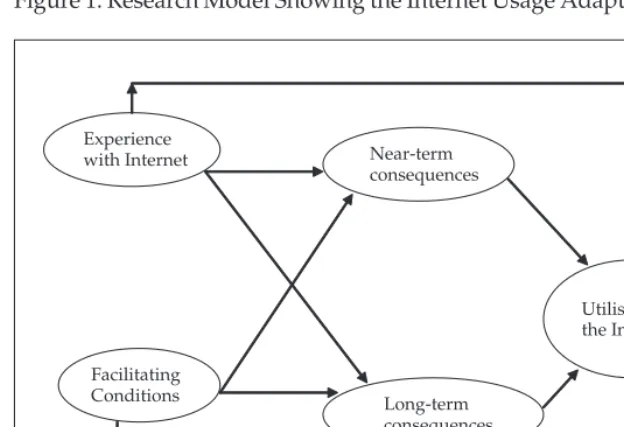
Jiang et al. (2000) modified the Chau’s model and added two variables: experience with the Internet and facilitating conditions adapted from Thompson et al. (1991) model of PC Utilisation. The results showed that prior experience and facilitating conditions are significantly related to the utilisation of a personal computer. Thus, they added these two variables and developed a conceptual model (Figure 1) in the extension to TAM and of Chau’s TAM model. They are of the view that specific behaviour may not occur in the absence of facilitating conditions and this makes the behaviour difficult. Experienced Internet users on the other hand, would likely to reduce the cognitive dissonance and become used to the Internet. The results indicated that utilisation of the Internet is positively related to perceived near-term usefulness, perceived long-term usefulness, prior experience, and facilitating conditions. The results further indicated that 70 per cent of the variance in the utilisation of the Internet is explained by explanatory variables showing a significant relationship to the dependent variables. The high variance explained by the model toward utilisation remains the main motivation to test the model within the context of Brunei’s business environment.
3. Development of the Model
to its user-friendly features, so ‘ease of use’ component is no more an issue. Therefore, Chau (1996) argued on the perceived usefulness component of TAM and further expanded into the constructs: near-term usefulness and long-term usefulness.
4. Methodology
4.1 The Sample
For this study, questionnaires were sent to the managers of 150 small and medium-sized enterprises (SMEs) selected randomly from the catalogue of participating SMEs in a computer trade show called BITEX 2006, which was held in the capital, Bander Seri Begawan in March 2006. As the unit of analysis in this study is the functional first level of the managers the questionnaires were sent to them with the advice that they should be exclusively filled-in by the managers. We received 110 completed questionnaires; however, five were excluded because they were not completed by the respective managers. Therefore, 105 questionnaires were Figure 1: Research Model Showing the Internet Usage Adaption
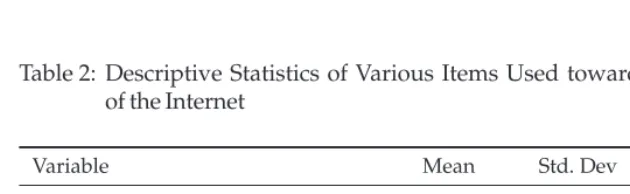
retained for the purpose of the research with the response rate of 70 per cent. The response rate is satisfactory for the logical deduction of the analysis. Table 1 represents the demographic profile of the respondents and Table 2 reflects the descriptive statistics.
Table 1: Demographic Data
Variables Descriptions Percentage (%)
Gender Female 57
Male 43
Age 20-25 20
26-35 55
36-45 17
Above 46 8
Educational First degree 45
Qualifications Business Diploma 25
Others 20
No answer 10
Internet Access Yes 77
No 23
Table 2: Descriptive Statistics of Various Items Used toward Utilisation of the Internet
Variable Mean Std. Dev Median
Experience with the Internet (B) 3.42 0.925 3.50
Near-term consequences (C) 3.65 0.739 3.75
Long-term consequences (D) 3.34 0.631 3.33
Facilitating conditions (E) 3.02 0.827 3.00
4.2 Instrument
The instrument of this study consists of five different constructs: prior experience with the Internet, near-term consequences, long-term consequences, facilitating conditions and the utilisation of the Internet were adapted after Thompson et al. (1991) and Jiang et al. (2000). The questionnaire was reworded substituting PC with the Internet. These measurements have been acknowledged by Chau (1996). All the variables except for the demographic were measured on 5-point Likert type scale from 1 to 5, with 1 being ‘strongly disagree’ to 5 being ‘strongly agree’. Table 2 summarises the basic descriptive statistics of these constructs.
5. Results
5.1 Analysis of the Measurement Model
Theoretically, in a measurement model, an investigation into the structure between items and constructs is carried out. Normally, a trait, multi-dimensional approach is adopted. We further tested the measurement model to find out the reliability and validity of the instrument. Properties of the measurement model are described in Table 3.
In order to establish face validity, an initial version of the instrument was pre-tested using several executives selected randomly from two teaching institutions located in close proximity to the authors’ workplace. The participants were asked to comment on the format and appropriateness of the questions, and to suggest any items that they believed should be included in the instrument. In view of their suggestions, several amendments were incorporated into the instrument which greatly improved the clarity of it.
The derived instrument was then tested for both convergent and discriminant validity as both are considered subtypes of construct validity. If the research demonstrates the evidence for both convergent and discriminant validity then by definition it has evidence for construct validity.
strong. The results of discriminant validity is represented in Table 4, Cronbach’s Alpha was calculated for each of the multiple-item constructs. Cronbach’s Alpha is a model of internal consistency, based on the average inter-item correlation. Although there is no definite value for evaluating the reliability of a measure, Hair et al. (1998) suggest that reliability coefficients of 0.70 and higher are adequate. As shown in Table 4, scale reliabilities ranged from 0.77 to 0.87 and were found satisfactory except the borderline case for the near-term consequences which depict the value of 0.68. Although this is marginally below the threshold value of 0.70, this should not cause undue concern. These values were expected as nearly all constructs were taken from well-established instruments with high reliability scores from previous studies. Bajaj and Nidumolu (1998) used the same technique in one of their attitudinal-based studies.
The research model was evaluated using SPSS structural modelling programme AMOS. Using the sample covariance matrix, the overall fit statistics and the explanatory power of the model were taken by considering R2. In addition, careful analysis was done to get the significance of the
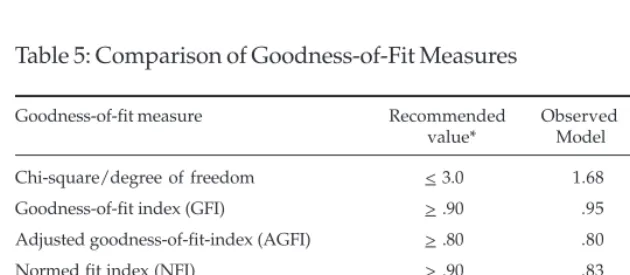
various paths as per model specification. The overall goodness-of-fit was examined by using the seven common measures of fit provided in Table 5 which reflects the observed values and recommended values. Although our observed model is close to the recommended value; it does not reflect an ideal situation.
However, it still offers sufficient parsimony (Hair et al., 1998). The explanatory power of the research model was evaluated by the proportion of the variance explained. The analysis suggested that the model was able to explain 49 per cent of the variance (R2) in business managers’ intentions
to use the Internet. Although our work does not represent an ideal situation as the original research conducted by Jiang et al. (2000) had better parsimony; Chau and Hu (2002) study on examining TAM for telemedicine explained 43 per cent of the total variance in physicians’ intentions to use telemedicine.
5.2 Path Analysis
Construct & indicators Factor Corrected-t-statistics V ariance Item description loading item total extracted
Experience with the Internet (B) B1
.7 4 .7 2 7.505 .5 2 I
have used the Internet/WWW for a length of time
B 2 .7 6 .7 2 7.932 .5 2 M y o v
erall Internet/WWW skill is high
Near-term consequences (C) C1* Use of the Internet/WWW will have no impact on the performance of my work
C2*
Use of the Internet/WWW can decrease the time needed for my work
C 3 .8 9 .7 8 6.643 .6 0
Use of the Internet/WWW can significantly increase the quality of output of my job
C 4 .8 4 .6 8 6.731 .4 6
Use of the Internet/WWW can significantly increase the effectiveness of my job performance
C 5 .8 5 .6 2 6.234 .3 8
The Internet/WWW can increase the quality of output for same amount of effort
C 6 .8 4 .6 0 6.431 .3 6
Considering all tasks, the use of the Internet/WWW could assist my job
Long-term consequences (D) D1* Use of the Internet/WWW will increase opportunity for preferred job assignments
D2*
Use of the Internet/WWW will increase the amount of variety on my job
D3*
Use of the Internet/WWW will increase the opportunity for more meaningful work
T
able 3: Pr
operties of the Measur
Note:
* Items deleted due to lowest corrected-item total (>.30) in reliability analysis or item loads on more than one factor wi
th cut off value
of <.40 and above in exploratory factor analysis.
D 4 .8 7 .6 3 6.101 .4 0
Use of the Internet/WWW will increase the flexibility of changing jobs
D 5 .8 2 .7 1 6.044 .5 0
Use of the Internet/WWW will increase my opportunity to gain job security
D 6 .7 2 .8 3 6.022 .6 9
Overall, the use of the Internet/WWW could assist my job opportunity and job performance
Facilitating conditions (E) E1*
The Internet/WWW is available to me when I need it
E 2 .8 9 .6 7 6.977 .4 5 A
person is available for assistance with Internet/WWW
difficulties E 3 .7 2 .6 2 5.622 .3 8
Specialised instructions concerning the Internet/WWW is available to me
E 4 .8 3 .6 0 6.946 .3 6 T
raining for Internet/WWW is available to me
E5*
Overall, the use of the Internet/WWW is very supportive
Utilisation of the Internet (F) F1
.7 8 .7 2 5.913 .5 1 I
use the Internet/WWW very intensively (many hours
per session) F2 .8 1 .7 4 6.549 .5 5 I use
the Internet/WWW very frequently (many times
per week) F3 .6 1 .6 5 4.874 .4 2 I
use the Internet/WWW for variety of applications
(reports, projects...) F4 .7 6 .6 4 5.833 .4 1 I
use a diversity of tools on the Internet/WWW (email,
FTP
, navigation, HTML, etc)
F5 .8 6 .8 1 7.653 .6 5
Table 4: Pearson Correlations and AVE Table for Discriminant Validity
No of Scale
items (before Alpha B C D E trimming)
Experience with the Internet (B) 2 .84 0.75 .330** .384** .317*
Near-term consequences (C) 5 .68 .330** 0.85 .458** .228
Long-term consequences (D) 5 .91 .384** .458** 0.80 .272*
Facilitating conditions (E) 6 .77 .317* .228 .272* 0.82
Utilization of the Internet (F) 5 .87 .702** .376** .387** .362** 0.75
Notes: **Correlation is significant at the 0.01 level (2-tailed). *Correlation is significant at the 0.05 level (2-tailed). Diagonal represents average variance extracted in bold.
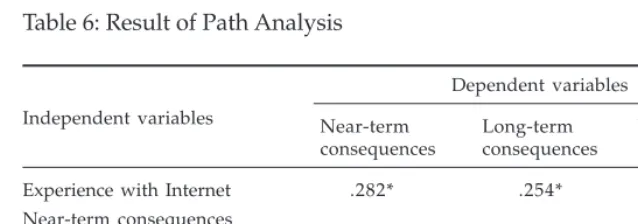
from -1 to +1. Results of the multivariate test of this theoretical model are presented in Table 6. It is evident from Table 6 that the construct ‘experience with the Internet’ has significant path coefficient with both near-term and long-term consequences and strong and significant path coefficient to the utilisation of the Internet and also 49 per cent of the variance is explained by the users in the utilisation of the Internet. Whereas, Jiang et al. (2000) concluded for the utilisation of the Internet, the two external variables ‘experience with the Internet’ and ‘the facilitating conditions’ are significant at 5 per cent significance level whilst long-term consequences are Table 5: Comparison of Goodness-of-Fit Measures
Goodness-of-fit measure Recommended Observed Jianget al.’s value* Model Study
Chi-square/degree of freedom < 3.0 1.68 2.30
Goodness-of-fit index (GFI) > .90 .95 .86
Adjusted goodness-of-fit-index (AGFI) > .80 .80 .84
Normed fit index (NFI) > .90 .83 .89
Non-normed fit index (NNFI) > .90 .91 .92
Comparative fit index (CFI) > .90 .85 .93
Root Mean square approx (RMSEA) < 0.08 .01 0.11
R2 .49 .70
significantly influenced by experience with the Internet at 5 per cent significance level.
Near-term consequences have insignificant and inverse relationship with the ‘utilisation of the Internet’ as indicated by the negative sign in Table 6. This further indicates that users do not consider this variable very much related to their job and performance.
Table 6: Result of Path Analysis
Independent variables
Dependent variables
Near-term Long-term Utilisation of consequences consequences the Internet
Experience with Internet .282* .254* .682*
Near-term consequences -.031
Long-term consequences .170
Facilitating conditions .070 .092 .075
R2 .18 .24 .49
6. Conclusion and Implications
This study has fulfilled its primary objective to identify key factors and relationships that are likely to influence the utilisation of the Internet by Brunei’s businesses. Several general and important inferences can be drawn. In the first instance, the core TAM has been substantiated in this study with external variables partially supporting the belief components. For this study, TAM assumes that the influence of external variables ‘experience with the Internet’ contributes to ‘perceived usefulness’ (PU). The PU component was further broken into two subscales: ‘perceived long-term consequences’ and ‘perceived near-long-term consequences’. This further contributes to the utilisation of the Internet.
facilitating conditions contribute toward personal computing usage. Our results also partially support Jiang et al. (2000) that showed that utilisation of the Internet is further related to perceived near-term consequences, long-term consequences, facilitating conditions and experience with the Internet. However, all these four variables explain the 70 per cent of the total variance in the utilisation of the Internet.
The findings of this study shed some light on the behaviour pattern of Brunei’s business managers in the utilisation of the Internet. In a previous study of senior business executives of Brunei’s small and medium-sized enterprises, TAM assumed that the influence of external variables on the use of the Internet is channelled through the PU belief segment that can predict the behavioural intentions to use the technology and that PEOU was strongly linked to the PU (Seyal & Rahman, 2007). The noticeable difference in the present study and of previous one (Seyal & Rahman, 2007) is that although both studies focus on the Internet usage behaviour pattern of the business executives, the present study examines a different set of external variables compared to the first one which used a different set of external variables along with the TAM component of PEOU and PU. Nevertheless, this study reveals that the significance of prior experience is an important driving factor in the utilisation of the Internet and it also explains more variance (49 per cent) compared to the first study conducted by Seyal and Rahman (2007), which explains only 42 per cent of the total variance towards the use of the Internet. So, the inclusion of new variables has significantly improved the parsimony of the present study. We can, thus, conclude that executives who are more exposed to the Internet are more likely to surf the Internet. It is, therefore, suggested that potential Internet adopters are encouraged not only to use the Internet for themselves, but also to extend it to competitive advantage. The relevant authorities such as the Brunei Information Technology (BIT) Council and small and medium business development authorities should look into the matter proactively so that the Internet business can be further geared up as the Bruneian customers still have a long way to go before the Internet business can fully be adopted.
the research is extended to other segments of the business Internet users. This study makes a contribution to the current body of knowledge on the usage of the Internet by business executives and it adds on to the available research on TAM.
We recommend that better understanding of various factors may further increase effective utilisation of the Internet technology, and facilitate the design of programmes at the organisational level that address these issues on the implementation of this new IT tool in the world of business.
References
Adams, D.A., Nelson, R.R., & Todd, P.A. (1992). Perceived usefulness, ease of use, and usage of information technology: A replication. MIS Quarterly,16(2), 227-247.
Agarwal, R., & Prasad, J. (1997). The role of innovation characteristics and perceived voluntariness in the acceptance of information technology.
Decision Sciences28(3), 557-582.
Ajzen, I., & Fishbein, M. (1980). Understanding attitudes and predicting social behavior. Inc Englewood, Cliff, NJ: Prentice Hall.
Ajzen, I. (1991). The theory of planned behaviour. Organizational Behaviour and Human Decision Processor,50, 179-211.
Ajzen, I. (1988). Attitudes, personality and behaviour. Chicago, Ills: Dorsey Press.
Anandarajan, M., Simmers, C., & Igbaria, M. (2000). An exploratory investigation of the antecedents and impact of internet usage: An individual perspective. Behavior and Information Technology, 19(1), 69-85.
Bajaj, A., & Nidumolu, S.R. (1998). A feed back model to understand information system usage. Information and Management,33, 213-224. Brown, I.T.J. (2002). Individual and technological factors affecting perceived
ease of use of web-based learning technologies in developing countries. EJISDC, 9(5), 1-15.
Campbell, D.T., & Fiske, D.W. (1959). Convergent and discriminant validation by the multi-trait, multi-method matrix. Psychological Bulletin, 56, 81-105.
Chau, P.Y.K. (1996). An empirical assessment of a modified TAM. Journal of Management Information Systems, 13(2), 185-204.
Chau, P.Y.K., & Hu, P.J. (2002). Examining a model of information technology acceptance by individual professionals: An exploratory study. Journal of Management Information Systems, 18(4), 191-229.
Cragg, P.B., & King, M. (1993). Small-firm computing: Motivators and inhibitors. MIS Quarterly,17, 47-60.
Cronbach, L.J. (1951). Coefficient alpha and the internal structure of test.
Psychometrika,16, 297-334.
Davis, F.D. (1989). Perceived usefulness, perceived ease of use and user acceptance of information technology. MIS Quarterly,13, 319-340. Doukidis, G.I., Smithson, S., & Lybereas, T. (1994). Trends in information
technology in small business. Journal of End User Computing,6, 15-25. Enns, H.G., & Huff, S.L. (2001). Information technology implementation in developing countries: Advent of the internet in Mongolia. In the proceeding of Hawaii 34th International Conference on Systems Sciences.
Fenech, T. (1998). Using perceived ease of use and perceived usefulness to predict acceptance of the world wide web. Computer Networks & ISDN Systems,30, 629-630.
Gaski, J.F., & Nevin, J.R. (1985). The differential effects of exercised and unexercised power sources in marketing channel. Journal of Marketing Research,22, 130-142.
Gefen, D., & Straub, D.W. (1997). Gender difference in the perception and use of e-mail: An extension of technology acceptance model. MIS Quarterly,21, 389-399.
Hair, J.F., Anderson, R.E., Tatham, R.L., & Black, W.C. (1998). Multivariate data analysis with readings. Upper Saddle River, New Jersey: Prentice Hall.
Hubona, G.S., & Kennick, E. (1996). The impact of external variables on information technology usage behavior. In Proceedings of the 29th Annual Hawaii International Conference on System Sciences. Los Alamitos: IEEE Computer Society Press.
Howell, J.M., & Higgins, C.A. (1990). Champions of technological innovations. Administrative Science Quarterly,35, 317-341.
Igbaria, M., & Toraskar, K. (1994). Impact of end-user computing on the individual: An integrated model. Information Technology and People, 6, 271-292.
Igbaria, M., Guimaraes, T., & Davis, G.B. (1995). Testing the determinants of micro computer usage via a structural equation model. Journal of Management Information Systems,11, 87-114.
Igbaria, M., & Iivari, J. (1997). The effects of self-efficacy on computer.
Jantan, M., Ramayah, T., & Chin, W.W. (2001). Personal computer acceptance by small and medium companies: Evidence from Malaysia. Journal Manajemen and Bisnis,3(1), 1-14.
Jawahar, I.M., & Elango, B. (2001). The effect of attitudes, goal setting and self-efficacy on end user performance. Journal of End User Computing, 13, 40-45.
Jiang, J.J., Hsu, M.K., & Klein, G. (2000). E-Commerce user behavior model: An empirical study. Human Systems Management, 19, 265-276. Julien, P., & Raymond, L. (1994). Factors of new technology adoption in the
retail sector. Entrepreneurship Theory and Practice Summer, 79-90. King, W.R., & He, J. (2006). A meta-analysis of the technology acceptance
model. Information and Management,43(6), 740-755.
Lee, S.M., Kim, Y.R., & Lee, J. (1995). An empirical study of the relationship among end-user information systems acceptance, training and effectiveness. Journal of Management Information Systems, 12(2), 189-202.
Legris, P., Ingham, J., & Collerette, P. (2003). Why do people use information technology? A critical review of technology acceptance model.
Information and Management,40, 191-204.
Mathieson, K. (1991). Predicting user intentions: Comparing the technology acceptance model with the theory of planned behavior. Information Systems Research,2, 173-191.
Moore, G.C., & Benbasat, I. (1991). Development of an instrument to measure the perception of adopting and information technology innovation.
Information Systems Research,2(3), 192-222.
Ndubisi, N.O., Gupta, O.K., & Ndubishi, G.C. (2005). The Moguls’ model of computing: Integrating the moderating impact of the users’ persona into technology acceptance model. Journal of Global Information Technology Management, 8(1), 27-47.
Palvia, P. (1998). Global information technology research: Past, present and future. Journal of Global Information Technology Management, 1(2), 3-14.
Pedhazur, E.J. (1982). Multiple regression in behavioral research: Exploration and prediction. NY: CBS College Publishing.
Pijpers, G.G.M., Bemelmans, T.M.A., Heemstra, F.J., & Montfort, K.A.G.M. (2001). Senior Executives’ use of IT. Information and Software Technology, 43,957-71.
Ramayah, T., & Jantan, M. (2004). Internet usage among Malaysian students: The role of demographics and motivational variables. PRANJANA The Journal of Management Awareness, 7(2), 59-70.
Rogers, E.M. (1995). Diffusion of innovations. New York: The Freeman Press. Saga, V.L., & Zmud, R.W. (1993). The nature and determinants of IT acceptance, routinization, and infusion. In Levine, L. (Ed), Diffusion, transfer and implementation of information technology. Amsterdam: Elsevier Science.
Seyal, A.H., & Pijpers, G.G.M. (2006). The role of task variety and task uncertainty in senior executives’ use of the internet. In the electronic proceedings of 7th Annual Global Information Technology Management
World Conference, Orlando, Florida, USA, June 11th-13th.
Seyal, A.H., & Rahman, M.N. (2007). The influence of external variables on the executives’ use of the internet. Business Process Management Journal, 13(2), 263-277.
Sproull, R.A. (1991). Lesson in electronic mail. In Sproull and Kiesler (Eds)
Connections: New ways of working in the network. Cambridge, MA: MIT Press.
Straub, D.W., Limayem, M., & Karahanna-Evaristo, E. (1995). Measuring information system usage: Implications for theory testing. Management Science, 41, 1328-1342.
Straub, D.W., Keil, M., & Brenner, W. (1997). Testing the technology acceptance model across cultures: A three country study. Information and Management, 33, 1-11.
Sun, H., & Zhang, P. (2006). The role of moderating factors in user technology acceptance. International Journal of Human Computer Studies,64(2), 53-78.
Szajna, B. (1996). Empirical evaluation of the revised technology acceptance model. Management Science,42 (1), 85-92.
Tan, M., & Teo, T.S.H. (1998). Factors influencing the adoption of the internet.
International Journal of Electronic Commerce,2(3), 5-18.
Teo, T.H., Tan, M., & Buk, W.K. (1998). A contingency model of internet adoption in Singapore. International Journal of Electronic Commerce,2, 95-118.
Teo, T.H., Lim, V.K.H., & Lai, R.Y.C. (1999). Intrinsic and extrinsic motivation in internet usage. Omega International Journal of Management Sciences, 27, 25-37.
Thompson, R.L., Higgins, C.A., & Howell, J.M. (1994). Influence of experience on personal computing: Toward a conceptual model of utilization. Journal of Management Information Systems,1(1), 167-187. Thong, J.Y.L., & Yap, C.S. (1995). CEO characteristics, organizational
characteristics and information technology adoption in small business. Omega23, 429-442.
Triandis, H.C. (1980). Values, attitudes and interpersonal behavior. Nebraska Symposium on Motivation, Beliefs, Attitudes and Values, University of Nebraska Press, Licoln, NE.
Venkatesh, V., Morris, M.G., Davis, G.B., & Davis, F.D. (2003). User acceptance of information technology: Toward a unified view. MIS Quarterly, 27(3), 425-478.
Venkatesh, V., & Davis, F.D. (2000). A theoretical extension of the technology acceptance model: Four longitudinal field studies. Management Sciences, 46(2), 186-204.