The University of San Francisco The University of San Francisco
USF Scholarship: a digital repository @ Gleeson Library | Geschke
USF Scholarship: a digital repository @ Gleeson Library | Geschke
Center
Center
Doctoral Dissertations Theses, Dissertations, Capstones and Projects
2019
FLIPPING THE SCRIPT: PRIORITIZING THE AUTISTIC VOICE IN
FLIPPING THE SCRIPT: PRIORITIZING THE AUTISTIC VOICE IN
THE UNDERSTANDING OF SCRIPING AS “KEY TO AUTISTIC
THE UNDERSTANDING OF SCRIPING AS “KEY TO AUTISTIC
IDENTITY”
IDENTITY”
Colleen D. Arnold
The University of San Francisco
FLIPPING THE SCRIPT: PRIORITIZING THE AUTISTIC VOICE IN THE UNDERSTANDING OF SCRIPING AS “KEY TO AUTISTIC IDENTITY”
A Dissertation Presented To
The Faculty of the School of Education Department of Learning & Instruction
In Partial Fulfillment
Of the Requirements for the Degree Doctor of Education
By
ii ABSTRACT
Traditional research regarding communication differences for autistic individuals, including scripting (“delayed echolalia”) is grounded in the pathology paradigm and thus emphasizes the elimination of scripting, without looking at the features and benefits it serves the individual utilizing it.
This study, by prioritizing the autistic voices as the resounding experts on the topic of scripting, attempts to identify the communicative features and benefits of scripting, as well as how the dynamics of the conversation partner impact the exchange, both positively and negatively. Further, the research looks at the features of scripting as described by autistic adults. It also addresses the pressures placed on families regarding how to react to communication differences.
Using qualitative methods, 21 autistic people completed an online, open-ended survey about their experiences with scripting. Further, two of the participants were part of a follow-up in depth interview, and a third participant was referred as a successful
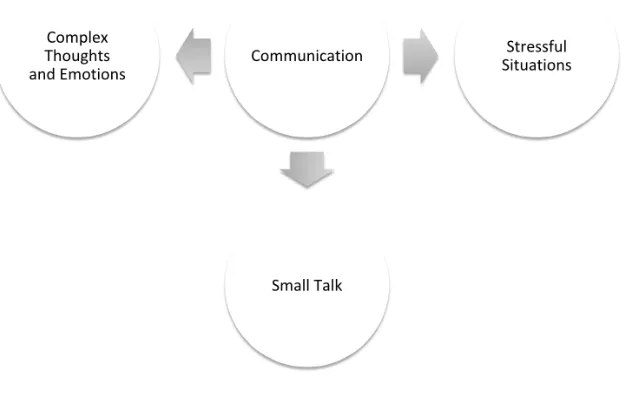
communication partner, or familiar listener. The results of the data support a variety of positive benefits of scripting in the realm of communication including; navigating small talk, communicating complex thoughts and emotions, and communicating during
stressful situations. Further benefits include providing comfort and fun, as well as success in the workplace. Despite these benefits negative responses to scripting from
communication partners have detrimental implications due to the isolation,
iii
anxiety. Features of scripting include their evolution over time as they become more subtle and complex based on life and social experiences. Familiar listeners report benefits for engaging in scripting with autistic family members, but also recognize outside
iv
SIGNATURE PAGE
This dissertation, written under direction of the candidate’s dissertation committee and approved by the members of the committee, has been presented to and accepted by the faculty of the School of Education in partial fulfillment of the requirements for the degree of Doctor of Education. The content and research methodologies presented in this work represent the work of the candidate alone.
Colleen Arnold 4/30/19
Candidate Date
Dissertation Committee
Dr. Emily Nusbaum 4/30/19
Chairperson
Dr. Nicola McClung 4/30/19
Dr. Jane Bleasedale 4/30/19
v
ACKNOWLEDGEMENT
For the fruition of this work to come forth, it truly took a village of support. I feel blessed to have been touched by so many brilliant and inspiring people along this path to
completion.
To my esteemed professors along the way, especially Dr. Rande Webester, Dr. Billye Brown and Dr. Jaci Urbani who never doubted me in this process, who gave me multiple opportunities to teach, reflect, and learn, and whom without I would not be standing here today. Dr. Webster, thank you for always pushing me towards this end result, and for never wavering in your support of my efforts.
To my dissertation chair, Dr. Emily Nusbaum, you have challenged my thinking time and time again and pushed me to think critically about disability and special education as a whole. This project has evolved so drastically thanks to your guidance and determination, and for that I thank you.
To my dissertation team, Dr. Nicola McClung, and Dr. Jane Bleasedale thank you for bringing your expertise and guidance to this project. Nick Walker, thank you for being my gauge into the Autistic community and for ensuring the prioritization of Autistic voices in this project.
To my USF cohort, Jason Davis, Melanie Marthaler, and Kimberly Kalkbrenner without your weekly Skype meetings, pep talks, advanced statistics support, and commiseration, I would not be crossing the stage. Thank you for making this journey possible!
To my family, which has evolved and grown through this process including two
pregnancies and the birth of my two amazing children, Bailey and Austen. Thanks to my husband Chris who never waivered and provided support for countless “dadurdays” across the last 7 years, countless writing nights, and even a writing weekend retreat. To my mom and my sisters, who never ever doubted me, even when I doubted myself I can’t describe what your support has meant to me.
To my best friend, Karsson Hevia, for always being available to provide a synonym, or to tell me if me word choice was contradictory. Thank you for always believing in me and I can’t wait to celebrate with you!
vi
TABLE OF CONTENTS
ABSTRACT……….…ii
SIGNATURE PAGE……….………iii
ACKNOWLEDGEMENT………..………….iv
TABLE OF CONTENTS………..……..vi
LIST OF TABLES………..vii
LIST OF FIGURES………...…ix
CHAPTER 1 INTRODUCTION………..….1
Statement of the Problem………..….1
Purpose of the Study………..…16
Method………..…….17
Theoretical Rationale………19
Background and Need………...……….22
Research Questions………23
CHAPTER 2 LITERATURE REVIEW………25
CHAPTER 3 METHODOLOGY……….60
Research Questions ……….60
Pilot Study……….61
Research Process………..63
CHAPTER 4 QUALITATIVE ANALYSIS OF ONLINE SURVEY………79
CHAPTER 5 QUALITATIVE ANALYSIS OF IN DEPTH INTERVIEWS………….106
CHAPTER 6 SUMMARY AND DISCUSSION………118
vii
Discussion and Conclusion………119
Implications ……….…………..124
REFERENCES………132
viii
LIST OF TABLES
ix
LIST OF FIGURES
1
CHAPTER I
INTRODUCTION
Autism and the Neurodiversity Movement
Understandings of autism, as a labeled category and a claimed identity, have
shifted recently due to the efforts of the Autistic Self-Advocacy Movement and Autistic
civil rights activists. Through the work and advocacy of the neurodiversity movement,
the characteristics and identity of autism have been shifting from what once was a
pathologizing standpoint, to reclamation of both the term and the identity. Judy Singer, an
Autistic self-advocate, is often credited for coining the use of the term neurodiversity in
the context of disability studies, based on her graduate thesis work (Arnold, 2017). This
term describes the concept of human brain variation as a natural part of diversity, and
thus should be accepted as a naturally occurring form of human variance (Walker, 2014).
The neurodiversity movement pushes back on the deficit model of disability, instead
encompassing a social model approach. The medical model views disability as something
that needs to be cured and/or eradicated through medical intervention, and the focus lies
on the alleviation of all characteristics that make individuals “different” and therefore in
need of intervention, remediation, and “person fixing”. The medical model places doctors
and scientists as the cognitive authority, or the keepers of knowledge, and thus puts the
medical profession in the forefront of defining and framing the conversation around areas
such as disability. This framing of disability emphasizes the biological perspective, and
2
and disability as a problem to be medically solved so the individual can function in
society (Haegele & Hodge, 2016). These issues framed by the medical model of
disability ignore the possibility that problems faced by the disabled community are in fact
a result of societal issues impacted by society’s social, physical, and political views and
discourse (Brittain, 2004). It is from this perspective that the social model grew to
contrast this old, traditional paradigm.
The social model is built upon the notion that it is not the disability that creates
the barriers for the disabled, but society itself. Society’s unwillingness to remove the
barriers that impact the disabled population’s participation in all forms of society result in
discrimination, isolation and exclusion, which are the truly disabling factors (Haegele &
Hodge, 2016). The emphasis of the social model is on political action and social change
in order to impact the attitudes of society, and to shift the focus from fixing the person, to
removing environmental barriers (Brittain, 2004). Through this lens disability is also seen
as a form of diversity that should be celebrated, or is at least neutral, which supports the
work of the neurodiversity movement.
The impact and gains that may be credited to the neurodiversity movement are
evidenced through many facets; these include the shift in the Diagnostic and Statistical
Manual of Mental Disorders (DSM) (American Psychiatric Association, 2013) from
viewing autism as a binary condition to a spectrum, as well as through the movement
spurred by autism advocates to identity-first labeling as opposed to person first, as well as
the movement of “Nothing about us without us” which focuses on the importance of
voices of Autistic adults leading the charge in both research and best practice. This
3
that disability policy should not be decided upon without the direct input and
representation of those being impacted by such policy. It then became the slogan used for
the Autistic Self Advocacy Network, and encompasses their mission statement (ASAN,
2013). The neurodiversity movement has also led to a change in mentality regarding not
only the perception of autism, but also the recognition of the positive attributes that are
connected with autism (Baron-Cohen et al., 2009), as well as the competitive advantage
that an individual on the spectrum may bring to the workforce (Austin & Pisano, 2017).
The orientation of the presumption of competence of individuals with autism remains a
cornerstone in this ideology (Biklen, 2005). Walker (2014) describes the impact of the neurodiversity movement:
Autism is still widely regarded as a “disorder,” but this view has been challenged in recent years by proponents of the neurodiversity model, which holds that autism and other neurocognitive variants are simply part of the natural spectrum of human biodiversity, like variations in ethnicity
or sexual orientation (which have also been pathologized in the past). Ultimately, to describe autism as a disorder represents a value judgment rather than a
scientific fact (pg. 3).
In an effort to convey a definition of autism that is not grounded in traditional pathological language and reliant on inaccurate stereotypes, Walker composed the following to be utilized as a replacement definition for that put forth by the DSM and other traditional documents. Walker describes autism as:
4
Autism is a developmental phenomenon, meaning that it begins in utero and has a pervasive influence on development, on multiple levels, throughout the lifespan. Autism produces distinctive, atypical ways of thinking, moving, interaction, and sensory and cognitive processing. One analogy that has often been made is that Autistic individuals have a different neurological “operating system” than non-Autistic individuals.
According to current estimates, somewhere between one percent and two percent of the world’s population is Autistic. While the number of individuals diagnosed as Autistic has increased continually over the past few decades, evidence suggests that this increase in diagnosis is the result of increased public and professional awareness, rather than an actual increase in the prevalence of autism.
Despite underlying neurological commonalities, Autistic individuals are vastly different from one another. Some Autistic individuals exhibit exceptional cognitive talents. However, in the context of a society designed around the sensory, cognitive, developmental, and social needs of non-Autistic individuals, Autistic individuals are almost always disabled to some degree – sometimes quite obviously, and sometimes more subtly.
The realm of social interaction is one context in which Autistic individuals tend to consistently be disabled. An Autistic child’s sensory experience of the world is more intense and chaotic than that of a non-Autistic child, and the ongoing task of navigating and integrating that experience thus occupies more of the Autistic child’s attention and energy. This means the Autistic child has less attention and energy available to focus on the subtleties of social interaction. Difficulty meeting the social expectations of non-Autistics often results in social rejection, which further compounds social difficulties and impedes social development. For this reason, autism has been frequently misconstrued as being essentially a set of “social and communication deficits,” by those who are unaware that the social challenges faced by Autistic individuals are just by-products of the intense and chaotic nature of Autistic sensory and cognitive experience. (Walker, 2014, pg. 3)
5
CDC (CDC, 2015) defines Autism Spectrum Disorder (ASD) as a developmental disability that impacts social, communication, and emotional skills. ASD is cited as a “public health concern” and it is stated that, “there is currently no cure for ASD”. There is also a list of deficits included on their website to describe the symptoms of autism, which include, “avoid eye contact and want to be alone”, “have trouble relating to others or not have any interest in other people at all”, and “repeat and echo words or phrases said to them, or repeat words or phrases in place of normal language” (pg. 1). As Yergeau (2018) describes, “…facets of autistic personhood (are transposed) into sterile symptom clusters, pathologizing character traits such as ‘intense and fulfilling interests’ with clinically ornate buzzwords such as ‘perseveration of autistic psychopathy’ (pg. 11). Through their definition and the language utilized to describe autism, it can be seen that the emphasis is placed solely on the perceived negative impact which autism has on an individual, and unlike Walker’s description (2014) does not consider differences in cognitive and sensory experiences or processes. The Individuals with Disabilities
6
and unusual responses to sensory experiences” (IDEA, 1990).
As evidenced above by more traditional definitions of Autistic characteristics, often in research and education deviation from “normal” is relied upon to define disability, instead of recognizing disability as a part of human neurodiversity. These laundry lists of symptoms are often described clinically, such as, “repeat and echo words or phrases said to them, or repeat words or phrases in place of normal language”, as described by the CDC (2015, pg. 1).
Identity-First Language
As noted, part of the result of the neurodiversity movement has been a recognition of the disconnect of the terminology preferred by many Autistic self-advocates, versus the terms utilized by professionals, parents, and some Autistic individuals. As language often does have an impact on shaping societal views, the importance of this semantic debate is not lost. The debate is clearly outlined by Brown (2015), who describes the importance of using identify first language such as “Autistic person”, “In the autism community, many self-advocates and their allies prefer terminology such as ‘Autistic,’ ‘Autistic person,’ or ‘Autistic Individual,’ because we understand autism as an inherent part of an individual’s identity- the same way one refers to ‘Muslims,’
7
While Brown (2015) agrees that humanizing the Autistic population is the goal of both groups, she supports the use of identity-first language and describes her
disagreement with the use of terms such as “person with autism” as, “it does have an attitudinal nuance. It suggests that the person can be separated from autism, which simply isn’t true. It is impossible to separate the person from autism, just as it is
impossible to separate a person from the color of his or her skin.” (pg. 2). She goes on to describe that autism is, “an edifying and meaningful component of a person’s identity, and it defines the ways in which an individual experiences and understands the world around him or her. It is all pervasive.” (pg. 2)
To utilize identity-first language is to support and affirm the views of many Autistic self-advocates, it is to recognize the power of language and how it drives societal change. 1 As Brown describes (2015),
…When we say ‘Autistic person’, we recognize, affirm, and validate an individual’s identity as an Autistic person. We recognize the value and worth of that individual as an Autistic person- that being Autistic is not a condition absolutely irreconcilable with regarding people as inherently valuable and worth something. We affirm the individual’s potential to grow and mature, to overcome challenges and disability, and to live a meaningful life as an Autistic. Ultimately, we are accepting that the individual is different from non-Autistic people- and that that’s not a tragedy, and we are showing that we are not afraid or ashamed to recognize the difference. (pg. 3)
More and more this debate is pushing allies and members of the community to closely consider their word choice, and the impact that the connotations of these different terms have on the way we view and think of Autistic individuals.
Scripting as a Feature of Autism
One feature of autism recognized by both Autistic adults and IDEA includes
1 Identity-first language will be utilized throughout this work in an effort to respect the
8
differences in communication, specifically for some in the areas of expressive communication. The medical model uses language such as “stereotypic”, “socially awkward” or “developmentally inappropriate” (Shawler & Miguel, p. 112) to describe the expressive language patterns associated with autism. Conversely, Sequenzia (2015), who identifies herself as a multiply disabled, non-speaking Autistic activist and writer discusses how every individual communicates, but, “We (Autistic individuals) are consider[ed] to be ‘able to communicate’ only if we speak, and act in accordance with, the language the majority chooses to know” (pg. 96). She identifies the outside attitude towards communication differences, as a huge stumbling block, which creates a lack of understanding regarding any communication that is not considered “normal”.
Speech patterns for Autistic individuals are often pathologized, and are used as a diagnostic measure. One of these speech differences includes scripting or “delayed echolalia”, which the CDC (2015) describes as when individuals, “repeat or echo words of phrases said to them, or repeat words or phrases in place of normal language” (p. 1), individuals may also, “repeat actions over and over again” (pg. 1). The use of the term echolalia is common among traditional researchers when discussing this type of
conversing, but the term often used in a more practical sense by some Autistic individuals to refer to a similar phenomenon is “scripting”. Researchers also may use the term “vocal scripting” (Silla-Zaleski & Vesloski, 2010), and tend to use the term
synonymously with echolalia. Some Autistic authors have also differentiated between the term delayed echolalia versus scripting, treating them as separate communication
9
Through definitions of scripting2 present in the current, positivist literature, it is
clear that the use of scripting as a communication strategy is labeled as socially
unacceptable and as a behavior to eradicate, even though for some it may be their most comfortable communication approach. Research has typically focused on what is termed as non-contextual or nonfunctional vocalizations (Colón, Ahearn, Clark, & Masalsky, 2012; Liu-Gitz & Banda, 2009), “including repetitive babbling, grunts, squeals, and phrases unrelated to the present situation” (Colón, Ahearn, Clark, & Masalsky, p. 109). Prizant and Rydell (1984) were the first researchers to present a universally accepted definition in traditional, special education research, as previously “delayed echolalia” was loosely characterized as echoing after a delay, or lapse of time (Shapiro, 1977). Delayed echolalia is currently defined by traditional researchers as: a) an echo that occurs more than two conversation turns from the original utterance; b) and/or is classified as a learned phrase through familiar listeners; c) or is a higher level of conversation than the speaker could generate independently (Prizant & Rydell, 1984).
What continues to be missing in the research however, are definitions and
understanding of the term and act of scripting from Autistic individuals who utilize it as a part of their communication. The emphasis is not on understanding scripting from the Autistic perspective, but from the perspective of the researchers and the professionals working with them. As recognized by Robledo, Donnellan, and Strandt-Conroy (2012), “Most often the description offered by the professionals pay little attention to the
experience of people who live with autism” (pg. 1), and scripting is a prime example of
2 The researcher will use the term “scripting” throughout the work in an effort to convey
10
this being the case, and reflects the clear disconnect between traditional research and the autism community. Milton and Bracher (2013) discuss how the narrative that is framed around autism, comes from clinicians and researchers where, “Autistic people were the objects of inspection, rather than active participants in the creation of knowledge relating to their own experience” (pg. 63). This is where the emergent research style of auto-ethnographic essays, written by Autistic adults, fills a serious void in the research and shifts the focus (Dowley, 2016). This type of research is critical, as from the first reference of scripting (Kanner, 1943) in traditional research, the assumption of it as a meaningless behavior was put forth.
First Description of Scripting
Kanner originally discussed scripting, or as he referred to it “delayed echolalia”, in his first descriptions of children with autism, as he described their speech as: “parrot-like repetitions of heard word combinations. They are sometimes echoed immediately, but they are just as often ‘stored’ by the children and uttered at a later date. One may if one wishes, speak of delayed echolalia” (Kanner, 1943, p. 243). Kanner specifically described one of his patient’s language as, “Irrelevant utterances…were his ordinary mode of speech. He always seemed to be parroting what he had heard said to him at one time or another” (Kanner, 1943, p. 219). This demonstrates that, from the start of the earliest traditional research about autism researchers made dangerous assumptions about the use of scripting, and the lack of relevance linguistically speaking.
Scripting: An Ethical and Linguistic Debate
11
normalization of the individual. To contrast, the social model of disability views the barriers that are presented to disabled people as an issue of society and access, not as an internal personal deficit. These belief systems and assumptions hugely impact research, as they create the platform upon which the research questions are based, and thus the type of methodologies that are employed to address those questions.
In terms of scripting, these highly contrasting belief systems have a tremendous impact on the way that the research is framed. In traditional research the voice of the Autistic participant is ignored through the investigative process, and the focus remains on providing interventions with a goal of alleviating the “Autistic symptoms” regardless of what scripting may be providing the individuals themselves. As scripting is viewed as a behavior that needs to be eradicated, the focus is on the intervention to decrease “delayed echolalia” (Ahrens, Lerman, Kodak, Worsdell, & Keegan, 2011; Colón et al., 2012; Conroy, Asmus, Sellers, & Ladwig, 2005; Nuzzolo-Gomez.et al., 2002; Scalzo et al., 2015; Valentino, Shillingsburg, Conine, & Powell, 2012; Vanderkerken, Heyvaert, Maes, & Onghena, 2013).
From the social model of disability, the often less accredited or recognized belief system, scripting is viewed as having a meaningful purpose for the individual using it, as well as is seen as a bridge to further communication development. This research
highlights that scripting has implications for communication, and therefore looks to uncover these aspects of the communication style (Sterponi & Shankey, 2014; Stiegler, 2015; Stribling, Rae, & Dickerson, 2007).
Communication and Scripting
12
Stiegler’s (2015) analysis of the literature. Stiegler (2015) reviewed the current literature on scripting, looking at behavioral, linguistic, and speech-language disciplines. Stiegler discussed characteristics of scripting that are supported by current research, including, “a key communication adaptation, a cognitive tool, and a self-regulatory tool” (Stiegler, 2015, p. 750). Stiegler also identified the developmentally appropriate context of mimicking, as in the early stages of language development all individuals echo or
“borrow speech” (Stiegler, 2015). Through the work of Ann Peters (1983) it can be noted that, “some children acquire language in a different, but equally valid way. Instead of single words, they capture longer units from the ongoing speech stream in the
environment. Their units are sentence-length strings marked by intonational contours, and they are said to posses a gestalt processing style” (Stiegler, 2015, pg.751). From this perspective, this language development may in fact be a bridge to further development of language, also referred to as “mitigated echolalia”, or evolving scripts.
Research on evolving scripts or “mitigated echolalia” has shown that scripting may change over time, with the original echo later being manipulated to convey meaning within a social context. In essence, instead of repeating a script verbatim, overtime the individual may alter the script to adapt the meaning that fits a specific circumstance (Gernsbacher, Morson, & Grace, 2016). Research has also articulated the use of scripting as a tool for communication for the Autistic individual, even if the expression and
intention is not fully understood by the receiver, especially inexperienced listeners
13
meanings”, which may only be privy to familiar listeners3, and thus made them difficult
to categorize. This research highlights the importance of the knowledge base and
listening experience of the communication partner. Due to this, Stielger (2015) discusses the importance of understanding the primary source of scripts.
Positivism and “Delayed Echolalia”
The positivist paradigm and approach to scripting, or “delayed echolalia” as referred to in this paradigm of research, is reflected in a large body of intervention research, which attempts to show decreased use of “delayed echolalia”, and in some cases, an increase in “functional communication” through the use of an outside intervention. In a systematic review conducted by Neely, Gerow, Rispoli, Lang, and Pullen, (2015) a total of 568 peer-reviewed articles were found which focused on the use of scripting and autism. Of the studies, 11 were included in the review based on specific inclusion criteria that included the use of an intervention for echolalia and reported an outcome, as well as utilized experimental design. All of the 11 studies included interventions that had behavioral components, some of which included a specific
treatment package (e.g. Natural Language Paradigm, computer intervention, cues-pause-point), while others used a behavioral strategy (e.g. error correction, differential
reinforcement, and modeling) (Neely et al., 2015). None of these studies attempted to
3 Familiar listener is defined by this researcher as individuals who assist in
understanding and conveying the meaning of a script (Prizant, 2015), who do not treat scripting as inappropriate behavior, and use scripting in an effort to connect,
14
determine the function or they meaning behind the communication, and as the authors note, “Of particular concern is that echolalia may serve various social as well as non-social communicative functions for individuals with ASD…In addition, as there is divergence within the field regarding whether echolalia is nonfunctional, a necessary part of developing functional communication, or serves a social function, identifying the function of echolalia would help guide future research and practice” (Neely et al., 2015, pg. 89). The vast amount of research focused on the eradication of scripting is clear through this review, as is the notion of the lack of attention paid to what scripting does for the actual individual. Without understanding the purpose of scripting is it ethical to focus research solely on how to eradicate it?
15
nose’) (Ahrens et al., 2011), or relied only on physical/motor demands (Saini et al., 2015). Saini et al. (2015) chose to use only motor demands, which allowed them to use physical prompting if the participant was not “compliant” during the RIRD sessions, a more invasive technique for the participants.
In other intervention studies, the vocal demands consisted of echo responses (‘Say house’) or labeling or echoing a vocal model of visual cards (Colón et al., 2012; Shawler & Miguel, 2015), dependent on the verbal abilities of the participant and their ability to fluently answer questions. The literature suggests that RIRD is an effective behavioral intervention for “vocal stereotypy” when implemented in a clinical, or highly structured setting such as an in home therapy room, without significant outside distractors or high task demands (Colón 2012;Ahrens 2011;Schumacher 2011;Saini 2015;Shawler 2015).
While RIRD is an intervention that has been addressed by a wide variety of studies, it is one that ignores the communicative nature of scripting. The emphasis on the response is that the individual is continuously interrupted when attempting to
communicate, thus presenting an ethical issue, especially when scripting may be the primary or preferred mode of communication in some cases. The research does not consider that limiting scripting will actually limit the ability to communicate effectively. There is also very little research to support the notion that RIRD can be effective outside of the clinical setting, such as in a small special education classroom environment (Liu-Gitz & Banda, 2009), but there is no research to confirm the effectiveness in a larger special education setting, or in a general education setting. The difficulty with
16
environment is not typical to what the Autistic individual would experience in their daily lives. To implement an intervention to eradicate the use of scripting without a real understanding of the purposes it serves for the individual, as well as how it impacts and shapes their communication, is an ethical issue, and an issue this research attempts to uncover.
Disruption to Positivist Research
The pathology paradigm that drives positivist research frames the conversation of autism. As Walker describes, “At the root of the pathology paradigm is the assumption that there is one ‘right’ style of human neurocognitive functioning” (Walker, 2016, pg. 1). This paradigm emphasizes Autistics as damaged, and focuses solely on the deficits and negative impacts on the Autistic individual. Historically, similar frameworks have been used in an effort to suppress other minority groups including women, people of color, and the gay community (Walker, 2016). This paradigm leads an overwhelming emphasis in both research and practice fixated on making Autistic individuals less Autistic, and in turn “normalizing their behavior”. This focus on normalization thus occurs “…at the expense of any significant focus on societal acceptance of autism, accommodation of Autistic needs, removal of systemic barriers to access and inclusion, or supporting Autistic persons in thriving as Autistic persons” (Walker, 2016, pg.1). The impact of this phenomenon is not lost in regards to Autistic communication and scripting.
17
for communication, the majority of the research base has emphasized the eradication of this type of communication and has relied on this deficit paradigm. By focusing energy solely on eliminating a form of communication by a group of individuals, in essence we are deeming what they have to say as unimportant, and in some cases are restricting their ability to communicate or self-regulate. As the neurodiversity movement advocates, autism is a naturally occurring phenomenon, and the emphasis on elimination of traits that are viewed as Autistic is grounded in positivist thinking, and are harmful to the community. The emphasis of our systems should not be to normalize all individuals, but to celebrate autism as a part of human diversity. As Walker states, “At this time, sadly, the pathologization of Autistic minds, bodies, and lives still has not been widely
recognized – especially not within the academic and professional mainstream – as being yet another manifestation of this all-too-familiar form of institutionalized oppression and othering” (2016, pg. 1).
As researchers and advocates for the autism community, it is our responsibility to disrupt this positivist perspective and to shed light on how the pathology paradigm has been allowed to shape autism research as whole. To disrupt the current paradigm, this proposed research is grounded in the neurodiversity paradigm and will work to provide an in depth understanding of the use of scripting, in terms of what it provides the individuals themselves by prioritizing the perspective of the Autistic individuals who utilize this language in their daily lives and creating space among research to validate and support these individual perspectives.
Purpose of the Study
18
and in the United States the medical model of disability drives the way autism and Autistic characteristics are viewed. In order to support and encourage the communication and regulatory functions of scripting for Autistic individuals, it is important to increase our understanding, and to do so one must reframe their view of disability and emphasize both the social model of disability and the neurodiversity movement. Therefore, the purpose of this study is to frame the Autistic voice as the priority, to utilize their personal experiences and reflections upon the use of scripting to frame general understanding. The goal is to obtain the perspective of those who engage in it, in order to examine the
relationship between scripting and communication, as well as to establish other benefits that the use of scripting provides Autistic adults. The study will also identify how familiar listeners impact the successful use scripting as a form of communication, and
what outside influences are placed on listeners to react to scripting in a specific way. Through the insight uncovered by the proposed research, the conversation will shift and the Autistic adults will become the primary educators of their own experience in relation to scripting.
Methodology
19
professional list-serves, and the research community. The survey will include
demographic information, as well as open-ended questions that ask Autistic adults to share their experiences of the use of scripting. Participants will then be given the option for a follow up semi-structured interview. Information about successful familiar listeners will also be solicited from survey participants who choose to share this information. These familiar listeners will be contacted to participate in a follow up interview regarding their experience communicating with Autistic individuals that utilize scripting.
Significance of the study
While Autistic voices are gaining power and momentum through a variety of forums, they continue to be ignored in the realm of traditional research, and are
positioned as passive subjects of predetermined methodologies. The research questions and qualitative methods of this study will emphasize the Autistic voices in the forefront, prioritizing their expertise. The study will also address the importance of reactions of communication partners and how responses, both positive and negative, impact scripting, communication, and the Autistic individual. In addition, understanding how scripting evolves over time can assist in exploring the impact on communication, as the survey will look to uncover how scripting contributes to language development from the Autistic perspective. This study is also important to the disability community as a whole, as it emphasizes the importance of disabled voices in the world, in an effort to make participants active in the research process. The study also relies on the premise of
20
learner, and the emphasis will be placed on the Autistic people as the experts in their own experience and in the field of autism research.
Theoretical Rationale
When children are developing speech, it is a developmental milestone to engage in echoing, but as Autistic children continue this type of communication long after it is deemed “developmentally appropriate”, the echoing is classified and viewed as deviant. Gestalt language acquisition is a part of typical language development. In the first stage of development language phrases are learned and spoken in their entirety. As language develops the child moves onto the second stage, mitigation, where the language may be recombined and chunked into different phrases. After this phase, language may be more isolated where children are able to generate original sentences and phrases, as they can now isolate single words and their meanings. Finally, the development moves to stage four where children are able to generate complex sentences of their own construction (Peters, 1983).
21
and less an exact replica of language heard previously.
Looking towards Vygotsky’s sociocultural theory, the emphasis is placed on the experiential social world that leads to a child’s development. Learning is constantly being impacted by the environment in which it occurs, thus does not occur in a vacuum.
Vygotsky emphasizes the importance of learning that is grounded in interaction with others, specifically the development of language, which is shaped by engagement in dialogue and play (Ornstein & Hunkins, 2004). A classroom is a small community of diverse learners that is reflective of the outside community. Each child is only part of a complex system that is at work in the classroom (Derry & Steinkuehler, 2003). This is critical to this study, as through interventionist research and approaches, the focus is often on ignoring, redirecting, or interrupting scripting behavior. As the theory states, individuals do not develop in isolation, they develop alongside one another, in essence a co-development. As many Autistic behaviors are often pathologized and referred to as strange, this impacts how Autistic individuals live within our world, and frames how neurotypical individuals interact with them. By eliminating a communication style we are not giving Autistic individuals the language experiences and positive communication with others to support development. “Setting up AS as a generalised deficit in society, for example, may frame social encounters with people categorised in such a way that
22
without being forced to mimic non-Autistic behaviors that can be confusing or bewildering to them” (Milton & Bracher, 2013, pg. 64). Vygotsky also discussed “language cultures” which were specific to contexts, and the importance of students having access to practice their language skills, as if neglected they would deteriorate due to lack of practice (Ornstein & Hunkins, 2004).
Finally, the work of Yergeau (2018) gives a frame through which to analyze societal’s response to communication differences in Autistic people. Her work points out the cultural stereotypes of autism that are used to dismiss the Autistic community, as individuals that lack humanity. Her work analyzes the use of language as the basis for meaningful existence, thus those who communicate alternatively, or are without oral communication are dehumanized and not valued. She also identifies the confining rules of communication, including eye contact, which act as barriers for those Autistic individuals who can speak or write. Finally, her work recognizes that in research it is assumed that Autistic people do not have anything to say, even about their own experiences, thus they are spoken for and Autistic narratives are ignored.
Theory Applied to this Study
Evidence of the implications of Gestalt language acquisition for Autistic
23
a good witch or a bad witch?” (pg. 44). This line was a script that he had internalized as a whole to represent a greeting, as it was in The Wizard of Oz when Dorothy first meets Glinda. While Aidan was repeating a script he learned from a movie, he was also communicating a sophisticated greeting with communicative intent. His style of processing is aligned with Gestalt language.
As Vygotsky supports, children co-develop through their experiences with the world and their social relationships. Thus analysis of the Autistic experience and how it impacts development is critical to this study, as through interventionist research and approaches, society is often focused on ignoring, redirecting, or interrupting scripting behavior. If Autistic children who utilize scripting are constantly being faced with an intervention when they are attempting to communicate or self-regulate, an intervention that further isolates them, how does that impact their development? This study attempts to uncover how scripting is responded to by communication partners, as well as how these responses impact individuals. It may also be viewed that Autistic communication is its own “language culture” that exists within certain contexts, and thus must be
considered as such an investigated through a cultural lens (Ornstein & Hunkins, 2004). Yergeau’s work (2018) supports the importance of this research to emphasize the voices and experiences of the Autistic community. Through this process, there is an emphasis placed on the humanization of the participants which is in contrast to how the framing of the Autistic experience is usually portrayed. As Yeregeau notes, “If one is arhetorical, then one is not fully human” (pg. 6). Thus, to highlight and to prioritize the language of the participants, is to humanize them as well.
24
While Autistic writers, activists, and leaders have found non-traditional spaces to frame their experiences and make their perspectives heard through self-publications, online forums, blogs, and video journals, the more traditional research world has fallen disappointingly behind in this recognition of knowledge. The information provided by this study will be critical, as unlike studies that came before, it will prioritize the
perspectives and experiences of those who use scripting in order to shape understanding. Research Questions
This study uses a range of qualitative methods in an attempt to answer the following research questions;
1. What benefits does scripting provide, as described by Autistic individuals that use scripting?
2. What are the communicative features of scripting as described/used by Autistic individuals?
3. How do communication partners, specifically familiar listeners4, influence the use of, and effectiveness of scripting as a form of communication? How does this contrast to other communication partners?
4. From the Autistic perspective how can communication partners impact scripting, and what strategies and supports can be utilized by neurotypical individuals to improve
4 Familiar listener is defined by this researcher as individuals who assist in
understanding and conveying the meaning of a script (Prizant, 2015), who do not treat scripting as inappropriate behavior, and use scripting in an effort to connect,
25
communication and build meaningful relationships?
5. How does scripting evolve over time as described by Autistic individuals and their familiar communication partners?
26
CHAPTER II
OVERVIEW OF THE LITERATURE
The prioritization of “normative” language structures
When discussing communication, it is important to recognize how specific communication norms are prioritized over others, and how this impacts the Autistic community. In the Western society the use of eye contact is a prioritized communication norm, it is often considered a sign of respect, and it is often demanded from children or subordinates as a symbol that one is listening and taking in the verbal information provided. Despite the voices of Autistic adults, and emic research that speaks to the difficulty that eye contact poses for Autistics, it is still a practice that is expected and “worked on” in therapy. Endow (2013) expressed, “Eye contact can be hard for Autistics for a variety of reasons. When I was a youngster I received too much bright, bold, painful sensory information from making eye contact. To guard against the intense physical pain I did not engage in eye contact. If my teacher demanded eye contact I obediently did so, but at a price. I would float out of my body, hover near the ceiling and look down, watching the little girl of me” (pg. 1). In Endow’s experience, eye contact in fact hindered her ability to take in language, which has been supported by other Autistics in the research.
27
individuals in their study expressed difficulty with eye contact, including Matt who stated, “‘ It is painful for me to look people in the eye...This lack of eye contact sometimes make people think I’m not paying attention to them” (pg. 5). Another individual in their study, Barbara, agreed and stated, “‘ I can hear a person better if I don’t look at their face...If I’m looking at them, it’s kind of a mild distraction...I feel that looking into someone’s eyes is intrusive” (pg. 5). Kim in her blog “Musings of an Aspie” (2012) recognizes the complexity of eye contact and how for her it may spur a fight or flight reaction. Her responses to eye contact vary depending on the familiarity of the person, those being most familiar and least familiar creating less discomfort. She also discussed the difficulty of gaining information from the eyes and how that impacts her usage of eye contact, “Perhaps it’s because I’m self-conscious about the uneven balance of social power in these situations? The other person is clearly gathering social data from my eyes, but I’m not able to do the same” (pg. 4).
American culture emphasizes the importance of eye contact and prioritizes it as a “normal communicative function”, which leads to the requirement that all people
28
no wonder it makes us so uncomfortable when others try to ‘speak’ to us with their eyes” (pg. 5).
Similarly, the use of scripting as a form of communication for individuals with autism is another example of an Autistic communication style that is demeaned. As scripting is often dismissed as functionless in research, and is considered atypical communication, those who engage in this type of communication are subjected to interventions focused on the eradication of scripting, and there is a lack of focus on understanding the communicative functions. For the Autistic individual, energy is often being exerted to understand the dominant normative language structures, yet there is a lack of reciprocal respect from professionals and neurotypicals in regards to scripting and other forms of Autistic communication. As traditional speaking is the privileged mode of communication, this “othering” of people with autism presents as a huge barrier of communication (Sequenzia, 2015).
Misrepresentation of Autism
The Autistic community has often criticized the research community for their lack of understanding of the foundations of autism, due to the absence of Autistic voices with in the research. This lack of representation has resulted in generally accepted
characteristics and views of autism by researchers and families that are far disconnected from the beliefs and experiences of those who identify as Autistic.
29
(pg. 11). TOM is described the ability to understand that others have their own unique feelings, and more contemporary definitions include other cognitive processes in relation to TOM, including metacognition and empathy (Yergeau, 2018). While the Autistic individuals in Robledo et al.’s study (2012) described difficulty with identifying the emotions of others, they all disagreed with the assumption that Autistics do not have TOM. “Participants expressed feelings they experienced and also spoke about relating to another person’s feelings. It was apparent that for these participants there was a
difference in understanding emotions, not an absence” (pg. 8). This example illustrates how neurotypical researchers can often misinterpret the behavior of Autistic individuals, which can lead to dangerous assumptions about autism. Through more traditional
research, autism is often defined through the use of standardized instruments, such as the Theory of Mind Inventory 2 (ToMI-2). As argued by Cohen-Rottenberg (2009), the standardized testing that is used to measure TOM, may not in fact clearly assess TOM, and therefore produces misleading results that negatively stigmatize the Autistic community.
Much of what traditional research utilizes in an effort to understand autism are
standardized instruments, which must be vetted to understand how valid and reliable
these instruments are. As exhibited by Cohen Rottenberg (2009), at times these
instruments are not built in a way that is conducive to Autistic understanding, and thus
may not be valid. Lecavalier et al., (2006) conducted an exploratory factor analysis
utilizing the Autism Diagnostic Interview-Revised (ADI-R), considered a gold standard in
autism identification in traditional research, in an effort to examine the consistency and
30
behaviors related to scripting as “repetitive behavior” versus “communication”, and the
researcher looked to determine the accuracy of these categorizations. The ADI-R
provides categorical results for three domains; language/communication, reciprocal social
interactions, and repetitive behaviors/interests. It is a semi-structured interview that
scores 93 questions answered by the individual’s primary caregiver in areas of early
development, communication, play, repetitive behaviors, social development, and
behavior issues. While the ADI-R is highly regarded in traditional research communities,
there have been little independent psychometric studies analyzing its effectiveness
(Lecavalier et al., 2006). Using a sample of 226 individuals, a factor analysis was
conducted. While the analysis supported the validity of social, communication, and
repetitive behaviors as core domains of autism, the study also looked to challenge or
corroborate the placement of specific items, such as social smiling and imaginative play,
into specific categories. The study concluded that “stereotyped utterances”, (.625),
“neologisms” (.847), and “inappropriate questions” (.594) loaded most strongly under the
communication domain and not under the repetitive behavior domain (Lecavalier et al.,
2006). This study supports the claim that while typically scripting is lumped into the
category of repetitive behavior, in actuality it more closely fits into the category of
communication. This study supports the notion that scripting should not be dismissed as a
functionless act, but should be viewed as communicative in nature.
These conflicts regarding the use of eye contact, as well as the assumptions made
about autism and TOM, are two examples of how often neurotypical traditional research
and the Autistic experience clash. The mis-categorization of the characteristics of autism
31
yet another example of this clash. Yergeau (2018) claims that these disconnects are due
to an effort to dehumanize the Autistic experience, in an effort to describe the
characteristics of Autism as nonintentional, thus without intention, the Autistic
community is without rhetoric, and thus lacks humanity.
Other fields are looking beyond intervention research to determine how to
approach “echolalia” in relation to its function. In her review of the scripting literature,
Stiegler (2015) stressed the importance of awareness, “that a radically divergent range of
ideas exists within the wider corpus of research produced by professionals in other
fields… (including) a long tradition of behavioral investigations and practices focused on
the extinction or reduction of echolalia”(Stiegler, 2015, pg. 750). Stiegler goes on to state
that interaction linguists have recognized echolalia as, “a key communicative adaptation,
a cognitive tool, and a self-regulatory tool” (Stiegler, 2015, pg. 750).
Critiques of Traditional Interventions
Overall, traditional research lacks specific information regarding how scripting is handled across contexts, and how those responses impact the individual engaging in the
scripting. What has been illustrated is that those working with children who engage in
scripting respond to this behavior in a variety of ways. Roberts (2014), outlined how scripting was historically treated based on the dominant theoretical framework of the time
period. In Kanner’s 1940’s description of autism from a psychoanalytic framework,
scripting was considered to be, “a hostile behavior (Caluccio, Sours, & Kalb, 1964)
indicative of a failure of ego development (Bettelheim, 1967)” (pg. 57). As behaviorism
began to take shape, scripting was then seen as a self-stimulatory behavior that was
32
often used, in conjunction with rewards for imitating a model, which as Roberts (2014)
notes, “must have been confusing for everyone” (pg. 57).
Through his experience in both research and consultation, Prizant (2015) outlined
typical reactions to scripting in his experience. He described that early in his career it was
common to utilize very harsh techniques when a child engaged in scripting:
Therapists would respond to a child’s ‘silly talk’ with loud, annoying (to the child) noises such as clapping their hands near the child’s face, the way you might try to dissuade a dog from barking in the house. In one school I visited, teachers would squirt lemon juice in a child’s mouth to punish ‘undesirable’ behavior and remind her to speak in turn or get back on topic (pg. 39).
While Prizant noted that more recent practices are less harsh, the overarching goal is
always to stop the scripting, whether through ignoring the child, or giving a firm
command. Similarly, according to Wootton (1999) adults generally tended to first ignore
scripting behavior, and then direct students what they considered to be a more appropriate action. As discussed in Liu-Gitz and Banda (2009), responses to scripting by teachers in a classroom setting may include, ignoring, reprimanding, and praising what was noted as “functional communication”. During the baseline data collection period of the study, when the classroom teacher was prompted to interact with the students as she normally would, the Autistic child was redirected by the teacher, or asked not to whine or make inappropriate noises. As outlined in the studies above, the way in which individuals react to scripting is aligned with the medical model of disability. The general consensus throughout research is that the behavior serves no external communicative function, thus this assumption frames their reaction. Prizant stated (2015), “In their attempts to make children appear more ‘normal’, these “experts” were plainly ignoring what were clearly
33
process of learning to communicate and connect with the world” (pg. 40).
In contrast to the intervention-based responses described above, on the other
hand, familiar listeners may have more positive reactions to scripting, as exhibited in
Tarplee & Barrow’s research (1999). Kenneth’s mother used scripting as a way to connect with her son, as well as a form of play and interaction. “...Echoing is by no means treated by her as an inappropriate behavior: rather it is a resource which Kenneth’s mother, as well as Kenneth, can employ to initiate sequences of talk between them (pg. 472). While the importance of listeners was emphasized through this study, the impact of familiar listeners has not been specifically explored through the research.
Scripting as Meaningful
Despite the emphasis of traditional research to support interventions to eradicate scripting, other studies have concluded that scripting can provide a variety of functions for the Autistic individual. Communicative functions supported by the research include; use as an interactional resource (Prizant & Rydell, 1984), to express understanding, socialize, and communicate a need (Tarplee & Barrow, 1999), to communicate a feeling (Prizant, 2015), to reduce the stress of a situation through humor, as well as a self-monitoring strategy/ behavioral reminder (Sterponi & Shanky, 2006: Prizant, 2015; Wooton, 1999). While studies outlined below depended on researcher and listener interpretation, they open up the door to consider a wide array of communicative features of scripting.
Prizant & Rydell’s (1984) research, conducted with three Autistic young men
34
their speech. Prizant and Rydell also looked at categorizing speech into function groups,
which they labeled as non-interactive or interactive speech. Through the use of structural
and functional analysis, they proposed four non-interactive categories and nine
interactive categories. The interactive categories they identified suggest that individuals
with autism who use scripting may use these phrases in an attempt to interact with other
individuals. This categorization includes functions such as: taking a turn during an
exchange, an attempt to label certain objects or actions (while also showing gaze and
nonverbal expectation of expected acknowledgement), providing new information to the
listener, requesting an object or food, protesting something that was not desirable (often
paired with a physical movement to stop), and verbal completion of an interactive routine
(Prizant & Rydell, 1984).
Prizant (2015) made further conclusions based on his experience with the above study and gave context to the scripting of the participants, describing the study as the pivotal experience that helped him to understand scripting. His work clearly outlines multiple communicative functions for scripting including; expressing understanding and communicating a feeling or need. This aligns with the work of Tarplee and Barrow (1999) who concluded in their study that scripting was used as a method to engage in ongoing interactions and brought forth a relational closeness. Additionally, both studies recognize the importance of a third party whom was familiar with the scripting patterns of the participant (in both cases the mother).
35
don’t pee on the wall” (pg. 41), as he skipped around the room, repeating the script with a strong negative tone. This script was an acknowledgement from David, recognition that he was being scolded and that this experience, or his behavior should be filed under the same category as slamming doors or peeing on the wall, it is not allowed. In his own way, he was expressing to his teachers and staff that he understood their rules, or perhaps as a personal reminder to himself.
Prizant (2015) shared another example of scripting to communicate, but in this instance to communicate a feeling. Jeff had been behaving a bit off, with less energy than usual and began approaching adults in the classroom with an open mouth making a noise like, “Doo-aaah! Doo-aaah!” (pg. 41). This script continued throughout the afternoon, and it was not clear to the adults in the room the meaning, but what was clear was that Jeff was attempting to share something and was expecting a response from the adults around him. Upon discussion with Jeff’s mom, she didn’t hesitate and immediately understood what Jeff was trying to communicate. She shared that she thought he was getting sick, and when that happens she asks him to “...open his mouth and do ‘Aaah’” (pg. 42). Prizant (2015), “It made perfect sense. Jeff was trying to tell us that he didn’t feel well. He had a cold, or maybe a sore throat. At his developmental stage, he was unable to explain that in words, so he was acting out a scene for us, reliving what he had heard his mother say at home: ‘Do Aaah’” (pg. 42). Through the use of the insight of a familiar listener, it became clear that Jeff’s script was not meaningless, it was not self-stimulation, but an attempt to share information about his health and discomfort.
36
Tarplee and Barrow (1999), for example, used this method to analyze the speech patterns of a three-year-old boy with autism called Kenneth. Interactions were captured through the use of audiovisual recordings, and included typical interactions between the
participant and his mother, the primary caregiver, across a 2-week period, with each recording lasting 20-30 minutes. These interactions were then transcribed and analyzed based on phonetic details as well as prosody 5 (Atkinson & Heritage, 1984). The echoes
that Kenneth engaged in are all derived from one source, a dinosaur video The Land Before Time II, which during the study was an enthusiasm for him. The purpose was to look at how the echoes served as an interactional resource for Kenneth and his mother to interact.
The researchers noted that Kenneth and his mother often engaged in labeling tasks using photo cards, with intermittent free play, initiated by the mother that generally focused on dinosaurs. They would often engage in reciprocal echoing, where there would be several turns of echoes between the two. It was difficult for the researchers to identify the antecedents leading to Kenneth’s echoing, at times it would coincide with a visual of the dinosaur toys, other times it was unclear. The scripts shared were accompanied by eye gaze towards the mother, and thus were clearly directed at her, at a rate of 90% in some examples (Tarplee & Barrow, 1999). Kenneth also would at times hold his gaze until his mother responded to the script, which suggested that he was waiting for a response, often looking for her to repeat the echo that he previously produced, as he would repeat his script if his mother did not respond in the way he was looking for. He did this if his mother did not echo him, did not make eye contact while scripting, or tried to redirect
5 The transcription was supplemented by representations of phonetic detail, and included
37
him, thus he would repeat the echo (Tarplee & Barrow, 1999). The authors conclude that due to the shared attention as evidenced by eye contact, as well as Kenneth’s tendency to pause between scripts and await his mother’s reply, he was clearly using the scripts as a tool for interaction.
The researchers also note that Kenneth showed visible pleasure through scripting with his mother, and that, “one might argue that it is during these echoing sequences that one feels most strongly a sense of inter-subjective alignment between Kenneth and his mother.” (pg. 466). This alignment is also illustrated by Kenneth’s efforts to repair miscommunications when his mother misinterprets his script for another meaning. During one exchange when he is misinterpreted, he physically freezes, engages in extended eye contact with his mother, and smiles only when she replies with the proper echo, “sharp tooth, yes”, recognizing her error in understanding (pg. 469).
38
engagement with his mother.
The study concluded that the majority of Kenneth’s echoes are in fact in an attempt to socialize, and result in inter-subjectivity, solicitation of play, and a way for others to summon attention. Tarplee and Barrow (1999) conclude,
Our analysis makes it very clear that Kenneth’s cartoon echoes serve him in important ways in his interactions with his mother. They provide him with the means to initiate social interaction with her, by bringing her with him into his cartoon world. They also provide him with the means to pursue a response from her, and thus to engage her in extended sequences of reciprocal talk (pg. 478). While the above research shed some critical light in regards to the way scripting can be used socially, it is limited in the fact that the interpretation of the scripts relied solely on that of the researchers, with support from the knowledge of his mother as a highly skilled familiar listener.
Sterponi and Shankey (2013) more recently pursued to study how scripting can be used as an interactional resource, to build on past studies. Specifically their study
concluded that their participant, called Aaron who was 5 years old at the time, had multiple purposes for his scripting depending on the social context. He was able to use scripts as humor to reduce the stress of a tense situation, to show understanding, and as self-monitoring to remind himself of expectations.
39
which elicits laughter from both he and his mother, thus alleviating the tension and allowing him to escape from his mother’s demands.
The second example included an echo of others, when Aaron is at the dinner table with his mother who asked him an open ended question, to which he spun his already turned body further away from her to which she responded “uh oh”. Aaron then replied in a sing-song voice “you’re looking at the brick stove”, to which his mother echoed and adds “we are not together” (pg. 292). In this exchange Aaron echoed the sing-song tone that his mother generally used to re-engage him, as well as predicted what her next statement to him would be. His mother confirmed his prediction by echoing his response, and adding her typical next line (we’re not together). Aaron then laughed, showing his pleasure that he was able to predict his mother’s response, thus showing his
understanding of her perspective. The authors also note that through this exchange that the back and forth between Aaron and his mother was interactional, as well as displayed a strong emotional connection (Sterponi and Shankey, 2013), which corroborates the findings of Tarplee and Barrow (1999), that through scripting strong emotional connects were made between the participants and the parent.
Finally, Aaron also used scripting through impersonal echoes, as in situations where his behavior was corrected, he would use an authoritative voice and state for example, “because it’s dinner time”, almost as a reminder that he had to sit at the table due to it being dinner. Generally these types of scripts were affirmed by adults and repeated to remind Aaron of what was expected. The researchers acknowledged the complexity of Aaron’s scripting and its interactional importance and describe,
40
production. We suggest that the ownership criterion, which encompasses not only the substance of what is said and who it is ostensibly direct to, but also the manner in which it is spoken, constitutes an analytic lens that can enhance our capacity to understand the complex interactional work that children with autism can accomplish through echo usage (Sterponi and Shankey, 2013, pg. 299).
This use of scripting as a behavioral reminder or reflection of understanding of expectations, is similar to Prizant’s (2015) findings, when David would also echo directives in firm tones. Similarly, Wootton’s (1999) research with an Autistic ten-year-old boy called Kevin, analyzed his use of scripting and it was noted that most of his echoes tended to act as behavioral and disciplinary regulators, for example he would state, “You do not touch anyone’s work Kevin” (Wootton, 1999, pg. 362). It is also described that through the intonations Kevin uses when repeating these phrases, it is clear the original speech came from an adult intervening during a behavior instance. The use of this script was a self-regulation technique, and perhaps acted as a personal reminder. As Kevin’s interpretation was not included in the research, it is difficult to ascertain the meaning that the script held for him, thus the research relies on the perspective of outsiders.
Building Meaning with Familiar Listeners
Through the literature, it is clear that familiar listeners have played an important,
though understated role in research, specifically in aiding in the understanding of the
origins and meanings of specific scripts (Prizant & Rydell, 1984; Prizant, 2015). Familiar
listeners have also acted as models to show how scripting can be respected and utilized as
a way to connect, as a form of communication, and as an interactional resource (Tarplee