R E S E A R C H
Open Access
Ingestion of micronutrient fortified breakfast
cereal has no influence on immune function in
healthy children: A randomized controlled trial
David C Nieman
1*, Dru A Henson
2and Wei Sha
3Abstract
Background:This study investigated the influence of 2-months ingestion of an“immune”nutrient fortified breakfast cereal on immune function and upper respiratory tract infection (URTI) in healthy children during the winter season.
Methods:Subjects included 73 children (N = 42 males, N = 31 females) ranging in age from 7 to 13 years (mean ± SD age, 9.9 ± 1.7 years), and 65 completed all phases of the study. Subjects were randomized to one of three groups–low, moderate, or high fortification–with breakfast cereals administered in double blinded fashion. The “medium”fortified cereal contained B-complex vitamins, vitamins A and C, iron, zinc, and calcium, with the addition of vitamin E and higher amounts of vitamins A and C, and zinc in the“high”group. Immune measures included delayed-typed hypersensitivity, global IgG antibody response over four weeks to pneumococcal
vaccination, salivary IgA concentration, natural killer cell activity, and granulocyte phagocytosis and oxidative burst activity. Subjects under parental supervision filled in a daily log using URTI symptoms codes.
Results:Subjects ingested 3337 ± 851 g cereal during the 2-month study, which represented 14% of total diet energy intake and 20-85% of selected vitamins and minerals. Despite significant increases in nutrient intake, URTI rates and pre- to- post-study changes in all immune function measures did not differ between groups.
Conclusions:Data from this study indicate that ingestion of breakfast cereal fortified with a micronutrient blend for two winter months by healthy, growing children does not significantly influence biomarkers for immune function or URTI rates.
Background
Nutrients are involved in the immune response to pathogens, facilitating cell division and the production of specific antibodies and cytokines, and in providing metabolic support for skin and mucosa physical barriers [1]. Enzymes in immune cells require the presence of micronutrients, and critical roles have been defined for nearly all nutrients, including zinc, iron, copper, sele-nium, and vitamins A, C, E, D, and B6[2,3]. One of the
earliest interactions between nutrition, immunity, and infection was established in malnourished children [4,5]. Nutritional deficiencies and immune dysfunction, with improvements measured following immunonutrition
support, have been linked in several other groups including the frail elderly, patients experiencing surgery, illness, and trauma, and human immunodeficiency virus (HIV) infected individuals [6-13].
Less clear is the immune-related benefit of nutrient supplementation among healthy children and adults with no overt signs of immune system deficiencies. Among free-living adults, a wide variance in self-selected diet intake is compatible with normal immune function [14-16]. High compared to low self-selected intake of vitamins through diet or supplements by adults is not associated with altered risk of pneumonia [17,18]. Although data are limited, mixed or single micronutri-ent supplemmicronutri-entation among healthy, community-dwell-ing adults is largely ineffective in altercommunity-dwell-ing innate or adaptive immune function, or in lowering respiratory infection rates [19-24].
* Correspondence: [email protected] 1
Human Performance Lab, North Carolina Research Campus, Kannapolis, NC 28081, USA
Full list of author information is available at the end of the article
Zinc, iron, and/or vitamin A, C, and E supplementa-tion in young, malnourished or diseased children in developing countries reduces respiratory infection mor-bidity and helps counter impaired immunity [25-31]. The influence of mixed micronutrient supplementation on immune function and incidence of upper respiratory tract infections (URTI) in healthy children is largely unstudied [32]. Children suffer from a high rate of URTI, and the physiologic stress of rapid growth and suboptimal dietary quality may provide room for immune benefit through micronutrient supplementation [3]. We hypothesized that school-aged children would experience improvements in innate and adaptive immune function and a reduction in URTI during two winter months of supplementation with a mixture of immune-related micronutrients administered through a fortified breakfast cereal.
Methods
Subjects and research design
Seventy-three children (42 boys and 31 girls) ranging in age from 7 to 13 years, and in body mass index from 13
to 36 kg/m2, were recruited from local elementary
schools and home school programs. Inducements included subject stipends and free results of fitness, body composition, and immune function tests. This study was conducted according to the guidelines laid down in the Declaration of Helsinki and all procedures involving human subjects/patients were approved by the university’s Institutional Review Board for Human Stu-dies. Written informed consent was obtained from all subjects and a parent. A parent for each child attended all orientation and test sessions, and assumed responsi-bility for home feeding, dietary recording, health logs, and transportation of their children to the laboratory.
Triceps and subscapular skinfolds were measured in each child and summed using the procedures of Loh-man et al. [33]. The skinfolds were measured by one trained technician using a Lange skinfold caliper (Cam-bridge Scientific Industries, Cam(Cam-bridge, MA).
Subjects were tested for immune function pre-study, and then again two months later following a regimen of micronutrient supplementation through ingestion of a fortified breakfast cereal. The subjects used a daily health log to record symptoms of sickness using number codes. A pneumococcal vaccine was administered half-way through the study, with the antibody response mea-sured one month later (post-study).
Supplementation regimen
Subjects were randomized to one of three groups–low,
medium, or high fortification–with breakfast cereals
administered in double blinded fashion. Extruded, expanded, puffed corn cereal products with selected
micronutrient blends were supplied by General Mills in coded boxes (Minneapolis, MN). For all groups, each 100 g cereal provided 400 kilocalories, 6.7 g protein, 86.7 g carbohydrate, 1.7 g fat, 3.3 g dietary fiber, 133 mg potassium, and 900 mg sodium. The“low” fortification group received the following nutrients per 100 g cereal: 0.8 mg vitamin C, 133 mg calcium, and 0.6 mg iron. The calcium provided in the low fortification cereal ensured that subjects received partial support for
grow-ing bones. The “medium” fortification group received
the following nutrients per 100 g cereal: 1.3 mg thiamin, 1.4 mg riboflavin, 16.7 mg niacin, 1.7 mg vitamin B6, 5.0μg vitamin B12, 20.0 mg vitamin C, 1,667 IU vitamin
A, 667 μg folate, 500 mg calcium, 27.0 mg iron, and
12.5 mg zinc. The“high”fortification group received the
same amount of nutrients as the“medium” group, with
higher amounts of the following nutrients per 100 g cer-eal: 100 mg vitamin C, 8,333 IU vitamin A, 18.5 mg vitamin E (a-tocopherol equivalents), and 25.0 mg zinc. If 100 g cereal were consumed per day, the“high” forti-fication cereal would have provided approximately 50% of the U.S. Daily Value.
Subjects were given two coded boxes for each week of the study, with instructions to consume two to three measured cups (~50-70 g) per day (anytime of the day) for two months. Intake was recorded in daily logs by the subjects/parents, and all unconsumed cereal was returned to investigators for weighing to determine actual intake. To remain in the study, subjects had to consume a minimum of 1,700 g cereal during the study period. Subjects (with parental supervision) were instructed to avoid all other forms of nutrient supple-ments during the 2-month study.
Diet intake was estimated through 3-day food records pre-study, and then again after one and two months. The study dietitian provided detailed instructions using food models and volume measuring supplies to subjects and parents regarding methods for recording volume and portion size in the 3-day food records, and then entered the information into a computerized dietary analysis system, Food Processor Plus (ESHA Research, Salem, Oregon).
Blood and saliva sample collection
Children and parents reported to the testing facility between the hours of 7:30-9:30 am having avoided energy intake for the previous 9 h. A 4-min timed saliva sample was first collected followed by a blood sample drawn by trained pediatric phlebotomists. A delayed-type hypersensitivity (DTH) skin test was administered
using the Mantoux method with three antigens (
later, subjects returned to the testing lab, and were given a pneumococcal vaccination by medical personnel. At the end of the two-month period, saliva and blood sam-ples were again collected, and the DTH skin test readministered.
Immune assay measurements
All blood samples were obtained from an antecubital vein from the children while in the supine position after having rested for more than 15 min. Routine complete blood counts were performed by a clinical hematology laboratory (Lab Corp, Burlington, NC), and provided leukocyte subset counts.
Lymphocyte subsets
The proportions of T cells (CD3+), B cells (CD19+), and NK cells (CD3-CD16+CD56+) were determined in whole blood preparations and absolute numbers calculated using CBC data to allow group comparisons on blood concentrations of cells. Lymphocyte phenotyping was accomplished by two-color fluorescent labeling of cell surface antigens with mouse anti-human monoclonal antibodies conjugated to fluoresceinisothiocyanate (FITC) and phycoerythrin (PE) using Simultest mono-clonal antibodies and isotype controls (Becton
Dickin-son, San Jose, CA). For immunophenotyping, 50 μl
aliquots of heparinized whole blood from each sample
were added to five wells of a 96 well plate. Five μg
(diluted in 50 μl RPMI ) of each antibody or isotype
control were added to appropriate wells for 20 min on ice in the dark with orbital shaking (170 rpm). The cell
suspension was then lysed using 200μl FACSlyse
solu-tion (Becton Dickinson) for 10 min in the dark on ice with shaking. Plates were then centrifuged for five min (Beckman GS-R6 Centrifuge) at 1500 × g. Samples were kept at 4°C in the dark until analyzed by flow cytometry (FacsCalibur, Becton Dickinson, San Jose, CA)
Natural killer cell activity (NKCA)
NKCA was assessed using the chromium release assay [34,35]. Peripheral blood mononuclear cells were iso-lated from heparinized blood by density gradient centri-fugation with Ficoll and sodium diatrivoate (American
Red Cross, Washington D.C.). 51Chromium labeled
K562 target cells were then added (1 × 10⁴) to each of the wells containing effector cells to yield 40:1 and 20:1 effector to target (E:T) ratios. The assay was performed in triplicate in “V” bottom microtiter plates (Costar, Cambridge, MA). The microtiter plates were then incu-bated for 4 h at 37°C in a 5% C02 (in air) incubator. At the end of the incubation, the plates were centrifuged for 5 min at 1500 rpm, the supernatants harvested onto Skatron harvesting frames (Skatron, Sterling, VA), and the level of radioactivity measured in a Packard Tri Carb Liquid Scintillation Analyzer model 2500 TR series (Packard Instruments Company, Meriden, CT). Total
release of51Cr was determined by counting an equal
ali-quot of resuspended cells in 100 μl of 1% triton-X
(Sigma, St. Louis, MO). Spontaneous release was deter-mined by counting the radioactivity in the supernatant of labeled target cells cultured in medium alone. The percent lysis was calculated using the mean counts per min (cpm) of triplicate values for each E:T ratio and the following formula:
%lysis = cpm (test) - cpm (spontaneous) cpm (total) - cpm (spontaneous) ×100
Granulocyte phagocytosis and oxidative burst activity The phagocytosis assay utilized a FITC-labeled bacteria (Staphylococcus aureus; Molecular Probes, Eugene, OR) to quantify the degree of phagocytosis by granulocytes, as described in a previous publication [34]. Briefly, to deter-mine the extent of oxidative burst exhibited by granulo-cytes, we employed 2’,7’-dichlorodihydrofluorescein diacetate (DCF-DA; Molecular Probes), a non-fluorescent molecule which is oxidized to green fluorescent dichloro-fluorescein (DCF) as oxygen radicals are generated in the oxidative burst to kill unlabeledStaphylococcus aureus. The white blood cell count was acquired using the Bec-ton Dickinson Unopet manual counting protocol. Using two-color flow cytometric immunophenotying (CD45-FITC/CD13,14-PE), the granulocyte percentage was determined. Bioparticle reagents of unlabeled and labeled
Staphylococcus aureus were suspended into PBS at a working concentration of 3 × 10⁵bioparticles/μl. After determining the number of phagocytic cells in 100μl of whole blood, and adding 15 FITC-labeled bacteria per cell, the mean channel fluorescence (FITC) was analyzed to determine the degree of engulfed bacteria (non-phago-cytized bacteria were quenched with ethidium bromide; final concentration of 200μM). To determine the oxida-tive burst activities, either DCF-DA (final concentration, 100μM) (basal activity level), or DCF-DA and unlabeled bacteria (stimulated activity level) were added to 100μl whole blood. After incubating the samples for 60 min (37°C) in the dark, lysing the RBC, centrifuging, and resuspending the pellets, the samples (10,000 phagocytes) were acquired on the flow cytometer.
Salivary IgA
Unstimulated saliva was collected for four min into 5 mL plastic, sterilized vials. Participants were urged to pass as much saliva as possible into the vials during the 4-min timed session. Saliva volume was measured to the nearest 0.1 mL, and then frozen at -80°C until analysis. Salivary IgA was measured by enzyme linked immuno-sorbent assay (34). The data were expressed as
concen-tration of sIgA (μg . mL-1), concentration of sIgA
Delayed-type hypersensitivity (DTH) skin response
The DTH skin response was assessed with use of three antigens,Candida albicans, mumps antigen, and tetanus toxoid (diluted 5:1), by the Mantoux method with nee-dle and syringe (Allermed Laboratories, Inc., San Diego, CA; Aventis Pasteur, Swiftwater, PA). The volar surfaces of the left and right arms were cleansed and labeled (mumps antigen and tetanus toxoid on the left arm, Candida albicans on the right). At each site, a needle was inserted into the skin at a 45 degree angle to a depth of <0.2 mm, and 0.1 mL of antigen injected until a 5 mm pea-sized bleb was produced. After 48 h, sub-jects returned to the lab, and the DTH response at each test site measured. The extent of the induration response was palpated at the reaction area (manifested as firmness and redness), outlined with a black-ink ball-point pen, and then removed with scotch tape prior to mounting on the skin test record form. The tape impress for each induration was measured across two diameters and averaged.
Pneumoccocal vaccination and IgG antibody response Plasma samples were collected one month before and one month after the children were administered a single 0.5 mL dose of PNEUMOVAX 23 intramuscularly (del-toid muscle) (Merck & Co., Inc., West Point, PA). The plasma samples were assayed for specific IgG antibodies against Pneumococcal Capsular Polysaccharide (PCP)
(BINDAZYME™ Anti-PCP IgG Enzyme Immunoassay
Kit, MK012, The Binding Site LTD, Birmingham, Eng-land). The measuring range of the assay for anti-PCP IgG antibodies levels is 3.3-270 mg/l, with an intra-assay precision of 3.1-5.9% CV and an analytical sensitivity of 0.62 mg/l.
Upper respiratory tract infection log
Subjects with parental assistance recorded URTI symp-toms on a daily basis in a log using numbered codes. The following health problems were recorded, in accor-dance with previous investigations by our research team [36]: 1) No health problems; 2) Cold symptoms (runny, stuffy nose, sore throat, coughing, sneezing, colored dis-charge); 3) Flu symptoms (fever, headache, general aches and pains, fatigue and weakness, chest discomfort, cough); 4) Nausea, vomiting, and/or diarrhea; 5. Muscle, joint, or bone problems/injury; 6) Other health pro-blems. An URTI episode was recorded if cold (#2 item) or flu (#3) symptoms persisted for two days or longer. The primary outcome reported in this study is the total days with URTI symptoms. URTI severity and duration per episode were not monitored or calculated in this study.
Statistical methods
Data are reported as mean ± SD, and were analyzed using SPSS 11.5 (SPSS Inc., Chicago, IL). The dietary
intake data were analyzed using 3 (groups) × 3 (times of measurement) repeated measures ANOVA, with immune data analyzed using a 3 × 2 repeated measures
MANOVA. When Box’s M suggested a violation of
homoscedasticity assumption in MANOVA, Pillais trace statistic was used as the test statistic because it has been shown to be robust against departures from covariance equality. If the group × time interaction P value was ≤ 0.05, a change variable was calculated and compared between groups using Bonferroni adjusted Student’s t-tests. URTI data from the daily logs were combined into group averages and the total number of sick days recorded was compared between groups using oneway ANOVA. Chi-square analysis was used to compare the number of children across groups who reported at least one URTI episode during the study period. Power analy-sis was performed after the study was conducted using the fpower macro in SAS (SAS Institute, Inc., Cary, NC), and revealed that 41 to 142 subjects would be needed (depending on the immune measure) to achieve 80% power. The power analysis is a conservative
esti-mate and was conducteda posteriori because data on
children for all of the immune measures used in this study were not available prior to the study. We acknowledge that the sample size is considered marginal for this study, but subjects were well randomized, and the results are in accordance with what we and other have observed in adults.
Results
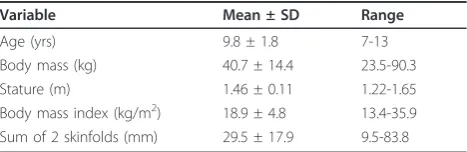
Seventy-three children (55% male, 45% female) started the study, and 65 adhered to all aspects of the study design and were included in the statistical analysis. Groups did not differ significantly in subject characteris-tics, and data are provided in Table 1 for all 65 subjects completing the study. Subjects consumed an average of 3337 ± 851 g cereal during the two month study, and this quantity did not vary significantly between groups. Nutrient intake (combining self-selected diet and forti-fied cereal) is summarized in Table 2 for each group. In comparison to the low group, intake of B-complex vita-mins, vitamin A, zinc, and iron was elevated in the med-ium and high groups at 1- and 2-months, with vitamins
Table 1 Subject characteristics (N = 65), mean ± SD*
Variable Mean ± SD Range
Age (yrs) 9.8 ± 1.8 7-13
Body mass (kg) 40.7 ± 14.4 23.5-90.3
Stature (m) 1.46 ± 0.11 1.22-1.65
Body mass index (kg/m2) 18.9 ± 4.8 13.4-35.9 Sum of 2 skinfolds (mm) 29.5 ± 17.9 9.5-83.8
Table 2 Nutrient intake data (mean ± SD, from 3-day food records taken pre-study, and after one-month and two-months ingestion of cereal product (low-, medium, and high fortification) in children
Variable Pre-study 1-month 2-months Interaction p-value
Energy (kcal)
Low (N = 23) 2313 ± 785 2164 ± 764 2096 ± 851 0.890
Medium (N = 22) 2246 ± 632 2096 ± 535 2084 ± 564
High (N = 19) 2132 ± 429 2178 ± 577 1952 ± 547
Vit E (a-TE, mg)
Low 4.30 ± 2.36 4.41 ± 3.72 4.24 ± 2.45 <0.001
Medium 4.20 ± 1.84 3.24 ± 1.97 3.63 ± 1.81
High 4.28 ± 1.93 13.3 ± 5.08* 13.6 ± 5.11*
Vit C (mg)
Low 82.3 ± 77.4 68.2 ± 64.6 92.9 ± 89.1 0.002
Medium 79.2 ± 45.8 95.7 ± 86.0 104 ± 95.3
High 90.2 ± 64.1 178 ± 75.2* 176 ± 58.5
Vit A (RE)
Low 265 ± 112 239 ± 128 237 ± 144 <0.001
Medium 289 ± 126 572 ± 147* 583 ± 114*
High 266 ± 117 1727 ± 431* 1657 ± 589*
Thiamin (mg)
Low 1.62 ± 0.73 1.06 ± 0.58 1.15 ± 0.50 <0.001
Medium 1.57 ± 0.66 1.74 ± 0.55* 1.64 ± 0.47*
High 1.48 ± 0.35 1.87 ± 0.85* 1.67 ± 0.51*
Riboflavin (mg)
Low 1.90 ± 0.87 1.47 ± 0.78 1.54 ± 0.72 0.002
Medium 1.90 ± 0.87 2.23 ± 0.80* 2.24 ± 0.77*
High 1.73 ± 0.63 2.23 ± 0.50* 2.14 ± 0.64*
Niacin (mg)
Low 19.4 ± 8.4 15.1 ± 9.3 15.4 ± 8.0 0.011
Medium 19.9 ± 9.3 21.5 ± 7.1* 21.4 ± 6.4*
High 17.9 ± 6.4 23.9 ± 11.8* 21.2 ± 7.8*
Vit B6 (mg)
Low 1.36 ± 0.57 1.06 ± 0.51 1.16 ± 0.62 <0.001
Medium 1.45 ± 0.72 1.82 ± 0.64* 1.88 ± 0.62*
High 1.23 ± 0.48 1.98 ± 0.71* 1.81 ± 0.64*
Vit B12 (mcg)
Low 3.34 ± 1.82 3.30 ± 2.32 2.74 ± 1.43 0.002
Medium 3.80 ± 2.07 5.40 ± 1.79* 5.02 ± 1.70*
High 3.22 ± 1.63 5.37 ± 1.71* 4.97 ± 1.82*
Folate (mcg)
Low 288 ± 143 156 ± 79 185 ± 97 <0.001
Medium 265 ± 121 548 ± 174* 499 ± 167*
High 249 ± 89 513 ± 177* 509 ± 151*
Iron (mg)
Low 16.2 ± 6.6 10.4 ± 3.8 10.5 ± 3.2 <0.001
Medium 16.1 ± 6.8 26.6 ± 6.6* 24.4 ± 7.2*
High 14.0 ± 4.2 25.3 ± 7.4* 24.5 ± 6.1*
Zinc (mg)
Low 9.45 ± 5.72 6.41 ± 3.44 6.75 ± 3.00 <0.001
Medium 9.58 ± 5.87 13.0 ± 4.3* 12.9 ± 3.5*
High 7.77 ± 3.36 19.0 ± 5.7* 19.9 ± 6.2*
E and C elevated in the high group. Figure 1 depicts the percentage contribution of the fortified cereal to total nutrient intake. The cereal supplement represented 13.4 ± 6.6, 15.3 ± 4.3, and 12.7 ± 2.9% of total energy intake during the study period for low, medium, and high groups, respectively, and contributed ~20% to 85% of the nutrients listed.
The mean total number of days with URTI during the study period did not differ significantly between groups, and subjects averaged 8.8 ± 10.9, 10.4 ± 6.5, and 7.4 ± 7.2 days with URTI for low, medium, and high groups, respectively (p = 0.556). The percentage of children reporting at least one URTI episode during the study period did not differ between groups: 83%, 90%, and 74% for low, medium, and high groups, respectively (c2 = 1.78, P = 0.411).
The pattern of change in leukocyte subset counts did not vary significantly between groups (data not shown). Pre- to post-study changes in natural killer cell function (Table 3), granulocyte phagocytosis and oxidative burst activity (Table 4), salivary IgA concentration and
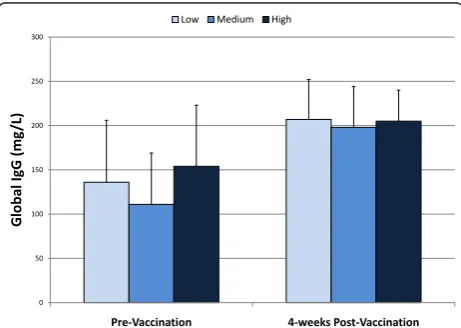
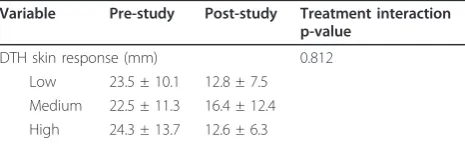
secretion rate (Table 5), the global IgG response to pneumococcal vaccination (Figure 2), and DTH response (Table 6) did not differ significantly between groups.
Discussion
Despite significant improvements in dietary intake of immune-related nutrients through ingestion of a forti-fied cereal (~60 g/day) during a 2-month winter period, URTI rates and pre- to- post-study changes in all immune function measures did not differ between groups. These data do not support the use of micronu-trient fortified breakfast cereals by healthy, growing chil-dren for the purpose of augmenting innate or adaptive immune function and lowering URTI risk.
Although dietary nutrients are important for immuno-competence in all humans [1], related benefits from micronutrient supplements are most often reported in populations with immune dysreglation such as malnour-ished children, the frail elderly, diseased individuals, and surgical or trauma patients [5-13]. Among healthy
0 20 40 60 80 100 120
Ener
gy
Vit
amin E
Vit
amin C
Vit
amin A Thiamin
Ribofla
vin
Niacin
Vit
amin B6
Vit
amin B12
Fola
te
Ir
on
Zinc
Calcium
% T
o
tal Nutrien
t In
tak
e
Fr
om Cer
e
al
Low Medium High
adults, immune function remains robust over a wide range of diet quality and nutrient intake, and adding supplemental nutrients beyond what is obtained in the traditional food supply has little if any discernable influ-ence on immunity and infection rates [14-22]. In a dou-ble-blinded, randomized, placebo-controlled study of 138 healthy adults aged 40-80 years, Wolvers et al. [21] reported no effect of 10-weeks supplementation with a
micronutrient mix (vitamins E and C, b-carotene, and
zinc) on a range of immunological measures including the antibody response to vaccination, phagocytosis and oxidative burst activity, and lymphocyte proliferation. An enhanced DTH response was reported, but this ben-efit was limited to the older subjects, similar to data pre-viously reported by Bogden et al. [37]. Other studies of healthy adults with uncompromised immune systems
using single-nutrient supplements such as zinc, sele-nium, or vitamin E have also reported negligible immune benefits, although tocotrienol supplementation may improve the immune response to a vaccine chal-lenge [19-24,38].
To our knowledge, our study is the first to investigate the influence of micronutrient supplementation through breakfast cereal fortification on immune function and URTI in healthy, school-aged youth. Kutukculer et al. [32] studied the effect of acute, large dose vitamin A and E supplementation on the IgG response to tetanus toxoid immunization in healthy infants, and reported no supplementation effect on the antibody response. Several other studies have reported positive immunological responses and reductions in acute lower respiratory
Table 3 Natural killer cell counts and activity (NKCA) before and after two-months of cereal ingestion (mean ± SD)*
Variable Pre-study Post-study Treatment interaction p-value
NK lymphocytes (109/L) 0.578
Low 0.39 ± 0.28 0.23 ± 0.13 Medium 0.49 ± 0.34 0.36 ± 0.20 High 0.35 ± 0.18 0.29 ± 0.14
NKCA 40:1 E:T (% lysis) 0.448
Low 44.7 ± 16.8 48.8 ± 16.2 Medium 47.6 ± 14.1 47.1 ± 16.8 High 48.4 ± 16.3 48.6 ± 16.3
NKCA 20:1 E:T (% lysis) 0.349
Low 33.2 ± 16.3 37.0 ± 16.8 Medium 33.6 ± 12.7 35.5 ± 12.7 High 38.1 ± 17.1 36.3 ± 13.2
* Low (N = 24), medium (N = 21), high (N = 18) level of nutrient fortification of the cereal product. Mean ±SD. E:T = effector-to-target ratio.
Table 4 Granulocyte phagocytosis and oxidative burst activity before and after two-months of cereal ingestion (mean ± SD)*
Variable Mean flourescence channel
Pre-study Post-study Treatment interaction p-value
Oxidative burst activity (DCF+Granulocytes) 0.184
Low 192 ± 65 136 ± 58
Medium 184 ± 79 171 ± 119
High 213 ± 77 141 ± 66
Phagocytosis (FITC+Granulocytes) 0.564
Low 459 ± 92 424 ± 84
Medium 426 ± 109 447 ± 170
High 442 ± 108 431 ± 93
* Low (N = 23), medium (N = 20), high (N = 19) = level of nutrient fortification of the cereal product. DCF = dichlorofluorescein; FITC = fluorescein isothiocyanate.
Table 5 Salivary IgA concentration and secretion rate before and after two-months of cereal ingestion (mean ±SD)*
Variable Pre-study Post-study Treatment
interaction p-value
Saliva IgA concentration (μg.mL-1) 0.461
Low 333 ± 181 314 ± 152
Medium 292 ± 143 302 ± 151
High 315 ± 159 289 ± 158
Saliva protein IgA concentration (μg.mg-1) 0.675
Low 471 ± 162 484 ± 156
Medium 444 ± 170 419 ± 155
High 535 ± 224 499 ± 187
Saliva IgA secretion rate (μg.min-1) 0.476
Low 173 ± 135 220 ± 163
Medium 185 ± 118 233 ± 129
High 207 ± 118 212 ± 74
* Low (N = 21), medium (N = 24), high (N = 19) = level of nutrient fortification of the cereal product.
0 50 100 150 200 250 300
Pre-Vaccination 4-weeks Post-Vaccination
Global IgG (mg
/L)
Low Medium High
infection and diarrhea to nutrient supplementation in malnourished or infected young children [25-31]. Thus the limited data available on the relationship between micronutrient intake and supplementation on immune function in children is consistent with data collected in adult populations: supplemental micronutrients are effi-cacious among those suffering from syndromes related to immune dysfunction but unlikely to augment immune function or decrease infection risk among well nourished and healthy individuals.
Among our “medium” and“high” supplement groups,
ingestion of the fortified breakfast cereal represented ~20-85% of total dietary intake for zinc, iron, vitamin B6, folate (and other B complex vitamins), and antioxi-dant vitamins. Supplemental capsules containing a micronutrient mixture would have provided a greater quantity, but this study was designed to test the utility and efficacy of using a fortified breakfast cereal delivery system. The volume of breakfast cereal consumed per day by our young subjects (mean of ~60 g or 2.7 cups) over a two month period approached the maximum amount they could tolerate. For the five key immune-related nutrients in the“high” fortification group– vita-mins A, C, and E, zinc, iron–supplementation with the fortified cereal product by the children during the study provided approximately 30% of the U.S. Daily Value above typical food intake. Thus at the nutrient density used in this study, the strategy of using fortified break-fast cereal to improve immune function and lower URTI risk in healthy children is not recommended.
Conclusions
In conclusion, our hypothesis of URTI incidence reduc-tion and immune modulareduc-tion in healthy, school-aged children through ingestion of a breakfast cereal fortified with immune-related nutrients was not supported. We measured URTI rates and conducted a variety ofin vitro
and in vivo measures of both innate and adaptive immune function, and failed to find any significant group differences during a 2-month winter period. Thus within the context of this investigation, our data do not
support the use of immune benefit claims for healthy, school-aged children from ingestion of fortified break-fast cereal.
Acknowledgements
Supported by a grant from the General Mills Bell Institute of Health and Nutrition, Minneapolis, MN. The authors have no conflicts of interest.
Author details
1Human Performance Lab, North Carolina Research Campus, Kannapolis, NC
28081, USA.2Biology; P.O. Box 32071, Appalachian State University, Boone, North Carolina 28608, USA.3Bioinformatics Services Division, UNC-Charlotte, North Carolina Research Campus, Kannapolis, NC 28081, USA.
Authors’contributions
NDC was the primary investigator for this study, managed all aspects of subject recruitment and scheduling, data collection, sample analysis, and manuscript preparation. HDA (immunologist) coordinated all sample collection and immune assays, and participated in preparation of the manuscript. SW assisted in the statistical analysis. All authors have read and approved the final manuscript
Competing interests
The authors declare that they have no competing interests.
Received: 16 October 2010 Accepted: 21 April 2011 Published: 21 April 2011
References
1. Maggini S, Wintergerst ES, Beveridge S, Hornig DH:Selected vitamins and trace elements support immune function by strengthening epithelial barriers and cellular and humoral immune responses.Br J Nutr2007,
98(Suppl 1):S29-35.
2. Prasad AS, Beck FW, Bao B, Fitzgerald JT, Snell DC, Steinberg JD, Cardozo LJ:
Zinc supplementation decreases incidence of infections in the elderly: effect of zinc on generation of cytokines and oxidative stress.Am J Clin Nutr2007,85:837-844.
3. Wichers H:Immunomodulation by food: promising concept for mitigating allergic disease?Anal Bioanal Chem2009,395:37-45.
4. Keusch GT:The history of nutrition: malnutrition, infection and immunity.
J Nutr2003,133:336S-340S.
5. Cunningham-Rundles S, McNeeley DF, Moon A:Mechanisms of nutrient modulation of the immune response.J Allergy Clin Immunol2005,
115:1119-1128.
6. Girodon F, Galan P, Mong , Boutron-Ruault MC, Brunet-Lecomte P, Preziosi P, Arnaud J, Manuguerra JC, Herchberg S,et al:Impact of trace elements and vitamin supplementation on immunity and infections in institutionalized elderly patients: a randomized controlled trial. MIN. VIT. AOX. geriatric network.Arch Intern Med1999,159:748-754.
7. Berger MM, Binnert C, Chiolero RL, Taylor W, Raffoul W, Cayeux MC, Benathan M, Shenkin A, Tappy L:Trace element supplementation after major burns increases burned skin trace element concentrations and modulates local protein metabolism but not whole-body substrate metabolism.Am J Clin Nutr2007,85:1301-1306.
8. Meydani SN, Meydani M, Blumberg JB, Leka LS, Siber G, Loszewski R, Thompson C, Pedrosa MC, Diamond RD, Stollar BD:Vitamin E supplementation and in vivo immune response in healthy elderly subjects. A randomized controlled trial.JAMA1997,277:1380-1386. 9. Calder PC:Immunonutrition in surgical and critically ill patients.Br J Nutr
2007,98(Suppl 1):S133-S1339.
10. Deloria-Knoll M, Steinhoff M, Semba RD, Nelson K, Vlahov D, Meinert CL:
Effect of zinc and vitamin A supplementation on antibody responses to a pneumococcal conjugate vaccine in HIV-positive injection drug users: a randomized trial.Vaccine2006,24:1670-1679.
11. Hamer DH, Sempértegui F, Estrella B, Tucker KL, Rodríguez A, Egas J, Dallal GE, Selhub J, Griffiths JK, Meydani SN:Micronutrient deficiencies are associated with impaired immune response and higher burden of respiratory infections in elderly Ecuadorians.J Nutr2009,
139:113-119.
Table 6 Delayed-type hypersensitivity (DTH) skin response before and after two-months of cereal ingestion (mean ±SD)*
Variable Pre-study Post-study Treatment interaction p-value
DTH skin response (mm) 0.812
Low 23.5 ± 10.1 12.8 ± 7.5 Medium 22.5 ± 11.3 16.4 ± 12.4 High 24.3 ± 13.7 12.6 ± 6.3
12. Ravaglia G, Forti P, Maioli F, Bastagli L, Facchini A, Mariani E, Savarino L, Sassi S, Cucinotta D, Lenaz G:Effect of micronutrient status on natural killer cell immune function in healthy free-living subjects aged≥90 y.
Am J Clin Nutr2000,71:590-598.
13. Asprer JM, Llido LO, Sinamban R, Schlotzer E, Kulkarni H:Effect on immune indices of preoperative intravenous glutamine dipeptide
supplementation in malnourished abdominal surgery patients in the preoperative and postoperative periods.Nutrition2009,25:920-925. 14. Payette H, Rola-Pleszczynski M, Ghadirian P:Nutrition factors in relation to
cellular and regulatory immune variables in a free-living elderly population.Am J Clin Nutr1990,52:927-932.
15. Goodwin JS, Garry PJ:Lack of correlation between indices of nutritional status and immunologic function in elderly humans.J Gerontol1988,43: M46-M49.
16. Boynton A, Neuhouser ML, Wener MH, Wood B, Sorensen B, Chen-Levy Z, Kirk EA, Yasui Y, Lacroix K, McTiernan A, Ulrich CM:Associations between healthy eating patterns and immune function or inflammation in overweight or obese postmenopausal women.Am J Clin Nutr2007,
86:1445-1455.
17. Neuman MI, Willett WC, Curhan GC:Vitamin and micronutrient intake and the risk of community-acquired pneumonia in US women.Am J Med 2007,120:330-336.
18. Merchant AT, Curhan G, Bendich A, Singh VN, Willett WC, Fawzi WW:
Vitamin intake is not associated with community-acquired pneumonia in U.S. men.J Nutr2004,134:439-444.
19. Hawkes WC, Hwang A, Alkan Z:The effect of selenium supplementation on DTH skin responses in healthy North American men.J Trace Elem Med Biol2009,23:272-280.
20. Radhakrishnan AK, Lee AL, Wong PF, Kaur J, Aung H, Nesaretnam K:Daily supplementation of tocotrienol-rich fraction or alpha-tocopherol did not induce immunomodulatory changes in healthy human volunteers.Br J Nutr2009,101:810-815.
21. Wolvers DA, van Herpen-Broekmans WM, Logman MH, van der Wielen RP, Albers R:Effect of a mixture of micronutrients, but not of bovine colostrum concentrate, on immune function parameters in healthy volunteers: a randomized placebo-controlled study.Nutr J2006,5:28. 22. Boardley D, Fahlman M:Micronutrient supplementation does not
attenuate seasonal decline of immune system indexes in well-nourished elderly women: a placebo-controlled study.J Am Diet Assoc2000,
100:356-359.
23. Hodkinson CF, Kelly M, Alexander HD, Bradbury I, Robson PJ, Bonham MP, O’Connor JM, Coudray C, Strain JJ, Wallace JM:Effect of zinc
supplementation on the immune status of healthy older individuals aged 55-70 years: the ZENITH Study.J Gerontol A Biol Sci Med Sci2007,
62:598-608.
24. Veverka DV, Wilson C, Martinez MA, Wenger R, Tamosuinas A:Use of zinc supplements to reduce upper respiratory infections in United States Air Force Academy cadets.Complement Ther Clin Pract2009,15:91-95. 25. Sazawal S, Black RE, Jalla S, Mazumdar S, Sinha A, Bhan MK:Zinc
supplementation reduces the incidence of acute lower respiratory infections in infants and preschool children: a double-blind, controlled trial.Pediatrics1998,102(1 Pt 1):1-5.
26. Roth DE, Caulfield LE, Ezzati M, Black RE:Acute lower respiratory infections in childhood: opportunities for reducing the global burden through nutritional interventions.Bull World Health Organ2008,86:356-364. 27. Sempértegui F, Estrella B, Camaniero V, Betancourt V, Izurieta R, Ortiz W,
Fiallo E, Troya S, Rodríguez A, Griffiths JK:The beneficial effects of weekly low-dose vitamin A supplementation on acute lower respiratory infections and diarrhea in Ecuadorian children.Pediatrics1999,104(1):e1. 28. Raqib R, Roy SK, Rahman MJ, Azim T, Ameer SS, Chisti J, Andersson J:Effect
of zinc supplementation on immune and inflammatory responses in pediatric patients with shigellosis.Am J Clin Nutr2004,79:444-450. 29. Ahmed J, Zaman MM, Ali SM:Immunological response to antioxidant
vitamin supplementation in rural Bangladeshi school children with group A streptococcal infection.Asia Pac J Clin Nutr2004,13:226-230. 30. Nchito M, Geissler PW, Mubila L, Friis H, Olsen A:The effect of iron and
multi-micronutrient supplementation on Ascaris lumbricoides reinfection among Zambian schoolchildren.Trans R Soc Trop Med Hyg2009,
103:229-236.
31. Lin J, Song F, Yao P, Yang X, Li N, Sun S, Lei L, Liu L:Effect of vitamin A supplementation on immune function of well-nourished children
suffering from vitamin A deficiency in China.Eur J Clin Nutr2008,
62:1412-1418.
32. Kutukculer N, Akil T, Egemen A, Kurugöl Z, Akşit S, Ozmen D, Turgan N, Bayindir O, Cağlayan S:Adequate immune response to tetanus toxoid and failure of vitamin A and E supplementation to enhance antibody response in healthy children.Vaccine2000,18:2979-2984.
33. Lohman TG:Applicability of body composition techniques and constants for children and youth.Ex Sport Sci Rev1986,14:325-357.
34. Nieman DC, Henson DA, Nehlsen-Cannarella SL, Utter A, Butterworth DE, Fagoaga OR:Influence of obesity on immune function.J Am Diet Assoc 1999,99:294-299.
35. Whiteside TL, Bryant J, Day R, Herberman RB:Natural killer cytotoxicity in the diagnosis of immune dysfunction: Criteria for a reproducible assay.J Clin Lab Anal1990,4:102-114.
36. Nieman DC, Nehlsen-Cannarella SL, Henson DA, Koch AJ, Butterworth DE, Fagoaga OR, Utter A:Immune response to exercise training and/or energy restriction in obese females.Med Sci Sports Exerc1998,30:679-686. 37. Bogden JD, Bendich A, Kemp FW, Bruening KS, Shurnick JH, Denny T,
Baker H, Louria DB:Daily micronutrient supplements enhance delayed-hypersensitivity skin test responses in older people.Am J Clin Nutr1994,
60:437-447.
38. Mahalingam D, Radhakrishnan AK, Amom Z, Ibrahim N, Nesaretnam K:
Effects of supplementation with tocotrienol-rich fraction on immune response to tetanus toxoid immunization in normal healthy volunteers.
Eur J Clin Nutr2011,65:63-69. doi:10.1186/1475-2891-10-36
Cite this article as:Niemanet al.:Ingestion of micronutrient fortified breakfast cereal has no influence on immune function in healthy children: A randomized controlled trial.Nutrition Journal201110:36.
Submit your next manuscript to BioMed Central and take full advantage of:
• Convenient online submission
• Thorough peer review
• No space constraints or color figure charges
• Immediate publication on acceptance
• Inclusion in PubMed, CAS, Scopus and Google Scholar
• Research which is freely available for redistribution