A PARADIGM SHIFT IN SYSTEMS
ANALYSIS AND DESIGN OF
COMPUTER SYSTEMS APPLICATIONS.
CASE STUDY: AN ADAPTIVE
INTELLIGENT DENIAL OF SERVICE
(DoS) NETWORK ATTACK REMEDIAL
MODEL
IHEKWEABA OGECHI*1
Department. of Computer Engineering Michael Okpara University of Agriculture, Umudike. [email protected]
INYIAMA H.C2
Department of Computer and Electronics Engineering Nnamdi Azikiwe University, Awka. IHEKWEABA CHUKWUGOZIEM
Department. of Computer Engineering Michael Okpara University of Agriculture, Umudike. [email protected], [email protected],
Abstract
This paper presents the basic concept as well as the requirements of an adaptive intelligent Denial Of Service network remedial system. The DIANA agent architecture, on which this work is leveraged, is discussed. Furthermore, the concepts of systems analysis and design, modern implementation techniques as well as the applications are showcased. The framework of modern tools applied in systems analysis and design are elucidated. Also, cases for their preference and typical application areas are x-rayed. Finally, the work utilizes the system derived there from, to develop an adaptive intelligent Denial Of Service network attack remedial system.
Keywords: Agent, Dynamic Host Configuration Protocol, Access control list, Context based access control, Data flow diagram, Agent oriented software engineering.
1. Introduction
A network can no longer be secured by simply securing the network perimeter [Cisco, (2005)] since corporations have consolidated their data centers, converged internal networks, and embraced the internet. What was once a self – contained, controlled environment is now typically open to partners through business – to – business extranets, retail outlet connections, and home – based employees, to mention but a few examples. Extending the corporate network in this way, extends the trust boundary across untrusted intermediate network and uncontrolled environments. Devices that connect into the corporate network through these pathways are frequently not in compliance with corporate policies.
Application layer attacks, auto rotes, backdoors, man – in –the – middle attacks, network reconnaissance, packet sniffers, password attacks, brute force attacks, port redirection attacks, trojan horse attacks and viruses, trust exploitation attacks, Denial of Service (DoS) and Distributed Denial of service (DDoS) attacks, [ Todd, (2007)]. Denial of Service attacks is a major cause of incorrect operations in the internet and is arguably one of the most serious threats that the internet community faces today [Valer, (2004)].
From the time it is detected and recovered from, the victim is virtually paralyzed and cannot respond to legitimate requests. For large commercial sites, this translates to losses of billions of dollars in magnitude, [Aleifa, (2007)].
Corporate networks, and the attacks used to exploit them, are so complex that no single mechanism can be relied upon to keep them secure. This has led to the concept of “Defense in Depth, [Todd, (2007)].
the impact of attacks, and improve overall infrastructure availability and reliability, [Labroid, (1998)]. This helps create autonomous systems that can quickly react to an outbreak with little or no human interaction. This type of rapid response is required to thwart the latest forms of misuse that are much more virulent than their predecessors.
It is helpful to classify them in order to clarify the process of defending against DoS.
Some technical writing categorize Denial of service attacks as flood attacks and malformed packets while others consider these as software exploits and flooding attacks. Single source and multi-source are categories that are based on the location of the observation point.
It is noticeable from available literature, [Nail,(2002)] that there had been much research addressing automated classification of attacks.
Attacks are usually classified based on header analysis, ramp – up behavior and spectral analysis. It is however suggested in the literature that this three – pronged approach is necessary to deal with an increasing level of difficulty in classifying attacks depending on the level of IP header spoofing present in the attack.
Typically, intrusion detection systems (IDS) can be classified based on two concepts; matching of the previously seen and hence known anomalous patterns from an internal database of signatures or building profiles based on normal data and detecting deviation from the expected behaviors. The first approach is referred to as misuse detection and leads to signature Based IDS while the second is Anomaly Detection and leads to Behavior based IDS. The signature based systems have very high detection accuracy but they fail when an attack is previously unseen.
On the other hand, behavior based IDS may have the ability to detect new unseen attacks but have the problem of low detection accuracy. [Cohen, (2004), [Helman et al (1992)]. Also based on the mode of deployment, the intrusion detection systems are classified as Network based, Host based, and Application based.
Network based systems make a decision by analyzing the network logs and packet headers from the incoming and outgoing packet since they are deployed at the periphery of the network. Though they are easy to manage and give a centralized control, they have to work with limited information and are further constrained in case of encryption and network address translation. Host based systems monitor individual systems and uses system logs extensively to make any decision.
Fred Cohen published in 1984 that detection of computer viruses is undecidable and NP-hard. In laymen’s terms, this means that it is impossible to detect every type of an intrusion in every type of case, and that the resources needed to detect intrusions grow with the amount of network traffic.
[Helman, et al( 1992) used a scale of 0 to 1 to represent normal behavior (0) to misuse (1). [Muller, (1996)]. The purpose of an intrusion detection system is to provide the rating for computer activities.
2. An Improved IDS Requirements, and implementation with an intelligent agent
In [Ghosh(1991)], authors have defined a set of desirable characteristics for IDS by focusing on two themes: Functional and performance requirements.
The functional requirements include:
- IDS must continuously monitor and report intrusion, - IDS should have a very low false alarm rate,
- IDS should provide enough information to repair the system in the case of detection of intrusion notice that these requirements lean on basic IDS goals. In fact, conventional IDS solutions focus only on alerting administrators without suggesting any corrective actions.
- IDS must detect and react to distributed and coordinated attacks. This detection feature is one of the most difficult because it needs a huge distributed amount of information in addition to the hard task of synchronization between different hosts.
- The IDS should be adaptive to network topology and configuration changes [Ghosh(1991)] . Also, the performance requirements include:
- Intrusion should be detected in real – time as it should be reported immediately in order to minimize network damage.
- The IDS must be scalable in order to handle additional computational and communication loads. The most common IDS shortcomings include the following:
- High number of false positives.
- Vulnerability to attacks: many IDS have hierarchical structures. This fact gives attacks the opportunity to harm the IDS, by cutting off a control branch or even by tracking out the root command.
In addition to the fore mentioned shortcomings, it is posited in referenced literature that the adaptive intelligent agents’ solutions is aimed at overcoming the limitations:
The intelligent agent is a growing area of research and new application development. Having highlighted the main requirement for IDS, the intelligent agent concept seems to be a candidate approach to fulfill these requirements.
Different types of agents reflect a set of properties, which common among them, [Oleveira, (1998)] are, autonomy, Co-operation, proactivity, [Wooldridge, (1995)], [Labroi,(1998)],reactivity, adaptability, reactivity, adaptability, intelligence, flexiblility and mobility.
Having reviewed the properties of intelligent agents as presented in referenced literature, Oleveira (1998) , it can be concluded that intelligent agents provide a more coherent and flexible approach to network intrusion detection and security management.
To model intrusion detection, the intelligent agent must combine the cognitive (knowledge – based) to reason about complex attacks with reactive capabilities (stimulus response) to react to the environments changes. Thus, an agent has three functions: an event filtering function, interaction, and a deliberation function as shown in fig. 1 below.
Fig.1 Interaction between Agent and Function
3. The DIANA Agent Architecture
The DIANA architecture being the shell of the proposed intelligent agent strategy for network protection as proposed by this dissertation, literature referencing this architecture,[ Asaka, (1999)], was considered as substantial for the understanding of this work.
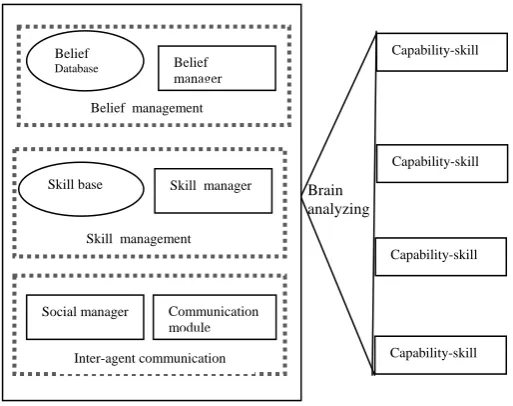
The DIANA agent architecture consists of two main components: the brain, which is responsible for managing agent skills and skills, which provide the agent with capabilities and behaviors.
The Agent’s brain (fig. 2. below) offers two types of necessary facilities for the agent operations: local and inter agent facilities.
Sent mental Attitude/ Report/alarm Security
officer/ agent
Security event
Interaction
Filtering event
Fig. 2 DIANA Agent Architecture
The main role of the brain is to manage both agent’s belief database and agent’s skill base. “An agent belief expresses its expectation about the current state of the world and about the likelihood of a course of action achieving certain effects” [Muller, (1996)]. Beliefs hold network management information as well as information about the agent itself and the other agents. These beliefs can be accessed concurrently by several skills, therefore, the Belief Manager maintain the integrity and coherent access to the Belief Database.
Skills can be downloaded dynamically into the agent inside its skill base. The main role of the skill manager is to check the availability of pre-requisite skills required by newly loaded skills and if they not yet loaded, it must search for them either locally or on distant agents. It is also responsible for the disposal of un-useful skills to keep the agents size as small as possible. During its operations, the skill can update or delete existing beliefs or create new ones. A skill operation may depend on belief created by other skills, and the skill manager is therefore in charge dispatching asynchronously these beliefs to the interested skills in a transparent way. It holds all the necessary information about the skill in the base.
The brain Analyzer is responsible for the parsing of the messages that the brain receives, either from the skill or from the inter-agent communication.
Both the communication module, which is responsible for managing interaction with the other agents and the social manager, which holds information about the other agents, support inter-agent communication facilities to the agent.
The idea of distributing the intrusion detection system using agent software is not entirely new. However, most of the related works emphasize static agents instead of mobile one. Applying mobile agent technology to IDS has been carried out within only a few research projects.
In 1999, a project at the information-Technology Promotion Agency (IPA) in Japan involved an intrusion Detection Agent (IDA) system. IDA is a classic hot-based system that relies on mobile agents mainly to trace intruder among the various hosts involved in an intrusion. In the same year the project MICAEL, [Bernades, (2000)] pursued a more ambitious aim where the entire system is based on adaptive intelligent agents. Nevertheless, only the architecture description has been presented and no details have followed so far. In 2000, an IDS framework based on mobile intelligent agents has been described in [Bernades, (2000)]. Unfortunately, detection is dealt with superficially. In 2002, [Trapethi, (2002)] describes an IDS designed as a mobile application that roams the network to detect attacks and track intruder. IMA-IDS are a distributed intrusion detection system using mobile and intelligent agents.
It is too tedious to detect a malicious action through the network, especially when considering multiplier distributed events which invariably are equally simultaneous. Most of the current IDS assume that the environment is static, whereas in reality the environment is dynamic and unpredictable. So, to detect without mistakes, an intrusion, subsequently make the appropriate decision and at an optimal time will require a cooperation of different sensors and analyzers. Thus, the need for an adaptive intelligent agent, with the attendant solution the problems of current IDS.
Brain analyzing
Capability-skill
Capability-skill
Capability-skill
Capability-skill Belief
Database Belief
manager Belief management
Skill base Skill manager
Skill management
4. Modern Systems Analysis and Design Techniques
This report as a proof of concept develops a multi – agent software prototype to demonstrate the effectiveness of intelligent agents to protect a network from denial of service attack.
Systems analysis methodology applied in a particular software project like the present system that is based on intelligent agents depends essentially on the scope and goals of the project.
The goal of adopting any suitable methodology of analysis is to develop a high – level understanding of the system to be built. The new system by nature is an agent based software system. This system has a unique architecture referring to a suitable systems analysis methodology.
There are many methodologies for performing systems analysis. They include modern structured analysis, information engineering, prototyping, object – oriented analysis and Agent oriented Analysis using MESSAGE/ UML.
Modern Structured analysis is a process – centered technique that is used to model business requirement for a system. The models are structured pictures that illustrate the processes, inputs, outputs and files required to respond to business events. Modern Structured analysis uses data flow diagram (DFD) to analyze systems. As the DFD is refined into greater levels of detail, the analyst performs an implicit functional decomposition of the system. Modern structured analysis is simple in concept. Systems and business analysts draw a series of process models called data flow diagrams that depict the essential processes of a system along with inputs, outputs, and files. Because these pictures represent the logical business requirements of the system independent of any physical technical solution, the models are said to be a logical design for the system.
Information engineering is a data – centered, but process – sensitive technique that is applied to the organization as a whole (or a significant part, such as division), rather than on an ad-hoc project – by – project basis (as in structured analysis). Information engineering is said to be a data – centered paradigm because it emphasizes the study and definition of DATA requirements before those of PROCESS, INTERFACE, or GEOGRAPHY requirements. This is consistent with the contemporary belief that information is a corporate resource that should be planned and managed. Since information is a product of data, data must be planned first! Data models are drawn first. In addition to the models, information engineers also draw process models similar to those drawn in structured analysis.
Prototyping is an engineering technique used to develop partial but functional versions of a system or application. When extended to system design and construction, a prototype can evolve into the final, implemented system.
In response to the faster pace of the economy in general, prototyping has become a preferred technique to accelerating system development. Many system developers extend the prototyping techniques to perform what they call rapid application development. However, you cannot prototype without some degree of more formal design models.
Most system analysis (and design) techniques separated concerns of DATA from those of PROCESS to maintain consistency with the programming technology. Although, most systems analysis and design methods have made significant attempts to synchronize data and process models, the results have been less than fully successful.
Object technologies and techniques are an attempt to eliminate the separation of concerns about DATA and PROCESS. Instead, data and the processes act on that data are combined or encapsulated into entities referred to as called objects. The only way to create, delete, change, or use the data in an object (called properties) is through one of its encapsulated processes (called methods). The system and software development strategy is changed to focus on the “assembly” of the system from a library of reusable objects. Of course, those objects must be defined, designed, and constructed. Thus, in the early part of the systems development process, we need to use object – oriented analysis techniques to
(1) Study existing objects to see if they can be reused or adapted for new uses, and to
(2) Define new or modified objects that will be combined with existing objects into a useful business computing applications.
The Agent – Oriented (AO) approach promises the ability to construct flexible systems with complex and sophisticated behavior by combining highly modular components. The intelligence of these components; the agents, and their capacity for social interaction results in a multi - agent system (MAS) with capacities beyond those of a simple ‘sum’ of the agents. The availability of agents – oriented development toolkits has allowed the technology to be assessed for industrial use.
Since the new system to be built exhibits significant advances in distributed problem solving (Being based on intelligent adaptive agents –with mobility feature) and pro-active behavior suitable analysis methodology is required to model the system design. A methodology for specifying and analyzing intelligent agent based systems is thus required. For the system analysis described in this chapter, in particular, the use of case driven object oriented software engineering (OOSE) approach is utilized, with extension for agent oriented analysis using methodology for engineering system of software agents (MESSAGE). This hybridization of OOSE and MESSAGE is an effective methodology for specifying and analyzing agent based systems.
MESSAG is an AOSE methodology which builds upon current software engineering practices covering analysis and design of multi-agent system (MAS).
In the analysis of the existing system, it was necessary to consider its effectiveness as it leveraged on the configuration and continual update of access control list (ACL) in the routing subsystem of the network security infrastructure based on some security policies.
This system is based on the detection of unauthorized access, network attacks, and rogue services via through an intrusion prevention system (IPS).
The components of this system include:
- The perimeter defense module (employing packet filtering). - Access – control list (ACL).
- Authentication proxy (This authenticates inbound users and outbound users).
- The context based access control (CBAC). The job of this module of the security system is to scrutinize any and all traffic that is attempting to come through the firewall so it can find out about and control the state information for TCP and UDP session. The logical topology of this system is depicted in fig.3.
Fig.3 Logical topology of the CBAC
The existing system can be analyzed by employing a process model to represent it. A process – centered technique is ideal for analyzing this system since the overall function of this system for network defense is the integration of the process modules of perimeter filtering that employs open system interconnectivity (OSI) layer three features, access – list control (ACL) processing, and conditional forwarding process.
Modern structured analysis, being a process – centered technique, is used to model the requirements for this system. Structured analysis employ data flow diagram (DFD) to analyze systems.
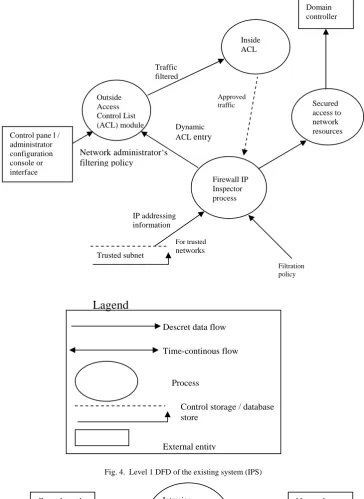
In the working of this system, the effectiveness of the system to mitigate attacks depends on the traffic filtering policy adopted by the network administrator. This is reflected on how the network administrator configures the access – list control. The access – list control is represented as a process (i.e circles) is the structured analysis data flow diagrams (DFD). The processing of the access – list control (ALC) gives rise to data (represented as either solid or dashed arrows in the DFD). In this case, the data could mean permit or deny signature sent to the firewall subsystem.
In this system, Fig.4 and fig. 5 below. the protection of the network from attack is based on the effectiveness of the access control list configured by the network administrator and the capability of the firewall subsystem. The routing module component of the system actually runs the access – list. The access – list and the firewall combine to provide integrated detection against attack. The firewall IP inspector process, represented as a circle in the DFD mitigates attacks using a database of trusted subnets (represented as dashed rectangular object in the DFD), trusted IP addresses, proxy servers and other security polices implemented.
Inside Interface Outside Interface
Inside ACL, permit
The context – based access control (CBAC) job is to scrutinize any and all traffic that is attempting to come through the firewall so it can find out about and control the state information
for TCP and UDP session. It uses the very information gathered to determine whether to create a temporary pathway into the firewall’s access – list or not.
Fig. 4. Level 1 DFD of the existing system (IPS)
Fig. 5. Level 0 DFD Outside
Access Control List (ACL) module
Firewall IP Inspector process
Secured access to network resources Inside
ACL
Control pane l / administrator configuration console or interface
Network administrator‘s filtering policy
Dynamic ACL entry
IP addressing information
For trusted
networks
Filtration policy
Trusted subnet
Domain controller
Traffic filtered
Approved traffic
Lagend
Descret data flow
Time-continous flow
Process
Control storage / database store
External entity
Control panel administrator configuration console or interface
Network domain controller
Intrusion prevention system (IPS) i.e.
That is context level DFD for IPS (existing system) The system (i.e IPS) process traffic in the following way:
- First, if the inside ACL approves, the routing subsystem will get all inside packet sent to it.
- Next, the approved traffic is subjected to the firewall’s IP inspect process, which adds the approved connection’s state information into the state table.
- Finally, the traffic passes through the IP inspect process, which then creates a dynamic ACL entry and puts it into the outside ACL so that return traffic will be allowed to pass back through the router. From the architecture of the existing system that is based on the IPS (intrusion prevention system), the system uses a monolithic architecture than centralized intrusion detection and attack prevention. The access control list is configured and deployed on the centralized firewall. The centralized defense scheme suffers from a number of problems:
IA ≡ Intelligent agent
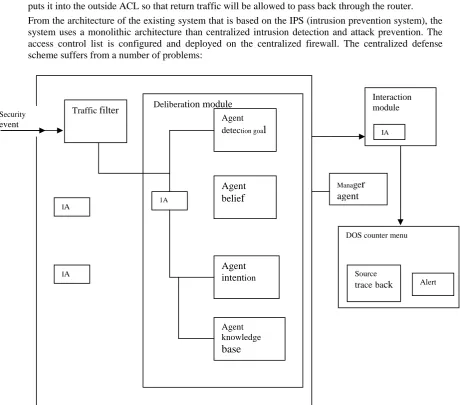
Fig. 6. Block diagram overview of proposed system.
The deliberation module is a major component of the multi agent system. The deliberation module interacts directly with information resources mainly different specialized database entries. The databases are: The agent detection goals, Agent beliefs, Agent intention, and Agent knowledge base. The intelligent agents do not interact directly with these databases but does so through the deliberation module as depicted in fig.6, agents access and update these databases as the multi-agent system runs.
In the block diagram (figure 6), the traffic filter is a component of the system that filters incoming traffic. This component constitutes the filtering function of the intelligent agents. This filtering function access the detection goal through the deliberation module. The Agent detection goal is a database of security event classes. A security event is only collected when the event matches the event classes specified by the detection goals. The agent belief is a collection of filtered events. What we can call likely attacks, or possible attacks.
An intelligent agent interacts with other intelligent agents to get specialized help or other functionality as shown by the IA symbol.
Deliberation module
Traffic filter
Agent detection goal
Agent belief
Agent intention
Agent knowledge
base
1A IA
IA Security
event
Manager agent
Interaction module
IA
DOS counter menu
Source
The manager performs some sort of co-ordination function. In doing this it also interacts with the agent knowledge base to get information about the types and specialized functions, about other agents within the multi-agent system.
It coordinates inter-agent interactions.
This collector agent will be interested in a set of event categories. Three other agents are also required:
Correlator agent: this agent will carry specific information, called critical and send it to another agent called the analyzer agent.
Analyzer agent: analyzer agent are the engine of this proposed agent system. Several kinds of analysis such as classical signature detection, anomaly detection is integrated in this agent.
Manager agent: this agent gathers collected information and distributes it to analyzer agents.
In the analysis the system is modeled as a multi – agent organization. This organizational model is made up of two models: the roles model and the interaction model.
The roles model identifies the key roles in the system, it is an abstract description of an entity’s expected function and is characterized by two types of attributes; permissions and responsibilities:
The links between the roles are represented in the interaction model. This model consists of a set of protocols definition, one for each type of inter – role interaction.
The abstract entities used in the analysis concept are depicted in the fig.7. In the diagram, the system is analyzed as being composed of roles which in turn are composed of attributes: permissions, responsibilities, protocols; the responsibilities are liveness responsibility and safety responsibilities.
Fig.7. Analysis Concepts
The design process involves generating basically three models: agent model, service model and acquaintance model.
The agent model is used to document the various agent types that will be used in the system being developed, while the service model: identifies the services associated with each agent role, as it also specifies the main properties of the services.
The agent model is used to document the various agent types that will be used in the system being developed, while the service model: identifies the services associated with each agent role, as it also specifies the main properties of the services.
Roles
Protocols
Safety Properties
Permission Responsibility
Similarly, the acquaintance model simply defines the communication links that exist between the agent types. An agent acquaintance model is simply a graph with nodes in the graph corresponding to agent types and arcs in the graph corresponding to communication pathways.
The relationship between the analysis concepts and design concepts of the agent’s organizational concepts and methodology employed in this work is depicted in the fig. 8. Below.
5. Results
The network security software developed was deployed on a host computer in a test network environment to protect the DHCP server from a Denial of Service (DoS) attack staged from a work station on the test network environment. The test network environment setup consists of four computers configured appropriately. It was discovered that the
The key abilities of this adaptive network solution is that they:
- Remained active all times.
- Performed unobtrusively.
- Minimized propagation of attacks.
- Quickly responded to attacks. 6. Conclusion
The system design presentation moved progressively from data modeling (data information
architecture) to more implementation specific representation that was programmed into the computer system.
The successful design development implementation and testing of the proposed multi agent based network production software has demonstrated the feasibility of using modern systems analysis and design tools to realize a functional system.
References
[1] Aleifa Hassan John Haidiman Christos Papadopoulos. (Jan 2007) : A framework for classifier denial of service attack”. USC / Information science institute.
[2] Asaka, M. Okasawa, S. Taguchi, A. (1999.): A method of tracing intruders by use of mobile agents. In INET’99.
[3] Bernades, M.C. Dos Santos Mareira E. (2000): Implementation of an intrusion detection system based in mobile agents. In international symposium on software engineering for parallel and distributed system.
[4] Cisco System, Inc. (White paper 1992 – 2005): Core element of the Cisco Self –defending network strategy.
[5] Cohen, Fred. (September 24-16 2004): Computer viruses: Theory and experiments,” 7th DOD / NBS computer security conference,
Gaithersbuy, MD.
[6] Debar, H. Becker, M. Sibon, D. (1992): A neural network component for an intrusion detection system. In proceeding of the IEEE computer society symposium on research in Security and privacy.
[7] Ghosh. K. (1991): Learning program behaviour profiles for intrusion detection. In proceedings of the 1st USENIX workshop on intrusion detection and network monitoring.
[8] Helman, Paul, Liepins, Gunar, and Richords, Wynette. (V 1992): Foundation of intrusion detection. The IEEE computer security foundation workshop.
[9] Jensen, W . Mell, P. Karygiannis, T. Marks D. Applying mobile agents to intrusion detection and response. Technical report, NIST interim report.
[10] Kumar, S. Spafford, E.H. (1994): An application of pattern matching in intrusion detection. In technical report CSDTR-94-013, Purdue university.
[11] Labroid, H. Thesis 1998: Error control in wireless ATM networks.
[12] Muller. J. P (1996): The Design of intelligent Agents- A layered approach. LNA1 state-of-the art survey, springer, Berlin, Germany. [13] Nail Spring, Ratul Mahajan, and David Watherall,( 02 August 2002): Measuring ISP topologies with rocket fuel. In proceeding of
ACM SIGCOM.
[14] Oliveira, R,(1998. ): Network management with knowledge of Requirement: Use of software Agents. PhD thesis.
[17] Trapethi, A. Ahmed, T. Patlak, S. Carney, M. Koka, M. Dokas. P. (2002): Active monitoring of network system using mobile agents. Technical report, university of Minnesota.
[18] Valar Bocan. Development in Dos Research and Mitigating Technologies:. Department of Computer Science and Engineering, Politehnica University of Timiora, Bd.V. Parvan, 300223 Timisoara, Romannia.
[19] Valer Bocan,(2004): Threshold puzzle.The evolution of DoS- resistant authentication. PERIODICAL POLITEHNICA, Transaction or automatic control and computer science vol 49.
[20] Wooldridge, M. Jennirys, N. R. (1995): Intelligent Agents: Theory and practice. Knowledge Engineering Review.
Engr. (Mrs) Ogechi Ihekweaba is a lecturer in the department of computer Engineering, Michael Okpara University Of Agriculture Umudike, Abia State, Nigeria.
She is an ex student of Federal Government College Ido-Ani, Ondo State. Holds a Bachelor’s degree (B.Eng) in Computer Science & Engineering, a Master’s degree (M.Eng) in Computer Science & Engineering and she is at the verge of completing a Doctorate degree (PhD) in Computer Engineering.
Her area of specialization is network security and computational intelligence. She served as an Engineer with a Telecommunication outfit, SATCOM Ltd. As a lecturer, she headed the Computer Science Department of OSISATECH. She is currently the SIWES and Seminar Coordinator for the department of computer Engineering, Michael Okpara University Of Agriculture, Umudike, She had several publications, and is a member of professional bodies which include: Nigeria Computer Society (NCS), Computer Professionals of Nigeria (CPN), Nigeria Society of Engineers (NSE). She is also a COREN registered Engineer.
SUGGESTED CITATION