Abstract—With worldwide increasing shares of electricity generated by wind energy conversion system (WECS) and their influence on the mains stability and contribution to reliable energy supply becomes more and more relevant. This paper compares the performance of different control methods for Wind energy converters, regarding their electrical power-output fluctuation at different wind conditions. The results shows the different types of mitigation methods for power fluctuations and their corresponding results.
Index Terms— Bi-directional dc–dc converter, Current source inverter, Dual inverter, Energy storage, Electric double-layer capacitor, Non-integer voltage ratio, Space vector modulation, Wind energy, Wind power generation.
I. INTRODUCTION
In an attempt to prevent the realization of fears about the global warming, renewable energy sources has experienced a huge face lift to generate the electricity. However, the generated power from the renewable source is always fluctuated due to an environmental status. In order to prop up renewable energy and reimburse the fluctuating power, an energy storage system is effective one. Among that Wind power is the fastest growing renewable energy source due to its improving technologies and economical competitiveness. Generally, the availability of wind energy supply cannot be controlled like energy conversion from fossil fuels; because, wind energy underlies a stochastic fluctuating behavior. These fluctuations cause dynamic power oscillations in the wind energy converter’s (WEC) power drain. In particular, at locations with highly turbulent
Manuscript received Jan, 2015.
Anitha.N, Electrical and Electronics Engineering, Kumaraguru College of Technology, (e-mail: [email protected]). Coimbatore, India.
Narmatha Lakshmi.S, Electrical and Electronics Engineering,
Kumaraguru College of Technology, Coimbatore, India, (e-mail: [email protected]).
Geethanjali.S, Electrical and Electronics Engineering, Kumaraguru
College of Technology, Coimbatore, India, (e-mail: [email protected]).
wind characteristics, critical load peaks might occur in the WEC plant. They propagate from the wind rotor to the connected electrical grid and cause premature damage in mechanical components, thermal overloads in electrical components, as well as voltage variations in the mains power supply. Their grid impact increases with rising connected power of single plants or wind parks [1].
Fig.1. General configuration of a variable-speed WEC In principle, variable-speed WECs provide the technical possibility to reduce the cumulative load in the power drain and the influence on the mains power supply grid. Therefore, specially designed automatic controls and operation management are required to run the appliance. The automatic controls are reference variable controls, which set the system to the optimal operating point. The main task of the operation management is to force a power or rotor speed set point for the momentarily operation condition. For the owner of WECs or wind parks, the foremost interest is to sell as much energy as possible regardless on their grid influence. At the same time, the grid operator prefers a smooth power delivery to keep the grid influence at a low level itself. Just in recent years, more regulations have been passed to control the grid influence from WEC’s.
In this paper two different methods are compared in regard of their influence on the reduction of power
Alleviation of Power Fluctuations in WECS by
Different Control Methods
fluctuation of the WEC’s. The control methods considered in this investigation are direct integration of battery energy storage systems , Electric double-layer capacitor applied for energy storage system. These control methods are described in Section III. Foremost, the following section gives a short overview of the system characteristics of WEC’s.
II.WINDENERGYCONVERSIONSYSTEM The wind rotor converts the air mass’s kinetic energy into mechanical (rotating) energy. The drive shaft transfers this rotating energy to the electrical generator. Most WECs system uses gear boxes to match the operating speed of the wind rotor and the generator. The electrical energy is then fed into the electrical grid. The generator can be directly connected to the mains power supply, or power converter systems can provide the coupling of the generator and the electrical grid (Fig. 1)[1].
In addition, the application-specific requirements are maximum energy yield, low influence on the grid, and low strain/stress in the power drain. The air mass’s kinetic energy has a specific power Pwind that is characterized by the air mass density ρA, the surface area of the wind flow AR, and the wind speed w. It can be described by the following formula:
Pwind= ½ ρAAƦω3 (1) Keep in mind the cubic influence of the wind speed on the wind power.
To gain the maximum energy yield, the wind rotor has to operate at highest efficiency. The aerodynamic efficiency is expressed by the cP coefficient, which determines the amount of power extracted (PRotor) from the wind crossing the rotor area
CP=
PRotor
PWind (2)
According to Betz, the maximum cP value is cP,Betz =0.59. The efficiency of wind rotors strongly depends on the airfoil angle of incidence. To take into account the rotational speed of the wind rotor and the wind speed, the resulting angle of incidence is indicated by λ. λ is called the tip speed ratio and describes the relation of the wind rotor tip speed to the wind Speed ,
λ=2ΠRnR𝜔 (3) where R is the rotor radius and nR is the rotor speed. In order to gain advantage of this special characteristic, the WEC must be able to operate at variable speed [2]. This demands a special structure of the generator grid coupling. The main task is the decoupling of the generator rotational speed from the grid voltage
frequency. In Fig. 1, general configuration of a variable speed WEC’s structure is shown, where a dc link connects the generator to the grid.
III. CONTROL METHODS FOR WECs A. Direct Integration of Battery Energy Storage Systems (BESS) for WECs
A direct integration method, presents a new direct integration scheme for BESS with the use of grid-side inverter. It utilizes the popular dual inverter topology, as shown in Fig.2, where two 2-level inverters are cascaded through a coupling transformer. The two inverters are named as the main inverter and the auxiliary inverter in line with their modes of operation. A battery bank is directly connected to the dc link of the auxiliary inverter without interfacing dc–dc converter. Unlike the simple direct connection topology, this system facilitates full controllability over charging/ discharging currents and voltage of the battery.
The main inverter operates at the fundamental frequency producing square wave outputs. Harmonics of the square wave output are compensated by the high-speed auxiliary inverter. This particular frequency splitting arrangement can reduce switching losses as well as device ratings of the main inverter. Another advantage of this system is its ability to produce up to 13 voltage levels in the phase voltage waveform whereas the traditional 2-level inverter can produce only five levels [3] & [4].
Fig.2. Experimental setup used to verify the linear relationship between main inverter dc-link voltage and battery power.
Extensive research has been done on modulation and control of the aforementioned dual inverter topology, especially for motor drive applications [5]-[8]. They all have considered cases where fixed-integer dc-link voltage ratios are present. A pulse width modulation (PWM) scheme for this dual inverter is explained in [9] for 1:1 and 1:2 voltage ratios. Although a power sharing controller is proposed in for dynamically varying dc-link voltages, it also assumes identical dc-link voltage
modulation method is proposed here to handle the dynamic changes in the auxiliary inverter dc-link voltage. The operation is illustrated in Fig. 3. where the auxiliary inverter is purposely turned off until 20ms. During this period, the only available output is the main inverter square wave output voltage as shown in the first half of the waveform in Fig. 3. The harmonic distortion of the output voltage is significant under this operation. After 20ms, the auxiliary inverter is turned on, and consequently, the output voltage becomes smooth with low harmonic distortion as shown by the second half of the waveform in Fig.3.
Fig.3.Square wave output of the main inverter and smoothing effect of the auxiliary inverter.
The wind speed profile shown in Fig. 4(a) is used in the simulation, which in turn produces a dc-link voltage variation at the main inverter as shown in Fig. 4(b). Corresponding wind power variation Pw and dispatch power Pd are shown in Fig. 4(c). From this graph, it can be concluded that the proposed system has the ability to supply the demand amidst fluctuations present in the input power. The surplus or deficit of power is supplied or absorbed by the battery with a current profile as shown in Fig. 4(d). The output current and voltage of the inverter are shown in Fig. 4(e) and (f), respectively. Although the inverter output voltage shows some fluctuations, once it is passed through a low-pass filter, a smooth waveform can be observed as shown in Fig. 4(g).
Fig.4.(a) Wind speed. (b) Main inverter dc-link voltage Vdc and auxiliary inverter dc-link voltage Vdcx . (c) Wind power Pw and dispatch power Pd . (d) Battery current Ib . (e) Inverter output current ias . (f) Inverter output voltage before filtering vas . (g) Inverter output voltage after filtering, vas,f .
Additional switches and converters required to integrate energy storage devices into distributed power systems can be avoided if the grid-side inverter itself can be used as the interface. Accordingly, a modified topology of the popular dual inverter system has been proposed to connect a battery bank directly to the auxiliary inverter dc link. The challenge with this topology is the uncorrelated and dynamic changes present in dc-link voltages, which results in unevenly distributed space vectors. A detailed analysis on the effects of such variations is presented in this section. Furthermore, a modified SVM method is proposed to produce desired current waveforms even in the presence of unevenly distributed space vectors. The above simulation results shows the efficacy of the proposed modulation method and battery charging/discharging process.
B. Electric double-layer capacitor applied for energy storage system
In recent years, an energy capacitor system (ECaSS) connected an electric double-layer capacitor (EDLC) with power electronics devices have been developed as energy storage system [10]-[12] and applied in power system[13]-[15]. An EDLC is a safer one and has a longer service life than the secondary battery, and requires virtually no maintenance, but having the following disadvantages: the dielectric voltage-withstand level of a EDLC-cell is 3 V or lower and high internal-resistive loss is directly proportional to squared current. To overcome these issues, though parallel-monitor limiting the charging voltage is attached to each EDLC-cell, the price
brings on accordingly expensive. Also, a voltage-source inverter (VSI) has been widely used for ECaSS. However, VSI becomes increasingly difficult to regulate an output power due to the voltage drop at terminal of EDLC-bank. In this section the current-source ECaSS (CS-ECS) using a current-source inverter (CSI) is used to resolve an issues of ECaSS using VSI. CS-ECS has the several merits. For example, the output regulation is possible even if a decrease or a fluctuation in dc-voltage arises as stored power discharges. Also, high internal-resistive loss of EDLC-cell can be reduced by a bi-directional dc-dc converter, regulating dc current, since EDLC-bank is connected to ac-feeder through bi-directional dc-dc converter.
Fig.5.(a) Circuit configuration of current source ECS. (b) Pulse gate signals.
The circuit configuration and pulse gate signals for CS-ECS is shown in Fig. 5. The CS-ECS consists of a multilevel CSI (connected to two full-bridge inverter), bi-directional dc-dc converter (four-quadrant dc-dc converter: FQ dc-dc converter), and EDLC-bank. The CSI is utilized to reduce harmonic components of ac-current. Pulse gate signals (12 pulses) for the CSI are show in Fig. 5(b). In order to balance the shunt currents (idc1 and idc2) of dc-current idc, pulse gate signals in
the period of 120◦ are alternately supplied to the
and Up2). As shown in Fig. 5(b), this procedure is repeated periodically. Referring concurrently to Figs. 1(a) and 2, EDLC-bank is stored with an electric energy (charging mode) when a polarity of dc-voltage vdc is positive, and discharging mode when the polarity is negative, because the polarity of dc-current idc is always positive. Fig. 6(a) shows a diagram of operating principle for FQ dc–dc converter.
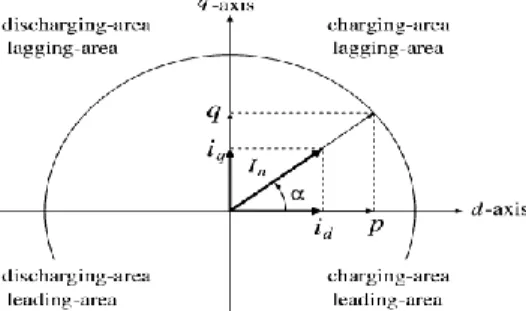
Fig.6(b). Conceptual diagram of active and reactive power control.
Conceptual diagram for active and reactive power control can be expressed by d-q axes reference coordinate frame, as shown in Fig. . In Fig.6(b). α is the phase and In is the root mean square of ac-current. Since dc-current idc is proportional to In in the Fig.6(b). the active and reactive power (pe and qe) are controlled by α and idc.
Fig. 7. Simulation results of wind turbulence and EDLC-cell failure. (a) Wind speed, mechanical input torque and rotor speed. (b) Tie-line power and system frequency. (c) WTG terminal d-q axes voltage. (d) Active and reactive output power of CS-ECS. (e) DC-side quantities and stored power of CS-ECS.
EDLC-cell failure, where solid line and dashed line show the simulation results with CS-ECS and without CS-ECS, respectively. As shown in Fig. 7(a), the nominal wind speed for simulation is 9 m/s and the sine fluctuation is ±2 m/s. As can be seen from Fig. 7(b) and (c) that the fluctuation of WTG terminal voltage and tie-line power are effectively suppressed by CS-ECS, and the tie-line power converges to its steady state value due to the effect of filter. As can also be seen from Fig.7.(e), although EDLC-cell break down at t = 7.0 s, CSECS continue to compensate only by 4-parallel EDLC-bank. Also, shunt currents (idc1 and idc2) are balanced by supplying pulse gate signals of the period of 120◦ in the respectively arm devices, alternately. Fig.8.Shows the active and reactive power of CS-ECS.
Fig.8.Active and reactive power of CS-ECS.
Here the CS-ECS is used as an energy storage system using current-source inverter to resolve the issues of ECaSS using voltage-source inverter. This proposed system is applicable to promote renewable energies, i.e., wind power generation or solar power generation. The control system for the active and reactive power control of CS-ECS is also shown.
IV. CONCLUSION
The investigations have shown that the control methods of WEC have great influence on their characteristic behavior. The fluctuation of the power output of two different control methods have been evaluated. In the direct integration scheme the variable voltage ratio, power sharing and maximum power point tracking and battery charging and discharging are considered in the reduction of power fluctuations. In Electric double layer capacitor system, the output regulation is possible even if a decrease or a fluctuation in dc-voltage arises as stored power discharges. Also, high internal-resistive loss of EDLC-cell can be reduced by a bi-directional dc-dc converter, regulating dc current, since EDLC-bank is connected to ac-feeder through bi-directional dc-dc converter. The results have shown a great difference between the performances of the control methods. Therefore the two kinds of control methods are studied in mitigating power fluctuations under wind energy conversion system.
REFERENCES
[1] N. Bingchang and C. Sourkounis, ―Energy yield and power fluctuation of different control methods for wind energy converters,‖ IEEE Trans.
renewable energy by electric double-layer capacitor applied for energy storage system,‖ IEEE Trans. Energy Convers., vol. 21, no. 1, pp. 221–227, Mar. 2006.
[4] L. Zubieta and R. Bonert, ―Characterization of double-layer capacitors for power electronics applications,‖ IEEE Trans. Ind. Appl., vol. 36, no. 1, pp. 199–205, 2000.
[5] G. Grandi, C. Rossi, A. Lega, and D. Casadei, ―Power balancing of a multilevel converter with two insulated supplies for three-phase sixwire loads,‖ in Proc. IEEE Eur. Conf. Power Electron. Appl., Sep. 2005.
[6] K. A. Corzine, A. S. Sudhoff, and C.Whitcomb, ―Performance characteristics of a cascaded two-level converter,‖ IEEE Trans.
Energy Convers., vol. 14, no. 3, pp. 433–439, Sep. 1999.
[7] J. Kim, J. Jung, and K. Nam, ―Dual-inverter control strategy for highspeed operation of EV induction motors,‖ IEEE Trans. Ind.
Electron., vol. 51, no. 2, pp. 312–320, Apr. 2004.
[8] M. Baiju, K. Mohapatra, R. Kanchan, and K. Gopakumar, ―A dual two level inverter scheme with common mode voltage elimination for an induction motor drive,‖ IEEE Trans. Power Electron., vol. 19, no. 3, pp. 794–805, May 2004.
[9] M. R. Baiju, K. K. Mohapatra, and K. Gopakumar, ―PWM signal generation for dual inverter fed open-end winding induction motor drive using only the instantaneous reference phase amplitudes,‖ in
Proc. IEEE Int. Joint Conf. SICE-ICASE, 2006, pp. 672–677.
[10] T.Muto, ―Development technology of the instantaneous voltage sag compensator apply large-capacity electric double-layer capacitor,‖
Electron Technol., vol. 44, no. 11, pp. 52–58, 2000. (in Japanese).
[11] L. Zubieta and R. Bonert, ―Characterization of double-layer capacitors for power electronics applications,‖ IEEE Trans. Ind. Appl., vol. 36, no. 1, pp. 199–205, 2000.
[12] R. L. Spyker and R. M. Nelms, ―Optimization of double-layer capacitor arrays,‖ IEEE Trans. Ind. Appl., vol. 36, no. 1, pp. 194–198, 2000.
[13] S. Sugimoto, I. Kouda, and Y. Murai, ―Energy storage system utilizing large capacity electric double-layer capacitors for peak-cut of power demand,‖ T. IEE Jpn., vol. 118-D, no. 12, pp. 1377–1385, 1998. (in Japanese).
[14] S. Niiyama, O. Rommy, K. Nakamura, S. Yamashiro, K. Mitsui, M. Yamagisi, and M. Okamura, ―Development of PV-ECS system using a new electrical energy storage system ECS,‖ T. IEE Jpn., vol. 120-B, no. 2, pp. 264–270, 2000. (in Japanese).
[15] S. Sugimoto, S. Ogawa, H. Katsukawa, H. Mizutani, and M. Okamura, ―Study on series-parallel changeover circuit of capacitor bank for energy storage system utilizing electric double-layer capacitors,‖ T.