YEMENI JOURNAL FOR MEDICAL SCIENCES (2010) (4)
1
University of Science and Technology
YEMENI JOURNAL FOR MEDICAL SCIENCES
http://www.med.ust.edu.ye/YJMS/
ORIGINAL ARTICLE
A Randomized Controlled Blind Clinical Trial: The
Effect of Probiotics-Containing Milk Supplementation
on Morbidity and Mortality due to Acute Diarrhea in
Infants and Children in Sana'a, Yemen
Muna A. M. Elnemr
**
Assistant Professor of Pediatric, Faculty of Medical Sciences, University of Science and
Technology
Correspondence address:
E-mail:
[email protected]
Faculty of Medical Sciences, Pediatric Department, University of Science and Technology
Sana’a, Republic of Yemen
_____________________________________________________________________________________________________________________
Abstract:
Objective: To study the impact of probiotic-containing milk administration on the morbidity and mortality attributed to diarrhea among children less than 5 years old.
Methods: The study design was a randomized blinded controlled clinical trial, held at Elsabeen Hospital for Maternity and Childhood in Sana'a city, Yemen. The study was conducted during the period from July 2007 to August 2008 on 180 children less than 5 years old with acute diarrheal episodes. They were randomly allocated into two groups; one of them received regular cow's milk formulas and the other received the same formula supplemented with Bifidobacterium lactis (107 CFU per gram of powder formula), for a duration of 4 weeks. Both groups were followed up for 3 months.
Results: Probiotics - containing milk was able to decrease the mean number of diarrheal episodes: 1.15 (SD 1.10) in the intervention group versus 2.07 (SD 0.875) in the control group. It also reduced the meanfrequency of stools per day in each attack (3.66 in the intervention group versus 4.93 in the control group) and the duration of subsequent episodes during the follow-up period.
Conclusion: We can conclude from the study that administration of probiotics containing formulas during acute diarrheal episodes for 4 weeks could decrease the incidence of further diarrheal episodes, as well as, the severity of these episodes. The lower rates of child morbidity with probiotics treatment represent substantial benefits from a simple and inexpensive intervention that can be incorporated in existing efforts to control diarrheal disease.
YEMENI JOURNAL FOR MEDICAL SCIENCES (2010) (4)
2
Diarrhea represents a leading cause of under 5 mortality in developing countries, including Yemen and many other countries of the Eastern Mediterranean (1). Overall under 5 mortality was estimated by World Health report to be113 per 100,000 live births, of which diarrhea accounted for 17%, while that of measles represented only 4% and that of malaria 3%. Hence reducing the burden of diarrhoea in these countries will significantly reduce overall mortality in such countries (1, 2).
Probiotics are microorganisms with potential health benefits. They may be used to prevent and treat antibiotic-associated diarrhea and acute infectious diarrhea. They may also be effective in relieving symptoms of irritable bowel syndrome, and in treating atopic dermatitis in children. Species commonly used include Lactobacillus sp., Bifidobacterium sp.,
Streptococcus thermophilus, and Saccharo-myces boulardii. Optimal dosages vary based on the product, but common dosages range from 5 to10 billion colony-forming units per day for children and from 10 to 20 billion colony-forming units per day for adults. Significant adverse effects are rare, and there are no known interactions with medications (2, 3, 4).
Several randomized controlled trials and meta-analyses suggested that probiotics are effective in primary and secondary prevention of gastroenteritis and its treatment. Selected Lactobacillus strains had a modest, although significant effect in primary prevention.
Saccharomyces boulardii was effective in antibiotic-associated and in Clostridium difficile
diarrhea. Lactobacillus rhamnosus GG was associated with reduced diarrheal duration and severity, more evident in case of childhood
evidence was obtained with S. boulardii. Both strains are included in evidence-based recommendations for gastroenteritis management in children (3).
Infants fed on formula supplemented with a probiotics mixture achieved normal growth, and stool characteristics more similar to those of breast fed infants in comparison with infants fed an un-supplemented formula (5). Moreover, a Meta analysis showed that there was an overall statistically significant difference favouring probiotics, compared with placebo in reducing the Scoring of Atopic Dermatitis Severity Index score. Children with moderately severe disease were more likely to benefit. Duration of probiotic administration, age, and type of probiotic used did not affect outcome (3).
The oral glucose-electrolyte rehydration solution such as that recommended by WHO and Unicef, neither shortens the duration of the illness nor reduces the stool loss, and may cause an increase in stool volume at least during the first hours in children with acute diarrhea. Optimization of the standard WHO-ORS solution, by reducing its osmolarity, has been shown to reduce diarrhea duration, total stool output, and the need for unscheduled intravenous therapy (6).
Adjuvant therapy to ORT, based on oral administration of live probiotic bacteria aimed to improve recovery of infants from acute watery diarrhea, has been under active investigation (7).
YEMENI JOURNAL FOR MEDICAL SCIENCES (2010) (4)
3
2. Materials and Methods
This study was conducted in the Oral Rehydration Therapy Centre at Elsabeen Teaching Hospital in Sana'a city, Yemen. The following criteria were used to include subjects in the study: infants and children with acute diarrheal episodes, aged 8 months - 5 years of both sexes, either admitted to the medical ward or not.
The following subjects were excluded from this study: infants with malnutrition (body weight < 60% of the median for age and sex and/or stunting (low height for age), or wasting (low weight for height) according to 1995 WHO Standard Deviation Classification, (The use and interpretation of Anthropometry, Geneva, 1995). Infants who are breast fed at the time of the study, and infants who were discovered to have lactose intolerance or cow's milk allergy. Infants with co-infections were also excluded, as well as bloody diarrhea.
The study was a randomized single blind controlled clinical trial. Because of the difficulty of implementing a double blind study of commercially available products in a large population, we developed the third group of blind observer method, to assess the affectivity of the product by the data collectors, who have recorded the data and who were blinded to the assigned treatment.
Sample size was calculated according to the suitable formula: using the EpiInfo package using an expected reduction of mortality, and morbidity of 20%. Confidence interval: 95%; Power of the test 90%; Unexposed: Exposed ratio: 1:1. Disease in Unexposed: 30% (in YEMEN); Risk Ratio: 0.33. By using the sample size collection EpiInfo 2000, the number
of children is 100 per group. Total number of children is200.
The following sampling technique was used: the children were randomly allocated into two groups, as soon as the enrolment was accomplished until the sample was finished. The randomization was undertaken by the blinded trained nurses in the study location.
The control group received Oral rehydration therapy, advice to the mother on feeding during diarrheal episodes, and a regular infant milk formula. The intervention group received, in addition to oral rehydration therapy and advices to the mother regarding feeding, a special milk infant formula containing Bifidobacterium lactis (107 CFU per gram of powder formula). By dilution, each 100 ml gave around 1010 CFU. The aim was a daily consumption of 300 ml for each child during the whole period of study. Treatment began as soon as the episode of diarrhea started and continued for 4 weeks. Other products containing probiotic bacteria were forbidden.
The data collectors taught the mothers how to prepare the formula and the frequency of giving it. Data collectors also visited or called on the mother or the care taker at day 7 and day 14, and then every 2 weeks for 3 months. Children and infants eligible for the study were enrolled during the acute attack of diarrhea. Each infant and child in the first episode was submitted to the following:
- A detailed and complete clinical history including previous episodes and its duration.
YEMENI JOURNAL FOR MEDICAL SCIENCES (2010) (4)
4
the subsequent attacks as well as the adherence to milk formula and occurrence of death.
- Complete clinical examination with special attention to nutritional status, dehydration status and chest examination.
Both groups were followed by observing and recording the different outcomes written in the data collection form: acceptability, adherence to the treatment by following the amount of formula consumed, as well as the number of episodes, amount and frequency in each episode, the duration of each subsequent episode, the duration of hospital stay, if any, and death and its cause if any.
Diarrhea is defined as three or more loose stools per day over at least 2 consecutive days. The acute diarrheal episode in which the patients were enrolled was defined as episode that is started during the last 48 hours from the visit to the centre. Resolution is defined as three consecutive days free from disease (1, 14).
Diagnosis of under nutrition for exclusion depends on the standard deviation classification of WHO, Physical Status: the use and interpretation of Anthropometry, Geneva: world Health Organization, 1995 using weight for age, weight for height and height for age. Stunting was defined as height for age below 2 standard deviations, while wasting was defined as weight for height below 2 standard deviations and underweight as weight for age below 2 standard deviations.
Data were collected and analyzed using the SSPS version 15.0.0 for Windows programme for data analysis, and appropriate tests were used to test significant differences.
2.2. Ethics:
The ethical review committees of the hospital approved the study procedures. Because this was a community based treatment trial, we obtained a written consent from parents that explained the purpose of the study and potential risks, and benefits of the new treatment.
3. Results
In this blind controlled randomized study, 200 children were enrolled. Ten children were excluded from the study because of the discovery of malnutrition, and other ten children had dropped during the period of follow up.
Mean age of the enrolled children was 19.61 months in the control group and 19.41 months in the intervention group. Mean weight in the control and intervention group was (10.1 kg and 9.5 kg) respectively. Mean height in the control and intervention group was (79.65 cm and 78.65 cm) respectively (Figure I).
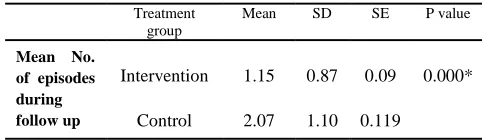
The mean number of diarrheal episodes during the follow up period was significantly lower in the intervention group, in comparison with the control group (Table I and Figure II).
YEMENI JOURNAL FOR MEDICAL SCIENCES (2010) (4)
5
Figure I. Distribution of the enrolled children according to age (by months) and weight (by KG)
Figure II. The mean frequency of motions and mean number of episodes during the follow up period in both the control and intervention group
Table I. The mean number of diarrhoeal episodes during the follow up period in both the intervention and control group
Treatment group
Mean SD SE P value
Mean No. of episodes during follow up
Intervention 1.15 0.87 0.09 0.000* Control 2.07 1.10 0.119
*Significant difference at p value less than 0.05
Table II. The mean frequency of motions per episode during the follow up period in both the intervention and control group
Treatment group
Mean SD SE P value
Mean frequency of motions in episodes during follow up
Intervention 3.66 2.157 0.221 0.000*
Control 4.95 2.197 0.238
*Significant difference at p value less than 0.05
Table III. Themean duration of episodes during the follow up period in both the intervention and control group
Treatment group
Mean SD SE P value
Mean duration of episodes during follow up
Intervention 2.8 1.59 0.173 0.000*
Control 4.27 2.055 0.211
*Significant difference at p value less than 0.05
Probiotics did not decrease the duration or the frequency of diarrhea in the initial attack. Moreover mortality was not affected in this study may be because it needs a larger sample size.
4. Discussion
Acute infectious diarrhea is still a major cause of childhood morbidity. It is also a source of anxiety to families of affected children, and represents a heavy economic burden for families and for society as a whole (8,14).
YEMENI JOURNAL FOR MEDICAL SCIENCES (2010) (4)
6
infections by stimulating non-specific immunity, or enhancing humoral and cellular immunity. The functioning of the immune system at both a systemic and a mucosal level can be modulated by bacteria in the gut. This immune-stimulatory effect of bacteria has previously been shown to prevent recurrent infections in children (9,14).
A randomized controlled study on 23 children with acute rotaviral gastroenteritis was undertaken by randomly allocating patients to receive one of the three regimens for 3 days with daily LGG given in three different concentrations. Fecal samples were collected before and after the 3-day regimen for measurements of rotavirus concentration. The study concluded that probiotics supplementation substantially reduced the severity of diarrhea by reducing fecal rotavirus concentrations (10).
Another randomized controlled trial in India concluded that administration of LGG containing formula twice daily for 7 days had decreased significantly the frequency, and duration of the acute diarrheal episodes in children enrolled in the study (11).
Another double blind controlled trial concluded that the use of probiotic mixture VSL[sharp]3 in acute rotavirus diarrhea resulted in earlier recovery, and reduced frequency of ORS administration reflecting decreased stool volume losses during diarrhea (12,13,14).
5. Conclusion
In this study, Probiotics supplementation significantly reduced the incidence of severe diarrhea, and the frequency of motions, the two important factors determining diarrhea-related mortality and malnutrition. This intervention also substantially reduced the proportion of children
enough to merit routine use of probiotics during acute diarrhea in developing countries.
More studies should evaluate the impact of larger doses probiotics intake on childhood mortality in developing countries. Moreover longer duration of probiotics administration after the initial attack should be studied, for example, duration of 3-4 months of daily probiotics. The intervention that was evaluated is simple and inexpensive and can be included into the current diarrheal disease control programs.
Acknowledgment
We acknowledge with thanks the financial support of this study by Alsaeed Institution for Science and Culture.
References
1. Sazwal S, Black RE, Menon VP, Dinghra P, Caulfield LE, Dhingra U, Bagati A. Zinc supplementation in infants. Pediatrics 2001; 108:1282-4.
2. Kligler B, Cohrssen A. Probiotics. Am Fam Physician. 2008;78:1073-8.
3. Wallace B. Clinical use of probiotics in the pediatric population. Nutr Clin Pract. 2009;24:50-9.
4. Minocha A. Probiotics for preventive health. Nutr Clin Pract. 2009;24:227-41
5. Guarino A, Lo Vecchio A, Canani RB. Probiotics as prevention and treatment for diarrhea. Curr Opin Gastroenterol. 2009; 25:18-23. 6. Dubey AP, Rajeshwari K, Chakravarty A, Famularo G. The use of VSL (sharp) 3 in the treatment of rotavirus diarrhea in children, preliminary results. 2008;42:126-9.
7. Rautanen T, Isolauri E, Salo E, Vesikari T. Management of acute diarrhoea with low osmolarity oral rehydration solutions and Lactobacillus strain GG. Arch Dis Child.1998; 79:157–160. 8. Guandalini S. Treatment of acute diarrhea in the new millennium. J Pediatr Gastroenterol Nutr 2000;30:486-9.
9. Erickson KL, Hubbard NE. Probiotic immunomodulation in health and disease. J Nutr. 2000;130:403–49.
10. Ng SC, Hart AL, Kamm MA, Stagg AJ, Knight SC. Mechanisms of action of probiotics: recent advances. Inflamm Bowel Dis. 2009;15:300-10.
11. Fang SB, Lee HC, Hu JJ, Hou SY, Liu HL, Fang HW. Dose-dependent effect of Lactobacillus GG on quantitative reduction of faecal rotavirus shedding in children. J Trop Pediatr. 2009;55:297-301.
YEMENI JOURNAL FOR MEDICAL SCIENCES (2010) (4)
7 Watery Diarrhea in Indian Children: A Randomized Controlled Trial.
J Clin Gastroenterol. 2009;43:208-13.
13. Lazăr V, Miyazaki Y, Hanawa T, Chifiriuc MC, Diţu LM, et.al., The influence of some probiotic supernatants on the growth and virulence features expression of several selected enteroaggregative E. coli clinical strains. Arch Microbiol Immunol. 2009;68:207-14. 14. Narayanappa D. Randomized double blinded controlled trial to evaluate the efficacy and safety of Bifilac in patients with acute viral diarrhea. Indian J Pediatr. 2008;75:709-13.
15. Standard deviation classification of WHO, Physical Status: the use and interpretation of Anthropometry. Geneva: world Health Organization, 1995.
ًبرعلا صخلملا
كتىٌابوربلا ىلع يىتحملا بٍلحلا ءاطعإ رٍثأت تسارد (
تعفانلا اٌرتكبلا )
لافطلأا ذنع ةداحلا ثلااهسلاا ثلااحل تبحاصملا تٍضرملا تجرد ىلع همٍلا ًف رمعلا هم تسماخلا نود
فذهلا
: كذُٔاتَشثنا ّهع ُْرحمنا ةٕهحنا ءاطعإ شٕثأذ حساسد (
أشركثنا
ًعفاىنا ) لافطلأا ِذن جداحنا خلااٍسلان حثحاصمنا حٕضشمنا حجسد ّهع
حسماخنا هس نَد .
ا تقٌرطل :
ًٕهثقرسم ًٔشٔشس حٕئاُشع حٕثٔشجذ حساسد ٌٓ حساسذنا يزٌ داحنا لاٍسلإات هٕتاصمنا حسماخنا هس نَد لافطلأا هم ًعُمجمن
مٌدذعَ 200 هٕت مٌسامعأ دحَاشذ مفط 8
-48 جشرفنا ٓف دمذ شٍش
ُٕنُٔ هٕت 2007
سطسغأ ّرحَ 2008
. ّنإ خلااحنا مٕسقذ مذ
كذُٔاتَشثنا ّهع ُْرحمنا ةٕهحنا ّنَلأا ًعُمجمنأ دٕطعأ هٕرعُمجم ( ًعفاىنا أشركثنا )
جذمن 4 مذ امىٕت فافجنا لُهحم ّنإ ًفاضلاات عٕتاسا
ّنإ ًفاضلاات يدارعمنا ًثٕكشىنا َر لافطا ةٕهح ًٕوارنا حعُمجمنا ءاطعإ ُْمفنا ءاَسلاا لُهحم .
شٍشا حثلاث جشرف للاخ خلااحنا مك حعتارم مذ .
جئاتنلا :
كذُٔاتَشثنا ّهع ُْرحمنا ةٕهحنا ءاطعإ نإ جئارىنا خشٍظأ ( ًعفاىنا أشركثنا )
لاٍسلإا خاشم دذعَ جذم هم مهق ذق .
تصلاخلا :
كذُٔاتَشثنا ّهع ُْرحمنا ةٕهحنا نإ حساسذنا دصهخرسا ( ٓرناَ جداحنا خلااٍسلان حثحاصمنا حٕضشمنا هم مهق ذق حعفاىنا أشركثنا
حسماخنا نَد لافطلأا هٕت جافُهن حٔدؤمنا باثسلأا مٌأ هم شثرعذ .
ثاملكلا حاتفم :
YEMENI JOURNAL FOR MEDICAL SCIENCES (2010) (4)
8
University of Science and Technology
YEMENI JOURNAL FOR MEDICAL SCIENCES
http://www.med.ust.edu.ye/YJMS/
ORIGINAL ARTICLE
A Comparative Quality Study of Selected Locally
Manufactured and Imported Medicines in Yemeni
Market
Khaled Al-Tahami
**
Assistant Professor of Pharmaceutics, Department of Pharmacy, Faculty of Medical Sciences,
University of Science and Technology
Correspondence address:
E-mail:
[email protected]
Faculty of Medical Sciences, Pharmacy Department, University of Science and Technology
Sana’a, Republic of Yemen
_____________________________________________________________________________________________________________________
Abstract:
Objective: In a poor country like Yemen, the cost is a crucial factor in determining the accessibility of patient to health care services. In such situations, locally manufactured medicines seem like an attractive choice due to their cheaper prices. In our work, the quality control of selected pharmaceutical products (original and locally manufactured medicines containing esomperazole and hyoscine butylbromide) was investigated.
Methods: Standard USP quality control tests (disintegration, friability, dissolution, and content assay) were run on all the tested products.
Results: When we compared between the quality of selected locally manufactured medicines, another generic alternative available in the Yemeni market, and the original parent drug, we observed that the Yemeni products have equal quality compared to original products and superior quality to the other imported generic product.
Conclusion: A rational substitution for the expensive original pharmaceutical products can be carried out using high quality locally manufactured generic products.
YEMENI JOURNAL FOR MEDICAL SCIENCES (2010) (4)
9
1. Introduction
Good-quality medicines are a prerequisite for a successful treatment. Drug quality is currently receiving a growing international attention. Over the past decade, there has been an increase in public awareness of the existence of counterfeit and substandard drugs which have been increasingly reported in developing countries where drug regulations are less effective or totally absent (1). Substandard drugs have demonstrated severe consequences for public health. Drugs with too little or no active ingredient could be fatal and lead to the development of drug resistance. Resistance at the population level renders legitimate drugs and even entire classes of drugs less effective, even for patients who did not previously take poor-quality drugs. Products with too much active ingredient can lead to drug toxicity along with accompanying complications.
As mentioned in the Declaration of Alma Ata (1978), the “provision of essential drugs” is one of the core elements of primary health care in order to achieve “health for all”. However, access to medicines in terms of availability and affordability remains a major global health concern. Estimates show that 30% of the world’s population do not have regular access to essential medicines and in the poorest developing countries in Africa and Asia even up to 50% of the population are affected (2). The cost of medicine represents the greatest share of health-care expenditures for people in poor countries. Expenditure on pharmaceuticals ranges from 10 % – 20 % of expenditure on health in the richest countries and 20 % – 60 % in poorer countries (3). Unlike many rich countries, most developing countries lack universal health insurance. Across Asia, medicines comprise between 20 to 80 percent of out of healthcare costs (4). Millions of women and men in developing countries make great sacrifices to buy the
medicines needed for themselves and their families. The cost of health care, especially medicines, often drives them into poverty. The main proven mechanism to reduce the price of medicines is generic competition. In Colombia, where generics supply two - thirds of the national market, the cost of generic medicines is, on average, a quarter of the cost of brand-name equivalents (1). The difficulties of access to medicines encountered by developing countries (due to technical and/or economic constraints) sometimes bring those health managers responsible for the cost-effective supply of pharmaceutical products face to face with suppliers who do not always observe quality standards.
In a poor country like Yemen, the cost is a crucial factor in determining the accessibility of patient to health care services. Medicines cost pose a major part of the health care expenditure. In addition, due to the increasing expenditure in research and development along with increasing costs associated with more regulations being imposed, all that leads to boosting of the prices of the newly introduced medicines. Many people defer from using medicines they need because of the economic status and the high cost of these medicines. In such situations, locally manufactured medicines make a reasonable alternative due to their cheaper prices. Yet, there is still a state of refusal to use the locally manufactured medicine among physicians, pharmacists, and patients. They have been, rightfully or not, associated with bad quality and bad treatment income. Therefore, a stronger national pharmaceutical industry would help alleviate the high cost burden from patients and nation.
YEMENI JOURNAL FOR MEDICAL SCIENCES (2010) (4)
10
and the original parent drug. This comparison will focus on all quality testing studies employed in the industrial pharmacy. Different products containing esomperazole (proton pump inhibitor) and hyoscine butylbromide (antispasmodic) were investigated and chosen as examples of widely used medicines in Yemeni market.
2. Materials and Methods
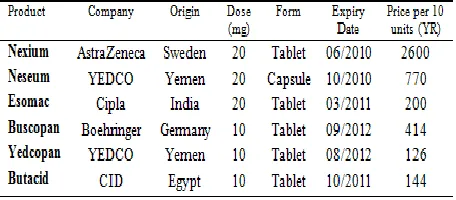
For esomeperazol magnesium 20 mg products, brands investigated were Nexium (AstraZeneca, Sweden), Neseum (YEDCO, Yemen), and Esomac (Cipla, India). For hyoscine butylbromide 10 mg products, brands investigated were Buscopan (Boehringer, Germany), Yedcopan (YEDCO, Yemen), and Butacid (CID, Egypt). Table I summarizes the different medicines used in the study. All the chemicals used in the assays were of HPLC grade.
Table I. Label information of different brands
USP Disintegration test: A tablet was placed in each of the six tubes in the basket immersed in water at 37°C and the time needed for the tablets to disintegrate and pass through a 10 mesh screen was recorded.
USP Friability test: The test was carried out in a Roche friabilator. Number of tablets equivalent to around 6.5 g of tablets were placed in the instrument and the test was run for 100 revolutions at 25 rpm. The tablets were then dusted
and weighed. The weight loss for each run was determined.
USP Dissolution test: Dissolution test was carried out by using an Erweka dissolution
instrument employing paddle method
(apparatus‐2). All drugs were analyzed using methods specified in the 2006 US Pharmacopeia
and National Formulary (USP30–NF25)
monograph of the respective drugs (5).
USP drug content: The test was carried out by crushing 20 tablets and a weight equivalent to a single unit dose was assayed for drug content. All drugs were analyzed using methods specified in the 2006 US Pharmacopeia and National Formulary (USP30–NF25) monograph of the respective drugs (5).
3. Results
YEMENI JOURNAL FOR MEDICAL SCIENCES (2010) (4)
11
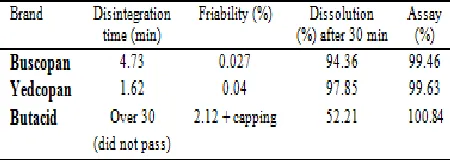
Friability Test: The friability test for hyoscine butylbromide and esomperazole formulations was carried out. Butacid showed capping which is a rejection criterion. In addition, Butacid experienced a weight loss of 2.12% which is over the accepted limits (0.5-1%). Both Yedcopan and Buscopan showed excellent friability scores. As for esomperazole products, tests were not carried out because Esomac and Nexium tablets are coated while Neseum is formulated as hard gelatin capsules.
Dissolution Studies: Dissolution tests were carried out to see the rate of drug dissolution in a specified period of time. Dissolution testing is the most important way to study, under in vitro conditions, the release of a drug from a solid dosage form and thus represents an important tool to assess factors that affect the bioavailability of a drug from a solid preparation. During dissolution test, the cumulative amount of drug that passes into solution is studied as a function of time. The test thus describes the overall rate of the processes involved in release of the drug into a bioavailable form. The tests measured the percentage of active ingredient dissolved in 30 minute period. Both original Buscopan and local Yedcopan expressed percentages greater than 75% (acceptance limit) while Butacid failed the test. As for esomperazole formulations, all products passed the test with higher percentage in test results observed in Nexium and Neseum.
Table II. Quality control parameters of hyoscine butylbromide products
Table III. Quality control parameters of esomperazole products
Content Assay: Drug content test was carried out to see if the drug contains the claimed amount of active ingredient. The USP sets the limits (85%-115% of the claimed amount). The collected data shows that all hyoscine butylbromide and esomperazole products passed the assay.
4. Discussion
It was evaluated by literatures that many drugs that are manufactured in developing countries are implicated to be substandard (6, 7). However, the majority of these reports focus on medicines used in infectious diseases (8-11). Taking into account that the numbers of local pharmaceutical industry plants is still limited in Yemen, one cannot but recognize the fact that these plants base their production expansion plans on what types of medicines are more profitable instead of what types of medicines are really needed. The presence of a strong, independent drug regulatory system committed to improved health outcomes, is not only vital to the public interest, but is also fundamental to the development of a healthy pharmaceutical industry. Without an effective regulator in place, licensing standards and operating procedures will not be maintained and inadequately tested medicines will enter the market.
YEMENI JOURNAL FOR MEDICAL SCIENCES (2010) (4)
12
medicines are equal, and in some cases superior, to the imported medicines they were compared to. While the quality of original and locally manufactured drugs was confirmed, it was shown that some marketed imported medicines are far from acceptable.
This mistrust phenomenon in locally manufactured medicines was greatly observed in the respondents’ answers to the surveys questionnaires. Obviously, several issues need to be addressed within locally manufactured medicines to meet public expectations. An inherited belief in developing countries is the appreciation and admiration of everything that is foreign and a negative view toward everything which is local. Efforts should be made to improve the health professionals and community point of view toward locally manufactured medicines through improving the quality management in these plants to prevent any incidents which could deteriorate the industry image. The importance of presenting local pharmaceutical industry as science-oriented establishments should not be ignored. This is done by activation of the research & development (R&D) department role along with carrying out and making available to the public studies such as bioequivalence studies. This could help to alleviate public view toward local pharmaceutical industry as points for repackaging with no real industrial features.
These steps, combined with the proper and targeted marketing, would improve the public perception of local pharmaceutical industry. The local industry should make use of the low prices they offer. These lower prices are direct results from not having any drug development structures which reduces the cost greatly. In addition, local pharmaceutical industries are not subjected to customs and international transportation and insurance costs that foreign companies are
subjected to. The low price allows for competition as well as providing a margin for price increment where additional revenue would be used toward the aforementioned steps necessary to build trust ties with the public.
5. Conclusion
Although the tested locally manufactured products showed excellent quality results, trends of local pharmaceutical industry in Yemen still needs a great deal of attention and improvement in different areas such as manufacturing, knowledge, attitude and behaviour, and concentration on industry policy to improve their awareness about use of medicines and the importance of this issue to improve health status of the public.
Acknowledgment
We acknowledge the assistance in carrying out the tests from the fifth year students at UST-bridging program and both YEDCO and AstraZeneca companies for providing the products used in this study.
References
1.WHO. Counterfeit Drugs: Guidelines for the Development of
Measures to Combat Counterfeit Drugs. Geneva: WHO, 1999; 1–60.
2.WHO policy perspectives on medicine - equitable access to
essential medicines: a framework for collective action. Geneva: World Health Organization, 2004.
3.Patents versus Patients Five years after the Doha Declaration.
2005, p. 8, 9. Oxfam Briefing Paper. Available at:
www.globalpolicy.org/socecon/bwiwto/wto/2006/1114patentpatients. pdf
4.Baker, B. Processes and Issues for Improving Access to Medicines.
Willingness and Ability to Utilize TRIPS Flexibilities in Non-Producing Countries. A Paper for the Department for International Development.2004. Available at:
www.dfidhealthrc.org/publications/atm/Gray.pdf.
5.United States Pharmacopeial Convention, National Formulary
(USP30-NF 25). Rockville, MD: United States Pharmacopeia. 2007.
6. Shakoor O, et al. Tropical Medicine and International Health;
1997; 839-845.
YEMENI JOURNAL FOR MEDICAL SCIENCES (2010) (4)
13
8.Kayumba PC et al. The quality of essential antimicrobial and
antimalarial drugs marketed in Rwanda and Tanzania: influence of tropical storage conditions on in vitro dissolution. J Clin Pharm Ther, 2004, 29: 331–338.
9.Petralanda I. Quality of antimalarial drugs and resistance to
Plasmodium vivax in Amazonian region. Lancet, 1995, 345: 1433.
10.Reidenberg MM, Conner BA. Counterfeit and substandard drugs.
Clin Pharmacol Ther, 2001, 69: 189–193.
YEMENI JOURNAL FOR MEDICAL SCIENCES (2010) (4)
14
YEMENI JOURNAL FOR MEDICAL SCIENCES
http://www.med.ust.edu.ye/YJMS/
ORIGINAL ARTICLE
The effect of osteoporosis and diabetes mellitus on
serum magnesium level of Sudanese ladies
Abdelrahman A. L.
a, Mohammed M. K.
b, Abdelsalam A.K.
ca
Department of physiology, College of Health, Khartoum University
b
Al-Jazeera Hospital, Department of Laboratory
c
Department of Clinical Chemistry, College of Medical Laboratory Sciences, Omdurman Islamic
University
Correspondence address:
E-mail:
[email protected]
_____________________________________________________________________________________________________________________
Abstract:
Background: Osteoporosis is an important physiological change in elderly post-menopause ladies. It can induce a lot of complications such as hip fracture. Similar to serum calcium and phosphorus, serum magnesium is decreased in the osteoporosis women.
Objective: In this study, evaluation of serum magnesium levels among diabetic osteoporosis-risk Sudanese pre-menopause ladies comparing to control group was carried.
Materials: A total of 100 female, 50 low risk control subjects and 50 osteoporosis-risk female (25 with uncomplicated diabetes mellitus and 25 with other risks) were included in this study.
Methods: Serum magnesium estimation was performed by AAS method.
Results: There was no significant difference in serum Mg level between control group (0.90 mmol/L) and osteoporosis-risk (0.89mmol/L) groups (p > 0.05) while a significant differences were presented between control group (0.87mmol/L) and osteoporosis-risk ladies in diabetic (0.93 mmol/L) groups (p < 0.05) in this study.
Conclusion: The serum magnesium level cannot be used as osteoporosis marker for pre-menopausal ladies.
YEMENI JOURNAL FOR MEDICAL SCIENCES (2010) (4)
15
1. Introduction
Osteoporosis is a disease of bones that leads to an increased risk of fracture. In osteoporosis the bone mineral density (BMD) is reduced, bone micro-architecture is disrupted, and the amount and variety of proteins in bone is altered (1). Osteoporosis is defined by the World Health Organization (WHO) in women as a bone mineral density 2.5 standard deviations below peak bone mass (20-year-old healthy female average) as measured by Dual energy X-ray absorptiometry (DXA); the term "established osteoporosis" includes the presence of a fragility fracture (2). It is widespread and can affect people of all ethnic backgrounds (3).
An essential element in preventing osteoporosis is the achievement of normal peak bone mass. Adequate nutrition, appropriate calcium and vitamin D intake, regular menstrual cycles and a well balanced exercise program of exercise are essential elements in achieving peak bone mass. At menopause women undergo accelerated bone loss. Thereafter, women gradually lose bone mass(4).
Major risk factors for osteoporosis include low body weight, history of fracture, family history of osteoporosis, and smoking (5). Established risk factors for osteoporosis and associated fractures are increasing age, female sex, white race, removal of the ovaries at an early age, prolonged immobility, and prolonged use of corticosteroids. Furthermore, factors that probably or possibly increase risk in postmenopausal white women include a low calcium intake, cigarette smoking, and, at least for hip fractures, use of long half-life psychotrophic drugs and heavy alcohol consumption (6).
Because osteoporosis is usually asymptomatic until a fracture, especially for hip fracture, occurs,
physicians must identify the appropriate timing and methods for screening those at risk (7). Similar to serum calcium and phosphorus, serum magnesium is decrease in the osteoporosis subjects (5, 8).
In this study, evaluation of serum magnesium levels among osteoporosis-risk Sudanese pre-menopause subjects comparing to low risk matched control group was performed.
2. Materials and Methods
2.1. Subjects: A total of 100 female subjects were included in this study. The first group, comprising the study group 50 subjects, was a group of osteoporosis-risk ladies (25 subjects with uncomplicated diabetes mellitus and 25 subjects with other risks) were included into this study. The second group, 50 subjects, was the matched control group with low risk for osteoporosis. All subjects were asked for informed consent. Then random blood sample was collected for laboratory analysis from each subject.
2.2. Sample collection: For all blood collection, antecubital venipuncture by evacuated blood collection system was performed. From each subject 3 mL blood samples were collected. Then specimens was refrigerated at 4 °C and sent to lab within 1 day.
2.3. Sample preparation: Contamination during sample collection was get rid off by precipitation using Lanthanum chloride in the ratio serum: Lanthanum chloride equalled to 1:40.
YEMENI JOURNAL FOR MEDICAL SCIENCES (2010) (4)
16
described briefly as following. AAS is the analytical technique based on photo-electric principle. The principle behind atomic absorption is the absorption of radiation by atomized atoms. The atomized atoms absorb only the specific radiation which will raise them to an excited energy level. Radiation at any other wavelength is ignored. The excited electron will give off energy at a specific wavelength when it rapidly returns to its ground state. Radiant energy is supplied at a wavelength which will raise the ground state electrons to the excited state. The change in radiant energy before and after absorbance is measured. For magnesium analysis, the wavelength equals to 285.2 is used (9).
2.5. Statistical analysis: Mean and standard deviations of blood magnesium levels in each groups was calculated. The average blood magnesium levels of each group were compared using the unpaired t-test with level P ≤0.05 considered statistically significant.
3. Results
Table I. Blood magnesium levels in control group and osteoporosis-risk groups
Control group
Osteoporosis-risk group
P value
Serum Magnesium Level (mmol/L)
0.90 0.89 > 0.05
*No significance between low risk and osteoporosis-risk subjects (p > 0.05)
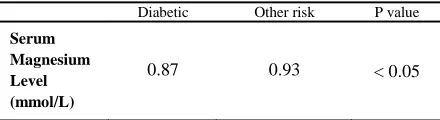
Table II. Blood magnesium levels in osteoporosis-risk groups
Diabetic Other risk P value
Serum Magnesium Level (mmol/L)
0.87 0.93 < 0.05
*Significance between low risk and osteoporosis-risk subjects in diabetic group (p < 0.05)
0.884 0.886 0.888 0.89 0.892 0.894 0.896 0.898 0.9 0.902
control group osteoporosis-risk group
Serum magnesium
Figure I. Comparison of serum magnesium (m.mol/l) between the control group and the osteoporosis-risk group
Serum magnesium level (mmol/L)
0.84 0.85 0.86 0.87 0.88 0.89 0.9 0.91 0.92 0.93 0.94
diabetic other risk
Serum magnesium
Figure II. Comparison of serum magnesium (m.mol/l) between the diabetic patients and the other osteoporosis-risk group
4. Discussion
YEMENI JOURNAL FOR MEDICAL SCIENCES (2010) (4)
17
high alcohol consumption and etc.) are mentioned (12).
A number of trace elements including calcium, phosphorus, zinc and magnesium are decrease in post-menopause women and believed to relate to disorders of bone metabolism. In this study, as in table I and figure I, the results showed that almost no changes between osteoporosis subjects and non-osteoporosis (control group). These findings were in inconsistent with previous study of Rosen HN (5) in which magnesium level among the osteoporosis subjects is significant lower than non-osteoporosis.
However, there are also other factors associated with decrease blood magnesium level, especially diabetes mellitus, another common problem in elderly women (13). As in table II and figure II, there were significant decreasing in magnesium level in diabetic patients (p < 0.05) less than the other osteoporosis-risk subjects. This result was in agreement with that of Rosolová et al (14) who reported thatdue to decrease of the net tubular re-absorption of magnesium in diabetic patients in presence of hyperglycaemia, leading to hypomagnesaemia can be resulted.
5. Conclusion
In this study, evaluation of the serum magnesium level among the osteoporosis-risk and matched control group was done. No significant difference between control and osteoporosis-risk ladies was observed. Therefore, it can confirm the hypomagnesaemia in diabetic but not osteoporosis. Serum magnesium level cannot be used as osteoporosis marker for pre-menopausal women.
References
1.Jasminka ZI, Jane EK. Nutrition in Bone Health Revisited: A Story
Beyond Calcium. Journal of the American College of Nutrition 2000;
19 (6): 715–737.
2.WHO. Assessment of fracture risk and its application to screening
for postmenopausal osteoporosis. Report of a WHO Study Group.
World Health Organization technical report series 1994; 843: 1–129.
3.Gourlay M, Franceschini N, Sheyn Y. Prevention and treatment
strategies for glucocorticoid-induced osteoporotic fractures. Clin
Rheumatol 2007; 26 (2): 144–53.
4.Tucker KL, Petty SJ, O'Brien TJ. Osteoporosis and its
management. American Journal of Clinical Nutrition 1979.
5.Rosen Hillel N. Calcium and vitamin D supplementation in
osteoporosis. In: Up To Date, Basow, DS (Ed), Waltham 2010;54.
6.Bonaiuti D, Shea B, Iovine R. Preventing and treating osteoporosis
in postmenopausal women. Cochrane database of systematic reviews
(Online). 2002.
7.Albright F, Bloomberg E, Smith PH. Postmenopausal osteoporosis.
Trans. Assoc. Am. Physicians. 1940
8.Iwamoto J, Takeda T, Ichimura S. Effect of exercise training and
detraining on bone mineral density in postmenopausal women with
osteoporosis. Journal of orthopaedic science 2001;6 (2): 128–32
9.Sperling Michael B, Welz Bernhard. Atomic Absorption
Spectrometry. Weinheim: Wiley-VCH. 1999.
10.Shapses SA, Riedt CS. Bone, body weight, and weight reduction:
what are the concerns?. J. Nutr. 2006; 136 (6): 1453–6.
11.Kim DH, Vaccaro AR. Osteoporotic compression fractures of the
spine; current options and considerations for treatment. The spine
journal 2006; 6 (5): 479–87.
12.Cranney A, Papaioannou A, Zytaruk N. Clinical Guidelines
Committee of Osteoporosis Canada. Parathyroid hormone for the
treatment of osteoporosis: a systematic review. CMAJ 2006; 4;
175(1):52-9.
13.Fox CH, Ramsoomair D, Mahoney MC, Carter C, Young B,
Graham R. An investigation of hypomagnesemia among ambulatory
urban African Americans. J Fam Pract. 1999; 48:636-639.
14.Rosolová H, Mayer O Jr, Reaven GM. Insulin-mediated glucose
disposal is decreased in normal subjects with relatively low plasma
magnesium concentrations. Metabolism. 2000; 49:418-420.
15.Kao WH, Folsom AR, Nieto FJ, Mo JP, Watson RI, Brancati FL.
Serum and dietary magnesium and the risk for type 2 diabetes
mellitus: the Atherosclerosis Risk in Communities Study. Arch Intern
YEMENI JOURNAL FOR MEDICAL SCIENCES (2010) (4)
18
YEMENI JOURNAL FOR MEDICAL SCIENCES
http://www.med.ust.edu.ye/YJMS/
ORIGINAL ARTICLE
Assessment of the effectiveness of two strategies
of Antiretroviral therapy in Yemen
Doa’a A. Ibraheem
*, Muna A. M. Elnemr
** *Assistant Professor of Pharmacology, Head of Pharmacology Department, Faculty of
Medical Sciences, University of Science and Technology
**
Assistant Professor of Pediatric, Faculty of Medical Sciences, University of Science and
Technology
Correspondence address:
E-mail:
[email protected]
Faculty of Medical Sciences, Pharmacology Department, University of Science and Technology
Sana’a, Republic of Yemen
_____________________________________________________________________________________________________________________
Abstract:
Objective: This study is aimed to compare two strategies of ART combination that are used for HIV-infected adult males in Yemen.
Methods: This study was conducted in Al-Jumhori hospital-Sana’a-Yemen. Eighty six patients with positive HIV infection were treated with the first strategy and another forty two patients age (22-65 years) were treated with the second strategy. Blood samples were collected and body weight was measured for the all patients before intake of ART combination and then after fifteen months and compared.
Results: There was significant increase in the mean CD4 cell count in the second strategy (Lamivudine 150mg,
Zidovudine300mg and Nevirapine 200mg) from 173.4±15.20to 250.2±25.0 (cells/mm3) (44.3%). Also there was significant increase in body weight from 54.29±1.08 to 56.72±1.13 kg (4.5%) compared with the first strategy (Lamivudine150mg, Zidovudine300mgand Nelfinavir 750mg orally)in which CD4 cell count from 238.7±21.9 to 328.95±21.6 (cells/mm3) (37.8%) and body weight from 54.38±1.69 to 55.99 kg (2.9%).
Conclusion: The results demonstrate the activity of both strategies of ART combination in Yemen through reducing termination of patients by death and improving the health status of patient through increasing body weight.
YEMENI JOURNAL FOR MEDICAL SCIENCES (2010) (4)
19
1. Introduction
Higher animals and humans have evolved, through millions of years of contact with invading organisms, an extremely effective and involved system of tissues and organs for defence against potentially pathogenic intruders. The power and the efficacy of this system can be gauged by the fact that there is a parallel evolutionary process on the part of micro-organisms, which mutate rapidly and have a far greater ability for adaptive change to escape (1). However, HIV is a highly mutable virus. It exhibits frequent antigenic variations as well as differences in other features such as nucleotide sequences, cell tropism, growth characteristics and cytopathology (2).In addition, not only are there differences between isolates of HIV from different places or persons but also between sequential isolates from the same person and even between those obtained from different sites of the same person at the same time. This great variability of HIV is believed to be due to the error prone nature of reverse transcription (2). HIV-1 infection is a sexually transmitted disease that affects at least 40 million individuals worldwide (3).
Yemeni culture is strongly influenced by Islamic religious teaching. Pre and extra-marital sex are forbidden, and sexually transmitted diseases (STDs) are generally stigmatizing. The stigma attached to HIV/AIDS is particularly strong, and people known to be HIV positive or to develop AIDS have often been rejected by their immediate and extended families. It is widely believed that premarital sexual activity among Yemenis is very low, and that the traditionally strong sanctions against extramarital sex have been effective in keeping things this way. However, the diagnosis of other STDs in health facilities across the country suggests a significant occurrence of extramarital sex (4). However, the true magnitude of the HIV/AIDS problem in Yemen has not been
accurately determined, but there are indications that it is a growing problem.
The cumulative number of HIV/AIDS cases reported to the National AIDS Programme (NAP), as of December 2000, stood at 8747. These are cases diagnosed by laboratory tests performed on people applying for travel visas, clinically ill AIDS patients, during screening of blood for transfusion, and from samples taken from prison inmates. As in most developing countries, the number of registered cases in Yemen is just the tip of the iceberg (5).
A retrospective look at the data points to the development of the HIV/AIDS problem in the country. The number of HIV cases reported to the NAP has been increasing sharply, with a fourfold increase between 1994 and 1995, and a five-and-a-half-fold increase between 1995 and 1996. The role of possible improvements in the reporting system in this increase is unclear. However, using the WHO EPI model, the UNAIDS Yemen programme estimated that in 1997 alone, 3,083 new HIV infections occurred (6).
Combination antiretroviral regimens have revolutionized the treatment of HIV infection, which has resulted in dramatic reduction in morbidity, mortality, and health care utilization (7,8). However, effective antiretroviral therapy (ART) consistently results in sustained suppression of HIV-1 RNA replication, resulting in gradual increase in CD4 T-lymphocyte count, sometimes to normal levels (9,10). In addition, the complications of antiretroviral therapy are now dominant clinical problems including hepatitis (11), hypersensitivity reactions (12), abnormal myocardial mitochondrial function and depletion of mitochondrial DNA (13), and severe endothelialdysfunction (14).
YEMENI JOURNAL FOR MEDICAL SCIENCES (2010) (4)
20
inhibitors) interfere with binding, fusion and entry of HIV-1 to the host cell by blocking one of several targets; CCR5 receptor antagonists are the first antiretroviral drugs which do not target the virus directly. Instead, they bind to the CCR5 receptor on the surface of the T-Cell and block viral attachment to the cell. Nucleoside and nucleotide reverse transcriptase inhibitors (NRTI) inhibit reverse transcription by being incorporated into the newly synthesized viral DNA strand as a faulty nucleotide. This causes a chemical reaction resulting in DNA chain termination. Non-nucleoside reverse transcriptase inhibitors (NNRTI) inhibit reverse transcriptase directly by binding to the enzyme and interfering with its function. However, protease inhibitors (PIs) target viral assembly by inhibiting the activity of protease, an enzyme used by HIV to cleave nascent proteins for the final assembly of new virons. Integrase inhibitors inhibit the enzyme integrase, which is responsible for integration of viral DNA into the DNA of the infected cell. Finally, maturation inhibitors inhibit the last step in gag processing in which the viral capsid polyprotein is cleaved, thereby blocking the conversion of the polyprotein into the mature capsid protein (15).
2. Materials and Methods
This study was conducted in a selected hospital in Sana’a city, the capital of Republic of Yemen. AL-Jumhori hospital has isolated ward for HIV infected patients and is fully staffed with highly skilled medical and paramedical personnel under supervision of National AIDS Control programme, Ministry of public health and population, and primary health care department.
The source populations were adult infected patients who had been taking ART freely and receiving continuous combination ART and were
to participate if they were older than 18 years of age, male and able to provide a written informed consent. Patients showing abnormal clinical test results and treated with herbal medicines were excluded.
Eighty six patient (HIV-positive), from an age group between 22 to 65 years, were treated with the first strategy of ART combination (Lamivudine
150mg, Zidovudine300mg, and Nelfinavir 750mg orally) and 42 HIV-infected were treated with the second strategy of ART combination (Lamivudine
150mg, Zidovudine 300mg, and Nevirapine
200mg).
Patients were seen at enrolment and then followed for routine care in the hospital. Blood sampling was collected before starting strategies then at 15 months after initiation of therapy (16). CD4 counts were assayed using (IVD Flow Cytometer (CyFlow)).
Method of IVD Flow Cytometer (CyFlow) Device (17): 20 micron whole blood EDTA as anticoagulant to Partec was added in test tube. Then 10 micron of CD4 mAb PE and 10 micron CD45 mAb PEDy647 was also added. Gently mixed and incubated were done in 5°C or room temperature for 15 minutes in dark. 400 micron of Buffer 1 was added and gently shaked. Directly prior to the measurement, 400 micron of Buffer 2 was added and immediately analyzed within 10 minutes. Blood sample on Partec CyFlow device was analyzed.
YEMENI JOURNAL FOR MEDICAL SCIENCES (2010) (4)
21
3. Results
During study, there was significant increase in the mean CD4 cell counts. The mean change in the CD4 cell count was compared with the baseline. This study showed that two strategies of ART in Yemen are effective in improving HIV-patient's life with no significant difference between first and second strategy as shown in the following tables and figures.
Table I. Effect of the first strategy of ART combination (Lamivudine
150mg, Zidovudine 300mg, and Nelfinavir 750mg) on the mean ± SE
of CD4 (cell/ mm3) and body weight (kg) for 15 months of adult
HIV-infected males (n=86)
Parameters Before 1st
strategy
After 1st strategy
% change
CD4
(cell/ mm3) 238.7±28.98 328.95±22.91 37.8* Body weight
(kg)
54.38±1.69 55.99 kg 2.9*
* Significant as compared with control (before) at p<0.05
* Significant as compared with control (before) at P<0.05
Figure I. Effect of the first strategy of ART combination
(Lamivudine 150mg, Zidovudine 300mg, and Nelfinavir 750mg) on
the mean ± SE of CD4 for 15 months of adult HIV-infected males (n=86)
* Significant as compared with control (before) at p<0.05
Figure II. Effect of the first strategy of ART combination
(Lamivudine 150mg, Zidovudine 300mg, and Nelfinavir 750mg) on
the mean ± SE of body weight for 15 months of adult HIV-infected males (n=86)
Table II. Effect of the second strategy of ART combination
(Lamivudine 150mg, Zidovudine 300mg, and Nevirapine 200mg) on
the mean ± SE of CD4 (cell/ mm3) and body weight (kg) for 15 months of adult HIV-infected males (n=42)
Parameters Before 2nd
strategy
After 2nd strategy
% change
CD4
(cell/ mm3) 173.4 ±15.20 250.2±25.0 44.3* Body weight
(kg)
54.29 ±1.08 56.72±1.13 4.5*
* Significant as compared with control (before) at p<0.05
* Significant as compared with control (before) at P<0.05
Figure III. Effect of the second strategy of ART combination
(Lamivudine 150mg, Zidovudine 300mg, and Nevirapine 200mg) on
YEMENI JOURNAL FOR MEDICAL SCIENCES (2010) (4)
22 * Significant as compared with control (before) at p<0.05
Figure IV. Effect of the second strategy of ART combination
(Lamivudine 150mg, Zidovudine 300mg, and Nevirapine 200mg
orally) on the mean ± SE of body weight for 15 months of adult HIV-infected males (n=42)
Insignificant change
Figure V. Comparison between the first and the second strategies of ART combination on the mean ± SE of CD4 cell counts (cell/mm3)
for 15 months of adult HIV-infected males
Insignificant change
Figure VI. Comparison between the first and second strategies of ART combination on the mean ± SE of body weight (kg) for 15 months of adult HIV-infected males
4. Discussion
The human immunodeficiency virus (HIV) has become one of the greatest challenges to global
33.2 million people were living with HIV. Currently recommended regimens for initiating HIV treatment consist of either a non-nucleoside reverse transcriptase inhibitor (NNRTI) or ritonvair-boosted protease inhibitor (PI) combined with two nucleoside reverse transcriptase inhibitors (NRTIs); however, there may be some patients for whom NNRTIs and PIs may not be appropriate(18).
In 2008, 25 years after the human immunodeficiency virus (HIV) was discovered as the tentative aetiological agent of acquired immune deficiency syndrome (AIDS), exactly 25 anti-HIV compounds have been formally approved for clinical use in the treatment of AIDS. These compounds fall into different categories: nucleoside reverse transcriptase inhibitors (NRTIs: zidovudine, didanosine, zalcitabine, stavudine, lamivudine, abacavir and emtricitabine); nucleotide reverse transcriptase inhibitors (NtRTIs: tenofovir); non-nucleoside reverse transcriptase inhibitors (NNRTIs: nevirapine, delavirdine, efavirenz and etravirine); protease inhibitors (PIs: saquinavir, ritonavir, indinavir, nelfinavir, amprenavir, lopinavir, atazanavir, fosamprenavir, tipranavir and darunavir); cell entry inhibitors [fusion inhibitors (FIs: enfuvirtide) and co-receptor inhibitors (CRIs: maraviroc)]; and integrase inhibitors (INIs: raltegravir). These compounds should be used in drug combination regimens to achieve the highest possible benefit, tolerability and compliance and to diminish the risk of resistance development (19).
YEMENI JOURNAL FOR MEDICAL SCIENCES (2010) (4)
23
counts and body weight improved markedly during the 15 months of the study (20). In contrast, Kredo T et al., (2009) found that the efficacy of combination antiretroviral therapy (ART) and the improvement in prognosis of those living with HIV/AIDS, a large proportion of individuals on ART does not achieve or maintain adequate virological suppression (21). On the other hand, Barth et al., (2008) are in agreement with our result that showed that one year observational cohort study of 675 treatment-naïve human immunodeficiency virus (HIV)-infected patients by highly active antiretroviral therapy (HAART) produced significant viral suppression, immunological response and weight gain (22). In addition, highly active antiretroviral therapy has reduced the morbidity and mortality of patients with HIV/AIDS. A common first-line ART regimen includes a non-nucleoside reverse transcriptase inhibitor (NNRTI) and two nucleoside reverse transcriptase inhibitors (NRTIs) through measuring the proportion of patients achieving undetectable plasma HIV RNA concentration (viral load). Secondary measures included change in mean CD4 cell count, clinical resolution of symptoms, rate of adverse events, rate of change in therapy for failure, rate of change in therapy for toxicity, and mortality (23). A favourable regimen for people infected with HIV/AIDS is one that provides optimal efficacy, durability of antiretroviral activity, tolerability, and has low adverse effects and drug-drug interactions. The combination of the non-nucleoside reverse transcriptase inhibitor nevirapine (NVP), and two nucleoside reverse transcriptase inhibitors, stavudine (d4T) or zidovudine (AZT) and lamivudine (3TC), is widely used as first-line therapy (the second strategy), especially in low-resource countries. Analysis of the efficacy, durability and tolerability of the regimen is thus important to clinicians, consumers and policy-makers living in both rich
and poor countries (24). In addition, nelfinavir (one component of the first strategy) was withdrawn from market due to high content of ethyl methanesulfonate (EMS) which produced dose-response relationships for the risk defining induction of gene mutations and chromosomal damage (25).
5. Conclusion
Our results demonstrate the activity of the second strategy of antiretroviral therapy combination in reducing progression of HIV infections with improvement of total body health through increased body weight in contact with recent WHO guidelines.
Acknowledgment
We would like to express our deeply thanks to Dr. Marai O. representative of WHO in Yemen; Al Suhybi A., head of National AIDS control programme, Ministry of Public Health and population; Dr. Qubati A. in Al-Jumhury hospital; Dr. Hababi, head of Central Lab., Yemen and to all students who worked hardly in this study.
References
1. Schoub BD. The disease mechanisms of HIV in AIDS and HIV in perspective (A guide to understanding the virus and its consequences), 2nd edition. CAMBRIDGE UNIVERSITY PRESS 1999; 72-90.
2. Paniker CKJ. Human Immunodeficiency Virus in Textbook of Microbiology, 7th edition. Orient Longman 2007; 582-598. 3. UNAIDS, World Health Organization. AIDS Epidemic Update: Special Report on HIV/AIDS; December 2006.
4. UNAIDS-Yemen. Draft HIV/AIDS Situation and Needs Assessment Report, UNAIDS project on development of policy and strategies in care and support for people living with HIV/AIDS; June 2001.
5. National AIDS Program, Ministry of Public Health Yemen. AIDS/HIV surveillance report; fourth quarter 2000.