4
Evidence of choline PET CT scan for detecting early
recurrence or metastatic prostatic cancer
Sachin Yallappa, Isthiakul Rizvi
Glasgow Royal infirmary, Birmingham Queen Elizabeth Hospital, Glasgow, United Kingdom
Abstract
Background: Recurrence of prostate cancer after curative treatment is common and choline PET CT scan is useful for early detection of recurrence or metastasis.
Aim: To evaluate the overall positive detection rate of disease recurrence and the distribution of the metastasis spread and to predict the relationship with PSA values and conventional image findings.
Methods: We performed a retrospective cohort study and used a univariate and multivariate logistic regression analysis to assess the relationship between choline PET CT scan with PSA values and conventional image findings. Chi square test used to assess the relationship between both types of imaging. Summary statistics of positive detection rate in different PSA values and metastasis spread are presented.
Results: Positive detection rate of choline PET CT scan and conventional imaging were 65.1% (97/149 patients) and 24.2% (36/149 patients) respectively. Choline PET CT scan positive detection rate was significantly correlated with PSA values and conventional image findings in univariate and multivariate logistic regression analysis with p= 0.0037 and 0.0003, p= 0.0086 and 0.0006 respectively. Chi square test showed significant p< 0.0001 between findings of choline PET CT scan with conventional imaging.
Conclusion: Overall positive detection rate of Choline PET CT scan 65.1% with more local recurrence in post radiotherapy and more regional recurrence or distant metastasis in post radical prostatectomy and was significantly related to the PSA values and conventional image findings.
Key words: Prostate, Cancer, Choline PET scan
Address for Correspondence: Dr. Sachin Yellappa
Endourology fellow Glasgow Royal infirmary, Birmingham Queen Elizabeth Hospital, Glasgow, United Kingdom E-mail: [email protected]
Introduction
Prostate cancer is one of the leading causes of cancer deaths among men in the developed world[1]. More than 27 % of all prostate cancer patients who undergo curative treatment (radical prostatectomy or radiotherapy) will develop prostate specific antigen (PSA) recurrence[2].
PSA monitoring is the most sensitive and clinically useful method for surveillance of prostate cancer patients following definitive therapy such as a detectable level after radical prostatectomy and increasing level following radiation therapy indicating recurrent or residual disease. A computed tomography (CT) or magnetic resonance imaging (MRI) or radionuclide bone scan is useful in clinical practice for evaluating abdominal or pelvic lymph nodes and assessing for skeletal metastases in cases of elevated
serum PSA following curative treatment[3].
Biochemical recurrence of prostate cancer after radical prostatectomy is defined as two consecutive rising PSA values of > 0.2 ng/ml. In men treated with radiotherapy with or without hormonal therapy, any PSA increase >2 ng/ml above the PSA nadir value regardless of the serum concentration of the nadir as per RTOG – ASTRO Phoenix consensus[2].
using choline PET CT scan in elevated PSA values after radiotherapy to rule out lymph node or distant metastasis if patient is fit for curative salvage treatment[2].
PET CT scan with tracer choline labelled can be used for surveillance and restaging of men with prostate cancer. Choline is a water soluble essential nutrient which enters the cell through choline transporters and is the precursor for the biosynthesis of phospholipids which are the major components of the cellular membrane. There is an accumulation of radio labelled choline in tumours due to the over expression of choline kinase in malignancy as a result of the induced high demand of cellular membrane synthesis[9]. Choline kinase catalyzes the phosphorylation of choline to form phosphorylcholine in the tumour cell membrane[10,11]. Functional and metabolic changes commonly precede anatomical changes, choline uptake in prostate tumour may be uncorrelated to cellular proliferation but appeared to be affected by hypoxia[12,13].
PET CT scan using radio labelled choline has shown superior result in detecting sites of disease recurrence or metastasis spread compared with conventional imaging in biochemical recurrence. However, the sensitivity and specificity are insufficient in low PSA values, especially less than 1 ng/ml.68-Ga PSMA ligand PET CT (Gallium 68 prostate specific membrane antigen) is an emerging imaging technique superior to choline PET CT scan and useful for detecting prostate cancer recurrence or relapse at lower PSA values. It also can be used for staging of patients with intermediate or high risk prostate cancer, however it’s use is limited to a few centres in the NHS that actually have the technology[14].
The choline PET CT scan has an advantage over conventional imaging (such as CT, MRI and Bone Scan) not only for higher accuracy but it is also capable of localising disease recurrence in multiple anatomical sites in a single whole body, non invasive imaging modality. A recently published meta-analysis reveals that the pooled positive detection rate of choline PET CT scan was 62% in biochemical relapsed prostate cancer[15].
Choline PET CT scan can be considered for the identification of local recurrence or regional recurrence or distant metastases in biochemical recurrence or relapsed prostate cancer, resulting in the selection of appropriate patient management where disease progression can be managed by using surgery or radiotherapy or hormone therapy (androgen deprivation therapy). The earliest identification of
metastases may have an impact on the management and long term survival outcome. Hence, it is imperative to identify the current status of positive findings of choline PET CT scan in our patient population.
Purpose of the study:
(a) To evaluate the positive detection rate of choline PET CT scan in a single centre among prostate cancer patients that have developed biochemical recurrence or relapse after definitive therapy (radical prostatectomy, radiotherapy with either short or long term androgen deprivation therapy and brachytherapy).
(b) To predict the relationship between positive detection rate of choline PET CT scan with PSA values and findings of conventional imaging. (c) To assess the relationship between the findings of
choline PET CT scan with conventional imaging. (d) To assess the positive detection rate of both
imaging modalities relative to different PSA values of all treatment groups.
(e) To assess the distribution of the metastasis spread in all treatment groups.
Materials and Methods Population and data collection
A retrospective collection of clinical and radiological data of all prostate cancer patients irrespective of age who had a choline PET CT scan performed due to a clinical suspicion of biochemical relapse since its introduction at our institute. This project was registered with the hospital audit department. A total of 283 consecutive male patients treated for prostate cancer with suspicion of biochemical relapse referred for choline PET CT scan were retrospectively evaluated. Of those 283 patients, 149 met the inclusion criteria of the study. These patients were restaged due to biochemical recurrence or for a clinical suspicion of disease relapse and they were initially treated with curative intent. In accordance with the local departmental protocol, these patients were initially investigated with a CT, MRI or a bone scan. Due to consideration of further treatments, selected patients subsequently underwent a choline PET CT scan. The primary outcome measurements of the study were
-• to measure the positive detection rate of the choline PET CT scan
6
• to predict the relationship between positive detection rate of choline PET CT scan with PSA values and findings of conventional imaging.
• And to assess the relationship between findings of choline PET CT scan and conventional imaging. The secondary outcome measurements
were-• to assess distribution of recurrence and spread of metastasis identified in the choline PET CT scan and its relationship with different PSA values
• to assess overall recurrence and spread of metastasis in the total population of positive choline PET CT scan
• to evaluate outcomes of further management after positive choline PET CT scan
Statistical analysis
Statistical analysis was performed using SAS 9.4 software. The relationship between choline PET CT scan findings and possible clinical predictors was investigated using univariate and multivariate binary logistic regression. The predictor variables included PSA values and the findings on conventional imaging. The odds ratios (ORs) computed by the logistic regression with their 95% confidence intervals.
Chi- square test was used to state the statistical
correlation between findings of choline PET CT scan and conventional image. Mann – Whitney test was used to establish the relationship between PSA values and treatment groups. All statistical significance was considered at p <0.05.
The positive detection rate of both imaging modalities (choline PET CT scan and conventional image) relative to different PSA values in each treatment group were also investigated and plotted in table.
Bar charts were used for the demonstration of local recurrence, regional recurrence and distant metastasis in different PSA values of each treatment group and distribution of the spread of metastasis in the total population of positive choline PET CT scan.
In this study, we considered the distribution of the disease recurrence or metastasis spread as a local recurrence or regional recurrence or distant metastasis and categorized the local recurrence and regional recurrence as regional recurrence, local recurrence and distant metastasis as distant metastasis and regional recurrence and distant metastasis as distant metastasis. Outcomes of management after positive choline PET CT scan was addressed by using bar chart.
Results
The patient inclusion and exclusion criteria for
149 prostate cancer patients met inclusion criteria Inclusion criteria:
Primarily treated with curative intent; either radical prostatectomy or radiotherapy with either short or long term androgen deprivation therapy or brachytherapy
Developed biochemical relapse with or without evidence of positive findings in conventional imaging within 1 to 4 months prior to choline PET CT scan
Availability of all the clinical and radiological data to assess the outcome of further management aer positive choline PET CT scan
Choline PET CT scan (n= 283)
Excluded 134 prostate cancer patients Exclusion criteria:
Not received primary treatment as curative intent
External referral from other centres for choline PET CT scan with limited pre and post imaging clinical and radiological details
Radical prostatectomy (n= 83)
Radiotherapy with either short or long term androgen deprivation
therapy (n = 57)
Brachytherapy (n = 9)
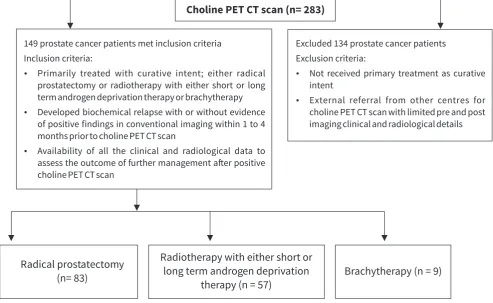
this study are shown in figure 1. In the subgroup analysis of those 149 prostate cancer patients met the inclusion criteria, 83 patients were treated by radical prostatectomy, 57 patients had received radiotherapy with either short or long term androgen deprivation therapy and 9 patients were treated with brachytherapy.
Primary outcome results
Assessing the relationship between PSA values and treatment groups
The mean PSA values were 4.4 ng/ml (range 0.1 to 29 ng/ml ) in the radical prostatectomy group, 12.5 ng/ ml ( range 1 to 71 ng/ml) in radiotherapy group and 12.6 ng/ml (range 5 to 29 ng/ml) in the brachytherapy group. All PSA readings were measured within 1 month of performing the choline PET CT scan (Table1). The results indicate that the means of the dependent variable PSA values differs significantly among the three type of treatments (p = <.0001) (Table 1).
Table 1: Relationship between PSA values and treatment groups
Radical Prostate
-ctomy
Radiotherapy with either short or long term androgen
therapy
Brachy
-therapy valuep
Patient
Number 83 57 9
<.0001
Mean PSA 4.4 12.5 12.6
Median PSA 1.7 8.9 11.7
SD PSA 5.8 13.2 8.3
Standard
Error PSA 0.63 1.75 2.76
PSA Range 0.1-29 1-71 5-29
Choline PET CT scan detection rate: Correlation of PSA values and findings of conventional imaging
Logistic regression analysis (univariate and multivariate) was used in the total population and in each treatment group to assess the relationship between the positive detection rate of choline PET CT scan with PSA values and findings of conventional imaging.
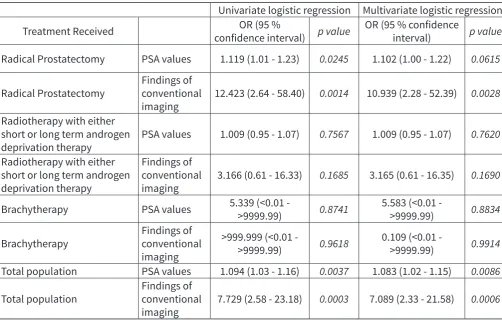
In the univariate logistic regression analysis, both PSA values and findings of conventional imaging were significantly correlated with the detection rate of choline PET CT scan in the total population (p = 0.0037 & 0.0003) and in the radical prostatectomy group (p = 0.0245 & 0.0014) (Table 2).
Similarly, in the multivariate logistic regression, both PSA values and findings of conventional imaging were
significantly correlated with the detection rate of choline PET CT scan in the total population (p = 0.0086 & 0.0006) but in the radical prostatectomy group, findings of conventional imaging showed statistically significant relation (p = 0.0028) whereas PSA values showed statistically insignificant relation (p = 0.0615) with the detection rate of choline PET CT scan (Table2). However in the radiotherapy with either short or long term androgen deprivation group and in the brachytherapy group, both PSA values and conventional image findings were not strongly related with the detection rate of choline PET CT scan in the both univariate and multivariate logistic regression analysis (p = 0.756 & 0.168, p = 0.874 & 0.961 and p = 0.762 & 0.169, p = 0.883 & 0.994 respectively) (Table 2). Univariate logistic regression has shown that for each one unit increase in PSA value (ng/ml) the odds ratios (ORs) of a positive outcome on choline PET CT scan increased in the total population by 1.094. The ORs of a positive outcome on choline PET CT scan increased in the radical prostatectomy group by 1.119, in the radiotherapy with either short or long term androgen deprivation therapy group by 1.009 and in the brachytherapy group by 5.339 for each unit increase in PSA value ( ng/ml) (Table 2).
Multivariate logistic regression also found that for each one unit increase in PSA value (ng/ml), the ORs of a positive outcome on choline PET CT scan increased in the total population by 1.083, in the radical prostatectomy group by 1.102, in the radiotherapy with either short or long term androgen deprivation therapy group by 1.009 and in the brachytherapy group by 5.583 (Table 2).
Univariate logistic regression reported that positive findings of the conventional imaging increased the ORs of a positive outcome on choline PET CT scan in the total population by 7.729, in the radical prostatectomy group by 12.423, in the radiotherapy with either short or long term androgen deprivation therapy group by 3.166 and in the brachytherapy group by >999.99(Table 2).
8
There is clear evidence that both PSA values and findings of conventional imaging are strong predicting factors for detection rate of choline PET CT scan.
Table 2: Logistic regression analysis of factors predicting positive detection rate of choline PET CT scan
Univariate logistic regression Multivariate logistic regression Treatment Received confidence interval)OR (95 % p value OR (95 % confidence interval) p value
Radical Prostatectomy PSA values 1.119 (1.01 - 1.23) 0.0245 1.102 (1.00 - 1.22) 0.0615
Radical Prostatectomy Findings of conventional
imaging 12.423 (2.64 - 58.40) 0.0014 10.939 (2.28 - 52.39) 0.0028 Radiotherapy with either
short or long term androgen
deprivation therapy PSA values 1.009 (0.95 - 1.07) 0.7567 1.009 (0.95 - 1.07) 0.7620 Radiotherapy with either
short or long term androgen deprivation therapy
Findings of conventional
imaging 3.166 (0.61 - 16.33) 0.1685 3.165 (0.61 - 16.35) 0.1690 Brachytherapy PSA values 5.339 (<0.01 - >9999.99) 0.8741 5.583 (<0.01 - >9999.99) 0.8834
Brachytherapy Findings of conventional imaging
>999.999 (<0.01 -
>9999.99) 0.9618 0.109 (<0.01 - >9999.99) 0.9914 Total population PSA values 1.094 (1.03 - 1.16) 0.0037 1.083 (1.02 - 1.15) 0.0086
Total population Findings of conventional
imaging 7.729 (2.58 - 23.18) 0.0003 7.089 (2.33 - 21.58) 0.0006
Choline PET CT scan detection rate: Relationship between findings of conventional imaging and choline PET CT scan
We observed that a choline PET CT scan finding (positive and negative) was statistically significant with conventional image finding (positive and negative) in total population (p < 0.001). It has shown a significant relationship between the two modalities of image findings in the radical prostatectomy group (p=0.0002). There was no significant relationship between the findings of the two imaging modalities in the radiotherapy with either short term or long term androgen deprivation therapy group (p= 0.1532) or in the brachytherapy group (p=0.5708) (Table 3).
The finding of conventional imaging is also a predicting factor for finding of choline PET CT scan.
Table 3: Chi-square test to assess the relationship between findings of choline PET CT scan and conventional imaging
Treatment Received P-Value
Radical Prostatectomy 0.0002
Radiotherapy with either short or long
term androgen deprivation therapy 0.1532
Brachytherapy 0.5708
Total population <.0001
Positive detection rate of both imaging relative to PSA grouping
In radical prostatectomy group:
The conventional imaging reported positive detection rate in 2 patients out of a total 22 patients (9.1%) with PSA values between 0.1 to 0.5 ng/ml, 0 patient out of a total 10 patients (0%) with PSA values between 0.6 to 1 ng/ml, 1 patient out of a total 12 patients (8.3%) with PSA values between 1 to 2 ng/ml, 10 patients out of a total 27 patients ( 37% ) with PSA values between 2 to 10 ng/ml and 3 patients out of a total 12 patients ( 25%) with PSA values > 10 ng/ml.
This hass shown that positive detection rate of choline PET CT scan and conventional imaging were 51.8% and 19.3% respectively in all patients treated with radical prostatectomy (Table 4).
In radiotherapy with either short or long term androgen deprivation group:
It was found that the positive detection rate of choline PET CT scan were reported 0 patient out of total 1 patient (0%) with PSA value between 1 to 2 ng/ml, 11 patients out of a total 16 patients (68.8%) with PSA values between 2 to 5 ng/ml, 15 patients out of a total 18 patients (83.3%) with PSA values between 5 to 10 ng/ml and 20 patients out of a total 22 patients (90.9%) with PSA values >10 ng/ml. However, the positive detection of rate of the conventional imaging were reported 0 patient out of a total 1 patient (0%) with PSA value between 1 to 2 ng/ml, 6 patients out of a total 16 patients (37.5%) with PSA values between 2 to 5 ng/ml, 5 patients out of a total 18 patients (27.8%) with PSA values between 5 to 10 ng/ml and 8 patients out of a total 22 patients (36.4%) with PSA values >10 ng/ml.
The overall positive detection rate of choline PET CT scan and conventional imaging were reported 80.7% and 33.3% respectively (Table 4).
In brachytherapy group:
The trigger PSA range for patients who underwent brachytherapy was 5 - 29 ng/ml. The choline PET CT scan reported positive detection rate in 3 patients out of a total 4 patients (75%) with PSA values 5 to 10 ng/ml and 5 patients out of a total 5 patients (100%) with PSA values > 10 ng/ml. The conventional imaging reported positive detection rate in 0 patient out of a total 4 patients (0%) with PSA values between 5 to 10 ng/ml and in 1 patient out of a total 5 patients (20%) with PSA values > 10 ng/ml.
This depicts the overall positive detection rate of choline PET CT scan was 88.9% and the overall positive detection rate of conventional imaging was 11.1% (Table 4).
In the total population, the positive detection rate was 97 patients out of a total 149 patients (65.1%) in the choline PET CT scan and 36 patients out of a total 149 patients (24.2%) had a positive finding in the conventional imaging.
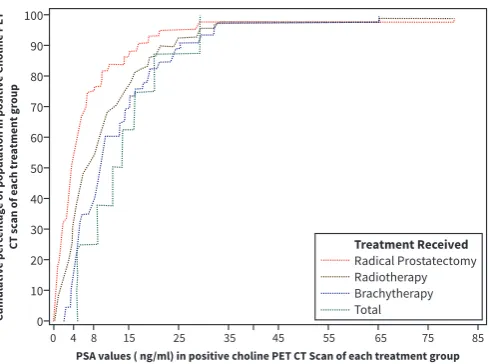
It is also found that the percentage of the positive detection rate on choline PET CT scan increased with the rising PSA values. Figure 2 shows the cumulative percentage of the population in the positive choline PET CT scan increased with the rising PSA values.
Secondary outcome results
Distribution of recurrence and spread of metastasis in choline PET CT scan and its relationship with different PSA values
In radical prostatectomy group:
Regional recurrence and distant metastasis were reported in 4 and 2 patients respectively out of a total of 22 patients with PSA values between 0.1 to 0.5 ng / ml. Regional recurrence was noted in 2 patients out of a total 10 patients with PSA values between 0.6 to 1 ng /ml. Local recurrence, regional recurrence and distant metastasis were found in 1, 3 and 2 patients respectively out of a total 12 patients with PSA values between 1 to 2 ng / ml. Interestingly with PSA values between 2 to 10 ng / ml, regional recurrence found in 11 patients and distant metastasis reported in 11 patients out of a total 27 patients. Distant metastasis and regional recurrence reported in 5 patients and 2 patients with PSA values > 10 ng / ml out of a total 12 patients.
No recurrence were reported in 16 patient out of a total 22 patients with PSA values between 0.1 to 0.5 ng/ml, 8 patients out of a total 10 patients with PSA values between 0.6 to 1 ng/ml, 6 patients out of a total 12 patients with PSA values between 1 to 2 ng/ml, 5 patients out of a total 27 patients with PSA values between 2 to 10 ng/ml and 5 patients out of a total 12 patients with PSA values > 10 ng/ml.
10
Table 4: Positive detection rate of choline PET CT scan and conventional imaging in different PSA values of three treatment groups
Treatment groups PSA Values choline PET CT scann/N of positive conventional imagingn/N of positive
Radical prostatectomy
0.1 to 0.5 ng/ml 6/22 (27.3%) 2/22 (9.1%)
0.6 to 1 ng/ml 2/10 (20%) 0/10 (0%)
1 to 2 ng/ml 6/12 (50%) 1/12 (8.3%)
2 to 10 ng/ml 22/27 (81.5%) 10/27 (37%)
>10 ng/ml 7/12 (58.3%) 3/12 (25%)
Total 43/83 (51.8%) 16/83 (19.3%)
Radiotherapy with either short or long term androgen deprivation therapy
1 to 2 ng/ml 0/1 (0%) 0/1 (0%)
2 to 5 ng/ml 11/16 (68.8%) 6/16 (37.5%)
5 to 10 ng/ml 15/18 (83.3%) 5/18 (27.8%)
>10 ng/ml 20/22 (90.9%) 8/22 (36.4%)
Total 46/57 (80.7%) 19/57 (33.3%)
Brachytherapy 5 to 10 ng/ml>10 ng/ml 5/5 (100%)3 / 4 (75%) 1/5 (20%)0/4 (0%)
Total 8/9 (88.9%) 1/9 (11.1%)
Total Population 97/149 (65.1%) 36/149 (24.2%)
(n = number of positive findings and N = total number of population in the same group)
PSA values ( ng/ml) in positive choline PET CT Scan of each treatment group 100
90
80
70
60
50
40
30
20
10
0
Cumulativ
e perc
ent
ag
e of population in po
sitive Choline PET
C
T
s
c
a
n
o
f
e
a
ch tr
e
a
tment gr
oup
0 4 8 15 25 35 45 55 65 75 85
Treatment Received Radical Prostatectomy Radiotherapy Brachytherapy Total
(PSA = prostate specific antigen)
Figure 2: Cumulative positive detection rate of choline PET CT scan with rising PSA values of each
treatment group and in the total population
Number of
P
opulation
30
No Recurrence Distant Metastasis
Regional Recurrence Local Recurrence
0.1 to 0.5 0.6 to 1 1 to 2
PSA values (ng/ml)
2 to 10 > 10
25
20
15
10
5
0
Figure 3. Findings of Choline PET CT scan in the radical prostatectomy group as per different PSA
Number
o
f P
opulation
25
20
15
10
5
0
1 to 2 2 to 5 5 to 10
PSA values (ng/ml)
> 10
No Recurrence Distant Metastasis Regional Recurrence
Local Recurrence Persistence of disease
Figure 4. Findings of choline PET CT scan in the radiotherapy with either short or long term androgen deprivation group as per different PSA values ( ng/ml) (PSA = prostate specific antigen). In radiotherapy with either short or long term androgen deprivation group:
No recurrence reported out of a total 1 patient with PSA values between 1 to 2 ng/ml, 5 patients out of a total 16 patients with PSA values between 2 to 5 ng/ ml, 3 patients out of a total 18 patients with PSA values between 5 to 10 ng/ml, 2 patients out of a total 22 patients with PSA values > 10 ng/ml.
Local recurrence were identified in 4 patients out of a total 16 patients with PSA values between 2 to 5 ng/ml, 5 patients out of a total 18 patients with PSA values between 5 to 10 ng/ml, 9 patients out of a total of 22 patients with PSA values > 10 ng/ml. Regional recurrence were reported in 4 patients out of a total 16 patients with PSA values between 2 to 5 ng/ml, 5 patients out of a total 18 patients with PSA values between 5 to 10 ng/ml, 3 patients out of a total 22 patients with PSA values > 10 ng/ml. Distant metastasis were found in 2 patients out of a total 16 patients with PSA values between 2 to 5 ng/ml, 2 patients out of a total 18 patient with PSA values between 5 to 10 ng/ ml, 6 patients out of a total 22 patients with PSA values > 10 ng/ml. In this study group, persistence of disease were noted in 1 patient out of a total 16 patients with PSA values between 2 to 5 ng/ml, 3 patients out of a total 18 patients with PSA values between 5 to 10 ng/ ml and 2 patients out of a total 22 patients with PSA values > 10 ng/ml
Overall, local recurrence, regional recurrence, distant metastasis and persistence of disease was reported in 18, 12, 10 and 6 patients respectively out of a total 46 patients of positive choline PET CT scan (Figure 4).
In brachytherapy group
The distribution of local recurrence were reported in 1 patient out of a total 4 patients with PSA values between 5 to 10 ng/ml and in 3 patients out of a total 5 patients with PSA values > 10 ng/ml. Regional recurrence were found in 2 patients out of a total 4 patients with PSA values between 5 to 10 ng/ml and in 2 patients out of a total 5 patients with PSA values > 10 ng/ml. No recurrence was reported in 1 patient out of a total 4 patient with PSA values between 5 to 10 ng/ml.
The overall local recurrence reported in 4 patients and regional recurrence in 4 patients out of a total 8 patients of positive choline PET CT scan (Figure 5).
Number
o
f P
opulatio
n
6
5
4
3
2
1
0
5 to 10
PSA values (ng/ml)
> 10 No Recurrence
Regional Recurrence Local Recurrence
Persistence of disease
Distant Metastasis
Figure 5. Findings of choline PET CT scan in the brachytherapy group as per different PSA values
(ng/ml) (PSA = prostate specific antigen) Overall recurrence and spread of metastasis in the total population of positive choline PET CT scan
In the total population of positive choline PET CT scan, it has shown that local recurrence was identified in a total of 23 patients, of those 18 patients (78.2%) were in the radiotherapy with either short or long term androgen deprivation therapy group. A total of 36 and 30 patients were found regional recurrence and distant metastasis respectively in the total population. In the radical prostatectomy group, regional recurrence was found in 22 patients out of a total of 36 patients (61.1%) and distant metastasis was noted in 20 patients out of a total 30 patients (66.7%) (Figure 6).
12
Number
o
f P
opulation
50
45
40
35
30
25
20
15
10
5
0
Treatment Received
Regional Recurrence Local Recurrence
Persistence or Progression of disease Distant Metastasis
Radical Prostatectomy Radiotherapy Brachytherapy
Figure 6: Findings of positive choline PET CT scan (local recurrence, regional recurrence, distant metastasis and persistent or progression
of disease) in the three groups (radical prostatectomy, radiotherapy and brachytherapy) Outcome of further management after positive choline PET CT scan
Of the 97 patients with a positive choline PET CT scan, 78 patients (80.4%) were treated with the various treatment modalities (hormonal therapy, salvage radiotherapy, salvage prostatectomy, gene therapy, cryotherapy, chemotherapy and stereotactic ablative radiotherapy). Of these 78 patients, 20 patients (25.6%) subsequently developed further recurrence or progression of disease as proved by both PSA values with radiological imaging and 58 patients (74.4%) remained in remission. Further sub analysis found that 8 patients out of a total 36 patients (22.2%) in hormone therapy, 7 patients out of a total 19 patients (36.8%) in sterotactic ablative radiotherapy, 3 patients out of a total 11 patients (27.3%) in salvage radiotherapy, 1 patient out of a total 4 patients (25%) in chemotherapy and 1 patient out of a total 3 patients ( 33.3%) in gene therapy ( AdUP trial) have developed further biochemical relapse following treatment of positive choline PET CT scan.
A total of 19 patients had a positive choline PET CT scan but did not receive any treatment rather kept on close surveillance of the PSA values and clinical symptoms, 7 of those patients (36.8%) subsequently developed further disease progression (Figure 7).
Number
o
f
P
o
pulation
Positive choline PET - CT scan Treatment received aer
positive choline PET CT scan
Close surveillance aer positive choline PET CT
scan 160
150 140 130 120 110 100 90 80 70 60 50 40 30 20 10 0
No Recurrence Recurrence
Total
Figure 7. Outcome of further management after positive choline PET CT scan
Discussion
Overall 30% disease recurrence developed in prostate cancer patients treated with RP and EBRT. It was reported that approximately 23% of patients treated with radical prostatectomy developed recurrence with a mean of 34 months and 63% of the patients treated by external beam radiotherapy developed recurrence with a mean period of 38 months (p=0.003[16]. PSA is expected to be undetectable after a radical prostatectomy and reach a nadir after radiotherapy with or without hormone therapy (androgen deprivation therapy). Higher PSA is common after local therapy or radiotherapy due to radiation related fibrosis and shrinkage of prostate.
In the literature PSA doubling time, age and imaging types (CT/MRI/ bone scan) are significantly related with imaging results but not useful in cases of low trigger PSA values and PSA doubling time of more than 6 months[17,18]. Conventional imaging reported low positive findings on localisation of the sites of disease recurrence or relapse or distant metastases, often resulting false negative or inconclusive.
In men with biochemical recurrence after radical prostatectomy or external beam radiotherapy, higher PSA values and PSA doubling time are strong predictors for positive choline PET CT scan[19,20]. Higher PSA values might increase the probability of systemic disease but uncertain about whether it is associated with local recurrence or regional recurrence or distant metastases. However it could be an important factor for deciding further therapeutic approaches with either local or systemic therapy to improve the prognosis and overall survival outcome.
CT scan in biochemical relapse of prostate cancer only after definitive therapy[2]. The main advantage is the identification and localisation of the sites of recurrence or metastatic disease, thus influencing patient management.
In our series we have identified that the detection of recurrence or metastatic disease occurs in 97 patients out of a total 149 men (65.1%) who had initially been treated with curative intent and subsequently had suspicion of biochemical recurrence or relapse. Both PSA values (p=0.0037) and the results of conventional imaging (p=0.0003) were found to be strong predictors for the positive choline PET CT scan.
In this study, we observed overall positive detection rate of choline PET CT scan was 97 patients out of 149 patients (65.1%) however the positive detection rate of conventional imaging was 36 patients out of 149 patients (24.2%). It has similar findings of positive detection rate of choline PET CT scan in previously published literature[15]. We have tabulated the results of positive findings of choline PET CT scan according to the PSA subgroups, showing an increased in positive findings on choline PET CT scan with the rising of PSA subgroup values accordingly. We have also shown that a rising PSA value is associated with increased positive detection rate of choline PET – CT scan. This is a similar finding to that in the published literature[4]. However, trigger PSA value for the positive detection rate of the choline PET CT scan were depended on the types of prior treatment.
In our series, the PSA value was associated with disease recurrence or spread of metastasis but the rising PSA value did not demonstrate any significant relationship with the distribution of disease recurrence or spread of metastasis. Hence, these findings can help to formulate the further management of prostate cancer patients with biochemical relapse after curative treatment either in the form of systemic or local therapy.
Bertagna et al, reported choline PET CT scan sensitivity and specificity were 81.8% and 92.9% in patient treated with radiotherapy alone with cut off PSA value of 2 ng/ml. But the patient treated with radical prostatectomy or radical prostatectomy with radiotherapy, sensitivity and specificity were reported 73.2% and 86.1% respectively with cut off PSA value of 0.81 ng/ml[5].
In our study, it has shown that choline PET CT scan helped to decide further treatment by early diagnosis of disease recurrence or spread of metastasis in 78 patients out of a total 97 patients (80.4%) with
positive choline PET CT scan. Of those 78 patients received treatment after positive choline PET CT scan, 20 patients (25.6%) developed further biochemical recurrence or relapse with and 58 patients (74.4%) remained in remission state. The group of patients who were treated after the identification of disease recurrence or spread of metastases on choline PET CT scan had subsequently developed less biochemical recurrence (25.6%) than those who were kept under close surveillance with PSA value monitoring (36.8%). This study shows the potential of the choline PET CT scan for formulating further treatment in biochemical recurrence or relapse of prostate cancer and the effect on the prognosis and the overall survival outcome in men with prostate cancer treated primarily with curative intent.
Limitation of study
In this study, we did not measure the cut off value of PSA because the factors prostate specific antigen velocity (PSAV) and prostate specific doubling time (PSA-DT) were not assessed.
In addition, our study samples have had received different treatment modalities (radical prostatectomy, radiotherapy with either short or long term androgen deprivation therapy and brachytherapy), therefore it was difficult to assess positive detection rate of the choline PET CT scan in the similar trigger PSA values in all groups.
The number of the study population was unequal in each treatment group and there were only 9 patients in the brachytherapy group that has impacted with statistically flaw result in logistic regression analysis due to small sample number.
In the total population, a choline PET CT scan was performed in rising PSA values with suspicion of biochemical recurrence or relapse and negative or inconclusive conventional imaging for confirmation recurrence or assessment of disease progression or localisation of the oligometastasis for consideration of further treatment.
Nonetheless, it is not a randomized control trial with inadequate and unequal sample number in three groups. Here, we included all the prostate cancer patients primarily treated with curative intent irrespective of ages, pre-treatment PSA values, Gleason score, histological staging which might have impact on the result findings.
14
with or without further imaging such as choline PET CT scan to rule out recurrence, progression of disease or new onset of the spread of metastasis
Further plan is to assess the PSA kinetics (including PSAV and PSADT) to measure the cut off value of PSA in different treatment groups of our study population and compare it with other published literature which might be helpful to make a local protocol for recommendation of choline PET CT scan with cut off PSA values in different treatment groups while developed biochemical recurrence or relapse of prostate cancer after curative treatment. Also try to state the relationship of positive margin in radical prostatectomy group and disease recurrence or spread of metastasis in positive choline PET CT scan.
Conclusion
Overall the positive detection rate in choline PET CT scan was 65.1% but it was reported only 24.2% in conventional imaging (CT/MRI/Bone scan). Trigger PSA values and findings of positive conventional imaging were strongly related and predictors for positive detection of choline PET CT scan. Trigger PSA value for positive detection of choline PET CT scan depended on the types of prior curative treatment received by men with prostate cancer. Positive detection rate of choline PET CT scan is proportional to the rising PSA values.
Interestingly, higher rates of local recurrence (78.3%) were found in those patients who had previously been treated with radiotherapy. There were higher rates of regional recurrence (57.9%) and distant metastasis (66.7%) in radical prostatectomy treatment group. However, the distribution of the metastasis spread was not related with rising PSA values. Further disease recurrence was more common in close surveillance group (36.8%) than treated group (25.6%) of patients with positive choline PET CT scan.
Therefore, choline PET CT scan can be useful as the first line imaging modality in re-staging of prostate cancer patients after curative intent those have developed biochemical recurrence or relapse during follow up. Earlier identification of local, regional and distant relapse may have the potential for formulating further management either local or systemic therapy to improve the prognosis and overall survival outcome.
References
1. Jemal A, Bray F, Center MM, Ferlay J, Ward E FD. Global cancer statistics. Cancer J Clin. 2011;61:69–90
2. Mottet N, Bellmunt J, Bolla M, Briers E, Cumberbatch MG, De Santis M, et al. EAU-ESTRO-SIOG Guidelines on Prostate Cancer. Part 1: screening, diagnosis, and local treatment with curative intent. Eur Urol. 2016 3. Ferguson JK, Oesterling JE, Lange PH, Patient evaluation if
prostate-specific antigen becomes elevated following radical prostatectomy or radiation therapy. Urol Clin North Am 21::677,1994-685
4. Krause BJ, Souvatzoglou M, Tuncel M, Herrmann K, Buck AK, Praus C, et al. The detection rate of [(11)C]Choline-PET/CT depends on the serum PSA-value in patients with biochemical recurrence of prostate cancer. Eur J Nucl Med Mol Imaging 2008;35:18–23
5. Bertagna F, Abuhilal M, Bosio G, Simeone C, Rossini P, Pizzocaro C, et al. Role of (11)C-choline positron emission tomography/computed tomography in evaluating patients affected by prostate cancer with suspected relapse due to prostate-specific antigen elevation. Jpn J Radiol. 2011;29:394–404
6. Breeuwsma AJ, Pruim J, van den Bergh AC, Leliveld AM, Nijman RJ, Dierckx RA, et al. Detection of local, regional, and distant recurrence in patients with PSA relapse after external-beam radiotherapy using (11) C-choline positron emission tomography. Int J Radiat Oncol Biol Phys. 2010;77:160–4
7. Giovacchini G, Picchio M, Briganti A, Cozzarini C, Scattoni V, Salonia A, et al. [11C]choline positron emission tomography/computerized tomography to restage prostate cancer cases with biochemical failure after radical prostatectomy and no disease evidence on conventional imaging. J Urol. 2010;184(3):938–43
8. Chondrogiannis S, Marzola MC, Ferretti A, Maffione AM, Rampin L, Grassetto G, et al. Role of 18F-choline PET/CT in suspicion of relapse following definitive radiotherapy for prostate cancer. Eur J Nucl Med Mol Imaging 2013;40:1356–64
9. Jadvar H. Molecular imaging of prostate cancer: PET radiotracers. AJR Am J Roentgenol. 2012;199(2):278-291. doi:10.2214/AJR.12.8816. 10. Janardhan S, Srivani P, Sastry GN. Choline kinase: an important target
for cancer. Curr Med Chem. 2006;13(10):1169-1186.
11. Contractor K, Challapalli A, Barwick T, Winkler M, Hellawell G, Hazell S, et al. Use of [11C]choline PET-CT as a noninvasive method for detecting pelvic lymph node status from prostate can- cer and relationship with choline kinase expression. Clin Cancer Res. 2011;17:7673–83
12. Hara T, Bansal A, DeGrado TR. Effect of hypoxia on the uptake of [methyl-3H]choline, [1-14C] acetate and [18F]FDG in cultured prostate cancer cells. Nucl Med Biol. 2006;33(8):977-984.
13. Breeuwsma AJ, Pruim J, Jongen MM, Suurmeijer AJ, Vaalburg W, Nijman RJ, et al. In vivo uptake of [11C]choline does not correlate with cell proliferation in human prostate cancer. Eur J Nucl Med Mol Imaging 2005;32(6):668–73
14. Morigi JJ, Fanti S, Murphy D, Hofman MS. Rapidly changing landscape of PET/CT imaging in prostate cancer. Curr Opin Urol. 2016;26(5):493-500 15. Fanti S, Minozzi S, Castellucci P, et al. PET/CT with (11)C-choline for
evaluation of prostate cancer patients with biochemical recurrence: meta-analysis and critical review of available data. Eur J Nucl Med Mol Imaging. 2016;43:55–69
16. Agarwal PK, Sadetsky N, Konety BR, Resnick MI, Carroll PR. Treatment failure after primary and salvage therapy for prostate cancer: Likelihood, patterns of care, and outcomes. Cancer. 2008;112(2):307-314
17. Choueiri TK, Dreicer R, Paciorek A, Carroll PR, Konety B. A model that predicts the probability of positive imaging in prostate cancer cases with biochemical failure after initial definitive local therapy. J Urol. 2008;179(3):906-10; discussion 910
19. Rybalov M, Breeuwsma AJ, Leliveld AM, Pruim J, Dierckx RA, de Jong IJ et al. Impact of total PSA, PSA doubling time and PSA velocity on detection rates of 11C-Choline positron emission tomography in recurrent prostate cancer. World J Urol. 2013;31(2):319-323
20. Castellucci P, Fuccio C, Nanni C, Santi I, Rizzello A, Lodi F et al. Influence of trigger PSA and PSA kinetics on 11C-Choline PET/CT detection rate in patients with biochemical relapse after radical prostatectomy. J Nucl Med. 2009;50(9):1394-1400.
Conflict of interest: Nil Source of funding: Nil