*Corresponding author: Benedict DC. David,
Current Multidisciplinary Studies
Available Online at
Vol.
VALIDATING THE JARGON “TRUSTING THE PROCESS” OF MILLENNIALS’
Benedict DC. David
A R T I C L E I N F O
Received 6th June, 2019
Received in revised form 15th July, 2019 Accepted 12th August, 2019
Published online 28th September, 2019
Keywords:
Career Choices, Career Development, Professional Growth, Work and Life Balance
INTRODUCTION
Research Rationale
The technical definition of 'career' is as follows: “An occupation undertaken for a significant period of a person's life and with opportunities for progress.” Be as it may, it is a profession that occupies an important part in an individual’s life and it offers many professional advancements and opportunities for the person (National Career Development Association Board of Directors, 1993, archived 2010).
Traditionally, career only means employment, especially for those who are at the white collar level. However, recent concepts has evolved as it now includes a continuous process requiring learning and advancement.
Millennials by nature, are very aggressive as to where they are heading once they graduate from the academe. They prefer careers that will nurture every facet of their well
are focused, but not rushing (Smith, 2018)
In the Philippines, the same nature and attitude hold true.
Nonetheless, even though today’s generation have already been granted the freedom of choosing their paths towards professional success, most of them still find it hard to land the
Copyright © 2019 Benedict DC. David, Ericsson Z. Matias and Jay A. Sario
Attribution License, which permits unrestricted use, distribution, and reproduction in any medium, provided the original work
Benedict DC. David,
International Journal of
Current Multidisciplinary Studies
Available Online at http://www.journalijcms.com
Vol. 5, Issue,09(A), pp. 1075-1080,September,2019
RESEARCH ARTICLE
VALIDATING THE JARGON “TRUSTING THE PROCESS” OF MILLENNIALS’
CAREER CHOICES
Benedict DC. David, Ericsson Z. Matias and Jay A. Sario
A B S T R A C T
In today’s era where jargons, memes and social media quotes become the mantra of most millennials’ personal and professional lives, it was deemed to be necessary to study if the aforementioned adages are truly effective, especially on their career choices.
This prompted the researchers to conduct a three-month study of whether this mindset and mental approach will really help them find a good job that matches their Collegiate degrees, as well as the level of satisfaction for those respondents who are already at the industry. Significant results revealed that, unfortunately, these so
although they can motivate those who are already working. But for the fresh graduate level, the proper matching of degrees and job vacancies, as expected, matters. As cliché as it sounds, but in reality based on the findings, the respondent just applies without much deep thinking. Thus, their rate of interviews and actual offers drastically drop.
Ergo, it is important for them to be more focused and meticulous about their career choices in order for them to grow as professional.
The technical definition of 'career' is as follows: “An occupation undertaken for a significant period of a person's life and with opportunities for progress.” Be as it may, it is a profession that occupies an important part in an individual’s offers many professional advancements and National Career Development , 1993, archived 2010).
Traditionally, career only means employment, especially for those who are at the white collar level. However, recent concepts has evolved as it now includes a continuous process
ve as to where they are heading once they graduate from the academe. They prefer careers that will nurture every facet of their well-being. They
In the Philippines, the same nature and attitude hold true.
Nonetheless, even though today’s generation have already been granted the freedom of choosing their paths towards professional success, most of them still find it hard to land the
“career of their dreams.” According to Aguiling (2012) This is attributed to the following:
1. Highly competitive workforce
2. Lack of job vacancies (which forces them to rely on “high volume” employments such as Business Process Outsourcing Call Centers, which creates mismatches between their degree vis
To address this quandary, millennials resort to the term “Trust the process.” This was coined at the National Basketball Association (NBA) for a player who still needs to develop his potential (nba.com, 2019).
That is, millennials prefer patience in selectin
either after they graduate or if they intend to shift employments (but still within the same industry, thus retaining their “career”).
This study validated the claim of the millennials as to how they develop the mindset of trusting this so
moment they graduated up to the actual job offers, the researchers determined the factors that make them select job openings, and recommended ways on how they could further increase the chances of getting hired using the “Trust th process” mantra.
Problem Statement, Research Objectives and Assumptions
Benedict DC. David, Ericsson Z. Matias and Jay A. Sario., This is an open access article distributed under the Creative Commons Attribution License, which permits unrestricted use, distribution, and reproduction in any medium, provided the original work
VALIDATING THE JARGON “TRUSTING THE PROCESS” OF MILLENNIALS’
Jay A. Sario
In today’s era where jargons, memes and social media quotes become the mantra of most millennials’ personal and professional lives, it was deemed to be necessary to study if the
tive, especially on their career choices.
month study of whether this mindset and mental approach will really help them find a good job that matches their Collegiate degrees,
ction for those respondents who are already at the industry. Significant results revealed that, unfortunately, these so-called battle cries are just pep talks, although they can motivate those who are already working. But for the fresh graduate level, proper matching of degrees and job vacancies, as expected, matters. As cliché as it sounds, but in reality based on the findings, the respondent just applies without much deep thinking. Thus, their rate of interviews and actual offers drastically drop.
go, it is important for them to be more focused and meticulous about their career choices in
“career of their dreams.” According to Aguiling (2012) This is
Highly competitive workforce
Lack of job vacancies (which forces them to rely on “high volume” employments such as Business Process Outsourcing Call Centers, which creates mismatches between their degree vis-à-vis their profession)
dress this quandary, millennials resort to the term “Trust the process.” This was coined at the National Basketball Association (NBA) for a player who still needs to develop his
That is, millennials prefer patience in selecting their careers either after they graduate or if they intend to shift employments (but still within the same industry, thus retaining their “career”).
This study validated the claim of the millennials as to how they develop the mindset of trusting this so-called process. From the moment they graduated up to the actual job offers, the researchers determined the factors that make them select job openings, and recommended ways on how they could further increase the chances of getting hired using the “Trust the
Problem Statement, Research Objectives and Assumptions
IJCMS
In simple terms, this study validated the way as how millennials take their respective career choices based on the job openings that they applied for, and the mindset that they have in choosing to apply for such vacancies.
Specifically, this study discerned the following as to:
1. Frame the mindset and profile of the respondents in terms of their choices in job opportunities
2. Initiate interventions that will further help them achieve the most suitable career for them based on their manner of:
Job Application (Objective 1)
Job Interview approach and answering (Objective 2)
Job Offer selection (Objective 3)
Work and Life Balance (Objective 4)
From the above mentioned, it can be assumed that their approach in “trusting the process” may really have a significant effect on probability of getting hired by their preferred employers.
Significance, Scope and Limitations
This study served a very relevant purpose on the following:
1. The industry-Firms will now have more relevant data as to how can they select the most qualified applicants to work for them
2. The applicants-Once they see how their contemporaries think, those who can find time to read this research may be able to benchmark their respective career approaches to those who were interviewed here
3. The academe-Administrators and career counsellors will have another reference on advising and mentoring their students about career choices and preferences 4. The researchers-Being career advocates and
counsellors, they will be able to provide another pavement for practical learning and help more people in their respective career choices
This study is focused on Filipino millennials from Manila – the capital of the Philippines. The profile includes that of fresh graduates and those who are studying Masteral classes (i.e. MBA) but not older than 30 years old – which is the baseline to be called under the said age group. The research, will not, however, disclose the companies applied for, the names of the respondents and the schools from where they graduated.
Synthesis of Selected Literature
The following are selected literature among the many used for this research that deem to hold utmost correlation and relevance:
1. The University of Texas in Dallas – University Career Center, defined career, career development and career choices as lifelong, cyclical process. The Center uses a five-step paradigm for their alumni in order to render the best career counsel possible. The steps are as follows:
Phase 1 - Assessing Self and Preferences
Understanding self, skills, interests and values
Phase 2 - Exploring Options
Proactively identifying, understanding and matching self to the possibilities
Phase 3 - Developing Skills and Experience Building skills, knowledge and reputation Phase 4 - Marketing Self
Obtaining the skills to seek, obtain, maintain and change jobs
Phase 5 - Performing and Planning Next Steps
Developing the skills to make effective career-related decisions and career transitions
2. MacKaskil (2017), emphasized that a good career should give an “effective altruism.” That is, the person must reach the Self-Actualization model of Abraham Maslow. For definitive reasons, the individual must feel a sense of fulfilment as he carries out his job tasks each day. His concept applies primarily to entrepreneurs and philanthropist although at the grassroots level, everyone starts from having a match between his preferences vis-à-vis the status quo. 3. Arnold (2013), stressed out the role of the academe in
guiding the students to become better alumni thru productive career choices. Her insights reveal that the professors are at the driver’s seat in molding the students. She also mentioned the “process.” That is, a professor must instill the virtues of patience and temperance for the students as they wait to thread towards their professional lives once they leave the four corners of the class.
Study Framework
The backbone of this research is as follows:
Theoretical Framework
This research benchmarked its thrust based on the concept of how the University of Texas in Dallas counsels its students to become competitive professionals. It was able to illustrate its thrust, which is:
the most fit for him, he starts to develop the skills necessary to live out to the expectations set forth by that option. Once the skills are hones, the person needs to promote his competency. And in order to stay competitive, he must perform at his peak all throughout.
Last but the most important is the fact that he is ought to remember to always assess himself in order to grow. To work on his weaknesses and further develop strengths are the most effective way of doing such.
Conceptual Framework and Research Paradigm
Taking a cue from the Theory above, the researchers were able to derive the following:
Basically, the person is being influenced by two (2) factors as he threads the pavement for his career growth. The first influencers are the environment and family. These facets of an individual cannot be controlled internally, for obvious reasons. More so, these areas have significant effect towards the formation of the person’s character, especially when he is growing up. These include how he was raised, the traditions and values, as well as the breeding and manners of the family are adopted, taught and being lived out by the individual (Friedman, et al, 2016).
Because of this, the person then starts to form his own preferences, behavior and character, as evidenced by the dependent variables, or the facets where the person has control over, since these are innate and based on his personality and life approach.
These two (2) variables will intertwine in order to address life’s challenges in making significant career choices. Needless to say, negativities such as employment / business opportunity rejections, high level of peer competition and failures, among many more, must be overcome by the individual in order to flourish. As the old adage goes, “Fall seven times, rise up eight.”
Once the hurdles are overcome, the person will feel the sense of fulfillment, purpose and the need to sustain what he has achieved. These attributes are already success factors by nature, as it not only defined thru material gains. More importantly, success must be defined as the level of maturity and capability of a person to handle and overcome life situations. This mantra holds true for everyone, even for the millennials.
METHODOLOGY AND SCOPE
Purposive sampling was used to determine the respondents of this study. This is attributed to the fact that the respondents are millennials whose careers are either yet to start or still at the thriving stage. More so, since it entails the discernment of the factors that can hurdle the respondents’ career progression and how they could overcome it, the type of research used was Correlational (Cause and Effect).
A total of 300 people served as the respondents for this research. The profile are as follows:
1. Two hundred (200) were fresh college graduates who are still applying for work
2. One hundred (100) are Masteral students between the ages of 24 – 28 years old.
3. The total number of respondents were equally divided in terms of gender
4. Their degrees are all in the field of business, which are Marketing and Finance.
Other relevant criteria include:
1. The fresh graduates must be actively seeking for employment
2. The Masteral students must not have been promoted for a span of at least two (2) years. This gauge is very important since the lack of job promotion can be considered as a hurdle and that they must manifest a certain level of resilience and temperance in order to hurdle this quandary. Employees who have been hired to a new job or company are not included since their innate motivation is very high, as with their morale, for obvious reasons.
In order to measure thelevel of optimism for the fresh graduates, the following protocols were used:
1. Their overall assessment of the job that fits their College Degree and Preference was determined. The researchers labelled it as “Applications.”
2. Out of the positions applied for, those who have asked the applicants for an interview was also determined. A ratio of the applications vis-à-vis those who requested for interviews was computed.
3. Actual job offers were the penultimate measure of success for these respondents, as it means that their applications have matched the needs of the firm and that they have mutual understandings about the job nature, its compensation and work environment, among many more facets of employment.
Their responses were statistically measured suing Correlational Analysis. That is, the actual job applications and interviews must have a significant effect and value that should lead the respondents to land actual job offers – which is almost already synonymous to employment.
On the other hand, for the Masteral level respondents, their interests and overall current job satisfaction was measured using a Likert Scale, with mean ratings gauging their respective answers.
For the fresh graduates:
1. The number of job applications that they have 2. The number of firms that called for an interview 3. The number of firms from those who conducted an
interview that offered actual job positions
4. Their level of satisfaction with the job offer (for those who have been given)
For the Masteral students:
1. Their current level of satisfaction with their employment and career
2. The ways on how they can improve their current career situation
For both set of respondents, three months was given in order to determine the results and to suggest and implement new ways in order for them to find either a beter job offer (for the fresh grads) or a more suitable employment (for the Masteral level employees).
Below is an illustration of the Research Methodology:
For Fresh Graduates
The first stage involves the proper matching of the degree that the respondent has taken in College vis-à-vis the job applications that he intends to apply for. Even at this stage, both must fit since the respondent has chosen his degree for a career and for a living. Ergo, it is deemed that in choosing such, he believes that this career is best for him and his professional growth and welfare.
This stage must be followed by a series of job interviews. The number might not be as high as the number of applications, but at least a certain ratio must be met, say at 50% of the job applied for must lead to an interview.
The final and most important stage is the Job Offer Stage. Wherein at this level, the respondent is already hired. He is just opted to choose which among those who want him to be an employee suits the applicant best. At this rate, the rate becomes lower and more funneled. Yet, the ratio must still be reasonable. For this research, the allowed rate must be at least 20% of the total job applications are ought to have given actual job offers.
For the Masteral Students
The paradigm is simple. There should be a balance between the current job’s provisions vis-à-vis the professional expectation of the respondents.
RESULTS AND DISCUSSION
The following are the significant findings of this research:
The fresh grad respondents have a lot of job applications, from which half of the firms that they have applied for will call for an interview, but only 10% will offer a job position.
The following table summarizes their response.
Table 1 Pre-Intervention Job Offer Success Rate
Base: Number of Fresh Graduates
Avg. Applications Avg. Interviews Avg. Job
Offers
10.5 6 1
When asked, the respondents admitted that they may have faults about the way they job search. That is, they just click the mouse button or haphazardly apply. They may “trust the process,” but on a wrong context and matter. As their thrust is not focused on the matching of their degree with their applications. This is what the study of Hooley, et al (2013) stated – that career choices must be focused on the quality of the match between the applicant’s credentials as with the position applied for – which is easier said than done.
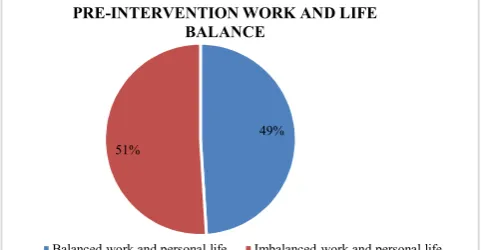
Those at who are currently working, less than half (45%) stressed out that they don’t find any balance with their work and that they need a new working environment.
Further probing revealed that most of them already got tired of doing the same old monotonous work and tasks. They need a breather, or a new environment. Some of them just needs motivation and reason to push further (Greenhaus and Beutell, 1985).
Interventions
The researchers intervened and tried to help the respondents. What was done were the following:
1. The Researchers asked the fresh grads to inform the former about the applications that they intend to apply for before doing such. This was done in order to screen their intents properly.
2. For the Masteral students, they were just given pep-talks, especially about the value of employment and how they could make their professional lives even better. Some altruistic steps include:
Be more physically active such as in sports after work
Spend more time and money with friends and loved ones during weekends
The results for both sets of respondents have proven to somehow help them with their respective goals. Even the
49% 51%
PRE-INTERVENTION WORK AND LIFE BALANCE
altruism aspects, it has proven to be correct. This is in line with the findings of Aguiling (2012) that sometimes, all that a person needs is a little pep talk.
The following are the post-intervention results:
Table 2 Post-Intervention Job Offer Success Rate
Base: Number of Fresh Graduates
Avg. Applications
Avg. Interviews
Avg. Job Offers
7 3 3
The researchers limited the number of applications. Those that are just very much alike the degree that the respondents finished from College were the ones that were approved to be applied for. The results revealed a two-fold increase in terms of the percentage of interviews. More so, those who have asked for interviews were also the ones who offered a job.
This clearly proves that the number of job applications and its quality still and will always matter. But on the area of “Trusting the Process,” it has been proven to be misguided.
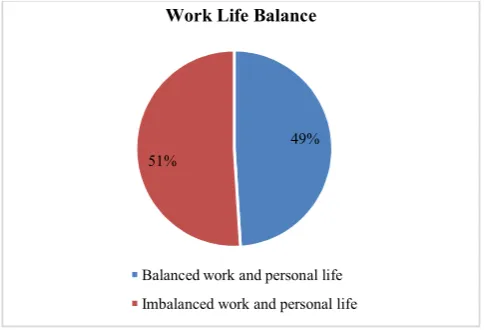
As for the other set of respondents, there was two percent increase in terms of work and life balance. This is already acceptable since percentages are already almost equal.
Nonetheless, the assumption that the there is a significant effect on how the respondents “Trust the Process” does not actually hold true. They may have such, but if it already misguided at the very onset – that is, if their intents and qualifications do not really match with that of what is being asked for a certain position – then, there would be “process” at all. Statistically speaking, at an acceptable minimum 40% level of Correlation, the actual percentages of correlation between the two sets of respondents showed no correlation at all because the issue, after all, is on the level of matching, not on the matter of having the correct mindset. The issue is more of technical, rather than mental and emotional. Even though there are altruisms, the fact remains that such mindset will only apply if there is a match.
CONCLUSION AND RECOMMENDATIONS
Based on the findings above, the following can be concluded:
a. The bottleneck is still on the Job Application Stage. That is, there should always be an initial match between the degree of the applicant with the actual job applied for (Objective 1).
b. Job Interview approach and answeringhave no significant effect if there has been a fault on the matching between the degree of the respondents as compared to the nature of the job (Objective 2)
c. Job Offer selections although some will offered even if there are matching discrepancies, will still depend on the needs of the firm beased on its job criteria (Objective 3) d. Work and Life Balance depend more on altruisms
(Objective 4)
Ergo, it can be recommended that:
1. “Trusting the Process” should also entail finding the right fit of job vis-à-vis the degree of the applicant 2. Having the proper approach in job interviews is
important, but then again, there should always be the existence of the matching between what is sought and what is applied for.
3. Employees may have to consider the fact that it is really hard to find a new career or job and that they may have to motivate themselves more in order to appreciate what they have. Sometimes, what is lacking is the proper mindset, not the skills. And this is where the “Trust the Process:” comes into play.
Lastly, for future research, the next researchers can:
1. Increase the number of respondents and scope of degrees finished
2. Be more statistical in terms of the Correlation among the variable of this study
References
Aguling, Hector S. (2012). Human ResourceManagement: The Traditional Appraoch. Manila: University of Santo Tomas Publishing House.
Andersson, L. M.; Pearson, C. M. (1999). "Tit for tat? The spiraling effect of incivility in the workplace". Academy of Management Review. 24 (3): 452–471. doi:10.5465/amr.1999.2202131
Armstrong, Michael (2006)."Human capital management". A Handbook of Human Resource Management Practice. Gale virtual reference library. Kogan Page Publishers. p. 29. ISBN 9780749446314
Arnold, Randall; et al. (2016). Work Psychology, 6th edition. Harlow: Pearson. pp. 555–558.
Baert, Stijn (February 20, 2016). "Getting Grey Hairs in the Labour Market: An Alternative Experiment on Age Discrimination". Journal of Economic Psychology. 57: 86–101.
Bowling, N.A. (2007). "Is the Job Satisfaction-Job Performance Relationship Spurious: A Meta-Analytic Examination". Journal of Vocational Behavior. 71 (2): 167–185.
Cappelli, Peter (July 2015). "Why We Love to Hate HR … and What HR Can Do About It". Harvard Business Review (July–August 2015).
Crowder, R. M.; Robinson, M. A.; Hughes, H. P. N.; Sim, Y. W. (2012). "The development of an agent-based modeling framework for simulating engineering team work". IEEE
Transactions on Systems, Man, and Cybernetics - Part A:
49% 51%
Work Life Balance
Balanced work and personal life
Systems and Humans. 42 (6): 1425–1439. doi:10.1109/TSMCA.2012.2199304.
Friedman, Howard; Schustack, Miriam (2016). Personality: Classic theories and modern research. USA: Pearson. ISBN 978-0-205-99793-0.
Greenhaus, J. H.; Beutell, N. J. (1985). "Sources and conflict between work and family roles". Academy of Management Review. 10 (1): 76–88. doi:10.5465/amr.1985.4277352.
Hale, Henry E. (2014). Patronal Politics. Problems of International Politics. Cambridge University Press. p. 49. ISBN 9781107073517
Hooley, T.; Watts, A. G.; Sultana, R. G.; Neary, S. (2013)."The 'blueprint' framework for career management skills: a critical exploration"(PDF). British Journal of Guidance & Counselling. 41 (2): 117. doi:10.1080/03069885.2012.713908
Hughes, H. P. N.; Clegg, C. W.; Robinson, M. A.; Crowder, R. M. (2012). "Agent-based modelling and simulation: The potential contribution to organizational psychology". Journal of Occupational and Organizational Psychology. 85 (3): 487–502. doi:10.1111/j.2044-8325.2012.02053
Katz, D., & Kahn, R. L. (1978). The social psychology of organizations (2 ed.). New York: Wiley.
mbaskool.com. “”Human Resource Terms.” Available internet source: https://www.mbaskool.com/business- concepts/human-resources-hr-terms/1779-career-development.html. Last viewed on September 1, 2019 MacAskill, William (January 31, 2017)."Effective Altruism:
Introduction". Essays in Philosophy. 18 (1): 2. doi:10.7710/1526-0569.1580. ISSN 1526-0569
National Career Development Association Board of Directors, 1993. Definition of Human Resource Management. Archived 2010
National Basketball Association. 2019. Avaibale internet source; nba.com
Pfeffer, Jeffrey (2018). Dying for a Paycheck: How Modern Management Harms Employee Health and Company Performance-and What We Can Do About It. HarperBusiness. p. 38. ISBN 978-0062800923.
Research Gate Publications (2019). “The Importance of Career Planning and Development in Education.” https://www.researchgate.net/publication/322503016_Im portance_of_Career_Planning_and_Development_in_Ed ucation.Last viewed on September 2, 2019
Robertson, I. T.; Birch, A. J.; Cooper, C. L. (2012). "Job and work attitudes, engagement and employee performance: Where does psychological well-being fit in?". Leadership & Organization Development Journal. 33 (3): 224–232. Schultz, Duane P. Schultz, Sydney Ellen (2010). Psychology
and work today : an introduction to industrial and organizational psychology (10th ed.). Upper Saddle River, N.J.: Prentice Hall. p. 71.ISBN 978-0205683581 Smith, C. Brian (2018). "A Millennial Veteran Takes On The
Notion That His Generation Isn't Man Enough" Mel Magazine. Los Angeles: Dollar Shave Club.
Spector, P. E., & Fox, S. (2005). The Stressor-Emotion Model of Counterproductive Work Behavior. In S. Fox, P. E. Spector (pp. 151-174). Washington, DC, US: American Psychological Association. doi:10.1037/10893-007 Stein, Joel (20 May 2013)."Millennials: The Me MeMe
Generation". TimeMagazine
Sullivan, Sherry E.; Baruch, Yehuda (December 2009). "Advances in Career Theory and Research: A Critical Review and Agenda for Future Exploration". Journal of Management. 35 (6): 1542–1571. ISSN 0149-2063 Thompson, E.R.; Phua F.T.T. (2012). "A Brief Index of
Affective Job Satisfaction". Group & Organization Management. 37 (3): 275–307.
Twinge, Jean (30 September 2014). "Generation Me – Revised and Updated: Why Today's Young Americans Are More Confident, Assertive, Entitled – and More Miserable Than Ever Before".ISBN 978-1476755564 University of Texas in Dallas (2019). “Career Model
Framework for UTD Alumni.” Available internet source: https://www.utdallas.edu/career/model/. Last viewed on August 31, 2019