
Re-inventing ancient human DNA
Knapp
et al.
Knappet al. Investigative Genetics (2015) 6:4
REVI E W
Open Access
Re-inventing ancient human DNA
Michael Knapp
1,2, Carles Lalueza-Fox
3and Michael Hofreiter
4*Abstract
For a long time, the analysis of ancient human DNA represented one of the most controversial disciplines in an already controversial field of research. Scepticism in this field was only matched by the long-lasting controversy over the authenticity of ancient pathogen DNA. This ambiguous view on ancient human DNA had a dichotomous root. On the one hand, the interest in ancient human DNA is great because such studies touch on the history and evolution of our own species. On the other hand, because these studies are dealing with samples from our own species, results are easily compromised by contamination of the experiments with modern human DNA, which is ubiquitous in the environment. Consequently, some of the most disputed studies published - apart maybe from early reports on million year old dinosaur or amber DNA - reported DNA analyses from human subfossil remains. However, the development of so-called next- or second-generation sequencing (SGS) in 2005 and the technological advances associated with it have generated new confidence in the genetic study of ancient human remains. The ability to sequence shorter DNA fragments than with PCR amplification coupled to traditional Sanger sequencing, along with very high sequencing throughput have both reduced the risk of sequencing modern contamination and provided tools to evaluate the authenticity of DNA sequence data. The field is now rapidly developing, providing unprecedented insights into the evolution of our own species and past human population dynamics as well as the evolution and history of human pathogens and epidemics. Here, we review how recent technological improvements have rapidly transformed ancient human DNA research from a highly controversial subject to a central component of modern anthropological research. We also discuss potential future directions of ancient human DNA research.
Keywords:Archaic humans, Human evolution, Human population genomics, Next/second-generation sequencing
Review
Introduction
Research on ancient human DNA has a very mixed his-tory. Already the first sequence, the presumed cloning and partial sequencing of 3.4 kilobases (kb) of a 2,400-year-old Egyptian mummy [1] later turned out to be the result of contamination with modern human DNA [2]. Because DNA from modern humans is ubiquitous in the environ-ment, including on archaeological and other samples [3-7], false positive results due to contamination with modern human DNA have plagued the analysis of ancient human DNA ever since the beginning of this field of re-search. Moreover, disagreement over when an ancient hu-man DNA sequence should be considered authentic has, at least for a long time, led to a schism of the field with one group of researchers tending to believe most results
and the second group, until recently, dismissing a large proportion of results from human ancient DNA studies as unreliable (see for example the discussions between Stoneking and Cooper [8,9] or [10,11]). For some time, researchers tried to assure authenticity of ancient human DNA sequences by following a more or less complete set of criteria including the use of a physically isolated work area, no-template control amplifications, reproducibility of experiments, cloning of PCR products, independent replication of key results in a second, independent labora-tory, the evaluation of biochemical preservation of speci-mens, quantitation of the number of template molecules from which a PCR started, evaluation of fragment length distribution (‘appropriate molecular behaviour’: ancient DNA should be short) and the parallel analysis of non-human associated remains from the same site to evaluate sample contamination and DNA preservation. However, basically, all studies followed only some of these criteria, and there is no reason to assume that adherence to au-thenticity criteria could exclude contamination [12], as all * Correspondence:[email protected]
4Department of Mathematics and Natural Sciences, Evolutionary and
Adaptive Genomics, Institute for Biochemistry and Biology, University of Potsdam, Karl-Liebknecht-Str. 24-25, 14476 Potsdam, Germany Full list of author information is available at the end of the article
criteria are of limited use when dealing with human sam-ples that were contaminated during excavation or pre-laboratory handling, which is a common problem [13]. Thus, in order to convincingly ensure the authenticity of ancient human DNA sequence data, the key focus has shifted to avoiding contamination at excavation sites and, in the many cases when this cannot be achieved, to identi-fying contamination post hoc from the sequence data. These are the areas in which major improvements in re-cent years have greatly contributed to a new confidence in ancient human DNA research, resulting in the recent boom of human ancient DNA studies.
Avoiding contamination during sample handling
The term ‘contamination’ in the context of DNA data from ancient human remains is used to describe several types of undesired DNA. This includes microbial DNA, which has become the centre of focus with the introduc-tion of second-generaintroduc-tion sequencing (SGS) and ancient genome sequencing. It is often abundant, reduces the percentage of endogenous DNA in ancient DNA ex-tracts, and therefore increases the sequencing cost. Traditionally, though, the most problematic form of contamination of ancient human DNA is modern hu-man DNA introduced during handling of samples prior to DNA sequencing. This second type of contamination will be the main subject of the following discussion.
During the first 10 or 15 years of ancient DNA re-search, the measures adopted to prevent contamination were focused on laboratory strategies. This was probably due to the fact that some obviously incorrect results (for example [14,15]) arose from carry-over contamination created in the laboratories themselves [16,17]. However, once a set of standard precautions was implemented, such as - among others - physical isolation of pre- and post-PCR areas, sterile material and gear, and restricted access to ancient DNA rooms (see for example [18]), it became increasingly evident that another form of con-tamination, the one that takes place before the samples reach the ancient DNA laboratories, is even more diffi-cult to control. When skeletal remains are unearthed, handled and cleaned, the procedures applied often allow pervasive contamination of the samples with DNA of the people who have manipulated them. Since most European remains are excavated by ethnic Europeans, their DNA sequences may be closely related, if not indis-tinguishable, from those of the ancient specimens. This background human contamination was directly detected by analysing ancient animal samples, such as cave bear bones, in which the endogenous sequences are easily distinguishable from those that are contaminants [3,4,6]. During the last years, different ancient DNA studies have investigated the contamination process in detail [7,8,19,20], coming to a number of conclusions. (1)
Samples are regularly contaminated by modern human DNA. (2) Although bones are more easily contaminated than teeth, both types of samples can be readily contam-inated. (3) Beyond the visual evaluation of sample pres-ervation and common sense with regard to the age and environment a sample comes from, there is no reliable method to evaluate DNA preservation in samples prior to the actual genetic analysis [21,22].
Therefore, the problems associated with contamin-ation of samples during pre-laboratory treatment remain major challenges in ancient human DNA research. Stud-ies have shown that contamination correlates with sam-ple structural preservation and particularly with porosity of the sample [23]. External contamination is thereby most likely to be introduced at the time of first handling after excavation [13]. Using the information obtained from such studies on the origin of pre-laboratory con-tamination, field techniques can be improved to reduce the risk of contaminating samples [24]. Furthermore, raising awareness of the problem among excavators and introducing good practise guidelines can contribute to reducing the risk of sample contamination [25]. However, a large number of samples used for ancient human DNA studies are from remains that have been held in museums and extensively handled, often be-fore DNA technology was even invented. To access genetic data from those samples, it is necessary to a posteriori evaluate the level of contamination in the sequence data, as a priori prevention of contamin-ation is not possible for those samples.
Recognizing contamination in DNA sequence data
DNA fragmentation
endogenous ancient DNA fragments are small, with large proportions often under the 60 to 70 bp effective limit of PCR techniques [28]. Thus, the capacity of SGS technology to sequence shorter molecules than standard PCR and Sanger sequencing already dramat-ically reduces the risk of sequencing contaminants by fishing in a larger pool of endogenous molecules [29].
DNA deamination damage pattern
Prior to SGS technology, many research groups cloned PCR products to identify discrepancies between individ-ual PCR amplified molecules. A common cause for such discrepancies in ancient DNA experiments ispost mortem DNA damage [30,31]. DNA damage can be described as a set of lesion-induced substitutions caused by cytosine deamination events, producing C to T changes (or G to A if the damage took place on the opposite DNA strand [32]). It has been suggested some time ago that DNA damage patterns could be used for distinguishing endogenous from contaminant sequences and even that it may be possible to take advantage of the accumulation of DNA damage in ancient templates to estimate the prob-ability of a particular sequence to be the original one, even if it is not present among the sequences obtained [33]. High throughput sequencing technologies have revealed an additional, previously unnoticed (and in fact unnotice-able with PCR) aspect of ancient DNA damage patterns, an increase of cytosine deaminations close to both ends of ancient DNA template molecules [34,35]. Detailed analysis of this pattern in many ancient samples has revealed that the frequency of this damage increases - with relatively large variation, probably due to the additional roles played by temperature [36] and other environmental burial con-ditions [37] - with increasing age of the sample [38] and may reach values >50% in very ancient samples [39,40]. Moreover, recent studies have shown that this damage pattern can be used to distinguish truly endogenous ancient sequence reads from contaminating sequences [40-42]. Using post-sequencing selection of reads car-rying terminal C-T and G-A substitutions, it was pos-sible to both reconstruct the most ancient hominin DNA sequence to date (a complete mitochondrial gen-ome from a 400,000-year-old hominin fossil from Sima de los Huesos in Atapuerca [40]) and to retrieve an au-thentic mitochondrial genome sequence from a heavily contaminated Neanderthal sample [42].
Internal consistency of DNA sequence data
Compared to traditional PCR and cloning strategies, both SGS shotgun sequencing and target enrichment strategies coupled with SGS approaches can provide very high sequencing coverage of target regions combined with the possibility to sequence and distinguish a large number of individual template molecules. A further key
improvement compared to early ancient human DNA studies is the availability of large amounts of whole gen-ome reference data. By combining high coverage of tar-get regions and haplotype information from modern human genomes, it has become possible to test DNA se-quence data from ancient human remains for internal consistency. For example, hierarchical classifications of y-chromosomal and mitochondrial human haplotypes covering almost the entire present day human diversity are available. Therefore, every mutation characterising a haplogroup on the tree of human y-chromosomal or mitochondrial diversity is associated with known muta-tions along the branches of the tree leading to the re-spective group of sequences. Investigating mitochondrial genome or y-chromosome consensus sequences from ancient human samples, it is possible to target mutations along each branch of the tree and evaluate whether they all belong to the same haplotype. If this is the case, it in-creases the likelihood that all sequence data comes from a single biological source and is therefore less likely to be contamination.
At the autosomal level, it is possible to take advantage of linkage disequilibrium (LD) patterns; incompatibilities in fine-scale haplotypic structure - especially in highly variable regions - can provide direct estimates on the level of autosomal contamination [43]. Once the haplo-type of an individual has been confirmed, individual se-quencing reads covering mutations can be evaluated for consistency with this haplotype, thereby providing an es-timate of the percentage of contaminating reads in the sequence data [44-46]. A further additional test, inde-pendent of the haplogroup attribution, would be to focus on those genetic variants found in the ancient specimen that are absent or at low frequency in a modern refer-ence dataset [29]. However, this test only works for dif-ferentiated populations like humans and Neanderthals, but cannot be applied if, for example, Neolithic skeletons from Europe are studied genetically. Critically, these au-thentication strategies do not rely on samples that have been excavated under controlled conditions but can be applied to extensively handled museum samples, thereby greatly increasing the pool of human fossil remains available for genetic analyses.
Potential pitfalls of using SGS for sequencing ancient human DNA
The DNA extracts were produced following stringent ancient DNA authenticity criteria in a purpose-built cleanroom facility. One of the groups (Noonan et al. [50]) then used a standard cloning and Sanger sequen-cing approach to produce the sequence data, while the other one (Greenet al. [47]) used SGS. Surprisingly, the results presented by the two groups differed significantly, with the data by Green et al. [47] showing evidence of modern human admixture in the Neanderthal popula-tion that was completely absent from the data presented by Noonanet al. [48-50]. Greenet al. [27] later showed that the two extracts had left the cleanroom facility with very low levels of modern human contamination but that the Greenet al. [47] extract was then contaminated with modern human DNA in the subsequent library preparation for SGS, which was conducted in a different, non-clean room laboratory.
In fact, some contamination risks associated with trad-itional PCR and Sanger sequencing studies are even in-creased by SGS technologies. This includes the cross contamination of experiments by PCR products from previous experiments. In contrast to non-cloned PCR products, SGS sequencing libraries are characterised by universal sequencing primer-annealing sites (‘adapters’) [51]. Furthermore, very high copy numbers of these se-quencing libraries are often produced, for example for target enrichment approaches (see for example [52]). These amplified sequencing libraries may not only intro-duce human contamination from every part of the gen-ome rather than just those parts amplified in previous studies, but they could also decrease the percentage of endogenous DNA in an ancient DNA sequencing library.
Finally, SGS technology itself can lead to erroneous re-sults, for example through the potential misidentification of samples that were not sequenced individually but to-gether with other samples. As a result of the very high throughput of SGS technologies, often more than one sample can be sequenced in the same sequencing run. Unique ‘barcodes’ (short stretches of unique DNA se-quence incorporated in the sequencing adapters) are then used to separate sequencing reads from different samples. However, Kircheret al. [53] have shown that this can lead to sample misidentification by barcode cross-contamination and as a result of sequencing in-accuracy in the SGS process itself. They found that in order to avoid such issues, not only one, but both uni-versal sequencing adapters have to be barcoded.
Thus, while eliminating or reducing well-known sources of erroneous sequence data from ancient human remains, SGS comes with its own set of challenges and pitfalls, which need to be taken into account when de-signing experiments and analysing sequencing data (see below).
Re-inventing ancient human DNA
Major results of the PCR age
Despite limitations and criticism, there is no doubt that the use of standard PCR technology has provided signifi-cant insights into ancient human history and evolution. In 1997, Krings et al. [54] published the first mitochon-drial DNA sequences from a Neanderthal, providing new insights into the relationship between anatomically modern humans and their closest, extinct relatives and starting the field of Neanderthal genetics. In 2005, Haak et al. [55] analysed 413 base pairs of mitochondrial con-trol region from 24 early European farmers. They found that a mitochondrial haplotype common among Neo-lithic farmers some 7,500 years ago is rare in the modern European population and therefore suggested that early farmers had limited success in leaving their genetic mark on today’s female lineages in Europe. In a more recent study, Bollongino et al. [56] analysed a dataset of PCR amplified mitochondrial control regions from 25 Neolithic skeletons (supplemented by second-generation sequenced mitochondrial genomes from 6 of these individuals) from the Blätterhöhle in North West Germany. Combined with stable isotope analyses, the study revealed that Neolithic hunter-gatherers and farmers coexisted at the site for at least 2,000 years. Moreover, Bollonginoet al. were able to show that in contrast to the early Neolithic farmers stud-ied by Haaket al. [55], the late Neolithic farmers did leave a genetic mark on today’s central European populations and could in fact be considered ancestors of today’s Europeans.
In a further study investigating human population dynamics in Neolithic central Europe, Brandt et al. [57] reconstructed the development of mitochondrial genetic diversity from the Early Neolithic to the Early Bronze Age from a sample of 364 prehistoric central European individuals, including many previously pub-lished sequences. The data showed that shifts in mito-chondrial diversity occurred contemporaneously with key cultural shifts in prehistoric central Europe.
suggesting the presence of red haired individuals in the Ne-anderthal population. This study was somewhat unique in that the authors not only determined the DNA sequence of the ancient allele but also expressed the according protein and investigated its functional properties. In the same year, Burgeret al. [60] typed two nuclear loci associated with lac-tase persistence in ten Neolithic, Mesolithic and medieval anatomically modern humans from central and eastern Europe. None of the Mesolithic and Neolithic individuals showed the lactose persistence genotype common among modern Europeans, while the medieval sample was hetero-zygous at one of the two loci tested and homohetero-zygous for the lactase persistence genotype at the second locus. Although limited in their interpretations by the small sample size, the authors suggested that lactose persist-ence only gained abundance over the last 8,000 years due to strong positive selection.
Common to all these studies, though, is the relatively small amount of DNA sequence data on which conclu-sions were based. Even if all data analysed indeed origi-nates from the individuals studied, the small amount of sequence data obtained necessarily limits the conclu-sions that can be drawn.
The SGS ancient human DNA boom
SGS, with its characteristically large numbers of short sequencing reads, was quickly recognized as ideally suited for studying ancient DNA. The first SGS platform was presented in 2005 [51] and was almost immediately
implemented in ancient DNA research. Within a few month of the introduction of SGS, Poinar et al. [61] published 13 million bp from the nuclear genome of the extinct woolly mammoth. When compared with the 27,000 bp of cave bear sequence [62] that represented the largest nuclear data set available from an extinct spe-cies in the pre-SGS era, the data set obtained by Poinar et al. [61] represented a 480× increase [63].
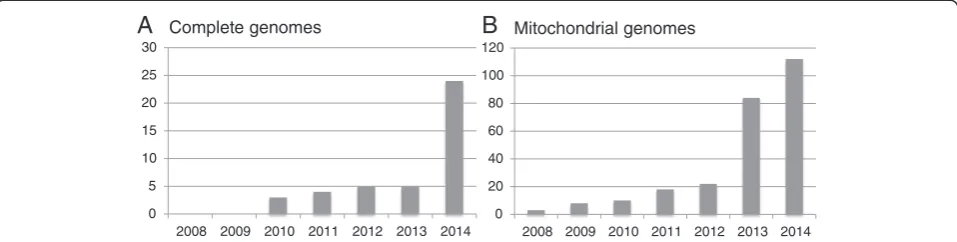
These improvements in sequencing technology have revolutionised, if not re-invented the field of ancient hu-man DNA studies. In 2010, the first high coverage nuclear genome sequence from subfossil remains was obtained from a 4,000-year-old human hair tuft [64], bringing hu-man ancient DNA to the technical forefront of ancient DNA research. The results allowed reconstructing the first human migration into Greenland and suggested that the ancestors of early Greenlanders migrated into the New World from Siberia some 5,500 years ago, in-dependent of the migrations that gave rise to modern Native Americans and Inuit [64]. Since then, major breakthroughs in the study of human evolution and prehistory, including the analyses of complete ge-nomes from key times and geographical locations in human history, have been announced on a regular basis (Figures 1 and 2A).
Also in 2010, the first low coverage Neanderthal draft genome was published [65]. In contrast to earlier mito-chondrial genome studies such as the publication of the first Neanderthal DNA sequences by Krings et al. [54],
Anzick 1 ~12,600 BP
Saqqaq ~ 4,000 BP
LaBrana1 ~ 8,000 BP
Loschbour ~ 8,000 BP
Stuttgart
~ 7,000 BP Vindija
mixed age* Gökhem 2 ~ 5,000 BP
Motala12 ~ 8,000 BP
Ajvide58
~ 5,000 BP MA1 (Mal’ta)
~ 24,000 BP
Altai
Neanderthal
~ 66,000 BP
Denisovan
~ 52,000 BP
Australian ~ 100 BP Tirolean
Iceman ~ 5300 BP
Ust’-Ishim 45,000 BP Hungary x8
~3000 BP –
7800 BP Kostenki, ~
37,000 BP
the comparison of modern human and Neanderthal genomes provided evidence of admixture between Nean-derthals and modern humans outside sub-Saharan Africa. In the same year, the‘Denisovans’became the first extinct group of hominins that was described almost entirely from DNA sequence data, in this case the complete mito-chondrial genome [78], followed by a 1.9-fold coverage nuclear genome later the same year [79]. Two years later, the complete genome of the same Denisovan individual was sequenced to high coverage (30-fold; Meyer et al. [68]). In 2014, Prüferet al. [73] also published a 52-fold coverage Neanderthal genome from an individual from the same Altai Mountains cave as the Denisovans. By comparing this Neanderthal genome to the high coverage Denisovan genome as well as 25 genomes from modern humans and two further low coverage Neanderthal ge-nomes, they were able to confirm gene flow between all three groups of hominins and also found evidence of gene flow from an unknown fourth hominin group into Deni-sovans. Moreover, a comparison of modern human ge-nomes to the newly obtained archaic hominin and great ape genomes allowed identifying a catalogue of mutations unique to modern humans.
Modern human population history in the light of ancient DNA
Interestingly, most high-throughput DNA sequencing studies on ancient humans to date have focused on obtaining large amounts of sequence data from single or very few individuals rather than targeting representative multilocus DNA sequence data from a large number of individuals, as is common practice for modern popula-tions (for example [80-82]). The human genome reference database is now so extensive that even low coverage single ancient genomes can provide new insights into human population history. For example, in 2012, two separate studies [41,83] reported a total of only 307 Mb from two Mesolithic foragers, three Neolithic hunter-gatherers and a single farmer. Despite the comparatively small amount
of data, both studies were able to show that hunter-gatherers are genetically more closely related to modern day northern Europeans. Furthermore, the study by Skoglund et al. [41] was able to demonstrate that the single Neolithic farmer individual showed a close gen-etic affinity to modern Sardinians. The later affiliation was also recovered with the 7.4× coverage genome of the Tyrolean ice man [67] and several other Neolithic individuals [84], suggesting that Sardinians represent to some extent a Neolithic relict population.
While most ancient human genome data reported to date originate from European specimens, researchers have started exploring the population history of other populations as well (Figure 1). Thus, in January 2014, Raghavan et al. [70] presented the genome of an ap-proximately 24,000-year-old individual from Mal’ta in south-central Siberia, sequenced to an average coverage of 1×. Despite the low coverage, the genome provided evidence that Native Americans share a dual ancestry in-fluenced by genetic contributions from both eastern Asian and western Asian populations. These results con-firmed and expanded on earlier results based on modern genome data [85] which showed a signal of admixture into Northern Europe consisting of ancestral links to present day Basques and Sardinians as well as the north-east Asian/American component identified by Raghavan et al. [70]. While at first sight it may seem surprising that low coverage genome data can provide such insights with any level of confidence, it becomes more under-standable when the total number of informative mutations used in these analyses is considered. Any one mutation characterising the ancestry of an ancient individual se-quenced to low coverage may be a result of sequencing error, but the study described above compared 66,285 single nucleotide polymorphisms (SNPs) to a reference panel of 1,301 individuals. Given the large number of markers characterising the ancestry of the individual, the chances that sequencing errors at known SNP sites alone result in incorrect ancestry inferences are therefore
A
Complete genomesB
Mitochondrial genomes0 5 10 15 20 25 30
2008 2009 2010 2011 2012 2013 2014 0 20 40 60 80 100 120
2008 2009 2010 2011 2012 2013 2014
comparatively small. In a similar study, Rasmussen et al. reported a 14× coverage genome of an approximately 12,500-year-old North American member of the Clovis culture. This study provided evidence that the Clovis people are the direct ancestors of present day Native Americans, a question that had been the subject of a long-term controversy. Finally, the low coverage gen-ome of a 7,000-year-old Mesolithic European from north-ern Spain provided a first glimpse into the phenotype of early European hunter-gatherers by revealing a combin-ation of relatively dark skin and blue eyes [69]. In sum-mary, the trickling of recent individual ancient genome studies leaves no doubt about the usefulness of whole gen-ome data for gaining insights into the history and origin of present day populations or even phenotypes.
Despite these successes, limited sample numbers will always limit the power of conclusions and any extrapola-tion from such studies to entire populaextrapola-tions has to be interpreted with caution. However, given the remarkable rate at which complete genome data (Figures 1 and 2A) or a combination of complete mitochondrial genomes and nuclear data from ancient human remains is now becoming available (Figures 2B and 3) [71,86,87], the small number of genome-sequenced ancient individuals is unlikely to be a limitation for much longer. The in-creasing number of complete ancient human genomes has for example already enabled a high-resolution ana-lysis of the ancestry of Europeans [72]. In their study,
Lazaridis et al. [72] found that present day Europeans derived from at least three highly differentiated ancestral populations, including west European hunter-gatherers, ancient north Eurasians, and early European farmers. It is important to note, though, that the still relatively small sample number (15 complete or partial genomes) limits the conclusions drawn from this for the moment -comparatively large-scale ancient population genomic study. Only an increase in sample size will show whether the three ancestral populations identified represent indeed all sources of modern European diversity, or whether they are an artefact resulting from having analysed only a small number of samples from a limited geographical region.
Extending the range of ancient human DNA studies further into the past
Prüferet al. [73] showed that by comparing the genomes of anatomically modern humans to their closest relatives, it is possible to identify mutations in the human genome that are unique to anatomically modern humans. If bone material and sequence data from more Neanderthal and Denisovan individuals did become available, similar stud-ies may also become possible for these archaic humans. Using these data as basis, studies on how anatomically modern humans, Neanderthals and Denisovans differ on a functional genomic level will become possible. These studies will provide key insights into the evolution and di-vergence of all three human groups. However, to complete
Canada, 16
Greenland, 3
Spain, 3
Luxemburg, 1
Germany, 46
Croatia, 2
Sweden, 9
Russia, 6
China, 4
New Zealand, 3
Sardinia, 1
UK, 9
Italy, 5
France, 1
Czech Republic, 3
the puzzle of human evolution, information about the gen-ome of the population ancestral to anatomically modern humans, Neanderthals and Denisovans would be essential. As this population existed more than 500,000 years ago [73], this was until recently considered an improbable challenge. However, using improved DNA extraction techniques [39] along with a highly sensitive SGS library preparation protocol [97], Meyer et al. [40] were able to sequence the complete mitochondrial genome of a 400,000-year-old hominin from Sima de los Huesos cave in Atapuerca (Spain). As mitochondrial DNA alone has been shown to be an unreliable source of phylogenetic information in hominins [68,78,79], it was not possible to draw firm conclusions about the role of the Sima de los Huesos hominin in human evolution. Nevertheless, the study provides an important first step towards the analysis of Middle Pleistocene hominin remains and raises the hope that ancient DNA may soon allow us to trace a sub-stantial part of human evolution on the molecular level and in real-time.
Conclusions
Ancient human DNA research today promises exciting insights into the evolution and history of our own spe-cies. However, despite major technological advances associated with SGS, authentication of ancient human DNA sequence data is anything but trivial. New guidelines for ensuring sequence data authenticity are required to deal with the fundamental changes in sequencing strat-egies introduced by SGS. Given such precautions, though, ancient human DNA research is likely to soon complete the transition from an interesting but marginal discipline of human evolution and history to a key component of an-thropological research.
Guidelines for SGS work with ancient DNA
These are not intended to represent strict‘criteria’that all need to be followed in any experiment, but rather recom-mendations to consider during experimental setup. Also, it is important to note that while the below measures reduce the probability to retrieve contaminating sequences and increase the probability to recognize contamination in case it has occurred, they are by no means a guarantee for contamination-free data sets. Rather, as noted before [12], they should be seen as help for researchers, reviewers and readers to critically evaluate SGS data obtained from an-cient human samples. It is also important to emphasize that different studies will require different levels of authentica-tion and, as has long been known (but very often ignored), the more unlikely data are - either from a technical or bio-logical perspective - the more evidence of their authenticity is required. Finally, we would like to point out that the ex-treme sensitivity of SGS technology due to the exex-tremely high number of reads obtained (up to several billions)
makes it virtually impossible to obtain completely contamination-free data sets. Therefore, the question is no longer whether contamination (of the samples, the chemicals, plastic wear or the experiments) has occurred, but rather whether the contamination is se-vere enough to influence any conclusions drawn from the data.
1. Perform all molecular work from DNA extraction to library preparation (though not amplification!) in a dedicated ancient DNA lab. Follow a strict one-way policy for ancient DNA work, that is, once somebody has been in a laboratory where high-quantity DNA (modern DNA, PCR products or amplified libraries) has been handled, the person must not go back to the DNA lab the same day. This recommendation has been criticized based on the theoretical claim that DNA will persist on people’s hands over night, but in our and the experience of many of our colleagues, empirically this measure is highly effective against contamination, while violation of the one-way policy readily results in abundant contamination.
2. Perform blank extractions and blank libraries. The inclusion of blanks in ancient SGS studies is one of the most neglected measures that was standard for ancient DNA work in the PCR era. There may be some problems that libraries from blanks may produce excessive adapter dimers (especially when barcoding libraries, see below), making sequencing on the same lane as sample libraries difficult, but such libraries can be size-selected to remove adapter dimers before sequencing. Inclusion of blank libraries would almost certainly have uncovered the heavy contamination in the first SGS study investigating human fossils [47].
3. Measurable cytosine deamination damage patterns in the sequences especially at the ends of template molecules [34,35]. This type of damage has been shown to increase with age [38], so sequences obtained from tens of thousands of years old human samples not showing such damage patterns should be considered highly suspicious.
Y-chromosomal tree. Finally, in samples known from coverage information of X-chromosome vs. autosomes to be female, it is possible to estimate contamination from male sources by searching for fragments mapping to the non-recombining part of the Y-chromosome. The situation is more complicated for autosomal data, but human variability has been studied thoroughly enough that data sets can be studied for incompatibility of neighbouring SNPs (that is, physically close SNPs may be so tightly linked that it is highly unlikely that an individual homozygous at one position would be heterozygous at a linked position). Statistical evaluation of such patterns also allows estimating contamination levels. 5. PCR amplification of a short (~60 bp) piece of
human DNA from extraction and library blank to evaluate levels of low-quantity contamination with modern human DNA. Also, it is possible to perform population analyses with short and long sequence fragments separately and also with 3′and 5′ deaminated and non-deaminated fragments separately [41] to evaluate if sequence data may originate from two populations of templates going back to different sources.
6. Barcoding of all libraries, ideally uniquely, even when not planning to multiplex sequence, because these libraries could come back to haunt following experiments. This is especially useful when planning to ever perform capture experiments, as libraries before capture are very highly concentrated PCR products, which will contaminate every room they are opened in. After capture, however, the target is back to a DNA concentration. But as the capture product tube is opened, all the super high
concentration non-target also gets released, and that may contain human DNA from none target regions, which will be a contaminant with perfect library adapters if these regions ever get targeted.
7. Sensible setup of experimental workflow also outside the ancient DNA lab. For example, capture experiments can easily get contaminated with non-target DNA or DNA from previous experiments if elution of the low-quantity captured products is performed in the same laboratory as washing of the capture arrays or beads to remove the high-quantity amplified non-target DNA. A simple solution to this is to perform elution and any handling of eluted target DNA prior to potential re-amplification in a dedicated laboratory.
8. Biological and technical sense. Although this is a difficult category and it is important that unexpected results are nota prioridismissed as contamination as this would prevent any scientific progress, it remains true that extraordinary results - from a
technical or biological perspective - require also extraordinary evidence supporting them. However, this is also not to say that expected results have to be true. They also require supporting evidence.
Abbreviations
A:adenine; bp: base pairs; C: cytosine; DNA: deoxyribonucleic acid; G: guanine; kb: kilobases; PCR: polymerase chain reaction; SGS: second-generation sequencing; SNP: single nucleotide polymorphism; T: thymine.
Competing interests
The authors declare that they have no competing interests.
Authors’contributions
MK, CL-F, and MH wrote the article. All authors read and approved the manuscript.
Acknowledgements
We thank Tom Gilbert and an anonymous reviewer for helpful comments on an earlier version of this manuscript and Greger Larson for the map on which Figures 1 and 3 are based.
Author details
1Molecular Ecology and Fisheries Genetics Laboratory, School of Biological
Sciences, Bangor University, 3rd Floor, Deiniol Road, Bangor LL57 2UW, UK. 2Department of Anatomy, University of Otago, 270 Great King St, Dunedin
9016, New Zealand.3Institute of Evolutionary Biology (CSIC-UPF), Doctor Aiguader, 88, 08003 Barcelona, Spain.4Department of Mathematics and Natural Sciences, Evolutionary and Adaptive Genomics, Institute for Biochemistry and Biology, University of Potsdam, Karl-Liebknecht-Str. 24-25, 14476 Potsdam, Germany.
Received: 9 October 2014 Accepted: 27 January 2015
References
1. Pääbo S. Molecular cloning of ancient Egyptian mummy DNA. Nature. 1985;314:644–5.
2. Del Pozzo G, Guardiola J. Mummy DNA fragment identified. Nature. 1989;339:431–2.
3. Richards MB, Sykes BC, Hedges REM. Authenticating DNA extracted from ancient skeletal remains. J Archaeol Sci. 1995;22:291–9.
4. Hofreiter M, Serre D, Poinar HN, Kuch M, Pääbo S. Ancient DNA. Nat Rev Genet. 2001;2:353–9.
5. Wandeler P, Smith S, Morin PA, Pettifor RA, Funk SM. Patterns of nuclear DNA degeneration over time—a case study in historic teeth samples. Mol Ecol. 2003;12:1087–93.
6. Serre D, Langaney A, Chech M, Teschler-Nicola M, Paunovic M, Mennecier P, et al. No evidence of Neandertal mtDNA contribution to early modern humans. PLoS Biol. 2004;2:E57.
7. Sampietro ML, Gilbert MTP, Lao O, Caramelli D, Lari M, Bertranpetit J, et al. Tracking down human contamination in ancient human teeth. Mol Biol Evol. 2006;23:1801–7.
8. Stoneking M. Ancient DNA: how do you know when you have it and what can you do with it? Am J Hum Genet. 1995;57:1259–62.
9. Cooper A. Reply to Stoneking: ancient DNA—how do you really know when you have it? Am J Hum Genet. 1997;60:1001–3.
10. Abbott A. Anthropologists cast doubt on human DNA evidence. Nature. 2003;423:468.
11. Barbujani G, Bertorelle G. Were Cro-Magnons too like us for DNA to tell? Nature. 2003;424:127.
12. Gilbert MTP, Bandelt H-J, Hofreiter M, Barnes I. Assessing ancient DNA studies. Trends Ecol Evol. 2005;20:541–4.
13. Gilbert MTP, Hansen AJ, Willerslev E, Turner-Walker G, Collins M. Insights into the processes behind the contamination of degraded human teeth and bone samples with exogenous sources of DNA. Int J Osteoarchaeol. 2006;16:156–64.
15. Golenberg EM, Giannasi DE, Clegg MT, Smiley CJ, Durbin M, Henderson D, et al. Chloroplast DNA sequence from a miocene Magnolia species. Nature. 1990;344:656–8.
16. Sidow A, Wilson AC, Pääbo S. Bacterial DNA in Clarkia fossils. Philos Trans R Soc Lond B Biol Sci. 1991;333:429–32. discussion 432–3.
17. Zischler H, Höss M, Handt O, von Haeseler A, van der Kuyl AC, Goudsmit J. Detecting dinosaur DNA. Science. 1995;268:1192–3. author reply 1194. 18. Cooper A, Poinar HN. Ancient DNA: do it right or not at all. Science.
2000;289:1139.
19. Handt O, Krings M, Ward RH, Pääbo S. The retrieval of ancient human DNA sequences. Am J Hum Genet. 1996;59:368–76.
20. Malmström H, Svensson EM, Gilbert MTP, Willerslev E, Götherström A, Holmlund G. More on contamination: the use of asymmetric molecular behavior to identify authentic ancient human DNA. Mol Biol Evol. 2007;24:998–1004.
21. Collins MJ, Penkman KEH, Rohland N, Shapiro B, Dobberstein RC, Ritz-Timme S, et al. Is amino acid racemization a useful tool for screening for ancient DNA in bone? Proc Biol Sci. 2009;276:2971–7.
22. Schwarz C, Debruyne R, Kuch M, Mcnally E, Schwarcz H, Aubrey AD, et al. New insights from old bones: DNA preservation and degradation in permafrost preserved mammoth remains. Nucleic Acid Res. 2009;37:3215–29. 23. Thomas P, Gilbert M, Rudbeck L, Willerslev E, Hansen AJ, Smith C, et al.
Biochemical and physical correlates of DNA contamination in archaeological human bones and teeth excavated at Matera, Italy. J Archaeol Sci. 2005;32:785–93. 24. Fortea J, de la Rasilla M, García-Tabernero A, Gigli E, Rosas A, Lalueza-Fox C.
Excavation protocol of bone remains for Neandertal DNA analysis in El Sidrón Cave (Asturias, Spain). J Hum Evol. 2008;55:353–7.
25. Matisoo-Smith E, Horsburgh KA. DNA for Archaeologists. Walnut Creek, California: Left Coast Press Inc; 2012.
26. Briggs AW, Good JM, Green RE, Krause J, Maricic T, Stenzel U, et al. Targeted retrieval and analysis of five Neandertal mtDNA genomes. Science. 2009;325:318–21.
27. Green RE, Briggs AW, Krause J, Prüfer K, Burbano HA, Siebauer M, et al. The Neandertal genome and ancient DNA authenticity. EMBO J. 2009;28:2494–502. 28. Shapiro B, Hofreiter M. A Paleogenomic perspective on evolution and gene
function: new insights from ancient DNA. Science. 2014;343:1236573. 29. Krause J, Briggs AW, Kircher M, Maricic T, Zwyns N, Derevianko A, et al. A
complete mtDNA genome of an early modern human from Kostenki, Russia. Curr Biol. 2010;20:231–6.
30. Pääbo S, Ancient DNA. Extraction, characterization, molecular cloning, and enzymatic amplification. Proc Natl Acad Sci U S A. 1989;86:1939–43. 31. Hansen AJ, Willerslev E, Wiuf C, Mourier T, Arctander P. Statistical evidence
for miscoding lesions in ancient DNA templates. Mol Biol Evol. 2001;18:262–5. 32. Hofreiter M, Jaenicke V, Serre D, von Haeseler A, Pääbo S. DNA sequences
from multiple amplifications reveal artifacts induced by cytosine deamination in ancient DNA. Nucleic Acids Res. 2001;29:4793–9. 33. Helgason A, Pálsson S, Lalueza-Fox C, Ghosh S, Sigurdardóttir S, Baker A,
et al. A statistical approach to identify ancient template DNA. J Mol Evol. 2007;65:92–102.
34. Briggs AW, Stenzel U, Johnson PLF, Green RE, Kelso J, Prüfer K, et al. Patterns of damage in genomic DNA sequences from a Neandertal. Proc Natl Acad Sci U S A. 2007;104:14616–21.
35. Brotherton P, Endicott P, Sanchez JJ, Beaumont M, Barnett R, Austin J, et al. Novel high-resolution characterization of ancient DNA reveals C > U-type base modification events as the sole cause of post mortem miscoding lesions. Nucleic Acids Res. 2007;35:5717–28.
36. Smith CI, Chamberlain AT, Riley MS, Cooper A, Stringer CB, Collins MJ. Neanderthal DNA. Not just old but old and cold? Nature. 2001;410:771–2. 37. Elsner J, Schibler J, Hofreiter M, Schlumbaum A. Burial condition is the most
important factor for mtDNA PCR amplification success in Palaeolithic equid remains from the Alpine foreland. Archaeol Anthropol Sci. 2014. p. 1–11. 38. Sawyer S, Krause J, Guschanski K, Savolainen V, Pääbo S. Temporal patterns
of nucleotide misincorporations and DNA fragmentation in ancient DNA. PLoS One. 2012;7:e34131.
39. Dabney J, Knapp M, Glocke I, Gansauge M-T, Weihmann A, Nickel B, et al. Complete mitochondrial genome sequence of a Middle Pleistocene cave bear reconstructed from ultrashort DNA fragments. Proc Natl Acad Sci U S A. 2013;110:15758–63.
40. Meyer M, Fu Q, Aximu-Petri A, Glocke I, Nickel B, Arsuaga J-L, et al. A mitochondrial genome sequence of a hominin from Sima de los Huesos. Nature. 2014;505:403–6.
41. Skoglund P, Malmström H, Raghavan M, Storå J, Hall P, Willerslev E, et al. Origins and genetic legacy of Neolithic farmers and hunter-gatherers in Europe. Science. 2012;336:466–9.
42. Skoglund P, Northoff BH, Shunkov MV, Derevianko AP, Pääbo S, Krause J, et al. Separating endogenous ancient DNA from modern day contamination in a Siberian Neandertal. Proc Natl Acad Sci U S A. 2014;111:2229–34.
43. Olalde I, Sánchez-Quinto F, Datta D, Marigorta UM, Chiang CWK, Rodríguez JA, et al. Genomic analysis of the blood attributed to Louis XVI (1754–1793), king of France. Sci Rep. 2014;4:4666.
44. Handt O, Richards M, Trommsdorff M, Kilger C, Simanainen J, Georgiev O, et al. Molecular genetic analyses of the Tyrolean Ice Man. Science. 1994;264:1775–8.
45. Green RE, Malaspinas A-S, Krause J, Briggs AW, Johnson PLF, Uhler C, et al. A complete Neandertal mitochondrial genome sequence determined by high-throughput sequencing. Cell. 2008;134:416–26.
46. Knapp M, Horsburgh KA, Prost S, Stanton J-A, Buckley HR, Walter RK, et al. Complete mitochondrial DNA genome sequences from the first New Zealanders. Proc Natl Acad Sci U S A. 2012;109:18350–4.
47. Green RE, Krause J, Ptak SE, Briggs AW, Ronan MT, Simons JF, et al. Analysis of one million base pairs of Neanderthal DNA. Nature. 2006;444:330–6. 48. Wall JD, Kim SK. Inconsistencies in Neanderthal genomic DNA sequences.
PLoS Genet. 2007;3:1862–6.
49. Wall JD, Slatkin M. Paleopopulation genetics. Annu Rev Genet. 2012;46:635–49. 50. Noonan JP, Coop G, Kudaravalli S, Smith D, Krause J, Alessi J, et al.
Sequencing and analysis of Neanderthal genomic DNA. Science. 2006;314:1113–8.
51. Margulies M, Egholm M, Altman WE, Attiya S, Bader JS, Bemben LA, et al. Genome sequencing in microfabricated high-density picolitre reactors. Nature. 2005;437:376–80.
52. Burbano HA, Hodges E, Green RE, Briggs AW, Krause J, Meyer M, et al. Targeted investigation of the Neandertal genome by array-based sequence capture. Science. 2010;328:723–5.
53. Kircher M, Sawyer S, Meyer M. Double indexing overcomes inaccuracies in multiplex sequencing on the Illumina platform. Nucleic Acids Res. 2011;40:e3. 54. Krings M, Stone A, Schmitz RW, Krainitzki H, Stoneking M, Pääbo S.
Neandertal DNA sequences and the origin of modern humans. Cell. 1997;90:19–30.
55. Haak W, Forster P, Bramanti B, Matsumura S, Brandt G, Tänzer M, et al. Ancient DNA from the first European farmers in 7500-year-old Neolithic sites. Science. 2005;310:1016–8.
56. Bollongino R, Nehlich O, Richards MP, Orschiedt J, Thomas MG, Sell C, et al. 2000 years of parallel societies in Stone Age Central Europe. Science. 2013;342:479–81.
57. Brandt G, Haak W, Adler CJ, Roth C, Szécsényi-Nagy A, Karimnia S, et al. Ancient DNA reveals key stages in the formation of central European mitochondrial genetic diversity. Science. 2013;342:257–61.
58. Hummel S, Schmidt D, Kremeyer B, Herrmann B, Oppermann M. Detection of the CCR5-Delta32 HIV resistance gene in Bronze Age skeletons. Genes Immun. 2005;6:371–4.
59. Lalueza-Fox C, Römpler H, Caramelli D, Stäubert C, Catalano G, Hughes D, et al. A melanocortin 1 receptor allele suggests varying pigmentation among Neanderthals. Science. 2007;318:1453–5.
60. Burger J, Kirchner M, Bramanti B, Haak W, Thomas MG. Absence of the lactase-persistence-associated allele in early Neolithic Europeans. Proc Natl Acad Sci U S A. 2007;104:3736–41.
61. Poinar HN, Schwarz C, Qi J, Shapiro B, Macphee RDE, Buigues B, et al. Metagenomics to paleogenomics: large-scale sequencing of mammoth DNA. Science. 2006;311:392–4.
62. Noonan JP, Hofreiter M, Smith D, Priest JR, Rohland N, Rabeder G. Genomic sequencing of Pleistocene Cave Bears. Science. 2005;309:597–600. 63. Knapp M, Hofreiter M. Next generation sequencing of ancient DNA:
requirements, strategies and perspectives. Genes. 2010;1:227–43. 64. Rasmussen M, Li Y, Lindgreen S, Pedersen JS, Albrechtsen A, Moltke I, et al.
Ancient human genome sequence of an extinct Palaeo-Eskimo. Nature. 2010;463:757–62.
65. Green RE, Krause J, Briggs AW, Maricic T, Stenzel U, Kircher M, et al. A draft sequence of the Neandertal genome. Science. 2010;328:710–22. 66. Rasmussen M, Guo X, Wang Y, Lohmueller KE, Rasmussen S, Albrechtsen A,
67. Keller A, Graefen A, Ball M, Matzas M, Boisguerin V, Maixner F, et al. New insights into the Tyrolean Iceman’s origin and phenotype as inferred by whole-genome sequencing. Nat Commun. 2012;3:698.
68. Meyer M, Kircher M, Gansauge M-T, Li H, Racimo F, Mallick S, et al. A high-coverage genome sequence from an archaic Denisovan individual. Science. 2012;338:222–6. 69. Olalde I, Allentoft ME, Sánchez-Quinto F, Santpere G, Chiang CWK,
DeGiorgio M, et al. Derived immune and ancestral pigmentation alleles in a 7,000-year-old Mesolithic European. Nature. 2014;507:225–8.
70. Raghavan M, Skoglund P, Graf KE, Metspalu M, Albrechtsen A, Moltke I, et al. Upper Palaeolithic Siberian genome reveals dual ancestry of Native Americans. Nature. 2014;505:87–91.
71. Skoglund P, Malmström H, Omrak A, Raghavan M, Valdiosera C, Günther T, et al. Genomic diversity and admixture differs for Stone-Age Scandinavian foragers and farmers. Science. 2014;344:747–50.
72. Lazaridis I, Patterson N, Mittnik A, Renaud G, Mallick S, Kirsanow K, et al. Ancient human genomes suggest three ancestral populations for present-day Europeans. Nature. 2014;513:409–13.
73. Prüfer K, Racimo F, Patterson N, Jay F, Sankararaman S, Sawyer S, et al. The complete genome sequence of a Neanderthal from the Altai Mountains. Nature. 2014;505:43–9.
74. Rasmussen M, Anzick SL, Waters MR, Skoglund P, DeGiorgio M, Stafford TW, et al. The genome of a Late Pleistocene human from a Clovis burial site in western Montana. Nature. 2014;506:225–9.
75. Fu Q, Li H, Moorjani P, Jay F, Slepchenko SM, Bondarev AA, et al. Genome sequence of a 45,000-year-old modern human from western Siberia. Nature. 2014;514:445–9.
76. Gamba C, Jones ER, Teasdale MD, McLaughlin RL, Gonzalez-Fortes G, Mattiangeli V, et al. Genome flux and stasis in a five millennium transect of European prehistory. Nat Commun. 2014;5:5257.
77. Seguin-Orlando A, Korneliussen TS, Sikora M, Malaspinas A-S, Manica A, Moltke I, et al. Genomic structure in Europeans dating back at least 36,200 years. Science. 2014;346:1113–8.
78. Krause J, Fu Q, Good JM, Viola B, Shunkov MV, Derevianko AP, et al. The complete mitochondrial DNA genome of an unknown hominin from southern Siberia. Nature. 2010;464:894–7.
79. Reich D, Green RE, Kircher M, Krause J, Patterson N, Durand EY, et al. Genetic history of an archaic hominin group from Denisova Cave in Siberia. Nature. 2010;468:1053–60.
80. Novembre J, Johnson T, Bryc K, Kutalik Z, Boyko AR, Auton A, et al. Genes mirror geography within Europe. Nature. 2008;456:98–101. 81. Reich D, Thangaraj K, Patterson N, Price AL, Singh L. Reconstructing Indian
population history. Nature. 2009;461:489–94.
82. Abdulla MA, Ahmed I, Assawamakin A, Bhak J, Brahmachari SK, Calacal GC, et al. Mapping human genetic diversity in Asia. Science. 2009;326:1541–5. 83. Sánchez-Quinto F, Schroeder H, Ramirez O, Avila-Arcos MC, Pybus M, Olalde I,
et al. Genomic affinities of two 7,000-year-old Iberian hunter-gatherers. Curr Biol. 2012;22:1494–9.
84. Sikora M, Carpenter ML, Moreno-Estrada A, Henn BM, Underhill PA, Sánchez-Quinto F, et al. Population genomic analysis of ancient and modern genomes yields new insights into the genetic ancestry of the Tyrolean Iceman and the genetic structure of Europe. PLoS Genet. 2014;10:e1004353.
85. Patterson N, Moorjani P, Luo Y, Mallick S, Rohland N, Zhan Y, et al. Ancient admixture in human history. Genetics. 2012;192:1065–93. 86. Brotherton P, Haak W, Templeton J, Brandt G, Soubrier J, Jane Adler C, et al.
Neolithic mitochondrial haplogroup H genomes and the genetic origins of Europeans. Nat Commun. 2013;4:1764.
87. Raghavan M, DeGiorgio M, Albrechtsen A, Moltke I, Skoglund P, Korneliussen TS, et al. The genetic prehistory of the New World Arctic. Science. 2014;345:1255832.
88. Fu Q, Meyer M, Gao X, Stenzel U, Burbano HA, Kelso J, et al. DNA analysis of an early modern human from Tianyuan Cave, China. Proc Natl Acad Sci U S A. 2013;110:2223–7.
89. Fu Q, Mittnik A, Johnson PLF, Bos K, Lari M, Bollongino R, et al. A revised timescale for human evolution based on ancient mitochondrial genomes. Curr Biol. 2013;23:553–9.
90. Cui Y, Lindo J, Hughes CE, Johnson JW, Hernandez AG, Kemp BM, et al. Ancient DNA analysis of mid-holocene individuals from the Northwest Coast of North America reveals different evolutionary paths for mitogenomes. PLoS One. 2013;8:e66948.
91. Ermini L, Olivieri C, Rizzi E, Corti G, Bonnal R, Soares P, et al. Complete mitochondrial genome sequence of the Tyrolean Iceman. Curr Biol. 2008;18:1687–93.
92. Gilbert MTP, Kivisild T, Grønnow B, Andersen PK, Metspalu E, Reidla M, et al. Paleo-Eskimo mtDNA genome reveals matrilineal discontinuity in Greenland. Science. 2008;320:1787–9.
93. Ko AM-S, Chen C-Y, Fu Q, Delfin F, Li M, Chiu H-L, et al. Early Austronesians: into and out of Taiwan. Am J Hum Genet. 2014;94:426–36.
94. Der Sarkissian C, Brotherton P, Balanovsky O, Templeton JEL, Llamas B, Soubrier J, et al. Mitochondrial genome sequencing in Mesolithic North East Europe Unearths a new sub-clade within the broadly distributed human haplogroup C1. PLoS One. 2014;9:e87612.
95. Schuenemann VJ, Bos K, DeWitte S, Schmedes S, Jamieson J, Mittnik A, et al. Targeted enrichment of ancient pathogens yielding the pPCP1 plasmid of Yersinia pestis from victims of the Black Death. Proc Natl Acad Sci U S A. 2011;108:E746–52.
96. King TE, Fortes GG, Balaresque P, Thomas MG, Balding D, Delser PM, et al. Identification of the remains of King Richard III. Nat Commun. 2014;5:5631. 97. Gansauge M-T, Meyer M. Single-stranded DNA library preparation for the
sequencing of ancient or damaged DNA. Nat Protoc. 2013;8:737–48.
Submit your next manuscript to BioMed Central and take full advantage of:
• Convenient online submission
• Thorough peer review
• No space constraints or color figure charges
• Immediate publication on acceptance
• Inclusion in PubMed, CAS, Scopus and Google Scholar
• Research which is freely available for redistribution
![Figure 1 Distribution and age of sequenced complete human genomes (>1× coverage). Names in italics: archaic humans [64-77].](https://thumb-us.123doks.com/thumbv2/123dok_us/8756941.1750150/6.595.57.541.456.715/figure-distribution-sequenced-complete-genomes-coverage-italics-archaic.webp)
![Figure 3 Distribution and number of ancient human mitochondrial genomes sequenced to at least 1× coverage.mitochondrial genomes that were published independently from the complete genome of the respective individual were counted Only those[26,29,40,45,46,56,71,78,83,86-96].](https://thumb-us.123doks.com/thumbv2/123dok_us/8756941.1750150/8.595.57.542.436.694/distribution-mitochondrial-sequenced-mitochondrial-published-independently-respective-individual.webp)
