Ames Laboratory Accepted Manuscripts Ames Laboratory
2-3-2018
Synthesis of Supported Pd-0 Nanoparticles from a
Single-Site Pd2+ Surface Complex by Alkene
Reduction
Aidan R. MouatNorthwestern University
Cassandra L. Whitford
Northwestern University
Bor-Rong Chen
Northwestern University
Shengsi Liu
Northwestern University
Frederic A. Perras
Iowa State University and Ames Laboratory, [email protected]
See next page for additional authors
Follow this and additional works at:https://lib.dr.iastate.edu/ameslab_manuscripts Part of theMaterials Chemistry Commons
This Article is brought to you for free and open access by the Ames Laboratory at Iowa State University Digital Repository. It has been accepted for inclusion in Ames Laboratory Accepted Manuscripts by an authorized administrator of Iowa State University Digital Repository. For more information, please [email protected].
Recommended Citation
Mouat, Aidan R.; Whitford, Cassandra L.; Chen, Bor-Rong; Liu, Shengsi; Perras, Frederic A.; Pruski, Marek; Bedzyk, Michael J.; Delferro, Massimiliano; Stair, Peter C.; and Marks, Tobin J., "Synthesis of Supported Pd-0 Nanoparticles from a Single-Site Pd2+ Surface Complex by Alkene Reduction" (2018).Ames Laboratory Accepted Manuscripts. 129.
Synthesis of Supported Pd-0 Nanoparticles from a Single-Site Pd2+
Surface Complex by Alkene Reduction
Abstract
A surface metal-organic complex, (-AlOx)Pd(acac) (acac = acetylacetonate), is prepared by chemically grafting the precursor Pd(acac)(2) onto gamma-Al2O3 in toluene at 25 degrees C. The resulting surface complex is characterized by inductively coupled plasma atomic emission spectroscopy (ICP-AES), X-ray photoelectron spectroscopy (XPS), X-ray absorption spectroscopy (XAS), and dynamic nuclear polarization surface-enhanced solid-state nuclear magnetic resonance spectroscopy (DNP SENS). This surface complex is a precursor in the direct synthesis of size-controlled Pd nanoparticles under mild reductive conditions and in the absence of additional stabilizers or pretreatments. Indeed, upon exposure to gaseous ethylene or liquid 1-octene at 25 degrees C, the Pd2+ species is reduced to form Pd-0 nanoparticles with a mean diameter of 4.3 +/- 0.6 nm, as determined by scanning transmission electron microscopy (STEM). These nanoparticles are catalytically relevant using the aerobic 1-phenylethanol oxidation as a probe reaction, with rates comparable to a conventional Pd/Al2O3 catalyst but without an induction period. Diffuse reflectance infrared Fourier transform spectroscopy (DRIFTS) and temperature-programmed reaction mass spectrometry (TPR-MS) reveal that the surface complex reduction with ethylene coproduces H-2, acetylene, and 1,3-butadiene. This process reasonably proceeds via an olefin activation/coordination/insertion pathway, followed by beta-hydride elimination to generate free Pd-0. The well-defined nature of the single-site supported Pd2+ precursor provides direct mechanistic insights into this unusual and likely general reductive process.
Keywords
Palladium nanoparticle, heterogeneous catalysis, X-ray absorption spectroscopy, surface organometallic chemistry, DNP solid-state NMR
Disciplines
Chemistry | Materials Chemistry
Authors
Aidan R. Mouat, Cassandra L. Whitford, Bor-Rong Chen, Shengsi Liu, Frederic A. Perras, Marek Pruski, Michael J. Bedzyk, Massimiliano Delferro, Peter C. Stair, and Tobin J. Marks
1
Synthesis of Supported Pd
0Nanoparticles from a
Single-Site Pd
2+Surface Complex by Alkene
Reduction
Aidan R. Mouat,a Cassandra L. Whitford,b Bor-Rong Chen,c Shengsi Liu,a Frédéric A. Perras,d Marek Pruski,d Michael J. Bedzyk,c Massimiliano Delferro,a,f,* Peter C. Stair,a,e,* and Tobin J.
Marksa,*
aDepartment of Chemistry, bDepartment of Chemical & Biological Engineering, cDepartment of
Materials Science & Engineering, Northwestern University, Evanston, Illinois 60208-3113, USA. dU.S. DOE Ames Laboratory and Department of Chemistry, Iowa State University, Ames,
Iowa 50011-3020, USA. eChemical Sciences & Engineering Division, Argonne National Laboratory, Lemont, Illinois 60439, USA. fCurrent address:Chemical Sciences & Engineering
Division, Argonne National Laboratory, Lemont, Illinois 60439, USA
Keywords. Palladium nanoparticle, heterogeneous catalysis, X-ray absorption spectroscopy,
surface organometallic chemistry, DNP solid-state NMR.
Abstract. A surface metal-organic complex, -(AlOx)Pd(acac) (acac = acetylacetonate), is
prepared by chemically grafting the precursor Pd(acac)2 onto γ-Al2O3 in toluene at 25 °C. The
resulting surface complex is characterized by inductively coupled plasma atomic emission
spectroscopy (ICP-AES), X-ray photoelectron spectroscopy (XPS), X-ray absorption
spectroscopy (XAS), and dynamic nuclear polarization surface-enhanced nuclear magnetic
resonance spectroscopy (DNP SENS). This surface complex is a precursor in the direct synthesis
of size-controlled Pd nanoparticles under mild reductive conditions and in the absence of
additional stabilizers or pre-treatments. Indeed, upon exposure to gaseous ethylene or liquid
1-octene at 25 °C, the Pd2+ species is reduced to form Pd0 nanoparticles with a mean diameter of
2
nanoparticles are catalytically relevant using the aerobic 1-phenylethanol oxidation as a probe
reaction, with rates comparable to a conventional Pd/Al2O3 catalyst but without an induction
period. Diffuse reflectance infrared Fourier-transform spectroscopy (DRIFTS) and
temperature-programmed reaction mass spectrometry (TPR-MS) reveal that the surface complex reduction
with ethylene coproduces H2, acetylene, and 1,3-butadiene. This process reasonably proceeds via
an olefin activation/coordination/insertion pathway, followed by β-hydride elimination to
generate free Pd0. The well-defined nature of the single-site supported Pd2+ precursor provides
direct mechanistic insights into this unusual and likely general reductive process.
Introduction
Supported metal nanoparticles are an important class of heterogeneous catalysts1-2 because
they exhibit enhanced activity3-5 and selectivity6-8 compared to that of bulk metals. Nanoparticle
size, particularly in the < 6 nm regime,9 markedly influences the catalytic properties of metal
active sites as a consequence of both electronic and structural effects.10-11 In such nanoparticles,
undercoordinated edge and corner metal sites typically initiate catalytic transformations,12 and
metal-support interactions affect both the thermodynamic stability of nanoparticle size13 and the
strength of nanoparticle-adsorbate interactions.14-15
The influence of size, shape, and support interactions on nanoparticle reactivity16 has
prompted extensive investigation of methods to selectively prepare and stabilize nanoparticles in
controlled size regimes of 1–15 nm.17-20 In conventional syntheses of supported metal
nanoparticles, a metal precursor is deposited on an appropriate support via an impregnation
methodology and then reduced, typically at elevated temperature with H2.21 The reduction of
dispersed metal species induces the formation of nanoparticles; however, these conditions must
3
towards the thermodynamic minimum of the bulk metal at elevated temperatures.22-24 The
tendency of nanoparticles to sinter therefore challenges the direct preparation of small,
size-controlled nanoparticles on high-surface area supports.25 Furthermore, while the stabilization of
nanoparticle size and the suppression of sintering are active area research areas,26-27 synthetic
approaches are limited by a lack of understanding of the underlying sintering and agglomeration
mechanisms.
An alternative approach to realizing nanoparticle catalysts is via the synthesis of colloidal
nanoparticle suspensions, employing the reduction of a metal salt in the presence of an added
coordinating capping agent or surfactant, to yield monodisperse particle size distributions.28-29
Common capping agents include oleylamine,30 oleic acid,31 and functionalized polymers, such as
polyvinylpyrrolidone (PVP).31 Typical solution phase reducing agents include borane
complexes,32 hydrazine,33n-butyllithium,34 or alcohols such as ethylene glycol.35 Although these
approaches are applicable to a variety of metal precursors and yield monodisperse nanoparticles,
the particles are only size-stable while they are surfactant-capped, limiting catalytic utility under
typical reaction conditions.25, 36-37 While atomic layer deposition (ALD) using gaseous Pd(hfac)2
(hfac = hexafluoroacetylacetonate) as a Pd precursor and formalin (37 wt% CH2O/H2O) as a
reductant efficiently yields monodisperse 1-2 nm Pd nanoparticles at 200 °C,38 this methodology
effectively contaminates the surface of the nanoparticles with hfac and its fluorinated
decomposition products,39-40 which can compromise catalytic performance.
Additionally, a hybrid of the above two approaches has been explored in which surface
grafting of well-defined organic or metal-organic fragments is used to control the structures and
chemical properties of the resulting site-isolated species.41-43 Based on previous work with
4
envisioned that supported late transition metal complexes might yield size-controlled metal
nanoparticles under capping agent-free reductive conditions milder than conventional
approaches.48-49 Thus, methods for controlled grafting of vanadium and molybdenum
acetylacetonates have been reported,50 and the chemisorption of Pd(acac)
2 on γ-Al2O3 was
investigated by van Veen51 and De Jong52 finding γ-Al2O3 surface chemistry similar to that
reported from this laboratory.53
Here we report here that contacting γ-Al2O3 with a toluene solution of Pd(acac)2 at 25°C
yields the surface metal complex (-AlOx)Pd(acac). This product is fully characterized by XPS,
dynamic nuclear polarization (DNP) surface-enhanced NMR spectroscopy (SENS)54-56 utilizing
1H-13C cross-polarization magic angle spinning (CPMAS), and by vibrational spectroscopy
(DRIFTS). In exploring conventional reductants, the reaction of (-AlOx)Pd(acac) with H2,
hydrazine, borane complexes, and refluxing methanol in this lab yielded average Pd
nanoparticle sizes greater than 9 nm. Formalin and sodium borohydride have also been employed
as liquid-phase reductants for supported nanoparticle synthesis, but also result in larger metal
particle sizes (6–10 nm).57-58 In marked contrast, we report here that exposure of the –
(AlOx)Pd(acac) complex to either gaseous ethylene or liquid 1-octene, without adding capping
or stabilizing agents at 25 °C, affords Pd0 nanoparticles with a mean diameter of 4.3 ± 0.6 nm, as
determined by bright field (BF-) and high angle annular dark field (HAADF-) STEM. Unlike
conventional Pd/Al2O3 catalysts, the present nanoparticles are active for aerobic 1-phenylethanol
oxidation without pretreament and exhibit no induction period.
These results demonstrate that surface metal-organic species and mild reductants can be
used to prepare Pd nanoparticles of controlled size on high surface area supports without capping
5
chemistry benefits from the well-defined, single-site nature of the supported Pd2+ precursor. Such
mechanistic detail should provide greater insight into selective catalyst synthetic strategies, and
addresses challenges in unravelling heterogeneous catalyst structure-function trends.
Results
Synthesis and Characterization of (-AlOx)Pd(acac). The support material is a phase-pure, high-surface area γ-Al2O3.53 The alumina was stirred, under an inert atmosphere, in an anhydrous
toluene solution of stoichiometrically excess Pd(acac)2 overnight at 25°C, yielding a beige,
air-stable material having 0.20 wt% Pd, as determined by ICP-AES (see SI for details), with the
empirical formula (-AlOx)Pd(acac). The low Pd loading achieved under these conditions
suggests that there is significant reaction selectivity at 25°C between Pd(acac)2 and specific
surface sites on the γ-Al2O3.51
As shown in Figure 1A (see also SI, Figure S1 and Table 1), XPS confirms that the Pd
center remains in the +2 oxidation state after grafting. The binding energy of the Pd(3d5/2) peak
in Pd(acac)2 is 338.3 eV in the local spectrometer, consistent with literature reports of similar
compounds (e.g., Pd(acetate)2).59 A PdO/Al2O3 reference material was prepared by calcining
(-AlOx)Pd(acac) at 550°C for 18 h under flowing O2. After calcination, DNP-enhanced 13C
CPMAS spectra indicate a complete decomposition of the initial surface complex (SI, Figure
S2). The binding energy of the Pd(3d5/2) XPS peak for PdO/Al2O3 is centered at 336.6 eV,
consistent with previous reports for PdO,60 while the binding energy of the Pd(3d
5/2) XPS peak
for (-AlOx)Pd(acac) is centered at 337.0 eV. These Pd(3d5/2) values are consistent with data for
other Pd2+ complexes,61 but correspond to neither the parent Pd(acac)2 complex (337.0 eV) nor
PdO/Al2O3 (336.6 eV) (Figure 1A) . The binding energy for Pd0 is expected at 335.0 eV (vide
6
Figure 1. (A) Pd(3d5/2) XPS spectra of (-AlOx)Pd(acac) (purple), PdO/Al2O3 (green), and
Pd(acac)2 (black). (B) DNP SENS 1H-13C CPMAS NMR of (i) (-AlOx)Pd(acac), (ii)
(-AlOx)Pd(acac) after 96 h in 1-octene at 25 °C, and (iii) after 120 h in 1-octene at 25 °C. Red dots
denote signals attributable to the (-AlOx)Pd(acac) complex. Orange dots denote signals
attributable to free acetylacetone on the alumina surface. Green dots represent an unidentified surface species, possibly surface acetate. Blue dots represent carbonate.
The presence of the surface (-AlOx)Pd(acac) complex was confirmed via 13C DNP SENS
measurements (Figure 1B-i), performed using natural 13C abundance. Sharp resonances
corresponding to the methyl (-CH3), methylene (-CH2-), and carbonyl (-C=O) carbon species of
the acac ligand are clearly visible. The resonances for the methyl and carbonyl carbons are
doubled in a 1:1 ratio at δ = 27 and 25 ppm and 188 and 186 ppm, respectively, whereas the
methylene carbon resonance is a singlet at δ = 102 ppm. In addition to the sharp, distinct peaks
observed for the anchored surface complex, broad 13C resonances at δ = 193, 101, and 24 ppm,
characteristic of free acetylacetone,62 are observed, confirming protonolysis of the (acac) ligand
during the chemisorption of Pd(acac)2 on the γ-Al2O3. Adsorption of acetylacetone on γ-Al2O3
is further confirmed in DRIFTS experiments (vide infra) and is consistent with literature
reports.51 Other broad 13C resonances appear at δ = 30, 163, and 183 ppm that cannot be
attributed to acetylacetone, toluene, acetone, or the hexanes used in the synthesis. These signals
7
results (vide infra), which show the liberation of acetone from the surface. Acetate and carbonate
are assumed to arise from an interaction between a free or decomposed acac ligand and surface
Lewis acid or hydroxyl groups.63 As can be seen in Figures 1B-ii and -iii, signals from free
acetylacetone become more apparent following the reduction of (-AlOx)Pd(acac) (vide infra).64
Reduction of (-AlOx)Pd(acac). The γ-Al2O3-supported surface Pd complex can be reduced with
an alkene in either the gas or liquid phase at 25°C. Three different reductive methods yield
similar results: a) suspending the (-AlOx)Pd(acac) in 1-octene at 25 °C; b) suspending the
(-AlOx)Pd(acac) in a hydrocarbon solvent (pentanes or toluene) and stirring under an ethylene
atmosphere at 25 °C; or c) exposing solid (-AlOx)Pd(acac) to gaseous ethylene at temperatures
from 25–50 °C. In this study, 1-octene is used as a liquid-phase reagent to monitor the reduction
of the surface complex as a function of time, and ethylene is used as a vapor-phase reagent in
spectroscopic and TPR experiments.
The reduction of (-AlOx)Pd(acac) by 1-octene at 25 °C was monitored by XPS, XANES, and
EXAFS. The XPS results for reaction durations of 6–120 h are depicted in Figure 2. The
Pd(3d5/2) peak for (-AlOx)Pd(acac) is centered at 337.0 eV. A second feature at 335.0 eV
increases in intensity during the reaction of (-AlOx)Pd(acac) with 1-octene. This ionization
clearly indicates the formation of a new Pd species with a binding energy consistent with
previous reports for Pd0 species,65 and correlates with both the appearance of Pd nanoparticles
(by BF- and HAADF-STEM, vide infra) and the disappearance of (-AlOx)Pd(acac), confirmed
by DNP SENS NMR (Figure 1B). The molar fractions of Pd2+ and Pd0 were estimated by
8
Figure 2. Pd(3d) XPS spectra of the parent (-AlOx)Pd(acac) surface complex (black), and
samples reduced with 1-octene at 25 °C for 6 (red), 24 (blue), 48 (orange), 72 (green), 96 (purple), and 120 hours (yellow).
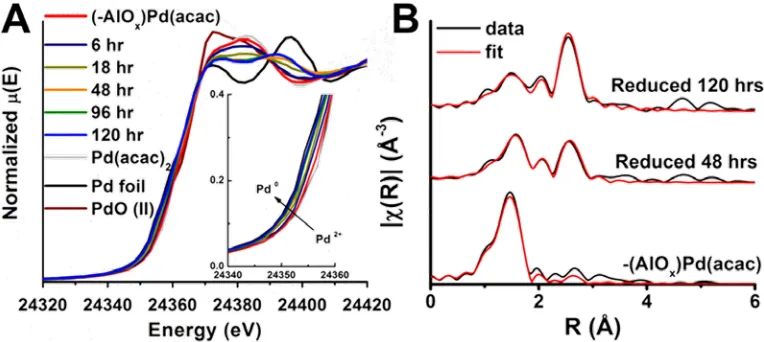
The presence of Pd0 is further confirmed by Pd K-edge XANES (Figure 3A), which reveals
that approximately 60% of the total palladium supported on the Al2O3 surface exists as Pd0 after
120 h of reaction with 1-octene at 25 °C. EXAFS data and fits for (-AlOx)Pd(acac) samples
reduced for 0, 48, and 120 h in
Figure 3. (A) XANES Pd K-edge spectra at various reduction times in 1-octene at 25°C. Increasing Pd0 character is noted in the inset figure. (B) EXAFS data and fits for parent (-AlOx)Pd(acac) and samples reduced for 48 and 120 h in 1-octene at 25°C.
1-octene at 25 °C are shown in Figure 3B. The EXAFS data are fit to the first coordination shell
[image:10.612.115.497.435.606.2]9
an average Pd-O coordination number (CN) ~ 4, consistent with the proposed surface geometry
(Chart 1; see more below) in which the Pd is directly bonded to three oxygen atoms and datively
bonded to a vicinal hydroxyl group. These EXAFS data are in agreement with the results
obtained from DNP SENS (vide supra, see Figure 1B). As the sample is reduced, the Pd-Pd
coordination number increases, approaching 6 in the sample reduced for 120 h (SI, Figures
S12-S13, Table S4).
O O
Pd
O O
(-AlOx)Pd(acac) H
Chart 1. Proposed structure of the (-AlOx)Pd(acac) surface complex, with the Pd center datively
interacting with a surface aluminol. The observed acac ligand asymmetry is explained by the H-bonding.
The mechanism of (-AlOx)Pd(acac) reduction was also investigated by DRIFTS under an
ethylene atmosphere, as well as by TPR-MS analysis of the (-AlOx)Pd(acac) + ethylene reaction
products. Additionally, the presence of Pd nanoparticles is confirmed by BF-STEM imaging
after the (-AlOx)Pd(acac) + ethylene reaction at 50 °C (SI, Figure S9). The absorbance-mode
DRIFTS spectrum of (-AlOx)Pd(acac) after reaction with ethylene at 50 °C is shown in Figure 4,
10
Figure 4. (A) Hydroxyl region (4000-3000 cm-1) of the DRIFTS spectrum of (-AlOx)Pd(acac)
after reaction with ethylene at 50 °C. (B) Carbonyl region (1800-1200 cm-1) of the DRIFTS spectrum of (-AlOx)Pd(acac) after reaction with ethylene at 50 °C.
broad negative feature at 3641 cm-1 indicates the consumption of water -OH groups during the
reaction, presumably from H-bonding interactions with free acetylacetone ligand (vide infra). In
the lower frequency region of the spectrum, sharp negative features appear at 1674, 1579, 1559,
1518, 1382, and 1275 cm-1, while a single, broad positive feature appears at 1620 cm-1. The
negative features are assigned to the disappearance of the coordinated (acac) ligand from the
surface complex,51, 67 while the feature at 1620 cm-1 is assigned to the carbonyl stretch of free
acetylacetone.51, 68 The DRIFTS data therefore confirm that the (acac) ligand is detached during
the (-AlOx)Pd(acac) reduction and generates surface-bound acetylacetone as a product. These
results strongly corroborate those obtained by DNP SENS (Figure 1B).
The organic products of the (-AlOx)Pd(acac) + ethylene reduction reaction were also
analyzed via TPR-MS (Figure 5). Acetylene, H2, and 1,3-butadiene are the only products
detectable in the reaction effluent. These products are consistent with coordination/insertion of
[image:12.612.225.398.501.643.2]the Pd center into the C-H bond of ethylene. The dimerization of ethylene is expected to yield
11
1.0 equiv. of 1,3-butadiene and 1.0 equiv. of H2, whereas β-hydride elimination and subsequent
reductive elimination directly from a Pd-alkenyl complex is expected to yield 1.0 equiv. of
acetylene and a Pd0 species.69-70 By calibrating the integrated area (see SI) of each gas-phase
product using internal MS response factors, it can be seen that the molar ratio of 1,3-butadiene to
H2 is ≈ 1, while the ratio of acetylene to H2 is >> 1, which supports the suggested reduction
pathway (vide infra). No acetone is observed during the reaction, arguing that the decomposition
of the acac ligand does not play a significant role in the reduction process. Interestingly, the
production of acetylene, H2, and butadiene ceases after ~1 h, indicating that only
(-AlOx)Pd(acac) is capable of activating ethylene and effecting the reduction process. After the
reaction, temperature-programmed desorption-mass spectrometry (TPD-MS) of the sample
detects acetone (m/z = 58) above 200 °C, but no other surface-bound products, again in good
agreement with DNP SENS (Figure 1B) as well as DRIFTS results (Figure 4).
Formation of Pd0 Nanoparticles. The reduction of (-AlOx)Pd(acac) in the presence of alkenes,
and the conversion of Pd2+ to Pd0
, yields Pd nanoparticles, observable by BF- and
12
Figure 6. (A) BF-STEM image of (-AlOx)Pd(acac) (no reduction). (B) HAADF-STEM image of
(-AlOx)Pd(acac) (no reduction). (C) Bright-field STEM image of (-AlOx)Pd(acac) after
reduction with 1-octene at 25 °C for 120 h. (D) HAADF-STEM image of (-AlOx)Pd(acac) after
reduction with 1-octene at 25 °C for 120 h.
as observed by BF- and HAADF-STEM imaging modes, respectively. After the reduction with
1-octene, nanoparticles are observable by both BF- and HAADF-STEM (Figures 6C and 6D).
The image sets in Figures 6A-6B and Figures 6C-6D were recorded at the same focal point and
indicate the same alumina surface in both imaging modes.
Catalytic Oxidation of 1-Phenylethanol. The preparation of a Pd/Al2O3 catalyst in the absence of
capping agents or surfactants is expected to yield Pd nanoparticles with “clean” (i.e., chemically
accessible) surfaces. Accordingly, the performance of Pd/Al2O3 catalysts prepared via reduction
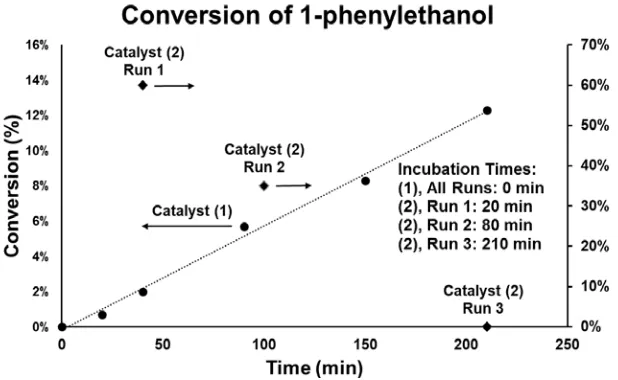
[image:14.612.152.461.491.681.2]of Pd/Al2O3 with 1-octene at 25 °C, for the catalytic oxidation of 1-phenylethanol was assessed
(Figure 7). Aerobic oxidation of benzylic alcohol species has recently emerged as an attractive
diagnostic reaction for novel Pd nanoparticle preparations due to the high activity and selectivity
of typical supported Pd catalysts for such reactions.71 In the present work, catalytic activity is
obtained from the conversion of 1.0 mmol of 1-phenylethanol with the 0.1 mol% Pd catalyst at
Figure 7. Catalytic oxidative conversion of 1-phenylethanol to acetophenone over Pd/Al2O3
13
1% Pd/Al2O3 catalyst (2). Reaction conditions: 1 mmol 1-phenylethanol, 5 mL trifluorotoluene,
80 °C, under ambient air.
80 °C under air in a batch reactor, using trifluorotoluene as the solvent. The conversion ratio is
obtained from NMR analysis using an adamantane internal standard. Mass balance in these
reactions is observed to be > 95%, with >95% selectivity for the major product, acetophenone.
These results are compared here to those obtained using a commercial catalyst (1% Pd supported γ-Al2O3, Sigma-Aldrich) (2; Figure 7). To accurately assess turnover frequencies (TOFs) per
atom of accessible Pd0, the particle size of the commercial catalyst was measured via
HAADF-STEM. A count of 53 nanoparticles gave a mean particle diameter of 2.9 ± 0.5 nm. Further
information on conditions, calculations, and quantification are presented in the SI (Scheme S1,
Figures S15-S17, Tables S5 and S6). Results for catalyst 1 are provided as the average of three
runs. Results for catalyst 2 are complicated by the observation that, in all cases, no reaction is
observed until after a catalyst “incubation” period under reaction conditions. This incubation
period varies from 20–210 minutes, and could not be eliminated by pre-treating catalyst 2 under
conventional conditions of 4 h calcination at 550 °C under flowing O2, followed by reduction
with 5% H2/N2 for 1 h. In contrast, no incubation period is observed for catalyst 1.
The variable incubation time observed for catalyst 2 makes the comparison of TOFs for
catalysts 1 and 2 problematic; therefore, three independent runs of catalyst 2 are presented in
Figure 7. Catalyst 1 mediates the oxidation of 1-phenylethanol with a TOF of 216 ± 20 h-1 at 80
°C under ambient air (conversion < 12.3%). The activity of catalyst 2 is estimated to be ~540 h-1
from runs in which the catalyst performed adequately. The TOFs reported here are adjusted for
the dispersion of the Pd0 active species. While commercial catalyst 2 exhibits approximately
twice the rate of catalyst 1, the high degree of variability in catalytic performance is undesirable,
14
Discussion
Surface Structure of (-AlOx)Pd(acac). The grafting reaction of Pd(acac)2 is reasonably assumed
to proceed via the elimination of an equivalent of acetylacetone rather than via a physisorption
mechanism, evident from the limited reaction between the solution phase precursor and the
support. Even in the presence of “excess” Pd(acac)2, the maximum Pd loading achieved under
the present chemisorption conditions is 0.2 wt%, yielding a Pd surface density of 0.2 Pd/nm2.
Extrapolating from the findings of van Veen et al51 and this laboratory,53 this suggests that only
certain, highly-reactive hydroxyls on the γ-Al2O3 surface are capable of reacting protonolytically
with Pd(acac)2 at 25 °C. The stoichiometry of the reaction could not be determined via a titration
method due to the strong adsorption of the free acetylacetone on γ-Al2O3 as determined via
TPD-MS and DRIFTS, however, XPS, EXAFS, DRIFTS, and DNP SENS studies are consistent
with the proposed (-AlOx)Pd(acac) surface complex structure (Chart 1 above).
13C DNP SENS NMR reveals an asymmetric surface complex, exhibiting two distinct 13C
signals for the methyl and carbonyl carbons of the acetylacetonato moiety. It is reasonable to
assume that this asymmetry arises from interactions between one oxygen atom on the ligand, and
either a surface hydroxyl or a surface Lewis acid site, as such interactions have been observed
previously.72 EXAFS reveals a Pd-O CN of ~ 4, suggesting the species shown in Chart 1 to be
the most likely geometry of the complex. The unique geometry of the surface complex appears to
be critical in its reactivity with alkenes. In control experiments, the parent precursor Pd(acac)2
could not be reduced with 1-octene at 25 °C, and isolated Pd2+ cations appear to be non-reducible
under the present conditions (vide infra). These findings are consistent with previous literature
15
Reduction Process and Pd Nanoparticle Formation. Upon exposure to alkenes, (-AlOx)Pd(acac)
undergoes reduction (Figures 1-3) and Pd nanoparticles form on the alumina surface (Figures
6A-D). Deconvolution of the XPS ionization and fitting of the XANES spectrum yields
quantitative information regarding the relative amounts of Pd2+ and Pd0 (Figure 8). Both the XPS
and XANES reveal that the reaction of (-AlOx)Pd(acac) with 1-octene is complete when ~60%
of the Pd supported on the Al2O3 surface is reduced to Pd0. This contrasts with NMR data
(Figure 1B) which imply complete conversion of the surface (-AlOx)Pd(acac) complex within
120 h, with no signals except surface-bound acetylacetone and decomposition products detected.
Note that the Pd(3d5/2) peaks in the XPS spectrum of the parent (-AlOx)Pd(acac) complex are
very broad (FWHM Pd(3d5/2) = 3.4 eV) relative to the peaks for Pd0 (FWHM Pd(3d5/2) = 2.3 eV)
and molecular Pd(acac)2 (FWHM Pd(3d5/2) = 2.3 eV). This phenomenon has been previously
observed and assigned to highly dispersed Pd2+ species in close contact with an insulating
support, (i.e., γ-Al2O3).75 Other reports indicate that isolated Pd2+ cations do not participate in
reduction reactions and nanoparticle formation, since they are stabilized by support
interactions.73-74, 76 On this basis, it is reasonable to
Figure 8. Relative fractions of Pd2+ and Pd0 as a function of (-AlO
x)Pd(acac) reduction time
16
assume that two surface species are present after the reductive treatment – Pd0 species present as
nanoparticles, and isolated Pd2+ cations on the alumina surface which do not undergo reduction.
Isolated Pd2+ cations do not contribute to the 13C SS NMR signal, but do broaden the peaks in the
Pd XPS spectrum.
After 120 hours of (-AlOx)Pd(acac) reduction with 1-octene, the EXAFS data indicate an
average Pd∙∙∙Pd CN of ~ 6 (Figure 3B, S12-S13, Table S4), too low to be consistent with the 4.3
nm particles observed via STEM (Figure 6). These results are, however, in good agreement with
reports from the literature77 and have previously been associated with the presence of very small
(d < 6-8 Å) supported Pd clusters not observable by TEM.78 An isolated Pd2+ cation has an
effective Pd∙∙∙Pd CN = 0, which skews the aggregate value towards a lower CN. Therefore, given
that the present XPS, XANES, and EXAFS data for the sample treated with 1-octene at 25 °C for
120 h reveal that ~60% of the total Pd supported on the Al2O3 surface is present as Pd0 and
~40% exists as isolated Pd2+ cations, either bound directly to the support or in very small clusters
undetectable by STEM and DNP SENS, an average CN of 6 is fully expected. The possibility of
a passivating Pd oxide layer on the nanoparticle surface cannot be entirely discounted; however,
EXAFS evidence indicates a decreasing Pd-O coordination number as reduction progresses
(from CN = 4.2 to CN = 1.7, Figure S13). As the expected Pd-O coordination number of PdO is
CN = 4,79 the EXAFS evidence suggests the majority of remaining Pd2+ species do not exist as
Pd oxide.
Mechanism of (-AlOx)Pd(acac) Reduction. To probe the reduction pathway of the well-defined
surface complex, (-AlOx)Pd(acac), the surface and gaseous reaction products were analyzed by
DRIFTS and TPR-MS under ethylene at 50 °C. In the DRIFTS study, the difference spectrum
17
features. The hydroxyl region of the DRIFTS spectrum (Figure 4A; absorbance mode) exhibits a
broad negative band centered around 3641 cm-1, indicating the consumption of surface hydroxyls
during the reduction process. The hydrocarbon region of the spectrum (ca. 3000–2800 cm-1)
reveals no additional surface hydrocarbon species (Supporting Information, Figure S3B),
suggesting negligible transfer of ethylene to the surface. It is unclear whether hydroxyl
consumption occurs via interaction with Pd nanoparticles or from protonolysis of the acac ligand
by surface hydroxyl groups,51 however, the lower-frequency region of the spectrum (Figure 4B)
reveals that free acetylacetone species form after the reduction and remain stable on the alumina
surface. The absence of new surface hydrocarbon species, particularly polyethylenes,80 prompted
further scrutiny of the gas-phase reaction products. The vapor-phase products detected by
TPR-MS during reduction (Figure 5) are H2, acetylene, and butadiene. The evolution of acetone was
not observed at 50 °C, suggesting that direct decomposition of the acac-ligand is not involved in
the reduction process. Acetylene and H2 have been observed during the dehydrogenation of
ethylene over metallic Pd.70, 81 This process is driven by the thermodynamics of coke coproduct
formation, which is negligible here as verified by DRIFTS. In the present system, therefore, the
formation of acetylene must be driven by the thermodynamically favorable sintering of reduced
Pd0 species into nanoparticles.82-83 This also accounts for the surprising mobility of Pd0 atoms on
the γ-Al2O3 surface at such low temperatures. Interestingly, the production of H2, acetylene, and
butadiene ceases once the reduction process is complete (Figure 5), arguing that only
(-AlOx)Pd(acac) is active in the reaction, and neither the remaining Pd2+ cations nor the 4.3 nm
nanoparticles are involved.
The sum of the data presented here suggests that reduction of (-AlOx)Pd(acac) by ethylene
18
1). Although ethylene does not undergo polymerization under the present conditions, the
presence of butadiene implicates a C-C bond-forming reaction in the overall reductive process.
Pd2+ catalysts are known to be active for olefin dimerization and polymerization.84-86 While the
mechanism of polymerization is known to proceed via insertion of olefin into a Pd-C or Pd-H
bond, the activation step is still under discussion.87 Previous studies implicate electrophilic
cleavage of olefinic C-H bonds rather than oxidative addition, a mechanistic scenario which
maintains Pd in the 2+ oxidation state rather than invoking formal Pd2+/Pd4+ redox cycles.88
Recently, the heteroleptic activation of an ethylene C-H bond by the isolated Cr(II) sites of a
catalyst supported on silica was reported,47, 89,90 leading to a metal-vinyl intermediate. The
pathway proposed in Scheme 1 presents a possible reaction sequence accounting for formation of
all observed products and reduction of Pd2+ to Pd0, which would occur via reductive elimination
from a Pd-alkenyl species as reported for other catalysts.91-93
O
Pd
O O +
O
Pd
O OH
-O Pd O O H OH Pd
A
O Pd O O H 1 HB
C
+ H H 2 O Pd O O H H O Pd O O O Pd O O H 1 H O Pd O O H 1 H O Pd O O H H - HacacScheme 1. Proposed (-AlOx)Pd(acac) reaction with ethylene effecting Pd2+→ Pd0 reduction. (A)
Ethylene coordination to (-AlOx)Pd(acac) and C-H activation to yield Pd-alkenyl intermediate 1.
(B) Ethylene insertion to form a bound butenyl fragment with subsequent H-elimination and H2
19
An analogous mechanism is reasonable for 1-octene reduction in the liquid phase. Alternatively,
Copéret et al. presented evidence for surface O-atom site involvement in H-atom transfer during
alkene dehydrogenation;94,95 this pathway may also be operative in the present system.
Mechanism of Pd Nanoparticle Formation. As the surface (-AlOx)Pd(acac) complex
decomposes to free Pd0, nanoparticles are observed on the γ-Al2O3 surface via BF- and
HAADF-STEM (Figures 6A-D, and SI, Figures S4-S8). The presence of nanoparticles is furthermore
confirmed by EDX (SI, Figure S4). Interestingly, although XPS and XANES data (Figures 2 and
3A) indicate that the reduction is not instantaneous, the BF- and HAADF-STEM reveals that the
particle size distribution of Pd nanoparticles remains invariant across the range from Pd0
fractions of 20-60%. Representative statistics on the Pd nanoparticle sizes at different reaction
times are presented in the Supporting Information (Figure S10-S11, Table S2-S3). Two
dominant models for nanoparticle nucleation and growth on support surfaces are Ostwald
ripening (OR) and particle migration/coalescence (PMC).96-97 The kinetics of particle growth can
be considered as a function of the metal-support interface energetics (interface-controlled
regime) and the diffusion across the support surface (diffusion-controlled regime).98 In each case,
the specific energetics are likely related to the chemical identity of the mobile Pd “monomer,” a
factor expected to change with the chemical reductant.
The profile of the particle size distribution is typically an indicator of the dominant
nucleation and growth mechanism. In the case of the diffusion-controlled OR models, the
particle size distributions are expected to be symmetric or skewed towards particles of smaller
size.98-100 In contrast, a mechanism dominated by PMC is expected to show significant skew
towards larger sizes.101-102 Note that smaller, higher energy particles (< 3 nm) are anticipated to
20
sinter at a slower rate.96 As the particle size increases, OR dominates the sintering mechanism.103
Note also that PMC is more relevant at elevated temperatures (> 500 °C). Based on these
guidelines and considering the narrow distribution of observed particles in the present materials,
it is most likely that the initial sintering of Pd particles to the 4.3 nm mean diameter is rapid and
may occur by a combination of PMC and OR mechanisms; however, once this mean diameter is
reached, PMC effects appear to be negligible, while further sintering via OR is minimized by the
low temperatures and overall low surface density of Pd centers. The narrow range of Pd
nanoparticle sizes formed here therefore suggests that the initial parent (-AlOx)Pd(acac) complex
is well-dispersed over the alumina surface, as surface complexes “clustered” in particular areas
would be expected to yield larger particles upon reduction, in accordance with an OR
mechanism. From this it is also reasonable to infer that the stability of the 4.3 nm particles is
likely due to rapid depletion of local concentrations of the mobile Pd0 “monomer” as
nanoparticles aggregate; the resulting spatial isolation likely reduces the tendency of the particles
to sinter via the OR mechanism.
Catalytic Relevance of Pd Nanoparticle Formation via Alkene Reduction. Preparation of
supported Pd nanoparticles from (-AlOx)Pd(acac) and 1-octene yields catalyst 1, which is
competent for the aerobic oxidation of 1-phenylethanol to acetophenone, as shown in Figure 7
(see also Figure S15-S17). In contrast to commercial catalyst 2, catalyst 1 exhibits immediate
activity under ambient conditions with no incubation period. This finding suggests that not only
is the Pd surface in catalyst 1 of sufficient accessibility for catalysis, but that the active Pd0
species in 1 is formed directly by the 1-octene reduction process. In contrast, the Pd0 species
present in commercial 2 appears to be a “pre-catalyst” to an unknown Pd0 active species, despite
21
literature reports of supported Pd catalyst evolution under reaction conditions,104 particularly in
aerobic oxidation processes.105-106 Previously, this phenomenon was ascribed to complex surface
interactions between the substrate, oxidant, and the oxidation-reduction cycle of Pd0/Pd2+ species
during reaction.107 While the exact distribution of Pd2+ cations relative to Pd0 nanoparticles is
unknown, literature reports107-108suggest that proximity of Pd0 and Pd2+ species on the surface of
catalyst 1 may contribute to its immediate activity in aerobic oxidation in contrast to the more
reduced commercial catalyst.
In optimum runs, commercial catalyst 2 exhibits approximately twice the activity of catalyst
1 for1-phenylethanol to acetophenone oxidation. The enhanced activity of 2 is not unexpected,
as the particle size is smaller than in 1 -- 2.9 nm versus 4.3 nm, respectively. It is well-known
that smaller Pd nanoparticles exhibit higher activity, particularly in alcohol oxidation.109-110
However, the variability in the performance of catalyst 2, along with its failure to convert any
substrate in at least one run, demonstrates the attraction of the well-defined system presented
here. The reduction of (-AlO)xPd(acac) with alkenes at mild temperatures yields a “true” Pd0
catalyst that exhibits immediate activity in aerobic oxidation.
Conclusions
An approach for preparing single-site, well-defined Pd surface complexes of the form
(-AlOx)Pd(acac) from a simple grafting reaction of Pd(acac)2 on γ-Al2O3 is presented. Exposure
of this Pd2+complex to alkenes results in facile reduction to a Pd0 species, which agglomerates to
form 4.3 ± 0.6 nm nanoparticles. The present results suggest that a combination of surface
organometallic chemistry and mild reduction conditions can be used to prepare controlled
dispersions of nanoparticles on high surface area supports. In comparison to a commercial
22
immediate activity in the aerobic oxidation of 1-phenylethanol to acetophenone with no
incubation period, confirming the clean nature of the catalytic surface. The level of mechanistic
detail regarding the reduction and nanoparticle formation processes is facilitated by the
single-site approach. Such a study affords better understanding of the complex mechanisms underlying
the preparation of supported metal catalysts on high surface area refractory oxides.
Material and Methods
Where indicated, air-sensitive manipulations were carried out using standard Schlenk line
glassware and techniques under an N2 atmosphere. Ar (UHP) and He (UHP) were purchased
from Airgas and further purified through an entrained drying column. Oxygen (UHP) and regen
gas (5% H2/N2) were purchased from Airgas and used directly without further purification.
Palladium(II) acetylacetonate (99%) was purchased from Strem Chemicals and used without
further purification. The reagent 1-octene (98%) was purchased from Sigma-Aldrich and further
purified by distillation from sodium under an atmosphere of N2; after distillation, the 1-octene
was stored under N2 in the dark at 2-8 °C. Ethylene (UHP, 99.995%) was purchased from Airgas
and used without further purification. Anhydrous toluene and pentanes were purchased from
Sigma-Aldrich and further purified on activated alumina columns. Hexanes and CDCl3 were
purchased from Sigma-Aldrich and used without further purification. The substrate
1-phenylethanol (98%) was purchased from Sigma-Aldrich and used without further purification.
Commercial, 1% Pd/γ-Al2O3 was purchased from Sigma-Aldrich. Phase-pure γ-Al2O3 (99.997%
purity metals basis, 60 m2/g surface area, < 3 µm particle size) was purchased from Alfa-Aesar
and calcined at 550 °C in flowing O2 for 18 h prior to use. No surface contaminants were
detected by XPS. DRIFTS spectra of adsorbed ethylene and reduced Pd/Al2O3 were measured in
23
gas flow cell and a sample heater. DNP-enhanced solid-state NMR spectra were obtained at the
Ames Laboratory using a Bruker DNP-MAS NMR spectrometer equipped with a 264 GHz
gyrotron and a 3.2-mm low-temperature MAS probe. Other NMR spectra were obtained with a
400 MHz Agilent DD2-MR400 instrument. X-ray photoelectron spectra were measured in the
Keck core facility at Northwestern with a Thermo Scientific ESCALAB 250 Xi
spectrophotometer equipped with an electron flood gun and an Al K-α source.
Temperature-programmed reaction mass-spectrometry (TPR-MS) experiments were performed with an
AMI-200 TPR apparatus and measured with a Stanford Research Systems UGA100 Universal Gas
Analyzer. TEM and EDX measurements were taken on a Hitachi HD-2300 Dual EDS Cryo
STEM. XAS measurements were completed at beamline 5BM-D at the Advanced Photon Source
(APS) at Argonne National Laboratory. The Pd atom oxidation state(s) and local atomic
coordination structure were analyzed by XANES and EXAFS, respectively. These ex-situ (open
air) XANES and EXAFS measurements of the Pd/Al2O3 samples were carried out around the Pd
K-edge (24.4 keV). The powder Pd/Al2O3 samples were pre-pressed (12 mm in diameter and
~0.5 mm in thickness) and measured in fluorescence mode. Quantitative measurements of Pd
loadings were obtained by ICP-AES from Galbraith Laboratories, Inc.
Synthesis of (-AlOx)Pd(acac). Prior to reaction, all glassware was dried at 150 °C overnight and
cooled under dynamic vacuum. Calcined γ-Al2O3 (5.0 g) was treated similarly and held under an
atmosphere of N2 after cooling. In a separate flask, 0.36 g Pd(acac)2 (1.1 mmol, 2.5wt% Pd) was
dissolved in ca. 25 mL of anhydrous toluene. The golden solution was cannulated onto the γ
-Al2O3 under N2 and the resulting suspension stirred for 18 h at 25 °C. The suspension was
allowed to settle and the golden mother liquor cannula filtered from the solid. The solid was then
24
manner previously described. When the wash was no longer colored, the solid was suspended in
hexanes and vacuum filtered in open air. The resulting beige solid was further washed with
hexanes to remove excess toluene and dried under dynamic vacuum at 25 °C overnight. After
preparation, the solid could be stored under ambient conditions indefinitely with no observable
degradation of the (-AlOx)Pd(acac) surface complex. ICP analysis of several preparations
indicated the Pd loading to be 0.20 ± 0.01% Pd.
Reduction of (-AlOx)Pd(acac). Liquid-phase Reduction with 1-Octene. In a typical reduction
experiment, an oven-dried, vacuum-cooled flask was charged with 0.60 g of (-AlOx)Pd(acac)
(0.20 wt% Pd) under a stream of N2. The flask was evacuated and recharged with N2 thrice.
Subsequently, 10 mL of 1-octene was added to the solid via syringe, and the resulting suspension
was stirred for a set length of time. To terminate the reaction, the solid was immediately
vacuum-filtered in open air, followed by extensive washing with hexanes. Reduced samples changed
color from beige to gray. After reduction, the sample was dried under dynamic vacuum at 25 °C
overnight prior to further experiments.
Liquid or Solventless Reduction with Ethylene. An oven-dried, vacuum-cooled pressure vessel
was charged with 0.6 g of (-AlOx)Pd(acac) (0.2wt% Pd). The solid was either suspended in ca.
10 mL of pentanes or left dry in the vessel. The vessel was evacuated to 10-5 Torr (the pentanes
suspension was first cooled to -196 °C in a liquid nitrogen flask to prevent evacuation of the
pentanes) and pressurized with 1 atmosphere of ethylene (99.995%). The reaction was then
stirred overnight before the vessel was evacuated and the solid material recovered (by filtration
in the case of the pentanes suspension). Reduced material was dried under dynamic vacuum at 25
25
Catalytic Reactions. Catalytic experiments were performed using either a Pd/Al2O3 catalyst (0.2
wt% Pd) prepared by reduction of (-AlOx)Pd(acac) for 120 h with 1-octene at 25 °C, or with a
commercially-obtained 1% Pd/γ-Al2O3 catalyst (Sigma-Aldrich). The mean Pd particle diameter
of the commercial catalyst was determined from HAADF-STEM to be 2.9 nm (SD = 0.5 nm),
while the mean Pd particle diameter for our catalyst was determined to be 4.3 nm (SD = 0.6 nm)
by BF-STEM.
In a typical experiment, 1-phenylethanol (Sigma, 98%, 1 mmol, 0.12 mL) and the catalyst (0.05
g) were loaded under air into a 25 mL flask with Morton indentations, following by the addition
of PhCF3 (5.0 mL) as the solvent. This flask was then interfaced to a reflux condenser, and the
mixture was rapidly stirred and placed in a temperature-controlled oil bath at 80 °C. NMR
aliquots of the reaction solution were withdrawn at periodic intervals during the reaction and
analyzed using adamantane (0.25 mmol, 0.034 g) as the internal standard. Conversion and
selectivity (based on the loss of reactant) at differential conversions were difficult to obtain
without significant error due to significant incubation times (40–120 minutes) displayed by the
commercial catalyst. Mass balance was typically observed to be > 95% and acetophenone was
the only detectable product. Turnover frequencies were calculated on a (mol product)/(mol
surface Pd0) basis, adjusted for the particle sizes determined by HAADF-STEM (see SI for more
details).
In efforts to eliminate the incubation period observed for the commercial Pd/Al2O3 catalyst,
the material was calcined (4 hr, flowing O2, 550 °C) and reduced (1 hr, 300 °C, 5% H2/N2).
These pretreatments had no impact on the incubation time. Results for the homemade variant are
reported as the average of 3 runs. Results for the commercial catalyst are reported as the best-run
26
XPS Measurements. A sample of powder was packed tightly onto double-sided copper tape
attached to a stainless steel sample tray. The sample tray was outgassed in the sample entry
chamber until a vacuum of at least 2 x 10⁻⁵ Torr was obtained, typically requiring 30 min. The
sample tray was then admitted to the UHV chamber and the electron flood gun turned on to
compensate for charge. The sample was further allowed to outgas in the UHV chamber until
stable vacuum was obtained, typically on the order of 8 x 10⁻⁸ Torr. Spectra were measured in
the CAE mode with fifty 50 scans apiece at a pass energy of 20 eV. The resulting spectra were
background-subtracted and peak-fitted according to standard software techniques. Before
deposition, no species other than C, Al, and O were detected on the catalyst surface. After
deposition, no species other than C, Al, O, and Pd were detected on the catalyst surface. To
compensate for charging effects the binding energies of all observed peaks were corrected by
setting the adventitious carbon peak to 285.0 eV.
DRIFTS Measurements. In a typical environmental DRIFTS measurement, the powder was
tightly packed into a sample cup affixed atop a sample heater. The heater was regulated with a
flow of room-temperature water pumped through a peristaltic pump. The sample cup was heated
to 50 °C and allowed to equilibrate for several hours under argon until no further shift in the
background spectrum was observed. The background spectrum was obtained and the gas flow
was switched to ethylene. The progress of reduction was tracked over the course of 8 h by
acquiring spectra at progressive time points until no further change was observed in the
difference spectrum. After completion of the reduction reaction, the chamber was purged with Ar
and the final difference spectrum acquired under an inert atmosphere.
13C DNP SENS. All DNP NMR experiments were performed using a commercial 400 MHz
27
were impregnated with a 10 mM water solution of the biradical AMUPol and immediately
packed into 3.2-mm sapphire rotors. The samples were sealed using a Teflon plug and spun at 25
°C using a Vespel cap to symmetrically distribute the studied materials in the MAS rotor prior to
performing the low-temperature experiments. The Vespel cap was exchanged for a zirconia cap
for the low-temperature experiments. All 13C CPMAS experiments were performed using a 2.35 μs 1H excitation pulse, a 3 ms CP contact time, and SPINAL-64 1H decoupling. The recycle
delay was set to 7 s and a total of 2048 scans were accumulated under continuous wave
microwave irradiation at around 105 K.
TPR-MS and TPD-MS. A sample of (-AlOx)Pd(acac) (typically 0.50 g) was placed atop a packed
quartz wool bed in a quartz U-tube and affixed in the AMI-200 TPR apparatus. The effluent
from the gas stream was connected to a Universal Gas Analyzer for real-time mass spectrometric
analysis of the reaction products. The gas stream was switched from He to ethylene (99.995%)
and pure ethylene flowed through the powder. Reaction products were first measured via an
analog scan from 1-100 amu to determine which masses evolved with time; reaction products
were then confirmed via a pressure versus time (PVT) measurement over the course of ca. 1 h.
After completion of the experiment, the powder bed was heated at a ramp rate of 5 °C/min in a
flow of 10 sccm He to determine if any reaction products were adsorbed on the powder; only
acetone, the decomposition product of alumina-bound acetylacetone, was observed, confirming
other observations that the products of the reaction are the expected gaseous products. TPD-MS
after the reaction was performed by ramping the temperature at from 50–550 °C in a flow of 10
sccm He. Products from 1–100 m/z were detected via analog scans at a rate of 1 scan/6 sec.
STEM and EDX Measurements. TEM images of the Pd nanoparticles on γ-Al2O3 were acquired
28
200 kV. The Hitachi HD-2300A STEM is equipped with an ultra-sensitive dual energy
dispersive X-ray (EDX) spectrometer system that was used to obtain elemental analysis of the
samples. Samples for TEM and EDX were prepared by dropping a methanol dispersion of each
material onto a lacey carbon-coated copper grid and allowing the solvent to evaporate.
EXAFS and XANES Measurements. The fractions of Pd2+ and Pd0 were obtained from linear
combination fitting analysis. XANES spectra of Pd(acac)2 (Pd2+) and Pd foil (Pd0) were used as
the standards in the fitting analysis. The fitting range was -20–30 eV with respect to the Pd
K-edge. The coordination numbers (N) of Pd–Pd and Pd–O bonds, Pd–Pd and Pd–O bond distances
(r), and Debye–Waller factors (σ), were obtained by a least-squares fitting in R-space between 1–
3.5 Å of the k2-weighted Fourier transformed EXAFS data (k = 2.5–11 Å−1). Photoelectron
scattering paths used in the fitting were based on the first nearest neighbors of Pd in fcc Pd (Pd–
Pd) and tetragonal PdO (Pd–O). Data processing was completed with the ATHENA and
ARTEMIS software packages.111
Supporting Information.
Supporting Information is available free of charge on the ACS Publications website at DOI
Deconvoluted XPS spectra and XPS parameters, additional DNP SENS data, additional TEM
images and particle counts, additional DRIFTS data, additional XAS Spectra, catalytic
parameters.
Corresponding Authors
[email protected] (P. C. S.), [email protected] (T. M.), [email protected] (M.
D)
Author Contributions
29
Funding Sources
This material is based upon work supported by the U.S. Department of Energy, Office of Science, Office of Basic Energy Sciences grant number DE-FG02-03ER154757. Support for C. Whitford is through an NSF grant, DMR-1334928. Support for F.P. is through a Spedding Fellowship, which is funded by the Ames Laboratory’s LDRD program. Ames Laboratory is operated for the U.S. Department of Energy by Iowa State University grant number DE-AC02- 07CH11358. F.P. thanks the National Sciences and Engineering Research Council of Canada (NSERC) and the government of Canada for a Banting Fellowship. This work made use of the (EPIC and Keck-II) facilities of the NUANCE Center at Northwestern University, which has received support from the Soft and Hybrid Nanotechnology Experimental (SHyNE) Resource (NSF NNCI-1542205); the MRSEC program (NSF DMR-1121262) at the Materials Research Center; the International Institute for Nanotechnology (IIN); the Keck Foundation; and the State of Illinois, through the IIN. X-ray measurements were performed at Advanced Photon Source Sector 5 (DND-CAT) located at Argonne National Laboratory, which is supported by the U.S. Department of Energy, Office of Science, and Office of Basic Energy Sciences, under Contract DE-AC02-06CH11357. DND-CAT is supported by through E. I. duPont de Nemours & Co., Northwestern University, Dow Chemical Co., the State of Illinois through the Department of Commerce and the Board of Education (HECA), and the US National Science Foundation.The CleanCat Core facility acknowledges funding from the U.S. Department of Energy (DE-FG02-03ER15457) used for the purchase of the Nicolet 6700 FT-IR, Harrick DRIFTS accessory, and Altamira AMI- 200.
Acknowledgments
The authors acknowledge J. Tan for helpful discussions and commentary.
References
1. White, R. J.; Luque, R.; Budarin, V. L.; Clark, J. H.; Macquarrie, D. J., Supported metal nanoparticles on porous materials. Methods and applications. Chem. Soc. Rev. 2009, 38 (2), 481-494.
2. Astruc, D.; Lu, F.; Aranzaes, J. R., Nanoparticles as Recyclable Catalysts: The Frontier between Homogeneous and Heterogeneous Catalysis. Angew. Chem. Int. Ed. 2005, 44 (48), 7852-7872.
30
4. Gunter, P. L. J.; Niemantsverdriet, J. W.; Ribeiro, F. H.; Somorjai, G. A., Surface Science Approach to Modeling Supported Catalysts. Catal. Rev. 1997, 39 (1-2), 77-168.
5. Goodman, D. W., Model Studies in Catalysis Using Surface Science Probes. Chem. Rev.
1995, 95 (3), 523-536.
6. Quek, X.-Y.; Pestman, R.; van Santen, R. A.; Hensen, E. J. M., Structure sensitivity in the ruthenium nanoparticle catalyzed aqueous-phase Fischer-Tropsch reaction. Catal. Sci. Technol. 2014, 4 (10), 3510-3523.
7. Michalak, W. D.; Krier, J. M.; Komvopoulos, K.; Somorjai, G. A., Structure Sensitivity in Pt Nanoparticle Catalysts for Hydrogenation of 1,3-Butadiene: In Situ Study of Reaction Intermediates Using SFG Vibrational Spectroscopy. J. Phys. Chem. C 2013, 117 (4), 1809-1817. 8. Somorjai, G. A.; Carrazza, J., Structure sensitivity of catalytic reactions. Ind. Eng. Chem. Fundam. 1986, 25 (1), 63-69.
9. Campbell, C. T., The Energetics of Supported Metal Nanoparticles: Relationships to Sintering Rates and Catalytic Activity. Acc. Chem. Res. 2013, 46 (8), 1712-1719.
10. Häkkinen, H.; Abbet, S.; Sanchez, A.; Heiz, U.; Landman, U., Structural, Electronic, and Impurity-Doping Effects in Nanoscale Chemistry: Supported Gold Nanoclusters. Angew. Chem. Int. Ed. 2003, 42 (11), 1297-1300.
11. Valden, M.; Lai, X.; Goodman, D. W., Onset of Catalytic Activity of Gold Clusters on Titania with the Appearance of Nonmetallic Properties. Science 1998, 281 (5383), 1647-1650. 12. Rodriguez, J. A.; Liu, P.; Wang, X.; Wen, W.; Hanson, J.; Hrbek, J.; Pérez, M.; Evans, J., Water-gas shift activity of Cu surfaces and Cu nanoparticles supported on metal oxides. Catal. Today 2009, 143 (1–2), 45-50.
13. Farmer, J. A.; Campbell, C. T., Ceria Maintains Smaller Metal Catalyst Particles by Strong Metal-Support Bonding. Science 2010, 329 (5994), 933-936.
14. Campbell, C. T.; Sellers, J. R. V., Anchored metal nanoparticles: Effects of support and size on their energy, sintering resistance and reactivity. Faraday Discuss. 2013, 162 (0), 9-30. 15. Hayden, B. E.; Pletcher, D.; Suchsland, J.-P.; Williams, L. J., The influence of support and particle size on the platinum catalysed oxygen reduction reaction. Phys. Chem. Chem. Phys.
2009, 11 (40), 9141-9148.
16. Heiz, U.; Bullock, E. L., Fundamental aspects of catalysis on supported metal clusters. J. Mater. Chem. 2004, 14 (4), 564-577.
17. Prieto, G.; Zečević, J.; Friedrich, H.; de Jong, K. P.; de Jongh, P. E., Towards stable catalysts by controlling collective properties of supported metal nanoparticles. Nat. Mater. 2013,
12 (1), 34-39.
18. Karim, A. M.; Al Hasan, N.; Ivanov, S.; Siefert, S.; Kelly, R. T.; Hallfors, N. G.; Benavidez, A.; Kovarik, L.; Jenkins, A.; Winans, R. E.; Datye, A. K., Synthesis of 1 nm Pd Nanoparticles in a Microfluidic Reactor: Insights from in Situ X-ray Absorption Fine Structure Spectroscopy and Small-Angle X-ray Scattering. J. Phys. Chem. C 2015, 119 (23), 13257-13267. 19. Huang, C.-C.; Lai, W.-C.; Tsai, C.-Y.; Yang, C.-H.; Yeh, C.-S., Reversible Synthesis of Sub-10 nm Spherical and Icosahedral Gold Nanoparticles from a Covalent Au(CN)2− Precursor
and Recycling of Cyanide to form Ferric Ferrocyanide for Cell Staining. Chem.-Eur. J. 2012, 18
(13), 4107-4114.
20. Liz-Marzán, L. M.; Giersig, M.; Mulvaney, P., Synthesis of Nanosized Gold−Silica Core−Shell Particles. Langmuir 1996,12 (18), 4329-4335.
31
22. Xin, H. L.; Mundy, J. A.; Liu, Z.; Cabezas, R.; Hovden, R.; Kourkoutis, L. F.; Zhang, J.; Subramanian, N. P.; Makharia, R.; Wagner, F. T.; Muller, D. A., Atomic-Resolution Spectroscopic Imaging of Ensembles of Nanocatalyst Particles Across the Life of a Fuel Cell.
Nano Lett. 2012, 12 (1), 490-497.
23. Newton, M. A.; Belver-Coldeira, C.; Martinez-Arias, A.; Fernandez-Garcia, M., Dynamic in situ observation of rapid size and shape change of supported Pd nanoparticles during CO/NO cycling. Nat. Mater. 2007, 6 (7), 528-532.
24. Campbell, C. T.; Parker, S. C.; Starr, D. E., The Effect of Size-Dependent Nanoparticle Energetics on Catalyst Sintering. Science 2002, 298 (5594), 811-814.
25. Park, J.; Aliaga, C.; Renzas, J. R.; Lee, H.; Somorjai, G., The Role of Organic Capping Layers of Platinum Nanoparticles in Catalytic Activity of CO Oxidation. Catal. Lett. 2009, 129
(1-2), 1-6.
26. Lu, J.; Fu, B.; Kung, M. C.; Xiao, G.; Elam, J. W.; Kung, H. H.; Stair, P. C., Coking- and Sintering-Resistant Palladium Catalysts Achieved Through Atomic Layer Deposition. Science
2012, 335 (6073), 1205-1208.
27. O'Neill, B. J.; Sener, C.; Jackson, D. H. K.; Kuech, T. F.; Dumesic, J. A., Control of Thickness and Chemical Properties of Atomic Layer Deposition Overcoats for Stabilizing Cu/γ -Al2O3 Catalysts. ChemSusChem 2014, 7 (12), 3247-3251.
28. You, H.; Yang, S.; Ding, B.; Yang, H., Synthesis of colloidal metal and metal alloy nanoparticles for electrochemical energy applications. Chem. Soc. Rev. 2013, 42 (7), 2880-2904. 29. Cookson, J., The Preparation of Palladium Nanoparticles. Platinum Met. Rev. 2012, 56
(2), 83-98.
30. Mazumder, V.; Sun, S., Oleylamine-Mediated Synthesis of Pd Nanoparticles for Catalytic Formic Acid Oxidation. J. Am. Chem. Soc. 2009, 131 (13), 4588-4589.
31. Wang, Y.; Yang, H., Oleic acid as the capping agent in the synthesis of noble metal nanoparticles in imidazolium-based ionic liquids. Chem. Commun. 2006, 2545-2547.
32. Lidor-Shalev, O.; Zitoun, D., Reaction mechanism of "amine-borane route" towards Sn, Ni, Pd, Pt nanoparticles. RSC Adv. 2014, 4 (109), 63603-63610.
33. Wu, Z. G.; Munoz, M.; Montero, O., The synthesis of nickel nanoparticles by hydrazine reduction. Adv. Powder Technol. 2010, 21 (2), 165-168.
34. Bondi, J. F.; Oyler, K. D.; Ke, X.; Schiffer, P.; Schaak, R. E., Chemical Synthesis of Air-Stable Manganese Nanoparticles. J. Am. Chem. Soc. 2009, 131 (26), 9144-9145.
35. Chen, Y.; Liew, K. Y.; Li, J., Size-controlled synthesis of Ru nanoparticles by ethylene glycol reduction. Mater. Lett. 2008, 62 (6–7), 1018-1021.
36. Li, D.; Wang, C.; Tripkovic, D.; Sun, S.; Markovic, N. M.; Stamenkovic, V. R., Surfactant Removal for Colloidal Nanoparticles from Solution Synthesis: The Effect on Catalytic Performance. ACS Catal. 2012, 2 (7), 1358-1362.
37. Kim, C.; Lee, H., Change in the catalytic reactivity of Pt nanocubes in the presence of different surface-capping agents. Catal. Commun. 2009, 10 (9), 1305-1309.
38. Lu, J.; Stair, P. C., Nano/Subnanometer Pd Nanoparticles on Oxide Supports Synthesized by AB-type and Low-Temperature ABC-type Atomic Layer Deposition: Growth and Morphology. Langmuir 2010, 26 (21), 16486-16495.
39. Goldstein, D. N.; George, S. M., Surface poisoning in the nucleation and growth of palladium atomic layer deposition with Pd(hfac)2 and formalin. Thin Solid Films 2011, 519 (16),
32
40. Gharachorlou, A.; Detwiler, M. D.; Nartova, A. V.; Lei, Y.; Lu, J.; Elam, J. W.; Delgass, W. N.; Ribeiro, F. H.; Zemlyanov, D. Y., Palladium Nanoparticle Formation on TiO2(110) by
Thermal Decomposition of Palladium(II) Hexafluoroacetylacetonate. ACS Appl. Mater. Interfaces 2014, 6 (16), 14702-14711.
41. Costa, N. J. S.; Rossi, L. M., Synthesis of supported metal nanoparticle catalysts using ligand assisted methods. Nanoscale 2012, 4 (19), 5826-5834.
42. Fujdala, K. L.; Drake, I. J.; Bell, A. T.; Tilley, T. D., Atomic Level Control over Surface Species via a Molecular Precursor Approach: Isolated Cu(I) Sites and Cu Nanoparticles Supported on Mesoporous Silica. J. Am. Chem. Soc. 2004, 126 (35), 10864-10866.
43. Sohn, H.; Camacho-Bunquin, J.; Langeslay, R. R.; Ignacio-de Leon, P. A.; Niklas, J.; Poluektov, O. G.; Liu, C.; Connell, J. G.; Yang, D.; Kropf, J.; Kim, H.; Stair, P. C.; Ferrandon, M.; Delferro, M., Isolated, Well-Defined Organovanadium(III) on Silica: Single-Site Catalyst for Hydrogenation of Alkenes and Alkynes. Chem. Commun. 2017, 53 (53), 7325-7328.
44. Klet, R. C.; Tussupbayev, S.; Borycz, J.; Gallagher, J. R.; Stalzer, M. M.; Miller, J. T.; Gagliardi, L.; Hupp, J. T.; Marks, T. J.; Cramer, C. J.; Delferro, M.; Farha, O. K., Single-Site Organozirconium Catalyst Embedded in a Metal–Organic Framework. J. Am. Chem. Soc. 2015,
137, 15680-15683.
45. Gu, W.; Stalzer, M. M.; Nicholas, C. P.; Bhattacharyya, A.; Motta, A.; Gallagher, J. R.; Zhang, G.; Miller, J. T.; Kobayashi, T.; Pruski, M.; Delferro, M.; Marks, T. J., Benzene Selectivity in Competitive Arene Hydrogenation: Effects of Single-Site Catalyst···Acidic Oxide Surface Binding Geometry. J. Am. Chem. Soc. 2015, 137 (21), 6770-6780.
46. Williams, L. A.; Guo, N.; Motta, A.; Delferro, M.; Fragala, I. L.; Miller, J. T.; Marks, T. J., Surface Structural-Chemical Characterization of a Single-Site D(0) Heterogeneous Arene Hydrogenation Catalyst Having 100% Active Sites. P. Natl. Acad. Sci. USA 2013, 110 (2), 413-418.
47. Coperet, C.; Comas-Vives, A.; Conley, M. P.; Estes, D. P.; Fedorov, A.; Mougel, V.; Nagae, H.; Nunez-Zarur, F.; Zhizhko, P. A., Surface Organometallic and Coordination Chemistry toward Single-Site Heterogeneous Catalysts: Strategies, Methods, Structures, and Activities. Chem. Rev. 2016, 116 (2), 323-421.
48. Fedorov, A.; Liu, H.-J.; Lo, H.-K.; Copéret, C., Silica-Supported Cu Nanoparticle Catalysts for Alkyne Semihydrogenation: Effect of Ligands on Rates and Selectivity. J. Am. Chem. Soc. 2016, 138 (50), 16502-16507.
49. Chen, F.; Kreyenschulte, C.; Radnik, J.; Lund, H.; Surkus, A.-E.; Junge, K.; Beller, M., Selective Semihydrogenation of Alkynes with N-Graphitic-Modified Cobalt Nanoparticles Supported on Silica. ACS Catal. 2017, 7 (3), 1526-1532.
50. Van Hengstum, A. J.; Van Ommen, J. G.; Bosch, H.; Gellings, P. J., Preparation of supported vanadium and molybdenum oxide catalysts using metal acetylacetonate complexes.
Appl. Catal. 1983, 5 (2), 207-217.
51. van Veen, J. A. R.; Jonkers, G.; Hesselink, W. H., Interaction of transition-metal acetylacetonates with [gamma]-Al2O3 surfaces. J. Chem. Soc., Faraday Trans. 1 1989, 85 (2),
389-413.
52. Toebes, M. L.; van Dillen, J. A.; de Jong, K. P., Synthesis of supported palladium catalysts. J. Mol. Catal. A: Chem. 2001, 173 (1–2), 75-98.
53. Mouat, A. R.; George, C.; Kobayashi, T.; Pruski, M.; van Duyne, R. P.; Marks, T. J.; Stair, P. C., Highly Dispersed SiOx/Al2O3 Catalysts Illuminate the Reactivity of Isolated Silanol