©2014, Kent Holtorf, MD Journal Compilation ©2014, AARM DOI 10.14200/jrm.2014.3.0104
ABSTRACT
New research is demonstrating that thyroid hormone transport across cellular
membranes plays an important role in intracellular triiodothyronine (T3) levels
of peripheral and pituitary tissues and is proving to have considerable clinical
significance. Reduced T4 and T3 transport into the cells in peripheral tissues
is seen with a wide range of common conditions, including insulin resistance,
diabetes, depression, bipolar disorder, hyperlipidemia, chronic fatigue syndrome,
fibromyalgia, neurodegenerative diseases, migraines, stress, anxiety, chronic dieting
and aging, while the intracellular T3 level in the pituitary often remains unaffected.
The pituitary has different transporters than every other tissue in the body. The
thyroid transporters in the body are very energy dependent and are affected by
numerous conditions, including low energy states, toxins and mitochondrial
dysfunction, while the pituitary remains unaffected. Because the pituitary remains
largely unaffected and is able to maintain intracellular T3 levels while the rest of the
body suffers from significantly reduced intracellular T3 levels, there is no elevation
in thyroid-stimulating hormone (TSH) despite the presence of wide-spread tissue
hypothyroidism, making the TSH and other standard blood tests a poor marker to
determine the presence or absence of hypothyroidism. Because the T4 transporter is
more energy dependent than the transporter for T3, it is also not surprising that T4
preparations are generally ineffective in the presence of such conditions, while T3
replacement is shown to be beneficial. Thus, if a patient with a normal TSH presents
with signs or symptoms consistent with hypothyroidism, which may include low
basal body temperature, fatigue, weight gain, depression, cold extremities, muscle
aches, headaches, decreased libido, weakness, cold intolerance, water retention,
slow reflex relaxation phase or PMS, a combination of both clinical and laboratory
assessment, which may include a T3/reverse T3 ratio and the level of sex hormone
binding globulin (SHBG), should be used to determine the likely overall thyroid
status and if a therapeutic trail of straight T3 or a T4/T3 combination is indicated and
not based solely on standard thyroid function tests.
Keywords: Thyroid hormone transport; Membrane transport; T3; T4; TSH; Reverse
INTRODUCTION
New research is demonstrating that thyroid
hor-mone transport across cellular membranes plays
an important role in tissue thyroid levels and is
proving to have significant clinical significance.
Thus, physicians who evaluate or treat thyroid
dysfunction would benefit from an appreciation of
this topic. Unfortunately, many physicians are not
aware of new developments in the current
under-standing of thyroid hormone transport, which has
resulted in an overreliance on the sole use of
stan-dard thyroid blood tests (e.g., thyroid-stimulating
hormone (TSH) and T4 levels) to determine the
presence or absence of hypothyroidism. This has
resulted in the misdiagnosis of many hypothyroid
patients as being euthyroid. This overreliance on
standard thyroid blood tests and the overconfidence
of the diagnostic accuracy of standard thyroid
blood tests may be particularly troublesome in the
presence of a wide range of common comorbid
conditions present in a large percentage of the
population.
Serum thyroid levels are, of course, commonly used
as an indication of tissue thyroid activity. However,
in order to have biological activity, T4 and T3 must
cross the cellular membrane from the serum into
the target cells. It follows that the activity of these
transport processes may have a significant
influ-ence on the regulation of biological activity of these
hormones. For about two and half decades it has
been assumed that the rate and extent of uptake of
thyroid hormone into the cells occurs by simple
diffusion, which is driven by the concentration
gra-dient of the free hormones in the serum. This “free
hormone” or “diffusion hypothesis” was formulated
in 1960 and assumes that the serum concentration
of free thyroid hormones (free T4 and free T3) will
ultimately determine intracellular thyroid hormone
concentrations.
However, more recent data has challenged this
hypothesized “diffusion” mechanism,
show-ing that the transport of T4 and T3 across the
cellular membrane into the cell requires active
transport rather than passive diffusion.
1–66Despite
accumulating evidence to the contrary, this
mis-conceived “diffusion hypothesis” continues to be
perpetuated among both primary physicians and
endocrinologist.
CONDITIONS ASSOCIATED
WITH ABNORMAL THYROID
TRANSPORT
Since the transport of thyroid hormones into the
cell is largely energy dependent, any condition
associated with reduced production of the cellular
energy (i.e., mitochondrial dysfunction) could also
be associated with reduced transport of thyroid
hormone into the cell. This can result in cellular
hypothyroidism despite having standard blood tests
in the “normal” range. Conditions linked with
reduced mitochondrial function and impaired
thyroid transport include: insulin resistance,
diabe-tes and obesity;
67–70, 71–75; chronic and acute
dieting;
4, 50, 65, 76–83depression;
71, 84–86anxiety;
71, 87bipolar depression;
71, 84, 88, 89neurodegenerative
diseases;
71, 90–94aging;
71, 72, 95–107chronic fatigue
syndrome;
71, 108, 109fibromyalgia;
71, 110, 111migraines;
71chronic infections;
71physiologic stress and
anxiety;
71, 86cardiovascular disease;
71, 106, 111–113inflam-mation and chronic illness;
71, 114–116and those with
high cholesterol and triglyceride levels.
57, 59, 75, 76, 117Thus, standard blood tests can be very unreliable
if any of these commonly occurring conditions are
present.
1, 5, 17, 22, 40, 41, 43, 48, 49, 51, 52, 54, 58–60It has also been shown that there are a number
of substances that are produced by the body in
response to dieting and physiologic stress that can
negatively affect thyroid hormone transport.
5, 41For instance, studies have shown that cell cultures
incubated with serum from physiologically stressed
or dieting individuals exhibit a dramatic reduction
in the uptake of T4 into cells. This reduction
cor-related with the degree of stress.
41, 42It has also been demonstrated that there are a
variety of distinct and specific transporters that are
necessary for the transport of T4 and T3 into
the cell. Furthermore, the transporter for T4 is
much more energy dependent (it requires
more energy) than the transporter for T3 (see
Figure 1).
5, 40, 41, 48, 51, 52, 65Even slight reductions
to be much less affected.
5, 41, 61, 66Therefore, the
conditions listed above are particularly linked to
an impaired transport of T4, resulting in cellular
hypothyroidism. When there is reduced
trans-port of T4 or T3 into the cells, the serum T4 and
T3 levels increase (less is transported out of the
serum). Thus, even though the production of
T4 and T3 is diminished in chronic illness, the
reduced transport into the cell will tend to raise
serum levels, making the serum T4 and T3 remain
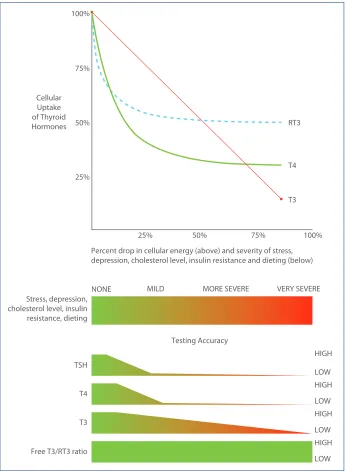
normal or high-normal (see Figure 2). This is one
of the primary reasons that cellular
hypothyroid-ism is not routinely detected by standard serum
T4 or T3 levels. A standard TSH level will also
not detect such cellular hypothyroidism because
the pituitary has completely different transporters
that are not energy dependent. Therefore, while
the rest of body has impaired thyroid transport, the
pituitary experiences increased transport
activity.
1, 17, 43, 49, 51, 54, 58–60Another reason that the
standard TSH level may not detect cellular
hypo-thyroidism is that the nuclear thyroid receptors in
the pituitary (TR-B2) are different from those in
other tissues (TR-a1 and TR-B1). Pituitary
recep-tors can become saturated and turn off TSH while
other tissues are lacking thyroid stimulation.
118PITUITARY THYROID TRANSPORT
DETERMINES TSH LEVELS
The pituitary is different than every cell in the body
with its own distinct deiodinases, thyroid transporters,
and high affinity thyroid receptors.
1, 17, 43, 49, 51, 54, 58–60As
mentioned previously, the pituitary thyroid hormone
transporters are not energy dependent and can thus
maintain or increase the cellular uptake of T4 and
T3 even in low energy states.
1, 43, 54, 55, 60This stands
in stark contrast with transporters found in other
parts of the body that would normally experience
significantly reduced transport under similar
circum-stances.
1, 17, 22, 43, 49, 51, 54, 58–60One reason that pituitary thyroid hormone uptake is
so resilient may be due to the fact that its T4 and T3
transporters are resistant to various environmental
Standard Normal Range
RT3
FT4
FT3
TSH
Severity of illness/depression
stress/calorie reduction None Mild Moderate Severe
Severe
Severe Substantial
Elderly Older
Significant Middle
Mild/moderate Moderate/severe
Moderate/severe Mild/moderate
Potentially significant
None Young
None/mild
None/mild Normal aging
Tissue hypothyroidism
(diminished tissue T3 level)
Inaccuracy of TSH and T4 levels
Diminished utilization of T4
©Kent Holtorf, MD
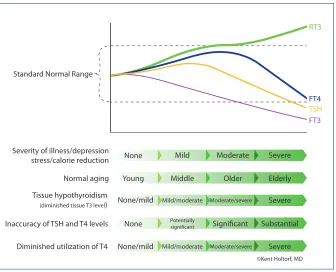
Figure 1: Serum thyroid levels with increasing physiologic stress and aging.
Associated serum thyroid levels with progressively decreasing tissue thyroid levels due to stress, illness, depression, calorie reduction or aging (Why standard blood tests lack sensitivity to detect low thyroid in the presence of such conditions).
toxins and other substances produced by the body
in response to physiologic stress and calorie
reduc-tion.
1, 43, 49, 54, 60Since thyroid hormone uptake in the
pituitary is relatively unaffected by outside factors,
the presence of intracellular hypothyroidism is not
reflected by TSH testing, which is why TSH is a poor
25% 25%
50% 75% 100%
Cellular Uptake of Thyroid Hormones
Percent drop in cellular energy (above) and severity of stress, depression, cholesterol level, insulin resistance and dieting (below)
HIGH VERY SEVERE MORE SEVERE
MILD NONE
LOW HIGH
LOW HIGH
LOW HIGH
LOW
50% 75% 100%
TSH
T4
T3
Free T3/RT3 ratio Stress, depression, cholesterol level, insulin resistance, dieting
RT3
T4
T3
Testing Accuracy
Figure 2: Thyroid transport of cellular energy. Why TSH testing is inaccurate and free T3/RT3 ratio is the best marker for thyroid transport.
marker for cellular thyroid function in any tissue
other than the pituitary.
1, 43, 49, 54, 55, 60Benzodiazepine
medications such as diazepam (Valium
®), lorazapam
(Atavan
®), and alprazolam (Xanax
®) are further
examples where a given compound can inhibit T3
uptake into the cells of the body, but have no effect
on transport of T3 into the pituitary.
60St Germain et al. investigated the comparison
between thyroid hormone transport into the
pitu-itary versus the cells of the rest of the body.
54The
authors demonstrated that the pituitary does not
respond to calorie restriction (i.e., dieting) in the
same way as the rest of the body. The dramatically
reduced serum T4 and T3 levels that accompany
dieting are associated with an increase in pituitary
T3 receptor saturation (i.e., percentage of activated
T3 receptors), which results in a decrease in TSH
even when serum thyroid hormone levels were
reduced by 50%.
54Wassen et al. also demonstrated
the absence of inhibitory effects of chronic caloric
deprivation and bilirubin on thyroid hormone
uptake by pituitary cells compared to the reduced
thyroid transport that occurred in the peripheral
tissue (liver).
49STRESS
Chronic emotional or physiologic stress can cause a
significant reduction of transport of T4 into the cells
of the body. For example, Sarne et al. added serum
from different groups of individuals to cell
cul-tures and measured the amount of T4 uptake from
the serum into the cell. Their results showed that
the serum from those with significant physiologic
stress inhibited the uptake (transport) of T4 into the
cell while the serum from the non-physiological
stressed had no effect.
4These results demonstrate
that serum T4 levels can be artificially elevated
among physiologically stressed individuals, and
thus serum T4 and TSH levels are poor markers for
tissue thyroid levels in this patient population (see
Figure 2).
4Substances produced by physiologic
stress or calorie reduction (e.g.,
3-carboxy-4-methyl-5-propyl-2-furan propanoic acid (CMPF),
indoxyl sulfate, bilirubin and fatty acids), have been
shown to reduce the cellular uptake of T4 by up to
42%, while having no effect on T4 or T3 uptake
into the pituitary.
1, 3, 17, 56, 57, 59In addition to the above, numerous other studies
have linked physiologic stress to reduced cellular
uptake of T4 and T3.
42, 62, 63, 114–116For instance,
Arem et al. found that significant physiological
stress was associated with dramatically reduced
tissue levels of T4 and T3 (up to 79%) without
a corresponding increase in TSH.
55The authors
also found there was tissue variability in the level
of suppression in different tissues, resulting in a
significant variation when comparing the T4 and T3
levels in different tissues. This large variation of T4
and T3 levels in different tissues may explain the
wide range and variation in individual symptoms of
hypothyroidism.
55DIETING
In a highly controlled study, Brownell et al. found
that after repeated cycles of dieting, weight loss
occurred at half the rate and weight gain occurred
at three times the rate compared to controls with
the same calorie intake.
83Furthermore, severe
caloric restriction and weight cycling is shown to
be associated with reduced cellular T4 uptake of
25%–50%.
3, 48, 77, 79–81Therefore, successful weight
loss is doomed to failure unless the reduced
intra-cellular thyroid levels are addressed, but, as stated
previously, this reduced cellular thyroid level is
generally not detected by standard laboratory
test-ing.
3, 56, 57, 75–81In a study published in the American Journal of
Physiology-Endocrinology and Metabolism
, Van
der Heyden et al. studied the effect of calorie
restriction (dieting) on the transport of T4 and T3
into the cell.
48They found that obese individuals
intracellular hypothyroidism) assessing the free T3/
reverse T3 ratio can aid in a proper diagnosis, with
a free T3/reverse T3 ratio of less than 0.2 being a
marker for tissue hypothyroidism (when the free
T3 is expressed in pg/mL (2.3–4.2 pg/mL) and the
reverse T3 is expressed in ng/dL (8–25 ng/dL))
(see Figure 2).
56, 57, 75–81REVERSE T3 (rT3)
TSH and serum T4 levels do not correlate well with
intracellular thyroid levels.
119–121There are
compet-ing factors attributcompet-ing to the serum free T3 levels;
reduced T4 to T3 conversion will tend to reduce
serum T3 levels while the reduced uptake into the
cell tends to increase serum T3 (the T3 transporter
is less affected by the low cellular energy than the
T4 transporter). Increased rT3 levels are shown to
be predominantly due to reduced transport into the
cell and not due to increased T4
to rT3
conversion.
Because the rT3 and T4 transporters are equally
energy dependent, a high serum rT3 is shown
to be a marker for reduced uptake of T4 into the
cell.
6, 41, 44, 61, 65, 66Thus, rT3 is an excellent marker for identifying
reduced cellular T4 and T3 levels that would not
normally be detected by TSH or serum T4 and
T3 tests. As a result, any increase (high or
high-normal) of rT3 is not only an indicator of tissue
hypothyroidism but also suggests that T4-only
replacement would not be considered optimal
therapy. While a high rT3 can occasionally be
asso-ciated with hyperthyroidism, as the body tries to
reduce cellular thyroid levels, this can be
differenti-ated on the basis of symptoms and by utilizing the
free T3/rT3 ratio, which correlates with intracellular
thyroid levels (see Figure 2).
6, 41, 42, 44, 61, 65, 66, 122TREATMENT WITH T4
Levothyroxine (T4)-only replacement with
prod-ucts such as Synthroid
®and Levoxyl
®are the most
widely accepted forms of thyroid replacement.
This is based on a widely held assumption that
the body will convert what it needs to the
biologi-cally active form (T3). Based on this assumption,
many physicians and endocrinologists believe that
the normalization of TSH with a T4 preparation
demonstrates adequate tissue levels of thyroid,
perpetuated by practice guidelines indicating
T4 monotherapy as the standard of care.
123This
assumption, however, had never been directly tested
until two studies were published.
124, 125The first study investigated whether or not giving
T4-only preparations will provide adequate T3
levels in varying tissues. Plasma TSH, T4, and T3
levels and 10 different tissue levels of T4 and T3
were measured after the infusion of 12–13 days of
thyroxine. The authors found that the normalization
of plasma TSH and T4 levels with T4-only
prepara-tions resulted in adequate tissue T3 levels in only
a few select tissues types, namely brown adipose
tissue, cerebellum and cortex. Almost every other
tissue was found to be deficient. This data suggest
that the use of T4 therapy (even if given at
supra-physiological levels) cannot reasonably achieve
normal tissue levels of T3. The authors conclude:
“It is evident that neither plasma T4 nor plasma T3
alone permit the prediction of the degree of change
in T4 and T3 concentrations in tissues… the current
replacement therapy of hypothyroidism [giving T4]
should no longer be considered adequate….”
124The second study utilizing an experimental model
compared plasma TSH, T4 and T3 levels and 13
different tissue levels of T4 and T3 when T4 or T4/
T3 treatments were utilized.
125This study found that
a combination of T4/T3 is required to normalize
tissue levels of T3, and that the pituitary was able to
maintain normal levels of T3 despite the rest of the
body being hypothyroid on T4-only preparations.
Under normal conditions it was shown that the
pituitary will have 7 to 60 times the concentration
of T3 when compared to other tissues of the body;
and when thyroid levels drop, the pituitary was
shown to have 40 to 650 times the concentration
of T3 in other tissues. Thus, the pituitary is unique
in its ability to concentrate T3 in the presence of
diminished serum thyroid levels. Consequently, the
pituitary levels of T3 and the subsequent TSH level
are poor measures of tissue hypothyroidism, as
almost the entire body can be severely hypothyroid
despite having a normal TSH level.
125explains why T4 preparations are often associated
with poor clinical response (i.e., continued residual
symptoms). As stated by Hennemann et al. in
Endocrine Reviews
: “Even a small decrease in
cel-lular ATP concentration results in a major reduction
in the transport of T4 (and rT3) but only slightly
affects T3 uptake.”
5This makes it inappropriate to
use T4-only preparations when treating any
condi-tion associated with reduced mitochondrial funccondi-tion
or ATP production, Thus, it is not surprising that
T3 has been shown to be superior in such patient
populations.
Fraser et al. investigated the correlation between
tissue thyroid activity and serum blood tests (TSH,
free T4, and T3) and published their results in the
British Medical Journal
. The authors concluded
that “The serum concentration of thyroid
stimula-tion hormone is unsatisfactory as the thyrotrophs
in the anterior pituitary are more sensitive to
changes in the concentration of thyroxin in the
circulation than other tissues, which rely more on
triiodothyronine (T3).” They found a suppressed
or undetectable TSH was not an indication or a
reliable marker of over replacement or
hyperthy-roidism. They state “It is clear that serum thyroid
hormone and thyroid stimulating hormone
con-centrations cannot be used with any degree of
confidence to classify patients as receiving
satisfac-tory, insufficient, or excessive amounts of thyroxine
replacement… The poor diagnostic sensitivity
and high false positive rates associated with such
measurements render them virtually useless in
clinical practice… Further adjustments to the dose
should be made according to the patient’s clinical
response.”
126Similar results were observed by Meier et al., who
investigated the correlation of TSH and tissue
thyroid effect. The authors concluded that “TSH is
a poor measure for estimating the clinical and
meta-bolic severity of primary overt thyroid failure...
We found no correlations between the different
parameters of target tissues and serum TSH.” They
stated that signs and symptoms of thyroid effect and
not the TSH should be used to determine the proper
replacement dose.
119Alevizaki et al. also studied the accuracy of using
TSH to determine the proper T4 replacement dose,
and found that the use of TSH tests (although
common) cannot accurately detect cellular
hypo-thyroidism in the majority of tissues, except for the
pituitary. They conclude, “TSH levels used to
moni-tor substitution, mostly regulated by intracellular T3
in the pituitary, may not be such a good indicator of
adequate thyroid hormone action in all tissues.”
120Likewise, Zulewski et al. found TSH to be an
unsuitable measure of optimal or proper thyroid
replacement, as they observed no correlation
between TSH and tissue thyroid levels. However,
serum T4 and T3 levels had some correlation, with
T3 being a better indictor than T4. Based on their
data, the authors concluded, “The ultimate test of
whether a patient is experiencing the effects of too
much or too little thyroid hormone is not the
mea-surement of hormone concentration in the blood
but the effect of thyroid hormones on the peripheral
tissues [symptoms] .”
121In fact, the positive predictive value of TSH
(the likelihood that a suppressed TSH indicates
over-replacement or hyperthyroidism) has been
determined to be 16%. In other words, a suppressed
TSH is not associated with hyperthyroidism or
over-replacement 84% of the time, making it an
inaccurate marker for determining an appropriate
thyroid hormone replacement dose.
Additionally, TSH levels become an even worse
indicator for an optimal replacement dose in the
presence of the following comorbidities:
insu-lin resistance or obesity;
67–70, 71–75chronic calorie
reduction;
4, 50, 65, 76–83depression;
71, 84–86bipolar
depression;
71, 84, 88, 89neurodegenerative
diseases;
71, 90–94advanced in age;
71, 72, 95–107chronic
fatigue syndrome;
71, 108, 109fibromyalgia;
71, 110, 111migraines;
71chronic infections;
71stress or
anxi-ety;
71, 86, 87heart failure or cardiovascular
disease;
71, 106, 111–113inflammation or chronic
illness;
71, 114–116high cholesterol or triglyceride
levels.
56, 57, 59, 75, 76, 79, 117SHBG
Sex hormone binding globulin (SHBG) is formed in
the liver in response to the tissue level of estrogen
and thyroid.
127, 128Thus, if a patient’s estrogen levels
in peripheral tissues. As expected, the SHBG is
typically low in individuals with obesity,
diabe-tes and insulin resistance
129–131due to the reduced
transport of thyroid hormones into the cells with
these individuals. Women with adequate estrogen
levels should have an SHBG above 70 nmol/L and
men above 25 nmol/L. If not, the diagnosis of low
tissue levels of thyroid should be considered.
127The
SHBG is more useful in women than men because
the normal reference range is less broad in men,
making it less sensitive and less clinically useful.
In addition to being useful in diagnosing low
thyroid in patients, SHBG can also be used to
determine the optimal replacement dose or
prepara-tion (T4, T4/T3 vs straight T3). Because thyroid
replacement is given orally, it must first undergo
first pass metabolism in the liver, resulting in
significantly higher hepatic levels than in other
peripheral tissues. Consequentially, if the SHBG is
below 70 nmol/L in women or 25 nmol/L in men
who are on thyroid replacement, the rest of body
would not be expected to have adequate thyroid
levels. Additionally, if the SHBG does not
signifi-cantly increase with replacement, this demonstrates
the likelihood of a peripheral resistance to thyroid
hormones.
128CURRENT BEST METHOD TO
DIAGNOSIS
While a normal TSH cannot be used as a reliable
indicator of global tissue thyroid effect, even a
min-imally elevated TSH (above 2 mU/L) demonstrates
that there is a diminished intra-pituitary T3 level
and is a clear indication (except in unique situations
such as a TSH-secreting tumor) that the rest of the
body is suffering from inadequate thyroid activity
because the pituitary T3 level is always significantly
higher than the rest of the body.
1, 17, 43, 49, 51, 54, 58–60Additionally, the most rigorously screened
indi-viduals for absence of thyroid disease have a TSH
below 2 to 2.5 mU/L.
132, 133Thus, treatment should
be considered in any symptomatic person with a
TSH greater than 2 mU/L. As discussed, a free T3/
rT3 ratio below 0.2 is a useful indicator of low
tissue thyroid levels.
6, 41, 42, 44, 61, 65, 66, 122Additionally,
a relatively low SHBG,
127, 128–131a slow reflex
relaxation time,
134a low resting metabolic rate
(metabolism),
135and a low basal body
tempera-ture
135, 136can also be useful indicators of low tissue
thyroid levels and can aid in the diagnosis of tissue
hypothyroidism.
127, 128–131CONCLUSION
The most important determinant of thyroid activity
is the intra-cellular level of T3, and a major
deter-minant of the intracellular T3 level is the activity of
the cellular thyroid transporters.
1–66Reduced thyroid
transport into the cell is seen with a wide range of
common conditions, including insulin resistance,
diabetes, depression, bipolar disorder,
hyperlipid-emia (high cholesterol and triglycerides), chronic
fatigue syndrome, fibromyalgia, neurodegenerative
diseases (Alzheimer’s, Parkinson’s and multiple
sclerosis), migraines, stress, anxiety, chronic dieting
and aging.
1–43, 46, 48, 50–52, 57, 59, 65, 67, 68, 71–117The high
incidence of reduced cellular thyroid transport seen
with these conditions makes standard thyroid tests
a poor indicator of cellular thyroid levels in these
patient populations.
The pituitary has different transporters than every
other tissue in the body; the thyroid
transport-ers in the body are very energy dependent and
are affected by numerous conditions while the
pituitary is minimally affected. Because the
pituitary remains largely unaffected, there is
no elevation in TSH despite wide-spread tissue
hypothyroidism. This explains why TSH is an
inac-curate marker for tissue T3 levels for a variety of
patients.
1, 3, 4, 17, 22, 43, 49, 51, 54, 58–60Reduced thyroid transport results in an artificial
elevation in serum thyroid levels (especially T4),
making this a poor marker for tissue thyroid levels,
as well.
5, 40, 41, 48, 51, 52, 61, 65, 66Rather, an elevated or
high-normal rT3 along with symptoms is shown to be
a reliable marker for reduced transport of thyroid
hor-mones and an indication that a person has low cellular
thyroid levels despite having normal TSH, free T4,
and free T3 levels (see Figure 2).
6, 32, 41, 44, 61, 65, 66, 137–182standard thyroid tests look normal. Additionally, it is
not surprising that T4 preparations are generally
inef-fective in the presence of such conditions, while T3
replacement is shown to be beneficial, with
poten-tially dramatic results.
70, 72–74, 87–89, 93, 104–112, 122, 124, 183–205In the presence of such conditions, it should be
understood that significant intracellular
hypothyroid-ism may remain undiagnosed by standard blood
tests. On the basis of the data presented here, the
free T3/rT3 ratio and a low SHBG, along with signs
and symptoms, including basal body temperature
and the reflex relaxation phase, appear to be a more
appropriate method for assessing the presence of
hypothyroidism and determining whether
supple-mentation with T3 (rather than T4 only) should be
considered in a particular patient.
Thus, if a patient with a normal TSH presents
with symptoms consistent with hypothyroidism,
including fatigue, weight gain, depression, cold
extremities, muscle aches, headaches, decreased
libido, weakness, cold intolerance, water
reten-tion or PMS, a combinareten-tion of both clinical and
laboratory assessment should be used to determine
the likely overall thyroid status and if a
therapeu-tic trial of straight T3 or a T4/T3 combination is
indicated.
DISCLOSURE OF INTERESTS
Dr. Holtorf supplies supplements from
Holtraceuticals to support thyroid function to his
own patients, outside the submitted work.
REFERENCES
1. Everts ME, De Jong M, Lim CF, et al. Different regula-tion of thyroid hormone transport in liver and pituitary: its possible role in the maintenance of low T3 production during nonthyroidal illness and fasting in man. Thyroid. 1996;6(4):359–68.
2. Peeters RP, Geyten SV, Wouters PJ, et al. Tissue thyroid hormone levels in critical illness. J Clin Endocrinol
Metab. 2005;12:6498–507.
3. Lim C-F, Docter R, Krenning EP, et al. Transport of thyroxine into cultured hepatocytes: effects of mild non-thyroidal illness and calorie restriction in obese subjects.
Clin Endocrinol (Oxf). 1994;40:79–85.
4. Sarne DH, Refetoff S. Measurement of thyroxine uptake from serum by cultured human hepatocytes as an index of thyroid status: reduced thyroxine uptake from serum of patients with nonthyroidal illness. J Clin Endocrinol
Metab. 1985;61:1046–52.
5. Hennemann G, Docter R, Friesema EC, et al. Plasma membrane transport of thyroid hormones and its role in thyroid hormone metabolism and bioavailability.
Endocrine Rev. 2001;22(4):451–76.
6. Holm AC, Jacquemin C. Membrane transport of L-triiodothyronine by human red cell ghosts. Biochem
Biophys Res Commun. 1979;89:1006–17.
7. Docter R, Krenning EP, Bos G, Fekkes DSF, Hennemann G. Evidence that the uptake of triiodo-L-thyronine by human erythrocytes is carrier-mediated but not energy-dependent. Biochem J. 1982;208:27–34.
8. Holm AC, Kagedal B. Kinetics of triiodothyronine uptake by erythrocytes in hyperthyroidism, hypothyroid-ism, and thyroid hormone resistance. J Clin Endocrinol
Metab. 1989;69:364–8.
9. Osty J, Valensi P, Samson M, Francon J, Blondeau JP. Transport of thyroid hormones by human erythrocytes: kinetic characterization in adults and newborns. J Clin
Endocrinol Metab. 1990;71:1589–95.
10. Moreau X, Azorin J-M, Maurel M, Jeanningros R. Increase in red blood cell triiodothyronine uptake in untreated unipolar major depressed patients compared to healthy controls. Prog Neuropsychopharmacol Biol
Psychiatry. 1998;22:293–310.
11. Osty J, Jego L, Francon J, Blondeau JP. Characterization of triiodothyronine transport and accumulation in rat erythrocytes. Endocrinology. 1988;123:2303–11.
12. Osty J, Zhou Y, Chantoux F, Francon J, Blondeau JP. The triiodothyronine carrier of rat erythrocytes: asymmetry and mechanism of transinhibition. Biochim Biophys
Acta. 1990;1051:46–51.
13. Moreau X, Lejeune PJ, Jeanningros R. Kinetics of red blood cell T3 uptake in hypothyroidism with or without hormonal replacement, in the rat. J Endocrinol Invest. 1999;22:257–61.
14. McLeese JM, Eales JG. 3,5,3-Triiodo-L-thyronine and L-thyroxine uptake into red blood cells of rainbow trout (Oncorhynchus mykiss). Gen Comp Endocrinol. 1996;102:47–55.
15. McLeese JM, Eales JG. Characteristics of the uptake of 3,5,3-triiodo-L-thyronine and L-thyroxine into red blood cells of rainbow trout (Oncorhynchus mykiss). Gen
Comp Endocrinol. 1996;103:200–8.
17. Everts ME, Docter R, Moerings EP, van Koetsveld PM, Visser TJ, et al. Uptake of thyroxine in cultured anterior pituitary cells of euthyroid rats. Endocrinology. 1994;134:2490–7.
18. Yan Z, Hinkle PM. Saturable, stereospecific transport of 3,5,3-triiodo-L-thyronine and L-thyroxine into GH4C1 pituitary cells. J Biol Chem. 1993;268:20179–84.
19. Goncalves E, Lakshmanan M, Pontecorvi A, Robbins J. Thyroid hormone transport in a human glioma cell line.
Mol Cell Endocrinol. 1990;69:157–65.
20. Francon J, Chantoux F, Blondeau JP. Carrier-mediated transport of thyroid hormones into rat glial cells in primary culture. J Neurochem. 1989;53:1456–63.
21. Beslin A, Chantoux F, Blondeau JP, Francon J. Relationship between the thyroid hormone transport system and the Na-H exchanger in cultured rat brain astrocytes. Endocrinology. 1995;136:5385–90.
22. Chantoux F, Blondeau JP, Francon J. Characterization of the thyroid hormone transport system of cerebro-cortical rat neurons in primary culture. J Neurochem. 1995;65:2549–54.
23. Kastellakis A, Valcana T. Characterization of thyroid hormone transport in synaptosomes from rat brain.
Mol Cell Endocrinol. 1989;67:231–41.
24. Lakshmanan M, Goncalves E, Lessly G, et al. The transport of thyroxine into mouse neuroblastoma cells, NB41A3: the effect of L-system amino acids.
Endocrinology. 1990;126:3245–50.
25. Pontecorvi A, Lakshmanan M, Robbins J. Intracellular transport of 3,5,3-triiodo-L-thyronine in rat skeletal myoblasts. Endocrinology. 1987;121:2145–52.
26. Everts ME, Verhoeven FA, Bezstarosti K, et al. Uptake of thyroid hormones in neonatal rat cardiac myocytes.
Endocrinology. 1996;137:4235–42.
27. Zonefrati R, Rotella CM, Toccafondi RS, Arcangeli P. Thyroid hormone receptors in human cultured fibro-blasts: evidence for cellular T4 transport and nuclear binding. Horm Metab Res. 1983;15:151–4.
28. Docter R, Krenning EP, Bernard HF, Hennemann G. Active transport of iodothyronines into human cultured fibroblasts. J Clin Endocrinol Metab. 1987;65:624–8.
29. Cheng SY. Characterization of binding of uptake of 3,3,5-triiodo-L-thyronine in cultured mouse fibroblasts.
Endocrinology. 1983;112:1754–62.
30. Mitchell AM, Manley SW, Mortimer RH. Uptake of L-triiodothyronine by human cultured trophoblast cells.
J Endocrinol. 1992;133:483–6.
31. Mitchell AM, Manley SW, Mortimer RH. Membrane transport of thyroid hormone in the human cho-riocarcinoma cell line JAR. Mol Cell Endocrinol. 1992;87:139–45.
32. Mitchell AM, Manley SW, Rowan KA, Mortimer RH. Uptake of reverse T3 in the human choriocarcinoma cell line JAR. Placenta. 1999;20:65–70.
33. Bernus I, Mitchell AM, Manley SW, Mortimer RH. Uptake of L-triiodothyronine sulfate by human c horiocarcinoma cell line JAR. Placenta. 1999;20(2–3):161–5.
34. Mitchell AM, Manley SW, Payne EJ, Mortimer RH. Uptake of thyroxine in the human choriocarcinoma cell line JAR. J Endocrinol. 1995;146:233–8.
35. Landeta LC, Gonzales-Padrones T, Rodriguez-Fernandez C. Uptake of thyroid hormones (L-T3 and L-T4) by isolated rat adipocytes. Biochem Biophys Res
Commun. 1987;145:105–10.
36. Kostrouch Z, Felt V, Raska J, Nedvidkova J, Holeckova E. Binding of (125I) triiodothyronine to human peripheral leukocytes and its internalization.
Experientia. 1987;43:1117–8.
37. Kostrouch Z, Raka I, Felt V, Nedvidkova J, Holeckova E. Internalization of triiodothyronine-bovine serum albumin-colloidal gold complexes in human peripheral leukocytes. Experientia. 1987;43:1119–20.
38. Centanni M, Mancini G, Andreoli M. Carrier-mediated [125I]-T3 uptake by mouse thymocytes. Endocrinology. 1989;124:2443–8.
39. Centanni M, Sapone A, Taglienti A, Andreoli M. Effect of extracellular sodium on thyroid hormone uptake by mouse thymocytes. Endocrinology. 1991;129:2175–9.
40. de Jong M, Docter R, Bernard HF, et al. T4 uptake into the perfused rat liver and liver T4 uptake in humans are inhibited by fructose. Am J Physiol. 1994;266:E768–75.
41. Hennenmann G, Everts ME, de Jong M, et al. The signifi-cance of plasma membrane transport in the bioavailability of thyroid hormone. Clin Endocrinol (Oxf). 1998;48:1–8.
42. Vos RA, de Jong M, Bernard BF, et al. Impaired thyroxine and 3,5,3′-triiodothyronine handling by rat hepatocytes in the presence of serum of patients with nonthyroidal illness. J Clin Endocrinol Metab. 1995;80:2364–70.
43. Hennemann G, Krenning EP. The kinetics of thyroid hormone transporters and their role in non-thyroidal illness and starvation. Best Pract Res Clin Endocrinol
Metab. 2007;21(2):323–38.
44. Hennemann G, Vos RA, de Jong M, et al. Decreased peripheral 3,5,3′-triiodothyronine (T3) production from thyroxine (T4): a syndrome of impaired thyroid hormone activation due to transport inhibition of T4- into T3-producing tissues. J Clin Endocrinol Metabol. 1993;77(5):1431–5.
45. Stump CS, Short KR, Bigelow ML, et al. Effect of insulin on human skeletal muscle mitochondrial ATP production, protein synthesis, and mRNA transcripts.
Proc Natl Acad Sci USA. 2003;100(13):7996–8001.
46. Krenning EP, Docter R, Bernard HF, et al. The essential role of albumin in the active transport of thyroid hor-mones into primary cultured rat hepatocytes. FEBS Lett. 1979;107(1):227–30.
48. van der Heyden JT, Docter R, van Toor H, et al. Effects of caloric deprivation on thyroid hormone tissue uptake and generation of low-T3syndrome. Am J Physiol
Endocrinol Metab. 1986;251(2):E156–63.
49. Wassen FWJS, Moerings EPCM, van Toor H, et al. Thyroid hormone uptake in cultured rat anterior pituitary cells: effects of energy status and bilirubin. J Endocrinol. 2000;165:599–606.
50. Jenning AS, Ferguson DC, Utiger RD. Regulation of the conversion of thyroxine to triiodothyronine in the perfused rat liver. J Clin Invest. 1979;64:1614–23.
51. Krenning E, Docter R, Bernard B, Visser T, Hennemann G. Characteristics of active transport of thyroid hormone into rat hepatocytes. Biochim Biophys Acta. 1981;676:314–20.
52. Riley WW, Eales JG. Characterization of 3,5,3-triiodo-L-thyronine transport into hepatocytes isolated from juvenile rainbow trout (Oncorhynchus mykiss), and comparison with L-thyroxine transport. Gen Comp
Endocrinol. 1994;95:301–9.
53. Spencer CA, Lum SMC, Wilber JF, et al. Dynamics of serum thyrotropin and thyroid hormone changes in fast-ing. J Clin Endocrin Metab. 1983;56(5):883–8.
54. St Germain DL, Galton VA. Comparative study of pituitary-thyroid hormone economy in fasting and hypo-thyroid rats. J Clin Invest. 1985;75(2):679–88.
55. Arem R, Wiener GJ, Kaplan SG, Kim HS, et al. Reduced tissue thyroid hormone levels in fatal illness.
Metabolism. 1993;42(9):1102–8.
56. Lim C-F, Bernard BF, De Jong M, et al. A furan fatty acid and indoxyl sulfate are the putative inhibitors of thyroxine hepatocyte transport in uremia. J Clin
Endocrinol Metab. 1993;76:318–24.
57. Lim C-F, Docter R, Visser TJ, Krenning EP, Bernard B,
et al. Inhibition of thyroxine transport into cultured rat hepatocytes by serum of non-uremic critically ill patients: effects of bilirubin and nonesterified fatty acids.
J Clin Endocrinol Metab. 1993;76:1165–72.
58. Lim VS, Passo C, Murata Y, Ferrari E, et al. Reduced triiodothyronine content in liver but not pituitary of the uremic rat model: demonstration of changes compat-ible with thyroid hormone deficiency in liver only.
Endocrinology. 1984;114:280–6.
59. Everts ME, Lim C-F, Moerings EPCM, Docter R, et al. Effects of a furan fatty acid and indoxyl sulfate on thy-roid hormone uptake in cultured anterior pituitary cells.
Am J Physiol. 1995;268:E974–9.
60. Doyle D. Benzodiazepines inhibit temperature dependent L-[125I] triiodothyronine accumulation into human liver, human neuroblast, and rat pituitary cell lines.
Endocrinology. 1992;130:1211–6.
61. Krenning EP, Docter R, Bernard HF, et al. Decreased transport of thyroxine (T4), 3,3′,5-triiodothyronine (T3) and 3,3′,5′-triiodothyronine (rT3) into rat hepatocytes in primary culture due to a decrease of cellular ATP content and various drugs. FEBS Lett. 1982;140:229–33.
62. Kaptein EM, Robinson WJ, et al. Peripheral serum thyroxine, triiodothyronine, and reverse triiodothyro-nine in the low thyroxine state of acute nonthyroidal illness. A noncompartmental analysis. J Clin Invest. 1982;69:526–35.
63. Kaptein EM, Kaptein JS, Chang EI, et al. Thyroxine transfer and distribution in critical nonthyroidal illness, chronic renal failure, and chronic ethanol abuse. J Clin
Endocrinol Metab. 1987;65:606–16.
64. Everts ME, Visser TJ, Moerings EM, Docter R, et al. Uptake of triiodothyroacetic acid and its effect on thyrotropin secretion in cultered anterior pituitary cells.
Endocrinology. 1994;135(6):2700–7.
65. De Jong M. Docter R, van der Hoek HJ, Vos RA. Transport of 3,5,3′-triiodothyronine into the perfused rat liver and subsequent metabolism are inhibited by fasting.
Endocrinology. 1992;131(1):463–70.
66. Hennemann G, Krenning EP, Bernard B, Huvers F, et al. Regulation of Influx and efflux of thyroid hormones in rat hepatocytes: possible physiologic significance of plasma membrane in the regulation of thyroid hormone activity. Horm Metab Res Suppl. 1984;14:1–6.
67. Petersen KF, Dufour S, Shulman GI. Decreased insulin-stimulated ATP synthesis and phosphate transport in muscle of insulin-resistant offspring of Type 2 diabetic parents. PLoS Med. 2005;2(9):e233.
68. Szendroedi J, Schmid AI, Meyerspeer M, et al. Impaired mitochondrial function and insulin resistance of skeletal muscle in mitochondrial diabetes. Diabetes Care. 2009;32(4):677–9.
69. Abdul-Ghani MA, Jani R, Chavez A, et al. Mitochondrial reactive oxygen species generation in obese non-diabetic and type 2 diabetic participants.
Diabetologia. 2009;52(4):574–82.
70. Verga SB, Donatelli M, Orio L, et al. A low reported energy intake is associated with metabolic syndrome.
J Endocrinol Invest. 2009;32:538–41.
71. Pieczenik SR, Neustadt J. Mitochondrial dysfunction and molecular pathways of disease. Exp Mol Pathol. 2007;83(1):84–92.
72. Wallace DC. A mitochondrial paradigm of metabolic and degenerative diseases, aging, and cancer: a dawn for evo-lutionary medicine. Annu Rev Genet. 2005;39(1):359–407.
73. Fosslien, E. Mitochondrial medicine – Molecular pathol-ogy of defective oxidative phosphorylation. Ann Clin
Lab Sci. 2001;31(1):25–67.
74. West IC. Radicals and oxidative stress in diabetes.
Diabet Med. 2000;17(3):171–180.
75. Brehm A, Krssak M, Schmid AI, et al. increased lipid availability impairs insulin-stimulated ATP synthesis in human skeletal muscle. Diabetes. 2006;55:136–40.
lipase activity in adipose tissue of cattle. J Anim Sci. 1981;52:75–82.
77. Leibel RL, Jirsch J. Diminshed energy requirements in reduced-obese patients. Metabolism. 1984;33(2):164–70.
78. Steen SN, Opplieger RA, Brownell KD. Metabolic effects of repeated weight and regain in adolescent wres-tlers. J Am Med Assoc. 1988;260:47–50.
79. Elliot DL, Goldberg L, Kuehl KD, Bennett WM. Sustained depression of the resting metabolic rate after massive weight loss. Am J Clin Nutr. 1989;49:93–6.
80. Manore MM, Berry TE, Skinner JS, Carroll SS. Energy expenditure at rest and during exercise in nonobese female cyclical dieters and in nondieting control sub-jects. Am J Clin Nutr. 1991;54:41–6.
81. Croxson MS, Ibbertson HK. Low serum triiodothyronine (T3) and hypothyroidism in anorexia nervosa. J Clin
Endorinol Metab. 1977;44:167–74.
82. Carlin K, Carlin S. Possible etiology for euthyroid sick syndrome. Med Hypotheses. 1993;40:38–43.
83. Brownell KD, Greenwood MR, Stellar E, Shrager EE. The effects of repeated cycles of weight loss and regain in rats. Physiol Behav. 1986;38(4):459–64.
84. Modica-Napolitano JS, Renshaw PF. Ethanolamine and phosphoethanolamine inhibit mitochondrial function in vitro: implications for mitochondrial dysfunction hypoth-esis in depression and bipolar disorder. Biol Psychiatry. 2004;55(3):273–7.
85. Gardner A, Boles RG. Mitochondrial energy depletion in depression with somatization. Psychother Psychosom. 2008;77:127–9.
86. Burroughs S, French D. Depression and anxiety: role of mitochondria. Curr Anaesth Crit Care. 2007;18:34–41.
87. Einat H, Yuan P, Manji HK. Increased anxiety-like behaviors and mitochondrial dysfunction in mice with targeted mutation of the Bcl-2 gene: further support for the involvement of mitochondrial function in anxiety disorders. Behav Brain Res. 2005;165(2):172–80.
88. Stork C, Renshaw PF. Mitochondrial dysfunc-tion in bipolar disorder: evidence from magnetic resonance spectroscopy research. Mol. Psychiatry. 2005;10(10):900–19.
89. Fattal O, Budur K, Vaughan AJ, Franco K. Review of the literature on major mental disorders in adult patients with mitochondrial diseases. Psychosomatics. 2006;47(1):1–7.
90. Hutchin T, Cortopassi G. A mitochondrial DNA clone is associated with increased risk for Alzheimer’s disease.
Proc Natl Acad Sci USA. 1995;92:6892–95.
91. Sherer TB, Betarbet R, Greenamyre JT. Environment, mitochondria, and Parkinson’s disease. Neuroscientist. 2002;8(3):192–7.
92. Gomez C, Bandez MJ, Navarro A. Pesticides and impair-ment of mitochondrial function in relation with the Parkinsonian syndrome. Front Biosci. 2007;12:1079–93.
93. Stavrovskaya IG, Kristal BS. The powerhouse takes con-trol of the cell: is the mitochondrial permeability transition a viable therapeutic target against neuronal dysfunction and death? Free Radic Biol Med. 2005;38(6):687–97.
94. Schapira AHV. Mitochondrial disease. Lancet. 2006;368:70–82.
95. Richter C. Oxidative damage to mitochondrial DNA and its relationship to aging. Int J Biochem Cell Biol. 1995;27(7):647–53.
96. Papa S. Mitochondrial oxidative phosphorylation changes in the life span. Molecular aspects and physiopathological implications. Biochim Biophys Acta. 1996;87–105.
97. Cortopassi G, Wang A. Mitochondria in organis-mal aging and degeneration. Biochim Biophys Acta. 1999;1410:183–93.
98. Harman D. The biologic clock: the mitochondria? J Am
Geriatr Soc. 1972;20:145–7.
99. Miquel J, Economos AC, Fleming J, Johnson JE. Mitochondrial role in cell aging. Exp Gerontol. 1980;15:575–91.
100. Miquel J. An integrated theory of aging as the result of mitochondrial DNA mutation in differentiated cells. Arch
Gerontol Geriatr. 1991;12:99–117.
101. Miquel J. An update on the mitochondrial-DNA mutation hypothesis of cell aging. Mutat Res. 1992;275:209–16.
102. Zs.-Nagy I. A membrane hypothesis of aging. J Theor
Biol. 1978;75:189–95.
103. Zs.-Nagy I. The role of membrane structure and function in cellular aging: a review. Mech Aging Dev. 1979;9:37–246.
104. Savitha S, Sivarajan K, Haripriya D, et al. Efficacy of levo carnitine and alpha lipoic acid in ameliorating the decline in mitochondrial enzymes during aging. Clin
Nutr. 2005;24(5):794–800.
105. Skulachev VP, Longo VD. Aging as a mitochondria-mediated atavistic program: can aging be switched off?
Ann NY Acad Sci. 2005;1057:145–64.
106. Corral-Debrinski M, Shoffner JM, Lott MT, Wallace DC. Association of mitochondrial DNA damage with aging and coronary atherosclerotic heart disease. Mutat Res. 1992;275(3–6):169–80.
107. Ames BN, Shigenaga MK, Hagen TM. Oxidants, anti-oxidants, and the degenerative diseases of aging. Proc
Natl Acad Sci USA. 1993;90(17):7915–22.
108. Fulle S, Mecocci P, Fano G, et al. Specific oxidative alterations in vastus lateralis muscle of patients with the diagnosis of chronic fatigue syndrome. Free Radic Biol
Med. 2000;29(12):1252–9.
109. Buist R. Elevated xenobiotics, lactate and pyruvate in C.F.S. patients. J Orthomolec Med. 1989;4(3):170–2.
111. Yunus MB, Kalyan-Raman UP, Kalyan-Raman K. Primary fibromyalgia syndrome and myofascial pain syndrome: clinical features and muscle pathology. Arch
Phys Med Rehabil. 1988;69(6):451–4.
112. Puddu P, Puddu GM, Galletti L, Cravero E, Muscari A. Mitochondrial dysfunction as an initiating event in atherogenesis: a plausible hypothesis. Cardiology. 2005;103(3):137–41.
113. Chen L, Knowlton AA. Depressed mitochondrial fusion in heart failure. Circulation. 2007;116:259.
114. Kaptein EM, Feinstein EI, Nicoloff JT, Massry SG. Serum reverse triiodothyronine and thyroxine kinetics in patients with chronic renal failure. J Clin Endocrinol
Metab. 1983;57:181–9.
115. Kaptein EM. Thyroid hormone metabolism and thyroid dis-ease in chronic renal failure. Endocr Rev. 1996;17:45–63.
116. Kaptein EM. Clinical relevance of thyroid hormone alter-ations in nonthyroidal illness. Thyroid Int. 1997;4:22–5.
117. Kigoshi S, Akiyama M, Ito R. Close correlation between levels of cholesterol and free fatty acids in lymphoid cells. Cell Mol Life Sci. 1976;32(10):1244–6.
118. Bochukova E, Schoenmakers N, Agostini M, et al. A mutation in the thyroid hormone receptor alpha gene.
N Engl J Med. 2012;366:243–9.
119. Meier C, Trittibach P, Guglielmetti M, Staub JJ, Muller B. Serum TSH in assessment of severity of tissue hypothy-roidism in patients with overt primary thyroid failure: cross sectional survey. Br Med J. 2003;326:311–2.
120. Alevizaki M, Mantzou E, cimponeriu AT, et al. TSH may not be a good marker for adequate thyroid hor-mone replacement therapy. Wien Klin Wochenschr. 2005;117/18:636–40.
121. Zulewski H, Muller B, Exer P, et al. Estimation of tissue hypothyrodisim by a new clinical score: evaluation of patients with various grades of hypothyroidism and controls. J Clin Endocrinol Metab. 1997;82(3):771–6.
122. van den Beld AW, Visser TJ, Feelders RA, et al. Thyroid hormone concentrations, disease, physical function and mortality in elderly men. J Clin Endocrinol Metab. 2005;90(12):6403–9.
123. Singer PA, Cooper DS, Levy EG, et al., for the Standards of Care Committee, American Thyroid Association. Treatment guidelines for patients with hyperthyroidism and hypothyroidism. J Am Med Assoc. 1995;273:808–12.
124. Escobar-Morreale HF, Obregón MJ, Escobar del Rey F, et al. Replacement therapy for hypothyroidism with thyroxine alone does not ensure euthyroidism in all tis-sues, as studied in thyroidectomized rats. J Clin Invest. 1995;96(6):2828–38.
125. Escobar-Morreale HF, Obregón MJ, Escobar del Rey F. Only the combined treatment with thyroxine and triio-dothyronine ensures euthyroidism in all tissues of the thyroidectomized rat. Endocrinology. 1996;137:2490–502.
126. Fraser WD, Biggart EM, OReilly DJ, et al. Are biochem-ical tests of thyroid function of any value in monitoring patients receiving thyroxine replacement? Br Med J. 1986;293:808–10.
127. Lecomte P, Lecureuil N, Lecureuil M, Salazar CO, Valat C. Age modulates effects of thyroid dysfunction on sex hormone binding globulin (SHBG) levels. Exp Clin
Endocrinol. 1995;103:339–42.
128. Sarne DH, Refetoff S, Rosenfield RL, Farriaux JP. Sex hormone-binding globulin in the diagnosis of periph-eral tissue resistance to thyroid hormone: the valued of changes after short term triiodothyronine administration.
J Clin Endocrinol Metab. 1988;66(4):740–6.
129. Krotkiewski M, Holm G, Shono N. Small doses of triiodothyronine can change some risk factors associated with abdominal obesity. Int J Obes Relat Metab Disord. 1997;21:922–9.
130. Birkeland KI, Hanssen KF, Torjesen PA, et al. Level of Sex Hormone-binding globulin is positively correlated with insulin sensitivity in men with Type 2 diabetes.
J Clin Endocrinol Metab. 1993;76;275–8.
131. Chen BH, Brennan K, Goto A. Sex hormone-binding globulin and risk of clinical diabetes in American black, Hispanic, and Asian/Pacific Islander postmenopausal women. Clin Chem. 2012;58(10):1457–55.
132. Moncay H, Dapunt O, Moncayo R. diagnostic accuracy of basal TSH determinations based on the intravenous TRH stimulation tests: an evaluation of 2570 tests and comparison with the literature. BMC Endocr Disord. 2007;7(5):1–5.
133. Zulewski H, Müller B, Exer P, Miserez AR, Staub JJ. Estimation of tissue hypothyroidism by a new clini-cal score: evaluation of patients with various grades of hypothyroidism and controls. J Clin Endocrinol Metab. 1997;82:771–6.
134. Al-Adsani H, Hoffer LJ, Silva JE. Resting energy expen-diture is sensitive to small dose changes in patients on chronic thyroid hormone replacement. J Clin Endocrinol
Metab. 1997;82:1118–25.
135. Barnes B. Temperature versus basal metabolism. J Am
Med Assoc. 1942;119(14):1072–4.
136. Friedman M, Miranda-Massari JR, Gonzalez MJ. Supraphysiological cyclic dosing of sustained release T3 in order to reset low basal body temperature. P R Health
Sci J. 2006;25(1):23–9.
137. Hackney AC, Feith S, Pozos, R, Seale J. Effects of high altitude and cold exposure on resting thyroid hormone concentrations. Aviat Space Environ Med. 1995;66(4):325–9.
138. Opstad PK, Falch D, Oktedalen O, et al. The thyroid function in young men during prolonged exercise and the effect of energy and sleep deprivation. Clin Endocrinol. 1984;20:657–69.
140. den Brinker M, Joosten KFM, Visser TJ, et al. Euthyroid sick syndrome in meningococcal sepsis: the impact of peripheral thyroid hormone metabolism and binding pro-teins. J Clin Endocrinol Metab. 2005;90(10):5613–20.
141. Chopra IJ, Solomon DH, Hepner GW, et al. Misleadingly low free thyroxine index and usefulness of reverse triio-dothyronine measurement in nonthyroidal illnesses. Ann
Intern Med. 1979;90(6):905–12.
142. Chopra IJ. A study of extrathyroidal conversion of thyroxine (T4) to 3,3′,5-triiodothyronine (T3) in vitro.
Endocrinology. 1977;101(2):453–63.
143. Sechman A, Niezgoda J, Sobocinski R. The relationship between basal metabolic rate (BMR) and concentrations of plasma thyroid hormones in fasting cockerels. Folia
Biol (Krakow). 1989;37(1–2):83–90.
144. Magri F, Cravello L, Fioravanti M, et al. Thyroid func-tion in old and very old healthy subjects. J Endocrinol
Invest. 2002;25(10):60–3.
145. O’Brian JI, Baybee DE, Wartofsky L, et al. Altered peripheral thyroid hormone metabolism and diminished hypothalamic pituitary responsiveness with changes in dietary composition. Clin Res. 1978;26:310A.
146. Friberg L, Drvota V, Bjelak AH, Eggertsen G, Ahnve S. Association between increased levels of reverse triiodothyronine and mortality after acute myocardial infarction. Am J Med. 2001;111(9):699–703.
147. McCormack PD. Cold stress, reverse T3 and lymphocyte function. Alaska Med. 1998;40(3):55–62.
148. Scriba PC, Bauer M, Emmert D, et al. Effects of obesity, total fasting and re-alimentation on L-thyroxine (T4), 3,5,3-L-triiodothyronine (T3), 3,3,5-L-triiodothyronine (rT3), thyroxine binding globulin (TBG), transfer-rin, 2-haptoglobin and complement C3 in serum. Acta
Endocrinol. 1979;91:629–43.
149. Kvetny J. Thyroxine binding and cellular metabo-lism of thyroxine in mononuclear blood cells from patients with anorexia nervosa. J Endocrinol. 1983;98(3):343–50.
150. Germain DL. Metabolic effect of 3,3′,5′ -triiodothyro-nine in cultured growth hormone-producing rat pituitary tumor cells. Evidence for a unique mechanism of thyroid hormone action. J Clin Invest. 1985;76(2):890–3.
151. Szymanski PT, Nauman J. Effects of thyroid hormones and reverse T3 pretreatment on the beta adrenoreceptors in the rat heart. Acta Physiol Pol. 1986;37:131–8.
152. du Pont JS. Is reverse T3 a physiological nonactive competitor of the action of T3 upon the electrical properties of GH3 cells? Neuroendocrinology. 1991;54:146–50.
153. Schulte C. Low T3 syndrome and nutritional status as prognostic factors in patients undergoing bone marrow transplantation. Bone Marrow Transplant. 1998;22:1171–8.
154. Goichot B, Schlienger JL, Grunenberger F, et al. Thyroid hormone status and nutrient intake in the free-living elderly. Interest of reverse triiodothyronine assessment.
Eur J Endocrinol. 1994;130:244–52.
155. Okamoto R, Leibfritz D. Adverse effects of reverse triodo-thyronine on cellular metabolism as assessed by 1H and 31P NMR spectroscopy. Res Exp Med. 1997;197:211–7.
156. de Jong FJ, den Heijer T, Visser TJ, et al. Thyroid hormones, dementia, and atrophy of the medial temporal lobe. J Clin EndocrinolMetab. 2006;91(7):2569–73.
157. Forestier E, Vinzio S, Sapin R, et al. Increased reverse T3 is associated with shorter survival in independently-living elderly. The Alsanut Study. Eur J Endocrinol. 2009;160(2):207–14.
158. Visser TJ, Lamberts WJ, Wilson JHP, et al. Serum thy-roid hormone concentrations during prolonged reduction of dietary intake. Metabolism. 1978;27(4):405–9.
159. Linnoila M, Lamberg BA, Potter WZ, et al. High reverse T3 levels in manic and unipolar depressed women. Psych
Res. 1982;6:271–6.
160. McCormack PD, Reed HL, Thomas JR, et al. Increased in rT3 serum levels observed during extended Alaskan field operations of naval personnel. Alaska Med. 1996;38(3):89–97.
161. Mariotti S, Barbesino G, Caturegli P, et al. Complex alteration of thyroid function in healthy centenarians.
J Clin Endocrinol Metab. 1993;77(5):1130–4.
162. Danforth EJ, Desilets EJ, Jorton ES, et al. Reciprocal serum triiodothryronine (T3) and reverse (rT3) induced by altering the carbohydrate content of the diet. Clin Res. 1975;23:573.
163. McCormack PD, Thomas J, Malik M, Staschen CM. Cold stress, reverse T3 and lymphocyte function.
Alaskan Med. 1998;40(3):55–62.
164. Peeters RP, Wouters PJ, van Toor H, et al. Serum 3,3′,5′-triiodothyronine (rT3) and 3,5,3′-triiodothyronine/ rT3 are prognostic markers in critically ill patients and are associated with postmortem tissue deiodinase activi-ties. J Clin Endocrinol Metab. 2005;90(8):4559–65.
165. Szabolcs I, Weber M, Kovacs Z, et al. The possible reason for serum 3,3′5′-(reverse T3) triiodothyronine increase in old people. Acta Med Acad Sci Hung. 1982;39(1–2):11–17.
166. Silberman H, Eisenberg D, Ryan J, et al. The relation of thyroid indices in the critically ill patient to prog-nosis and nutritional factors. Surg Gynecol Obstet. 1988;166(3):223–8.
167. Stan M, Morris JC. Thyrotropin-axis adaptation in aging and chronic disease. Endocrinol Metab Clin N Am. 2005;34:973–92.
168. LoPresti JS, Eigen A, Kaptein E, et al. Alterations in 3,3′,5′-Triiodothyronine metabolism in response to propylthiouracil, dexamethasone, and thyroxine adminis-tration in man. J Clin Invest. 1989;84:1650–6.
170. Reinhardt W, Misch C, Jockenhovel F, et al.
Triiodothyronine (T3) reflects renal graft function after renal transplantation. Clin Endocrinol. 1997;46:563–9.
171. Chopra IJ, Chopra U, Smith SR, et al. Reciprocal changes in serum concentrations of 3,3′5′ -triiodo-thyronine (reverse T3) and 3,3′5-triiodothyronine (T3) in systemic illnesses. J Clin Endocrinol Metab. 1975;41(6):1043–9.
172. Spaulding SW, Chopra IJ, Swherwin RS, et al. Effect of caloric restriction and dietary compostion on serum T3 and reverse T3 in man. J Clin Endocrrinol Metab. 1976;42(197):197–200.
173. Girdler SS, Pedersen CA, Light KC. Thyroid axis function during the menstrual cycle in women with premenstrual syndrome. Psychoneruoendocrinology. 1995;20(4):395–403.
174. Peeters RP, Wouters PJ, Kaptein E, et al. Reduced activa-tion and increased inactivaactiva-tion of thyroid hormone in tissues of critically ill patients. J Clin Endocrinol Metab. 2003;88:3202–11.
175. Pittman JA, Tingley JO, Nickerson JF, Hill SR. Antimetabolic activity of 3,3′,5′-triiodo-DL-thyronine in man. Metabolism. 1960;9:293–5.
176. Desai M, Irani AJ, Patil K, et al. The importance of reverse triiodothyroinine in hypothyroid children on replacement treatement. Arch Dis Child. 1984;59:30–5.
177. Chopra IJ. A radioimmunoassay for measurement of 3,3′,5′-triiodothyronine (reverse T3). J Clin Invest. 1974;54:583–92.
178. Kodding R, Hesch RD. L-3′,5′-diiodothyronine in human serum. Lancet. 1978;312(8098):1049.
179. Benua RS, Kumaoka S, Leeper RD, Rawson RW. The effect of DL-3,3′,5′-triiodothyronine in Grave’s disease.
J Clin Endocrinol Metab. 1959;19:1344–6.
180. Chopra IJ. Study of extrathyroidal conversion of T4 to T3 in vitro: evidence that reverse T3 is a potent inhibitor of T3 production. Clin Res. 1976;24:142A.
181. Gavin LA, Moeller M, Shoback D, Cavalieri RR. Reverse T3 and modulators of the calcium messenger system rapidly decrease T4-5′-deiodinase II activity in cultured mouse neuroblastoma cells. Thyroidology. 1988;(1):5–12.
182. Chopra IJ, Williams DE, Orgiazzi J, Solomon DH. Opposite effects of dexamethasone on serum concen-trations of 3,3′,5′-triiodothyronine (reverse T3) and 3,3′5-triiodothyronine (T3). J Clin Endocrinol Metab. 1975;41:911–20.
183. Brent GA, Hershman JM. Thyroxine therapy in patients with severe nonthyroidal illnesses and low serum thyroxine concentration. J Clin Endocrinol Metab. 1986;63(1):1–8.
184. Lomenick JP, El-Sayyid M, Smith WJ. Effect of levo-thyroxine treatment on weight and body mass index in children with acquired hypothyroidism. J Pediatr. 2008;152(1):96–100.
185. Acker CG, Singh AR, Flick RP, et al. A trial of thyroxine in acute renal failure. Kidney Int. 2000;57:293–8.
186. Samuels MH, Schuff KG, Carlson NE, Carello P, Janowsky JS. Health status, psychological symptoms, mood, and cognition in L-thyroxine-treated hypothyroid subjects. Thyroid. 2007;17(3):249–58.
187. Krotkiewski M. Thyroid hormones and treatment of obesity.
Int J Obes Relat Metab Disord. 2000;24(2):S116–9.
188. Lowe JC, Garrison RL, Reichman AJ, et al.
Effectiveness and safety of T3 (triiodothyronine) therapy for euthyroid fibromyalgia: a double-blind placebo-controlled response-driven crossover study. Clin Bull
Myofasc Ther. 1997;2(2/3):31–58.
189. Lowe JC, Reichman AJ, Yellin J. The process of change during T3 treatment for euthyroid fibromyalgia: a double-blind placebo-controlled crossover study. Clin
Bull Myofasc Ther. 1997;2(2/3):91–124.
190. Lowe JC, Garrison RL, Reichman AJ, et al. Triiodothyronine (T3) treatment of euthyroid fibro-myalgia: a small-n replication of a double-blind placebo-controlled crossover study. Clin Bull Myofasc
Ther. 1997;2(4):71–88.
191. Yellin BA, Reichman AJ, Lowe JC. The process of Change During T3 treatment for euthyroid fibromyalgia: a double-blind placebo-controlled crossover study. The
Metabolic Treatment of Fibromyalgia. Woodlands, TX:
McDowell Publishing; 2000.
192. Cooke RG, Joffe RT, Levitt AJ. T3 augmentation of antidepressant treatment in T4-replaced thyroid patients.
J Clin Psychiatry. 1992;53(1):16–8.
193. Bettendorf M, Schmidt KG, Grulich-Henn J, et al. Tri-idothyronine treatment in children after cardiac surgery: a double-blind, randomized, placebo-controlled study.
Lancet. 2000;356:529–34.
194. Pingitore A, Galli E, Barison A, et al. Acute effects of triiodothryronine replacement therapy in patients with chronic heart failure and low-T3 syndrome: a random-ized placebo-controlled study. J Clin Endocrin Metab. 2008;93(4):1351–8.
195. Meyer T, Husch M, van den Berg E, et al. Treatment of dopamine-dependent shock with triiodothyro-nine: preliminary results. Deutsch Med Wochenschr. 1979;104:1711–14.
196. Dulchavsky SA, Hendrick SR, Dutta S. Pulmonary biophysical effects of triiodothyronine (T3) augmenta-tion during sepsis induced hypothyroidism. J Trauma. 1993;35:104–9.
197. Novitzsky D, Cooper DKC, Human PA, et al. Triiodothyronine therapy for heart donor and recepient.
J Heart Transplant. 1988;7:370–6.
198. Dulchavsky SA, Maitra SR, Maurer J, et al. Beneficial effects of thyroid hormone administration in metabolic and hemodynamic function in hemorrhagic shock.
199. Klemperer JD, Klein I, Gomez M, et al. Thyroid hor-mone treatment after coronary-artery bypass surgery.
N Engl J Med. 1995;333:1522–7.
200. Gomberg-Maitland M. Thyroid hormone and cardiovas-cular disease. Am Heart J. 1998;135:187–96.
201. Dulchavsky SA, Kennedy PR, Geller ER, et al. T3 preserves respiratory function in sepsis. J Trauma. 1991;31:753–9.
202. Novitzky D, Cooper DK, Reichart B. Hemodynamic and metabolic responses to hormonal therapy in brain-dead potential organ donors. Transplantation. 1987;43:852–5.
203. Hamilton MA, Stevenson LW, Fonarow GC,
et al. Safety and hemodynamic effects of
intravenous triiodothyronine in advanced congestive heart failure. Am J Cardiol. 1998;81: 443–7.
204. Klemperer JD, Klein IL, Ojamaa K, et al.
Triidothyronine therapy lowers the incidence of atrial fibrillation after cardiac operations. Ann Thorac Surg. 1996;61:1323–9.