90
Copyright © 2018. IJEMR. All Rights Reserved.
Volume-8, Issue-3, June 2018
International Journal of Engineering and Management Research
Page Number: 90-99
DOI: doi.org/10.31033/ijemr.8.3.13
Mapping the Metrics of Radiology Technology Diffusion: A Case for
Swaziland
Mitchel S Danisa1 and Lidion Sibanda2
1
Lecturer, Department of Applied Physics (Medical Imaging and Therapeutic Sciences Section), National University of Science & Technology. Gwanda Road, Bulawayo, ZIMBABWE
2
Doctor, Department of Radiography, Swaziland Christian University, Lomkiri, Mbabane, SWAZILAND
1Corresponding Author: [email protected]
ABSTRACT
In recent years Swaziland’s medical field has been graced by computerised data collecting systems and the installation of computer work stations in most health care facilities. This was in response to the invention of new and improved imaging technologies in high income countries. Establishing the impact of this development requires investigation of predictor variables such as perceived ease of use, perceived usefulness and the technology diffusion pattern as it varies from one country to another. In this complex landscape, the objective of this study was to
establish how these predictor variables modelled
technology diffusion in Swaziland. Data collection involved both passive and active data sources using questionnaires, interviews and observations in a complemental manner. An 83% response rate was obtained from the study. The results revealed that technology diffusion in Swaziland was currently at its peak modelled mainly by the perceived ease of use and the perceived usefulness of the new technologies. The peak of the diffusion of technology was in the second decade of the 21st century with the most advanced technologies being in the private sector. A more extensive study to cover imaging centres excluded from this study is recommended. An investigation into technology diffusion extending to interventional radiology practices, role extension for radiographers and funding models may support improved technology diffusion mechanisms.
Keywords-- Technology Diffusion, Technology
Acceptance, Technology Utilisation, Medical Imaging
I.
INTRODUCTION
Radiology is a premier branch of medicine in terms of innovation. Consistent with the whole health care industry, radiology is under pressure to take leaps towards technological advancements. While the advent of state of the art technical equipment increases the competitive edge of diagnostic radiology over other diagnostic approaches, it is important to state at the onset that, this has brought with it, new demands on human
resources. Due to the introduction of new technologies and phasing out of old ones, new imaging centers feel the necessity to have up to date technology for them to remain relevant. There is, in addition, overwhelming evidence that the level of acceptances of new radiological equipment has an impact on radiology service transaction times (Sibanda et al., 2017; Sibanda
et al., 2014). Paralleled with this observation,
underutilisation of technology has also been reported in recent studies (Seed, 2013).
It has been highlighted that technology can be defined as a group of production methods that are jointly used to produce and intermediate goods or services or in the accomplishment of objectives (Comin and Hobijn, 2008). When it comes to radiology services, there is general consistency among these researchers in that technology in imaging is defined as any form of application of materials and methods to create, perceive or duplicate images. Inherent in the definition of technology is the realization that diffusion of technology can have an impact on radiology service transaction (Cowen, 2009). Taiwo, (2013) asserts that technological transformations in today’s global society have resulted in increased corporate spending and increased dependence on information processing technology systems. Alongside this observation, the researcher further explains that the advent of state of the art technical equipment increased the competitive edge but at the same time had significant dependence on the capabilities of available human resources. Therefore, it can be postulated that acquisition of equipment must be based on needs assessment that fully addresses demand and capacity utilisation of any innovation (Sibanda et al., 2017; Phichitchaisopa and Naenna, 2013).
91
Copyright © 2018. IJEMR. All Rights Reserved.
dependence from nature and quality of the innovation,mediums of communication on the diffusion and population characteristics. The isolation of the actual factors as such is a worthwhile endeavour (Murtagh and Foerster, 2009).
According to Nandakumar, (2009) the success of technology diffusion in the health care industry hinges on decisions that individual providers and consumers
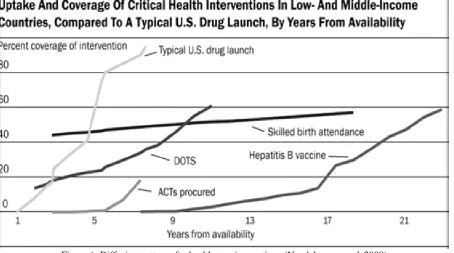
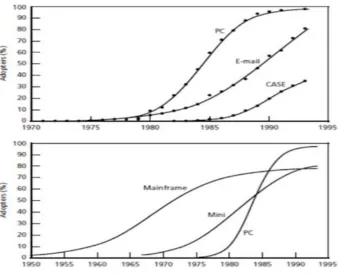
the pattern in which new technologies are adopted into general use by an “S-shape” curve (figure 1 and figure 2). The same authors go on to infer that technological advances in health care for high income settings consistently redefine the health care industry and rapid diffusion of well financed new technologies is proving to be a worthwhile investment.
92
Copyright © 2018. IJEMR. All Rights Reserved.
Figure 2: Diffusion of selected information technology (Bower, 2005)There is no doubt that the delivery of quality health care requires combined efforts from the care providers and the patients as they integrate complex information from many different sources (Glenn and Hackbarth, 2004). The dynamicity of information technologies is also expected to increase the potential to improve quality, safety and efficiency in health care. As an example, the introduction of tele-radiography, picture archiving and communication systems (PACS) was anticipated to bring positive changes in radiography (Bushong, 2013). This technology is particularly important because it captures and integrates diagnostic and radiological images from various devices (e.g., x-ray, MRI, computed tomography scan), stores them, and disseminates them to a medical record, a clinical data repository, or other points of care (Glenn and Hackbarth, 2004). However, in any setting, the model of acceptance still influences the successful introduction of the above mentioned systems as the cost and the complexity of such systems generally affect the diffusion rate.
Evidence suggests that hospitals have are quick in adopting technologies that produce revenue such as medical equipment (Glenn and Hackbarth, 2004). The same authors goes on to infer that very few health care providers have adopted information technology due to the complexity of the inputs required which go beyond acquisition of the technology. This is logical because such inputs are far reaching as they include changing work processes, culture and ensuring that the continuum of health care providers use the technology (Glenn and Hackbarth, 2004). An understanding of how information technology is diffusing across the providers of a state such as government is significant as it influences the decision to spur further or not and also affects the choice
of the steps to be taken in this endeavour. The potential to improve care makes broader diffusion of information technology desirable in health care with minimum barriers. For instance, Glenn and Hack Barth, (2004) concur on the notion that PACS can lower the costs of acquiring and storing films by storing digitized radiology images thus resulting in the reduction of workload among radiology staff.
According to a survey study done by Glenn and Hackbarth, (2004) on 12 hospitals to investigate the diffusion and utilisation of PACS, 10 had PACS and 1 was implementing it and the last centre had put out a request for proposals. They report that most of the hospitals reported positive returns following the installation of the system. This alone suggests that the diffusion estimates for PACS, at least, is becoming more common, perhaps in part because the financial return is evident. The authors note that one of the smaller hospitals was less advanced in its use of IT purchased PACS hence the prediction of a negative return on investment mostly but not limited to low volume of imaging in the facility (Glenn and Hackbarth, 2004). As such, the number of the patients attended to in a department over a period of time can be considered to influence technology diffusion, acceptance and ultimately the utilisation.
93
Copyright © 2018. IJEMR. All Rights Reserved.
technology utilization and predictor variables that affecttechnological acceptance in imaging departments in Swaziland.
II.
DATA COLLECTION
PROCEDURES
Data collection was preceded by ethical consideration process to attain consent from the respondents from various imaging centres. This was followed by attainment of ethical clearance from the Medical Research Ethics Board of Swaziland. The data collection instruments in the form of questionnaires and interview questions were designed by the researcher drawing from literature. The Technological Acceptance Model (TAM) which has been documented as the most suitable in investigating user acceptance of mobile technology in the health care industry was utilized in the formulation of the questions (Oshlyansky et al. 2007). This model, being based on the principles established on Fischbein and Ajzen attitudes paradigm of psychology, specifies how to measure behaviour relevant components of attitude and specifies how external stimuli are casually linked to beliefs, attitudes and behaviour. The information drawn fed into the aim of understanding human experience in order to reveal the process by which the respondents constructed meaning about technology acceptance in their work places with growing innovations (Seed, 2013). The use of such qualitative methods in the study afforded the researcher an opportunity to give a description of the trends amongst the respondents participating in the study.
The instruments were piloted and administered by the researcher in an effort to get respondents’
III.
DATA ANALYSIS
Respondents gave their opinions, perspectives and attitudes towards the subject guided by the questions they were required to respond to, consistent with a study done by Oshlyansky et al.,(2007). Data collected from the questionnaires was grouped according to open ended and closed ended nature of the questions. The responses were documented in a tally system. Interview question responses were also documented in categories. In order to establish the technology diffusion pattern and utilization, identified were the different types of imaging modalities that were utilized in the 9 centres that participated in the study alongside the prevalence of each modality throughout all the centres. Data was grouped together in categories by tallies. Making use of Statistical Package for Social Sciences, illustrations in the form of graphs and charts were formulated in line with the data analysis methods implemented by Bower, (2005) and Nandakumar et al., (2009).
IV.
RESULTS
94
Copyright © 2018. IJEMR. All Rights Reserved.
Figure 3.0 Distribution of imaging centers in SwazilandThere were 3 government hospitals, 3 mission hospitals and 3 private clinics that were investigated during the course of study. Six out of the 9 centres were purely clinical and 3 were teaching hospitals. None of the centres that participated in the study were research institutions or centres. There were 4 referral hospitals
and 3 clinics and two institutions were uncertain of the type of classification they fell under. There were 29 radiographers in imaging departments in the four regions of Swaziland targeted for the study. Table 1.0 shows the target population of radiographers and number of centres investigated in each region of the Swaziland.
Table 1: Population of radiographers targeted in Swaziland
Region Number of radiographers Number of centres
Hhohho 6 2
Manzini 9 3
Shiselweni 5 2
Lubombo 4 2
Out of the 29 that were targeted only 24 participated in the research which gave an 83% response rate. The remaining 17% of the members of the target population chose not to participate in the study. Their refusal was well within their rights as participation was voluntary. Nine imaging departments were enrolled for the study. Figure 4 shows the observed technology diffusion pattern for various technologies in imaging departments in Swaziland. The research findings highlighted that the introduction of the first ultrasound scanner occurred in 1985 which triggered the diffusion of technologies other than conventional/general radiography in Swaziland. The first CT machine was
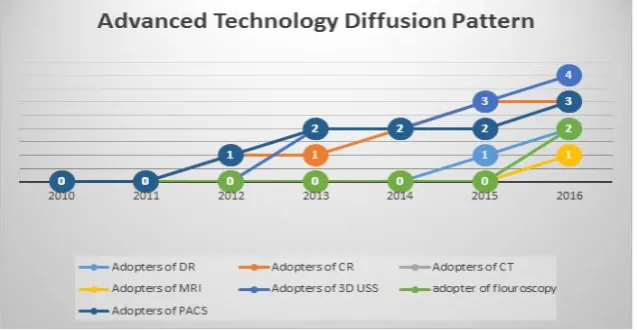
introduced in 2001 at a government hospital. More than a decade later the year 2013 saw the installation of the first 16 slicer CT scanner along with the first PACS. The first computer radiography system was installed in 2014. This system was introduced by the upgrading of a previously conventional radiography type of system into a computer radiography imaging system through maintaining the same x-ray tube and in-cooperating a computer console and imaging plate reader. In 2016 the first MRI scanner was installed along with the first digital Fluoroscopy unit, 3D/4D ultrasound scanner and digital radiography system.
95
Copyright © 2018. IJEMR. All Rights Reserved.
Figure 5: Prevalence of Imaging TechnologyThe introduction of advanced imaging or specialised imaging modalities has been relatively non evident during the first decade of the new millennium in Swaziland. This preceding statement is supported by the evidence depicted in figure 6 which illustrates that most
of the introduction of new technologies or innovations has occurred in the second decade with the adoption of computed radiography and PACS and improvement of CT technology pioneering the technology diffusion.
Figure 6: Advance Technology Diffusion Pattern
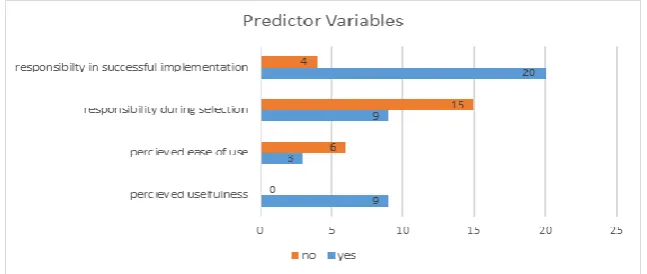
With the use of questionnaires (with both open ended and closed ended questions) a number of factors that can influence technology utilisation were identified. The factors were deduced from questionnaires used in the technology acceptance model (TAM). Figure 8 depicts the factors investigated and the results that were obtained from the respondents. From the results 83%, (20) of the respondents expressed that they had been responsible for the successful implementation of the technologies introduced in their departments. This response emanated from the fact that they had participated in the trainings that where hosted by the suppliers the equipment. The remaining 17%, (4) stated a number of reasons for the lack of responsibility such as failure to participate in training due to other
96
Copyright © 2018. IJEMR. All Rights Reserved.
Figure 8: Predictor variablesOut of the 9 respondents that had responsibility during the selection process 67%, (6) responded with a no with regards to perceived ease of use being a factor influencing the selection of a type of technology. This was because they had minimum information from the suppliers in the form of brochures or due to funds being more of an overbearing factor in the selection that any other. The remaining 33%, (3) responded with a yes and expressed that previous use of the same system at a different center or a similar systems by the same manufacturer which were more user friendly influenced their selection. All the respondents further went on to agree that perceived usefulness had been an influential factor in the selection process. As such priority technologies had to be at the top of the list and purchased first. These were identified as beneficial to the patients taking into consideration the prevalence of the number of patients turned away due to the absence of a particular type of equipment.
Respondents had various versions of the explanation on how the new technologies were received in their various departments. They all agreed that the equipment had arrived with a number of technicians from the suppliers such as General Electric (GE) who oversaw installation. The equipment was received by the HOD of the department according to 78%, (19) of the respondents with the help of a member of the biomedical department who went on to sign forms confirming receipt of the equipment and was also present during the installation of the equipment. The remaining 22%, (5) highlighted that the HOD received and signed for the equipment alone.
For all the centres the technicians who installed the equipment were the same individuals who commissioned the equipment. The commissioning process involved orientation on the basic controls on the machine and the various daily maintenance and quality control test for the technology. One center also expressed the coverage of basic trouble shooting methods for one of their digital systems. 33%, (3) of the centres stated that scan protocols for CT or MRI were also established during the commissioning process.
V.
DISCUSSION
The participating centres were selected from all the four regions of Swaziland. This was done in an effort to ensure that the results may be representative of the whole country and therefore enabling generalizable conclusions. Regarding the nature of the participating centers, there were 3 government hospitals, 3 mission hospitals and 4 privately owned clinics. Consistent with Seed (2003), the nature of the organization, it being government sponsored or mission sponsored was a factor in the diffusion of innovation and maintenance of transparency and captivation of the end users. In the case for Swaziland the researcher established that privately owned centres have more up to date technology as compared to mission and government owned centres which was invariance with the aforementioned literature.
None of the centres in this study were part of research hospitals or research centres themselves. Research hospitals have been said to offer not only better service delivery to patients but have been associated with better ways of care due to outcome based research and development and utilisation of new technologies (System, 2017). In this light, the absence of a research hospital may be contributing to the slow roll out of newer technologies in the country if the observation by System, (2017) is to be considered. Private centres were identified to be the departments that were the first to introduce new technologies. The need to remain relevant in the dynamic environment pushes centres to purchase new imaging modalities despite their high cost. The challenge with government centres was identified to be the reliance on donations for funding for purchasing of the new technologies. According to the Swaziland National TB Strategic plan (National Strategic Plan, 2015-2019), despite the efforts of the Swaziland government through the national health strategic plan, imaging department improvements in terms of acquiring new and better equipment and increasing staffing levels have not been occurring at the desired or anticipated pace.
97
Copyright © 2018. IJEMR. All Rights Reserved.
Care and Treatment Program (ICAP) and Special NeedsActivity Programs (SNAP) certain radiography technologies were identified as having been purchased and were being commissioned for use in the country. It is important to mention that even though not included in the statistics of the data in this research, the researcher observed that as part of the Swaziland National TB Strategic plan (National Strategic Plan, 2015-2019) a one stop mobile TB clinic with a digital Chest radiography x-ray unit with a remote viewing area was purchased in September 2016. This x-ray machine along with the mobile medical laboratory was anticipated to bring about tremendous change in the diagnosis and monitoring of Tuberculosis in remote areas of Swaziland. Such a finding further supported the notion that funding does affect the diffusion of technology.
Incentives and rewards contribute significantly to the adoption and utilisation of an insurance based health system according to Glenn and Hackbarth, (2004). The fully digital radiography departments were recently opened departments at the time of this study. The following companies where identified as suppliers General Electrical, X-ray Africa, Carestream mobile, Philips and Siemens. Upon inquisition it was discovered that these suppliers where chosen based on their close geographical proximity to Swaziland. According to the respondents, the closer a supplier, the better and faster the maintenance services. Supplier equipment financing options, benefits and their provision of in-house training for staff members after the installation of the equipment was also stated to be a factor that influenced the choice of supplier.
The past 5 years has seen an increase in the diffusion technology in Swaziland. This has been characterized with installation of PACS and the initial conversion of conventional radiography departments to computed radiography departments which occurred in 2012. From the data collected, this was attributed to the low cost involved in converting a conventional radiography imaging system to a computed radiography department and purchasing of PACS systems. This implementation of new advanced technology was in line with the 2008- 2012 National Strategic Plan of Swaziland.
were identified in the imaging centres all had tomosynthesis capabilities. However at the time of the study, all centres with these systems were awaiting commissioning of the technologies as such were not yet being utilized. All respondents agreed that the equipment had arrived with a number of technicians from the suppliers. The technicians who installed the equipment were the same individuals who commissioned the equipment. The commissioning process involved orientation on the basic controls on the machine and the various daily maintenance and quality control test for the technology. The introduction of all these new technologies and modalities is anticipated to improve diagnostic process and improve patient outcomes according to the respondents.
Through the use of questionnaires with both open ended and closed ended questions, a number of factors that can influence technology utilisation were investigated. The factors were deduced from questionnaires used in the technology acceptance model (TAM). Staying up to date in terms of technology has been identified to be a contributing factor when it comes to business success and delivery of quality services (Murtagh and Foerster 2009). The respondents highlighted that the introduction of some of the new imaging modalities had been motivated by the high number of new clients and the desire to increase customer satisfaction. The requisition for contrast studies for patients had increased since the installation of a digital fluoroscopy unit at a particular centre. The usefulness of the technology had been hampered by the increase in patient numbers, increasing the workloads. According to the respondents the installation of the new technology had increased the workload on the radiographers resulting in differing notions with regards to the perceived usefulness especially in departments that have not seen a corresponding increase in the staffing levels at the time of the study.
98
Copyright © 2018. IJEMR. All Rights Reserved.
confirming receipt of the equipment and was alsopresent during the installation of the equipment. According to Glenn and Hackbarth, (2004), incentives and rewards contributed significantly to the adoption and utilisation of an insurance based health system.
The successful and productive utilisation of the new installed equipment has been said to hinge on the level of acceptance by the radiographers. 63%, (15) of the respondents stated that they had not been part of the selection panel for some of the technologies that had been implemented in their departments. These respondents expressed that their exclusion in the equipment selection process made them feel irrelevant to their employer. Failure to receive or attend training on utilisation of the new technologies in some instances attributed to the reduction in the acceptance levels amongst some of the respondents. This affected their moral at work and slowed down the acceptance process. Interestingly one of the respondents highlighted that their knowledge in equipment was limited so they did not mind their exclusion from the selection team provided they got the necessary training on the utilisation of the equipment. This can be linked to the study that was conducted by Darzi and Parston in 2013. In their study they identified that attitudes and behaviour have a significant role in spearheading technology diffusion and acceptance.
Responsibility in the selection process of the new technologies rested on 37%, (9) of the respondents in this study. Out of the 37%, the perceived ease of use was indicated to be an influencing factor in 33%, (3) of the respondents and for the perceived usefulness, 100%, (9) of the respondents indicated having been influenced. According to Taiwo and Downe, (2013) radiographers’ perceived ease of use was also found to influence the intension to use the particular innovation in the study they conducted.
Social interaction has been identified to be an independent driver of adoption alongside with being associated with the true variables that drive adoption (Bower, 2005). The role of research is significant amongst all the drivers of adoption of advanced health care technology. Dependence on aspects that are not easy to control, predict or alter such as motivation of the end users to adopt the innovation, regulations, culture and structure of an organization were evident to be in line with the findings from a study done in 2009 by Nandakumar et al.
VI.
CONCLUSIONS
Technology diffusion pattern reached its peak in the second decade of the 21st century in Swaziland. The diffusion has been pioneered by the introduction of computer radiography systems and PACS. These systems have been of choice due to their relatively low cost. Both private and public imaging departments have been noted to be a part of the revolution. However private centres were seen to enjoy more financial support for purchasing the new technologies.
Upon calculation it was established that the estimated diffusion rate for all imaging technologies investigated in this study is approximately 3 imaging technologies introduced per year in the last 6 years. More specialized imaging systems such as CT, 3D and MRI have been identified to be more centralized in the private sector. This may be attributed to the high purchasing power they possess. Private departments were identified to have access to funds for purchasing the expensive equipment which can cost up to USD$150 000. Suppliers are more willing to offer equipment financing options to private company and not government owned centres in general.
Technology acceptance model was found to be applicable to the radiography setting in Swaziland with predictor variables such as the perceived ease of use and the perceived usefulness affect the technology acceptance and utilization. However user’s competence was outpaced by the dynamic nature of medical imaging technologies. A proportion of the respondents were observed to have participated in the process of selecting equipment even though others didn’t seem to mind being excluded provided they get the necessary training to utilize the equipment. All of the respondents (100%) expressed the need for a forum to discuss advances in the radiography profession both in terms of equipment and methods of practice which is currently absent in Swaziland. Noted was that the technology acceptance model is applicable to the radiography setting in Swaziland.
RECOMMENDATIONS
There is a need to conduct a research extensive enough to cover the other departments that the researcher was not able to cover in this study. The information would give a true image of the current technology diffusion, utilisation and acceptance for the whole of Swaziland. The results from that study would then be used to exert pressure on policy makers to purchase up to date technologies in all departments in an effort to improve patient management. Technology diffusion being is a dynamic process that needs continuous policy reviews.
Equation 1.0: Rate of diffusion (Bower 2005)
Where
N(t) is the proportion of the total potential adopters at time t;
a is the coefficient of “external” influence(vendors and the government);
99
Copyright © 2018. IJEMR. All Rights Reserved.
and not limit the study to technology in the form ofequipment. Such a study could be linked to role extension and expansion practices studies in an effort to improve services rendered to patients from a holistic point of view.
Technology diffusion is undoubtedly associated with increased spending. There is need to seek funding for further research into areas that explore methods of assisting the government sector in acquisition of equipment such as MRI units and 3D ultrasound scanners. As the advantages of such modalities have been discussed, decentralizations of such imaging modalities will give access to all that need the services across the Kingdom.
There is need to establish a forum for radiographers to engage each other and stakeholders in an effort to disseminate information on emerging technologies. This can be achieved through seminars and workshops arranged for radiographers or the establishment of radiographers’ association in Swaziland
LIMITATIONS OF THE STUDY
A challenge was meet where misreporting of the advent of a particular system if it occurred decades ago resulting in a bias towards under reporting of initial dates of use of some technologies in Swaziland
REFERENCES
[1] Boote, N.D. & Beile, P. (2005). Scholors before researchers: On the centrality ofthe dissertation literature review in research preparation. Educational Researcher, 34(6), 3-15.
[2] Bower, G. (2005). The difussion and value of
healthcare information technology. Pittsburg: The
RAND Coperation. Available at:
health. Available at: http://www.wish.org.qa/wp-content/uploads/2018/01/IMPJ4495_WISH_GDHI_WE B-1.pdf
[7] Glenn, M. & Hackbarth, J. (2004). New Approaches
in Medicine. Washington DC: Medpac.
[8] Kowalczyk, N. (1984). The importance of motivating
radiology department employess. Available at:
https://www.ncbi.nlm.nih.gov/pubmed/6494448
[9] Maree, K. (2016). First steps in research. (2nd ed.). Pretoria: Van Schaik.
[10] Murtagh, J. and Foerster, V. (2009). Managing
technology diffusion. Canadian Agency for Drugs and
Technologies in Helath. Available at:
https://www.cadth.ca/media/policy_forum_section/Mana ging_Technology_Diffusion_e.pdf
[11] Oshlyansky, L., P, C. and H, T. (2007). Validating the unified theory of acceptance and use of technology
tool cross culturally. Swansea, University of Wales
Swansea. Available at:
https://pdfs.semanticscholar.org/2233/589e2638d224dd8 efa36c1d7436fb72a9bad.pdf?_ga=2.213427860.1843319 565.1528358645-512006422.1528358645
[12] Phichitchaisopa, N. & Naenna, T. (2013). Factors affeting the adoptation f health care information
technology. Thailnd, Mahidol University. Available at:
https://www.ncbi.nlm.nih.gov/pmc/articles/PMC456691 8/
[13] Davis N. (2007). Health information
technology. (2nd ed.). Philadelphia, PA:
Saunders/Elsevier.
[14] Taiwo, A. & Downe, A.G. (2013). The theory of user acceptance and use of technology: A meta analytic review of empirical findings. Journal of Theoretical and
applied information technology, 49(1), 48-58.
[15] Van Bemmel J. & Musen M. (1997). Handbook of