215
Copyright © 2018. IJEMR. All Rights Reserved.
Volume-8, Issue-3, June 2018
International Journal of Engineering and Management Research
Page Number: 215-223
DOI:
doi.org/10.31033/ijemr.8.3.28
Impact of Mathematics Anxiety on Undergraduate Mathematics Students
in a Gulf Country
Maitham AlMuharraqi1 and George Toworfe2
1Programme Manager, School of Foundation, Bahrain Polytechnic, Kingdom of BAHRAIN 2Maths Tutor, School of Foundation, Bahrain Polytechnic, Kingdom of BAHRAIN
*
Corresponding Author: [email protected]
ABSTRACT
Mathematics anxiety has been established to negatively influence students’ learning experiences in Mathematics. There is, however, no data available on this condition in undergraduate students in any of the Gulf countries in the region. This study therefore seeks to bridge the knowledge gap about how Mathematics anxiety influences learners in undergraduate Mathematics programmed in a GCC country. Researchers constructed a measurement scale comprising two sections: where the first section addresses Mathematics anxiety among undergraduate leaners in the course of studying mathematics and the second section relates to the levels of anxiety exhibited by learners when taking assessments. The scale was modified from the original Mathematics Anxiety Rating Scale (MARS) model. The data obtained was analysed using descriptive statistics and one-sample t-test at 95% level of confidence. The results suggest that most learners exhibit high to extreme levels of anxiety while taking Mathematics assessments, whereas they showed moderate to low levels of Mathematics anxiety while studying Mathematics, although some of the learners did exhibit extreme anxiety levels while studying the subject.
Keywords---Anxiety,Foundation, Rating Scale, R-MARS,
Undergraduate
I.
INTRODCUTION
Mathematical proficiency is essential for working in today‟s advancing technological era. The significance of mathematics goes beyond the academic domain and basic skills in mathematics are required for daily living. Mathematics anxiety, which impacts directly on Math‟s proficiency, is not a new concept but has been well-documented since the 1950s [1][2][3][4][5][6]. The term first appeared when some teachers of mathematics were observed while teaching, in the early 1950s and was
introduced to depict learners' attitudinal challenges with mathematics [7].
One of the published data [8] proposed three distinct time frames within which mathematics anxiety was measured. Within the first-time period, most of the reviews were simply authors‟ conclusions and did not show any standardized mathematics anxiety measures. The focus within that time was devoted to the definition of mathematics anxiety [9]. This was later shifted to the assessment of attitudes towards mathematics [1]; followed by the development of standardized mathematics anxiety instruments, the Number Anxiety scale [7], Mathematical Anxiety Rating Scale [2], the Fennema-Sherman Mathematics Attitudes Scales [10], the Anxiety Towards Mathematics Scale [11], and the Mathematics Anxiety Questionnaire [12]. The Mathematics Anxiety Rating Scale (MARS) developed by Richardson and Suinn [2] is one of the most extensively used mathematics anxiety instruments. It was revised from its original form (which comprised of 98 items) to a Revised Mathematics Anxiety Rating Scale (R-MARS) [13], with 24 items.
Research data [6] has reported that as low as 7% of Americans have been positively impacted by mathematics anxiety right from the kindergarten through to college, whereas 66% of adults are said to be negatively affected and as such are dreadful of mathematics. The Primary school is thought to be the starting point of mathematics anxiety [14] [15] [16] [17] [18], where students are reported to exhibit a total dislike for mathematical contents, especially when instructed in basic skills in mathematics rather than in the ideas that generate the skills [14] [15] [16] [17] [18].
216
Copyright © 2018. IJEMR. All Rights Reserved.
found that the willingness or reluctance of most college students to pick up and/or drop advanced mathematics courses may be attributed to their poor mathematics anxieties, probably dating back to their primary school era. Mathematics anxiety, which is more than a dislike for mathematics, has been found to negatively influence students‟ attitudes, beliefs, and perceptions in mathematics [21]. It has been defined as a state of discomfort that occurs when an individual is required to perform mathematically [19], or the feeling of tension, helplessness, or mental disorganization an individual undergoes when requested to manipulate numbers and shapes [21][7]. One key research group in Mathematical Anxiety [22], defined it as “Feelings of tension, apprehension, or even dread that interferes with the ordinary manipulation of numbers and the solving of mathematical problems”. Mathematics anxiety has, so far, been reported to result in a debilitated state of mind that could develop into a higher level of mathematics avoidance and phobia [17].
Mathematics Anxiety in Teachers and Learners
Jackson and Leffingwell [4] suggested that mathematics anxiety could be observed among elementary school pupils in as early as their third or fourth grades if their teachers were prone to mathematics anxiety. The report also indicated that teacher behavior was a prime determinant of mathematics anxiety and is usually evident early in the primary school pupils. College students would have preferred not to select any mathematics-related courses when given the choice, since their individual mathematics anxieties often lead them to avoid the subject altogether [3]. As a result, the mathematical backgrounds of most elementary/primary school teachers tend to be weak in content knowledge and mathematical experiences [23] [24] [25].
Some elementary educators were identified as having a limited knowledge of mathematics as well as a limited knowledge of research in mathematics education, and as a result, were not able to teach mathematics due to their backgrounds and personal anxieties [23] [24] [25]. These limitations enabled them to implement only a restricted number of mathematical instruction strategies in their classroom environments [24] [26]. Data collected on students in teacher training colleges indicated that elementary education majors were usually identified as a largely female population, and this population was observed to have the highest level of mathematics anxiety and mathematics evasion behaviors compared to other college majors [3] [14] [27] [28]. It is believed [29] [30] that many teachers who exhibit mathematics anxiety not only influence, but inadvertently pass on their anxieties to the students they teach. Furthermore, it was learnt [31] that elementary/primary school teachers having high levels of mathematics anxiety spent less time planning mathematics lessons and instead used mathematics instruction time for non-mathematics related activities.
Brady and Bowd [32] also found that about 39% of prospective elementary school teachers reported that mathematics was the subject they least liked and were therefore uncomfortable teaching it [30].
Mathematics anxiety influences students‟ motivation to learn mathematics, since it is related to the feeling of being tensed or anxious while solving mathematical-related problems or working with numbers [2]. Students with mathematics anxiety may not necessarily suffer from other subject-related anxieties. In a study, Hembre [3] found that students enrolled in mathematics courses exhibited the highest level of mathematics anxiety compared to their undergraduate counterparts (in the humanities or social the sciences).
Many negative outcomes are linked with mathematical anxiety. For instance, students with high levels of mathematical anxiety ordinarily develop negative feelings towards mathematics. They are less inclined to pursue mathematics-related vocations and probably the most serious outcome of mathematics anxiety is a decreased level of accomplishment. In their review on students' performance in mathematics, Cates and Rhymer [33] found that students with more elevated levels of mathematics anxiety had significantly lower levels of computational capabilities in all ranges of numerical calculations. These low levels tend to reduce students‟ accomplishments in mathematics and probably adds to their negative attitudes towards the subject.
One of the major challenges researchers faced when measuring mathematics anxiety was related to society‟s influence on students‟ beliefs regarding mathematics. In a study [34] on the relationship between mathematics anxiety and social desirability, the researchers established that men, in colleges, are unlikely to report their feelings of anxiety toward mathematics than women, because men consider it socially unacceptable to experience mathematics anxiety. This finding suggests that researchers will have a more difficult time measuring the mathematics anxiety of male students than that of their female counterparts. In addition, the study reported that researchers and college administrators should be alert when using the mathematics anxiety measuring scale in circumstances that screen students for special mediation programs or other scholastic prospects since some students may be disregarded because of their reluctance to truthfully react to questions on mathematics anxiety.
One other component that contributes to students‟ mathematics anxiety is the kind of instructional strategies used in the classroom. An investigation [35] into how two instructional strategies, discovery and expository, impacted students' mathematics anxiety in an undergraduate core mathematics course revealed that students with higher levels of mathematics anxiety scored high marks on achievement test when taking expository-format
217
Copyright © 2018. IJEMR. All Rights Reserved.
performed better in the discovery course. The report established a connection between mathematics anxiety and confidence and indicated that students with more elevated levels of anxiety would show lower levels of confidence in mathematics and therefore would be less likely to perform well in mathematics-related courses. This is an indication that the level of confidence required on the part of a student to learn mathematical concepts is dictated by the instructional strategies.
Although very little data is available on how students‟ attributes, such as gender or high school experience, influence the development of mathematics anxiety, however researchers have only focused on the contribution of mathematics anxiety to students‟ performances. They initially believed that poor performance prompted students‟ feeling of mathematics anxiety and predicted that students with low achievement in mathematics would generate negative feelings and attitudes towards mathematics, causing them to maintain a deliberate distance from the subject later [3]. This level of apprehension could cause students to continue performing poorly, affirming their feelings and attitude towards mathematics. Once caught in this endless loop, it becomes difficult for students to reduce their mathematics anxiety without any sort of intervention.
Even though this evading cycle is evident among students with high mathematics anxiety, there is, however, no significant evidence to suggest that low performance contributes to mathematics anxiety [36]. To determine whether students‟ working memory influenced their levels of mathematical anxiety when they embarked upon mathematical tasks, Ashcraft and Kirk [37] found that mathematics anxiety interfered with the ability of the student‟s working memory to concentrate on mathematical tasks. They also reported that this working memory interference not only causes students to spend longer times when doing mathematical tasks but also reduces students‟ precision.
In addition to the observed working memory interference among students, they were also reported to have felt more anxious when doing assessments in mathematics within a given time frame [4]. Data from a qualitative study [38] which investigated students‟ mathematical performance under imposed time constraints indicated that students struggled under imposed time constraints. Even though they demonstrated a high level of understanding of the mathematical concepts during lessons and in homework assignments, they failed in class assessments due to the time constraints imposed on them to work. When the time restrictions were removed, students obtained excellent grades in their assessments and were able to complete the tasks within the original stipulated time. The research proposed therefore, that students‟ concerns about time constraints interfered with their ability to focus on the tasks in mathematics assessment and that being perturbed about the amount of
time left effectively reduced the extent of their working memory left to work on mathematical tasks assigned to them during assessments.
Considering the effect mathematics anxiety has on students, it is crucial to find out the causes of mathematics anxiety. Data [4] obtained from 157 undergraduates who presented reflections on their mathematical experiences from Primary schools through to colleges identified the different situations that had contributed to their heightened stress levels in mathematics. 27% of the students indicated that their first unpleasant encounters in mathematics were at the tertiary level, where learners reliably recognized that encounters with tutors/lecturers affected their emotions and states of mind toward mathematics. These encounters included lecturers‟/tutors‟ disdainful remarks, negative attitudes and conduct toward students and lack of appreciation of students‟ levels of understanding. Different researchers have additionally reported that lecturers/tutors‟ demeanors toward both students and the courses they teach, can impact students‟ responses [39].
II.
METHODOLOGY
Measuring Mathematics Anxiety
The scale most widely used to quantify and investigate mathematics anxiety is the Mathematics Anxiety Rating Scale (MARS) [2]. Researchers presumed that the few people who did not ordinarily experience the negative effects of general anxiety were still influenced by mathematics anxiety. Richardson and Suinn [2] constructed the MARS to specifically examine mathematics anxiety. The reason for MARS was to enable researchers scrutinize mathematics anxiety and to propose mathematics anxiety alleviation strategies. The scale originally comprised of 98 items which addressed students' anxiety levels when dealing with mathematical concepts and playing with numbers. MARS has since been utilized by researchers to study the effect of mathematical anxiety on students and the effectiveness of mediation programs intended to alleviate this condition [40] [41] [42] [34] [43].
Researchers have utilized MARS and factor analysis to investigate the different measurements of mathematics anxiety. Rounds and Hendel [40] discovered two essential components of mathematics anxiety when utilizing the MARS instrument, which were the Mathematics Test Anxiety (MTA) and Mathematics Numerical Anxiety (MNA). The MTA factor addressed students‟ feeling of anxiety before, during, and after mathematics assessments (that is, items related to learning, studying, test taking), while the MNA factor considered manipulation of numbers, mainly in arithmetic (that is items pertaining to daily use of mathematical concepts and computations).
218
Copyright © 2018. IJEMR. All Rights Reserved.
Some efforts were, therefore, made to review the instrument by excluding repetitive or apparently redundant items [40] [44] [13]. A significant number of attempts to abbreviate the MARS instrument was made by using suitable generalizability but neglected to examine how the items were adjusted. To create a shorter version of the MARS for use in different settings, a 30-item MARS scale was reconstructed [45], which was a revised version of the first MARS instrument based on the MTA and MNA variables.
The Revised Mathematics Anxiety Rating Scale
The measuring scale used in this study is an adaptation from Revised Mathematica Anxiety Rating Scale (R-MARS). The scale is made up of 24 questions which is scored on the 5-point Likert scale, where 1 represents “No anxiety” and 5 represents “Extreme anxiety”. It is a two-factor model scale, where the first factor is the Learning Math Anxiety, comprising the first 16 items that measure anxiety levels experienced by students when they embark on activities that relate to studying mathematics, including “Reading and interpreting graphs or charts”. The second factor, comprising 8 items, is the Math Evaluation Anxiety that measures the levels of anxiety experiences that students undergo when their mathematical skills are being evaluated (taking a final assessment).
MARS was originally developed by Richardson and Suinn [2] as a 98-item tool to diagnose and recommend treatments for mathematics anxiety. Initially, the tool portrayed one general factor. Later, however, factor analysis by Rounds and Hendel [40] classified the scale into two factors: which were MTA and MNA. The scale was, later, shortened to 24 items [46] to achieve reliability and validity. It still had two factors with similar reliability, validity numbers and an internal consistency of α = 0.98. The first factor was labeled as the Mathematics Learning/Course Anxiety and the second as Mathematical Evaluation/Test Anxiety.
To date, there is no published data available on the levels of Mathematics Anxiety exhibited by learners in higher educational institutions across any of the Gulf countries. This study therefore, seeks to explores the prevalence of Mathematics Anxiety among undergraduate students in one of the Gulf countries using the R-MARS scale to measure learners‟ levels of Mathematical anxiety. The study will modify and adapt the R-MARS to determine whether mathematics anxiety is prevalent among undergraduate students in Foundation Mathematics and to determine the impact of this condition on the performance of students enrolled in undergraduate Mathematics programme.
Data was obtained by employing the survey method. The R-MARS measurement scale was used by administering the revised and adapted R-MARS scale. The measurement scale was drastically revised to reflect the socio-cultural dynamics that prevail within the Polytechnic environment in order not to infringe on respondents‟ fundamental rights and privacy. The R-MARS was adapted to follow the 5-point Liket scale. The measurement instrument was modified using Google plug-ins like Google forms to obtain a two-factor model scale. The two-factor model scale involved categorizing the questions on the measurement scale to reflect the impact of Mathematics anxiety while studying mathematics and the impact while taking assessments. After piloting the questionnaire, it was administered to the sampled students‟ population. The measurement scale was administered to a sample size of 140 Foundation Mathematics students at the Polytechnic who were drawn from the three different categories of Foundation Mathematics courses. Both qualitative and quantitative data was collected in this study since the questionnaire generated both types of data. The data was further analyzed using non-parametric, chi-squared test and One-sample t-tests in SPSS.
III.
RESULTS
TABLE 1
219
Copyright © 2018. IJEMR. All Rights Reserved.
Figure 1. The histogram depicts the levels of anxiety exhibited by Foundation Mathematics students during the period
of studying (Learning Process) Foundation Mathematics courses.
From Table 1, 2520 responses were obtained from all the 15 questions relating to the period of studying Mathematics courses, which is referred to as the Learning Process. Data obtained (Table 1 and Figure 1) show that over 66% of students exhibit some levels of anxiety up to extreme anxiety, an indication that only about 33% of students claim not to suffer any form of Mathematics anxiety when studying Foundation Mathematics courses. It is alarming to observe that a high percentage of students
exhibit various levels of mathematical anxiety when studying a Mathematics course, since one would have expected anxiety levels to be non-existent when students are engaged in the learning process. It is clear from the data obtained that 59.3% of students express low anxiety levels and around 18.4% express high levels of anxiety. This gives indication that most of the students investigated do not suffer from high level of anxiety throughout the studying stage.
TABLE 2.
220
Copyright © 2018. IJEMR. All Rights Reserved.
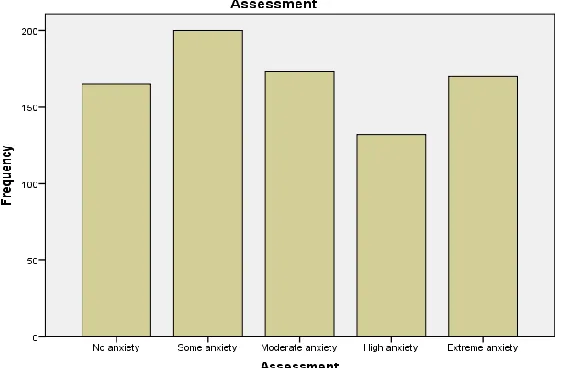
Figure 2: The histogram depicts the levels of anxiety exhibited by Foundation Mathematics students during the period of taking all types of assessments during the Foundation Mathematics courses (Assessment Process).
From Table 2, 840 responses were obtained from all the 9 questions relating to the period of taking Mathematics assessments, referred to as the Assessment Period. Data obtained from the study (Table 2 and Figure 2) show that over 80% of students exhibit various levels of Mathematical anxiety, from „some anxiety to extreme anxiety‟. Around 20% each of the respondents exhibited „some anxiety, moderate anxiety and „extreme anxiety‟; while around 15% of students exhibited high anxiety. There was a significant drop in the % of students showing „some anxiety‟ to moderate anxiety and then a significant increase occurred from „high‟ to „extreme anxiety‟. This shows clearly that over 56% students exhibited moderate to extreme anxiety when taking assessments in Foundation Mathematics courses. It was obvious therefore, that during the assessment period, as high as 43.5% of students express low anxiety level and around 35.9% express extreme levels of anxiety.
IV.
HYPOTHESES TESTS
This research further tested the following hypotheses:
1) H0: Students suffer from high anxiety during
course study process; and
2) H0: Students suffer from high anxiety during
assessment process
To test the two hypotheses, the researchers implemented the one sample t-test since the size of the sample was high enough to be considered as Normally Distributed.
Hypothesis 1 suggested that the level of Mathematical Anxiety in Foundation Mathematics students when studying Mathematics courses is high. To test the hypothesis, the results of the students‟ levels of Mathematical Anxiety when studying mathematics courses were analyzed (in SPSS) using one-sample t-test, as indicated. These results are summarized in Table 3.
TABLE 3.
ONE-SAMPLE (T-TEST) NON-PARAMETRIC STATISTICAL ANALYSIS DATA INDICATING THE OUTCOME OF THE HYPOTHESIS 1 TEST PERFORMED ON DATA COLLECTED ON STUDENTS DURING MATHEMATICS
221
Copyright © 2018. IJEMR. All Rights Reserved.
As indicated in Table 3, the calculated p-value for the level of was found to be 0 (p = 0), which was less than the significant p-value of 0.05. This shows that the mathematical anxiety levels of Foundation Mathematics students were generally low when they are engaged in studying courses in mathematics (that is, during the learning process). This suggests that the null hypothesis can be rejected at 95% level of confidence and therefore, students did not express high level of anxiety during the learning process.
Hypothesis 2 suggested that the level of Mathematics Anxiety in Foundation Mathematics students when they are taking any type of assessments is comparatively high. To test this hypothesis, the data obtained on the students‟ levels of Mathematics Anxiety when taking assessments in the Foundation Mathematics courses were analyzed (in SPSS) using one-sample t-test. The results are summarized in Table 4.
TABLE 4.
TABLE SHOWS ONE-SAMPLE (T-TEST) STATISTICAL RESULTS INDICATING THE OUTCOME OF THE HYPOTHESIS 2 TEST PERFORMED ON THE DATA COLLECTED ON STUDENTS DURING MATHEMATICS
ASSESSMENT PROCESS
From the table (Table 4), the calculated p-value for the levels of mathematical anxiety found in students taking assessments in Foundation Mathematics courses was found to be (p = 0.156), more than the significant p-value of 0.05 (at 95% confidence interval). This indicates that the mathematical anxiety levels of Foundation students during assessment periods were moderately high to extremely high. That is, the data suggests that the null hypothesis cannot be rejected at 95% level of confidence and therefore, students expressed high levels of anxiety during assessments.
The trend observed in the data available from this study may be due to the different categories of students represented in the cohort. It is likely that the data might be different if a higher proportion of the respondents were more mathematically inclined. A plausible explanation for this data was that respondents comprised of three different categories of students in Foundation Mathematics, which were the more abled ones (Mathematics 2 Technical), those who were quite able (Mathematics 2 General) and those with less ability (Mathematics 1). Furthermore, the study did not distinguish between the more abled students and the less able ones, as a result, a follow-up study should take into consideration the hierarchical categories of Foundation Mathematics students, since this will greatly influence the data obtained.
V.
CONCLUSION
It is obvious from the data reported that mathematics anxiety is prevalent among Foundation Mathematics students at the Bahrain Polytechnic and that the Revised Mathematics Anxiety Measurement Scale (R-MARS) has been successfully adapted and utilized to measure the levels of anxiety among the students. Students have been seen to exhibit higher levels of anxiety when taking Mathematics assessments, while they showed lower levels to no anxiety when engaged in leaning/studying Mathematics courses. Further studies, however, are recommended to investigate whether the development of mathematics anxiety in students might be influenced by students‟ physiological characteristics, like gender, ethnic background, learning experiences, as well as their socio-economic status.
222
Copyright © 2018. IJEMR. All Rights Reserved.
the subject increases. These issues, therefore, can be addressed in further mathematics anxiety research studies. Going forward, researchers will propose support mechanisms to develop soft skills to address this condition and determine suitable mechanisms for students to mitigate the negative effect of anxiety on their performances.
REFERENCES
[1] Dutton, W. H. & Blum, M. P. (1968). The measurement of attitudes towards arithmetic with a likert-type test. Elementary School Journal, 68(2), 259–263. [2] Richardson F. C. & Suinn, R. M. (1972). The mathematics anxiety rating scale: Psychometric data.
Journal of Counseling Psychology, 19(6), 551-554.
[3] Hembree, R. (1990). The nature, effects, and relief of mathematics anxiety. Journal for Research in Mathematics
Education, 21(1), 33-46.
[4] Jackson, C. D. & Leffingwell, R. J. (1999). The role of instruction in creating math anxiety in students from kindergarten through college. The Mathematics Teacher,
92(7), 583-586.
[5] Max, X. (1999). A meta-analysis of the relationship between anxiety toward mathematics and achievement in mathematics. Journal for Research in Mathematics
Education, 30(5), 520-540.
[6] Furner, J. M. & Duffy, M. L. (2002). Equity for all students in the new millennium: Disabling math anxiety.
Intervention in School and Clinic, 38(2), 67-72.
[7] Dreger R. M. & Aiken, L. R. (1957). The identification of number anxiety in a college population. Journal of
Educational Psychology, 48, 344–351.
[8] Hakan Çatlioolu, Osman Borgon, Serkan Coutu, & Ramazan Gurbuz. (2009). The level of mathematics anxiety among pre-service elementary school teachers.
Procedia Social and Behavioral Sciences, 1, 1578–1581.
Available at:
https://core.ac.uk/download/pdf/81138510.pdf
[9] Gough, M. F. (1954). Mathemaphobia: Causes and treatments. Clearing House, 28, 290–294.
[10] Fennema, E., & Sherman, J. A. (1976). Fennema-Sherman Mathematics Attitude Scale: Instruments designed to measure attitudes toward the learning of mathematics by females and males. JAS Catalog of
Selected Documents in Psychology, 6, 31.
[11] Sandman, R. S. (1980). The Mathematics Attitude Inventory: Instrument and user‟s manual. Journal for
Research in Mathematics Education, 11, 148–149.
[12] Wigfield, A., & Meece, J. L. (1988). Math anxiety in elementary and secondary school students. Journal of
Educational Psychology, 80, 210–216.
[13] Alexander, L. & Martray, C. (1989). The development of an abbreviated version of the mathematics anxiety rating scale. Measurement and Evaluation in Counseling
and Development, 22, 143–150.
[14] Harper, N. W. & Daane, C. J. (1998). Causes and reduction of math anxiety in pre-service elementary teachers. Action in Teacher Education, 19, 29–38.
[15] Uusimaki, L. & Nason, R. (2004). Causes underlying pre-service teachers ‟negative beliefs and anxieties about
mathematics. Proceedings of the 28th Conference of the
International Group for the Psychology of Mathematics Education, 4, 369- 376.
[16] Maloney, E. & Beilock, S. (2012). Math anxiety: Who has it, why it develops, and how to guard against it.
Trends in Cognitive Sciences, 16(8), 404-406.
[17] Tobias, S. (2014). Math anxiety and the common core. Ohio Journal of School Mathematics,70, 4-8.
[18] Beilock, S. & Willingham, D. (2014). Math anxiety: Can teachers help students reduce it? American Educator,
38(2), 28-32.
[19] Swars, S. L., Daane, C. J., & Giesen, J. (2006). Mathematics anxiety and mathematics teacher efficacy: What is the relationship in elementary pre-service teachers? School Science and Mathematics. 106, 306-315. [20] Wallace, K. (2005). America‟s brain drain crisis.
Reader’s Digest. Available at:
http://americabraindrain.blogspot.com/
[21] Beilock, S. L., Guderson, E. A., Ramirez, G., & Levine, S. C. (2010). Female teachers‟ math anxiety affects girls‟ math achievement. Proceedings of the National Academy of Sciences of the United States of
America (PNAS), 107(5), 1860-1863
[22] Ashcraft, M. H. & Faust, M. W. (1994). Mathematics anxiety and mental arithmetic performance: An exploratory investigation. Cognition and Emotion, 8(2), 97-125.
[23] Malzahn, K. A. (2002). National survey of science and mathematics education: Status of elementary school
mathematics teaching. Chapel Hill, NC: Horizon Research
Inc. Available at:
http://www.horizon-research.com/the-status-of-elementary-mathematics-teaching
[24] Hill, H., Rowan, B., & Ball, D. (2005). Effects of teachers‟ mathematical knowledge for teaching on student achievement. American Educational Research Journal,
42(2), 371-406.
[25] Ball, D. Thames, M., & Phelps, G. (2008). Content knowledge for teaching: What makes it special? Journal of
Teacher Education, 59(5), 389-407.
[26] Hill, H. Ball, D., & Schilling, S. (2008). Unpacking pedagogical content knowledge: Conceptualizing and measuring teachers‟ topic specific knowledge of students.
Journal for Research in Mathematics Education, 39(4),
372-400.
[27] Trujillo K. M., & Hadfield, O. D. (1999). Tracing the roots of mathematics anxiety through in-depth interviews with pre-service elementary teachers. College Student
Journal, 33(2), 219-232.
223
Copyright © 2018. IJEMR. All Rights Reserved.
teach mathematics and science. School Science and
Mathematics, 106(4), 173-180.
[29] Gresham, G. (2007a). An invitation into the investigation of the relationship between mathematics anxiety and learning styles in elementary preservice teachers. Journal of Invitational Theory and Practice, 13, 24-33.
[30] Geist, E. (2010). The anti-anxiety curriculum: combating math anxiety in the classroom. Journal of
InstructionalPsychology, 37(1), 24-31.
[31] Swetman, B. Munday, R., & Windham, R. (1993). Math anxious teachers: Breaking the cycle. College
Student Journal, 22(4), 421–427.
[32] Brady, P., & Bowd, A. (2005). Mathematics anxiety, prior experience and confidence to teach mathematics among pre-service education students. Teachers and
Teaching: theory and practice, 11(1), 37–46.
[33] Cates, G. L., & Rhymer, K. N. (2003). Examining the relationship between mathematics anxiety and mathematics performance: An instructional hierarchy perspective. Journal of Behavioral Education, 12(1), 23– 34.
[34] Zettle, R. D. & Houghton, L. L. (1998). The relationship between mathematics anxiety and social desirability as a function of gender. College Student
Journal, 32, 81–87.
[35] Clute, P. S. (1984). Mathematics anxiety, instructional method and achievement in a survey course in college mathematics. Journal for Research in
Mathematics Education,15(1), 50-58.
[36] Ashcraft, M. H. (2002). Math anxiety: Personal, educational, and cognitive consequences. Current
Directions in Psychological Science, 11, 181–185.
[37] Ashcraft, M. H. & Kirk, E. (2001). The relationship among working memory, maths anxiety and performance.
Journal of Experimental Psychology: General, 130(2),
224-237.
[38] Walen, S., & Williams, S. (2002). A matter of time: Emotional responses to timed mathematics tests.
Educational Studies in Mathematics, 49, 361–378.
[39] Wilson, S. & Thorton, S. (2005). I am really not alone in this anxiety: Bibliotherapy and preservice primary
teachers’ self-image as mathematicians. 791-198.
Available at:
http://citeseerx.ist.psu.edu/viewdoc/download?doi=10.1.1. 541.4005&rep=rep1&type=pdf
[40] Rounds, J. B. & Hendel, D. D. (1980). Measurement and dimensionality of mathematics anxiety. Journal of
Counseling Psychology, 27(2), 138–149
[41] Richardson, F. C., & Suinn, R. M. (1972) The mathematics anxiety rating scale: Psychometric data.
Journal of Counseling Psychology, 19(6), 551–554
[42] Bessant, K. (1995). Factors associated with types of mathematics anxiety in college students. Journal for
Research in Mathematics Education, 26(4), 327–345.
[43] Capraro, M. M., Capraro, R. M., & Henson, R. K. (2001). Measurement error of scores on the mathematics anxiety rating scale across studies.
Educational and Psychological Measurement,61(3),
373-38.
[44] Levitt, E. E. & Hutton, L. H. (1984). A psychometric assessment of the mathematics anxiety rating scale.
Applied Psychology, 33(2), 233–242.
[45] Suinn, R. M. & Winston, E. H. (2003). The mathematics anxiety rating scale, a brief version: Psychometric data. Psychological Reports, 92(1), 167– 173.
[46] Plake, B. S. & Parker, C. S. (1982). The development and validation of a revised version of the mathematics anxiety rating scale. Educational and Psychological