HEALTH RISK ANALYSIS RELATED TO ORGANIZATIONAL
TASKS IN PUBLIC HEALTHCARE
UDC 61.002 (075.8)
DOI: 10.21668/health.risk/2019.3.17.eng online Read
INFORMATION TECHNOLOGIES FOR DATA COLLECTION AND PROCESSING WHEN ESTABLISHING DETERMINANTS OF EPIDEMIC PROCESSES
A.V. Bogomolov, S.S. Chikova, T.V. Zueva
State Research Institute for Military Medicine, 7, 1st Krasnokursantsky proezd, Moscow, 111250, Russian Federation
Providing biological safety of population is determined by a current situation with the state sanitary-epidemiologic system and its being ready to detect, localize and eliminate infective episodes. As threats of bioterrorism attacks against people are growing and infectious diseases are becoming more widely spread, it calls for greater efficiency of sanitary-epidemiologic ex-aminations due to optimized collection and processing of data that are necessary for decision making related to revealing basic determinants of an epidemic process, as well as causes and conditions for infection occurrence and spread.
The paper dwells on a technology for automated data processing that helps to efficiently reveal all determinants of an epidemic process, and causes and conditions for infection occurrence and spread. The technology also allows automated checking of all proposed hypotheses basing on generalization of results obtained via independent research.
Proposed solutions are verified within a sanitary-epidemiologic examination that focused on dysentery episode in an organized team with its members staying on a closed territory and having their meals provided for them at a canteen. The authors compared an already existing system for collection and processing of statistical data (applied to reveal basic deter-minants of an epidemic process) and a proposed system for data collection and processing.
Obtained results supplement and develop existing theoretical and practical achievements as regards IT implementation into sanitary-epidemiologic examinations; they have considerable practical significance especially bearing in mind a future transition to electronic circulation of documents within public healthcare and medical provision. When applied, a proposed approach allows considerable reduction in time spent on generalization of data obtained via sanitary-epidemiologic examina-tions as well as a significant increase in validity of accomplished statistical calculaexamina-tions necessary to reveal factors that cause infectious agent transmission.
Key words: sanitary-epidemiologic examination, epidemiological analysis, health risks, infectious diseases risks, infec-tion focus, determinant of en epidemic process, infectious agent, evidence-based medicine, medical informainfec-tion science, medical cybernetics.
Biological terrorism is a grave problem related to providing biological safety nowa-days as biological terroristic attacks on people are becoming more and more probable and there is a growing threat that infectious dis-eases will spread rapidly [1–3]. But it is much more probable to face a biological terroristic act that is not clearly obvious when it is too difficult to track cause-and-effect relations and determine an actual goal pursued by terrorists who applied biological agents [4–6].
State sanitary-epidemiologic surveillance should prevent occurrence and spread of haz-ardous infectious diseases that can cause mass outbreaks and epidemics. In this respect bio-logical safety provision is determined by a sys-tem of state sanitary-epidemiologic surveil-lance being well-developed and well-prepared to detect, localize, and eliminate infective epi-sodes [2, 7–9]. To work out efficient and timely activities aimed at minimizing conse-quences, localizing, and eliminating infective
__________________________
Bogomolov A.V., Chikova S.S., Zueva T.V., 2019
Aleksei V. Bogomolov – Doctor of Technical Sciences, Professor, Deputy Head of the Research and Testing Center for Mili-tary Medicine (e-mail: [email protected]; tel.: +7(495)612-80-31; ORCID: https://orcid.org/0000-0002-7582-1802).
Svetlana S. Chikova – Candidate of Medical Sciences, Associate Professor, Head of the Department for Military Epidemiol-ogy (e-mail: [email protected]; tel.: +7(495)612-80-31; ORCID: https://orcid.org/0000-0002-8765-5832).
episodes, one should make sanitary-epidemio-logic investigations as efficient as it’s only possible [10, 11]. At present, as a number of sanitary-epidemiologic institutions is being gradually reduced but a number of object un-der surveillance, on the contrary, is growing, issues related to staff, material, and instrumen-tal provision call for implementing informa-tion technologies (IT) that can support mana-gerial decision-making [11–14].
Automated systems for control over vari-ous infectivari-ous nosologies are widely used in Western European countries and the USA [13–19]. The most widely used systems are Germ Alert, Germ Watcher, Gideon, RODS, and EpidInfo. Analysis revealed that Gideon and EpidInfo systems were the most efficient as regards finding solutions to outstanding tasks; these systems are aimed at monitoring morbidity with infectious diseases and analyz-ing monitoranalyz-ing data. However they can’t be efficiently applied in Russian public healthcare as they are built taking into account organiza-tional structures in public healthcare, reports and accounts, and peculiarities related to pro-viding medical assistance to population in a specific country.
Domestic automated systems applied for control over morbidity with infectious diseases are aimed at keeping accounts and control over circulation of documents and at analyzing data including those on morbidity with infectious diseases as well as data on a sanitary-epide-miologic situation at objects under surveil-lance. However, none of such systems can provide automated collection, processing and analysis of data directly at foci where mass infective episodes occur; they don’t allow re-vealing main determinants in epidemic proc-esses and methods to eliminate basic ways and factors of contagion in organized teams. There are several problems related to creation of such systems; for example, there is a necessity to create algorithms for processing results ob-tained via clinical examinations and epidemi-ologic case histories; another problem is a ne-cessity to formalize certain technological processes related to obtaining primary data on a disease from variable sources [20–23].
Sub-systems for monitoring over hazard-ous infectihazard-ous diseases, analysis of data ob-tained via clinical and laboratory examinations of patients and reference data are basic com-ponents in automated systems that provide in-formation support for decision-making when sanitary-anti-epidemic (preventive) activities take place [15–19]. It is also necessary to have a possibility to model epidemics scenarios de-pending on an infectious agent, preventive measures that were taken, and potential ability to eliminate an infectious focus [20–22].
Efficiency of anti-epidemic activities and medical aid for people who suffer from infec-tious diseases is determined by clinical and epidemiologic diagnostics being efficient and correct; these activities should also be timely and it to a great extent depends on how rapidly basic determinants of an epidemic process and causes for an infective episodes have been re-vealed [6–8, 10–13, 15, 17, 20]. When an epi-demic is at its peak and patients with typical clinical symptoms are submitted to hospitals in great numbers, it is, as a rule, quite easy to de-termine a nosology, and causes for its occur-rence and spread, especially in such cases when it concerns epidemic outbreaks that are well-known to physicians (shigellosis, flu, vi-ral hepatitis, etc.). However, there may be in-fective episodes of diseases that are not so well-known, such as cholera, hemorrhagic fe-ver with renal syndrome, malaria, contagious hemorrhagic viral fevers, etc.; they can occur both due to natural causes and biological ter-roristic acts when a clinical course of a disease can’t be limited to only one nosology [10–27]. Therefore, to determine how an infectious agent is transferred in case of a mass infective episode, it is important to apply a principle of clinical-syndrome diagnostics (when major symptoms of a disease are revealed). Data taken from epidemiologic case histories and data obtained via operative epidemiologic analysis can be of critical importance for lo-calizing and eliminating a focus of mass in-fectious diseases [1–10].
to peculiarities of data collecting and process-ing when mass infections foci are localized and eliminated; such systems should take into ac-count all the contemporary achievements in medical informatics.
It is vital to determine basic ways and fac-tors that induce contagion; to do that, experts who perform sanitary-epidemiologic investi-gaions simultaneously detect infected people and those who were exposed to risks of conta-gion, question and examine them, process data and analyze obtained results [23–29]. Such examinations are based on questioning that, as a rule, is a primary tool for collecting com-plaints and symptoms of a disease that allow preliminary diagnosing and assuming how an infectious agent can spread and be caught; they also allow collecting data for epidemi-ologic case histories or data on consumed food products [30–34].
Our research goal was to increase effi-ciency of sanitary-epidemiologic investiga-tions in mass infecinvestiga-tions foci due to streamlined collecting and processing data necessary to support decision-making related to revealing basic determinants in an epidemic process as well as causes and conditions for infection oc-currence and spread.
Data and methods. Our research was simultaneously focused on detecting infected people and those who had been exposed to risks of contagion, questioning and examin-ing them, data processexamin-ing and analysis of obtained results. People who had been ex-posed to risks of contagion were detected via questioning, with its results being conse-quently processed.
As typical questionnaires for patients recommended to be applied in such investiga-tions don’t provide any possibility to auto-matically process questioning results, we de-veloped new questionnaires to be applied for collecting and processing data in a mass in-fection focus (for acute enteric inin-fections). Questionnaires included data on infected peo-ple and those who had been exposed to risks of contagion with a possibility to provide console or optical data input for consequent automated processing of results.
Questionnaires had a reference-identifica-tion block (personal data), and two basic parts; one of them had to be filled in by a patient, another one, by a doctor (medical assistant). Table 1 contains a part of such a questionnaire as an example.
T a b l e 1 A questionnaire (a fragment)
To be filled in by a patient 1. Complaints:
– headache □ – no; □ – yes
– overall weakness □ – no; □ – yes
– fever □ – no; □ – yes
… □ – no; □ – yes
2. Participating in:
– field exercises □ – no; □ – yes
– constructing □ – no; □ – yes
– agricultural work □ – no; □ – yes
… □ – no; □ – yes
3. Water consumption:
– from non-centralized water sup-ply sources
□ – no; □ – yes
– potable water □ – no; □ – yes
– from open water reservoirs □ – no; □ – yes
4. Contacts with infected people □ – no; □ – yes
5. Mechanical damage to skin:
– mosquito bites □ – no; □ – yes
…
– visit to a dentist □ – no; □ – yes
– injections □ – no; □ – yes
6. Data on nutrition
1.Organized nutrition according to fixed rations:
1 control day
– cutlet □ – no; □ – yes
– stewed meat □ – no; □ – yes
– mashed potatoes □ – no; □ – yes
– buckwheat cereal □ – no; □ – yes
…
2 control day
… □ – no; □ – yes
2. Additional list of products in non-organized rations
– curds □ – no; □ – yes
– sour cream □ – no; □ – yes
– kefir □ – no; □ – yes
…
To be filled by a doctor Symptoms
1. beginning of a disease
– sub-acute □ – no; □ – yes – slowly progressive □ – no; □ – yes
2. Overall state a patient is in
– satisfactory □ – no; □ – yes
– average gravity □ – no; □ – yes
– grave □ – no; □ – yes
3. Body temperature
– a drastic rise □ – no; □ – yes
– up to 38 °С □ – no; □ – yes
– 38 °С and more □ – no; □ – yes
4. Skin and mucous tunics
… □ – no; □ – yes
5. coated tongue
… □ – no; □ – yes
6. State of the digestive organs
… □ – no; □ – yes
7. Tachycardia □ – no; □ – yes
8. Bradycardia □ – no; □ – yes
9. Low blood pressure □ – no; □ – yes
11. High blood pressure □ – no; □ – yes
10. Enlarged liver □ – no; □ – yes
11. Enlarged spleen □ – no; □ – yes
12. Decreased daily diuresis □ – no; □ – yes
A part of the questionnaire that was to be filled by a patient (or, following his or her words, by a medical expert) involved filling in basic complaints and data for epidemiologic case history. The other part that was to be filled by a doctor enlisted basic symptoms acute enteric in-fections might have (primary clinical signs that were characteristics for certain acute enteric in-fections such as dysentery, viral hepatitis of A type, cholera, salmonellosis, and yersiniosis).
To avoid incorrect filling in question-naires and to make analyzed data more valid, experts applied a system of predicates thus automatically checking whether questionnaires were filled correctly; this system allowed con-trolling data input and warning a doctor that there was probably a mistake in data input or certain data had been inputted incorrectly.
For example, high body temperature (Т1)
can’t go with normal (Т2) or low (Т3)
tempera-ture. Therefore, when a predicate P (T) = if
(T1 = true and T2= true) or (T1 = true and T3= true) or (T2 = true and T3 = true) or (T1 = T2 = T3)
has “ture” value, it means that data on com-plaints and symptoms of a diseases have been incorrectly filled in a questionnaire.
We worked out our algorithm for a sani-tary-epidemiologic investigation aimed at de-termining basic ways and factors of contagion; this algorithm involved applying our devel-oped questionnaires and could be considered a functional model for technological processes aimed at localizing and eliminating a mass in-fection focus; the model also included relevant information flows and was completed with Ross’ notations (IDEF0), Gane – Sarson’s no-tations (DFD), and Integrated Definition for Process Description (IDEF3) within All Fu-sion Process Modeler 4.1 data modeling sys-tem; its description can be found in [17, 19].
Data that were contained in questionnaires (complaints, symptoms, epidemiologic case his-tories, and data on consumed food products and drinks) were processed with a technology that allowed us to generalize results of independent research in order to check suggested hypothe-ses, or so called meta-analysis [11, 35–37]. Algorithms applied for data processing in meta-analysis procedures and interpreting its results are described in [35].
Research results. Suggested solutions were verified during an investigation that was aimed at revealing reasons for several mass infective episodes. We compared an existing system for collecting and processing data related to statistical parameters (the sys-tem was applied to detect basic determinants for epidemiologic processes related to those episodes) and a system for data collecting and processing based on all the suggested solutions.
As an example, we can consider results ob-tained during an investigation that focused on dysentery outbreak in an organized team; team members lived compactly on a closed territory and were provided with organized meals. 52 out of 160 team members caught dysentery (32.5%); 13 people fell sick on the first day; 16, on the second day; 11, on the third day; 7, on the fourth day; 3, on the fifth day; and 2, on the sixth day.
On the first day when the disease was de-tected we input information into the database that included both data from questionnaires filled in by those who felt sick on that day and by those who didn’t (the control group). On the second day we questioned only those who felt sick on that day and didn’t question healthy people (as we already had data on them filled in on the first day) etc. Starting from the second day, we created an intermediate summary table with data both on those who fell sick and the control group.
For example: 13 people fell sick on the first day and the control group included 147 people; 16 people fell sick on the second day and the control group now included only 131 people, etc. On the second day the summary table contained data on 29 sick people and 118 healthy ones in the control group. The same summary tables were created for each following day during the outbreak until new patients ceased to be re-vealed. Accordingly, after all the data from filled questionnaires were fed and processed in a PC, the following reports were automatically created: 1. A number of people who fell sick as per dates and isolation, affection as per divisions in an organized team, summing up quantity of sick people as a progressive total, as well as a typi-cal graph showing dynamics of the disease de-velopment (X axis showed dates of contagion; Y axis, a number of people who fell sick on a particular day).
2. Complaints and symptoms. Basic com-plaints that we received from people during the inspection were headache (71% sick people), thirst, dry mouth (85% and 98% respectively); colickly abdominal pains (65%). 65% and 100% sick people complained they had tenes-mus and diarrhea. The results were presented both in tables and on graphs.
There were the following basic symptoms: acute onset of the disease involved drastic tem-perature rise up to 39 С, patients were mostly in average gravity state, pains and spasms in the sigmoid section of the intestines were revealed in 77% patients; 67% and 46% patients had frequent liquid stool with mucus and blood respectively.
We analyzed the obtained results and re-vealed prevailing complaints and symptoms
that were typical for damage to the gastrointes-tinal tract; it allowed a doctor to preliminary diagnose a disease and suggest a hypothesis that an infective episode was somehow related to contagion with food.
3. Data taken from epidemiologic case his-tories should include probable risk factors re-lated to consuming water from non-centralized water supply systems, low quality food prod-ucts, staying on geographically remote territo-ries, possible contacts with infected people etc. As all the sick people didn’t attend any field activities during incubation, didn’t take part in agricultural works, and didn’t drink wa-ter from non-centralized wawa-ter supply systems, contagion was the most likely caused by sani-tary-epidemiologic rules being violated during cooking.
4. Reports on nutrition received by sick people and the control group were presented in the aggregate table. Dishes were selected from everyday menus by epidemiologists. In our ex-amined case we took two menus, 2 and 3 days prior to the disease outbreak. We performed factor epidemiological analysis [24] to deter-mine a specific product that was a possible fac-tor causing contagion.
The aggregate table with data on nutrition contained results for each specific product that was included into menus; data included those on how many people (%) who consumed this or that product were affected and on the control group (people who didn’t consume it), as well as significance of a zero hypothesis (“there are no discrepancies between sick people and the control group”) calculated with Pearson’s
χ2 test and the exact Fischer’s test as per
Figure 1. Visualized results of factor epidemiologic analysis (the first day of the inspection, a fragment)
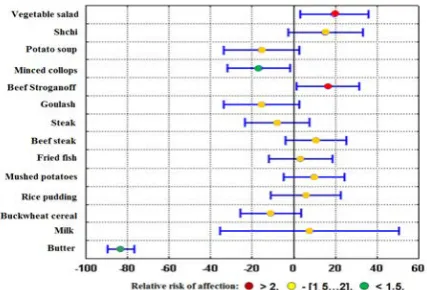
Figure 2. Visualized results of factor epidemiologic analysis (the second day of the inspection, a fragment)
Factor epidemiologic analysis aimed at de-termining a food product that was a contagion factor was performed in three stages: signifi-cance of a zero hypothesis was calculated; epi-demiologic analysis results were visualized; ab-solute and relative risks were calculated.
Statistical properties related to authenticity of occurring effects caused by a specific prod-uct being consumed were calculated as per cross tabulation tables according to [11, 35]; the results are shown in Figures 1 and 2.
Y axis shows a list of consumed food products; X axis shows a difference between disease cases among people who were ex-posed to a risk of contagion and in the control group. Segments that connect three given points for each product characterize how ap-parent the disease occurrence is and how valid a suggested hypothesis is. The more to the right is a segment relative to the zero X
axis, the more apparent is the disease and the higher its validity. And a product is consid-ered to be a probable contagion factor if 95% confidence interval is located strictly to the right from the zero X axis.
Thus, according to the research results (Figures 1 and 2), we can conclude that on the first day the most apparent effects indicating a product could be a contagion factor were de-tected for lula-kabab, cheese, potato soup, and pelmeni; effects were not so apparent for cut-lets, buckwheat cereal, macaroni pudding, salad, rump steak, and goulash; there were no effects detected for stewed meat, mashed pota-toes, butter, milk, and shchi.
As for products consumed on the second day, the most apparent effects were detected for vegetable salad and beef Stroganoff. Ef-fects were either vague or absent for all the other products consumed on that day.
To confirm the obtained results, we calcu-lated absolute and relative risks of contagion caused by consumption of the listed products (Table 2). The highest absolute and relative risks were detected for lula-kabab and cheese.
On the second day the highest absolute and relative risks were detected for salad and beef Stroganoff. But significance of a zero hypothesis was p = 0.09 for vegetable salad
and p = 0.08 for beef Stroganoff, that is,
it was higher than its critical value being equal to 0.05.
Therefore, epidemiologic analysis as per risk factors based on analyzing cross tabula-tion tables and visualizing its results allowed us to reduce a list of products that could possi-bly cause contagion by 64% at the first two stages (determining significance of a zero hy-pothesis and visualizing research results); and by additional 30% at the third stage (calculat-ing absolute and relative risks). We detected that only 4 out of total 28 products that could possibly be risk factors were the most probable causes of contagion (lula-kabab, cheese, potato soup, and pelmeni).
T a b l e 2 Affection, absolute, and relative risks of contagion caused by consumption of food products included into menus 2 days prior to the day when the first disease cases were registered (a fragment)
Affection, % A food product Among people who
consumed a product
In the control group
Significance of a zero hypothesis
Absolute risk
Relative risk
The 1st day
Cutlet 38.71 23.88 0.07 14.83 1.62
Stewed meat 21.25 43.75 0.001 -22.5 0.49
Macaroni pudding 30.49 34.62 0.47 -4.13 0.88
Butter 32.08 100 0.019 -67.92 0.32
Milk 26.56 56.25 0.0006 -29.69 0.47
Cheese 46.38 21.98 0.0019 24.4 2.11
Lula-kabab 85.71 27.4 0.0008 58.31 3.13
Rump steak 37.5 29.81 0.42 7.69 1.26
Goulash 40.28 26.14 0.083 14.14 1.54
Pelmeni 47.17 25.23 0.009 21.94 1.87
The 2nd day
Vegetable salad 35.56 16 0.09 19.56 2.22
Minced collops 20 36.67 0.03 -16.67 0.55
Beef Stroganoff 36.67 20 0.08 16.67 1.83
Goulash 29.03 44.44 0.05 -15.41 0.65
Steak 27.08 34.82 0.25 -7.74 0.78
Milk 32.69 25 0.82 7.69 1.31
Butter 16.92 100 0 -83.08 0.17
When necessary, this algorithm can be applied to test other hypotheses on probable causes for contagion.
Therefore, when questioning results are properly processed, it allows timely determin-ing a probable contagion factor; it is truly vital for performing efficient sanitary-epidemiolo-gic investigaitons.
Discussion. Our assessments revealed that an epidemiologist on average spent 20-30 min-utes per 1 patient to collect data on clinical signs of a disease and other necessary data for epide-miologic case history. When an infective epi-sode is massive and 15-25 people fall sick every day, it takes on average 2-3 hours to cre-ate analytical tables, generalize, and analyze available data.
Our research revealed that the suggested ap-proach allowed a substantial reduction in amount of time spent on generalizing all the obtained data; this amount dropped by more than 60 times, from 3 hours to 3 minutes. It also allowed making
statistical calculations much more valid due to simultaneous use of several complimentary statis-tical techniques. The most significant time gain was obtained via applying optical input of data from formalized questionnaires.
Results that we obtained expand and de-velop the existing theoretical and practical ex-perience in IT implementation into sanitary-epidemiologic research; they have great prac-tical significance, especially bearing in mind a future transition to electronic circulation of documents within providing medical assis-tance to population.
epidemi-ologic analysis; timely detection of factors that determine contagion risks and risks of morbid-ity; revealing primary ways of contagion; and validity of obtained results.
Conclusions. To provide timely epide-miologic analysis that supports decision-making when basic determinants of an epi-demic process are revealed is a primary goal to be achieved via optimizing collec-tion and processing of data during sanitary-epidemiologic investigations in mass infec-tions foci.
A questionnaire applied to collect primary data on sick people and those who ran risks of contagion was adapted for further processing with IT; it is a basis for data structuring when an acute enteric infection is preliminary diag-nosed. This questionnaire contains sufficient amount of primary data on sick people that allows assessing health of any patient objec-tively and obtaining generalized data on a group of examined people.
Questioning results are automatically processed due to implementing optical data
input with automated primary test of its cor-rectness based on a system of predicates and consequent visualization of results obtained via statistical data processing. It provides a significant time gain and increases validity of initial data that are necessary to support deci-sion-making during sanitary-epidemiologic investigations.
Suggested IT for data collection and proc-essing during sanitary-epidemiologic investiga-tions allow achieving more efficient collection and processing of initial data; providing greater validity of data analysis when revealing basic determinants of an epidemic process (due to simultaneous use of several complimentary sta-tistical techniques); reducing time that is neces-sary to make a decision on anti-epidemic pro-tection of population and to eliminate conse-quences of bioterrorism.
Funding. The research was not granted any financial support.
Conflict of interests. The authors declare there is no any conflict of interest.
References
1. Salagay O.O. Infectious disease control in the European Union: legal retrospective and moder-nity. Pravo i politika, 2015, no. 3, pp. 327–333. DOI: 10.7256/1811-9018.2015.3.14601 (in Russian).
2. Dyatlov I.A., Tyurin Ye.A. The public sanitary epidemiologic service supporting biological safety. Zdravookhraneniye Rossiyskoy Federatsii, 2013, no. 2, pp. 31–35 (in Russian).
3. Stachel A., Pinto G., Stelling J., Fulmer Y., Shopsin B., Inglima K., Phillips M. Implementation and evaluation of an automated surveillance system to detect hospital outbreak. Am. J. Infect. Control.,
2017, vol. 45, no. 12, pp. 1372–1377. DOI: 10.1016/j.ajic.2017.06.031
4. Kettelhut V.V., Vanschooneveld T.C., McClay J.C., Mercer D.F., Fruhling A., Meza J.L. Empirical Study on the Impact of a Tactical Biosurveillance Information Visualization on Users' Situational Aware-ness. Mil. Med., 2017, no. 182, pp. 322–329. DOI: 10.7205/MILMED-D-16-00143
5. Khaustova N.A., Sokolova S.N. Safety of Modern Society: Nanotechnology and Bioterrorism.
Vesník Paleskaga dzyarzhaŭnaga uníversíteta. Seryya gramadskíkh í gumanítarnykh navuk, 2015, no. 1,
pp. 46–50 (in Russian).
6. Pukhov A.A. Bioterrorism and biodiversionary activity as threats to national security of the Republic of Belarus at present time. Vestnik Baranovichskogo gosudarstvennogo universiteta. Seriya: Istoricheskiye
nauki i arkheologiya, Ekonomicheskiye nauki, Yuridicheskiye nauki, 2016, no. 4, pp. 132–137 (in Russian).
7. Konovalov P.P., Arsent'yev O.V., Buyanov A.L., Bekmurzov S.M. The use of biological weap-ons – realities of the contemporary world. Sibirskoye meditsinskoye obozreniye, 2015, no 4, pp. 79–84
(in Russian).
8. Banerjee D., Chakraborty B., Chakraborty B. Anthrax: Where Margins are Merging between Emerging Threats and Bioterrorism. Indian J. Dermatol., 2017, vol. 62, no. 5, pp. 456–458. DOI: 10.4103/ijd.IJD_378_17
9. Onishchenko G.G., Toporkov A.V., Lipnitskiy A.V., Viktorov D.V. Problems of counteraction to biological terrorism at the present stage. Infektsionnyye bolezni: novosti, mneniya, obucheniye, 2016,
10. Chen X., Chughtai A.A., MacIntyre C.R. A Systematic Review of Risk Analysis Tools for Dif-ferentiating Unnatural From Natural Epidemics. Mil. Med., 2017, vol. 182, no. 11, pp. 1827–1835.
11. Maksimov I.B., Stolyar V.P., Bogomolov A.V. Prikladnaya teoriya informatsionnogo obe-specheniya mediko-biologicheskikh issledovanii [Applied theory of information provision for medical and biological research]. Moscow, Binom Publ., 2013, 311 p. (in Russian).
12. Solodovnikov Yu.P., Ivanenko A.V., Yefremova N.V., Filatov N.N., Glinenko V.M., Sam-chuk G.F., Ushakova N.S. Soderzhaniye i posledovatel'nost' professional'nykh deystvii epidemiologa pri rassledovanii vspyshek i epidemii kishechnykh infektsii [Contents and sequence of necessary steps an epidemiologist is to make when examining episodes and epidemics of enteric infections]. Zhurnal
mikrobiologii, epidemiologii i immunobiologii, 2008, no. 1, pp. 101–105 (in Russian).
13. Marx V. High-security labs: Life in the danger zone. Nature, 2014, vol. 505, no. 7483, pp. 437–441.
DOI: 10.1038/505437a
14. Supotnitskii M.V. Recognition of Artificially Induced Outbreaks of Infectious Diseases.
Aktu-al'naya infektologiya, 2014, no. 2, pp. 116–141 (in Russian).
15. Gerasimov A.N., Polibin R.V. Software for epidemiological analysis: Use and training.
Epide-miologiya i infektsionnyye bolezni. Aktual'nyye voprosy, 2014, no. 5, pp. 75–78 (in Russian).
16. Parker J.T., Juren A.C., Lowe L., Santibañez S., Rhie G.E., Merlin T.L. Enhancing Laboratory Response Network Capacity in South Korea. Emerg. Infect. Dis., 2017, vol. 23, no. 13, pp. 120–124.
DOI: 10.3201/eid2313.170348
17. Bogomolov A.V., Zuyeva T.V., Chikova S.S. Informatsionno-logicheskaya model' protsessov sbora i obrabotki informatsii pri lokalizatsii i likvidatsii ochagov infektsionnykh zabolevaniy [Informa-tion and logic model for data collec[Informa-tion and processing during localizing and eliminating infec[Informa-tions foci].
Programmnyye produkty, sistemy i algoritmy, 2018, no. 1, pp. 7–10. DOI: 10.15827/2311-6749.18.1.2
(in Russian).
18. Muscatello D.J., Chughtai A.A., Heywood A., Gardner L.M., Heslop D.J., MacIntyre C.R. Translation of Real-Time Infectious Disease Modeling into Routine Public Health Practice. Emerg.
In-fect. Dis., 2017, vol. 23, no, 5, pp. 1–8. DOI: 10.3201/eid2305.161720
19. Zuyeva T.V. Strukturnyi sistemnyi analiz protsessov sbora i obrabotki informatsii pri provedenii sanitarno-epidemiologicheskikh rassledovaniy v voinskikh kollektivakh [Structural systemic analysis of data collection and processing when conducting sanitary-epidemiologic examinations in military teams].
Informatika i sistemy upravleniya, 2008, no. 2, pp. 74–76 (in Russian).
20. Zhdanov K.V., Zakharenko S.M., L'vov N.I., Kozlov K.V. Counteracting infections in the age of current threats. Infektsionnyye bolezni: novosti, mneniya, obucheniye, 2017, vol. 23, no. 6, pp. 85–91
(in Russian).
21. Belozerov Ye.S., Kiseleva L.M., Midlenko V.I., Kuz'mina A.A., Romanenko S.M., Reznikova Ye. N. Infectious diseases and problems of biosafety. Ul'yanovskii mediko-biologicheskii zhurnal, 2016,
no. 3, pp. 8–15 (in Russian).
22. Gavrilova O.N., Kasymova R.O. Threats and approaches to improving epidemiological surveil-lance in the Kyrgyz republic as an element of biosecurity. Zdravookhraneniye Kyrgyzstana, 2017, no. 4,
pp. 22–25 (in Russian).
23. Pokrovskii V.I., Briko N.I. Epidemiological studies are the basis for clinical epidemiology and evidence-based medicine. Epidemiologiya i infektsionnyye bolezni, 2008, no. 5, pp. 4–8 (in Russian).
24. Savilov Ye.D., Mamontova L.M., Astaf'yev V.A., Zhdanova S.N. Primeneniye statisticheskikh metodov v epidemiologicheskom analize [Application of statistical techniques in epidemiologic analy-sis]. Moscow, MEDpress-inform, 2004, 112 p. (in Russian).
25. Gerasimov A.N. Mathematical models and epidemiological analysis. Vestnik RAMN, 2010,
no. 12, pp. 23–26 (in Russian).
26. Zavriyev S.K., Kolesnikov A.V. Risks and Threats in Biosecurity Area: Problem Analysis and Search for Optimal Solutions in Contemporary Conditions. Mirovaya ekonomika i mezhdunarodnyye
otnosheniya, 2015, no. 9, pp. 57–68 (in Russian).
27. Willem L., Verelst F., Bilcke J., Hens N., Beutels P. Lessons from a decade of individual-based models for infectious disease transmission: a systematic review (2006–2015). BMC Infect. Dis., 2017,
28. Rasulov D.G. Biologicheskiy terrorizm kak Sistema [Biological terrorism as a specific system].
Vestnik Tadzhikskogo natsional'nogo universiteta. Seriya sotsial'no-ekonomicheskikh i obshchestvennykh nauk, 2017, vol. 9, no. 2, pp. 280–285 (in Russian).
29. Konovalov P.P., Arsent'yev O.V., Buyanov A.L., Shperling N.V. International legal acts fix-ing basis of activity in fight with bioterrorism. Permskii meditsinskii zhurnal, 2015, vol. 32, no. 1,
pp. 116–124 (in Russian).
30. Sammarco M.L., Ripabelli G., Tamburro M. Molecular epidemiology of infectious diseases: analytical methods and results interpretation. Ann Ig., 2014, vol. 26, no. 1, pp. 10–45. DOI:
10.7416/ai.2014.1956
31. Fleck-Derderian S., Shankar M., Rao A.K., Chatham-Stephens K, Adjei S., Sobel J., Meltzer M.I., Meaney-Delman D., Pillai S.K. The Epidemiology of Foodborne Botulism Outbreaks: A Systematic Re-view. Clin. Infect. Dis., 2017, vol. 27, no. 66, pp. 73–81. DOI: 10.1093/cid/cix846
32. Vinarti R., Hederman L. A Knowledge-Base for a Personalized Infectious Disease Risk Predic-tion System. Stud Health Technol. Inform., 2018, no. 247, pp. 531–535.
33. Lall R., Abdelnabi J., Ngai S., Parton H.B., Saunders K., Sell J., Wahnich A., Weiss D., Mathes R.W. Advancing the Use of Emergency Department Syndromic Surveillance Data, New York City, 2012–2016. Public. Health Rep., 2017, vol. 132, no. 7, pp. 23–30. DOI: 10.1177/0033354917711183
34. Liao Y., Xu B., Wang J., Liu X. A new method for assessing the risk of infectious disease out-break. Sci. Rep., 2017, no. 9, pp. 7. DOI: 10.1038/srep40084
35. Bogomolov A.V., Kukushkin Yu.A. Mathematical support for meta-analysis of independent ex-perimental biomedical research. Informatika i sistemy upravleniya, 2011, no. 4, pp. 65–74 (in Russian).
36. Bogomolov A.V., Zuyeva T.V., Chikova S.S., Golosovskiy M.S. Ekspertno-analiticheskoye obos-novaniye prioritetnykh napravleniy sovershenstvovaniya sistemy preduprezhdeniya biologicheskikh terror-isticheskikh aktov [Expert and analytic substantiation for priorities in development of a system aimed at preventing biological terrorist attacks]. Informatika i sistemy upravleniya, 2009, no. 4, pp. 134–136
(in Russian).
37. Bukhtiyarov I.V., Kukushkin Yu.A., Bogomolov A.V., Vasilyev A.Yu., Yadov V.V. Mета-analysis of the cumulative effects of piloting g-loads on the cervical vertebrae. Aviakosmicheskaya i ekologicheskaya
meditsina, 2001, vol. 35, no. 3, pp. 18–24 (in Russian).
Bogomolov A.V., Chikova S.S., Zueva T.V. Information technologies for data collection and process-ing when establishprocess-ing determinants of epidemic processes. Health Risk Analysis, 2019, no. 3, pp. 144–153. DOI: 10.21668/health.risk/2019.3.17.eng