Copyright © The Author(s). All Rights Reserved. Published by American Research Institute for Policy Development DOI: 10.15640/ijn.v6n1a8 URL: https://doi.org/DOI: 10.15640/ijn.v6n1a8
The Efficiency of Evidence-Based Guidelines on Performance, Perception, and Satisfaction
of Patients Undergoing Bone Marrow Biopsy
Samia Eaid Elgazzar
1, Shereen Ahmed Ahmed Qalawa
2, & Shreen Ibrahim Eltahry
3Abstract
Background: Bone marrow biopsy plays a critical role in the identification and management of several hematological and systemic illnesses. Even although the procedure has been conceded for years, it remains uncomfortable and extremely painful experience for all patients. While applying evidence-based guidelines in dealing with a patient undergoing bone marrow biopsy is not only an absolute duty for nurses practicing, however, is too a central role to the nursing science. Objectives: This study aims to assess and evaluate the impact of evidence-based guidelines on performance, perception, and satisfaction of patients undergoing bone marrow biopsy Method: Quasi-experimental research design was conducted. The purposive sample for all patients (50) admitted for Bone Marrow biopsy with various hematological disorders at Damietta Oncology Institute. The instrument was used to collect study data include patient socio-demographic, health information characteristics, patient's performance, the perception of patient's and satisfaction. Result: It showed that the majority of patients had a higher total mean score at post-evidence-based guidelines implementation than pre implementing of guidelines regarding patient's perception, performance, and satisfaction with statistically significant difference (p ≤ 0.05).Conclusion: Evidence-based guidelines improve patient's perception, performance, and satisfaction regarding bone marrow biopsy. Recommendations: Activate implementation of bone marrow biopsy an aspiration guidelines manual in the hospitals and it's availability to all patients in the simple media and language. Also, nurses must be trained to implement evidence-based guidelines. This study may deliver a performance framework for the future advance in other nursing evidence-based practice.
Keyword: Evidence-based Guidelines, Performance, Perception, Satisfaction, Bone Marrow Biopsy
1.Introduction
Bone marrow biopsy (BMB) is an essential diagnostic procedure to the identification of disorders in hematological, on-hematological disease and follow-up assessment of patients who experience chemotherapy, transplantation bone marrow and additional techniques of medical treatment (Hjortholm et al., 2013, Omar et al., 2014&katiyar, 2017,). It is a safe technique; the related hazard is low (about 0.1%) and not reliant on operator experience (Bain et al., 2011. It was established at the start of the nineteenth century, permitting doctors to identify marrow disorders in patients. The procedure progressed in the subsequent years with an emphasis on repeatable and easier of bone marrow collection, foremost to complete standardization of the technique in the 1970s (Hjortholm et al., 2013). Moreover, as contemporary medicine develops tailored and patient-oriented to confirm every patient grows extreme advantage from the healthcare personnel, the significance is assumed to decrease pain related with medical practices/interventions. Since there is a scarcity of data regarding the treatment and avoidance of problems during BMB, strategies to fight this problem have not been outlined (Zahid, 2015, Hjortholm et al., 2013).
1 Lecturer, Medical-Surgical Nursing, Faculty of Nursing, Port-said University. Egypt. E-mail: [email protected] 2 Assistant Professor, Medical-Surgical Nursing, Faculty of Nursing, Port-said University. Egypt.
Evidence-Based Practice (EBP) guidelines today is reflected a standard of care and crucial to nurse practitioner practice. The main benefits of EBP include application resources of the patient, enhanced quality of care over patient-centered care, experiences and provider resources, information scientifically and recent research (Steglitz et al. 2015, LoBiondo-Wood et al .,2013 & Mersal et al., 2012). While, patient satisfaction is to a significant provider to both mental health-associated with the quality of life and physical (Mohammed et al., 2016&Dayasiri et al., 2010). Patients' perceptions of quality of nursing care also disturb their behavioral health after hospital discharge, and optimistic ratings of quality service seem to be associated with no disinclination about re-visiting the same hospital ward (Larsson & Wilde-Larsson, (2010)
Biopsy of bone marrow can be an aching procedure. So that, sedation procedures may create this examination more tolerable to patients, they can cause serious complications, as well as to require to educate patients for safe administration? While, the perception of patients' for pain, and both the physician and patient's sights on the ease of the technique and safety aspects (Adams et al., 2015 & Shabanloei et al.,2010).While, Jaddini et al., (2016) found patient with adequate information undergoing bone marrow biopsy shown to have a major effect on the pain strength levels and differ significantly in the levels of pain on phases of the procedure perceived patients, once associating the doctors with similar experience carrying out BMB.
Also, nurses play a crucial role in obtaining bone marrow samples, supporting patients during the procedure, and teaching patients about the results. With this knowledge, nurses can more effectively help their patients through an anxious time and enhance their understanding of their diagnosis. Staff nurses must be aware of issues surrounding this procedure, including pain management, follow-up care, and psychosocial support of the patient and family. Having a greater understanding of the procedure and the tests performed helps patient's thorough education to alleviate anxiety, promote comfort, and improve perception and satisfaction regarding this technique (A Team of Patient & Family Guide to Blood and Marrow Transplant, 2013).
Based on the prior researches, it was well-known that insufficient self-management poses a hazard to a satisfactory outcome. It was stressed on the effect of adequate self-management on the patient's disease and death and cumulative the charges of medical treatment as the cost of laboratory tests, cost of medication, and expense in effort and time of the care providers in addition to the frustration for both the patients and the care providers(Mersal et al., 2012). While in other researcher found that patients who had satisfactory self-management had better outcomes, live lengthier, have a developed quality of life, and suffer minor complications and symptoms (Benzoet al., 2016 & Mersal et al., 2012).
1.1 Significant of the study
Evidence-based nursing practice (EBN) is the gold standard for quality nursing care delivery. It is described as the completion of the best possible nursing research. The implementation of evidence-based guidelines for the patient undergoing bone marrow biopsy is not merely a decisive action for nurses practicing but is also the primary influence on the science of nursing (Hong, 2010). In addition to, providing patients with complete, comprehensible information is essential to confirm the least degree of discomfort throughout the biopsy, gain performance for daily living without hazards and help for adapting patients, improve outcomes by increasing patient perception and satisfaction for care regarding biopsy. This study aimed to assess and evaluate the impact of evidence-based guidelines on performance, perception, and satisfaction of patients undergoing bone marrow biopsy.
1.2 Hypothesis
It was hypothesized that evidence-based guideline has an impact on improving patient performance, perception and satisfaction after implementing guidance than before performed evidence-based guidelines for the patient undergoing bone marrow biopsy.
1.3 Conceptual Framework:
2.Subject and Methods
2.1 Research design: A quasi-experimental design study was carried out to accomplish this study
2.2 Setting
The study was carried out at in-patient departments including male and female medical units and one-day chemotherapy administration unit at Damietta Oncology Institute.
2.3 Subjects
The purposive sample for all available adult patients (50) admitted for Bone Marrow biopsy for various hematological disorders in Institute Oncology at Damietta city throughout six months and scheduled consecutively for bone marrow biopsy with no exclusion criteria.
2.4 Tool (I): Structure Questionnaire Sheet: It was comprised of three parts:
2.5.1Part (A)
Patient’s Socio demographic characteristics and health information: It includes the patient's age, gender, sex, marital status, occupational working, educational level, commitment disease.
2.5.2 Part (B)
Patient's performance and perception assessment: this tool was adopted from (Alba et al., 2008 & Lee et al., 2008), it consists of 16 multiple choice question to assess knowledge related to causes, preparation, sites, positions, and investigations, etc. While seven items related to practice include drug adherence, wound care, dressing care, diet, pain management and follow up. Scoring systems The scoring of patient performance and perception was assumed one score for each correct answer and zero for an incorrect answer. These scores were transformed into a score percentage. The reliability test was performed where Cranach’s Alpha equal to 0.73.
2.5.3 Part (c): Patient's satisfaction scale
This scale translated to Arabic by Shahin et al ., 2013 according to WHO Quality of life questionnaire after some modifications which consists of 13 items related to patient's satisfaction level regarding bone marrow biopsy in many daily activities practice such as health status, educational program benefits, exercise, self-management , preoperative preparation, psychological support, friends and family support, decision making for doing biopsy, anxiety of operation, life as a general, yourself as a public, appearance, relations . This scale consists of 5-point Likert scale from 1 to 5 degree for ranking of very unsatisfied, unsatisfied, neutral, satisfied, and very satisfied respectively. The reliability test was performed where Cronbach's Alpha equal 0.802
2.6 Pilot study
The pilot study was carried out on ten patients to test the feasibility, clarity, and applicability of the tools. Based on the finding results of the pilot study, modifications and deletions of some details and then developed the final forms were conducted. It was excluded patients who were included in the pilot study of the study sample.
2.7 Procedures of the study
This study was carried out by four consecutive stages: assessment, planning, implementation, and evaluation. Data collection was done pre- and post- guidelines implementation from March to August 2018.
2.7.1 Assessment phase
This phase aimed to assess the patients' studied socio-demographic characteristics and health information, patient's performance and perception and Patient's satisfaction before bone marrow biopsy
2.7.2 Planning phase
2.7.3 Implementation phase
This phase was performed through the patient's assessment data sheet was fulfilled as a baseline preguidelines data implemented. Also, the patient's assessment for filled the assessment sheet for patient performance and perception and patient's satisfaction scale were done before guidelines. Data collected every two days per week in that study setting on Monday and Thursday from 9 a.m. to 1 p.m. The implementation phase of the guideline lasted for six months for all patients admitted to these units. The time is taken to develop guidelines every patient adopted one session before bone marrow biopsy then take guidelines through using discussion methods, lectures, pamphlet, demonstration as a simple media to the patients. Each session took 30-45 minute in addition to 15-20 minutes to discuss any questions for patients.
2.7.4 Evaluation phase
The evaluation phase was stressed on assessing the efficiency of the guidelines on patients' patient's performance and perception and patient's satisfaction in the post guidelines test was performed for the patients immediately after implementation phase.
2.8 Ethical Consideration
An official letter obtained from the faculty of nursing to authorities accountable of Damietta Oncology Institute and approval was accomplished to carry out this study after clarification of the study aim. The formal consent was taken from the patient to join in the study. The researchers firstly announced themselves to all potential subjects, then clarifying the purpose of the research and they were declared that all collected data would be very confidential and used only for the study' purpose. Subjects were also able to reject participation in the study would not disturb their care.
2.9 Statistical Analysis:
Data were revised, coded, entered, analyzed and tabulated using SPSS version 20. Data were fed to the computer and examined using IBM SPSS software package version 20.0. (Armonk, NY: IBM Corp)Qualitative data were described using number and percent. Quantitative data were described using range (minimum and maximum), mean, and standard deviation. The significance of the obtained results was judged at the 5% level. The used tests were Mc-Nemar and Marginal Homogeneity tests which used to analyze the significance between the different stages and Paired t-test for normally distributed quantitative variables, to compare between two periods.
3.Results
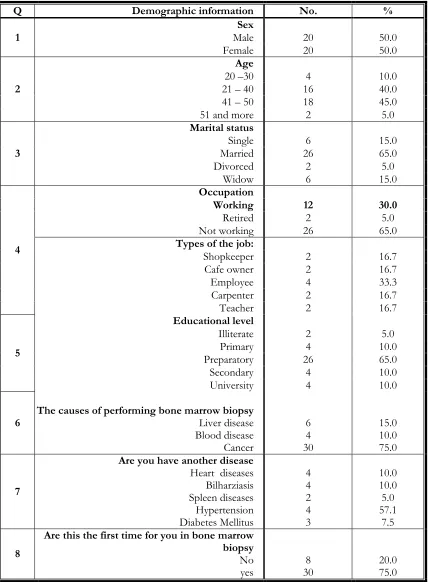
Table(1) reveals that equal percentage (50%) were male and female, (45%) of them in the age group 41 – 50years. Also, (65%) were married and had a preparatory level of education, (33.3%) were an employee, (57.1%) of them have hypertension and (75%) of them had the first experience in performing bone marrow biopsy procedure.
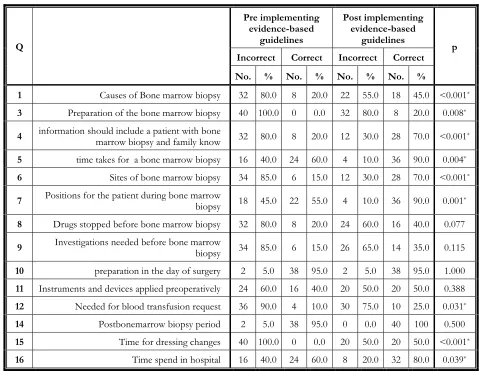
Table (2)reveals that there is a statistically significant difference between pre and post implementing evidence-based guidelines in patient's level of knowledge and perceptions regarding causes of bone marrow biopsy, preparation of the patient, information should a patient with bone marrow biopsy and family know , time takes , sites of bone marrow biopsy, positions for patient during bone marrow biopsy, needed for blood transfusion request, time for dressing changes, time spent in hospital ( Ps= 0.001 , 0.008 , 0.001, 0.004, 0.001, 0.001, 0.031, 0.001, 0.001, 0.039 ) respectively .
Table (3) Shows that there is a statistically significant difference between pre and post pre and post implementing evidence-based guidelines in patient's practice regarding only the item related to dressing care ( Ps= 0.002)
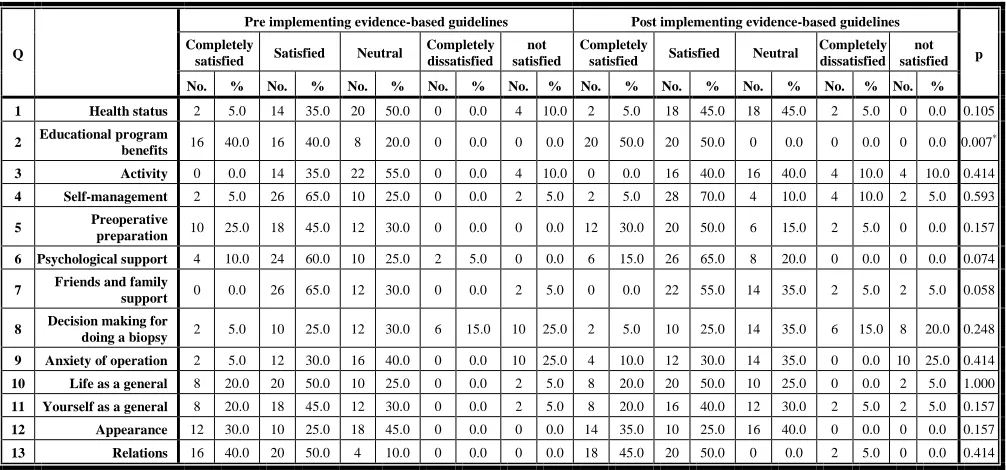
Table (4) reveals that there are there are no a statistically significant difference between patient's satisfaction in pre and post implementing evidence-based guidelines phases regarding the all satisfactory scale except one item related to educational program benefits ( Ps= 0.007).
Table (1): Distribution of the Studied Cases according to Their Sociodemographic Data (N = 40)
Q Demographic information No. %
1 Male Sex 20 50.0
Female 20 50.0
2
Age
20 –30 4 10.0
21 – 40 16 40.0
41 – 50 18 45.0
51 and more 2 5.0
3
Marital status
Single 6 15.0
Married 26 65.0
Divorced 2 5.0
Widow 6 15.0
4
Occupation
Working 12 30.0
Retired 2 5.0
Not working 26 65.0
Types of the job:
Shopkeeper 2 16.7
Cafe owner 2 16.7
Employee 4 33.3
Carpenter 2 16.7
Teacher 2 16.7
5
Educational level
Illiterate 2 5.0
Primary 4 10.0
Preparatory 26 65.0
Secondary 4 10.0
University 4 10.0
6 The causes of performing bone marrow biopsyLiver disease Blood disease
Cancer
6 4 30
15.0 10.0 75.0
7
Are you have another disease
Heart diseases Bilharziasis Spleen diseases Hypertension Diabetes Mellitus
4 4 2 4 3
10.0 10.0 5.0 57.1
7.5
8
Are this the first time for you in bone marrow biopsy
No
Table (2): Comparison between Pre and Post Pre and Post Implementing Evidence-Based Guidelines Regarding Patient's Knowledge and Perception (N = 40)
Q
Pre implementing evidence-based
guidelines
Post implementing evidence-based
guidelines
p
Incorrect Correct Incorrect Correct
No. % No. % No. % No. %
1 Causes of Bone marrow biopsy 32 80.0 8 20.0 22 55.0 18 45.0 <0.001*
3 Preparation of the bone marrow biopsy 40 100.0 0 0.0 32 80.0 8 20.0 0.008*
4 information should include a patient with bone marrow biopsy and family know 32 80.0 8 20.0 12 30.0 28 70.0 <0.001*
5 time takes for a bone marrow biopsy 16 40.0 24 60.0 4 10.0 36 90.0 0.004*
6 Sites of bone marrow biopsy 34 85.0 6 15.0 12 30.0 28 70.0 <0.001*
7 Positions for the patient during bone marrow biopsy 18 45.0 22 55.0 4 10.0 36 90.0 0.001*
8 Drugs stopped before bone marrow biopsy 32 80.0 8 20.0 24 60.0 16 40.0 0.077
9 Investigations needed before bone marrow biopsy 34 85.0 6 15.0 26 65.0 14 35.0 0.115
10 preparation in the day of surgery 2 5.0 38 95.0 2 5.0 38 95.0 1.000
11 Instruments and devices applied preoperatively 24 60.0 16 40.0 20 50.0 20 50.0 0.388
12 Needed for blood transfusion request 36 90.0 4 10.0 30 75.0 10 25.0 0.031*
14 Postbonemarrow biopsy period 2 5.0 38 95.0 0 0.0 40 100 0.500
15 Time for dressing changes 40 100.0 0 0.0 20 50.0 20 50.0 <0.001*
16 Time spend in hospital 16 40.0 24 60.0 8 20.0 32 80.0 0.039*
p: p-value for McNemartest for comparing between pre and post *: Statistically significant at p ≤ 0.05
Table (3): Comparison between Pre and Post Implementing Evidence-Based Guidelines Phases Regarding Patient's Practice (N = 40)
Q
Pre implementing
evidence-based guidelines evidence-based guidelines Post implementing p
Not done Done Not done Done
No. % No. % No. % No. %
1 Drug adherence 2 5.0 38 95.0 0 0.0 40 100.0 0.500
2 Wound care 32 80.0 8 20.0 38 95.0 2 5.0 0.109
3 Dressing care 30 75.0 10 25.0 40 100.0 0 0.0 0.002*
4 Bathing 34 85.0 6 15.0 30 75.0 10 25.0 0.125
6 Diet 20 50.0 20 50.0 18 45.0 22 55.0 0.687
7 Pain management 28 70.0 12 30.0 24 60.0 16 40.0 0.454
8 Follow-up appointment 28 70.0 12 30.0 34 85.0 6 15.0 0.180
Table (4): Comparison of Patient's Satisfaction in Pre and Post Implementing Evidence-Based Guidelines
Q
Pre implementing evidence-based guidelines Post implementing evidence-based guidelines
p Completely
satisfied Satisfied Neutral
Completely dissatisfied
not satisfied
Completely
satisfied Satisfied Neutral
Completely dissatisfied
not satisfied
No. % No. % No. % No. % No. % No. % No. % No. % No. % No. %
1 Health status 2 5.0 14 35.0 20 50.0 0 0.0 4 10.0 2 5.0 18 45.0 18 45.0 2 5.0 0 0.0 0.105
2 Educational program
benefits 16 40.0 16 40.0 8 20.0 0 0.0 0 0.0 20 50.0 20 50.0 0 0.0 0 0.0 0 0.0 0.007
*
3 Activity 0 0.0 14 35.0 22 55.0 0 0.0 4 10.0 0 0.0 16 40.0 16 40.0 4 10.0 4 10.0 0.414
4 Self-management 2 5.0 26 65.0 10 25.0 0 0.0 2 5.0 2 5.0 28 70.0 4 10.0 4 10.0 2 5.0 0.593
5 Preoperative
preparation 10 25.0 18 45.0 12 30.0 0 0.0 0 0.0 12 30.0 20 50.0 6 15.0 2 5.0 0 0.0 0.157
6 Psychological support 4 10.0 24 60.0 10 25.0 2 5.0 0 0.0 6 15.0 26 65.0 8 20.0 0 0.0 0 0.0 0.074
7 Friends and family
support 0 0.0 26 65.0 12 30.0 0 0.0 2 5.0 0 0.0 22 55.0 14 35.0 2 5.0 2 5.0 0.058
8 Decision making for
doing a biopsy 2 5.0 10 25.0 12 30.0 6 15.0 10 25.0 2 5.0 10 25.0 14 35.0 6 15.0 8 20.0 0.248
9 Anxiety of operation 2 5.0 12 30.0 16 40.0 0 0.0 10 25.0 4 10.0 12 30.0 14 35.0 0 0.0 10 25.0 0.414
10 Life as a general 8 20.0 20 50.0 10 25.0 0 0.0 2 5.0 8 20.0 20 50.0 10 25.0 0 0.0 2 5.0 1.000
11 Yourself as a general 8 20.0 18 45.0 12 30.0 0 0.0 2 5.0 8 20.0 16 40.0 12 30.0 2 5.0 2 5.0 0.157
12 Appearance 12 30.0 10 25.0 18 45.0 0 0.0 0 0.0 14 35.0 10 25.0 16 40.0 0 0.0 0 0.0 0.157
13 Relations 16 40.0 20 50.0 4 10.0 0 0.0 0 0.0 18 45.0 20 50.0 0 0.0 2 5.0 0 0.0 0.414
Table (5): Comparison of pre and post implementing evidence-based guidelines phases regarding patient's perception, performance, and satisfaction
Pre implementing evidence-based
guidelines
Post implementing evidence-based
guidelines t p
Perception and knowledge of bone marrow biopsy operation Total score
Min. – Max. 2.0 – 10.0 6.0 – 12.0
5.877* <0.001*
Mean ± SD. 5.55 ± 1.93 8.08 ± 1.42
% score
Min. – Max. 13.33 – 66.67 40.0 – 80.0
Mean ± SD. 37.0 ± 12.89 53.83 ± 9.47
Patient's practices Total score
2.739* 0.009*
Min. – Max. 0.0 – 5.0 2.0 – 5.0
Mean ± SD. 2.70 ± 1.67 3.38±1.43
% score
Min. – Max. 0.0 – 62.50 12.50-62.50
Mean ± SD. 33.75 ± 20.84 42.19±17.8
Patient's Satisfaction Total score
2.339* 0.025*
Min. – Max. 30.0 – 58.0 37.0 – 58.0
Mean ± SD. 46.80 ± 7.47 49.50±6.70
% score
Min. – Max. 32.69 – 86.54 46.15 – 86.54
4.Discussion
Bone marrow biopsies are required for diagnosis, classification, and treatment of numerous different malignancies and hematologic disorders, as well as for follow-up and restaging after treatment is complete. So, the nurse practitioners (NPs) can take part in a key role in obtaining these samples as well as sustaining the patient before, during, and after the bone marrow biopsy procedure. They can supply the basic teaching and support, enhancing the patients' understanding of the diagnosis and treatment options. (Jackson et al., 2012). Therefore, this study was conducted to evaluate the effectiveness of implementing evidence-based guidelines on performance, perception, and satisfaction of patients undergoing a bone marrow biopsy procedure.
According to the studied group and their socio-demographic characteristics, the study results revealed that equal half percentage were male and female, less than half of them in the age group of 41 – 50years. Also, more than half were married and had a preparatory level of education, one-quarter of them were an employee, slightly more than half of them have hypertension, and three-quarter of them had the first experience in performing bone marrow biopsy procedure.
Regarding patient's knowledge and perceptions the present study revealed that there was a statistically significant difference between pre and post implementing evidence-based bone marrow biopsy guidelines in patient's level of knowledge and perceptions regarding causes of bone marrow biopsy, preparation of the bone marrow biopsy , information should a patient with a bone marrow biopsy and family know , time takes , sites of bone marrow biopsy, positions for patient during bone marrow biopsy, needed for blood transfusion request, time for dressing changes, time spent in hospital . These findings go in the same line with the result of Ridgeway et al., 2017who emphasized that post-procedural care and awareness of possible complications can reduce a patient’s pain and optimize recovery. However, awareness and mitigation of possible complications combined with proper post-procedural care can also get the most out of patient outcome, open communication before and during the procedure is key to improving the patient's knowledge.
Furthermore, Lenchus et al., 2011who mentioned that there had been numerous studies suggesting that a standardized approach with an official training program is the most efficient method in training medical/surgical procedures. A "blended approach" training program for invasive bedside procedures reported a statistically significant increase in proficiency after completion of the program, which was evaluated by pre- and posttest proficiency scores.
In Pakistan, Zahid 2015emphasized on that non-pharmacological factors for patients understanding pain post bone marrow biopsy procedure also take part in serious roles which providing patients with complete and reasonable information is essential to make sure of least amount of discomfort during the biopsy. Distraction techniques, such as cognitive behavioural treatment, hypnosis, and music therapy, may also play a role in minimizing pain.
From another point of views, Hjortholm et al., 2013 stated that each invasive procedure to be performed by a nurse practitioner (NP), a method for training and evaluation should be developed and followed to guarantee ability and allow for continued proficiency. An informal survey of several Midwest haematology/oncology program directors suggests that the training of bone marrow biopsies and aspirates typically requires written, verbal, and video instruction, followed by observation and concluding participation with direct supervision
In Columbia Debra ,2008indicates in their study that the biomedical approach to healthcare is constricted in focus, and fails to consider the personal meanings and perceptions the illness incident hold for individuals who have been diagnosed with leukemia and for sufficient health care to be provided, and to diminish the differences and discrepancies between individuals and health care professionals, health care professionals must think about and incorporate the individual's illustrative model of health and illness into the health care plan
Concerning the patient's satisfaction for bone marrow biopsy guidelines the present study, there was no
statistically significant difference were found between patient's satisfaction in pre and post implementing evidence-based guidelines phases regarding the all satisfactory scale except one item related to educational program benefits. This finding supported with Laurant et al., 2009who's highlighted that there are several studies suggest patient satisfaction and overall quality of care can be advanced at times with NPs. Otherwise, to achieve better achieve there are a need and wish for NPs to expand into the role of performing invasive procedures.
development of procedural guidelines, structured training, and assessment programs to make sure both the quality of the samples obtained and patient safety and satisfaction with the procedure .
As regards total scores of patient's perception, performance, and satisfaction there is a statistically significant difference between pre and post pre and post implementing evidence-based guidelines regarding both scores and total scores of bone marrow biopsy aspiration patient's perception, performance, and satisfaction. These findings supported with Lotfi-Kashani et al., 2014in Iran who taking into consideration that psychological interventions are critical to the prevention of the disease negative consequences and its effects and awareness are necessary to get better mental health and satisfaction of life.
Moreover, Mildred and Haoliang , 2017 reported from their study on determines how well the healthcare systems react to patients' individual health care needs and preferences that in surgical nursing, few studies have been carried out to show the association of patients' views on their interrelationship with the nurses and the perception they have on satisfaction levels of care during the postoperative period and emphasize on some characteristics of both parties and should finding out strategies of the relationship improvement.
Recently, Shoush et al., 2017mentioned that satisfaction of caregivers of hospitalized patients undergoing heart surgery is one of the pillars of good quality in patient care. Which providing suitable training on this concern could lead to improvements in patient recovery. According to their findings, nurses can increase caregivers’ satisfaction from nursing care by given that them with training programs and improve patient care after heart surgery.
In GreeceGelalis et al., 2010reported from their study on lumbar spinal surgery that most of the patients were satisfied with the outcome of the operation, and the researcher thinks that results give explanation for the patients' decision to strive for an improved lifestyle through decompressive surgery. However, patients with long length of preoperative symptoms had poor to fair results and were less satisfied with the results of the operation.
Finally, Jackson et al., 2012suggested that there is an obvious need for a guideline for training nurse practitioners (NPs) to perform invasive procedures and to validate procedural proficiency, using bone marrow biopsies and aspirates as an example. In addition to further research should be emphasized not only at the overall quality of biopsies obtained, but also toward patient satisfaction scores in procedures performed by NPs.
5.Conclusion & Recommendations
The majority of patients had a low level in the most items related to perception, knowledge, and practice at pre implementing evidence-based guidelines comparing to post implementation of guidelines phase. in addition to , a statistically significant differences were found between pre and post pre and posted implementing evidence-based guidelines regarding both scores and total scores of patient's perception, performance, and satisfaction Based on study findings, it recommended that: Activate implementation of bone marrow biopsy aspiration guidelines manual in the hospitals, and it's availability to all patient's in the simple media and language, Further study about impact of implementing evidence designed guidelines on educated patients undergoing bone marrow biopsy in hospitals.
References
A Tem of Patient & Family Guide to Blood and Marrow Transplant, University of Michigan Comprehensive Cancer Center, comprehensive cancer center, University of Michigan health system (2013).; 33.
Abla, O., Friedman, J., & Doyle, J. (2008). Performing bone marrow aspiration and biopsy in children: Recommended guidelines. Paediatrics& child health, 13(6), 499-501.
Adams, utger.Nievelstein R and.KweeT(2015). Opportunities and limitations of bone marrow biopsy and bone marrow FDG-PET in lymphoma.Blood Reviews Blood Reviews 29 417–425.
Bain BJ, Bates I, Laffan MA, Lewis SM. In: Dacie and Lewis (eds.).(2011).Practical Hematology. 11th ed. Elsevier Churchill Livingstone, UK.. pp:123-36
Benzo, R. P., Abascal-Bolado, B., &Dulohery, M. M. (2016). Self-management and quality of life in chronic obstructive pulmonary disease (COPD): The mediating effects of positive effect. Patient education and counseling,
99(4), 617-623.
Burkle CM, Harrison BA, Koenig LF, et al..(2004) Morbidity and mortality of deep sedation in outpatient bone marrow biopsy. Am J Hematol;77:250–6. [PubMed]
Danielsen, K., Garratt, A. M., Bjertnæs, O. &Pettersen, K. I. (2007). Patient experiences with respondent and health service delivery characteristics: A survey of 26,938 patients attending 62 hospitals throughout Norway. Scandinavian Journal of Public Health, 35(1), 70-77.
Dayasiri MB, Lekamge EL. (2010): "Predictors of patient satisfaction with the quality of health care in Asian hospitals." Australasian Medical Journal. Nov 1; 3 (11): p. 739-44.
Department of Bone Marrow and Stem Cell Transplant, Narayana Health City, (2017). Available on http://www.narayanahealth.org/Bone-Marrow-Transplant.p 2.
Finley GA, Franck LS, Grunau RE, et al. (2005).Why Children’s Pain Matters. Pain: Clinical Updates;13:1–6.
Gelalis, I. D., Arnaoutoglou, C., Christoforou, G., Lykissas, M. G., Batsilas, I., &Xenakis, T. (2010).
Prospective analysis of surgical outcomes in patients undergoing decompressive laminectomy and posterior instrumentation for degenerative lumbar spinal stenosis. ActaOrthopTraumatolTurc, 44(3), 235.
Grønkjær, M., Hasselgren, C. F., Østergaard, A. S. L., Johansen, P., Korup, J., Bøgsted, M., & Jensen, P. (2016). Bone marrow aspiration: a randomized controlled trial is assessing the quality of bone marrow specimens using slow and rapid aspiration techniques and evaluating pain intensity. ActaHaematologica, 135(2), 84.
Gudgin, E. J., Besser, M. W., & Craig, J. I. O. (2008).EntonoxTM as a sedative for bone marrow aspiration and biopsy. International journal of laboratory hematology, 30(1), 65-67.
Hematological disorders. Volume-7 | Issue-10 | October- | ISSN - 2249-555X | IF : 4.894 | IC Value : 79.96
HjortholmN, Jardine E, Hałaburda, K and SnarskiE(2013). Strategies for pain reduction during the bone marrow biopsy. Ann Hematol. Feb; 92(2): 145–149.
Jackson, K., Guinigundo, A., & Waterhouse, D. (2012). Bone marrow aspiration and biopsy: a guideline for procedural training and competency assessment. Journal of the advanced practitioner in oncology, 3(4), 263.
Jaddini, E., Hjortholm, N., &Snarski, E. (2016). Effective pain reduction during bone marrow biopsy and aspiration–Technique over experience. ActaHaematologicaPolonica, 47(3), 226-231.
Katiyar G.D. (2017). Bone marrow aspiration; role and significance of hematological disorders. volume-7 | issue-10 | October- | ISSN - 2249-555x | if : 4.894 | ic value : 79.96
Larsson, G. & Wilde-Larsson, B. (2010). Quality of care and patient satisfaction: A new theoretical and methodological approach. International Journal of Health Care Quality Assurance, 23(2), 228-247.
Laurant, M., Reeves, D., Hermens, R., Braspenning, J., Grol, R., &Sibbald, B. (2005). Substitution of doctors by nurses in primary care. Cochrane Database Syst Rev, 2(2), CD001271.
Lee, S. H., Erber, W. N., Porwit, A., Tomonaga, M., Peterson, L. C., & International Council for Standardization In Hematology. (2008). ICSH guidelines for the standardization of bone marrow specimens and reports. International journal of laboratory hematology, 30(5), 349-364.
Lenchus, J., Issenberg, S. B., Murphy, D., Everett-Thomas, R., Erben, L., Arheart, K., & Birnbach, D. J. (2011). A blended approach to invasive bedside procedural instruction. Medical Teacher, 33(2), 116-123.
Liden, Y. Landgren O, Arner S., Sjolund K,.Johansson E(2009). Procedure-related pain among adult patients with hematologic malignancies.ActaAnaesthesiolScand, 53 (3) pp. 354-363CrossRefView Record in Scopus.
LoBiondo-Wood, G., Haber, J., Berry, C., & Yost, J. (2013).Study Guide for Nursing Research-E-Book: Methods and
Critical Appraisal for Evidence-Based Practice. Elsevier Health Sciences.
Lotfi-Kashani, F., Vaziri, S., Akbari, M. E., Kazemi-Zanjani, N., &Shamkoeyan, L. (2014).Predicting posttraumatic growth based upon self-efficacy and perceived social support in cancer patients. Iranian journal of cancer prevention, 7(3), 115.
Marec-Bérard P, Bissery A, Kebaïli K, et al. (2009).A positioning pillow to improve the lumbar puncture success rate in pediatric hematology-oncology patients: a randomized controlled trial. BMC Cancer;9:21doi:10.1186/1471-2407-9-21 [PMC free article] [PubMed
Maurizi P, Russo I, Rizzo D, et al. (2014).Safe lumbar puncture under analgosedation in children with acute lymphoblastic leukemia. Int J Clin Oncol;19:173–7. doi:10.1007/s10147-013-0521-1 [PubMed]
Mersal, F. A., Mahday, N. E., &Mersal, N. A. (2012). The efficiency of Web-Based Education versus Counseling on Diabetic Patients' Outcomes. Life Science Journal, 9(3), 912-926.
Omar, W. Ameen, N. &MajeedAbed, W(2014). Evaluation of the Diagnostic and Follow up Values of Bone Marrow Aspiration Procedures in Children Welfare Teaching Hospital.. Iraqi Med J Vol. 60 (2).Dec. 2014; p.149-155.
Park, S. H., Bang, S. M., Nam, E., Cho, E. K., Shin, D. B., Lee, J. H., &Ahn, J. Y. (2008). A randomized, double‐blind placebo‐controlled study of low‐dose intravenous lorazepam to reduce procedural pain during bone marrow aspiration and biopsy. Pain Medicine, 9(2), 249-252.
Richards, D. C. (1993). Leukemia and bone marrow transplantation: personal meanings and perceptions of the illness experience (Doctoral dissertation, University of British Columbia).
Ridgeway, J. A., Tinsley, S., &Kurtin, S. E. (2017). Practical Guide to Bone Marrow Sampling for Suspected Myelodysplastic Syndromes. Journal of the advanced practitioner in oncology, 8(1), 29.
Rowlands V, Burton C, Evans T (2016): Policy and procedure for the nurse performance of bone marrow aspirate and trephine biopsy (guidelines).
Ryan DH, Felgar RE.(2006).Examination of the marrow. In: Lichtman MA, Kipps TJ, et al. (eds). William's hematology 7ed. New York, McGraw Hill; 3: 21-31.
Shabanloei, R., Golchin, M., Esfahani, A., Dolatkhah, R., &Rasoulian, M. (2010). Effects of music therapy on pain and anxiety in patients undergoing bone marrow biopsy and aspiration. AORN Journal, 91(6), 746-751.
Shahin, E. S., Qalawa, S. A. A., Mohamed, M. A., & El-Ata, A. B. A. (2013). Quality of life & satisfaction of diabetic foot patients: Comparative study. Journal of American science, 9(1), 477-483.
Shoushi, F., Shafipour, V., Mousavinasab, N., &Jannati, Y. (2018).Effect of a TrainingProgram on Satisfaction of Caregivers of Patients with Coronary Artery Bypass Graft. Journal of Mazandaran University of Medical Sciences, 28(165), 87-97.
Steglitz J, Warnick J, HoffmanS, Johnston W, and Spring B (2015). Evidence-Based Practice. Northwestern University, Chicago, IL, US, International Encyclopedia of the Social & Behavioral Sciences, 2nd edition, Volume 8. 332-339
Vines, M. M., Dupler, A. E., Van Son, C. R., & Guido, G. W. (2014). Improving client and nurse satisfaction through the utilization of bedside report. Journal for nurses in professional development, 30(4), 166-173.
Wolanskyj AP, Schroeder G, Wilson PR, Habermann TM, Inwards DJ, Witzigm TE.(2000).A randomized placebo-controlled study of outpatient premedication for bone marrow biopsy in adults with lymphoma. Clin Lymphoma. 1:154–7. [PubMed