http://ijessr.com Page 13 PRACTICAL IMPLEMENTATION OF A LEXICAL APPROACH TO LANGUAGE TEACHING: FIVE EVERYDAY ACTIVITIES WITH LEVELED MODIFICATIONS
Merrilee Brinegar
Graduate School of TESOL, Hankuk University of Foreign Studies Seoul, South Korea
ABSTRACT
The Lexical Approach was first named by Lewis in 1993, but even prior to that linguists had noted the importance of teaching set phrases or chunks to students. While Lewis officially termed the approach and gave a general structure for teaching as Observe-Hypothesize-Experiment, he did not set out specific procedures to follow. In his books, he does provide ample activities that teachers can implement, but many of them require a lot of time for training students, and some also are impractical in situations where teachers do not have much flexibility over the curriculum. This paper sets out to show how language teachers in multiple contexts can practically implement activities aligned with the Lexical Approach without completely diverting from their curriculum or teaching procedures.
KEYWORDS: Lexical Approach, language teaching, language learning, chunks, formulaic expressions
1. INTRODUCTION
For a long time in the arena of language teaching, grammar was the main focus, but in 1990 Paul Nation published his book, Teaching and Learning Vocabulary, which for many began to shift the focus toward lexis, which includes both individual words as well as fixed phrases or chunks. The importance of these formulaic expressions in language learning has been noted in both first and second language acquisition research (Keller, 1979; Peters, 1983, Pawley & Syder, 1983; Nattinger & DeCarrico, 1992; Cowie, 1988). Many linguists have suggested that language learners need stock phrases in their arsenal in order to be fluent because having such phrases available reduces processing time, as students use them automatically (Thornburry, 1998). Nattinger (1980) suggested that teaching should be focused on helping learners put together ready-made units that can be used in specific situations, but it was Michael Lewis (1993) who first coined the term Lexical Approach.
In the Lexical Approach, the focus is on meaning, and it favors grammaticalized lexis rather than lexicalized grammar; in other words, lexis is fundamental for creating meaning, and grammar is secondary. While the term vocabulary generally refers to individual words, lexis consists of both single words as well as word combinations. Lewis (1997) divided these lexical items into six categories: words, polywords, collocations, institutionalized utterances, sentence frames and heads, and text frames (See Table 1).
http://ijessr.com Page 14
Taxonomy of Lexical Items (Lewis, 1997)
Lexical item Examples
Words book, pen
Polywords by the way, upside down
Collocations prices fell, rancid butter
Institutionalized utterances I’ll get it; That’ll do
Sentence frames and heads That is not as [adjective] as you think;
The danger was…
Text frames In this paper we will explore…; Firstly…
The first category, words, are what we typically consider vocabulary. Polywords refer to fixed expressions that are more than one word but are understood as a single unit, which, if separated into the single words, might not be understandable. Examples of polywords include of course, in spite of, and by the way. A collocation is when two or more words naturally occur together in a text, as determined by linguistic convention. For example, drug addict is a collocation, whereas drug fan is not, even though they technically have the same meaning. Similarly, distant cousin is a collocation, whereas far-flung cousin, which has the same meaning, is not. Collocations are determined by the way speakers typically use the language rather than by logic.
The next category in Lewis’s taxonomy of lexical items is institutionalized utterances. These are fixed structures that can be a phrase or a sentence. These include everyday expressions we use without thinking about the structure, such as don’t worry about it or How’s it going? Whereas institutionalized utterances have a fixed structure and may be a sentence, a sentence frame is a sentence or a phrase with a part that can be substituted with other words. For example, I like [noun] better than [noun] is a sentence frame. These are not always full sentences, however. A sentence head could also just be for starting a sentence, for example. I was hoping that… would be considered a sentence head, as would the worst part was… Similar to sentence frames and heads are text frames, which are used to set off a section of text, particularly in written texts such as essays. Examples include the purpose of this study is to… and In conclusion.
http://ijessr.com Page 15
rather than teaching grammatical structures. He also suggested that in the field of language teaching lexis is not correctly understood, as many consider mastering grammar as a necessity for communication. He further stressed that lexis should be at the center of a meaning-focused syllabus. As for the teaching method and techniques, Lewis supported a departure from Present-Practice-Produce to Observe-Hypothesize-Experiment; however, he does not mention a specific sequence of procedures for the actual language classroom.
2. TYPICAL LEXICAL APPROACH CLASS STRATEGIES
While Lewis does not put forward set procedures for teachers to follow, he advocates for several different strategies. While they are useful in contexts where the teacher has a lot of freedom over course content and teaching method, they also demand resources and time, which may not be realistic for most language teaching contexts.
2.1 Corpora and concordances
Lewis and others suggest the use of corpora and concordances for teaching students how to find common collocations and to find examples of their usage. Corpora and concordances are indeed invaluable resources for accessing authentic texts, but using them requires students to have access to computers in the classroom, which is not realistic for many contexts. Additionally, training in how to use corpora and concordances is quite time consuming, and many teachers to not have the luxury of straying from required curriculum. Thus, this strategy is rather unrealistic for many teachers. Furthermore, it requires a higher proficiency level on the part of the learners and is not conducive for use with lower-level learners.
2.1 Lexical notebooks
Another highly suggested strategy is having students keep a lexical notebook in which they log the chunks they encounter both in and outside of class. The chunks in the notebook are recommended to be categorized according to Lewis’s taxonomy: polywords, collocations, institutionalized utterances, sentence frames and heads, and text frames. However, to do so, much class time has to be allocated to teaching these terms and training students in how to classify the various chunks they encounter. This is a task that is rather daunting even to native speakers, and students may likely become frustrated when trying to distinguish the different types of multi-word units. As a result, some students will not actively use their lexical notebooks. Moreover, as with using corpora and concordances, lexical notebooks would be quite a challenge to use with lower-level learners when required to figure out the correct categorization for each chunk.
2.3 Chunk training
http://ijessr.com Page 16
activities, this takes up a great deal of class time. Likewise, it would be extremely challenging when teaching lower-level learners.
3. ADDING ACTIVITIES WITH A LEXICAL APPROACH TO EXISTING CURRICULUM
Not only do many researchers espouse the benefits of focusing on fixed expressions, but certainly teachers can see the benefit of doing so to enable their students to become more fluent. The challenge, as illustrated above, is that many suggested activities demand specific training and require students to learn a new lexicon. In an ideal situation, teachers would be unrestricted and able to implement whatever strategies they deemed suitable, but in reality, that is not usually the case. Many language learning programs have fixed curriculum from which teachers can deviate very little. Thus, I offer ways to implement the Lexical Approach in typical situations using standard tasks that are very popular and likely already being used by many teachers. Further, I explain how the same task can be tailored for three different levels of proficiency, designated as high, medium, and low.
3.1 Letter to students
http://ijessr.com Page 17 Figure 1. Letter to students for high level learners.
In the sample letter for high level learners, the chunks are not enhanced, as it is expected that those students are able to notice and reuse the chunks themselves. The following table shows some of the chunks in the letter than can easily be reused by students.
http://ijessr.com Page 18
Chunks from letter to students and students’ possible modifications
Sentences with chunks in letter to student
Possible student modification in letter to teacher
I’m very happy to make your acquaintance.
I’m very happy to make your acquaintance as well.
I’m very grateful to make your acquaintance today.
I’ve made South Korea my home for the past 14 years.
I’ve made Bundang my home for the past 10 years.
I’ve made China my home for the past five years.
I’m partial to warm weather. Like you, I’m partial to warm weather.
I’m partial to cold weather because I like skiing. I’m particularly close with my two
sisters.
I’m not particularly close with my siblings.
I’m particularly close with my mom.
I love taking on the role of doting aunt.
I love taking on the role of dad.
I love taking on the role of breadwinner.
I often find myself setting my alarm for 4 a.m.
I often find myself hitting the snooze button on my alarm.
I often find myself daydreaming on the subway. Truth be told, I work an awful lot. Truth be told, I don’t like to exercise.
Truth be told, I like to eat ramen late at night. I’m always on the lookout for free
cultural performances.
I’m always on the lookout for good pizza shops.
I’m always on the lookout for cute socks.
http://ijessr.com Page 19 Figure 2. Modified letter to students for mid-level proficiency
For lower level students, it is also possible to write a letter to students and have them write a letter back to the teacher using some of the chunks in the teacher’s letter; however, to ensure success, input enhancement of the chunks should be done to make the task possible for the students. As well, modifications must be done in the letter to make it appropriate for the level of the learners. An example excerpt from a letter to students for low-level proficiency is shown in figure 3. This includes modifications based on the letter for mid-level students, and the major changes are indicated in blue text. The underlined parts indicate chunks that students should focus on and attempt to reuse. Although the letter will inevitably be filled with numerous chunks, the teacher should indicate to students through clear instructions exactly how many chunks the students should include in their letter to the teacher, and it should be a reasonable amount. Although it may initially sound overwhelming for students to be required to include chunks, in reality providing these chunks provides useful scaffolding and will actually make the letter writing a more feasible task for lower level students.
Figure 3. Modified letter to students for low-level proficiency.
3.2 Two Truths and One Lie
Every second language teacher has probably used Two Truths and One Lie in their teaching at one point or another. It is an extremely common activity to do on the first day of class as an icebreaking activity. The procedure is such: Students must write three sentences, two of which are true and one of which is a lie. They then tell their three statements to a partner or to a group, and other students have to guess which is the lie. This popular activity can easily be modified to focus on chunks by first giving the teacher’s example with the target chunks that students should use underlined or enhanced in bold or with a different color font.
http://ijessr.com Page 20
When I grow up; I want to be). Also, the target chunks are underlined so that students know which chunks they must also use in their three sentences.
Figure 4. Example sentences for Two Truths and One Lie.
While the activity Two Truths and One Lie is traditionally considered an icebreaking activity for the first day of class as a way for students to get to know each other well, it can easily be used at any time during a course. The teacher can tailor the chunks to fit the course content in terms of theme or topic. For example, if teaching a unit on travel, students can write three sentences about travel, utilizing whatever chunks the teacher has designated; if covering a unit on food, students can write three sentences about food. Using this activity not only at the beginning of the course but in other units as well also lowers the cognitive load for students, as they will already know how to complete the activity, which is an added benefit.
3.3 Warm-up Brainstorming
A common way to start a language learning lesson is to give students the vocabulary for the day to activate their prior knowledge. This simple everyday activity can easily be modified for a spin on the Lexical Approach. Instead of using single words, the teacher can choose chunks from the day’s lesson. For a listening or reading lesson, for example, the teacher can pick out the most useful chunks from the text and write them on the board, project them on the screen in a multimedia classroom, or hand out a small worksheet listing the chunks. Then the students in pairs predict what the text or lesson is going to be about based on the chunks.
http://ijessr.com Page 21
by Eric Litwin (see figure 5) is an ideal storybook for low-level learners as it has useful chunks as well as lots of repetition within the story.
Figure 5. Pete the Cat and His Four Groovy Buttons by Eric Litwin, retrieved from http://www.petethecatbooks.com/9780062110589/pete-the-cat-and-his-four-groovy-buttons/
Example chunks from Pete the Cat and his Four Groovy Buttons by Eric Litwin: four groovy buttons
button popped off Goodness, no! keep on singing Oh, no!
belly button
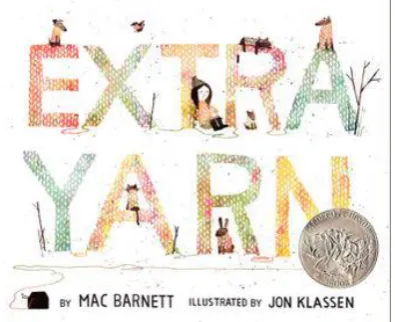
http://ijessr.com Page 22 Figure 6. Extra Yarn by Mac Barnett, retrieved from
https://www.harpercollins.com/9780061953385/extra-yarn/
Example chunks from Extra Yarn by Mac Barnett; Things began to change…
“You’re just jealous.” around the world
…could not stop talking about… “No sweater for me, thanks.” News spread of…
For high level students, a traditional text without pictures may be selected. The procedure is similar as for the other levels, but it may be expanded. The teacher chooses chunks from the text and presents them to students; however, instead of just having students brainstorm about the topic based on the chunks, students can be instructed to predict the story based on the chunks, and they must use the chunks when sharing their prediction in pairs. An example is shown below.
Example chunks from The Open Window by H. H. Munro (Saki) self-possessed young lady
in the meantime put up with hardly a soul
tone of distinct regret know practically nothing great tragedy
http://ijessr.com Page 23
an unfortunate coincidence imminent collision
3.4 Telephone
Telephone is a game that is not only well known among language teachers but among native English speakers as well, as it is often used as a party game. The procedure is as follows. The teacher makes one sentence and shows it to the first student. The first student whispers the sentence to the next student, who then whispers it to the third student, and so on. The last student must say aloud what the sentence was to see how close it was to the original. To use this activity but with a Lexical Approach, the teacher simply needs to make a sentence using target chunks that have been studied. As examples, below are three sentences using chunks from the stories suggested in section 3.3 above. The chunks are underlined, and the other words in the sentence are modified. Naturally, the sentence created for low level students should be shorter and simpler than that chosen for mid and high level students, which should be incrementally more complex.
• Two red buttons popped off my shirt. (Low level)
• News spread of things beginning to change around the world. (Mid level)
• Still, quiet evenings really got on the nerves of the self-possessed young lady who knew practically nothing. (High level)
3.5 Charades or Pictionary
Teachers in language learning classrooms often use Charades or Pictionary as a way to review the vocabulary that has been covered in class. For both activities, the teacher creates a list of words and puts one word on one small piece of paper. Then the teacher shows a student one of the words. For Charades, the student must act out whatever is on the piece of paper while the rest of the students try to guess the word. For Pictionary, instead of acting, the student must draw a picture that illustrates the word in order to get other students to guess the word correctly. These activities, which are usually in the rotation of activities in language learning classrooms, can easily be adapted to fit a Lexical Approach simply by moving from single-word play to multi-word units. Examples are shown in table 3 below for chunks related to professions, with modifications for three different levels.
http://ijessr.com Page 24
Example chunks for Charades or Pictionary based on professions for three levels
Low level Mid level High level
Head teacher Police officer School principal Kindergarten teacher Tour guide Train conductor Soccer player Game designer Delivery man Truck driver Newspaper writer Hair stylist Travel agent Airline pilot Personal assistant Biology teacher Computer analyst Graphic designer Social worker Personal trainer
Real estate agent
Security guard
Construction worker
Fashion photographer
Newspaper journalist
Chief executive officer
Dental hygienist Restaurant hostess Private chef Environmental scientist School psychologist Commercial pilot Jewelry designer Correctional officer Customs inspector Flight attendant Hotel manager
Call center representative
Maintenance worker
Medical transcriptionist
Air traffic controller
Sanitation worker
Political scientist
Biochemistry professor
Foreign correspondent
Judicial law clerk
Investigative journalist
Pharmacy technician
Aerospace engineer
Information security analyst
Marine biologist
Acute care nurse
Anesthesiologist assistant
http://ijessr.com Page 25 4. CONCLUSION
Although many linguists and teachers recognize the value of teaching chunks to students in order to increase their fluency, the procedures for how to do so are not clearly or usefully laid out. While Lewis (1993; 1997) suggests various activities, many require students to undergo training in order to use them, and the majority of language learning environments are not so flexible such that teachers are allowed to apportion a significant amount of class time for that. Thus, while cognizant of the usefulness of chunks for language learning, many teachers may be reticent to incorporate them into their teaching. This paper attempts to help teachers overcome the initial hurdle of incorporating the Lexical Approach into their teaching by demystifying the process through showing how to modify typical activities most language teachers are already familiar with and likely use in their classrooms.
5. REFERENCES
Cowie, A. P. (1988). Stable and creative aspects of vocabulary. Vocabulary and language teaching, 139.
Keller, E. (1979). Gambits: Conversational strategy signals. Journal of Pragmatics, 3(3-4), 219-238. Lewis, M. (1993). The lexical approach: The state of ELT and the way forward. Hove, England: Language Teaching Publications.
Lewis, M. (1997). Pedagogical implications of the lexical approach. In J. Coady & T. Huckin (Eds.), Second language vocabulary acquisition: A rationale for pedagogy (pp. 255-270). Cambridge: Cambridge University Press.
Nation, I. S. P. (1990). Teaching & learning vocabulary (teaching methods).
Nattinger, J. R. (1980). A lexical phrase grammar for ESL. TESOL Quarterly, 337-344.
Nattinger, J. R., & DeCarrico, J. S. (1992). Lexical phrases and language teaching. Oxford University Press. Boston, MA: Heinle Cengage Learning.
Pawley, A., & Syder, F. (1983). Two puzzles for linguistic theory: Native-like selection and native-like fluency. In J. Richards & R. Schmidt (Eds.), Language and communication (pp. 191-226). London: Longman.
Peters, A. M. (1983). The units of language acquisition (Vol. 1). CUP Archive.