Published online March 20, 2014 (http://www.sciencepublishinggroup.com/j/avs) doi: 10.11648/j.avs.20140202.12
Microbial contamination load of hatching eggs in Butaleja,
eastern Uganda
James Higenyi
1, John David Kabasa
21
College of Medicine and Veterinary Medicine, University of Edinburgh, Scotland, England 2
Department of Biosecurity, Makerere University, Kampala, Uganda
Email address:
[email protected] (J. Higenyi), [email protected] (J. D. Kabasa)
To cite this article:
James. Higenyi, John. David. Kabasa. Microbial contamination Load of Hatching Eggs in Butaleja, Eastern Uganda. Animal and Veterinary Sciences. Vol. 2, No. 2, 2014, pp. 22-30. doi: 10.11648/j.avs.20140202.12
Abstract: The continued malnutrition and poverty challenges in the poor rural households of Uganda have led to adoption
of the policy on modernization of agriculture from subsistence to commercial production as a strategic intervention. As such, the poultry industry has received much attention because of its short generation interval, high rate of productivity, limited land demand, low economic values, minimal cultural/ religious taboos, and manure which complements crop-livestock subsystems. As a result, the sector has evolved with emergence of innovative hatchery technologies. Hatchability and chick quality problems are emerging concerns in hatcheries under village production system. Microbial infection critically influences hatchability and quality of chicks in hatcheries. The objective of this study was to determine microbial contaminations in hatching eggs and predict the effect on hatchability in Butaleja district of Uganda. Experimental and descriptive survey tools were employed. Results reveal that, important microbial contaminants in hatching eggs includedEscherichia coli, Proteus,Pseudomonas aerogenous, Staphylococcus aureus and fungal microbes. Prevalence evaluation of the microbes showed the following; Escherichia coli (19%), fungi (3%), Proteus (2%), Pseudomonas aerogenous (9%) and
Staphylococcus aureus (18%) on outer shell surface and Pseudomonas aerogenous (4%) and Staphylococcus aureus (4%) inside the egg. The key risk factors identified were associated with location of the farm, breed type, poor farm hygiene, prolonged egg storage days, lack of laying nests and predominance of free-range system. It is important to implement farmers’ education campaigns to disseminate knowledge and skills on modern poultry production and management practices together with improvement of local breed to adopt the new innovation.
Keywords: Poultry Production, Hatching Eggs, Microbial Contamination, Farmer Education
1. Introduction
The significance of poultry to many rural families in developing countries of Africa and Asia cannot be overemphasized, as it has become a popular livestock enterprise for small holders that contribute enormously to incomes, food security and national economies [10, 11, 18]. It is estimated that 80% of poultry production in Africa is found in traditional scavenging systems [18, 19]. In addition, 70% of poultry products and 20% of animal food products in most African countries come from rural poultry [1]. In Uganda, village farming system supplies 80% of poultry meat to the markets which provides 0.5 gm/per person per day [11, 30]. The demand for poultry and poultry products is on the growing trend due to income growth, urbanization and dietary benefits such as protein, micronutrients and higher poly-unsaturated fatty acids and less cholesterol [9,
10, 21]. Recently the government of Uganda earmarked the poultry industry as a strategic intervention sector for realizing the millennium goal of alleviating rural poverty and improvement in nutrition because of its short generation interval, high rate of productivity, less land demanded, low economic values, minimal cultural/ religious taboos, and manure generation which complements crop-livestock subsystems. The sector has thus experienced progressive development as reflected in annual increased production (3%); particularly chicken from 37.4, 38.6 to 39.7 m in 2008, 2009 and 2010 respectively [29, 30]. Ultimately, this growth will improve food security and bridge the gap of inadequate supply of animal food products in the near future to meet the FAO recommended level of 35 gm/per person per day.
disease, lack of adequate production information and skill, lack of market information, poor hatchability and chick quality as well as lack of breeding stock or day old chick to mention a few [30]. As such, the rural development programmes that address these problems have been tried by both private and government institutions, though, supply of breeding stock in form of quality day old chicks and hatchable eggs have remained problematic in the village production system. In addition to inadequate and irregular supply of day old chicks, satisfaction of the local demand has remained critical. In turn, there is continued stagnation in productivity of poultry due to persistent lack of breeding stocks [11].
In an attempt to address these problems, the government under the liberalized market policy and in an effort to
modernize agricultural practices has promoted
establishment of hatchery technology across different agro-ecological zones. The new technology of artificial incubation (hatcheries) is expected to improve egg hatchability and chick quality, which in turn will boost day old chick production for poultry farmers [9, 30]. In addition, the technology innovation through promotion of commercialization of poultry will in the long run address the increasing demand for poultry and their products, which, in turn, will reduce rural poverty and improved food security. As a result, hatcheries have inevitably emerged in marginal areas, especially those agro-ecological zones known to be more adapted to poultry production across the country to increase supply of day old chicks [12].
Despite hatcheries being increasingly present in marginal areas, management skills and knowledge are still lacking. As a result, from personal experience, farmers concerns of poor hatchability estimated at 50% and quality of chicks (death of chicks at brooding stage) estimated at 40% in these hatcheries continue to persist. Published literature from developed countries reveals that causes of reduced hatchability and quality chicks are of multi-factorial nature with breeder infertility, improper egg handling and storage, poor management practices and bacterial diseases being the major culprits [17]. Other studies emphasized that bacterial infections are important causes of major losses in poultry production and more importantly in hatcheries and farms [4, 16]. In addition, many epidemiological studies targeting industrial poultry system have shown bacterial infections as increasingly critical source of reduced egg hatchability and quality chicks in hatcheries, which, in turn result in high mortalities among young poultry, especially during brooding stages [28, 10, 11]. Whereas in depth research on bacterial infection in poultry farms and hatcheries has been conducted in industrial production systems in developed countries such as Europe, USA and Denmark, few published reports on the situation in sub-Saharan Africa including Uganda have exist particularly for the village farming system. The hatchery technology being a new innovation in the marginal areas managed by unskilled technicians, it is most probable that hatching eggs are predisposed to microbial infections that influence hatchability and chick quality. Worse still, the
earlier investigations conducted in Uganda, reported bacterial infection as significant problem of poultry production with high prevalence of 35% [17, 31]. Furthermore, the study strongly associated bacterial infections with farm production losses such as reduced egg production, chick mortality and stunted growth, infertility, poor hatchability and death of birds under intensive management system [30]. The study suggests that the high bacterial infections may be a potential contamination source for hatching eggs at hatcheries and poultry farms, which, in turn may impact of hatchability and chick quality. The recurrent reduction in hatchability and chick’s quality may discourage the use of modern hatchery technology. There is dearth of information on prevalence of microbial contamination of hatcheries needed to predict the significance of microbial infection and other epidemiological factors on egg hatchability under a village production system. Therefore, there is urgent need for research targeting epidemiology of bacterial diseases and associated risk factors in poultry system in marginal areas for appropriate understanding of the practicability of the innovative hatchery technology promoted by the government.
The purpose of this study was to investigate the microbial contaminations of hatching eggs and determine the important risk factors associated with hatching egg contaminations and hatchability in the emerging hatcheries under village poultry systems in Uganda.
2. Materials and Methods
2.1. Study Location and Methods
The study was conducted in Butaleja district targeting four administrative units namely: Butaleja sub-county, Butaleja town council, Busolwe sub-county and Mazimasa sub-county. The study design employed both quantitative and qualitative approaches to data collection. The laboratory method was used to determine the microbial contamination load in hatching eggs. A field survey approach assessed the risk factors using semi-structured checklist questions as research instruments.
2.2. Field Survey
Semi-structured interviews with randomly selected small scale poultry farmers were carried out. A total of 40 respondents were interviewed using checklist questions for the assessment poultry production and management practices, post-harvest handling and storage of hatching eggs at the farms.
2.3. Samples Collection and Microbial Isolation
water, a pre-enrichment media using sterile gloves and cotton swabs. The different microbial flora was isolated using several specialized isolation culture media: Nutrient agar, Mac Conkey agar (Oxoid, UK), Blood agar, Peptone water, Selenite F and Xylose lysine desoxycholate agar (Merck, Germany). The targeted organisms were:
Salmonella, Staphylococcus aureus, Escherichia coli, Proteus, fungal and Pseudomonas spp.
2.4. Data Analyses
The Epidemiological Package (Epi-Info version 6) was used in data management. The entered data was exported to Statistical Package for Social Sciences and STATA/SE version 11 soft wares for analysis. A binomial model was used to test for the proportion of success from the experiments. The Generalized Linear model for Multivariate analysis of variance was used to explore variability in contamination level across administrative units within and between bacterial species. Furthermore, a multiple linear regression on independent variable (epidemiological factors) to predict their influence on hatchability was carried out.
3. Results
3.1. Egg Surface Contaminations for the Selected Administrative Units
The results of microbiological analysis showed the prevalence of the different microbes as: Escherichia coli
(19%), Staphylococcus aureus (18%), Proteus (2%),
Pseudomonas (9%), Salmonella (0%) and fungal (3%) on egg shell surface and results are presented in table 1.
Table 1. Eggs Surface contamination for all the selected Administrative units.
Pathogens N Mean Std.
Deviation Minimum Maximum Escherichia
coli 171 0.19 0.391 0 1
Salmonella spp 171 0.00 0.000 0 0 Pseudomonas 171 0.09 0.284 0 1 Staphylococcus
aureus 171 0.18 0.381 0 1
Proteus 171 0.02 0.132 0 1
Fungal 171 0.03 0.169 0 1
None significant group
171 0.51 0.501 0 1
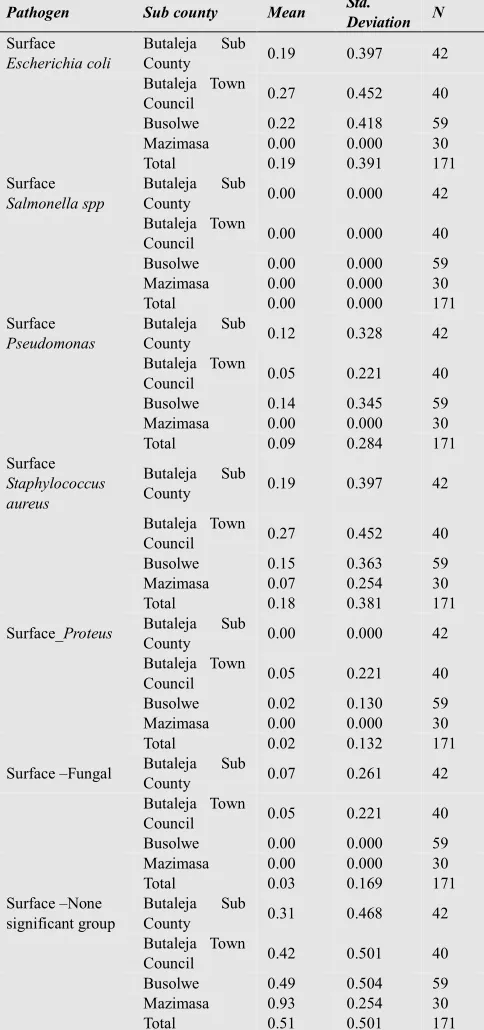
A comparison of egg shell surface bacterial contamination load across the four sampled administrative units showed variations as follows: Escherichia coli (19%) and Staphylococcus aureus (19%), Pseudomonas (12%) and fungal (7%); Escherishia coli (27%) and Staphylococcus aureus (27%); Escherishia coli (22%)and Staphylococcus aureus (22%), Pseudomonas (14%), Proteus (13%);
Staphylococcus aureus (7%) for Butaleja sub-county, Butaleja town council, Busolwe sub-county and Mazimasa sub-county respectively, and illustrated in table 2.
Table 2. Descriptive Statistics.
Pathogen Sub county Mean Std.
Deviation N Surface
Escherichia coli
Butaleja Sub
County 0.19 0.397 42
Butaleja Town
Council 0.27 0.452 40
Busolwe 0.22 0.418 59
Mazimasa 0.00 0.000 30
Total 0.19 0.391 171
Surface Salmonella spp
Butaleja Sub
County 0.00 0.000 42
Butaleja Town
Council 0.00 0.000 40
Busolwe 0.00 0.000 59
Mazimasa 0.00 0.000 30
Total 0.00 0.000 171
Surface Pseudomonas
Butaleja Sub
County 0.12 0.328 42
Butaleja Town
Council 0.05 0.221 40
Busolwe 0.14 0.345 59
Mazimasa 0.00 0.000 30
Total 0.09 0.284 171
Surface Staphylococcus aureus
Butaleja Sub
County 0.19 0.397 42
Butaleja Town
Council 0.27 0.452 40
Busolwe 0.15 0.363 59
Mazimasa 0.07 0.254 30
Total 0.18 0.381 171
Surface_Proteus Butaleja Sub
County 0.00 0.000 42
Butaleja Town
Council 0.05 0.221 40
Busolwe 0.02 0.130 59
Mazimasa 0.00 0.000 30
Total 0.02 0.132 171
Surface –Fungal Butaleja Sub
County 0.07 0.261 42
Butaleja Town
Council 0.05 0.221 40
Busolwe 0.00 0.000 59
Mazimasa 0.00 0.000 30
Total 0.03 0.169 171
Surface –None significant group
Butaleja Sub
County 0.31 0.468 42
Butaleja Town
Council 0.42 0.501 40
Busolwe 0.49 0.504 59
Mazimasa 0.93 0.254 30
Total 0.51 0.501 171
The results of statistical analysis showed that null hypothesis was rejected in the case of Pseudomonas and
Table 3. Binomial test based on normal probability approximation.
Pathogens Category N Observed Prop. Test Prop. Asymp. Sig. (1-tailed)
Group 1 Yes 32 0.187 0.2 0.379(a,b)
Surface Escherichia coli Group 2 No 139 0.813
Total 171 1
Surface Salmonella spp Group 1 No 171 1.000 0.2 0.000(b)
Total 171 1
Surface Pseudomonas Group 1 Yes 15 0.088 0.2 0.000(a,b)
Group 2 No 156 0.912
Total 171 1
Surface Staphylococcus aureus
Group 1 Yes 30 0.175 0.2 0.243(a,b)
Group 2 No 141 0.825
Total 171 1
Surface_Proteus
Group 1 No 168 0.982 0.2 0.000(b)
Group 2 Yes 3 0.018
Total 171 1
Surface Fungal
Group 1 Yes 5 0.029 0.2 0.000(a,b)
Group 2 No 166 0.971
Total 171 1.000
Surface- None significant group
Group 1 Yes 87 0.509 0.2 0.000(b)
Group 2 No 84 0.491
Total 171 1.000
a Alternative hypothesis states that the proportion of cases in the first group <0 .2 b Based on Z Approximation.
Table 4. Multivariate Tests for the effect of Administrative units on the model.
Tests Value F Hypothesis df Error df Sig. Partial Eta Squared
Pillai's trace 0.201 2.975 12.000 498.000 0.001 0.067
Wilks' lambda 0.809 3.012 12.000 434.195 0.000 0.068
Hotelling's trace 0.223 3.029 12.000 488.000 0.000 0.069
Roy's largest root 0.143 5.955(a) 4.000 166.000 0.000 0.125
a The statistic is an upper bound on F that yields a lower bound on the significance level.
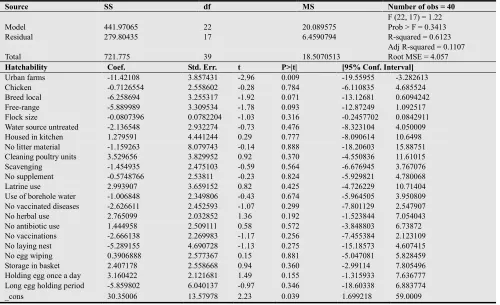
Table 5. Prediction of risk factors on hatchability.
Source SS df MS Number of obs = 40
F (22, 17) = 1.22
Model 441.97065 22 20.089575 Prob > F = 0.3413
Residual 279.80435 17 6.4590794 R-squared = 0.6123
Adj R-squared = 0.1107
Total 721.775 39 18.5070513 Root MSE = 4.057
Hatchability Coef. Std. Err. t P>|t| [95% Conf. Interval]
Urban farms -11.42108 3.857431 -2.96 0.009 -19.55955 -3.282613
Chicken -0.7126554 2.558602 -0.28 0.784 -6.110835 4.685524
Breed local -6.258694 3.255317 -1.92 0.071 -13.12681 0.6094242
Free-range -5.889989 3.309534 -1.78 0.093 -12.87249 1.092517
Flock size -0.0807396 0.0782204 -1.03 0.316 -0.2457702 0.0842911
Water source untreated -2.136548 2.932274 -0.73 0.476 -8.323104 4.050009
Housed in kitchen 1.279591 4.441244 0.29 0.777 -8.090614 10.6498
No litter material -1.159263 8.079743 -0.14 0.888 -18.20603 15.88751
Cleaning poultry units 3.529656 3.829952 0.92 0.370 -4.550836 11.61015
Scavenging -1.454935 2.475103 -0.59 0.564 -6.676945 3.767076
No supplement -0.5748766 2.53811 -0.23 0.824 -5.929821 4.780068
Latrine use 2.993907 3.659152 0.82 0.425 -4.726229 10.71404
Use of borehole water -1.006848 2.349806 -0.43 0.674 -5.964505 3.950809
No vaccinated diseases -2.626611 2.452593 -1.07 0.299 -7.801129 2.547907
No herbal use 2.765099 2.032852 1.36 0.192 -1.523844 7.054043
No antibiotic use 1.444958 2.509111 0.58 0.572 -3.848803 6.73872
No vaccinations -2.666138 2.269983 -1.17 0.256 -7.455384 2.123109
No laying nest -5.289155 4.690728 -1.13 0.275 -15.18573 4.607415
No egg wiping 0.3906888 2.577367 0.15 0.881 -5.047081 5.828459
Storage in basket 2.407178 2.558668 0.94 0.360 -2.99114 7.805496
Holding egg once a day 3.160422 2.121681 1.49 0.155 -1.315933 7.636777
Long egg holding period -5.859802 6.040137 -0.97 0.346 -18.60338 6.883774
Table 6. Predication of microbial infection on hatchability.
Hatchability Coef. Std. Err. t P>|t| [95% Conf. Interval]
Surface bacteria -0.1120915 0.2637157 -0.43 0.673 -0.6464302 0.4222472
Internal bacteria -1.009987 0.8798647 -1.15 0.258 -2.792763 0.772788
cons 11.51709 1.208384 9.53 0.000 9.068673 13.9655
There was no correlation in the contamination levels across the Administrative units as shown by the Hotelling trace value which was not equal to the Roys largest root value. However, multiple linear regression analysis revealed that in addition to microbial infection; flock characteristics, production systems and management malpractices had negative effect on hatchability. Though, observed to be more significant with the hatching eggs sourced from farms located in urban areas as represented in Table 5 and Table 6 respectively.
3.2. Egg Content Contamination for the Selected Administrative Units
The most prominent bacteria that penetrated the egg shell into egg content were Pseudomonas and staphylococcus spp
with 4% contamination rate each and the results are represented in table 7. Trans-shell transmission probably suggests that poor hatchability and chick quality is to large extent attributable to Pseudomonas and staphylococcus spp, though it was not statistically significant (p>0.05) as shown in Table 6.
Table 7. Egg content contamination for all the administrative units.
Pathogens N Mean Std.
Deviation Minimum Maximum
Escherichia coli 171 0.00 0.000 0 0
Salmonella spp 171 0.00 0.000 0 0
Pseudomonas 171 0.04 0.185 0 1
Staphylococcus
aureus 171 0.04 0.199 0 1
Proteus 171 0.00 0.000 0 0
Fungal 171 0.00 0.000 0 0
None significant
group 171 0.01 0.076 0 1
3.3. Poultry Production Systems
Fig I. Description of production systems.
About 70% (n=28) of the farmers interviewed keep poultry on free-range management system, semi-intensive 15% (n=6), intensive 5% (n=2) and backyard 10% (n=4) as showed in figure I. The predominance of free-range poultry
production system exposes eggs to bacterial contamination on farms due to poor sanitary conditions and management practices which inevitably affected hatchability as presented in Table 5.
3.4. Poultry Management Practices
Majority of the farmers lacked litter materials and egg laying nests in their poultry houses, 95% (n=38) and 90% (n=36) respectively. The farmers who irregularly cleaned poultry houses were 87.5% (n=35), vaccination of bird 45% (n=18), treatment of birds using antibiotic 25% (n=10) and supplement feeding of birds 37.5% (n=15). However, all the farmers used water from untreated water sources as illustrated from figure II. Among the poultry management practices, lack of laying nests was the most prominent risk factor as shown in Table 6.
Fig II. Risk factors related to poultry management practices.
3.5. Post-Harvest Handling and Storage of Hatching Eggs
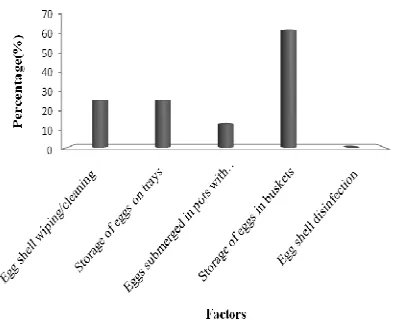
Fig III. Post harvest handling and storage of hatching eggs.
(n=5). Egg shell cleaning or wiping was practiced by 25% (n=10) and egg shell disinfection was lacking or insignificantly practiced by any farmer and the results are presented in figure III. Although, post-harvest handling and storage of hatching eggs on farms was a bad practice, it was not significant on hatchability as presented in table 5.
3.6. Holding Days of Hatching Eggs
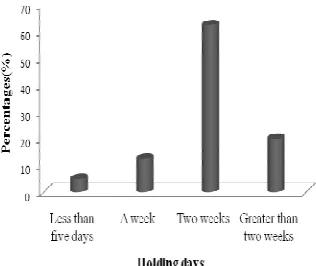
About 5% (n=2), 12.5% (n=5), 62.5% (n=25) and 20% (n=8) of the respondents reported holding days for hatching eggs as less than a week, a week, two weeks and greater than two weeks respectively (Figure IV). The most prominent holding days for hatching eggs was two weeks 62.5% (n=25). This results into aging of egg predisposing it to penetration by bacteria that cause embryonic death and egg spoilage. However, also the egg composition may change with detrimental effect on the environment surrounding the embryo cells. The long holding days of hatching ranks among the major risk factors affecting hatchability as presented in table 5.
Fig IV. Holding days for hatching eggs.
4. Discussion
To the best of our knowledge, this is the first study to determine the prevalence of bacterial organisms in hatching eggs in Butaleja, Eastern Uganda. This study revealed that
Escherichia coli, Proteus, Pseudomonas aerogenous, Staphylococcus aureus and fungal microbes were significantly associated with microbial contamination of hatching eggs. Furthermore, the study demonstrated the influence of probable epidemiological factors on egg hatchability. The prevalence of Escherichia coli was the highest, followed by Staphylococcus aureus. This is attributed to multi-factorial causes such as poor sanitary conditions, malpractices of egg storage and predominance of the free-range production system which exposes poultry to unhygienic and dusty environment. Other exposure factors included poor disease control and prevention practices, lack of supplement feeds, untreated water sources and feeding by scavenging on contaminated feeds and water [12]. As a consequence, hatching eggs are exposed to heavy microbial contamination, which, in turn influence hatchability. This is
supported by other studies [2, 6, 16]. In addition, the findings concur with the other studies re-affirming that microbial contaminations of hatching eggs at farms and hatcheries are attributable to poor poultry management practices and unhygienic conditions [7, 25]. However, most of these epidemiological studies in developed countries mainly focused on poultry under intensive management systems which did not reflect the typical rural poultry management in developing countries.
Furthermore, the descriptive statistical analysis illustrated that egg shell surface contamination rates across the four sampled administrative units varied considerably. This is most probably attributed to the different physical and biological site characteristics, and different socio-economic conditions among farms. This in turn influences the healthy status of poultry production and management practices [20]. Nevertheless, it was found that administrative units were not statistically significant to the model due to high level of Wilks’ Lambda. In addition, the binomial test was statistically significant (p=0.001) in the case of Salmonella, Pseudomonas and Proteus resulting into rejection of null hypothesis and no statistical significance for Escherichia coli and Staphylococcus (p=0.379 and p=0.243 respectively). This portrays the dominance of Escherichia coli and
Staphylococcus pathogens in hatching eggs in Butaleja district. Further, this is supported study that emphasizes variation in the effect of housing system on eggshell contamination with specific groups of bacteria [7].
Generally, across administrative units contamination rate was highest in the urban than the rural locations. The interesting situation was exhibited by Butaleja town council and Mazimasa sub-county which consistently showed increased and reduced contamination rates across the bacterial pathogens of Escherichia coli, Pseudomonas and
Staphylococcus aureus respectively. This was probably attributable to the fact that poultry farmers in Butaleja town council and Mazimasa sub-county were predominantly practicing intensive and semi-intensive management systems respectively. The intensive system exposes poultry and poultry products to heavy bacterial contamination loads and frequent workers’ contacts. This was highly supported by the results of multiple linear regression analysis which revealed that urban farms had their hatchability significantly reduced (p<0.05). This is consistent with another study which found that intensive managements predispose poultry to bacterial infections leading to major health problems in poultry flocks [16].
chick quality and mortalities [25].
This study further observed that trans-shell transmission of hatching eggs was associated with Pseudomonas and
Staphylococcus pathogens that emerged with prevalence of 4%. This is linked to heavy contamination of eggs laid on the ground, prolonged storage of hatching eggs, use of untreated water on the farm and personnel hygiene. The above factors predisposed hatching eggs to bacterial penetration by
Pseudomonas and Staphylococcus pathogens respectively. These results are supported in other studies [25, 26]. Furthermore, it acknowledged that Pseudomonas spp
frequently penetrate egg shell after holding days of 4-5days only [7]. Yet, in another study trans-shell transmission was cited as the one of the biggest causes of early embryonic death, egg spoilage, lowered hatchability and mortality of newly hatched chicks [34]. However, it is also argued that the absence of Escherichia coli, proteus andfungus in the egg content could be attributed to intrinsic egg shell factors for antimicrobial defence associated with active antimicrobial proteins within the avian cuticle and outer eggshell [33]. Similarly, avian incubation, level of ambient temperature; ultraviolet radiation and ozone were found to inhibitive effect on egg shell bacterial growth and microbial contamination levels [27, 28]. On the whole the microbial infection was among the confounding factors of hatchability in hatcheries.
The results also showed that the main risk factors associated with hatching eggs contaminations and hatchability in village production system was related to production factors and farm characteristics. Although, overall statistical test revealed no significance of the regression coefficients, the R-Squared at 61.23% supported the fact that total variation in hatchability was accounted for by the epidemiological factors. Thus, the model was deterministic. The production factors included predominance of free-range production system and poor management practices such as poor vaccination, poor health and disease management, inadequate supplementary feeding, poor hygienic conditions, untreated water sources, lack of laying nests and prolonged holding days of egg beyond two weeks (14 days). Whereas the farm characteristics found to reduce hatchability were flock size, breed of poultry (local), poultry type and farm location. However, the ambient temperatures of above 23˚c and extremes in dry seasons ranging from 28 to 30˚c in Butaleja perhaps contributed to sweating of eggs, which, in turn allowed bacteria to penetrate causing reduced egg hatchability. Although this was out of the scope of the study, it was observed that critical temperatures of above 18˚c resulted into low hatchability for artificially incubated hatching eggs from local poultry in Tanzania [15].
Like other regions in the country, extensive free-range small holder poultry production is known village production system that is commonly practiced despite the constraints associated with it [12]. The observed poor management and egg handling and storage practices associated with these tradition small holder poultry management systems
predispose hatching eggs to bacterial contamination. This is consistent with findings which stressed that farmers in Uganda especially rural areas have limited knowledge and skill in improved poultry management due to inadequate extension agents to provide advisory services [11]. Further, studies have revealed that poor hygienic conditions in poultry houses predispose them to contamination by fungal, viral and bacterial pathogens especially Enterobacteriacae such as E. coli [24]. This presents persistent poultry health problems especially Salmonellosis and Colibacillosis leading to contamination of hatching eggs through horizontal and vertical transmissions of pathogens [4, 5].
In addition, the study findings of scavenging tendencies, low level of supplementary feeding, poor vaccination practices and lack of laying nests contribute to poor quality of the hatching eggs. This is consistent with other findings which emphasizes that proper production practices such as proper feeding, and proper management of laying flock by routine vaccination of birds against infectious bronchitis and Newcastle, proper egg storage and handling at temperature between 10 and 15˚C significantly contributes to preservation the quality of hatching eggs[10]. In another study, it was revealed that proper storage of hatching eggs is a critical factor that determines hatchability because storage of eggs longer than one week (seven days) affects embryo development reducing hatch time, hatchability and quality of chicks [26]. Furthermore egg shell bacterial contamination on farms and hatcheries are significantly associated with cross-contaminations during egg storage and transportation by farm personnel and workers at the hatchery respectively [22].
5. Conclusion
The study empirically confirms that reduced hatchability in fast emerging hatcheries in village poultry production system is multi-factorial and underlying epidemiological factors include: microbial infection and production factors. Although the effect of microbial infection on hatchability was insignificant, the study validates the theoretical expectation. Whereas it is apparent that variation in farm characteristics particularly location of the poultry farms and breed type is very significant; microbial infection and production factors such as production systems, lack of laying nests, storage conditions and prolonged handling of hatching eggs were observed to affect egg hatchability.
Acknowledgement
The authors would like to appreciate the staff of Faculty of Veterinary Medicine, Makerere University and University of Edinburgh on International Animal Health programme for their guidance.
References
[1] Awuni, J. A. (2002). Strategies for the improvement of rural chicken production in Ghana, In: Characteristics and parameters of family poultry production in Africa. IAEA, Vienna. Pp: 33 -37.
[2] Bailey, J. S., Cox, N. A. and Berrang, M. E. (1994). Hatchery acquired salmonellae in broiler chicks. Poultry Science, 73: 1153 - 1157.
[3] Carter, G. R., Chengappa, M. M. and Robert, A. W. (1995). Microbial nutrition, metabolism and growth. In: Essentials of veterinary microbiology (5th edition). Lea and Febiger, the University of Michigan, USA. Pp: 35 - 38.
[4] Chao, N. R., Hsien, C. H., Yeh, C. M., Chou, S. J., Chu, C., Suy, C. and Yu, C. Y. (2007). Assessing the prevalence of Salmonella enterica in poultry hatcheries by using hatched egg shell membrane. Poultry Science, 86: 1651 - 1655. [5] Cox, N. A., Berrang. M. E. and Caston. J. E. (2000).
Salmonella penetration of egg shell and proliferation in broiler hatching eggs: A review. Poultry Science, 79: 1571 - 1574.
[6] Davies, R. H. and Wray. C. (1994).An approach to reduction of salmonella infections in broiler chicken flocks through intestine sampling and identification of cross- contamination hazards in commercial hatcheries. International Journal of Food Microbiology, 24: 147 - 160.
[7] De Reuk, K., Grijspeerdt, W., Messens, M., Heyndrickx, M.,
Uyttendaele, M. R, Debevere, J. M. and Herman, L. (2006). Eggshell factors influencing eggshell penetration and whole egg contamination by different bacteria, including Salmonella enteritidis. International Journal of Food
Microbiology, 112(3): 253 – 260.
[8] De Reu, K., Messens, W., Heyndrickx, M., Rodenburg, T. B., Uyttendaele, M. and Herman, L. (2008). Bacterial contamination of table eggs and the influence of housing systems. World's Poultry Science Journal, 64: 5 -19.
[9] FAO (2002). Global production and consumption of animal
source foods. Presented at the conference. Animal Source Foods and Nutrition in Developing Countries, held in Washington, DC. June 24-26.
[10] FAO (2004). Small-scale poultry production. Technical guide,
edited by E. B. Sonaiya and S. E. J. Swan. Food and Agricultural Organization, Rome.
[11] FAO (2008). Poultry sector country review. Uganda. FAO
Animal Production and Health Division Food and Agricultural Organization, Rome.
[12] www.fao.org/avianflu//en/farmingsystems.html. Accessed on 6/3/2011 FAO (2009). A review of the current poultry disease control strategies in small holder poultry production systems and local poultry populations in Uganda.
Food and Agricultural Organization, Rome.
[13] FAO (2009b). The state of food and agriculture.
http://www.fao.org/catalog/inter-e.htm. Accessed on 21/5/2012.
[14] FAO (2010). Poultry meat and eggs. Agribusiness hand book.
Food and Agricultural Organization, Rome.
www.eastagri.org. Accessed on 4/3/2011.
[15] FAO (2010b). Chicken genetic resources used in
smallholder production systems and opportunities for their development, by P. Sørensen. FAO Smallholder Poultry Production Paper No. 5., Food and Agricultural Organization, Rome.
[16] Foley, S. L., Lynne, A. M. and Nayat, R. (2008). Salmonella challenges: prevalence in swine and poultry and potential pathogenicity of such isolates. Journal of Animal Science, 86: E149-E162.
[17] GTZ (1991). Problems of poultry keeping in Kampala, Entebbe area (a baseline survey). A paper presented by Bambaner R. S. at the 28th Seminar for Tropical Veterinary Medicine at Berlin.
[18] Gueye, E. F. (1998). Village egg and fowl meat production in
Africa. World’s Poultry Science Journal 54: 134.
[19] Gueye, E. F. (2000). Women and family poultry production in
Africa. Development in Practice, 10: 98 – 102.
[20] Kusina, J. F. and Kusina, N. T. (1999). Feasibility study of agricultural and household activities as they relate to livestock production in Guruve District of Mashonaland Province with emphasis on poultry production. Report for the Household Agricultural Support Programme (HASP), Zimbabwe.
[21] MAAIF (2010). Agriculture for food and income security.
Agriculture Sector Development Strategy and Investment Plan, Landon.
[22] Mc Cullagh, J. J., McNamee, P. T., Ball, H. J. and Smyth, J. A., (1998). The use of pulsed field gel electrophoresis to investigate the epidemiology of Staphylococcus aureus infections in commercial broiler flock. Veterinary Microbiology, 63: 275 -281.
[23] OIE (2010). Manual of diagnostic tests and vaccines for
terrestrial animals.
www.oie.int/fileadmin/Home/eng/.../2.09.09_SALMO NELLOSIS.pdf. Accessed on 21/5/2012.
[24] Poopes, C. (2000). Salmonella infections in the domestic fowls. In: Wray. C. and Wray .A. (Eds); Salmonella in domestic animals. CAB International, Wallingford, UK.
[25] Qureshi, A. A. (2002). Hatchery sanitation and chick mortality. World Poultry, 18(3): 24 -25.
[26] Rijpens, N., Herman, L., Vereecken, F., Jannes, G., De Smedt, J. and De Zutter, L. (1999). Rapid detection of stressed Salmonella spp. in dairy and egg products using immunomagnetic separation and PCR. Int. J. FoodMicrobiol. 46, 37–44.
[28] Shawkey, M. D., Firestone, M. K., Brodie, E. L. and Beissinger, S. R. (2009). Avian Incubation Inhibits Growth and Diversification of Bacterial Assemblages on Eggs. PLoS ONE 4(2): e4522.
[29] UBOS (2010). Statistical abstract. Uganda Bureau of
Statistics, Kampala, Uganda.
[30] USAID (2010). Partnership for safe poultry in Kenya (PSPK)
Program. Value chain analysis of poultry in Uganda.
[31] Waiswa, P., Lubowa, N. M. and Nakavuma, J. L. (2006). Seroprevalence and excretion Status of Salmonella Pullorum gallinarum in chicken around Kampala in Uganda. African Journal of Animal Biomedical Sciences, 1(1): 46 - 55.
[32] Walker, S. E., Sander, J. E., Celine, J. L. and Helton, J. S., (2002). Characterisation of Pseudomonas aeroginosa isolates associated with mortality in broiler chicks. Avian Disease, 46: 1045 - 1050.
[33] Wellman, L. O., Picman, J., and Hincke, M. T. (2008). Antimicrobial activity of the Anseriform outer eggshell and cuticle. Comparative Biochemistry and Physiology Part B. Biochemistry and Molecular Biology, 149(4): 640 - 649.