ISSN: 2456-9909 (Online)
International Journal of Research in AYUSH and
Pharmaceutical Sciences
IJRAPS | August 2018 | Vol 2 | Issue 8 275
Research Article
DEVELOPMENT AND VALIDATION OF RP-HPLC METHOD FOR SIMULTANEOUS
ESTIMATION OF PARACETAMOL AND LORNOXICAM IN BULK AND
PHARMACEUTICAL DOSAGE FORM
A. Lakshmana Rao
1*, T. Raja
1, B. Madhu Harika
2*1Department of Pharmaceutical Analysis, V. V. Institute of Pharmaceutical Sciences, Gudlavalleru, Andhra
Pradesh, India.
2Department of Pharmaceutical Chemistry, Vikas Institute of Pharmaceutical Sciences, Rajahmundry,
Andhra Pradesh, India.
Keywords:
Paracetamol,
Lornoxicam, Estimation, HPLC.
ABSTRACT
A simple, rapid, accurate and precise isocratic reversed phase high performance liquid chromatographic method has been developed and validated for simultaneous estimation of Paracetamol and Lornoxicam in tablet dosage form. The chromatographic separation was carried out on Zorbax C18 column (150 mm x 4.6 mm I.D., 5 µm particle size) with a mixture of 20 mM ammonium acetate pH 3.2 buffer and acetonitrile in the ratio of 60:40 v/v as a mobile phase at a flow rate of 1.0 mL/min. UV detection was performed at 265 nm. The retention times were 2.74 minutes and 5.36 minutes for Paracetamol and Lornoxicam respectively. Calibration
plots were linear (r2=0.999 for both Paracetamol and Lornoxicam respectively) over
the concentration range of 6.25-250 µg/mL for Paracetamol and 0.1-4 µg/mL for Lornoxicam. The method was validated for linearity, precision, accuracy, ruggedness and robustness. The proposed method was successfully used for simultaneous estimation of Paracetamol and Lornoxicam in tablet dosage form. Validation studies revealed that the proposed method is specific, rapid, reliable and reproducible. The high % recovery and low % RSD confirms the suitability of the proposed method for routine quality control analysis of Paracetamol and Lornoxicam in bulk and tablet dosage form.
INTRODUCTION
Paracetamol (Fig. 1) is a non-selective COX inhibitor and has weak activity on prostaglandin synthetase in the inflamated peripheral tissues [1]. Paracetamol
is used to treat many conditions such as headache, muscle ache, arthritis, backache, toothache, cold and fever. Chemically it is N-acetyl-p-amino phenol
[2].
Lornoxicam (Fig. 2) is a potent analgesic with excellent anti inflammatory properties in a range of painful and inflammatory conditions, including postoperative pain and rheumatoid arthritis [3].
Chemically it is 6-chloro-4-hydroxy-2-methyl-N-2-pyridinyl-2H
-thieno[2,3-e]-1,2-thiazine-3-carboxamide1,1-ioxide [4].
Literature survey reveals that few analytical methods using spectrophotometry [5--7], HPLC [8-10]
and HPTLC [11-13] have been reported for the
simultaneous determination of Paracetamol and Lornoxicam in combined dosage forms. Therefore, an attempt has been made to develop a novel, rapid, accurate and precise RP-HPLC method for simultaneous estimation of Paracetamol and Lornoxicam in tablet dosage form and validated in accordance with ICH guidelines [14].
MATERIALSANDMETHODS
Instrumentation
To develop a high performance liquid
chromatographic method for simultaneous
Website: http://ijraps.in 276
auto sampler-2707 and UV detector-2998. A 20 μL rheodyne injector port was used for injecting the samples. Data was analyzed by using Empower 2 software. A Shimadzu balance was used for weighing the materials and Systronics-361 pH
meter was used for pHmeasurements.
Chemicals and solvents
The reference samples of Paracetamol and Lornoxicam were provided as gift samples from Spectrum Pharma Research Solutions, Hyderabad, India. The marketed formulation of Paracetamol and Lornoxicam tablets (Paracetamol 500 mg and Lornoxicam 8 mg) were purchased from local market. HPLC grade water and acetonitrile were purchased from E.Merck (India) Ltd., Mumbai, India. Ammonium acetate and acetic acid of AR grade was obtained from S.D. Fine Chemicals Ltd., Mumbai, India.
Chromatographic conditions
20 mM ammonium acetate pH 3.2 buffer and acetonitrile in the ratio of 60:40 v/v was found to be the most suitable mobile phase for ideal chromatographic separation for simultaneous estimation of Paracetamol and Lornoxicam. The solvent mixture was filtered through 0.45 μm membrane filter and sonicated before use. It was pumped through the column at a flow rate of 1.0 mL/min. Injection volume was 20 µL and the column was maintained at ambient temperature. The column was equilibrated by pumping the mobile phase through the column for at least 30 minutes prior to the injection of the drug solution. The detection of the drug was monitored at 265 nm. The run time was set as 8 minutes.
Preparation of mobile phase and diluent
The mobile phase was prepared by mixing 600 mL of 20 mM ammonium acetate buffer (pH was adjusted to 3.2 with acetic acid) with 400 mL of acetonitrile. The solution was degassed in an ultrasonic water bath for 5 minutes and filtered through 0.45 µm filter under vacuum. The solution of mobile phase was used as diluent.
Preparation of standard solution
Accurately weighed and transferred 62.5 mg of Paracetamol and 1 mg of Lornoxicam working standards into a 100 mL clean dry volumetric flask, about 10 mL of diluent was added and made volume upto the mark with the diluent. Then it was filtered through 0.45 μm filter. Further 1 mL from above stock solution was transferred into 100 mL volumetric flask and diluted upto the mark with diluent. From this serial dilutions were prepared for construct the calibration curve.
Preparation of sample solution
Twenty commercial tablets were weighed and finely powdered. An accurately weighed portion of powder equivalent to 500 mg of Paracetamol and 8 mg of Lornoxicam were transferred into a 100 mL volumetric flask, to this add 50 mL of diluent. The content of flask were sonicated for 20 min, then solution was filtered through a 0.45 μm membrane filter and then final volume of the solution was made upto 100 mL with diluent. Further 1 mL from the above stock solution was pipetted into 100 mL volumetric flask to get the concentration containing 50 μg/mL of Paracetamol and 0.8 μg/mL of Lornoxicam.
Procedure
The column was maintained at ambient temperature. The run time was set at 8 minutes. The column was equilibrated by pumping the mobile phase through the column for at least 30 minutes prior to the injection of the drug solutions. Inject 20 μL of the standard and sample solutions six times into the chromatographic system at a flow rate of 1.0 mL/min and the corresponding chromatograms were obtained. From these chromatograms, the average area under the peak of each dilution was computed.
METHODVALIDATION
Linearity
Several aliquots of standard solutions of Paracetamol and Lornoxicam were taken in seven different 10 mL volumetric flasks and diluted up to the mark with diluent such that the final concentrations were in the range of 6.25-250 µg/mL for Paracetamol and 0.1-4 µg/mL for Lornoxicam. The above solutions were injected into the HPLC system keeping the injection volume constant. The drugs were eluted with UV detector at 265 nm, peak areas was recorded for all the peaks. The linearity curves were constructed by plotting concentration of the drugs against peak areas. The regressions of the plots were computed by least square regression method.
Precision
Precision for Paracetamol and Lornoxicam was determined in terms of system precision and method precision. Every sample was injected six times. The measurements for peak areas were expressed in terms of % RSD.
Accuracy
Paracetamol and Lornoxicam in Bulk and Pharmaceutical Dosage Form
IJRAPS | August 2018 | Vol 2 | Issue 8 277
Lornoxicam. Each level was repeated three times. The % recovery of Paracetamol and Lornoxicam were calculated.
System suitability
The system suitability parameters like retention time, theoretical plates and tailing factor were evaluated by six replicate analysis of Paracetamol and Lornoxicam and compared with standard values. The acceptance criteria are % RSD of peak areas not more than 2%, theoretical plates numbers (N) at least 2000 per each peak and tailing factors not more than 2.0 for Paracetamol and Lornoxicam.
Limit of detection and limit of quantification
The limit of detection (LOD) and limit of quantification (LOQ) of the developed method were determined by injecting progressively low concentrations of the standard solutions of Paracetamol and Lornoxicam using the developed HPLC method. LOD and LOQ were estimated from signal-to-noise ratio. LOD and LOQ were calculated using 3.3 σ/s and 10 σ/s formulae, respectively.
Where, σ is the standard deviation of the peak areas and S is the slope of the corresponding calibration curve.
Robustness
The robustness of the method was determined by
making small deliberate changes in method like
variation of flow rate, mobile phase ratio and temperature.
Assay
Standard preparations are made from the bulk drug and sample preparations are made from formulation. Both standard and sample solutions were injected in six homogeneous samples. 20 µL of sample solution was injected and from the peak areas of Paracetamol and Lornoxicam, amount of each drug in the sample were computed. The results were compared with the label claim of Paracetamol and Lornoxicam in tablet dosage form. From the results the average % Assay was calculated.
RESULTSANDDISCUSSION
Fig. 1: Chemical structure of Paracetamol Fig. 2: Chemical structure of Lornoxicam
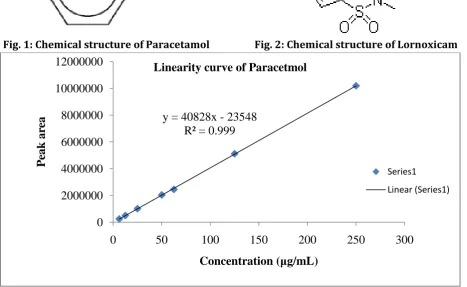
Fig. 3: Calibration curve of Paracetamol
y = 40828x - 23548
R² = 0.999
0
2000000
4000000
6000000
8000000
10000000
12000000
0
50
100
150
200
250
300
P
eak ar
ea
Concentration (μg/mL)
Linearity curve of Paracetmol
Series1
Website: http://ijraps.in 278
Fig. 4: Calibration curve of Lornoxicam
Fig. 5: Typical chromatogram of standard for Paracetamol and Lornoxicam Table 1: Optimized chromatographic conditions
S. No. Parameter Condition
1 Mobile phase 20 mM ammonium acetate:acetonitrile (60:40 v/v)
2 Diluent 20 mM ammonium acetate:acetonitrile (60:40 v/v)
3 Column Zorbax C18 (150 mm x 4.6 mm, 5 µm)
4 Column temperature Ambient
5 Wave length 265 nm
6 Injection volume 20 µL
7 Flow rate 1.0 mL/min.
8 Run time 8 min.
Table 2: Linearity results of Paracetamol
S. No. Concentration (μg/mL) Mean peak area
1 6.25 241716
2 12.5 497904
3 25 1010279
4 50 2035029
5 62.5 2447404
6 125 5109279
7 250 10183438
y = 21731x + 2040. R² = 0.999
0
20000
40000
60000
80000
100000
0
1
2
3
4
5
P
eak
ar
ea
Concentration (μg/mL)
Linearity curve of Lornoxicam
Series1
Linear (Series1)
Paracetamol and Lornoxicam in Bulk and Pharmaceutical Dosage Form
IJRAPS | August 2018 | Vol 2 | Issue 8 279
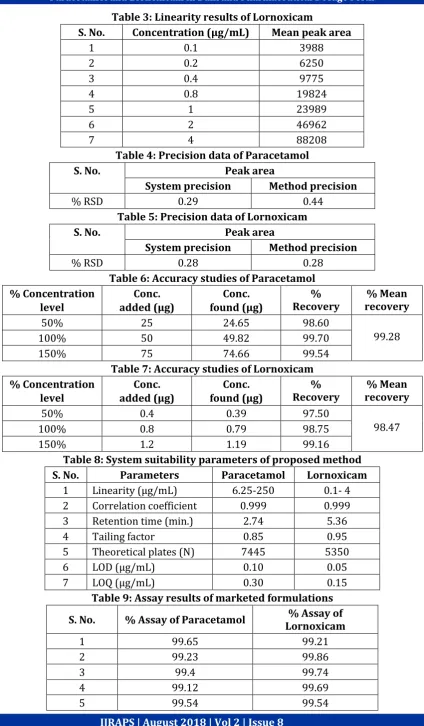
Table 3: Linearity results of Lornoxicam
S. No. Concentration (μg/mL) Mean peak area
1 0.1 3988
2 0.2 6250
3 0.4 9775
4 0.8 19824
5 1 23989
6 2 46962
7 4 88208
Table 4: Precision data of Paracetamol
S. No. Peak area
System precision Method precision
% RSD 0.29 0.44
Table 5: Precision data of Lornoxicam
S. No. Peak area
System precision Method precision
% RSD 0.28 0.28
Table 6: Accuracy studies of Paracetamol % Concentration
level
Conc. added (μg)
Conc. found (μg)
% Recovery
% Mean recovery
50% 25 24.65 98.60
99.28
100% 50 49.82 99.70
150% 75 74.66 99.54
Table 7: Accuracy studies of Lornoxicam % Concentration
level
Conc. added (μg)
Conc. found (μg)
%
Recovery recovery % Mean
50% 0.4 0.39 97.50
98.47
100% 0.8 0.79 98.75
150% 1.2 1.19 99.16
Table 8: System suitability parameters of proposed method
S. No. Parameters Paracetamol Lornoxicam
1 Linearity (µg/mL) 6.25-250 0.1- 4
2 Correlation coefficient 0.999 0.999
3 Retention time (min.) 2.74 5.36
4 Tailing factor 0.85 0.95
5 Theoretical plates (N) 7445 5350
6 LOD (µg/mL) 0.10 0.05
7 LOQ (µg/mL) 0.30 0.15
Table 9: Assay results of marketed formulations
S. No. % Assay of Paracetamol Lornoxicam % Assay of
1 99.65 99.21
2 99.23 99.86
3 99.4 99.74
4 99.12 99.69
Website: http://ijraps.in 280
6 99.12 99.12
Mean 99.3 99.5
% RSD 0.21 0.29
The HPLC procedure was optimized with a view to develop an accurate, precise and reproducible method for simultaneous estimation of Paracetamol and Lornoxicam in tablet dosage form using Zorbax C-18 (150 mm × 4.6 mm, 5 μm) in isocratic mode with mobile phase composition of 20 mM ammonium acetate and acetonitrile in the ratio of 60:40 v/v resulted in peak with maximum separation, good shape and resolution. Flow rates between 0.8 to 1.2 mL/min were studied. A flow rate of 1.0 mL/min gave an optimum signal-to-noise ratio with reasonable separation time, the retention times for Paracetamol and Lornoxicam were found to be 2.74 minutes and 5.36 minutes respectively. Total run time was 8 minutes. The drug components were measured with UV detector at 265 nm. The results of optimized chromatographic conditions were shown in Table 1.
Linearity was obtained in the range of 6.25-250 µg/mL for Paracetamol and 0.1-4 µg/mL for Lornoxicam. The correlation coefficient (r2) was
found to be 0.999 for both Paracetamol and Lornoxicam respectively. The regression equation of the linearity plot of concentration of Paracetamol over its peak area was found to be y=40828x+23548, where x is the concentration of Paracetamol (μg/mL) and y is the corresponding peak area. The regression equation of the linearity plot of concentration of Lornoxicam over its peak area was found to be y=21731x+2040, where x is the concentration of Lornoxicam (μg/mL) and y is the corresponding peak area. The results show that an excellent correlation exists between peak area
and concentration of drugs within the
concentration range indicated. The linearity results were shown in Table 2 and Table 3 and the calibration curves were shown in Fig. 3 and Fig. 4. The % RSD for system precision and method precision for Paracetamol were found to be 0.29% and 0.44% respectively (limit % RSD<2.0%). The % RSD for system precision and method precision for Lornoxicam were found to be 0.28% and 0.28% respectively (limit % RSD<2.0%) and hence the method is precise. The precision data of Paracetamol and Lornoxicam were furnished in Table 4 and Table 5.
The % mean recovery of the drugs Paracetamol and Lornoxicam were found to be 99.28% and 98.47% respectively and the high percentage of recovery of Paracetamol and Lornoxicam indicates that the proposed method is highly accurate. The results of
accuracy studies of Paracetamol and Lornoxicam were shown in Table 6 and Table 7.
The number of theoretical plates calculated for Paracetamol and Lornoxicam was 7445 and 5350 respectively. The tailing factor for Paracetamol and Lornoxicam was 0.85 and 0.95 respectively, which indicates efficient performance of the column. The limit of detection (LOD) and limit of quantification (LOQ) for Paracetamol were found to be 0.10 µg/mL and 0.30 µg/mL; 0.05 µg/mL and 0.15 µg/mL for Lornoxicam respectively, which indicate the sensitivity of the method. The summary of system suitability parameters and validation parameters were shown in Table 8.
The robustness studies indicated that no considerable effect on the determination of the drugs. Therefore the test method is robust for the quantification of the drugs. In all deliberately varied conditions, the % RSD for replicate injections of Paracetamol and Lornoxicam were found to be within the acceptable limits.
Validated method was applied for the simultaneous estimation of Paracetamol and Lornoxicam in commercial tablet dosage form. The % Assay of Paracetamol and Lornoxicam were found to be 99.30% and 99.50% respectively. The results for the drugs assay showed good agreement with label claims. No interfering peaks were found in the chromatogram of the tablet formulation within the run time indicating that excipients used in tablet formulation did not interfere with the simultaneous estimation of the drugs Paracetamol and Lornoxicam by the proposed HPLC method. The assay results are shown in Table 9.
The chromatograms were checked for appearance of any extra peaks under optimized conditions, showing no interference from common tablet excipients and impurities. Also the peak areas were compared with standard and were found to be within limits. As shown in chromatogram, two analytes are eluted by forming symmetrical peaks. The typical chromatogram of Paracetamol and Lornoxicam standard were shown in Fig. 5.
CONCLUSION
Paracetamol and Lornoxicam in Bulk and Pharmaceutical Dosage Form
IJRAPS | August 2018 | Vol 2 | Issue 8 281 RERERENCES
1. Bertolini A, Ferrari A, Ottani A, Guerzoni S, Tacchi R and Leone S. Paracetamol: new vistas of an old drug. CNS Drug Reviews. 2006; 12(3-4): 250-275.
2. Graham GG and Scott KF. Mechanism of action
of Paracetamol. American Journal of
Therapeutics. 2005; 12(1): 46-55.
3. Balfour JA, Fitton A and Barradell LB.
Lornoxicam: a review of its pharmacology and therapeutic potential in the management of painful and inflammatory conditions. Drugs. 1996; 51(4): 639-657.
4. Radhofer-Welte S and Rabasseda X.
Lornoxicam, a new potent NSAID with an improved tolerability profile. Drugs Today. 2000; 36(1): 55-76.
5. Patel DM, Sardhara DM, Thumbadiya DH, Patel
CN. Development and validation of
spectrophotometric method for simultaneous estimation of Paracetamol and Lornoxicam in different dissolution media. Pharmaceutical Methods. 2012; 3(2): 98-101.
6. Vyas AJ, Patel JK, Bhandri A, Chavda JR and Sheth NR. Simultaneous estimation of Lornoxicam and Paracetamol by vierdot’s method in API and synthetic mixture. International Journal of Chem Tech Research. 2011; 3(3): 1269-1273.
7. Lakshmi S, Lakshmi KS and Tintu T.
Simultaneous spectrophotometric estimation of Paracetamol and Lornoxicam in tablet dosage form. International Journal of Pharmacy and Pharmaceutical Sciences. 2010; 2(4): 166-168.
8.Mahesh A. Simultaneous determination of
Paracetamol and Lornoxicam by RP-HPLC in
bulk and tablet formulation. Pharmaceutical Methods. 2011; 2(1): 61-66.
9. Sharma S and Sharma MC. Isocratic RP-HPLC
Method for simultaneous estimation of Paracetamol and Lornoxicam in combined tablet dosage form and its dissolution assessment. International Journal of Chem Tech Research. 2011; 3(2): 997-1002.
10.Varsha N, Patibha V, Soni M, Ashok B and Suvarna B. Estimation of Paracetamol and Lornoxicam by isocratic, gradient and elevated temperature HPLC using propylene carbonate. Journal of Liquid Chromatography and Related Technologies. 2014; 37(8): 1094-1103.
11.Patel DJ and Patel VP. Simultaneous
determination of Paracetamol and Lornoxicam in tablets by thin layer chromatography combined with densitometry. International Journal of Chem Tech Research. 2010; 2(4): 1929-1932.
12.Borisagar SL, Patel HU, Patel CN, Jayswal UP. A validated high performance thin layer chromatography method for estimation of Lornoxicam and Paracetamol in their combined tablet dosage form. Pharmaceutical Methods. 2011; 2(2): 83-87.
13.Kulkarni VG, Gandhi VS, Deshpande PB and
Chaube PH. High performance thin layer chromatographic analysis of Paracetamol and Lornoxicam in combined tablet dosage form. Der Chemica Sinica. 2011; 2(1): 182-188.
14.ICH Harmonised Tripartite Guideline,
Validation of analytical procedures: Text and
methodology, Q2(R1), International
Conference on Harmonization, Geneva. 2005; 1-13.
Cite this article as:
A. Lakshmana Rao, T. Raja1, B. Madhu Harika. Development and Validation of RP-HPLC Method for Simultaneous Estimation of Paracetamol and Lornoxicam in Bulk and Pharmaceutical Dosage Form. International Journal of Research in AYUSH and Pharmaceutical Sciences, 2018;2(8):275-281.
Source of support: Nil, Conflict of interest: None Declared
*Address for correspondence Dr. A. Lakshmana Rao
Professor and Principal,
V. V. Institute of Pharmaceutical Sciences, Gudlavalleru, Andhra Pradesh, India.