Pierzak Monika, Nowak Ewelina. Knowledge concerning the nursing staff hospital-acquired infections in the prevention and transmission paths microorganisms living in the hospital environment. Journal of Education, Health and Sport. 2017;7(8):993-1011. eISSN 2391-8306. DOI http://dx.doi.org/10.5281/zenodo.996428
http://ojs.ukw.edu.pl/index.php/johs/article/view/4884
The journal has had 7 points in Ministry of Science and Higher Education parametric evaluation. Part B item 1223 (26.01.2017). 1223 Journal of Education, Health and Sport eISSN 2391-8306 7
© The Authors 2017;
This article is published with open access at Licensee Open Journal Systems of Kazimierz Wielki University in Bydgoszcz, Poland
Open Access. This article is distributed under the terms of the Creative Commons Attribution Noncommercial License which permits any noncommercial use, distribution, and reproduction in any medium, provided the original author(s) and source are credited. This is an open access article licensed under the terms of the Creative Commons Attribution Non Commercial License (http://creativecommons.org/licenses/by-nc/4.0/) which permits unrestricted, non commercial use, distribution and reproduction in any medium, provided the work is properly cited. This is an open access article licensed under the terms of the Creative Commons Attribution Non Commercial License (http://creativecommons.org/licenses/by-nc/4.0/) which permits unrestricted, non commercial
use, distribution and reproduction in any medium, provided the work is properly cited. The authors declare that there is no conflict of interests regarding the publication of this paper.
Received: 05.08.2017. Revised: 10.08.2017. Accepted: 31.08.2017.
Knowledge concerning the nursing staff hospital-acquired infections in the prevention and transmission paths microorganisms living in the hospital environment
Monika Pierzak1 Ewelina Nowak2
Wiedza personelu pielęgniarskiego dotycząca zakażeń szpitalnych w zakresie profilaktyki oraz dróg transmisji drobnoustrojów bytujących w środowisku szpitalnym
Monika Pierzak1, Ewelina Nowak2
1
Jan Kochanowski University, Faculty of Medicine and Health Sciences, Department of Family Medicine and Geriatrics
2
Jan Kochanowski University, Faculty of Medicine and Health Sciences, Institute of Nursing and Midwifery
Address for correspondence:
Monika Pierzak
Institute of Medical Sciences
Department of Family Medicine and Geriatrics Chmielowice Szkolna 36
26-026 Morawica tel. 530-169-219
e-mail: [email protected]
Streszczenie
Wstęp: Poziom wiedzy w zakresie tematyki zakażeń związanych ze służbą zdrowia jest bardzo istotnym elementem, wpływającym na zdrowie oraz życie pacjentów a także pracującego personelu medycznego obejmującego cały zespół interdyscyplinarny. W poszczególnych etapach procesu pielęgnowania, który składa się z rozpoznania, planowania, realizacji oraz oceny, pojawia się problem zakażeń szpitalnych.
Cele pracy: Celem badania jest ocena poziomu wiedzy personelu pielęgniarskiego z zakresu zakażeń szpitalnych, profilaktyki oraz dróg transmisji drobnoustrojów.
Materiał i Metoda: Badanie przeprowadzono w okresie od 01.01.2017-01.06.2017 w Wojewódzkim Szpitalu Zespolonym w Kielcach. Badania były dobrowolne, a osoby biorące udział wyraziły zgodę na uczestnictwo w nich. .Badenim objęto grupę 92 (100%) osób z kadry pielęgniarskiej. Były to kobiety 96,65% (n=88), oraz mężczyźni 4,35% (n=4). Badanych poinformowano o anonimowości przeprowadzanych badań. Posłużono się metodą sondażu diagnostycznego, wykorzystując do tego autorski, anonimowy kwestionariusz ankiety składający się z 26 pytań, który opracowano na podstawie najnowszych doniesień z artykułów naukowych dotyczących tematyki zakażeń szpitalnych.
konieczność organizowania szkoleń dotyczących profilaktyki zakażeń w miejscu pracy w 84,78% (n=78) odpowiedzieli, iż istnieje taka konieczność.
Wnioski: Poziom wiedzy personelu pielęgniarskiego jest mocno zróżnicowany. Istnieje pilna potrzeba podjęcia wszelkich działań edukacyjnych, szkoleniowych wpływających na podniesienie poziomu wiedzy pielęgniarek w tym obszarze. Istnieje potrzeba wprowadzenia obowiązkowych i cyklicznych szkoleń wewnątrzszpitalnych czy wewnątrzoddziałowych, które podniosą poziom wiedzy personelu pielęgniarskiego. Istnieje potrzeba modyfikacji programów nauczania w toku kształcenia pielęgniarek, celem modyfikacji treści dotyczących zakażeń szpitalnych co pozwoliłoby na zwiększenie wiedzy i świadomości personelu pielęgniarskiego.
Słowa kluczowe: zakażenia, personel pielęgniarski, poziom wiedzy Summary
Introduction: The level of knowledge in the filed of infections associated with health care is a very important element affecting the health and lives of patients and medical staff working covering the entire interdisciplinary team. In the various stages of the nursing process, which consists of diagnosis, planning, implementation and evaluation, there is the problem of hospital infections.
Objectives of work: The aim of the study is to assess the level of knowledge of nursing staff in the field of hospital infections, prevention and routes of transmission of microorganisms.
Material and Method: The study was conducted in the period from 01.01.2017-01.06.2017 in the Regional Hospital in Kielce. The research was voluntary and those involved agreed to participate in them. The study included 92 (100%) of the nursing staff. These were women 96.65% (n = 88) and men 4.35% (n = 4). The subjects were informed about the anonymity of the research. Method was used diagnostic survey, using the author, anonymous questionnaire consisting of 26 questions, which was developed on the basis of the latest reports from scientific articles on the subject of nosocomial infections.
Results: Our study showed different levels of knowledge of hospital infection among nursing staff. The respondents do not know the importance of washing hands in the prevention of nosocomial infections. Alarming is the fact that only 64.13% (n = 59) of those participating in the survey asked about the most common source of hospital-acquired infections answered that it is "direct contact, usually by hand during the performed treatments and medicines." The nursing staff involved in the study I am aware of the need for training organization to raise knowledge of hospital infections. Respondents asked about the need to provide training for the prevention of infection in the workplace 84.78% (n = 78) responded that there is such a necessity.
Conclusions: The level of knowledge of nursing staff is highly diversified. There is an urgent need to take all the educational, training influence to raise the level of knowledge of nurses in this space. There need to introduce mandatory training and regular in-hospital, which will raise the level of knowledge of nursing staff. There need to change the curriculum in the course of nursing education, to modify the content on hospital infection which would increase the knowledge and awareness of nursing staff.
Keywords: infection, nursing staff, the level of knowledge
Introduction
Modern medicine alongside numerous achievements manifested in the form of modern
technology carries a number of negative consequences in the form of steadily rising proportion
of infections in the hospital ward. According to the latest analysis of the European nosocomial
infections are a direct cause of death in approximately 1% of patients, and indirectly about 10%.
In Poland, the current law is the Law of 05.12.2008r. for preventing and fighting infections and
infectious diseases in humans (OJ 294, pos. 1570) with numerous additions, introduced in
2012.1The law says about having to learn the general phenomena which are linked to nosocomial
infections. This act shows the mechanisms, a number of conditions and the impact of infection
on the quality of care at the hospital. The Act places a strong emphasis on the role of infections
as an indication generator costs of treatment and hospitalization. Epidemiological indicators of
possibility of the hospital accreditation, which is an eloquent prestige status therapeutics. This
act introduces a definition of hospital infection. Nosocomial infection is an infection that
occurred in connection with the provision of healthcare services, where the patient does not
remain at the time of the provision of health.2The infection should be identified clinically and
laboratory-confirmed, regardless of whether the microorganism that caused it is endogenous or
exogenous origin. The incidence of nosocomial infections, according to research conducted by
the World Health Organization is in the range from 3% to about 10%, and is different in different
countries,3. This is due to many factors, eg. A reliable registration of infections, as well as their
analysis by a unified scheme. One of the most important elements included in the prevention of
nosocomial infections is their uniform and reliable control system. The registration of hospital
infection plays a role epidemiological nurse. Infection Control Team involved in their
supervision, as well as registration4. In Poland, the incidence of nosocomial infections is
blisko15% of all infections. Annually due to hospital-acquired infections die about 10 000
patients. Infections result in worsening of the underlying disease, greatly prolong hospitalization
and effect an increase in the cost of treatment5.
Aim
The aim of the study is to assess the level of knowledge of nursing staff in the field of hospital
infections, prevention and routes of transmission of microorganisms.
Material and methods
The study was conducted in the period from 01.01.2017-01.06.2017 in the Regional Hospital in
Kielce. Respondents informed about the anonymity of the research. Method was used diagnostic
survey, using the author, anonymous questionnaire, which was developed on the basis of the
latest reports from scientific articles on the subject of nosocomial infections. The questionnaire
consisted of two parts. The first part of the questionnaire consisted of eight questions, which
concerned the socio-demographic data such as gender, age, place of residence and the types of
forms of education that have been completed by the respondents. The second part consisted of 26
questions of open and closed, that directly checked the level of knowledge of nurses surveyed.
Each of the questions are assigned numerical scores. The correct response is assigned 1 point,
improper or no response 0 points.
2 Act of 05.12.2008 for preventing and fighting infections and infectious diseases in humans (OJ 294, pos. 1570).
3 Harris A, Samore M, Nafziger R. et al. A survey on handwashing practices and opinions of healthcare workers. J
Hosp Infect 2000; 45: 134-145.
4 Creedon S. Healthcare workers' hand decontamination practices: compliance with recommended quidelines.
AdvNurs J 2005; 51: 230-236.
5
Results
Qualitative and quantitative analysis of the collected material allowed to complete the order. For
statistical calculations used in Office Excel 2007. The study included a group of 92 (100%) of
the nursing staff. These were women 96.65% (n = 88) and men 4.35% (n = 4)
with a different type of education (secondary, higher-level undergraduate and master level).
Respondents differed from each age. The largest group consisted of individuals between the age
of 21-30 years who were 39.13% (n = 36) and from 31-40 years of age who were 37.96%
(n = 34). The smallest group tested was the nursing staff located in the age group over 50 years
of age 2.17% (n = 2), between the ages of 41-50 years of age was 21.74% (n = 20). The obtained
results show that more than half of the respondents were living in large cities 64.13% (n = 59).
Located in over 100 thousand. residents living 42.39% (n = 39) tested below 100 thousand.
21.74% (n = 20), whereas in the countryside only 35.87% (n = 33). Seniority in a nurse / nurse
ranging from 0-10 years could boast of 54.35% (n = 50), only 2.17% (n = 2) surveyed have a
length of service within the range of 33- 43 years, 9.78% (n = 9) had a length of service of
respondents in the range 22-32 years, 33.70% (n = 31) had surveyed seniority in the range 11-21
years. Nursing staff taking part in the survey were asked about the number of forms of education,
which were completed in the course of working life, for example. Specialized courses,
qualification, specializations. The results obtained indicate that most respondents as much as
68.48% (n = 63) completed forms of learning 0-5, 25% (n = 23) completed 5-10 forms of
learning, only 6.25% (n = 6 ) did not complete any form of education. None of the respondents
had completed more than 15 forms of education.
The respondents' answers to the 26 questions in writing with the knowledge of hospital
infections. Each question is assigned a certain number of responses, including only one correct.
The results obtained by the participants were counted in quantitative terms, and are further
Figure 1. Infection caused by the patient's own flora of this infection? (Please indicate one of the
answers).
The results show that most of the tested nursing staff has knowledge of the types of infections,
since up to 93.48% (n = 86) indicated that the infection caused by the patient's own flora
endogenous infection, only 2.17% (n = 2 ) indicated that it is exogenous infection. Responses
Figure 2. Infection of surgical site without implantation is infection, which appears to (Please
indicate one of the answers).
The respondents asked about the time in which infection may develop surgical site without
implantation replies, it is a period of 30 days after surgery performed - the answer was given by
73.91% (n = 68) nurses. Few people among the respondents, because only 13.04% (n = 12),
pointed answer: "five days after surgery" or answer "one year after surgery." Response "to two
years after surgery" did not identify any of the people surveyed. A study shows that the nursing
[image:6.595.73.509.86.263.2]staff, the majority had knowledge of the subject surgical site infections, the so-called. OF MO.
Figure 3. The source of the patient's endogenous nosocomial infections is (Please indicate one of
[image:6.595.73.500.472.671.2]On the question of "Who or what could be the source of the patient's endogenous nosocomial
infections?" Respondents answer: "patient" 93.48% (n = 86) of respondents, only a few
respondents indicated that other responses. Only 1.09% (n = 1) simultaneously from the
respondents indicated answer, "medical staff" and: "tools and medical equipment." 4.35% (n = 4)
[image:7.595.74.492.191.419.2]indicated response, "none of the above is not correct."
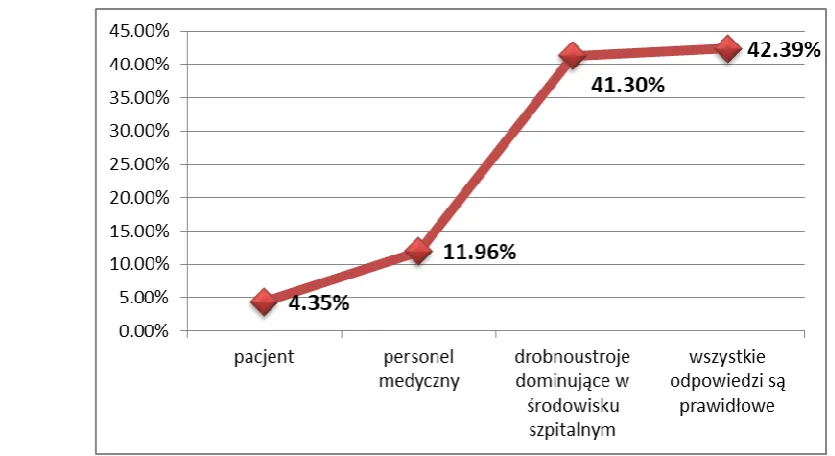
Figure 4. The source of infection is exogenous (Please indicate one of the answers).
Respondents asked about the source of exogenous infections have varied sentence, and
knowledge was varied and low. From the responses it shows that only 41.3% (n = 38) of
respondents have knowledge about the sources of exogenous infection. A disturbing fact is that
42.39% (n = 39) of those indicated in the answer: "All answers are correct."
Table 1. The areas most frequently colonized human microbiota are (Please indicate one of the answers). The areas most frequently colonized human microbiota are (Please indicate
one of the answers):
n %
1. colon, oral cavity, vagina, and skin 82 89.13%
2. the oral cavity, urethra, conjunctiva of the eye 7 7.61%
3. nasal cavity, pericardium, lung, penis 0 0,00%
[image:7.595.80.551.586.719.2]Surveyed were asked the question "Which areas are most numerous human colonized by
bacterial flora?" The answers given by the nursing staff were satisfactory, up 89.13% (n = 82)
responded that it is "the large intestine, mouth, vagina and skin "only 3 people showed
response:" none of the above is not correct ", 7 persons indicated that it is" mouth, urethra,
[image:8.595.76.535.192.431.2]conjunctiva of the eye. "
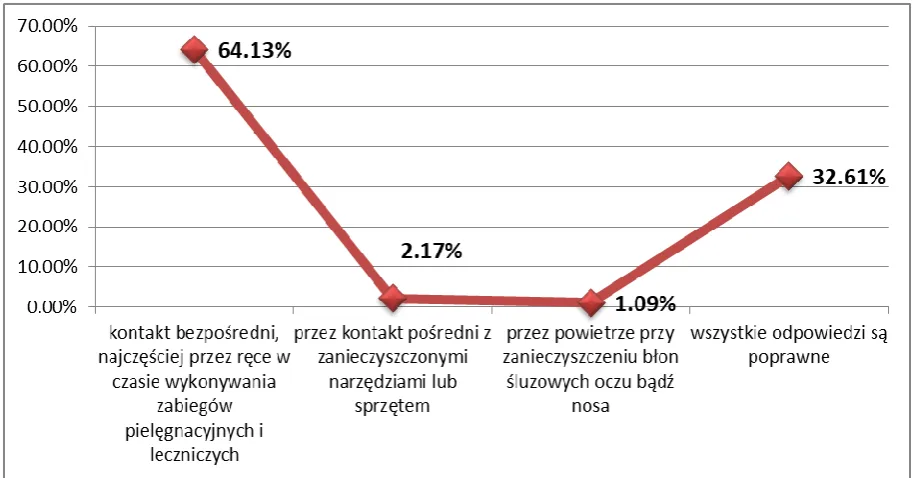
Figure 5. The most common routes of infection are (Please indicate one of the answers).
The most common routes of infection are? Alarming is the fact that only 64.13% (n = 59) of
those participating in the survey answered that it is "direct contact, usually by hand during the
performed treatments and medicines." This response should provide 100% (n = 92) surveyed. It
is elementary, and one of the most important principles of prevention of nosocomial infections.
Other responses suggested in the question, are the starting point for the development of
nosocomial infections, but the most common source of infection in the hospital environment are
the hands of staff. Hand hygiene behavior of the methods and techniques of washing is the best
method of prevention of transmission of microorganisms. The skin flora of hands is permanent
and transitional. Hand hygiene is extremely important and essential element of the prevention of
Table 2. Washing your hands prevents?
Washing hands protects against: n %
1. borne infections airborne dust 8 8.70%
2. the cross-infection 37 40.22%
3. interruptions tissue infections 7 7.61%
4. none of the answers is correct 40 43.49%
Washing your hands prevents? To this question up to 43.49% (n = 40) responded that none of the
responses is correct. This is an extremely disturbing fact testifying to the lack of elementary
knowledge of the nosocomial infections. 40.22% (n = 37) indicated answer
"cross-contamination", 8.7% (n = 8) "transmitted infections airborne dust", 7.61% (n = 7) "infections
discontinuity of tissue."
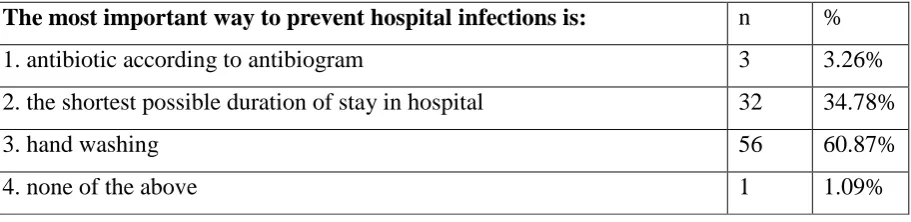
Table 3. The most important way to prevent infection is a hospital.
The most important way to prevent hospital infections is: n %
1. antibiotic according to antibiogram 3 3.26%
2. the shortest possible duration of stay in hospital 32 34.78%
3. hand washing 56 60.87%
4. none of the above 1 1.09%
Studied nursing staff in 60.87% (n = 56) indicated that the most important way to prevent
hospital infections is handwashing, 34.78% (n = 32) indicated a person "shortest length of stay in
hospital," 3.26% ( n = 3) responded "antibiotic according to antibiogram," only one person stated
Table 4. Flora are fixed on the skin microorganisms.
Flora constant microorganisms on the skin are: n %
1. coagulase negative Staphylococci and Corynebacteria 64 69.57%
2. clostridium difficile, Staphylococcus aureus 13 14.13%
3. enterococcus faecium, Mycobacteriumtuberculosis 6 6.52%
4. certain fungi 9 9.78%
Fixed to the flora includes bacteria that live and reproduce in the surface layers of the skin. In the
constant flora stands out: coagulase-negative staphylococci and corynebacteria. The respondents
asked for microorganisms inhabiting constantly coatings skin of man in 69.57% (n = 64)
[image:10.595.70.538.397.548.2]indicated the coagulase negative Staphylococci and Corynebacteria.
Table 5. surviving microorganisms on the skin specified period of time are acquired through contact with the patient, carrier or objects in a hospital environment which constitutes the flora?
Surviving microorganisms on the skin specified period of time are acquired through contact with the patient, carrier or objects in a
hospital environment which constitutes the flora:
n %
1. the solid 15 16.30%
2. transient 72 78.26%
3. occasional 4 4.35%
4. none of the above is not correct 1 1.09%
On the question of microorganisms that survive on the skin specified period of time they are
acquired through contact with the patient, carrier or objects in a hospital environment which
constitutes the flora? Responses "transient" granted up to 78.26% (n = 72) surveyed, only 16.3%
(n = 15) indicated that this is a permanent flora. Alarming is the fact that as much as 4.35%
(n = 4) subjects indicated a response that it is flora occasional, wherein the term "occasional" in
medical formulations the range of hospital infections not occur. One person 1.09% replied that
none of the answers is correct. Medical personnel must not forget that the transient flora
Table 6. Decontamination of the skin obtain hands in the process?
Decontamination of the skin obtain hands in the process n %
1. a cleaning and disinfecting 71 77.17%
2. sterilization and disinfection 12 13.04%
3. the chemical disinfection and cleaning 7 7.62%
4. sterilization and disinfection 2 2.17%
Decontaminate the skin of the hands is achieved during the washing process or / and
disinfection. Both methods are used in conjunction with surgical hand washing. By thorough
hand washing with soap and water is removed 90-99% of microorganisms. On the hands should
not be jewelry, nails should be cut short, not covered with varnish. Decontamination of the skin
obtain hands in the process? This question up to 77.17% (n = 71) patients responded "cleaning
[image:11.595.74.483.395.612.2]and disinfection" only 2.17% (n = 2) responded "sterilization and disinfection".
Figure 6. Detailed washing the entire surface of the hand to use hand washing technique by.
The respondents mostly because until 97.82% (n = 90) indicated a response "Ayliff'a" which is
the correct answer. Only two people from the respondents indicated incorrect answers. Thorough
Table. 7 In which case we say that the phenomenon is not a disease hospital infection. In which case we say that the phenomenon is not a disease hospital
infection: n %
1.symtoms occurred too early, ie. Not 48 hours have passed from the
moment of the patient 76 82.60%
2. infection appeared within a month of surgery (where operated) 4 4.35%
3. infection appeared within one year of treatment (implanted foreign
bodies, such as. Starter) 3 3.25%
4. All answers are correct 9 9.80%
Nosocomial infection is an infection that occurred in connection with the provision of healthcare
services, where the patient does not remain at the time of the provision of health, the incubation
period, or performed for the award health benefits within a period not longer than the longest
period of incubation6. The correct answer on the question "In which case we say that the
phenomenon is not a disease infection hospital? "82.6% (n = 76) of respondents replied"
symptoms occurred too early, ie. 48 hours had passed since the acceptance of the patient. " Only
17.4% (n = 24) of respondents did not have sufficient knowledge of the subject, as evidenced by
Figure 7.Select source of hospital infections?
According to the test nursing most common source of hospital-acquired infections are ventilation
systems 32.61% (n = 30) and the sewer 20.65% (n = 19). The least frequent response was the
response of choice "soap bar" - only 5 people indicated that answer.
[image:13.595.74.520.469.704.2]The correct amount of formulation applied to the hands for disinfection of hands in accordance
with the standard EN 1500 is between 3-5 ml of the formulation 84.78% (n = 78) of respondents
[image:14.595.71.533.172.287.2]granted such response.
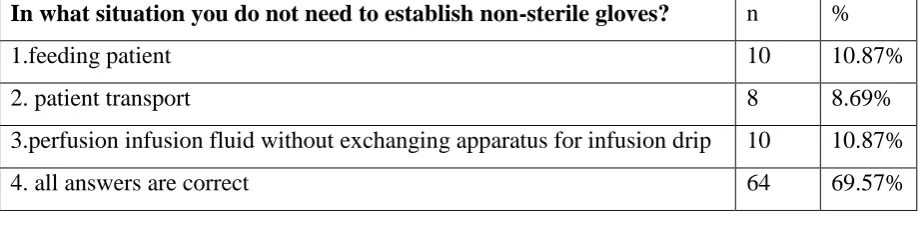
Table 8. In what situation do not need to establish non-sterile gloves?
In what situation you do not need to establish non-sterile gloves? n %
1.feeding patient 10 10.87%
2. patient transport 8 8.69%
3.perfusion infusion fluid without exchanging apparatus for infusion drip 10 10.87%
4. all answers are correct 64 69.57%
To the question "In what situation do not need to establish non-sterile gloves?". Most people
studied target group indicated that all the answers are correct, only 8.69% (n = 8) indicated the
answer that it is the transport of the patient.
Table 9. In the case of occupational exposure to be in the first place:
In the case of occupational exposure to be in the first place: n %
1. disinfect hands 13 14.13%
2. squeeze blood from the point of interruption of tissues 12 13.04%
3. wash your hands with antibacterial soap 66 71.74%
4. seal the place to break the continuity of tissues sterile dressing 1 1.09%
For the exposure, which poses the risk of infection is considered to stabbing or injury to healthy
skin contaminated sharp object, for example. Needle, a scalpel, a lancet, drill, etc., Or contact
mucosal or damaged skin, for example. Cracks, abrasions, inflammation, wounds, burns, allergic
changes oozing potentially infectious blood, tissues and / or bodily fluids of a patient.
Occupational exposure, in turn, is in contact with potentially infectious material, which occurred
during the performance of work7. In the case of occupational exposure to be in the first place?
The most common response by the test indicated the nursing staff was the answer: "Wash your
hands with antibacterial soap." The option chosen 71,74% (66) of the respondents. Only one
person has indicated the answer ". Seal place to break the continuity of tissues sterile dressing."
Table 10. Do you know that Mr. / Ms is about the importance of washing hands in the spread of nosocomial infections, is it?
Do you know that Mr / Ms is about the importance of washing hands
in the spread of nosocomial infections, it is: n %
1.very good 23 25.00%
2. good 49 53.26%
3. sufficient 20 21.74%
4. inadequate 0 0,00%
The nursing staff during the survey was asked about the subjective evaluation of their knowledge
of the importance of hand washing in the spread of hospital infections. More than half from the
respondents as much as 53.26% (n = 49) assesses their knowledge of good, only 21.74% (n = 20)
puts its expertise at the level sufficient. None of the people did not assess their knowledge level
[image:15.595.81.532.169.299.2]insufficient.
Table 11. Do you know that the Lord / Lady has on the prevention of nosocomial infections is? Do you know that the Lord / Lady has on the prevention of
nosocomial infections is: n %
1. very good 18 19.57%
2. good 53 57.61%
3. sufficient 20 21.73%
4. inadequate 1 1.09%
Knowledge of the prevention of nosocomial infections respondents participating in the study
53.26% (n = 53) subjectively evaluate the level of "good", only one person admitted that the state
[image:15.595.71.533.476.607.2]Table 12. Do you think / you there is a need to organize training courses for the prevention of infection in the workplace?
Is the Mr / Mrs is necessary to organize training for the prevention of
infection in the workplace? n %
1. there yes 78 84.78%
2. there is no need 2 2.17%
3. I do not know 11 11.96%
4. my knowledge is sufficient on this topic 1 1.09%
Respondents asked about the need to provide training for the prevention of infection in the
workplace 84.78% (n = 78) answered that there is a need for only one person stated that there is
no need, because her knowledge is sufficient.
Table 13. How won and Mr. / Ms knowledge about the importance of washing hands in the spread of hospital infections?
How you won and Mr. / Ms knowledge about the importance of
washing hands in the spread of hospital infections? n %
1.self-education 28 30.43%
2. in the course of vocational training in school 20 21.74%
3. intra-departmental courses in the workplace 36 39.13%
4. in the system of postgraduate education 8 8.70%
How you won / and Mr. / Ms knowledge about the importance of washing hands in the spread of
hospital infections? The answers were quite strongly divided. 39.13% (n = 36) gained knowledge
of the courses intra-departmental, 30.43% (n = 28) during the self-learning. The surprising, yet
disturbing fact is that during the course of vocational training in school and during the
post-graduate education theoretical knowledge on basic theory in the field of infections is inadequate,
[image:16.595.72.534.416.546.2]Discussion
The level of knowledge in the filed of infections associated with health care is a very
important element affecting the health and lives of patients and the medical staff working8. In the
various stages of the nursing process, which consists of diagnosis, planning, implementation and
evaluation, there is the problem of hospital infections9. A very important fact, having great
importance for the prevention of infections is to maintain high personal hygiene among medical
staff10. The existing hospital procedures for hygiene, disinfection, aseptic techniques, the
organization of work must be well known, understood and implemented in accordance with the
applicable knowledge and skills of medical personnel. Infection control arising during the
hospitalization of the patient is considered to be the main determinant of the quality of medical
care11. Hour, direct nursing care for the sick, brings the need for raising the level of knowledge in
the field of infections in many ways and respect basic hygiene procedures and specialized12.
Own studies, which aimed to verify the level of knowledge of nurses on hospital
infections are unsatisfactory. They point to different levels of knowledge of individual nurses. A
disturbing fact is that only 64.13% (n = 59) of those participating in the survey answered that
direct contact, usually by hand during the performed treatments and medicines is a source of
spread of infection in the hospital environment. Similar test results obtained Garus and co. in his
paper13. According to their studies up to 53.2% of nurses do not know that bacterial flora, which
temporarily colonizes the skin of the hand is responsible for the majority of infections associated
with health care. It is elementary, and one of the most important principles of prevention of
nosocomial infections. Hand hygiene behavior of the methods and techniques of washing is the
best method of prevention of transmission of microorganisms. Own research pay particular
attention to the lack of knowledge of nursing staff in case of joining an undesirable event which
is exposure. In own research only 71.74% (n = 66) of those surveyed in the event of an adverse
event would be able to react. In the case of exposures remaining 30% of the staff there would be
able to help yourself or a collaborator. The test results showed that the knowledge of nurses on
hospital infections it is enough diverse. In our study, objective assessment of the level of
knowledge about the infection checked by means of questions is much lower than a subjective
assessment. In our study up 53.26% (n = 53) nurses subjectively assess their knowledge of
8 Wierzbińska M. Problems related to the prevention of infections in health care facilities. Infection 2007; 3: 14-17.
9 Laskowska A Krajewska E-Kulak, roller H Łukaszuk C Krajewska K. Preliminary evaluation of nurses' knowledge
about hospital-acquired infections. Mikol Lek 2003; 10 (4): 23-27.
10
Walewska E. Fundamentals of surgical nursing. PZWL. Warsaw 2010
11 Rożkiewicz D. Hands staff as a potential source of nosocomial infections. Infection 2011; 5: 6-12.
12 JT Marcinkowski (ed). Hygiene, prevention and organization of medical professions. PZWL, Warsaw 2003.
13
"good", only one person admitted that the state of knowledge about the prevention of infections
is inadequate. In studies Garus and co. Nurses found their own knowledge of nosocomial
infections and their prevention rather high14. As many as 74.8% of nurses considered their
knowledge at a very good or good, and only 2.7% of respondents rated rather poorly.
The nursing staff is part of the therapeutic team, which is in direct contact with the
patient. It is extremely important that all nurses possess the knowledge of infections. It is also
important that a sufficient level of knowledge possessed well as patients, whose role in the
prevention of hospital infections complement of the entire medical staff. This could affect the
reduction in the incidence of nosocomial infections, and increase the safety and quality of care
biopsychosocial the patient in the hospital.
Conclusions
1. The level of knowledge of nursing staff is highly diversified. There is an urgent need to take all
the educational, training influence to raise the level of knowledge of nurses in this area.
2. There is a need to introduce mandatory training and regular in-hospital, inside the department,
which will raise the level of knowledge of nursing staff.
3. There is a need to modify the curriculum in the course of nursing education, to modify the
content on hospital infection which would increase the knowledge and awareness of nursing
staff.
References
1. The act of 05.12.2008 for preventing and fighting infections and infectious diseases in humans
(OJ 294, pos. 1570).
2. The act of 05.12.2008 for preventing and fighting infections and infectious diseases in humans
(OJ 294, pos. 1570).
3. Heczko PB, J. Mach-Wójkowska Nosocomial infections. Handbook for infection control teams.
PZWL, Warsaw 2009.
4. Boyce J, Pittet D. Guideline for hand hygiene in healthcare settings: Recommendations of the
Healthcare Infection Control Practices Advisory Committee and the HICPAC / SHEA / APIC /
IDSA Hand Hygiene Task Force. Am J Infect Control 2002 30: p. S46-1.
5. Harris A, Samore M, Nafziger R. et al. A survey on handwashing practices and opinions of
6. Creedon S. Healthcare workers' hand decontamination practices: compliance with recommended
quidelines. AdvNurs J 2005; 51: 230-236.
7. Wierzbińska M. Problems related to the prevention of infections in health care facilities.
Infection 2007; 3: 14-17.
8. Laskowska A Krajewska E-Kulak, roller H Łukaszuk C Krajewska K. Preliminary evaluation of
nurses' knowledge about hospital-acquired infections. Mikol Lek 2003; 10 (4): 23-27.
9. Walewska E. Fundamentals of surgical nursing. PZWL. Warsaw 2010
10.Rożkiewicz D. Hands staff as a potential source of nosocomial infections. Infection 2011; 5:
6-12.
11.Marcinkowski JT (ed). Hygiene, prevention and organization of medical professions. PZWL,