Reed, K., Denman, S., Leather, S.R., Forster, J. and Inward, D.J.G. 2017. The lifecycle of Agrilus biguttatus: the role of temperature in its development and distribution, and implications for Acute
The lifecycle of
Agrilus biguttatus
:
the role of temperature in its
development and distribution, and
implications for Acute Oak Decline
by Reed, K., Denman, S., Leather, S.R., Forster, J. and
Inward, D.J.G.
Copyright, Publisher and Additional Information: This is the author accepted manuscript. The final published version (version of record) is available online via Wiley.
Please refer to any applicable terms of use of the publisher.
DOI:
https://doi.org/10.1111/afe.12266
Title: The lifecycle of Agrilus biguttatus: the role of temperature in its development and distribution, 1
and implications for Acute Oak Decline 2
3
Running title: The lifecycle of Agrilus biguttatus 4
5
Authors: Katy Reed1,2, Sandra Denman1, Simon R. Leather2, Jack Forster1, and Daegan J. G. Inward1
6 7
1Forest Research, Centre for Ecosystems, Society and Biosecurity, Alice Holt Lodge, Farnham,
8
Surrey, GU10 4LH, England 9
2Crop and Environment Sciences, Harper Adams University, Edgmond, Newport, Shropshire, TF10
10
8NB, England 11
12
*Correspondence: Katy Reed 13
Tel.: +44 300 067 5723; e-mail: [email protected]
14 15
Abstract 16
17
1. The two spotted oak buprestid, Agrilus biguttatus Fabricus, is implicated in oak decline events 18
across Europe, and is strongly linked to Acute Oak Decline in the UK, although its role in the 19
syndrome remains under investigation. In the UK, the beetle is restricted to south and central 20
England. The aims of this study were to improve understanding of the beetle’s life history and 21
thermal requirements, in order to explain its UK distribution, and collect data for lifecycle 22
modelling. 23
2. Novel methods were developed to collect and culture the beetle in the laboratory, which 24
enabled experiments to be carried out, providing data on the beetle’s sex ratio, longevity and 25
fecundity, and the development rates of eggs, larvae, and pupae at constant temperatures. 26
3. On average, females lived for 63 days, and laid 82 eggs. Larvae developed through four 27
instars. Sex ratio varied by site, with no overall trend apparent. 28
4. The development rates of eggs, larvae, and pupae (to adult emergence) had linear 29
relationships with temperature, with lower developmental thresholds of 12.1, 11.9, and 30
15.1°C, respectively. For each life stage, day-degree values were calculated. Beetles 31
appeared to have an obligatory prepupal diapause at all temperatures studied, up to and 32
including 25°C. 33
5. The implications of the developmental findings for the beetle’s current distribution, and the 34
possible effects of climate change, are discussed. The beetle appears to be thermally limited 35
in the UK, and if so, its distribution, and perhaps that of Acute Oak Decline, may alter under 36
climate change. 37
38
Keywords: Acute Oak Decline, Buprestidae, climate change, day-degrees, developmental thresholds, 39
Introduction 41
42
The two spotted oak buprestid, also known as the two spotted oak borer, Agrilus biguttatus Fabricus 43
(Coleoptera: Buprestidae), is considered an increasingly important secondary pest of oak (Hartmann 44
& Blank, 1992; Thomas, et al. 2002; Sallé et al., 2014). It has played a key role in large-scale oak 45
decline events across continental Europe and Russia from the 1900s onwards (Falck, 1918; 46
Starchenko, 1931), and its pest status in continental Europe and the UK appears to be increasing 47
(Moraal & Hilszczanski, 2000). Until relatively recently, A. biguttatus was considered rare in the UK 48
(Shirt et al., 1987). Perceptions of the beetle’s pest status in England, however, have been changing 49
since the 1990s, when A. biguttatus was first linked to Acute Oak Decline (AOD), a syndrome that 50
often leads to the rapid death of pedunculate and sessile oaks (Quercus robur L. and Q. petraea 51
(Matt.) Liebl.) (Gibbs and Greig, 1997). Buprestids like A. biguttatus typically develop only on 52
weakened hosts (Bellamy, 2003), or exceptionally on healthy but naïve hosts without co-evolved 53
resistance. For example, the introduced emerald ash borer Agrilus planipennis Fairmaire (Coleoptera: 54
Buprestidae) has causedthe death of millions of susceptible ash trees in the United States and 55
Canada (Herms & McCullough, 2014). 56
57
Agrilus biguttatus appears to be strongly associated with AOD in the UK, although its precise role in 58
the syndrome is still under investigation. Acute Oak Decline is characterised by a number of key 59
symptoms on oak stems, in particular, the combination of fluid exudations from vertical splits between 60
the bark plates, inner bark necroses, and the larval galleries of A. biguttatus (Denman et al., 2014). 61
Tree declines such as AOD are thought to be caused by a combination of predisposing factors (host 62
genetics or site), inciting factors (e.g. drought), and contributing factors (secondary pests or 63
pathogens) (Manion, 1981). Several pathogenic bacterial species have now been implicated in the 64
formation of the typical AOD lesions (Brady et al., 2010; Denman et al., 2012), but the nature of the 65
association with A. biguttatus remains unclear. In recent studies, exit holes of adult beetles were 66
found externally on 30-33% of symptomatic trees, but larval feeding galleries were found internally 67
adjacent to almost all examined lesions (Denman et al., 2014; Brown et al., 2017). Agrilus biguttatus 68
and AOD also share a similar UK distribution within southern and central England (Brown et al., 69
2014). The beetle may be secondary, taking advantage of weakened and moribund trees, but could 70
contribute to the spread of the bacteria, the formation of necrotic lesions, or the death of trees, and so 71
may be integral to AOD (Brown et al., 2014, 2017). 72
73
Agrilus biguttatus is cryptic and difficult to observe in nature, and as a result has been relatively little 74
studied. It has never been cultured from egg to adult in the laboratory and, therefore, its lifecycle has 75
been described only broadly (Brown et al., 2014). Female beetles typically oviposit deep into bark 76
crevices on the trunk of mature oak trees, and larvae subsequently form feeding galleries at the 77
cambial interface. In continental Europe, the beetle has been reported to have a one or, more 78
commonly, two-year lifecycle, in which case the larvae overwinter as early instars and continue 79
larvae create chambers in the outer bark, where they overwinter, and pupate in April or May. Adults 81
emerge from D-shaped exit holes in early summer, two years after oviposition (Habermann & Preller, 82
2003), and feed and mate in the canopy. 83
84
Agrilus biguttatus is widespread throughout Europe, but reaches its northern-most limit in southern 85
Sweden and, in the UK, around Manchester (Bily, 1982; Brown et al., 2014). Temperature is likely to 86
be a key limiting factor in A. biguttatus’ distribution in the UK, with heat availability likely to be 87
restrictive, rather than lethal summer or winter temperatures (Bale, 2002). Anecdotal evidence 88
suggests the beetle is thermophilic, because open-grown trees are more frequently colonised, and, 89
particularly in the early stages of host colonisation, galleries appear to be more prevalent on the 90
warmer, south-facing side of stems (Vansteenkiste et al., 2004). 91
92
In the UK, damage by wood and bark-boring beetles is projected to increase with climate change 93
(Wainhouse et al., 2016). In some cases this process is already apparent; disturbance by bark beetles 94
in Europe, for example, has been shown to have escalated in the previous century, and has been 95
projected to increase further over the next two decades (Seidl et al., 2014). Wood and bark-boring 96
beetles in the UK are likely to benefit from an increased availability of stressed host trees, weakened 97
by more frequent and severe droughts and storms; a decrease in generational time, due to increased 98
heat availability; and range expansion in thermally-limited species (Williams & Liebhold, 2002; 99
Netherer & Schopf, 2010; Stocker et al., 2014; Wainhouse & Inward, 2016). Warmer temperatures 100
appear to have contributed to recent northward range shifts in two European oak borers, Coraebus 101
florentinus Herbst (Coleoptera: Buprestidae)(Buse, et al., 2013; Sallé et al., 2014), and Agrilus 102
sulcicollis Lacordaire (Coleoptera: Buprestidae), and may have contributed to a purported increase in 103
abundance in the UK of A. biguttatus, and its recent spread into Denmark (Alexander, 2003; 104
Pedersen & Jørum, 2009). 105
106
The relationship between insect development rate and temperature is usually sigmoidal, and therefore 107
the central, linear section of the curve may be modelled simply as the accumulation of a thermal sum, 108
measured in day-degrees, above a lower threshold, the minimum temperature below which 109
development ceases (Ludwig, 1928; Danks, 2000). Precise data on insect life histories and thermal 110
requirements are required to make accurate predictions of the effects of geographical location or a 111
changing climate on an insect’s voltinism, distribution, and abundance, but these data are not 112
available for many wood and bark boring insects, including A. biguttatus, due to cryptic lifecycles and 113
long development times (Sallé et al., 2014). 114
115
This study aims to improve the understanding of A. biguttatus’ lifecycle, to define the temperature 116
thresholds and thermal requirements regulating the beetle’s development, in order to explain its 117
ecology and distribution in Britain, and to collect empirical data for modelling both current and future 118
life history. 119
Methods 121
122
Collection of overwintering larvae, adult emergence and sex ratio 123
Quercus robur, > 30cm diameter, demonstrating exit holes of A. biguttatus and with well-developed 124
AOD lesions, were identified at five sites in central England, within the beetle’s core range (Table 1). 125
In order to obtain adult A. biguttatus for breeding purposes, insects were collected in the 126
overwintering, prepupal stage, and one or two suitable trees were felled between October 2013 and 127
April 2014. Slabs from stems and large branches comprising bark, sapwood, and some heartwood 128
(approximately 0.5 – 2.0m x 0.4m x 0.25m), referred to as ‘material’ from here onwards, were 129
removed, transported to Alice Holt, Farnham, and placed in one of three emergence facilities as 130
follows. (1) Material from each site was placed separately into custom-built emergence cages within a 131
glasshouse. Wooden frames (approx. 2.0 x 1.7 x 1.4 m) were covered with two layers of mesh netting 132
and fronted with PE zipped doors cut from Walk-In Greenhouse covers (Gardman Ltd., UK). To 133
facilitate collection of adult beetles, which orientate towards light, cage roofs were angled upwards, 134
facing southwest. (2) Once the emergence cages were full, additional material was placed in an 135
insulated polytunnel. Material from all sites was combined, and covered with a layer of mesh. (3) To 136
lengthen the study period, approximately 10% of material from one site, Dudmaston, was placed in 137
three mesh emergence traps (B&S Entomological Services, UK) within a controlled temperature 138
room. Average temperature was controlled to ± 2°C and increased weekly for 4 weeks from 13.1 to 139
21.8°C, with a 12 hour light / 12 hour dark photoperiod (28 March to 3 May 2014). Temperatures in 140
each facility were monitored using Tinytag temperature data loggers (TGP-4520; Gemini Data 141
Loggers Ltd., UK). Adult beetles were hand-collected daily. The gender of the emerging adult beetles 142
was determined by examining the ventral surface of the hind femur, which, in males, is covered in a 143
row of long setae, silver-to-brownish in colour. This character is easily discernible under a dissecting 144
microscope. 145
146
Culturing of adults, female lifespan and fecundity 147
Based on culturing of congeneric species, particularly A. planipennis, techniques were developed to 148
culture A. biguttatus adults in the laboratory (Duan et al., 2011; Lopez & Hoddle, 2014; J. P. Lelito, 149
pers. comm.). Beetles were caged in 2L clear PET Round Jars (203 mm height x 110 mm diameter), 150
(Ampulla Ltd, UK), with the base removed and the top secured with fine mesh netting. Beetles were 151
provided with oak foliage, supported in covered containers of water, and a 20% sugar solution on 152
cotton wool pads. They were kept in single sex groups of up to 10 beetles for three to seven days to 153
allow the females to maturation feed (Cardenas & Gallardo, 2013). Sexes were subsequently 154
combined, and up to 10 beetles were housed per cage, according to emergence date and site, and 155
allowed to mate and oviposit. Pilot studies showed that females preferred to oviposit in the crevice 156
beneath the water container, and in a layer of paper towel beneath the cages. Beetles were fed on 157
fresh leaves, and the cages cleaned twice weekly. The laboratory temperature was maintained at 158
22.0 ± 2°C. Egg batches were collected twice weekly and placed in closed plastic boxes (22 x 56 x 159
161
Because A. planipennis females have been shown to lay more eggs in the presence of a male of their 162
choice (Rutledge & Keena, 2012), male-female A. biguttatus pairs were removed from the mixed 163
groups when mating was observed. 26 male-female pairs from Dudmaston were monitored twice 164
weekly to measure female lifespan and oviposition. Dead males were replaced. 19 mixed groups 165
containing beetles that emerged on the same date were monitored twice weekly for initial oviposition. 166
167
Development of eggs, larvae and pupae 168
Experiments on eggs, larvae, and prepupae were performed in incubators (MIR series; Sanyo Electric 169
Co., Ltd., Japan) at constant temperature treatments of 15, 17.5, 22.5 and 25°C, and in a constant 170
temperature room at 20°C. These temperatures were selected using pilot studies and represent 171
realistic field conditions in the UK. Incubator temperatures were monitored with Tinytag temperature 172
loggers and kept within ± 0.5°C for 17.5, 20, 22.5, and 25°C and ± 1.3 for 15°C. Relative humidity in 173
the incubators was measured with a pen-type thermo-hygrometer (ATP Instrumentation Ltd., UK) and 174
found to range from 50% to 95%. Humidity in the constant temperature room was maintained at 65%. 175
176
To measure the effect of temperature on egg development rate, egg batches containing 12 ± 1.5 eggs 177
(mean ± SE) < 24 hours old were placed in plastic boxes, randomly allocated across 15 replicates at 178
each temperature, and checked daily for hatching larvae. Larvae that hatched in the egg development 179
experiments were not used in subsequent log experiments. 180
181
Drawing from successful techniques of culturing A. planipennis larvae, (Duan et al., 2011; J. P. Lelito, 182
pers. comm) methods were developed to culture A. biguttatus larvae on stems of oak. Oak trees (8-16 183
cm diameter) were felled and stems were cut into ~20cm lengths, standardised to have similar 184
surface areas. The cut ends were placed in water, and the logs left for at least two weeks to increase 185
the likelihood of larval establishment. To limit fungal growth, eggs were incubated at either 17.5 or 186
20°C until one or two days before the hatch time predicted by the egg development model. One or 187
two small cores of outer bark (0.6 cm diameter) were removed from the logs, and a batch of eggs, on 188
paper towel, was inserted into each of the bore-holes (totalling approximately 10-15 eggs per log). 189
The bark core, trimmed by 1-2 mm, was then carefully replaced. Inoculated logs, with the cut ends in 190
a tray of water, were kept at 22°C ± 2 until between one and three days had elapsed after the 191
predicted hatch time. Fluorescent propagation lights and reflectors (SunBlaster T5 type; SunBlaster 192
Holdings ULC, Canada) were affixed to the windows of the incubators to encourage photosynthetic 193
activity in the epicormic shoots that emerged after the logs were cut. Incubator and constant 194
temperature room lights were placed on 12 hour light / 12 hour dark timers, and levels monitored 195
using a Kipp and Zonen Delft CMP3 Pyranometer (Kipp & Zonen B.V., The Netherlands). To mimic 196
incubator conditions, the experimental area within the constant temperature room was shaded with 197
transparent mesh until light levels were similar (mean ± SE over 20 minutes: 236 ± 13 W/m2 in
198
incubator, 274 ± 21 W/m2 in the constant temperature room). Inner bark condition was monitored
199
tissues. In order to standardise larval food quality, at all temperatures except for 15°C, all larval 201
measurements used in developmental analysis were taken from logs that remained in good condition 202
(e.g. inner bark appeared fresh and moist) until the dissection date. At 15°C, all logs deteriorated 203
before the larvae completed development, and for the later replicates, larvae were relocated onto new 204
logs. Undamaged larvae from deteriorating logs and from dissected logs were replaced into fresh 205
replacement logs and allowed to finish feeding, for analysis of development from prepupa to adult 206
emergence. 207
208
To measure larval development time, logs were allocated randomly across each constant temperature 209
treatment. The number of logs in each treatment was based on an estimated linear model of larval 210
development and limited by incubator space (n = 81, 60, 40, 36, and 32, at 15, 17.5, 20, 22.5 and 211
25°C, respectively). To determine the number of larval instars and monitor growth, at each constant 212
temperature treatment except for 15°C, a minimum of three logs was dissected every two weeks until 213
larvae finished feeding. At 15°C, there were insufficient remaining logs to dissect three replicates after 214
20 weeks. To dissect out the larvae, the bark was peeled back from the cut ends of the logs with a 215
chisel and mallet. Larvae were traced by following their feeding galleries, and were gently removed 216
from the cambial interface with a damp paintbrush. The width of the visible portion of the larval head 217
capsule, or peristoma, was measured to the nearest 0.2 mm using a dissecting microscope fitted with 218
an eyepiece and graticule. Peristomal width has been used successfully to differentiate between 219
instars in other Agrilus species (Loerch & Cameron, 1983). 20 neonate larvae from five egg batches 220
were also measured. 221
222
Techniques to monitor prepupal development (to adult emergence) were also drawn from 223
experiments on A. planipennis. When the larvae were observed to finish feeding in the dissected logs, 224
they migrated into the outer bark, excavated pupal chambers, and became inactive prepupae, often 225
folding over in a “hairpin” or “J-shape”, as has been observed in A. planipennis and Agrilus 226
auroguttatus Schaeffer (Coleoptera: Buprestidae) (Coleman & Seybold, 2008; Wang et al., 2010). 227
Migration to the outer bark was used to define the cessation of larval feeding, and the transition to 228
prepupa. To simulate overwintering, prepupae within logs or bark material were chilled at 10°C for 229
one to two weeks, and then at 5°C for a further 15 to 17 weeks (J. P. Lelito, pers. comm.). To simulate 230
the end of winter, prepupae were transitioned to 10°C for one week, and then returned to their original 231
temperature treatments; this marked the end of overwintering. 232
233
To measure the total development time from prepupa to adult emergence, a total of 68 logs across 234
the constant temperature treatments, comprising replacement and undissected material, were 235
observed twice-weekly for adult emergence. To monitor development time from the end of 236
overwintering to pupation, surviving prepupae dissected for the larval experiments, and the 237
deteriorating logs (= “monitored prepupae”), were placed in moist ground outer bark (n = 18), or 25 -238
30 mm bark sections (n = 49), and although disturbed from their pupal cells, they were observed 239
due to high mortality of specimens when handling in this sensitive stage. To test whether prepupae 241
would develop continuously at warm temperatures without a chill period, eleven prepupae (= 242
“unchilled prepupae”) were kept at 22.5 or 25°C and observed twice-weekly for signs of further 243
development. 244
245
Statistical analysis 246
All analyses were carried out in R (R Core Team, 2016). All means are presented ± 1 standard error 247
unless otherwise stated. 248
249
A Chi Square test was used to determine whether the observed sex ratio deviated from the expected 250
ratio (1:1). A Welch’s two-sample t-test was used to test for differences between the initial oviposition 251
dates of single females and females in mixed groups. Pearson’s product-moment correlation was 252
used to test for correlation between adult lifespan and fecundity (total number of eggs laid). 253
254
Egg hatch, cessation of larval development, and adult emergence were all classified as binary 255
responses. As such, all three were modelled using probit regression. As the processes underlying the 256
three dichotomous responses are likely to be normally distributed across the A. biguttatus population, 257
probit was chosen rather than logit, as the probit model assumes errors to be normally distributed, 258
whereas logit assumes standard logistic distribution of errors. In all three cases, three basic models 259
were applied to the data, one with only the covariate “day” in the model, one with “day” and 260
“temperature” and one including the interaction between “day” and “temperature”. For eggs, larvae, 261
and prepupae (to adult emergence), respectively, “day” was defined as the time from oviposition to 262
egg hatch; from egg hatch to migration to the outer bark; and from the end of overwintering to adult 263
emergence. 264
265
In the analysis of the egg data, separate egg batches were defined as samples, and the hatching of 266
individual eggs was modelled through time, with each egg batch providing a probability of hatching on 267
each date. To prevent pseudoreplication, the probit models were set up as mixed-effects models 268
using the lme4 package in R (Bates et al., 2014), and included a random effect of sample to account 269
for the repeated measurements made on an individual sample. The effects of “day” and “temperature” 270
were scaled in all three models to improve model fit, using the standard scale function in R. Analysis 271
of deviance was used to determine the best fit model. Having chosen the best fit model, model 272
predictions and confidence intervals were calculated for the fixed effects. 273
274
Larval data samples comprised larvae within logs. Each log was treated as an independent sample 275
and analysed using standard probit regression in the GLiM function in R. Analysis of model deviance 276
was used to determine the best fit model, and probability predicted from the best fit model. 277
278
All data from emerged adults were pooled. Development times, after the return of the prepupae to 279
function in R. Two outliers at 20°C were considered to be erroneously skewing the model fit, and were 281
removed. Analysis of deviance was used to determine the best fit model, and probability predicted 282
from the best fit model. 283
284
For each life stage, times for 10%, 50%, and 90% of individuals to complete development were 285
calculated from the best fit models for each temperature. These development times were converted to 286
rates, and the effect of temperature, life stage, and the interaction of both variables on the rate was 287
determined using analysis of covariance. Linear regression of rate against temperature was 288
subsequently applied to each life stage in turn, and these models were extrapolated to determine the 289
lower developmental threshold (i.e. development rate = day-1) and thermal constant (plus/minus
290
confidence limits) for each stage. 291
292
The calculated developmental parameters from prepupa to adult emergence, predicted by the probit 293
regression, were overinflated because they allocated day-degrees to a diapausing (dormant) stage. 294
To account for this overinflation, and estimate the pupal development time (to adult emergence), 295
predicted times at each temperature treatment from a simple linear regression of the development 296
rate of the monitored prepupae vs temperature (Figure 1), were subtracted from the calculated 297
parameters. 298
299
To determine the number of larval instars, and to predict the expected range of peristomal widths for 300
each instar, normal mixture models were fitted to the peristomal width data. Hartigan’s dip test in the 301
package “diptest” was first used to check for multimodality (Maechler & Ringach, 2013). A significant 302
dip statistic (D) indicates a multimodal distribution. Subsequently, a likelihood ratio test was performed 303
using the package “mixtools” to determine whether or not the different instars shared a common 304
variance (Benaglia et al., 2009), followed by fitting normal mixture models with multiple variances. 305
Visually estimated medians were specified. Based on the normal mixture model parameter estimates, 306
larvae were posteriorly assigned to instars based on a threshold probability of 0.90. 307
308
To determine whether temperature affected larval head capsule size, a linear mixed model was fitted 309
in the lme4 package in R. The response was head capsule width, square-root transformed, and 310
posteriorly assigned instar and constant temperature treatment were specified as fixed effects. To 311
account for egg batch effects and multiple measurements, a random effect of log was included. First 312
instar data were excluded from the analysis because the larvae would not yet have moulted. The 313
significance of the fixed effects was determined from the Wald’s χ2 statistic from the analysis of 314
deviance, in the car package in R (Fox & Weisberg, 2011). Post hoc tests, correcting for multiple 315
comparisons by specifying the Bonferroni adjustment, were carried out in the lsmeans package in R 316
(Lenth, 2015). 317
318
Results 319
Sex ratio, female lifespan and fecundity 321
Adult emergence dates in the glasshouse, polytunnel, and controlled temperature room were 01 June 322
to 23 July, 08 June to 22 July, and 06 May to 16 May, respectively. The mean / mean daily minimum / 323
mean daily maximum temperatures for the two weeks before the first beetle emerged were 14.5 / 11.5 324
/ 18.5°C (glasshouse), 15.9 / 14.7 / 17.0 °C (polytunnel), and 20.9 / 18.4 / 24.3°C (controlled 325
temperature room). In total, 1,561 beetles were collected and sexed (F : M = 857 : 704). There was 326
site-level variation in the sex ratio of beetles emerging in the glasshouse (Table 1); these numbers 327
were supplemented by beetles emerging from the additional ‘polytunnel’ material. Although there 328
seemed to be a trend for female dominance, this was due to a lower proportion of males at Garnon’s 329
Estate, which contributed to a lower proportion of males overall; furthermore, emergence from the 330
previous year indicated the opposite trend (K. Reed, unpublished ). The lifespan of individually held 331
females was highly variable (63 days ± 7.8, range = 22 to 162 days, n = 26). The average date of 332
initial oviposition for individually held females (n = 20) was 28 ± 2.3 days after emergence, and 18 ± 333
2.2 days after mating was first observed, and 25 ± 2.2 days for mixed groups of up to 10 individuals (n 334
= 19) (mating not recorded). These means were not significantly different (t = 0.69, df = 37.0, p = 335
0.50). The minimum dates of initial oviposition were 16 and 12 days for individually held females and 336
mixed groups, respectively. Individually held females laid an average of 82 ± 22 eggs over their 337
lifespan (n = 24); four females laid more than 200 eggs. The size of egg batches laid by individually 338
held females ranged from 1 to 40, and the average batch size was 9 ± 0.5. Female lifespan and 339
fecundity were positively correlated (t =5.77, df = 22, Pearson’s r = 0.78, p < 0. 001). 340
341
Development of eggs, larvae and pupae 342
There were significant main effects and interactions between temperature and day on the likelihood of 343
completion for the egg and larval developmental stages, and on the development from prepupa to 344
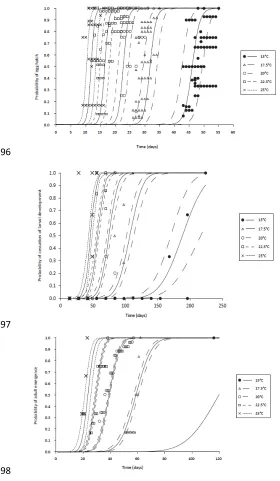
adult emergence (Table 2). The best-fit probit models of the probability of completion of development 345
vs time, for each constant temperature treatment, are shown in Figure 2, for each developmental 346
stage, along with the raw data. Estimated times to complete development are given in Table 3. 347
Development rate was linearly related to temperature for all three developmental stages. When the 348
development times predicted by the best-fit models were converted to rates, there were significant 349
effects of stage (F2,9 = 43.3, p < 0.001), temperature (F1,9 = 121, p < 0. 001), and their interaction (F2,9
350
= 26.2, p < 0.001) on development rate. The individual linear regressions of development rate vs 351
temperature, for each life stage, are shown in Figure 3, and the extrapolated lower developmental 352
threshold temperatures and day degree sums are given in Table 4. Although the eggs and larvae at 353
20°C were cultured in a constant temperature room, rather than in an incubator, the development data 354
appeared consistent with those at the other temperatures. 355
356
Many egg batches hatched over several days: the average hatch time across all temperatures was 357
3.0 ± 0.4 days (n = 61), and 20% of batches took a week or longer to hatch. Many batches of eggs 358
22.5, and 25°C, respectively). These batches may have been damaged upon removal from the 360
oviposition substrate. 361
362
After subtraction of the estimated prepupal development times, the lower threshold temperature of 363
pupal development (to adult emergence) was 15.1°C (95% confidence limits, 8.8, 19.0), and the day-364
degree sum was 76.3 (95% confidence limits, 55.7, 96.9) (Table 4, Figure 3); the broad ranges were 365
driven by variability in prepupal development time. 366
367
After approximately 100 days, none of the unchilled prepupae showed signs of pupation. These 368
individuals suffered 100% mortality, indicating that the beetle requires a period at cold temperatures in 369
order to complete its development. Overall, relatively few beetles survived from egg to adult, 370
particularly at the cooler temperatures (n = 1, 6, 26, 14, 3 at 15, 17.5, 20, 22.5, 25°C, respectively). 371
Replicates were particularly low in the final stages of development, due to the deterioration of logs 372
and fragility of the exposed larvae. Of the monitored prepupae (18 in ground bark and 49 in bark 373
sections), 10 reached the pupal stage, and only three eclosed successfully. 374
375
Hartigan’s dip test indicated that the larval peristomal width data were at least bimodal (D = 0.08, p < 376
0.001) (Figure 4). Application of normal mixture models indicated that A. biguttatus had four larval 377
instars (Table 5, Figure 4). 378
379
Posteriorly-assigned instar, temperature, and their interaction were all significant predictors of head 380
capsule width (instar: χ2 = 8003.6, df = 2, p < 0.001; temperature: χ2 = 44.9, df = 4, p < 0.001; instar : 381
temperature: χ2 = 37.0, df = 8, p < 0.001). Post hoc testing found an effect of temperature treatment that 382
was significant in third and fourth instar larvae. Larvae at 15 and 17.5°C were smaller than larvae at 20°C
383
in the third instar, and smaller than larvae at 20, 22.5 and 25°C in the fourth instar (Figure 5). In the second
384
instar, head capsule size was smallest at the highest temperatures (22.5 and 25°C), although this pattern
385
was not significant (Figure 5).
386 387
Discussion 388
389
This study’s developmental findings suggest A. biguttatus’ lower threshold temperatures are likely to 390
restrict the beetle to its current distribution in England under current climatic parameters. Host range 391
is clearly not the limiting factor, as oaks are present throughout the UK. For an area to be suitable for 392
A. biguttatus, sufficient day-degrees must be available, above the lower threshold temperature, for 393
each life stage to develop within an appropriate period. In particular, pupation and adult emergence 394
must occur early enough in the summer for females to maturation feed, mate and oviposit, and 395
subsequent egg development must then complete early enough for neonate larvae to become 396
established in the host before the winter (Régnière, 2009). The pupal development time (to adult 397
emergence) at 15°C (e.g. 10.6 weeks for 10% completion from initiation of pupation to adult 398
distribution, currently experiences mean daily air temperatures of just 11-12°C in May and 14-15°C in 400
June (UK Climate, 2016), although it is important to note that sun-warmed stems are likely to be 401
significantly warmer than air temperatures (Vermunt et al., 2012). Pupation early enough in the 402
summer to allow for mating, egg maturation and hatch, even within the beetle’s core range in 403
England, must depend on warm, sunny days where temperatures rise well above 15°C. Although the 404
confidence intervals surrounding the lower threshold for egg development appear to be broad, 405
examination of the predicted development times shows protracted egg development at 15°C (e.g. only 406
10% completion after 6.2 weeks). At colder temperatures, development time would be prohibitively 407
long, as the eggs must hatch before winter. The broad ranges in confidence limits for the lower 408
threshold for egg development (12.1°C (95% confidence limits, 7.4 and 14.9)) and day-degree sum 409
(157.1 DD (95% confidence limits, 126.1 and 188.1) (Table 4) were driven by an apparent deviation 410
from a straight-line developmental relationship with temperature (Figure 3), although insufficient 411
temperatures were studied to adequately compare the fit of models with more than two parameters. 412
As insect development is typically characterised by a straight line under optimal temperatures, the 413
departure from a straight line suggests the lowest temperature, 15°C, may be suboptimal (Danks, 414
2000). 415
416
The beetle’s restrictive lower threshold temperatures may, in part, clarify several aspects of the 417
beetle’s UK ecology, including characteristics of its association with AOD. A relatively low incidence of 418
adult A. biguttatus exit holes has been reported on AOD-symptomatic trees (Denman et al., 2014; 419
Brown et al., 2017), including on severely declined and even dead trees (pers. obs.), despite the 420
presence of larval galleries in the phloem. Although host resistance is likely to be important, 421
successful development may be inhibited on trees at sites of marginal thermal suitability, for instance 422
where the canopy density or the understorey of the woodland is too dense for sunlight to reach and 423
warm otherwise-suitable tree stems (Brown, 2013). Agrilus biguttatus’ thermal requirements appear to 424
explain its reported preference for open-grown, south-facing tree stems, where under-bark 425
temperatures are likely to be warmer than in closed forests (Starchenko, 1931; Brown et al., 2014). 426
427
Although the number of replicates used to generate A. biguttatus’ lower threshold temperatures and 428
thermal requirements was relatively low, the threshold temperatures reported in this study for the egg 429
stage, and the threshold temperatures and day-degree sums for egg and pupal development, were 430
similar to those reported for another temperate Agrilus species, A. planipennis (Lyons & Jones, 2005; 431
Duan et al., 2013). Agrilus biguttatus’ day-degree values for the egg and larval stages were also in 432
line with those of two damaging European bark boring pests, Hylobius abietis Linnaeus (Coleoptera: 433
Curculionidae) and Dendroctonus micans Kugelmann (Colepotera: Scolytidae), as found in 434
comparable studies (Inward et al., 2012; Gent et al., 2017). Agrilus biguttatus’ egg and larval 435
threshold temperatures, however, were considerably higher than those of H. abietis, which has egg 436
and larval thresholds of 8 and 4.5°C respectively, or D. micans, which has egg and larval thresholds 437
colonise much cooler parts of the UK than A. biguttatus: H. abietis is found throughout the UK (CAB 439
International, 2003), and D. micans’ range includes parts of southern Scotland (Gent et al., 2017). 440
441
The cessation of further development and mortality of all individuals that were not subjected to a chill 442
period suggests A. biguttatus has an obligatory prepupal diapause at all temperatures studied, up to 443
and including 25°C. After larval feeding is complete, all prepupae enter diapause, and require a period 444
of cold temperatures (overwintering) before development may resume (Saunders et al., 2002). An 445
obligatory diapause has also been reported in A. planipennis (Duan et al., 2013; Liang & Fei, 2014). 446
The diapause forces larvae that finish feeding at any time after late spring to overwinter and emerge 447
the following year, which is advantageous for three reasons: it prevents sensitive pupae from 448
exposure to cold temperatures, and it synchronises the lifecycle, which may be particularly important 449
given A. biguttatus’ typically small populations (Saunders et al., 2002). Finally, due to the relatively 450
high threshold temperatures of each life stage, it ensures that the adult beetles do not emerge too late 451
in the summer and have insufficient time to maturation feed and reproduce, and that the eggs can 452
complete development before autumn. 453
454
The day-degree parameters given in this paper may be used for detailed modelling of A. biguttatus’ 455
lifecycle and distribution when combined with appropriate temperature data. Although it is not possible 456
to give a single lower developmental threshold temperature, because each life stage has a different 457
value, the total day-degree sum required for A. biguttatus to complete its development may be 458
calculated by summing the estimated values for eggs, larvae, and pupae (to adult emergence) 459
(Tables 3, 4), and assuming a cessation of temperature-related development during the diapausing 460
stage. For example, at an average temperature of 20°C, the average length of the lifecycle from egg 461
to adult emergence was 20.9 + 60.6 days, followed by an obligatory chilling / overwintering period (15-462
17 weeks at 5°C in this study), followed by a final 12.7 days (Table 3). For modelling in the field, the 463
estimated developmental parameters may be combined with under-bark temperatures, with the 464
assumption that temperature-related development ceases during the overwintering (early instar 465
overwintering / prepupal diapause) periods, and resumes when temperatures rise above the larval or 466
pupal (to adult emergence) thresholds. Modelling with air temperatures may not yield a true 467
representation of the beetle’s under-bark microhabitat. The beetle is known to prefer sun-warmed tree 468
stems, which may achieve significantly higher temperatures than air temperatures, and its current 469
distribution may be dependent on seeking out these more suitable microhabitats (Vermunt et al, 2012; 470
K. Reed, unpublished). Although these parameters apply to the UK population of A. biguttatus, they 471
may also be used to model European development of the species, with the caveat that 472
countergradient variation in development times has been shown in other insects, when genetic 473
plasticity opposes environmentally-induced variance (e.g. Mitten & Ferrenberg, 2012). 474
475
Anecdotal observations of larval ecology in this laboratory study support the body of literature 476
suggesting A. biguttatus may only develop on weakened, but living hosts, taking advantage of a 477
2004; Brown et al., 2014). Moisture within the inner bark tissues seemed very important to larval 479
success. Larvae frequently desiccated if inner bark tissues dried. Conversely, dead larvae were also 480
often found in pockets of free liquid, suggesting a role of host moisture content in drowning larvae, 481
especially during moulting. In a separate experiment, no larvae survived past the first instar on larger-482
diameter logs cut 10 days before larvae hatched. Residual host defences in these logs appear to 483
have been prohibitive to larval establishment even ten days after tree felling. Similarly, colonisation of 484
Phoracantha semipunctata Fabricius (Coleoptera: Cerambycidae)on newly-cut, as opposed to aged 485
eucalyptus logs was inhibited, potentially by high inner bark moisture (Hanks et al., 2005). Host 486
defences likely to be employed against A. biguttatus are reviewed in Brown et al. (2014), and include 487
moisture content, a rapid callusing response, and chemical defences such as feeding inhibitors and 488
defensive proteins. 489
490
In conjunction with the developmental work, the novel culturing methods employed in this study 491
permitted detailed and unprecedented observation of all life stages of A. biguttatus. As far as the 492
authors are aware, these experiments represent the first laboratory study of the development of A. 493
biguttatus from egg to adult. Of the Agrilinae, which include some of the most economically important 494
wood and bark-boring forest pests, to our knowledge only A. planipennis has also been successfully 495
cultured. New findings on A. biguttatus’ biology included observations of sex ratio, female lifespan and 496
fecundity, and larval biology. The sex ratio of emerging beetles varied by site, a pattern that has been 497
similarly reported in A. planipennis, along with year-to-year variation (Lyons & Jones, 2005; Wei et al., 498
2007). The mechanism behind this variation is unclear, and may simply be the result of limited 499
replication, but temperature seemed to influence the sex ratio of laboratory-reared Ips typographus L. 500
(Coleoptera: Curculionidae) in one study (Wermelinger, 1999). Many A. biguttatus females were able 501
to live for two months in the laboratory, and to lay multiple batches of eggs. Although seemingly 502
maladaptive, the mean 28 day period from emergence to initial oviposition observed in females was 503
similar to findings of 23 days before initial oviposition, and 18-24 days before the maturation of eggs, 504
for A. planipennis (Lyons & Jones, 2005; Ryall et al., 2013). Some females did lay eggs approximately 505
two weeks after emergence. Initial oviposition in the laboratory may have been inhibited by a lack of 506
host cues, and initial segregation of males and females may also have lengthened this period. Also, at 507
the warmer temperatures that are more optimal for the species, A. biguttatus may mature their eggs 508
more rapidly. The long lifespans and correlated high egg productivity of females were probably 509
influenced by the addition of the sugar solution in their diet. In a separate study, females fed only 510
leaves and water had shorter lifespans (M. Sumner, unpublished). There was within-batch variation in 511
hatching time of a week or longer in many egg batches. This temporal variability in hatching time may 512
be a “bet hedging” or risk-spreading strategy, hedging against temporal weather variation (Hopper, 513
1999). Individual variability is a standard feature of insect development (Danks, 2000). 514
515
In this study, A. biguttatus developed through four larval instars, in contrast with existing literature, 516
which reports five (Moraal & Hilszczanski, 2000). Most buprestid larvae develop through four instars 517
Loerch & Cameron, 1983; Lyons & Jones, 2005; Haavik et al., 2013; Orlova‐Bienkowskaja & 519
Bieńkowski, 2016). The pattern of smallest head capsule size at the highest temperatures in second instar
520
larvae, although not significant, and largest head capsule size at the highest temperatures in fourth instar
521
larvae, suggests a shifting thermal optimum (Atkinson, 1996), with early instar larvae attaining optimal
522
growth at lower temperatures, and later instar larvae attaining optimal growth at higher temperatures
523
(Figure 5). After hatching in late summer, optimal growth at low temperatures would allow early instar
524
larvae to take advantage of cooler conditions in the early autumn. Conversely, fourth instar larvae,
525
developing during the following summer, would be able to take advantage of warmer summer
526
temperatures. This provides further support that the lower experimental temperatures chosen in this study,
527
15 and 17.5°C, although representative of summer temperatures within the beetle’s range in England, are
528
suboptimal for the development of A. biguttatus; the finding may, however, have been compounded by an
529
effect of reduced food quality due to longer development times at these temperatures.
530 531
Conclusions 532
The results of the present study of A. biguttatus’ development suggest its thermal requirements limit 533
its UK distribution. The beetle’s relatively long pupal and egg development times, at temperatures 534
similar to current mean daily summer temperatures in the UK, appear to restrict the beetle to the 535
warmer parts of England. The increasingly warmer summer temperatures expected under climate 536
change may allow the beetle to spread to new areas of the UK. If A. biguttatus proves an essential 537
component of AOD, the area affected by that disease syndrome is also expected to increase, and 538
indeed, evidence of the beetle, and AOD, have been newly discovered in Wales (Denman et al., 539
2016). The influence of climate change upon the A. biguttatus lifecycle may also allow the beetle to 540
become more damaging in its own right. Warmer summers may provide more frequent opportunities 541
for the beetle to complete development, and additionally increase host availability, as more frequent 542
stress events, such as droughts, impact oak trees (Lindner et al., 2010; Netherer & Schopf, 2010). As 543
host death, irrespective of AOD, is reportedly dependent on the density of larval galleries, with 544
increasing abundance and opportunity, the beetle may become more harmful (Hartmann & Blank, 545
1992). The new insights into the beetle’s life history found in the present study, including its thermal 546
requirements, the presence of an obligatory diapause, and its adult lifespan and fecundity, are 547
important for modelling the beetle’s lifecycle and role in AOD, and how this may alter under a warming 548
climate. 549
550
Acknowledgements 551
552
The authors would like to thank Andrew Peace for statistical advice, and Mary Sumner, Dave 553
Wainhouse, Nathan Brown, Frank Ashwood, and Jonathan Lelito for valuable support and 554
discussions; the Forest Research Technical Support Unit at Alice Holt; and Garnons Estate, the 555
National Trust, Worcester Wildlife Trust, and Gillian Jonusas and the Royal Parks at Richmond Park, 556
for providing emergence material and support. The authors are grateful to Nigel Straw at Forest 557
Research and to the four anonymous reviewers for their helpful comments on the manuscript. The 558
References 560
561
Alexander, K. (2003) Changing distributions of Cantharidae and Buprestidae within Great Britain 562
(Coleoptera). In Proceedings of 13th International Colloquium European Invertebrate Survey, 87-91. 563
Atkinson, D. (1996) Ectotherm life-history responses to developmental temperature. Animals and 564
temperature: Phenotypic and evolutionary adaptation, 183-204.
565
Bale, J.S., (2002) Insects and low temperatures: from molecular biology to distributions and 566
abundance. Philosophical Transactions of the Royal Society of London B: Biological Sciences, 357, 567
849–862. 568
Bates, D., Maechler, M., Bolker, B., & Walker, S. (2014) Fitting Linear Mixed-Effects Models Using 569
lme4. Journal of Statistical Software, 67(1), 1–48. 570
Bellamy, C. L., (2003) The stunning world of jewel beetles. Wings, essays on invertebrate 571
conservation, 26, 13–17. 572
Benaglia, T., Chauveau, D., Hunter, D. R. & Young, D. (2009). mixtools: An R Package for Analyzing 573
Finite Mixture Models. Journal of Statistical Software, 32, 1–29. 574
Bily, S. (1982) The Buprestidae (Coleoptera) of Fennoscandia and Denmark, Vol.10. Scandinavian 575
Science Press Ltd. 576
Brady, C., Denman, S., Kirk, S., Venter, S., Rodriguez-Palenzuela, P. & Coutinho, T. (2010) 577
Description of Gibbsiella quercinecans gen. nov., sp. nov., associated with Acute Oak Decline. 578
Systematic and Applied Microbiology, 33, 444–450. 579
Brown, N. (2013) Epidemiology of acute oak decline in Britain. PhD Thesis, Imperial College, London. 580
Brown, N., Inward, D. J., Jeger, M. & Denman, S. (2014) A review of Agrilus biguttatus in UK forests 581
and its relationship with acute oak decline. Forestry, 88, 53–63. 582
Brown, N., Jeger, M., Kirk, S., Xu, X. & Denman, S. (2016) Spatial and temporal patterns in symptom 583
expression within eight woodlands affected by Acute Oak Decline. Forest Ecology and Management, 584
360, 97–109. 585
Brown, N., Jeger, M., Kirk, S., Williams, D., Xu, X., Pautasso, M., & Denman, S. (2017) Acute Oak 586
Decline and Agrilus biguttatus: The Co-Occurrence of Stem Bleeding and D-Shaped Emergence 587
Holes in Great Britain. Forests, 8. 588
Buse, J., Griebeler, E. M. & Niehuis, M. (2013) Rising temperatures explain past immigration of the 589
thermophilic oak-inhabiting beetle Coraebus florentinus (Coleoptera: Buprestidae) in south-west 590
Germany. Biodiversity and conservation, 22, 1115–1131. 591
CAB International (2003). Distribution Maps of Plant Pests, No. 643. Hylobius abietis. CAB 592
International, U.K. 593
Cardenas, A. M. & Gallardo, P. (2013) The effects of oviposition site on the development of the wood 594
borer Coraebus florentinus (Coleoptera: Buprestidae). European Journal of Entomology, 110, 135– 595
144. 596
Coleman, T. W. & Seybold, S. J. (2008) Previously unrecorded damage to oak, Quercus spp., in 597
southern California by the goldspotted oak borer, Agrilus coxalis Waterhouse (Coleoptera: 598
Cote, W. A. & Allen, D. C. (1980) Biology of two-lined chestnut borer, Agrilus bilineatus, in 600
Pennsylvania and New York. Annals of the Entomological Society of America, 73, 409–413. 601
Danks, H. V. (2000) Measuring and reporting life-cycle duration in insects and arachnids. European 602
Journal of Entomology, 97, 285–303. 603
Denman, S., Brady, C., Kirk, S., Cleenwerck, I., Venter, S., Coutinho, T. & De Vos, P. (2012) 604
Brenneria goodwiniisp. nov., associated with acute oak decline in the UK. International journal of 605
systematic and evolutionary microbiology, 62, 2451–2456. 606
Denman, S., Brown, N., Kirk, S., Jeger, M. & Webber, J. (2014) A description of the symptoms of 607
Acute Oak Decline in Britain and a comparative review on causes of similar disorders on oak in 608
Europe. Forestry, 87, 535–551. 609
Denman, S., Plummer, S., Kirk, S., Peace, A. and McDonald, J.E. (2016) Isolation studies reveal a 610
shift in the cultivable microbiome of oak affected with Acute Oak Decline. Systematic and Applied 611
Microbiology, 39, pp.484–490. 612
Duan, J. J., Watt, T., Taylor, P., Larson, K. & Lelito, J. P. (2013) Effects of ambient temperature on 613
egg and larval development of the invasive emerald ash borer (Coleoptera: Buprestidae): implications 614
for laboratory rearing. Journal of economic entomology, 106, 2101–2108. 615
Duan, J.J., Watt, T. & Oppel, C.B., (2011) An alternative host plant-based method for laboratory 616
rearing of emerald ash borer to produce larval parasitoids for biological control. Proceedings of 617
Emerald Ash Borer Research and Technology Meeting, 10, 3. InG.
618
Evans, H., Moraal, L. & Pajares, J. (2007) Biology, ecology and economic importance of Buprestidae 619
and Cerambycidae. Bark and wood boring insects in living trees in Europe, a synthesis. Springer 620
Netherlands, 447–474. 621
Falck, R. (1918) Oak decline in Lödderitz forest district and in Westphalia. Zeitschrift für Forst- und 622
Jagdwesen, 50, 123-132.
623
Fox, J., & Weisberg, S. (2011) Multivariate linear models in R. An R Companion to Applied 624
Regression. Los Angeles: Thousand Oaks.
625
Gent, C. A., Wainhouse, D., Day, K. R., Peace, A. J. & Inward, D. J. G. (2017) Temperature-626
dependent development of the great European spruce bark beetle Dendroctonus micans (Kug.) 627
(Coleoptera: Curculionidae: Scolytinae) and its predator Rhizophagus grandis Gyll. (Coleoptera: 628
Monotomidae: Rhizophaginae). Agricultural and Forest Entomology. 629
Gibbs, J. & Greig, B. (1997) Biotic and abiotic factors affecting the dying back of pedunculate oak 630
Quercus robur L. Forestry, 70, 399–406. 631
Haavik, L., Coleman, T., Flint, M., Venette, R. & Seybold, S. (2013) Agrilus auroguttatus (Coleoptera: 632
Buprestidae) Seasonal Development within Quercus agrifolia (Fagales: Fagaceae) in Southern 633
California. Annals of the Entomological Society of America, 106, 189–197. 634
Habermann, M. & Preller, J. (2003) Studies on the biology and control of two-spotted lichen buprestid 635
(Agrilus biguttatus Fabr.). Forst und Holz, 58, 215–220. 636
Hanks, L. M., Paine, T. D., & Millar, J. G. (2005) Influence of the larval environment on performance 637
and adult body size of the wood‐boring beetle Phoracantha semipunctata. Entomologia 638
Hartmann, G. & Blank, R. (1992) Winter frost, insect defoliation and attack by Agrilus biguttatus as 640
causal factors in the complex of oak decline in northern Germany. Forst und Holz, 47, 443–452. 641
Herms, D.A. and McCullough, D.G. (2014) Emerald ash borer invasion of North America: history, 642
biology, ecology, impacts, and management. Annual review of entomology, 59, pp.13–30. 643
Hilszczanski, J. & Sierpinski, A. (2007) Agrilus spp. The main factor of oak decline in Poland. IUFRO 644
Working Party, 7, 11–14. 645
Hopper, K. R. (1999) Risk-spreading and bet-hedging in insect population biology. Annual review of 646
entomology, 44, 535–560. 647
Inward, D. J. G., Wainhouse, D. & Peace, A. (2012) The effect of temperature on the development 648
and life cycle regulation of the pine weevil Hylobius abietis and the potential impacts of climate 649
change. Agricultural and Forest Entomology, 14, 348–357. 650
Klausnitzer, B. (1994) Familie Elateridae. Die Larven der Käfer Mitteleuropas, 2, 118–189. 651
Knowles, J. E., & Frederick, C. (2016). merTools: Tools for Analyzing Mixed Effect Regression 652
Models. R package version 0.3.0. 653
Lenth, Russell (2015) lsmeans: Least-Squares Means. R package version 2.20-23 654
Liang, L. & Fei, S. (2014) Divergence of the potential invasion range of emerald ash borer and its host 655
distribution in North America under climate change. Climatic change, 122, 735–746. 656
Lindner, M., Maroschek, M., Netherer, S., Kremer, A., Barbati, A., Garcia-Gonzalo, J., Seidl, R., 657
Delzon, S., Corona, P., Kolstrӧm, M., Lexer, M. J., Marchetti, M. (2010) Climate change impacts, 658
adaptive capacity, and vulnerability of European forest ecosystems. Forest Ecology and 659
Management, 259, 698–709. 660
Loerch, C. R. & Cameron, E. (1983) Determination of larval instars of the bronze birch borer, Agrilus 661
anxius (Coleoptera: Buprestidae). Annals of the Entomological Society of America, 76, 948–952. 662
Lopez, V. M. & Hoddle, M. S. (2014) Effects of Body Size, Diet, and Mating on the Fecundity and 663
Longevity of the Goldspotted Oak Borer (Coleoptera: Buprestidae). Annals of the Entomological 664
Society of America, 107, 539–548. 665
Ludwig, D. (1928) The effects of temperature on the development of an insect (Popillia japonica 666
Newman). Physiological Zoology. 1, 358–389. 667
Lyons, D. B. & Jones, G. C. (2005) The biology and phenology of the emerald ash borer. 668
Proceedings, 16th US Department of Agriculture interagency research forum on gypsy moth and 669
other invasive species, 18–21. 670
Maechler, M. & Ringach, D. (2013) diptest: Hartigan’s dip test statistic for unimodality - corrected 671
code. R package version 0.75-6. 672
Manion, P. D. (1981) Tree disease concepts. Prentice-Hall, Inc. 673
Moraal, L. & Hilszczanski, J. (2000) The oak buprestid beetle, Agrilus biguttatus (F.)(Col., 674
Buprestidae), a recent factor in oak decline in Europe. Journal of pest science, 73, 134–138. 675
Mitton, J. B., & Ferrenberg, S. M. (2012) Mountain pine beetle develops an unprecedented summer 676
Netherer, S. & Schopf, A. (2010) Potential effects of climate change on insect herbivores in European 678
forests—general aspects and the pine processionary moth as specific example. Forest Ecology and 679
Management, 259, 831–838. 680
Orlova‐Bienkowskaja, M.J. & Bieńkowski, A.O. (2016) The life cycle of the emerald ash borer Agrilus 681
planipennis in European Russia and comparisons with its life cycles in Asia and North 682
America. Agricultural and Forest Entomology, 18, 182-188. 683
Pedersen, H. & Jørum, P. (2009) The jewel beetle Agrilus bituttatus (Fabricius, 1777) found in 684
Denmark (Coleoptera, Buprestidae) Entomologiske Meddelelser, 77, 19–26. 685
R Core Team (2016). R: A language and environment for statistical computing. R Foundation for 686
Statistical Computing, Vienna, Austria. 687
Régnière, J. (2009) Predicting insect continental distributions from species physiology. Unasylva, 60, 688
37–42. 689
Rutledge, C. E. & Keena, M. A. (2012). Mating frequency and fecundity in the emerald ash borer 690
Agrilus planipennis (Coleoptera: Buprestidae). Annals of the Entomological Society of America, 105, 691
66–72. 692
Ryall, K. L., Dutkiewicz, D., Silk, P. J., Antunes, P. M. & Ochoa, I. (2013) Ovarian development of 693
Agrilus planipennis: effects of age and mating status and influence on attraction to host volatiles. 694
Entomologia Experimentalis et Applicata, 149, 77–84. 695
Sallé, A., Nageleisen, L.-M. & Lieutier, F. (2014) Bark and wood boring insects involved in oak 696
declines in Europe: Current knowledge and future prospects in a context of climate change. Forest 697
Ecology and Management, 328, 79–93. 698
Saunders, D.S., Stell, C., Vafopoulou, X. & Lewis, R.D. (2002) Photoperiodism and seasonal cycles of 699
development. Insect Clocks, 271-298. 700
Seidl, R., Schelhaas, M. J., Rammer, W., & Verkerk, P. J. (2014). Increasing forest disturbances in 701
Europe and their impact on carbon storage. Nature Climate Change, 4, 806–810. 702
Shirt, D., Council, N. C. & Britain, G. (1987) Insects. Nature Conservancy Council. 703
Starchenko, I. I. (1931) Agrilus biguttatus Fab. Shipov Forest, Voronezh province. Zashchita Rastenii 704
ot Vreditelei, 7, 303-306. 705
Stocker, T. F., Qin, D., Plattner, G.-K., Tignor, M., Allen, S. K., Boschung, J., Nauels, A., Xia, Y., Bex, 706
V. & Midgley, P. M. (2014) Climate change 2013: The physical science basis. Cambridge University 707
Press. 708
Thomas, F., Blank, R. & Hartmann, G. (2002) Abiotic and biotic factors and their interactions as 709
causes of oak decline in Central Europe. Forest Pathology, 32, 277–307. 710
UK Climate (2016). Met Office. http://www.metoffice.gov.uk/public/weather/climate/ 711
Vansteenkiste, D., Tirry, L., Van Acker, J. & Stevens, M. (2004) Predispositions and symptoms of 712
Agrilus borer attack in declining oak trees. Annals of Forest Science, 61, 815–823. 713
Vermunt, B., Cuddington, K., Sobek-Swant, S., & Crosthwaite, J. (2012). Cold temperature and 714
emerald ash borer: modelling the minimum under-bark temperature of ash trees in Canada. 715
Wainhouse, D., Inward, D. J., Denman, S., Green, S., & Webber, J. F. (2016) Agriculture and Forestry 717
Climate change report card technical paper 7. Insect Pests and Pathogens of Trees. 718
Wainhouse, D., & Inward, D. J. G. (2016) Theinfluenceofclimatechangeonforestinsectpestsin 719
Britain. Forestry Commission Research Note, 10pp. 720
Wang, X.-Y., Yang, Z.-Q., Gould, J. R., Zhang, Y.-N., Liu, G.-J. & Liu, E. (2010) The biology and 721
ecology of the emerald ash borer, Agrilus planipennis, in China. Journal of Insect Science. 10, 1–23. 722
Wei, X., Wu, Y., Reardon, R., Sun, T.-H., Lu, M. & Sun, J.-H. (2007) Biology and damage traits of 723
emerald ash borer (Agrilus planipennis Fairmaire) in China. Insect Science, 14, 367–373. 724
Wermelinger, B., & Seifert, M. (1999) Temperature‐dependent reproduction of the spruce bark beetle 725
Ips typographus, and analysis of the potential population growth. Ecological Entomology, 24, 103– 726
110. 727
Williams, D. W. & Liebhold, A. M. (2002) Climate change and the outbreak ranges of two North 728
American bark beetles. Agricultural and Forest Entomology, 4, 87–99. 729
730 731
732 733 734
735 736 737
738 739 740
Tables 743
744
Table 1. Sources of oak trees infested with Agrilus biguttatus, which were subsequently used for 745
experiments, with sex ratios of emerging adults. 746
747
Site Latitude Longitude Female Male X2 (df = 1) p
Dudmaston, Shropshire 52.496603 -2.375157 189 187 0.00 1.000
Garnon’s Estate, Herefordshire 52.089785 -2.881768 106 68 3.93 0.048
Grafton Wood, Worcestershire 52.198769 -2.042427 1 4 1.80 0.180
Richmond Park, London 51.455423 -0.270892 39 30 0.36 0.550
Runs Wood, Norfolk 52.672009 0.410581 7 8 0.07 0.796
748
Table 2. Analysis of deviance output from the best fit models applied to Agrilus biguttatus egg 749
development, larval development, and prepupal development (to adult emergence). Test statistics 750
vary based on model type (mixed-effects uses Wald's square, GLiMs use likelihood ratio chi-751
square.) 752
753
Egg Development
Variable df Wald’s χ2
p
Temperature 1 600 <0.001
Day 1 14,900 <0.001
Temperature:Day 1 615 <0.001
Larval Development
Variable df χ2
p
Temperature 1 177 <0.001
Day 1 151 <0.001
Temperature:Day 1 95.2 <0.001
Development from prepupa to adult emergence
Variable df χ2
p
Temperature 1 1,170 <0.001
Day 1 5,300 <0.001
Temperature:Day 1 650 <0.001
754
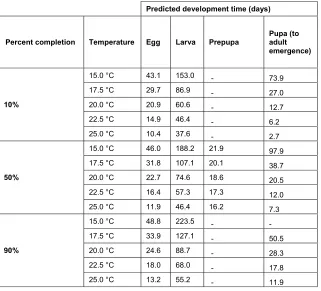
Table 3. Predicted time for 10%, 50%, and 90% of individual Agrilus biguttatus to complete 773
development, by temperature and life stage. The development times from pupa to adult emergence 774
represent a correction of the overinflated calculated development times from prepupa to adult 775
emergence, by subtracting the estimated prepupal development times. 776
777
Predicted development time (days)
Percent completion Temperature Egg Larva Prepupa Pupa (to adult
emergence)
10%
15.0 °C 43.1 153.0 - 73.9
17.5 °C 29.7 86.9 - 27.0
20.0 °C 20.9 60.6 - 12.7
22.5 °C 14.9 46.4 - 6.2
25.0 °C 10.4 37.6 - 2.7
50%
15.0 °C 46.0 188.2 21.9 97.9
17.5 °C 31.8 107.1 20.1 38.7
20.0 °C 22.7 74.6 18.6 20.5
22.5 °C 16.4 57.3 17.3 12.0
25.0 °C 11.9 46.4 16.2 7.3
90%
15.0 °C 48.8 223.5 - -
17.5 °C 33.9 127.1 - 50.5
20.0 °C 24.6 88.7 - 28.3
22.5 °C 18.0 68.0 - 17.8
25.0 °C 13.2 55.2 - 11.9
778
Table 4. The lower developmental thresholds and thermal sums in day degrees (DD) for each life 779
stage of Agrilus biguttatus. 780
781
Stage Lower Threshold -95% CLI +95% CLI DD -95% CLI +95% CLI
Egg 12.1 °C 7.4 °C 14.9 °C 157.1 126.1 188.1
Larva 11.9 °C 11.7 °C 12.0 °C 615.9 613.8 618.0
Pupa (to adult emergence) 15.1 °C 8.8 °C 19.0 °C 76.3 55.7 96.9
782
Table 5. Mean peristomal widths, by instar, of Agrilus biguttatus larvae,as predicted by the normal 783
mixture models, and actual data ranges following posterior instar allocation. 784
785
Instar Peristomal width
Mean ± SE Range
1 0.19 ± 0.04 0.15 to 0.23
2 0.33 ± 0.05 0.25 to 0.38
3 0.60 ± 0.05 0.44 to 0.82
4 1.13 ± 0.06 0.92 to 1.46
Figures 788
789
790
Figure 1. Development rate (days-1) of monitored prepupae of Agrilus biguttatus from cessation of
791
overwintering to pupation. Data points are the actual development times of individual prepupae, and a 792
linear regression line is fitted. 793
794