1
Management Information and Accounting System and organizational
Performance in Nigeria
Omiunu, Ojinga Gideon
Africa Regional Centre for Information Science, University of Ibadan, Ibadan, Nigeria.
Unicorn Academics and Organisation Developmental Research Centre, Nigeria P.O.Box, 20671, UI Post Office, Ibadan, Oyo State, Nigeria.
E-mail: [email protected]; [email protected]
Tel: +2348051779079, 8029219415
ABSTRACT
The study investigated management information and accounting system and organizational Performance in Nigeria. The study adopted the empirical survey research design. A convenient sampling was used to select South West from the geopolitical zones and Oyo State from the states in the South West zone, and a total of one hundred (100) respondents were selected for the study. Information and data were obtained through the help of the questionnaire. The questionnaire was validated and tested through the Cronbach Alpha, and provided a reliability analysis of 0.75. Data obtained were analysed using the SPSS and statistical tools used were frequency, percentage, Spearman’s Correlation and binary logistic regression analysis. The findings of the study revealed that organisation in Nigeria have low and poor culture towards the deployment and use of Management accounting and information systems. Some demographic characteristics were observed to be significant in the use of MAS, while none was significant in the use of MIS. Furthermore, there was no significant relationship between management accounting systems and management information systems (p>0.05). There was no significant relationship between management accounting systems and organizational performance (p>0.05). There was no significant relationship between management information systems and organizational performance (p>0.05). The use of Management Information systems in organization does have significant influence on the effectiveness of management accounting system used (p<0.05). The study recommended that organizations in Nigeria should deploy and use management accounting and information system to enhancing their business performance and also making it globally competitive especially in this competitive environment.
Key Words: Management Accounting System, Information System, Organisation Performance, Nigeria
INTRODUCTION
Organisation performance measurement has attracted attention and has generated lots of arguments as there have been no universally recognised measures of this
2
subjective measurement is based upon the perception of the organisations’ owners while the objective data measurement is based on the financial data of the organisations and the financial tools been deployed and used in the organization include the return on Investment, return on expenditures, return on capital expenditure, among others. There is a shift in the trend of such measurement from the financial tools to the non-financial tools especially among organisations that do not deal directly with money. To this end, focus on organizational performance has shifted from the financial perspective to a non-financial perspective (Tatichi, Cagnazzo & Botarelli, 2008).
Whether financial or non financial measurement, Etemadi, Dilami, Bazaz and Parameswaranit (2009) have stated that, organisational performance is linked to
management accounting system and
practices. Management accounting systems are systems tailored to increase organization’s effectiveness by providing information that can assist managers in fulfilling the goals of the organizations (Horngren, Foster & Datar, 1994). It is an important management technique that ensures resource use efficiency among organization (International Federation of Accountants, 1998). The main objective of the Management accounting systems has been to provide information for costing products and for promoting efficiency in the use of labour and materials (Johnson &
Kaplan, 1987). Examples of such
Management Accounting System (MAS) are standard costing and flexible budgeting for cost control, cost allocation and product cost measurements; incremental analysis for decision-making; measurement of profit, contribution and return on investments for performance monitoring; and the full integration of internal cost accumulation
systems with the external financial reporting systems (Ajibolade, 2013).
Furthermore, there is also a link between
management accounting system and
management information system (Etemadi et al., 2009). This link can be conceptualized from the main fact that information about financial aspects of organization are provided for managerial activities and fulfilling organizational goals and objectives. Management Information System is an integrated user-machine system meant for providing information, to support the operations, management, analysis &
decision-making functions in an
organization. Management accounting information is a part of this information that would be provided to aid organization success. Kucera, Skorecova and Szovics (2003) have stated that managerial accounting provides information for processing and utilization to organizations’ management information system. Thus, Management accounting systems and practices is an integral part of the management information systems for organizational development. This kind of information provided from the accounting aspect of the organization is what Grande, Estébanez, and Colomina (2011) called Accounting information system.
3
up the possibility of generating and using accounting information from a strategic viewpoint. This kind of information is needed to deal with a higher degree of uncertainty in the competitive market ( El Louadi, 1998). Thus, there is a dare need for organizations to improve their systems and data processing capacity to match their information needs with regards to the financial or accounting information need so as to enhance their performance. Howbeit, Grande et al., (2011) clearly noted that organizations are faced with various challenges in the use of management accounting information system, which makes its use difficult.
In addition, organizational culture in the use of management accounting and information systems is low and poor, and this has affected management control systems and management practices and have also affected their performance as they have no record of how resource are used (input and output) in the organization (Etemadi et al., 2009). In addition, Aziz et al (2014) reveal that most managers tend to have bad attitudes towards record keeping and
resource management, thus bad
organizational culture in the management information and accounting system. Organisational culture especially towards management accounting and information system may affect whether it is been practiced or not and thus affecting their performance (Etemadi et al., 2009). To this end, this study seeks to investigate management information and accounting system and organizational Performance in Nigeria. The following research questions drive the study:
i. Do organization in Nigeria have positive and good culture
towards management
accounting and information systems practices?
ii. What are the types of
management accounting
systems used among
organization in Nigeria?
iii. What are the types of
management information
systems used among
organization in Nigeria?
iv. What are the organizational and owners characteristics that may influence the use and non
use of management
accounting systems?
v. What are the organizational and owners characteristics that may influence the use and non
use of management
information systems to
enhance Management
accounting systems and
practices?
Research Hypotheses: The study would also test the following hypotheses at 0.05 level of significance:
HO1: There is no significant
relationship between management
accounting systems and management information systems
HO2: There is no significant
relationship between management
accounting systems and organizational performance
HO3: There is no significant
relationship between management
information systems and organizational performance
4
effectiveness of management accounting system use.
Previous Studies
Hilton and Platt (2011) stated that management accounting is the process of identifying, measuring, analyzing, interpreting and communicating information in pursuit of organization’s goals. Management accounting is integral part of management process. It provides internal (financial and non-financial) information of the past, present, and future of an organization; and also provides external monetary and non-monetary measurement of the environment of the organization (Etemadi et al., 2009). Timeliness of management accounting system enables managers to respond to events quickly and provide them rapid feedback for effective decision-making. Example of management accounting practices are standard costing and flexible budgeting for cost control, cost allocation and product cost measurements; incremental analysis for decision-making; measurement of profit, contribution and return on investments for performance monitoring; financial management, cost management, effective budgeting and costing, and the full integration of internal cost accumulation systems with the external financial reporting systems (Ajibolade, 2013). Also, Sunarni (2013) added that there
are new management accounting
techniques, these include activity based costing, target costing, kaizen costing, balance scorecard and others. Abdel-Kader and Luther (2006) stated that the most notable innovative management accounting techniques are activity based techniques, strategic management accounting and the balance scorecard.
Kucera et al (2003) had stated that
management accounting provides
information for processing and utilization to organisation’s management information system. This implies that management information system is an important part of organization management accounting practices effectiveness. Examples of Management Information Systems are Sales Management Systems, Inventory Control Systems, budgeting systems, Management Reporting Systems (MRS), Personnel (HRM) systems), among others. The importance of management information system to management accounting systems is seen in the assertion of Etemadi et al. (2009) that management accounting system and management information system are linked together in any organization.
Howbeit, Lund (2003) states that organization’s culture affects management and managerial activities such as management information systems and management accounting systems practices, and thus can affect employees and the organizational performance. This made organizational culture to be an important factor in the relationship effect or link between management accounting systems and management information systems in organizations. This gave a base for this study. To this end, the study investigated management information and accounting system and organizational performance in Nigeria
5
Fig 1: Functions of an information system.
Adapted from Laudon, Laudon and Dash (2006)
An information system such as the management information system contains information about an organization and its surrounding environment. Three basic activities—input, processing, and output— produce the information organizations need. Feedback is output returned to appropriate
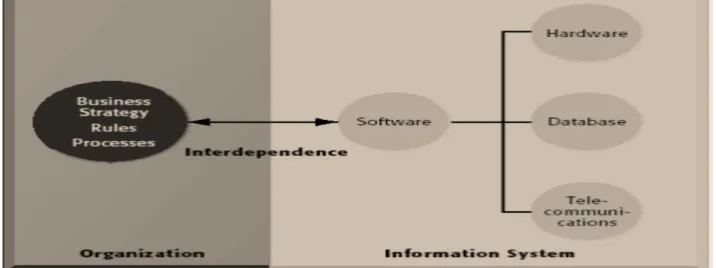
people or activities in the organization to evaluate and refine the input. Environmental factors such as customers, suppliers, competitors, stockholders, and regulatory agencies interact with the organization and its information systems. Also, of importance to this study is the interdependence between organizations and information systems.
Fig 2: The interdependence between organizations and information systems Adapted from Laudon, Laudon and Dash (2006)
In contemporary systems, there is a growing
interdependence between a firm’s
information systems such as management information system and its business capabilities such as organizational performance. Changes in strategy, rules, and business processes increasingly require changes in hardware, software, databases,
6
Fig 3: DaimlerChrysler’s Agile Supply Chain
Adapted from Laudon, Laudon and Dash (2006)
DaimlerChrysler studied every step in the organisation’s production and sales process, starting with the first stage of design and ending with its service and repair; it then builts a series of information systems that automated and streamlined all of its transactions with the suppliers. An Integrated Volume Planning system gathers sales data and sends them back to production planning systems and from there to suppliers so that they can adjust deliveries of parts and production to make exactly the right amount of the products that are actually selling in dealer showrooms. In
addition, from figure 3, it is observed that organization faced some challenges in
deploying Management information
systems.
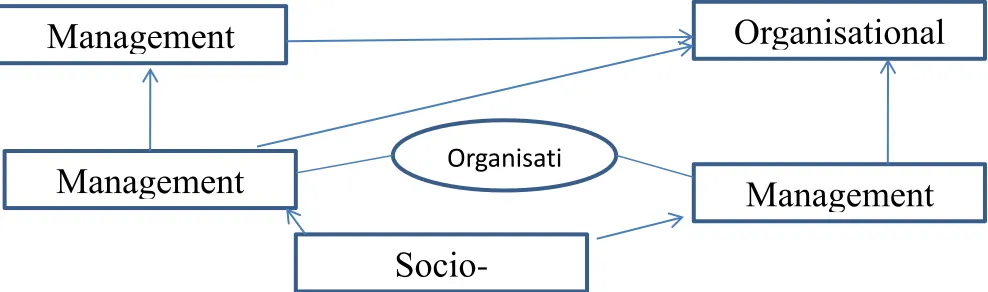
Conceptual Framework for the Study: Management accounting systems was one of the organizational subsystems that facilitated control of resources and enhance the performance of organizations (Chia, 1995). In addition, its operation could be more efficient with the help of management information system and thus increasing its effect on organizational performance. Figure 4 provides the conceptual framework for the study.
Fig 4: Conceptual Model for MIS-MAS Organisational Performance Enhancement
Source: The Author
Management
Accounting
Management
Information
Socio-
Demographic
Management
Accounting
Organisational
Performance
7
METHODOLOGY
The study adopted the empirical survey research design. Although the study was an organizational study however, owners’ socio-demographical characteristics were also put into consideration. A convenient sampling was used to select the South West from the geopolitical zones and Oyo State from the states in the South West zone, and a total of one hundred (100) respondents were selected for the study. Information and data were obtained through the help of the questionnaire. The questionnaire has seven major sections namely demographic characteristics, organizational culture in the use of MAS, organizational culture in the use MIS, use of MAS, use of MIS, MAS
effectiveness, and organisational
performance. In addition, the questionnaire was validated and tested and provided a
reliability analysis, using the Cronbach Alpha, of 0.75. In addition, the various constructs of the study also gave reliability analysis of organizational culture in the use of MAS (0.83), organizational culture in the use MIS (0.79), use of MAS (0.72), use of MIS (0.71), and MAS effectiveness (0.81). These revealed that they were reliable for this study and to be used by other studies. Data obtained were analysed using the SPSS and statistical tools such as
frequency, percentage, Spearman’s
Correlation and binary logistic regression analysis were also used for analysis.
RESULTS
Research Question One: Do organization in Nigeria have positive and good culture towards management accounting and information systems practices?
Table 4.1: Distribution of organizational culture in management accounting and information systems use
Type of Organisations Total
Accounting systems practices are integral culture in our organization
Disagreed Agreed Total
Medicine Construction Telecomm Education Agriculture Others
4(50.0%) 4(50.0%) 8(100.0%) 15(57.7%) 11(42.3%) 26(100.0%) 2(25.0%) 6(75.0%) 8(100.0%) 0(.0%) 6(100.0%) 6(100.0%) 6(66.7%) 3(33.3%) 9(100.0%) 32(97.0%) 1(3.0%) 33(100.0%) 59(65.6%) 31(34.4%) 90(100.0%) Management accounting practices is a
continuous activity in the organisation Disagreed Agreed Total 4(50.0%) 4(50.0%) 8(100.0%) 15(57.7%) 11(42.3%) 26(100.0%) 1(14.3%) 6(85.7%) 7(100.0%) 4(66.7%) 2(33.3%) 6(100.0%) 6(66.7%) 3(33.3%) 9(100.0%) 28(87.5%) 4(12.5%) 32(100.0%) 58(65.9%) 30(34.1%) 88(100.0%)
Lack of accountability and record keeping of resource use exists
Disagreed Agreed Total 6(75.0%) 2(25.0%) 8(100.0%) 11(42.3%) 15(57.7%) 26(100.0%) 5(71.4%) 2(28.6%) 7(100.0%) 6(100.0%) 0(.0%) 6(100.0%) 5(55.6%) 4(44.4%) 9(100.0%) 18(58.1%) 13(41.9%) 31(100.0%) 51(58.6%) 36(41.4%) 87(100.0%) Management accounting practices and
information system are meant for top management position Disagreed Agreed Total 6(75.0%) 2(25.0%) 8(100.0%) 11(42.3%) 15(57.7%) 26(100.0%) 6(75.0%) 2(25.0%) 8(100.0%) 6(100.0%) 0(.0%) 6(100.0%) 3(33.3%) 6(66.7%) 9(100.0%) 7(21.2%) 26(78.8%) 33(100.0%) 39(43.3%) 51(56.7%) 90(100.0%) We don’t really need information system
to manage our activities in the organisation Disagreed Agreed Total 7(100.0%) 0(.0%) 7(100.0%) 9(36.0%) 16(64.0%) 25(100.0%) 8(100.0%) 0(.0%) 8(100.0%) 5(100.0%) 0(.0%) 5(100.0%) 3(33.3%) 6(66.7%) 9(100.0%) 10(31.3%) 22(68.8%) 32(100.0%) 42(48.8%) 44(51.2%) 86(100.0%) Things can be done manually so there is
8
The distribution of organizational culture in
the management Accounting and
information system use by organization is presented in table 4.1. The result revealed that, 41.4% stated that, lack of accountability and record keeping of resource use exists in their organization with construction having the highest percentage (57.7%). In addition, 34.4% stated that accounting systems practices are integral culture in their organization; the educational and the telecommunication sector has the highest percentage of 100% and 75% respectively. Also, 34.1% stated that they have made management accounting practices a continuous activity in their organization, with telecommunication sector having the highest percentage (85.7%).
Also, 56.7% stated that Management accounting practices and information system are meant for top management position with organisations belonging to the other
category having the highest percentage of 78.8. In addition, 51.2% stated that management accounting practices is not really necessary in their organization with organisations belonging to the other category having the highest percentage of 68.8. Furthermore, 23% stated that things can be done manually so there is no need for any information system with the educational sector having the highest percentage (80%). This implied that, to an extent, organisations in Oyo State, Nigeria have a fair culture of management accounting and information systems practices, however, these practices is low and would not allow them to tap into the benefit of MIS and MAS.
Research Question Two: What are the
types of management accounting
systems used among organization in Nigeria?
Table 4.2: Distribution of Types of Management Accounting Practices among Organisation
What are type of Management Accounting Practices used
Type of Organisation Total
Medicine Construction Telecomm Education Agriculture Others Financial management Disagreed Agreed Total 6(100.0%) 0(.0%) 6(100.0%) 13(50.0%) 13(50.0%) 26(100.0%) 6(75.0%) 2(25.0%) 8(100.0%) 6(100.0%) 0(.0%) 6(100.0%) 3(33.3%) 6(66.7%) 9(100.0%) 25(75.8%) 8(24.2%) 33(100.0%) 59(67.0%) 29(33.0%) 88(100.0%) Cost management Disagreed Agreed Total 6(75.0%) 2(25.0%) 8(100.0%) 18(69.2%) 8(30.8%) 26(100.0%) 8(100.0%) 0(.0%) 8(100.0%) 6(100.0%) 0(.0%) 6(100.0%) 9(100.0%) 0(.0%) 9(100.0%) 23(69.7%) 10(30.3%) 33(100.0%) 70(77.8%) 20(22.2%) 90(100.0%) Effective budgeting and costing
Disagreed Agreed Total 6(75.0%) 2(25.0%) 8(100.0%) 22(84.6%) 4(15.4%) 26(100.0%) 6(75.0%) 2(25.0%) 8(100.0%) 6(100.0%) 0(.0%) 6(100.0%) 9(100.0%) 0(.0%) 9(100.0%) 28(84.8%) 5(15.2%) 33(100.0%) 77(85.6%) 13(14.4%) 90(100.0%) Cost allocation and product cost
measurements Disagreed Agreed Total 5(71.4%) 2(28.6%) 7(100.0%) 18(69.2%) 8(30.8%) 26(100.0%) 8(100.0%) 0(.0%) 8(100.0%) 6(100.0%) 0(.0%) 6(100.0%) 5(55.6%) 4(44.4%) 9(100.0%) 19(57.6%) 14(42.4%) 33(100.0%) 61(68.5%) 28(31.5%) 89(100.0%) Return on investments
Disagreed Agreed Total 6(75.0%) 2(25.0%) 8(100.0%) 24(92.3%) 2(7.7%) 26(100.0%) 8(100.0%) 0(.0%) 8(100.0%) 6(100.0%) 0(.0%) 6(100.0%) 5(55.6%) 4(44.4%) 9(100.0%) 20(60.6%) 13(39.4%) 33(100.0%) 69(76.7%) 21(23.3%) 90(100.0%) Which of the type of MAS do
9
The distribution of respondents by the types
of management accounting system
deployed by organisations is presented in table 4.4. The result revealed that financial management was most deployed and used by organisations (33%) with the Agricultural sector (66.7%) having the highest percentage of respondents who used it in their organization. Cost allocation and product cost measurements are also used by organisations (31.5%) with the Agricultural sector (44.4%) having the highest percentage of respondents who used it in their organization. The result also showed that 23.3% perform return on investments for performance monitoring with the agricultural sector (44.4%) having the highest percentage of respondents who used it in their organization.
In addition, 22% of the organisations stated that they use cost management in their organization as a management accounting practice with the construction sector having
the highest percentage of 30.8.
Furthermore, 14.4% only use effective budgeting and costing as a management accounting practice in their organization. In addition, 77.5% used the manual means of
management accounting system and
practice while only 22.5% used the new and modernized MAS such as the activity based costing, target costing, kaizen costing, balance scorecard, among others. This implied that, although organisations owners use the financial management, cost allocation and product costing, return to investment, cost management, and effective budgeting and costing as the major management accounting practice, the result of the study revealed that financial management was most used.
Research Question Three: What are the
types of management information
systems used among organization in Nigeria?
Table 4.3: Types of Management Information System Used
Type of Organisations Total
Medicine Construction Telecomm Education Agriculture Others Inventory Control Systems
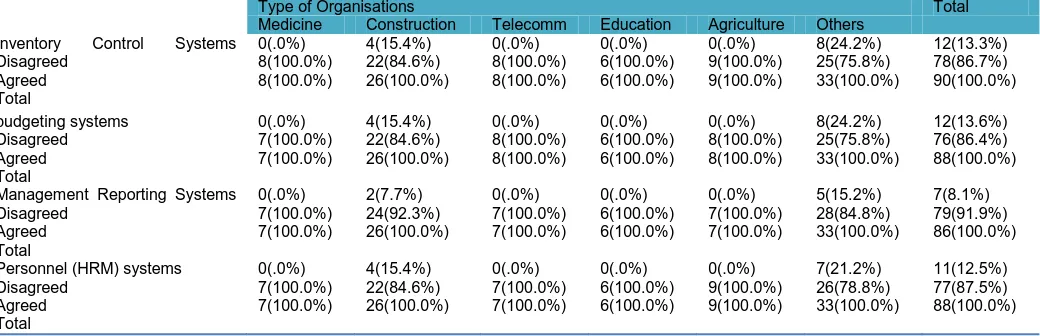
Disagreed Agreed Total 0(.0%) 8(100.0%) 8(100.0%) 4(15.4%) 22(84.6%) 26(100.0%) 0(.0%) 8(100.0%) 8(100.0%) 0(.0%) 6(100.0%) 6(100.0%) 0(.0%) 9(100.0%) 9(100.0%) 8(24.2%) 25(75.8%) 33(100.0%) 12(13.3%) 78(86.7%) 90(100.0%) budgeting systems Disagreed Agreed Total 0(.0%) 7(100.0%) 7(100.0%) 4(15.4%) 22(84.6%) 26(100.0%) 0(.0%) 8(100.0%) 8(100.0%) 0(.0%) 6(100.0%) 6(100.0%) 0(.0%) 8(100.0%) 8(100.0%) 8(24.2%) 25(75.8%) 33(100.0%) 12(13.6%) 76(86.4%) 88(100.0%)
Management Reporting Systems Disagreed Agreed Total 0(.0%) 7(100.0%) 7(100.0%) 2(7.7%) 24(92.3%) 26(100.0%) 0(.0%) 7(100.0%) 7(100.0%) 0(.0%) 6(100.0%) 6(100.0%) 0(.0%) 7(100.0%) 7(100.0%) 5(15.2%) 28(84.8%) 33(100.0%) 7(8.1%) 79(91.9%) 86(100.0%)
Personnel (HRM) systems Disagreed Agreed Total 0(.0%) 7(100.0%) 7(100.0%) 4(15.4%) 22(84.6%) 26(100.0%) 0(.0%) 7(100.0%) 7(100.0%) 0(.0%) 6(100.0%) 6(100.0%) 0(.0%) 9(100.0%) 9(100.0%) 7(21.2%) 26(78.8%) 33(100.0%) 11(12.5%) 77(87.5%) 88(100.0%)
The distribution of the types of management information system practices among organisations is presented in table 4.3. The
10
in the Medicine, telecommunication, education and agricultural sector having the highest percentage of 100%. In addition, 87.5% stated that Personnel (HRM) systems was mostly used in their organization with those in the Medicine, telecommunication, education and agricultural sector having the highest percentage of 100%. In addition, 86.7% of the respondents stated that Inventory Control Systems was used in their organization with organizations in the medical, telecommunication, agricultural and educational sector having the highest
percentage (100%) respectively. Also, 86.4% stated that, budgeting systems was used in their organization with the
telecommunication, education and
agricultural sector having the highest percentage of 100%. This implied that organizations, to an extent use management information systems in their organization.
Research Question Four: What are the
organizational and owners
characteristics that may influence the use and non use of management accounting systems?
Table 4.4a: Classification Table explaining the prediction of non use of management accounting systems
Classification Table
Observed Predicted
MASS Percentage Correct
.00 1.00
Step 1 MASS .00 18 12 60.0
1.00 5 35 87.5
Overall Percentage 75.7
a. The cut value is .500
The table 4.4a reveals that the table 4.4b would explain the predicted variables by 75.7%.
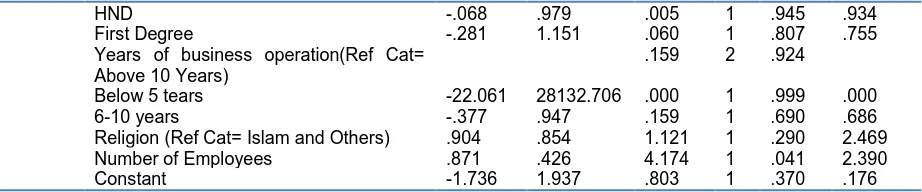
Table 4.4b: Factors Responsible for use and non use of management accounting systems
Variables in the Equation
B S.E. Wald df Sig. Exp(B)
Step 1a Organisation type (Ref Cat= None) 3.905 5 .563
Medical -.648 1.358 .228 1 .633 .523
Construction .390 .826 .223 1 .637 1.476
Telecomm 1.443 1.483 .947 1 .330 4.233
Education 2.288 1.490 2.356 1 .125 9.853
Agriculture .642 1.218 .278 1 .598 1.901
Gender (Ref Cat= Female) -3.137 1.570 3.991 1 .046 .043
Age (Ref Cat= Above 50) 6.681 5 .245
Below 25 17.167 40192.970 .000 1 1.000 2.853E7
26-30 -3.651 1.656 4.858 1 .028 .026
31-35 3.747 2.484 2.275 1 .131 42.402
36-40 -1.233 1.284 .921 1 .337 .291
41-50 -1.298 1.110 1.368 1 .242 .273
Education (Ref Cat= Masters and PhD) .264 3 .967
11
HND -.068 .979 .005 1 .945 .934
First Degree -.281 1.151 .060 1 .807 .755
Years of business operation(Ref Cat= Above 10 Years)
.159 2 .924
Below 5 tears -22.061 28132.706 .000 1 .999 .000
6-10 years -.377 .947 .159 1 .690 .686
Religion (Ref Cat= Islam and Others) .904 .854 1.121 1 .290 2.469
Number of Employees .871 .426 4.174 1 .041 2.390
Constant -1.736 1.937 .803 1 .370 .176
The result in table 4.4b reveals that gender, age (26-30 Years) and number of employees are significant (p<0.05). Gender (Male) explains the 4% of the odds of not deploying MAS in an organization, age (26-30 Years) also explains 2% of the odds of not deploying MAS, howbeit, number of employees explains 39% of the odds of deploying MAS in organization. Therefore, the higher the number of employees, the
greater the tendency for the organization to use MAS, because employee number is most often proportional to size of organization.
Research Question Five: What are the
organizational and owners
characteristics that may influence the use and non use of management information systems?
Table 4.5a: Classification Table explaining the prediction of non use of management information systems
Classification Table
Observed Predicted
MISS Percentage Correct
.00 1.00
Step 1 MISS .00 13 13 50.0
1.00 6 41 87.2
Overall Percentage 74.0
a. The cut value is .500
The table 4.5a reveals that the table 4.5b would explain the predicted variables by 74%. Table 4.5b: Factors Responsible for use and non-use of management information systems
Variables in the Equation
B S.E. Wald df Sig. Exp(B
)
Step 1a Organisation type (Ref Cat= None) 1.014 5 .961
Medical -.351 1.026 .117 1 .732 .704
Construction .005 .734 .000 1 .994 1.005
Telecomm .202 1.108 .033 1 .855 1.224
Education .641 1.079 .352 1 .553 1.898
Agriculture .656 1.081 .369 1 .544 1.928
Gender (Ref Cat= Female) 1.071 .928 1.333 1 .248 2.919
Age (Ref Cat= Above 50) 5.541 5 .354
Below 25 20.902 40192.
970
.000 1 1.00
0
12
26-30 2.251 1.527 2.173 1 .140 9.496
31-35 -.076 1.453 .003 1 .958 .927
36-40 -.563 1.023 .303 1 .582 .569
41-50 1.539 .927 2.757 1 .097 4.659
Education (Ref Cat= Masters and PhD) 2.807 3 .422
OND 1.411 1.274 1.226 1 .268 4.099
HND -.128 1.023 .016 1 .900 .880
First Degree 1.314 .944 1.937 1 .164 3.720
Years of business operation(Ref Cat= Above 10 Years)
1.561 2 .458
Below 5 tears 19.533 28302.
059
.000 1 .999 3.042
E8
6-10 years -.953 .762 1.561 1 .211 .386
Religion (Ref Cat= Islam and Others) -.505 .658 .589 1 .443 .604
Number of Employees -.181 .287 .396 1 .529 .835
Constant .384 1.426 .073 1 .788 1.468
The table 5.5b shows that there are no relationships between variables in the study (p>0.05). This implies that socio-demographic characteristics do not really have influence on the use and non use of MIS in organizations in Nigeria.
Test of Hypotheses
HO1: There is no significant relationship between management accounting systems and management information systems
Table 4.6: Correlation Analysis for Hypothesis One
N Mean Std.
Deviation
r-value p-value
Management Accounting System 93 .5161 .50245 -.010 .927
Management Information System 96 .6146 .48925
Valid N (listwise) 92
The test of hypothesis one reveal that there is no significant relationship between management accounting systems and management information systems (p>0.05)
HO2: There is no significant relationship between management accounting systems and organizational performance
Table 4.7: Correlation Analysis for Hypothesis Two
N Mean Std. Deviation r-value p-value
Management Accounting System
93 .5161 .50245 .163 .156
Organisation Performance
83 3.2228E6 3.48307E6
Valid N (listwise) 77
The test for hypothesis two shows that there is no significant relationship between management accounting systems and organizational performance (p>0.05).
13
Table 4.8: Correlation Analysis for Hypothesis Three
N Mean Std. Deviation r-value p-value
Organisation Performance
83 3.2228E6 3.48307E6 -.072 .524
Management Information System
96 .6146 .48925
Valid N (listwise) 81
The test for hypothesis three demonstrates that there is no significant relationship between management information systems and organizational performance (p>0.05).
HO4: The Use of Management Information systems in organization does not have significant influence on the effectiveness of management accounting system use.
Table 4.9: Correlation Analysis for Hypothesis Four
N Mean Std. Deviation r-value p-value
Management Information System
96 .6146 .48925 .500** .000
Management system
types
96 9.8125 2.48495
Valid N (listwise) 96
The test for hypothesis four reveals that the use of Management Information systems in organization does have significant influence on the effectiveness of management accounting system use (p<0.05).
Discussion of Findings: The result of this study revealed that, there is lack of accountability and record keeping of resource use among organisations with construction having the highest percentage. In addition, there is poor culture of using accounting practices and also poor usage of management information systems among organizations in Nigeria. Few have a good and positive management accounting information systems and practices. The study also revealed that Organisations in
Nigeria believed that management
accounting practices and information system are meant for top management position; that management accounting practices is not
really necessary in their organization; that things can be done manually so there is no need for any information system especially in the educational sector. This implied that, to an extent, organisations in Oyo State, Nigeria have a poor culture of management accounting and information systems practices, and would not allow them to tap into the benefit of MIS and MAS. This implied that MIS in Nigeria have not seen both the MAS and MIS important parts of their organization, and may lead to
inefficiency in organization and
organizational activities. This contrasts IFAC (1998) that MAS is seen as an important management technique that ensures
resources use efficiency among
14
The result of this study reinforced the work of Etemadi et al. (2009) that organizational culture in the use of management accounting and information systems are low and poor, and these have affected
management control systems and
management practices and have also affected their performance as they have no record of how resource are used (input and output) in the organization. The result of this study also supported Aziz et al (2014) that most managers tend to have bad attitudes towards record keeping and resource management, thus bad organizational culture in the management information and accounting system.
The result of this study also revealed that financial management was most deployed and used among organization in Nigeria especially in the Agricultural sector. Other accounting system practices used among organization in Nigeria are cost allocation and product cost measurements, return on investments for performance monitoring, cost management and effective budgeting and costing. The manual means of
management accounting system and
practice are deployed the most among organizations in Nigeria than the new and modernized MAS such as the activity based costing, target costing, kaizen costing, balance scorecard, among others
Furthermore, the result of the study disclosed that organizations, to an extent use management information systems in their organization, however, management Reporting Systems was the most used in organisation in Nigeria especially in
organization in the Medicine,
telecommunication, education and
agricultural sector. Other management information systems used by organizations
include: Personnel (HRM) systems
especially in the Medicine,
telecommunication, education and
agricultural sector; Inventory Control Systems especially in the medical, telecommunication, agricultural and educational sector; budgeting systems was used in their organization especially among the telecommunication, education and agricultural sector. This supported Etemadi et al. (2009) that organisational culture especially towards management accounting and information system may affect whether they practice it or not and thus affecting their performance.
Besides, the result of this study divulged that gender and age (26-30 Years) exert significant influence on the possibility of not deploying Management Accounting System in organization in Nigeria while number of employees explains the possibility of orgnisation in Nigeria to deploying Management Accounting System. It could concluded from the result of this study that the higher the number of employees, the greater the tendency for the organization to use MAS, because employee number is most often proportional to size of organization.
Furthermore, socio-demographic characteris tics do not really have influence on the use and non use of MIS in organizations in Nigeria. There was no significant
relationship between management
accounting systems and management information systems. There was no
significant relationship between
management accounting systems and organizational performance. This contrasts Laudon et al (2006) and Etemadi et al.
15
and poor deployment and use of better MAS strategies have not set into impetus the organizational performance. This implies that organizations in Nigeria are still lacking behind in the global world in the use of and the trends of management Accounting System.
There was no significant relationship between management information systems and organizational performance. Finally the result of this study revealed that the use of Management Information systems in organization does have significant influence on the effectiveness of management accounting system use. This could be because of the low and poor organisational culture towards management information systems and management accounting systems. This bolstered Lund (2003) that an organization’s culture affect management and management activities such as management information systems and management accounting systems practices, and thus can affect employees and the organizational performance. This augments Etemadi et al. (2009) that there is a link between management accounting system and management information system, thus making MAS more effective in its use and operation. This is because it provides a better platform to create, search, manage, query and use information on management accounting activities. This supported Kucera
et al. (2003) that managerial accounting provides information for processing and utilization to organizations’ management information system.
Conclusion and Recommendations: The result of this study revealed that organizations in Nigeria have low and poor culture towards management accounting and information systems practices; preferred and used the traditional management
accounting practices (if at all they use) than the new and modernized ones. In addition, gender and age (26-30 Years) exerted significant influence on the possibility of not deploying Management Accounting System in organization in Nigeria while number of employees explains the possibility of organisation in Nigeria to deploying Management Accounting System. Socio-demographic characteristics do not really have influence on the use and non use of MIS in organizations in Nigeria. This implies that demographic characteristics of organization and owners do not have significant importance on MIS deployment (of which educational level should have positive influence). This shows that the Nigeria education system have not deployed the effective use and imbibe ICT into its curriculum to enhance Nigerians productivity and make them compete even at the global level.
Furthermore, there was no significant
relationship between management
accounting systems and management information systems. There was no
significant relationship between
management accounting systems and organizational performance. There was no
significant relationship between
management information systems and organizational performance. Finally the result of this study revealed that the use of Management Information systems in organization does have significant influence on the effectiveness of management accounting system use.
From this study, various recommendations could be made. These include:
16
organizations interested in the development of organizations. In some cases, this may be a collaborative effort between the two (public and private) so as to provide necessary training and teachings needed by organization to enhance their growth and development.
ii. Necessary trainings and teachings that should inculcated into such workshop organized are the need
for effective management
accounting systems and practices in organizations; the need of use of management information systems. Howbeit, it will be necessary when the bodies and individuals providing such trainings and teachings show them the practical aspects of both the MAS and MIS so as not to lead to confusion.
iii. Also, the benefits of the MAS and the use of MIS to enhance MAS and their performance should be revealed to organizations.
iv. Some factors are to be put into considerations (such as gender differences, age of owners, and also of organization, numbers of employees) in such trainings and
workshops to make sure
appropriate information and solution are delivered to the right persons and group of persons. v. Furthermore, organizations in
Nigeria should endeavour to put into practice by deploying and using management accounting and information system to enhance their business growth and development and also making
it globally competitive especially in this competitive environment. vi. The use of ICT or information
systems such as management information system in various systems should be inculcated even in the educational sector. This should involve a practical training and teaching of students to enhance the use of ICT and information system even at individual level and organisation level.
REFERENCES
Abdel-Kader, M and Luther, R. (2006).Management Accounting Practices in the British Food and Drinks Industry, British
Food Journal, Vol.108.pp.336-357
Ajibolade S. O. (2013), Drivers of Choice of Management Accounting System Designs in Nigerian Manufacturing Companies, International Journal of Business and Social Research (IJBSR), Volume -3, No.-9.
Aziz N., Hui W.S., and Mahmud. (2014), Exploring the Attitude of Managers towards Key Performance Indicators (KPIs) in Response to Public Sector Change: A Rasch Analysis, Journal of Economics, Business
and Management, Vol. 3, No. 1, DOI:
10.7763/JOEBM.2015.V3.166 119
Chia, Y. M. (1995). Decentralization, Management Accounting System (MAS) Information Characteristics and Their Interaction Effects on Managerial Performance: A Singapore Study. Journal of
Business Finance & Accounting, 22(6),
811-830.
Croteau A. and Bergeron F., (2001), An information technology triology: Business Strategy, technological deployment and Organisational performance, Journal of
strategic information systems 10 (2001)
77-99, Elsevier.
17
small Canadian firms, Canadian Journal of
Administrative Science, vol. 15, n. 2: 99-180.
Etemadi H., Dilami Z. D., Bazaz M.S. and Parameswaran R. (2009), Culture, management accounting and managerial performance: Focus Iran, Advances in Accounting, incorporating Advances in International Accounting, 25:216–225, journal homepage:
www.elsevier.com/locate/adiac
Grande E. U., Estébanez R. P., and Colomina C.M. (2011), The impact of Accounting Information Systems (AIS) on performance measures: empirical evidence in Spanish SMEs, The International Journal of Digital Accounting Research Vol. 11, pp. 25 – 43, ISSN: 1577-8517
Hilton, R. W. and Platt E. D. (2011). Managerial
Accounting: creating value in Global
business Environment. 9th edition. Global Edition. McGraw Hill International Edition. Horngren, C. T., Foster, G. & Datar, S. M.
(1994). Cost accounting: A managerial emphasis. Prentice-Hall. New Jersey.
International Federation of Accountants (1998).
Statement of management accounting
concepts. Retrieved January 18, 2006 from
http://www.ifac.org/members/downloads/ MAPS-1Accounting concepts pdf.
Johnson, H. T. & Kaplan, R. S. (1987)
Relevance lost: The rise and fall of
management accounting. Massachusetts:
Harvard Business School Press.
Kucera M., Skorecova E., and Szovics P. (2003), Managerial Accounting as a source of information for product cost management in managerial information systems, Agricultural Economics, Czech, 49, (8), 357-360
Laudon K., Laudon J., and Dass R., (2006).
Management Information System, Prentice
Hall, Azimuth Interactive Inc.
Lund, D. (2003). Organizational culture and job satisfaction. The Journal of Business & Industrial Marketing, 18(2), pp. 219-237. Sunarni C.W. (2013), Management Accounting
Practices and the Role of Management Accountant: Evidence from manufacturing Companies throughout Yogyakarta, Indonesia, Review of Integrative Business Economics Research Vol 2(2)