Developing a Socio-Technical Process Framework
for Information Systems Project Management in a
Public HEI: A Case Study of Kuwait University
A Thesis Submitted to the University of Salford for the Degree of
DOCTOR OF PHILOSOPHY
College of Business and Law, Salford Business School
UNIVERSITY OF SALFORD
BY
AYMAN HASSAN ALHABSHI
@00327055
SUPERVISOR
DR. MOSTAFA MOHAMAD
Page | 1
TABLE OF CONTENTS
LIST OF TABLES ... 8
LIST OF FIGURES ... 9
DEDICATION ... 11
ACKNOWLEDGEMENTS ... 12
LIST OF ABBREVIATIONS... 14
ABSTRACT ... 17
CHAPTER ONE ... 19
1. INTRODUCTION ... 20
1.1 Outline of this chapter ... 20
1.2 Research background ... 20
1.3 Profile of the State of Kuwait ... 22
1.3.1 Background ... 22
1.3.2 Geography ... 23
1.3.3 People and society ... 23
1.3.4 Economy ... 25
1.3.5 Politics ... 26
1.3.6 Education ... 27
1.4 Aim and objectives ... 28
1.5 Rationale ... 30
1.6 Research questions ... 34
1.7 Contribution to knowledge ... 34
1.8 Research motivation... 35
1.9 Overview of the thesis structure ... 36
1.10 Summary of this chapter ... 38
CHAPTER TWO ... 39
2. LITERATURE REVIEW ... 40
2.1 Outline of the chapter ... 40
Page | 2
2.2.1 IS and IT: definition and differences ... 40
2.2.2 Critical success factors definitions and nomenclature... 41
2.2.2.1 Influential factors ... 41
2.2.2.2 Success factors ... 42
2.2.2.3 Failure factors ... 43
2.2.3 Enterprise Resource Planning (ERP) system ... 44
2.2.4 Critical success factors in IS project implementation ... 45
2.2.5 Critical success factors studies in IS projects ... 46
2.2.6 Criticism of critical success factors research ... 49
2.3 Review some of the classical models and frameworks of CSFs of IS projects ... 49
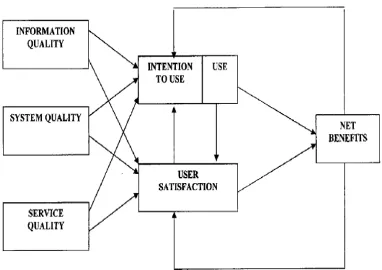
2.3.1 Delone and McLean model ... 50
2.3.2 Risk Factors model of Scott and Vessey ... 55
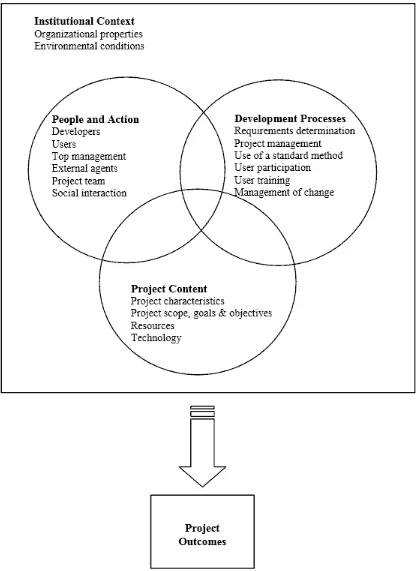
2.3.3 McLeod and MacDonell’s framework... 60
2.4 The McLeod and MacDonell’s framework and its factors ... 65
2.4.1 People and action ... 65
2.4.2 Project content ... 68
2.4.3 Development process ... 69
2.4.4 Institutional context ... 71
2.4.5 The interrelationships between factors in the framework ... 71
2.5 Rationale of the McLeod and MacDonell’s framework ... 72
2.6 Summary of the chapter ... 74
CHAPTER THREE ... 76
3. THEORETICAL FRAMEWORK ... 77
3.1 Outline of the chapter ... 77
3.2 The importance of a theoretical framework ... 77
3.3 The consideration of different Socio-technical theories ... 79
3.3.1 Actor-Network theory (ANT) ... 80
3.3.1.1 Why not ANT? ... 81
3.3.2 ETHICS ... 82
3.3.2.1 Rationale of ETHICS ... 85
Page | 3
3.5 Summary of the chapter ... 90
CHAPTER FOUR ... 91
4. RESEARCH METHODOLOGY ... 92
4.1 Outline of the chapter ... 92
4.2 Research philosophy ... 93
4.2.1 Ontology ... 94
4.2.2 Epistemology ... 94
4.3 Research philosophical paradigms ... 96
4.3.1 Postpositivist paradigm ... 97
4.3.2 Constructivist paradigm ... 97
4.3.3 Transformative paradigm ... 98
4.3.4 Pragmatic paradigm ... 98
4.4 Research approaches ... 99
4.4.1 Quantitative research ... 99
4.4.2 Qualitative research ... 100
4.4.3 Mixed methods research ... 101
4.4.4 Rationale of the qualitative approach ... 101
4.5 Research strategy ... 104
4.5.1 Research Methods ... 105
4.5.2 Grounded Theory Method (GTM) ... 107
4.5.3 Case Narrative Method ... 109
4.5.4 Case-Study Method ... 110
4.5.5 Advantages and limitations ... 113
4.5.6 Rationale of case study method ... 113
4.6 Ethical considerations and approval ... 114
4.7 Research design implementation ... 116
4.7.1 Pilot study ... 117
4.7.2 Interview Protocol ... 117
4.7.3 Semi-structured interviews ... 118
4.7.4 Selection criteria of participants ... 119
Page | 4
4.7.6 Design of interview questions ... 122
4.7.7 Implementation of the interviews ... 123
4.7.8 Archival documentation ... 124
4.8 Qualitative data analysis... 125
4.8.1 Techniques for data analysis ... 126
4.8.2 Approaches to qualitative data analysis ... 126
4.8.3 Qualitative data analysis procedures ... 127
4.8.4 Activities for qualitative data analysis ... 130
4.9 Validity and reliability ... 132
4.10 Summary of the chapter ... 134
CHAPTER FIVE ... 137
5. CASE STUDY AND FINDINGS ... 138
5.1 Outline of the chapter ... 138
5.2 Deep insight into the Kuwaiti context ... 138
5.3 IS projects implementation in Kuwait: current state and challenges ... 139
5.4 The tendering process in Kuwait ... 143
5.5 The impact of cultural and legislative factors of IS projects in Kuwait ... 144
5.5.1 Cultural factors ... 144
5.5.1.1 Preference for face-to-face interactions ... 145
5.5.1.2 Importance of informal connections or “Wasta” ... 146
5.5.1.3 Cultural heterogeneity of Kuwaiti Population ... 146
5.5.2 Legislative factors ... 147
5.5.2.1 Regulatory roadblocks ... 147
5.5.2.2 Excessive bureaucracy ... 148
5.5.2.3 Potential administrative corruption ... 149
5.6 The case of Kuwait University – Centre of Information System (KUCIS) ... 149
5.6.1 The governmental academic institutions in the State of Kuwait ... 150
5.6.1.1 The Public Authority for Applied Education and Training (PAAET) ... 150
5.6.1.2 Kuwait University (KU) ... 151
5.6.2 The private academic institutions in Kuwait ... 154
Page | 5
5.6.4 Kuwait University plan and objectives... 156
5.6.4.1 Kuwait Strategic Plan ... 156
5.6.5 The Centre of Information System (KUCIS) ... 157
5.7 Project (A): KU Web Content Management System (WCMS) - Phase I Project ... 159
5.7.1 Background ... 159
5.7.2 Problems identified with the old KU websites (replacing old legacy system) ... 159
5.7.3 Mission Statement and Goals ... 160
5.7.4 KU main website design and solution architecture... 161
5.7.5 The architecture of KU-WCMS ... 162
5.7.6 Users’ types and roles in website publishing ... 163
5.8 Project (B): The Development of Student Information System (KU new portal system) ... 165
5.8.1 Background ... 165
5.8.2 Oracle WebCenter 11g ... 166
5.8.3 Oracle Application Development Framework ... 168
5.9 Summary of the chapter ... 171
CHAPTER SIX ... 172
6. DISCUSSION ... 173
6.1 Outline of the chapter ... 173
6.2 The revised model of McLeod and MacDonell’s framework ... 173
6.2.1 ETHICS perspective of McLeod and MacDonell’s framework ... 174
6.2.2 The positive (+ve) and negative (-ve) impacts of factors ... 175
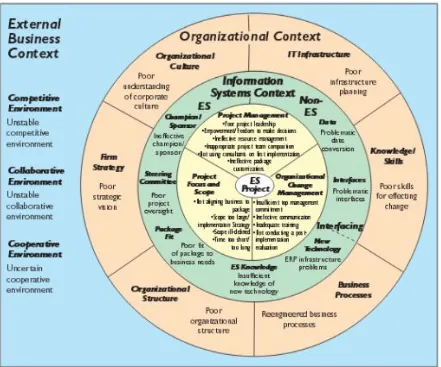
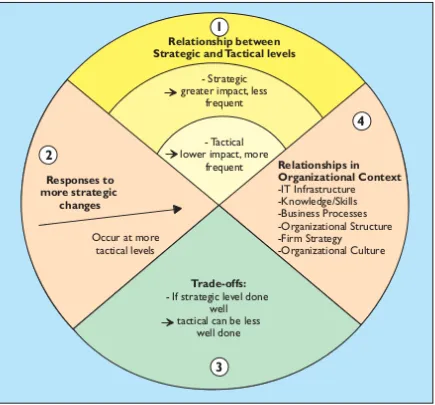
6.2.3 Splitting the contexts ... 176
6.2.4 The triggering events ... 179
6.3 McLeod and MacDonell as a Socio-Technical Process Framework ... 182
6.3.1 People and action ... 183
6.3.1.1 Interpersonal communication ... 183
6.3.1.2 Malfunction project team ... 184
6.3.2 Development processes ... 185
6.3.2.1 Malfunction project management... 185
Page | 6
6.3.3 Project content ... 188
6.3.3.1 Resource management ... 188
6.3.4 Institutional context ... 189
6.3.4.1 Floundering administrative ... 189
6.3.5 Country context ... 191
6.3.5.1 Lack of national strategic IS plan ... 192
6.3.5.2 Bureaucracy of governmental body ... 194
6.3.6 Realised project outcomes ... 194
6.3.6.1 Socio-Technical Eventual Interplay within the KUCIS ... 194
6.3.6.2 Socio-Political Issues Related to IS Implementation ... 195
6.4 Summary of the chapter ... 196
CHAPTER SEVEN ... 198
7. CONCLUSION, CONTRIBUTION AND RECOMMENDATION ... 199
7.1 Outline of the chapter ... 199
7.2 Research outcomes and meeting research aim and objectives ... 199
7.2.1 Research Objective (1) ... 200
7.2.2 Research Objective (2) ... 200
7.2.3 Research Objective (3) ... 201
7.2.4 Research Objective (4) ... 201
7.2.5 Research Objective (5) ... 202
7.3 Research contribution ... 202
7.3.1 Theoretical contribution ... 203
7.3.2 Practical contribution ... 207
7.3.2.1 Policy makers ... 207
7.3.2.2 IS project managers ... 208
7.3.2.3 User level ... 209
7.4 Credibility and limitations ... 209
7.5 Concluding Remarks ... 212
7.6 Overall remarks, recommendations and future work ... 213
Page | 7
APPENDIX I: The ethical approval letter ... 250
APPENDIX II: The interview questions ... 251
APPENDIX III: Participant consent form... 253
APPENDIX IV: The invitation letter for academic research... 254
APPENDIX V: Information Sheet ... 255
Page | 8
LIST OF TABLES
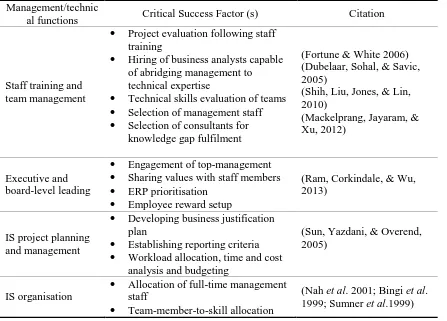
Table 2.1: A set of critical success factors in projects reported in literature……….. 48
Table 4.1: Types of Beliefs………. 95
Table 4.2: Research sample – Project A………... 121
Table 4.3: Research sample – Project B……… 122
Table 4.4: Summary of activities for data analysis/mode of analysis ……….. 131
Table 5.1: Adult literacy rate in the Arab States ……….. 154
Page | 9
LIST OF FIGURES
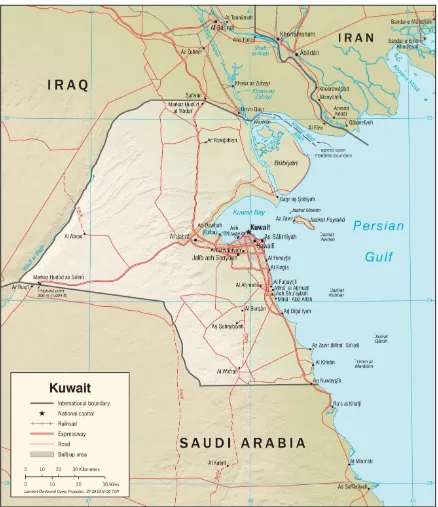
Figure 1.1: Map of the State of Kuwait ………. 24
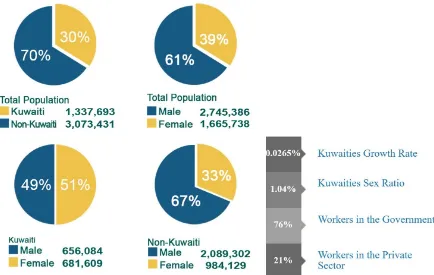
Figure 1.2: Kuwait Population Statistics ……… 25
Figure 1.3: Typical relationships of cost vs time & goal achievement vs time of projects ……….. 33
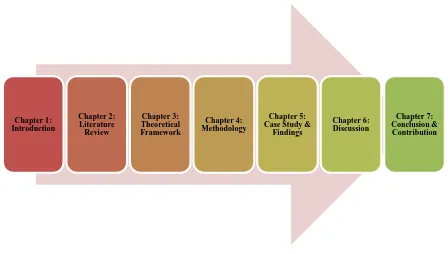
Figure 1.4: Overview of the thesis structure ……….…. 38
Figure 2.1: The DeLone and McLean’s model for IS project success ………... 51
Figure 2.2: Updated DeLone and McLean’s model for IS projects' success ………. 52
Figure 2.3: Structure of the Risk Factors’ model ……….……….………. 57
Figure 2.4: Relationships between factors in the Risk Factors model ………... 58
Figure 2.5: McLeod and MacDonell’s framework for factors of IS success …...……….. 63
Figure 2.6: Summary of strengths and weaknesses of candidate models for this research ………... 73
Figure 3.1: Stages of ETHICS theory ……… 85
Figure 3.2: ETHICS McLeod and MacDonell’s framework ………. 89
Figure 3.3: FMA model for current research ……….………...……. 90
Figure 4.1: The subjective-objective dimension ……….………... 94
Figure 4.2: The four research paradigms ………... 96
Figure 4.3: Research framework ………...………...……… 100
Figure 4.4: Hutter-Hennink qualitative research cycle ……… 107
Page | 10
Figure 4.6: Implementation of research design ………...………. 116
Figure 4.7: Analytical process of qualitative research ………. 129
Figure 4.8: Qualitative data analysis procedures ………. 130
Figure 4.9: Summary of data collection ………...……… 136
Figure 5.1: An IS project performance evaluation model ……… 141
Figure 5.2: AlAdwani Research model for developing countries ……… 142
Figure 5.3: The organisational structure for Kuwait University ……….. 153
Figure 5.4: KU main website design ……… 162
Figure 5.5: Architecture of KU-CMS ……….. 163
Figure 5.6: KU-WCMS users’ roles for website publishing ……… 165
Figure 5.7: Oracle WebCenter layout for Kuwait University ……….. 167
Figure 5.8: Oracle WebCenter architecture for Kuwait University ………. 167
Figure 5.9: Oracle Application Development Framework (ADF) architecture for KU ... 168
Figure 5.10: Oracle Application Development Framework (ADF) components ………. 169
Figure 5.11: KU main webpage after new website installation (project phase II) ……... 170
Figure 5.12: Sample of not working link after new website installation (Phase II) ……… 170
Figure 6.1: The revised framework of McLeod & MacDonell ……… 181
Page | 11
DEDICATION
I dedicate this project to Allah the Almighty, my creator, my strong pillar, my source of inspiration, wisdom, knowledge and understanding. He has been the source of my strength throughout this program and on His wings only have I soared.
I also dedicate this work to Prophet Muhammad (peace be upon him and his progeny), without them, I would not be at this level.
Page | 12
ACKNOWLEDGEMENTS
In the name of Allah, the Most Gracious the Most Merciful. First of all, Praise be to Allah, Lord of the Worlds. I am very grateful to the Almighty God for establishing me to complete this work. Your Mercy and Grace mitigated all the difficult times. Oh Allah, without You, I am nothing.
Secondly, I must pay tribute to my parents, Dr Hassan Alhabshi and Wajiha Alhabshi, for their limitless love and prayers and countless sacrifices. Their continuous encouragement and unceasing support has always been essential. My parents have been the key figures throughout my entire life, providing a bedrock of both stability and encouragement. Words are not enough to express what you both mean to me. You have been the biggest motivating force in my life and you will always be.
I would like to confer special thanks to every family member for all their loves and prayers, especially my 4 brothers and sister; Ammar, Haytham, Adel, Anwar, and Abdullah. Without your valuable support, prayers and sacrifices, I would not have reached this far and my whole life would not be as rich. You with the rest of the bigger family, one by one, gave me the confidence and supported me when I needed it the most.
To my dear supervisor, Dr Mostafa Mohamad, thank you from the heart. In terms of length of this journey, considering the circumstances, it might not have been as typical as other PhD journeys, but It was enjoyable and I have learned greatly during the year of your supervision. The support you have provided over this time has been truly humbling. I am very grateful for all your effort. It has been an honour and an enormous privilege to have had the opportunity to work with you, which I hope to continue in the future.
Page | 13
In addition, I would like to acknowledge the contribution of my co-supervisor, Dr Aleksej Heinze, for his valuable contribution.
Also, I would take this opportunity to pay tribute my sincere thanks to all the faculty members and staff of the Salford Business School at the University of Salford for their help and encouragement, especially to Prof Ralph Darlington, the Director of Postgraduate Research in the College of Business and Law, and to Ms Michelle Jones for their enormous support to all postgraduate research students.
I record a special confer to my country, the State of Kuwait, and my scholarship sponsors represented by the Public Authority of Applied Education and Training (PAAET), which will be soon named as Jaber University in the near future. My gratitude for all the support.
I also place on record, my gratitude to every person who, directly or indirectly, have lent their helping hand in this venture.
Page | 14
LIST OF ABBREVIATIONS
ANT Actor Network Theory
BPR Business Process Reengineering
ERP Enterprise Resource Planning
ES Enterprise Systems
CAIT Central Agency for Information Technology
CCASG Cooperation Council for the Arab States of the Gulf
CIO Chief Information Officer
CIS Centre of Information Systems
CRM Customer Relationship Management
CFS Critical Factors of Success
CSB Central Statistical Bureau
CSF Critical Success Factors
CTC Central Tenders Committee
DBA Database Administrator
EIS Enterprise Information System
ERP Enterprise Resource Planning
GT Grounded Theory
GTM Grounded Theory Method
Page | 15
HEI Higher Educational Institutions
HR Human Resource
ICT Information and Communication Technology
IMP Implementation
IS Information System
ISD Information Systems Development
ISDP Information Systems Development Project
IT Information Technology
KDP Kuwait Development Plan
KU Kuwait University
KUCIS Kuwait University Centre of Information Systems
ME Middle East
MIS Management Information Systems
MoE Ministry of Education
MoHE Ministry of Higher Education
MP Member of Parliament
MS Microsoft
MV Multiview
NA National Assembly (the Kuwaiti Parliament)
Page | 16
PAAET Public Authority for Applied Education and Training
PhD Doctor of Philosophy
PM Project Management/Manager
RFP Request For Proposal
SDLC System Development Life Cycle
SAB State Audit Bureau
SI System Integration
SIS Student Information System
STS Socio-Technical System
STT Socio-Technical Theory
TAM Technology Acceptance Model
TED Training & Education
TF Theoretical Framework
UK United Kingdom
UN United Nations
UNESCO United Nations Educational, Scientific and Cultural Organization
US United States
Page | 17
ABSTRACT
The observable variety in Information Systems projects outcomes is a global phenomenon, and IS projects in the State of Kuwait are no exception. The participatory approach of managing IS projects by including key stakeholders (e.g. top and middle managers, IT support, external vendors, consultants, and users) became a commonly accepted fashion both in public and private institutions to improve project efficiency and effectiveness. The consensus is that IS project success relies on interlinked factors that support/hinder those stakeholders in reaching their planned goals. Accordingly, these factors are socio-technical as they continuously affect the interplay between the social sub-system and technical sub-system of the IS project. Aiming to understand the status quo of IS project implementation at Kuwait University, this thesis adopts McLeod and MacDonell’s framework (2011) supported by the Social-Technical Theory (Mumford, 2006). Both led the researcher to explore different factors that affect individual’s actions, development process, project content, and the overall project outcomes in Kuwait University (as a public institution).
The Kuwaiti context is under-researched and required an interpretative research approach to shed light on this developing context and address the expanding west-east digital divide. In doing so, a qualitative case study was best suited to help capture the social construction of those success factors and reveal their constructive influence on the IS project success/failure.
Out of 23 semi-structured interviews, our findings refer to an “event” as a temporal
Page | 18
Theoretically, a revised model of educational IS development has been developed to reflect the temporal dimension that shapes the development process and the project outcomes. McLeod and MacDonell’s process-based framework offers a socio-technical view that is untapped in the original framework and helps set out the right policies and practices of IS project management for practitioners and regulators in Kuwait University. Furthermore, the political and cultural insights offered by the research participants would assist western universities while developing IS educational projects in Kuwait through franchise entry mode or distant learning.
Keywords:
Page | 19
CHAPTER ONE
Chapter 1: Introduction
Chapter 2: Literature Review
Chapter 3: Theoretical Framework
Chapter 4: Methodology
Chapter 5: Case Study & Findings
Chapter 6: Discussion
Chapter 7: Conclusion
Page | 20
1.
INTRODUCTION
1.1Outline of this chapter
This chapter introduces the research study and provides a background that sets the stage for the problem under investigation. The aim of this research is to identify a framework of factors that lead to successful implementation of Information Systems (IS) projects in governmental Higher Educational Institutions (HEI) and highlights the variety of issues that influence outcomes in IS projects from a socio-technical lens. The chapter then briefly outlines the research before presenting its aim and objectives. The following two sections examine the significance of this research area, the motivation for this research, and its potential contributions to knowledge. The final section presents a summary of this chapter.
1.2Research background
Increasingly publications on IS development focus on success and/or failure factors rather than merely concentrating on aspects of financial gain and how other critical issues can be overcome (DeLone and McClean, 1992 and 2003; Lyytinen and Hirschheim, 1987; Sumner, M. 1999; Scott and Vessey, 2002; McLeod and MacDonell, 2011; and many others).
Critical Success Factors (CSF), or critical factors of success (CFS), have been used commonly to describe or identify key factors that organisations should focus on to be successful. CSFs refer to areas in which satisfactory results will ensure successful competitive performance for the individual, department, or organisation (Rockart, 1979, p.85).
Page | 21
dimensions as the “Iron Triangle” for evaluating project performance. In the same
vein, Ashley et. al (1987, p.71) indicate that project success should show:
“results better than expected or normally observed in terms of cost, schedule, quality, safety, and participant satisfaction”.
A study by Mengesha (2004) indicates that critical success factors researches has been undertaken since 1967. The paper also demonstrates that the development of information on critical success factors was based on both theoretical and empirical studies (Baker et. al, 2008; Tukel and Rom, 1995; Belassi and Tukel, 1996; Pinto and Kharbanda, 1995). Another study by Cooke-Davies (2002) marks the existing differences between project success and project management success; as well as differences between success criteria and success factors. Data was gathered from 136, mainly, European projects that were developed by 23 organisations between 1994 and 2000, with a cost of over $300 million. Cooke-Davies (2002) concluded there are several links between both project success and corporate success. The links were considered to be intrinsic to the general corporate strategy, business operations, research and development, IT/IS development, and facilities provision and management.
This work builds on these past studies by adopting the framework of McLeod and MacDonell in Kuwaiti academic organisations, specifically the HEI in the governmental sector. This work adopts their framework of factors that have an impact on the outcome of IS projects within Kuwait University (KU). This will provide Kuwaiti organisations involved in future IS projects with a foundation on which strategic plans can be developed and achieve better outcomes.
Page | 22
The overall research approach involved conducting interviews in relation to the implementation process of two IS projects conducted and delivered at Kuwait University. The state of practice survey explored elements that affected these projects’ outcomes through feedback from the participating IS project manager and team members. Interview narratives were gathered though semi-structured interviews to provide in-depth data for this study. The targeted participants were IS project practitioners of the Centre of Information System (CIS) of Kuwait University who were involved in the selected projects.
1.3Profile of the State of Kuwait
In order to understand the area of concern of this study to the fullest, it is important to have an overview on the country profiles under study. The following section provides an in-depth discussion about the State of Kuwait from an exploratory perspective based on general facts. The section presents the impact of different indicators of the country on the government organisations including its academic institutions.
1.3.1 Background
The Kuwaiti constitution clearly states, Article (2), that Islam is the state religion and that Islamic law (Sharia) is a main source of legislation. It also calls for “absolute freedom” of belief and for freedom of religious practice in accordance with established customs, which conditioned that it does not conflict with public order or morals. Article (1) of the constitution states that Kuwait is an Arab State and Article (3) indicates that Arabic is the official language of the State. However, English language has been taught since early levels in schools and it is widely spoken as a second language.
Page | 23
of Kuwait can be traced back thousands of years, the modern country is relatively new. It begins at the end of the 17th century with the arrival of several tribes from other parts of the Arabian Peninsula.
1.3.2 Geography
Geographically, Kuwait is one of the developing countries located in the North-Eastern part of the Arabian Peninsula. Bordering, the North-Western edge of the Persian Gulf (locally named as the Arabian Gulf). It also shares borders with Iraq to the north and Saudi Arabia to the West and South. Kuwait has a total area of 17,818 square kilometres (see Figure 1.1).
Kuwait has (9) islands in total, all of which are uninhabited except one, the Failaka Island. The largest island is Bubiyan with a total area of 860 square kilometres, which is connected to the country’s mainland by a little bit more than two kilometres long bridge.
1.3.3 People and society
Kuwait's Public Authority for Civil Information (PACI) estimates the country's total population to be 4,409,354. As it can be seen in (Figure 1.2), native Kuwaities numbered 1,344,107 (30.5%), outnumbered by 3,065,247 non-Kuwaities accounting for almost (69.5%) (March 2017 est.) (PACI, 2017).
The Kuwaities gender ratio (1.04%) shows almost an equal balance with (49%) males and (51%) females. However, the gender ratio for the expatriates show a considerable difference with (67%) males and (33%) females respectively, which impact on the total population gender ratio with (61%) males and (39%) females respectively (PACI, 2017).
Page | 24
Page | 25
Figure 1.2: Kuwait Population Statistics (PACI, 2017).
1.3.4 Economy
Kuwait is one of the country members of the Cooperation Council for the Arab States of the Gulf (CCASG). Kuwait is a member of the Organization of Petroleum Exporting Countries (OPEC). The main source of income for this confederation system is crude oil, which enriches the territory of its countries in varying degrees. Since oil fields were first exploited in the 1930s and the independence in 1961, oil has dominated Kuwait’s economy, making up around (90%) of export revenues (United Nations, 2004).
The Kuwaiti currency, the Kuwaiti Dinar, has the world highest-valued unit of currency. In its latest International Comparison Program Database, the World Bank (2016) ranked Kuwait 2nd out of the 6 GCC countries (after Qatar), and the 6th world richest GDP per capita.
Page | 26
OPEC in the Middle East and the rapidly increasing demand in emerging economies such as China and India drove the prices of oil to its record heights ever.
Shortly thereafter, by the end of 2008, a deep worldwide recession throttled demand for energy and sent the prices of oil and gas into a precipitous free fall. The oil prices had bottomed out at $40 causing a serious crisis to some oil production countries. Although, the economic recovery that began in 2009 sent the prices back to over $100, the oil prices hovered between $100 and $125 until 2014, when it experienced another steep drop due to the contribution of numerous global economic factors.
1.3.5 Politics
As one of most democratic and liberal countries in the Middle East (as often described), Kuwait established their parliament in 1963 as part of the country’s first post-independence constitution. The Kuwaiti Parliament is considered to be the oldest and most powerful all-elected body of its kind of any in the region.
Kuwait is the closest to having a constitutional monarchy of the Arab Gulf countries, which are ruled by hereditary monarchs. Although most political power still lies with the ruler and his family, the Kuwaiti constitution and the elected parliament (locally called the National Assembly) compose together some real constraints on the ruling Prince (the Emir) and his powers on the constitutional authorities.
Page | 27
In general, Kuwaitis are valuing the existence of a parliament, though they have their reasons to criticise it and frustrate with it. Since the first parliamentary election after the Iraqi invasion of Kuwait in 1990, the Kuwaiti parliament was subjected to sporadic dissolutions for various reasons. Furthermore, none of the parliaments managed to complete their four-year tenure since 2003. Therefore, there are growing appeals from the citizens for more political stability to be able to address and resolve the challenges facing the country more effectively. As a result, the Kuwaiti parliamentary experience and its achievements and failures perceptions, have impacted on the ways in which the notion of having a parliament and the idea of democracy itself, are perceived in the other Arab Gulf countries.
In the early hours of the 2nd of August 1990, more than 100,000 Iraqi soldiers backed up by 700 tanks, helicopters and trucks across the border into Kuwait. The Iraqi invasion of Kuwait lasted about 7 months, leaving behind a full destruction of the State’s infrastructure. On the 17th
of January 1991, the international community led by the United Nations launched the second Gulf War, codenamed Operation Desert Storm, after agreeing on the necessity of the liberation of Kuwait from the hostile army. This operation resulted to the liberation of the entire territory of Kuwait on the 28th February 1991.
The post-war called for the need of rebuilding and the reconstruction of all the elements of the State. The invasion and occupation had a transformative effect on almost every aspect of Kuwaiti life. After the war, the Kuwaiti government announced the national plan to reconstruct the country and to rebuild its infrastructure.
1.3.6 Education
Page | 28
investing the maximum amount of funds toward the growth and development of Kuwait Education. The governmental academic organisations and higher educational institutions in Kuwait, such as Kuwait University (KU) and the Public Authority for Applied Education and Training (PAAET) are affiliated with the Ministry of Education (MoE) that operates under the Minister of Higher Education and Minister Education (MoHE).
Since the fall of oil prices in 2014, the governments in the gulf region start to following rationalisation and resource saving policy in their bodies, including HEI's in the public sector. KU and PAAET became more resource constrained, with government funding decreasing and they are considering better management of resources, which put high interest on their IS projects as one of the main reasons for budget consumption, on one hand, and as a tool to stop wastage and better management of other resources, on other hand.
1.4Aim and objectives
This research study aims to explore a different variety of conceptual frameworks and models for IS project implementation, and examines how McLeod and MacDonell’s holistic framework considers different themes:
- People and Actions, - Project Content, - Development Process,
- and Institutional Context that contains all critical factors as well.
Page | 29
The key research consideration is to identify a framework of factors influencing the success and/or failure of IS project implementation in the State of Kuwait and similar contexts where there is a reflection of the interrelationship between social and technical subsystems. This research focuses on critical factors that impact the IS project outcomes from the perspective of an academic institution in the governmental sector (Kuwait University). As such, this study proposes to use the descriptive framework developed by McLeod and MacDonell (2011) as a lens. Through this lens, from a socio-technical perspective, an explain and interpret the interplay between different technical and social factors which influence final project outcomes.
With this in mind, the objectives of this research are as follows:
1. To explore the extent to which McLeod and MacDonell’s framework (2011) aids understanding of the processes of an IS implementation and its outcomes in a public HEI in the State of Kuwait.
2. To map the flow of social and technical factors during the implementation process and their impact on the final outcomes of IS projects. This will identify a framework of critical factors affecting the implementation of IS projects and their outcome fitting with the environment of governmental organisations in the State of Kuwait and similar contexts.
3. To develop understanding of practices, philosophies and theories related to CSFs in IS projects.
4. To understand the mechanism of interplay between the CSF and the way these co-evolve shaping IS project outcomes.
Page | 30
1.5Rationale
Difficulties with implementation of information system projects have been a subject of discussion in books, papers, conferences, and workshops for over four decades (Brooks, 1974; Lucas 1975, 1981; Rockart, 1979; Rockart, 1982; Lyytinen and Hirschheim, 1987; Johnson, 1995; Krishna and Walsham, 2005). There are many indications that IS project developments are fraught with recurring problems caused by poor, unstructured, and incomplete development practices.
Typically, as with any project, the relationship between time and cost is inseparable, whilst the relationship between time and effectiveness are inversely related as shown in Figure 1.1. According to an early survey referenced by Gladden (1982), 75% of all systems development undertaken is never completed or, if completed, does not end up being used. In a similar vein, Canning (1977) points out that 70%, an inordinate amount of total life-cycle costs, is spent on “System Maintenance” which is a symptom
of poor development practice. This indicates that the development process, especially in its early phases, is of low quality (Bell and Thayer, 1976). These early studies could not address the challenges associated with IS project implementations.
Verkerk et al.’s (2000) study found that failure rates of information system development projects (ISDP) in the 1980s and 1990s were routinely documented at above 50%. Moreover, the larger the IS development project, the greater was the increased likelihood of its failure.
These rates have not improved significantly since these early years. A 1994 study of IS development projects within the UK public sector estimated that 20% of expenditures were wasted, and a further 30 to 40% produced no perceivable benefits (Wilcocks, 1994). A US study conducted in 1995 looked at more than 8,000 IS development projects and revealed that only 16% were completed on time within their planned budget (Johnson, 1995).
Furthermore, in 1999, projections forecasted that over 70% of “Fortune-1000”
Page | 31
enterprises with net revenues of around $250 million (Bingi et al., 1999, p.7). However, Conboy (2010), reported that:
"Various studies have found that between 40 and 60% of ISD projects fails to meet budget estimates and that the degree of overspend can exceed 200%" (Conboy, 2010, p.273).
According to Heeks (2003), who has carried out considerable research into Information Technology (IT) in Developing Countries (DC), most implementations of e-government projects in developing countries fail. In his paper, he presents estimated figures about rates of success and failure of e-government projects in developing and transitional countries, stating that 35% of these projects were classified as complete failures, where the e-government was not implemented or was abandoned immediately after the implementation. Moreover, 50% were classified as partial failures, where major goals were not achieved or the outcomes were undesirable. Only 15% could be classified as successful (Heeks, 2003).
In relation to this subject Avgerou and Walsham (2000, p.1) conclude:
“successful examples of computerisation can be found ... but frustrating stories of systems which failed ... are more frequent”.
Such facts are disturbing, considering the waste of money, time and efforts, and the fact that many developing countries have limited resources at their disposal. Failing to control large speculative investments on such projects for these nations undoubtedly have negative impacts on them. However, the challenge remains to address and resolve these difficulties.
Page | 32
Despite the global economic crisis that has affected countries throughout the world, particularly major industrialised countries, there has been no decrease in IT development spend worldwide. In 2014, total worldwide annual spend on IT was expected to exceed $3.8 trillion US dollars per year and has grown by about 3.1% from the 2013 spending of $3.7 trillion US dollars (Gartner, 2014). In the Middle East, the Cooperation Council for the Arab States of the Gulf (CCASG) invests generously in the acquisition of new and emerging technologies. In 2012 Kuwaiti IS/IT spending was approximately $939 Million US Dollar (Approximately £593 Million Pound Sterling) (Research and Markets, 2012). With such enormous amounts of money being spent on IS/IT, one would expect a body of research devoted to the assessment of which forms of IS/IT expenditure are most effective and efficient. However, despite a good ICT-related infrastructure development, Kuwait depicts a fairly poor rate of ICT usage.
In its 2012 annual Global Information Technology Report, the World Economic Forum (WEF) ranked Kuwait 62nd of 142 countries on its IT networked readiness index. This grades economies based on IT usage, acceptance and efficiency (Global IT Report, 2012). All the member states of CCASG are ranked higher than Kuwait in WEF rankings, with Bahrain, Qatar, the UAE, Saudi Arabia and Oman featuring in the top 40. This has raised the question as to whether IT systems functionalities in Kuwait are fully exploited. Uhlenbruck et al. (2006), suggests this problem may occur for two reasons:
1. The full functionalities of some systems that have been implemented may remain unknown or unused;
2. Or there is a potential of hidden corruption.
Page | 33
Figure 1.3: Typical relationships of cost vs. time, and goal achievement vs. time of projects
In the last four decades, researchers have shown increased interest in the factors that influence the outcome of IS projects. However, there is a lack in the literature concerning this issue in Kuwait and other Middle Eastern regional countries. The extant literature has failed to provide rich insight into the factors leading to successful implementation of IS projects. This study therefore makes both academic and practical contributions in this area.
Page | 34
1.6Research questions
Q1: To what extent does a socio-technical version of McLeod and MacDonell’s framework help explain the critical success factors in the IS projects of Kuwait University?
Sub-Q1.1: How do the factors highlighted in McLeod and MacDonell’s framework affect the implementation and outcomes of IS projects in Kuwait?
Sub-Q1.2: What CSFs affect the outcome of IS projects in Kuwait University?
Sub-Q1.3: How do these CSFs interplay and shape the processes of IS project implementation in Kuwait University?
Q2: What CSFs were addressed during the implementation of IS projects in the context of Kuwait University and how did these affect outcomes?
1.7Contribution to knowledge
Application of IS research models to Middle Eastern (ME) contexts offers some answers to substantial knowledge gaps as discussed in the following chapter. These gaps include the application of micro-contingent variables to a Kuwaiti higher-education context, which has as of yet been under-investigated. The evaluation of risk minimisation strategies and the possibilities of integrating recently graduated computing students into technical and managerial positions in educational enterprises have not yet been evaluated. As a resource-rich nation, successful IS implementation models will increase prospects for multi-national IT firms to offer support to Kuwaiti public and private-sector organisations.
Page | 35
of Kuwait University, power and politics will be likely to form a significant factor: the overall organisational layouts in the majority of Middle Eastern countries tend to focus on singular, executive-level control. However, the majority of IT worker in Kuwait are contractors who are by nature resistant-to-change: this should be considered a significant factor as the lack of skills resulting from change will need to be addressed by recruitment or additional staff training.
Through the findings of the present study, a conceptual framework is identified, based on abstracted and synthesised socio-technical perspectives of factors that affect IS project outcomes. This research develops a socio-technical framework of critical factors required to implement IS projects fitting the Kuwaiti environment within governmental organisations. The framework is more than a list of critical success factors, it also examines the associations between these factors and how they are influenced by the social and technical subsystems. This framework may provide the country with appropriate planning and solutions that insure the achievement of a greater level of success.
The lack of research concerning the process of IS projects in higher education institutions, especially in the Arab world, emphasises the need for further research. There may be specific differences between the world regions related to cultural and regional variance and specifications. This study provides an opportunity for scholars to continue further studies that optimise the processes of implementing IS projects. It also highlights that academic research is needed to fill the gap in the literature.
1.8Research motivation
Page | 36
technical sections of the KUCIS and plays a significant role in almost every IS project. The researcher was involved in many medium and large-size IS projects during these 5 years. Moreover, he was assigned team management responsibility for several IS projects, which have all been successfully implemented and delivered.
Thus, this research study proposes the provision of a theoretical framework for improved implementation of IS in the governmental sector in the State of Kuwait. The practical nature of this research will inform a better understanding of the factors affecting the outcome of IS projects. In consequence, the current research will also provide better understanding of the future challenges facing IS projects in governmental sectors.
1.9Overview of the thesis structure
The key research aim is to identify a framework of factors that influence the success and/or failure of implementation of IS projects in the State of Kuwait and similar contexts reflecting of the interrelationship between social and technical subsystems. This will be achieved using a qualitative case study research approach examining two IS projects conducted at Kuwait University. The main source of data is 23 semi-structured interviews and various data sources of archival documents. This section outlines the chapters in this thesis, which broadly divide into 7 chapters (see Figure 1.4).
• Chapter One – Introduction: Outlines a background of the current thesis and introduces the aims and objectives of the research. Provides a background to the State of Kuwait and discusses the area of concern of this research. It presents the research questions, the significance and purpose of the research, and also presents the researcher’s background and motivation. This chapter outlines the structure of the thesis.
Page | 37
outcomes. It also provides discussion about some of the popular models and frameworks of critical factors affecting IS projects.
• Chapter Three – Theoretical Framework: Provides an overview of IS research theories. It reviews and proposes a theoretical framework, together with a method for the application of the framework.
• Chapter Four – Research Methodology: Discusses the research philosophical paradigms, approaches and strategies. It also outlines suitable tools and methods used for conducting this research and for data collection. Finally, it discusses the selected method and techniques for the qualitative data analysis.
• Chapter Five – Case Study and Findings: Provides an in-depth insight of the Kuwaiti context and a review of the elements of governmental organisations, such as regulations and culture. Sheds light on the public HEI’s in Kuwait, particularly Kuwait University. Also, sets out an analysis of data extracted from the 23 interviews carried out with team members from two IS projects conducted at Kuwait University, alongside data collected from the archival documents.
• Chapter Six – Discussion: Discusses the findings of the qualitative data analyses prepared using a Socio-Technical System theory, ETHICS.
Page | 38
Figure 1.4: Overview of the thesis structure
1.10 Summary of this chapter
This chapter introduces an overview of the current research. It outlines the background of the present study and identifies the aim and objectives. It also presents the research questions and the significance and purpose of the research. Following the research rationale, a brief overview of the contribution to knowledge is presented. An overview of the researcher’s background and motivation is also discussed. Finally, this chapter outlines the structure of the thesis. The following chapter presents an overview of the literature considered for as part of this research.
Chapter 1: Introduction
Chapter 2: Literature Review
Chapter 3: Theoretical Framework
Chapter 4: Methodology
Chapter 5: Case Study &
Findings
Chapter 6: Discussion
Page | 39
CHAPTER TWO
Chapter 1: Introduction
Chapter 2: Literature Review
Chapter 3: Theoretical Framework
Chapter 4: Methodology
Chapter 5: Case Study & Findings
Chapter 6: Discussion
Chapter 7: Conclusion
Page | 40
2.
LITERATURE REVIEW
2.1Outline of the chapter
This chapter presents an overview of previous research on definition of Critical Success Factors (CFS). It reviews the published literature that investigate the success factors of IS projects together with the factors that influence their outcomes.
The bulk of the chapter critically evaluates the different methodologies used in this field to identify the most appropriate approach for investigating the research objective. This chapter helps understand practices, philosophies and theories related to CFS in IS projects.
This chapter also reviews three dominant models/frameworks addressing the factors affecting IS project outcome. It introduces adopted framework for the case study and comprises the main focus of the research described in this thesis. Then it discusses in more detail McLeod and MacDonell’s framework adopted in this study.
2.2Critical success factors (CSF) of IS projects
2.2.1 IS and IT: definition and differences
Page | 41
Based on the role of information systems, particularly in the academic sectors, the research presented in this section identifies and analyses crucial factors that influence the application of IS projects in Kuwait. The study primarily focuses on the educational sector as it is one of the most rapidly increasing and evolving sectors in the State. In investigate their success, this section critically analyses various reported factors in the literature.
Quoting Lee (2005) distinguishes between these terminologies by stating that:
“The terms ‘information’, ‘systems’ and ‘information systems’ have fallen into such careless use that they seemingly no longer denote anything different from one another. In the same way, ‘information’ has come to be used interchangeably with ‘data’ and ‘knowledge’, while ‘systems’ has almost always come to denote computer systems. And ‘information systems’ can mean the same as ‘information technology’, where both terms sometimes simply designate ‘the computer’. Such usage trivializes and obscures the rich ideas that these terms originally signified.” (Lee, 2005, p. 10)
In keeping with this practice, the terms IS and IT are used interchangeably throughout this study with an emphasis on IS for its wider meaning.
2.2.2 Critical success factors definitions and nomenclature
This section lists a number of specialist terminologies related to CSFs in information management as reported in the literature. Given below is a list of relevant definitions in the IS domain with a particular focus on enterprise systems in the education system:
2.2.2.1Influential factors
Page | 42
- Project Management (PM): IS project design and implementation is organised and planned during its entire lifecycle (Jaafari and Manivong, 1998). In enterprise information systems management, the activity helps managers track projects from their conception to execution (Braglia and Frosolini, 2014).
- Training and Education (TED): Training and education of company IT/IS staff members contributes substantially to how change is integrated in an organisation moving from older to newer system (Yngström, 1996). According to Ram, et al., (2014), TED of staff members is crucial in system integration activities particularly when the staff is already familiar with a legacy IS infrastructure.
- Business Process Re-engineering (BPR): BPR is a process used to overhaul and calibrate the existing IS management activities during and after the implementation of an IS. This generally includes the re-organisation and/or re-installation of critical technology and management architectures (Peppard, 1996; Ram et al., 2014).
- System Integration (SI): The terminology is defined as the process involving the absorption, exclusion, reorganisation and transfer of newer IT/IS infrastructure with the existing operational elements (Mohammadi and Mukhtar, 2013; Solotruk and Krištofič, 1980).
- Implementation (IMP): The process is regarded as the application of design architecture of an IS to a set of mutually inclusive technical elements forming a working information management platform (Černá, 2014).
2.2.2.2Success factors
The concept of “Success Factors”, first introduced by D. Ronald Daniel in 1961
Page | 43
Daniel (1961) proposed the principle of identifying CSF as a basis for determining the information needs of managers as an inter-disciplinary approach with a potential usefulness in the practice of evaluation within library and information units. Over time, many academics have applied the methodology increasingly outside educational establishments. The theory suggests that, in any organisation there are certain factors that will be critical to the success of that organisation and its projects, in the sense that, if objectives associated with these factors are not achieved, the organisation will possibly fail.
According to Atkinson (1999), a project is deemed to be successful if it delivers the objectives stated for the project: is delivered on time, within the cost estimates and to the expected quality, if it is profitable for the contractor and if necessary it is terminated early.
The overall success of ERP IS implementation can be attributed to a wide range of factors covered in the entire system development lifecycle (Salini and Kanmani, 2012). In the literature, success factors are presented to include the following factors:
- Operational factors: The operational risks in an IS project SDLC are generally reported to originate from under-reported financial costs (Benaroch, Chernobai, and Goldstein, 2012), poor knowledge-acquisition and reported measures undertaken (Hora and Klassen, 2013).
- Technical factors: On the technical aspects, the success factors are predominantly associated with the extent to which the underlying system is capable of generating quality assurance such as programming faults and other implementation defects (Arinze and Sylla, 1990; Cho et al., 2013; Elghobary and Kabil, 1987; Gorla and Lin, 2010).
2.2.2.3Failure factors
Page | 44
multi-faceted IS environments. Robust access to back-end database is also deemed crucial for efficient storage, organisation and access of company data (Kangsabanik et al., 2007). In ERP system implementation, additional factors reported in the literature include organisation change failures (Wen-Hsien et al., 2010; Zhiyong et al. 2011), post-implementation client requirement assessment failure (Jamshidi et al., 2014), scope-creep and weaker management training (Chen et al. 2009), over-reliance on outsourcing (Chauhan et al. 2012), and inappropriate “critical success factor” analysis
(Cheng, Deng, and Li, 2006; Liu and Liu, 2012).
2.2.3 Enterprise Resource Planning (ERP) system
Enterprise resource planning (ERP) system is a business process management software, which normally includes a suite of integrated applications. It allows organisations to use a system of multiple integrated applications to manage their business and automate a large number of office functions related to technology, services and human resources (Shields, 2004).
Organisations typically use ERP systems to collect, store, manage and interpret data from many business activities. ERP system integrates all facets of a business operation, including: product planning and purchasing, development, manufacturing or service delivery, sales and marketing, inventory management, shipping and payment, and many others. The implementation of an ERP system is not done in small steps. ERP systems often require dedicated IT teams to install the system, customise and analyse the data (data integration), and to handle upgrades and deployment (elaborate application) (Shields, 2004, p.9-10).
Page | 45
2.2.4 Critical success factors in IS project implementation
As a definition, Rockart (1979, p.85) states that for any organisation; “Critical success factors thus are, for any business, the limited number of areas in which results, if they are satisfactory, will ensure successful competitive performance”. In a later paper,
Rockart (1982, p.4) clarified this definition by stating that “Critical success factors are the few key areas of activity in which favorable results are absolutely necessary for a particular manager to reach his or her goals”.Thus, CSF could be defined as the key areas in which good performance is necessary to support and ensure the attainment of organisational goals. Goals represent the end points that an organisation hopes to reach.
The CSF as a management approach attempts to make explicit those few key areas that dictate success (Boynton and Zmud, 1984). Based on the baseline work into the various classification schemes holding crucial influences on software systems development and deployment, the overall scope of CSFs can be divided into four major categories/variables of system failure factors, back measures against these failures, model for user participation and management change and risk factor models in ERP system implementations. These four factors are predominantly covered in McLeod and MacDonell’s (2011) work by Lyytinen and Hirschheim (1987), Poulymenakou and Holmes (1996), Butler and Fitzgerald (2001) and Scott and Vessey (2002) respectively. This section presents a current overview of a further 16 factors identified by these authors in the current research context.
2.2.4.1Factors influencing system failure
Page | 46
2.2.4.2Backup framework variables affecting IS failures
The technical and operational features of such system failures must be identified, recorded and mitigated and may include data identification, collection and organisation and the subsequent perspectives, actions and events that resulted in the failure (Davis et al., 1992). The information system variables for failure prevention are mainly focussed on covering data collection, evaluation, knowledge acquisition and presentation levels (Alzoabi et al., 2013).
2.2.4.3User participation and change management in systems development
Developing, delivering and managing an IS must be undertaken by suitably qualified staff. IS managers must particularly be trained in technical as well as business management skills to facilitate communication with the board members as well as the support staff (Bossen et al., 2013). The idea of change management via IS infrastructure is investigated by (Bröchner and Badenfelt, 2011; Huysman, 2000; Yen et al. 2008; and Huh, 1998). The areas predominantly cover issues of technical documentation, alternative staff learning and retaining. However, based on the predominantly contractual nature of Kuwaiti work culture, staff retaining must be put at the forefront to promote staff integration.
2.2.4.4Risk factor models in ERP system implementations
The majority of risks in the implementation of medium-to-large-scale ERP systems focus on technological interdependence (Aloini et al., 2012b), technical implementation (Aloini et al., 2007), user participation (Matende and Ogao, 2013), critical failure factors (Amid et al., 2012), and quantitative risk mitigation (Aloini et al., 2012a).
2.2.5 Critical success factors studies in IS projects
Page | 47
impacts, organisation-level impacts, use satisfaction and usability to have the most crucial role in IS project implementation. The work was further extended as a qualitative and quantitative study and further pointed vendor technology levels an absolute control of executive, management and decision-level support to have substantial roles in IS project CSFs (Chen and Lin, 2012).
An IS project implementation in CISCO which aimed at the objective of cost saving via manufacturing and sales cost minimisation. The process involved the merger of another company Xiao Tong and integrated critical IT operations such as ERP systems at phase 1, staff system integration at phase 2 and process order management and accounting systems at phase 3. The reported CSFs that drove this IS implementation and merger were cited to be revenue improvement, improved operational and management aspects, cross-organisational collaboration, inter-organisational integration, inter-organisational business process re-engineering, technological improvement, management of ongoing legacy systems and establishment of shared industrial standards (Lu et al., 2006).
Over similar scales, information systems have been implemented in a wide range of organisational setups with similar levels of success based on the CSF discussed in this section. Ten CFS were selected by (Bradley, 2008) for an accountancy-based ERP system. Recent integrations in the academic health sector were reported by (Motahar et al., 2013) which emphasized more on an open-source framework.
Page | 48
Table 2.1: A set of critical success factors in projects reported in literature
Management/technic
al functions Critical Success Factor (s) Citation
Staff training and team management
Project evaluation following staff training
Hiring of business analysts capable of abridging management to technical expertise
Technical skills evaluation of teams Selection of management staff Selection of consultants for
knowledge gap fulfilment
(Fortune & White 2006) (Dubelaar, Sohal, & Savic, 2005)
(Shih, Liu, Jones, & Lin, 2010)
(Mackelprang, Jayaram, & Xu, 2012)
Executive and board-level leading
Engagement of top-management Sharing values with staff members ERP prioritisation
Employee reward setup
(Ram, Corkindale, & Wu, 2013)
IS project planning and management
Developing business justification plan
Establishing reporting criteria Workload allocation, time and cost
analysis and budgeting
(Sun, Yazdani, & Overend, 2005)
IS organisation
Allocation of full-time management staff
Team-member-to-skill allocation
(Nah et al. 2001; Bingi et al. 1999; Sumner et al.1999)
Page | 49
2.2.6 Criticism of critical success factors research
To-date, the majority of IS research has focussed on the implementation of design principles, system reliability improvement and cost-benefit-analysis studies. There is a major gap in information systems research with regard to micro-contingent variables given in McLeod and MacDnell (2011) by Poulymenakou and Holmes (1996). Moreover, organisations generally fail to precisely match their requirements with the enterprise system being implemented, which results in increased operational costs (Anaya, 2013). The risk evaluation process given in McLeod and Macdonell (2011) by Scott and Vessey (2002) can further be materialised via elaborate risk-assessment registers defining the degree of importance of various risks in the contexts of demand, human resources, software, management, transformation and benefit risks. A similar risk management strategy is proposed in (Xue et al. 2011). On the user requirement gathering side, a wide range of tools has been developed to profoundly capture client requirements (Belfo, 2012; Sen and Kerschberg, 1987; Shen et al. 2004; Soffer et al. 2005). However, the majority of these tools are aimed at skilled professionals and management-level staff cannot use them for IS requirement input. As discussed previously, Buttler and Fitzgerals (2001) in McLeod and MacDonell (2011) further indicated change management principles that covered institutional, project and process-related factors.
2.3Review some of the classical models and frameworks of CSFs of IS projects
Page | 50
evaluate and improve just one of those models over a 10-year period from 1992 to 2002 (DeLone and McLean, 2003).
Due to the above, reviewing this impressive body of work is a difficult task and one that can be successfully accomplished only when a very precise focus is chosen and maintained. Given the needs of this research project, the focus chosen is on three of the most prominent success factor models and frameworks that reflect quite different approaches to the task of investigating the potential success or failure of a given ISD project. The following three sections discuss and review the DeLone and McLean model (DeLone and McLean, 2003), the Risk Factors model (Scott and Vessey, 2002) and the McLeod and MacDonell model (McLeod and MacDonell, 2011). Each section gives a brief overview of the corresponding model and then provides a discussion of its main strengths and weaknesses.
2.3.1 Delone and McLean model
Page | 51
Figure 2.1: The DeLone and McLean model for IS project success (adapted from DeLone and McLean, 1992, p.87)
This initial version of the DeLone and McLean model was not without criticism, despite quickly becoming extremely popular. For instance, several studies investigated the DeLone and McLean model and reported that it failed to take into account important aspects of IS project success, or it did not fully address the needs of evaluating IS project success in specific situations (Ballantine et al., 1996; Hu, 2003; Seddon and Kiew, 1994, 1994).