International Journal of Emerging Technology and Advanced Engineering
Website: www.ijetae.com (ISSN 2250-2459,ISO 9001:2008 Certified Journal, Volume 4, Issue 7, July 2014)
913
Data Hiding by using Neural Network in Video file
Richa Khare1, Rachana Mishra2
1M.Tech. IV SEM (CSE), 2HOD of CSE Dept, Oriental College of Sc & Tech Bhopal
Abstract--Information Hiding is a method of hiding secret messages into a cover-media such that an intended observer will not be aware of the existence of hidden messages. In such applications various file formats are used as cover-object which contains confidential data. Steganography provide security and make safe the data of very important significance. Video Steganography is the technique of hiding some covert message inside a video. The addition of this information to the video is not recognizable through the human eye as modify of a pixel colour is negligible. This urges the researcher’s to devise new data hiding techniques through Steganography principle is to secure the data of very important significance. This paper we focus simple review Steganography methods.
Keywords-- Steganography, Data hiding, NN (Neural Network).
I. INTRODUCTION
Steganography, originating from the Greek word ―Steganos‖ which means ―covered‖ and ―graphy‖ which means ―writing or drawing‖, is the art and science of hiding the existence of communication. The technique used in Steganography makes it difficult to detect that there is a hidden message inside an innocent file.
Steganography is the technique of hiding the message in a chosen carrier such that no one except the intended recipient is aware of its existence [1]. Block diagram of Steganography mechanism is shown in Figure 1.
Figure1. Block diagram of Steganography scheme
Here a secret data is being embedded inside a cover image to produce the stego image. A key is often needed in the embedding process. The proper stego key is used by the sender for the embedding procedure. The same key is used by the recipient to extract the stego cover image in order to view the secret data. The stego image should look almost identical to the cover image. Steganographic techniques have been used with success for centuries already. However, since secret information usually has a value to the ones who are not allowed to know it, there will be people or organizations who will try to decode encrypted information or find information that is hidden from them. An efficient S There are mainly three basic data embedding techniques for images in practice, namely Least Significant Bit (LSB) Method, Masking and filtering and Transform based [11].
The primitive method is embedding in LSB. Although there are several disadvantages to this approach, the relative easiness to implement it makes it a popular method. In this method we embed information in the LSB of pixels colours. The changes of LSB may not be noticeable because of the imperfect sensitivity of the human eyes. On an average, only half of the bits in an image will need to be modified to embed a secret message using the maximal cover size. While using a 24-bit image gives a relatively large amount of space to hide messages, it is also possible to use an 8-bit image as a cover source. Because of the smaller space and different properties, 8-bit images require a more careful approach. Where 24-bit images use three bytes to represent a pixel, an 8-bit image uses only one.
Send to
Embed
Stego
Key
Stego Medium
Stego
Key
Cover Medium
Extract
International Journal of Emerging Technology and Advanced Engineering
Website: www.ijetae.com (ISSN 2250-2459,ISO 9001:2008 Certified Journal, Volume 4, Issue 7, July 2014)
914
Changing the LSB of that byte will result in a visible change of colour, as another colour in the available palette will be displayed. Therefore, the cover image needs to be selected more carefully and preferably be in gray scale, as the human eye will not detect the difference between different gray values as easy as with different colours [11].In transform based data embedding, the cover image is transformed into another domain. Then the data is embedded in the transform coefficients. This method is highly robust and complex. The major transformations used are DCT and DWT. DCT is used in JPEG compression algorithm to transform successive pixel blocks of the image, in 64 Discrete Cosine Transforms coefficients each. After calculating the coefficients, the quantizing operation is performed. While a alteration of a Discrete Cosine Transforms will influence all 64 image pixels, the Least Significant Bit of the quantized DCT coefficient can be used to embed information. When information is hidden in video, the program or person embedding the information will usually use the DCT method. DCT works by slightly changing the coefficients of every picture frames in the video that it is not noticeable by the human eye. Data embedding in videos is similar to that of data embedding in images; the message is concealed in each frame of the video. While only a tiny amount of message is concealed in a video, generally it is not noticeable. However, when more information is hidden, it will be more noticeable. DWT is based on sub-band coding.
A 2-D DWT transforms an image into four sub bands: LL, LH, HL and HH where L and H stand for Low and High. The LL sub band contains the average information and the other three sub-bands give the finer details of the image. Even if the three sub-bands LH, HL, HH are made zero, the LL alone can give the average image (an image of lower quality, with no finer details). We can embed the message image in two LSB planes of LH, HL and HH sub bands. Data is embedded in LL sub-band to avoid compression losses. Human Visual System (HVS) model points out different insensitivities among different level sub bands.
There are some other classification is also available, Digital steganography methods can be classified in three distinct modes: injection, substitution and for the third I coin the term propagation (otherwise known as ―generating a new file‖). The first two, and often the third type utilize specific bit locations as the covert channel for communications. And most utilize a stego-key, which provides control for the hiding and recovery processes, preventing or restricting detection by those who are not aware of the key, or do not have access to it.
a. Injection steganography works as might be expected, in that the payload or embedded data is placed inside the original (unaltered) host cover-text, cover-image,
cover-audio or cover-program file. Doing so increases the host file size, and the process must be done in such a manner as to prevent the end-processing or presentation application (word processing program, picture viewer, music player, etc.), from revealing the presence of the embedded data within the cover. Most file types are susceptible to injection steganography. The file resulting from this process, or any other steganographic methodology is often referred to as the stego-text, stegoimage (audio, etc.) file, or more generically, a stego-object.
b. Substitution steganography replaces what is viewed as an insignificant part of the cover file, but also must survive when processed by any ―native‖ application such as those listed above. The substituted portion of an executable cover file could be a program module or segment of executable code that is rarely or never used. This method (sometimes referred to as ―bit-twiddling‖ or ―bit-tweaking‖) can result in file degradation such as aberrations in video or still images, audible noise in sound files or in the case of executables, processing errors.
c. Propagation Steganography most often utilizes a generation engine which when fed the payload produces an output file. (It is possible to do it manually using a lookup table when the stego-object will be text). The content of this file, sometimes referred to as a ―mimic‖, may appear as a freeform graphic, a music file, a verbose text document, a fractal image or some other form. When reprocessed by the generation engine, with few exceptions, a given payload will yield the same stego-object file. There is no host file or cover-object involved in this method. Although no previsions were set forth addressing Steganography, it is only a matter of time. Future legislation will be forced to address the issue as ruthless groups and governments that support them invest more time, money and resources to develop newer and more improved communication methods and techniques to conceal secret messages and carry out their plans.
II. NEURAL NETWORK IN STEGANOGRAPHY
International Journal of Emerging Technology and Advanced Engineering
Website: www.ijetae.com (ISSN 2250-2459,ISO 9001:2008 Certified Journal, Volume 4, Issue 7, July 2014)
[image:3.595.163.437.154.270.2]915
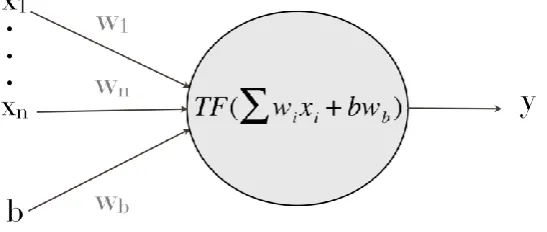
Figure 2: Model of neural Network
There is (or should be!) interest from the counterterrorism and law-enforcement communities in measures that can be used to detect the existence of hidden data. This is steganalysis [3]. A single feature may provide only scant indication of the presence of Steganography, or, several features may on their face conflict in their diagnosis. What is needed is a method of combining multiple features into a single conclusion of ―stego‖ or ―innocent‖. For this we utilize a pattern recognition system called an artificial neural network (ANN). Developing an ANN is a two-stage process. First the network is trained by feeding it the features from a large pool of images, some of which are known to contain stego, and some that are known to not contain stego.
Based on the training, the neural net determines computational rules that can then be applied to the features of an image of unknown character. One particular merit of an artificial neural network is that it is adaptive—as additional data is provided to the system it refines its prediction function. In this way the pattern recognizer can respond to evolution in the data. For example, if small modifications are made to an existing steganographic algorithm, the software will be able to adapt. Liu Shaohui et al adopted neural network approach for finding the features which has significant effect on data hiding process [5].
III. RELATED WORK
a. Neural network approximates any nonlinear functions. Firstly we extract features of image embedded message and then input them into neural network to obtain output. Manikopoulos et al. [2] discussed an algorithm that utilises the probability density function (PDF) to generate discriminator features fed into a neural network system which detects hidden data in this domain.
A group of scientists at Iowa State University are focusing on the development of an innovative application which they call ‗‗Artificial Neural Network Technology for Steganography (ANNTS)‘‘ aimed at detecting all present Steganography techniques including DCT, DWT and DFT.
b. ―Adoption Of Neural Network Approach In
Steganography And Digital Watermarking For Covert Communication And Copyright Protection[13]‖ When you want to hide the data from intruders, you can use different methods for covert communication. One of the most useful methods is steganography. Other thing in the era of internet is the copyright protection, which can be implemented effectively by digital watermarking. The performance of these methods can be further improved with the use neural network approach adoption. In this paper we will see some of the possible ways to incorporate neural network approach in covert communication. This paper have seen several methods which adopt neural network approach for steganalysis. Actually with steganalysis, we can find the loop holes in our algorithm and we can improve them. In digital watermarking, we can make our algorithm more robust and fast with the help of the neural approach. Imperceptibility and authenticity can be achieved with neural network support in digital watermarking.
International Journal of Emerging Technology and Advanced Engineering
Website: www.ijetae.com (ISSN 2250-2459,ISO 9001:2008 Certified Journal, Volume 4, Issue 7, July 2014)
916
Similarly in few papers it is found that work is carriedout in spatial domain, while others work are carried out in frequency domain by using transformation techniques. The neural networks that are used include Back propagation Network (BPN), Counter Propagation Network (CPN), Full Counter Propagation Network and Cellular Neural Network (CNN). Thus, an ideal watermarking algorithm should be blind in nature and must be robust against attacks. Also it should guarantee correct and fast watermark detection with low error rate. In future, a new algorithm can be designed to embed and extract a watermark using neural networks, where the neural network will be used in both the embedding process as well as the extraction process. The neural network used may be trained to detect the suitable place to embed the watermark based on Region of Interest (ROI). Once the watermark is embedded, the embedded area can be again detected from the watermarked signal using another trained neural network.
IV. PROPOSED METHOD
Neural Network Based Steganographic System Design As follows:
Input: Selected cover image bits from the video, Message Bits, cover video.
Output: Stego video.
Step1: Decompose video sequence into frames and hence detects number of scenes in it.
Step2:1. Perform the following For every frame Fi(i = 1, 2, 3…N):
Design Rules of Training Pattern
Make the input pattern by choosing one bit of secret text and k selected frame of video bit.
Select the number of bits required in the goal output pattern.
2. Form Neural Network
Form the network with the above training pattern by choosing the number of input neurons, hidden layer neurons and output neurons.
3. Train the Pattern
While data bits of secret message present do
The input is fed into the trained network and the targeted output is stored in the LSB of Selected frame of video.
End while
[image:4.595.178.409.463.649.2]Step3: Convert all images of this video frame and constitute the signed video sequence by using all such frames.
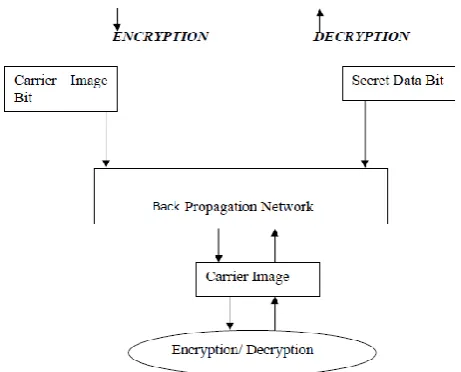
Figure 3: representation of neural network based steganpgraphy
Neural Design for Steganography
To start with, training the patterns which are formed from Existing Data and the preferred bits from the selected frame generates cipher text. This generated text is embedded in the Least Significant Bit of the chosen image of the video and then transmitted to the receiver. The confidentiality lies in the recommend of the neural network algorithm that prepares the pattern.
International Journal of Emerging Technology and Advanced Engineering
Website: www.ijetae.com (ISSN 2250-2459,ISO 9001:2008 Certified Journal, Volume 4, Issue 7, July 2014)
917
The hidden layer neurons are depends on the problem domain. XOR Propagation algorithm is designed in training the bit patterns. On the other side decryption section, the input patterns bits are formed by the merging of cipher and chosen bits from the frame.X-OR Propagation Network
The network consists of three-layer. There are two input units; first input unit is in first layer, second unit which is in the hidden layer and last one is output unit. The connection weights are shows on links and every unit is shown inside the unit as threshold. The hidden unit is concerned, the hidden unit is no different from both of the input units, and simply provides another input. The neural network algorithm has to be shared between the sender and receiver through a protected channel. This scheme of neural Network accepts ―N‖ input pattern which has to be trained, equals to 2^k+1, for an input pattern having k+1 bits. From the secret message 1 bit is selected and from carrier selected frame of the video k bits is selected. Input layer is designed with k+1neurons. The hidden layer neurons are depends on the problem domain. XOR Propagation algorithm is designed in training the bit patterns. On the other side decryption section, the input patterns bits are formed by the merging of cipher and chosen bits from the frame.
V. CONCLUSION
There are many techniques for Video Steganography. We only discussed here Neural Networks based Methods. Because today AI Based computer are used very rapidly in various fields, and NN techniques are used widely. The performance of various methods can be further improved with the use Neural Networks Methods.
Similarly, we can also use error back propagation algorithm to improve video Steganography performance of today new era of computer Techniques which is mostly based on Artificial Intelligence.
REFERENCES
[1 ] ―Video Steganography by LSB Substitution Using Different Polynomial Equations‖, International Journal Of Computational Engineering Research (ijceronline.com) Vol. 2 Issue. 5
[2 ] C. Manikopoulos, S. Yun-Qing, S. Sui, Z. Zheng, N. Zhicheng, Z. Dekun, ―Detection of Block DCT-based Steganography in Gray-scale Images‖, Proceedings of the IEEE Workshop on Multimedia Signal Processing, 9–11 December 2002, pp.355–358. [3 ] Chuan-Yu Chang et al, ―Using a Full Counterpropagation Neural
Network for Image Watermarking‖, International Computer Symposium, Dec. 15-17, 2004, Taipei, Taiwan.
[4 ] Clifford Bergman, Jennifer Davidson, ―An Artificial Neural Network for Wavelet Steganalysis‖, Final Report to Midwest Forensics Resource Center.
[5 ] Guohua Wu, Xiaodong Zhou, ―A Fast Audio Digital Watermark Method Based on Counter-propagation Neural Networks‖, International Conference on Computer Science and Software Engineering, 2008, pp. 583-586
[6 ] Liu Shaohui et al, ―Neural Network Based Steganalysis in Still Images‖, ICME 2003, pp. 509-512.
[7 ] Maher El‘ Arbi et al, ―Video Watermarking Based On Neural Networks‖, ICME 2006, pp. 1577-1580.
[8 ] M. Natarajan, Gayas Makhdumi., ―Safeguarding the Digital Contents: Digital Watermarking‖, DESIDOC Journal of Library & Information Technology, 29, No. 3, May 2009, pp. 29-35. [9 ] Sanjeev kumar , Balasubramanian Raman And Manoj Thakur,
―Real Coded Genetic algorithm Based Stereo Image Watermarking‖, International Journal of Secure Digital Information Age, 1, No.1, June 2009
[10 ]Yu et al, ―Digital Watermarking Based on Neural Networks for Color Images‖, Elsevier Signal Processing, 81 (2001).
[11 ]―Advanced Video Steganography Algorithm‖ International Journal of Engineering Research and Applications (IJERA) ISSN: 2248-9622 www.ijera.com Vol. 3, Issue 1, January -February 2013, pp.1641-1644.
[12 ]―A Study on Digital Image and Video Watermarking Schemes using Neural Networks‖, International Journal of Computer Applications (0975 – 8887) Volume 12– No.9, January 2011 [13 ]―Adoption Of Neural Network Approach In Steganography And