International Journal of Emerging Technology and Advanced Engineering
Website: www.ijetae.com (ISSN 2250-2459, ISO 9001:2008 Certified Journal, Volume 3, Issue 12, December 2013)
75
Purification of Contaminated Water with Reverse Osmosis:
Effective Solution of Providing Clean Water for
Human Needs in Developing Countries
Sunil J. Wimalawansa, MD, PhD, MBA, FACE, FACP, FRCP, FRCPath, DScCardio Metabolic Institute, 51 Veronica Avenue, Somerset, New Jersey, 08873, USA
Abstract — Approximately 25% of the world’s population
has no access to clean and safe drinking water. Even though freshwater is available in most parts of the world, many of these water sources contaminated by natural means or through human activity. In addition to human consumption, industries need clean water for product development and machinery operation. With the population boom and industry expansion, the demand for potable water is ever increasing, and freshwater supplies are being contaminated and scarce. In addition to human migrations, water contamination in modern farming societies is predominantly attributable to anthropogenic causes, such as the over-utilization of subsidized agrochemicals―artificial chemical fertilizers, pesticides, fungicides, and herbicides. The use of such artificial chemicals continue to contaminate many of the precious water resources worldwide. In addition, other areas where the groundwater contaminated with fluorides, arsenic, and radioactive material occur naturally in the soil. Although the human body is able to detoxify and excrete toxic chemicals, once the inherent natural capacity exceeded, the liver or kidneys, or both organs may fail. Following continual consumption of polluted water, when the conditions are unfavourable and the body’s thresholds are exceeded, depending on the type of pollutants and toxin, liver, cardiac, brain, or renal failure may occur. Thus, clean and safe water provided at an affordable price is not only increasingly recognized, but also a human right and exceedingly important. Most of the household filters and methods used for water purification remove only the particulate matter. The traditional methods, including domestic water filters and even some of the newer methods such as ultra-filtration, do not remove most of the heavy metals or toxic chemicals from water than can harm humans. The latter is achieved with the use of reverse osmosis technology and ion exchange methods. Properly designed reverse osmosis methods remove more than 95% of all potential toxic contaminants in a one-step process. This review explains the reverse osmosis method in simple terms and summarizes the usefulness of this technology in specific situations in developing countries.
Keywords — Water pollution; Environment;
Contamination; Human diseases; Chronic kidney diseases; (CKD); Potable; Seawater; Heavy metals; Agrochemicals; Fluoride.
I. INTRODUCTION
Water is a common chemical substance essential for the survival of almost all known living organisms. Water covers 71% of the earth’s surface, but 97% of this water exists as salt water in oceans. Of all surface water, glaciers and icecaps hold approximately 2%, and freshwater rivers and lakes contain only 1%. Yet many societies around the world do not give consideration and attention to preserving this vital commodity that is in limited supply.
Almost two-billion people in the world, (approximately 25% of the world's population) do not have access to safe drinking water [1]. Consequently, water consumption-related deaths (ranging from five to seven million deaths per year) are probably the largest single cause of deaths in the world. It is estimated that in 2020, at the current rate, 75 million people will die each year of preventable water-related deaths [2, 3]. Most of these deaths are caused by infectious diseases and secondary diarrhoea [4]. However, a large number of deaths occur secondary to consuming non-pathogen water pollutants [5].
International Journal of Emerging Technology and Advanced Engineering
Website: www.ijetae.com (ISSN 2250-2459, ISO 9001:2008 Certified Journal, Volume 3, Issue 12, December 2013)
76 This article explores one such key technology, which developed in the early 1970s at the University of California, Berkley, and is relevant for most countries: namely, the reverse osmosis (RO) process [6-8]. Since its development, this method has been used in a variety of applications, including in hospitals and the food and pharmaceutical industries [6, 7, 9, 10].
By filtering a finer particle size, RO systems remove much smaller dissolved particles than do ultra-filtration or any carbon filters. Unlike the latter two, the RO systems remove heavy metals, such as cadmium, arsenic, lead, and copper, and volatile organic compounds, sodium, nitrates, phosphate, fluoride, cysts, total dissolved solids (TDS), agrochemical and petrochemical contaminants, and pharmaceutical contaminants in a one-step procedure. Therefore, the RO technology is an important solution for generating safe potable water. In addition, the RO process also removes salinity (i.e., brackishness; ionicity) and various microbial and biological contaminants.
The removal of components that are not hazardous to health, such as hardness, colour, odour, taste, and smell, is optional but usually incorporated as a part of the RO process. In the past few decades, different water treatment technologies have emerged that cater to specific purposes, such as the activated carbon and bio-filters, which are frequently fitted to water taps. However, such filters remove only components that adsorbed by carbon and are unable to remove heavy metals and fluoride effectively [3]. Nevertheless, removing chemical contaminants remains a difficult problem. Specific defluoridation filters have designed based on either activated alumina or resins. These can used in areas where fluoride is the only water pollutant that causes health issues, such as dental and skeletal fluorosis. Because of the very small pore sizes in the membranes used in RO, the method also removes biological contaminants without requiring any extra costs or time. Although the RO method overcomes all these issues, potentially high start-up costs, necessity of electricity, handling of effluent water and the need for frequent back-flushing and/or replacement of filters and membranes remain obstacles to this technology.
Reverse osmosis can filter chemically contaminated water, brackish water, or seawater, removing minerals, chemicals, toxins, and dissolved and undissolved substances [3]. In locations where there is no centrally purified pipe-borne water supply or after flood and natural disasters with water contamination, RO units can provide safe, potable water to communities and can used for industrial requirements.
Skid-mounted portable RO systems are ideal for emergencies, such as following floods, earthquakes, and tsunamis to provide clean water to affected communities. In addition, many industries benefitted by recycling wastewater using RO plants in the production process.
A. Need for clean water:
Clean water is not only a right of people but also a prime necessity to have healthier lives. Most countries have enacted environmental protection laws that include preserving water resources. However, implementation levels of these laws are highly variable, and adherence often is poor [11]. Particularly important is the prevention of industrial and biological waste-disposal, pollution, and contamination of water sources and air pollution [1]. However, not all contaminants are purely man-made or anthropogenic. Global warming has also affected environmental pollution. Environmental pollution is an unintended outcome of anthropogenic causes and accelerated by human activities. Nevertheless, there are also natural phenomena. Together these enhance the climate-change–induced cyclones, hurricanes, typhoons, droughts, and floods, all of which lead to significant groundwater contamination [12]; these events are becoming more frequent and are major, but often forgotten, sources of water contamination.
B. Gravity of consuming contaminated water:
Every year, many million people die because they consumed contaminated water [4]. The vast majority of these deaths occur in poorer and agricultural communities in economically deprived countries [13-15]. Although large numbers of these deaths are attributable to microbial contamination, leading to conditions such as dysentery [4], an increasing number of people die after consuming chemicals and toxin-contaminated water [13]. In many cases, the causes of these deaths are not well defined, so they are not attributed to water “poisoning”; thus are under-estimated [3]. Primarily, this is because there is neither the expertise nor the technology available to make the right diagnosis of cause of death in most parts of the world [3].
International Journal of Emerging Technology and Advanced Engineering
Website: www.ijetae.com (ISSN 2250-2459, ISO 9001:2008 Certified Journal, Volume 3, Issue 12, December 2013)
77 However, no such programs exist in remote villages, where approximately 65% to 70% of the population lives in developing and economically disadvantaged countries. Vast majority of them do not have access to a pipe-borne water supply.
C. Options for generating clean water:
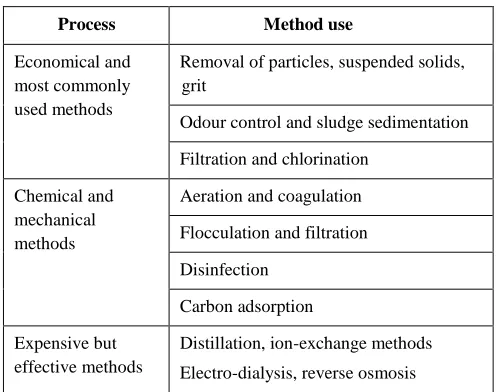
[image:3.612.44.293.344.540.2]While the economically well-to-do people and those who reside in and around cities provided with clean water via the pipe-borne water systems, the majority of villagers, particularly people in the low- to middle-income regions, rely on their own sources for water supplies. Therefore, their health can drastically affect, depending on the purity of the water they consume. This is particularly important in agricultural communities. Table 1 illustrates the most commonly used methods for water purification.
Table 1
Commonly Used Water Purification Methods
Process Method use
Economical and most commonly used methods
Removal of particles, suspended solids, grit
Odour control and sludge sedimentation
Filtration and chlorination
Chemical and mechanical methods
Aeration and coagulation
Flocculation and filtration
Disinfection
Carbon adsorption
Expensive but effective methods
Distillation, ion-exchange methods
Electro-dialysis, reverse osmosis
Most of the filtration systems used in developing countries based on simple mechanical filtration processes (Table 1). These remove particulate matter by a mechanical process based on physical size. These methods may remove some larger inorganic matter and metals that are in the particulate forms, but not dissolved in the water. Some filters have an additional activated carbon component, which adsorbs some chemicals to the surface of carbon. However, unlike with absorption methods, adsorption depends on the available surface area of the material; and thus the capacity is limited.
The three most common heavy metal contaminants that causing ill health, cadmium, lead, and arsenic in water are in the dissolved form and thus generally cannot be removed by these filtration methods [5].
Because the mechanism of pollutant removal in activated carbon filters is via adsorption, rather than absorption, capacity is small and these filters saturate quickly; thus the capacity lasts only few days, despite claims by manufacturers. Moreover, these filters will not remove appreciable amounts of heavy metals or fluoride from water.
Expensive options are the use of bottled water, daily transportation of water to villagers via water transporters/bowsers, provision of water filters to individual households, and the installation of wells, including deep tube wells. In the case of water contamination following environmental disasters and floods, it is possible to use sterilization tablets, chemical flocculation methods, and emergency portable, skid-mounted RO systems; all these can established quickly. However, field experience in developing countries. Including our own experiences suggests that not only are the commonly used filters inefficient in removing contaminants, but use of these filters also is insufficient. If a clean water supply is available upstream, it is more economical to tap that supply [1]. Because the current and commonly used systems are not working, new out-of-the-box methods are warranted.
D.Understanding osmotic pressure:
Several methods are available for measuring osmotic pressure. It is calculated from the lowering of vapour pressure of a solution, by depression of the freezing point, or by the equivalent of the ideal gas law equation. In addition, several commercially available devices can measure osmotic pressure directly. Another way to calculate the osmotic pressure of a solution is to measure the water flux through a module under operating conditions at several pressures. If a plot of water flux versus pressure extrapolated to zero water flux, the intercept would be the osmotic pressure. This gives the effective osmotic pressure, including concentration polarization. This indirectly measures the pressure that is necessary to stop the flow of water through a membrane [11].
Direct osmotic pressure measurement in a solution by operating at a pressure just sufficient to obtain zero flow is impractical because the membranes are not perfect semi-permeable membranes. This technique would measure the difference in osmotic pressure between the feed-water and the output water. At low pressures, not only is the salt rejection poor, but the measured osmotic pressure also could be lower than the real value.
International Journal of Emerging Technology and Advanced Engineering
Website: www.ijetae.com (ISSN 2250-2459, ISO 9001:2008 Certified Journal, Volume 3, Issue 12, December 2013)
78 The osmotic pressure increases by approximately 0.01 psi for each milligram of solvent/litre. Although this is a good approximation for most water contaminants, pollutants with high molecular weight and organic contaminants may generate a relatively lower osmotic pressure. For example, in comparison with NaCl, sucrose yields a value of approximately 0.001 psi, a tenfold less for each milligram/litre. In general, the osmotic pressure of a water supply that requires demineralization is 10 psi per 1,000 mg/L (ppm) of total dissolved solids (TDS).
E. Definitions of reverse osmosis purification:
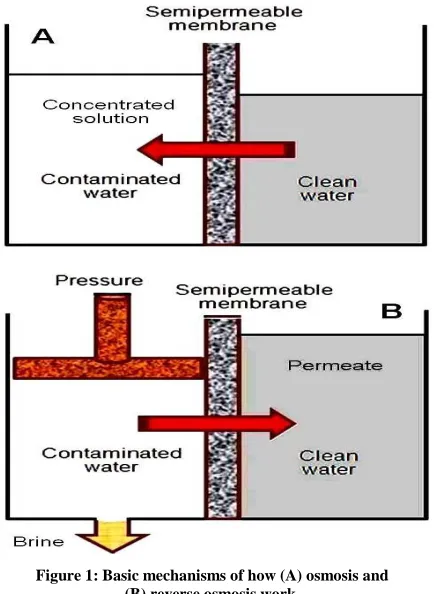
[image:4.612.62.281.345.642.2]Osmosis: Osmosis is defined as the spontaneous passage or passive diffusion of water or a solvent through a semi-permeable membrane due to osmotic pressure. Liquid moves from a dilute to a more concentrated solution across a semi-permeable membrane (Figure 1).
Figure 1: Basic mechanisms of how (A) osmosis and (B) reverse osmosis work.
During osmosis, without applying pressure across a membrane, a lower-concentration solution or water molecules will “filter” or gravitate to the higher concentration solution, thus diluting the latter until equilibrium is established.
The movement of solvent reduces the free energy of the system by equalizing solute concentrations on both sides of the membrane and generating equal osmotic pressure [17]. The transfer of liquid from one side of the membrane to the other continues until the head or pressure is large enough to prevent any net transfer of the solvent (e.g., water) to the more concentrated solution (Figure 1). Depending on the size of the pores in the membrane, it blocks the passage of dissolved solutes and particulate matter to the opposite side of the membrane [18]. At this equilibrium, the quantity of water or the solvent passing in either direction is equal, and the osmotic pressure of the solution on either side of the membrane is the same.
Reverse osmosis: The osmosis flow is reversed in the RO process. By applying hydraulic pressure to the high-concentration side of the solution, it forces solvents to filter through the membrane [19], against a pressure gradient into the lower-concentrate solution. In RO, using a mechanical pump, pressure is applied to a solution via one side of the semi-permeable membrane to overcome inherent osmotic pressure: a thermodynamic parameter. The process also removes soluble and particulate matter, including salt from seawater in desalination from the solution of interest [20, 21].
When pressure applied on the concentrated side of the semi-permeable membrane beyond the osmotic pressure of the solution, the solvent begins to flow toward the less concentrated side (Figure 1). Solvent from the concentrated solution (water) passes through the membrane to the solution of lower concentration; thus, the concentration of solute in the side where the pressure is applied becomes higher. Most commonly, RO known for its use in drinking water purification from seawater and generating clean water from brackish water, and use in the pharmaceutical and milk processing industry.
International Journal of Emerging Technology and Advanced Engineering
Website: www.ijetae.com (ISSN 2250-2459, ISO 9001:2008 Certified Journal, Volume 3, Issue 12, December 2013)
79
[image:5.612.55.562.157.431.2]F. Mechanism of purification by reverse osmosis:
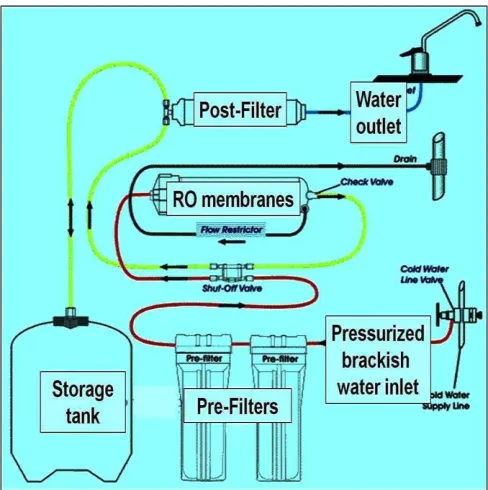
Figure 2: Basic components of reverse osmosis.
The RO is somewhat similar to other membrane technology applications, such as ultra-filtration, but there are differences between RO and other filtration. The removal mechanism in filtration is straining or size exclusion, and pore sizes are larger than with RO membranes. The ultra-filtration process at least in theory, provide good exclusion of particles, regardless of the operational variability, including pressure and solute concentrations [23]. However, because the pore sizes are larger, inorganic components, all heavy metals, and microbial agents pass through the ultra-filtration process.
Because RO depends on a diffusive mechanism, separation efficiency varies based on solute concentration (TDS), pressure applied, and water temperature [11, 24]. High-pressure pumps in RO systems force water through the pores of the membranes (permeate), and the remaining water with higher concentrations of solutes is pushed out as wastewater (brine) [12]. Basic components of a RO system are illustrated in Figure 2.
[image:5.612.324.568.454.699.2]International Journal of Emerging Technology and Advanced Engineering
Website: www.ijetae.com (ISSN 2250-2459, ISO 9001:2008 Certified Journal, Volume 3, Issue 12, December 2013)
[image:6.612.317.568.230.727.2]80 In addition to agrochemicals and toxins, one of the key benefits of RO is its ability to remove salinity, heavy metals, and fluoride from water, whereas most other methodologies, including activated-charcoal filters and even ultra-filtration–based technologies, fail to remove these ions [25]. In larger RO units, when the high-pressure water outlet connected to a turbine or a motor, it can recycle some of this otherwise wasted energy to run the pressure pumps, permeate pumps, or other electrical appliances. Mechanistic components and flow cycle of a typical RO system illustrated in Figure 3.
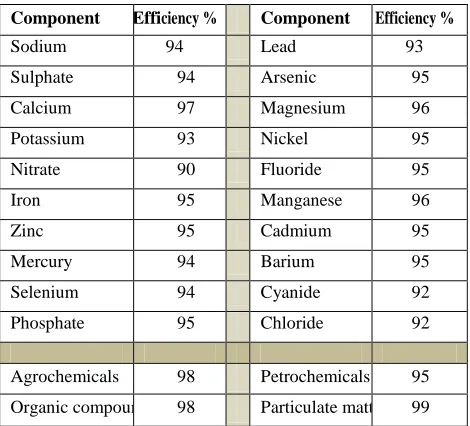
Table 2
Average Purification Efficiency of RO Membranes*
Percentages may vary based on the membrane type, pore size, and the water quality, pressure, temperature, and TDS. *Data are averaged from multiple sources.
The spiral membranes are constructed from one or more membrane envelopes wound around a perforated central tube. The permeate passes through the membrane into the envelope and spirals inward to the central tube for collection. Table 2 indicates average best purification efficiencies of various inorganic water contaminants using optimum reverse osmosis units.
All reverse osmosis units’ work in the same manner. Many have the same basic components, but the key difference is the quality of the filters and membranes inside the unit [23] (Table 3). These determine the quality of the output water, durability, operational cost, and capital costs.
The quality and consistency of the membranes is the key factor that influences the performance durability and quality of any RO unit. Other factors that influence performance are the pressure of the water inlet, water temperature, concentration of the solutes, and density of the particulate matter, TDS in the water.
Table 3
Common Basic Components Used in RO Systems
Components Mechanics and detail
Pre-filters Usually, the inlet water supply enters the RO system via the pre-filter. Depending on the quality and the TSD of inlet water, some units use a series of pre-filters to remove particles as well as oxidative components, such as chlorine, that potentially damage RO membranes. The most commonly used pre-filters are sediment filters (multi-media filters) used to remove sand, silt, dirt, particulate and other sediment material. Charcoal filters are used to remove oxidizing compounds, such as chlorine, to protect the membranes, particularly thin film composite (TFC) and thin film material (TFM) membranes. Carbon pre-filters are not routinely use when the system uses cellulose tri-acetate (CTA) membranes, but most companies use the TFC/TFM filters.
Inlet water line valve
The valve that fitted onto the inlet water supply line to control the water source entering the RO system or the pre-filtration apparatus.
Pressure pumps
High-pressure pumps and control valves that regulate the flow-through system and generate filtration pressure for reverse osmosis.
RO membranes
The RO membrane is the key to the system. The most commonly used membranes are spiral-wound [17]. The CTA is relatively chlorine tolerant, whereas the TFC and TFM membranes are not.
Post-filters Between the RO unit, the storage tank, and the clean water outlet, water flows through one or more post-filters to capture any unwanted matter. These post-filters consist of activated carbon in either granular or carbon block form. These allow any additional contaminants to get adsorbed, including organic components and any other material that may have bypassed the RO
Component Efficiency % Component Efficiency %
Sodium 94 Lead 93
Sulphate 94 Arsenic 95
Calcium 97 Magnesium 96
Potassium 93 Nickel 95
Nitrate 90 Fluoride 95
Iron 95 Manganese 96
Zinc 95 Cadmium 95
Mercury 94 Barium 95
Selenium 94 Cyanide 92
Phosphate 95 Chloride 92
Agrochemicals 98 Petrochemicals 95
[image:6.612.43.278.293.506.2]International Journal of Emerging Technology and Advanced Engineering
Website: www.ijetae.com (ISSN 2250-2459, ISO 9001:2008 Certified Journal, Volume 3, Issue 12, December 2013)
81 membranes. They also remove abnormal taste or odour in the effluent water.
Check valve A check valve is located at the outlet end of the membrane housing. It prevents the backward flow of clean water from the storage tank to the unit and prevents damaging membranes.
Automatic shut-off / floater valve
To conserve water, the RO systems have built-in automatic shut-off valves (a floater). When the storage tank is full, the valve shuts off the water from entering the membrane compartment. This prevents clean water production, releases the pump pressure, and conserves water. Once water released from the tank, the pressure in the tank drops, and the shut-off/floater valves open, re-establishing the water flow to the membrane.
Flow restrictor
Water flow through the membrane is regulated by a flow control, which is located in the RO drain line. These flow control devices maintain the flow rate required to obtain the high quality potable water, in part based on the quality and the capacity of the membrane. They also help maintain pressure on the inlet side of the membrane. Flow restrictors are necessary to maintain the pressure within the membrane chamber allowing RO to take place. They also prevent incoming water taking the path of least resistance, flowing down the drain line.
Permeate pump
Pumps inserted between the flow restrictor and the RO module to maintain the membrane pressure and generate power that otherwise goes to waste from the permeate water stream.
Storage tank The purified water from the RO membranes is directed to an overhead storage tank. The capacity of storage tanks varies depending on the capacity of the membranes, the pressure unit, and the water volume.
Faucet The valve that regulates the RO unit or the overhead tank outlet flow.
Drain line The drain line runs from the outlet end of the reverse osmosis membrane housing to the drain, containing a higher concentration of contaminants.
G.The importance of the quality of membranes and filters in a RO plant:
High-pressure RO systems have used widely since the mid-1970s for purification of brackish and seawater to drinking water and to generate clean water for medical, industrial, and domestic applications. High-quality components within the unit are important for the quality and the quantity of clean water output [16].
When considering designing or purchasing an RO system, the questions to consider include the quality of the materials and the types of connections used, including the plastic products and connections, probability of leaks, internal pressure capacity and built-in detection systems such as for pressure and TDS, the quality of the material used, the quality, durability, and the membrane pore size, quality and the capacity of the multi-media filters and the ability and the frequency necessary to back-plashing filters, the quality of the activated carbon and micron-filters, accuracy and tolerance of the specifications provided by the manufacturer for each component, and potential for contamination or water bypassing the filtration system.
H.Mechanisms involved in reverse osmosis:
International Journal of Emerging Technology and Advanced Engineering
Website: www.ijetae.com (ISSN 2250-2459, ISO 9001:2008 Certified Journal, Volume 3, Issue 12, December 2013)
82
Figure 4: (A) Preconditioning/pre-filters, reverse osmosis membranes, and post-treatment disinfection system of reverse osmosis. (B) Filtration components and key steps involved in the reverse osmosis
process. I. Membrane cleaning process:
The percentage recovery of purified water depends on several factors; including membrane pore size, temperature, operating pressure, and membrane surface area. One of the major problems with membranes is the sediment deposition, which damages the membranes. Therefore, when the intake water has higher TDS or hard water, it is a prerequisite to remove sediment either via water softeners or by using anti-scalent injection systems.
Recovery of clean water depends on several factors, including the water temperature, TDS, and the ability to generate consistent pressure on the RO membranes. With time, RO membrane elements experience a decline in performance due to the accumulation of deposits on the membrane surfaces. Insoluble organic compounds, mineral scale, colloidal particles, and biological matter lead to membrane fouling. When production of a RO system drops, by over 10% or the differential pressure increases by approximately 15% over the normal operating conditions, membrane cleaning should be performed.
Water flows downward through the media while some solids likely to accumulate in the media bed. The purified water, permeate passes through to downstream processes. When the filter begins to clog or when the pressure drop through the bed increases, flow rates are decrease. When the recovery of a RO system decreased (i.e., wastewater percentage increases), effective contaminant removal rates also tend to decrease [26]; consequently, water TDS will continue to increase, and membrane failure may occur [27]. To prevent degradation of water quality, at this point, the flow needs to be reverse. This can done either manually or semi-automatically directing through the control valve to drain, carrying with it, the particulate matter that has built up during service. The required flow is specific to the media and is essential to proper cleaning of the media bed. For media filters, the required backwash flow is always higher than the service flow rate.
Filters require periodic backwashing to dispose of the accumulated debris. This is accomplished by backwashing clean water through the unit and then disposing of the effluent. During this process, the different sizes of media separate into layers, preparing the filter bed for service. However, when utilize smaller, double or triple unit systems, the optimum backwash flow rate is lower; therefore, these systems can operated at higher service flow rates. Both acid and caustic cleaning chemicals use for membrane cleaning process. Acid cleaners generally used at pH of about, which remove inorganic and iron deposits. Alkaline cleaners are used approximately about pH 12, which will remove biological matter, organic foulants, and silica deposits.
J. Membrane pore size and RO unit capacities:
Reverse osmosis membranes are made in two common configurations: spiral-wound and hollow-fibre. Reverse osmosis is considered as a “hyper filtration” because it removes particles larger than 0.1 nm. Membrane pore sizes can vary from 0.1 nanometres (3.9 × 10⁻⁹ inches) to 5,000 nanometres (0.00020 inches), depending on the filter type. In general, particle filtrations remove particles of 1 micro-metre (3.9 × 10⁻⁵ inches) or larger.
[image:8.612.48.296.134.414.2]International Journal of Emerging Technology and Advanced Engineering
Website: www.ijetae.com (ISSN 2250-2459, ISO 9001:2008 Certified Journal, Volume 3, Issue 12, December 2013)
[image:9.612.55.559.143.411.2]83
Figure 5: Detailed of various filtration methodologies and their cut-offs molecular size exclusions are illustrated. Figure indicates example of different molecules and particles that excluded with each type of filtration system.
K. Other uses of reverse osmosis systems:
In industrialized countries, emergency services and military organizations frequently use RO water purification units on the battlefield and in training. The capacities of these units range from 1,500 to 150,000 imperial gallons (6,800 to 680,000 L) per day, depending on the need. The most common of these are the units with capacity of 1,000 and 3,000 gallons per hour, which are capable of purifying brackish and saltwater, and water contaminated with chemical, biological, radiological, and nuclear agents.
At normal operating variables, one of these units can produce 12,000 to 60,000 imperial gallons (55,000 to 270,000 L) of water per 2hour period, with a required 4-hour maintenance window to check systems, pressure pumps, elements, and the generators. Thus, a single unit can serve approximately 3,000 to 7,000 people.
Reverse osmosis is also used in industry to remove minerals to prevent scaling from boiler water at power plants and clean effluents in brackish groundwater. The process of RO is also used for the production of deionised water, hospitals, pharmaceutical industry, and concentration of milk in the dairy industry [3].
Reverse osmosis systems also used in the food industry. In addition to desalination, reverse osmosis is a more economical technique for concentrating food liquids (such as fruit juices) than are conventional heat-treatment or lyophilisation processes [21]. Reverse osmosis methodology extensively used in the dairy industry for the production of whey protein powders and concentrating milk to reduce shipping costs.
In whey applications, the whey, the liquid remaining after cheese manufacture, is concentrated with RO from 6% total solids to 10% to 20% total solids before ultra-filtration processing. The ultra-filtration material used to make various whey powders. In addition, the ultra-filtration of milk facilitates concentration of lactose from 5% total solids to 18% to 22% total solids; this markedly reduces the crystallization and drying costs of the lactose and milk powder.
International Journal of Emerging Technology and Advanced Engineering
Website: www.ijetae.com (ISSN 2250-2459, ISO 9001:2008 Certified Journal, Volume 3, Issue 12, December 2013)
84 Meanwhile, contamination with nitrogen-containing compounds and phosphates can lead to excessive algae growth and increase the cost of maintenance [28, 29]. An effective combination of both RO and deionization (RO/DI) is the most common treatment method used in reef aquariums. This method is favoured over the other purification processes because of its relatively low capital and operating costs. However, when chlorine and chloramines are present in the tap water, activated-carbon filtration is needed before the water is passed to the membrane apparatus.
Seawater reverse osmosis: This is a high-pressure RO process used for desalination that has been commercially available for the past four decades [21]. This process does not require heating, and the energy requirement is around 3 kWh/m3, which is high in comparison to other sophisticated desalination methods.
Nevertheless, because of the high osmotic pressure due to NaCl, this process requires the generation of higher pressures, so relatively higher amounts of electricity, such as 0.1 to 1 kWh/m3, are required than are needed for the purification of brackish and stream water. Therefore, based on this method, instead of the 65% to 80% recovery obtained with brackish water, only approximately 50% of the seawater input can recover as fresh potable water. However, larger plants allow the generation of the useful by-products salt and electricity.
Brackish water reverse osmosis: Brackish water or briny water is water that has a higher salinity than freshwater but much less than seawater. It may result from the mixing of seawater with freshwater, as in lagoons and estuaries, or it may occur in brackish fossil aquifers. This water may contain between 0.5 and 30 grams of salt per litre—often expressed as 0.5 to 30 parts per thousand (ppt, or %). The percentage recovery of water from these systems varies with the salinity of the feed-water and the system designs: typically 30% for small seawater systems, 50% for larger seawater systems, and as much as 80% for brackish water. The concentrate flow typically is only 3 bars (50 psi) less than the feed pressure, so it still carries much of the high-pressure pump input energy.
The process of purification for brackish water is similar to that for desalination of water, but the inlet water contains much lower salt content than does seawater and thus requires less pressure to force water across the membrane. Sources of such water include river estuaries and saline- or other chemical-contaminated wells and waterways. The process is similar to that of seawater RO but requires lower pressures and less energy than does desalination [21]. In these systems, as much as 80% of the water input can recover as freshwater.
L. Pre-treatment:
Pre-treatment is important when working with RO or nano filtration membranes because of the nature of their spiral-wound design. The spiral-wound designs do not allow back pulsing with water or air agitations to clean the membrane surface and removal of solids and adsorbed ions. Because accumulated material cannot be removed from the membrane surface systems, they are highly susceptible to fouling―loss of production capacity (a decrease in the efficiency of the system). Therefore, pre-treatment is a necessary part of these two systems of water purification. In general, the pre-treatment systems have several major components, as described here.
Size-exclusion screening of solids: Before water sent through the membranes, the solids in the inlet water need to removed to prevent polluting the membranes by fine particles or microbial growth. This also prevents potential damage to high-pressure pump components.
Cartridge filtration: String-wound polypropylene filters used to remove particles of 1 to 5 µm diameter.
Dosing: In some RO systems, oxidizing components, such as chlorine, added to kill bacteria, followed by bisulfite dosing to remove chlorine, and by activated carbon filters to remove oxidizing components, such as chlorine, to prevent thin-film composite membrane damage.
Pre-filtration pH adjustment: Feed-water pH, hardness (particularly, calcium carbonate), and alkalinity cause scaling of pipes and membranes, which markedly decrease the efficiency of a RO unit. Therefore, RO systems use water treatment to minimize hardness of water to prevent scaling, and by converting carbonate and phosphate to soluble chemical forms, to prevent interacting with calcium. Calculated amounts of anti-scalants, softeners, or acid injected into the intake water supply to maintain carbonates in soluble carbonic acid form, thus preventing its precipitation and scale formation within the system. The basic chemistry of this reactions:
CO32– + H3O+ = HCO3– + H2O; HCO3– + H3O+ = H2CO3 + H2O
International Journal of Emerging Technology and Advanced Engineering
Website: www.ijetae.com (ISSN 2250-2459, ISO 9001:2008 Certified Journal, Volume 3, Issue 12, December 2013)
85
Prefiltration anti-scalants: The addition of scale inhibitors (also known as anti-scalants) prevents the formation of all kinds of scales compared with acid, which can prevent only the formation of calcium carbonate and calcium phosphate scales. Anti-scalants inhibit not only carbonate and phosphate scales, but also sulphate and fluoride scales, in addition to dissolving colloids and metal oxides. The key advantage is that anti-scalants can control acid-soluble scales at a fraction of the dosage required to control the same scale using sulphuric acid [30].
Some of the small-scale desalination RO units are located on beaches or in close proximity to the seashore. These intake facilities are relatively simple to build, and seawater needs to pre-treated via filtration through the subsurface sand in the area of source water extraction; this is done instead of using relatively expensive multi-media filters. By comparison with direct seawater, inlets using beach wells offer relatively better quality in terms of solids (TDS), silt, oil and grease, natural organic contamination, and aquatic microorganisms. Beach intakes may also yield source water of somewhat lower salinity, which require less energy to purify.
M.Pressure pump:
A high-pressure pump is necessary to pressurize water to force through the membrane to activate the RO phenomenon. Typical pressures for brackish water range from 225 to 375 psi (15.5 to 26 bars, or 1.6 to 2.6 MPa).
Seawater/desalination pumps require three to four times higher pressures, ranging from 800 to 1,180 psi (55 to 81.5 bars or 6 to 8 MPa), thus requiring a higher amount of energy. When an energy recovery method used (via energy recovery devices), as with the larger-scale RPO units, partial amounts of energy recovered to operate the high-pressure pump, thus reducing the system’s overall additional energy requirement.
N. Pressure Recovery Pump:
Efficient energy recovery systems can reduce the energy consumption by approximately 50%. High-pressure pump input energy recovered through the effluent flow and directed into an energy recovery device. Energy recovery devices can reduce the energy needs and thus the costs of RO. A reciprocating piston pump (or a turbine) using the pressurized concentrate flow is applied to one side of each piston to drive the membrane feed-flow from the opposite side.
[image:11.612.40.554.500.675.2]Some systems also use a permeate pump, using the energy from the permeate water flowing from the membrane component. This simple energy recovery device combines the high-pressure pump and energy recovery in a single self-regulating unit. These methods are used less commonly on smaller low-energy systems that consume 3 kWh/m3 or less energy but are useful components in reducing the energy requirements of larger systems. Devices that been used for energy recovery are described in Table 4.
Table 4
Energy Recovery System Used in RO Systems:
Recovery method Description
Permeate pumps
These used between the RO membrane and the flow restrictors, capturing the energy from the outflow permeate water.
Turbocharger A water turbine driven by the concentrate flow, directly connected to a centrifugal pump, which boosts the high-pressure pump output high-pressure, reducing the high-pressure needed from the high-high-pressure pump and thus its energy input.
Turbine or Pelton wheel
A water turbine driven by the pressurized concentrate flow, connected to the high-pressure pump drive shaft to provide input power. Positive displacement axial piston motors can use in place of turbines on smaller systems.
Pressure exchanger
International Journal of Emerging Technology and Advanced Engineering
Website: www.ijetae.com (ISSN 2250-2459, ISO 9001:2008 Certified Journal, Volume 3, Issue 12, December 2013)
86
O. Re-mineralization and pH adjustment:
In some systems, the purified water is stabilized to protect downstream pipelines and storage tanks by adding lime or caustic soda to prevent corrosion of pipes and concrete-lined surfaces [31]. Lime is used to adjust the pH between 6.8 and 8.0 to meet the potable water specifications in a given country but also for effective disinfection and for corrosion control. In addition, re-mineralization with calcium may be necessary to add the natural taste and replace some of the minerals removed from the water by the RO process.
P. Disinfection methods:
Although it is not essential, most RO plants have post-treatment filtration or disinfection systems. Post-post-treatment consists of preparing the water in an acceptable manner for distribution after filtration. Although RO is an effective barrier to many pathogens, odour, and chemicals, post-treatment methods provide secondary protection against additional and potential compromises in membranes [26, 32], instrument and pipe contamination, or equipment failures [28, 29]. System failure can occur with the contamination of membranes, downstream system or distribution failures, and during backwashing procedures.
The two most common methods used are disinfection using UV lamps, or chlorination, or chloramination (adding chlorine and ammonia) to protect against pathogens. Because of the pore size and woven construction of the membrane, RO prevents harmful contaminants and pathogens from entering into the clean waterside of the system [11, 29]. However, it also strips the good components, such as taste and healthful minerals, from the water. Thus, it may be necessary to re-mineralize the dematerialized clean water for human consumption. Therefore, bottled water companies add calcium or sodium chloride and/or potassium chloride to water to recreate the original water taste.
The Swiss Federal Institute of Aquatic Sciences and Technology has reported a practical and cost-effective, solar water disinfection method for treating water to make it safe to drink in developing countries. It involves using clear PET (chemically inert, food-grade packaging plastic) bottles filled with water and placed in the sun for six hours. The ultraviolet A (UVA) rays in sunlight used to kill pathogens such as viruses, bacteria, and parasites. This process reported to work even at lower temperatures and in most latitudes.
Q.Things to consider when evaluating to purchase and/or install an RO plant:
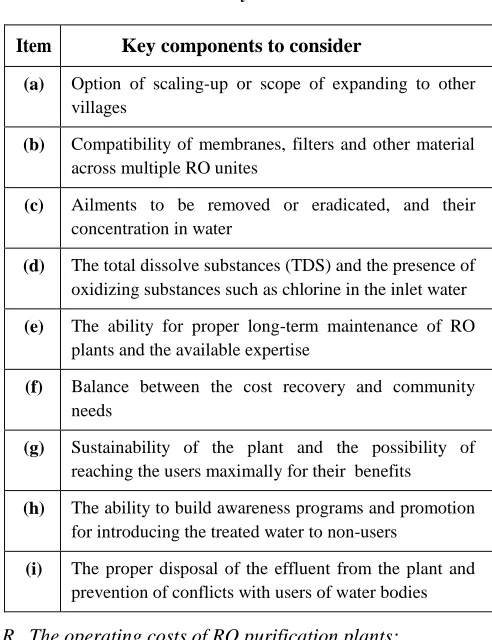
Reverse osmosis technology is required only for those areas where there is a dependable source available and the water contains dissolved salts or chemical pollutants, such as fluoride, arsenic, cadmium, and/or high TDS. If biological contamination is the only issue, RO is not the right technology to be used, because there are less expensive technologies available.
[image:12.612.323.569.320.640.2]One needs to consider several areas when designing or deciding to purchase an RO water treatment system, particularly when considering the provision of clean water to communities (Table 5).
Table 5
Key Areas That Needs to Consider When Evaluating to Purchase a RO System
R. The operating costs of RO purification plants:
Reverse osmosis plants require electricity-driven high-pressure pumps to pressurize water before it enters the membrane unit.
Item Key components to consider
(a) Option of scaling-up or scope of expanding to other villages
(b) Compatibility of membranes, filters and other material across multiple RO unites
(c) Ailments to be removed or eradicated, and their concentration in water
(d) The total dissolve substances (TDS) and the presence of oxidizing substances such as chlorine in the inlet water
(e) The ability for proper long-term maintenance of RO plants and the available expertise
(f) Balance between the cost recovery and community needs
(g) Sustainability of the plant and the possibility of reaching the users maximally for their benefits
(h) The ability to build awareness programs and promotion for introducing the treated water to non-users
International Journal of Emerging Technology and Advanced Engineering
Website: www.ijetae.com (ISSN 2250-2459, ISO 9001:2008 Certified Journal, Volume 3, Issue 12, December 2013)
87 The availability of a reliable, uninterrupted, pressurized brackish water supply, a reliable source of electricity, and a wastewater disposal system are essential components for the optimal and safe function of these RO units. In areas where there is no grid-based electricity supply, solar power can used effectively to power these mechanical pumps.
The key operational costs associated with RO systems include operator and caretaker costs, distribution costs (if any), electricity costs, and replacement of filters and membranes. It is imperative that the staff operating such units fully trained and supported long-term basis. Once operational, a charity, consortium, or company should maintain these units for long-term upkeep and for their viability and productivity [3]. Whatever the method that is used, qualified technicians or engineers must regularly supervise the system’s proper maintenance for the long run.
II. CONCLUSIONS
Access to clean uncontaminated water will have a profound impact on controlling the spread of water-borne pathogens, toxins, and chemical-induced morbidity and mortality from preventable causes. These include not only diarrhoea and dysenteries, but also chemical-induced ailments, such as chronic kidney disease and other chronic diseases, especially in vulnerable groups. No intervention has greater overall impact on national development, public health, and the longevity of humans than the provision of safe drinking water and the proper disposal of human waste [3].
Clean water is a life force of our everyday life. The RO method evolved as a way to address the proble m of the pollutants that created by society and industry. Water purification systems are available in sizes from small individual units for the home to larger commercial-scale units that used to provide potable water to individual houses, villages, hospitals, and industry. Reverse osmosis is a good option for many of these situations. However, in creating these benefits, the RO method can also creates problems that should be addressed.
With the continuing unprecedented climatic changes and their environmental impact, including water contamination, water security has become a global threat [3]. Cycles of floods and droughts; rising sea levels; and frequent storms, hurricanes, and typhoons, together with overpopulation in certain areas in the world add to water pollution and water security. Figure 6: Examples of skid-mounted RO units.
Globally, the consumption of contaminated water is the cause of more than 8 million deaths per year, and most of them are attributable to diarrheal diseases.
There are two broader types of water contamination. The water pollution from sewerage and bacterial contamination leading to diarrheal diseases such as dysentery and the contamination caused by chemicals and toxins [5]. Contaminated water with microbes can be purified relatively easily using chemical disinfectants (e.g., chlorine), ultraviolet lamps, boiling, high-end ultra-filtration, or the RO methodology. However, the removal of chemical toxins and heavy metals can be accomplished only by the use of methodologies such as RO and ion exchange [3].
Exposures to various toxic agents in natural and occupational environments are a common occurrence. These chemicals and toxic agents may enter the human body through oral, inhalational, or transdermal routes and may exert negative effects on all organ systems, including the kidneys (i.e., chronic kidney disease) [33]. Many are unaware that one-third of the water-related deaths caused by the consumption of water that is not contaminated with bacteria but with chemicals, heavy metals, and toxins.
Heavy metals, such as lead, cadmium, and arsenic, and fluoride and agrochemicals, such as pesticides, herbicides, fungicides, and chemical fertilizer, continue to contaminate drinking water, increasing morbidity and mortality [3]. There are a number of toxins and heavy-metal poisoning-induced health issues, including chronic kidney disease, liver disease, cardiovascular diseases, infertility, developmental disorders, and brain disorders.
Toxic chemicals or microbial organisms in water cannot be seen, tasted, or smelled. However, people judge the quality of water by taste, odour, and appearance, but no technology is available to judge the quality of water accurately without testing and relating it to health risks. Water in disease-affected areas usually contaminated with one or more toxic heavy metals or fluoride; is hard water, containing calcium/magnesium phosphates; or contains agro-chemicals, which leads to increased incidence of various human disorders and premature deaths [3].
A high incidence of chronic kidney disease of multi-factorial origin (CKD-mfo) [5] is reported in Sri Lanka [34, 35]: Balkan nephropathy [36, 37] and South American kidney disease of unknown origin (CKDuo) [38, 39] are two examples. Because of the complex interactions among humans and nature, agricultural practices, and geology and soil chemistry, it is difficult or impossible to identify a single cause leading to one disease [3, 12].
International Journal of Emerging Technology and Advanced Engineering
Website: www.ijetae.com (ISSN 2250-2459, ISO 9001:2008 Certified Journal, Volume 3, Issue 12, December 2013)
[image:14.612.52.286.294.425.2]88 Over-utilization of the finite reserves of non-renewable energy, misuse of water resources and modern agriculture, and dependence on the exhaustible petrochemical sources has further compromised potable water sources [3]. While conventional wisdom is sound, conventional thinking may not be healthy or even appropriate, especially in times of crisis. We should explore new paradigms and adapt existing methods and practices to changing situations, including demographic and technological changes, global warming, and climatic changes, as well as future water demands. Considering the scarcity of clean water, RO is one of the best options in most countries to generate potable water for rural communities.
Figure 6: Examples of skid-mounted RO units Conflicts of Interest: Author has no conflicts of interest.
Acknowledgements
I am grateful to the constructive suggestions of Ms. Geethanjali Selvendran, Mr. Nelaka Hewamadduma, and Dr. Manjarika Gunaratne.
REFERENCES
[1] Wahlqvist, M.L. and K.N. Kuo, Securing health through food systems: an initiative of the nutrition consortium of the National Health Research Institutes in Taiwan and Asia Pacific regional partners as a network. Asia Pac J Clin Nutr, 2009. 18(4): p. 472-9. [2] Gleick, P.H., Dirty Water: Estimated Deaths from Water-Related
Diseases 2000-2020 P.I.R. Report, Editor 2002.
[3] Wimalawansa, S.J., Water Pollution-Associated Ill Health: Special Emphasis on Chronic Kidney Disease in Sri Lanka, in ACOBA, 2013, Olcott Memorial Oration–2013 Colombo, Sri Lanka. p. 1-12. [4] Hunter, P.R., J.M. Colford, M.W. LeChevallier, S. Binder, P.S.
Berger Panel on Waterborne Diseases: Emerging Infectious Diseases Conference in Atlanta, Georgia. Emerging Infectious Diseases Journal, 2000. 7(3): p. 544-545.
[5] Wimalawansa, S.J., Escalating Chronic Kidney Diseases in Sri Lanka: Causes and Solutions Ceylon Medical Journal, 2013 (submitted).
[6] Klumb, G.H., Reverse osmosis - a process in the purification of water for parenteral administration. Bull Parenter Drug Assoc, 1975.
29(5): p. 261-8.
[7] Nielsen, W.K., et al., [Purification of water by reverse osmosis for hospital and home dialysis]. Ugeskr Laeger, 1974. 136(46): p. 2574-9.
[8] Kunz, A.L., Water purification and reverse osmosis. Bull Parenter Drug Assoc, 1973. 27(6): p. 266-77.
[9] Spahn, D. and T. Davin, Successful use of reverse osmosis for water purification in hospital and home dialysis. AANNT J, 1983. 10(4): p. 39-40.
[10] Sachdev, H.P., Oral rehydration therapy. J Indian Med Assoc, 1996.
94(8): p. 298-305.
[11] Lozier, J. and K. Ortega, The Oxnard advanced water purification facility: combining indirect potable reuse with reverse osmosis concentrate beneficial use to ensure a California community's water sustainability and provide coastal wetlands restoration. Water Sci Technol, 2010. 61(5): p. 1157-63.
[12] Bhattacharya, A., Osmosis and reverse osmosis: Regulator of life. Science and Culture, 2001: p. 47-48.
[13] Liang, J.L., et al., Surveillance for waterborne disease and outbreaks associated with drinking water and water not intended for drinking--United States, 2003-2004. MMWR Surveill Summ, 2006. 55(12): p. 31-65.
[14] Park, S.H., et al., Multiplex PCR assay for the detection and quantification of Campylobacter spp., Escherichia coli O157:H7, and Salmonella serotypes in water samples. FEMS Microbiol Lett, 2011.
316(1): p. 7-15.
[15] McCoy, K.A., et al., Renal pathologies in giant toads (Bufo marinus) vary with land use. Sci Total Environ, 2008. 407(1): p. 348-57. [16] Tu, K.L., et al., Boron as a surrogate for N-nitrosodimethylamine
rejection by reverse osmosis membranes in potable water reuse applications. Environ Sci Technol, 2013. 47(12): p. 6425-30. [17] Glater, J., The early history of reverse osmosis membrane
development. Desalination 1998. 117: p. 297–309.
[18] Purchon, N. Osmosis. 2006; Available from:
http://www.purchon.com/biology/osmosis.htm.
[19] Technology, M. What is membrane technology? . 2011; Available from: http://www.euromemhouse.com/Principles-of-Membrane-Technology/Membrane-Technology.html.
[20] Anonymus. History of Water Filters: Reverse Osmosis--How does it
work? . 2011; Available from:
http://www.historyofwaterfilters.com/ro-distillation.html
[21] Kelkar, P.S., et al., Performance evaluation of reverse osmosis desalination plants for rural water supply in a developing country-a case study. Environ Monit Assess, 2003, 89: 243-61.
[22] Unknown. Reverse Osmosis Water. 2012; Available from: http://www.aquaticcommunity.com/aquarium/osmosis.php. [23] Drewes, J.E., M. Reinhard, and P. Fox, Comparing
microfiltration-reverse osmosis and soil-aquifer treatment for indirect potable reuse of water. Water Res, 2003. 37(15): p. 3612-21.
[24] Crittenden, J.T., R., Hand, D., Howe, K., Tchobanoglous, G. , Water Treatment Principles and Design. Vol. Edition 2. 2005: John Wiley and Sons.
[25] Hanford, J. Zero Waste: A Look at the Future of Reverse Osmosis. .
Water and Waste Digest 2011; Available from:
http://www.wwdmag.com/membranes-reverse-osmosis/zero-waste-look-future-reverse-osmosis.
International Journal of Emerging Technology and Advanced Engineering
Website: www.ijetae.com (ISSN 2250-2459, ISO 9001:2008 Certified Journal, Volume 3, Issue 12, December 2013)
89 [27] Leo, C.P., et al., Potential of nanofiltration and low pressure reverse
osmosis in the removal of phosphorus for aquaculture. Water Sci Technol, 2013. 67(4): p. 831-7.
[28] Blais, P. and M.T. Cooper, Contaminants in clinical reverse osmosis water purification systems. JAMA, 1980. 243(7): p. 649.
[29] Bereschenko, L.A., et al., Molecular characterization of the bacterial communities in the different compartments of a full-scale reverse-osmosis water purification plant. Appl Environ Microbiol, 2008.
74(17): p. 5297-304.
[30] Sauvetgoichon, B., Ashkelon desalination plant—A successful challenge Desalination 2007. 203: p. 75–81.
[31] B.V, L., Seawater Desalination Post-treatment Processes. 2012. [32] Kang, G.D. and Y.M. Cao, Development of antifouling reverse
osmosis membranes for water treatment: A review. Water Res, 2012.
46(3): p. 584-600.
[33] Soderland, P., et al., Chronic kidney disease associated with environmental toxins and exposures. Adv Chronic Kidney Dis, 2010.
17(3): p. 254-64.
[34] Nanayakkara, S., et al., Evidence of tubular damage in the very early stage of chronic kidney disease of uncertain etiology in the North Central Province of Sri Lanka: a cross-sectional study. Environ Health Prev Med, 2012. 17(2): p. 109-17.
[35] Senevirathna, L., et al., Risk factors associated with disease progression and mortality in chronic kidney disease of uncertain etiology: a cohort study in Medawachchiya, Sri Lanka. Environ Health Prev Med, 2012. 17(3): p. 191-8.
[36] Ristic, S., et al., High prevalence of risk factors for chronic kidney disease in Balkan endemic nephropathy foci. Ren Fail, 2012. 34(4): p. 467-71.
[37] Aleckovic, M., et al., Glomerular filtration rate in examined population of Bosnian Posavina - region of Balkan Endemic Nephropathy. Bosn J Basic Med Sci, 2010. 10 Suppl 1: p. S68-72. [38] Madala, N.D., et al., Predictive performance of eGFR equations in