International Journal of Emerging Technology and Advanced Engineering
Website: www.ijetae.com (ISSN 2250-2459, Volume 2, Issue 3, March 2012)440
BER Performance For OFDM Using Non-Conventional
Transform and Non-Conventional Mapping Schemes
Shilpi Gupta
1, Dr. Upena D. Dalal
21,2Assistant Professor, ECE Department, SVNIT, Surat
1
2
Abstract— In this paper, the Bit Error Rate (BER), performance of conventional Discrete Fourier Transform (FFT) - OFDM system is compared with Non- conventional Discrete Cosine Transform (DCT)- OFDM system in AWGN and Rayleigh fading environment. Performance has been given with conventional mapping schemes like BPSK, QPSK and non- conventional mapping schemes like DQPSK and π/4 DQPSK. Simulation results show that DCT based schemes gives better error performance in comparison of FFT based schemes. Further DCT based technique using non- conventional mapping schemes outperforms the conventional mapping schemes for the same DCT based technique.
Keywords— Bit- error rate (BER), Discrete Cosine Transform (DCT), Fast Fourier Transform (FFT), Orthogonal Frequency Division Multiplexing (OFDM), Multicarrier Modulation (MCM).
I. INTRODUCTION
OFDM systems are often used for digital communications due to several different reasons, including their inherent frequency diversity due to multicarrier modulation. This feature is particularly attractive for wireless communications, where multipath channels are common [1].
Multicarrier communication systems were first introduced in the 1960s with the first OFDM patent being filed at Bell Labs in 1966. In 1971, the Discrete Fourier Transform (DFT) was proposed [2], which made OFDM implementation cost-effective. Further complexity reductions were realized in 1980. Wireless applications of OFDM intended to focus on broadcast systems, such as Digital Video Broadcasting (DVB) and Digital Audio Broadcasting (DAB), and relatively low-power systems such as Wireless Local Area Networks (WLANs). Such applications benefit from the low complexity of the OFDM receiver, while not requiring a high-power transmitter in the consumer terminals.
Multicarrier modulation (MCM) is used not only in the physical layers of many wireless network standards, such as IEEE 802.11a, IEEE 802.16a, and HIPERLAN/2, but in wire-line digital communication systems, such as asymmetric digital subscriber loop (ADSL). All of these systems actually belong to the class of discrete Fourier transform (DFT) - based MCM’s.
Particularly, in orthogonal frequency - division multiplexing systems, digital modulations and demodulations can be realized with the inverse discrete Fourier transform (IDFT) and discrete Fourier transform, respectively [3].
Conventionally, Fast Fourier transform (FFT) is the basic transform scheme which is used in OFDM systems for multicarrier modulation of the data to be transmitted; the user information after applying the FFT transformation follows the cyclic shift properties of the FFT matrix. Cyclic prefix, merely involves pre-pending some numbers of the ending data vector entries to the beginning of the OFDM symbol to be transmitted, then the interference will resemble a flat fading channel (as long as the maximum delay spread of the channel is less than the length of the cyclic prefix).
The cyclic shift properties are actually not unique to the DFT as the basis function. In fact, cyclic shift properties were extended to a wide variety of sinusoidal transforms in [1] [8].In this it has been shown that how the cyclic shift properties can be derived for transforms such as DCT through the use of symmetric extension.
International Journal of Emerging Technology and Advanced Engineering
Website: www.ijetae.com (ISSN 2250-2459, Volume 2, Issue 3, March 2012)441
Symmetric extension involves the replicating of a sequence such that the resulting sequence is either symmetric or asymmetric.N by N DCT matrix is orthogonal to N/2 by N IDCT matrix, which represents the transmitter inverse transformation operation followed by the symmetric extension and so recovers the original transmitted symbol sequence.
[image:2.612.68.279.284.465.2]II. SYSTEM MODEL
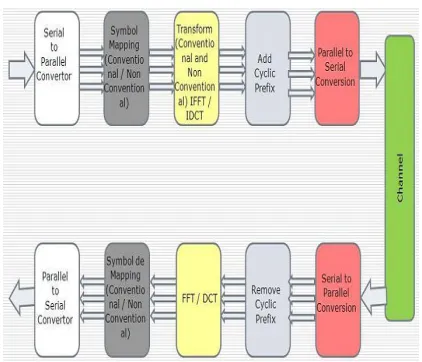
Fig 1 Simulation Diagram for OFDM System
High speed serial data to be transmitted is divided into low speed parallel streams. These lower-data-rate signals are sent over multiple channels so that multipath time delays have less of an effect. An OFDM system treats the source symbols e.g., the QPSK at the transmitter as though they are in the frequency-domain. These symbols are the inputs to an IFFT block to bring the signal into the time-domain. The IFFT takes in N symbols at a time where N is the number of subcarriers in the system. Each of these N input symbols has a symbol period of T seconds. The basis functions for an IFFT are N orthogonal sinusoids. Each input symbol acts like a complex weight for the corresponding sinusoidal basis function. Since the input symbols are complex, the value of the symbol determines both the amplitude and phase of the sinusoid for that subcarrier. The IFFT output is the summation of all N sinusoids. Thus, the IFFT block provides a simple way to modulate data onto N orthogonal subcarriers.
Cyclic prefix to the signal in the time domain is used to avoid inter-block interference (IBI). At the end of
transmitter parallel data is converted to serial and is transmitted through the channel.
At the receiver, an FFT block is used to process the received signal and bring it into the frequency-domain. Ideally, the FFT output will be the original symbols that were sent to the IFFT at the transmitter.
III. TRANSFORM SCHEMES
Transform is a technique that use one transformation formula which converts signals or sequences from time domain to another corresponding domain depending upon a particular transform, that domain is easy and suitable for computations and also we can extract more information in that domain which is necessary for signal processing. An inverse transform formula is used to again convert back that signal into time domain.
Purpose of Transformation:
1. For extracting more information from the transformed domain (e.g. frequency domain) for the purpose of signal processing.
2. For the purpose of simplification of computations in that domain.
A. Discrete Fourier Transform
Conventionally, Fast Fourier transform (FFT) is the basic transform scheme which is used in OFDM systems for multicarrier modulation of the data to be transmitted.
Let The sequence of N numbers x0, ..., xN−1 is transformed
into another sequence of N complex numbers. DFT/IDFT Transforms are interesting from the OFDM perspective because they can be viewed as mapping data onto orthogonal subcarriers so these are good candidate.
The Discrete Fourier transform (DFT) is given by
∑
Xk can thus be viewed as coefficients of x in an orthogonal basis. The inverse discrete Fourier transform (IDFT) is given by
∑
International Journal of Emerging Technology and Advanced Engineering
Website: www.ijetae.com (ISSN 2250-2459, Volume 2, Issue 3, March 2012)442
B. Discrete Cosine Transform
Orthogonal basis functions are needed to construct baseband multicarrier signal. Only complex exponential function is not the way to construct multicarrier but alternatives may be there like DCT, DST and others.
DCT is Orthogonal transfer function tend to redistribute the energy contained in the signal so that the most of energy is contained in a small no. of components.
For a given 2-D data sequence x (i, j), 0 ≤ i, j , the corresponding 2-D DCT coefficient sequence X (u, v), 0 ≤
u, v ≤ N-1, is defined as
X (u, v) =
( ) ( ) ∑ ∑ ( ) ( )
( )
Where ( ) {√
Similarly for IDCT,
( ) ∑ ∑ ( ) ( ) ( ) ( )
( )
The cyclic shift properties are actually not unique to the DFT as the basis function. In fact, cyclic shift properties were extended to a wide variety of sinusoidal transforms in [1] [8]. In this it has been shown that how the cyclic shift properties can be derived for transforms such as DCT through the use of symmetric extension.
IV. MAPPING SCHEMES
Most OFDM systems use a fixed modulation scheme over all carriers for simplicity. However each carrier in a multiuser OFDM system can potentially have a different modulation scheme depending on the channel conditions. Any coherent or differential, phase or amplitude modulation scheme can be used including BPSK, QPSK, 8PSK, 16 QAM, 64QAM… Each modulation scheme provides a tradeoff between spectral efficiency and the bit error rate [7]. The spectral efficiency can be maximized by choosing the highest modulation scheme that will give an acceptable Bit Error Rate.
All the standards are used for short distance communication and so the multipath scenario occurs there. In this environment the carrier frequency offset and Doppler spread are very critical issue.
π/4- DQPSK OFDM system having small carrier frequency offsets and small Doppler spreads do not have much influence on the BER performance. However, keeping other conditions the same carrier frequency offset leads to worse system BER performance degradation than the same amount of Doppler shift [5].
π /4 DQPSK is one of the differential modulation scheme which has been firstly proposed by Baker [8] and was extensively examined by Feher [9][10]. The π/4- shifted differentially encoded quadrature phase shift keying is receiving prominent attention in recent years because it is used by TDMA- based digital cellular mobile telephone systems such as North American IS-54 system [11], for high efficiency of its power spectral density. It has also been adopted in Digital Audio Broadcasting (DAB) standard.
The performance of π/4-QPSK modem with differential detection has been analyzed theoretically by computer simulations [12][13]and experimentally [14][15]. The BER performances of several differential modulation schemes, including MDPSK and π/4-DQPSK were examined in [16]-[19] by using Gaussian approximation methods.
The advantages associated with π/4-shifted QPSK are cited in [20]. This modulation can be detected using a coherent detector, a differential detector, or a discriminator followed by an integrate-and-dump filter. The choice of using both differential detection and discriminator detection provides an advantage since both can be performed by low-complexity receiver structures. While, coherent detection requires a more complex receiver than either differential or discriminator detection due to the carrier recovery process.
V. SIMULATION RESULTS Parameters for Simulation:
International Journal of Emerging Technology and Advanced Engineering
Website: www.ijetae.com (ISSN 2250-2459, Volume 2, Issue 3, March 2012)443
(a)
(b)
[image:4.612.49.296.135.703.2](c)
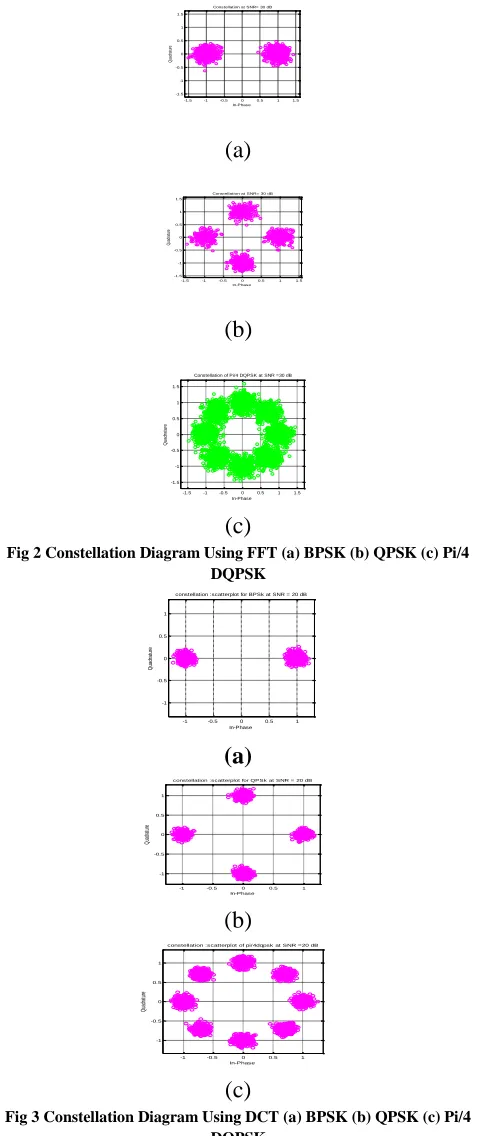
Fig 2 Constellation Diagram Using FFT (a) BPSK (b) QPSK (c) Pi/4 DQPSK
(a)
(b)
(c)
Fig 3 Constellation Diagram Using DCT (a) BPSK (b) QPSK (c) Pi/4 DQPSK
[image:4.612.337.550.241.370.2]Fig. 4 illustrates the simulation results of BER vs. SNR for different mapping schemes (conventional and non- conventional) along with different transform schemes FFT and DCT (conventional and non- conventional). The system parameters used in simulation are SNR= 1:30 dB, Data Subcarriers = 210, Symbol per carrier =50, IFFT/ IDCT bin size = 1024, Channel: AWGN
Fig 4: Comparison of BER performance of Different Modulation Techniques with DCT and FFT Transform over AWGN Channel
VI. CONCLUSION
Constellation of mapping schemes BPSK, QPSK, and Pi/4 DQPSK using DCT in AWGN Channel at SNR of 30dB is quiet good in comparison of using FFT transform at same SNR. It is reflecting that DCT- OFDM can transmit the data by using low transmission power in comparison of FFT- OFDM.
In AWGN Channel scenario it is observed that BER performance of DCT-OFDM with conventional and non- conventional transform is better in comparison of FFT- OFDM. It can also be observed that non- conventional mapping scheme (Pi/4 DQPSK, DQPSK) gives better performance in both the combinations (DCT and FFT). It can be justified from the fact that it uses differential detection so less complex circuitry is required hence cost effective.
-1.5 -1 -0.5 0 0.5 1 1.5 -1.5
-1 -0.5 0 0.5 1 1.5
Q
ua
dr
at
ur
e
In-Phase Constellation at SNR= 30 dB
-1.5 -1 -0.5 0 0.5 1 1.5 -1.5
-1 -0.5 0 0.5 1 1.5
Q
ua
dr
at
ur
e
In-Phase Constellation at SNR= 30 dB
-1.5 -1 -0.5 0 0.5 1 1.5 -1.5
-1 -0.5 0 0.5 1 1.5
Q
ua
d
ra
tu
re
In-Phase Constellation of Pi/4 DQPSK at SNR =30 dB
-1 -0.5 0 0.5 1 -1
-0.5 0 0.5 1
Q
ua
dr
at
ur
e
In-Phase constellation :scatterplot for BPSk at SNR = 20 dB
-1 -0.5 0 0.5 1 -1
-0.5 0 0.5 1
Q
ua
dr
at
ur
e
In-Phase constellation :scatterplot for QPSk at SNR = 20 dB
-1 -0.5 0 0.5 1 -1
-0.5 0 0.5 1
Q
ua
dr
at
ur
e
International Journal of Emerging Technology and Advanced Engineering
Website: www.ijetae.com (ISSN 2250-2459, Volume 2, Issue 3, March 2012)444
References
1. Mandyam Giridhar D. Inerspersed Sinusoidal Transforms For OFDM Systems. IEEE, 2004. 1025-1029p.
2. Feher kamilo Wireless Digital Communication. Prentice Hall, 1995.
3. Tan Peng, Beaulieu Norman C. Precise Bit Error Probability Analysis of DCT OFDM in the Presence of Carrier Frequency Offset on AWGN Channels. IEEE GLOBECOM Proceeding 2005 1429- 1434p.
4. Martucci S. A. Symmetric convolution and the discrete sine and cosine transformIEEE Trans. Signal Process.
1994. 42(5). 1038–1051p.
5. Miller L. E. and Lee J. S. BER Expressions for Differentially Detected Pi/4 DQPSK Modulation. IEEE Transaction. On Communication. 1998. 46. 71-81p. 6. Tan P. and Beaulieu N.C. Exact BER Analysis of a Pi/4-
DQPSK OFDM System in the Presence of Carrier Frequency Offset over Frequency Selective Fast Rayleigh Fading Channels. IEEE. 2005. 488-494p. 7. Baker P.A. Phase-modulation Data Sets For Serial
Transmission at 2000 and 2400 Bits per second.AIEE Transaction On Communication Electronics. 1962. 8. Liu C. L. and Feher K. π/4- QPSK modems for Satellite
sound/Data broadcast systems. IEEE Transaction on Broadcasting. 1991. 37 (1).1-8p.
9. Feher K. Modems for emerging digital Cellular Mobile Radio Systems. IEEE Transaction on Vehicular Technology. 1991.40 (2). 355-365p.
10. Chennakeshu S. and Saulnier G. J. Differential Detection of Pi/4-shifted-DQpsk for Digital Cellular Radio. IEEE Transaction on Vehicular Technology.
1993. 42. 46-57p.
11. Liu C. L. and Feher K. Performance of Non- coherent Pi/4-QPSK in a Frequency- Selective Fast Rayleigh Fading Channel.IEEE Proceedings.1990
12. Liu C. L. and Feher K. Noncoherent Detection of Pi/4-QPSK Systems in a CCI-AWGN Combined Interference Environment. IEEE Proceedings on Vehicular Technology. 1989
13. Yamao Y., Saito Suzuki S. et al. Performance of Pi/4-QPSK Transmission for Digital Mobile Radio Applications.IEEE Proceedings of GLOBECOM. 1989.
14 Ariyavisitakul S. and Liu T. P. Characterizing the Effects of Nonlinear Amplifiers on LinearModulation for Digital Portable Radio Communication. IEEE Transaction on vehicular Technology. 1990. 39. 383- 389.
15. Zimmermann G., Rosenberger M., and Dostert S.
Theoritical bit error rate for uncoded and coded data transmission in Digital Audio Broadcasting. IEEE International Conference on Communications. 1996. 297-301p.
16. Lott M. Comparision of Frequency and Time Domain Differential Modulation in an OFDM System for Wireless ATM. IEEE Proceeding on Vehicular Technology. 1999. ( 49)
17. Lu J., Tjhung T. T., F. Adachi et Al. BER Performance of OFDM-MDPSK System in frequency- selective Rician fading with diversity reception.IEEE Transaction on Vehicular Technology. 2000. (49). 1216-1225p. 18. Zhong K., Tjhung T. T. and Adachi F. A general SER
formula for an OFDM System with MDPSK in frequency domain over Rayleigh fading channels. IEEE Transaction on Communication. 2004. (52). 584-594p 19. Akaiwa Y. and Nagata Y. Highly Efficient Digital
mobile communications with a linear modulation method. IEEE Journal on Selected Areas On Communication. 1987. (5). 890-895p.