CHAPTER 4
LEADERSHIP COMPETENCY
Adibah Abdul Kadir1, Siti Hasliah Salleh2, Sarawati Johar3, Nur Amalina Mohd Rosli, Fadillah Ismail5
1, 4,5Faculty
of Technology Management and Business, Universiti Tun Hussien Onn Malaysia
2
Perdana School of Science, Technology Innovation policy, Universiti Teknologi Malaysia
3
Centre for General Studies and Co-curricular, Universiti Tun Hussein Onn Malaysia
4.0 DEFINITION OF LEADERSHIP
Leadership is a procedure by which an individual impacts other to achieve a target and coordinates the association such that makes it increasingly firm and cognizant (Sharma & Jain, 2013). This definition is like Northouse's (2007) definition — Leadership is a procedure whereby an individual impact a gathering of people to accomplish a shared objective.
administration requires qualities, abilities and learning that lie outside the extent of innovativeness.
Rowe and Guerrero (2011) keep up that "initiative is about impact. “They likewise demonstrate that leadership works in gatherings, which incorporates the accomplishment of objectives and sharing of targets. Ungerer, Heroldt & Roux (2013) kept up that leadership isn't about in them however about contaminating others. Consequently, "Administration is the capacity to impact decidedly and sway on circumstances and individuals so as to have any kind of effect.
4.1 DEFINITION OF COMPETENCY
McClelland characterized Competency as "a basic normal for a person that is causally identified with foundation referenced powerful and additionally prevalent execution in an occupation or a circumstance." "Capabilities are nonexclusive information thought process, attribute, social job or an expertise of an individual connected to unrivalled execution at work." (Hayes, 1979).
Shermon (2004) contends that ability is a human trademark, which enables him to perform work obligations or better deal with the circumstance. These qualities are a lot of properties comprising of information, aptitudes, attributes, social jobs and thought processes. Qualities of conduct happen in a specific structure, which permits distinguishing and estimating the fitness.
In the interim, another researcher Hogg (2008) contends that the experts of HR made a qualification between the ideas of fitness and competency in 1980s and these terms are utilized conversely. These terms stress that ability is a style of conduct which each worker needs to procure so as to accomplish more in an organization; moreover capability is identified with the base benchmarks, which is appeared by consequences of movement execution. Another researcher Ellstrom (1997) presents that the expression "capability" is another elucidation of skill, which are revealed through these components: errands; representatives.
indicates what aptitudes a representative has. There is likewise the qualification of brilliance that set mid-level specialists and expert staff. Rowe and Guerrero (2011) keep up that "authority is about impact. "They likewise demonstrate that initiative works in gatherings, which incorporates the accomplishment of objectives and sharing of goals. Ungerer et. al. (2013) kept up that initiative isn't about in them yet about tainting others. Subsequently, "Administration is the ability to impact decidedly and sway on circumstances and individuals so as to have any kind of effect.
4.2 DEFINITION OF LEADERSHIP COMPETENCY
Generally, leadership competencies refer to the ability to perform certain tasks. Usually when a leader is competent, it will result in better performance. In describing competencies for Malaysian Public Sector Manogran (2000) defined competencies as follows: Competencies are defined as a set of behaviour patterns that can contribute to effective performance in the organization. It is also defined as clusters of employee’s behaviors that generate superior performance. Yet another definition views competencies as underlying characteristics of a person that distinguishes outstanding performance. Applebaunm & Paese described competencies as the “how” of leadership. Thus, leaders need a set of competencies to do their jobs well. They refer competencies as “specific skills and abilities that impact” their leadership effectiveness.
Considering the above statement, it is evident that the essence of leadership in a changing business environment includes the ability to create a vision and excite people to achieve the impossible. Possession of an external energy and an inner strength to pull through difficult times; possession of a mental agility that enables them to make effective decisions faster than most other people; supporting team members to grow by empowering them; they must be emotionally intelligent and enhance people’s confidence by understanding and dealing appropriately with their emotions and concerns; and leading change warrants integrity and trust from the leader.
dimensions, namely business direction setting, driving execution and people engagement. The business direction setting was based on six critical aspects, namely strategic thinking, business acumen, market orientation, influencing others, integrity and values, and external networking. Then, driving execution was based on seven vital aspects, namely strategic action, information processing, judgment and decision making, resource management, customer orientation, risk management, programme and project management.
4.3 LEADERSHIP COMPETENCY MODEL
By and large, initiative skills allude to the capacity to play out specific undertakings. Typically when a pioneer is skilled, it will result in better execution. In portraying skills for Malaysian Public Sector Manogran (2000) characterized capabilities as pursues: Competencies are characterized as a lot of standards of conduct that can add to successful execution in the association. It is additionally characterized as groups of representatives practices that create prevalent execution. One more definition sees skills as basic attributes of an individual that recognizes exceptional execution. Applebaunm and Paese portrayed capabilities as the "how" of authority. In this manner, pioneers need a lot of abilities to carry out their responsibilities well. They allude capabilities as "explicit aptitudes and capacities that sway" their initiative viability.
Thinking about the above proclamation, it is apparent that the pith of administration in a changing business condition incorporates the capacity to make a dream and energize individuals to accomplish the incomprehensible. Ownership of an outer vitality and an inward solidarity to pull through troublesome occasions; ownership of a psychological deftness that empowers them to settle on viable choices quicker than most other individuals; supporting colleagues to develop by engaging them; they should be candidly canny and improve individuals' certainty by comprehension and managing suitably with their feelings and concerns; and driving change warrants honesty and trust from the pioneer.
and individual’s commitment. The business heading setting depended on six basic viewpoints, to be specific key reasoning, business sharpness, showcase introduction, affecting others, respectability and qualities, and outside systems administration. At that point, driving execution depended on seven essential viewpoints, to be specific vital activity, data handling, judgment and basic leadership, asset the board, client introduction, hazard the executives, program and task the executives.
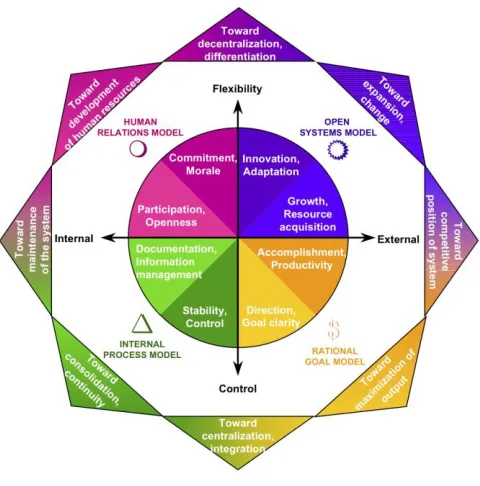
Figure 4.1: The Competing values framework Source: Quinn, 1996
Today´s leader faces many paradoxes where either-or -decisions are simply not possible. A leader has to be able to make bothand -decisions. I have summarized these typical paradoxes the leader is facing today as follows:
1. Be near and take distance
2. Lead action and remain in the background 3. Trust people and control them
5. See the benefit of the department and the whole company 6. Be a visionary and a doer
7. Try to get commitment and decide alone 8. Act and reflect
9. Be self-confident and humble
10. Take care of efficiency and well-being.
The life of a leader is full of paradoxes. The better you are in solving and living with these paradoxes the better you are as a leader. Quinn et. al. (1996) has also defined three competencies for each leadership role in their competing values framework. There are altogether 24 competencies which are shown in table 1.
Table 4.1: The eight managerial roles and their key competencies (Quinn et. al. 1996)
Mentor 1. Understanding self and others 2. Communicating effectively 3. Developing subordinates Facilitator 1. Building teams
2. Using participative decision making 3. Managing conflict
Monitor 1. Monitoring individual performance 2. Managing collective performance 3. Managing organizational performance Coordinator 1. Managing projects
2. Designing work
3. Managing across functions
Director 1. Visioning, planning and goal setting 2. Designing and organizing
3. Delegating effectively Producer 1. Working productively
2. Fostering a productive work environment 3. Managing time and stress
Broker 1. Building and maintaining a power base 2. Negotiating agreement and commitment 3. Presenting ideas
Innovator 1. Living with change 2. Thinking creatively 3. Creating change
[image:6.432.57.352.237.539.2]to use multiple mind-sets in viewing the organizational world (rational goal, internal process, human relations, open systems models and “both-and” thinking), 2) to learn to use competencies associated with all four models, 3) to integrate the diverse competencies in confronting the world of action which means that you are behavioural complex and in this way effective.
In addition to this they have introduced their ALAPA model in presenting these competencies which is an instructional-development approach. This model has five components: Assessment, Learning, Analysis, Practice and Application (Quinn et. al 1996).
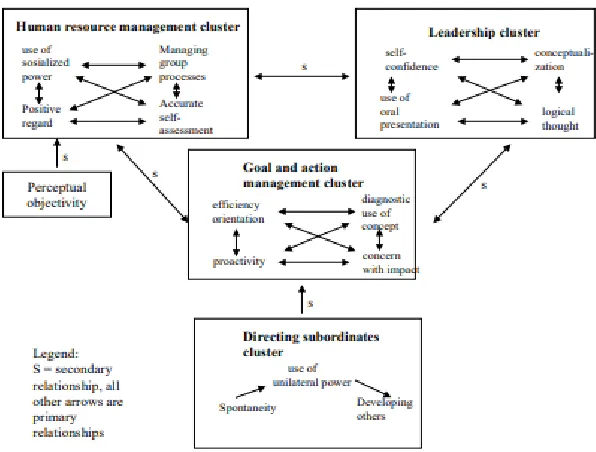
Figure 4.2: An integrated model of management competencies at the skill level
Source: Boyatzis (1982)
4.4 THEORIES SUPPORTING LEADERSHIP
COMPETENCY
In the most recent administration hypotheses, much accentuation is place on a humanistic methodology in which the accompanying skills are featured by Bester (2012: 152), to be specific expectation; modesty; values; authenticity; and balance. Bester (2012) further contends that individuals will in general effectively acknowledge the authority of others yet don't generally purchase in to their own. As at first referenced, an exceptionally invigorating and significant pattern on authority was given by Ungerer et al. (2013). In their contentions they kept up that administration contemplates have customarily centred on individual pioneers and their qualities, capacities and activities and were picked for their reasonableness.
needs, and that our necessities propel us to fulfil them. Our conduct is consequently persuaded by our necessities. He further expresses that needs depend on identity, and are created as we interface with the earth. All individuals experience the requirement for accomplishment, power, and connection, however to various degrees. One of these three needs (accomplishment, power and affiliations) will in general be predominant in every one of us, and inspires our conduct (McClelland, 1960). As per McClelland (1985) great pioneers by and large have just a moderate requirement for accomplishment. They will in general have high vitality, self-assurance, receptiveness to experience and they are upright (McClelland, 1985). Also, as indicated by Nicholson (1998), individuals with a solid requirement for power will in general be aspiring and have a lower requirement for alliance. They are increasingly worried about getting their own specific manner by for example affecting others, than about what others consider them. They will in general view power and governmental issues as fundamental for effective administration (Nicholson, 1998).
A futuristic methodology ought to be to depict the pioneer as an individual from a gathering with solid accentuation on the possibility to impact the gathering. In this sense, the reference is towards value-based and transformative initiative. The most recent ideas on administration place more accentuation on bona fide, neuro and circulated initiative where the assignment of driving is shared by more than one individual in a group. Ungerer et. al. (2013) has recognized real - standard jogged and worker initiative as the three fundamental administration systems. Fundamentally they elude to six all inclusive goodness subjects distinguished in each of the three referenced structures and these appear to cover as far as the 6 all inclusive topics. The six all inclusive groups are bravery; intelligence; balance; humankind; equity and amazing quality.
The patterns and most recent methods of insight on initiative were quickly addressed in the above segment. Understand that initiative is a key vital issue for association, since individuals investigate their pioneers while exploring inside a tempestuous and complex condition so as to guarantee supported benefit through connected representatives. It is fundamental that authority and business methodologies cooperate to drive a culture and act ethic that prompts the ideal business execution.
Y. Hypothesis X and Theory Y clarify and foresee authority conduct and execution dependent on the pioneer's demeanour toward supporters. Those with Theory X frames of mind trust that representatives despise work and should be firmly regulated so as to complete undertakings. Hypothesis Y dispositions trust that representatives like to work and don't should be firmly administered so as to complete errands (McGregor, 1966).
Administrators with Theory Y mentalities will in general have a positive, hopeful perspective on representatives, and show a progressively participative initiative style, in light of inner inspiration and prizes (Tietjen and Myers, 1998). In 1966, when McGregor distributed his Theory X and Theory Y, most supervisors had Theory X demeanors (Tietjen and Myers, 1998). All the more as of late, the centre changed from the board to initiative, prompting a change from a Theory X frame of mind to a Theory Y mentality, as more administrators began to utilize an increasingly participative authority style (Tietjen and Myers, 1998).
REFERENCES
Bester, C. (2012). Live and Lead. Pinegowrie: Porcupine Press. Boyatzis, R. E. (1982). The Competent Manager. A Model for
Effective Performance. John Wiley & Sons. New York. Campbell C, Samiec E 2005. 5-D Leadership: Key Dimensions for
Leading in the Real World. Mountain View: Davies-Black publishing.
Dubrin, AJ. (2007). Leadership: Research Findings, Practice and Skills. Boston: Houghton Mifflin Company.
Ellstrom, P. E. (1997). The many meanings of occupational competence and qualification. Journal of European Industrial Training, 21(6/7), 266-274.
Fogg, CD (1994) .Implementing your strategic plan: How to turn intent into effective action for sustainable change. New York. American Management Association - 10
Grimshaw J, Barron G 2010. Leadership Without Excuses: How to Create a Credibility and High Performance. New York: McGraw-Hill.
Hayes, J.L. (1979). “A New Look at Managerial Competence: The AMA Model of Worthy Performance”, Management Review, November, pp. 2-3.
Herold, D. M., Fedor, D. B., Caldwell, S., & Liu, Y. (2008). The effects of transformational and change leadership on employees' commitment to a change: A multilevel study. Journal of
Applied Psychology, 93(2),
346-357.http://dx.doi.org/10.1037/0021-9010.93.2.346
Hogg, C. (2008). Competency and competency frameworks factsheet, Chartered Institute for Personnel and Development,
Wimbledon. Retrieved from
http://www.cipd.co.uk/subjects/perfmangmt/competnces/com ptfrmwk?NRMODE=Published&NRNODEGUID=%7b0138
D759-0AE6-4D2A-8C62-7DD66174B818%7d&NRCACHEHINT=Guest&IsSrchRes= 1&cssversion=printable
Isaksen, S. G., & Tidd, J. (2006). Meeting the innovation challenge: Leadership for transformation and growth. Chichester, UK: Wiley.
Manogran, P. (2000). Core competencies and the knowledge economy. Pentadbir, Julai (1), 81-5.
McClelland, D. C. (1985). How motives, skills, and values determine what people do. American psychologist, 40(7), 812.
McGregor, D. (1966). The human side of enterprise. New York: McGraw-Hill.
Nel, PS, Werner, A, Du Plessis, AJ, Fazey, M, Erwee, R, Pillay, S, Hearn Mackinnon, B, Millett, B, Wordsworth, R. (2012). Human Resource Management in Australia & New Zealand. Oxford University Press, South Melbourne, Victoria, Australia
Nicholson, N. (1998). Personality and entrepreneurial leadership: A study of the heads of the UK’s most successful independent companies. European Management Journal, 16(5), 529-539 Northouse, G. (2007). Leadership theory and practice. (3rd ed.)
Thousand
Oak, London, New Delhe, Sage Publications, Inc.
Puccio, GJ., Mance, M., Murdock, MC. (2011). Creative Leadership: Skills that Drives Change. California:Sage Publications, Inc. Rowe, WG., Guerrero, L. (2011). Cases in Leadership. California:
Sage Publications Inc.
Sharma, M. K., & Jain, S. (2013). Leadership management: Principles, models and theories. Global Journal of Management and Business Studies, 3(3), 309-318.
Shermon, G. (2004). Competency based HRM. New Delhi: TataMcgraw Hill.
Shipman, Kimberly & Zeman, Janice & Penza, Susan & Champion, Kelly. (2000). Emotion management skills in sexually maltreated and nonmaltreated girls: A developmental psychopathology perspective. Development and psychopathology. 12. 47-62. 10.1017/S0954579400001036. Tietjen, M. & Myers R. (1998). Motivation and Job Satisfaction.
Management Decisions, 226-232.
Ungerer, M., Heroldt, J., Le Roux, J. (2013). Leadership for All: Virtue Practices to Flourish. Randburg: Knowres Publishing Pty Limited.
Quinn, R. E. (1988). Beyond the Rational Management: Mastering the Paradoxes and Competing Demands of High Performance, Jossey-Bass, San Francisco.
Quinn, R. E. (1996). Deep Change. Discovering the Leader Within. Jossey-Bass Publishers. San Francisco.
Weiss, D., Molinaro, V. (2005) "Integrated leadership development", Industrial and Commercial Training, Vol. 38
Issue: 1,