Nursing Dissertations (PhD) School of Nursing
Summer 8-11-2015
Using Telehealth to Support Informal Caregivers of
Elders with Urinary Incontinence: A Pilot/
Feasibility Study
Nicole DavisFollow this and additional works at:https://scholarworks.gsu.edu/nursing_diss
This Dissertation is brought to you for free and open access by the School of Nursing at ScholarWorks @ Georgia State University. It has been accepted for inclusion in Nursing Dissertations (PhD) by an authorized administrator of ScholarWorks @ Georgia State University. For more information, please [email protected].
Recommended Citation
Davis, Nicole, "Using Telehealth to Support Informal Caregivers of Elders with Urinary Incontinence: A Pilot/Feasibility Study." Dissertation, Georgia State University, 2015.
This dissertation, USING TELEHEALTH TO SUPPORT INFORMAL CAREGIVERS OF ELDERS WITH URINARY INCONTINENCE: A
PILOT/FEASIBILITY STUDY by Nicole J. Davis was prepared under the direction of the candidate’s dissertation committee. It is accepted by the committee members in partial fulfillment of the requirements for the degree of Doctor of Philosophy in Nursing in the Byrdine F. Lewis School of Nursing in the Byrdine F. Lewis School of Nursing and Health Professions, Georgia State University.
Patricia C. Clark, PhD, RN, FAHA, FAAN Committee Chairperson
Theodore (Ted) M. Johnson II, MD, MPH Committee Member
Jean F. Wyman, PhD, RN, GNP-BC, FAAN, FGSA Committee Member
Date
This dissertation meets the format and style requirements established by the Byrdine F. Lewis School of Nursing and Health Professions. It is acceptable for
binding, for placement in the University Library and Archives, and for reproduction and distribution to the scholarly and lay community by University Microfilms International.
____________________________________ Ptlene Minick, PhD, RN
Doctoral Program Coordinator
School of Nursing and Health Professions
____________________________________
Joan S. Cranford, EdD, MSN, BSN, RN
Interim Director
ii
AUTHOR’S STATEMENT
In presenting this dissertation as a partial fulfillment of the requirements for an advanced degree from Georgia State University, I agree that the Library of the University shall make it available for inspection and circulation in accordance with its regulations governing materials of this type. I agree that permission to quote from, to copy from, or to publish this dissertation may be granted by the author or, in his/her absence, by the professor under whose direction it was written, or in his/her absence, by the Coordinator of the Doctoral Program in Nursing, Byrdine F. Lewis School of Nursing and Health Professions. Such quoting, copying, or publishing must be solely for scholarly purposes and will not involve potential financial gain. It is understood that any copying from or publication of this dissertation which involves potential financial gain will not be allowed without written permission from the author.
iii
NOTICE TO BORROWERS
All dissertations deposited in the Georgia State University Library must be used in accordance with the stipulations prescribed by the author in the preceding statement.
The author of this dissertation is:
Nicole J. Davis
115 Saddlebrook Lane Greenville, SC 29607
The director of this dissertation is:
Patricia C. Clark, PhD, RN, FAHA, FAAN Professor
Byrdine F. Lewis School of Nursing Georgia State University
P.O. Box 4019
Atlanta, GA 30302-4019
Users of this dissertation not regularly enrolled as students at Georgia State University are required to attest acceptance of the preceding stipulations by signing below. Libraries borrowing this dissertation for the use of their patrons are required to see that each user records here the information requested.
NAME OF USER ADDRESS DATE TYPE OF USE
(EXAMINATION ONLY OR
iv VITA
Nicole J. Davis
ADDRESS: 115 Saddlebrook Lane
Greenville, SC 29607
EDUCATION:
Ph.D. 2015 Georgia State University
Atlanta, Georgia
Certificate 2014 Teaching in Nursing
Indiana University, School of Nursing Indianapolis, Indiana
M.S.N. 2003 Duke University, School of Nursing
Durham, North Carolina
B.S.N. 1998 New York University, School of Nursing
New York, New York
PROFESSIONAL EXPERIENCE:
2014-present Clinical Instructor, Clemson University, School of Nursing
Clemson, SC
2007-present Nurse Practitioner III, Geriatrics, Extended Care, & Rehabilitation, Atlanta VA Medical Center, Atlanta, GA
2007-present Clinical Research Nurse Practitioner, Birmingham/Atlanta
Geriatric, Research Education and Clinical Center (GRECC), Atlanta VA Medical Center, Atlanta, GA
2003-2006 Geriatric Nurse Practitioner, Nurse Practitioner II, Extended Care
& Rehabilitation Center, Durham VA Medical Center, Durham, NC
1999-2001 Registered Nurse, Surgical/Trauma Intensive Care Unit, Albany
Medical Center, Albany, NY
1998-1999 Registered Nurse, Neurosurgical Intensive Care Unit, Yale-New
Haven Hospital, New Haven, CT
LICENSURE AND CERTIFICATIONS:
Registered Professional Nurse (South Carolina RN/NP, Georgia RN/NP, New York RN)
v
PROFESSIONAL ORGANIZATIONS AND COMMITTEES:
2014-present Hartford Gerontological Nursing Leaders, Communications Committee Member
2014-present Institute for Engaged Aging, Clemson University, Faculty Associate 2012-present Gerontological Society of America
2013-2014 Gerontological Advanced Practice Nurses Association
2013-2014 American Geriatrics Society
2012 American Telemedicine Association
2010-2014 Southern Nursing Research Society
2004-2005 Nursing Home Community Advisory Committee, County of Durham
Board of Commissioners, Nursing Home Resident Advocate
AWARDS AND ACHIEVEMENTS:
2012-2014 John A. Hartford Foundation, National Hartford Centers of Gerontological
Nursing Excellence Award, Patricia G. Archbold Pre-doctoral Scholar
2014 Georgia State University Dissertation Award, recipient
2012 Kaiser-Permanente Dissertation Award, grant recipient
2010 Golden Key International Honour Society
2009 Kensington-Hartford Travel Award in Geriatrics, recipient
2009-2010 Marjorie G. Hogan Nursing Faculty Scholar, Georgia Hospital Association
2003-present Sigma Theta Tau, International Nursing Honor Society, Beta Epsilon Chapter
2001-2002 Laurel Chadwick Gerontological Nursing Scholar, Duke University,
recipient
SELECTED PEER-REVIEWED PUBLICATIONS:
Davis, NJ, Vaughan, CP, Johnson TM II, et al. (2013). Caffeine Intake and its
association with urinary incontinence in US men: Results from National Health
and Nutritional Examination Surveys (NHANES) 2005-06 and 2007-08. Journal
of Urology; 189(6): 2170-2174.
Davis, NJ, Hendrix, CC, Superville, J. (2011). Supportive Approaches for Alzheimer Disease. The Nurse Practitioner; 36(8): 22-29.
Griffiths, PC, Davis, N., Lin, J., Wachtel, D., Ward, S., et al (2010). Using Telehealth Technology to Support Family Caregivers: Description of a Pilot Intervention and Preliminary Results. Physical and Occupational Therapy in Geriatrics;
28(4):307-320.
vi ABSTRACT
USING TELEHEALTH TO SUPPORT INFORMAL CAREGIVERS OF ELDERS
WITH URINARY INCONTINENCE: A PILOT/FEASIBILITY STUDY
by
NICOLE J. DAVIS
Urinary Incontinence (UI) is a prevalent and burdensome condition affecting
care-dependent, community-dwelling elders (CRs) and their informal caregivers (CGs).
Although treatable, UI remains inadequately managed resulting in negative medical,
physical, psychosocial and economic impacts. Behavioral treatments or UI, though
considered ideal, are rarely prescribed and understudied in this cohort. Equally scarce are
evidenced-based programs designed to support CGs delivering UI care. Health
information technology has been shown to be an effective approach to support CGs and
elders in the management of chronic illness; its effectiveness in UI treatment has yet to be
determined.
A quasi-experimental, pre-posttest design was used to explore the feasibility and
acceptability of a technology-facilitated, multi-component behavioral intervention
designed to enhance the home environment of CRs with UI and strengthen informal CG
self-efficacy. CGs received a 6-week evidence-based, prompted voiding and educational
program delivered via tablet-personal computer. CGs also received a supportive
component in the form of weekly telephone calls from a UI nurse expert. Care-recipient
(% change in wetness) and CG outcomes (technology usage, perceived ease of use, UI
vii
descriptively. Qualitative feedback regarding CG satisfaction and perceptions of the
intervention were obtained at the conclusion of the study.
The development and implementation of the intervention were feasible. The
major challenge to feasibility was the recruitment of eligible participants. Three CG/CR
dyads enrolled and completed the study. CGs were all female (Mean age=71.67 years,
SD =15.95). CRs were mostly male (Mean age = 86.67 years, SD=8.51). CGs were
adherent to technology usage, however adherence to prompted voiding was inconsistent.
CGs demonstrated slight increases in UI-related self-efficacy, UI knowledge, and
decreases in UI-related bother. CRs demonstrated a mean 62.53% reduction in wet
checks. In qualitative interviews, CGs consistently rated the intervention extremely high
and found access to a UI expert beneficial.
These preliminary findings suggest that the use of telehealth systems to deliver an
evidence-based, UI intervention may be a feasible and acceptable way to improve CG
confidence and knowledge in UI management and reduce CR wetness. Future studies are
viii
USING TELEHEALTH TO SUPPORT INFORMAL CAREGIVERS OF ELDERS
WITH URINARY INCONTINENCE: A PILOT/FEASIBILITY STUDY
by
NICOLE J. DAVIS
A DISSERTATION
Presented in Partial Fulfillment of Requirements for the Degree of Doctor of Philosophy in Nursing in the Byrdine F. Lewis School of Nursing and Health Professions
Georgia State University
Atlanta, Georgia
ix Copyright by
Nicole J. Davis
x DEDICATION
“The family is one of nature’s masterpieces.”
-George Santayana
I dedicate this dissertation to my amazing family, who endured with me and whose love
and support carried me through the most challenging of times…
To my wonderful husband Dale, thank you for believing in me, for sacrificing so much to
allow us to live this dream. Thank you for always being exactly what I needed, every
time that I needed it. You are my rock and biggest source of strength. This would never
have been possible without you.
To my beautiful daughter Naja…my sunshine, thank you for always being patient and
understanding. Thank you for your encouraging words, warm hugs and loving notes (I
saved every one). You inspire me to be the best that I can be.
To my sweet daughter Solange, who was born during this process. Thank you for
reminding me every day how precious life really is.
xi
ACKNOWLEDGEMENTS
Dr. Benjamin Carson once said that, “through hard work, perseverance, and a
faith in God, you can live your dreams.” This dissertation is a culmination of these and
would not have been possible without the support of many.
First and foremost, I would like to thank Dr. Patricia Clark, my mentor and
Committee Chair. Thank you for taking me on as a student and for sharing your time and
wisdom. Through countless grant and scholarship applications, project and personal
challenges, you have always been there. For the support you have given and the valuable
lessons you have taught; I will be eternally grateful.
I would also like to thank the other members of my Committee for their support
and commitment to my success. Dr. Ted Johnson, you have been an incredible mentor
and a teacher is so many ways. Thank you for being such a strong advocate, for
providing me with a solid foundation in research, and for always encouraging me to
chase my dreams. Dr. Jean Wyman, thank you for your mentorship, for sharing your
knowledge and expertise. Your continuous support and encouragement have been
invaluable. A special thank you to Dr. Sylvia Lee, my former Committee member who
was a significant part of this process. Thank you Dr. Lee for challenging my thinking,
helping me to grow as a scientist, and encouraging me to strive for excellence.
My heartfelt thanks to the John A. Hartford Foundation’s National Hartford
Centers of Gerontological Nursing Excellence Award Program, who provided financial
support for this project, my doctoral education, and professional development. Thank
you for believing in me and my commitment to geriatrics. Thank you also to Georgia
xii
A special thank you to others who helped make this project possible, especially
Dr. Patty Griffiths, who always had an open door and was willing to offer her advice and
guidance so many times along the way. Thank you Zoe Salloom for your support and
advice. Thank you Dr. Bill Logan, Dr. Janet Craig, Connie McCammond and staff,
Bonnie Noble Silberman, and Jamie Guay for being so instrumental in the recruitment
process.
Thank you to my sisters, my family and friends for their encouragement and
prayers. To my parents, who immigrated to this country from the island of Antigua;
thank you for teaching me through your example, the value of higher education, to
always strive for excellence, to trust in the Lord, and to persevere beyond life’s
challenges.
Lastly, my sincerest thank you to the family caregivers who graciously welcomed
me into their homes and into their lives, you have helped me more than you will ever
xiii
TABLE OF CONTENTS
Section Page
List of Tables ... 13
List of Figures ... 14
List of Abbreviations ... 15
Chapter I. INTRODUCTION ... 1
Background and Significance ... 3
Purpose ... 9
Assumptions ... 9
Theoretical Framework ...10
II. REVIEW OF LITERATURE ... 15
Social, Psychological, and Economic Implications ... 16
Impact of UI on Caregivers... 18
UI in Vulnerable Elders ... 21
Health IT and Chronic Illness Management ... 29
Summary ... 30
III. METHODOLOGY ... 31
Initial Research Design ... 31
xiv
Population and Sample ... 32
Active Intervention (Tele-Prompt) ... 33
Final Research Design ... 42
Chapter Page Final Research Questions ... 42
Final Population, Sample, and Recruitment ... 42
Final Inclusion and Exclusion Criteria ... 45
Data Collection and Measures ... 47
Study Procedures ... 55
Data Analysis Plan ... 62
Protection of Human Subjects ... 63
IV. RESULTS ... 65
Intervention Development and Content Review ... 65
Challenges in Recruitment ... 67
Sample Characteristics ... 68
Results for Research Questions ... 76
Research Question 1 ... 76
Research Question 2 ... 77
Research Question 3 ... 78
Research Question 4 ... 80
Research Question 5 ... 82
Additional Findings ... 83
xv
CG Perceptions of Satisfaction with the Intervention... 83
V. DISCUSSION AND CONCLUSOINS ... 88
Main Findings ... 88
Chapter Page Feasibility of Tele-Prompt ... 89
Difficulties in Recruiting Participants ... 89
Caregiver Adherence and Perceptions of Technology Usefulness ... 90
Intervention Development and Study Procedures... 93
Changes in Caregiver and Care-recipient Outcomes ... 101
Conceptual Framework ... 102
Implications for Clinical Practice ... 104
Limitations ... 105
Implications for Future Research ... 105
Summary ... 106
REFERENCES ... 107
APPENDICES ... 126
Appendix A: IRB Approval for Initial Randomized Controlled Design ... 125
Appendix B: IRB Approval for Final Quasi-Experimental Pre-Post Design ... 128
Appendix C: Informed Consent Documents ... 132
Appendix D: Telephone Visit Protocol ... 141
Appendix E: 3-day Bladder Diary ... 145
Appendix F: Prompted Voiding Diary ... 148
xvii
LIST OF TABLES
Table Page
1. Knowles’ Adult Learning Principles (1973) and Application in Tele-Prompt ... 35
2. Tele-Prompt Module Objectives and Educational/Skill Building Content... 38
3. Summary of Variables and Corresponding Instruments ... 56
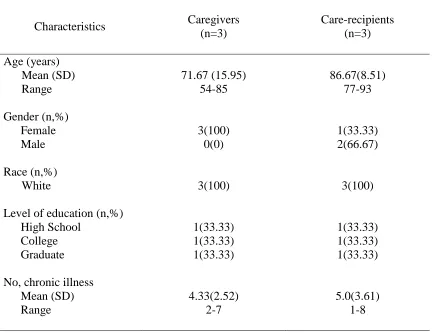
4. Demographic Characteristics of Sample ... 70
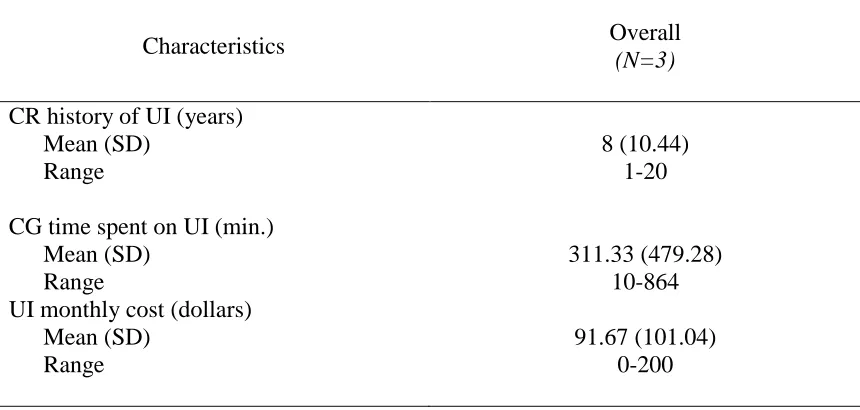
5. Baseline Continence and Clinical Characteristics of the Sample ... 74
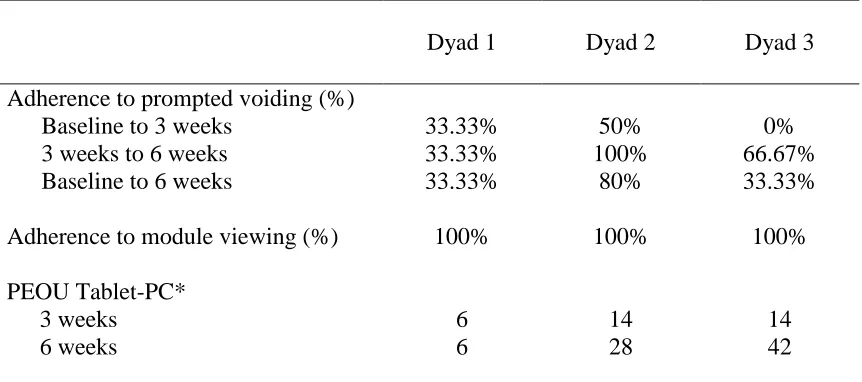
6. Caregiver Adherence to Tele-Prompt Intervention and Perceived Ease of Use of Tablet-PC ... 77
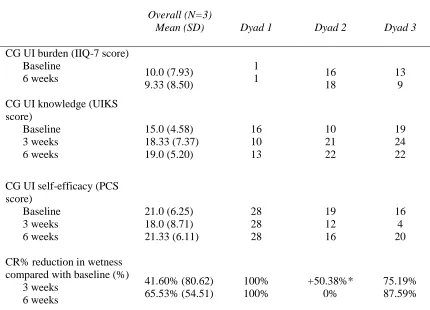
7. Changes in Caregiver and Care-recipient Outcomes from Baseline to Post- Treatment ... 81
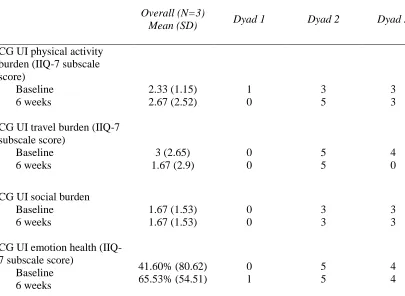
8. Changes in Caregiver IIQ-7 Subscale Scores from Baseline to Post-Treatment ... 82
xviii
LIST OF FIGURES
Figure Page
1. Model of UI Chronic Illness Trajectory Management through Modification
Of the Home Environment ... 14
2. Schema of Study Procedures ... 58
3. Screening and Flow of Participants in the Study ... 69
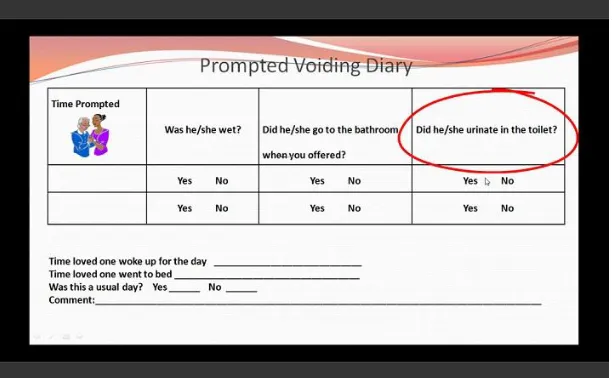
4. Screenshot of Prompted Voiding Diary Instruction... 78
xix
LIST OF ABBREVIATIONS
ADLs Activities of Daily Living
CG Informal Caregiver
CR Care-Recipient;care-dependent community-dwelling elder
Health IT Health Information Technology
IADLs Instrumental Activities of Daily Living
Tele-Prompt Telehealth-Delivered Prompeted Voiding and Educational Intervention to Support Caregivers of Elders with Urinary Incontinence
UI Urinary Incontinence
IRB Institutional Review Board
PI Principle Investigator
NP Nurse Practitioner
QID Four times daily
BID Twice daily
PHI Protected Health Information
LAR Legally Authorized Representative
MCG micrograms
1 CHAPTER I
INTRODUCTION
Failure to effectively treat urinary incontinence (UI) among the 38 million United
States (US) adults over age 65, has been associated with decreased quality of life,
increased morbidity, falls, nursing home placement, and approximatley $19 billion
dollars in annual health related costs (AOA, 2011; Talley, Wyman, & Shamliyan, 2011).
The prevalence of the condition increases with age and disability—disproportionately
affecting frail older adults (Talley et al., 2011). For frail older adults residing in
community settings, UI prevalence rates have been between 29% and 50% (Shamliyan,
Wyman, Ping, Kane, 2009; Sorbye, Finne-Soveri, Ljunggren, et al., 2009). The presence
of UI among frail community-dwelling older adults has been shown to adversley affect
their informal caregivers (i.e., family and friends) by significantly increasing the
physcial, economic and psychological burdens of care (Gotoh, Matsukawa, Yoshikawa,
Funahashi, Kato, et al., 2009; Langa, Fultz, Saint, Kabeto, Herzog, et al., 2002; Sorbye et.
al., 2008; Upton & Reed, 2005). Given the rapid aging of the US population and the
continued shift of healthcare delivery from institutional settings toward the home
environment; there is a critical need for innovative and effective interventions to treat UI
in frail community-dwelling elders and reduce the quality-of-life burden in these persons
and their informal caregivers (CGs) (DuMoulin, Hamers, Ambergen, Janssen, & Halfens,
2008; Gotoh; 2009, DuBeau, Kuchel, Johnson, & Palmer 2010). To date, however,
behavioral interventions for UI in vulnerable elders have largely focused on nursing
home residents receiving formal care (Fink, Taylor, Tacklind, Rutks, & Wilt, 2008).
Further, despite the increasing prevalence of UI among community-dwelling elder
populations; it has been approximately two decades since patient- and family-centered
behavioral interventions for UI have been explored within this cohort (Colling et al.,
2003; Engberg et al., 2002; McDowell et al., 1999). Therefore, there is a critical need for
additional studies to explore the use of behavioral interventions for UI among frail
community-dwelling elders—taking into account their unique needs and the needs of
their CGs (Dubeau et al., 2010; Talley et al., 2011; Teunissen, de Jonge, van Weel, &
Lagro-Janssen, 2004).
Health information technology (IT) (e.g., home telehealth) has been shown to be
an effective approach to deliver patient- and family-centered clinical interventions (Dang,
Dimmick, & Kelkar, 2009) and may be an innovative and effective way to deliver a
specialized UI intervention to frail elders and their informal caregivers. Using
technology to reach vulnerable elders and their caregivers may reduce the burden of
travel to healthcare sites to learn specialized interventions for UI and may reduce other
burdens associated with inadequate UI care (e.g., medication costs, cost of supplies,
hospitalization related to complications, or nursing home admission) (Dang et al., 2009;
Shamliyan, Wyman, Bliss, Kane, & Wilt, 2007).
In 2001, the Institute of Medicine published their landmark work, Crossing the
Quality Chasm, which highlighted Health IT as having a central role in transforming the
healthcare system to achieve effective and equitable, patient-centered care−which
informal CGs found that informal CGs who had the opportunity to experience these
technologies in caregiving, found them to be beneficial and desired the use of technology
to care for loved ones (National Alliance for Family Caregiving, 2011). Despite this, to
date, no studies have explored the use of these technologies to support UI caregivers
specifically in their role. Therefore, developing and testing patient- and family-centered,
community-based interventions to manage UI in vulnerable elders has the potential to
improve the evidence base by addressing a significant problem area with a paucity of
research. Additionally, the novel use of health IT will advance the current body of
knowledge on the use of these technologies in chronically ill, care-dependent
populations—possibly impacting care decisions.
Background and Significance
The Burden of Informal Caregivers
CGs are crucial to the delivery of homecare to older adults−providing annual
services valued at over 300 billion dollars (Arno, 2006). Historically, the CG role has
focused primarily on providing custodial care (e.g., bathing, dressing, transportation,
etc.). However, as healthcare continues to shift from the inpatient and long-term care
environments toward the home, caregivers are frequently called upon to perform routine
medical interventions and oversee the management of chronic illnesses (O’Mara, 2005).
Despite this, a significant number of CGs lack the basic information needed to carry out
their duties and feel ill-prepared for their role (Levine et. al., 2006). Several studies of
the impact of UI on the lives of CGs found that UI caregivers specifically, lacked
products) and also lacked the supportive systems needed to assist them in managing the
illness (Cassells & Watt, 2003; Gallagher & Pierce, 2002; Upton & Reed, 2005).
Given these conditions, it is not surprising the many UI CGs are overwhelmed in
their role. The presence of UI in care recipients has resulted in increased reports of CG
burden in multiple realms—physical, financial, and psychological (Gotoh et al., 2009;
Langa et al., 2002; Sorbye et al., 2008; Upton & Reed, 2005). One study found that
managing UI in care recipients added $4,000 to the annualized costs of informal care, and
as much as 16 hours of physical care per week to existing CG burden (Langa et al.,
2002). Another study evaluating the psychological burden of UI on family caregivers
found the impact of UI to be significant—regardless of the level of care required (Gotoh,
2009).
With the rapid aging of the US population and the increasing prevalence of UI
among elders, CGs will be increasingly called upon to provide this type of care (Du
Moulin, 2008). Study findings indicate that supportive interventions aimed at adequately
preparing CGs for the role of managing UI, have the potential to not only be well
received, but to offer benefit to both CGs and care recipients (Colling et al., 2003;
Engberg et. al., 2002; McDowell et. al., 1999). Despite this, little evidence exists which
evaluates treatment within this cohort (Gotoh et. al., 2009; Langa et al., 2002; Sorbye
et. al, 2008; Upton & Reed, 2005). Studies evaluating the effectiveness of UI treatments
among care-dependent elders have often been limited to those residing in nursing homes,
receiving formal care (Fink, Taylor, Tacklind, Rutks, & Wilt, 2008). Further, behavioral
have been less studied in the community setting and even fewer have focused on CG
support (DuBeau, Kuchel, Johnson, Palmer et al., 2010).
Interventions Targeting CG Support
Several studies have suggested that supportive services aimed at reducing CG
burden improve the emotional and physical well-being of both CGs and care recipients
(CRs) (Brodaty et al., 2003; Schulz, Martire, & Klinger, 2005). Educational and didactic
interventions for the CG have been shown to improve knowledge−especially if focused
on the CR’s specific illness (e.g., UI); however, interventions which also offer targeted
skills training and social support or counseling are more effective than those which offer
information alone (Bowles & Baugh, 2007; Mittelman, 2005; Schulz et al., 2005).
Many CGs need basic knowledge about their CR’s illness; skills training to
appropriately provide the care required, and social support to enhance their emotional and
psychological well-being (Gitlin et al., 2006). This study offered an innovative approach
to support the CGs of those with UI by offering UI knowledge development, skill
enhancement, and social support—through the use of emerging technology.
Telemedicine and Telehealth
Telemedicine and telehealth are interchangeable terms, which represent one facet
of the vast world of Health Information Technology (American Telemedicine
Association, 2011). As seen in any environment with rapidly changing technology,
definitions of terms change to adjust to the concepts as they develop—the terms
telemedicine and telehealth are of no exception (Maheu et al., 2001).
Telemedicine. Telemedicine is defined as the use of telecommunication
a distance (American Telemedicine Association, 2011; Maheu, et al., 2001).
Telemedicine existed long before the internet, and involves using modern IT (e.g.,
computers, telemetry, 2-way interactive video) to deliver healthcare services remotely to
patients and facilitate the exchange of information between primary care providers and
specialists (Darkins & Cary, 2000; Maheu et al., 2001). The use of this technology
allows for the deliverance of healthcare beyond cultural, social, and geographic barriers
(Darkins & Cary, 2000).
Telehealth. Telehealth is seen by many as being a broader, more encompassing
term, relating to public and community health, health education, the development of
health systems as well as epidemiology (Darkins & Cary, 2000; Health Resources and
Services Administration, 2011).
Benefits of Telemedicine/Telehealth
Engaging patients and families. In 2001, the Institute of Medicine (IOM)
released the landmark publication, Crossing the Quality Chasm, identifying
patient-centeredness as one of six key quality aims for the US healthcare system.
Patient-centeredness relates to the provision of care that respects and responds to
individual/family needs, values, and preferences of a patient—ensuring that their values
guide clinical decisions (Institute of Medicine, 2001).
One means to achieve patient-centeredness is to allow patients and families to
engage in their healthcare (Scholle, Torda, Peikes, et al., 2010). Health IT can be viewed
as a tool to help improve patient and family engagement through the use of internet and
and healthcare providers, facilitate interactions between social services and support skills
training (Epstein & Street, 2008; Scholle, Torda, Peikes, et al., 2010).
Access to care. To date, improvements in access to healthcare for large segments
of the population have been a cornerstone of the development of telemedicine.
Telemedicine has the capability of overcoming not only distance, but also time barriers
related to care—allowing patients access to primary and specialty care services
regardless of their location (Bashshur, 2001). For example, the burden of travel to
healthcare sites would therefore be reduced in specialty populations (e.g., frail elderly)
who are often disenfranchised and underserved (Alverson, Holz, & D’Iorio, 2008).
Cost. Technology in general, is a major contributor to the rise in healthcare costs.
Although technology has allowed for significant improvements in the management of
illness, their use is often costly. Telemedicine technology however, has the potential to
decrease and/or contain costs by allowing patients to remotely receive treatment within
their home communities—and in some instances their homes environments (Bashshur,
2001; Wang, 2009). As a result, the need for transporting the frailest patients (e.g.,
elderly) to tertiary health care sites and/or specialist travel to remote locations can be
reduced without compromising quality of care (Bashshur, 2001; Rojas & Gagnon,
2008). Further, the availability of electronic health information may eliminate
unnecessary diagnostic tests, while enhancing the coordination and efficiency of care
(Bashshur, 2001).
Quality of care. Telemedicine has the capacity to improve care quality by
promoting the coordination and continuity of care through the availability of
improve patient safety by facilitating communication and decision support between all
providers, possibly reducing the risk of medical errors (Bashshur, 2001).
Use of Telehealth Technology for CG Support
Telehealth programs are a relatively novel approach to delivering support to CGs.
Telehealth research has largely focused on chronic disease management specifically
targeting patients themselves (Marineau, 2005). These programs have been shown to be
acceptable by users regardless of age, have improved access to care, decreased healthcare
costs and have been shown to positively affect the management of chronic illness
(Bowles & Baugh, 2007; Darkins, Ryan, Kobb, et al., 2008).
Very few telehealth interventions have primarily targeted informal CGs. Several
telehealth interventions have incorporated CGs into the educational foci, with content
ranging from post-stroke recovery to home hospice support (Demiris, Oliver,
Wittenberg-Lyles, & Washington, 2011; Lutz, Chumbler, Wittenberg-Lyles, Hoffman, Kobb, 2009). Presently,
no studies exist evaluating the use of telehealth technology to support CGs of older adults
with UI in their role. Using technology to reach community-dwelling elders and their
CGs may reduce the burden of the illness by decreasing travel to healthcare sites for
treatment, improve UI treatment, and possibly reduce the costs associated with
inadequate UI care (e.g., UI supplies, medication costs, health care services as a result of
complications, nursing home placement) (Shamliyan, Wyman, Bliss, Kane, & Wilt,
2007). Use of telehealth also has benefits such as allowing the CG access to information
as often as needed; and reviewing content more than once. Additionally, current
technology will enable the use of engaging video and audio, with the opportunity to
Purpose
The primary objective of this study was to explore the feasibility and acceptability
of an investigator (Student PI) developed, technology-facilitated, multi-component
behavioral intervention designed to enhance the home environment of care-dependent
community-dwelling older adults with UI, through informal caregiver education, skill
development in prompted voiding strategies and individualized supportive assistance to
strengthen informal caregiver self-efficacy.
UI is a highly prevalent and burdensome problem facing frail,
community-dwelling elders and their informal CGs. According to the National Institutes of Health
(2007) further research is needed to establish the best interventions to target this
vulnerable population (Shamliyan et al., 2007). Despite this charge, over 40 years of
behavioral research related to UI, and the fact that the majority of elders reside in the
community rather than nursing home settings, this population remains understudied.
Additionally, very few studies have addressed the burden of the disease on family CGs
(Dubeau et. al., 2010;Talley et al., 2011).
Assumptions
According to Corbin and Strauss (1991) chronic conditions have a trajectory (i.e.,
course) that can be managed and shaped through the combined efforts of the individual,
family members, and health care professionals. Although many chronic conditions have
irreversible courses, with proper management these courses can be improved or stablized
(Corbin & Strauss, 1991). Therefore, chronic UI has a trajectory that is complex, yet
care-dependent elders with chronic UI, proper management includes patient-and
family-centered interventions which incorporate the efforts of health care practitioners.
Theoretical Framework
The Chronic Illness Trajectory Theory of Corbin and Strauss (1991) was used to
explain how the home environment of the CR can be enhanced to manage the trajectory
of chronic UI. The Chronic Illness Trajectory Theory of Corbin and Strauss (1991)
assumes that the management of chronic illness is a very complex process which requires
a level of nursing care which is equally complex. The theory presupposes that chronic
illnesses are on a trajectory which can be managed or shaped. It is through this shaping,
that illnesses can be made stable, and/or symptoms of the illness can be controlled
through appropriate management (Corbin & Strauss, 1991). In order for the trajectory of
the illness to be shaped, the joint efforts of the individual (care recipient), the family (e.g.,
CG), and the health care practitioner are required (Corbin & Strauss, 1991).
The management of the trajectory is guided by the trajectory scheme (i.e.,
treatment plan) and includes the control and management of symptoms throughout the
various phases of illness−the overall goal being maintaining quality of life. The extent to
which the trajectory scheme is actually executed, can be influenced by many factors,
including: the setting of care (home environment), resources (e.g., access to UI healthcare
provider), and relationship between the patient and involved family members (Corbin &
Strauss, 1991).
The Home Environment
Within this framework, the home environment is seen as the center of chronic
(1992) conceptualized the home environment as encompassing four hierarchically
distinct interacting layers: objects (items or tools in the home environment), daily tasks
which make up life routines (e.g., toileting), social groups (e.g., family members residing
within the household and other social resources), and culture. The belief is that each
layer is modifiable, and can be adapted to the demands the environment places on an
individual’s abilities or competencies (Barris et al., 1985; Cororan & Gitlin, 1992).
This intervention aimed to modify three layers of the home environment:
objects, daily tasks, and social groups; through CG education and social support. CGs
received education and recommendations which included instructions on removing
clutter (i.e., objects) and create an unobstructed path to help facilitate appropriate
toileting (Du Moulin, 2009). The task layer was specifically targeted by educating CG
skills on the task of properly toileting the CR (i.e., prompted voiding). For example, the
CGs were educated on effective toileting techniques, verbal cuing, and positive
reinforcement (Du Moulin, 2009; Palmer, 2004). Finally, the social group was targeted
through both the telehealth and direct nursing support provided to the CGs (Corcoran &
Gitlin, 1992). This framework has been extensively tested in the literature and has been
found to be an effective approach to deliver CG-facilitated educational interventions, to
improve the care of frail older adults (Gitlin et al., 2006; Gitlin et al., 2008).
Urinary Incontinence: The Chronic Illness
UI can be defined simply, as being any involuntary loss of urine (Abrams, et al.,
2003). Although UI in many instances is a treatable condition, in the frail elderly,
incontinence is often intractable (Ouslander, 2000). Due to the medical complexities
multiple morbidity, and polypharmacy), cure is often seen as an unrealistic goal
(Teunissen, de Jonge, van Weel, & Lagro-Janssen, 2004). The outcomes of the
management of UI in frail elders, therefore should be aimed at ameliorating symptoms,
improving overall function, preventing development of adverse medical conditions which
may result from the inadequate management of the condition (i.e., skin breakdown), and
improved quality of life (Ouslander, 2000). The current study did not aim to necessarily
cure of UI, but rather to improve UI related care-recipient (CR) and CG outcomes.
The Person
Within this framework, the person is conceptualized as anyone affected by
chronic illness. Unless hospitalized, the primary responsibility of managing the illness
process on a daily basis lies with the person and their family members (e.g., CG) (Corbin
& Strauss, 1991). In this study, the person was operationalized as the CG, who is largely
responsible for the management of the condition. Given the nature of the intervention,
CR outcomes were evaluated as well.
The Trajectory Scheme
Illness-specific, treatment plans (i.e., trajectory schemes) are used to shape the
illness course and maintain/improve quality of life, by providing direct assistance with
symptom management and disability (Corbin & Strauss, 1991). Within this study, the
intervention was designed to facilitate better management of UI within the home
environment by modifying: objects, daily tasks, and social groups to improve the quality
of life of CRs and CGs.
Self-efficacy. Self-efficacy has been a useful framework for research aimed at
2010; Savundranayagam, Montgomery, Kosloski, et al., 2011). In the Social Cognitive
Theory (1988) self-efficacy is defined as one’s perceptions of confidence in his or her
ability to perform a particular task or behavior (Bandura, 1988). Self-efficacy is a
modifiable construct, derived from performance accomplishments (i.e., mastering a
particular skill), vicarious experiences (i.e., learning beneficial behavior from the
observation of others), verbal persuasion, and emotional arousal (Bandura, 1977).
Performance-based treatments foster behavioral accomplishments, minimize fear, and
validate self-efficacy. Performance successes attained through treatments, strengthen
self-efficacy and reduce the negative impact of circumstantial failure (e.g., inability to
successfully toilet a family member) (Bandura, 1977). Previous studies have shown, that
in the context of family caregiving (irrespective of the domain), high levels of CG
self-efficacy have been associated with lower levels of distress (e.g., burden and depressive
symptoms) (Gilliam & Steffen, 2006; Gonyea, O’Connor, Carruth, & Boyle, 2006;
Gottlieb & Rooney, 2004; Rabinowitz, Mausbach, Thompson, & Gallagher-Thompson,
2007). In one study evaluating the effectiveness of a multi-component,
performance-based intervention aimed at reducing dementia CG burden, CGs who received the
intervention reported greater mastery, skill enhancement, and greater self-efficacy from
baseline to post-intervention (Gitlin, Winter, Burke, et al, 2008). This present study used
a similar performance-based treatment approach, with a goal of improving CG
self-efficacy related to UI management. By giving CGs the knowledge, skill set, and support
needed to successfully toilet their family members, it was hypothesized that performance
management of UI and reduce the negative impacts of UI (i.e., CG subjective burden, CR
leakages) (Bandura, 1977; Corbin & Strauss, 1991).
Self-efficacy: Vicarious experience and modeling. According to Bandura
(1977) with self-efficacy, an individual’s efficacy expectation is not only influenced by
direct experiences of personal mastery, but also indirectly through the observation of
others (i.e., vicarious experience) (Bandura, 1977). By observing others successfully
perform tasks or surmount stressful situations, the self-efficacy of the observer can be
increased. A competent model can teach an observer effective skills and strategies,
resulting in higher perceived self-efficacy (Bandura, 1977). This study used modeling to
help bolster CG self-efficacy. CGs viewed a video where a CG peer used prompted
voiding to assist a CR with toileting. Although vicarious experiences have little
resilience when employed alone, when used in conjunction with other strategies,
[image:34.612.136.555.469.566.2]self-efficacy can be enhanced (Bandura, 1977).
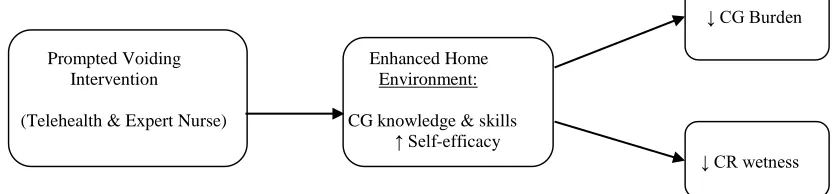
Figure 1. Model of UI Chronic Illness Trajectory Management through Modification of the Home Environment
↓ CG Burden
Prompted Voiding Enhanced Home Intervention Environment:
(Telehealth & Expert Nurse) CG knowledge & skills ↑ Self-efficacy
15 CHAPTER II
REVIEW OF LITERATURE
Although not a life threatening problem, UI is a devastating condition highly
prevalent among frail community-dwelling older adults (Chancellor, 1999; Chermansky
& Chancellor, 2003; Nitti, 2001). In the United States, an estimated 17 million men and
women suffer with bladder control problems—the highest prevalence rates being among
the oldest old (Chancellor, 1999; Dubeau, Kuchel, Johnson, Palmer, et al., 2010; Landi
et al., 2003). In a sample of 372 randomly selected community-dwelling elders, the
prevalence of UI was 36% (Gnanadesigan, Saliba, Roth, et. al., 2004). In a
cross-sectional survey of 2,866 elders receiving homecare, Du Moulin et al. (2008) found UI
present in 46% of the population—the majority reporting moderate to large degrees of
urine loss (Du Moulin, Hamers, Ambergen, Janssen, et al., 2008). In a larger study of
4,010 elderly persons receiving homecare, the prevalence of UI was approximately 33%
(Sorbye, Finne-Soveri, Ljunggren, et al., 2009). In yet another study of 5,412 frail
elders receiving homecare, Landi and colleagues (2003) found the prevalence of UI to
be more than 50% (Landi, Cesari, Russo, Onder, et al., 2003).
UI in frail, community-dwelling elders is not only prevalent, but underdiagnosed
and undertreated. In a study of over 2,000 homebound elders, half of the reported cases
of UI lacked a sufficient diagnosis. Further, more than 58% of those without a diagnosis,
study of more that 5,000 incontinent elders receiving home care, several common
reversible causes of UI were not only present in the population, but were strongly
associated with the illness—e.g., urinary tract infections (adjusted odds ratio, 3.20; 95%
CI 2.19-4.68) and environmental barriers (adjusted odds ratio, 1.53; 95% CI 1.15-2.02)
(Landi, 2003). In a survey of 82,196 US Medicare recipients over the age of 65, Chang
et al. (2008) found the prevalence of UI to be 37%−of those, 75% were burdened by it.
Of the persons who reported UI related burden, 41% sought professional help for their
symptoms; but only 50% of those who sought helpactually received treatment from a
healthcare provider (Chang, Gonzalez, Lau, & Sier, 2008).
In a cross-sectional descriptive study, Gnanadesigan and colleagues (2004)
assessed the quality of care delivered to a random sample of 372 community-dwelling
older adults enrolled in two managed care plans. Not only was UI present in 36% of the
population, but physician records showed inadequate evaluation and treatment in 75% of
new and worsening cases. Although proven beneficial in elder populations, only 13% of
the sample were prescribed behavioral treatments. Additionally, patients seen by UI
specialists in consult, received more comprehensive evaluation and treatment of the
condition. This evidence suggests that UI is not only prevalent (33-50% in community
samples) and inadequately evaluated and managed in older adults, but specialist care may
be optimal (Gnanadesigan, Saliba, Roth, Solomon, et al., 2004).
Social, Psychological, and Economic Implications
Taking into account the high prevalence and inadequate management UI among
community-dwelling frail elders, the psychological, economic and societal implications
sexual functioning, social isolation, loss of personal relationships and loss of quality of
life (Dubeau, 2010; Farage et al., 2008). In the elderly specifically, UI has been related
to decreased overall functiong—frequently present among elders of a higher mortality
risk (Batista-Miranda, Molinuevo, & Pardo, 2007; Johnson, et al., 2000). Studies of the
elderly population have also found lower urinary tract symptoms—UI specifically, to be
an indicator of health, a marker for frailty, and a major indication for institutionalization
(Johnson et al., 2000). In a prospective cohort study of 298 elderly residents of a
continuing care retirement community (CCRC), Young (2009) explored risk factors for
and time of permanent transition from independent living to nursing home over a three
year time period. Eleven percent permanently transitioned to nursing home care; with
UI as one of the predictive factors (RR 3.8, 95% CI 1.3-11.4) (Young, 2009).
The burdens of UI are not limited to social or psychological sequela. The
economic implications of UI on personal and national healthcare expenditures are also
troubling. Morrison & Levy (2006) estimated that the annualized cost of US nursing
home admission related to UI—taking into account both elderly men and women,
approximated six billion dollars in 2000. Langa et al. (2002) found the annualized cost of
UI care in the US, including informal caregiving expenses and cost of UI products also
averaged six billion dollars (Langa et. al., 2002). Stothers et al. (2005) extended the work
of Langa et al. (2002) finding the overall economic burden of UI in males to be 29.4
billion dollars in direct medical costs. They further estimated the annual direct care costs
to homebound persons to be over seven billion dollars. Compared with males without the
condition, UI increased the annual per person expenditures for ambulatory care and
(Stothers, Thom, & Calhoun, 2005). Subak and colleagues (2006) further found that
community-dwelling US women with severe UI pay approximately $900 annually for
routine incontinence care (Subak et al., 2006).
Impact of UI on Caregivers
Over four million elderly persons within US require the assistance of a caregiver
to perform one or more activities of daily living (Sorrell, 2007). As the US population
continues to age proliferatively, more older adults will be living with chronic health
problems (e.g., UI) and even more will require the assistance of informal caregivers to
perform the most basic functions (Family Caregiver Alliance, 2012). Considering the
fact that UI is not the only condition requiring informal CG attention, its additional
burden is concerning. Informal CGs have been shown to be under an extreme amount of
stress, without the added component of UI. When compared with those who do not
provide care (i.e. non-caregivers), caregiving alone has been associated with increased
strain, dyslipidemia, increased cardiovascular risk, and an increased mortality risk
(Schulz & Beach, 1999; von Känel et al., 2008). Family caregiving has been further
shown to negatively impact CG immune status, wound healing and has been linked to
psychiatric morbidity (Lee, Colditz, Berkman, & Kawachi, 2003).
When compared with CGs of elderly persons without UI, CGs of elders with the
condition have reported significantly more stress and burden. In a cross-sectional study,
Sorbye and colleagues (2009) evaluated the prevalence of UI, associated individual
characteristics (e.g., prevalence of catheters, use of pads, toileting assistance), and CG
burden; in a random sample of n=4010 frail older adults receiving home care.
provided by family, neighbors, friends) required during the preceding week. Sorbye et al.
(2009) found that CGs of care-recipients with UI were two times more likely to
experience stress or burden, compared with CGs of continent elders (OR=2.2, 95%
CI=1.8-2.7, p <0.001) (Sørbye, Finne-Soveri, Ljunggren, et al., 2009). Gotoh and
colleagues (2009) evaluated the impact of UI on the psychological burden of informal
CGs, caring for frail elderly and disabled family members with UI. Of the 757 CGs
included in the analysis, 60% (n=452) provided care to family members with UI.
Compared to those with continent care-recipients, UI CGs had significantly higher
reports of psychological burden (Gotoh, Matsukawa, Yoshikawa, Funahashi, Kato, &
Hattori, 2009).
Langa et al. (2002) examined the impact of UI on informal CG time and also
examined UI related costs, in a sample of 7,428 frail US older adults. After adjusting for
co-morbidities (e.g., heart disease, DM, dementia, stroke), sociodemographic variables
(e.g., net worth, gender, race), and living situation, UI was found to significantly increase
the amount of care required, an average of between four and six hours per week in male
care-recipients; between two and five hours per week in their female counterparts. The
additional yearly cost of informal care for elders who suffered with UI ranged from $700
to $4,000—translating to over $6 billion in annual UI-related, national informal
caregiving costs (Langa et al., 2002).
Gallagher & Pierce (2002) conducted a phenomenological study evaluating a
purposive sample of four caregiver-care recipient dyads, which aimed to evaluate how
these dyads dealt with urinary incontinence. The themes which emerged were consistent
(e.g., depression, lack of personal time, inability to find adequate support in managing the
condition, and the continuous nature of the caregiving role) (Gallagher & Pierce, 2002).
In 2003, Cassells & Watt used a grounded theory approach, to explore the impact
of UI on older spousal CGs. A convenience sample of eight participants enrolled, all of
whom were over the age of 65, with an average age of 77 years. Care-recipients had a
wide array of chronic medical problems, but the reported duration of UI was
approximately four years. The authors found several consequences associated with
providing care to incontinent persons: sleep issues, social isolation, decreased intimacy,
financial cost, and emotional responses. Additionally, CGs expressed a need for, and
were appreciative of, practical information regarding incontinence management (e.g.,
selection of incontinence products) (Cassells & Watt, 2003). Further, in another
phenomenological study which explored the meaning of incontinence (both fecal and
urinary) in the lives of dementia CGs, the dual presence of incontinence and dementia
translated into constant, round-the-clock care (Upton & Reed, 2005).
The burden of UI on family caregivers has also been related to decisions to
institutionalize, in an effort to relieve the significant burden. In a cross-sectional study of
109 dementia caregivers aimed at evaluating reasons for institutionalizing care recipients,
cognitive disorder was not the main reason. At the time of institutionalization, UI was
the most frequent complaint (Thomas, Ingrand, Lalloue, et al., 2004).
Consistent across these studies, is the notion that UI CGs experience multifactoral
burdens above and beyond those which are attributable to the general caregiving role.
Further, UI CGs feel ill-prepared to assume the additional duties and burdens related to
therefore, aimed at adequately preparing CGs for the role of managing UI, have the
potential to not only be well received, but to offer significant benefit to both CGs and
CRs.
UI in Vulnerable Elders
Urinary incontinence among vulnerable older adults (e.g., those requiring
homecare or those with dementia) is prevalent and challenging to treat. Rather than
being an isolated condition as seen in younger age groups, in vulnerable elders the
condition is complex, with multiple casusative factors (Dubeau, 2010). Age related
changes to the lower urinary tract and the presence of co-morbid illess (e.g., diabetes,
COPD) increase the likelihood that UI will develop. Additionally, polypharmacy, a
common occurrence among the frail elderly can exacerbate the condition. Several
frequently prescribed medications (e.g., calcium channel blockers, cholinestrease
inhibitors, alpha adrenergic agonists) can adversley affect the lower urinary tract and
cause UI (Dubeau, 2010). Further, functional limitations commonly seen in frail elders
(e.g., limited mobility and transerring) place them at higher risk of UI (Hagglund, 2010;
Nelson & Furner, 2005).
One challenging factor in treating the condition in frail elders, is that common
medications used in other populations, have a significant risk of adverse events. For
example, oxybutynin (i.e., Ditropan) is a medication commonly prescribed for UI
treatment, but in frail elders can adversely affect memory—worsening cognitive
impairment (DuBeau, 2010). Behavioral interventions for UI (i.e., non-pharmacologic)
in this cohort (e.g., prompted voiding) therefore, are considered the mainstay of
Caregiver-facilitated Behavioral Interventions for UI
Despite the prevalence and impact of the disease and the known benefits of
behavioral interventions, no recent studies have evaluated the use of these treatment
approaches in the management of UI in frail community-dwelling elders requiring
informal caregiver assistance (DuBeau et al., 2010). In sum, the few studies which have
evaluated the effectiveness of caregiver-facilitated toileting interventions, though limited
(e.g., low power, small sample sizes, lack of consistent measures of CG burden and
positive aspects of caregiving such as self-efficacy) have demonstrated some
improvement in UI outcomes—specifically, reductions in the volume and frequency of
UI (with treatment effect sizes ranging from 0.2 to 0.97 and prompted voiding
demonstrating the strongest evidence).
Given this, the reason for this dearth in the evidence for over a decade is not
readily apparent, however, the lack of attention to this population further underscores the
need for additional research in this area.
Patterned Urge Response Toileting
Colling and colleagues (2003) evaluated the effectiveness of a 6-week Patterned
Urge Response Toileting (PURT) intervention in 78 care-dependent homebound elders.
PURT, a behavioral intervention for UI, uses habit training with the assistance of an
electronic monitoring device (data logger); which when placed in the incontinence
garment of the care-recipient, can log the episode and time of urine leakage. The
intervention group (n=43) received in-home instruction on how to perform the
intervention by research staff, followed by weekly follow-up phone calls. Research staff
record the frequency and volume of all continent and incontinent voids. If care-recipients
were unable to report their own voids, caregivers were instructed to perform and record
the results of two-hour wet checks over three consecutive days. CGs were instructed to
carry out the PURT intervention during the day and night. The frequency of urine
leakages were also recorded simultaneously by the data loggers, using a
temperature-sensitive thermistor inserted into the incontinence garment for six 24-hour data collection
periods over three weeks. During the 24-hour data collection period, study staff observed
the caregiver in the home, ensuring the sensor was placed properly. During this time,
staff also reinforced previous teachings about the importance of recording accurate data.
Data from the loggers were used to verify caregiver records and to assist in developing
individualized toileting schedules. Following a six-week treatment delay, the control
group (n=35) received the same intervention. At the six-week post treatment time point,
the investigators found no statistically significant difference in UI between the treatment
and control groups following the intervention. They did find that the experimental group
significantly improved in urine volume loss and UI frequency at the completion of the
intervention. The volume of urine loss in the experimental group improved an average of
39% from baseline to follow-up (p<.05), compared with an average of 4% in the control
group (p=ns) (Colling et al., 2003). UI frequency decreased by an average of 0.9 per 24
hour period in 75% of those in the experimental group (p=0.02). When describing the
management of UI solely, the percentage of caregivers who felt ill-prepared to manage
UI decreased from 30% at baseline to 18% by the completion of the intervention. No
information regarding CG adherence to the protocol was presented, however when asked
burdensome (at the beginning of the study) to sixth, at the study’s conclusion (Colling
et al., 2003)—suggesting that the intervention did not add to pre-existing burden.
Although these changes were not statistically significant, clinical meaning can be drawn
from these findings. CG-facilitated behavioral interventions may offer some help in
preparing family caregivers for their role in managing UI and may also reduce caregiver
burden.
The findings of Colling et al. (2003) also support the outcomes of an earlier study,
which examined the benefits of PURT in the nursing home setting (Colling, Ouslander,
Hadley, Eisch, & Campbell, 1992). Colling et al. (1992) found that despite only 70%
formal CG compliance with the intervention, 86% of frail nursing home elders who
received the intervention (mean age 85, all with physical and/or cognitive impairment)
showed significant improvement in UI from baseline to the 37-week post-treatment time
point (Colling et al., 1992).
Scheduled Toileting
Jivorec and Templin (2001) evaluated the effectiveness of a six-month
individualized scheduled toileting intervention to treat UI in 118 homebound elders with
cognitive impairment. Participants were randomly assigned to treatment (n=77) and
control groups (n=41). CGs in the treatment group were taught to provide toileting
reminders to care-recipients based on a schedule developed in consultation with the CG.
Voiding schedules were about every two hours for the majority of participants. The
treatment group was also taught the importance of adequate and consistent fluid intake,
and was taught to encourage care recipients to maintain proper hydration. Additionally,
toilet care-recipients. All groups received monthly phone calls from research assistants
to maintain commitment to the study. For those in the control group, the phone call was
a friendly discussion. Alternatively, the progress of the intervention and notable
difficulties were discussed with the treatment group during their phone call. The
investigators found that in CGs who received the intervention, the number of persons
with improved incontinence was significantly higher than the control group (Z= -1.83,
p<.05). Further supporting the benefits of the intervention, correlational analysis between
baseline and treatment outcomes showed that less than 9% of the variance in
post-treatment incontinence in the post-treatment group could be explained by baseline UI
(R²=.088, p=ns). Analysis of the control group revealed that 58% of post-treatment UI
could be explained by baseline UI (R²=0.58, p=<.05) (Jirovec & Templin, 2001).
Treatment consistency was assessed at six months and was determined by comparing
one-week voiding diaries with CGs’ self-reported protocol adherence. If inconsistencies
between CG self-report and the voiding diaries were present, the voiding diary was used
in the analysis. Although no additional details regarding treatment adherence were
presented, the investigators did find that most reasons for failure of the protocol were
related to the cognitive status of the care-recipient (i.e. more advanced memory deficits
resulted in increased resistance to toileting).
Prompted Voiding
Prompted voiding, a behavioral treatment for UI, has been used in incontinence
research for over 20 years and is one of the most common approaches to managing the
condition in frail populations (Engberg et al., 2002; Palmer, 2004). Prompted voiding,
limitations, with the use of operant conditioning. Through the use of consistent toileting
aided by verbal prompts and positive reinforcement (i.e., verbal praise for successful
toileting or dryness), continence is achieved (Roe, Milne, Ostaszkiewicz, & Wallace,
2007).
Several studies evaluating the effectiveness of prompted voiding in the nursing
home setting have found it to be efficacious (Fink et al., 2008; Ouslander, Griffiths,
McConnell, Riolo, Kutne, & Schnelle, 2005; Schnelle, Leung, Rao, et al., 2010).
Schnelle and colleagues (1989) conducted one of the earliest randomized controlled
studies in the nursing home setting evaluating the effectiveness of a prompted voiding
intervention in 126 incontinent residents. Participants were randomly assigned to
treatment (n=63) and delayed treatment group (n=63). The intervention group received
hourly checks by research staff during 5-10 day periods, which included prompts to toilet
and if successful, social reinforcement. Those who received the prompted voiding
intervention were found to have significantly lower percentage of wet checks (17.8%)
following the intervention, compared with those who received usual care (34.5%) (p<
0.001). In another randomized controlled trial, Hu and colleagues (1989) evaluated the
effectiveness of a 13 week prompted voiding intervention in 133 incontinent female
nursing home residents. The intervention was noted to be effective after 6 weeks of
training. Those who received the intervention (n=65) had 0.57 fewer incontinent
episodes compared with baseline (p<.05), at post intervention. The control group (n=68)
were not found to have a significant improvement in number of incontinent episodes at
the completion of the intervention period (Hu, Igou, Kaltreider, Yu, et al., 1989). These
UI in care-dependent elders who can state their name, transfer independently; however
the results can only be generalized to the nursing home setting. Unfortunately, at present,
little evidence exists evaluating the use of the intervention in community-dwelling, frail
elders—particularly those with family caregivers (Dubeau et al., 2010).
In a small, two-group randomized, controlled, crossover trial, Engberg and
colleagues (2002) explored the short-term effectiveness of a prompted voiding
intervention in 19 cognitively impaired, homebound elders. Treatment consisted of an
eight week intervention, which included weekly home visits by a nurse practitioner (NP).
Caregivers in the intervention group (n=9) were instructed to prompt participants every
two hours during waking hours only and to provide positive reinforcement for
appropriate toileting. Treatment response was evaluated by the NP during the weekly
visits and voiding intervals were increased to a maximum of three hours if 80% dryness
was achieved. In addition to prompted voiding, caregivers were instructed to limit
care-recipient caffeine intake, limit fluid intake in the evening, and elevate care-care-recipients’
legs during the day to help with dependent edema. Following an eight-week attention
control phase, the control group (n=10) crossed over and received the same intervention.
Treatment effectiveness was determined by an investigator created formula, which
determined percent reduction in UI frequency and percent reduction in wet checks.
Adherence to the prompted voiding protocol was formally assessed at each treatment
visit, based upon data from CG documented bladder diaries. CGs were found to be
adherent to the prescribed toileting interval an average of 89% of the time (SD=10.4).
bladder diaries. On average CRs responded to CG prompts by toileting 76% of the time
(SD=34%) and voiding 71% of the time (SD=31.6%).
Although the study was only sufficiently powered to detect very large treatment
effects (d=1.14), clinically significant improvements in leakages were noted among those
who received the intervention (average 22% reduction in leakages) compared with their
true baseline. Additionally, 80% of caregivers felt their care-recipient’s UI had improved.
Caregivers reported general satisfaction with the intervention, with a mean adherence of
89%. Although the findings of the study were not statistically significant, this may have
been due to the size of the sample (Engberg et al., 2002).
Limitations
Varying design methods, definitions of UI, demographic characteristics of the
CGs/care-recipients, outcome measures; as well as the paucity of research in this area
make it challenging to draw conclusions across prior informal CG-facilitated behavioral
interventions for UI in frail community-dwelling elders. However, several limitations
can be identified. Firstly, although these studies were largely caregiver-dependent, very
little objective assessments were completed at baseline and post-treatment time points to
evaluate CG depression, mental status, functional status, or perceived burden. For
example, although Engberg et al. (2002) measured CG perceived burden, satisfaction,
impact, and mastery at baseline using validated instruments; they did not repeat these
measures at the post-treatment assessment. The investigators did administer a CG
satisfaction questionnaire at post-treatment, which yielded descriptive data citing CG
perception of benefit in those who received the intervention. Without an additional