Georgia State University Georgia State University
ScholarWorks @ Georgia State University
ScholarWorks @ Georgia State University
Computer Information Systems Dissertations Department of Computer Information Systems
Fall 12-6-2012
Realizing Shared Services - A Punctuated Process Analysis of a
Realizing Shared Services - A Punctuated Process Analysis of a
Public IT Department
Public IT Department
Tim Olsen
PERMISSION TO BORROW
In presenting this dissertation as a partial fulfillment of the requirements for an advanced degree from Georgia State University, I agree that the Library of the University shall make it available for inspection and circulation in accordance with its regulations governing materials of this type. I agree that permission to quote from, to copy from, or publish this dissertation may be granted by the author or, in his/her absence, the professor under whose direction it was written or, in his absence, by the Dean of the Robinson College of Business. Such quoting, copying, or publishing must be solely for the scholarly purposes and does not involve potential financial gain. It is understood that any copying from or publication of this dissertation which involves potential gain will not be allowed without written permission of the author.
NOTICE TO BORROWERS
All dissertations deposited in the Georgia State University Library must be used only in accordance with the stipulations prescribed by the author in the preceding statement.
The author of this dissertation is:
Timothy John Olsen
Center for Process Innovation
J. Mack Robinson College of Business Georgia State University
35 Broad St, NW, 4th Floor Atlanta, GA 30302
The director of this dissertation is:
Richard Welke
Center for Process Innovation
J. Mack Robinson College of Business Georgia State University
REALIZING SHARED SERVICES –
A PUNCTUATED PROCESS ANALYSIS OF A PUBLIC IT DEPARTMENT BY
Timothy John Olsen
A Dissertation Submitted in Partial Fulfillment of the Requirements for the Degree
Of
Doctor of Philosophy
In the Robinson College of Business
Of
Georgia State University
GEORGIA STATE UNIVERSITY
ROBINSON COLLEGE OF BUSINESS
Copyright by
Timothy John Olsen
ACCEPTANCE
This dissertation was prepared under the direction of the Timothy John Olsen’s Dissertation Committee. It has been approved and accepted by all members of that committee, and it has been accepted in partial fulfillment of the requirements for the degree of Doctoral of Philosophy in Business Administration in the J. Mack Robinson College of Business of Georgia State University.
H. Fenwick Huss, Dean
DISSERTATION COMMITTEE
__________________________ Chair: Dr. Richard Welke
__________________________ Co-Chair: Dr. Lars Mathiassen
__________________________ Dr. Wesley Johnston
ABSTRACT
REALIZING SHARED SERVICES –
A PUNCTUATED PROCESS ANALYSIS OF A PUBLIC IT DEPARTMENT BY
Timothy John Olsen
20 August 2012
Committee Chair: Richard Welke
Committee Co-Chair: Lars Mathiassen
Major Academic Unit: Center for Process Innovation
Acknowledgements
First, I acknowledge Dr. Richard Welke for being a great friend, an incredible mentor, and supportive dissertation supervisor. I am glad I could earn his trust as he gave me access to the finest resources available as I nailed down different aspects of this work. He has expanded my mind by providing new ways to see the world, I cannot imagine having gone through this without him. I hope to have many more ‘breakfast update meetings’ and opportunities to continue to expand my mind and palate.
I also thank Dr. Lars Mathiassen, his positive attitude and mentorship places him among the best people to collaborate with. I was influenced a great deal by his thoughts on ‘engaged scholarship’ and his instruction on academic writing styles. I also thank Dr. Arun Rai for the encouragement and friendship through the years. Wes Johnston provided a creative angle in his feedback on this work. His excitement about this research after multiple manuscript readings was contagious. Jeanne Ross has provided excellent guidance and validation of ideas since our fortuitous encounter at a conference. She is a wonderful and collaborative colleague and was the first to describe my research as “shared services”. I was blessed to be a part of an amazing community of PhD students: Brett Young, Raj Singh, Rob Hornyak, Betrice Young, Darryl Romanow, Chaitanya Sambhara, Tom Gregory, Chad Anderson. I thank them for reviewing draft manuscripts and slidedecks as well as providing fantastic memories.
Outside of the Georgia State University community, my friends Sam Stapp, Jessica Eliason, Jenna Zimmerman, Jason Klomp, Sean Holder, Connie Arthur, Elliott Wise, Hannah Moore, Jan-Michael Becker and Maria Alaranta have been a source of joy. They made the years in Atlanta memorable and exciting.
TABLE OF CONTENTS
Table of Contents ... viii
Tables and Figures ... xi
List of Figures ... xi
List of Tables ... xi
1 Research Background and Introduction ... 13
1.1 Research Context ... 13
1.2 Motivation and Research Question ... 16
1.3 Research Approach ... 17
1.4 Structure of the Dissertation ... 20
2 Service Orientation and IT Delivery ... 21
2.1 Service Literature ... 21
2.2 IT Service Literature ... 23
2.3 Structuring Service-Oriented Management ... 24
2.3.1 Shared Services ... 24
2.3.2 IT Shared Services ... 26
3 A Process Analysis Approach ... 31
3.1 Process Models ... 31
3.2 Process Model Advantages ... 33
3.3 Punctuated Socio-Technical IS Change (PSIC) Model ... 34
3.3.1 Multi-Level Change ... 35
3.3.2 Punctuated Change ... 36
3.3.3 Socio-Technical Change ... 37
3.3.4 Punctuated Socio-Technical Change ... 38
3.3.5 Visual Mapping Strategy ... 42
3.3.6 Summary ... 43
4 Research Method ... 45
4.3.4 Identifying Patterns ... 54
5 Understanding the Realization of Shared Services at Uni-IT ... 57
5.1 Punctuated Analysis: Moving from Phase to Phase ... 58
5.1.1 Phase 1: Necessitating ... 61
5.1.2 Phase 2: Organizing ... 65
5.1.3 Phase 3: Migrating ... 70
5.1.4 Phase 4: Costing ... 73
5.1.5 Phase 5: Serving ... 78
5.2 Horizontal Analysis ... 80
5.2.1 Walkthroughs ... 81
5.2.2 Costing ... 83
5.2.3 Role Assignments ... 86
5.2.4 Intrapreneurship ... 88
5.3 Vertical Analysis ... 91
5.3.1 Bureaucracy (MS-ST) ... 94
5.3.2 Process Improvement (MS-TS) ... 95
5.3.3 Task-Interdependence ... 97
5.3.4 Individual Learning ... 99
5.4 Summary ... 101
6 Learning from a Realization of Shared Services ... 105
6.1 Horizontal Analysis Lessons ... 106
6.1.1 Lesson 1: Preach the Service Paradigm ... 106
6.1.2 Lesson 2: Acclimatize Before Going Live ... 107
6.1.3 Lesson 3: Transparency Brings Scrutiny ... 107
6.1.4 Lesson 4: Expect Hostility About Detailed Costing From Customers on Several Levels 108 6.1.5 Lesson 5: Cost Focus Can be Perilous ... 109
6.1.6 Lesson 6: The Intrapreneurial Metaphor Has Limits ... 109
6.1.7 Lesson 7: Manage Changes in Personnel Expectations ... 111
6.2 Vertical Analysis Lessons ... 111
6.2.1 Lesson 8: Visualize the Problem, Then Rally the Troops ... 111
6.2.2 Lesson 9: Make Divisions Clear by Domain Statements ... 112
6.2.3 Lesson 10: Migration Needs to be Deliberate ... 113
6.2.4 Lesson 11: Presenting Costs Requires Finesse ... 114
6.2.5 Lesson 12: Specialization spreads you thin. ... 115
6.3 Summary ... 116
7.1 Contributions to IT Shared Services ... 117
7.1.1 An Empirical Account ... 117
7.1.2 A Conceptual Account ... 119
7.1.3 Managerial Lessons ... 123
7.2 Contributions to Punctuated Socio-Technical IS Change (PSIC) Model ... 124
7.3 Future Research ... 125
7.4 Limitations ... 126
8 References ... 128
9 Appendix ... 141
9.1 Appendix A ... 141
TABLES AND FIGURES
List of Figures
Figure 1.1 Customer Interaction Before (Left) and After (Right) Shared Services ... 15
Figure 1.2 Compositional Elements of Academic Research (Mathiassen et al. 2009) ... 18
Figure 1.3 Relationships Between Compositional Elements of Academic Research (Mathiassen et al. 2009) ... 19
Figure 2.1 Definition of IT Shared Services (Schultz 2009) ... 28
Figure 3.1 Variance and Process Models (Van de Ven 2007) ... 32
Figure 3.2 A Holistic View of PSIC Model Components ... 35
Figure 3.3 Applegate's Socio-Technical Framework ... 38
Figure 3.4 A Critical Incident ... 39
Figure 3.5 Incremental Adaptation ... 40
Figure 3.6 Temporal Illustration of Incremental Adaptation ... 41
Figure 3.7 Punctuation ... 41
Figure 3.8 Temporal Illustration of Punctuation ... 42
Figure 3.9. A Holistic View of PSIC Model Components ... 43
Figure 4.1. The Three Domains of the Real (Mingers 2004) ... 46
Figure 4.2 Timeline of Meetings Observed and Recorded ... 50
Figure 4.3 A Method for Process Theorizing ... 51
Figure 4.4 Visual Map of Shared Service Realization ... 56
Figure 5.1 Illustration of Relationship Between Gap, Critical Incident, and Two Types of Response ... 59
Figure 5.2 Rainbow Org-Chart Showing Duplicate Services ... 63
Figure 5.3 Proposed Org-Chart from Manager Summit (Mar 29, 2009) ... 64
Figure 5.4 Critical Incidents Arranged by Characteristics ... 80
Figure 5.5 Trajectories Emerging from Horizontal Analysis ... 81
Figure 5.6 Critical Incidents Arranged According to Gap Type ... 92
Figure 5.7 Critical Incidents by Gap Type (simplified) ... 93
Figure 5.8 Summary of Vertical Analysis ... 94
Figure 9.1. Event Structure Analysis for Critical Incident #15 ... 144
List of Tables
Table 1.1 Compositional Elements of This Research ... 20Table 2.1 Implications of Service-Dominant Logic (Demirkan et al. 2008) ... 22
Table 2.3 Differences Between Shared Services and Outsourcing (Yee 2009) ... 26
Table 2.4 Definitions of IT Shared Services ... 27
Table 3.1 Constructs Related to Multi-Level Change ... 36
Table 3.2 Constructs Related to Punctuated Change ... 37
Table 3.3 Constructs Related to Punctuated Socio-Technical Change ... 40
Table 4.1 Overview of Data Source Types ... 47
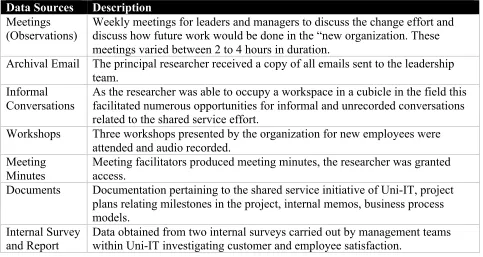
Table 4.2 Data Sources from Uni-IT ... 48
Table 4.3 Overview of Meeting Participants ... 49
Table 4.4 Data Analysis Guide Based on Socio-Technical Elements ... 54
Table 4.5 Three Analysis Techniques ... 55
Table 5.1 Relation Between Analysis Techniques ... 57
Table 5.2 Definitions of Punctuated, Horizontal, and Vertical Analyses (Lyytinen and Newman 2008) ... 58
Table 5.3 Definitions of Constructs Related to Punctuation ... 60
Table 5.4 Critical Incidents in 'Necessitating' Phase ... 61
Table 5.5 Critical Incidents in 'Organizing' Phase ... 65
Table 5.6 Critical Incidents in 'Migrating' Phase ... 71
Table 5.7 Critical Incidents in 'Costing' Phase ... 74
Table 5.8 Critical Incident in 'Serving' Phase ... 78
Table 5.9 Walkthroughs Trajectory ... 82
Table 5.10 Cost Trajectory ... 84
Table 5.11 Role Assignments Trajectory ... 86
Table 5.12 Intrapreneurship Trajectory ... 88
Table 5.13 Gaps Between Management Systems and Structure ... 94
Table 5.14 Gaps Between Management System and Technical System ... 96
Table 5.15 Gaps Between Structure and Technical System ... 98
Table 5.16 Gaps Between Structure and People ... 99
Table 5.17 Critical Incidents, Gaps, and Responses ... 102
Table 6.1 Lessons from Horizontal Analysis ... 105
Table 6.2 Lessons from Vertical Analysis ... 105
Table 7.1 Chronological Summary of Critical Incidents ... 119
1
RESEARCH BACKGROUND AND INTRODUCTION
The management and delivery of information technology (IT) services in organizations constitutes a core interest of research in the academic discipline of information systems (IS) (Boynton and Zmud 1987). Several operating frameworks to aid organizations in managing the delivery of IT services have arisen in the IS literature. (Bharadwaj et al. 1999; Ray et al. 2005; Sambamurthy et al. 2003). Recently, one operating model called shared services has been lauded for achieving lower costs while better aligning with business needs (Sia et al. 2010). At this moment, many corporations are adopting IT shared services (Council 2012). However, there are few case studies on IT shared services, and fewer yet that describes the process by which existing IT units can realize them. This research seeks to develop an in-depth process account detailing the realization of IT shared services. This introductory chapter introduces the research question and the approach taken after the field setting in which this research was conducted is described.
1.1
Research Context
Uni-IT provides IT services and support to a large university in the United States. In 2010, this department employed approximately 210 personnel. Uni-IT faced pressure from the many university departments and colleges to show cost accountability and provide visibility regarding how IT funds were being used. A number of IT services such as email, telephone, and network services were organizationally mandated. All other uses of Uni-IT’s services were optional for each university division because each college of the university operated autonomously and could make its own IT purchasing decisions. Uni-IT knew it was losing “business” to various college and departmental units who decided to use off-campus IT service providers and/ or develop their own solutions with in-house staff and contractors.
adequate answer to this question. So, he sought out ways to provide an answer to the question: “How are you currently spending your budget allocation?”
A few months later, at an industry conference, a member of the Uni-IT’s group of directors came in contact with an external consultant whose claimed expertise was in “running IT as a business”. The consultant was eventually contracted to help the Uni-IT’s management discover their cost of providing IT services to the university. To this end, a staff member of Uni-IT was appointed as change facilitator. His first task was to obtain a list of the services every manager provided both internal and external to the Uni-IT department.
Enumerating each internal or external service that they could provide or “sell” proved extremely difficult for managers. This constituted a radical departure from traditional thinking about what
one “did” in a job role within Uni-IT. Once this process was complete, all services were
combined into a database to produce a catalog with respective prices based on internal rates. This enabled benchmarking of prices with services available on the market.
From this exercise it was discovered that several different sub-units provided identical services at different price structures to the university. For example, six different sub-units provided server-hosting solutions, while five provided video recording and distribution services. Furthermore, due to lack of coordination, the department was maintaining 70 different video surveillance systems across the university.
that summarize the specializations and expertise of each unit and subunit in the new organization” and cited their importance for “ensuring that we will have no gaps or overlaps in functionality within the new organization.”
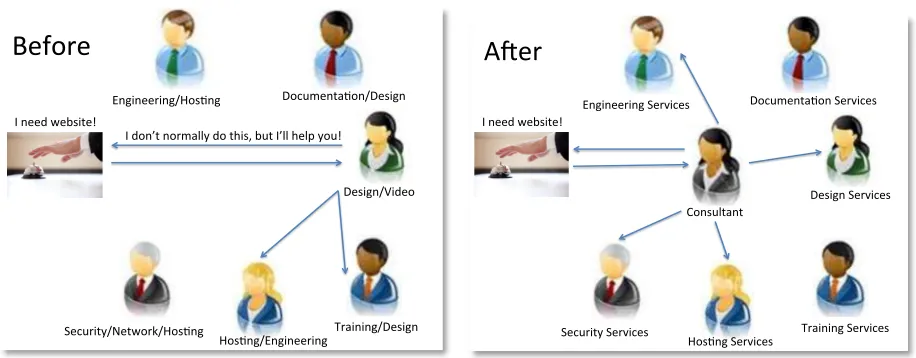
During this reorganization process, the reason why duplication had developed across internal functions became evident -- it resulted from not having a single point of contact for customers. As a result, individual managers would work directly with a customer, not involving other managers whose services could benefit the customer. To avoid this from happening again, a new role of customer consultant was created. These consultants were charged with meeting with the customer and understanding their needs, then sharing this opportunity with all the service delivery managers.
[image:16.612.74.532.496.675.2]Figure 1.1 illustrates interaction with customers before (left side) and after (right side) the introduction of shared services. Both sides depict manager interactions after a customer requests a service, in this case website services. On the left side, a person who does not normally produce websites is asked for help, obliges and contacts a small number of friends to help. On the right side, a customer requesting the website is directed to the default point of contact – a consultant. The consultant works with the customer to understand their needs and then brings the opportunity before the team where each manager has an opportunity to propose which, if any, of their services are needed in the project.
Figure 1.1 Customer Interaction Before (Left) and After (Right) Shared Services 10#
I#need#website!#
Hos0ng/Engineering#
Engineering/Hos0ng# Documenta0on/Design#
Design/Video#
Security/Network/Hos0ng# Training/Design# I#don’t#normally#do#this,#but#I’ll#help#you!#
Before#
9"
I"need"website!"
Hos/ng"Services"
Engineering"Services" Documenta/on"Services"
Design"Services"
Security"Services" Training"Services" Consultant"
To gain “experience” with the proposed service-aligned organizational structure, Uni-IT practiced how it would initiate a number of hypothetical new service contracts using a technique called a walkthrough. These were described by the Uni-IT as communicating understanding of “who will be doing what for whom in [the department] related to the delivery of products and services.” A walkthrough resulted in “clear workflows, providing step-by-step documentation, as well as validation [of the divisions of the new organization].”
Practicing the performance of new business processes occurred for several months. A communication plan to announce the new organization to the university was concurrently developed. A ‘press day’ was scheduled and university administrators and every member of Uni-IT were invited. The rationale for creating shared services was announced, and the managers who had helped build it explained details of the new organization. Over the next eighteen months, Uni-IT continued its transformation towards shared services.
1.2
Motivation and Research Question
The problems faced by Uni-IT are not unique. In 2005, less than 25% of business leaders rated their organization’s IT as effective in delivering the services their business required (Council 2012). Despite IT striving to capture value, understand processes, and focus on customers, this number has not changed (Council 2012). Recent research suggests that a shared service approach to managing IT service delivery reduces costs while increasing customer responsiveness (Sia et al. 2010; Weill and Ross 2009). Indeed, more companies implemented shared services during 2009 & 2010 than in the prior fifteen years (Scully and Levin 2010). Fast adoption rates combined with scant literature on IT shared services (IT-SSs) has caused a call for more research in this area (Becker et al. 2009; Miskon et al. 2009).
illustrations of industry best practices, leaving managers without clear plans of action for how they should be adapted and implemented (Addy 2007). This dissertation seeks to address this gap by exploring the process by which IT-SSs are realized. The guiding research question is therefore:
RQ: How does a functionally organized IT unit transform to a shared services delivery model?
The ‘How’ in this question is interpreted by this research to mean ‘by what sequence of events’ (Van de Ven and Poole 2005). This research utilizes process theory as it allows us to study “how” a shared service approach to IT delivery was realized by providing explanations in terms of patterns of events, activities, and choices over time (Langley 2009). This was accomplished by focusing on adaptation and implementation challenges during a field study conducted between April 2009 and April 2011. During these 24 months of field contact, real-time fine-grained data was collected. The research site was selected both opportunistically and purposefully based on high-level access to the organization and a belief that a longitudinal study of their efforts to realize IT-SSs would make a significant contribution to research in this area.
1.3
Research Approach
As previously noted, there are few case studies and little knowledge about how functionally arranged IT units transform to a shared services model. Therefore, we believe the research question (RQ) best lends itself to a process theoretic case study approach. The case in this research is Uni-IT, a unit that provides IT services to a large research university in the southeastern United States. The study is based on an ethnographic field study (Levina 2005) into the process in which the unit engaged to realize IT-SS over a 24-month period. Rich data consisting of 145 hours of meeting discussions was generated through participant observation at weekly meetings, as well as other types of data sources such as documents used and referenced.
We used the Punctuated Socio-Technical IS Change (PSIC) model to guide our analysis of the
process of realizing IT-SSs (Lyytinen and Newman 2008). We adopted Pettigrew’s framework
for studying organizational change with its emphasis on: 1) content, 2) context, and 3) process of
Interactions among the three areas (content, context, and process) are used to gain insight and understanding and as a basis for developing lessons on managing change under similar conditions in other organizations.
Drawing on the IT management literature, the content is focused on the nature of IT service
delivery and the steps necessary to realize it. The context is described by an organization-centric
analysis of the management practices, organizational structures, people, and technical systems involved in the change effort.
We also used Applegate’s (1994) framework to analyze the relationships between the different parts of the organizational system enacted to deliver IT services.
We can summarize the resulting research approach using the compositional elements of qualitative research as outlined by Mathiassen et al. (2009) (see Figure 1.2): area-of-concern under investigation (A), conceptual framing of the investigation (F), method of investigation (M), research question (RQ) and contributions to practice and theory (C). They are presented here to give the reader a concise framing of the research.
Figure 1.2 Compositional Elements of Academic Research (Mathiassen et al. 2009)
A area of concern
F framing or theory lens
M method
C contributions
RQ research question
Figure 1.3 Relationships Between Compositional Elements of Academic Research (Mathiassen et al. 2009)
Table 1.1 Compositional Elements of This Research
Compositional
Element Description
Area of Concern
(A): Service delivery from IT departments in large professional organizations (Mintzberg 1983)
Framing of A (FA):
Existing literature on shared services and IT service delivery theories
Framing
independent of A (FI):
PSIC model (Lyytinen and Newman 2008; Newman and Zhao 2008) that includes Pettigrew’s contextual approach (1987), and Applegate’s Socio-technical model (1994)
Research Method (M):
Qualitative, single case study, with retrospective and real-time longitudinal analysis (Leonard-Barton 1990), using ethnographic field study (Levina 2005), and rooted in critical realism (Bhaskar 1997; Dobson 2001; Mingers 2004)
Research
Question (RQ): How does a functionally organized IT unit transform to a shared services delivery model?
Contribution to
A (C): An explanatory, descriptive account of the process undertaken by Uni-IT to transform from a traditional functional model to shared services
Contribution to
FI (CFI): Normative process model grounded in the case as well as literature about service delivery
Contribution to FA (CFA):
Develop understanding of key practitioner issues in realizing shared services
Contribution to M (CFM):
Explication of process theorizing method through the use of abstraction and ethnographic data
1.4
Structure of the Dissertation
2
SERVICE ORIENTATION AND IT DELIVERY
In this chapter, we review the service literature on IT Shared Services (IT-SSs). First, we provide a brief review of recent developments in the service literature, noting its implications for changes in management practices. Then we review literature on shared services in general, and IT shared services specifically. This section also highlights how we seek to contribute to the literature.
2.1
Service Literature
In the past several decades, services have become a major component of the economy of the United States. Services produced by private industry accounted for 67.8% of US gross domestic product (GDP) in 2006 and 80% of private sector employment (Karmakar 2005). As the importance of services has risen in the economy, so it has in the academic literature. The marketing and operations disciplines have a sizable body of literature on services. Much of the research has come from the service marketing field that evolved between 1970 and 1990, spurred by rapid growth in the service sector (Maglio and Spohrer 2008). Ideas developed in the marketing and operations literature have emerged in other business disciplines as well as computer science, engineering, and economics, and have even given rise to a cross disciplinary sub-field of “Service sciences” (Maglio et al. 2006).
Many goods-based firms have started to offer services and solutions through their products (Almeida et al. 2008; Vandermerwe and Rada 1988). In this process, known as servitization, product identity evolves from a solely material content to one where material content is inseparable from services (Morelli 2003). This practice has the benefit of product differentiation based on accompanying services, prolonged relationship with customers, and opportunities for growth in higher margin market segments (Brax 2005).
customer as a co-producer. In co-production the service is adapted and modified by the customer for their unique need or usage situation. However, not all services require consumer co-production.
The increasing demand for customized solutions, combined with dynamic markets, new regulations and emerging technologies, has led to an increased need for research on services (Christensen and Raynor 2003; Vargo and Lusch 2004). Although the benefits of the adoption of such practices are numerous, the service concept has been and still is difficult for established managers to grasp (Magnusson and Stratton 2000). Table 2.1 provides some implications for how a service-dominant logic changes traditional business practices.
Table 2.1 Implications of Service-Dominant Logic (Demirkan et al. 2008)
From To
Focus on goods Focus on services
Cost reduction through manufacturing efficiency Revenue expansion through services
Standardization Customization
Mass marketing One-on-one marketing
Transactions Relationships
Function oriented Coordination oriented
Limited ability to store and process data Improved ability to store and process data
Limited information sharing capabilities Improved information sharing capabilities
Application silos Integrated solutions
Tightly coupled applications Loosely coupled solutions
Service as a noun Service as a verb
Contracts Service-level agreements
2.2
IT Service Literature
The increasing use of concepts from the services marketing (and operations management) literature, and economic growth of service provision present exciting opportunities for IS scholars (Rai and Sambamurthy 2006). Services marketing concepts have been applied to many areas of the IS literature including value co-creation (Grace et al. 2008), service systems (Spohrer et al. 2008), curriculum (Galup et al. 2007), and IT management (Bardhan et al. 2010).
IT can be viewed as a service (Klosterboer 2007; Niessink and Van Vliet 1998), or as an enabler
of services (Mathiassen and Sørensen 2008). While most of the literature on services describes IT as an enabler of services, this study adopts the perspective of IT as a service.
In one of the first papers using service concepts applied to IT management, Galloway and White (1989) argued that while design, programming, and test are often managed as back office activities, they should be considered as front office. The idea that managing IT may be similar to managing services is not new. Rockart (1982) found “service and the perception of that service” to be a critical success factor for IT managers. This broad view of services contrasts with the narrower perspective held by IT managers. The concept of IT service management in the literature has come to mean services that are necessary to keep systems running (Peppard 2003). Although the ITIL Service Management framework has become a standard for designing IT services in many organizations (Chen 2008), it does not provide much guidance on the creation of service-level agreements, or the development and use of a service catalog (Niessink and Van Vliet 1998). Nor does it provide much information on the best way to implement service processes that have been characterized as: “jigsaw puzzle pieces, some of which have a precise fit, and some of which overlap or do not fit together accurately” (Office of Government Commerce 2001).
becomes a service provider, “emancipated” from the organization (Grover and Segars 2005). Fourth, inter-organizational processes for procurement, cost allocation and relationship maintenance become much more important because of increased interdependencies (Goul et al. 2005).
2.3
Structuring Service-Oriented Management
2.3.1 Shared Services
In the late 1980s, large decentralized organizations found it uneconomical to maintain duplicate business units across organizational divisions. As they were combined into a single unit, the idea of a shared services unit was born (Ulrich 1996). A stand-alone unit could focus exclusively on delivering business services at the lowest possible costs and highest quality. Whirlpool opened a shared service unit in Dublin in 1995 that consolidated finance work from more than fourteen different operations in Europe achieving considerable costs savings. Pacific Bell reported a 54% reduction in cost and increased customer satisfaction after consolidating seven separate internal support services into a single shared service unit (Forst 2001). Shared service units focus on supporting “business partners” who are either internal business units or external clients (Schulman 1999). This external customer focus entails the definition of service level agreements, as well as an avenue for feedback, resulting in superior quality and service delivery when compared to typical in-house services (Bergeron 2003).
standardized (Yee 2009). The flexible nature of decentralization may lead to variable technology standards that may result ultimately in lower flexibility. Likewise, the specialized nature of centralization incurs the risks of bounded rationality and information overload (Simon 1991). The federal IT model combines the benefits of both and allows for centralized IT infrastructure decisions and decentralized IT application decisions (Rockart et al. 1996; Sambamurthy and Zmud 1999). While shared services are similar to a “federal” IT structure -- both maintain the benefits of centralization and decentralization -- it is distinctly different (Handy 1990). Table 2.2 offers an overview of how shared services are distinct from federated, centralized, and decentralized models of IT organizational structures by comparing positive drivers for instituting each model.
Table 2.2 Positive Drivers for Instituting IT Governance Structures (Adapted from Peterson 2004)
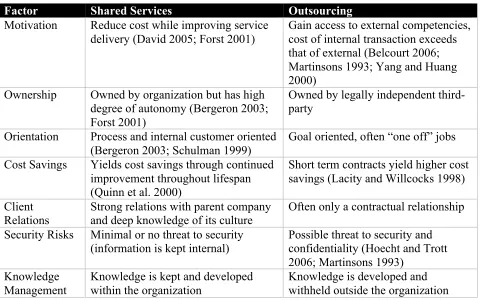
units it supports enables cost effective yet customized IT service delivery. These cost and customer focii are the main motivations for realizing shared services, whereas gaining access to external competencies is often the motivation for outsourcing. As a result of not outsourcing, knowledge and competencies are developed within the organization over time through the use of shared services.
Table 2.3 Differences Between Shared Services and Outsourcing (Yee 2009)
Factor Shared Services Outsourcing
Motivation Reduce cost while improving service
delivery (David 2005; Forst 2001)
Gain access to external competencies, cost of internal transaction exceeds that of external (Belcourt 2006; Martinsons 1993; Yang and Huang 2000)
Ownership Owned by organization but has high
degree of autonomy (Bergeron 2003; Forst 2001)
Owned by legally independent third-party
Orientation Process and internal customer oriented
(Bergeron 2003; Schulman 1999)
Goal oriented, often “one off” jobs
Cost Savings Yields cost savings through continued
improvement throughout lifespan (Quinn et al. 2000)
Short term contracts yield higher cost savings (Lacity and Willcocks 1998)
Client Relations
Strong relations with parent company and deep knowledge of its culture
Often only a contractual relationship
Security Risks Minimal or no threat to security
(information is kept internal)
Possible threat to security and confidentiality (Hoecht and Trott 2006; Martinsons 1993)
Knowledge Management
Knowledge is kept and developed within the organization
Knowledge is developed and withheld outside the organization
government agencies (Ulbrich 2006, 2009; Ulbrich et al. 2010), and differences from outsourcing (Sako 2010; Yee 2009). Literature that discusses IT-SSs includes a case study of the IT unit of a manufacturing firm (Goh et al. 2007), an explication of Proctor & Gamble’s IT-shared service unit (Sia et al. 2010), and a review paper that seeks to establish a coherent definition (Schulz et al. 2009). As IT is an important enabler of communication necessary to sustain any type of private or public shared service unit, much IS literature has focused on IT’s
role in supporting shared services (e.g. Accounting, Finance, HR). In contrast, this research
seeks to study how a (public) IT department can itself realize IT-shared service delivery.
The literature on IT shared services has focused mainly on three broad themes: defining IT-SSs, conceptualizing issues with adopting IT-SSs and uncovering important lessons for managers who may seek to implement IT-SSs. We arrange the review of the literature in these areas accordingly.
Definitions
Frequently referenced definitions from the IS literature that define generic shared services and IT shared services are provided in Table 2.4. These definitions exemplify how shared services address the problems of traditional modes of IT service delivery by breaking down the existing service provision functional silos (Ulbrich et al. 2010).
Table 2.4 Definitions of IT Shared Services
Source Definition
(Schulz et al. 2009)
“IT-shared services is an organizational concept—or management idea—that consolidates IT services within a large organization in order to reduce redundancies, delivers support services as its core competency, is usually a separate organizational unit within the organization, is aligned with external competitors, has cost cutting as a major driver for adoption, has a clear focus on internal business units, and is operated like a business.” (Schulz et al. 2009)
(Sia et al.
2010)
“IT shared services are structural units that consolidate common IT functions (for example, helpdesk, operations, development) to achieve scale by providing standardized services.” (Ulbrich et al. 2010)
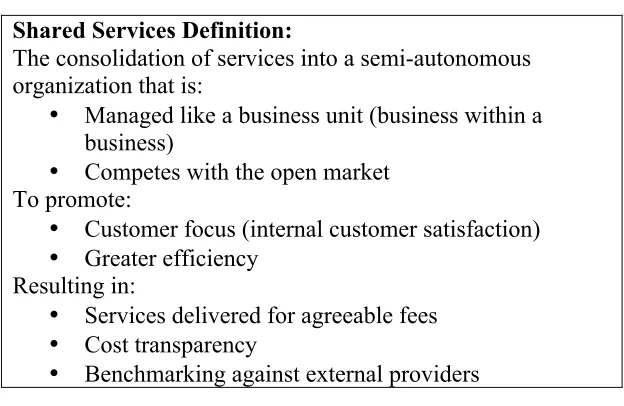
service units compare their service delivery costs to third-party vendors, and develop pricing benchmarks (Sako 2010). Second, although not a separate legal-entity, IT-shared service units operate as “partly autonomous” entities signifying they are managed like an independent business but remain dependent on the parent company for operating capital (Bergeron 2003). Third, it is a main goal for implementing shared services to cut the cost of service delivery while increasing service quality levels (Forst 2001; Ulbrich 2006). Fourth, because it is operated like a third-party vendor, IT-services are delivered to customers with the functionality that they are willing to pay for. Fifth, a service-oriented focus aims at optimizing the customer (internal client) experience by defining an agreeable service level (Colleeen 2005). This runs counter to traditional IT departments that are often more focused on improving technologies and less on customer service (Schulz et al. 2009). Figure 2.1 presents a tri-partite definition of shared services as defined by Schulz et al. (2009).
Figure 2.1 Definition of IT Shared Services (Schultz 2009) Shared Services Definition:
The consolidation of services into a semi-autonomous organization that is:
• Managed like a business unit (business within a
business)
• Competes with the open market
To promote:
• Customer focus (internal customer satisfaction)
• Greater efficiency
Resulting in:
• Services delivered for agreeable fees
• Cost transparency
• Benchmarking against external providers
Concepts
customers. All of these differences entail a major culture change that require strong top-down and bottom-up organizational support, and time to implement (Demirkan et al. 2008).
Many of these managerial, political, and culture changes necessary to implement shared services have been discovered in the literature. Uruthirapathy (2011) examined how work practices changed with the introduction of shared services in a large public organization and found an increase of task-independence in IT-SSs. Fonstad et al. (2009) pointed to the need to train and motivate employees. From a study of eleven shared service centers in Australia, Borman (2009) concluded that establishing accountability for work required, and managing cultural change contributed to successful implementations of shared services. After studying a failed implementation of IT-SSs, Huang (2007) concluded that, in the absence of a strong organizing vision, IT-SSs will be shaped by the vested interests of several parties. Dollery and Grant (2010) conclude that technical and task related change progress faster than people and process changes, thus concluding the importance of managing people and their culture adoption.
Managerial Challenges
As adopting shared services requires major cultural and structural change, understanding key lessons for managers has been a common theme in IT-SSs research. Based on a case study of three shared service entities of the Dutch government, Knol and Sol (2011) found ten managerial challenges based on technological, managerial, and organizational change. Through conducting a focus group with CIOs in Canada, McKeen and Smith (2011) concluded the importance of redrafting the relationship between IT and the business, and managing communication difficulties. From a retrospective analysis of seven case studies, Ulbrich et al. (2010) found seven managerial lessons that were common across each case.
In summary, considerable research has been performed recently to understand IT-SSs. This research has developed and defined the concept of IT shared services, and illuminated relevant concepts that help explain the means by which shared services are realized. From these studies lessons have been drawn for managers who seek to adopt shared services.
3
A PROCESS ANALYSIS APPROACH
This chapter describes the process analysis approach utilized in this research. First, we present a description of process research and motivate its use in this study. Next, we offer a description of the Punctuated Socio-Technical IS Change (PSIC) model with detailed descriptions of its constructs and the concrete steps of how it can be used to arrive at a process theory.
3.1
Process Models
Studies in social sciences have concentrated on two different types of research questions: 1)
What are the antecedents or consequences of the issue and 2) How does the issue emerge,
develop, grow and terminate over time (Van de Ven and Huber 1990).
These ‘what’ and ‘how’ research questions require different methodologies that are based on different assumptions and epistemologies. ‘What’ questions entail a variance model (Mohr 1982) wherein predictor (independent) variables are used to explain variance in levels of outcome (dependent) variables (Van de Ven 2007). Variance models “snapshot” reality, and assume “if all other things are equal, variance in any one of the independent variables is necessary and sufficient to cause variance in the dependent variables” (Seddon 1997). ‘How’ questions necessitate a process model or ‘event-driven’ explanation of the temporal order and sequence in which events occur based on a story or narrative (Bruner 1991). Indeed, the general term “process” is defined as “a narrative describing how things develop and change” (Van de Ven and Poole 2005). To attempt to uncover causality, ‘what’ questions require evidence of co-variation, temporal precedence, and correlation between independent and dependent variables (Blalock 1972). ‘How’ questions use narratives that explain a sequence of events in terms of a presumed, underlying generative mechanism that have the power to cause events in the particular circumstances that occur when these mechanisms operate (Tsoukas 1989; Van de Ven 2007).
understanding of the world that is unavailable from the variance-based generalizations” (Langley 2009).
Different epistemologies underlie the approaches necessary to investigate research questions dealing with the ‘what’ and the ‘how’. Aldrich (2001) separates ‘what’ and ‘how’ questions in terms of outcome-and event-driven explanations. “Outcome-driven explanations are built backward, from an awareness of observed outcomes to a prior causally significant event. Event-driven explanations are built forward, from observed or recorded events to outcomes” (Aldrich 2001). Process models seek to form event-driven explanations by adopting a temporal and longitudinal view of reality, and demonstrating how combinations of events and their particular sequence lead to certain outcomes. Each event is viewed as potentially necessary, but not sufficient, to cause the outcome (Seddon 1997). Where a theorist with a variance approach might posit that an increase in system quality of an IS (a property) would increase the use of an IS (another property), a process theorist would posit that after the system is created (an event), the system will be used (a second event) (Delone and McLean 2003). Figure 3.1 depicts these differences between process and variance models.
Figure 3.1 Variance and Process Models (Van de Ven 2007)
Aldrich (2001) asserts that researchers often fail to make explicit distinctions between event-driven and outcome-event-driven explanations. This problem may be exacerbated by two different definitions of ‘process’ used in the literature: 1) a category of concepts or variables that pertain
11"
!
Variance(Models:(Do(not(explain(
how
(outcomes(occur(
(Langley"2009)"!
Process(Models:(Focus(on(dynamics(of(change,(explaining(how(and(
why(results(are(achieved(
(Newman"and"Robey"1992)"!
We"seek"to"develop"an"event"driven"explana?on
"(Aldrich"2001)"!
‘How’(quesBons(are(fit(for(process(research(
(Van"de"Ven"and"Huber"1990)"
!
How"~"by"what"sequence"of"events"
"!
We(uBlize(the(punctuated(socioFtechnical(IS(change((PSIC)(model(
(Lyy?nen"and"Newman"2008)"
" ""
Theore?cal"Framing:"Process"
Y"="f("xi,"…,"xn)" xi" Y"
ARributes"of""
• Environment"
• Organiza?on"
• Performance"
• Culture"
Extent"of""
Change" • Events"
• Ac?vi?es"
• Choices"
"
t0" tn"
Explaining(Change(with((Process(and(Variance(Models((Mohr"1982,"Langley"1999)" Process(
Nolan’s IS growth model (Nolan 1979). These phase models are limiting because they portray only one possible sequence of events that the organization is expected to follow (Boudreau and Robey 1999; Poole and Roth 2006). This research is not guided by a phase model, and thus is not constrained by any a priori definition of stages of change. In this sense, its approach is closer to Grounded Theory where higher-level concepts and “stages” are derived directly from field observation rather than being imposed by a priori stages models derived from, say, learning curves.
As stated previously, the research question for this study is: How does a public IT department engage to realize shared services? A keyword in this question is ‘how’. This word suggests a process research approach, using the process definition as a narrative for describing how things develop and change through a sequence of events (Van de Ven 2007). Indeed, ‘how’ in this context is synonymous with the words ‘by what sequence of events’. This illustrates the research aim of building an event-driven explanation of how shared services can be realized by (public) IT units. A process analysis enables this by allowing us to construct a story of episodes and events that explain why a certain IT service delivery outcome emerged (Abbott 1990; Kimberly and Bouchikhi 1995).
3.2
Process Model Advantages
In seeking to understand the observed outcomes of an attempt to realize an IT service delivery model, process models offer some advantages. The limitations of variance models highlight the virtue of process models as Newman and Robey (1992) point out: “factor models…do not explain how outcomes occur… they provide only partial guidance to the practitioner who must assume responsibility for attaining positive outcomes. The attainment of system success can be likened to a puzzle wherein the pieces can be identified but where the implementer is left to his or her own resources to put the puzzle together. The process approach… focuses on the dynamics of social change, explaining how and why the results…are achieved”. The process approach seems to provide preferred solutions to address the nature of this dissertation’s research question.
In this sense, IT-SSs can be viewed as an entrance of a new organizational form that interacts with existing organizational norms. The realization of IT-SSs then depends on whether the final organizational form can be developed through a stream of events that modify existing networks so that the intended organizational form will emerge and take hold. Therefore, the process view is used appropriately in studying the development of an IT shared service organization.
3.3
Punctuated Socio-Technical IS Change (PSIC) Model
Past process studies have arrived primarily at descriptive or prescriptive process explanations of IS change (Robey and Newman 1996). They describe and understand the complexity and uncertainty associated with IS change. However, they have limitations. First, they often tend to forego interactions with multiple systems and the organizational environment as they mostly focus on one level of change (Lyytinen and Newman 2008). Second, they tend to focus either on technical or social change, and view both changes without respect to the context in which they occur. Third, they fail to view IS change as complex, multi-level, episodic change where simultaneous processes interact creating unpredictable and dynamic outcomes (Lyytinen and Newman 2008). Citing these limitations, Lyytinen and Newman (2008) develop the Punctuated Socio-Technical Information System Change (PSIC) model.
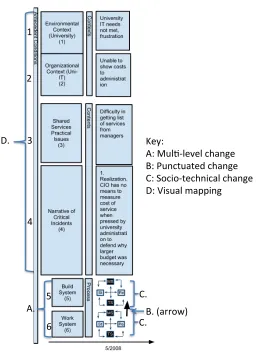
Figure 3.2 A Holistic View of PSIC Model Components
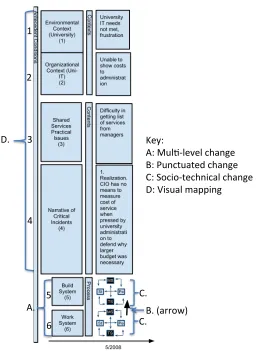
Each of the preceding labels (A-D) is described in greater detail in the following sub-sections . In addition to the labels A-D, six row numbers appear. These rows (1-6) are explained at the end of this section.
3.3.1 Multi-Level Change
IS change re-configures a work system of information-related work that is characterized by
processes of low malleability, and are highly complex (Alter 2002). Because of this, a separate
building system is created to carry out this change (Lyytinen et al. 1996). Change happens in both systems necessitating two parallel processes with hierarchical interaction (Pan et al. 2006) . The building system commands resources to carry out change and address uncertainty, ambiguity and complexity by wielding power to overcome resistance and legitimize change (Markus 1983).
D.#
A.#
C.#
B.#(arrow)# Key:#
A:#Mul45level#change# B:#Punctuated#change# C:#Socio5technical#change## D:#Visual#mapping# 1#
2#
3#
4#
C.# 6#
The building system temporally precedes the work system, although in actual analysis they need to be viewed as co-evolving (Orlikowski 1992).
Both the building and work systems are embedded within the organizational environment. Recognizing the environment brings pivotal factors that influence and direct change to the
foreground. This environment can be divided into two parts: the environmental context (row 1 –
Figure 3.2) and the organizational context (row 2 - Figure 3.2) (Pettigrew 1990). The
organizational context is the immediate organizational environment of the building system that includes the authority, culture, and political system in which the change unfolds (Pettigrew 1990). The environmental context includes an organization’s social, economic, political, and regulatory environments that influence and are influenced by other system levels (Lyytinen and Newman 2008).
Table 3.1 Constructs Related to Multi-Level Change
Construct Meaning
Building
system A socio-technical system separated by space and time from work system – that commands and enacts a set of resources and routines through explicit
rules and regulations and tacit and embedded competencies of individuals to generate IS change.
Work system Socio-technical system that executes, coordinates, and manages
information-related work activities. Environmental
context An environment, which covers the organization’s social, economic, political, regulatory and competitive environments and that influences and is influenced
by all other systems during IS change. Organizational
context Immediate organizational environment of the building system that cover the resource, authority, culture, political systems in which the IS change unfolds
3.3.2 Punctuated Change
additive steps. In punctuated change, the change alternates episodically through rapid and abrupt periods followed by slow and incremental periods (Gersick 1991).
Table 3.2 Constructs Related to Punctuated Change
Construct Meaning
Punctuation Socio-technical elements and their interactions are significantly re-configured
so that the system exhibits a totally new range of responses and thus exhibits new emergent properties (Gersick 1991).
Incremental adaptation
Gradual and stepwise adaptation of one or several system components (Gersick 1991).
These models have the benefit of distinguishing dramatic changes from those that are incremental (Gersick 1991; Lyytinen and Newman 2008). Using shared services as an IT service delivery model can be hypothesized to constitute a dramatic change (Goh et al. 2007). For this reason, a punctuated view of change is adopted for this research. This leads to a view in which organizational change is seen as a construction of a sequence of incremental adaptations and punctuations representing periods of equilibrium and disequilibrium within organizational and external contexts (Gersick 1991; Lyytinen and Newman 2008; Newman and Robey 1992; Pettigrew 1990).
3.3.3 Socio-Technical Change
Socio-technical (S-T) theory was adopted to characterize the engine of change; that is, to describe the different types of tensions that give rise to management action. This was done for several reasons. First, it provides a simple, comprehensive, and flexible vocabulary to characterize elements and describe changes due to punctuation and incremental adaptation. Second, it offers a means to detect the origins of both incremental adaptations and punctuated responses. For these reasons, S-T dimensions and their connections can be regarded as a lexicon for describing generative mechanisms and outcomes (Lyytinen and Newman 2008).
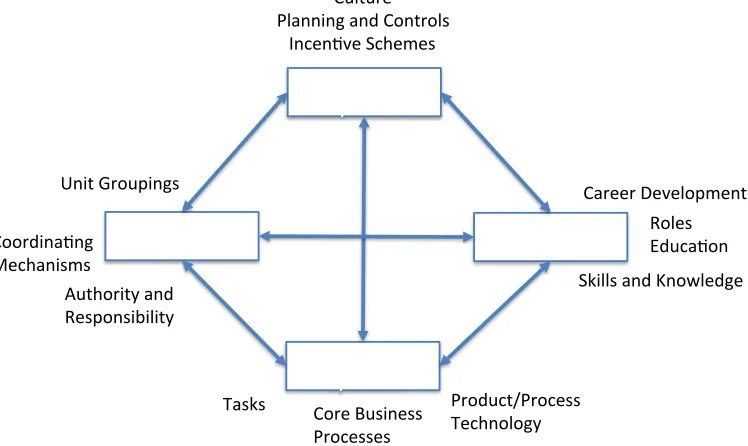
Applegate’s S-T model (1994) (see Figure 3.3) views organizational systems as multivariate
socio-technical systems of four interacting and aligned dimensions – structure (ST), people (PE),
to deal with nuances dealing with the organizational aspects of IT. Figure 3.3 clarifies the content of these dimensions and their connections. Applegate’s model exhibits the virtues of a good classification system: it is simple, encompassing, and if needed, can be extended easily with other categories (Davis et al. 1992; Kwon and Zmud 1987). Label C in Figure 3.2 is a smaller version of the ‘diamond’ model below.
Figure 3.3 Applegate's Socio-Technical Framework
3.3.4 Punctuated Socio-Technical Change
Occasionally, incompatibility between two or more of the four structural dimensions arises due to increased variation (e.g. learning, replacement, malfunctioning) producing a structural
misalignment that is labeled a gap. A gap is any contingency in the organizational system that if
left unattended, will reduce the organization’s performance and threaten its viability (Lyytinen and Newman 2008). Events that generate a gap can be abrupt, such as a crisis or system failure,
Structure' People'
Technical' Systems' Management'
Systems'
Unit'Groupings'
Coordina:ng' Mechanisms'
Authority'and' Responsibility'
Career'Development' Roles' Educa:on' Culture'
Planning'and'Controls' Incen:ve'Schemes'
Tasks' Core'Business'' Processes'
Product/Process' Technology'
critical incident is illustrated in Figure 3.4. The blackened boxes represent the gap generated by the critical incident. For example, in the figure we see the boxes labeled TS and MS blackened, signifying a gap between the technical system and the management system.
Figure 3.4 A Critical Incident
A gap can invite two types of responses from the organizational system. The first is an incremental and gradual adaptation of system components as dictated by the organizational system’s deep structure. The deep structure consists of the set of fundamental ‘choices’ an organization system has made concerning: 1) the parts of which its units will be organized, and 2) the activity patterns and principles of interaction that will maintain its existence” (Gersick 1991). Deep structures are stable and are based on historical patterns (Garud and Karnøe 2001). The concept of an incremental adaptation is illustrated in Figure 3.5. Table 3.3 summarizes the constructs outlined in this section.
!me$ Cri!cal$Incident$X$
An
te
ce
de
nt$
Co
nd
i!
on
s$ Environment$
O
utc
om
e$
Table 3.3 Constructs Related to Punctuated Socio-Technical Change
Construct Meaning
Critical incident
An event that results in a gap.
Event Any change in the system state that can be observed.
Gap Any contingency in the organizational system that if left unattended, will
reduce the organization’s performance and threaten its viability. Socio-technical
system
Any organizational system viewed as a multivariate system consisting of four interacting and aligned dimensions – task, structure, actor, and technology Socio-technical
system state
The salient properties of socio-technical dimensions and their systemic relationships in a given socio-technical system at any point of time. S–T System
stability
A state of a socio-technical system where the four dimensions are aligned and the system is balanced where the system responses or its performance is not deteriorated.
Figure 3.5 Incremental Adaptation
Included in this example are the elements of organizational (inner) and external (outer) contexts (Pettigrew 1990) as these may affect critical incidents. In these interventions, the deep structure of the process remains intact (Gersick 1991). Figure 3.6 depicts an alternate way of representing incremental adaptation. Events are depicted by the hashmarks on the line that shows the
!me$ Incremental$Adapta!on$
An
te
ce
de
nt$
Co
nd
i!
on
s$ Environment$
O
utc
om
Figure 3.6 Temporal Illustration of Incremental Adaptation
The second type of response is a punctuation -- where actors re-examine and change
fundamental assumptions about how work is accomplished or how the organization is structured, thereby rewriting the organizational system’s deep structure. During punctuation, organizational system elements are re-configured and afterwards exhibit new emergent properties. These types of changes are infrequent. The start of a transformation effort nearly always involves punctuations, first in the project system where the effort is initiated and later when it replaces the prior structure (Newman and Zhu 2009). Figure 3.7 shows a successful punctuation and a resulting change in the deep structure (Gersick 1991).
Figure 3.7 Punctuation
A"gap"resul+ng"in"punctua+on"
A"gap"resul+ng"in"incremental"adapta+on" Period"in"which"a"gap"persists"
A"gap"resul+ng"in"incremental"adapta+on" +me"
Cri+cal"" Incident"(I)"
Incremental" Adapta+on" Gap"(G)"
Change"in" nature"of"" S=T"System""
Not"planning"on"including"this"key:"
(leCovers"from"older"version)"
Events"
!me$ Punctua!on$
An
te
ce
de
nt$
Co
nd
i!
on
s$ Environment$
Deep$Structure$1$ Deep$Structure$2$
O
utc
om
Figure 3.8 represents an alternative way of illustrating a punctuated response. Unlike an
[image:43.612.215.401.177.319.2]incremental adaptation, a punctuated response fundamentally alters the nature (deep structure) of the socio-technical state.
Figure 3.8 Temporal Illustration of Punctuation
3.3.5 Visual Mapping Strategy
Once data is analyzed it is arranged using a visual mapping strategy (Langley 1999), depicting dependencies between context, events and outcomes by organizing them according to sequence, gaps, system levels, punctuations, and interventions. Figure 3.2 (reproduced below as Figure 3.9) reviews the basic structure of the PSIC model when arranged using the visual mapping strategy.
In this figure, row 1 describes significant elements of the environmental context. Row 2
illustrates the organizational context including the changes in resources, mandates, or prevailing
concerns. Row 3 identifies in short points the practical issues experienced in the realization of shared services. Row 4 identifies in brief narrative the critical incidents that occurred. The gaps that arose from these critical incidents are depicted in Row 5 in the form of S-T diamonds. The blackened boxes represent the gaps that arose between socio-technical dimensions. The lowest row – row 6 – shows the S-T coding for critical incidents in the work system.
A"gap"resul+ng"in"punctua+on"
A"gap"resul+ng"in"incremental"adapta+on" Period"in"which"a"gap"persists"
A"gap"resul+ng"in"incremental"adapta+on" Cri+cal""
Incident"(I)"
Punctua+on" Gap"(G)"
Change"in" nature"of"" S=T"System""
Not"planning"on"including"this"key:"
(leCovers"from"older"version)"
Events"Figure 3.9. A Holistic View of PSIC Model Components
Organizing the events of the transformation process in this way creates a sense-making device used to understand the nature and role of different events in the context of realizing IT shared services (Lyytinen and Newman 2008; Weick 1993). The visual map shows the work system, the development system, and a description of critical incidents in the context of the organization and its environment. It is designed to build an accurate process narrative about a situated transformation effort that can later be generalized (Eisenhardt 1989). In this way, the completed visual map can become a theory-building device (Doty and Glick 1994).
3.3.6 Summary
The PSIC model can be used to analyze the overall process of realizing IT-SSs (Lyytinen and Newman 2008). This describes change in the IT organization by a period of stability that is challenged by critical events that may create disequilibrium by producing gaps, narrating how
D.#
A.#
C.#
B.#(arrow)# Key:#
A:#Mul45level#change# B:#Punctuated#change# C:#Socio5technical#change## D:#Visual#mapping# 1#
2#
3#
4#
C.# 6#
4
RESEARCH METHOD
This chapter begins with an examination of the philosophical foundations of critical realism and why it is well suited for engaged scholarship and process theoretic studies. Next we describe the adopted qualitative case study approach, its strengths and fit for critical realism and process studies, and how our research data was collected. A short history of the research site, Uni-IT, is then presented including the goals that motivated their move to shared services. Finally, we provide a detailed account of the data analysis process.
4.1
Research Philosophy
An important aspect of this research was to study the way a functionally aligned IT unit can transform into an IT shared service unit. A single, critical realist, longitudinal case study (Lee 1999; Yin 2003) was undertaken. Case studies are useful for gaining detailed knowledge about phenomena to which theoretical propositions have not yet been applied (Eisenhardt 1989). They are well suited to describe IT management issues in practice, and capture organizational contexts in rich detail (Benbasat et al. 1987; Lee 1999). This is consistent with the principles of engaged scholarship (Van de Ven 2007). Advantages of case studies include rich description and an appreciation for the social context in which events occur. Limitations of case studies include lack of easy comparison, and lack of experimental controls, both of which threaten internal validity, and the strength of causal arguments that might be drawn from the data. However, employing both longitudinal real-time and retrospective data gathering methods strengthens internal validity (Leonard-Barton 1990).
Figure 4.1. The Three Domains of the Real (Mingers 2004)
Critical realism holds that there is no predefined or predetermined method to judge the veracity of our knowledge (Van de Ven 2007). This does not imply epistemic relativity, as some theories approximate reality better than others. In this way reality is seen as an external referee in editing and developing theories (Van de Ven 2007). Accordingly, scientific progress evolves using an approximation process between “blind variation and selective retention” (Campbell 1965).
Critical realism does not seek to uncover general laws, but to understand the underlying
generative mechanisms through a process of retroduction. Retroduction, also called abduction
(Locke et al. 2008), is a form of description and analysis, in which hypotheses about the mechanisms which, if they existed, would cause the emergence of the unexplained phenomenon observed (Reed 2009). This process is repeated, acknowledging that alternative explanations exist, while working towards eliminating some and supporting others (Bygstad 2008; Mingers 2004). Due to this, one can arrive at plausible explanations based on justified reasons that may nevertheless be falsifiable.