© 2018, IRJET | Impact Factor value: 6.171 | ISO 9001:2008 Certified Journal | Page 1647
IOT BASED AGRI-BOT FOR BACKYARD FARMING
Kavita sapre
1, Shivani Savekar
2, Riya sharma
3, Mayuri Chougule
41,2,3,4 Dept. of Electronics and Telecommunication Engineering, KIT’s College of Engineering, Kolhapur, India ---***---
Abstract -In this generation, we have advanced in almost all the areas except one field where there is still lack of technology. It is the agricultural practices and so far there is not that improvement of technology in this area. In this project we have proposed the idea of AGRIBOT. Agri-bot is an open source and scalable automated precision farming machine and software package designed from the ground up with today’s technologies. The entire system is numerically controlled and thus fully automated from the sowing of seeds to fertilizing. AgriBot takes a new approach at precision agriculture, tearing down everything from the past and starting from the ground up.. By simply placing the tooling equipment on a set of tracks, rather than a free driving tractor, the system has the ability to be extremely precise and reposition tooling in exact locations repeatedly over time. This is done with similar technology that has been around for decades in printers, manufacturing equipment, and more recently 3D printers and CNC milling machines.This system is user-friendly, improves efficiency and operator accuracy for agricultural practices by saving time and reduces human labour.
Key Words:Agribot, Open source, Automation, Software Module,smart farming, scalable, precise
1. INTRODUCTION
In this paper proposed idea of smart and modern practices of farming referred as AGRI-BOT. Agri-bot is an scalable automated precision farming machine and software package designed adapting today’s technologies. The entire system is fully automated from the sowing of seed to fertilizing .The hardware is designed to be scalable, simple.
1.1 Problem Statement
The world’s population is growing and with that growth we must produce more food. Due to the industrial and petrochemical revolutions, the agriculture industry has kept up in food production, but only by compromising the soil, the environment, our health and the food production system itself. The plateau Conventional agriculture increased production has largely come from incremental changes in technology and economies of scale, but that trend is reaching methods are unsustainable and a paradigm shift is needed.
1.2 Problem Analysis
Agri-bot is an scalable automated precision farming machine and software package designed adapting today’s technologies. The entire system is numerically controlled
and thus fully automated from the sowing of seeds to fertilizing. The hardware is designed to be simple, scalable. Using the web page, the farmer can graphically design and control their farm to their desired specifications and upload numerical control code to the hardware. Other software features include storing and manipulating data maps can be added to it. Agri-bot has several distinct advantages over today’s methods and technologies that will be explained in this project
2. LITERATURE RIVIEW
2.1 Features of the system A] Automation
Agri-bot will eventually become a completely automated system from the point of adding bulk inputs such as seeds and water, to fertilizing crops. Agri-bot aims to eliminate the need for human labor for sowing seeds and complete other operations.
By automating more of the processes, efficiency will be maximized through constant monitoring, optimized decision making, the minimization of waste and inputs, and the reduced need for human labor.
B] Scalability
Agri-bot is designed with scalability in mind. The hardware design intention allows scaling from a small garden sized machine all the way up to an industrial farming operation. The same software will be used in all applications with potential basic, intermediate, and advanced levels of control depending on the user’s experience.
C] Increased Space Efficiency
Agri-bot enables planting in a more space efficient packing structure, or layout, of plants that minimizes the space between them. Inspired by the hexagonal close packing of atoms, the most space efficient atomic structure. Furthermore, most traditional farm layouts require space for large tractor wheels to fit through rows of plants. Agri-bot tracks can be placed farther apart than tractor wheel pathways and the width required per track can be narrower.
D] Monocrops
© 2018, IRJET | Impact Factor value: 6.171 | ISO 9001:2008 Certified Journal | Page 1648 minimal human labor, and at minimal cost. This system is
very conducive to scaling up, which is why we usually see the monocrop system implemented on very large farms with large tractors. Monocrops require more fertilizers ,pesticides, energy, and water than any other farming system ever invented and it is still a struggle if not impossible to avoid depleting the topsoil, polluting the groundwater, and defending against insects and massive crop failure.
E] Open Source
It is observed that many things go wrong with proprietary technologies that stifle innovation others from creating better systems. It is cringed to companies shutting down small farmers because birds and wind have carried patented seeds onto other farms. This technology is for humanity and is about feeding the world and taking care of our ecosystems, not about making profit. It has so much benefit that can come out of opening up the technology to everyone.
F] Continuous Land Use
Because Agri-bot is able to individually tend to each plant and the section of land it is on, as soon as that plant reaches the end of its life cycle, a new plant can be put in. This allows for continuous use of all available space, independent of when crops are planted or harvested, which ones mature faster or slower, and if any plants fail to germinate or grow properly. Furthermore, plants of the same species can be planted at different times without losing machine efficiency in order to extend the season and availability of crops
3.SYSTEM DESIGN
3.1 Hardware module:
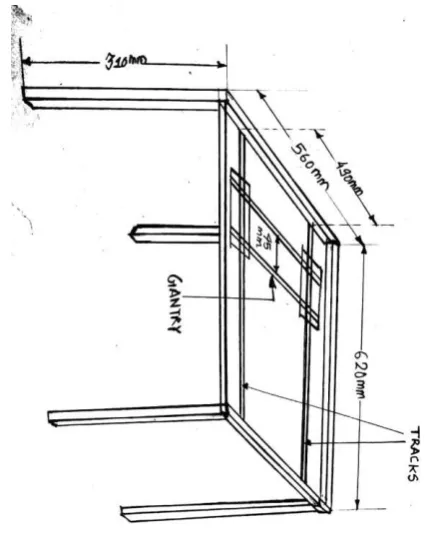
[image:2.595.324.537.78.347.2]It is very similar to 3D printer and CNC milling machine hardware. Looking at Figure for reference, one can see that there are two fixed tracks extending in the X-direction and a gantry that controls the tracks and moves along them. Mounted to the gantry is a cross-slide that moves in the Y-direction and mounted to that is the tool mount that moves in the Z-direction .Tooling includes most traditional agriculture tooling that is specially adapted for Agribot. The tracks, gantry, cross-slide , and tool mount design allow for easy scaling the X,Y, and Z directions.
Figure 1 hardware
A] Track
Agri-bot tracks are one of the components that differentiate Agribot technology from traditional free driving tractors. The tracks are fixed in the ground and allow the system to have great precision in an efficient and simple manner. There are many reasons of why tracks are superior to Free driving tractors, a few of which are listed below. Tracks provide great precision and allow the Agri-bot to return to the same position repeatedly Any type of packing structure of plants can be created and managed because of wheels(if added in future) and hardware pathways are no longer needed. Tracks take up less area than paths for tractor wheels and do not compact the soil Using tracks eliminates the need for tractor steering components and auto piloting systems
B] Gantry
The gantry, is the structural component that bridges (connects) the two tracks and moves in the X direction via an X direction drive system. It acts as a linear guide for the cross slide and a base for the Y direction drive system that moves the cross slide across the gantry in the Y-direction. It can also serve and act as a base for mounting other equipment such as seed bays, tools, electronics, inputs, and sensors. Gantry in relation to the other main components of Agri-bot hardware.
B] Cross Slide
© 2018, IRJET | Impact Factor value: 6.171 | ISO 9001:2008 Certified Journal | Page 1649 using a Y direction drive system and functions as the base or
holding structure for the tool mount.
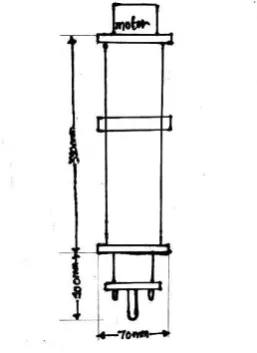
[image:3.595.97.226.172.349.2]The cross slide consists of a linear slide, a mounting plate and motor drive at the top. The linear slide interfaces with the gantry while the mounting plate provides the base for the tool mount to interface with and perform the operations.
Figure 2 Tool mount
B] Tool Mounts
Tool mounts attach to the cross slide and provide the Agri-bot with Z-direction Movement. Tool mounts serve as the base for attaching tools such as seed injectors, watering nozzles, fertilizing nozzles. They consist of a tall structural component, a drive system, and a mounting plate. Tool Mounts can be driven with various drive systems such as a rack and pinion, belt and pulley.
E] Sensors
“Smart Farming,” uses data to make more informed decisions about the set up and operation of the farm .Agri-bot will be able to use the following sensors and more to collect data about the soil, plants, and weather.
1)Soil moisture sensor
Soil moisture sensors measure the water content in soil. One common type of soil moisture sensors in commercial use is a capacitance sensor. Another sensor, the neutron moisture gauge, utilize the moderator properties of water for neutrons.
2) LM35 temperature sensor
The LM35 can be connected easily in the same way as other integrated circuit temperature sensors. It can be stuck or established to a surface and its temperature will be within around the range of 0.01˚C of the surface temperature. This presumes that the ambient air temperature is just about the same as the surface temperature; if the air temperature were much higher or
lower than the surface temperature, the actual temperature of the LM35 die would be at an intermediate temperature between the surface temperature and the air temperature
F] Stepper motors
The Nema 17 stepper motor has been chosen for it’s general availability, easy setup and control, as well as it’s accuracy, speed, and torque outputs. In addition, this motor interfaces with components such as pulleys and mounting plates available from many providers including Open Builds
3.2 Software module:
The proposed idea of our project explains two modules one is Wi-Fi module and other is driver circuit. Wi-Fi module consists of raspberry pi 0 and aurdino atmega 328.The webpage designed will control the module with the help of HTML.The intermediate used between webpage and raspberry pi is PHP.This raspberry pi module controls Aurdino by transmitting the code serially.
A] Microcontroller
An Arduino Mega microcontroller will be used to control the stepper motors, vacuum pump, servo, and future electronic and sensors. This platform was chosen for it’s low cost, general availability, hackability, expandability through shields, the expansive learning resources available, the strong DIY community already using the platform, and the fact that it is open source. In addition, Arduino programs are written in the C language and therefore very familiar to many. Expansion shields likely to be used will include WIFI, a RAMPS stepper driver, and an SD card shield. The firmware to be installed will likely be forked from an existing 3D printer Gcode interpreter and then modified for the Agri-bot application.
B] Interfacing
Sensors, motors, and other hardware will interface with a microcontroller Agri-bot that must interpret the numerical code coming from the backend and also send sensor and real time data back online. The microcontroller will therefore have its own embedded operating system of sorts that can interpret code, and send and receive data to the backend and to the motors and other sensors. I think it makes the most sense to do all of the more complex computing with the decision support system in the cloud backend and then send only the basic operation instructions to the Agri-bot similar to the Gcode used in CNC machines and 3D printers.
C] Driver circuits:
© 2018, IRJET | Impact Factor value: 6.171 | ISO 9001:2008 Certified Journal | Page 1650 the driver. The stepper motor enables accurate positioning
in x,y and z directions. The motors gives commands to the relay driver circuit (ULN 2803).The driver circuit drives the specific relay according to the required function..e.g. for watering commands are given such that relay 1 is drives and function is carried out.
4. DISCUSSIONS AND ANALYSIS
4.1 Advantages
•
Ability to plant polycrops in a machine efficient manner.•
Ability to optimize operations such as watering, spraying, and seed spacing.•
Full automation and 24/7 possible operation.•
Virtually unlimited farm design possibilities.•
Incorporates “Big Data” acquisition and analysis fordata driven decision making and “Smart Farming”.
•
Ability to plant in the most space efficient layouts.•
Scalable from a backyard system to an industrialoperation.
•
Allows for the democratization and decentralization of food production.•
Free and open source, fully documented, hack able, and accessible.4.2 Disadvantages
Failure of Supporting Infrastructure. Because Agri-bots may rely heavily on an Internet connection and the electric grid, failure of these infrastructures could cause detrimental effects to fields. These risks could be mitigated with the use of local hardware running Agri-bot software connected via an intranet, and onsite power generation with photovoltics, wind, or backup generators.
4.3APPLICATIONS
•
Prototype working inside.•
Prototype working outside.•
It can placed inside a greenhouse allowing year round growing.•
It can be used for commercial purpose.5] CONCLUSION
The vision of this paper is to create an open and accessible technology aiding. The Agri-bot Project has the potential to revolutionize the way humanity produces food both on the
small and large scale. As the vision states, the project aims to create an open and accessible technology enabling everyone to grow food and to grow food for everyone. However, revolution will not be the defining metric of success in the short term.
6] FUTURE SCOPE
Solar panel for battery to provide electricity. Water barrels can be used to collect rain water. It can be augmented with weather stations to collect
environmental data. Fitted with lights.
ACKNOWLEDGEMENT
We take the opportunity to express our deep sense of gratitude & respect towards all who helped us to complete our project. We sincerely & humbly express our gratefulness to our guide Mr. V. B. Gundavade (Department of Electronics & Telecommunication, KIT’s College of Engineering) & thank himfor him valuable support, his guidance, encouragement & cooperation without which this project would not be completed.
REFERENCES
“Urban agriculture meets the internet of Things”. Accessd at :
https://siliconangle.com/blog/2013/12/02/urban-agriculture-meetstheinternet-of-things/
“How the internet of things will help farmers for agriculture” Accessed at :
http://www.ferret.com.au/c/lxgroup/how-the- internet-of-thingswill-help-farmers-and-agriculture2508269
https:/wpcontent/uploads/2014/03/farming
HumanityOpenSource-AutomatedPrecisionFarmingMachine.pdf
BIOGRAPHIES
Ms. Kavit.a M .Sapre
B.E student electronics and Telecommunication,
KIT’s College of engineering, Kolhapur.
1’st Author
© 2018, IRJET | Impact Factor value: 6.171 | ISO 9001:2008 Certified Journal | Page 1651
Ms. Mayuri. V.Chougule
B.E student of electronics and Telecommunication,
KIT’s College of engineering, Kolhapur.
2nd Author
Photo
3rd Author
Photo
Photo
Ms. Shivani .S. Savekar
B.E student of electronics and Telecommunication,
KIT’s College of engineering, Kolhapur.
Ms. Riya .J .Sharma
B.E student of electronics and Telecommunication,