Managing Risk of Construction Projects
A case study of Iran
Mana Ghahramanzadeh
A thesis submitted in partial fulfilment of the requirements of the University of East London for degree of Doctor of Philosophy
I
Abstract
The construction industry is one of the most dynamic, risky, and challenging businesses.
Due to construction projects’ complexity and uniqueness, the number of risks present
invariably goes beyond those found in other industries. Therefore, risk management should
be applied as an integral part of project management for managing these risks – in
particular in developing countries.
Contingency theory was selected as the theoretical framework of this thesis. Since the
environment has been considered as one of the important contextual variables being
focused on in this theory, the research was situated within a specific environment.
Considering the unstable social, economic and political conditions in Iran today in
comparison with many other countries, it was found to be a suitable case to be evaluated in
this thesis.
A questionnaire was designed and twenty-five risks were identified and categorized in five
main categories as follows: Political and Governmental, Managerial and Technical,
Economic and Financial, Cultural and Social, and Natural. For each of these risks, relevant
mitigation strategies were also proposed. Criticality of risks along with effectiveness of
mitigation strategies were evaluated via 100 questionnaires which were distributed to the
three key categories of actors associated with construction projects namely clients,
contractors, and consultants. Out of 76 valid responses received, interviews were conducted
with 24 of the participants in order to extract the knowledge and understand how these
groups manage the identified risks.
Findings of the research revealed that Economic and Financial risks have the greatest
influence on construction projects in Iran. Moreover, there is a serious lack of risk
management knowledge and expertise among all the three key categories of actors. The
conclusion drawn from the evaluation of risk management strategies was that due to high
volatility of the economic and political situation of the country, reactive risk management is
practiced more than proactive risk management. The results of the case study about the
II
modifying the theory from a conceptual theory to a more meaningful theory. There is a
mixture of proactive and reactive management while utilizing the theory for managing any
situation and existence of this mixture needs to be made explicit in the theory. Likewise,
utilization of contingency plan needs to be made more explicit in the theory. Moreover,
employment of contingency theory for managing situations has been stated to be unique for
each particular situation and therefore the situation should be defined in order to refer to a
more specific concept. This eventually may lead to a more specific and detailed theory for
III
Table of contents
Chapter 1: Introduction ... 1
1.1.Risk and construction risk management ... 1
1.2.Methodology ... 2
1.2.1. Theoretical framework ... 2
1.2.2. Research approach ... 3
1.3.Iran... ... 4
1.4.Aim and objectives ... 7
1.5.Research questions ... 7
1.6.Contribution to knowledge ... 8
1.7.The overall research structure for the remainder of the Thesis ... 9
Chapter 2: Literature Review ... 11
2.1. Introduction ... 11
2.2. Project and project management ... 11
2.3. Construction project ... 14
2.4. Risk ... 18
2.5. Risk in construction projects ... 21
2.6. Risk management ... 24
2.6.1. Risk management sub-processes ... 29
2.6.1.1.Risk planning ... 30
2.6.1.2.Risk identification ... 31
2.6.1.3.Risk analysis / assessment ... 31
2.6.1.4.Risk response ... 31
2.6.1.5.Risk monitoring and control... 33
IV
2.8. Construction projects’ risk and risk management in various countries ... 39
2.9. Theories ... 41
2.10. Contingency theory ... 44
2.11. Contingency theory in context of construction risk management... 46
2.12. Conclusion ... 50
Chapter 3: Methodology ... 51
3.1. Introduction ... 51
3.2. Research methodology ... 51
3.2.1. Research approach... 53
3.2.2. Research design ... 55
3.2.2.1. Case study design ... 56
3.2.2.2. Iran: chosen case study ... 58
3.2.3. Research strategy... 66
3.2.4. Data collection methods ... 66
3.2.4.1. Previous studies and their data collection methods ... 67
3.2.4.2. Chosen data collection methods ... 70
3.2.4.3. Sample size ... 75
3.2.4.4. Data collection process... 78
3.2.5. Data analysis methods ... 80
3.2.6. Material facts ... 81
3.2.7. Reliability and validity ... 83
3.2.8. Ethical considerations ... 84
3.3. Conclusion ... 84
Chapter 4: Data Analysis - Questionnaire ... 85
4.1. Introduction ... 85
V
4.2.1. Personal information ... 86
4.2.2. Company information ... 89
4.2.3. Evaluation of the criticality of 25 risks ... 91
4.2.4. Evaluation of the effectiveness of the mitigation strategies ... 121
4.2.4.1. Cross-cluster ... 155
4.2.5. Evaluation of construction related statements ... 156
4.3. Conclusion ... 167
Chapter 5: Data Analysis – Interview ... 170
5.1. Introduction ... 170
5.2. Question1 ... 170
5.3. Question 2 ... 171
5.4. Question 3 ... 188
5.5. Question 4 and 5 ... 191
5.6. Question 6 ... 197
5.7. Question 7 ... 198
5.8. Question 8 ... 202
5.9. Question 9 ... 211
5.10. Question 10 ... 214
5.11. Conclusion ... 216
Chapter 6: Discussion ... 217
6.1. Introduction ... 217
6.2. Research questions ... 217
6.2.1. Research question 1 ... 218
6.2.2. Research question 2 ... 229
6.3. Countries with similar volatile situation to Iran... 237
VI
6.5. Conclusion ... 241
Chapter 7: Conclusion and Recommendations ... 242
7.1. Summary of findings ... 243
7.2. Contribution to knowledge... 245
7.3. Limitations of this research ... 247
7.4. Future research ... 249
References ... 251
Appendices ... 265
A: Invitation to participant ... 266
B: Participant information sheet ... 267
C: Consent form ... 271
D: Questionnaire ... 272
E: Risks mentioned by participants for the first table of questionnaire ... 289
F: Chi-squared test results ... 290
G: Interview questions ... 294
VII
List of figures
Chapter 1: Introduction ... 1
Figure 1.1 Inflation rate of Iran ... 5
Figure 1.2 Selling rate of Dollar in Tehran – Annual ... 6
Figure 1.3 Selling rate of Dollar in Tehran – Monthly ... 6
Chapter 2: Literature Review ... 11
Figure 2.1 UAI of Iran – UK and China ... 20
Figure 2.2 The forecasting process ... 35
Figure 2.3 Risk attitude spectrum ... 36
Figure 2.4 Risk management framework ... 37
Figure 2.5 Risk management process ... 38
Chapter 3: Methodology ... 51
Figure 3.1 Research process onion ... 52
Figure 3.2 A schematic representation of deductive reasoning ... 54
Figure 3.3 A schematic representation of inductive reasoning ... 54
Figure 3.4 Map of Iran ... 58
Figure 3.5 Inflation rate ... 61
Chapter 4: Data Analysis – Questionnaire ... 85
Figure 4.1 Number of participants in each group ... 87
Figure 4.2 Years of experience ... 88
Figure 4.3 Number of employees ... 89
Figure 4.4 Average annual turnover ... 89
Figure 4.5 Number of risk managers ... 90
Figure 4.6 Interaction between risk managers and employees ... 90
VIII
Figure 4.8 Criticality of 25 risks from the viewpoint of all the participants ... 97
Figure 4.9 Criticality of 25 risks from clients’ viewpoint ... 100
Figure 4.10 Criticality of 25 risks from contractors’ viewpoint ... 101
Figure 4.11 Criticality of 25 risks from consultants’ viewpoint ... 102
Figure 4.12 Distribution of construction risk ... 107
Figure 4.13 Evaluation of three groups of participants on construction risk ... 109
Figure 4.14 Two clusters of participants for evaluating risks ... 120
Figure 4.15 Two clusters of participants for evaluating the strategies ... 154
Chapter 5: Data Analysis – Interview ... 170
Figure 5.1 Political and Governmental category of risk and its sub-codes ... 171
Figure 5.2 Managerial and Technical category of risk and its sub-codes ... 172
Figure 5.3 Economic and Financial category of risk and its sub-codes ... 172
Figure 5.4 Cultural and Social category of risk and its sub-code ... 173
Figure 5.5 Corruption perceptions index - Iran ... 183
Figure 5.6 Corruption perceptions index – various countries ... 184
Figure 5.7 Sub-codes of internal risks of organization ... 188
Figure 5.8 Consultants’ risk management strategies / contingency plans ... 193
Figure 5.9 Contractors’ RM strategies (before starting project) ... 194
Figure 5.10 Contractors’ RM strategies (during project’s execution) ... 194
Figure 5.11 Sub-codes for existence of learning process at the end of project... 199
Figure 5.12 Relationship and risks from clients’ viewpoint ... 202
Figure 5.13 Relationship and risks from consultants’ viewpoint... 204
Figure 5.14 Relationship from contractors’ viewpoint ... 205
Figure 5.15 Risks from contractors’ viewpoint ... 206
IX
Chapter 6: Discussion ... 217
Figure 6.1 The risk hierarchy ... 225
Figure 6.2 Fluctuations of Iranian currency per US Dollar ... 226
X
List of tables
Chapter 2: Literature Review ... 11
Table 2.1 Top risks of construction projects in various countries ... 41
Chapter 3: Methodology ... 51
Table 3.1 Indices of Bill of Materials ... 62
Chapter 4: Data Analysis – Questionnaire ... 85
Table 4.1 Division of gender ... 87
Table 4.2 Three most important risks of the first table of the questionnaire ... 93
Table 4.3 Mean and p-value of responses for 25 risks... 98
Table 4.4 Allocation of 25 risks to three groups ... 99
Table 4.5 Allocation of 9 critical risks to 5 categories of risk ... 99
Table 4.6 Allocation of 9 critical risks (Clients) to 5 categories of risk ... 101
Table 4.7 Allocation of 9 critical risks (Contractors) to 5 categories of risk ... 102
Table 4.8 Allocation of 9 critical risks (Consultants) to 5 categories of risk ... 103
Table 4.9 First three critical risks from different viewpoints ... 103
Table 4.10 Frequency of each of the scales for all the risks ... 106
Table 4.11 Mean of all the risks ... 106
Table 4.12 t-test for the construction risks ... 107
Table 4.13 Mean of responses for each group of participants ... 108
Table 4.14 ANOVA test ... 108
Table 4.15 Post Hoc Tests - Homogeneous Subsets ... 108
Table 4.16 Distribution of responses for Approval and Permit ... 111
XI
Table 4.18 Distribution of responses for Justice Enforcement ... 112
Table 4.19 Distribution of responses for Corruption ... 112
Table 4.20 Distribution of responses for Expropriation ... 113
Table 4.21 Distribution of responses for Political Instability ... 114
Table 4.22 Distribution of responses for Foreign Exchange & Convertibility ... 114
Table 4.23 Distribution of responses for Inadequate Quality Control ... 115
Table 4.24 Distribution of responses for Force Majeure ... 116
Table 4.25 Number of participants in each of the clusters (25 risks) ... 119
Table 4.26 Percentages of participants in each of the clusters (25 risks) ... 119
Table 4.27 Distribution of responses for mitigation strategies (risk 1) ... 122
Table 4.28 Distribution of responses for the 1st strategy of risk 1 ... 123
Table 4.29 Distribution of responses for mitigation strategies (risk 2) ... 123
Table 4.30 Distribution of responses for the 1st strategy of risk 2 ... 124
Table 4.31 Distribution of responses for mitigation strategies (risks 3/4) ... 125
Table 4.32 Distribution of responses for mitigation strategies (risk 5) ... 126
Table 4.33 Distribution of responses for the 1st strategy of risk 5 ... 127
Table 4.34 Distribution of responses for mitigation strategies (risk 6) ... 129
Table 4.35 Distribution of responses for the 1st strategy of risk 6 ... 129
Table 4.36 Distribution of responses for mitigation strategies (risk 7) ... 130
Table 4.37 Distribution of responses for the 3rd strategy of risk 7 ... 131
Table 4.38 Distribution of responses for mitigation strategies (risk 8) ... 131
Table 4.39 Distribution of responses for the 1st strategy of risk 8 ... 132
XII
Table 4.41 Distribution of responses for the 3rd strategy of risk 8 ... 132
Table 4.42 Distribution of responses for the 4th strategy of risk 8 ... 133
Table 4.43 Distribution of responses for mitigation strategies (risk 9) ... 134
Table 4.44 Distribution of responses for the 2nd strategy of risk 9 ... 134
Table 4.45 Distribution of responses for mitigation strategies (risk 10) ... 135
Table 4.46 Distribution of responses for mitigation strategies (risk 11) ... 136
Table 4.47 Distribution of responses for mitigation strategies (risk 12) ... 136
Table 4.48 Distribution of responses for mitigation strategies (risk 13) ... 137
Table 4.49 Distribution of responses for the 4th strategy of risk 13 ... 138
Table 4.50 Distribution of responses for the 6th strategy of risk 13 ... 138
Table 4.51 Distribution of responses for the 7th strategy of risk 13 ... 138
Table 4.52 Distribution of responses for mitigation strategies (risk 14) ... 139
Table 4.53 Distribution of responses for the 1st strategy of risk 14 ... 139
Table 4.54 Distribution of responses for mitigation strategies (risk 15) ... 140
Table 4.55 Distribution of responses for the 1st strategy of risk 15 ... 140
Table 4.56 Distribution of responses for the 2nd strategy of risk 15 ... 141
Table 4.57 Distribution of responses for mitigation strategies (risk 16) ... 141
Table 4.58 Distribution of responses for the 2nd strategy of risk 16 ... 142
Table 4.59 Distribution of responses for mitigation strategies (risk 17) ... 142
Table 4.60 Distribution of responses for mitigation strategies (risk 18) ... 143
Table 4.61 Distribution of responses for the 1st strategy of risk 18 ... 143
XIII
Table 4.63 Distribution of responses for the 3rd strategy of risk 18 ... 144
Table 4.64 Distribution of responses for mitigation strategies (risk 19) ... 144
Table 4.65 Distribution of responses for the 3rd strategy of risk 19 ... 145
Table 4.66 Distribution of responses for mitigation strategies (risk 20) ... 145
Table 4.67 Distribution of responses for the 1ststrategy of risk 20 ... 145
Table 4.68 Distribution of responses for the 2nd strategy of risk 20 ... 146
Table 4.69 Distribution of responses for the 4th strategy of risk 20 ... 146
Table 4.70 Distribution of responses for mitigation strategies (risk 21) ... 147
Table 4.71 Distribution of responses for the 2nd strategy of risk 21 ... 147
Table 4.72 Distribution of responses for mitigation strategies (risk 22) ... 147
Table 4.73 Distribution of responses for the 1st strategy of risk 22 ... 148
Table 4.74 Distribution of responses for the 2nd strategy of risk 22 ... 148
Table 4.75 Distribution of responses for the 4th strategy of risk 22 ... 149
Table 4.76 Distribution of responses for mitigation strategies (risk 23) ... 149
Table 4.77 Distribution of responses for the 4th strategy of risk 23 ... 150
Table 4.78 Distribution of responses for mitigation strategy (risk 24) ... 150
Table 4.79 Distribution of responses for the 1st strategy of risk 24 ... 150
Table 4.80 Distribution of responses for mitigation strategy (risk 25) ... 151
Table 4.81 Number of participants in each of the clusters (strategies) ... 152
Table 4.82 Percentage of participants in each of the clusters (strategies) ... 152
Table 4.83 Number of participants in each of the clusters – cross-cluster ... 155
XIV
Table 4.85 Distribution of responses for ‘Risk Management’ statements ... 157
Table 4.86 Distribution of responses for the 4th statement (RM) ... 158
Table 4.87 Distribution of responses for ‘Insurance’ statements... 159
Table 4.88 Distribution of responses for ‘Finance’ statements ... 160
Table 4.89 Distribution of responses for ‘Politics/Government’ statements ... 161
Table 4.90 Distribution of responses for ‘Experience’ statements ... 162
Table 4.91 Distribution of responses for 30th statement (Experience)... 163
Table 4.92 Distribution of responses for ‘Market/HR’ statements ... 164
Table 4.93 Distribution of responses for ‘Construction Site’ statements ... 165
Table 4.94 Distribution of responses for ‘Contract’ statements ... 166
Table 4.95 Distribution of responses for ‘Project Bidding’ statements ... 166
Table 4.96 Distribution of responses for ‘Time’ statements ... 167
Chapter 5: Data Analysis – Interview ... 170
Table 5.1 the sub-codes mentioned by interviewees (Q2) ... 174
Table 5.2 Sum of the sub-codes mentioned from each category of risk (Q2) ... 175
Table 5.3 Sub-codes mentioned by interviewees (Q3) ... 189
Table 5.4 Sub-codes mentioned by contractors (Q 4 & Q 5) ... 195
Table 5.5 Sub-codes mentioned by interviewees (Q7) ... 200
Table 5.6 Sub-codes mentioned by clients (Q8) ... 203
Table 5.7 Sub-codes mentioned by consultants (Q8) ... 205
Table 5.8 Sub-codes mentioned by contractors (Q8) ... 208
XV
Chapter 6: Discussion ... 217
Table 6.1 Frequency of the 5 categories of risk for the 9 critical risks ... 220
XVI
Acknowledgement
Over the course of this research, many people offered both academic and material support
for which I wish to express my sincere gratitude. It is impossible to acknowledge them all
in person, but this acknowledgment goes to the few without whom it would have been
impossible to complete this study.
I am greatly indebted to my director of studies, Professor Allan Brimicombe, who was not
only my supervisor, but also a personal mentor, and a creative problem-solver whom I
could turn to in times of need. His leadership, attention to details, precious knowledge,
constructive criticism, and continuous support set an example I hope to match someday.
I would like to express my unreserved appreciation to my supportive family to whom I
dedicate this thesis; my father who always is and will be my role model and who offered
his continuous financial and moral support throughout the course of this study. More
importantly, his intellectual support proved invaluable in various stages of this thesis; also
to my mother whose inspiration, patience and enthusiasm made me able to complete this
thesis. Last but not least, my sister, Melika, whose encouragement and moral support was
second to none.
My sincere thanks go to the senior professionals who gave their valuable time filling the
questionnaires and agreeing to participate in interviews. I also extend my acknowledgments
to my friends whose precious support throughout this study made the realization of this
work possible.
Finally, I would like to thank library staffs, Business School staffs and administrators who
assisted me through various stages of my studies.
As any other studies of this nature; all the responsibility for errors and misinterpretation is
with the author.
Mana Ghahremanzadeh
1
1 – Introduction
Every human endeavour in life involves risk. Risk by nature may be a cause for concern as
it is uncertain and unpredictable, but one needs to step up to the challenge for life to be
interesting. There may be success or failure, even though the degree of failure is
proportional and cannot be defined as a precise terminology (Dey and Ogunlana, 2004).
As everything in life involves risk, management of projects cannot be an exception. I have
been working in a construction company in Iran and considering various aspects of
environment, the degree of volatility is fairly high. Therefore, I thought researching
in-depth about managing risk of construction projects through using a case study such as Iran
is not only useful for my career in the future but also the results may be effective for others
who are working in such environments. Thus, I chose the concept of risk and its
management for investigation in order to be able to apply the knowledge to both career and
life as they are about making decisions.
1.1. Risk and construction risk management
Risk as defined by Oxford English Dictionary (2013) is “a situation involving exposure to danger.”
As presented in this definition and other definitions which are discussed more fully in the
Literature Review (Chapter 2), risk is mostly considered as an event involving only
negative consequences. The definition of risk used in this thesis is the one proposed by the
Project Management Institute (PMI) (2013) as it considers both negative and positive aspects of risk; “an uncertain event or condition that, if it occurs, has a positive or negative
effect on one or more project objectives such as scope, schedule, cost, and quality”.
In this thesis, the concept of risk is investigated in the context of construction industry which as defined by Mills (2001) is “one of the most dynamic, risky, and challenging business”; and discussion is provided about the reasons why construction industry, having a
2
classifications of construction related risks proposed by different authors are also considered in order to present the researcher‟s own classification.
Risk, irrespective of its type, should be managed to achieve a desired outcome. As a result
of the common perception about risk - being negative, risk management has also been
mostly defined as mitigating and decreasing of negative events. Chapter 2 discusses
different definitions of risk management by authors along with the justification for the
selected definition for this thesis which is the one proposed by PRINCE2 - (Projects in
Controlled Environments 2) (2009) which refers to risk management as “the systematic
application of procedures to the tasks of identifying and assessing risks, and then planning and implementing risk responses.”
For investigating the process of risk management for the construction projects, a theory was
required to be used as the basis of the thesis which is explained below.
1.2. Methodology
For undertaking any research, it is required to define an appropriate methodology according
to its objectives so that researcher follows the research processes towards the realization of
the objectives. The discussion on the details of the undertaken methodology is provided in
chapter 3 (Methodology) and only a summary is explained here.
1.2.1. Theoretical framework
There are a number of competing complementary theories that can be drawn upon in
developing risk management strategies and these are discussed more fully in Chapter 2.
Among all these theories related to management and risk management, „contingency
theory‟ was found to be the most appropriate theory for the concept of this thesis as it
brings into focus the concept of „risk‟ which is deeply associated with construction projects
(Noor and Tichacek, 2009).
The theory and this thesis both reject the idea that there is one best way to manage because
3
that each project is also unique and has got its own specifications which therefore requires
suitable management practices according to its situation and specifications.
Contingency theory does not ignore the existence of universal principles for management,
but highlights the uniqueness of each management situation. Therefore, the theory uses
these universal principles together with unique specifications of the current situation and
proposes the most appropriate way for managing that situation. Utilizing contingency
theory is mostly done through organizational learning in order to use the past experiences
and apply them to current situations where possible. The focus of this theory is on the
relationship between contextual variables and the organization; stating that these variables
influence the organization and therefore the projects they are implementing. As a result, to
manage any project the specific variables associated with it should be considered and
evaluated (Gong and Tse, 2009).
As the external environment has an important influence on how any project is managed,
this research is situated geographically and temporally within a specific environment.
Considering the unstable social, economic and political conditions in Iran today in
comparison with many other countries, it was found to be a suitable case to be evaluated in
this thesis for analysing the influences of environment on construction project risk
management in-depth. A comprehensive discussion (social, economic, and political
aspects) is provided in Chapter 3 (Methodology) about the solid, distinct difficulties and
risks related to Iran and reasons why it is selected as the case study of this thesis. In this
chapter, only a brief introduction about Iran in addition to few recent economic issues are
explained.
1.2.2. Research approach
The selected research designs for this thesis are cross-sectional and case study and as
mentioned above Iran has been chosen as the case study of this thesis. Secondary data and
contextual data are used for this thesis and are discussed comprehensively in Chapter 2
(Literature Review) and 3 (Methodology). The research strategy is a mixture of qualitative
and quantitative strategies leading to selection of suitable methods for collecting the
4
the participants are three categories of actors in construction projects: client, consultant, and
contractor.
1.3. Iran
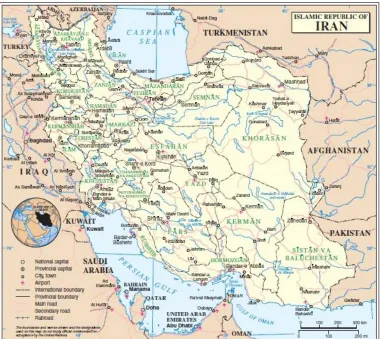
Iran (Persia) is located in southwest of Asia, Middle East and is bordered by ten different
countries, gulfs and sea on four sides. Iran can be considered as a country which has
oil-based economy and the oil sector provides around 85% of the government revenue.
Another important economic sector is the construction industry (especially since Iran is a
developing country), and has been facing difficulties in recent years. The economy of Iran
can be considered to be single-source and based on oil (Library of Congress, 2008).
Therefore, any changes in price of oil can have direct and intense influence on economy of
the country and consequently on construction projects and their associated financial aspects
(costs). Iran‟s dependence on oil export revenues has been targeted by United Nations (UN)
and United States (US) sanctions; they have obstructed development of oil and gas sector of
Iran in order to restrict its resources for uranium enrichment and also suspected terrorist
financing (Ilias, 2008). These international sanctions have adversely affected the economy
of Iran and resulted in sharp increase of subsequent instabilities in recent years; this is
illustrated below regarding inflation and currency exchange which directly cause high
fluctuations in price of materials.
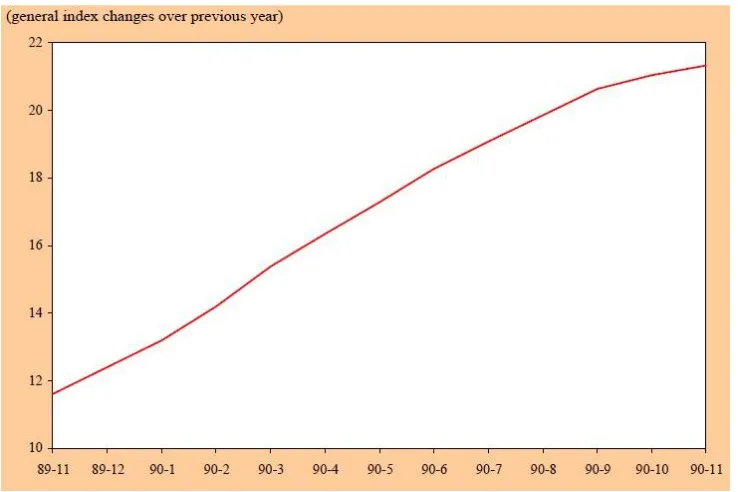
According to Central Intelligence Agency (2011), the inflation rate has been reported as
12.4% in 2010 and 22.5% in 2011. As the numbers indicate the official inflation rate of Iran
has been almost doubled due to various factors such as international sanctions and weak
currency.
Figure 1.1illustrates the inflation rate‟s changes between January 2011 and January 2012.
Since the dates in many of the diagrams extracted from the official websites of Iran are in
Persian, which has got a different calendar, correspondence of Iranian and Gregorian
calendar has been added to Appendix H. Moreover, every time Iranian dates are shown in
diagrams, equivalent dates in Gregorian calendar are mentioned in the diagram‟s
5
Figure 1.1 Inflation rate of Iran (Central Bank of Iran, 2012)
As reported by Central Intelligence Agency (2012), the exchange rate since 2007 is as
follows:
Iranian Rials (IRR) per US Dollar:
9,407.5 (2007)
9,142.8 (2008)
9,864.3 (2009)
10,254.18 (2010)
10,616.3 (2011)
“The currency has reportedly lost 80% of its value since the end of 2011. Iran‟s currency
[image:22.612.155.524.54.300.2]dropped to as much as 35,000 to the Dollar, according to agencies citing currency exchange sites in the country.” (BBC, 2012)
Figure 1.2 shows the selling rate of Dollar in Tehran, from 11 October 2011 to 11 October
2012 with each of the vertical segments in the diagram being representative of one month.
Figure 1.3 displays the selling rate of Dollar in Tehran in one month from10 September
2012 to 10 October 2012, focusing on the last month of figure 1.2 presenting a sharp rise in
prices. Each of the four segments (vertical) in the diagram is representative of one week
6
Figure 1.2 Selling rate of Dollar in Tehran – Annual (Eranico, 2012)
7
Importance of construction projects in Iran together with existence of distinct problems and
risks associated with them, i.e. examples of the recent intense volatility in economy of the
country provided above, makes Iran different from many other countries in terms of the
environment and situation. Therefore, Iran has been chosen as the case study of this thesis
as it can be quite interesting and unique to find out the specific risks of the country, the
interaction between them and how these risks can be managed depending on the situation.
1.4. Aim and objectives
Aim
The aim of this research is to investigate the risk management process in construction
projects with a focus on influences of the environment: a case study of Iran
Objectives
To investigate the risks influencing construction projects and their management strategies
To identify the criticality of risks in Iranian construction projects
To recognize the interaction between various risks influencing the projects
To examine the current knowledge base regarding the concept of risk and practice of risk management in Iran
To assess the role of environment in execution and management of construction projects
1.5. Research questions
The overall aim and objectives mentioned above were developed into specific research
questions for this thesis through reviewing the relevant literature on risk and risk
management and hence related discussion is provided in the next chapter (Chapter 2); and
8 Using a case study of Iran:
1. What are the processes of risk identification for construction projects?
Identification and evaluation of internal and external risks
The nature and strength of interaction between various risks
2. How is the knowledge about construction risks utilized in managing risks in line with contingency theory?
These research questions are investigated in relation to the possible differing perspectives
of the three main categories of actors in construction projects: client, consultant, and the
contractor.
1.6. Contribution to knowledge
The environment (an external source of risk) affects the outcome of any single project
immensely, but there are also the influences created through the interactivities of the risks
that can dictate the inner dynamics of each project. This thesis looks at risks influencing
construction projects in Iran, and how influences of environment and interactivities of risks
on each project are accommodated using contingency theory for risk management.
Using the concept of contingency theory, the decision-making process is studied. This
concept recognizes that according to the logic of their situation, managers pursue certain
aims and they do this by assessing which is the most appropriate way of achieving these
goals within the given situation (focusing on the specific risks which may influence Iran
more than other countries).
Therefore, this thesis contributes to knowledge by providing a deeper understanding of how
contingency theory works in practice and modifying the theory from a conceptual theory to
a more tangible and meaningful theory. Moreover, proposed guidelines for managing risk
of construction projects may help managers in Iran and also countries with similar difficult
conditions, to manage the construction projects according to the situation and mitigate the
9
1.7. The overall research structure for the remainder of the Thesis
Chapter two: Literature Review – reviews the literature on project and project management; highlights the construction projects as the designated context of this thesis; clarifies the
concept of risk (the focus of this thesis) in general and in the context of construction
projects; defines the risk management process and refers to its sub-processes; underlines the
factors influencing the risk management process; reviews related studies and papers
undertaken by other researchers and discusses their findings; evaluates various theories
about management and risk management and argues for justification of choosing
contingency theory as the theoretical framework of this thesis; examines the contingency
theory in context of construction risk management; and finally presents the research
questions which are answered through undertaking this thesis
Chapter three: Methodology – discusses the preferred research methodology undertaken for answering the questions of the thesis; defines the adopted research approach; discusses the
rationale for the choice of research designs followed by a critical evaluation of the case
study design; describes Iran and the social, economic, and political aspects of its situation
and argues the reasons for selecting Iran as the case study of this thesis; distinguishes the
research strategies and reviews previous studies, their strategies and data collection
methods to justify the chosen data collection methods for this thesis; explains the sample
size for the questionnaires and interviews; identifies the data analysis methods used; and
finally refers to material facts and ethical considerations of the thesis
Chapter four: Questionnaire Analysis – as the first part of data analysis deals with the quantitative data analysis; illustrates the results of different sections of the questionnaire in
tables and diagrams and provides explanations for each; and discusses the specifications of
environment and differences of three groups of participants who have completed the
questionnaires
Chapter five: Interview Analysis – as the second part of data analysis deals with qualitative data collected through conducting interviews; analyses the content of questions one by one;
shows the coding scheme for each question; and presents quotations from participants while
10
Chapter six: Discussion – reviews the results of two previous chapters and analyses them together in relation to the findings of other authors argued in Literature Review chapter and
contextual data about Iran discussed in Methodology chapter; answers the research
questions; proposes guidelines which may be useful for other countries with volatile
situations similar to Iran; and finally discusses the results in relation to the contingency
theory
Chapter seven: Conclusion and Recommendations – summarizes findings of the thesis; discusses the contributions to knowledge; explains the limitations of this research and
11
2
– Literature Review
2.1. Introduction
In the Introduction chapter, the background to the research, the methodology to be adopted
and the chosen theoretical framework were briefly presented. An overview of Iran was
provided and the aim and objectives were stated. At the end of the chapter, the overall
structure of the thesis was outlined.
This chapter reviews the relevant literature on project management with an emphasis on
construction projects as the context of this thesis. The concept of risk in general and in the
context of construction is clarified and its management process and sub-processes are
discussed. This chapter then underlines the factors influencing the risk management
process. Related studies undertaken by other researchers are reviewed and their findings are
discussed. Management and risk management theories are then evaluated and the selection
of contingency theory as the theoretical framework of this thesis is argued. Finally,
contingency theory is examined in the context of construction risk management leading to
the presentation of research questions to be addressed by this thesis.
2.2. Project and project management
Project Management Institute (PMI) (2013) has defined a project as “a temporary endeavour undertaken to create a unique product, service, or result.” It is temporary
because it has a defined start and finish date; it is unique, meaning that it is not a routine
operation, and the product/service would be different from other similar products/services.
Examples of projects can be considered as developing a new product, designing a new
machine, building a new shopping mall. Financial resources, human and materials are
organized in a project for delivery of a specific work considering a variety of constraints
such as time and cost (Turner, 1992). Therefore, different aspects of the project should be
managed properly in order to deliver the objectives of the project on time and within
budget, and hence it is important to set clear objectives for the project. Due to the one-off
12
management. Project management as defined by PMI (2013) is “the application of
knowledge, skills, tools, and techniques to project activities to meet the project requirements.”
Apart from the time, cost and scope of the project which need to be clearly defined, the
quality (specifications) of the various parties‟ requirements and risks involved in the project
should also be determined distinctly. Each of these criteria should be managed in addition
to the communication between them. A project usually exists in an organizational context
(comprising other projects); is influenced by this context (environment) and may also
influence it in turn.
There are various professional bodies and national associations on the development and
spread of project management around the world. International Project Management
Association (IPMA) is an international non-profit organization that aims at development of
the project management profession and provides standards and guidelines for the work of
professionals in project management (IPMA, 2013). Project Management Institute (PMI) is
another non-profit organization located in United States for advancing the project
management; and the Project Management Body of Knowledge (PMBOK) is its book
presenting project management standards and is published internationally (PMI, 2013).
Similar to IPMA and PMI, Association of Project Managers (APM) is an UK-based
organization which exists with the purpose of promoting the science of project management
(APM, 2013). Another methodology for the project management developed by the UK
government as the standard used for the public projects is called PRINCE2 (Projects in
Controlled Environments, version 2) (PRINCE2, 2009). Other standards developed for
improving the project management science have been provided by GAPPS (Global
Alliance for Project Performance Standards) which is a unique alliance that presents this
information freely to be used by institutions and associations (GAPPS, 2013).
The standards presented for managing the projects covers the principles of project
management that are generally accepted for all types of the projects; however, some of the
professional bodies deal with specific types of projects such as the Chartered Institute of
Building (CIOB) which is focused on construction projects‟ management and upholds and
develops the science and practice of building and construction management by providing
13
The Construction Extension to the PMBOK Guide is another document which provides
industry-specific (construction industry) application area and was published by PMI in
2003 for supporting the project management practitioners in specific industry areas. This
extension describes the generally accepted principles for construction projects that are not
common to all project types. The purpose of this document as described in PMBOK Guide
(2000) Edition (cited in Construction Extension, 2003) is “application area extensions are
necessary when there are generally accepted knowledge and practices for a category of
projects in one application area that are not generally accepted across the full range of project types in most application areas.” The reason why PMBOK has issued the
construction extension is that management and practices of construction projects were one
of the foundations of the original document of PMBOK in 1987. The concept was then
broaden in order to cover all kinds of the projects, however, since it does not fully cover
present-day practices for managing the projects in construction industry; the construction
extension was provided by PMI in order to improve the effectiveness of construction projects‟ management and to include applicable materials specific to construction projects
(PMI - Construction Extension, 2003).
All these professional bodies and associations provide their own standards and guidelines
for managing projects and presents frameworks related to different aspects of the projects.
Risk is one of these aspects which is the focus of this study and specific standards have
been provided for it such as the Practice Standards for Project Risk Management presented
by PMI in 2009 (PMI, 2013). Risk is also one the seven themes on which the PRINCE2
methodology is based (PRINCE2, 2009). The concept of risk is fully discussed in this
chapter.
It should be noted that while the management process of the projects is discussed, the
Project Life Cycle should not get confused with the Product Life Cycle. The Project Life
Cycle as stated by PMI (2013) is “the series of phases that a project passes through from its initiation to its closure”; however, the Product Life Cycle is the duration (which is divided
into stages) from which a product is launched in the market until it leaves the market and
comprises four stages: introduction, growth, maturity and decline (Baines et al., 2008). Managing the projects, the project life cycle which defines the beginning and the end of a
14
no single ideal structure that can be applied to all projects and depending on the type of the
project, division of these phases might differ but usually comprise conceptual/feasibility,
planning, designing, executing and finishing phases (Chapman and Ward, 1997). At the
conceptual phase, information is at a preliminary level because the information availability
increases as a project progresses. Therefore, in the first phase the objective would be to
have strategic planning which in then replaced by more precise plans as the amount of
available information grows in subsequent phases. However, because change is an
inevitable characteristic of any project, the plans should be checked regularly in order to
take account of any changes (Mills, 2001).
There are various types of projects and according to the characteristics of each type, it may
be managed differently. One of these types is „construction‟ project which is explained
next.
2.3. Construction project
Construction project is a type of project dealing with the process of creating physical
infrastructure such as residential building, industrial and commercial buildings, highways,
and utilities. Phases (stages) in construction project are more or less like all the other types
of projects and different authors/institutes have suggested their own division of phases
leading to the similar project life cycles. Zou et al. (2006) have divided the phases of a construction project into feasibility, design, construction, and operation, whereas Liu and Zhu (2007)‟s division of construction phases are as follows: conceptual, design, tender,
preconstruction, and build. Phases of the construction project as defined by PMI
(Construction Extension) (2003) are Concept, Planning (& Development), Detailed Design,
Construction, and Start-up and Turnover.
As is illustrated in different divisions presented above, they broadly stay the same and it is
sometimes synonymous words that are substituted for each other in naming the same
phases. The number of phases may also increase depending on the managers‟ viewpoint as
they may subdivide one phases in order to focus on the details of each phase separately and
15
Generally, every construction project starts with the feasibility phase in order to check
whether it is possible to operate this project or not and result in a go/no-go decision at the
end of the phase. However, this phase can be iterative if a project requires modification
before a „go‟ decision can be made. In case of possibility of the project, there will be a
planning phase followed by designing the project according to its specification. And finally,
the will be the actual construction phase and building of the project. Other phases such as
tendering, preconstruction, and handover may also be added to these phases but the concept
stays the same.
There are various parties involved in any construction project; usually the main parties are
client (employer), contractor and consultant. However, each of these main categories may
consist of different specialist such as superintendent, project manager, subcontractor,
quantity surveyor, and technical manager. Any of these parties may get involved in the
construction project (in different phases of the project) depending on the type of the project,
type of the procurement system, and type of the contract chosen for the project.
Every client at the beginning of any project aims at developing a procurement system
which is appropriate for the project considering all the objectives of the project and also
specifications of different procurement systems which affect the time, cost and quality of
any project. A procurement system (delivery system) as defined by Love et al. (1998) is “an organizational system that assigns specific responsibilities and authorities to people and
organizations, and defines the various elements in the construction of a project.”
Ashworth and Hogg (2007) have defined construction procurement system as the
management of the entire procedure which is associated with delivery of a construction
project. The difference between the various procurement systems is in the allocation of
responsibilities, the sequence of activities, adopted organizational approach, and the
processes utilized in project delivery.
Hence, procurement systems vary from project to project and clients may choose different
systems in order to divide their multiple responsibilities between individuals for the
appropriate delivery of the project. Morledge and Smith (2013) believe that the
construction procurement system is mainly about the human aspects of the people who
interact with each other and with their environment and as a result their approach is
16
Therefore, it demonstrates the importance of allocation of responsibilities and risks to
parties in different procurement systems and how these parties cooperate with each other.
There are four main procurement system classified as:
Traditional: comprise three separate sequential phases of design, bid, and build. The client initiates the project; consultant is responsible for the design of the project and
then contractor bid for the project in order to take the responsibility of the actual
construction.
Design and build: design and construction phases are handled by the same organization which is the contractor.
Management contracting: the main contractor called the management contractor executes the project under a series of contracts signed by sub-contractors who are
selected in competitive bidding.
Construction management: project planning, design and construction phases are treated as integrated tasks and the client, consultant and contractor are united
(Oladinrin etal., 2013).
There are also other types of procurement system such as Public-Private Partnership (PPPs)
and Private Finance Initiatives (PFI) which focus on the co-operative relationship of
government and private sector companies. One of the significant processes in the
construction procurement system is selecting the suitable type of the contract based on the
type of the project and its objectives. Subsequently, one of the principal reasons in choosing
different types of the procurement systems and contracts is allocation of the responsibilities
to involved parties and more specifically allocation of the project‟s risks to parties (Davis et al., 2008).
There are different types of contract available for construction projects and selection of any
of them depends on the category and size of the project. Some of the contracts are as
follows:
Fixed price/Lump sum price: contractor is responsible for the tasks determined in the contract and is paid a fixed price by the client.
17
Billed rates/Unit rates: payment to the contractor is according to the calculation and assessment of the work done based on the unit rates.
Turnkey/Design build: contractor is responsible for all the phases of the project from design to completion.
Partnership/Joint venture: due to different reasons (such as the project‟s extent, political issues) project is getting executed by various companies who work together
(Avazkhah and Mohebbi, 2010).
Details, involved parties, client‟s method of payment and responsibilities of parties in each
of these contacts differ from the other. Discussion on how the client transfers the project
risk to various parties and how the risk is shared between them depending on the chosen
procurement system and the contract is provided in section 2.5 - Risk in construction
projects, after explaining the concept of risk.
Selecting the appropriate procurement system and contract for any project (by the client)
which deals with allocation of responsibilities and risks to various parties has a great
significance in appropriate management of the project. Examples are available in reports of the UK‟s Public Accounts Committee (PAC) and National Audit Office (NAO) where they
explain how the projects are managed and what are the various factors influencing the
project from its start to completion. The failure of the Metronet – the company associated
with London Underground project executed in 2007 through Public-Private Partnership in
London – has been stated in the NAO report (2009) as “the main cause of the Metronet‟s failure was its poor corporate governance and leadership.” Frequent changes of executive
management resulting in incapability for efficient management and also poor quality of
information available to management caused inadequate performance of the project. It can
be understood how the selection of the procurement system such as Public-Private
Partnership in this project and the way the parties cooperate during the project execution
can influence the management of a project. Moreover, political and managerial issues had
also resulted in various difficulties for this project such as frequent changes of management
and therefore caused inefficient management and communication for the project (NAO,
2009).
Another example can be referred to London 2012 Olympic and Paralympic Games where
18
pounds in 2007. As reported by the PAC (2010) “one of the main reasons for the increased
budget for the Games announced in March 2007 was the inclusion of a funded contingency,
but three years later there is still no such contingency for LOCOG (London Organizing
Committee of the Olympic and Paralympic).” It again demonstrates influences of political,
governmental and managerial issues which may result in client‟s unrealistic planning and
cost estimation that may subsequently cause an increase in budget of a project which is not
always possible to get added (PAC, 2010).
Examples related to Iran on how the clients manage construction projects and the political,
governmental, economical and managerial influences on any project are provided in
Chapters 5 and 6 (Interview Analysis and Discussion).
Therefore, each construction project has its own unique characteristics which affect the
approach adopted and the way the project is managed. There may be many interdependent
activities where each activity has its particular time, cost, quality specifications and risks
(Gunhan and Arditi, 2007). Among all the factors associated with the construction projects, the concept of “Risk” has been chosen as the focus of this study and is discussed next.
2.4. Risk
“If you are sure you understand everything that is going on, you are hopelessly confused.”
Walter F. Mondale
The Italian verb “Riscare” that means “to dare” or “to have the cheek to do something” is where the word “risk” is coming from, showing that risk is not fate but a choice (Bernstein,
1996). All choices in life involve risk, and risk stems from uncertainty, which in turn is
caused by a lack of information, knowledge or experience (Jannadi and Almishari, 2003). It
was during the Renaissance when the study of risk started and since that time people and
institutes have proposed various definitions for risk, some of which have been discussed
below. However before discussing risk, it is required to define some other terms which may
sometimes be used interchangeably: uncertainty, hazard, and vulnerability.
As defined by Flanagan and Norman (1993), uncertainty is “a situation in which there are
decision-19
maker.” Likewise, risk relates to the same underlying concept – unknown future, however
the probability of the event occurring can be assessed by decision-maker when the decision
is made under risk due to the existence of information and historical data. Therefore, there
is always uncertainty and there will be no risk without uncertainty; but the difference is in
the ability for estimating the probability of the event (either intuitively or rationally) for the
risk and not for the uncertainty.
Another distinction between uncertainty and risk as discussed by Hillson and
Murray-Webster (2004) arises from consideration of the consequences; because uncertainty without
consequences does not cause risk. Therefore, they believe that risk can only be defined in
relation to objectives and the consequences it may have on them as “an uncertainty that could have a positive or negative effect on one or more objectives.”
The Health and Safety Commission (1995) defines hazard as “the potential to cause harm.”
There is a probability for occurrence of this potentially damaging phenomenon and from
the exposure of it (hazard), a degree of loss will be resulted which is called vulnerability
(Brimicombe, 2003). Therefore, hazard and the degree of loss it may cause (vulnerability)
can be considered as components of risk.
Another component of risk can be stated to be the Uncertainty Avoidance which is one of
the four dimensions of culture presented by Hofstede et al. (2010). Culture as defined by them is “the collective programming of the mind which distinguishes the members of one group or category of people from another” and the most significant differences among
cultures is to discover to what extent members of these cultures who can be the people
living in different countries differ with regard to four dimensions of the culture: power
distance, collectivism vs. individualism, femininity vs. masculinity, and uncertainty
avoidance. Uncertainty avoidance as defined by Hofstede et al. (2010) is “the extent to which the members of a culture feel threatened by uncertain or unknown situations and try
to avoid such situations.” This dimension of the cultures is measured from weak to strong
where high uncertainty avoidance societies use formality in interaction with others, show
strong resistance to change, take moderate risks, and rely on rules whereas low uncertainty
avoidance societies use informality in interactions with others, show less resistance to change, take risks easier, and rely on informal norms. Looking at the Hofstede‟s website, it
20
of risk. As it is demonstrated in the left section of figure 2.1, the Uncertainty Avoidance
Index (UAI) of Iran has been scored as 59 which shows a high preference of people in this
country for avoiding uncertainty. Countries with high uncertainty avoidance maintain rigid
codes of belief, they may have the need for rules, and innovation may be resisted since this
index exhibits the way a society deals with the fact that the future is unknown, the extent to
which they feel threatened and therefore create beliefs in order to try to avoid it (The
Hofstede Centre, 2013).
Figure 2.1 UAI of Iran and in comparison with UK and China (Based on The Hofstede Centre, 2013)
Right section of figure 2.1 compares Iran with UK and China. Looking at the indices for
UK (35) and China (30), it is demonstrated that these countries have low scores on
uncertainty avoidance. Therefore, adherence to rules may be more flexible in order to suit
the situation and the people are more comfortable with ambiguity and not knowing what the
day brings in comparison with countries with high uncertainty avoidance such as Iran (The
Hofstede Centre, 2013).
As it is seen from the differences between cultures and how people rely on rules for
lessening the unpredictability of future events; it can be understood why behaviour of
people is different in taking risks and why risk management strategies used in one country
21
However, it should be recalled that the above terms, uncertainty, hazard, vulnerability, and
uncertainty avoidance are all considered as components of the risk and should not be
confused with „risk‟ which is the concept being studied in this thesis.
Willet (1951) has described risk as “a phenomenon objectively correlated with subjective uncertainty of an undesirable event occurring.” Loosemore et al. (2006) have further improved the definition of risk as “A potential future event which is uncertain in likelihood
and consequence and if it occurs, could affect a company‟s ability to achieve its project
objectives.”As it is illustrated in these definitions, Willet refers to risk as an undesirable
event and likewise Loosemore et al. have stated that risk affects the ability of the company to achieve the project objectives. Commonly, people perceive risk as just “negative”
consequences of an event, whereas it includes “positive” consequences as well. Project Management Institute (PMI)‟s definition of risk considers existence of both positive and
negative consequences of risk as “an uncertain event or condition that, if it occurs, has a
positive or negative effect on one or more project objectives such as scope, schedule, cost, and quality” (PMI, 2013). These potential effects (negative/positive) of the possible and uncertain event would be named as “threat” in case of negative effects and “opportunity” in
case of positive effects (Figueiredo and Kitson, 2009). Definition of risk presented by PMI
is what the researcher means by risk in this thesis.
As discussed above, all choices in life involve risk and executing projects can also be
considered as choices. Chapman and Ward (1997) believe that all projects are associated
with risk and it does not worth pursuing a zero-risk project. Definition of project risk presented by them is “the implications of the existence of significant uncertainty about the
level of performance achievable.” Construction project is not an exception and involves
risks. Therefore, the concept of risk in construction projects is further discussed below.
2.5. Risk in construction projects
Akintoye and Macleod (1997) have defined risk in relation to construction as “a variable in
the process of a construction project whose variation results in uncertainty as to the final
22
Construction is one of the most dynamic, risky, and challenging industries which has both a
project-based and multi-organizational nature (Mills, 2001). Due to construction projects‟
complexity and uniqueness, not only does the number of risks present invariably go beyond
those found in other industries but the risks also change from one construction project to
the next (Panthi et al., 2009).
Risk is an inevitable phenomenon in an industry as dynamic as construction, irrespective of
the size of the project. It is subject to more risks because of distinctive characteristics of
construction such as financial intensity, complex procedures, lengthy duration, offensive
environment and dynamic arrangements of organizations. Many other factors affect the
level of risk including situation of market, level of competition, size of the project, political
and economic variations, expertise of parties (Flanagan and Norman, 1993; Akintoye and
MacLeod, 1997; Smith, 2003) (PMI, 2004; Smith et al., 2006)
These risks are distributed through the entire project life cycle and some of the risks may
happen at more than one phase. There are arguments regarding the degree of risk in
different phases of a construction project. Hayes etal. (1986) and Godfrey (1996) believe that the greatest degree of risk exist in the earliest phase of the project when available
information about the project is the least. This is in agreement with other people such as
Chapman and Ward (1997) and Hassanein and Afify (2007) who have stated that risk is at
its peak in the conceptual phase. However, it is in contrast with Zou et al. (2006) who consider the construction phase to be more risky phase than the feasibility (conceptual)
phase. In addition to these, there are other theorists believing that risks of construction
projects increase as the project progresses and this illustrates that each phase of the
construction project includes more risks than the previous one (Wang et al, 2004).
However, the researcher considers that this greatly depends on the type of the project, type
of the contract and even type of the risks (the risks which are getting compared)that
determine which phase may include more risks (especially since some risks may occur in
more than one stage). Otherwise, this is not something precise and absolute to be measured,
ranked and then allocated to different phases of the construction project for comparison.
Various institutes and authors have classified construction risks into different types and
hierarchies. A broad classification has been proposed by Flanagan and Norman (1993) as
23
dynamic/speculative risks with possibility of potential gains as well as losses. Dissimilar to
consideration of losses and gains associated with the risk for its classification, Smith and
Bohn (1999) have considered internality and externality of the risk to the project. They
have classified risk into two types of internal and external; internal risks are the ones
generating inside the project and more probable to be controlled whereas external risks are
originated outside of the project and therefore mostly not controllable. Looking at another
classification suggested by Smallman (1999), it can be seen that sometimes commonalities
can be realized in classifications which have different names. His classification comprises
two broad categories of direct risks including human, organization and technological
(HOT) and indirect risks including regulatory, infrastructural and political (RIP).
Comparing two recent classifications, it can be assumed that direct and indirect categories
have similarities with internal and external categories, both present the extent to which the
risks are specific to the project.
Risk has also been broadly categorized as either subjective or objective. Subjective risks are
the ones which are analysed based on the experience and knowledge of the analyst
(qualitative), whereas objective risks are analysed by calculation of their impact and
likelihood (quantitative). Adams (2008) believes that most of the construction project‟s
risks are subjective because there are not sufficient historical data for their quantitative
analysis and should be analysed according to analyst‟s judgment. Risks can be further
sub-categorized into smaller groups according to their type and impact. Examples are risk
classifications of Wiguna and Scott (2006) into four categories: economic and financial
risks, external and site condition risks, technical and contractual risks, and managerial risks;
and the PMI (2004)‟s one into another four categories: Technical risks, organizational risks,
project risks and external risks (TOPE risks). As discussed earlier, similarities can be
recognized in different classifications such as technical risks or external risks being
presented in both of the recent examples. The researcher also proposes a different
classification for the construction risks in the Methodology chapter (Chapter 3).
Risks, irrespective of their type, should be managed in order to decrease or remove the
negative outcomes and discover the opportunities at the earliest chance for maximizing the
benefits realized from them. At the outset of a project, all risks lie