Monetary Policy in Transition Economies
Wojciech S. Maliszewski
PHD DISSERTATION IN ECONOMICS
London School o f Economics and Political Science
University o f London
All rights reserved
INFORMATION TO ALL USERS
The quality of this reproduction is dependent upon the quality of the copy submitted. In the unlikely event that the author did not send a complete manuscript and there are missing pages, these will be noted. Also, if material had to be removed,
a note will indicate the deletion.
Dissertation Publishing
UMI U615869
Published by ProQuest LLC 2014. Copyright in the Dissertation held by the Author. Microform Edition © ProQuest LLC.
All rights reserved. This work is protected against unauthorized copying under Title 17, United States Code.
ProQuest LLC
789 East Eisenhower Parkway P.O. Box 1346
Ac k n o w l e d g m e n t s
I would like to thank my supervisors, Professor Charles A.E. Goodhart and Professor Charles Bean for their intellectual guidance and encouragement. Working with them was a great honour and pleasure. I am also indebted to Georges de Menil, Marek Dabrowski, Nikolas Miiller-Plantenberg, Patricia Brukoff and other colleagues and staff from the London School of Economics, Centre for Social and Economic Research CASE (Warsaw, Poland), Pro Democratia Foundation International Economic Advisory Group (Bucharest, Romania) and International Monetary Fund for comments, suggestions and help.
I would also like to thank the European Commission for the financial support, without which I would not have been able to complete this work.
F
3
-Ab s t r a c t
These essays look at determinants of inflation and policies to control it at different stages of transition. It attempts to determine what factors have shaped the inflationary process, how successful were the policies adopted to control inflation, and what policy conclusions can be drawn from the experience of transitional economies. The first paper analyzes central bank independence in transitional economies, regarded as key for a successful monetary policy making. The results show that the central bank independence started to influence inflation only after the initial transitional shocks.
The next two papers analyze monetary transmission mechanisms in less advanced economies, choosing Georgia and Romania as examples. The papers estimate structural models of inflation. The results show that, in the case of Romania, inflation was driven by a monetary expansion. Interactions between real and monetary developments were limited when inflation was high. In Georgia, where the dichotomy between the real and monetary sectors is also evident in the data, the tight control over the exchange rate was crucial for maintaining a low-inflation equilibrium.
The third paper focuses on inflation in advanced transitional economies, analyzing transmission mechanisms and assessing the implementation of inflation targeting in the Czech Republic and Poland. The results show that the exchange rate has played a significant role in the transmission mechanism, suggesting that the behavior of this variable should be carefully watched even under an inflation targeting regime.
ABSTRACT...3
1 INTRODUCTION...8
2 CENTRAL BANK INDEPENDENCE IN TRANSITION ECONOMIES 14 2.1 Introduction... 14
2.2 Central bank independence: theory and empirical evidence... 15
23 Economic theory and transition reality... 17
2.4 Empirical research on CBI in transition economies... 19
2.5 The index of CBI and comparison with previous studies... 20
2.6 Changes in central bank laws ... 26
2.7 Central bank independence and inflation performance... 31
2.8 Conclusions ... 39
2.9 Appendix: Construction of indices of Central Bank Independence... 41
3 MONEY, INFLATION AND OUTPUT IN ROMANIA, 1992-2000... 47
3.1 Introduction... 47
3.2 Romania: A Decade of Delayed Liberalization and High Inflation... 49
3.3 Modelling Money Demand in Transition... 56
3.4 Choice of Variables and Tests for Stationarity... 57
3.5 Johansen’s tests for cointegration and weak exogeneity... 58
3.6 Error correction model...64
3.7 Economic interpretation...67
3.8 Conclusions...---...--- 69
3.9 Appendix: Construction of the administered price index... 70
3.10 Appendix: Unit Root Tests... 71
4.1 Introduction... 72
4.2 Macroeconomic Developments in Georgia...73
4 3 Model Specification... 77
4.4 Sources, Transformations and Statistical Properties of the Data... 79
4.5 Testing and Estimation of Co-integrating Vectors... 80
4.6 Error-Correction Model for Inflation... 86
4.7 Conclusions... 90
4.8 Appendix: Tests for Stationarity... 92
5 MONETARY POLICY IN ADVANCED TRANSITION ECONOMIES... 93
5.1 Introduction... 93
5.2 Monetary and exchange rate policy in Poland and the Czech Republic...96
5 3 Specification and identification of the model... 100
5.4 Estimation and results... 103
5.5 Counterfactual Simulation of the 1998 Policy Change... 110
5.6 Conclusions... 115
5.7 Appendix: Data sources and transformations... 118
5.8 Appendix: Bayesian estimation...119
5.9 Appendix: State-space model for GDP interpolation ... 123
6 CREDIBILITY OF INFLATION TARGETS IN POLAND...126
6.1 Introduction... 126
6.2 Credibility of inflation targets in empirical literature... 128
6 J Inflation targeting in Poland... 131
6.4 Data and Methodology... 136
6.5 Estimation of the Credibility of Inflation Targets... 140
6.6 Conclusions...— ... 146
6.7 Appendix: Bayesian VAR Model...148
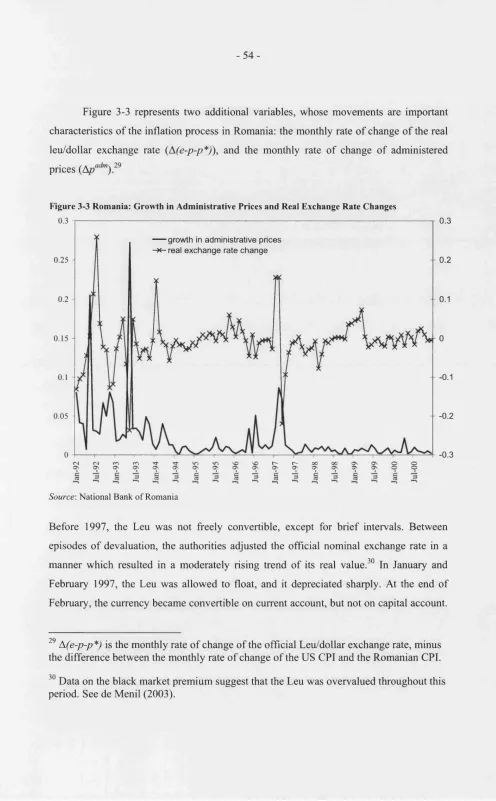
Figure 5-3 Romania: Growth in Administrative Prices and Real Exchange Rate Changes... 54
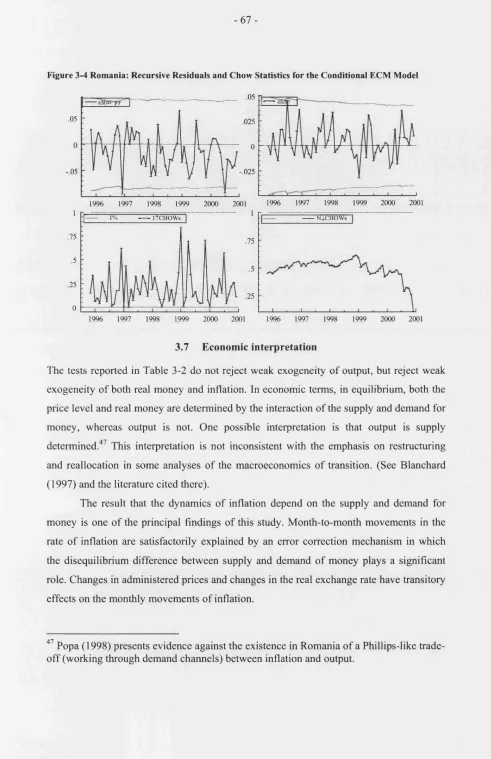
Figure 5-4 Romania: Recursive Residuals and Chow Statistics for the Conditional ECM Model... 67
Figure 6-1 Georgia: Lari/USD exchange rate and NBG interventions at the TICEX market... 76
Figure 6-2 Georgia: Inflation and percentage changes in Lari/USD exchange rate... 76
Figure 6-3 Georgia: Recursive Estimates of Long-Run Coefficients of the Price Equation... 86
Figure 6-4 Georgia: Cointegrating Vector and Components of the Long-Run Relations... 86
Figure 6-5 Georgia: Ap actual values, fitted values and residuals from the error-correction model... 90
Figure 6-6 Georgia: Ap recursive residuals, 1-step ahead Chow tests and break-point Chow tests.... 90
Figure 7-1 Percentage deviations from central parities for the Czech Republic and Poland 100 Figure 7-2 Czech Republic: Impulse responses to a monetary policy shock in two regimes: 1996.3-1997.12 (left column) and 1998.1-2003.12 (right column) with 95% confidence interval 109 Figure 7-3 Poland: Impulse responses to a monetary policy shock in two regimes: 1995.5-1998.2 (left column) and 1998.3-2004.9 (right column) with 95% confidence interval... 109
Figure 7-4 Czech Republic: Counterfactual simulation of a policy rule from the crawling peg regime operating in the floating exchange rate period... I l l Figure 7-5 Poland: Counterfactual simulation of a policy rule from the crawling peg regime operating in the floating exchange rate period... 112
Figure 7-6 Czech Republic: Counterfactual simulation of a policy rule from the crawling peg regime operating in the floating exchange rate period using net inflation... 114
Figure 7-7 Poland: Counterfactual simulation of a policy rule from the crawling peg regime operating in the floating exchange rate period using net inflation... 115
Figure 7-8 Czech Republic: Quarterly GDP, proxy monthly series, and interpolated GDP ... ..125
Figure 7-9 Poland: Quarterly GDP, proxy monthly series, and interpolated GDP... 125
Figure 8-1 Poland: Speed of disinflation implied by the Dec-to-Dec inflation targets and actual year-on-year CPI inflation... 135
Figure 8-2 Poland: Expected Dec-to-Dec inflation from the Reuters survey, forecasted Dec-to-Dec inflation from the BVAR model, and inflation targets (upper panel), and expected year-on-year inflation one-year ahead from the Reuters survey, forecasted year-on-year inflation one-year ahead from the BVAR model and implicit targets (lower panel)...142
Figure 8-3 Poland: Predictive densities of Dec-to-Dec inflation from the BVAR model, implicit distributions around Dec-to-Dec inflation targets, and histogram of Dec-to-Dec inflationary expectations from the Reuters survey at the beginning of each year... 143
Figure 8-4 Poland: Estimates of weights attached to targets in inflationary expectations from the Reuters survey ... 144
LIST OF TABLES
Table 4-1 Aggregate indices of political (PI), economic (El) and overall (OI) independence...23
Table 4-2 CBI ranking: Comparison of indices ... 26
Table 4-3 Inflation, timing of stabilization, and changes in central bank laws... 28
Table 4-4 Relationship between average depreciation in the real value of money (t e/(1+tc)) in the post enactment period and CBI... 33
Table 4-5 Relationship between annual depreciation in the real value of money (t c/(1+7i)) in.post enactment period and CBI 36 Table 4-6 Relationship between annual depreciation in the real value of money (n/(l+7i)) in.post enactment period and CBI 37 Table 4-7 Elements of political (PI) and economic (El) CB independence. OI = EI+PI... 41
Table 4-8 Central bank governor... 42
Table 4-9 Central bank board... 43
Table 4-10 Monetary policy... 44
Table 4-11 Constraints on central bank credit to the government... 45
Table 5-1 Romania: Cointegration stsitisti^:s... 61
Table 5-2 Romania: Tests for restrictions in the conditional model... 62
Table 5-3 Romania: Error correction model: FIML estimates... 66
Table 5-4 Romania: ADF unit root tests on the SA data—long sample: 1.1992 -12.2000... 71
Table 5-5 Romania: ADF unit root tests on the SA data—short sample: 4.1993 -11.1996... 71
Table 6-1 Georgia: Selected Macroeconomic Indicators, 1995-2002... 75
Table 6-2 Georgia: Tests for the number of cointegrating vectors between p, m, e and y...83
Table 6-3 Georgia: Tests for weak exogeneity and restrictions on long-run coefficients... 84
Table 6-4 Georgia: Coefficients of cointegrating vectors p and adjustment coefficients a...85
Table 6-5 Georgia: Parsimonious error-correction equations for inflation and money demand 88 Table 6-6 Georgia: Diagnostic statistics for the single-equation inflation model 88 Table 6-7 Georgia: Robustness check for the single-equation inflation model... 89
Table 6-8 Georgia: Unit Root Augmented Dickey-Fuller Test Statistics 1996.1 - 2003.2... 92
Table 7-1 Restrictions on coefficients of the A0 matrix...101
Table 7-2 Measures of f i t ... 106
Table 7-3 Coefficients of the Aq matrix for the Czech Republic... 107
macroeconomic disequilibria, which led to an outburst of inflation after price liberalization. The effects of the initial shock lasted longer than expected, and when the high inflation finally declined, it still remained well above the level consistent with price stability. The process of reducing inflation from moderate to low levels was long and costly even in the most successful economies.
While the shock related to price liberalization was a unique feature of the transition environment, inflation in subsequent years is more amenable to standard macroeconomic policy analysis. High inflations were usually associated with excessive monetary expansion. Persistent moderate inflations were often linked to stubborn inflationary expectations. The standard features of the problem called for typical solutions, such as monetary tightening and various policies to break the inertia in expectations.
These essays look at determinants of inflation and policies to control it at different stages of transition. I attempt to determine what factors have shaped the inflationary process, how successful were the policies adopted to control inflation, and what policy conclusions can be drawn from the experience of transitional economies.
The first paper1 sets the stage for the analysis by determining what institutional and political features have played a role in explaining inflation and how such influences varied over time. If inflation was driven largely by exogenous shocks and pre-transitional disequilibria, a standard monetary policy analysis—even with certain modifications as pursued later in the essays—would be inadequate. Defining the time when monetary policy started exerting influence on inflation is important to avoid misspecification in the subsequent analysis.
The paper concentrates on central bank independence, regarded as key for successful monetary policy making, but also considers other elements characteristic for
the transitional environment. Overall progress in transition, the fiscal position, and the adoption of a stabilization program supported by multinational organizations are considered as determinants of inflation. Testing for the effect of central bank independence together with these variables is interesting on its own and comparable to several studies conducted on other sets of countries. Given the fact that independent central banks are also likely to pursue a more restrictive monetary policy, these tests can also be regarded as a way to determine when this policy started playing an independent role in shaping inflation in addition to early transitional shocks, fiscal policy and external commitments.
This paper was one of the first attempts to analyze the institutional and political determinants of inflation, controlling for more elements than its predecessors and fully exploiting time-series and cross-sections variability in the data. The latter improvement is particularly important given the likely changes in the role of monetary policy over the period.
The results show that central bank independence, and therefore monetary policy as well, started to influence inflation after the initial transitional shocks; subsequent chapters in the thesis analyze the mechanism of this relationship. Again differentiating between the determinants of inflation at various stages of transition, the next two papers analyze the monetary transmission mechanism in less advanced economies, choosing Georgia and Romania as examples. The following two papers2 turn to the problems faced by the relatively more advanced economies, illustrated by the Czech Republic and Poland.
In the two cases of the less advanced transition economies, the countries faced different initial conditions and chose different policies in their quest for price stability. Romania inherited a fully centralized planned economy, with politicians mistrusting the market and society exhausted by the previous policy of restraining domestic demand to fully repay the country’s foreign debt. These conditions led to a slow path of reforms, loose fiscal and monetary policy, subsidization of state owned enterprises, and
consequently persistently high inflation. Georgia faced a break up of trade links with other Soviet Union countries, a hike in previously subsidized energy prices, civil wars, severe depression, and consequently a burst of hyperinflation. The hyperinflation was brought to a halt by exchange rate based stabilization combined with fiscal tightening.
Despite the inferior initial conditions, Georgia managed to achieve a lower and a more stable inflation quicker than Romania. What drove inflation in these two countries and why did Georgia manage to stabilize faster?
The papers search for answers by estimating structural models of inflation based on money demand and exchange rate equations and carefully analyzing the exogeneity status of key variables. Given the extensive monetary financing of fiscal deficits and direct credits to state-owned enterprises, it is likely that monetary expansion from these sources was driving the persistent inflation in Romania. Exchange rate policy was accommodative, keeping the real exchange rate stable. To account for these features of the Romanian economy, the model focuses on imbalances between money demand and supply as a primary determinant of inflation and tests for the exogeneity of money. In Georgia, the design and implementation of the stabilization program suggests a dominant role of the exchange rate in inflation developments, with fiscal policy subservient to maintain exchange rate stable. The model takes this feature into account by explicitly analyzing the role of the exchange rate, and the exogeneity status of both the exchange rate and money. To keep the model simple, given the small available sample, output is assumed to be exogenous in this case.
Both models use standard econometric techniques, but their value added lies in the choice of countries and in their careful specification. In both cases the papers present the first thorough analysis of inflation in countries representative of large groups of similar transition economies. The specification is tailored to their different characteristics and utilizes prior knowledge about the behaviour of the economies. This prior knowledge, which singles out the main characteristics of these economies, helps to find a balance between the limited sample size and the scale of the model. From a methodological standpoint, the model analyzing inflation in Georgia is also based on firmer economic foundations than similar models estimated for other transition economies.
-11
-the real sector and monetary developments were limited when inflation was high. In Georgia, where the dichotomy between the real and monetary sectors is also evident in the data, tight control over the exchange rate was crucial for maintaining low-inflation equilibrium.
Contrary to these examples, in more advanced transitional economies with lower inflation the links between the real and monetary sectors are likely to be stronger and a further disinflation may be costly. In addition, interactions between monetary and exchange rate policies become more complicated when transition progresses, with capital movements reducing the scope for independent monetary policy.
The next two papers turn to an analysis of inflation in the more advanced transition economies, replacing systems of controlled exchange rates by a new policy framework of inflation targeting. The new framework has been employed to reduce the costs of disinflation and to maintain control over inflation, while lowering the probability of exchange rate misalignments and related sudden changes. Inflation targeting seems to be an attractive alternative to other policy regimes. In addition to the benefits of a more flexible exchange rate, it does not rely on the behaviour of monetary aggregates, which is difficult to model when inflation declines to a low level and a rapid remonetization takes place. However, inflation targeting requires a thorough knowledge of the monetary transmission mechanism, which remains weak because of structural changes and a short history of monetary policy under the floating exchange rate system. Was inflation targeting successful given the limited knowledge about the monetary transmission mechanism? How can our understanding of the transmission mechanism be improved?
The first paper3 on inflation in advanced transitional economies attempts to deepen our understanding of the transmission mechanism and to assess the implementation of inflation targeting in these countries. The paper focuses on the experience of the Czech Republic and Poland. These economies again had diverse initial conditions and so followed different policies. Imbalances inherited from the planning system were lower in the Czech Republic, and the country quickly achieved exemplary macroeconomic stability and low inflation under the fixed exchange rate. However,
structural weaknesses, combined with the inflexibility of the exchange rate system, led to a currency crisis, followed by depression and a pickup in inflation. The inflation targeting system introduced soon after was associated with a faster than expected decline in inflation and a mediocre growth performance. Poland, facing relatively weaker initial conditions and higher initial inflation, moved from the fixed exchange rate arrangement to the crawling peg with a gradually widening band. The less restrictive exchange rate arrangement facilitated a smooth transition to a fully floating system, but limited progress in disinflation. The subsequent reduction in inflation from a moderate to low levels, conducted within the inflation targeting framework, brought about an economic slowdown.
The paper utilizes modem Bayesian methods, not previously applied to transitional countries data, to estimate the model of the transmission mechanism. The applied VAR model utilizes information from both the fixed and the floating exchange rate periods, increasing the number of degrees of freedom in the model, while keeping the crucial distinction between the two policy regimes. While the previous studies applied similar VAR specifications, they did not properly account for the policy change. This distinction enables me to estimate monetary transmission mechanisms under different regimes more precisely. It also allows for counterfactual simulations, replacing the policy reaction function estimated under the inflation targeting framework with the reaction function from the controlled exchange rate period. These simulations make possible an assessment of the inflation targeting performance against the previous regimes.
The results show that the exchange rate has played a significant role in the transmission mechanism, suggesting that the behaviour of this variable should be carefully watched even under an inflation targeting regime. Strict control over the exchange rate would be costly and difficult to sustain as shown by the simulations for the Czech Republic. But adjusting interest rates to smooth exchange rate paths could be beneficial, as suggested by simulations for Poland, which show higher volatility for both the exchange rate and inflation driven by changes in the interest rate under the inflation targeting regime.
1 3
-inflation targeting framework in transition economies. However, the strong relation between the real sector and monetary developments, and the sharp slowdown in economic activity associated with inflation reduction in Poland, show that the full benefits of the inflation targeting framework did not materialize.
The last paper in the thesis analyses the credibility of the targets, which is the main factor affecting the costs of disinflation under the inflation targeting framework. The concept of credibility, which is particularly relevant in die inflation targeting framework, is the marginal credibility, defined as policymakers’ ability to influence public expectations by the announcement of a target. The paper attempts to identify to what extent inflationary expectations in Poland were guided by such announcements and whether the marginal credibility of announcements increased after the introduction of the inflation targeting framework.
The paper applies an original Bayesian methodology, efficiently blending information from public announcements, a survey of inflationary expectations and actual data in order to assess the marginal credibility. Agents in the model are assumed to use past data and announcements to form their expectations. A higher weight attached to the announcement corresponds to higher marginal credibility.
2 Ce n t r a l Ba n k In d e p e n d e n c ein Tr a n s it io n Ec o n o m ie s4 2.1 In tro d u ctio n
Monetary expansion driven by political factors is potentially one of the main causes of high and persistent inflation at the initial stage of transition from plan to market.5 Severe fiscal imbalances and narrow financial markets inevitably lead to monetaiy deficit financing. Institutional devices, such as an independent central bank, can impose necessary financial discipline on policy makers and restrict them from short sighted monetary expansion. Economic theory and empirical evidence give strong support for delegating monetary policy to independent central bankers. Although the newly established central banks (CB) were generally provided with a considerable degree of statutory independence, the legal framework varies considerably from country to country and over time. In particular, weak constraints on the amount of credit granted to the government significantly reduce central banks' ability to conduct independent monetary policy. Moreover, the law protection does not always shield central bank from political pressure. The legal provisions may be ineffective because observance of the law, the main public good in developed society, has been destroyed under the communist rule. The new institutions "transported in the suitcases of Western advisors into largely insolvent and administratively weak states" (Semler (1994)) may not be able to withstand the political pressure of transition period. Macroeconomic imbalances, credit-hungry governments and underdeveloped financial system produce an environment in which the CB independence is thoroughly tested.
The aim of this paper is to examine legal independence of central banks and its influence on inflation in East European countries and former Soviet republics. Adjusting the methodology proposed by Grilli et al. (1991), the paper constructs the indices of political and economic independence. It also analyzes changes in the laws and proposes some explanations for recent upgrades of the central bank independence. Finally, the paper tests for the relationship between central bank independence and inflation in
4 Published in Economics of Transition (Maliszewski, 2000)
1 5
-transition economies. The paper provides a sensitivity analysis to earlier empirical results, in particular to the findings reported in Cukierman et al (2002), by using a different measure of independence, extending the analysis by accounting for recent changes in the laws, further exploring the time dimension of the CBI-inflation relationship, and controlling for additional explanatory variables in the econometric analysis.
The paper is organized as follows. First, possible motives for monetary expansion, its influence on inflation and the role of central bank in reducing inflationary bias are presented. Next section analyses various aspects of independence in transition countries. Previous empirical works are also discussed here. Next, indices of political and economic independence are presented. Section 2.6 analyses changes in the laws and section 2.7 tests the relation between independence and inflation. Last section concludes.
2.2 C e n tr a l b a n k in d ep en d en ce: th eo ry a n d em p irical ev id en ce
There is a general consensus among economists that delegating monetary authority to the central bank that is highly averse to inflation may reduce "inflationary bias", i.e. persistent and higher than socially optimal price growth. The bias arises from government incentives for monetary expansion, classified by Cukierman (1992) into four categories, covering employment, revenue, balance of payment and financial stability motives.
The employment motive is based on the widely accepted "expectations augmented" Phillips curve, i.e. a positive relationship between deviations of unemployment from its equilibrium level and unanticipated shocks to inflation. The relation was given numerous theoretical explanations; some of them establish an exploitable trade-off between inflation and unemployment.6 Inflation depreciates the real value of money and allows the government to collect seigniorage revenue (Barro, 1983). It also cuts down the value of interest bearing debt fixed in nominal terms, reducing real expenditures on interest and repayment of principal (Barro and Gordon, 1983). The nominalistic features of tax and transfer systems provide further considerable gains from
inflation to the government (Persson et al., 1996). The government is tempted to use the inflationary financing if other taxes are difficult to collect or politically expensive to impose, and when it faces constraints on borrowing from private agents.
The concern about the balance of payment may lead to higher inflation through the effects of nominal devaluations (Cukierman, 1992), which, in the presence of nominal contracts, reduce real wages and increase output. Hence, more resources are available for export or for import substitution and the current account position temporarily improves.
Finally, the stability of the financial system may also be inconsistent with the low inflation objective (Cukierman (1990), (1992)). The banking system is vulnerable to surprise increases in interest rate since in the short run it affects the costs of (mostly short term) borrowing more quickly than the revenues from (mostly long-term) loans. If the central bank cares about the profits of the banking sector, it may avoid raising interest rate when it is needed for suppressing inflationary pressure.
The motives for monetary expansion lead to a dynamic inconsistency problem, which arises when optimal policy before the private agents' contracts are set is different from optimal policy afterwards. For instance, when policy makers are ready to trade off more employment for higher inflation, they have incentive to inflate after the contracts have been set. Kydland and Prescott (1977) showed that, if expectations are rational, the resulting equilibrium is sub-optimal: unemployment is unchanged while inflation is higher. This result, popularized by Barro and Gordon (1983), can be extended to other motives for monetary expansion by adding additional elements to the government loss function.
Rogoff (1985) showed that the time inconsistency problem can be mitigated by delegating monetary policy to the central banker who attaches relatively greater weight than the policy makers to inflation vs. output stabilization. As a result, the conservative and independent central bank delivers lower mean and variance of inflation than the government would produce.7 The successful anti-inflationary policy of the German and Swiss central banks provides empirical support for this idea.
7 However, since the bank is more concerned about inflation, its responses to supply shocks are not optimal for output stabilization. Several extensions of the Rogoff (1985) model have been proposed, alleviating this trade off between flexibility and credibility of
-
17-Formal tests of this theory require some judgment about unobservable central bank independence. Researchers usually concentrate on legal aspects of independence, assuming that the formal arrangements provide a reasonable proxy for the actual autonomy. The legal CB independence in industrial countries was analyzed by Bade and Parkin (1988), Alesina (1988), (1989), Grilli et al (1991), Alesina and Summers (1990) and Ejffinger and Schaling (1993). Cukierman (1992) and Cukierman et al (1992) extend the analysis to less developed economies and present the behavioural indices of CBI—the average turnover of the governor and the index based on the questionnaire sent to the CB staff. Most authors find an inverse relationship between their measures of independence and the average inflation, although only behavioural characteristics turn out to be significant in explaining inflation for less developed countries. Cukierman (1996) surveys theoretical and empirical literature on central bank independence.
2.3 E con o m ic th eo ry an d tra n sition reality
The employment motive for monetary expansion—a standard theoretical determinant of inflationary bias—seems to have only limited influence in the transition environment. High or very high inflation rates reduce the length of nominal contracts and bring various mechanisms of indexation, reducing potential gains from inflationary surprises. Moreover, a negative relationship between high inflation and economic growth, found in cross-country studies by Barro (1995) and Bruno and Easterly (1995), seems to be present in transition data. Fischer et al. (1996) claim that positive growth in post-communist economies resumes within two years of inflation falling below 50 percent. Ghosh (1997) estimates that per capita GDP growth rate above 2 percent is unlikely to occur as long as inflation stays above the 10 percent threshold. Finally, although Berg et al. (1999) do not find any robust negative relationship between inflation level and growth, they confirm that an increase in inflation deters output growth in the private sector. Their econometric evidence, however, suggests that increasing inflation had a stimulating effect on the public sector. The last result probably reflects the effects of slow restructuring in the
subsidized public sector, which resulted in the smaller initial output losses but was often supported by inflationary means.
The revenue motive is undoubtedly the most important source of money creation in the countries under investigation. Inefficient welfare state, loss-making state-owned enterprises and tax base erosion produced substantial pressure on the budgets. Narrow domestic financial markets and limited access to foreign financing inevitably lead to the monetary deficit financing, at least at the initial stage of the systemic transformation.
Maintaining stability of the financial system, strongly related to quasi-fiscal operations of the government, also played a role in fuelling inflation. Banking systems in transition economies inherited considerable amount of non-performing loans. The bad debts were concentrated in state-owned banks and the government exerted pressure on these institutions to provide further loans to the insolvent state sector enterprises. Moreover, financial regulations were usually lax and newly developed private financial institutions were fragile and unstable. Central banks, legally responsible for financial stability, were forced to bail out insolvent banks in order to avoid financial crisis and to provide quasi fiscal subsidies to the public sector. Higher inflation was the imminent price for the rescue operations.
Similarly, a concern about the balance of payment deficit had considerable inflationary consequences. Transition countries quickly opened up their economies, running large deficits financed by borrowing from international institutions and, when they regained confidence, at financial markets. High deficits, combined with low level of international reserves and fragility of domestic financial systems make them highly vulnerable to balance of payments crises. Although the roots of the problem are elsewhere, a political pressure on competitive devaluation remains strong.
1 9
-was a formidable task for monetary policy. The evidence from post World War II monetary reforms, resembling the situation after the collapse of communism most closely, proves that even drastic measures might not be sufficient to hold inflationary pressure at bay in the presence of excess liquidity and entrenched inflationary expectations. Moreover, the norm of general adherence to the law has been destroyed under the communist rule (Triska, 1994). In the presence of strong political pressure and the above-mentioned shocks, there was a temptation to bend the law. In this case, the legal provisions may be insufficient to protect CBI, but the degree of legal independence is still an important indicator of the policy makers’ willingness to ’’tie their hands" and construct institutional framework capable to provide price stability.
2.4 Empirical research on CBI in transition economies
Early attempts to explore the question of CBI in post-communist started from descriptive studies by Hinton-Braaten (1994), Hochreiter (1994) and Hochreiter and Riesinger (1995). The same approach was followed by Sundararajan et al. (1997), who discuss central banking reforms in former Soviet Union and Radzynger and Riesinger (1997), who present an extensive review of central bank legal independence in the Czech and Slovak Republics, Hungary, Poland and Slovenia.
The first index of legal independence for Czech Republic, Hungary, Poland and Slovak Republic was built by Siklos (1994). The index is based on the Cukierman et al (1992) methodology, but introduces some additional elements specific to transition economies, such as a choice of exchange rate system, enterprise arrears, maturity of the financial system, foreign debt burden, absence of the deposit insurance system, structure of the CB board and the degree of monetary overhang. Most of the additional elements account for the effects of initial conditions on the CB policy, introducing behavioural elements to the legal index, but unfortunately blurring a distinction between the level of independence and the motives for monetary expansion. The new CB laws of Czech Republic, Hungary and Poland were also investigated by Eijffmger and Van Keulen (1995), who present several indices of political independence for a broader group of eleven countries.
political independence and the second assesses similarity between the analyzed law and the Bundesbank statute. In the regression analysis, a strong negative correlation between the measures of independence and inflation emerges, even after controlling for fiscal performance and the overall reform progress.
Lybek (1999) focuses on CBI in the former Soviet Union economies, building a new index that incorporates standard elements present in the previous studies, but also covers accountability of the bank and takes into account the IMF guidelines provided to transition countries. The index consists of 21 graded characteristics. The empirical results reveal negative correlation between this measure and the average 1995-1997 inflation in the group of 15 former Soviet republics analyzed in the paper.
Finally, Cukierman et al. (2002) (CMN) present the most comprehensive study on CBI in transition economies to date. The authors construct CB independence index based on Cukierman et al. (1992) methodology for 26 post-communist economies, accounting for some recent changes in the laws. The first sixteen components of the index are the same as in Cukierman et al. (1992) and are grouped in four categories: position of the chief executive officer, policy formulation, central bank objectives and limitations on lending. All variables are given numerical values from 0 to 1 and are initially aggregated into eight legal variables (five concerning limitations on lending) and finally into unweighted (LVAU) and weighted (LVAW) indices. The next four variables are from Neyapti (2001) and cover financial independence of the CB (in setting its budget and salaries), CB supervisory authority and provision of emergency credit to private banks. The main finding of the Cukierman et al. (2002) study is that CBI is negatively related to inflation only at the sufficiently high and sustained level of economic liberalization. Thus, the CBI cannot protect from inflationary consequences of the powerful inflationary shocks experienced at the early stage of transformation.
2.5 The index of CBI and comparison with previous studies
-21
-The sample covers twenty countries and includes all Central European countries except Bosnia and Yugoslavia (Albania, Bulgaria, Croatia, Czech Republic, FYR Macedonia, Hungary, Poland, Romania, Slovak Republic and Slovenia) and ten out of fifteen former Soviet republics (Armenia, Belarus, Estonia, Georgia, Kyrgyz Republic, Latvia, Lithuania, Moldova, Russia and Ukraine). The choice was dictated by data availability, but the group covers almost all post-communist economies except post- Soviet Central Asian countries (Azerbaijan, Kazakhstan, Tajikistan and Turkmenistan) and Mongolia. Only the laws enacted after the introduction of the two-tier banking systems are considered: the legal position of the central bank in the system of mono-bank system central planning is irrelevant for this study.
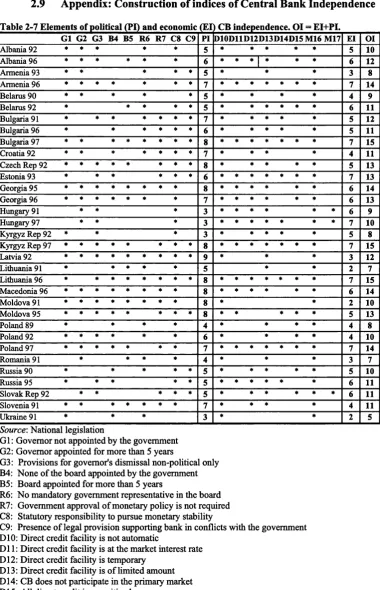
Main characteristics of the CB legislation are coded into indices similar to those proposed by Grilli et al (1991) (GMT). In GMT the CBI is divided into two components: political and economic independence. The political independence is defined by three elements: the relationship between the government and the bank in formulation of the monetary policy, the procedure for appointing the board and the formal goal of the bank with respect to monetary policy. The elements are evaluated using eight criteria: appointment procedure for high officials of the bank (the governor and the board), length of their term in office, participation of the government representative in the board, government approval of monetary policy, legal provision strengthening the bank's position against the government in case of conflict and statutory obligations to maintain price stability. Economic independence is affected by legal constraint on the central bank's lending to the government and the location of banking supervision. The bank is assumed to be more economically independent if the direct credit facility is of limited amount, not automatic, temporary and at the market rate. In addition more independent bank sets the discount rate, does not participate in the primary market for public debt and is not engaged in the commercial banks' supervision.
is complementary and the central bank may use precise information on the banking system to improve its monetary policy. The use of this criterion is thus ambiguous, but— as discussed above—in the transition environment the banking system is often used as a channel for quasi-fiscal activities and placing banking supervision in the CB may reduce its independence.
The interpretation of two other GMT criteria requires further explanation. The government approval of monetary policy is interpreted as a prior approval of the monetaiy policy guidelines by the government or the parliament. The legal provision strengthening the bank's position against the government in case of conflict is interpreted as any provision explicitly stating independence of the CB from the executive.
There are two differences between the original GMT index and die methodology applied here. Firstly, it is assumed that the bank is more politically independent if the provisions for governor’s dismissal, as stated in the law, are non-political only (e.g. loss of ability to perform his duties or sentence for criminal act). Consequently, the new variable is added to the political index. Secondly, in the index of economic independence, the government borrowing from CB is assumed to be less harmful if all direct credit is securitized. As noticed by Cottarelli (1993), securitization provides the bank with a stock of government papers, increasing flexibility of monetary policy.
2 3
-Table 2-1 Aggregate indices of political (PI), economic (El) and overall (OI) independence.
PI El OI (PI + El)
Bulgaria 97 Lithuania 96 8 8 8 7 7 8 7 8 6 8 6 9 7 5 5 7 5 3 4 3 7 7 7 7 7 6 6 5 7 5 6 3 4 6 6 4 6 7 3 2 15 15 15 14 14 14 13 13 13 13 12 12 Kyrgyz Republic 97
Poland 97 Armenia 96 Macedonia 96 Georgia 96 Moldova 95 Estonia 93 Czech Republic 92 Albania 96 Latvia 92 Croatia 92 Russia 95
Slovak Republic 92 Slovenia 91 Belarus 92 Hungary 97 Romania 91 Ukraine 91 10 7 5 Source: National legislations
[image:25.595.57.394.137.379.2]Several arguments are presented above for and against placing banking supervision in the central bank structure. In the sample under investigation only two countries (Hungary and the Slovak Republic) have their banking supervision outside central banks. Thus, the supervision seems to be perceived as a traditional role of the central bank. It is interesting to note that in the conflict between the governor of the National Bank of Poland and the Ministry of Finance in 1994 the governor strongly opposed delegating the banking supervision to an external body, expressing her concerns about the impact of such a step on independence of the bank (although this opposition may reveal reluctance to accept a restriction on administrative power of the governor rather than a true concern about CB independence).
It is useful to compare the constructed GMT index with existing CBI measures for the same group of countries. The indices cover broadly the same aspects of legal independence, although do not exactly overlap (e.g., CMN index does not cover a position of the CB board). The GMT index is not as precise as the methodology in CMN but this is not a serious limitation. Constructing a coarser index requires relatively less information and, since the laws of central bank differ in their degree of detail, may reduce arbitrariness in assessing the independence. Moreover, the more detailed index (with sub characteristics for each variable) must be supported by a weighting system and a subjective judgment is involved in choosing the characterization of variables and weights in the aggregation.
amendments. The Czech National Bank is the most independent among banks in Central Europe (before recent amendments to laws in other countries) according to both GMT and CMN indices. The Bulgarian National Bank is ranked second in the GMT index, while the National Bank of Hungary is placed second according to the CMN index. The banks of the Slovak Republic and Slovenia are on the next two positions and the National Bank of Romania is the least independent according to both indices.
Table 2-2 CBI ranking: Comparison of indices
Former Soviet Union Central Europe
GMT Lybek (1999) CMN GMT CMN
Kyrgyz Rep. 97 Kyrgyz Rep. 97 Lithuania 96 Czech Rep. 92 Czech Rep. 92
Lithuania 96 Georgia 96 Estonia 93 Bulgaria 91 Hungary 91
Armenia 96 Estonia 93 Armenia 96 Slovak Rep. 92 Slovak Rep. 92
Georgia 95 Moldova 95 Georgia 95 Slovenia 91 Slovenia 91
Estonia 93 Lithuania 96 Belarus 92 Croatia 92 Bulgaria 91
Moldova 95 Armenia 96 Moldova 95 Poland 92 Albania 92
Georgia 96 Latvia 92 Kyrgyz Rep. 92 Hungary 91 Poland 92
Latvia 92 Russia 95 Latvia 92 Albania 92 Croatia 92
Russia 95 Belarus 92 Russia 95 Romania 91 Romania 91
Belarus 92 Ukraine 91 Moldova 91
Moldova 91 Armenia 93
Kyrgyz Rep. 92 Lithuania 91
Armenia 93 Lithuania 91 Ukraine 91
Spearman’s rank correlation with GMT:
1 0.7636 0.8566 1 0.4583
Source: National legislations, Cukierman et al. (1998), Lybek (1999)
2.6 Changes in central bank laws
2 7
-the inflationaiy deficit financing and stabilized -the economy. O-ther hyperinflations in -the 20’s in Austria, Hungary and Poland were stopped after similar measures (Sargent, 1986).
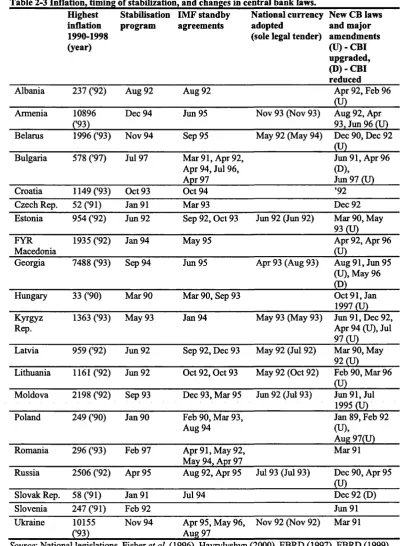
How the historical episodes match the recent experience of transition countries? Table 2-3 presents maximum inflation rates experienced in transition economies, dates of stabilization attempts8, dates of IMF standby agreements, introduction of national currencies by the FSU countries and changes in the central bank laws.
Five Central European countries (Czech Republic, Hungary, Poland, Slovak Republic and Slovenia) stabilized their economies at the start of reform process. The mixture of good policies and favourable initial conditions9 contributed to their relative successes. In this group, the CB laws were amended in Hungary and Poland, the two countries experiencing relatively high and persistent inflation. The CB independence is also one of the preconditions for joining the EMU, and, since the two countries are on the fast track to join the EU, they upgraded their laws to meet the Maastricht criteria.
In Albania, the new law on central bank was introduced as a part of the 1992 stabilization package, just few months before the program backed by the IMF started (IMF technical assistance seemed to contribute to the enactment of the new law).
Two former Yugoslav Republics: Croatia and FYR Macedonia were involved in military conflicts and experienced higher inflation than other Central European economies. Croatia achieved macroeconomic stabilization without institutional changes and, at least initially, without IMF backing. The law granting independence to the National Bank of Macedonia was legislated in the year when inflation was the highest and the CB position was further upgraded two years after the initial program.
8 The paper follows Fischer et a l (1996) in defining the dates of stabilization, with exception of Bulgaria and Romania, where the dates are for the most recent stabilization programs.
Table 2-3 Inflation, timing of stabilization, and changes in central bank laws. Highest inflation 1990-1998 (year) Stabilisation program IMF standby agreements National currency adopted
(sole legal tender)
New CB laws and major amendments (U) - CBI upgraded, (D) - CBI reduced
Albania 237 (’92) Aug 92 Aug 92 Apr 92, Feb 96
(U)
Armenia 10896
(’93)
Dec 94 Jun 95 Nov 93 (Nov 93) Aug 92, Apr
93, Jun 96 (U)
Belarus 1996 (’93) Nov 94 Sep 95 May 92 (May 94) Dec 90, Dec 92
(U)
Bulgaria 578 (’97) Jul 97 Mar 91, Apr 92,
Apr 94, Jul 96, Apr 97
Jun 91, Apr 96 (D),
Jun 97 (U)
Croatia 1149 (’93) Oct 93 Oct 94 ’92
Czech Rep. 52 ('91) Jan 91 Mar 93 Dec 92
Estonia 954 (’92) Jim 92 Sep 92, Oct 93 Jun 92 (Jun 92) Mar 90, May
93 (U) FYR
Macedonia
1935 (’92) Jan 94 May 95 Apr 92, Apr 96
(U)
Georgia 7488 (’93) Sep 94 Jun 95 Apr 93 (Aug 93) Aug 91, Jun 95
(U), May 96 (D)
Hungary 33 (’90) Mar 90 Mar 90, Sep 93 Oct 91, Jan
1997 (U) Kyrgyz
Rep.
1363 (’93) May 93 Jan 94 May 93 (May 93) Jun 91, Dec 92,
Apr 94 (U), Jul 97 (U)
Latvia 959 (’92) Jim 92 Sep 92, Dec 93 May 92 (Jul 92) Mar 90, May
92 (U)
Lithuania 1161 (’92) Jun 92 Oct 92, Oct 93 May 92 (Oct 92) Feb 90, Mar 96
(U)
Moldova 2198 (’92) Sep 93 Dec 93, Mar 95 Jun 92 (Jul 93) Jun 91, Jul
1995 (U)
Poland 249 (’90) Jan 90 Feb 90, Mar 93,
Aug 94
Jan 89, Feb 92
(U),
Aug 97(U)
Romania 296 (’93) Feb 97 Apr 91, May 92,
May 94, Apr 97
Mar 91
Russia 2506 (’92) Apr 95 Aug 92, Apr 95 Jul 93 (Jul 93) Dec 90, Apr 95
(U)
Slovak Rep. 58 (’91) Jan 91 Jul 94 Dec 92 (D)
Slovenia 247 (’91) Feb 92 Jun 91
Ukraine 10155
(’93)
Nov 94 Apr 95, May 96,
Aug 97
Nov 92 (Nov 92) Mar 91
Source: National legislations, Fisher et al. (1996), Havrylyshyn (2000), EBRD (1997), EBRD (1999).
2 9
-quickly deteriorating macroeconomic situation called for radical policy actions. The Bulgarian government successfully introduced the currency board system in mid 1997. The implementation of the new system was monitored by the IMF. Romania introduced changes to the CB law in 1998, as a part of the new government reform program. The new law restricted government borrowing from the bank by setting market interest rate on advances to the budget. The IMF standby agreement was signed less than a year before this amendment.
programs. CBI in Belarus was relatively high after introduction of the national currency. Ukraine did not upgrade CB independence after stabilization.
In four cases (Bulgaria, Georgia, Latvia and Russia) changes to the laws were introduced simultaneously with stabilization plans or, in case of Latvia, soon before it started. The CBI was used as an instrument to improve credibility of the new policy. Although the role of external conditionality and expertise might have been significant, the changes in the laws required strong domestic political consensus on the new policy. In six other countries the amendments were passed within a year from the IMF stabilization package. Since institutional changes were introduced only with lags, the external conditionality had probably a greater role in establishing the initial confidence in policy changes. Subsequent amendments to the law sanctioned the restrictions imposed by the IMF conditionality and the anti-inflationary consensus was established when the benefits from lower inflation became evident. In the first stage of stabilization the IMF played a "scapegoat" function: policy makers blamed external conditionality for the unpopular decisions they had to implement.10
In all cases discussed above changes in the CB law were motivated by policy makers’ increasing aversion to inflation and their attempts to establish anti-inflationary credibility. Fiscal policy, however, was the main factor behind the inflationary episodes and the consistency of fiscal and monetary adjustments determined the success of stabilization. Constraints on government borrowing from financial markets require more painful fiscal adjustments and the narrower these markets are, the less willingly policy makers restrict their ability to borrow from the central bank (Cukierman, 1996). The scope for the non-monetary budget deficit financing, however, does not seem to affect decisions regarding the CBI.11 When fiscal adjustments were not sufficient, the deficit was financed by external borrowing and by crowding out credits to the private sector. The CBI was thoroughly tested when the government hits the borrowing limit. The Russian
10 See James (1998) for a discussion on the changing role of IMF conditionality.
31
-crisis clearly illustrates this problem12, although in this case policy makers bypassed the “unpleasant monetarist arithmetic” by defaulting on the debt.
2.7 Central bank independence and inflation performance
Historical episodes of stopping hyperinflations tend to suggest that the CB independence may be a powerful device for achieving price stability. Empirical cross-country studies show a negative correlation between the independence and inflation level for various groups of countries. The sample of transition economies is unique in a sense that it provides both cross-section and time series data on the CBI and inflation rates. To assess how well the CBI performs its anti-inflationary task, the paper tests for die relationship between the independence and inflation focusing on both characteristics of the data.
Figure 2-1 plots average inflation in the period starting next year after enactment of the CB law against CB independence measured by GMT index. Following CMN, inflation is characterized by the depreciation in the real value of money 7 t/(l+ 7 t), where n
is inflation rate. Data on end-year inflation is obtained from 1997 EBRD Transition Report and 1999 EBRD Transition Update. Countries on the graph are divided into two groups according to their progress in transition to market economy. The progress is measured by the cumulative liberalisation indicator (CLI) taken from De Melo et al. (1996) (for 1989-1994) and updated by using indicators from EBRD Transition Reports (for 1995-1998).13 Following CMN, the threshold between fast and slow reformers is set to 2.
12 The Central Bank of Russian Federation evaded legal provisions prohibiting credit to the government by redeeming maturing treasury bills from the market. Foreign currency credits were provided through lending via the Vneshekonombank.
Figure 2-1 Inflation (depreciation in the real value of money) and independence (OI).
CO
d o
L96
O
o
o
I 3 5 7 9 11 13 15 17
CBI
AL-Albania, AR-Armenia, BE-Belarus, BU-Bulgaria, CR-Croatia, CZ-Czech Rep., ES-Estonia, MA- FYR Macedonia, GE-Georgia, HU-Hungary, KY-Kyrgyzstan, LA-Latvia, LI-Lithuania, MO- Moldova, PL-Poland, RM-Romania, RU-Russia, SK-Slovak Rep., SV-Slovenia, UK-Ukraine
Source: Table 2-1, EBRD (1997) and EBRD (1999)
The inverse relation between central bank independence and inflation seems to be present
in the sample. Belarus (1990 and 1992 laws), Bulgaria (1991), Moldova (1991) and
Russia (1990) are the most prominent outliers. The laws in Belarus, Moldova and Russia
were enacted when the countries only began the process of price liberalisation and when
the rouble zone arrangement restricted their monetary independence. Deviations from the
negative CBI-inflation relationship reflect a degree of initial monetary overhang and the
lack of restrictions on credit creation in the rouble zone. Moreover, the strong position of
the president in the Belarusian political system may reduce the actual independence of the
bank, even if the legal independence is relatively high. For this reason Belarus remains an
3 3
-crisis and a systemic banking -crisis in 1996/1997 and the position on the graph reflects a near-hyperinflation experienced in this period.
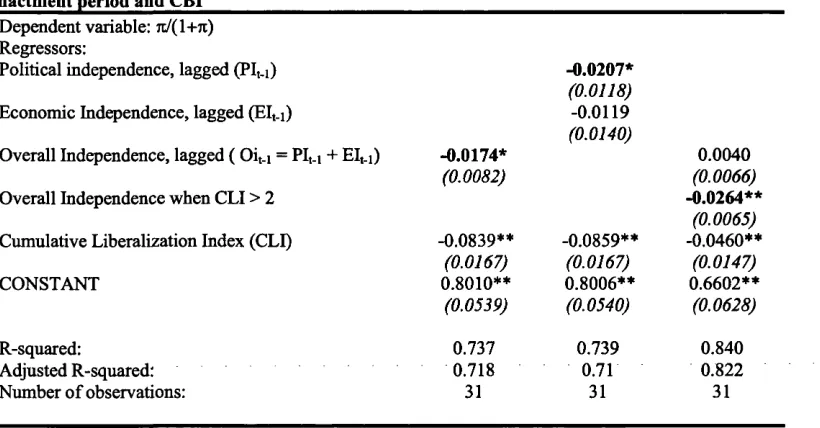
[image:35.596.58.468.356.570.2]The relationship between independence and inflation is statistically tested in the first set of equations reported in Table 2-4, where inflation in the post-enactment period is regressed on GMT measures of political independence, economic independence and the sum of the two. Since countries under investigation vary in the degree of macroeconomic imbalances inherited from past and the progress of market reforms and the CBI may be a proxy for a general soundness of policy, it has become a standard to include an overall indicator of transition progress in the regression testing the relation between the CBI and inflation.
Table 2-4 Relationship between average depreciation in the real value of money (n/(l+n)) in the post-enactment period and CBI
Dependent variable: 7i/(l+7t) Regressors:
Political independence, lagged (PIt.i)
Economic Independence, lagged (EIt_i)
Overall Independence, lagged ( Oit_i = PI,_i + EI,_i) -0.0174*
-0.0207* (0.0118) -0.0119 (0.0140)
0.0040
Overall Independence when CLI > 2
Cumulative Liberalization Index (CLI)
(0.0082)
-0.0839** -0.0859**
(0.0066) -0.0264**
(0.0065) -0.0460**
(0.0167) (0.0167) (0.0147)
CONSTANT 0.8010** 0.8006** 0.6602**
(0.0539) (0.0540) (0.0628)
R-squared: 0.737 0.739 0.840
Adjusted R-squared: 0.718 0.71 0.822
Number of observations: 31 31 31
Notes:
Numbers in parenthesis are significance levels.
** and * denotes significance at 5% and 10% levels respectively
who also find more significant influence of political independence in their sample. One possible explanation for this result is that more politically independent central banks manage to sterilise government’s borrowing even if they are not strong enough to enforce full adherence to the law and keep credit to the government within the legal limits. CMN find some evidence of a moderating effect of limitations on lending on inflation in their study. This result, however, is obtained without conditioning on the cumulative liberalisation index. In the sample under investigation, the regression of inflation on two measures of independence alone (not reported) gives die coefficient of economic independence that is highly significant and higher in absolute value than the coefficient of political independence. This result suggests that more advanced transition countries tend to have stricter limitations on lending and that the coefficient of economic independence may be biased if the CLI is not included in the model.
The last column repeats the experiment reported by CMN, who consider different impact of independence on inflation at different stages of transition. They found a significant and negative relationship between these two only at the high level of economic transformation. This conclusion is tested here in a similar way: a new variable, which is equal to OIt-i at the high level of transition (measured by the CLI) and is zero otherwise, is added to the regression. The threshold, which is chosen by maximising R- squared, is equal to 2 and is the same as in CMN. The new variable is negative, significant at 1 percent significance level and higher in absolute value than the independence index alone in the previous regression. The coefficient of the overall independence measure becomes positive and loses its significance (the positive relation between independence and inflation at low level of liberalisation is driven by four outliers, as is evident from Figure 2-1). The result is similar to that obtained by Cukierman et al., although, contrary to results presented here, they do not discover any significant relationship between inflation and independence without the new variable.
3 5
-and after, -and zero otherwise, is added to regressors. This variable accounts for the effect of the external conditionality on policy performance and is constructed from the dates of IMF agreements in Havrylyshyn et al. (2000). To test for the significance of government deficit financing, the general government budget deficit is also added to regressions (the series is constructed from the data in 1997 EBRD Transition Report and 1999 EBRD Transition Update). Finally, a step dummy for countries participating in the rouble zone is added: the dummy is one before a country adopts its own currency and zero afterwards. For non-FSU countries the dummy is always zero. Dates of adopting national currencies, reported in table 3, are from Lybek (1999).
Table 2-5 Relationship between annual depreciation in the real value of money (tc/(1+tc)) in post-enactment period and CBI.
Dependent variable: tc/(1+tc)
Maximum estimation period: 1990 - 1998 Specification: yit = a + uit
Uit = Mi + Yit (individual effects only) Uit = Mi +^t + vit (time & individual effects) Mi ~ HD(0,cO, ~ HD(0,ctx), Vh ~ HD(0,ctv)
Individual effects only Time & individual effects
Individual effects only Time & individual effects
Regressors: Fixed
effects Random effects Fixed effects Random effects Fixed effects Random effects Fixed effects Random effects
OIt.t -0.0171 -0.016422 -0.0306* -0.0298* 0.0189 0.0191 -0.0021 0.0071
(0.0150) (0.0128) (0.0138) (0.0131) (0.0145) (0.0110) (0.0159) (0.0138)
CLI -0.0853** -0.0881** 0.1624** 0.0152 -0.0452** -0.0491** 0.0812 -0.0283
(0.0142) (0.0133) (0.061) (0.0392) (0.0142) (0.0129) (0.0633) (0.0268)
OIt.i when CLI > 2 -0.0343** -0.0360** -0.0232** -0.0299**
(0.0060) (0.0058) (0.0072) (0.0063)
CONSTANT 0.7964** 0.5966* 0.5920** 0.5814**
(0.1272) -0.2317 (0.0966) (0.1611)
R-squared: 0.613 0.595 0.716 0.176 0.710 0.677 0.744 0.433
Adjusted R-sq 0.532 0.588 0.63 0.162 0.646 0.668 0.664 0.419
Durbin-Watson: 1.052 1.3 1.313 1.347
Number o f obs: 122 122 122 122 122 122 122 122
Hausman’s 0.4035 (0.817) 9.995 (0.007) 2.256 (0.521) 3.698 (0.296)
Chi-squared statistic
LM (HO: c^= 0) 0.876 (0.349) 1.104(0.293)
LM (HO: a x= 0) 2.288 (0.130) 0.349 (0.555)
LM (HO: a„= aj,= 0) 3.164(0.206) 1.453 (0.484)
F-statistic for equality o f dummy variables:
time dummies: F(7,93) = 4.78 (0.00) F(7,92)= 1.769 (0.103)
group dummies: F(19,93) = 2.606 (0.00) F(19,92) = 1.685 (0.053)
Notes:
OIt-i - Overall Independence, lagged one period CLI - Cumulative Liberalisation Index
** and * denotes significance at 1% and 5% levels respectively. Numbers in parenthesis under coefficients are standard errors . Numbers in parenthesis reported with the tests are marginal significance levels. Variance components for random effects model with individual and time effects are estimated as suggested by Wansbeek and Kapteyn (1989). Variance components for random effects model with individual effects only is estimated as suggested by Swamy and Arora (1972) (see Baltagi (1995) p. 153).