ELECTROPHYSIOLOGICAL CORRELATES OF
PROCESSING UNATTENDED OBJECTS IN VISUAL
COGNITION
ELLEY WAKUI
A thesis submitted in partial fulfilment of the requirements of
the University of East London for the degree of Doctor of
Philosophy
Research is divided as to what degree visually unattended objects are processed (Lachter et al., 2008; Carrasco, 2011). The hybrid model of object recognition (Hummel, 2001) predicts that familiar objects are automatically recognised without attention. However under perceptual load theory (Lavie, 1995), when objects are rendered unattended due to exhausted attentional resources, they are not processed.
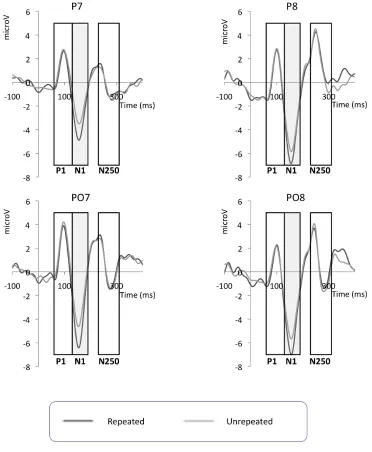
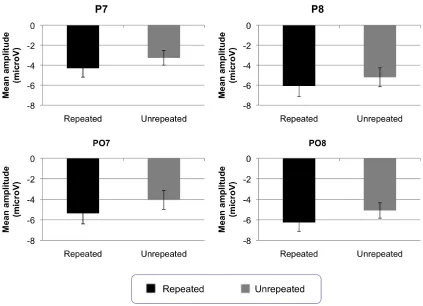
The present work examined the visual processing of images of everyday objects in a short-lag repetition-priming paradigm. In Experiments 1-3 attention was cued to the location of one of two objects in the first (prime) display, with the unattended sometimes repeated in the second (probe) display. ERP repetition effects were observed which were insensitive to changes in scale (Experiment 1) but sensitive to slight scrambling of the image (Experiment 2). Increasing perceptual load did not modulate these view-specific repetition effects (Experiment 3), consistent with the predictions of automatic holistic processing. In Experiments 4-7 a letter search task was used to render the flanking object image unattended under high load. In Experiment 5 distractor processing was observed in ERP even under high load. In Experiments 4, 6 and 7 a pattern of view
sensitive/insensitive and load sensitive/insensitive repetition effects on RT (Experiment 4) and ERP amplitude (Experiments 6, 7) were observed that were difficult to interpret under either the hybrid model or perceptual load theory, but may reflect fast view-based and slow view-independent processing of objects.
Chapter 1. Introduction and Background ...15
1.1. Basic Rationale: Why Study Unattended Objects? ... 15
1.2. Outline and Scope of the Thesis ... 17
1.3. What is Object Recognition?... 19
1.4. The Neurobiology of the Visual System... 19
1.4.1 Two Visual‐Streams of Object Processing... 22
1.5. The Stages of Object Processing... 25
1.5.1 Explicit vs. Implicit Recognition ... 29
1.6. Repetitionpriming... 31
1.7. Viewsensitivity of Object Recognition: The Viewpoint Debate... 32
1.8. The Mental Representation of Object Shape... 33
1.8.1 Analytic Representation/Theories of View‐independent Recognition... 41
1.8.2 Holistic Representation/Theories of View‐dependent Recognition ... 45
1.9. Accommodating Both Types of Representation in one Model of Object Recognition ... 46
1.10. The Role of Attention in the Binding of Object Representations ... 51
1.11. The Hybrid Model of Object Recognition: Incorporating Both Types of Binding and Representation in one Model of Object Recognition ... 53
1.11.1 Description of JIM3... 57
1.11.2 Support for the Hybrid Model... 60
1.12. The Role of Attention in the Twosystems Account ... 63
1.13. Attentional Selection: The Question of Distinguishing Attended From Unattended... 65
1.14. Perceptual Load Theory... 66
1.14.1 Support for Perceptual Load Theory ... 68
1.15. Types of Attention: Endogenous vs. Exogenous ... 70
1.16. Reconciling Perceptual Load Theory and the Hybrid Model of Object Recognition ... 71
1.17. Models of Topdown Guided Attention Object Recognition... 73
2.1. EEG in Cognitive Neuroscience... 82
2.1.1 Electrogenesis of EEG... 83
2.1.2 Derivation of ERP... 85
2.1.3 Interpretation of ERP ... 86
2.1.4 Visual ERP components... 89
2.2. Review of ERP in Object Recognition and Spatial Attention... 92
2.2.1 ERP and Object Processing ... 94
2.2.2 ERP Repetition Effects ...101
2.3. Acquisition of EEG and General Methods for Thesis ...114
2.3.1 Ethics...114
2.3.2 Recording Procedures...114
2.3.3 ERP Data Pre‐Processing...117
2.3.4 Statistical Analysis...120
Chapter 3. Experiment 1: ERP Repetition Effects from Spatially Unattended Objects... 123
3.1. Introduction...123
3.2. Participants...126
3.3. Stimuli & Design ...126
3.4. Procedure ...128
3.5. Behavioural Results ...131
3.6. ERP Results ...131
3.6.1 Probe‐locked P1 ...134
3.6.2 Probe‐locked N1...134
3.6.3 Probe‐locked N250 ...136
3.7. Experiment 1: Summary and Discussion ...136
Chapter 4. Experiment 2: Viewsensitivity of ERP Repetition Effects from Spatially Unattended Objects to Split images ... 138
4.1. Introduction...138
4.2. Participants...141
4.6. ERP Results ...146
4.6.1 Probe‐locked ERP ...146
4.6.2 Comparison of Scalp Topography of Repetition effects for Experiments 1 and 2 ...150
4.6.3 Prime‐locked ERP ...151
4.7. Experiment 2: Summary and Discussion ...154
Chapter 5. Experiment 3: The Effect of Perceptual Load on the ERP Repetition Effects from Spatially Uncued Objects... 159
5.1. Introduction...159
5.2. Participants...162
5.3. Stimuli & Design ...163
5.4. Procedure ...166
5.5. Behavioural Results ...166
5.6. ERP Results ...167
5.6.1 Probe‐locked ERP ...167
5.6.2 Prime‐locked ERP ...172
5.7. Experiment 3: Summary and Discussion ...175
5.8. Summary of Experiments 13 ...177
Chapter 6. Experiment 4: The Effect of Perceptual Load and View (split images) from Taskirrelevant Peripheral Images on Behavioural Priming Using a Letter Search Task ... 180
6.1. Introduction...180
6.2. Participants...183
6.3. Stimuli & Design ...183
6.4. Procedure ...185
6.5. Behavioural Results ...188
6.6. Eye tracking Results...190
6.7. Experiment 4: Summary and Discussion ...192
7.3. Stimuli & Design ...197
7.4. Procedure ...199
7.5. Behavioural Results ...201
7.6. ERP Results ...202
7.6.1 N1 Amplitude...207
7.6.2 N2pc...208
7.7. Experiment 5: Summary & Discussion...211
Chapter 8. Experiment 6: The Effects of Perceptual Load and View (split images) on ERP Repetition Effects from Taskirrelevant Peripheral Images Using a Letter Search Task. ... 215
8.1. Introduction...215
8.2. Participants...216
8.3. Stimuli & Design ...217
8.4. Procedure ...219
8.5. Behavioural Results ...221
8.6. ERP Results ...223
8.6.1 Probe‐locked P1 ...225
8.6.2 N1...228
8.6.3 N250: 230‐270 time window...230
8.6.4 N250: 270‐310 time window...232
8.6.5 Prime‐locked ERP ...232
8.7. Experiment 6: Summary and Discussion ...234
Chapter 9. Experiment 7: The Effects of Perceptual Load and View (inverted images) on ERP Repetition Effects from Taskirrelevant Peripheral Images Using a Letter Search Task ... 238
9.1. Introduction...238
9.2. Participants...239
9.3. Stimuli & Design ...239
9.4. Procedure ...242
9.6.2 Probe‐locked N1...249
9.6.3 Probe‐locked N250: 200‐240 ms ...251
9.6.4 Probe‐locked N250: 240‐270ms ...253
9.6.5 Prime‐Locked ERP...255
9.7. Experiment 7: Summary and Discussion ...258
Chapter 10. General Discussion... 261
10.1. Research Motivation...261
10.1.1 Main Findings...262
10.2. Overview of Experiments and Main Results...263
10.3. Implications for Object Recognition ...269
10.3.1 ERP Repetition Effects from Unattended Objects ...269
10.3.2 View‐sensitivity of ERP Repetition Effects from Unattended Objects ...275
10.3.3 Summary of Implications for Object Recognition ...279
10.4. Implications for Visual Attention...280
10.4.1 Automatic and Pre‐attentive Processing ...280
10.4.2 Early vs. Late Selection ...281
10.4.3 Selection Mechanisms in Attention ...284
10.5. Integrating ERP Repetition Effects with the Hybrid Model of Object Recognition and Perceptual Load Theory ...287
10.5.1 The Role of Attention in Visual Short‐Term Memory (VSTM)...291
10.6. Limitations and Further Work...293
10.7. Conclusions...294
Appendix I: Ethics and Examples of Participant Introduction Letter, Consent and Debrief Forms ... 318
Confirmation of UEL Ethics Approval...318
Example Introduction Letter, Consent Form, Debrief ...319
Appendix IV: Primelocked ERP Analyses for P1 and N1 for Experiments 6 & 7
... 340
Appendix V: Stimulus Lists for Experiment 1 ... 345
Appendix VI: Stimulus Lists for Experiment 2... 347
Appendix VII: Stimulus Lists for Experiment 3 ... 350
Appendix VIII: Stimulus Lists for Experiment 4... 353
Appendix IX: Stimulus Lists for Experiment 5... 355
Appendix X: Stimulus Lists for Experiment 6 ... 356
Appendix XI: Stimulus Lists for Experiment 7... 359
Figure 1‐1: Illustration of human early visual areas (adapted from Logothetis, 1999)... 21
Figure 1‐2: Hierarchical visual areas in cortex (adapted from Logothetis, 1999)... 22
Figure 1‐3: Schematic of the dorsal and ventral visual pathways in human cortex adapted from Goodale & Westwood (2004). Also shown is the subcortical, retinotectal, pathway... 24
Figure 1‐4: Schematic of the levels of object processing. ... 29
Figure 1‐5: Simplified examples of a view‐based description and an abstract description of an image. ... 34
Figure 1‐6: Examples of volumetric elements and examples of assembly into a cup and bucket. ... 35
Figure 1‐7: Illustration of (a) viewer‐centred and (b) object‐centred reference frames. Object image from the stimulus set of Rossion and Pourtois (2004). ... 36
Figure 1‐8: An example of spatial relations between the house‐parts of window and door defined by (a) coordinates and (b) categorical relations. Object image from the stimulus set of Rossion and Pourtois (2004)... 37
Figure 1‐9: Schematic of analytic and holistic descriptions. ... 39
Figure 1‐10: Recognition of an object upon a view‐change... 40
Figure 1‐11: Generalised cylinders (adapted from Marr & Nishihara, 1978). ... 42
Figure 1‐12: Examples of geons (adapted from Biederman, 1987)... 43
Figure 1‐13: Different objects based on similar geons but different spatial configurations (adapted from Biederman, 1987). ... 43
Figure 1‐14: Schematic of JIM3 (adapted from Hummel, 2001). The red boxes correspond to the holistic, unattended, route and the blue boxes to the analytic, attended, route of recognition... 58
Figure 1‐15: Example of a prime and probe display for a spatial cuing priming task. ... 61
Figure 1‐16: Typical presentation for a low (a) and high (b) perceptual load task from Lavie (2005). ... 69
Figure 2‐1: Illustration of processes of electrogenesis of EEG... 84
Figure 2‐2: Extracting an ERP from raw EEG in two experimental conditions (adapted from Luck, 2005)... 85
Figure 2‐3: Example of an ERP waveform adapted from McFadden and Rojas (2013)... 86
Figure 2‐4: Summation of different ERP latent components result in the same profile for the observed waveform (adapted from Luck, 2005). ... 88
Figure 3‐3: Grand‐averaged probe‐locked ERP waveforms for 30 Hz low‐pass filtered data for each experimental condition for P7, P8, PO7 and PO8 for Experiment 1. P1, N1 and N250 time windows are marked, where these boxes are grey indicates that statistically significant repetition effects were observed in these time windows. For those time windows where statistically significant effects were found, bar charts showing mean amplitudes are presented separately below... 133 Figure 3‐4: Probe‐locked N1 mean amplitudes ±1 standard error bars for each electrode analysed for
Experiment 1 ... 135 Figure 3‐5: Probe‐locked difference topomaps between 130–200 ms post‐stimulus onset in 10 ms
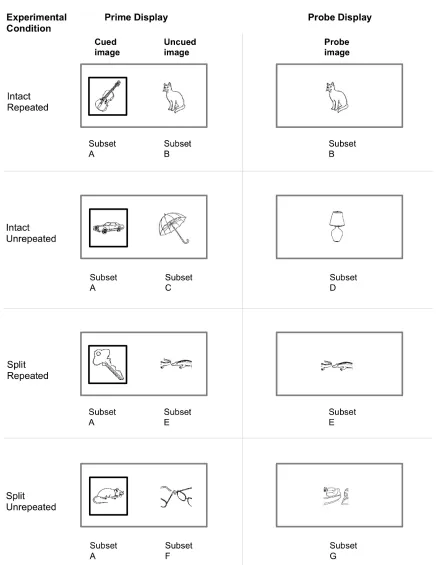
steps for Experiment 1... 135 Figure 4‐1: Example of a split image stimulus... 139 Figure 4‐2: Schematic of conditions and stimulus subsets for the first participant (counterbalancing
of sets B – G) in Experiment 2... 142 Figure 4‐3: Mean probe RT for each condition ±1 standard error bars for Experiment 2 ... 145 Figure 4‐4: Grand‐averaged probe‐locked ERP waveforms for 30 Hz low‐pass filtered data for each
experimental condition for P7, P8, PO7 and PO8 for Experiment 2. P1, N1 and N250 time windows are marked, where these boxes are grey indicates that statistically significant repetition effects were observed in these time windows. For those time windows where statistically significant effects were found, bar charts showing mean amplitudes are presented separately below... 147 Figure 4‐5: Probe‐locked N250 mean amplitudes ±1 standard error bars at each electrode for
Experiment 2 ... 149 Figure 4‐6: Probe‐locked difference topomaps between 220‐380 ms post‐stimulus onset in 20 ms
steps for Experiment 2... 150 Figure 4‐7: Comparison of difference topomaps from (a) Experiment 1 and (b) Experiment 2. Note
different scales to maximise appearance of the effect of repetition for comparison of location rather than magnitude. ... 151 Figure 4‐8: Grand‐averaged prime‐locked contralateral and ipsilateral waveforms for 30 Hz low‐pass
filtered data for each experimental condition for P7, P8, PO7 and PO8 for Experiment 2. The time window for the N2pc is marked, where this is grey indicates that a statistically significant N2pc was observed... 153 Figure 5‐1: Schematic of conditions and stimulus subsets (counterbalanced) for the first participant
time windows are marked, where these boxes are grey indicates that statistically significant repetition effects were observed in these time windows. For those time windows where statistically significant effects were found, bar charts showing mean amplitudes are presented
separately below... 169
Figure 5‐4: Probe‐locked N1 mean amplitudes, ±1 standard error bars for Experiment 3. ... 171
Figure 5‐5: Grand‐averaged prime‐locked contralateral and ipsilateral waveforms for 30 Hz low‐pass filtered data for each experimental condition for P7, P8, PO7, PO8, O1 and O2 for Experiment 3. The time window for the N2pc is marked, where this is grey indicates that a statistically significant N2pc was observed... 174
Figure 6‐1: Schematic of conditions and stimulus subsets for the first participant in Experiment 4 184 Figure 6‐2: Example trial display sequence for Experiment 4. ... 187
Figure 6‐3: Mean probe RT for each condition ±1 standard error bars for Experiment 4. ... 190
Figure 6‐4: Location and duration of fixations from all participants overlaid on prime presentation display for Experiment 4. The colour represents the duration (sec) of each fixation and the location is given in eye‐tracker horizontal (x‐axis) and vertical (y‐axis) units ... 191
Figure 6‐5: Percentage number of all fixations (over 50 ms) for all participants in each defined area of interest of the prime presentation display for Experiment 4. NB for the areas of interest of left and right images there were no fixations. ... 191
Figure 7‐1: Schematic of conditions and stimulus subsets for Experiment 5... 199
Figure 7‐2: Example trial display sequence for Experiment 5. ... 200
Figure 7‐3: Mean RT for each condition ±1 standard error bars for Experiment 5... 202
Figure 7‐4: Grand averaged ERP contralateral and ipsilateral waveforms locked to stimulus onset for each condition of load for 30 Hz low‐pass filtered data for (a) target and distractor near (b) target and distractor far (c) no distractor present for P7, P8, PO7, PO8, O1 and O2 for Experiment 5. The time window for the N2pc is indicated... 206
Figure 7‐5: Difference topomaps for left‐right visual field between 220‐280 ms post‐stimulus onset in 20 ms steps for each condition for Experiment 5. ... 211
Figure 8‐1: Schematic of conditions and stimulus subsets for the first participant in ... 218
Figure 8‐2: Example trial display sequence for Experiment 6. ... 220
Figure 8‐3: Mean probe RT for each condition ±1 standard error bars for Experiment 6 ... 222 Figure 8‐4: Grand‐averaged probe‐locked ERP waveforms for 30 Hz low‐pass filtered data for each
Figure 8‐5: Probe‐locked P1 mean amplitudes ±1 standard error bars for Experiment 6... 227 Figure 8‐6: Probe‐locked N1 mean amplitudes ±1 standard error bars for Experiment 6. ... 229 Figure 8‐7: Probe‐locked N250 (230‐270 ms) mean amplitudes ±1 standard error bars for
Experiment 6 ... 231 Figure 8‐8: Grand‐averaged prime‐locked contralateral and ipsilateral waveforms for 30 Hz low‐pass
filtered data for each experimental condition for P7, P8, PO7, PO8, O1 and O2 for Experiment 6. The time window for the N2pc is marked, where this is grey indicates that a statistically
significant N2pc was observed... 233 Figure 9‐1:Schematic of conditions and stimulus subsets for the first participant in Experiment 7. 241 Figure 9‐2: Mean probe RT for each condition ±1 standard error bars for Experiment 7. ... 244 Figure 9‐3: Grand‐averaged probe‐locked ERP waveforms for 30 Hz low‐pass filtered data for each
experimental condition for P7, P8, PO7, PO8, O1 and O2 for Experiment 7. P1, N1 and N250(a & b) time windows are marked, where these boxes are grey indicates that statistically significant repetition effects were observed in these time windows. For those time windows where statistically significant effects were found, bar charts showing mean amplitudes are presented separately below... 246 Figure 9‐4: Probe‐locked P1 mean amplitudes ±1 standard error bars for Experiment 7... 248 Figure 9‐5: Probe‐locked N1 mean amplitudes ±1 standard error bars for Experiment 7. ... 250 Figure 9‐6: Probe‐locked N250 (200‐240 ms) mean amplitudes ±1 standard error bars for
Experiment 7... 252 Figure 9‐7: Probe‐locked N250 (240‐270 ms) mean amplitudes ±1 standard error bars for
Experiment 7... 254 Figure 9‐8: Grand‐averaged prime‐locked contralateral and ipsilateral waveforms for 30 Hz low‐pass
filtered data for each experimental condition for P7, P8, PO7, PO8, O1 and O2 for Experiment 7. The time window for the N2pc is marked, where this is grey indicates that a statistically
Table 3‐1: Counterbalancing of object subsets for the first three participants in Experiment 1... 128 Table 4‐1: Counterbalancing of object subsets for the first three participants in Experiment 2... 143 Table 5‐1: Counterbalancing of object subsets for the first three participants in Experiment 3... 165 Table 10‐1: Summary of experiments with outcomes. Note: all effects concern unattended (flanker)
objects, with the manipulation of view and attention (Load) in the prime display, except
Acknowledgements
There are many people that I would like to thank for their help, guidance and good cheer along the way.
My supervisory ‘super-team’ of Volker Thoma (DoS), Melanie Vitkovitch and Ashok Jansari for always listening with patience and offering helpful feedback. Thank you for helping me to try and understand what it is that I want to say! And thanks to reviewers Lynne Dawkins and Mary Spiller for my annual dose of really good advice, and James Walsh too. Thanks to John Hummel for his answering questions on the hybrid model. I asked everyone who even mentioned EEG for help at some point, and I am very grateful for the wise words of Angie Gosling, Silvia Rigato and Prezemek Tomalski. Also Jose van Velzen and Luke and Job at Goldsmiths when I camped out there during the
Olympics. And Gaynor and Dritan at EGI especially for responding to my early panicky emails.
At UEL, many thanks to Kevin, Pete, Andy and Ambi for always finding a way to fix the lab and with such good humour and calm. Also Anita Potton for her instruction in using the eye-tracking lab. And Shaila and Will for always knowing how things work.
Thanks also to all who participated in my studies.
Thanks to those friends who have passed through the research suite and have always made Stratford a shinier happier place –Dee, Caroline, Elisa, Elliott, Shani, Haiko, Jerry, Friederike and my fellow students Nesrin, Anna, Francesca and Paula.
Chapter 1.
Introduction and Background
1.1.Basic Rationale: Why Study Unattended Objects?
Consider driving in a new city without a navigation system. It is important to both navigate the traffic safely, but at the same time follow the signs to avoid getting lost. To stay on the right route, do we need to actively direct our attention away from the traffic to the signs themselves, or is any recognition of the information displayed still possible without attention? Does it make a difference if the information is displayed on the signs in a familiar way? Does the amount of traffic or displays on the dashboard (i.e. ‘clutter’ in a scene) affect how much information we can gain from the street signs?
The example above illustrates the interaction between attention and object recognition: we must attend to the task of navigating through traffic and we must also recognise the information on the street signs in order not to get lost. These tasks may interact; for example, attending more or less to the traffic may determine how well we can process objects in the periphery. The topic of this thesis concerns the way in which these aspects of attention and object recognition interact in our visual cognition. Indeed, Walther and Koch (2007) have argued that understanding the interaction between attention and object recognition is a requirement for constructing a full model of human visual subjective experience.
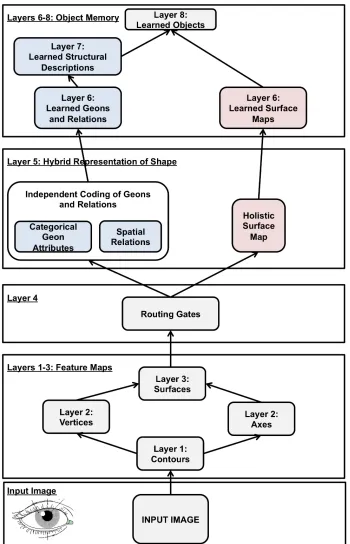
One model of the few models of object recognition that makes clear predictions on the role of attention in object recognition is the hybrid model of Hummel (2001). It proposes that the shape information of attended and unattended objects are represented in a
qualitatively different way, and that recognition is possible without attention for objects in familiar views.
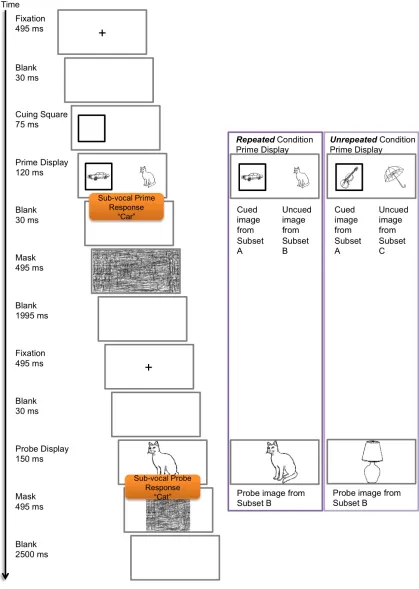
The successful recognition of objects can be measured by repetition-priming. In such a paradigm, the first presentation of the object is termed the ‘prime’ display and the second is termed the ‘probe’. Priming is measured behaviourally as the difference in the naming accuracy or decrease in the naming time of an object at the probe display due to it having been presented previously at the prime display, compared to a baseline object that has not been seen previously at all (Bartram, 1976; Schacter, Delaney & Merikle, 1990). Priming has been described as “likely to be one of the most basic expressions of memory,
influencing how we perceive and interpret the world” (Henson, 2009, p.1055) and priming is therefore an appropriate paradigm to examine the link between attention and format of object representations in memory. Thus all except one of the experiments in this thesis were based on a short-lag repetition-priming paradigm.
This thesis directly examines the effects of view on the visual processing of unattended objects, extending the current literature by using electroencephalographic (EEG) techniques. EEG are scalp-recorded voltage-potential changes that are associated with neural activity. By comparing the EEG locked to a certain event (for example a stimulus onset) an event-related potential (ERP) can be extracted. The ERPs for different
This thesis concerns human visual object recognition, and particularly whether visual processing of objects can occur without attention. Here, an object is defined as an everyday object easily recognisable from its image displayed in a canonical view. All images used in the research studies for this thesis were black and white line drawings. ERP repetition-priming studies form the basis of the experimental work described here.
1.2.Outline and Scope of the Thesis
Chapter 1 of this thesis provides a background to the relevant areas of object recognition and selective attention to contextualise the rationale for the overall research questions. It begins with a discussion of the basic problems in understanding object recognition and how certain types of models have attempted to resolve these by proposing different ways in which we represent objects in long-term memory (LTM). It will be argued that the instances of these representations are restricted by whether objects are placed under attention or not. Rather than a full discussion of all object recognition models, one model that directly integrates the role of attention into object recognition is highlighted here: the hybrid model of object recognition (Hummel, 2001). This model provides the framework required for testing the specific properties of the recognition of unattended objects as is the aim of this thesis. The scope of this thesis is limited to the recognition of single non-face objects, rather than that involving multiple objects as in scene recognition.
demand for a central task is low, ‘ignored’ objects still receive residual attention, and are processed. Thus, these two theories are used as the framework to address our research questions: The hybrid model of object recognition will guide the tests of whether an unattended object can be recognised, and whether unattended objects can be recognised across changes in view. The perceptual load theory of attention is employed to ask how robust this processing of unattended objects is to another method of modulating attention: perceptual load. The aim of Chapter 1 is to provide the background for the overall
research questions for the thesis, while the literature review specific to the relevant ERP studies used to form the experimental hypotheses is reserved for Chapter 2.
Chapter 2 also provides the specific experimental approach to the research questions and the choice of task. Studies testing both the hybrid model and perceptual load theory have used priming paradigms in an object-naming task. In this thesis repetition-priming is also chosen for all but one of the experimental tests, here modified for ERP and eye-tracking measurements. Some theoretical background on the acquisition of ERP will be given and this is followed by an overview of the literature on observations of relevant ERP effects that provide the explicit basis for the specific experimental
predictions of this thesis. The general methods for the acquisition and analysis of the data for this thesis are described in the second part of Chapter 2. Eye-tracking measures are used in Experiment 4 and these are outlined in that chapter.
1.3.What is Object Recognition?
Recognising objects forms such an essential, and usually effortless, part of our daily experience that the complexity of understanding the processes involved can be easily overlooked (Humphreys, Riddoch & Price, 1997). Keysers, Xiao, Földiák and Perrett (2001) note that the mechanisms underlying biological object recognition are not well understood, and equally its implementation in computer models is still not
straightforward (DiCarlo & Cox, 2007; Pinto et al., 2008).
Put simply, functional accounts of object recognition must relate how, on first encountering an object, its retinal image is encoded (described) into an internal
representation. The accounts must then also explain the processes that, on a subsequent encounter with the same object, lead to a successful match of the input retinal image of an object to its description in long-term memory, resulting in recognition. Therefore, the properties of recognition rely upon how we internally represent objects (Marr, 1982), and, as stated by Riesenhuber (2000), any theoretical models of human object recognition must be constrained by neurobiology. Most models of object recognition do indeed follow the functional hierarchy of the visual areas of the brain, which is outlined below. A detailed account of the neurobiology of the visual system will not be given here, and the focus will rather be to describe the route of light from an input image through the brain until it reaches areas associated with object recognition. The emphasis of this chapter is a functional approach to the stages of object processing.
1.4.The Neurobiology of the Visual System
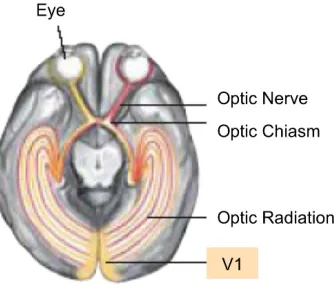
optic tract and lead to the lateral geniculate nuclei (LGN), which are small bilateral areas of the thalamus at which 80% of the axons terminate. These LGN consist of 6 layers, of which the top four layers extend mainly from the fovea and are termed parvocellular from the Latin “parvus” meaning small, with respect to the magnocellular (“magnus” meaning large) bottom two layers which extend mainly from the periphery. The magnocellular cells (M-cells) and parvocellular cells (P-cells),1 have been found to transmit different types of visual information (e.g. Merigan, Katz & Maunsell, 1991; Bullier, 1995; Bar et al., 2006). The properties relating to M-cells and P-cells are maintained along the output axons (termed the optic radiation) leading to the primary visual area of cortex, V1 (Brodman area 17). V1 is the first point at which information from both eyes is
combined. It is known as striate (i.e. layered/striped) cortex, and is composed of 6 layers. The LGN axons terminate in the 4th layer (which is itself further sub-striated).
These early visual areas in primary cortex are considered to be retinotopic. That is, the cells contribute to a one-to-one map of the visual field, preserving topographic (location) information directly. This is illustrated by the instances of scotoma, in which damage to specific areas in V1 causes a location-specific blindspot on the retina (Wickens, 2009). These earliest visual areas are also known to be orientation-sensitive, with simple cells with small receptive fields tuned to different orientations (Hubel & Wiesel, 1962, 1977).
1
The M- and P- cells actually represent only 20% of the total input to LGN from the retina, with the majority actually from the brainstem and visual cortex, which may be involved with top-down feedback for example to sharpen the visual image, or to control jumpiness from saccadic
Figure 1-1: Illustration of human early visual areas (adapted from Logothetis, 1999).
The primary visual cortex then leads to the secondary, extrastriate, regions of visual cortex (V2, V3, V4 & V5, as shown in Figure 1-2). These regions are associated with the higher order processes of object recognition (although see Tong, 2003, for discussion of recognition linked directly with V1). Progressing through the hierarchical regions of the visual system, the receptive field sizes increase and also begin to respond to more complex stimuli (Kravitz, Vinson & Baker, 2008; Logothetis, Pauls, Bülthoff & Poggio, 1994).
Figure 1-2: Hierarchical visual areas in cortex (adapted from Logothetis, 1999).
It has been shown that there are two pathways for the flow of visual information through secondary cortex, one is a more dorsal route and the other more ventral (e.g. Goodale & Milner, 2006), and this is briefly described below.
1.4.1 Two Visual-Streams of Object Processing
The divergence of two distinct pathways for visual information from about V2 in the cortex is the basis of the influential two visual-systems approach (Goodale & Milner, 1992; Schneider, 1969; Ungerleider & Mishkin, 1982), which dissociates a ventral (from striate to inferotemporal cortex) stream from a dorsal stream (from striate to posterior parietal cortex) of visual processing. These streams are considered to be functionally separated either due to receiving different types of visual information (Ungerleider & Mishkin, 1982) or due to different processing of the same input information (Goodale & Milner, 1992).
Haxby (1994) described the evidence for these routes based on the results of studies on monkeys with lesions to temporal (dorsal) and parietal (ventral) cortical areas performing an object discrimination task and a landmark discrimination task. The monkeys were rewarded on choosing a familiarised object or location respective to the task condition. They were then lesioned, and tested on their retention of the task demands. Inferior temporal lesions were associated with reduced performance on visual discrimination based on pattern, object shape and colour, but no deficit on visuo-spatial tasks such as guided reaching (Gaffan, Harrison & Gaffan, 1986). In contrast, parietal lesions resulted in reduced visuo-spatial performance, but no deficits in visual discrimination (Mishkin & Ungerleider, 1982). Ungerleider and Haxby also linked these properties to human visual areas, describing how deficits of visuo-spatial performance or recognition were linked to occipito-parietal and occipito-temporal lesions respectively by postmortem (Newcombe, Ratcliff & Damasio, 1987). Ungerleider and Haxby also claimed that certain neurological conditions offer further support to the two routes hypothesis. One example was of object agnosia and prosopagnosia (where patients are able to detect an object or face without being able to recognise it) observed after occipito-temporal lesions. Another example was of the spatial cognition problems such as optic ataxia (where patients are able to identify an object but are unable to move their hand towards it effectively) that are observed after occipito-parietal lesions.
Goodale and Milner (2008) suggested that although both routes process location and structure information, the way that they process the information and then transmit it differs according to the goals of ‘vision for perception’ in the ‘what’ route or ‘vision for action’ in the ‘how’ route (Brown, Moore & Rosenbaum, 2002; Goodale & Milner, 1992; Milner & Goodale, 2008). The dorsal stream transforms ‘moment-to-moment’
(bilateral nuclei in the thalamus) separately feed the dorsal and ventral cortical routes. The subcortical pathway has been linked with the sensitivity to salient stimuli such as faces (Pasley, Mayes & Schultz, 2004), rather than in object recognition as is the case for the higher cortical areas. The three streams are illustrated in Figure 1-3.
Figure 1-3: Schematic of the dorsal and ventral visual pathways in human cortex adapted from Goodale & Westwood (2004). Also shown is the subcortical, retinotectal, pathway.
Reviews of the two-streams account can be found in Cardoso-Leite and Gorea (2010), Goodale and Milner (2006), Milner and Goodale (2008) and Westwood and Goodale (2011). Some authors have suggested that there is rather some integration of the two routes (Farivar, 2009; Grill-Spector, 2003), or a three-pathway model (Kravitz, Saleem, Baker & Mishkin, 2011), or even a patchwork model of about 40 inter-connected visual areas (de Haan & Cowey, 2011). The dissociation between the ventral and dorsal
demonstrated that cortical areas in the dorsal and ventral stream map onto one hybrid model of object recognition (Hummel, 2001), which will be discussed in Section 1.11.
1.5.The Stages of Object Processing
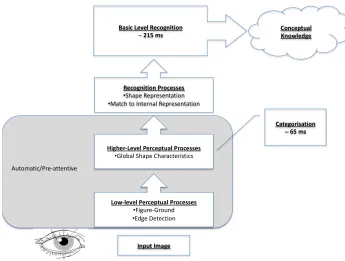
The stages of visual processing that are required for the recognition of an object can be broadly separated into perception and recognition (e.g. Schendan & Kutas, 2003; Lamberts & Freeman, 1999). Perceptual processes (occurring within around 200 ms of the presentation of the object) are concerned with the first detection and encoding of the visual scene by our sensory systems (the eye and striate cortex). Such processing includes basic figure-ground segregation, that is, the separation of the to-be-identified object from the background, and also some extraction of low-level visual features such as colour, edges and contour. In contrast, recognition processes are generally considered to be higher order processes, both functionally, for example, concerned more with the
matching of the percept resulting from the perceptual processes to an object description in long-term memory, and also neurologically, involving extra-striate cortex
(Riesenhuber & Poggio, 2000). The object descriptions may then lead to the activation of further conceptual associations with the object, for example linking an image of a cat to the knowledge that it is an animal, and that the word ‘cat’ begins with the letter ‘c’ in English, and so forth. The differences in perceptual and conceptual descriptions and the networks of associations are discussed further in Barsalou (2008) and Barsalou, Spivey and McRae (2012).
share some characteristics: chairs, desks, lamps have quite different features) or the more specific subordinate level (e.g. kitchen chairs compared to armchairs).
Analogous to this hierarchy of levels of naming, different levels of visual processing can be associated with the information required for a response appropriate to each of these levels. For example, categorisation can be demonstrated by those tasks such as simply asking participants whether they recognise an object or not, this being the basis of old/new (same/different) recognition paradigm. In such categorisation tasks participants may be taken through a learning phase and then asked whether certain stimuli have been presented to them previously. Other examples of categorisation tasks are judgements of stimuli as living vs. non-living, or size judgement (whether or not it fits in a shoe box e.g. Henson, Rylands, Ross, Vuilleumeir & Rugg, 2004) and gender categorisation. It has been suggested that such categorisation relies on the lower-level visual properties of an image. For example Lamberts, Brockdorff and Heit (2002) have associated perceptual processes with those required for an old/new response. Further, it has been suggested that categorisation may only require low-level perceptual processing of the ‘gist’ of an object for recognition e.g. by Thorpe, Fize and Marlot (1996). In their study they showed that categorisation is a very fast process, specifically that it is possible to identify whether there is an animal presented in a natural scene after only about 150 ms after a very brief presentation (20 ms). Thorpe et al. took this as an indication of fast feed-forward gist processing, arguing that there was insufficient time for top-down influence.2
The study by Thorpe et al. (1996) demonstrated the fast categorisation of whether an animal was present or not, but the level of the knowledge of that animal is not completely clear. On one hand, it may be that the animal was classified as ‘animal’. On the other hand, there may have been access to its basic level name ‘tiger’. Alternatively, the task may be regarded as detection of an animal from the background. Grill-Spector and Kanwisher (2005) have suggested that detection is as fast as categorisation, but in their study, the categorisation task required the participants to name objects at their basic level. Detection was tested by participants’ responses to everyday objects vs. textures. For the categorisation task participants had to name the objects at basic level across ten
2
categories, for example ‘face’, ‘dog’. For the identification task, participants had to name the same objects but at the subordinate level, for example ‘Harrison Ford’, ‘German Shepherd’. Grill-Spector and Kanwisher found that categorisation was as fast as detection for natural images. Subordinate level identification took longer (by 65 ms) than
categorisation. Their behavioural study could not determine whether identification and categorisation used different mechanisms, or whether identification simply took longer than categorisation. However, neuroimaging work (Halgren, Mendola, Chong & Dale, 2003; Liu, Harris & Kanwisher, 2002) does indicate that segmentation and categorisation occur at the same time (but see Martinovic, Gruber & Müller, 2008, for an argument for categorisation only at 200-400 ms after stimulus onset).
Tsotsos, Rodríguez-Sánchez, Rothenstein and Simine (2008) have also described the timeline of the tasks of discrimination, categorisation and individual identification in their model of object recognition. Discrimination is the first level, and this can be divided into sub-tasks. Tsotsos et al. also term detection, categorisation and identification in a similar manner to Grill-Spector and Kanwisher (2005) above. Detection requires the extraction of the object from the background ‘noise’. Categorisation is a between-category task (e.g. faces vs. dogs) that they state requires the access to a prototype. Identification is within-category task that requires a response at the subordinate level of naming. Categorisation, requires a single feed-forward pass of about 150 ms. Individual identification follows a refinement of identification from the category to individual level and thus is possible about 65 ms after categorisation.
complete whole. Indeed, the processes of integration or decomposition may be dissociable as discussed in Behrmann, Peterson, Moscovitch & Suzuki, 2006).
Categorisation and basic level recognition present differences in task demands that can then bias processing towards more global or local processing. For example, in basic level recognition, if the stimuli to be distinguished have similar constituent parts, as is the case for faces (Farah, 1992; Humphreys & Riddoch, 1984; Jolicoeur, 1990), fine-detail
Figure 1-4: Schematic of the levels of object processing.
1.5.1Explicit vs. Implicit Recognition
Another aspect of object recognition is whether it is possible without subjective awareness. That is, recognition may be explicit, when participants are aware of having recognised the object. Recognition may also be implicit, when evidence of recognition of objects can be found without participants themselves being aware of having recognised the objects. Participants may also be aware, or not, of having seen an image before. The dissociation between explicit and implicit memory is revealed by whether
and indirect-tests of recognition respectively (Graf & Schacter, 1985; Richardson-Klavehn & Bjork, 1988).
Evidence for dissociable memory systems has been observed in neuropsychological patients. For example, Warrington and Weiskrantz (1970) found that although people with amnesia showed worse performance than controls for recall and recognition tasks, they still showed the same advantage for previously seen words when identifying degraded versions of those words on subsequent presentation. Non-brain-injured people have also been observed to show better performance on a word-stem completion task (Graf, 1984) due to having previously seen the complete words, but without recalling them directly.
Participants can also be presented with a stimulus without their conscious awareness of it. This may be achieved by presenting it at a subliminally for a very short time (Bar & Biederman, 1998) or through binocular rivalry (Bahrami, Carmel, Walsh, Ress & Lavie, 2008). Alternatively, attention can be directed away from the stimulus, either by directing attention to another spatial location (e.g. Stankiewicz, Hummel and Cooper, 1998), or to another temporal location (e.g. Shapiro, Caldwell and Sorenson, 1997), or indeed to another characteristic of the stimulus such as in the case of overlapping (but differently coloured) stimuli, in which attention is directed to one colour only, (e.g. Ballesteros, Reales and Garcia, 2007).
McAuliffe and Knowlton (2009) compared the time required for object identification priming against old/new recognition memory. After seeing objects for a variety of duration times, participants were then asked to identify them in a probe phase. It was found that 75 ms was sufficient for successful recognition tested by an implicit old/new task, but that 150 ms was required for identification by explicit naming. The authors suggested that this indicated that different types of representations support old/new recognition and identification: Old/new recognition memory may be associated with early hierarchical areas coding low-level features of “gross shape, contrast or overall
subject of some debate (Graf & Schacter, 1985; Henson, 2003; Ratcliff & McKoon, 1988; Turk-Browne, Yi & Chun, 2006).
Research on implicit and explicit memory has often used repetition-priming as a tool to measure recognition. A feature of such a paradigm is its flexibility in being able to probe differences between perceptual/conceptual and implicit/explicit recognition. Repetition-priming paradigms will be used in the experimental work of this thesis and have also been used to test various theories of object recognition that will be described shortly. Therefore repetition-priming will be described briefly below before returning to the theoretical issues of object recognition.
1.6.Repetition-priming
In a repetition-priming paradigm, the response upon the presentation of a (probe) stimulus that has either been presented previously as a prime is compared to that upon presentation of a previously unseen (unprimed) stimulus. Behaviourally, priming is measured as the difference in naming speed or accuracy due to having seen the probe image previously during the prime display compared to that of a previously unseen image. Researchers use the term ‘positive priming’ (Bartram, 1976; Schacter et al., 1990). when recognition performance is improved for repeated compared to non-repeated items (i.e. faster and more accurate performance on e.g. naming), whereas in negative priming (Tipper & Driver, 1988; Conlan, Phillips & Leek, 2009) naming speed is slower, or accuracy is worse, due to having previously seen the image.
In his reviews on priming, Henson (2003, 2009) has proposed a distinction between perceptual vs. conceptual components (Roediger & McDermott, 1993), and how this is supported by findings of dissociations in Alzheimer’s (Gabrieli et al., 1994). In patients with Alzheimer’s the early sensory areas are preserved and allow intact perceptual priming. However, the damage to frontotemporal regions is associated with disrupted conceptual priming.
Cooper, 1992). For example, by measuring the priming from an image that is presented in an identical visual format/view to the probe compared to one in which the view is
changed, the amount of perceptual priming may indicate whether the memory
representations are view-sensitive. In contrast, conceptual priming (Biederman & Copper, 1992) can be measured by using, for example, an identical image compared to one that is of an object with the same name but a different visual form (e.g. an upright vs. grand piano).
Related to the distinction between perceptual and conceptual priming is the role of familiarity of the object. Examples of familiar objects are everyday objects (as used in this thesis), famous faces and words. Priming from such objects will depend on the access of long-term memory representations. However, the priming from unfamiliar objects, such as novel objects, anonymous faces and letter strings are more likely to be associated with perceptual representations (Henson, 2009). Priming from familiar stimuli has been shown to be greater than for unfamiliar stimuli (Bowers, 1994).
In order to understand the priming under different task conditions, models of priming have divided into episodic (instance) or structural (abstractionist) theories (Henson, 2003). In episodic theories, any instance (exposure) of a stimulus can leave a trace of its processing. In structural theories, it is a pre-existing representation that undergoes a modification such as a lowered threshold or residual activity. Henson presents a
component-process model in which several processes such as mapping or transformation may be involved in resulting priming, and it is the overlap between the processes
involved at the prime and probe presentations that determine the amount of resultant priming and thus, processes involved at the probe will be facilitated from the prior processing.
1.7.View-sensitivity of Object Recognition: The Viewpoint Debate
This is the concept of ‘object constancy’ (Lawson, 1999; Turnbull, Carey & McCarthy, 1997) or ‘stimulus equivalence’ (Bruce, Green & Georgeson, 2004).
One aspect of object constancy relates to the question of how we can accommodate recognising an object from a viewpoint that we have not previously encountered. In everyday life, at a given moment, each object will project a particular image at the retina. Just by moving our head, differences in for example viewing angle mean that the same object can project a number of different retinal images, which are still recognised as belonging to the same object. Whether it is as ‘easy’ to recognise an object when the present and original view of the object are different is termed the question of view-sensitivity.
Experimental studies have demonstrated that recognition performance can either worsen upon view-changes (; Hayward & Tarr, 2000; Jolicoeur, 1985; Lawson & Jolicoeur, 1998; Tarr, Bulthoff, Zabinski & Blanz, 1997) or remain unaffected (Fiser & Biederman, 2001; Biederman & Cooper, 1992). This raises the question of how the empirical
evidence for both view-dependent and view-independent recognition can be accounted for by a model of human object recognition. The view-sensitivity of object recognition is traditionally linked to the issue of how objects are represented in long-term memory, the subject of the next section.
1.8.The Mental Representation of Object Shape
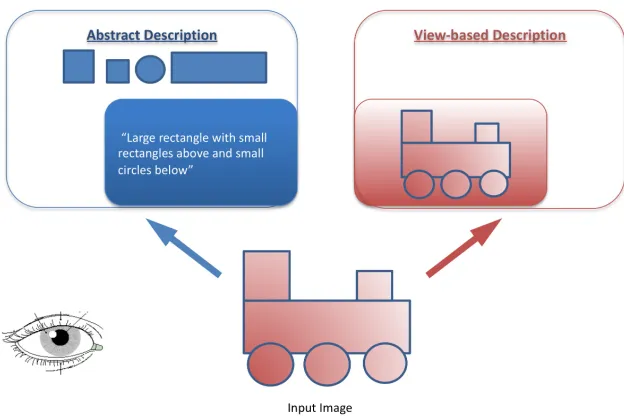
deconstructed into a more abstract description. Figure 1-5 illustrates simplified versions of two ways in which one object can be described. One example is via a direct, encoding of the image presented to the retina on a particular instance, which is therefore view-based, rather analogous to a photograph. The second example is via a decomposition of the component parts of the object encoded into an abstract description.
Figure 1-5: Simplified examples of a view-based description and an abstract description of an image.
The way in which these two types of representation can account for the view-dependence or view-independence of recognition that has been shown empirically will be described after an overview of the mental representation of shape. The four properties of shape representation proposed by Hummel (2013) differentiate theories of object recognition and explain those models’ predictions of the view-sensitivity of recognition. Therefore, they are outlined briefly below.
The first property is the way in which a set of primitives is defined. This forms the ‘vocabulary’ of shape elements with which an object shape can be described. These elements can be at the level of individual pixels (Liu, Knill & Kersten, 1995), or
& Miyake, 1982; Lowe, 1987; Poggio & Riesenhuber & Poggio, 2002), volumetric parts (Marr & Nishihara, 1978) or the categorical properties of object parts (Biederman, 1987; Hummel, 2001). Some examples of 3D volumetric elements, akin to the ‘geons’ used in Biederman’s (1987) recognition-by-components (RBC) model of object recognition described in more detail in Section 1.8.1, and how two of the same elements can be used to describe both a cup and a bucket are shown in Figure 1-6.
Figure 1-6: Examples of volumetric elements and examples of assembly into a cup and bucket.
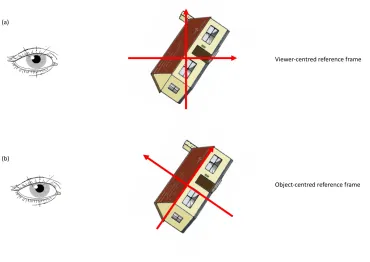
The second property of shape representation is the definition of a reference frame in which the primitives are encountered. The reference frame can be oriented with respect to the viewer (‘view-centered’) or the object itself, as is illustrated in Figure 1-7. The
Figure 1-7: Illustration of (a) viewer-centred and (b) object-centred reference frames. Object image from the stimulus set of Rossion and Pourtois (2004).
categorical, for example above vs. below, or metric, for example larger vs. smaller (Hummel & Stankiewicz, 1996; Jüttner, Petters, Wakui & Davidoff, 2013). Examples of a coordinate-based and a categorical relation description are shown in Figure 1-8.
Figure 1-8: An example of spatial relations between the house-parts of window and door defined by (a) coordinates and (b) categorical relations. Object image from the stimulus set of Rossion and Pourtois (2004)
The first type of configural representation is an analytic description in which the parts and their relations are explicitly and separately defined and can also be retrieved
separately (Hummel & Biederman, 1992; Hummel & Holyoak, 1997, 2003). This is also known as a structural description. Taking an example of a cup, the descriptor for the handle and that for the container are activated separately to the descriptor for ‘side-attached’. Therefore, to arrive at the configuration of cup ‘handle side attached to container’, those descriptors must be bound together during the process of recognition. The second, ‘holistic’, type of description is akin to the idea of a mental ‘snapshot’– in the sense that objects – like faces (e.g., Yin, 1969) - are usually recognised in-one-piece rather than piecemeal fashion, meaning that the information of the type of part (or feature) and location information encoded ‘all-in-one’ and thus cannot be retrieved separately. For the example of the cup, the handle and its location beside the container are already bound together as a feature at a certain location in the reference frame. Holistic effects on recognition are demonstrated by the ‘ineffability’ of face recognition (Mangini & Biederman, 2004). For example, you may be able to recognise a celebrity, without being able to remember the colour of their eyes. This inability to recall the details of specific feature has also been demonstrated in certain non-face stimuli such as
Figure 1-9: Schematic of analytic and holistic descriptions.
In order to recognise the object on a later encounter, the input image must be matched to the internal representation. Thus, as shown in Figure 1-10 if the object is shown in another view on a later encounter, in a view-based, holistic, case the current view must first be aligned to that of the internal representation. This implies a delay in recognition that depends on the degree of view-change, that is, resulting in view-dependent
Figure 1-10: Recognition of an object upon a view-change.
A brief discussion of theories based on either view-based or structural descriptions will follow, as this relates to the question of whether and how unattended objects may be represented differently from attended objects. A detailed discussion of their merits is beyond the scope of this thesis and can be found in, for example, Thoma and Davidoff (2007), Hummel (2013) and Peissig and Tarr (2007). The focus here is in highlighting their differences, particularly in their predictions for the view-sensitivity of recognition, in order to argue (as Hayward 2003; Milivojevic, 2012; Hummel, 2013) that one or other type of theory alone may not be sufficient to account for all the types of human
1.8.1Analytic Representation/Theories of View-independent Recognition
Analytic, or structural descriptions are relational-based. They rely on decomposing the object image into component parts and representing these abstractly in addition to, and independently of, their spatial relations in either object-centred frames (Marr &
Nishihara, 1978) or viewer-centred frames (Biederman, 1987; Hummel & Biederman, 1992). This type of representation forms the basis of the influential computational model of Marr (1982) and the recognition-by-components (RBC) theory of Biederman (1987). Both theories stem from the need to account for the problem of object constancy, and so predict view-invariant recognition as long as the visible parts give rise to the same identical structural descriptions. The basic levels of processing for Marr’s computational model begin with the figure-ground processes of separating the object from its
background. The first stage detects the edges of the object through finding points of discontinuity in intensity maps that defines boundaries/edges. Information about whether these edges join at concavities or convexities results in information about the basic overall shape of the object. Following this the processes of decomposition into
constituent elements begin. In Marr’s model these elements are ‘generalised cylinders’, and an example of how these can be assembled into a representation of a human shape is shown in
Figure 1-11: Generalised cylinders (adapted from Marr & Nishihara, 1978).
In Biederman’s RBC model, the generalised cylinders are replaced by a vocabulary of various geometric 3D shape primitives termed ‘geons’, some examples of which are shown in Figure 1-12. These geons are defined by the geometric properties of the
contours of the shape’s surface. These properties fall into two types, the first of which are termed non-accidental properties (NAPs). These are categorical properties such as
Figure 1-12: Examples of geons (adapted from Biederman, 1987).
Biederman (1987) has compared these geons to phonemes in natural language. He
proposes that, like the many words that result from a set of phonemes, geons also provide a way of describing many objects using a finite set of shape elements. The key to this variety of descriptions is that in the RBC model the geons and their spatial relations with respect to each other are explicitly and independently encoded. Figure 1-13 shows some examples of different objects that can be made from the same geons.
RBC was implemented computationally (Hummel & Biederman, 1992) as JIM (Jim and Irv’s Model) and, unlike Marr’s theory has been extensively tested both behaviourally (Biederman & Bar, 1999; Biederman & Cooper, 1991, 1992; Biederman & Ju, 1988) and more recently with neuroimaging (e.g. Kim, Biederman, Lescroart & Hayworth, 2009).
As long as the component parts and their configuration are visible an object should be as recognisable in a novel view compared to that in which it was first encountered. The explicit and independent coding of component parts and relations in analytical
(structural) object descriptions allows for the object knowledge that we experience in our everyday object-knowledge: We ‘know’ that a ‘typical’ cup handle is side-attached to its main container. In contrast view-based models, the properties of the cup would be ‘fixed’ to only that specific cup in the initial presentation view. This manner of encoding thus presents a computational problem in that in order to result in the same object knowledge permitted by analytic descriptions, for a view-based model every view encountered of each object would have to be encoded. Therefore, matching an input object to its description in LTM could potentially be very demanding in terms of costs in time and processing resources. This does not tally with the speed and ease of recognition
performance that is observed in humans. Such computational problems are avoided with analytic representations (Hummel 2001; Hummel & Biederman, 1992). However, as is discussed in Section 1.10, an important limitation of structural descriptions is that they require attentional resources for the encoding of part and relation information.
View-independent theories have been criticised because they cannot easily explain the recognition of new members of a category (Edelman, 1998; Riesenhuber & Poggio, 2000; Tarr & Vuong, 2001). For example, the constituent geons of two exemplars of the same category may differ substantially (‘kitchen chair’ vs. ‘office chair’) but need still to be accepted into the same category (‘chairs’). However, RBC does predict different naming times for same compared to different category exemplars. In a priming paradigm, more priming would be expected from a prime that was another category member than from a non-member. Within the same category, the priming is expected to be more for an identical or changed view of the same exemplar to that from another exemplar. This pattern of priming was confirmed by the behavioural priming study of Bartram (1976). Modifications of these models include the addition of more details on
metric properties of the representation which may help to derive differences between geons and improve model performance (Hummel, 2013; Jüttner et al., 2013).
However, structural description models have been criticised, and Tarr, Williams,
natural account for the types of viewpoint effects found” (p. 277). In their study examining viewpoint effects on the recognition of single geons, they ran nine
experiments including match-to-sample, sequential matching and naming3 tasks using both 3D shaded renderings and line drawings. Tarr et al. concluded that none of the results of their experiments demonstrated view-independence even at the level of geons.
1.8.2Holistic Representation/Theories of View-dependent Recognition
Holistic descriptions are more akin to a pictorial ‘snapshot’ of the image in which the object’s features are directly mapped onto a coordinate-based description (Hummel, 2001). This ties features with their location in a viewer-centred reference frame. Therefore in order to recognise an object in a different view to that previously
encountered, generally, the new input image must undergo a geometric transformation prior to matching to the internal representation of the object in LTM. Graf (2006) has divided view-based models of object recognition relying on holistic representations into three types. In alignment models, some kind of geometric transformation/alignment or normalisation (Tarr & Pinker, 1989) of the image is required to match it to the
representation for recognition. In view-interpolation models, it is the difference between the novel view and the stored view that is compared (Bulthoff & Edelman, 1992). In pooling and threshold models the hierarchical pooling of information from view-specific cells provides a generalised representation from a variety of views (Perrett, Oram & Ashbridge, 1998; Riesenhuber & Poggio, 2000; Wallis & Bulthoff, 1999).
found in the depth-rotation of novel objects such as wire-like stimuli that have been compared to bent ‘paperclips’ and rounded structures (Edelman & Bulthoff, 1992) and blocks (Tarr, 1995). More cases of the view-dependence of recognition have bee reviewed by Kravitz et al. (2008) who especially considered position (location) dependence, and Graf, Kaping & Bulthoff (2005) who especially considered the congruency effects of facilitated recognition when target objects are presented in a congruous, rather than incongruous view with respect to distractor objects.
The based models outlined above were employed to account for the
view-dependence that is seen in many cases of recognition. However, they have been criticised (Graf, 2005, 2006) for not accounting for the observed recognition advantage for
different objects that appear in a similar orientation or size. The empirical evidence has tended to rely on research using stimuli that are harder to define in terms of parts and relations, such as those stimuli resembling paperclips bent into different forms. Such stimuli are arguably not processed in a similar way than to everyday objects, but rather require more view-based strategies. Liu et al. (1995) have gone further and suggested that 2-D shape representations are not sufficient for human performance.
1.9.Accommodating Both Types of Representation in one Model of Object Recognition
The division of theories into those predicting view-dependent and independent
recognition performance has formed the basis of the long-standing viewpoint debate in object recognition. A review of research of the last 20 years on object recognition theories and the viewpoint debate by Peissig and Tarr (2007) discusses the move from structural-description models in 1980s, to view-based models in the 1990s. In their review Peissig and Tarr argue the case for view-dependent recognition, but they acknowledge that there is empirical support for both dependent and
Generally, discrepant results may be assimilated into one or other type of theory by raising methodological difference (Johnston & Hayes, 2000), or exceptions based on the types of stimuli (Bartram, 1976; Cooper & Brooks, 2004; Cooper & Wojan, 2000; Laeng, Carlesimo & Caltagirone, 2002). Discrepant results have also been put down to the geometry of the stimuli (Hayward & Williams, 2000) or the ease of segmentation into parts and relations (Biederman & Gehardstein, 1993). Other considerations are the familiarity of the stimuli (Collinshaw & Hole, 2000) or the viewing conditions (Christou & Bulthoff, 2000) and the tasks used (Biederman & Subramaniam, 1997; Hummel, 2013; Liu, Knill & Kersten, 1995; Milivojevic, 2012).
Additionally, models can themselves be adapted to account for more or less view-sensitivity. Even a template model can produce predictions generalising over view if given a sufficient number of templates. A structural description model can also be conceptualised as more view-sensitive by adding more information in its description, for example, the viewing angle (see Hummel, 2001; Stankiewicz & Hummel, 2002). Some examples of hybrid models with properties of both view-based and structural description models have also emerged. Examples of hybrid models that have emerged from view-based models include those of Edelman and Intrator (2000, 2001) and the ‘chorus of fragments’ model of Newell, Sheppard, Edelman and Shapiro (2005), in which
recognition involves a test of similarity to a prototypical shape rather than the derivation of metric properties. View-invariant models include those of Riesenhuber and Poggio (1999, 2000) who have included a role of attention and feedback for learning, and Hummel (2001) who included the role of attention in modulating between two parallel recognition routes, one resulting in dependent recognition and the other in view-independent recognition.
This thesis takes up the suggestion that both types of representation (Hayward 2003; Milivojevic, 2012) need to be accommodated in one model of human object recognition, and that one solution to accommodate this proposition is to consider the role of attention in gating different types of object recognition processing (Hummel, 2001). One
alternative option for the accommodation of both types of representation in one