ORIGINAL RESEARCH ARTICLE
INTERGERATIONALITY: HOW ARE RELATIONS BETWEEN ELDERLY AND YOUNG ADULTS GIVEN?
*1
Cirlene Francisca Sales da Silva,
2Cristina Maria de Souza Brito Dias,
3Erideise Gurgel da Costa,
4Maria Lúcia Gurgel da Costa,
5João Batista Guerra Barretto Neto
and
6Daniely da Silva Dias Vilela
1
Doctor teacher of the Department of Psychology at the Catholic University of Pernambuco
2
Doctor teacher of the Department of Post-Graduation in Psychology of Catholic University of Pernambuco
3Doctor teacher of the Medicine in Health and Biological Sciences Centerof Catholic University of Pernambuco
4
Doctor teacher of the speech therapySciences Center of Federal University of Pernambuco
5Student of Medicine in Health and Biological Sciences Centerof Catholic University of Pernambuco
6Master's student in Clinical Psychology at the Graduate Program in Clinical Psychology at Catholic University of
Pernambuco
ARTICLE INFO ABSTRACT
This study carried out a systematic review of the literature from 2008 to 2018, aiming to understand the state of the art of the subject, through the analysis of scientific articles of periodicals indexed in databases, as well as theses and dissertations registered in the CAPES portal/MEC, having as guiding question "How do the relations between elderly people and young adults of the same family are given?". According to the inclusion and exclusion criteria, 18 papers, 02 theses and 03 dissertations were selected, adding 23 studies that compo-sed the article. The main results indicate that the geographic distance and the developmental process of young people's lives are negative factors for the relationship, causing loneliness and, sometimes, depression in the elderly. Thus, the relationship has been hampered by the way of living in contemporary times, specifically by the world of work and the technological age, producing discontinuities of affection and solidarity.
Copyright © 2019, Cirlene Francisca Sales da Silva et al. This is an open access article distributed under the Creative Commons Attribution License, which permits unrestricted use, distribution, and reproduction in any medium, provided the original work is properly cited.
INTRODUCTION
The intergenerational relationship is understood as the interaction between different generations. This relationship includes communication, care, responsibility, fidelity and even conflicts between subjects, with or without kinship (BVS, 2018; Côrte, 2016 and Dias, 2015). In Brazil and other developing countries, a person aged 60 or older is considered elderly; in developed countries, aged 65 or over1-4-5-6.Young adults are people between the ages of 19 and 401-7-8. After discussing the concepts of "Intergenerational Relationship", "Elderly Person" and "Young Adult", to complete the introduction of the theme, the meaning of the term "Family" will be presented. In this sense, the family is conceived as a human system, composed of subsystems (its components) that interact with each other and in which three types of personal
*Corresponding author: Cirlene Francisca Sales da Silva,
Doctor teacher of the Department of Psychology at the Catholic University of Pernambuco
relationships develop alliance (couple), filiation
(parenthood/sons). It has, among others, the functions of preserving the species, nourishing and protecting offspring or adopted members, and providing conditions for the acquisition of their personal identities. It can be roughly presented in three basic formats: the nuclear (conjugal: tripod parent-children), the extensive (inbreeding: which is also composed of other members who have any kinship ties) and the comprehensive (which includes, even non-relatives who cohabit) (BVS, 2018; Côrte, 2016; Dias, 2015; Brasil, 2003; Neri, 2008; Brasil, 1994; Papalia, 2013; Piletti, 2017 and Osório, 2013). In addition to these, there are configurations of recasted families, homoffective, single parent, adoptive, directed by grandparents who raise grandchildren, among others. Thus, based on the assumptions of Systemic Thinking, theorized by Ludwig Von Bertalanffy (2008), whose focus is on the interaction between the parties as a neuralgic point for the understanding of the functioning of the system as a whole, it can be inferred that the intergenerational relationship between elderly and young adults has been affected by contemporary reality, such as
ISSN: 2230-9926
International Journal of Development Research
Vol. 09, Issue, 07, pp. 28942-28948, July, 2019
Article History:
Received 03rd April, 2019
Received in revised form 21st May, 2019
Accepted 10th June, 2019
Published online 31st July, 2019
Available online at http://www.journalijdr.com
Key Words:
Intergerational relationships, Elderly, Young adults, family.
Citation: Cirlene Francisca Sales da Silva, Cristina Maria de Souza Brito Dias et al. 2019. “Intergerationality: how are relations between elderly and
young adults given?”, International Journal of Development Research, 09, (07), 28942-28948.
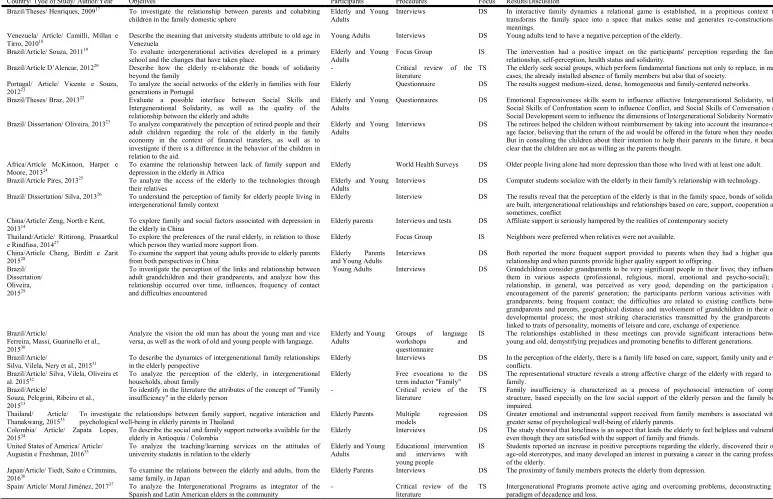
Table 1. Characteristics and results of the 23 studies included in the systematic review
Country/ Tyoe of Study/ Author/Year Objetives Participants Procedures Focus Results/Discussion Brazil/Theses/ Henriques, 200917 To investigate the relationship between parents and cohabiting
children in the family domestic sphere
Elderly and Young Adults
Interviews DS In interactive family dynamics a relational game is established, in a propitious context that transforms the family space into a space that makes sense and generates re-constructions of meanings.
Venezuela/ Article/ Camilli, Millan e Tirro, 201018
Describe the meaning that university students attribute to old age in Venezuela
Young Adults Interviews DS Young adults tend to have a negative perception of the elderly.
Brazil/Article/ Souza, 201119 To evaluate intergenerational activities developed in a primary
school and the changes that have taken place.
Elderly and Young Adults
Focus Group IS The intervention had a positive impact on the participants' perception regarding the family relationship, self-perception, health status and solidarity.
Brazil/Article D’Alencar, 201220 Describe how the elderly re-elaborate the bonds of solidarity
beyond the family
- Critical review of the literature
TS The elderly seek social groups, which perform fundamental functions not only to replace, in many cases, the already installed absence of family members but also that of society.
Portugal/ Article/ Vicente e Souza, 201221
To analyze the social networks of the elderly in families with four generations in Portugal
Elderly Questionnaire DS The results suggest medium-sized, dense, homogeneous and family-centered networks.
Brazil/Theses/ Braz, 201322 Evaluate a possible interface between Social Skills and
Intergenerational Solidarity, as well as the quality of the relationship between the elderly and adults
Elderly and Young Adults
Questionnaires DS Emotional Expressiveness skills seem to influence affective Intergenerational Solidarity, while Social Skills of Confrontation seem to influence Conflict, and Social Skills of Conversation and Social Development seem to influence the dimensions of Intergenerational Solidarity Normative. Brazil/ Dissertation/ Oliveira, 201323 To analyze comparatively the perception of retired people and their
adult children regarding the role of the elderly in the family economy in the context of financial transfers, as well as to investigate if there is a difference in the behavior of the children in relation to the aid.
Elderly and Young Adults
Interviews DS The retirees helped the children without reimbursement by taking into account the insurance-old-age factor, believing that the return of the aid would be offered in the future when they needed it. But in consulting the children about their intention to help their parents in the future, it became clear that the children are not as willing as the parents thought.
Africa/Article McKinnon, Harper e Moore, 201324
To examine the relationship between lack of family support and depression in the elderly in Africa
Elderly World Health Surveys DS Older people living alone had more depression than those who lived with at least one adult.
Brazil/Article Pires, 201325 To analyze the access of the elderly to the technologies through
their relatives
Elderly and Young Adults
Interviews DS Computer students socialize with the elderly in their family's relationship with technology.
Brazil/ Dissertation/ Silva, 201326 To understand the perception of family for elderly people living in
intergenerational family context
Elderly Interview DS The results reveal that the perception of the elderly is that in the family space, bonds of solidarity are built, intergenerational relationships and relationships based on care, support, cooperation and, sometimes, conflict
China/Article/ Zeng, North e Kent, 201314
To explore family and social factors associated with depression in the elderly in China
Elderly parents Interviews and tests DS Affiliate support is seriously hampered by the realities of contemporary society
Thailand/Article/ Rittirong, Prasartkul e Rindfuss, 201427
To explore the preferences of the rural elderly, in relation to those which person they wanted more support from.
Elderly Focus Group IS Neighbors were preferred when relatives were not available.
China/Article Cheng, Birditt e Zarit 201528
To examine the support that young adults provide to elderly parents from both perspectives in China
Elderly Parents and Young Adults
Interviews DS Both reported the more frequent support provided to parents when they had a higher quality relationship and when parents provide higher quality support to offspring.
Brazil/ Dissertation/ Oliveira, 201529
To investigate the perception of the links and relationship between adult grandchildren and their grandparents, and analyze how this relationship occurred over time, influences, frequency of contact and difficulties encountered
Young Adults Interviews DS Grandchildren consider grandparents to be very significant people in their lives; they influenced them in various aspects (professional, religious, moral, emotional and psycho-social); the relationship, in general, was perceived as very good, depending on the participation and encouragement of the parents' generation; the participants perform various activities with the grandparents, being frequent contact; the difficulties are related to existing conflicts between grandparents and parents, geographical distance and involvement of grandchildren in their own developmental process; the most striking characteristics transmitted by the grandparents are linked to traits of personality, moments of leisure and care, exchange of experience.
Brazil/Article/
Ferreira, Massi, Guarinello et al., 201530
Analyze the vision the old man has about the young man and vice versa, as well as the work of old and young people with language.
Elderly and Young Adults
Groups of language workshops and questionnaire
IS The relationships established in these meetings can provide significant interactions between young and old, demystifying prejudices and promoting benefits to different generations.
Brazil/Article/
Silva, Vilela, Nery et al., 201531
To describe the dynamics of intergenerational family relationships in the elderly perspective
Elderly Interviews DS In the perception of the elderly, there is a family life based on care, support, family unity and even conflicts.
Brazil/Article/ Silva, Vilela, Oliveira et al. 201532
To analyze the perception of the elderly, in intergenerational households, about family
Elderly Free evocations to the term inductor "Family"
DS The representational structure reveals a strong affective charge of the elderly with regard to the family.
Brazil/Article/
Souza, Pelegrini, Ribeiro et al., 201513
To identify in the literature the attributes of the concept of "Family insufficiency" in the elderly person
- Critical review of the literature
TS Family insufficiency is characterized as a process of psychosocial interaction of complex structure, based especially on the low social support of the elderly person and the family bond impaired.
Thailand/ Article/ Thanakwang, 201533
To investigate the relationships between family support, negative interaction and psychological well-being in elderly parents in Thailand
Elderly Parents Multiple regression models
DS Greater emotional and instrumental support received from family members is associated with a greater sense of psychological well-being of elderly parents.
Colombia/ Article/ Zapata Lopes, 201534
To describe the social and family support networks available for the elderly in Antioquia / Colombia
Elderly Interviews DS The study showed that loneliness is an aspect that leads the elderly to feel helpless and vulnerable, even though they are satisfied with the support of family and friends.
United States of America/ Article/ Augustin e Freshman, 201635
To analyze the teaching/learning services on the attitudes of university students in relation to the elderly
Elderly and Young Adults
Educational intervention and interviews with young people
IS Students reported an increase in positive perceptions regarding the elderly, discovered their own age-old stereotypes, and many developed an interest in pursuing a career in the caring profession of the elderly.
Japan/Article/ Tiedt, Saito e Crimmins, 201636
To examine the relations between the elderly and adults, from the same family, in Japan
Elderly Parents Interviews DS The proximity of family members protects the elderly from depression.
Spain/ Article/ Moral Jiménez, 201737 To analyze the Intergenerational Programs as integrator of the
Spanish and Latin American elders in the community
- Critical review of the literature
social, cultural, economic, technological changes, among other determinants, among them, the involvement in the developmental tasks of young people, typical of their life cycle (Berthoud, 2010; Oliveira, 2017; Souza, 2015 and Zeng, 2013). These factors have led to distancing between the generations, which is a worrying problem in a world that is aging at a great pace and which emphatically privileges youth, which damages the elderly and other generations (Côrte, 2016 and Oliveira, 2017). In this sense, this study proposed a systematic review of the literature, with the objective of understanding the state of the art of the subject, through the analysis of scientific articles from periodicals indexed in eight databases, as well theses and dissertations from CAPES portal/MEC), having as guiding question "How do the relations between elderly people and young adults of the same family are given?". It is considered that the relevance of the present study is based on the possibility of subsidizing reflections about how to contribute to bring the generations of the elderly and young adults closer together, from intergenerational actions.
MATERIALS AND METHODS
This article is a systematic literature review, which allows the identification and search of available information on a specific topic. In that extent, it helps to extract the main contributions and limitations of the studies for the field of knowledge, essential for research and professional practice. This research was carried out through an electronic search of published studies, from January 2008 to January 2018, in journals indexed in eight electronic databases of national and international data, named: PubMed - NCBI, PSICODOC, Scielo, BVS / Psi (Virtual Health Library of Psychology), Lillacs, VHL (Virtual Health Library), Google Scholar and Portal of CAPES / MEC Newspapers. The keywords used for the search were controlled by the descriptors of DeCS - Descriptors in Health Sciences of the Virtual Health Library (VHL), and are as follows: in Portuguese: família, relação
entre gerações, idoso, adulto jovem. In Spanish: familia,
relaciones intergeneracionales, anciano, adulto. And in English: family, intergenerational relations, aged, young adult. All descriptors in the search were joined by the boolean operators "AND" and / or "OR". We adopted the following inclusion criterion: the articles to be analyzed should have been published in the last ten years, that is, from January 2008 to January 2018, access to the complete article should be free, and in Portuguese, Spanish or English. Exclusion criteria were defined as: undergraduate or specialization theses, books, book chapters, systematic or integrative review articles, articles that did not present a summary or development in the subject. For our work, we adopted as a reference the Thematic Content Analysis, which is based on a critical and in-depth reading of the results found, in order to better describe and interpret the research data (Minayo, 2014). The analysis of the articles followed two steps: 1) Reading the title and/or summary of all documents found: when the abstract was not clear to decide to include the study, the document was read partially (method and results) or fully read; 2) Completion of the selection of the articles, according to the inclusion/exclusion criteria, all of which are read in full.
RESULTS
The search strategy of the articles is described in the Flow Chart below and was carried out by two independent judges. In
the comparison of the results, in case of divergence, consensus was sought. According to the flowchart, from the searches in the databases, using the keywords controlled by the descriptors family, relationship between generations, elderly, young adult, in the three languages (Portuguese, Spanish and English), united by the operator Boolean "AND" and / or "OR", 447 studies were found, of which: 424 did not meet the selection criteria, remaining 23 for this article. Altogether, 23 publications were selected and revised taking into account: country where the studies were developed, objective, authorship, year of publication, periodical, database, participants, target audience, instruments / procedures, main results and discussion. Thus, there are three theoretical studies, sixteen descriptive and four on intervention strategies. The data is presented in Table 1. Regarding the objectives of the 23 publications listed, the following converged: one referred to the perception by the young generations of old age; five, to the family dynamics in the perception of the elderly; five, to the facilitating interventions of the relationship between the elderly and the young generations and twelve, to the characteristics of this type of relationship.
DISCUSSION
From the studies presented, which were the basis for the systematic review proposed in the present study, aiming to answer the guiding question "How do the relations between elderly and young adults of the same family occur", the following thematic axes emerged: perception of the young
generations about old age; the dynamics of the
intergenerational relationship in the perception of the elderly; characteristics of the relationship between the elderly and the young generations; interventions that facilitate the relationship between the elderly and the young generations. On the perception of the young generations about old age, Camilli, Millan and Tirro18, in Venezuela, affirm that the prevailing image of the old age for young people is ambiguous and diversified, showing a complex reality. The authors attribute this to the fact that young people have a negative perception of older women and men, which is linked to the social demands to which the subjects are subject in youth, defined by their level of productivity and sexual function, so that the decreasing process of any of these aspects is often perceived as decay. Hence this pessimistic view of old age. In search of a solution to this problem, the authors emphasize the importance of sensitizing young generations to aging, in an attempt to deconstruct this negative image about the old. In this sense, it is important to emphasize that this look is more common in Western societies.
Above all, in the capitalists, who presume to have on the being, in which is inscribed in the culture, that the old pers'on, no longer producing as before, is considered as “social and disposable”, that old story "if is old, it’s not worth it anymore, throw away. " However, they forget that people who are old today have been builders of history, and that these young people are treading on the beatings of those, from which they benefit in modern day. In addition, the elderly are important bridges to the future, they have always been, and will never lose, this place of roots, which can contribute to young people, especially their life experience, as they are sources of wealth of knowledge and wisdom. Meanwhile, the society of the early twenty-first century is marked by the Age of the Empty (Lipovetsky, 2005), empty and lonely people, for they despise their roots, origins, and history, which they can only know
through those who are old. Ramos (Ramos, 2002) points out that negative consequences, such as feelings of being a burden, are more prevalent in Western societies in which productivity and the ability to reciprocate are highly valued. The author also points out that the aspect of the devaluation of the elderly is related to the problem of how young people perceive their elderly relatives in the countries of the West. She further emphasizes that this issue is related to the values that predominate in Western cultures, values that do not normally emphasize care for the elderly as an important task, as well as not considering the desires and preferences of the elderly person. However, Eastern societies have another view about the elderly person of the family, since they are based on that they must obey the older male human being. The authority of the patriarch remains elevated with age, and even the woman, so subordinate in old age, has higher powers than young men, exerting a preponderant influence on the education of grandchildren. For them, the authority of old age is justified by the acquisition of wisdom, preaching that, at age 60, the human being understands, without needing to reflect, everything he hears; when you turn 70, you can follow the desires of your heart without breaking any rule. Thus, for them, there is nothing in the world as great as the human being; and, in the human being, nothing is greater than filial piety (Santos, 2001).
According to this view, the duties of the children towards their parents include: seeking to make them happy human beings, in every way and at all times; always care for them with care and attention; to show their homesickness and pity on the occasion of his death; and, after his death, offer them sacrifices with much formality. The love of children for their aged parents, to assure them of greater protection and security in the last age of their process of living, comprises one of the most sublime actions of the human being towards himself and his species, that is, towards the their generation and for future generations, sustaining the perpetuation of intense and special love between parents and children (Santos, 2001). In this sense, the author proposes that in Eastern civilization, it is worth highlighting the privileged condition of the elderly in China, from antiquity to the present day. She points out that two philosophers were instrumental in bringing this perception to life and to the present: Lao-Tzu and Confucius. Lao Tzu, perceived old age as a supreme moment, of maximum spiritual reach, commenting that at age 60 the human being reaches the moment of releasing himself from his body through the ecstasy of becoming a saint. And Confucius, a profound connoisseur of the human soul, who expressed concepts of morality and wisdom. The philosophy of Confucius, which should not be considered religion, aims at a nationalist organization of society, relying on the principle of universal sympathy, which must be achieved through education, and extend from the human being to family and family to the State, considering the latter the great family. (Santos, 2001).
Thus, Santos (Santos, 2001) and Ramos (Ramos, 2002), in reflecting on the role of the elderly in families and societies, specifically, despite the way older people are treated and seen in societies, I conclude that Westerners differ as described above. Nevertheless, the dynamics of the intergenerational relationship, in the perception of the elderly, that is to say the relationship between the elderly and the young of the same family, was characterized positively, despite the conflicts. Thus, Silva, Vilela, Nery et al. (Silva, 2015), in their research in Brazil, found that intergenerational family relationships are
harmonious, permeated by intergenerational care with the elderly and him with their grandchildren, revealing a family life based on care, support, family unity and even conflicts between generations. Likewise, Silva, Vilela and Oliveira et al (Silva, 2015), in the same country, found similar results in relation to the meaning of family for the elderly, who were referred to as base, union, all, companionship, care, love and respect, revealing a strong affective load of the elderly in relation to the family. These findings corroborate Silva (Silva, 2013), who also verified the view of the intergenerational family in the perspective of the elderly, and concluded that in the family space ties of solidarity are built, intergenerational ties and relationships are structured based on care, support, cooperation and, sometimes conflicts. Similarly, Oliveira (Oliveira, 2015), when analyzing the perception of the bonds and relationship between grandchildren and their grandparents, understood that the grandchildren consider the grandparents as very significant people in their life; influence them in several aspects (professional, religious, moral, emotional and psychosocial); the relationship was perceived as very good, depending on the participation and encouragement of the parents; they still perform various activities with their grandparents, with frequent contact; the difficulties in the relationship are related to existing conflicts between
grandparents and parents, geographical distance and
involvement of the grandchildren in their own developmental process; the most striking features transmitted by the grandparents are linked to personality traits, moments of leisure and care, and exchange of experience.
Thus, in relation to the characteristics of the relationship between the elderly and the young generation, it is nowadays inferred that the reality of contemporary society has seriously undermined filial support14. The authors infer that even China, in the context of a society and a culture that values and is based on filial support, has had an impact on the family bond. This, revealed by poor family support, associated with weak social networks, which seems, according to the authors, to aggravate and exacerbate depression in the elderly. In this respect, Tiedt, Saito and Crimmins (Tiedt, 2016), report that, in Japan, the lack of support of the sons and daughters to the elderly, is correlated with depressive symptoms. The authors emphasize the importance of the availability and proximity of family members and social involvement, as protection against depressive symptoms in the elderly. In this sense, McKinnon, Harper and Moore24 report that in Africa, reduced child support, as well as lack of adequate support, when the elderly live alone, have a higher risk of depressive symptoms for the elderly, affecting the mental health. Likewise, Zapata Lopes34 affirms that loneliness in Colombia is an aspect that causes the elderly to feel helpless and vulnerable, mainly due to the smaller presence of family and friends.
Besides, Souza, Pelegrini, Ribeiro et al. (Thanakwang, 2015), conclude that, in Brazil, the contemporary changes in the family system, as a result of the contemporary way of life, contribute to family insufficiency in the elderly person, characterized as a process based especially on the low social support to the elderly person and on the family bond impaired, having as antecedent the contemporary transformations in the family system, the intergenerational conflicts, the commitment of the family relations and the social vulnerability of the family. As a consequence, the elderly person is vulnerable, with a decrease in psychological and functional health, lower quality of life and unsuccessful aging. Otherwise, as in Thailand, if older people receive more social and instrumental support from the family, they may have a greater sense of psychological well-being (Thanakwang, 2015). However, those older people with more negative or conflicting family interactions may present a diminished sense of psychological well-being. However, Braz (Silva, 2015), infers that in Brazil,
there is an interface between Social Skills and
Intergenerational Solidarity, as well as the quality of the relationship between elderly parents and their children. The author states that Emotional Expressiveness Skills seem to influence Affective Intergenerational Solidarity, while Social Coping Skills seem to influence Conflict, and Social Skills of Conversation and Social Development seem to influence the dimensions of Intergenerational Solidarity.
In this sense, Henriques (Henriques, 2009), in the same country, proposes that the interaction of elderly parents and cohabitant children in the family domestic sphere needs some daily adjustments in the coexistence. The author verified that, in this interactive dynamic, one ends up establishing limits between the personal and collective spaces in the relation. In this way, a suitable context for an interplay is established that transforms the family space into a place that makes sense and generates reconstructions of meanings. In this way, it is understood how much the Abilities mentioned by Braz (Braz, 2013) are important sources of Intergenerational Solidarity. However, Oliveira (Oliveira, 2013), when studying the relationship between parents and children with regard to financial support from parents to their children in Brazil, concluded that retirees helped their children without
reimbursement based on the insurance-old-age factor, believing that the return of aid would be offered in the future when they needed it. However, the author, in consulting her children about their intention to help their parents in the future, concluded that they are not as willing as retirees imagined. Otherwise, Cheng, Birditt and Zarit et al. (Cheng, 2015), when examining the support that the children provide to the elderly parents and what explanations are given for this support in China, understood that support is more frequent in old age, when the parents gave positive support to the offspring, and also when the elderly were incapacitated. Thus, the authors emphasize that the positive support received by the children could explain the support given to their parents in old age.
In view of the foregoing, knowing the family and social life of these generations is essential to articulate coping strategies against distancing. Thus, it is perceived how important it is to seek actions that ameliorate the problem of impaired family interactions. In this sense, Moral Jiménez (Moral Jiménez, 2005) states that, in Spain, Intergenerational Programs are integrative, as well as promoting active aging and overcoming, deconstructing the paradigm of decadence and loss. Similarly, Ferreira, Massi and Guarinello et al. (Santos, 2001). corroborate this view by stating that in Brazil, because of intergenerational encounters, young people perceive old age more positively and the elderly recognize that they can broaden their knowledge and perspectives about the society in which they are inserted, providing significant interactions between young and old, demystifying prejudices and promoting benefits for both. Likewise, Souza (Souz, 2011) understands that intergenerational activities in Brazil have a positive impact on the perception of the participants, regarding the family relationship, the state of health and solidarity, as well as the cultivation of mutual respect, and the feeling of being valued, showing the possible mechanisms of psychosocial changes that occur in this type of intervention. Similarly, Augustin and Freshman (Augustin, 2016) affirm that in the United States, young people in contact with the elderly, increase their positive perception about the old and discover their own ageistic stereotypes, and may even direct some to become interested in a career care for the elderly. In addition to these benefits, Pires (Pires, 2013), in Brazil, points out that young people enrolled in a computer course can teach the elderly in their family technological knowledge, facilitating the relationship between the elderly and technology. In this way, it can be inferred that the interegracional actions contribute to a coeducation between the generations.
Final considerations
This study aimed to perform a systematic review of the literature, which aimed to point out the current state of knowledge regarding the intergenerational relationship between the elderly and young adults, as well as aspects that pervade it, as a whole. In the search for material, there was little production on the subject of the relationship between these two generations, especially with regard to the relationship between grandmother-grandchildren and uncle-nephews, of the elderly and young adults, which justifies the relevance of the present study. In addition to other data perceived and discussed in the analysis and discussion, it is worth emphasizing the need for interventional studies that bring together the elderly and young adults of the same family, in order to promote intergenerational solidarity, in a context so lacking in affection and approximation between the
generations. In search of answers to the guiding question "How are the relations between elderly and young adults of the same family" emerged, the following thematic axes emerged: Perception of the young generations about old age; The dynamics of the intergenerational relationship in the perception of the elderly; Characteristics of the relationship between the elderly and the young generations; Interventions that facilitate the relationship between the elderly and the young generations. Concerning the perception of the young generations about old age, this view will vary according to the type of society, whether Western or Eastern. Eastern have a positive outlook on old age, while in the West there is a tendency for a negative perception. The dynamics of the intergenerational relationship in the perception of the elderly have a positive connotation, although they recognize that the world of work and the technological era have, in a way, contributed to a certain distance between them.As for the characteristics of the relationship between the elderly and the young generations, it is recognized that the contemporary transformations in the family system, consequent to the contemporary way of life, contribute to the family insufficiency in relation to the elderly person, often provoking loneliness in these people and even depression. However, it is important to promote meetings between these generations, which contributed to the deconstruction of the negative view of the old, the strengthening of ties, the exchange of knowledge, and above all, the well-being of both. It is acknowledged that the present study has its limitations, among them, the possibility of finding other results in other databases not consulted, as well as the use of books and chapters, among others. In this sense, future research is suggested, which will deepen the studies on the intergenerational relationship between the elderly and young adults of the same family, with the aim of strengthening the bonds between these generations, which will represent more gains for both22-4. However, it is hoped to have contributed, even if minimally, to understand how the relationships between the elderly and young adults occur and to instigate the carrying out of new research that focuses on the theme.
REFERENCES
Augustin, F, Freshman, B. 2016. The effects of service-learning on college students' attitudes towardo older adults. Gerontology & Geriatrics Education, 37 (2): 123-144.
Bertalanffy, L V. Teoria Geral dos Sistemas: fundamentos, desenvolvimento e aplicações. Petrópolis, RJ: Vozes, 2008.
Berthoud, C M E, Bergami, N B B. Família em fase de aquisição. In: CervenyC M O, BerthoudC M E, (Orgs).Família e ciclo vital: nossa realidade em pesquisa. São Paulo, SP/Brasil: Casa do Psicólogo, 2010: 46-71. Biblioteca Virtual em Saúde - BVS. DeCS - Descritores em
Ciências da Saúde, Brasil:http://decs.bvs.br/. Acesso em 20/02/2018.
Brasil. Presidência da República. Casa civil. Subchefia para assuntos jurídicos.Política Nacional do Idoso – PNI. Lei nº 8.842, de 4 de janeiro de 1994. Distrito Federal, Brasília/Brasil:http://www.planalto.gov.br/ccivil_03/leis/L 8842.htm. Acesso em 20/02/2018.
Brasil. Presidência da República. Estatuto do Idoso Lei n. 10.741 de 1º de outubro de 2003. Diário Oficial da União, 3 de outubro de 2003, edição 192. D. Distrito Federal,
Brasília/Brasil:http://www2.senado.leg.br/bdsf/bitstream/h andle/id/70326/672768.pdf. Acesso em 20/02/2018. Braz,AC.Habilidades sociais e solidariedade intergeracional no
relacionamento entre pais idosos e filhos adultos[Tese de doutorado]. São Carlos (SP): Universidade Federal de São Carlos, 2013.
Camilli, C, Millan, A, Tirro, V. 2010. Una mirada al significado que le atribuyen a la vejez los jovenes estudiantes de la Universidad Metropolitana de Caracas, Venezuela. Anales de la Universidad Metropolitana,10 (2): 227-251.
Cheng, Y P, Birditt, K S, Zarit, S H, Fingerman, K L. 2015. Young adults' provision of support to middle-aged
parents. TheJournals of Gerontology, Series B,
Psychological Sciences and Social Sciences,70 (3): 407- 416.
Côrte, B., Ferrigno, JC. Programas Intergeracionais: estímulo à integração do idoso às demais gerações. In: Freitas E V, PY L, (Orgs).Tratado de Geriatria e Gerontologia. Rio de Janeiro, RJ/Brasil: Guanabara Koogan, 2016: 1526-1534. D'Alencar, RS. 2012. (Re) meaning the solidarity in the old
age: beyond consanguineous ties. Acta Scientiarum
Human and Social Sciences (UEM),34(1): 9-17.
Dias, CMSB. As relações intergeracionais na família: desafios e possibilidades. In: Féres-Carneiro T, (Orgs).Família e casal: parentalidade e filiação em diferentes contextos. Rio de Janeiro, RJ/Brasil: Ed. PUC-Rio – Prospectiva, 2015: 93-102.
Ferreira, C K, Massi, G A A, Guarinello, A C, Mendes, J.
2015. Encontros Intergeracionais mediados pela
linguagem na visão de jovens e idosos. Revista Puc SP:Distúrbios de Comunicação,27 (2): 253-263.
Henriques, C R. Entre o aconchego e os detalhes do cotidiano: a relação pais e filhos adultos[Tese de doutorado em Psicologia Clínica], Rio de janeiro (RJ): Pontifícia Universidade Católica do Rio de Janeiro, 2009.
Lipovetsky, G.A Era do Vazio: ensaios sobre o individualismo Contemporâneo. Barueri, SP: Manole, 2005.
McKinnon, B, Harper, S,Moore, S. 2013. The relationship of living arrangements and depressive symptoms among older adults in sub-Saharan Africa. BMC Public Health,2-9.
Minayo, M C S. O desafio do conhecimento pesquisa
qualitativa em saúde. São Paulo, SP: Ed. Hucitec, 2014. Moral Jiménez, M V. 2017. Programas intergeneracionales y
participación social: la integración de los adultos mayores
españoles y latinoamericanos en la comunidad.
Universitas Psychologica, 16(1): 1-19.
Neri, A L. Palavras-chave em Gerontologia. Campinas, SP: Editora Alínea, 2008.
Oliveira, A L, Villas-Boas, S, Ramos, N. Envelhecimento, apoio social e programas intergeracionais: um estudo sobre atividades de voluntariado. In: MoreiraLVC, Rabinovich E P, Dias C M S B.(Orgs).A voz dos avós: família e sociedade. Curitiba, PR/Brasil: Ed.CRV, 2017: 259-269.
Oliveira, A. L. Envelhecimento, apoio social e programas intergeracionais. In V Congresso A voz dos Avós: Família e Sociedade, Anais do V Congresso “A voz dos Avós: Família e Sociedade”. Salvador, Bahia, 2017.
Oliveira, M. B. Um pai cuida de dez filhos, mas dez filhos não cuidam de um pai: transferências familiares entre
gerações [Dissertação de mestrado em economia].
Viçosa(MG): Universidade Federal de Viçosa, 2013. Osório, L C. Como trabalhar com sistemas humanos: grupos,
casais e famílias, empresas. Porto Alegre, RS: Artmed,
2013.
Papalia, D E, Feldman, RD. Desenvolvimento Humano. Porto Alegre, RS: AMGH, 2013.
Piletti, N, Rossato, SM, Rossato, G. Psicologia do desenvolvimento. São Paulo, SP: Contexto, 2017.
Pires, L LA. 2013. Envelhecimento, tecnologias e juventude: caminhos percorridos por alunos de cursos de informática
e seus avós. Estududos Interdisciplinares e
Envelhecimento,18 (2): 293-309.
Ramos, M. 2002. Apoio social e saúde entre idosos. Sociologias, 4(7): 156-175.
Rittirong, J, Prasartkul, P,Rindfuss, RR. 2014. From whom do older persons prefer support? The case of rural Thailand. Journal of Aging Studies, 31:171-181.
Santos, A S S C. 2001. Envelhecimento: Visão de filósofos da antiguidade Oriental e Ocidental. Revista da Rede de Enfermagem do Nordeste, 2 (1): 88-94.
Silva, D M, Vilela, A BA, Nery, AA, Duarte, A C S, Alves, M R, Meira, S S. 2015. Dinâmica das relações familiares intergeracionais na ótica de idosos residentes no Município de Jequié (Bahia), Brasil. Ciência & Saúde Coletiva, 20(7): 2183-2191.
Silva, D M, Vilela, ABA, Oliveira, DC, Alves, MR. 2015. A estrutura da representação social de família para idosos
residentes em lares intergeracionais. Revista de
Enfermagem, 23(1): 21-26.
Silva, DM. A família intergeracional na ótica de idosos [Dissertação de mestrado em enfermagem e saúde]. Jequié (Ba): Universidade Estadual do Sudoeste da Bahia, 2013. Souza, A, Pelegrini, T S, Ribeiro, J H M, Pereira, D S,
Mendes, M A. Conceito de insuficiência familiar na pessoa idosa: análise crítica da literatura. Revista Brasileira de Enfermagem, 2015, 68(6): 1176-1185. Souza, E M. 2011. Intergenerational integration, social capital
and health: a theoretical framework and results from a qualitative study. Ciência & Saúde Coletiva, 16 (3): 1733-1744.
Thanakwang, K. 2015. Family support, anticipated support, negative interaction, and psychological well-being of older parents in Thailand. Psychogeriatrics the oficial Journal of the Japanese Psychogeriatric Society,15(3): 171-178.
Tiedt, A D, Saito, Y,Crimmins, EM. 2016. Cross-national
research: Depressive Symptoms, Transitions to
Widowhood, and Informal Support From Adult Children Among Older Women and Men in Japan. Research on Aging.,38(6): 619-642.
Vicente, H T, Sousa, L. 2012. Redes sociais pessoais das gerações mais velhas: famílias com quatro gerações vivas. Revista Kairós,15(11):75-98.
Zapata Lopez, B. 2015. Apoyo social y familiar del adulto mayor del área urbana. Angelópolis, Antioquia 2011. Revista de Salúd Publica = Journal of Public Health, 17 (6): 848.
Zeng, W, North, N,Kent, B. Family and social aspects associated with depression among older persons in a Chinese context. International Journal of Older People Nursing,2013, 8 (4): 299-308.
28948 International Journal of Development Research, Vol. 09, Issue, 07, pp.28942-28948, July, 2019