A Direct and Simplistic Bromination of Commercially
Important Organic Compounds in Aqueous Media by
Eco-friendly AlBr
3
-Br
2
Reagent System
Sushil Kumar Sharma
1,*, D. D Agarwal
21Department of Chemistry, Shri Jagdishprasad Jhabarmal Tibrewala University, Rajasthan, India 2Shri Jagdishprasad Jhabarmal Tibrewala University, Rajasthan, India
Copyright © 2015 Horizon Research Publishing All rights reserved.
Abstract
A facile, simplistic, highly efficient,environmentally safe, regioselective, controllable and economical method for the bromination of organic compounds using aqueous AlBr3-Br2 reagent system.
Keywords
Halogenation, Oxidative-Bromination, Molecular Bromine, Aqueous Medium, New Reagent System1. Introduction
To date, available research on bromination of organic aromatic compounds in aqueous medium is very few and far between, except only few examples. Ganchegui et al. described the oxybromination of phenol (C6H5OH) and
aniline C6H5NH2 subsidiary products using NaBr-H2O2 in
H2O/scCO2 (water/supercritical carbon dioxide) biphasic
system, howbeit low conversion rate, high temperature (40 °C), longer duration (from 4 to 20 h) and use of surplus amount of reagent (substrate : NaBr : H2O; 1 : 3 : 3) are some
of the concomitant inadequacies. Furthermore, experiments using dense gases must only be conducted in appropriate equipment and under apposite safety precautions. In recent times, Padgorsek et al. defined an interesting oxidative bromination of triggered arenes using H2O2-HBr/”on water”
system is advantageous since water is the only by-product; though, a very high reaction time (from 8 hr to 28 hr) and the several threats associated with H2O2 make the process of
limited industrial utility. The highly lethal 48 per cent aqueous HBr reacts aggressively with many metals with the generation of extremely flammable hydrogen gas, which may burst, which further limits its usage. Other described―on water ‖and ―in water‖ brominating system are limited only to the synthesis of bromohydrins, α-bromoketones, iodination and benzylic bromination.
Factually hundreds of Br2-based and oxidative
bromination reagents have been described for the bromination of organic compounds, some latest reports are given in Table no. 5. For Bromine (Br2) there are several
other reagent systems that have been established as a substitute, but not restricted to, NBS/[Bmim]Br, ZrBr4/diazene, [k.18-crown-6]Br3, [BMPy]Br3 [Hmim] Br3,
[Bmim] Br3,53f poly(4-vinylpyridinium tribromide),
DABCO-bromine, pentypyridinium tribromide, ethylene bis(N- methylimidazolium) ditribromide. The bromination of polymer latex has been carried out using bromine emulsion which is prepared by liquefying bromine (Br2) into
an aq. solution of wetting agent/surfactant.
On the other hand, nothing like such reagent commercialized till date, because of its costly nature, very bad retrieval and recycling of used reagent/agent, waste treatment for large quantities of HBr-byproduct and poor stability of reagents and storage challenges in long period; therefore they are suitable for laboratory-scale requirements only with narrow application range. In the Previous section of the chapter, we have described aq. Al Br3- Br2 system in
acetonitrile (MeCN) as a highly effective brominating agent which provided a rapid bromination of industrially important compounds in outstanding yields and pureness. The method is advantageous due to the cost-effective nature of the brominating reagent and high pureness of the wanted products, whereas the usage of organic solvents acetonitrile (MeCN) and the further utility. Consequently, to make the system more industrially-oriented and environmentally-approachable, we tried the bromination of liquid substrates using aq. Al Br3- Br2 can diffuse through the
dews of aniline leading to bromination. During the reaction process the bromine (Br2) color vanished instantly resulting
get used within 2-3 minutes of magnificent signifying a prompt interface between the Br2 and 4-nitroaniline has
occurred in the aqueous system. Yellow color crystalline powder in 98 per cent yield of 2,6-dibromo-4-nitroaniline (HPLC purity of 99.08 per cent) was achieved (Table no. 7, entry 16). Cheered by the above resulted outcomes, the bromination of industrially-important compounds using aqueous Al Br3- Br2 solution under aqueous conditions at
room temperature without using any organic solvent before and after the completion of reaction, the reaction have successfully been performed
While bromination was carried out in water using aq. Al Br3 system, it offers the following benefits:
(1) absence retrieval step and loss of solvent during the recycling procedure that makes the present reaction more appropriate, (2) no addition of water is obligatory after completion of reaction as the brominated product too is insoluble in water in case of acetonitrile solvent, 15 ml water has to be added for 10 ml acetonitrile (MeCN) solvent to separate the precipitated product. This upsurges the overall volume of filtrate thereby upturn the cost of recovery of Al Br3 from the aq. medium at the completion of reaction, (3)
the reaction is functionally-easy and friendly which don’t requires heating or cooling, (4) the brominated compound and Al Br3 recuperated at the end of reaction are in
unadulterated form as there is no organic solvent in the reaction mixture for their adulteration and also the only HBr byproduct present in the aqueous filtrate has to be transformed to Al Br3 (5) the present method leads to zero
waste discharge to the surroundings, since from the three components of the reagent, i.e., Al Br3, Br2 and water; one
atom of Br2 was shifted to organic substrate and the other
half-forming HBr is again employed back to Al Br3 by its
neutralization with Ca(OH)2.
The Al Br3 of the fresh reaction and additional Al Br3
produced from HBr nullification was recovered as a crystalline solid by concentrating the aqueous filtrate (14 g Al Br3 in 20 ml H2O similar to collected works procedure).
The recovered Al Br3 has possible industrial value in
different sectors i.e; Pharmaceuticals, preservers, and fire retardants etc. have also been employed effectively to rejuvenate the brominating reagent for bromination in consequent batches without any substantial loss of reactivity. Henceforward, at the end of the reaction we have nonentity to dispose to the environment which is justified in view of green chemistry.
Bromination of substituted aromatics compounds using aqueous Al Br3- Br2 system
2. Objective
Clean and green reaction methods that do not use dangerous organic solvents are reinvigorated and are in excessive demand now. A modern report on “green solvents” determined that the use of solvents like dioxane, acetonitrile, 1-butanol, propanol, acids, acetone, ethyl, formaldehyde and
THF are not suggested from an environmental viewpoint. Water, on the other hand, is an auspicious solvent because it is readily available, non-flammable, non-toxic and can give the easy split-up of catalysts or reagents from many aromatic products. To date, water is rarely used in accessible research on bromination of aromatic compounds, which is very limited except few examples. Factually hundreds of Br2-based and oxidative bromination reagents have been
described for the bromination of organic compounds. On the other hand, no such commercial reagent is available till date, due to their costly nature, poor retrieval and recycling of used reagent, waste treatment for large quantities of HBr-byproduct and poor stability of reagents and storage challenge in long periods; therefore they are suitable for laboratory-scale requirements only with narrow application range. The usage of aqueous AlBr3-Br2 system as the most
inexpensive brominating agent and H2O as a reaction media
exemplifies the most logical and reasonable choice of brominating reagent to fulfill the need of inexpensive, cleaner and most effective system. In simple words, H2O
fulfills all the requirements in direct synthesis of commercially- important brominated aromatic compounds. In current study, we are presenting, for the first time, a simple and direct bromination of C6H5OH and C6H5NH2
subsidiary products with strong electron-withdrawing groups (EWG) such as carboxylic (-COOH), nitro (-NO2) and
formyl (-CHO) as examples of pharmaceutical reaction intermediates under absolutely aqueous conditions.
3. Experimental
i) Reagents and analytics
Reagents and initial material were procured from across, Aldrich and Merck and were used as usual. Only fine powdered form substrates were used during complete reaction process, granulated and scaly substrates were grinded and transformed into fine powder prior to reactions to improve the dissolution factor. Twice as distilled water was used during the complete study, Water model no. 2695 instrument with PDA detector was used for HPLC analysis purpose, column C18 (250mm× 4.6× 5 µ ), solvent scheme of 70 per cent CH3OH + 30 per cent H2O, and 1 mL/minute
equipped with a ordinary APCI ion source. Infrared spectra studies were carried out on a Shimadzu Prestize 21 FT-IR Instrument (KBr, 3400-430 cm-1). Isolated compounds were
acknowledged on the basis of physical determination and spectroscopic data (13C NMR, 1H NMR, Infrared and Mass Spectroscopy).
ii) A typical synthesis path of 2, 6-dibromo-4-nitroaniline (16)
A solution was prepared using AlBr3 (3.95 g, 20 mmol) in
aqueous media (10 ml) and was added to Br2 (3.25 g, 20
mmol), the resultant mixture was stirred continuously at room temperature till it give clear dark pale yellow solution. Immediately this solution was added to a fine powdered form of 4-nitroaniline (1.3733 g, 10 mmol) booked in a round-bottom flask (100 ml capacity) equipped with a magnetic stirrer using a pressure-equalizing funnel within 2 -3 minutes of time. The bromine color vanished immediately and 2,6-dibromo-4-nitroaniline was achieved (yellowish thick precipitates) within 20 minutes (Monitored by Thin Layer Chromatography) at room temperature. The filtration of precipitated mass was done by vacuum filtration method using Bunchner funnel, and then washed-off with Na2S2O3
solution and dehydrated in oven at 100℃. The filtrate was saved for the Later runs. The product was achieved as yellow powder (2.90 g, 98 per cent yield, and 99.03 per cent HPLC area pureness). Melting point: 206℃ (literature,23 b 206-208℃). 1H NMR (400 MHz, DMSO): δ value 8.25 (s, 2H, ArH), 6.85 (s, 2H, NH2); 13C NMR (100 MHz, DMSO):
144.36, 135.69, 122.49, 109.44; IR (KBr): 3450, 3366, 3184, 2798, 2659, 2363, 1642, 1515, 1488, 1348, 1298, 1270, 1154, 953, 879, 816, 747, 669, 584, 543, 464 cm-1; MS, Atmospheric Pressure Chemical Ionization (APCI) m/z (mass-to-charge ratio) called for C6H4Br2N2O2:295.9; found
295.2.
iii) Procedure for recycling of Hydrogen Bromide as AlBr3 and reformation of brominating reagent (Recycle 1) The neutralization of filtrate originated from above reaction done by Al(OH)3 (0.7401 g, 10 mmol) to convert
hydrogen bromide into AlBr3. Consequently, (3.23 g, 20
mmol) Br2 was added to the aq. solution containing recycled
aluminium tribromide solution was then added fine powder of 4-nitroaniline (1.3813 g, 10 mmol) quickly within 5 minutes taken in a round-bottom flask (100 ml) equipped with a pressure-equalizing funnel and magnetic stirring bar. The thick yellowish precipitates of 2, 6- dibromo-4-nitroaniline were attained within 20 minutes at room temperature immediately after adding Br2 color disappeared. By using vacuum filtration the end product was separated from the mother liquor (solution left over after crystallization) and then washed-off with sodium thiosulfate (Na2S2O3) solution (10 per cent, 10 ml × 3) and dried out in
vacuum drying oven at 100℃. A high purity (99 per cent) 2, 6-dibromo-4-nitroaniline yellow powder was achieved in 2.82 g (98.08 per cent) yield with melting point 206℃. The distinguishing data was documented for the isolated product and found similar as given in the above distinctive method.
The hydrogen bromide evolved was again nullified and the aqueous solution was uninterruptedly recycled in the next run with an additional amount of Br2.
iv) The Route for Recycle/Reutilize 2,3 and 4
Analogous to the above typical method of Reutilize 1, Br2
(3.2 g, 20 mmol) was added to the aq. solution containing recycled aluminium tribromide (AlBr3) achieved after the
separation of 2, 6-dibromo-4-nitroaniline (Br2C6H2(NO2)NH2) and the reaction proceeded in a
similar reaction pattern with 4- nitroaniline, C6H6N2O2
(1.3726 g, 10 mmol) for every reaction cycle.
4. Result & Discussion
i) Reaction conditions screening
The dibromination of para-substituted substrate decreases the possible complex mixture of mono- and dibrominated species, thus in order to abridge the analytics, 4- nitroaniline 16 (4-NA) was castoff as a typical substrate in a first-screening in a first- screening for appropriate reaction conditions. To optimize the yield and pureness, the bromine (Br2) and (AlBr3) concentration effects on the end product
yield and Mp of 2, 6-dibromo-4- nitroaniline (DBNA) were studied in the dibromination of 4-NA.
ii) The effect on yield and melting point of DBNA by mole ration of Br2
The excellence of the end product is strongly reliant on the mole ratio of Br2/4-NA which also has been confirmed by
recent studies. It also been initiated that the optimal yield (98 per cent) of 2, 6-dibromo-4- nitroaniline (DBNA) and the desired melting point of 206℃ (literature, 206-208℃) are achieved at 2:1 mole ratio of Br2/4-NA in the bromination of
4-NA by aqueous AlBr3-Br2 solution as a effective
brominating agent. Further, if we increase the mole ratio of Br2/4- NA from 2.0 to 2.2, yield of end product becomes
stagnant. If we reduce the mole ratio from 2.0 to 1.8, the end product yield drops 98-93 per cent with a reduction in melting point 198-200 °C, which is not actually as per the required specifications. Further reduction in mole ratio of Br2/4- NA from 1.8 to 1.65, decrease the yield percentage of
under-brominated product from 93-88 per cent, which melts at 160-170℃. The monobrominated 4-nitroaniline were achieved that melt at 102℃ and 100-101℃, correspondingly (melting point of 2-bromo-4-nitroaniline is 104℃), at the mole ratio of 1.5 and 1.25.
iii) Influence of AlBr3-Br2 mole ratio on yield and melting
point of 2, 6-dibromo-4- nitroaniline (DBNA)
Available literature shows an identical pattern in the bromination of 4-NA using aqueous AlBr3 solution as brominating agent because of increase in mole ratio of AlBr3/4-NA from 0.25 -2.0; at mole ratio 2:1 ideal yield and
from 91 to 98 per cent. The function of aluminium tribromide (AlBr3) was defensible by performing a blank
reaction for 1 h at 25℃ using molecular bromine as a brominating agent which resulted in a composite fusion of under- brominated species that melt from 160 to 190℃. Thus, the result drawn in to conclusion that the optimal mole ratio 1:2:2 of 4-NA to AlBr3 to Br2 was establish to be best for the
dibromination of 4-NA. iv) Stirring
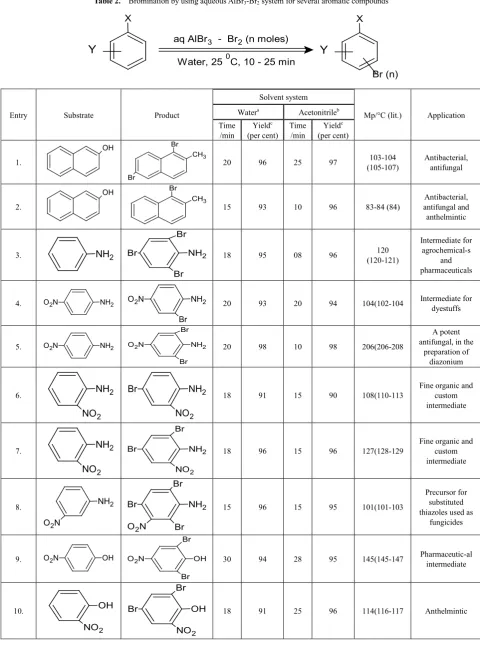
For mixing the hydrophobic aromatic substrate with the aqueous inorganic medium and for preventing local high concentrations of active bromo species, as the reaction was prompt, a proficient/effective stirring (750 rpm or higher) was required. The common applicability of this method was recognized when bromination of structurally-different activated aromatic compounds substituted with electron-withdrawing groups were analyzed (Table 2). It is the revolution of the present bromination reagent (aq. AlBr3-Br2 solution) over a newly reported brominating
system (NBS/[Bmim]Br or dioxane) that C6H5OH and
C6H5NH2 byproducts with strong electron-withdrawing
groups (EWG) such as -COOH, -NO2 and -CHO were
promptly brominated regioselectively in outstanding yields and pureness. The same reported system, however, yields a combination mix of mono- and dibromo products. In the present system, salicylic acid 1 and 4-hydroxybenzoic acid 2 were transformed with quantitative conversion resulting in clean synthesis of 3,5- dibromosalicylic acid (92 per cent yield; 96.2 per cent HPLC purity) and 3,5-dibromo-4- hydroxybenzoic acid (94 per cent yield; 99.2 per cent HPLC purity) after 20 min and 15 min, respectively. Pharmaceutically-important aromatic aldehydes (Table 3, entries 3, 4, 5) were also instantaneously synthesized using aq. AlBr3-Br2 system in excellent yields. Under these
conditions, acetaniline 6 and benzaniline 7 were
regioselectively transformed to their mono-brominated products in very good yields. The regioselectivity witnessed in these reactions matches to that predictable for an electrophilic bromination path modulated by steric effects. We observed that oxine (8) and sulfanilamide (9) could also be efficiently brominated affording pharmaceutically-important 5, 7-dibromooxine (96 per cent yield; 99.67 per cent HPLC pureness) and 3,5-dibromosulfanilamide (94 per cent yield; 96.6per cent HPLC pureness) within 15 minutes. Another antibacterial compound, 2, 4-dibromo-6- nitrophenol was isolated in excellent yield within 20 minutes from 2-nitrophenol (Table no. 6, entry 10). With the poor reactivity 4-nitrophenol (11) shows outstanding reactivity resulting 2,6-dibromo-4-nitrophenol (94 per cent yield; 97.5 per cent HPLC pureness) within 30 minutes using two equivalent of reagent. Bromination of the same substrate with H2O2-HBr/‘on water, gave 2, 6-dibromo-4-nitrophenol over
a period of 24 hr. The advantages of the present system is an regioselective, effective, facilie, and fast bromination of deactivated anilines (Table no. 6, entries 12 to 16) in outstanding end product yields at 25℃ upon simple admixing with aq. CaBr2-Br2 solution which is slightly
challenging by other methodologies. 1-Bromo-2- naphthol 17 (92 per cent yield; 96.2 per cent HPLC pureness) was promptly obtained under undistinguishable reaction conditions in excellent yield within 10 minutes of reaction time while for 1,6- dibromo-2-naphthol 18 (97 per cent yield; 96.5 per cent HPLC pureness), within 25 minutes and 2 equivalents of aqueous AlBr3-Br2 solution were necessary.
Which represents the position of the electrophilic attack and the number of inflowing Br2 atoms during reaction process
can be structured by controlling the ratio of substrate: aqueous AlBr3-Br2 solution, i.e., 1/1 mono-, 1/2 for di-, and
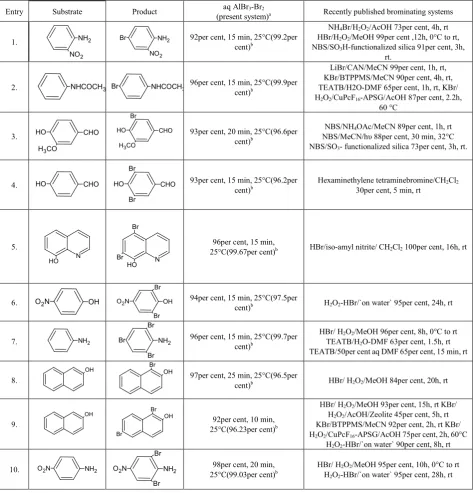
Table 1. A comparison of the results of present system (aq. AlBr3-Br2 solution) with the literature precedents of some recently published brominating systems in the synthesis of pharmaceutical intermediates
Entry Substrate Product aq AlBr3-Br2
(present system)a Recently published brominating systems
1. NH2
NO2
NH2
NO2
Br 92per cent, 15 min, 25°C(99.2per
cent)b
NH4Br/H2O2/AcOH 73per cent, 4h, rt HBr/H2O2/MeOH 99per cent ,12h, 0°C to rt, NBS/SO3H-functionalized silica 91per cent, 3h,
rt.
2. NHCOCH3 Br NHCOCH3 96per cent, 15 min, 25°C(99.9per
cent)b
LiBr/CAN/MeCN 99per cent, 1h, rt, KBr/BTPPMS/MeCN 90per cent, 4h, rt, TEATB/H2O-DMF 65per cent, 1h, rt, KBr/ H2O2/CuPcF16-APSG/AcOH 87per cent, 2.2h,
60 °C
3. HO CHO H3CO
CHO O
H
H3CO
Br
93per cent, 20 min, 25°C(96.6per cent)b
NBS/NH4OAc/MeCN 89per cent, 1h, rt NBS/MeCN/hυ 88per cent, 30 min, 32°C NBS/SO3- functionalized silica 73per cent, 3h, rt.
4. HO CHO HO CHO
Br
Br
93per cent, 15 min, 25°C(96.2per
cent)b Hexaminethylene tetraminebromine/CH30per cent, 5 min, rt 2Cl2
5. N O H N O H Br Br
96per cent, 15 min,
25°C(99.67per cent)b HBr/iso-amyl nitrite/ CH2Cl2 100per cent, 16h, rt
6. O2N OH O2N OH Br
Br
94per cent, 15 min, 25°C(97.5per
cent)b H2O2-HBr/`on water` 95per cent, 24h, rt
7. NH2 Br NH2
Br
Br
96per cent, 15 min, 25°C(99.7per cent)b
HBr/ H2O2/MeOH 96per cent, 8h, 0°C to rt TEATB/H2O-DMF 63per cent, 1.5h, rt TEATB/50per cent aq DMF 65per cent, 15 min, rt
8.
OH Br OH
97per cent, 25 min, 25°C(96.5per
cent)b HBr/ H2O2/MeOH 84per cent, 20h, rt
9.
OH Br OH
Br
92per cent, 10 min, 25°C(96.23per cent)b
HBr/ H2O2/MeOH 93per cent, 15h, rt KBr/ H2O2/AcOH/Zeolite 45per cent, 5h, rt KBr/BTPPMS/MeCN 92per cent, 2h, rt KBr/ H2O2/CuPcF16-APSG/AcOH 75per cent, 2h, 60°C
H2O2-HBr/`on water` 90per cent, 8h, rt
10. O2N NH2 O2N NH2
Br
Br
98per cent, 20 min,
25°C(99.03per cent)b HBr/ HH 2O2/MeOH 95per cent, 10h, 0°C to rt 2O2-HBr/`on water` 95per cent, 28h, rt
The use of aqueous AlBr3-Br2 system as the most economical brominating agent and H2O as a solvent/reaction medium
denotes the most logical choice as a brominating reagent to fulfill the need of inexpensive, cleaner and most effective system for the instantaneous synthesis of commercially-significant brominated compounds. A comparative study of the brominating capability of the aqueous AlBr3-Br2 system with the recently circulated methods is testified in Table 5 which clearly indicates
the benefits of the present system over obtainable methods. In this present study, we are presenting, an effective reagent system for electron-withdrawing groups (EWG) like; -COOH, NO2 and -CHO as examples of pharmaceutical reaction
Table 2. Bromination by using aqueous AlBr3-Br2 system for several aromatic compounds X
Y
aq AlBr3 - Br2 (n moles) Water, 25 0C, 10 - 25 minX
Y
Br (n)
Entry Substrate Product
Solvent system
Mp/°C (lit.) Application Watera Acetonitrileb
Time
/min Yield c
(per cent) Time/min Yield c (per cent) 1. OH CH3 Br Br
20 96 25 97 (105-107) 103-104 Antibacterial, antifungal
2.
OH
CH3
Br
15 93 10 96 83-84 (84) antifungal and Antibacterial, anthelmintic
3. NH2 NH2
Br
Br
Br 18 95 08 96 120
(120-121)
Intermediate for agrochemical-s
and pharmaceuticals
4. O2N NH2 O2N NH2 Br
20 93 20 94 104(102-104 Intermediate for dyestuffs
5. O2N NH2 O2N NH2 Br
Br
20 98 10 98 206(206-208
A potent antifungal, in the
preparation of diazonium
6. NH2
NO2
NH2
NO2
Br 18 91 15 90 108(110-113 Fine organic and custom intermediate
7. NH2
NO2
NH2
NO2 Br
Br
18 96 15 96 127(128-129 Fine organic and custom intermediate
8. NH2
O2N
NH2
O2N
Br
Br
Br
15 96 15 95 101(101-103
Precursor for substituted thiazoles used as
fungicides
9. O2N OH O2N OH
Br
Br
30 94 28 95 145(145-147 Pharmaceutic-al intermediate
10. OH
NO2
OH
NO2
Br
Br
[image:6.595.63.544.79.726.2]11. H2N SO2NH H2N SO2NH
Br
Br
20 95 20 94 235(235-237 Pharmaceutic-al intermediate
12.
N
OH
Br OH NBr
15 96 15 95 200(198-200 antifungal A potent antiamoebic
13. NHCOPh Br NHCOPh 18 97 20 95 200-202 (202) Pharmaceutic-al intermediate
14. NHCOCH3 Br NHCOCH3 15 95 12 98 166(165-169 Antipyretic Analgesic,
15. CHO
H3CO
O
H CHO
H3CO O H
Br
25 92 35 96 163(164-166 In pharmaceutical flavor
16. CHO
OH
CHO
OH Br
Br
25 95 15 93 82(80-84 Pharmaceutic-ally acceptable salt as inhibitor
17. HO CHO HO CHO
Br
Br
20 92 20 96 183(181-185 Pharmaceutic-al intermediate
18. CHO
OH
CHO
OH Br
Br
20 91 20 90 226(226-229 incorporated in to Bactericide when topical ointments
19. HO COOH HO COOH
Br
Br
20 95 --- --- 270(271-274 intermediate Medical
Underneath these reaction conditions, the deactivated substrate like nitrobenzene and benzoic acid did not show any transformation at all. Table no. 2 discloses that the yield and the reaction time for several brominated products are comparable in H2O and acetonitrile (ACN) as solvents,
correspondingly. The only limitation associated with the reaction using water as a solvent is that granular and scaly substrates have to be crushed and ground proceeding to reactions to convert them into fine powders. Since the reaction operates entirely in water and generates absolute zero discharge; it seems very effective valuable from environmental safety point of view to extend this system for other commercially-important compounds. Subsequent, a desireable greener approach to the present study is following by an environmental friendly recycling procedure. The nonexistence of organic waste and organic solvents in the reaction process supported simple separation procedure comprised of filtration of solid phase brominated compounds and the addition of calcium hydroxide powdered form
(Ca(OH)2) to the filtrate for the nutralization of hydrogen
[image:7.595.315.545.624.710.2]bromide waste so that the bromine of hydrogen bromide thus fixed as Aluminum bromide. The aqueous filtrate was reclaimed in the next cycle and the reinforced brominating agent was then used to brominate the substrate successively in the next run.
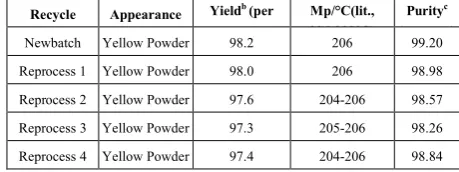
Table 3. Reprocessing experiments for the dibromination of 4-nitroanilinea
Recycle Appearance Yieldb (per t)
Mp/°C(lit., 206 208°C)
Purityc
( t)
Newbatch Yellow Powder 98.2 206 99.20 Reprocess 1 Yellow Powder 98.0 206 98.98 Reprocess 2 Yellow Powder 97.6 204-206 98.57 Reprocess 3 Yellow Powder 97.3 205-206 98.26 Reprocess 4 Yellow Powder 97.4 204-206 98.84
a
Surroundings:10mmol4-NA,20mmolBr2(4-NAandBr2 moles charged in every reaction cycle)and20mmolAlBr3 (charged for fresh batch only)at room temperature(25°C)for20 minutes (each cycle).
b
By this methodology, very productively and effectively the dibromination of 4-nitroaniline has been carried out for 4 cycles after the fresh batch using 4-NA: Br2 (1: 2) mole ratio
in each run without adding of the fresh aluminium tribromide (AlBr3) to give 2, 6-dibromo-4-nitroaniline within 20
minutes at room temperature. Reprocessing experiments (Table no. 7) shows that for at least 4 cycles followed by the fresh batch, there is no substantial loss of reactivity of the rejuvenated brominating reagent. When the concentration of aluminium tribromide (AlBr3) upturns in the filtrate, then
through vaporization process filtrate was concentrated which
causes precipitation of AlBr3 as a crystalline solid and an
added amount of AlBr3 (7 mol) was recuperated after fresh
batch + 4 cycles: resulted 1 mol of aluminium tribromide (AlBr3) produced likewise in every cycle by the
neutralization of hydrogen bromide by adding Al(OH)3.
Therefore, starting with 1 mol of 4-NA wrt 2 mol of Aluminium tribromide in the fresh batch, At the end of reaction process we achieved 7 mol of AlBr3. Consequently,
[image:8.595.130.493.243.555.2]effectively the byproduct hydrogen bromide has been utilized, and at the end of reaction, process generates zero discharge of organic waste and effluent to the surroundings.
5. Conclusions
We have testified a rapid, mild, cost effective and facile method for the effective and selective synthesis of pharmaceutically-important brominated intermediates using aq. AlBr3-Br2 system as an instantaneous brominating agent
under aqueous conditions. The green features of this practice include no use of organic solvent and an operative utilization of HBr byproduct which lead to zero organic waste and zero waste discharge to the environment, consequently applicable for large scale bromination.
The categorization data (1H NMR, Infrared and Mass Spectroscopy) achieved for various representative compounds are given below:
3,5-Dibromo-4-hydroxybenzoic acid (2): White fine crystalline powder; 1H NMR (400 MHz, Dimethyl Sulfoxide”DMSO”): δ 8.02 (2H, ArH, s), 11 (1H, OH, s), 13 (1H, COOH, s); Infrared (KBr): 3450, 3081, 2976, 2652, 2530, 1798, 1690, 1588, 1482, 1420, 1404, 1340, 1305, 1275, 1205, 1169, 1137, 903, 893, 766, 738, 718, 671, 520, 470 cm-1; MS m/z (mass-to-charge ratio) calcd. for C7H4Br2O3: 295.9, found 295.
5-Bromovanillin (5): Slightly-brown powder; IR (KBr): 3318, 3103, 3074, 3009,
2976, 2943, 2851, 2746, 1725, 1592, 1502, 1464, 1448, 1425, 1355, 1293, 1192,
1148, 1047, 973, 855, 796, 681, 602, 592, 538, 527 cm-1; MS m/z (mass-to-charge ratio) calcd. For C8H7BrO3: 231, found 235.
4-Bromoacetanilide (6): White crystals, 1H NMR (400 MHz, Dimethyl Sulfoxide”DMSO”): δ 2.1 (s, 3H, CH3), 7.41 (d, J = 2.96 Hz, 2H, Ar), 7.64 (d, j = 2.89 Hz, 2H, Ar), 9.71 (s, 1H, NH). IR (Potassium Bromide): 3288, 3261, 3157, 3128, 3045, 1684, 1656, 1594, 1576, 1544, 1478, 1388, 1312, 1280, 1246, 1002, 845, 824, 754, 678, 508 cm-1. MS Atmospheric Pressure Chemical Ionization (APCI) m/z (mass-to-charge ratio) calcd. For C8H8BrNO: 216.07, found 216.
5,7-Dibromo-8-hydroxuquinoline (8): Light buff colored powder; 1H NMR (400 MHz, Trichlorodeuteromethane “CDCl3”): δ value 7.446 (d, J = 0.514 Hz, 1H), 8.465 (ddd, J = 8.803, J = 1.836, J = 0.514 Hz, 1H), 7.223 (dd, J = 8.778, J = 4.681 Hz, 1H), 8.839 (dd, J = 4.687, J = 1.834 Hz, 1H). IR (KBr): 3087, 1742, 1576, 1489, 1464, 1387, 1374, 1266, 1212, 1156, 1043, 947, 884, 815, 782, 736, 672, 643, 614, 589, 559, 500 cm-1.MS Atmospheric Pressure Chemical Ionization (APCI) m/z (mass-to-charge ratio) calcd. For C9H5Br2NO: 302.95, found 302.2.
3,5-Dibromosulphanilamide (9): Shining-white crystalline powder; 1H NMR (400 MHz, Trichlorodeuteromethane “CDCl3”): δ : 5.74 (2H, s, NH2), 6.76 (s, 2H, SO2NH2), 7.92 (s, 2H, Ar); IR (KBr): 3443, 3341, 3238, 3076, 1614, 1545, 1464, 1395, 1317, 1151, 1114, 912, 883, 731, 580, 546, 496 cm-1; MS Atmospheric Pressure Chemical Ionization (APCI) m/z (mass-to-charge ratio) calcd. for C6H6Br2N2O2S: 330, found 330.
2,4,6-Tribromoaniline (19): Shining white fine needles;
1H NMR (400 MHz, Trichlorodeuteromethane “CDCl3”): δ: 7.5 (2H, s, Ar), 4.54 (2H, br. S, NH2). Infrared (KBr): 3436, 3288, 1468, 1392, 1274, 1238, 1057, 849, 736, 712, 666, 542, 478 cm-1 MS Atmospheric Pressure Chemical Ionization (APCI) m/z (mass-to-charge ratio) calcd. for C6H4Br3N: 329.816, found 328.8.
REFERENCES
[1] De la Mare, P. B. Electrophilic Halogenation: Reaction Pathway Involving Attack by Electrophilic Halogens on Unsaturated Compounds, Cambridge University Press, Cambridge, UK, (1976), Chapter 5. (b) Taylor, R. Electrophilic Aromatic Substitution, Wiley, Chichester, UK ,(1990).
[2] a) Ganchegui, B.; Leitner, w. Green Chemistry (2007), 9, 26. (b) Podgorsek, A.; Stavber, S.; Zupan, M.; Iskra, Journal Tetrahendron (2009), 65, 4429.
[3] Pingali, S. R. K.; Madhav, M.; Jursic, B.S. Tetrahendron Letters. (2010), 51, 1383.
[4] a) Surine, W. R.; Majewski, T.E. Preparation of 3,5-dibromosalicylic acid. U.S. Patent 3,381,032, (1968). (b) Hai, T.T.; Nelson, D.J. Phamaceutical grade 3,5-dibromosalicylic acid and method for synthesizing same. U.S. Patent 5,013,866, (1991).
[5] (a) Bedekar, A. V.; Gadde, R.; Ghosh, P. K. Process for preparing 2,4,4,6-tetrabromo-2, 5-cycloyhexadienone. U.S. Patent 6,838,582, (2005). (b) De La Mare, P. B. D. Electrophilic Halogenation: Reaction Pathway Inoving Attack by Electrophilic Halogens on Unsaturated Compounds; Cambridge University Press: London.
[6] (a) The Merck Index, 13th edition, An Encyclopedia of Chemicals, Drugs, and Biologicals, Merck and Co. Inc., Whitehouse Station, NJ, 2001. (b) Aldrich Handbook of Fine Chemical Company, Inc.: Wisconsin, USA, (1990).
[7] Adimurthy, S.; Ramachandraiah, G.; Bedekar, A.V.; Ghosh, S.; Ranu, B.C.; and Ghosh, P.K.; (2006).Eco-friendly and versatile brominating reagent prepared from a liquid bromine precursor. Green Chemistry, 8, 916–922 | 917.
[8] Zolfigol, M.A.; Chehardoli, G.; Salehzadesh, S.; Adams, H.’ Ward, M. D. Tetrahendron Letters, (2007), 48, 7969. [9] Hosseinzadeh, R.; Tajbakhsh, M.; Mohadjerani, M.; Lasemi,
Z. Syntesis. Communication, (2010), 40, 868.
[10] AI-Zoubi, R.M.; Hall, D.Organic Letters (2010), 12, 2480 [11] Beckmann, J.; Bolsinger, J.; Duthie, A.; and Finke, P.; (2013).
Diarylhalotelluronium(IV) cations [(8-Me2NC10H6)2TeX]+ (X = Cl, Br, I) stabilized by intramolecularly coordinating N-donor substituents. Dalton Trans. 10.1039.
[12] Chiappe, C.; Leandri, E.; Pieraccini, D. Chemistry Commun. (2004), 2536.
[13] Beckmann, J.; Bolsinger, J.; Duthie, A.; and Finke, P.; (2013). Diarylhalotelluronium (IV) cations
[14] Benitez, F. J.; Acero, J.L.; Real, F.J.; Roldan, G. and Casas, F. (2011). Bromination of selected pharmaceuticals in water matrices. Chemosphere. 85: 1430-1437.
[15] Borikar, S.P.; Daniel, T.; Paul, V. Tetrahedron Letters. (2009),50,1007.
[16] Chinnagolla, R.K.; Pimparkar, S.; and Jeganmohan, M.; (2013). Ruthenium-catalyzed intramolecular selective halogenation of O-methylbenzohydroximoyl halides: a new route to halogenated aromatic nitriles. Chem. Commun., 49, 3146-3148.
[17] Ceska, G. W. Aqueous bromine emulsions. U.S. Patent 3,886,081, (1975). Chaudhuri, M. K.; Khan, A. T.; Patel, B. K. Tetrahedron Letters. (1998), 39, 8163.
[18] Chiu, Y. (Denville, NJ); Cottrell, S.A. (Baton Rouge, LA); Tung, H. S. (Getzville, NY); `Kopkalli, H.(Staten Island, NY) and Cerri, G.(Parsippany, NJ). (2011). Process for the Manufacture of Fluorinated Olefins. U.S. Class: 570/175; Serial No.: 402,372.
[19] Chiappe, C.; Leandri,; Pieraccini, D. Chem. Commun. (2004), 2536.
[20] Chinnagolla, R.K.; Pimparkar, S.; and Jeganmohan, M.; (2013). Ruthenium- catalyzed intramolecular selective halogenation of O-methylbenzohydroximoyl halides: A new route to halogenated aromatic nitriles. Chem. Communications, 49, 3146—3148.
[21] Sharma, S.; Agarwal, D. D.; (2014). NH4Br-Br2 catalyzed oxidative bromination of aromatic compounds. Journal of Agriculture and Life Sciences. Vol. 1, No. 1; 65-81.
[22] Sharma, S.; Agarwal, D. D.; (2014). Oxidative Chlorination of aromatic compounds in aqueous media. Journal of Agriculture and Life Sciences. Vol. 1, No. 1; 146-164. [23] D Sharma, S.; Agarwal, D. D.; (2014). Molybdate catalyzed
oxidative bromination of aromatic compounds using mineral acids and H2O2. International Journal of scientific and research publications. Vol. 4, Issue 6; 01-12.
[24] Das, B.; Venkateswarlu, K.; Mahji, A.; Siddaiah, V.; Reddy, K. R. J. Molecular Catalysis A: Chemical (2007), 267, 30. Del Valle, C. J. Method of producing calcium bromide. U.S. Patent 4, 234, 556, 1980.
[25] Deshmukh, A.P.; Pandiya, K. J.; Jadhav, V.K.; and Salunkhe, M.M.; (1998). Halogenation of Aromatic Compounds by
using Sodium Perborate as an Oxidant. Journal of Chemical Research (S), 828-829.
[26] Do, H.Q.; Daugulis, O.; (2008). A Simple Base-Mediated Halogenationof Acidic sp2 C-H Bonds under Noncryogenic Conditions. Organic Letters, Vol.11, No. 2, 421-423. [27] Eberlin, A.; Williams, D.L.H.; (2002). Halogenation of enol
tautomers of 2- cyanoacetamide and malonamic acid. Journal of Chem. Soc., Perkin Transactions. 2, 1316–1319.
[28] Edwards; Jeffrey, D.; Palermo; John. Analgesic and anti-inflammatory composition. U.S. Patent 7,510,732, (2009).
[29] Fong, H.L.(Sugar Land, TX); Johnson, T.H.(Houston, TX ) andSemple, T.C.(Friendswood,TX).(2009). Conversion of Alkylhalides in to Alcohol Alkoxylates. Current U.S. Class: 568/671. Serial No.: 887194.
[30] Forsyth; Adam, B.; Pryor; Ernest, D.; McGarry; James, E.; Harney; Gerald, D. W. Compositions containing certain 2,4-halo-6nitrophenols or derivatives thereof and methods for using same to eradicate internal parasites in warm- blooded animals. U.S. Patent 4,031,249, 1977.
[31] Gavara, L.; Boisse, T.; Riogo, B.; Henichart, J. P. Tetrahedron-SD (2008), 64, 4999.III, D. W.; Eaves Jr., C. C.; Haynes Jr., J. F. Annals of Emergency Medicine 1989, 18, 778.
[32] Gerhard, H.; Phillips; Gray, W; Pratt; John, K.; Srouji; Gabriel, H. Substituted thiazoles and their use as fungicides. U.S. Patent 5,045,554, (1991).
[33] Gershin, H.; Parmegiani, R.; Godfrey, P.K. Antimic. Agents Chemotherapy (1972), 1, 373.
[34] Gershon, H.; McNeil, M. W.; Parmegiani, R.; Godfrey, P. K. Applied Microbiology (1971), 22, 438.
[35] Gnaim, J. M.; Sheldon, R. A. Tetrahedron Letters. (2005), 46, 4465.
[36] Hai, T. T.; Nelson, D. J. Pharmaceutical grade 3,5-dibromosalicylic acid and method for synthesizing same. U.S. Patent 5, 013, 866, (1991).
[37] Hajipour, A.R.; Pourmousavi, S.A. and Ruoho, A.E. (2006). 1-Benzyl