Munich Personal RePEc Archive
100 years of educational reforms in
Europe: a contextual database
Garrouste, Christelle
European Commission - Joint Research Centre (EC-JRC),
Econometrics and Applied Statistics Unit (EAS), Department of
Economics "Marco Fanno" - University of Padova (Italy)
2010
Online at
https://mpra.ub.uni-muenchen.de/31853/
EUR 24487 EN - 2010
100 Years of Educational Reforms in
Europe: a contextual database
100 Years of Educational Reforms in
Europe: a contextual database
The mission of the JRC-IPSC is to provide research results and to support EU policy-makers in their effort towards global security and towards protection of European citizens from accidents, deliberate attacks, fraud and illegal actions against EU policies.
European Commission Joint Research Centre
Institute for the Protection and Security of the Citizen
Contact information
Address: Econometrics and Applied Statistics Unit, Via E. Fermi 2749, Ispra (VA), Italy E-mail: [email protected]
Tel.: +39 0332 78 5407 Fax: +39 0332 78 5733
http://ipsc.jrc.ec.europa.eu/ http://www.jrc.ec.europa.eu/
Legal Notice
Neither the European Commission nor any person acting on behalf of the Commission is responsible for the use which might be made of this publication.
Europe Direct is a service to help you find answers to your questions about the European Union
Freephone number (*): 00 800 6 7 8 9 10 11
(*) Certain mobile telephone operators do not allow access to 00 800 numbers or these calls may be billed.
A great deal of additional information on the European Union is available on the Internet. It can be accessed through the Europa server http://europa.eu/
JRC 57357
EUR 24487 EN
ISBN 978-92-79-16393-7 ISSN 1018-5593
doi:10.2788/58057
Luxembourg: Publications Office of the European Union
© European Union, 2010
Reproduction is authorised provided the source is acknowledged
The Survey of Health, Ageing and Retirement in Europe (SHARE) is a multidisciplinary and
cross-national panel database of micro data on health, socio-economic status and social and family networks
of individuals aged 50 or over. SHARELIFE is the third wave of data collection for SHARE, which
focuses on people's life histories and encompasses all important areas of the respondents’ lives,
ranging from partners and children over housing and work history to detailed questions on health and
health care. The more than 28,000 respondents in the third wave are representative for the European
population aged 50 and over in Scandinavia (Denmark and Sweden), Central Europe (Austria, France,
Germany, Switzerland, Belgium, and the Netherlands), the Mediterranean (Spain, Italy and Greece) as
well as in two transition countries (the Czech Republic and Poland).
The true value of the SHARELIFE project is in its ability to link individual micro data over the
respondents’ entire life to institutional macro data on the welfare state. This allows researchers to
relate the welfare state interventions to the individuals´ decisions over their life courses, thereby
enhancing the possibilities of cross-national policy evaluations throughout Europe.
This impressive report by Christelle Garrouste from the SHARE team in Padua (affiliated to the
EC-JRC-IPSC-EAS since January 2010) is one important step in this direction, collecting information on
education policies and developments over more than a century and thus allowing us to qualify
educational systems and reforms in the SHARE countries over time. It will enable researchers to
investigate the influence of the educational systems in Europe on outcomes such as educational
attainment, later life socio economic status or health across the life course. Our thanks go to Christelle
for her tremendous effort to lay the seeds for this research.
Axel Börsch-Supan, Director of SHARE, Mathis Schröder, SHARELIFE Coordinator and Guglielmo
This report uses data from SHARE release 2.3.0, as of November 13th 2009. SHARE data collection in 2004-2007 was primarily funded by the European Commission through its 5th and 6th framework programmes ((project numbers QLK6-CT-2001- 00360; RII-CT- 2006-062193;
CIT5-CT-2005-028857). Additional funding by the US National Institute on Aging (grant numbers U01
AG09740-13S2; P01 AG005842; P01 AG08291; P30 AG12815; Y1-AG-4553-01; OGHA 04-064; R21
AG025169) as well as by various national sources is gratefully acknowledged (see
http://www.share-project.org for a full list of funding institutions). This work was financed by a SHAREPREP research
Table of Contents
1. INTRODUCTION ... 1
2. OVERVIEW OF THE LAST CENTURY’S EDUCATIONAL REFORMS... 4
2.1. Pre-primary education reforms (ISCED 0)... 7
2.2. Primary education reforms (ISCED 1) ... 13
2.2.1. Organizational and curricular laws (ISCED 1)... 14
2.2.2. Teachers recruitment, training and salaries (ISCED 1) ... 34
2.2.3. The linguistic concern (ISCED 1) ... 38
2.2.4. Special education reforms (ISCED 1) ... 40
2.3. Secondary and post-secondary non-tertiary reforms (ISCED 2-4)... 44
2.3.1. Organizational and curricular laws (ISCED 2-4) ... 44
2.3.2. Teachers recruitment, training and salaries (ISCED 2-4)... 73
2.3.3. Education decentralization (ISCED 2-4) ... 88
2.3.4. Special education reforms (ISCED 2-4) ... 92
2.4. Tertiary education reforms (ISCED 5-6) ... 94
3. EXAMPLE: COMPULSORY EDUCATION REFORMS AND NUMBER OF YEARS OF EDUCATION... 96
4. FURTHER RESEARCH... 106
REFERENCES ... 106
1
1. INTRODUCTION
“The farther backward you can look, the farther forward you are likely to see.”
– Winston Churchill
Over the next two decades, people older than 60 will comprise about one-third of the
population in several European countries. This implies that a shrinking number of
economically active people will have to support a growing number of economically
dependent elderly people. Hence, combined to higher life expectancy, this explains why
economic activities and retirement decisions of older persons in Europe occupy much of
today’s political debate (OECD, 2006).
As reported by Schroeder (2008), current literature mainly discusses national and
international macro-economic effects of population ageing (e.g., Börsch-Supan et al.,
2005); legal aspects of anti-age discrimination legislation and retirement age
augmentation (e.g., Sargeant, 2003; Adams, 2004); productivity issues involving potential
physical and psychological constraints of older individuals (e.g., Skirbekk, 2004); the
effects of age-mixed work teams on performance (e.g., Williams and O`Reilly, 1998); and
national studies on the Human Resource Management of older workers (e.g., McVittie et
al., 2003; Vickerstaff et al., 2003; Platman, 2004; Kloep and Hendry, 2006). Hence,
despite the growing interest for institutional settings influencing individual decisions to
evaluate policies throughout Europe, the literature neglects the effects of different
institutional environments on individual employment decisions and trajectories. Such
effects could however be measured by applying the life-course paradigm, which focuses
on the relationship between institutions and individuals across the life span. More
specifically, this paradigm aims at determining how biographies are influenced by
different cultural, social, private and institutional contexts according to historical time and
geographical place.
The application of such an approach requires the access to both life-history micro data
2 recent and most substantive ones in term of life span coverage is the SHARELIFE wave
of the Survey on Health, Ageing and Retirement (SHARE). SHARELIFE focuses on the
life histories of European individuals aged 50 and more1. Its main strength is the fact that it links individual micro data over the respondents’ entire life with institutional macro
data on the welfare state. The questionnaire contains all important areas of the
respondents’ lives, ranging from partners and children over housing and work history to
detailed questions on health and health care. It thereby allows assessing the full effect of
welfare state interventions in the past century, including educational reforms, on the life
of European citizens.
This report presents the macro data on educational reforms collected for SHARELIFE2. More specifically, it targets the national institutional plans or movements that have
brought (or attempted to bring) systemic change in educational practices during the last
century (e.g., pedagogical theories, curriculum reforms and operational structures). The
objective of this research is to provide an overview of the educational reforms that may
have affected the skill level of the SHARELIFE population. Hence, given the age of our
sample, it has been necessary to collect data as far back as the beginning of the 20th century, period at which today’s 90 year-olds may have enrolled in school programmes.
Earlier data was even collected for some countries when the educational practices
applicable during the education and training period of our sample still resulted entirely or
partially from reforms anterior to the 20th century.
This database covers all SHARELIFE countries (except Switzerland and Poland for
which data is still under collection) plus five additional countries involved in the SHARE
project, namely Finland, Hungary, Ireland and Israel. It gathers reforms at all levels of
education, from pre-primary to tertiary education. Table 1.1 provides an overview of the
data coverage presenting the year (or period) of the earliest reform, by education level
and country, that influenced the last century’s schooling.
1 SHARELIFE collected data in 2008-2009 from a representative sample of 30,000 men and women aged at
least 50 across 14 European countries - Scandinavia (Denmark and Sweden), Central Europe (Austria, France, Germany, Switzerland, Belgium, and the Netherlands), the Mediterranean (Spain, Italy and Greece) as well as two transition countries (the Czech Republic and Poland).
3 To ensure comparability of the data over such a long period of time, the majority of the
data collected was derived from the EURYDICE database on education systems in
Europe, which provides for the current structure of national systems in term of the
International Standard Classification of Education (ISCED) 19973, data on teacher training since the 1970s and historical data on pre-primary, primary, secondary and
tertiary education. Specific data on legal frameworks affecting teacher training and
teacher working environment have also been collected from the database of national
labour, social security and related human rights legislation (NATLEX), maintained by the
International Labour Organisation’s (ILO) International Labour Standards Department.
Further data on compulsory education was in turn gathered from the cross-national
studies by Fort (2006), Brunello, Fort and Weber (2009) and Murtin and Viarengo (2007).
Moreover, whenever applicable specific educational measures for social inclusion were
added using the commissioned report prepared by the Institute of International Education
(IIE, 2006). Finally, this data was crossed-checked with country official sources (e.g.,
Ministries of Education, National Statistics Agencies) and, when necessary,
complemented with data from country-specific research4.
Because of its very broad coverage, this database only reports the main reforms affecting
the schooling and training of today’s 50+. Hence, this work does not have the ambition to
be exhaustive and aims rather as a background source of institutional comparative data to
be complemented and updated with more specific data.
The objectives of the present report are twofold. Its first objective is to present an
overview of this SHARELIFE education database by synthesizing thematically the
reforms collected by education level. Secondly, through a simple application example, it
aims at demonstrating the scope and potentialities of this data. The example consists in
comparing the link between compulsory education laws and the evolution of the number
of years of education. This basic example provides a clear idea of the way in which the
data can be selected for specific research aims and potentially combined to other data
sources.
3 The ISCED 97 is the revised version of the International Standard Classification of Education which was
adopted by UNESCO's General Conference in replacement of the former version. Since 1998, it is used to define the levels and fields of education (OECD, 2002).
4
4
TABLE 1.1 INFORMATION COVERAGE - YEAR (OR PERIOD) OF THE EARLIEST REFORM
INFLUENCING THE LAST CENTURY'S SCHOOLING, BY EDUCATION LEVEL AND COUNTRY
SHARE
COUNTRIES
Pre-Primary
Education
(ISCED 0)
Primary Education
(ISCED 1)
Secondary and
post-Secondary
non-TertiaryEducation
(ISCED 2-4)
TertiaryEducation
(ISCED 5-6)
Austria 1863 1869 1774 1848
Belgium 1842 1842 1831 1835
Czech Rep. 1869 1869 1849 1918
Denmark 1919 1814 1871 19th century
Finland 1973 1866 1843 1908
France 1881 1879 1880 1793
Germany 1840 1763 1763 1808
Greece 19th century 1834 19th century 1837
Hungary 1852 1868 1849 19th century
Ireland n/a 1831 19th century 1879
Israel 1968 1949 1949 1906
Italy 1829 1859 1923 1859
Netherlands n/a 1901 1863 1876
Portugal 1911 1911 End of 19th century 18th century
Spain 1850s 1812 1845 1857
Sweden 19th century 1842 1649 1860s
Notes: (n/a) In Ireland, there is no comprehensive legislative framework for early childhood care and education,
and in the Netherlands, there is no so-called "education-oriented" pre-primary institutions, in which staff have to
hold qualifications in education.
2. OVERVIEW OF THE LAST CENTURY’S EDUCATIONAL
REFORMS
In order to synthesize the reforms collected for each country, this report regroups them by
ISCED level. The OECD (2002) defines these levels as follows:
Pre-primary education (ISCED 0) corresponds to the initial stage of organised instruction,
5 provide a bridge between home and a school-based atmosphere. ISCED level 0
programmes are expected to be centre or school-based, be designed to meet the
educational and developmental needs of children at least three years old, and have staff
that are adequately trained (i.e., qualified) to provide an educational programme for the
children.
Primary education (ISCED 1) usually begins at ages 5, 6 or 7 and lasts for 4 to 6 years
(the mode of the OECD countries being six years). Programmes at the primary level
generally require no previous formal education, although it is becoming increasingly
common for children to have attended a pre-primary programme before entering primary
education. The boundary between pre-primary and primary education is typically the
beginning of systematic studies characteristic of primary education, e.g., reading, writing
and mathematics. However, it is common for children to start learning basic literacy and
numeracy skills at the pre-primary level.
Lower secondary education (ISCED 2) generally continues the basic programmes of the
primary level, even if teaching is typically more subject-focused, often employing more
specialized teachers who conduct classes in their field of specialization. Lower secondary
education may either be “terminal” (i.e., preparing students for entry directly into
working life) and/or “preparatory” (i.e., preparing students for upper secondary
education). This level usually consists of 2 to 6 years of schooling (the mode of OECD
countries is three years). In some countries, this level is merged with primary education
(ISCED 1) to form the so-called ‘single-structure’ or ‘elementary’ level (e.g., Austria, the
Czech Republic, Denmark, Finland, Hungary and Sweden)5.
Upper secondary education (ISCED 3) corresponds to the final stage of secondary
education in most European and OECD countries. Instruction is often more organized
along subject-matter lines than at ISCED level 2 and teachers typically need to have a
higher level, or more subject-specific, qualifications than at ISCED 2. The entrance age to
this level is typically 15 or 16 year-old.
5
6 Post-secondary non-tertiary education (ISCED 4) straddles the boundary between upper
secondary and post-secondary education from an international point of view, even though
it might clearly be considered upper secondary or post-secondary programmes in a
national context. Although their content may not be significantly more advanced than
upper secondary programmes, they serve to broaden the knowledge of participants who
have already gained an upper secondary qualification. The students tend to be older than
those enrolled at the upper secondary level. In this report, the reforms related to that level
are presented in the section on secondary education (2.3).
Finally, tertiary education is composed of type A and type B programmes and advanced
research qualifications (2.4). Tertiary-type A programmes (ISCED 5A) are largely
theory-based and are designed to provide sufficient qualifications for entry to advanced research
programmes and professions with high skill requirements, such as medicine, dentistry or
architecture. Tertiary-type A programmes have a minimum cumulative theoretical
duration (at tertiary level) of 3 years full-time equivalent (they commonly last 4 or more
years). These programmes are not exclusively offered at universities.
Tertiary-type B programmes (ISCED 5B) are typically shorter than those of tertiary-type
A and focus on practical, technical or occupational skills for direct entry into the labour
market. They have a minimum duration of 2 years full-time equivalent at the tertiary
level.
Advanced Research Qualifications (ISCED 6) refer to tertiary programmes that lead
directly to the award of an advanced research qualification, e.g., Ph.D. The theoretical
duration of these programmes is 3 years full-time in most countries (for a cumulative total
of at least 7 years full-time at the tertiary level), although the actual enrolment time is
typically longer. The programmes are devoted to advanced study and original research
7
2.1. Pre-primary
education reforms (ISCED 0)
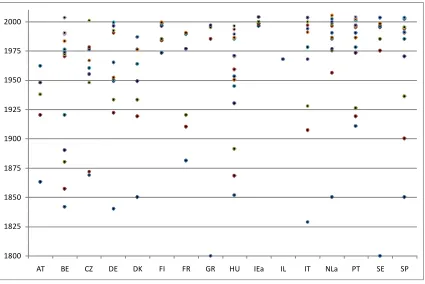
Figure 2.1 presents the pre-primary (ISCED 0) reforms assumed to have influenced the
schooling of today’s 50 year-olds and above. It reveals that most pre-primary education
programmes were already institutionalised during the 19th century. The only exceptions are Finland, Israel and Portugal where such programmes remained private much longer.
In the case of Portugal, for instance, the first institutionalisation of pre-primary education
did not occur before 19116; in Israel, it took place in 1968 through the radical reform of the entire structure of education including the implementation of universal pre-school
enrolment; and in Finland, in 19737. Moreover, in the Netherlands, there are no so-called “education-oriented” pre-primary institutions in which staff has to hold qualifications in
education, despite the fact that the Netherlands have a long history of day-care centres,
day nurseries and playgroups dating back from 1850. Similarly, in Ireland, there is no
comprehensive legislative framework for early childhood care and education yet adopted,
despite the fact that the majority of all Irish 5 olds and more than 50% of all 4
year-olds do attend infant classes in primary schools. Since the late 1990s, Ireland has however
passed a few regulations and laws providing for a legal framework with regard to the
health and safety grounds of all children attending pre-school structures, the provision of
services to children with special needs and the attendance and role of parents in infant
classes.
6
Decree of March 29th 1911 creating state pre-school education, called “official child teaching”.
7
8
1800 1825 1850 1875 1900 1925 1950 1975 2000
[image:16.612.113.538.66.350.2]AT BE CZ DE DK FI FR GR HU IEa IL IT NLa PT SE SP
FIGURE 2.1. PRE-PRIMARY EDUCATION REFORMS
Note: AT=Austria; BE=Belgium; CZ=Czech Republic; DE=Germany; DK=Denmark; FI=Finland; FR=France; GR=Greece; HU=Hungary; IE=Ireland; IL=Israel; IT=Italy; NL=Netherlands; PT=Portugal; SE=Sweden; SP=Spain. (a) no education-oriented pre-primary programme (cf. NL) or no comprehensive legislative framework (cf. IE).
During the century shift, the early-school curricula of a few countries were influenced by
the works by the German educator Friedrich Fröbel (e.g., Germany, the French and
Flemish Communities of Belgium8 and the Netherlands). Fröbel (1782 – 1852) was a German pedagogue, a student of Pestalozzi who laid the foundation for modern education
based on the recognition that children have unique needs and capabilities. He created the
concept of the “kindergarten”. Fröbel’s idea of the kindergarten found appeal, but its
spread in Germany was thwarted by the Prussian government, whose education ministry
banned it on 7 August 1851 as “atheistic and demagogic” for its alleged “destructive
8 The reforms developed in Belgium were also influenced by the works by the Belgian educator Ovide
9 tendencies in the areas of religion and politics”. Other states followed suit. The reason for
the ban, however, seems to have been a confusion of names. Fröbel’s nephew Karl Fröbel
had written and published Weibliche Hochschulen und Kindergärten (“Female Colleges
and Kindergartens”), which apparently met with some disapproval. In 1890, Belgium
adopted the first pre-school curriculum, largely based on Fröbel’s work, and, in 1908 and
1911, kindergarten teacher training (as defined by Fröbel) was finally recognized in
Germany through state regulatory laws (Wollons, 2000).
During the 1920s, other types of innovative pedagogical programmes developed across
Europe, mainly focusing on the child’s well-being. Whereas France tested new methods
in which children were led to carry out physical exercises, breathing exercises, games,
graduated movements accompanied by singing, many other countries (e.g., Italy, Austria,
the Flemish and French Communities of Belgium, Hungary, the Netherlands and
Portugal) adopted new curricula influenced directly by the Montessori method. The
so-called “Montessori method”, which is still implemented today, is a child-centred,
alternative educational method based on the child development theories proposed by the
Italian educator Maria Montessori (1870–1952) in the late 19th and early 20th centuries.
Primarily applied in pre-school and primary (elementary) school settings (and
occasionally in infant, toddler, middle school, and high school), this method of education
is characterised by emphasising self-directed activity on the part of the child, and clinical
observation on the part of the teacher (often called a director, directress, guide) — to
stress the importance of adapting the child’s learning environment to his or her
development level, and the role of physical activity in the child’s absorbing abstract
concepts and learning practical skills. Auto-didactic (self-correcting) equipment is used
for introducing and learning concepts, and reading is taught via phonics and whole
language (Röhrs, 1994).
During the Second World War, the education systems of occupied countries fell under the
influence of Nazi teachings and many company kindergartens were established to enable
mothers to work and to foster an active population policy. In turn, the post-War period
served mainly at re-launching political debates about educational ideology and only few
countries actually passed educational reforms on pre-school education before the 1960s.
The exceptions include the Czech Republic and Hungary where the soviet system
10 the formal recommendation of educational procedures and instruction for all children in
their mother tongue. As a result, during that period, pre-school education developed faster
in the Soviet part of Europe than in Western Europe.
It is only in the 1960s that the post-War pedagogical debates started receiving a
legislative echo in the Western block. Austria and Italy focused on the clarification of the
authority allocation between the state, the regions, the provinces, the communities and the
schools. The French Community of Belgium fixed the minimum attendance age to
nursery schools at 2 and a half, and Denmark passed an act compelling authorities to
make available all public services to all citizens, including pre-school structures. At the
same time, progress continued in the Soviet bloc with, for instance, the formal
incorporation of Kindergarten into the education system of the German Democratic
Republic (GDR) and guaranteed places (by law) for all children from 3 to 6 years of age.
Another example is the 1960 Act on the Czech Education System that divided pre-school
education into “jesle”9 for children from birth to the age of 3 and “mateřské školy” for children from 3 to 6 years of age, and specified institutions for common use by both jesle
and mateřské školy. At the same time, the Czech Republic prepared a single educational system for children from birth to the age of 6 with a curriculum focusing on mental,
moral, aesthetic, physical and work education. The educational requirements of each of
the six age groups defined in the 1960 Act were then further specified in the 1967
programme. Finally, 1968 was also the year of the main legislation on pre-school
education by Israel.
The 1970s witnessed an important gain of interest for pre-schooling across Europe. Most
of the reforms concerned the establishment of childcare centres for very young infants to
meet the needs of working families, organised by the municipalities (e.g., Belgium,
Denmark, Finland, Sweden), similar to the ones already established in the 1950s and
1960s in the Eastern bloc. In Spain (1970) and in Portugal (1973), pre-school education is
finally recognised by law as an integral part of the education system, and its
superintendence, as well as its teaching guidance, are placed under the responsibility of
the Ministry of Education. Another trend of the 1970s concerned specific reforms about
the teaching staff. In Italy, the 1978 law contained special rules and introduced changes in
11 the way state nursery schools were operated, eliminating for instance the “assistants” and
providing for the assignment of two teachers per section. In France, the 1977 law enabled
male teachers to teach in pre-schools. At the same time, in the Soviet bloc, the Czech
Republic and Hungary reinforced their legislation on the children-centred methods
applied for teaching at pre-school level.
The concerns about equity and minority access to education, which dominated US
educational reforms in the 1960s and 1970s (Bailey, 1992), spread to Europe in the 1980s
and marked the nature of the reforms in pre-primary education for the following two
decades. This concern was geared by the idea that pre-primary education can serve “as an
effective means to establish the basis for further learning, preventing school drop-out,
increasing equity of outcomes and overall skill levels” (European Commission, 2006,
p.5). In order to ensure that all children, in particular the most deprived, benefit from
effective intervention programmes, European countries have therefore started to make
investments so that provision could be increased, access made easier and improvements
made in quality.
In that effort, most countries started by focusing on the equity of access to pre-primary
education. In France, the Law of 10 July 1989, art.2, stipulated that “every child has to be
admitted, at the age of three, to an “école maternelle”10 (pre-school) or an infant class the closest possible to their home, if their family so wishes”11. Another example is given by the Hungarian Education Acts of 1985, 1986 and 1989, upgrading the last kindergarten
year as a compulsory element of elementary education, calling for more differentiated
individual treatment and advocating a more flexible daily schedule. These laws were then
supplemented by further similar legislation after the collapse of the Soviet Union. In
Greece, the Law 1566/1985 stipulated that pre-school education shall belong to primary
education and a great part of its operation shall follow the same legislative regulations in
force for primary school. However, pre-school education shall be provided in
kindergartens operating independently or in centres together with state nursery schools
(children’s centres). Attendance at kindergarten shall last 2 years (since 2006, it has been
made compulsory for children of 5 years of age). Finally, in Finland, a pre-primary
10
See Glossary in Appendix.
11
12 curriculum for 6 year-olds was drawn up (1984, 1985) to provide a guideline for
pre-primary education both within the day-care system and in comprehensive schools, thereby
incorporating pre-primary programmes into the elementary structure12.
The second main trend, since the 1980s, has been the development of programmes
targeted directly at favouring minority access to education. The Flemish Belgium, for
instance, established an overall statutory framework for subsidies childcare, i.e. childcare
centres and childminding services, for care for sick and disabled children and parental
involvement and participation (1983, 1989). In 1985, Spain launched its experimental
programme of pre-primary education with the purpose of solving problems detected at
that stage. The French law of 1989 stipulated that looking after 2 years old children shall
be extended as a priority to the schools located in social disadvantaged environments,
whether in urban, rural or mountain zones. Since 2000, similar positive discrimination
programmes have also been developed in the Netherlands with government funding.
Finally, the third main trend since the 1980s has been the decentralisation of education
management launched in Northern Europe, by countries such as Denmark and Sweden,
where laws were passed on the transfer of responsibility for the financial administration
of pre-school institutions to the municipalities. These efforts towards school autonomy
were pursued during the 1990s and spread to other countries, e.g., Italy, in 1997;
Germany, in 1999.
As a result of these 20th century’s reforms, today, in the majority of European countries, the Education Ministry is responsible for pre-primary education-oriented institutions
(ISCED 0). Except in Denmark, Germany (most of the Länder), Austria and Finland,
where other authorities than the education ministry are responsible for pre-primary
education; and in a few German Länder, Greece and Portugal, where the education
ministry as well as other ministries may be responsible for pre-primary education
depending on the type of institution. In pre-primary institutions that are the responsibility
of the education ministry, staff responsible for a group of children always hold
tertiary-level qualifications in education, and even in Finland, all types of pre-primary
12
13 establishment catering for children from a very early age must employ staff with a
university qualification in education (EACEA, 2009). Provision is generally available
from at least 3 or 4 years of age (over half of European countries have participation rates
of over 80 % in pre-primary education from this age) (ibid., Figure C6, p.98).
An important “mis-result” of these reforms, however, is the fact that, in the majority of
the countries, education-oriented pre-primary institutions still tend to be fee-paying, i.e.
an enrolment fee is requested from parents for their children to take part in the
programme, regardless of whether they are run by the public authorities or private bodies.
Belgium is the only country where admission to pre-primary education is free of charge
for everyone. In several countries (Oreland, Greece, Spain, France, Italy, Hungary,
Portugal), public-sector provision is free, whereas enrolment fees are payable in the
private sector. In the Czech Republic and Finland, admissions to public-sector
pre-primary education-oriented institutions may be free or involve payment fees (ibid.).
2.2. Primary
education reforms (ISCED 1)
European systems of public schooling date back on average from the 18th century. The functioning of elementary education (ISCED 1-2) systems at the dawn of the 20th century were therefore all ruled by laws dating from the 19th century (see Table 1.1). Hence, the population attending elementary education at the beginning of the 20th century beneficiated from institutionalised systems inherited from the end of the 19th century.
During the 20th century, the reforms undertaken by the majority of the countries included the extension of compulsory schooling13 and the implementation of measures to ensure that all pupils would obtain a certificate of basic education, including new learner-centred
methods and new examination schemes. In some countries, these efforts went as far as the
institutionalization of compulsory education up to the age of 18 (e.g., at a full-time basis,
Hungary and Israel; and at a part-time basis, Belgium, Germany and the Netherlands).
Thus, the national structure and content of primary education (ISCED 1) programmes are
14 directly linked to the evolution of compulsory education. Today, the ISCED 1 level
begins between 5 and 7 years of age, is compulsory in all countries and generally lasts
from 4 to 6 years (OECD, 2002).
Apart from the quantitative improvement of education attainment, achieved through the
implementation of compulsory basic education, the 20th century also saw the emergence of a qualitative trend, especially from the second half of the century. A basic education of
‘quality’ became an essential pre-requisite for the development of a knowledge society.
This quality dimension materialized through the adoption of new teacher recruitment
policies, implying new teacher training structures and new monetary teaching incentives
(e.g. higher teacher salaries). From the pupils’ perspective, the development of higher
quality standards passed through the expansion of language acquisition schemes and the
integration of special educational needs programmes into the mainstream (or “regular”)
classes.
2.2.1. Organizational and curricular laws (ISCED 1)
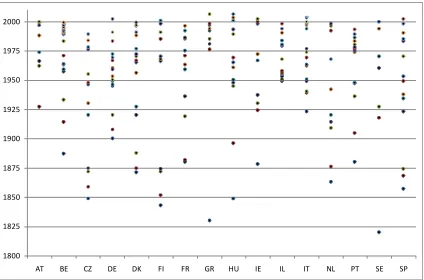
Figure 2.2.1 presents an overview of the years of adoption of the reforms affecting the
duration of compulsory education and the curricular programmes of primary education.
This section synthesizes the evolution of these reforms in each country of our sample in
alphabetic order14.
13
See section 4 for a detailed synthesis of all the reforms on compulsory education and section 5 for an analysis of the expected time of impact of an extension of compulsory education on retention rates.
15
1800 1825 1850 1875 1900 1925 1950 1975 2000
[image:23.612.112.538.64.353.2]AT BE CZ DE DK FI FR GR HU IE IS IT NL PT SE SP
FIGURE 2.2.1. ORGANIZATIONAL AND CURRICULAR REFORMS (ISCED 1)
Note: AT=Austria; BE=Belgium; CZ=Czech Republic; DE=Germany; DK=Denmark; FI=Finland; FR=France; GR=Greece; HU=Hungary; IE=Ireland; IL=Israel; IT=Italy; NL=Netherlands; PT=Portugal; SE=Sweden; SP=Spain.
AUSTRIA
At the dawn of the 20th century, the Austrian population was already fully alphabetized thanks to the Reichsvolksschulgesetz (Imperial Act on Primary Education) passed in
1869. It was the first act to uniformly organise the entire system of compulsory education
and it abolished school fees and extended the duration of compulsory education from 6 to
8 years. Further, in 1918, as a consequence of the application of the republican,
democratic and social principles of forming pupils to independent citizens in their
thinking and acting, primary education was completely redesigned through the
introduction of “across-the-road” instruction at Volksschule and free teaching and
learning aids at Vienna’s compulsory school establishments. All these efforts were then
put on hold during the Second World War due to the annexation of Austria to the Third
16 The 1962 School Education Act (“Schulunterrichtsgesetz”), which fixed at 6 years old the
entry age to compulsory schooling and extended its duration to 9 years (from 6 to 15),
still forms the legal basis for the entire system of education. In 1965, the concept of
furtherance was complemented by the concept of remedial instruction, which, in 1979,
was extended to all four grades of the “Grundschule” (levels I and II of primary school or
special school). In 1979, interdisciplinary and co-educational instruction was also
introduced as a teaching principle. A characteristic example is the introduction of the
subject of “handicraft” (“Werkerziehung”), taught for the first time for boys and girls
together.
In 1986, the Grundschule curriculum suffered a thorough revision. The aims of this
reform were to convey a joint elementary education to all pupils, to emphasise principles
of special education, in particular in the school entry phase, the coordination between the
pre-school and primary education and the consideration of new didactic findings at
primary level. This reform was achieved after a phase of broadly-based democratic debate
and pilot projects involving more than 1,000 teachers and parental representatives in
different working groups. The 1986 Primary School Curriculum has ever since been
continuously further developed. For instance, in 1991, intercultural learning was
integrated as a principle of instruction and, in 1994, the provision of full-day attendance
at school was introduced.
BELGIUM
In Belgium the century-shift education system followed the Constitution of 1831 and the
law of 1842. The Article 17 of the Constitution of 1831 sat the principle of "freedom of
education" which has consistently been interpreted as meaning that the state must fund
education but cannot hold a monopoly in it, and that free institutions—in particular the
Catholic Church—may provide public education parallel to the state. Accordingly,
Belgium has several education systems. In turn, the 1842 law aimed at steering the
expansion of education in the right direction and at improving the quality of education.
This law, which was the first law on elementary education, compelled each municipality
to establish at least one primary school and to provide a religious education course.
However, despite these legislative frameworks, in 1890, only 4% of school-aged children
17 was finally introduced in Belgium: anyone between the ages of 6 and 14 was obliged to
attend school. Until then, elementary education consisted of three stages of two grades
each, but the law of 1914 established a fourth stage for children between the ages of 12 to
14 and generalized the principle that school shall be free of charge. However, the First
World War delayed the implementation of this law by a few years. In 1920, a curriculum
for the fourth stage of compulsory education was developed, and from 1921, every
municipality was compelled to organise free health supervision in schools and to appoint
a physician as medical school inspector with the purpose of detecting contagious
conditions. 1921 was also the year of the foundation of the very first office for vocational
orientation for working-class children by the Brussels teacher A. Christiaens. Likewise, in
1925, the Catholic working-class youth organisation (KAJ), at the instigation of Cardijn,
launched a series of actions for all the 14 year-olds leaving school, such as an information
service for school-leavers. The primary education curriculum of the 1930s got strongly
influenced by Fröbel, Montessori and Decroly15 (1936) and career guidance services were set up in various towns (1937 and 1947). In 1949, the first psycho-médico-social
(PMS)-centres, connected to state schools, were founded as a pilot project, and hosted the
services for medical supervision in schools. In 1955, the Collard Act imposed the creation
of a public pre-primary and a public primary school in each municipality, regulating
grants, and specifying that parents may opt between religion course and an ethics course
in public schools.
The Belgian School Pact of 1958 (made into law in 1959) recognized two basic types of
schools in the provision of primary and secondary education, official schools organized
by state bodies, and free schools, (mostly Catholic). Parents were given complete freedom
to select the type of school attended by their children. Moreover, the state was required to
provide sufficient numbers of schools of both types within commuting distance, by direct
provision of official schools, subsidies to free schools, or provision of school buses. Free
schools receiving a state subsidy could not charge tuition or require fees for textbooks.
The 1959 law also required official primary and secondary schools to provide two hours
of instruction per week in religion or morals. While almost uniquely Catholic in 1959,
religious instruction gradually came to be offered in other faiths as well.
18 The act of 29 June 1983 extended compulsory education to the age of 18. It made
possible for young people to be in full-time education until the age of 16 and then in
part-time education until the age of 18. Hence, since this reform, young people aged 15 to 18
can either enter part-time training or training defined by a royal decree as corresponding
to compulsory education16; conclude an apprenticeship contract for paid work (industrial apprenticeship); or take up apprenticeship training offered by the Middle Classes (Classes
Moyennes) (under an apprenticeship contract) to learn an occupation suitable for
self-employment by receiving practical training in entrepreneurship and instruction in general
and technical theory in a Middle Classes training centre (Lejeune, 2000). In 1997, a new
Elementary Education Decree came into force in Flanders, integrating all the legislation
regarding elementary education into one single coherent framework and giving all local
schools greater autonomy and responsibility for their own organization, thereby
abolishing the compulsory division into year classes and grades and replacing the
compulsory curriculum subjects by learning areas17 (Roelands and Druine, 1999).
THE CZECH REPUBLIC
By 1900, the Czech Republic beneficiated already from a compulsory education fixed at 8
years, from the age of 6 to the age of 14 (Law of 1869). Pupils attended an “obecná”
(community) school for the first five years and could complete the remaining three years
at an obecná school (in the country) or a “měšt'anská” (town) school. There had to be at least one of the latter in every school district and it served pupils who were not able to
study at any of the types of “gymnázium”. In 1922, the Small Education Act improved
the conditions in schools by setting a maximum of 80 pupils per class (later reduced to 60
and then 50), and by including civic education and handicrafts as compulsory subjects
instead of religious education. The Act of April 1948 on the Basic Arrangement of the
16
In the French Community, the CEFA (Centre d'éducation et de formation en alternance) welcomes young people aged 15 who have completed the first two years of secondary education, or young people aged 16 without any other conditions. Each week, 12 to 15 periods of 50 minutes are dedicated to general training. If the student signs a contract, then he receives following practical training in an enterprise. Unfortunately, this is a track where students who have been excluded both from school and from work are relegated (Lejeune, 2000).
17
19 Unified Education System extended compulsory education to 9 years, from the age of 6 to
the age of 15: 5 years at the national (“národni”) school and 4 years at a secondary school.
In 1953, it was shorten back to 8 years, from the age of 6 to the age of 14, before being
brought back up to 9 years in 196018. In 1979, it was shorten again to 8 years (4+4) before being re-upgraded in 1990 to 9 years (4+4+1). The last year of the compulsory 9-year
school could be taken at the upper secondary school (gymnázium) (Filer, Jurajda and
Plánovsky, 1999). Since 1995, the division of compulsory education has been 5+5; and
since 2003, the number of hours at the second stage of the “základni školy” has been
increased to adjust to the number of hours at the lowest stage of multi-year gymnázium.
DENMARK
In Denmark, thanks to the 1814 Law, by the dawn of the 20th century, all children were given the right to 4 years of education, which founded the “Folkeskole” (public schools).
The curriculum of the Danish basic school was expanded by the New Education Acts of
1900. In 1903, a 3-year middle school was established, beginning at age 11-12, to link the
“Folkeskole” and the “Réalclass” (lower secondary school) and the “Gymnasium”. The
1937 Law about Folkeskolen defined Folkeskoler as 7-year public basic schooling
covering primary and lower secondary education, an optional pre-school class and a
supplementary optional year preparing for the lower-secondary examination
“Réaleksamen”. In 1958, compulsory education was extended from 4 to 7 years and
middle schools were reorganised to form a superstructure at the upper end of the
folkeskole with two lines: a 3-year academically oriented ‘réal’-department and the 8th -10th forms. Compulsory education was further extended in 1971 from 7 to 9 years. Several pedagogical regulations were also passed to ensure the full attainment and
completion of these compulsory years of schooling. Among these are the 1967 law
abolishing corporal punishment in Danish schools and the 1975 Act on the folkeskole
introducing pupils’ councils, which both focused on the establishment of a more
favourable learning environment.
fundamental education for everyone. The more specialized education in the upper secondary schooling then simply serves to build on this fundamental skills (Roelands & Druine, 1999).
18
20 Further laws targeted the examination provision, such as the 1975 Act abolishing the
réal-class department and introducing two completely new examinations (namely, the Leaving
Examination of the Folkeskole and the Advanced Leaving Examination of the Folkeskole,
held on a single-subject basis); the 1977 Act on general admission restriction in higher
education; the “7-points programme” of 1987 improving the framework and content of
the folkeskole and establishing local centres of culture in connection with the school; and
the 2003 Act aiming at strengthening the subject knowledge and skills of the pupils.
Some other laws focused on the administration of primary education, e.g., the 1989 Act
on administration of the folkeskole, based on the principles of target and framework
management19; the 1990 Act introducing new provisions regarding the administration of schools, empowering headmasters with more managerial competences and establishing
school boards with large parental representation.
FINLAND
In Finland, the foundation of the Finnish Folk School system, comprising 6 years of
education, dates back from 1866. In 1921, the Finnish state passed an act concerning
general compulsory education. Compulsory education was completed once the child had
successfully completed the Folk School (6 years) or a corresponding syllabus in some
other way. Upon completion of Folk School, pupils could continue at civic schools, which
offered a 2- or 3-year education. After civic school, it was then possible to move up to
vocational school. This system remained until the 1970s.
The 1960s and 1970s were times of drastic change as Finland evolved from an agrarian
society to a Scandinavian welfare state. To facilitate this transformation, the education
system, which maintained the inequities of the class society for which it was designed,
needed a total overhaul. Adopting a "comprehensive school reform" approach in the
1970s, Finnish educators and policymakers scrutinized everything from curriculum and
textbooks to salaries and administration (Aho, Pitkanen and Sahlberg, 2006). The
previous Folk School (4 years), civic school (2 years) and lower secondary school (the
more academic branch following completion of 4 years at Folk school) were replaced by
19
21 a 9-year comprehensive compulsory school offering general basic education. Until 1998,
upper secondary school was separated from secondary school to form a distinct form of
institution20. The 9-year compulsory school (“peruskoulu”) was progressively implemented between 1972 and 1977 with an administrative division between the lower
and upper secondary stages.
In 1985, The Comprehensive School Act (“peruskoululaki”) laid the basis to schools’
autonomy, promoted the individualization of teaching (due to the emergence of more
heterogeneous groups) and increased the number of part-time teachers because of a high
number of optional courses. This law was reinforced in 1991 by the National Board of
Education Act and the Decree on the National Board of Education which harmonized
educational administration and abolished the national inspectorate in order to increase
further the autonomy and responsibilities of schools and individual teachers21. In 1992, structural measures linked to budgetary constraints were taken, such as the raise of the
minimum number of pupils required for the maintenance of a teaching post and the spread
of the employment of replacement teachers during term time. Today, basic education is
governed by the Basic Education Act (628/1998), the Basic Education Decree
(852/1998), the Government Decree on the objectives and time allocation in basic
education (1435/2001) and the National Curriculum 2004 given by the National Board of
Education.
FRANCE
At the dawn of the 20th century, French children aged 6 to 13 years old were compelled to attend school by the Law of 1882. Primary education had been free since the Law of 1881
and public and secular since the Ferry Law of 1879. The duration of compulsory
education was first extended by one year in 1936 to include all children between the age
of 6 and the age of 14, then by another two years in 1959 to include all children up to the
age of 16.
20
22 In France, the 1960s were marked by the abolishment of the “terminale” classes (final
study year) of elementary school and of its final certificates, hence, making secondary
education (“colleges”) accessible to all pupils from the age of 11. The “certificate
d’études primaries” (final primary education certificate) had for many years been the
examination which marked the successful conclusion of compulsory education. Finally, in
1989, a new framework law on education set out the rules relating to the organisation and
functioning of nursery and elementary schools (including school projects, organisation
into cycles, assessments, better articulation between nursery school and elementary
school, reduction in the number of pupils repeating a year and recommendations with
regard to the reception by all pupils of a qualification by the end of their compulsory
education).
GERMANY
In Germany, the official start of public education dates back from 1763 with the mandate
by Frederick the Great of Prussia for regular school attendance from the age of 5 through
the age of 13 or 14. Until 1920, the “Volksschule” (primary school) coexisted in parallel
with separate educational institutions preparing children for intermediate and higher
schools (public preparatory schools). Then, based on article 146 of the Constitution of the
Weimar Republic, the Primary School Act of the German Reich
(“Reichsgrundschulgesetz”) of 1920 established the “Grundschule” (primary school) as
an institution for the education of all children in Germany and abolished the alternative
public preparatory schools. Public education was provided by state institutions and
regulated by the government, in cooperation with the province and the local community.
Primary school became compulsory with advanced schooling available to age 18 free of
charge. The constitution also provided for private schooling, which was likewise
regulated by the government. In 1934, the Reich Education Ministry was created and
church-run primary schools were abolished. After the Second World War, the Basic Law
(“Grundgesetz”) and the “Länder” Education Acts guaranteed once again the special
status of the Grundschule, catering for all children and authorising the Länder to approve
privately-maintained primary schools only in exceptional cases. Compulsory education
was introduced in the German Democratic Republic in 1946 in form of the democratic
21
23 compulsory comprehensive school comprising grades 1 to 8, and extended in 1959 to
grade 10 to form the general education polytechnic high school (“Polytechnische
Oberschule”, POS). At the same time, between 1949 and 1967, the duration of
compulsory school was progressively extended in the Federal Republic of Germany to 9
years.
The 1960s witnessed major content reforms of primary education. In 1960, a two-year
orientation phase was introduced in grades 5 and 6 to give school children more time to
consider their future educational choices. In 1965, the polytechnic high school (POS) of
the GDR got divided into three levels (lower, intermediate and upper levels). At the same
time, towards the end of the 1960s, primary education in the Federal Republic of
Germany experienced innovation and reorganisation. This process incorporated reforms
and teaching methodology, as well as changes to teaching content. One of the main
objectives of the primary school reform of the 1970s was a move towards more
science-oriented teaching. This involved a revision of the mathematics curriculum as well as the
development of local studies from a subject dealing to a large extent with local traditions
towards the so-called “Sachunterricht” centred more on the natural as well as social
sciences, but without anticipating science lessons at the secondary level (Eurydice,
2005b).
The so-called “Hamburger Abkommen”, an agreement which was reached by the
Standing Conference in 1964 (and amended in 1971), remains the cornerstone on which
the joint fundamental structures of the school system in the Federal Republic of Germany
is based. It incorporates the following general provisions: the beginning and duration of
full-time compulsory education, the dates for the start and end of the school year, the
length of school holidays as well as the designation of the various educational institutions
and their organisation (types of school etc.), the recognition of examinations and leaving
certificates, and the designation of grade scales for school reports. On the basis of the
Hamburger Abkommen, the Standing Conference has agreed upon further fundamental
common features for the school system over the past few decades and has recognized
leaving certificates for schools in all Länder, through supplementary resolutions, which
were summarised in a resolution in May 2001 (Eurybase, 2005b).
24 Hence, since Reunification, as a rule, general compulsory schooling begins for all
children in the Federal Republic of Germany in the year in which they reach the age of 6
and involves 9 years of full-time schooling (ten years in Berlin, Brandenburg and
Bremen; in Nordrhein-Westfalen, the duration of full-time compulsory education is 9
years for the Gymnasium, and 10 years for other general education schools). Those young
people who do not attend a full-time general education school or vocational school at
upper secondary level once they have completed their period of compulsory general
schooling must still attend part-time schooling (compulsory “Berufsschule” attendance –
“Berufsschulpflicht”). This usually lasts 3 years, according to the duration of training in a
“anerkannter Ausbildungsberuf” (recognised occupation requiring formal training). For
pupils who do not attend a general education school at upper secondary level or enter
training, some Länder have regulations under which pupils are required to remain in
full-time education and attend some sort of vocational school.
GREECE
In Greece, various legislative regulations were passed in the early 19th century (e.g., the Law of 1834) defining the context of operation of elementary education and in 1911, the
Constitution established the compulsory and free of charge elementary education. In
1927, years of compulsory attendance in the elementary education could not be less than
6. The system remained untouched until the 1970s. In 1976, the 9-year free of charge
education was established for all Greek children aged 6 to 15, and in 1985, the Law
1566/1985 that is still in force today, defined the structure and operation of Primary and
Secondary Education. This law established the new procedure for drawing up new
curricula and for writing the corresponding new textbooks. It has also set out the
following principles: every child’s school book should be accompanied by a
corresponding teacher’s book, the establishment of the single-accent system
(“monotoniko systema”) in the Modern Greek language, further education for teachers,
etc. This legislative framework has been supplemented with new laws and presidential
decrees, chief among which are: Presidential Decree 8/10-01-1995 and its supplementary
PD 121/18-04-1995 by which the method of assessing the pupils is differentiated; it is
now treated as an on-going pedagogical process. Also, by PD 201/1998 issues related to
25 National Education Council (“EΣYΠ/ESYP”), the Educational Research Centre (“KEE”), the Institute for Continuing Adult Education (“IΔEKEIDEKE”) and the Educational Centres Supporting Education (“MOKEΣE/MOKESE”). Law 2341/1995 regarding the education of the Muslim minority, Law 2413/1996 by which the new method of education
for children from abroad was instituted, and Law 2525/1997 by which “Oloimera
Demotika Scholeia” were established, are still in force and a unified viewpoint of the
Analytical Curricula for Primary and Secondary Education through the Cross-curricular
Single Framework for Curricula, is foreseen (Eurydice, 2007).
HUNGARY
In Hungary, the law on Popular Education of 1868 made the “népiskola” (general school)
compulsory for all children aged 6 to 15, and communities were assigned the
responsibility of its funding. The law further required that the school should be
restructured into the six-form népiskola still implemented today, along with another type
of primary népiskola for consolidation, rooted in the former. Although the concept of the
state taking its share of establishing and maintaining schools emerged already at that time,
churches continued to dominate. In 1908, the népiskola was made free of tuition fees and,
in 1940, it was transformed into an eight-form institution (“általános iskola”) consisting
of two sections (the lower and the upper sections) of four forms each22. The duration of compulsory education was fixed at nine years (eight years of daily primary school and
one year of general practical economics). The 1940 law came into application in 1945,
laying the basis for the current primary single structure, now divided into four sections of
two years each. The strong centralization suffered by the school curriculum in 1978 (for
each subject, school type and grade, accompanied by a single textbook) was somehow
diluted by the Education Act of 1985 enabling schools to deviate from the provisions of
the central curricular regulations and to introduce innovation. This act also transformed
the system of inspectors into a counselling network available to schools, thereby
allocating more independence to the teachers. The 1990 Act on Local Government further
enhanced this decentralization trend by delegating educational institutions to the
22
26 municipalities. School heads became the employers of the teaching staff and could take
decisions determining their professional advancement.
The Act LXXIX of 1993 on Public Education (still in force today) finally abolished the
compulsory nature of the former central curriculum. It also translated the principles
enounced by the Hungarian Constitution, in reference to the upbringing of a child as a
right, and at the same time as an obligation of parents, into everyday practice. The most
important obligation of the parent is to ensure that the child completes compulsory
schooling. The child must begin attending kindergarten (“óvoda”) from the first day of
education of the year in which he/she reaches his/her fifth year of age. Compulsory
education lasts until the end of the academic year in which the pupil has completed
his/her 18th year of age, however, children who began the first year of their single
structure education (általános iskola) in 1997/1998 or before are subject to compulsory
school attendance until the year they reach 16 years of age if the pupil successfully
completed the maturity examination (“érettségi vizsga”), received a state (vocational)
certificate, is considered a major through marriage or cares for his/her own children23. Compulsory school attendance may be performed at általános iskola, and from grade 5
onward at “gimnázium”, and from grade 9 onward at “szakközépiskola”, and at
“szakiskola” (Eurybase, 2008a).
IRELAND
In 1922, the government of the new Irish State sought to give the Irish language and
culture a suitable place in the programme of primary schools, in line with “Irish ideals
and sensibilities”. This new programme, which retained the pedagogical principles and
subject-based structure of the pre-1922 curriculum, set the curricular framework in the
primary schools for nearly half a century (up to 1971). In 1924, the Ministers and
Secretaries Act empowered the Minister for Education and Science to administer public
services in education and to take over the functions of the Commissioners for National
Education in Ireland. However, it is only in 1926, through the School Attendance Act,
23 Deciding on the initial date and the extension of compulsory school attendance is at the discretion of the
27 that school was made compulsory between age 6 and age 12. During the Second World
War, the Irish Constitution of 1937 (“Bunchreacht na hÉireann”) set the statutory rules
for contemporary National Irish Schools (primary schools) in respect of the Stanley Letter
of 1831; and, in 1943, the national Primary Certificate Examination for Standard 6
pupils24 was made compulsory and reduced to three written tests, namely Irish, English and Arithmetic. This national examination was then abolished in 1967 with the
promulgation of the free of charge accessibility of secondary education to all children.
The transfer from primary education to secondary education was to be made at age 12
plus and compulsory education was extended to age 15 by 197225. In 1971, a new innovative and progressive curriculum was introduced for primary schools which
remained operative until 1999 (date of the approval of the New Primary School
curriculum currently in force).
The 1998 Education Act represents the most comprehensive educational legislation
affecting schools in the history of Irish education. This act contained two important
amendments to earlier legislation. The Intermediate Education (Ireland) Act of 1878 was
amended to enable the Minister to include an examination in religious instruction, if so
desired. In turn, the 1998 Act amended the Vocational Education Act of 1930 by
replacing ‘an officer of the Minister’ by ‘a person’ who may act on the Minister’s behalf.
It made provision for primary, post-primary, adult and continuing education, and
vocational education and training, to every person in the State. More recently, the
Education (Welfare) Act of 2000, which became operational in 2002, stipulated the
guidelines for attendance in the period of compulsory education (raising the school
leaving age to 16) and the rights and responsibilities of parents in relation to the education
system. A National Educational Board was established to oversee the enactment of the
provisions of this act (Eurydice, 2005).
ISRAEL
24 The national Primary Certificate Examination for Standard 6 pupils24 (age 12 approximately) was first
introduced on an optional basis in 1929 and consisted of written, oral and practical tests in all the obligatory subjects except music.
25
28 In 1949, the Compulsory Education Law provided for free education for all children
between the ages of 5 and 13 (and up to the age of 17 for those who had not completed
elementary school). All four Jewish educational trends and the Arab educational system
were recognised by this law. Officially, the law stipulated that parents could send their
children to whichever educational system they wished, In practice, however, the
soul-stalking was intense and did not allow the application of this freedom. In 1956, a
legislative distinction was made between Arab and Druze schools.
The radical reform of 1968 of the entire structure of education shortened elementary
school to six grades (grades 1-6) and established comprehensive schools with 2-year and
3-year curricula, thereby providing a choice of tracks towards a vocational diploma or a
matriculation certificate. It also instituted social integration and measures to bring
together students with different skills under a single roof and established a new
curriculum division in the Ministry of Education and Culture. Finally, in 1979, the age of
free compulsory education was raised to 18 years old.
ITALY
In Italy, the extension in 1861 of the Casato Law26 to the whole newly unified State provided for the establishment of compulsory “lower” primary school (which included a
first class and a second class) and “higher” primary school (including the third and fourth
classes), and delegated the responsibility of primary education to municipalities. In 1923,
the Gentile Reform defined primary education in term of five classes, with the addition of
a supplementary three-year course for the sixth, seventh and eighth classes. In turn, the
Consolidation Act of 1928 subdivided further primary education into a three-year lower
grade and a two-year higher grade, with an examination to be taken between the two
grades. In 1933, the whole public primary education fell under the province of the state
administration, thus completing a process started in 1911.
The post-War period was then marked by efforts to reform the content and structure of
primary education in an innovative way. In 1955, new curricula were introduced by the
Decree 503 and remained untouched until 1985. The law of 1957 replaced the grade