© 2016, IRJET | Impact Factor value: 4.45 | ISO 9001:2008 Certified Journal | Page 309
IMAGE MINING USING DISEASE ACCURACY ANALYSIS
(Muda)
Prof P.Senthil MA.,PGDCA.,M.Sc.,MPhil.,
Associate professor in MCA Computer Science,
Kurinji College of Arts and Science, Tiruchirappalli-620002.India.
---***---Abstract—Hematiteis Sickness is one of the maximum common and dangerous diseases which exposes the lives of millions of people to serious risks every year. Diagnosis of Hepatitis has always been a serious challenge for physicians. This paper presents a effective method for diagnosis of hepatitis based on interval type-III fuzzy. This proposed system includes three steps: pre-processing (feature selection), type-I and type-III fuzzy classification and system evaluating. KNN-FD feature selection is used as the preprocessing step to dismiss irrelevant features and also to improve classification performance and efficiency in generating classification model. In the fuzzy classification step, “U approach” is used for fuzzy system modeling by implementing the exponential compactness and separation index for determining the number of rules in fuzzy clustering approach. So firstly, we proposed a type-I fuzzy system which its accuracy was about 91.9%. In the proposed system, the process of diagnosis faces vagueness and uncertainty in final decision. So, the imprecise knowledge was handled by using interval type-III fuzzy logic. Obtained results show that interval type-III fuzzy has the ability to diagnose Hepatitis with the average accuracy of 93.94%. The obtained classification accuracy is the highest one ever reached so far. Aforementioned accuracy shows that type-III fuzzy system has better performance in comparison to type-I and indicates the higher capability of type-III fuzzy system for modeling uncertainty.
Keywords—Hepatitis disease, Medical diagnosis, Type-I fuzzy logic, Type-II fuzzy logic, Feature selection
INTRODUCTION
Hepatitis diseases
The hepatitis is a viral infection that also was transmitted by blood or blood products in the past, when there was no test available to screen for this infection. Hepatitis diseases occur due to one of three viruses[1]; hepatitis A, hepatitis B and hepatitis C. Moreover, the Epstein Barr Virus can transform into hepatitis which leads to inflammation of the
liver. In addition, there are some viruses and bacteria that produce hepatitis D and E, varicella(chickenpox), and cytomegalovirus (CMV).The most important types of hepatitis, which are hepatitis A, hepatitis B and hepatitis C,
can be explained as given below [2]:
Hepatitis A is the most common form of hepatitis in children. It is known as “infectious hepatitis”. Hepatitis A virus (HAV) causes this type of disease. This virus lives in the stools (feces or poop) of infected individuals.
Hepatitis B is known as “serum hepatitis”. It arises because of hepatitis B virus (HBV). This virus is diffused from infected body fluids, such as blood, saliva, semen, vaginal fluids, tears, and urine, contaminated blood transfusion, shared contaminated needles or syringes for injecting drugs, sexual activity with a HBV-infected person, and transmission from HBV-HBV-infected mothers to their newborn babies.
Hepatitis C appears because of the hepatitis C virus (HCV). It spreads by direct contact with an infected person’s blood. Hepatitis C causes chronic liver disease and liver transplantation, and is getting to an increasing cause of concern in the world. The symptoms of this hepatitis type are similar to those of hepatitis A and hepatitis B. The hepatitis C virus is diffused by sharing drug needles, getting a tattoo or body piercing with unsterilized tools, blood transfusions (especially ones that occurred before 1992; since then the US blood supply has been routinely screened for the disease), transmission from mother to newborn, and sexual intercourse.
The signs and symptoms of these A, B, C viral hepatitis are malaise (a general ill feeling), fever, muscle aches, loss of appetite, nausea, vomiting, diarrhea, and jaundice (theyellowing of the skin and whites of the eyes). All these A, B, C viral hepatitis conditions can be diagnosed and followed through the
© 2016, IRJET | Impact Factor value: 4.45 | ISO 9001:2008 Certified Journal | Page 310 use of readily available blood tests [3]. A physician
commonly takes decisions by evaluating the current test results of a patient, or he compares thepatient with other patients under the same condition by referring to the previous decisions. Therefore, it is very difficult for a physician to diagnose hepatitis.
Fuzzy logic system
Fuzzy set theory was first introduced by Zadeh in 1965[4]. Fuzzy logic systems (FLSs) are well known for their ability to model linguistics and system uncertainties. Due to this ability, FLSs have been successfully used for many real world applications, including modeling and controlling. Type-1 FLSs (T1 FLSs) are the best known and widely used types of FLS.
The concept of a Type-II fuzzy set was first introduced by Zadeh as an extension of Type-I fuzzy set [5]. A Type-II fuzzy set is characterized by fuzzy membership function, i.e., the membership grade for each element is a fuzzy set in interval [0,1].Such sets can be used in situations where there are uncertainties about the membership values.As more complex models, T2 FSs are considered to be potentially better suitable for modelling uncertainty. The additional complexity arises from the inclusion of a footprint of uncertainty(FOU) and a third dimension, offering extra degrees of freedom to T2 FSs in comparison to T1 FSs[6],[7].The most important application of fuzzy sets theory are fuzzy rule-based systems. These kinds of systems constitute an extension of classical rule-based systems, because they deal with fuzzy rules instead of classical logic rules.
[image:2.595.316.560.56.224.2]A rule-based fuzzy logic system is comprised of four elements: rules,fuzzifier, inference engine and output processor that are inter-connected, a T1 FLS is depicted in Figure 1.
Fig. 1. Type-I fuzzy logic system[9]
The difference between T1 FLS and T2 FLS is in the output processing, so that, there is a type-reducer in output processing besides other modules. Figure 2 represents the structure of a T2 FLS.Once the rules have been established, a FLS can be viewed as a mapping from inputs to outputs.Rules are the heart of an FLS. They may be provided by experts or extracted from numerical data. In either case, the rules can be expressed as a collection of IF–THEN statements.The IF-part of a rule is its antecedent, and the THEN-part of a rule is its consequent [8].
Fig. 2. Type-II fuzzy logic system[9]
Interval Type-II Fuzzy
[image:2.595.309.554.470.602.2]© 2016, IRJET | Impact Factor value: 4.45 | ISO 9001:2008 Certified Journal | Page 311 membership values as well as the spread of
membership values between these bounds (either probabilistically or fuzzily) are defined.As mentioned above, Type-II membership function provides additional degrees of freedom in fuzzy logic systems, which can be very useful in situations with many uncertainties [9].A type-III fuzzy set may be represented as
Where is the type-III fuzzy membership
function inwhich .
can also be defined as :
Where ∫ ∫ denotes union over all admissible x and u. is called primary membership of x. Additionally, there is a secondary membership value corresponding to each primary membership value that defines the possibility for primary memberships. Whereas the secondary membership functions can take values in the interval of [0,1] in generalized type-III fuzzy logic systems, they are uniform functions that only take on values of 1 in interval type-III fuzzy logic systems.
Author Method Accuracy (%)
Grudzinski Weighted 9NN 92.9
Grudzinski 18NN, stand. Manhattan 90.2
Grudzinski 15NN, stand. Euclidean 89.0
Adamczak FSM with rotations 89.7
Adamczak FSM without rotations 88.5
Adamczak RBF (Tooldiag) 79.0
Adamczak MLP+BP (Tooldiag) 77.4
Stern and Dobnikar
LDA 86.4
Stern and Dobnikar
Naive Bayes and semi-NB 86.3
Stern and Dobnikar
QDA 85.8
Stern and Dobnikar
1NN 85.3
Stern and Dobnikar
ASR 85.0
Stern and Dobnikar
FDA 84.5
Stern and Dobnikar
LVQ 83.2
Stern and Dobnikar
CART (decision tree) 82.7
Stern and Dobnikar
MLP with BP 82.1
Stern and Dobnikar
ASI 82.0
Stern and Dobnikar
LFC 81.9
Norbert Jankowski Inc Net 86.0
Özyıldırım et al. MLP 74.37
Özyıldırım et al. RBF 83.75
Özyıldırım et al. GRNN 80.0
© 2016, IRJET | Impact Factor value: 4.45 | ISO 9001:2008 Certified Journal | Page 312 Table 1.Classification accuracies obtained by other
methods in literature
Since the general type-III fuzzy logic systems are computationally very demanding, the use of interval type-III fuzzy logic systems is more commonly seen in the literature, due to the fact that the computations are more manageable [10].
When all are equal to 1, then is an interval type-III fuzzy logic systems. The special case of “(2)” might be defined for the interval type-III fuzzy logic systems:
The upper membership function (UMF) and lower membership function (LMF) of are two T1 MFs that boundthe FOU. The UMF is associated with the upper bound ofFOU( ) and is denoted , and the LMF isassociated with the lower bound of FOU( ) and is denoted [10]:
It should be noted that type-III fuzzy sets can model and minimize the effects of uncertainties in
rule-based fuzzy
logic systems. The effects of uncertainties can be minimized by optimizing the parameters of the type-III fuzzy sets during a training process.The purpose of this study is to demonstrate the higher ability of type-III fuzzy systems to modeling uncertainty.The paper is organized as follows: In section II, previous works for diagnosis of hepatitis diseases in literature is presented.In section III, used hepatitis database is explained.In section IV, the feature number of hepatitis disease dataset is reduced from 19 to 10.In section V, The proposed type-I fuzzy system modeling is explained.In section VI,Some reasons for using type-III fuzzy system instead of type-I fuzzy system is presented.In section VII, The proposed type-III fuzzy system modeling is explained.Finally in section VIII, the discussion and conclusion are presented.
literature review
Until now, many studies have been performed in diagnosis of hepatitis disease literature. In former studies, articles attempted to increase the classification accuracy. Albeitthe classification accuracy isan important feature of a system but in this study, we focused on generated fuzzy-rules and the values of membership function's parameters. In Table 1, the classification accuracy of previous hepatitis diagnosis methods are given[11].
Hepatitis disease dataset
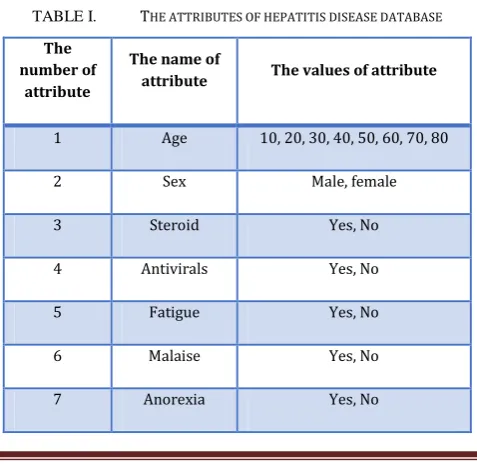
[image:4.595.315.554.551.783.2]In this study, the hepatitis disease database obtained from the UCI repository of machine learning databases isused[12].This hepatitis disease dataset requires determination of whether patients with hepatitis will either live or die. The purpose of the dataset is to predict the presence or absence of hepatitis disease given the results of various medical tests carried out on a patient. This database contains 19 attributes, which have been extracted from a larger set of 155. Hepatitis dataset contains 155 samples belonging to two different classes (32 “die” cases, 123 “live”cases). There are 19 attributes, 13 binary and 6 attributes with 6–8 discrete values. The attributes of hepatitis dataset are given in Table 2.
TABLE I. THE ATTRIBUTES OF HEPATITIS DISEASE DATABASE
The number of
attribute
The name of
attribute The values of attribute
1 Age 10, 20, 30, 40, 50, 60, 70, 80
2 Sex Male, female
3 Steroid Yes, No
4 Antivirals Yes, No
5 Fatigue Yes, No
6 Malaise Yes, No
© 2016, IRJET | Impact Factor value: 4.45 | ISO 9001:2008 Certified Journal | Page 313
8 Liver big Yes, No
9 Liver firm Yes, No
10 Spleen
palpable Yes, No
11 Spiders Yes, No
12 Ascites Yes, No
13 Varices Yes, No
14 Bilirubin 0.39, 0.8, 1.2, 2.0, 3.0, 4.0
15 Alk phosphate 33, 80, 120, 160, 200, 250
16 SGOT 13, 100, 200, 300, 400, 500
17 ALBUMIN 2.1, 3.0, 3.8, 4.5, 5.0, 6.0
18 PROTIME 10, 20, 30, 40, 50, 60, 70, 80,
90
19 HISTOLOGY Yes, No
Feature selection
The number of features (attributes) and number of instances in the raw dataset can be enormously large. This enormity may cause serious problems to many data mining systems. Feature selection is one of the long existing methods that deal with these problems. Its objective is to select a minimal subset of features according to some reasonable criteria so that the original task can be achieved equally well, if not better. By choosing a minimal subset of features,irrelevant and redundant features are removed according to the criterion. Simpler data can lead to more concise results and their better comprehensibility[1].
In this research, we used the feature selection approach proposed by Uncu and Türkşen. This feature selection algorithm combines feature wrapper and feature filter approaches in order to identify the significant input variables in systems with continuous domains. This method utilizes functional dependency concept, correlation coefficients and K-nearest neighborhood (KNN) method to implement the feature filter and feature wrappers. Four feature selection methods independently select the significant input
variables and the input variable combination, which yields best result with respect to their corresponding evaluation function, is selected as the winner[13].We used this method and selected the most important variables between the possible candidates.
Based on the results of this feature selection method, the number of features was reduced to 10 by removing age, sex, antivirals, anorexia, liver big, Spleen palpable, bilirubin, protime, histology values and we used the other features in our proposed system.
TYPE-I FUZZY SYSTEM MODELING
Determining the number of rules
In a fuzzy clustering algorithm, we should use a cluster validity index to determine the most suitable number of clusters. In this study, we used the validity index proposed by
Fazel Zarandi et al [14]. This validity index (an Exponential compactness and separation index) can find thenumber of clusters as maximum of its function with respect to c. This index is defined as follows [14]:
© 2016, IRJET | Impact Factor value: 4.45 | ISO 9001:2008 Certified Journal | Page 314
In which, and
with .
This cluster validity index is implemented to determine the most suitable number of clusters or rules. The best number of clusters based on this cluster validity index is obtained, and this result is 3 clusters. So, the type-I system contains of 3 rules.
The Proposed Type-I fuzzy model
The determination of fuzzy rules from data is an important issue for solving tasks like building fuzzy controllers, fuzzy classifiers, or supporting decision making processes.
For many application problems classifiers can be used to support a decision making process. In some areas like medical, it is not preferable to use black box approaches. The user should be able to understand the classifier and to evaluate its results. Fuzzy rule based classifiers are especially suitable, because they consist of simple linguistically interpretable rules and do not have some of the drawbacks of symbolic or crisp rule based classifiers. Classifiers must often be created from data by a learning process,because there is not enough expert knowledge to determine their parameters completely[15].
In type-1 fuzzy model we obtain a fuzzy model with three rules, ten inputs and one output. The inputs are steroid, fatigue, malaise, liver firm, spiders, ascites, varices, alk- phosphate,sgot and albumin. We use Mamdani-style inference, min–max operators and centroid defuzzification methods.In the proposed model, Gaussian membership function was used for fuzzy sets description.The rule-based of the proposed system consists of three general rules.The rules of the proposed system are as follows:
1. If (STEROID is in1cluster1) and (FATIGUE is in2cluster1) and (MALAISE is in3cluster1) and (LIVER_FIRM is in4cluster1) and (SPIDERS is in5cluster1) and (ASCITES is in6cluster1) and (VARICES is in7cluster1) and (ALK_PHOSPHATE is in8cluster1) and (SGOT is in9cluster1) and (ALBUMIN is in10cluster1) then (output is out1cluster1)
2. If (STEROID is in1cluster2) and (FATIGUE is in2cluster2) and (MALAISE is in3cluster2) and (LIVER_FIRM is in4cluster2) and (SPIDERS is in5cluster2) and (ASCITES is in6cluster2) and (VARICES is in7cluster2) and (ALK_PHOSPHATE is in8cluster2) and (SGOT is in9cluster2) and (ALBUMIN is in10cluster2) then (output is out1cluster2)
3. If (STEROID is in1cluster3) and (FATIGUE is in2cluster3) and (MALAISE is in3cluster3) and (LIVER_FIRM is in4cluster3) and (SPIDERS is in5cluster3) and (ASCITES is in6cluster3) and (VARICES is in7cluster3) and (ALK_PHOSPHATE is in8cluster3) and (SGOT is in9cluster3) and (ALBUMIN is in10cluster3) then (output is out1cluster3)
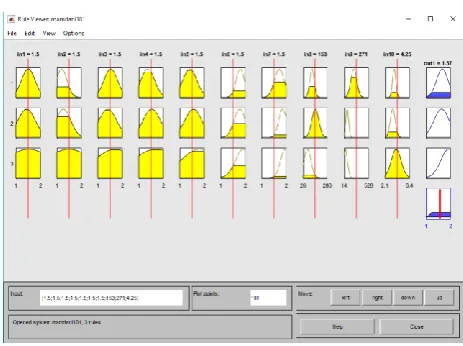
[image:6.595.324.556.531.704.2]For better view of the rule-based, Figure 3 represents the fuzzy rules of the proposed system.
© 2016, IRJET | Impact Factor value: 4.45 | ISO 9001:2008 Certified Journal | Page 315
Performance Evaluation
We used classification accuracy for evaluating the performance of the proposed system. For this purpose, the entire dataset is divided into two sets one is used for training the system and the other to test them. The training set consists of 122 samples. These 122 samples include both the classes (live or die). The test set contains 33 samples. These samples are used to check the performance of the proposed system.
Table 3 gives the details of the training and test samples. The classification accuracy of the Type-I system for diagnosis of Hepatitis diseases was obtained about 90.9%.
TABLE II. DETAILS OF THE TRAINING AND TEST SAMPLES
Dataset Total Samples
Class
Live Die
Training
data 122 98 24
Testing data 33 25 8
FROM TYPE-I TO TYPE-II FUZZY
SYSTEM MODELING
Researches done in recent years have undergone a significant increase toward more complex forms of fuzzy logic such as Interval type-III fuzzy logic systems(IT2 FLSs) and more recently, general type-III FLSs(T2 FLSs))[16],[17].
This transition was motivated by this realization that type-I fuzzy sets (T1 FSs) can only handle a limited level of uncertainty whereas real-world applications are often faced with multiple sources and high levels of uncertainty [6].Inthe last section,we presented a type-I fuzzy system forDiagnosis of Hepatitis,but due to following reasons, we were convinced to use type-III fuzzy system:
1.The diagnosis of Hepatitisis a complicated process with uncertainty.
2. The capability of type-III fuzzy system for modeling uncertainty is much higher.
3.The structure and semantic of this issue is closer to type-III fuzzy system.
It should be noted that type-III fuzzy sets can model andminimize the effects of uncertainties in rule-based fuzzylogic systems. In the next section, we presented a type-III fuzzy system fordiagnosis of Hepatitis.
TYPE-III FUZZY SYSTEM
MODELING
Determining the number of rules
In section V.A, we introduce exponential compactness and separation index proposed by Fazel Zarandi et al. This cluster validity index is implemented to indicateproper number of clusters or rules. The best number of clusters based on this cluster validity index is 5 clusters. So, the type-III system contains of 5 rules.
The Proposed Type-II fuzzy model
In type-III fuzzy model we obtain a fuzzy model with five rules, ten inputs and one output. The inputs are steroid, fatigue, malaise, liver firm, spiders, ascites, varices, alk- phosphate, sgot and albumin. The output of our rule- base is an interval type-III fuzzy set that must be type- reduced and then defuzzify. We used centroid type reduction and centroid defuzzifier.The proposed system uses Mamdani fuzzy inference method in which the output membership function is a fuzzy set.So it is difficult to understand the output, Due to this fact, centroid method is used for defuzzification which takes fuzzy set as input and output is a crisp value.
© 2016, IRJET | Impact Factor value: 4.45 | ISO 9001:2008 Certified Journal | Page 316 Feature 7: Varices
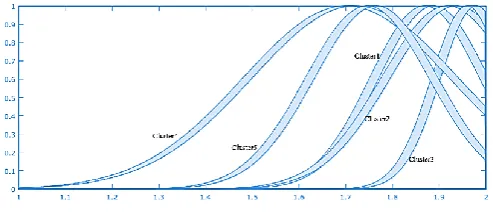
[image:8.595.306.563.61.211.2]Varices are dilated blood vessels usually in the esophagus or stomach. They cause no symptoms unless they rupture and bleed.Bleeding from varices is a life-threatening complication of portal hypertension. Portal hypertension is an increase in the pressure within the portal vein (the vein that carries blood from the digestive organs to the liver) due to blockage of blood flow throughout the liver. The most common cause of portal hypertension is cirrhosis of the liver. Cirrhosis is scarring which accompanies the healing of liver injury caused by hepatitis, alcohol, or other less common causes of liver damage[18]. Figure 4 demonstrates the membership function of feature 7.
Fig. 4. Memnership functions of feature 7
Feature 8: Alk Phosphate
[image:8.595.38.285.364.471.2]Alk Phosphate (ALP) is an enzyme found in all body tissues. There are many different forms of ALP called isoenzymes. The structure of the enzyme depends on where in the body it is produced. Tissues with higher amounts of ALP include the liver, bile ducts, and bone.The alkaline phosphatase is the most frequently used test to detect obstruction in the biliary system. Elevation of this enzyme may be found in a large number of disorders as common as gallstone disease, alcohol abuse, and drug-induced hepatitis[18]. Figure 5 demonstrates the membership function of this feature.
Fig. 5. Memnership functions of feature 8
• Feature 9: SGOT
Serum glutamic oxaloacetic transaminase(SGOT), an enzyme that is normally present in liver and heart cells. SGOT is released into blood when the liver or heart is damaged. The blood SGOT levels are thus elevated with liver damage (for example, from viral hepatitis) or with an insult to the heart (for example, from a heart attack) [18]. Figure 6 demonstrates the membership function of this feature.
Fig. 6. Membership functions of feature 9
In the proposed interval type-III classifier, Gaussian membership function was used for fuzzy sets description.The rule-based of the proposed system consists of five general rules.The rules of the proposed system are as follows:
1. If (STEROID is in1cluster1) and (FATIGUE is in2cluster1) and (MALAISE is in3cluster1) and (LIVER_FIRM is in4cluster1) and (SPIDERS is in5cluster1) and (ASCITES is in6cluster1) and (VARICES is in7cluster1) and (ALK_PHOSPHATE is in8cluster1) and (SGOT is in9cluster1) and (in10 is in10cluster1) then (out1 is out1cluster1)
[image:8.595.312.557.371.486.2]© 2016, IRJET | Impact Factor value: 4.45 | ISO 9001:2008 Certified Journal | Page 317 3. If (STEROID is in1cluster3) and (FATIGUE is
in2cluster3) and (MALAISE is in3cluster3) and (LIVER_FIRM is in4cluster3) and (SPIDERS is in5cluster3) and (ASCITES is in6cluster3) and (VARICES is in7cluster3) and (ALK_PHOSPHATE is in8cluster3) and (SGOT is in9cluster3) and (in10 is in10cluster3) then (out1 is out1cluster3)
4. If (STEROID is in1cluster4) and (FATIGUE is in2cluster4) and (MALAISE is in3cluster4) and (LIVER_FIRM is in4cluster4) and (SPIDERS is in5cluster4) and (ASCITES is in6cluster4) and (VARICES is in7cluster4) and (ALK_PHOSPHATE is in8cluster4) and (SGOT is in9cluster4) and (in10 is in10cluster4) then (out1 is out1cluster4)
5. If (STEROID is in1cluster5) and (FATIGUE is in2cluster5) and (MALAISE is in3cluster5) and (LIVER_FIRM is in4cluster5) and (SPIDERS is in5cluster5) and (ASCITES is in6cluster5) and (VARICES is in7cluster5) and (ALK_PHOSPHATE is in8cluster5) and (SGOT is in9cluster5) and (in10 is in10cluster5) then (out1 is out1cluster5)
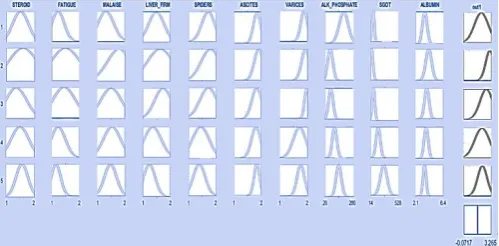
[image:9.595.37.287.500.623.2]For better view of the rule-based, Figure 7 represents the type-III fuzzy rules of the proposed system.
Fig. 7. Type-II Fuzzy Rule-Based
Performance Evaluation
Just like the type-I fuzzy system,we used classification accuracy for evaluating the performance of the proposed type-III fuzzy system.As mentioned above,the test set contains 33 samples. These samples are used to check the performance of the proposed system.The classification accuracy of the Type-II fuzzy
system for diagnosis of Hepatitis diseases was obtained about 93.94%.
According to the results,interval type-III fuzzy has the ability to diagnose hepatitis with the average accuracy of 93.94% which is a better performance compared with the type-I fuzzy system.
DISCUSSION AND CONCLUSION
In this study, a novel method for diagnosis of Hepatitis Disease based on interval type-III fuzzy is proposed. Firstly, we proposed a type-I fuzzy system for diagnosis of Hepatitis Diseases. The obtained classification accuracy rate of this system was about 90.9%. In the following, due to the structure and semantics of Hepatitis Diagnosis and higher capability of type-III fuzzy system for modeling uncertainty, we used type-III fuzzy system. The extra parameters of type-III fuzzy provide additional degrees of freedom, making it possible to minimize the effects of vagueness. According to the obtained results, type-III fuzzy has the ability to diagnose Hepatitis with the average accuracy of about 93.94%. The obtained classification accuracy is the highest one reached so far. As expected, the accuracy of type-III fuzzy system was higher than the type-I fuzzy system; highlighting the ability of type-III fuzzy system for modeling the uncertainty.
IX.ACKNOWLEDGMENT
This paper is made possible through the help and support from everyone, including: My wife M.suganya and Daughter S.S.Inakshi and My sir S.Syed Nazimuddeen and S.Irshath Ahamed , and in essence, all sentient beings. I sincerely thank to my parents, family, and friends, who provide the advice and financial support. The product of this paper would not be possible without all of them.
X.REFERENCES
© 2016, IRJET | Impact Factor value: 4.45 | ISO 9001:2008 Certified Journal | Page 318 striatum andthalamus. Appl. Magn. Reson. 46 (6),
623–632.
2. Deco, G., Rolls, E.T., Albantakis, L., Romo, R., 2013. Brain mechanisms for perceptual and reward-related decision-making. Prog. Neurobiol. 103, 194– 213.
3. Ye, Q., Miao, Q.L., 2013. Experience-dependent development of perineuronal nets and chondroitin sulfate proteoglycan receptors in mouse visual cortex.
MatrixBiol. 32, 352–363.
4. Maxim A. Abakumov, Natalia V. Nukolova, Marina Sokolsky-Papkov, Sergey A. Shein, Tatiana O. Sandalova, Hemant M. Vishwasrao, Nadezhda F. Grinenko, Iliya L. Gubsky, Artem M. Abakumov,
Alexander V. Kabanov, Vladimir P.
Chekhonin,Potential Clinical RelevanceVEGF-targeted magnetic nanoparticles for MRI visualization of brain tumor ,Nanomedicine: Nanotechnology, Biology and Medicine, Volume 11, Issue 4, May 2015, Pages 825-833
5. Wilson B, Dhas JPM. An experimental analysis of Fuzzy C-means and K-means segmentation algorithm for iron detection in brain SWI using Matlab. Int J Comput Appl 2014;104(15):36–8. 6. Jessica D. Sims, Jae Youn Hwang, Shawn Wagner,
Felix Alonso-Valenteen, Chris Hanson, Jan Michael Taguiam, Richard Polo, Ira Harutyunyan, Gevorg Karapetyan, Karn Sorasaenee, Ahmed Ibrahim, Eduardo Marban, Rex Moats, Harry B. Gray, Zeev Gross, Lali K. Medina-Kauwe,A corrole nanobiologic elicits tissue-activated MRI contrast enhancement and tumor-targeted toxicity Journal of Controlled Release, Volume 217, 10 No 2015, P 92-101 7. Janani V, Meena P. Image segmentation for tumor
detection using fuzzy inference system. Int J Comput Sci Mobile Comput (IJCSMC) 2013;2(5):244–8. 8. Rohit M, Kabade S, Gaikwad MS. Segmentation of
brain tumour and its area calculation in brain MRI images using K-mean clustering and Fuzzy C-mean algorithm. Int J Comput Sci Eng Technol (IJCSET) 2013;4(5):524–31
9. Quantifying diffusion MRI tractography of the corticospinal tract in brain tumors with
deterministic and probabilistic methods
NeuroImage: Clinical, Volume 3, 2013, Pages 361-368
10. Muhammad M. Abd-El-Barr, Seth M. Santos, Linda S. Aglio, Geoffrey S. Young, Srinivasan Mukundan, Alexandra J. Golby, William B. Gormley, Ian F. Dunn, “Extraoperative” MRI (eoMRI) for Brain Tumor Surgery: Initial Results at a Single Institution,World Neurosurgery, Volume 83, Issue 6, June 2015, Pages 921-928
11. El-Sayed A. El-Dahshan, Heba M. Mohsen, Kenneth Revett, Abdel-Badeeh M. Salem,Computer-aided diagnosis of human brain tumor through MRI: A
survey and a new algorithm, Expert Systems with Applications, Volume 41, Issue 11, 1 September 2014, Pages 5526-5545.
![Fig. 1. Type-I fuzzy logic system[9]](https://thumb-us.123doks.com/thumbv2/123dok_us/8191165.813339/2.595.309.554.470.602/fig-type-i-fuzzy-logic-system.webp)