Chanakyapuri, New Delhi - 110021
Recommended citation:
Pradeep Guin, Neelanjana Gupta, Krishanu Karmakar and Kaveri Thara, “Do property rights explain adolescent girls health outcome in India?: Evidence from the Teen Age Girls survey” (New Delhi: CSEP, November 2020), CSEP Impact Series 092020-02.
The Centre for Social and Economic Progress (CSEP) conducts in-depth, policy-relevant research and provides evidence-based recommendations to the challenges facing India and the world. It draws on the expertise of its researchers, extensive interactions with policymakers as well as convening power to enhance the impact of research. CSEP is based in New Delhi and registered as a company limited by shares and not for profit, under Section 8 of the Companies Act, 1956.
All content reflects the individual views of the author(s). CSEP does not hold an institutional view on any subject. Designed by Mukesh Rawat
recommendations to the challenges facing India and the world. It draws on the expertise of its researchers, extensive interactions with policymakers as well as convening power to enhance the impact of research. CSEP is based in New Delhi and registered as a company limited by shares and not for profit, under Section 8 of the Companies Act, 1956.
Acknowledgment
This paper uses data from the Teen Age Girls (TAG) survey data, a Pan-India survey of teenage girls conducted in 2016 and 2017. We thank the Naandi Foundation for sharing the data of the survey conducted under the aegis of Project Nanhi Kali. We are grateful to the following people for providing extensive comments on the original draft and sharing expert insights with us: Sonalde Desai, Debolina Kundu, Indrani Gupta, Samik Chowdhury and Rakesh Mohan.
We would also like to thank the Communications team at CSEP for their work on editing and designing this publication. Support for this research was generously provided by the Omidyar Network. CSEP recognises that the value it provides is in its absolute commitment to quality, independence, and impact. Activities supported by its donors reflect this commitment and the analysis and recommendations found in this report are solely determined by the scholar(s).
Abstract
...6
Introduction
...7
Background
...8
I. Property rights in India ...
8
II. Tenure security in India ...9
III. Tenure security and quality of housing ...12
IV. Socio-economic status and health outcomes ...
16
Data and Methods
...20
I. The Teen Age Girls (TAG) survey ...20
II. Variables ...21
III. Empirical Strategy ...
23
Results
...25
I. Descriptive Statistics ...
25
II. OLS Regression Results ...
27
Discussion
...34
Limitations
...37
Conclusion
...38
Recommendations
...39
References
...41
Appendix
...47
PRADEEP GUIN
1, NEELANJANA GUPTA
2,
KRISHANU KARMAKAR
3AND KAVERI THARA
4Do property rights
explain health outcomes of
adolescent girls in India?
Evidence from the
Teen Age Girls survey
1 Associate Professor, Jindal School of Government & Public Policy and Visiting Fellow, CSEP 2 Research Analyst, CSEP (April 2019 – September 2020)
3 Assistant Professor & Assistant Dean, Jindal School of Government & Public Policy and Visiting Fellow, CSEP 4 Associate Professor & Associate Dean, Jindal School of Government & Public Policy and Visiting Fellow, CSEP
Abstract
Evidence from existing literature indicates that children, including adolescents, from disadvantaged sections of the society, demonstrate adverse health outcomes, ceteris paribus. This, in turn, prevents them from achieving their full economic potential as adults, essentially creating an inter-generational vicious cycle between poor health outcomes and poor access to resources. Using a novel, nationally representative dataset (the Teen Age Girls [TAG] survey) that collected information from adolescent girls (aged 13-19 years) in India, this first-of-its-kind study attempts to explore the link between property rights and health outcomes. We capture information on property rights through one proxy indicator – housing type; health outcomes are captured using age-standardised height and BMI measures. In India, where the right to
property and housing are not recognised as fundamental rights, the poor incrementally gain security of tenure, moving from a continuum of insecure housing to full titles. Research from India and other parts of the world shows that a movement towards greater tenure security has been associated with home improvements, and thus type of housing is a strong indicator of security of tenure and therefore property rights, as viewed within a continuum of rights gained incrementally. Our study finds that adolescent girls from households with lower quality houses and fewer household goods fare poorly on health outcome indicators. This creates a space and need for designing and implementing sustainable policy measures that would eventually uplift the overall quality of life of India’s 80 million adolescent girls.
Introduction
1 The four themes analysed by the initiative are – a. Property Rights as a Pathway to Social Mobility – Health, Education, Gender and
Media Sensitivity to Property Rights; Property Rights & Housing in India; Property Rights, Regional Connectivity and India’s Strategic Investments in the Neighbourhood; & Property Rights & Judicial Reforms.
2 Research papers produced by the initiative include: Mobility and tenure choice in urban India (A. Dutta, S. Gandhi, and Richard
K. Green; March 2020); Too slow for the urban march: Litigations and real estate market in Mumbai, India (S. Gandhi, V. Tandel, A. Tabarrok, and S. Ravi; January 2019); Are slums more vulnerable to the COVID-19 pandemic: Evidence from Mumbai (S. Patranabis, S. Gandhi, and V. Tandel; April 2020); COVID-19 is a wakeup call for India cities where radical improvements in sanitation and planning are needed (Gregory F. Randolph, and S. Gandhi; April 2020); Why is India’s real estate market stagnating (V. Tandel, and S. Gandhi; April 2020); Migrants aren’t streaming into cities, and what this means for urban India (Gregory F. Randolph, and S. Gandhi; July 2019); Gender and Property Rights: lesser known aspects of matriliny in North East India. Forthcoming researchincludes analysis on Vacant Housing in India; Accelerating Land Acquisition Abroad to Enhance India’s Regional Connectivity; Property Rights and Judicial Reforms; and Media Sensitivity to Property Related Conflicts in India.
The Property Rights Research Consortium (PRRC), supported by Omidyar Network India, brings together top research institutions undertaking research on various aspects of property rights, land governance and housing issues in India. It aims to develop a multidimensional understanding of property rights through assessing and testing the broad agreement that property rights are vital to development. The larger purpose is to enable evidence-based solutions for securing land, housing and property rights for all Indians. As part of the PRRC, the Centre for Social and Economic Progress examines health as one of the four themes it analyses,1 focusing on property rights as
a pathway to social mobility. The initiative has contributed to the research on property rights, by examining the multidimensional impacts of property rights in India on mobility, health, real estate markets, gender, etc.2
Our work focuses on property rights and health in India. There is substantial research on health disparities amongst poor households, and those belonging to the
disadvantaged, vulnerable and marginalised sections of the society, in terms of socio-economic profile. The first part reviews literature on the state of property rights in India and presents an analysis of issues pertaining to security of tenure in India. It also examines literature that links tenure security and property rights with type of housing and home improvements both in India and globally. Drawing from this research, this paper examines available data on type of housing as a strong indicator of security of tenure and property rights. We also study literature on the relations between indicators of socio-economic status and health outcomes, among children in particular. The third part uses data from Project Nanhi Kali, a nationally representative dataset that collected information from adolescent girls (13-19 years) in 2016-17 in India, to examine the link between property rights and health outcomes. The fourth and concluding part of this research examines the findings and proposes new areas of research that can inform us better about how property rights influence health outcomes of adolescent girls.
Background
3 The Indian Constitution adopted on 26th January 1950, affirmed the right to property as a fundamental right under Article 19 (1) (f),
though it was subject to restrictions by the state in public interest under Article 19 (6). Article 31 further provided for a payment of compensation in case of land acquired by the state. These provisions allowed for the right to property, all the while protecting the rights of the state to carry out land reforms and acquire land for its developmental functions, such as industrialisation. Subsequent to a series of judgements of various courts challenging the state’s acquisition of land, the right to property was removed from the Constitution through the 44th Amendment Act, in 1978 (Wahi, 2015).
4 Land and property rights are recognised as important to the reduction of poverty and the empowerment of women, and therefore
included in the Sustainable Development Goals 2015 (SDGs).
5 The HLRN’s partner organisations for the 2018 report on forced evictions in 2017 included : Information and Resource Centre for the Deprived Urban Communities, Chennai; Ghar Bachao Ghar Banao Andolan, Mumbai; Habitat and Livelihood Welfare Association, Mumbai; Ghar Hakka Sangharsh Samitee, Navi Mumbai; Deen Bandhu Samaj Sahyog, Indore; Slum Jagatthu, Bengaluru; Centre for the Sustainable Use of Natural and Social Resources, Bhubaneswar; Montfort Social Institute, Hyderabad; Adarsh Seva Sansthan, Jamshedpur; National Hawkers’ Federation, Kolkata; Voluntary Health Association of Punjab, Chandigarh; ActionAid Association, Jaipur; National Alliance of Peoples’ Movements; Kalpvriksh; and, Land Conflict Watch.
6 In its 2019 report on forced evictions in 2018, HLRN’s partner organisations were : Adarsh Seva Sansthan; Affected Citizens of Teesta;
Association of Urban and Tribal Development; Beghar Adhikar Abhiyan; Campaign for Housing and Tenurial Rights (CHATRI); Centre for Research and Advocacy; Centre for the Sustainable Use of Natural and Social Resources; Ghar Bachao Ghar Banao Andolan (GBGBA); Habitat and Livelihood Welfare Association; Information and Resource Centre for the Deprived Urban Communities (IRCDUC); Land Conflict Watch; Madhya Pradesh Nav Nirman Manch (MPNNM); Montfort Social Institute; Nagrik Sangharsh Morcha; Narmada Bachao Andolan; NIDAN; Paryavaran Mitra; Paryavaran Suraksha Samiti; Pehchaan; Prakriti; Rahethan Adhikar Manch (Housing Rights and Human Rights Group); Save Mon Region Federation; Shahri Gareeb Sangharsh Morcha; Slum Jagatthu; Video Volunteers; & Vigyan Foundation.
I. Property rights in India
Though the Indian constitution affirmed the right to property as a fundamental right, it was later removed in 1978 through an amendment.3 India does not
recognise the right to housing, despite having ratified the International Covenant on Economic, Social and Cultural Rights in 1979 (Housing and Land Rights Network (HLRN), 2016, p. 1).4 The Indian state, therefore, possesses
enormous power to acquire land, even of those who possess full legal titles. The poor who cannot afford land/ housing and occupy public or private land that they do not possess titles to, are therefore more vulnerable to lose their homes through forced evictions. Government urban policies and programmes that focus on ‘slum-free cities’, further increase this risk, as poor habitations are not only viewed as eyesores, but are also considered threats to public health and morality. Evictions that are normalised as essential to development have deep impacts on the
urban poor who are vulnerable to eviction and live life with a high sense of insecurity and impermanence (Bhan, 2009; Bhan, Goswami, and Revi, 2013; Ghertner, 2008; Ramanathan, 1996, 2005, 2006).
With no official data on forced evictions, the HLRN through its National Eviction and Displacement Observatory has been collecting this information through primary and secondary research, as well as from other partner organisations across India. This data is therefore not exhaustive, and is limited by the reach of organisations and their capacity to document forced evictions. The HLRN studied 213 forced evictions in 2017, that resulted in the destruction of 53,700 homes, which affected 2,60,000 people (Chaudhry et al., 2018).5
In another report on forced evictions from 2018, HLRN studied 218 cases of forced eviction, demolishing more than 41,700 homes, and rendering 2,02,000 people homeless (Chaudhry et al., 2019).6 During both these
years, the majority of those evicted were for beautification and development projects — 77 percent in 2017 and 73 percent in 2018; beautification alone accounted for the largest share of evictions — 47 percent of homes destroyed in 2017 and 47 percent of affected persons in 2018 were due to this reason. In its 2018 report, HLRN’s data also revealed that 11.3 million Indians live under the threat of eviction and potential displacement. Again, this is not an exhaustive figure and is limited by access to data. Uncertainty about land and property rights forces the poor to postpone their plans in perpetuity (Thara, forthcoming). They refrain from planning for their future and do not make investments to improve their quality of housing and productivity of land, in the fear that an eviction would wipe out their investments. Lack of security propels people to spend time protecting their land/housing (Feyertag et al., 2020) and also in political activities to gain the support of local politicians, thus taking away time from productive work (Thara, forthcoming), or from other essential activities such as childcare (Feyertag et al., 2020). People are also physically vulnerable to violence and injury, as can be seen in India in the many ‘slum fires’ that are often suspected to have been initiated to evict the poor (Chaudhary et al., 2019, p. 30-31),7 especially if the groups concerned
have little political support (Feyertag et al., 2020; Thara, forthcoming).
The Indian state does provide some housing for the poor and economically weaker sections, but this is largely
7 The HLRN has a separate section on loss of housing due to fires and notes that while some fires are due to accidents such as cylinder
blasts and short circuits, in the majority of the fires the reasons could not be ascertained, indicating that fires could be an indirect means of evicting the poor.
8 These estimates are based on the NSS 65th round data and the 2011 census data. This data included households living in kutcha
housing; obsolescent homes, congested homes, and those in homeless condition. Of the total 18.78 million, 56 percent of demand was from the Economically Weaker Sections, 40 percent from low income groups and only 4 percent from medium and high-income groups (Amitabh Kundu 2012).
9 However, this data has been criticised as problematic as it relied on old data sets of the 11th Five-year plan (Kumar 2014). 10 Data on housing provided is available on various programs for instance under the Jawaharlal Nehru National Urban Renewal
Mission’s Basic Services for the Urban Poor (JNNURM, BSUP), the Rajiv Awas Yojana (RAY), the PMAY, etc. In addition to these schemes, state governments also provide for housing under state schemes. We did not find concise data that regroups housing provided under all these programs, schemes and the regular allotment of residential land. This is one exercise that may be undertaken in the future to bring about more transparency in the allotment of housing for the poor.
11 Article 39 (a) provides that the state will direct policy towards securing for Indian citizens, the right to an adequate means of
livelihood and the distribution of ownership and control over material resources of the community to serve common good. inadequate and does not respond to the demand for affordable housing. The Report of the Technical Group on Urban Housing Shortage (TG-12) (2012-2017) estimated the urban housing shortage in India at 18.78 million houses, with 99 percent in the economically weaker and lower income groups.8 The Working Group on Rural Housing
for the 12th Five-year plan estimated the shortage of rural
housing at 43.13 million units.9 While there is state-wise
data on the housing provided under various programs, there is no national-level data on the total housing provided by the state each year to the economically weaker sections and low-income groups.10 A good part of
the housing provided by the state is often used to displace the poor, offering ‘rehabilitation housing’ in exchange for vacating land within cities for development or beautification projects (Thara, forthcoming). This housing is provided not as a right but as a welfare measure, under the Directive Principles of State Policy (Part IV of the Constitution) which provides for a set of non-enforceable state responsibilities.11
II. Tenure security in India
While the poor live on land they do not own, and thus do not possess property rights in the legal sense of the term, with full titles to property, they enjoy varying levels of tenure security. Payne (1996, p. 3) defines land tenure as the mode by which land is held or owned, or the set of relationships among people concerning the use of land and its products, including occupation, use, development inheritance and transfer. Land tenure relies
on social recognition of use rights vis-à-vis property rights which are state or legally-recognised interest in land or property. Durrand-Lasserve and Selod argue that land tenure should primarily be viewed as a social relation involving a complex set of rules that govern land use and land ownership. Some users may have access to the entire ‘bundle of rights’ with full use and transfer rights, while others may be limited in their use of land resources (Fisher 1995 referred to in Durrand-Lasserve and Selod 2007). Payne points out that the key factor in any system of land tenure and property rights is the relationship of individuals to groups, groups to each other and to the state, and their collective impact on land. He explores a range of land use rights, including: customary tenure systems recognised by the United Nations, which may not be guaranteed by government statute but are recognised as legitimate by the community;12 and public
land ownership consisting of communal ownership rather than individual ownership (Payne, 1996).
Tenure security is not solely determined by law, and therefore, notions of legal or illegal, formal or informal status, do not apply. Security is a relative concept and a matter of perception as well as law (Payne, Durrand-Lasserve & Rakodi, 2009). The poor transition through different stages of tenure security from insecure tenure (with no rights whatsoever and a very high risk of forced eviction) to de-facto rights – i.e., rights in fact (with a perception of security) and finally, progress to achieve de-jure rights – i.e., legal rights of various types, including right to reside, possession certificates, allotment of homes and property titles. Slums and settlements are classified into notified or non-notified slums. Those living in non-notified slums live with insecure tenure, while notified slums enjoy a quasi-legal status, as they are recognised by the state and are also often supplied with public services. Those living in non-notified slums may begin with insecure tenure, but can transition to obtaining de-facto rights through long residence; bigger size of settlement, which allows them to gain political
12 The UN defines customary tenure systems as rights to use or to dispose of use-rights over land which rest neither on the exercise
of brute force nor on the evidence of rights guaranteed by government statute but on the fact that those rights are recognised as legitimate by the community, the rules governing the acquisition and transmission of these rights being usually explicit and generally known though not normally recorded in writing.
support through vote banking; through access to welfare benefits (access to BPL/APL cards); access to public services and infrastructure from the state and/or access to voter identity cards or payment of property tax. Apart from the duration of residence and size of the settlement, the strength of de-facto tenure security also depends on how many people possess such documents in a given slum (Mahadevia, 2010). Access to services such as water, electricity, sanitation, and toilets is perceived as an indication of the state’s acceptance of the continued existence of settlements, thus providing de-facto tenure (Paul Strassmann, 1984; Strassmann, 1980).
As Nakamura points out, the strength of political support or lack of it can also determine whether or not a settlement enjoys a weak or strong de-facto tenure (Nakamura, 2014). De-facto tenure is obtained through many factors rather than a single act of the state, and thus results in improved quality of life and social protection. Those having de-facto tenure have a higher perception of secure tenure as compared to those with insecure tenure. Slums that are new, small in size, and/or located on land reserved for public purposes, may not be able to obtain de-facto rights. Those living in de-facto tenure security may enjoy either weak or strong de-facto tenure, depending on the type of land they inhabit and the form of de-facto tenure security they have obtained. (Paul Strassmann, 1984; Strassmann, 1980).
De-facto rights are not only socially recognised, but also recognised by the state. Possession or occupation of land is often considered by the state as providing certain rights to the occupier, based on the duration of possession. In governing land within cities, the Indian state has tended to recognise these rights, often incorporating occupation as a consideration in land planning. Urban sociologists, such as Benjamin, call this occupancy urbanism (Benjamin, 2008). Slums and settlements with de-facto rights are recognised by the state as possessing certain rights, specially if they have existed for long
periods of time, as this is also legally recognised under the law of adverse possession. The first schedule to the Indian Limitation Act, 1963, provides for a limitation period of 12 years for property owners to approach a court of law to reclaim property taken over through illegal possession against the will of the owner. When the land in question belongs to the state, the prescribed period is 30 years.13 This law is subject to interpretation
by courts, which demand proof of possession and weigh evidence to establish whether the possession was ‘adverse’ to the owner, i.e., with the knowledge and without the consent of the owner. However, the fact that possession is recognised as creating legal rights perforates into everyday law and governance. This can be observed not only in the manner in which the state deals with slums and settlements, but also in its policies on legalising illegal occupation of land that aim to ‘regularise’ illegal constructions and occupations of land (Benjamin & Raman, 2011). This facile conversion of illegal to legal (albeit subject to certain rules and regulations) facilitated by the exchange of money for a change in papers, forces us to think of property law and rights in a far more fluid sense in the Indian context, and not in a rigid sense of either having or not having rights to property. Furthermore, the success of poor groups in asserting claims to land/property is dependent on political configurations at different levels (local, state and national). Therefore, de-facto rights that provide different levels of tenure security are just as important in the Indian context as de-jure or legal rights to property.
13 Articles 27, 64 & 65 of the Act provide for private property, while Articles 25 and 112 of the Act. Those claiming adverse possession
must prove uninterrupted possession, sole occupancy and an element of hostility, occupying and using the land against the owner’s wishes. A 2017 judgement of the Supreme Court in Dagadabai Vs. Abbas (CA83/2008) further makes it imperative that those claiming adverse possession must first admit ownership of the true owner and must make the true owner a party to the suit to enable the court to decide a plea of adverse possession.
De-jure rights are gained when the state confers legal recognition of such housing through slum declaration, certificates of rights/possession certificates, the provision of rehabilitation housing, etc. Just as there are varying grades of de-facto security (weak and strong), de-jure status can be further broken down into quasi-legal status of various types, beginning with slum notification, allotment of slum rehabilitation housing/sites and finally transfer of full property titles. Legalisation of land titles involves altering land legislation with regards to ownership, use and transfer, through town planning legislation, development control regulations and standards, land use ownership or use contracts, and the size of land holdings (Mahadevia, 2010). Payne et al. point out that people who participate in tenure legalisation programs tend to have already enjoyed a certain level of de-facto tenure security (Payne et al., 2009). He suggests that ‘a starting point may be to regard every step along the continuum from complete illegality to formal tenure and property rights as a move in the right direction, to be made on an incremental basis’. He points out that the widespread method of designating urban settlements into formal and informal, or legal and illegal, is a gross oversimplification of a continuum of tenure categories, where clear distinctions from one stage to another cannot be made (see Figure 1). The notion that formal settlements are those which conform to all official standards, norms, regulations, and procedures, is flawed, as the degree to which others fail to conform varies so much that the single term ‘informal’ tends to confuse more than it clarifies (Payne, 1996).
Figure 1: A representation of a continuum of tenure categories
INSECURE: Recent settlement; small settlement; on land
reserved for public purpose
Kutcha housing
WEAK DE-FACTO: Large settlement; settled since long; no
documents
Mostly kutcha housing, few pucca
homes
STRONG DE-FACTO: Settlement- large & long duration; services by state;
documents
Both kutcha and pucca housing
WEAK DE-JURE: declared slum; services; possession
certificates by govt.
Mostly pucca housing
PROPERTY TITLE: Allotment of land/ rehabilitation housing; documents; services. Pucca housing
Source: Authors’ compilation based on literature
14 The leading legal interpretation of the right to be protected against forced eviction is General Comment No. 7 on the Right to Adequate
Housing (E/C.12/1997/4) adopted by the United Nations Committee on Economic, Social and Cultural Rights in 1997, which defines eviction as ‘the permanent or temporary removal against their will of individuals, families and/or communities from the home and/or the land they occupy, without the provision of, and access to, appropriate forms of legal or other protection’ (COHRE, 2003).
This progression from one level of tenure to another, normally takes place due to the struggles of the poor who incrementally obtain rights that are manifested through their access to services such as water, sanitation and electricity (Das, 2011). Therefore, tenure security is intricately interwoven with access to services, with progressively higher tenure security meaning better access to services. Sociologists have been advocating for policies to provide tenure security to poor households, in this incremental manner, claiming that it would help the poor retain their housing, while an outright provision of property rights may result in them losing their homes to those who can afford to buy them out (Payne et al., 2009). Secure tenure is the right of individuals and groups to effective protection by the State against forced evictions, while insecure tenure contains the risk of forced eviction (Durrand-Lasserve & Selod, 2007).14 Mahadevia argues
that it is important to distinguish between legal rights to shelter, which indicates usage right over a habitation or land, and property titles that indicate both use and exchange rights over land and habitation. She argues that the latter is, therefore, a market paradigm of land holding, whereas the former is a welfare approach wherein the right to shelter is provided to improve the overall wellbeing of households. Secure tenure guaranteed by legal rights can therefore accomplish
welfare objectives (Mahadevia, 2010). Varley points out that while providing legal tenure can benefit poor urban settlements, legalisation alone is not sufficient to enable improvement in the lives of the poor. Providing titles without providing access to infrastructure and services, and other upgrading measures, would not serve the purpose that tenure security is meant to achieve (Varley, 1987).
III. Tenure security and quality
of housing
Providing security of tenure results in tangible consequences in the lives of the poor. The higher the levels of tenure security, the better the living conditions, human development achievements, economic status, and access to entitlements (Mahadevia, 2010). Secure tenure can motivate the poor to invest in improving their homes, which, in turn, can have a range of other positive outcomes. Payne points out that investment in housing improvements may depend as much on perceived security and incomes as on access to formal credit (Payne, 1996). Perceptions of tenure security are important as they influence behaviour and the decisions people make, which have social, economic, and environmental consequences. The Prindex, a research group, has come
out with a global assessment of perceived tenure surety for 140 countries. This comparative report collects perceptions data across diverse land governance systems, with differing levels of security tied to legal titles and different sources of property rights, including traditional systems. As per the report, 21 percent of Indians feel insecure about their main property, while 66 percent feel secure. The report further reveals that 22 percent feel insecure about all their properties, while 64 percent feel insecure. Gelder (Van Gelder, 2009) and Payne point out that perceived security of tenure is sufficient for poor households to invest in home improvements, and full titles are therefore not the only means of achieving acceptable levels of security (Payne, 2001).
In India, the poor live in homes that can be broadly categorised into three types: kutcha housing, pucca housing and semi-pucca housing. Kutcha housing is makeshift housing constructed with materials that last temporarily, for example, mud walls, thatched roofs, or plastic covered roofs, etc. Pucca housing is built with materials that last, brick and mortar housing with concrete roof. Semi-pucca housing are structures that are built with both permanent and temporary materials. For example, brick and mortar structures with thatched, asbestos or plastic sheet roofs or with unfinished floors.15
According to the National Family Health Survey 4 conducted in 2015-16, 0.9 percent of the urban population and 8.1 percent of the rural population live in kutcha housing. Around 13 percent of the urban population and 46.9 percent of the rural population live in semi-pucca housing. Almost 85 percent of the urban population and only 41.2 percent of the rural population lives in pucca housing. The following section of the paper examines evidence both from India and as well as from other parts of the world, which establishes that tenure security (de-facto and de-jure including property titles) motivates poor households to improve their homes.
In Ahmedabad, the Slum Networking Programme (SNP) covered 60 slums and 13,000 households and provided physical infrastructure such as water, electricity and toilets, roads, street lighting and solid waste management;
15 As per definition followed by major surveys conducted in India, including the NSS and NFHS
a ‘no demolition guarantee’ of ten years and community-based programmes (including community health centres). Physical infrastructure was provided on an 80-20 basis, with households required to bear 20 percent of the cost. To understand the effects of varying levels of tenure security, a study of six slums under the SNP was conducted in Vasna ward in the south-west part of Ahmedabad, Gujarat, with a sample of 553 households of a total 3,514 households. The six slums were segregated on the basis of tenure into three categories: strong de-facto tenure, weak de-facto tenure and insecure tenure. This research revealed that settlements with higher tenure security have higher numbers of pucca homes. While 54 percent of households in the insecure tenure category lived in kutcha, or temporary houses, it fell to 39 percent in settlements with weak de-facto tenure and 32 percent in settlements with strong de-facto tenure. While 42 percent of households with strong de-facto tenure lived in pucca housing, it fell to 39 percent in weak de-facto tenure, and only 24 percent in insecure tenure situations (Mahadevia, 2010b). These findings are significant to our study as they reveal that pucca homes have a higher probability of more secure tenure, while kutcha homes have a greater probability of less secure tenure. This is despite the fact that all these settlements had benefitted under the SNP program (Mahadevia, 2010b).
While the six slums with varying tenure security status studied by Mahadevia benefitted from this program, differences in access to both infrastructure and services offered under the SNP persisted on the lines of tenure security. The most pronounced differences were noted in terms of access to water. In settlements with strong de-facto tenure, 90 percent of households had individual water supply and only four percent depended on common public taps; in settlements with weak de-facto tenure, 29 percent of households had access to individual water connections and 18 percent depended on public water taps; and with insecure tenure, only 19 percent had individual water taps and 52 percent depended on common public taps. In strong de-facto tenure settlements, all households had access to toilets and 94 percent had
access to an individual toilet in their household; in weak de-facto tenure settlements, 86 percent had access to individual toilets, one percent depended on community toilets and five percent did not have access to toilets; and in insecure tenure situations, 69 percent had access to individual toilets, 18 percent used community toilets and 2 percent had no access to toilet (Mahadevia, 2010b). As this data reveals, a greater number of poor households with insecure tenure and weak de-facto tenure did not opt to invest 20 percent in physical infrastructure, despite the government’s 10-year no eviction guarantee. Tenure security, which includes access to basic services, is thus crucial to motivate poor households to invest in their homes and improve from kutcha to pucca structures. Quality of housing improves when settlements obtain de-jure status even if this is a quasi-legal status. Nakamura, for instance, in his research in Pune, shows that slum residents tend to improve their homes, replacing walls and/or roofs made of temporary materials with permanent materials once their stay has exceeded 10 years. This study shows that slum declaration increases the odds of households’ building housing with better materials by 47 percent and building a second floor by 78 percent (Nakamura, 2014). It is therefore clear that type of housing is a strong indicator of property rights in the broader sense of the term, including security of tenure as discussed here. Studies from other parts of the globe also confirm the link between secure tenure and home improvements. In a study of 296 households in squatter settlements in Cartagena, Colombia, Strassman examined home improvements across different population groups. He found that both tenure and access to water encourage owner-occupants to expand and improve their homes (Strassmann, 1980). Thus tenure security or property titles cannot be considered in isolation from access to basic services. In another study in Lima, Peru, Strassman studied 506 households in two urban poor neighbourhoods - Popular Urbanisation and Pueblos Jovenes - to compare home improvements by owner-occupants. He found that households in Popular Urbanisation had made, on average, 5.5 types of home improvements as compared to those in Pueblos Jovenes who had made, on average, 4.4 improvements. In Popular
Urbanisation, 74.4 percent of homes had piped water and 66 percent had sewerage connections; in Pueblos Jovenes, 60.6 percent had piped water and only 36.2 percent had sewerage connections. Taking into account income, size of lots and age of settlements, he suggests that home improvements were motivated more by access to services than any other factor (Paul Strassmann, 1984). Both these studies confirm the links between tenure security, access to services and home improvements. They reveal that providing property rights alone without access to services, cannot motivate home improvements, confirming our definition of property rights as including access to services and basic infrastructure.
Field, in her study of a nation-wide titling program in Peru, studied a sample of 2,750 households identified in the 1993 census from the universe of all residence as eligible for program intervention. Her results revealed that strengthening tenure security through property formalisation in urban squatter settlements has a large positive effect on investment in home improvements. Land titling is associated with 68 percent increase in the rate of housing renovation within only four years of receiving the title. She also noted a significant increase in renovations financed out of pocket and in total investment among non-borrowing households (Field, 2005).
Jimenez, in a study of a squatter legalisation program in Tondo, Manila (between 1975 and 1981), also confirmed a similar effect of property rights on home improvement. This legalisation program affected 27,500 households (180,000 individuals) living in 16,500 homes located over 137 hectares of prime urban government-owned land in Manila’s port area. The project included the provision of individual water connections, road access, sewerage systems, and support for community and health facilities. It rationalised the land tenure system in the area, allowing residents the right to buy a lot in the area at a highly subsidised price. Homes were re-blocked minimising dislocation while rearranging homes to conform to regularised lot lines so each home would have access to a communal roadway or footpath and to the main water and sewer lines. After only three months of re-blocking, overall housing quality in Tondo increased by 30 percent to 44 percent. The monetary value of the
absolute difference in housing quality before and after re-blocking ranged from about 4,200 pesos to over 6,200 pesos in 1978 (approximately, U.S. $600 to $886 at the time of the study). In comparison to other estimates of changes in the average values of housing in both developing and developed countries, Jimenez concluded that a significant portion of the changes measured in Tondo must be project induced. Even in the absence of a formal and effective mortgage market, the habitants were able to generate enough resources to make substantial investments in their homes, with the author concluding that the riskiness of investments in homes was lowered by the provision of tenure (Jimenez, 1983).
Another research in Manila showed that both – those with tenure security and those with promise of titles – invested more in improving their homes. Two types of urban poor settlements (regularised – with de-jure rights and un-regularised – with de-facto tenure) were compared to examine how residents understood security of tenure and how this affected their investments on housing and land development.16 Small sample surveys
(100 households in each settlement) were conducted in each type of settlement. Both groups (those with and without formal land security) invested in improving their dwelling and home plots. Those with formal security invested substantially both in home and land development while those without tenure focused largely on improving their housing structures. Improvement in homes included using more durable materials like
16 Informal settlements of Dagat-dagatan and La Loma in Camarin, Caloocan City and the regularised settlement of Pansol in Quezon City. 17 The kampongs were located in the following City Quarters (Kelurahan): Babakan Surabaya, Cibangkong, Ciroyom, Kebon Lega,
Kebon Pisang, Lebak Gede, and Taman Sari. Some settlements were centrally located, while others were situated more towards the outskirts of the city. Each kampong had developed incrementally over time, and housed several thousand low income migrants and their offspring, most of whom had been living there for various decades. All seven settlements had been targeted by the Kampung Improvement Program (KIP), which focused on the improvement of infrastructure and the provision of services. All had similar levels of infrastructure and most residents had access to the same types of public services. Thus the provision of infrastructure and services was not related to tenure status. The various titling projects consisted of the allocation of property titles only and did not involve physical upgrading, so it was possible to isolate the effects of property titles.
18 For each element a three-point index of consolidation was used, with a score of 1 indicating low consolidation, and 3 representing high. The scores were combined into a composite score that could range from 3 (indicating low consolidation) to 9 (indicating high consolidation).
19 Titled households have a title acknowledged by the 1960 Basic Agrarian Law (BAL). Households with semi-formal tenure claim rights
under the traditional adat law in which though not acknowledged by the BAL have a semi-formal status, as they are acknowledged as legitimate claims for formalisation. Those with informal land tenure, are squatters on state or private land, on which others have established private rights, with no legal basis for tenure.
cement, iron, and wood to strengthen homes; while land improvement included fencing of plots with iron grills and planting ornamental plants and fruit-bearing trees (Porio & Crisol, 2004).
Examining the impacts of land titling programs such as the World Bank’s Land Administration Program on tenure security and housing consolidation, Reerink and Gelder surveyed 340 households in seven kampongs in Bandung, Indonesia.17 Housing consolidation was measured on
the basis of a composite score representing quality of the floor, the walls, and roof.18 The sample consisted of 100
titled households; 95 semi-formal tenure households (with traditional ownership rights under adat) and 145 households with informal tenure (squatters on public/ private land).19 Surveys were distributed approximately
equally across the seven selected kampongs, so that about 50 low-income households were surveyed in each kampong. The study found that dwellers with formal tenure live in significantly more consolidated dwellings than informal dwellers, but found no difference between formal and semi-formal dwellers. They found that while titling did contribute to housing consolidation, it did so only in a marginal way. (Reerink & van Gelder, 2010). Durrand-Lasserve and Selod argue that improvements in home environment can have indirect beneficial effects on health of household members (Durrand-Lasserve & Selod, 2007). There are a few studies on the impacts of property rights on health. In the SNP program study cited earlier by
Mahadevia, health outcomes were recorded in one of the six slums chosen for the study. Apart from an improvement in living conditions, improvements in health, education, income, employment status and asset ownership, were also observed. Immunisation of children increased from 62 percent to 80 percent; institutional delivery increased from 69 percent to 81 percent; literacy rate increased from 30 percent to 34 percent; the proportion of households in the lowest income bracket of Rs. 1,000/month reduced from 57 percent to 30 percent and the proportion in the highest per capita income range of Rs 4,000 per month increased from 2 percent to 8 percent at current prices; unskilled and casual employment decreased from 17 percent to 8 percent and there was an increase in assets such as refrigerators, motorised two-wheelers, sewing machines and the use of liquid petroleum gas for cooking (Mahadevia 2010b).20
Providing tenure along with infrastructure and services clearly resulted in improved health outcomes as evident from this study.
Galiani and Schargrodsky, in their study in Buenos Aires, Argentina, have examined the impacts of legal property titles on child health and education. Their study shows, that children living in titled parcels enjoy better Weight-for-Height scores, lower teenage pregnancy rates, and lower school repetition grades than children living on land without titles (Galiani & Schargrodsky, 2004). Field, in a study of a Peruvian urban titling programme, finds that providing legal titles resulted in a 22 percent decrease in fertility, attributing it to the increased bargaining power of women in fertility decisions when granted a formal title, as well as to a decrease in the ‘value’ of children since they are no longer needed to secure informal ownership rights or claims to community resources, and are less needed for their parents’ old age subsistence (Field, 2003). In the next section, we discuss the link between socio-economic factors and health outcomes.
IV. Socio-economic status and
health outcomes
Literature in social sciences has demonstrated a
20 Mahadevia refers to data obtained from MHT and Saath, the NGOs implementing the SNP in Ahmedabad.
continued interest in SES, especially in demography-related studies. However, there has not been any conclusive evidence on what it definitively represents (Bradley and Corwyn, 2002). It is considered to include a comprehensive list of demographic and economic variables, including but not limited to caste, religion, occupation, education, income, family size and household composition, parental involvement and education, ownership of a set of assets, and access to facilities or services; some studies also extend the scope of the definition to include parameters like neighborhood and school influences. Further, globally, SES is found to have strong links to developmental outcomes such as health, education and cognitive outcomes. In this research, we refer to SES as a combined measure to represent demographic, economic and social status for a household. The variables considered are discussed in the following sections of this paper.
A number of studies have documented how asset ownership affects health outcomes among children. Simandan (2018) points out that the “subjective experience of social class mediates widely differentiated outcomes for the mental and physical health of upper-class individuals”. Those belonging to the lower upper-classes have fewer resources and thus experience uncertainty and worse outcomes, whereas, the upper-class has greater financial, social and intellectual resources at their disposal, allowing them to have control over their lives (Simandan, 2018). Asset ownership of households determines the household’s SES and, in some sense, can be understood as a measure of wealth. A review of studies undertaken to determine the relationship between household asset ownership and developmental outcomes of children—undernutrition, access to healthcare services, educational outcomes, schooling and child labour— concluded that asset-building initiatives are a catalyst to enhancing household well-being in developing countries (Chowa et al., 2010).
Boyle et al. (2009) suggest that people’s lack of ability to move upward in the social class system amplifies health inequalities for a household over time and for all
subsequent generations. They claim that “healthy people are more likely to experience upward social mobility, and those who are less healthy tend to move down the social hierarchy, widening the health gap between higher and lower social classes” (Boyle et al. 2009). Therefore, children born in disadvantaged households inherit this inequality. Consequently, large inequities in health and health services persist across states, rural and urban areas, and within communities in India (Baru et al., 2010). A community randomised control trial from Zimbabwe has also shown the positive influence of household asset ownership on the well-being of orphaned and vulnerable children (Crea et al., 2012). Child well-being was measured in terms of their social vulnerability (school attendance and birth registration) and health vulnerability (disability, disease and chronic illness). The RCT uses data from impoverished households caring for orphaned and vulnerable children to explore the influence of household asset ownership on children’s health vulnerability and social vulnerability. Researchers found that asset ownership is associated with lower social vulnerability, but has no influence on child’s health vulnerability.
In Tanzania, Kafle and Joliffe (2015) use three waves of the National Panel Survey to study the effects of asset ownership on child health and educational performance. Theoretically, using the quantity-quality tradeoff model, they establish a causal relationship between child well-being and asset ownership, including dwelling characteristics, household and agricultural assets, and financial assets. Upon controlling for household consumption in the model, they find that although assets have significant effects on children’s height-for age, weight-for-age, grade completion and test score, the effect on educational outcomes is asset-specific. Ownership of agricultural assets was found to have an adverse effect on educational outcomes of children. Another study from Tanzania (Mwageni et al., 2014) looked at SES and health inequalities in rural Tanzania using the Rufiji Demographic Surveillance System (DSS) to find significant gradients in access to assets and health inequalities—infant mortality, under-five mortality, mosquito net ownership—across all wealth quintiles. In
studying socioeconomic inequities in health in Tanzania, Schellenberg et al. (2003) found that care-seeking behaviour for children, indicated by child’s illness episode, is worse in poorer families—based on source of income, household assets and the household head’s educational status—than among rich families.
Wu et al. (2018) attempted to study how disparities in household financial assets affect health outcomes when adolescents transition to young adults. They use the National Longitudinal Study of Adolescent to Adult Health to determine the relationship between household asset value groups (high, moderate and low) and net worth groups (positive, neutral and negative) on the general health of young adults. The research, which aimed to connect health promotion to poverty alleviation, concluded that young adults with more assets and positive net worth have a higher probability of achieving better health outcomes.
Social class health inequalities data of the Office for National Statistics’ Longitudinal Study for England and Wales suggested that social mobility constraints health inequalities (Boyle et al., 2009). Case and Paxson (2006) demonstrate how income inequality is associated with poor child health indicators at birth and this disparity tends to grow more pronounced as children grow older. They used three different studies—the 1946 National Survey of Health and Development, the 1958 National Child Development Study, and the 1970 British Cohort Study—from Great Britain to show that children from low-income families are more likely to have serious health problems, and these health issues limit children’s economic potential—employment opportunities and wages—as young adults. While on the one hand, children from the economically weaker section suffer from serious health problems compared to those better off, on the other hand, poorer children fare worse than wealthier children who have the same health concerns. Poor children have access to less and low-quality medical care since their families are ill-equipped to manage their problems, thus worsening their condition. Case and Paxson (2006) concluded that improving the physical conditions of children in poor health would lead to their improved economic circumstances later in their lives.
Using the NFHS (1, 2 and 3), Chalasani (2012) undertook research to determine wealth-based inequalities in child mortality and malnutrition in the Indian context using a regression-based decomposition approach. Wealth was determined based on ownership of 13 household assets, including dwelling characteristics. The results from Chalasani’s study indicated that with India’s overall economic growth between 1990 and late 2000s, mortality inequality decreased only in urban areas, although malnutrition increased in rural as well as urban areas. To understand how household wealth affects health outcomes among children, Bhandari et al. (2002) also observed that children from the affluent section of the society – residing in south Delhi and having socioeconomic characteristics similar to those living in developed countries – had anthropometric indicators closer to the WHO reference range, or are ‘better off’. In the local context, these residents can be considered an outlier towards the higher end of the spectrum. In India, the literature on caste and wealth status has helped identify and document the disparities that exist across various sections of the society. Coffey et al. (2019) studied the disparity in height of infants across four population groups — Scheduled Caste (SC), Scheduled Tribe (ST), Other Backward Caste (OBC) and General — in rural India. Using decomposition analysis, their paper suggests that differences in children’s height — a crucial indicator of health and future success — can be attributed to differences in the SES of these four groups of the population. They find that socio-economic differences—based on household floor type, mother’s education, household electricity, type of toilet and ownership of phone, radio, TV, refrigerator, bicycle, motorcycle, car and land—can explain the gap in height (lower) among ST children, but not among SC and OBC children. The findings of their study are a departure from research of other population groups where population segregation or the practice of apartheid have been found
21 International Institute for Population Sciences - IIPS/India and ICF. 2017. National Family Health Survey NFHS-4, 2015-16: India. Mumbai: IIPS. 22 NFHS-4 classifies caste in the following five categories: SC, ST, OBC, None of the Above and Don’t Know. For the purpose of this
analysis, we have considered ‘None of the Above’ as the ‘General’ category.
23 24 assets also listed NFHS-4 and TAG data (except Landline phone): Mattress, Pressure cooker, Chair, Cot/bed, Table, Electric fan,
Radio/transistor, Black &White T.V, Color T.V, Sewing machine, Mobile telephone, Internet, Computer/laptop, Refrigerator, Air conditioner (AC)/Air cooler, Washing machine, Watch/clock, Bicycle, Motorcycle/scooter, Animal drawn cart, Car, Water pump, Thresher, and Tractor
to be negatively associated with health. In another study of three waves of India’s NFHS (1, 2 and 3), researchers attempted to determine how caste influences delivery of health services based on under-5 mortality and health consumption expenditure (Baru et al., 2010). It concluded that the socially marginalised in India get the least access to preventive and curative health services; they face financial and cultural barriers to utilisation of health services. Their analysis revealed that NFHS-3 (2005-06) shows glaring regional and socio-economic divides in health outcomes — “the lower castes, the poor and the less developed states (bear) the burden of mortality disproportionately” (Baru et al., 2010).
With substantial literature on correlations between SES and health discussed above, we used NFHS-4 data to provide for: (a) caste-wise information on different types of housing, and (b) asset ownership in households based on type of housing.21 We found that half of the population
resides in pucca housing, more permanent structures. Of the remaining, around 43 percent are housed in semi-pucca housing, whereas 7 percent of the population lives in kutcha housing, which are temporary shelter arrangements. As we see in Table 4 in the Appendix, a fewer proportion of people from SC, ST and OBC backgrounds reside in pucca housing (45 percent, 28 percent and 55 percent) compared to 67 percent from the ‘General’ category.22 Similarly, a smaller section of the
remaining population lives in kutcha housing, whereas more people from SC, ST and OBC background live in temporary housing structures. Table 5 in the Appendix suggests that among households that do not possess any household assets, 34 percent are in kutcha structures (59 percent are semi-pucca).23 As expected, more than
90 percent households that own more than 15 items (maximum being 24) are in pucca houses.
Some literature on home ownership exists from outside India. For instance, Haurin et al. (2002) used four waves
of the United States’ National Longitudinal Survey of Youth augmented with Child Data to study the effect of home ownership status on child’s cognitive outcomes and behaviour. Their research design controlled for social, demographic and economic variables that have been traditionally found to influence child outcomes. The study found that in comparison to renting a home, owning a home—an indicator of higher wealth stature—led to higher (a 13 to 23 percent increase) and improved quality of home environment, greater cognitive ability and fewer behavioural issues among children (Huarin et al., 2002). Ample evidence exists that has established the effect of early-life health on adult circumstances, including individual’s earning potential and achievement. Lundborg et al. (2014) established that taller people earn more- a “substantial height premium” exists when all other factors are accounted for (also, Currie and Vogl, 2013; Avgeropoulou, 2014). Height has found to be positively associated with cognitive ability, which holds greater value in the labour market (Case and Paxson, 2008). A study from the United States and the
United Kingdom shows that taller children have higher cognitive test scores, which in turn determine the height premium in earning in later life (Case and Paxson, 2008). In addition to the socio-economic status of the adolescent girls, the social determinants of health (SDH) also explain their health outcomes. These determinants are the conditions in an individual’s environment where they are “born, live, learn, work, play, worship, and age” that affects their overall health outcomes (Office of Disease Prevention and Health Promotion [ODPHP, 2020]). An increasing body of evidence has argued in favour of a strong link between these factors and health outcomes in different geographical settings (de Andrade et al., 2015; Adler et al., 2016; Cowling et al., 2014; Kulkarni, 2013) and for various age groups (Ahnquist et al., 2012; Baheiraei et al., 2015; Wilensky & Satcher, 2009), including those of adolescents (Viner et al., 2012). In addition, developing policies that take into consideration various elements of SDH is known to reduce health inequalities (Adler et al., 2016; Penman-Aguilar et al., 2016).
Data and Methods
24 This section is based on the Teen Age Girls Report, available at: https://www.nanhikali.org/pdf/TAG-Report.pdf
I. The Teen Age Girls (TAG) survey
24To test our research hypotheses, we used a nationally representative novel data set obtained through a primary survey – the Teen Age Girls (TAG) Survey. This survey was conducted during 2016 and 2017, under Project Nanhi Kali, which is jointly managed by Naandi Foundation and K. C. Mahindra Education Trust. The uniqueness of this nationally representative survey lies in the fact that it focused only on various aspects of India’s teenage girls such as their health, education, and most notably, their dreams and aspirations. The survey collected information from 74,000 adolescent girls, aged 13 through 19 years during the survey period, from across 30 states and seven Indian cities, which had a population of more than four million according to the 2011 Census. These cities were Ahmedabad, Bengaluru, Chennai, Hyderabad, Kolkata, Mumbai, and New Delhi. Sample from each state is allocated to its urban and rural areas in a way that it is proportional to its population in these areas, with a minimum of 500 samples from urban areas across all the states. The Ethics Committee of the Institutional Review Board at the L. V. Prasad Eye Institute, Hyderabad, granted approval to Naandi Foundation to carry out the TAG Survey.
The sampling design and sample size allow for producing national- and state-level estimates by various socio-economic groupings, separately for rural and urban areas, as well as city-level estimates. The survey adopted a multi-stage sampling strategy to identify respondents, separately from rural and urban areas. Selection of respondents involved three and four stages, respectively, in rural and urban areas, including seven cities. In rural areas, the first stage involved selecting villages, which
were the primary sampling units (PSUs). The second stage comprised of selecting households from within the PSUs that had at least one girl aged 13-19 years. If there were two or more 13-19-year-old girls from the selected households, then in the third stage, one girl was randomly selected from such households to be the survey respondent. All the villages within a state constituted a sampling frame, except for those villages with less than five households, which were excluded. All included villages were first stratified in various regions such that each stratum comprised of villages from neighbouring districts. Further stratification was conducted within each region by village size, based on number of households. The cut-off number applied for stratifying villages within a region by size varied across state and region. Within each village type stratum (based on size), further stratification was applied using a cut-off number that was obtained based on the proportion of SC/ST population. Finally, an implicit stratification was applied within these villages based on ascending order of female literacy. In case a large village (more than 300 households) is selected, an adequate segmentation is carried out first by dividing the village in two or more smaller segments comprising of 100-200 households. Finally, only two segments were selected, which formed the primary sampling unit. Households with at least a respondent within all selected villages or village segments comprised of a sampling frame. From within this frame, a total of 22 households, including two households to account for any non-response, was selected using systematic random sampling.
As mentioned earlier, respondents from urban areas and towns were selected through a four-stage process. First stage comprised of selecting a required number of urban
wards, followed by selecting one Census Enumeration Block (CEB) from each ward in the second stage. In the third stage, a required number of households within selected CEBs that had at least one girl in the 13-19-year-old age group was selected. In case a selected househ13-19-year-old had more than one respondent, one such respondent was selected randomly.
A similar step-wise stratification technique, like in the rural areas, was adopted in the urban areas. All the wards across all cities and towns in a state formed a sampling frame. These wards were first stratified into various regions of contagious districts, with implicit stratification carried out based on female literacy. Probability
proportional to size (PPS) technique was used to select a required number of wards from each stratum. Only one CEB from among all the CEBs within the selected ward was randomly selected. Further, from all the potential households, with at least one adolescent girl, in the selected CEB, 22 households were selected using systematic random sampling.
Respondents from seven cities were also selected using a four-stage process. In the first stage, a required number of urban wards were selected from all the wards applying PPS technique and implicit stratification based on female literacy. Second stage comprised of selecting two CEBs from the selected urban wards. The next two stages, as well as selection of households, followed exactly the same pattern as in urban areas.
The TAG data set obtained by the study team comprised of approximately 61,600 observations. However, due to missing data and biologically impossible values (discussed later) of the dependent variables, the final sample size of our analysis is about 56,200 observations. In the following section, we describe the variables that we have used in our analysis.
II. Variables
Dependent variables: We studied the impact of housing
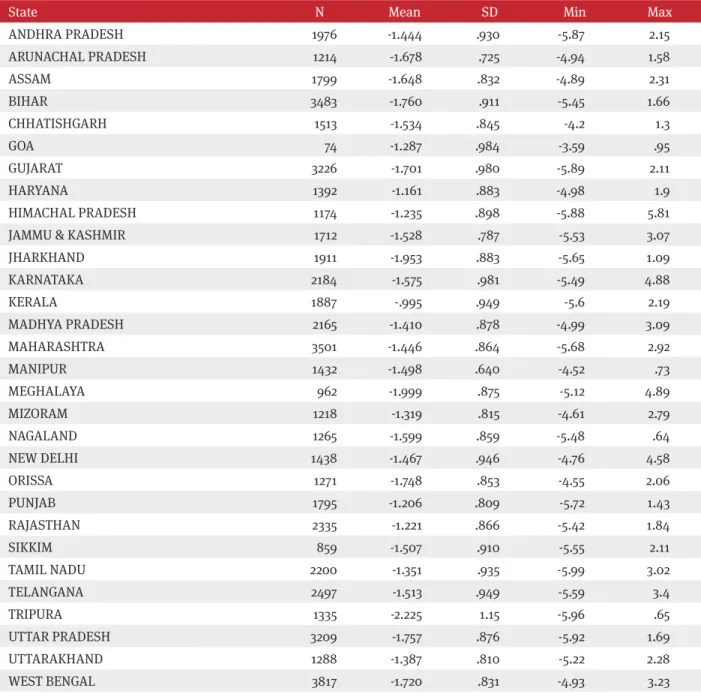
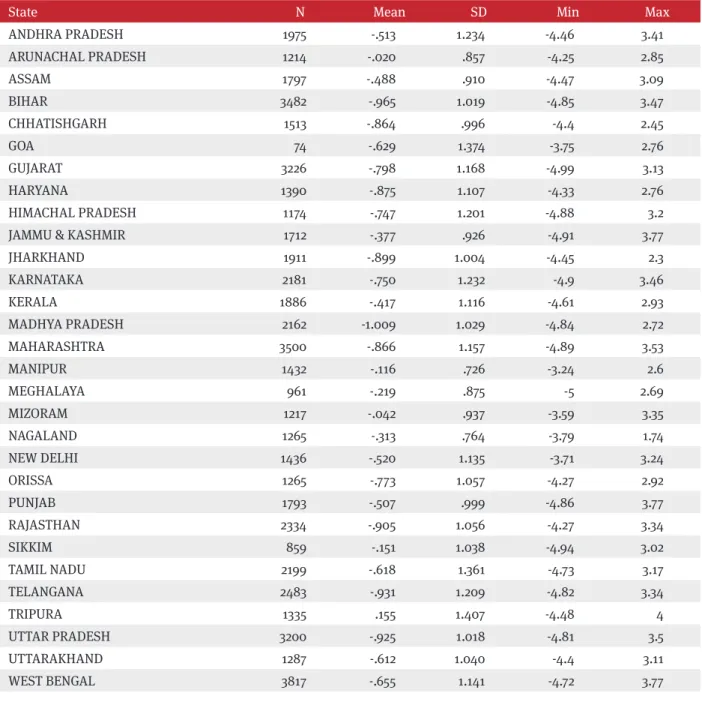
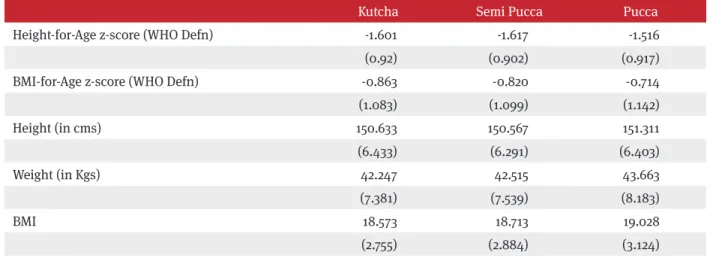
type and other SES related variables on health outcomes using two dependent variables, height-for-age z-scores (HAZ) and BMI-for-age z-scores (BAZ). These variables were computed using standard conversion techniques
developed by the World Health Organization’s (WHOs) AnthroPlus tool, which allows for “assessing growth of the world’s children and adolescents” (WHO, 2009). We discuss this step subsequently.
The TAG survey collected weight, height and hemoglobin data on-site from respondents using a digital weighing scale (in kilograms), the Prestige Stadiometer (in centimeters) and HemoCue Hb 301 analyzer, respectively. For the purposes of this study, we have only used weight and height data. In order to reduce error originating either from the surveyor or the measuring instrument, girls’ height and weight were measured three times and recorded under three variables each. We created two new variables, one each for weight and height, by taking the average of the original three variables. For approximately 200 respondents, where weight and height data for one variable was entered as zero, we computed the average using the remaining two non-zero values for weight and height. We applied the WHO Stata-based macro available to users (WHO, 2009) on input data comprising of girls’ height, weight and age to obtain standardized scores or
z-scores for height-for-age and BMI-for-age for adolescent female population aged 13-19 years. The WHO macro does not produce weight-for-age for children beyond 10 years as this indicator “cannot distinguish between height and body mass in an age period where many children are experiencing the pubertal growth spurt and may appear as having excess weight (by weight-for-age) when, in fact, they are just tall” (WHO, 2009, p. 2). These z-scores provide us the distance and direction of a respondent’s measurement from the population mean in units of the standard deviation. These measures are obtained by comparing individual respondent’s growth indicators against growth data from a reference population, using LMS technique (see de Onis et al., 2007; Cole 1990). The standardized measures are used to explore growth and nutritional status (e.g., stunting, overweight) among infants through adolescents. The use of z-scores is recommended as (a) they allow us to compare with a reference population, (b) being a dimensionless quantity, allow for comparisons across age and sex, and (c) are able to compute extreme values. The WHO macro also flags biologically implausible or extreme z-scores
for height-for-age (less than -6 or greater than 6) and BMI-for-age (less than -5 or greater than 5), which we dropped from our analysis to reduce outlier influence on estimated coefficients.
Independent variables: The TAG survey did not ask
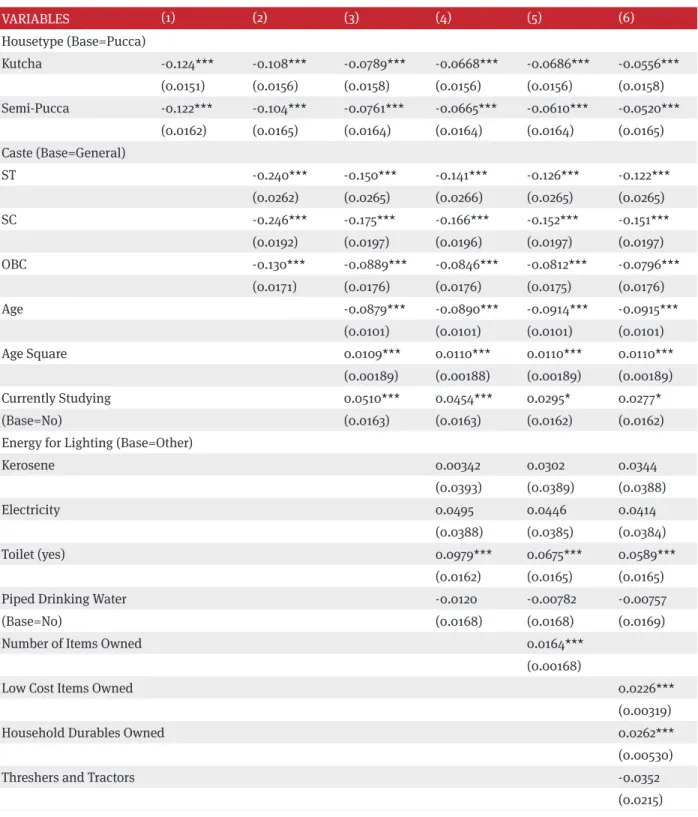
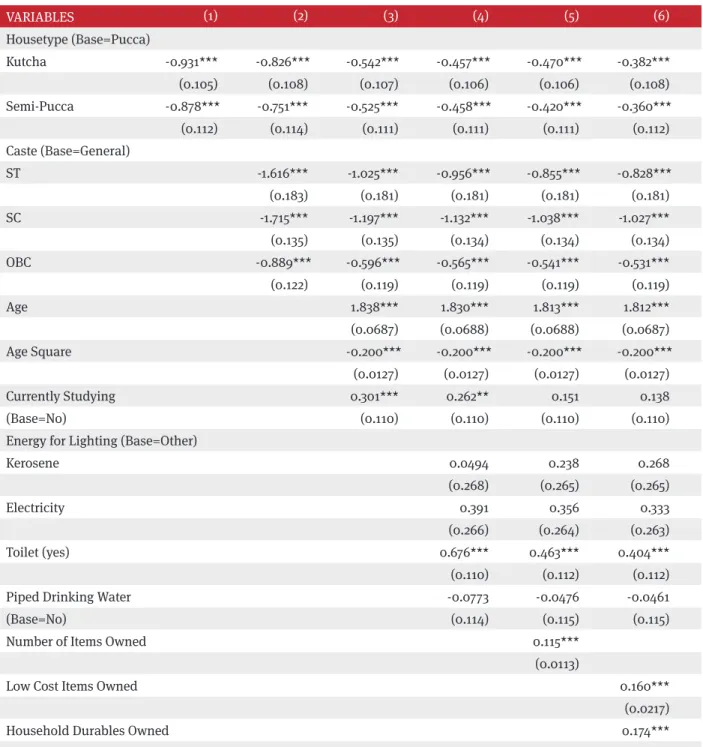
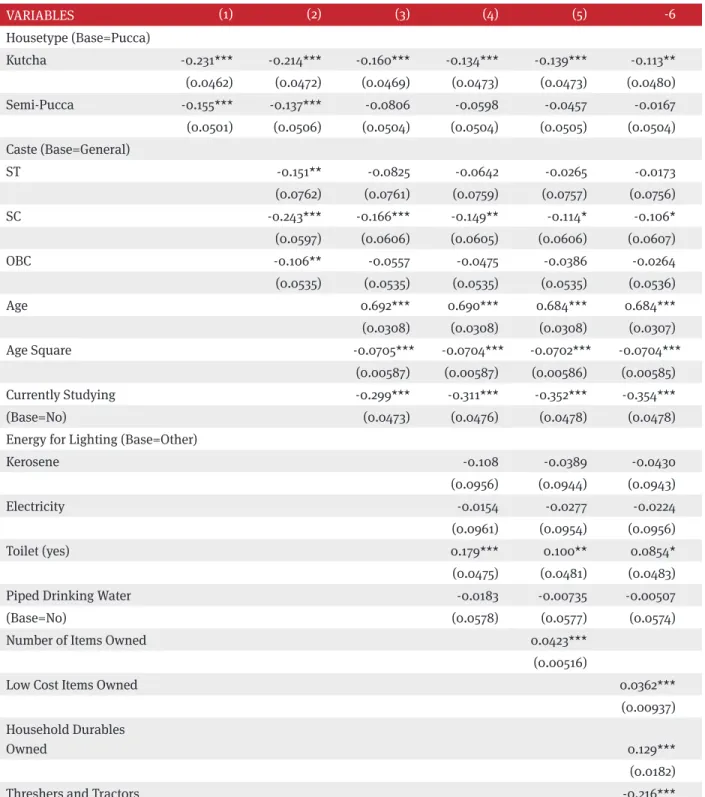
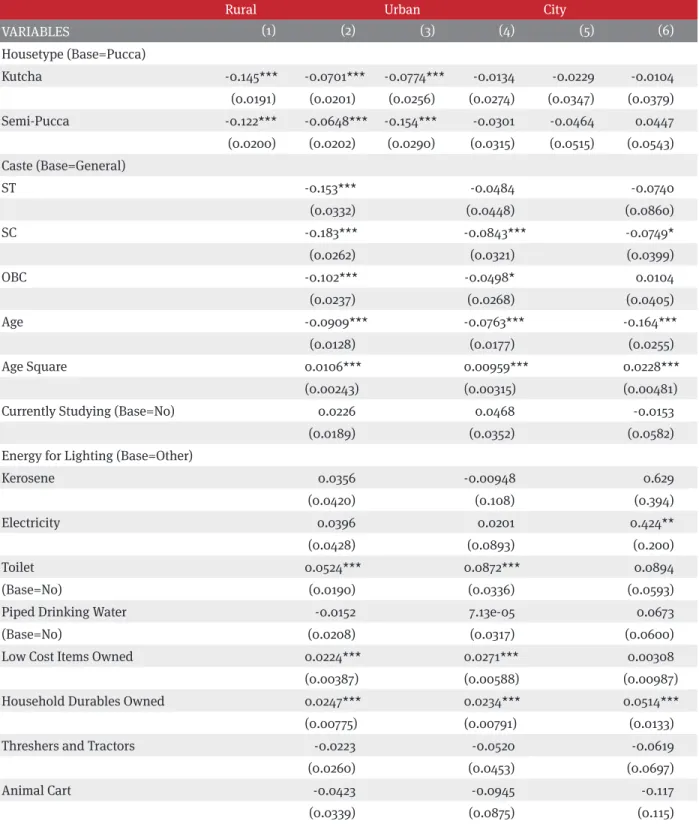
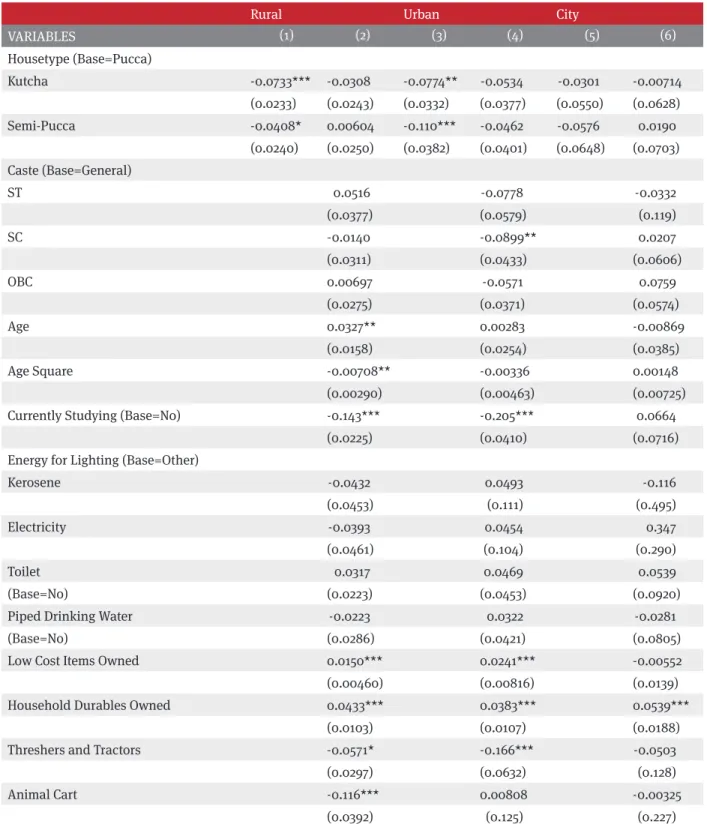
any direct question related to property ownership or rights. Therefore, we looked for other ways (variables) to capture the idea of ownership. Based on our review of the extant literature, we believe the type of house is such a candidate variable. In our dataset, house type is a categorical variable comprising of three categories – pucca, semi-pucca and kutcha house. Households with more ownership rights and tenure security are likely to reside in better quality houses (through formal ownership or formal rent agreements etc.). However, the type of house indicates the economic condition of the household as well. Richer families are expected to live in pucca houses while poorer ones are expected to occupy semi pucca, and kutcha houses. Thus, the effect of house type on health outcomes can be due to the ownership as captured through the quality of the house or the economic condition of the family. If the dimension of economic well-being and wealth is controlled for through some other variable(s), then the residual effect of the type of house on health outcomes can be interpreted to be the effect of the house type and, by proxy, of tenure security and property rights. A well-constructed permanent house not only provides shelter from elements but also provides a sense of security. Therefore, we expect the quality of house and health outcomes to be positively related. The variables through which we attempt to capture the economic condition of the household are a set of variables recording the ownership of around 25 household items and the availability of toilets within the house premises. The heterogeneity in material possessions among the households is recorded in a set of binary variables. The survey asked and recorded the ownership of a total of 25 separate items. These items range from smaller value items like chair, fan, watch, to high-cost items like cars. Moreover, there are items like threshers and tractors, which are of the nature of capital goods. Considering various aspects of the items (i.e., cost, capital good), we have created five variables to demonstrate item
ownership. They include ownership of low-cost items (count), slightly costlier household durables (count), thresher and/or tractor (category), animal cart and car (last two are binary). Sometimes in the literature, a categorical wealth quintile variable is created from this type of item ownership variable. However, we decided against following that path as ownership of a car and ownership of a table fan should not be treated similarly – which is done in the creation of such wealth indices. Another variable that captures economic condition of households is the availability of toilet facilities within the house. This variable captures both the economic condition and health awareness level of the family. Apart from these, we have included source of lighting in the house, source of drinking water, and other demographic indicators as control variables. Source of lighting can be either electricity, kerosene, solar panels, bio-gas etc. Given that most (over 95 percent) of the sampled households either used electricity or kerosene to light up their houses, we coded the sources into three categories – electricity, kerosene, and everything else. The survey collected information about the source of drinking water within the household as well. Source of drinking water has two aspects that can affect the health and well-being of the girls. First, if the water is not treated, then it could expose the girls to water-borne diseases. Second, if the source of the water is too far away from home, then fetching the water can expose the girls to both physically demanding work and to safety-related issues. However, the survey did not collect any information on the distance of the source or whether the water source is treated or not. Therefore, we decided to capture the heterogeneity in the sources of drinking water through a binary variable – piped water vs. everything else. We think that piped water can be considered to be a treated source of drinking water while there are question marks over the other sources (open well, covered well, river, pond, etc.).
Demographic control variables include indicator variables on caste (ST, SC, OBC, and General),religious groups (Hindus, Muslims, Christians, Sikhs, Others), parental education (six ordered categories for both mothers and fathers), number of household members, whether the girl is currently going to school or college and the age of
the girl. Ideally, we would have liked to have a variable that captured the relative position of the girls within the household. The sex of the head of the hous