Natural Disaster Mitigation in Drinking Water and Sewerage Systems −
Guidelines for Vulnerability Analysis
Table of Contents
Natural Disaster Mitigation in Drinking Water and Sewerage Systems − Guidelines for Vulnerability
Analysis...1
Preface and Acknowledgments...1
Introduction...2
Chapter 1. Planning Emergency Preparedness and Response1...3
Introduction...3
Emergency Preparedness and Response Program...4
Chapter 2. Basics of Vulnerability Analysis...9
Introduction...9
Defining Vulnerability...10
Calculating Physical Vulnerability...12
System Vulnerability...13
Chapter 3. Natural Hazards and Their Impact on Water Systems...17
Introduction...17
Characteristics of Hazards and Their Effects...18
Chapter 4. Vulnerability Analysis...44
Introduction...45
Identification of Organization and Prevailing Regulations...45
Description of the Area, System, and its Operation...45
Methodology...46
Annex 1. Examples of Effects of Earthquakes on Pipeline Systems* (1969 − 1997)...55
Annex 2. Application of Vulnerability Analysis: Case study of Limón, Costa Rica...57
Introduction...57
Case Study of Limón, Costa Rica...58
Seismic Hazard in the City of Limón...59
Matrix 1A − Operation Aspects...60
Matrix 1B − Operation Aspects...61
Matrix 2 − Administration and Response...62
Matrix 3 − Physical Aspects and Impact on the Service...63
Matrix 4A − Mitigation and Emergency Measures (Administration and Operation)...65
Matrix 4B − Mitigation and Emergency Measures (Physical Aspects)...68
Annex 3. Method for Estimating Damage in Pipes as a Consequence of Intense Earthquakes...68
Introduction...68
Evaluation of Seismic Hazard...68
Estimating Vulnerability...69
Definitions...70
Natural Disaster Mitigation in Drinking Water and Sewerage Systems −
Guidelines for Vulnerability Analysis
Disaster Mitigation Series
Pan American Health Organization Regional Office of the
World Health Organization Washington, D.C., 1998
Published in Spanish under the title:
Mitigación de desastres naturales en sistemas de agua potable y alcantarillado sanitario: Guías para el análisis de vulnerabilidad
Cover photo: OPS/OMS ISBN 92 75 12250 4
PAHO Library Cataloguing in Publication Data: Pan American Health Organization
Natural Disaster Mitigation in Drinking Water and Sewerage
Systems. Washington, D.C.,: PAHO, c1998. 110 p. −− (Disaster Mitigation Series). ISBN 92 75 12250 4
I. Title. II. (series)
1. PREDISASTER MITIGATION. 2. NATURAL DISASTERS. 3. VULNERABILITY ANALYSIS. 4. WATER SUPPLY − norms. 5. DISASTER EMERGENCIES.
LC HV553
© Pan American Health Organization, 1998
A publication of the Emergency Preparedness and Disaster Relief Coordination Program, PAHO/WHO. The views expressed, the recommendations formulated, and the designations employed in this publication do not necessarily reflect the current policies or opinions of the IDNDR Secretariat or the Pan American Health Organization or of its Member States.
The Pan American Health Organization welcomes requests for permission to reproduce or translate, in part or in full this publication. Applications and inquiries should be addressed to the Emergency Preparedness and Disaster Relief Coordination Program, Pan American Health Organization, 525 Twenty−third Street, N.W., Washington, D.C. 20037, USA; fax: (202) 775−4578; e−mail: [email protected].
The production of this publication has been made possible through the financial support of the German Foreign Office, Division for Humanitarian Aid; the International Humanitarian Assistance Division of the Canadian International Development Agency (IHA/CIDA); and the Office of Foreign Disaster Assistance of the U.S. Agency for International Development (OFDA/AID).
Preface and Acknowledgments
For several years, the Pan American Health Organization has provided technical assistance to the water and sanitation authorities in Latin America and the Caribbean in improving their preparedness for natural disasters and other emergencies. In 1993 a book was published that served as a guide for organizing and planning responses to emergency situations that affect drinking water and sewerage systems. In addition to having emergency response capability, it is necessary to identify and carry out measures that will lessen the impact of disasters on components of water systems. Applying disaster prevention and mitigation measures is the
next step in the disaster preparedness process.
This book provides basic tools that water service companies can use to evaluate the components of their systems that are vulnerable to major natural hazards (earthquakes, hurricanes, floods, landslides, volcanic eruptions, and drought).
The methodology for vulnerability analysis was presented in a document prepared by Herber Farrer for the Pan American Sanitary Engineering Center in 1996. Based on this work, four case studies were conducted with the financial support of the Humanitarian Assistance Work Group of the Ministry of Foreign Affairs of Germany. The purpose of these studies was to validate the methodology that is presented here. The four studies focused on: experience with earthquakes in Costa Rica, prepared by Saúl Trejos; landslides, prepared by José Grases in Venezuela; floods in Brazil, prepared by Ysnard Machado; and finally, a study prepared by David Lashley in Barbados on hurricanes and volcanic eruptions. The elaboration of this document was possible thanks to the valuable technical contributions of these individuals. In addition, we would like to thank Vanessa Rosales of Costa Rica, who made valuable comments during the final revision of this text.
Introduction
The countries of the Region of the Americas are exposed to a large variety of natural hazards. Earthquakes, hurricanes, volcanic eruptions, landslides, droughts, and floods affect many of the countries of the Region and cause major disasters. The number of deaths, injuries, and persons seriously affected, damage to
infrastructure, disruption of public services, and economic losses are on the increase and present a threat to the development of the countries of Latin America and the Caribbean. Table 1.1 lists some major disasters in recent years.
Table 1.1. Selected natural disasters affecting countries of the Region of the Americas and the Caribbean
Year Event Name Area Affected
1987 Earthquake Napo Province Ecuador
1989 Hurricane Hugo Caribbean
1989 Earthquake Loma Prieta California, U.S.A. 1991 Forest Fires California, U.S.A. 1991 Earthquake Limón Costa Rica 1992 Hurricane Andrew Florida, U.S.A. 1993 Floods Mississippi Valley U.S.A.
1994 Earthquake Northridge California, U.S.A.
1995 Hurricane Luis Caribbean
1995 Earthquake Trans−Cucutá Ecuador 1995 Volcano Soufrière Hills Montserrat 1995 Hurricane Marilyn Caribbean
1996 Earthquake Nasca Peru
1996 Hurricane Fran U.S.A.
1997 Earthquake Cariaco Venezuela 1998 Earthquake Aiquile−Totora Bolivia
If we add to natural hazards the increasing vulnerability caused by human activity, such as industrialization, uncontrolled urbanization, and the deterioration of the environment, we see a dramatic increase in frequency and effects of disasters. Disasters follow a cycle that includes the stage prior to impact, response to the disaster, and reconstruction and rehabilitation activities. The costs of reconstruction consume a major portion of available assets, reduce the resources for new investment, and can delay the development process. Drinking water and sewerage services are essential in ensuring the health and well−being of populations and as such fulfill an important role in the development process. In emergency or disaster situations these basic services are imperative for the rapid return to normalcy. The impact of a natural disaster can cause
contamination of water, breaks in pipelines, damage to structures, water shortages, and collapse of the entire system. Depending on the level of preparedness that the water system authorities have adopted, repair of the
system can take days, weeks, and even months.
The best time to act is in the first phase of the disaster cycle, when preventive and mitigation measures can strengthen a system by reducing its vulnerability to hazards.
Drinking water and sewerage supply are the direct responsibility of companies, public or private, that provide the service. A combination of programs are directed at guaranteeing high quality and uninterrupted service to clients. Performance of the systems in emergency situations should be planned in the same way that
programs for routine operation and preventive and corrective maintenance are planned. Even during routine operations there are often service interruptions due to equipment failure, breaks in pipelines, and rationing due to low water supply. The risk of damage to water systems in disaster situations dramatically increases with factors such as uncontrolled growth in urban areas, deficiencies in infrastructure, and, above all, the location of system components in areas that are vulnerable to natural hazards.
The forces of nature should not be viewed as uncontrollable, against which no action can be taken. Damage is lessened when measures are taken to strengthen systems and to have response mechanisms in place in the event of an emergency. The implementation of programs that continually update disaster mitigation and emergency response plans guarantee a responsible and effective response to disasters.
Vulnerability analysis, the subject of this document, provides a simple approach for addressing the question: “What is the vulnerability of each component of the system to the impact of hazards existing in an area?” The outcome will assist in defining the necessary mitigation measures and the emergency response procedures should a disaster occur before mitigation measures are carried out, or if the measures do not prevent damage.
Vulnerability analysis is the basis for establishing mitigation and emergency plans for (i) execution of the mitigation measures for different components of the system, (ii) organization and preparation, and (iii) attention to the emergency. It requires a response before, during, and after the disaster and includes a combination of measures with the common objective of reducing the impact on provision of service and enuring that drinking water and basic sanitation services are restored to the affected population in a timely manner.
This book is organized into four chapters. The first explains how an emergency and disaster program is established, and defines the program's content and steps to be taken to develop, execute, and keep the program up to date. The second chapter outlines the principles of vulnerability analysis for drinking water and sewerage systems. It discusses how vulnerability is quantified and how damage probability matrixes are used in the process. The third chapter provides a general description of the major natural hazards and discusses the type of damage they can cause to components of the water system. The fourth chapter presents new approaches to applying vulnerability analysis to different hazards. It provides a detailed description of how to complete the damage probability matrixes.
Three annexes, a short list of definitions, and a bibliography complete this volume.
These guidelines are meant to be consulted by engineers and technical personnel in water service companies to project the performance of drinking water and sewerage systems in case of natural disasters.
Chapter 1. Planning Emergency Preparedness and Response1
1 Additional information on developing an emergency and disaster program can be found in
the document Planificación para atender situaciones de emergencia en sistemas de agua potable y alcantarillado (PAHO, Cuaderno Técnico no. 37, Washington, D.C., 1993).
Introduction
All drinking water and sewerage systems are subject, to a greater or lesser degree, to hazards. Emergency preparedness is vital even when hurricanes, earthquakes, floods, etc., do not pose a direct threat, since accidents and breaks in pipelines can contaminate water and seriously affect service.
Entities operating and maintaining these systems should have strategies directed at reducing the vulnerability of the systems and providing the best possible response once an emergency arises. The emergency plan should establish the necessary procedures to quickly and effectively mobilize existing resources, and, if necessary, to request outside assistance.
Vulnerability analysis is the basic tool for meeting both objectives. Once the hazards specific to a particular zone are identified, vulnerability analysis assists in determining: (a) the physical shortcomings of system components; (b) weaknesses in the organization and support provided by the water service company; and (c) limitations in terms of quantity, continuity, and quality of service.
Vulnerability analysis applies not only to the physical structure of the system, but also to the organization and management of the water authority or company. For example, in the financing division of the company, the analysis would determine whether there are sufficient funds to carry out mitigation and emergency measures, or whether resources have to be reallocated to ensure that mitigation and emergency plans are viable. This chapter addresses the process involved in planning the emergency preparedness and response
program, indicating its content and the steps, in order of priority, necessary to execute the program and keep it up to date.
Emergency Preparedness and Response Program
In areas affected by extreme natural phenomena, there is a tendency to believe that these are rare events that will not recur with the same intensity for many years. Actually, the consequences of these phenomena increase in severity, not because they increase in intensity and frequency, but because the at−risk population and infrastructure continue to grow.
The implementation of mitigation measures not only improves the capacity of emergency response, but protects routine operations and makes the systems more reliable. For example, redundant or “back−up” measures designed for emergencies also safeguard routine operations. Likewise, strengthening routine corrective and preventive maintenance of installations favors effective response during emergencies. The image of the water service company will be improved by acting in a quick and efficient way in an emergency situation. If an emergency program is to become a permanent company program, top company officials must be motivated, vulnerability studies completed, and emergency and mitigation plans carried out. For the emergency preparedness and response program to be successful, it should be included in the institutional planning process. That is, the program should complement the routine corrective and preventive aspects of operation and maintenance.
To ensure the success of this program, the water service company should: (a) require the broad participation of employees; (b) maintain ongoing promotion and training; (c) carry out simulations and evaluation exercises to test emergency plans; and (d) disseminate information on other incidents (for example, data on damage due to earthquakes presented in Annex 1).
Institutionalization and Organization of the Program
The following aspects should be considered for the institutionalization and organization of the emergency preparedness and response program:
• Legal aspects, including national and institutional standards. • Institutional organization and coordination, including:
− Emergency committee
− Committee for drafting mitigation and emergency plans − Emergency operation centers
• Inter−institutional coordination, including: − National emergency commission − Other institutions
Legal Aspects
The program should be developed within the existing legal framework of the country and should form part of the national plan. Establishing this from the outset will allow coordination of the plan between the water authority and State institutions, such as civil defense or emergency commissions.
National Standards
Countries have laws, standards, and regulations that establish the institutions responsible for emergency response at the national level, such as civil defense, national emergency agencies, etc. At the local level there are agencies with clearly defined functions and mechanisms for coordination and financing.
These standards should be consulted before creating the emergency preparedness program to ensure conformity with regulations, and to ensure that there is adequate support and cooperation between institutional and national plans.
Institutional Standards
Providers of drinking water and sewerage services have their own regulations that define standards of quantity, continuity, and quality of services. Emergency plans will ensure that services are restored to normal conditions as quickly as possible. Disaster conditions pose the greatest risk for public health and may require the use of alternative sources of drinking water and means to dispose of waste water.
The first step that water service companies should take is to support national standards, and to resolve at the highest management level to approve the emergency preparedness and response program. This will give the program the same stature as other institutional programs.
Institutional Organization
The institution providing the services must have an organization that is capable of determining the vulnerability of the systems and their components, implementing mitigation measures, and operating the systems in case of emergencies. It is the responsibility of top management to delegate the development of the program and to approve it. The general director or manager of the company should be a member of the emergency committee.
Emergency Committee
As part of the development of the emergency preparedness and response program, an emergency committee should be established. Company managers should be members of the committee, and will be responsible for coordinating the program’s activities. Typically, staff holding the following positions will make up this
committee:
• General director or manager of the company
• Supervisors in areas of production, operation, and maintenance service • Planning director
• Finance director • Engineering director • Procurement director • Public relations director
• Representative of the committee responsible for drafting the emergency plan The functions and responsibilities of this committee are to:
• Participate in the committee responsible for drafting mitigation and emergency plans; • Coordinate the drafting, approval, execution, and evaluation of the plans;
• Establish and maintain communication and coordinate activities with the public entities responsible for emergency response at the local or national level;
• Maintain contact with commercial suppliers or providers of equipment, producers of chemicals, and professional associations that can contribute to disaster and emergency response;
• Carry out periodic review and updating of the emergency plan;
• Develop necessary budgets for implementing the plan and present them to the appropriate units;
• Declare internal emergency alerts if an emergency has not been declared by national authorities;
• Provide and supervise ongoing training of personnel in emergency procedures.
At the regional and local levels, emergency committees should also be established and include directors in the areas of administration, production, operation, and maintenance.
Drafting Committee for Mitigation and Emergency Response Plans
This committee is multidisciplinary and usually consists of personnel from different areas of the company. The major responsibility lies in the areas of operations and engineering, but planning, administration, and finance must also be represented.
The functions and responsibilities of the committee are to: • Develop mitigation and emergency response plans;
• Establish the terms of reference and coordinate specialized vulnerability studies; • Evaluate the effectiveness of the plan during simulations and in actual situations.
Emergency Operations Center
Once the emergency committee is installed, a center or various centers should be established where the committee and key personnel can meet during emergency simulations, the warning period, and actual emergencies. Typically, regular office space is allocated for this function, but the emergency plan should specify at least one alternate site that can be used if the first is inoperable. The emergency operations center should have the following characteristics:
• Minimal vulnerability to the most common hazards in the area • Quick access routes
• Location within the drinking water and sewerage service area
• Reliable communication facilities, including telephones, fax, radio transmitter and receiver, television, and radios with commercial, civil band, and ham radio frequencies
• Backup power system • 24−hour security
• Detailed plans of all systems and copies of the emergency plan and of pertinent documentation
• Adequate equipment and furnishings for meetings and office work • Transportation and computer equipment
• Safe
• Registry of activities
• One−week supply (at a minimum) of equipment and food.
Warnings and emergency declarations activate the emergency plan both at the onset and conclusion of an emergency.
The national emergency committees provide warnings or declare emergency situations at the national or regional level. These declarations should be sufficient to activate the emergency plan of the water service company. However, the company’s emergency committee should have the ability to declare emergencies in the case of damage or failure in the system, such as temporary loss of intakes, accidents that affect the service, drought, etc. These declarations are of special importance since they activate all the procedures established in the plan, including those involving the use of funds.
Inter−Institutional Coordination
Coordination among institutions is basic to emergency and disaster response. Without such coordination chaos will result, impacting the users of the service and the ability to carry out rehabilitation.
National Emergency Committee
The water company’s emergency plan should be developed in coordination with the national plan. In most cases, the leading institution (civil defense, national emergency committee) collaborates in the development of the sectoral plan and can provide resources and channel technical assistance for required studies and
analysis.
Other Service Institutions
The water company’s emergency plan should consider necessary coordination with other public service companies such as energy, communications, police, firefighters, etc. Agreements and mutual assistance among institutions facilitate efficient response. It is important to have detailed knowledge of the human resources, material, and equipment available at the local level.
Vulnerability Analysis
This is carried out in accordance with directives presented in this document.
Mitigation Plan
The outcome of the vulnerability analysis will be the mitigation plan, which comprises improvement and structural retrofitting measures directed toward increasing the reliability of system components and of the system as a whole.
The mitigation plan will prioritize the activities to be carried out and will specify those responsible for executing the plan, a timeframe for completion, and estimated costs. The plan should also consider the need to adapt selected buildings to function as emergency operations centers.
Emergency Response Plan
Once the vulnerability analysis has been carried out, the emergency plan should be drafted. The plan will include the procedures, instructions, and necessary information for preparing, mobilizing, and using the company’s resources in the most effective way in case of emergency.
The plan should be designed to respond to emergencies and disasters with the resources that are currently available within the company, assuming that an emergency could occur at any moment. In other words, it should not be an ideal, but a realistic plan. With time, as mitigation measures are carried out and equipment is obtained for emergencies, the plan will be modified.
The plan should be kept up to date and be available at any time for use by persons involved in emergency response. Its success will depend on how simple and practical it is to carry out, as well as on the knowledge of the persons involved, obtained through periodical training and simulation exercises.
At a minimum, the plan should comprise the following: 1. Objective: hazards to which plan is directed
2. Geographic area of application
3. Relationship to the national emergency plan (that of the national emergency commission or civil defense agency)
4. Organization: central, regional, and local emergency committees, and those responsible for drafting the plan (functions and responsibilities)
5. Description and operation of the system (document with sketches) 6. Emergency operations centers
7. Warning and emergency declarations
8. Personnel plan (training); key personnel and their addresses 9. Security plan
10. Transportation plan 11. Communications 12. Supply plan
13. Emergency supply warehouse/stores 14. Institutional coordination
15. Coordination with private companies and suppliers
16. Response to neighboring supply systems operated by other companies 17. Damage assessment
18. Priorities for water supply
19. Alternative sources of water supply and disposal measures for waste water 20. Information for the press and public
21. Procedures for operation in emergency situations 22. Procedures for inspection following an emergency
23. Use of water tank trucks, portable tanks, and other means of transporting drinking water 24. Management of funds for:
• Emergency committee
• Drafting, evaluation, and control committee for emergency plan • Emergency operations centers
• Warning and emergency declarations
• System plans • Operation plans
• Results of first phase of vulnerability analysis
26. Training of clients in the correct use of water in emergency situations 27. Management of information during the emergency
If companies manage several cities or have regional operations, it is convenient for each city and region to have it’s own plan, with the plans integrated at the central level.
Chapter 2. Basics of Vulnerability Analysis
Introduction
The natural hazards and local conditions must be taken into consideration when planning infrastructure projects. Many of the problems presented by natural hazards occur because these phenomena are not considered during the conception, design, construction, and operation of the system. The vulnerability analysis described in this document is important for both existing and planned constructions.
Mitigation and emergency plans are based on the best possible knowledge of the system’s vulnerability in terms of: (i) deficiencies in its capacity to provide services; (ii) physical weaknesses of the components to external forces; and (iii) organizational shortcomings in responding to emergencies. Vulnerability analysis identifies and quantifies these weaknesses, thereby defining the expected performance of the system and its components when disasters occur. The process also identifies strengths of the system and its organization (for example, staff with experience in operation, maintenance, design, and construction, who also have experience in emergency response).
Natural Disaster Mitigation in Drinking Water and Sewerage Systems Vulnerability analysis meets five basic objectives:
a) Identification and quantification of hazards that can affect the system, whether they are natural or derive from human activity;
b) Estimation of the susceptibility to damage of components that are considered essential to providing water in case of disaster;
c) Definition of measures to be included in the mitigation plan, such as: retrofitting projects, improvement of watersheds, and evaluation of foundations and structures. These measures aim to decrease the physical vulnerability of a system’s components;
d) Identification of measures and procedures for developing an emergency plan. This will assist the water service company to supplement services in emergency situations;
e) Evaluation of the effectiveness of the mitigation and emergency plans, and implementation of training activities, such as simulations, seminars, and workshops.
Defining Vulnerability
Vulnerability is generally defined as a measure of the susceptibility of an element or combination of elements to fail once they are exposed to potentially damaging natural phenomena. This definition is broad enough to be applied to physical, operative, and administrative aspects of a system. Because there is uncertainty associated with quantifying physical vulnerability, it is expressed as the probability that a certain natural or man−made phenomenon will occur. This is generally expressed as:
P(Hi), or the probability (P) that event (Hi) will occur.
The characterization of the phenomenon, and the nature of the problem, must be determined by the analyst. For example, factors might be ground acceleration, wind speed, river volume, the depth of volcanic ash, level of turbidity of water, etc.
The analysis of statistics on hazards and their consequences leads to a clear distinction between two groups of problems: (a) the danger and intensity of expected events; and (b) the ability of man−made works to resist such events, with a tolerable level of damage.
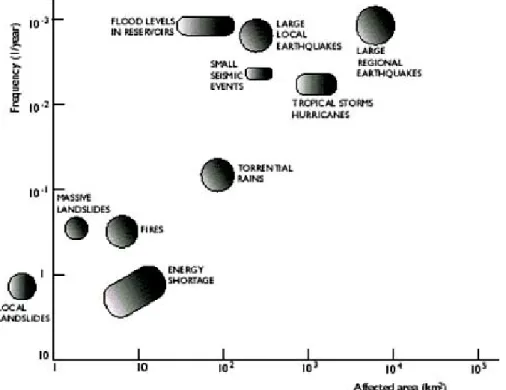
Figure 2.1 Approximate range of frequency and impact areas of different natural hazards (PAHO/WHO)
Nature of the Problem
In strategies to prevent or mitigate the effects of disasters, it is as important to address the weaknesses of the existing or planned works as it is to define the possible frequency and intensity of expected phenomena. Figure 2.1 shows approximate ranges of frequency and areas of expected impact of hazards along a drinking water pipeline located in north−central Venezuela. This example highlights the uncertainty about expected frequency and areas of impact of the phenomena. The figure also illustrates that the least common phenomena have impacts on larger areas than the more common events. For example, the “maximum regional earthquake” occurs infrequently, but impacts a large area.
Expected Behavior of Physical Components
The development of automated analytical algorithms and the frequent exchange of information on a global scale have helped to predict how construction or installations will behave when subjected to external forces. The degree of uncertainty involved in analyzing vulnerability in man−made works has lessened substantially in recent years.
Characteristics and conditions of structures, such as the resistance of materials, condition of foundations, impurities in the concrete, material used, and condition of pipes, etc., cause the greatest uncertainty about the behavior of existing works when quantifying vulnerability to a certain hazard (Hi).
Quantification of Vulnerability
The vulnerability of a specific component or system is expressed as the conditional probability of occurrence of a certain level of damage (Ej), given that hazard (Hi) occurs. This is denoted as:
P(Ej /Hi)
The following four levels of damage are frequently used to describe Ej when referring to damage and performance of equipment:
E1 = no damage
E2 = slight damage; equipment is operative
E3 = reparable damage; equipment is out of service
E4 = severe damage or total loss; equipment is out of service
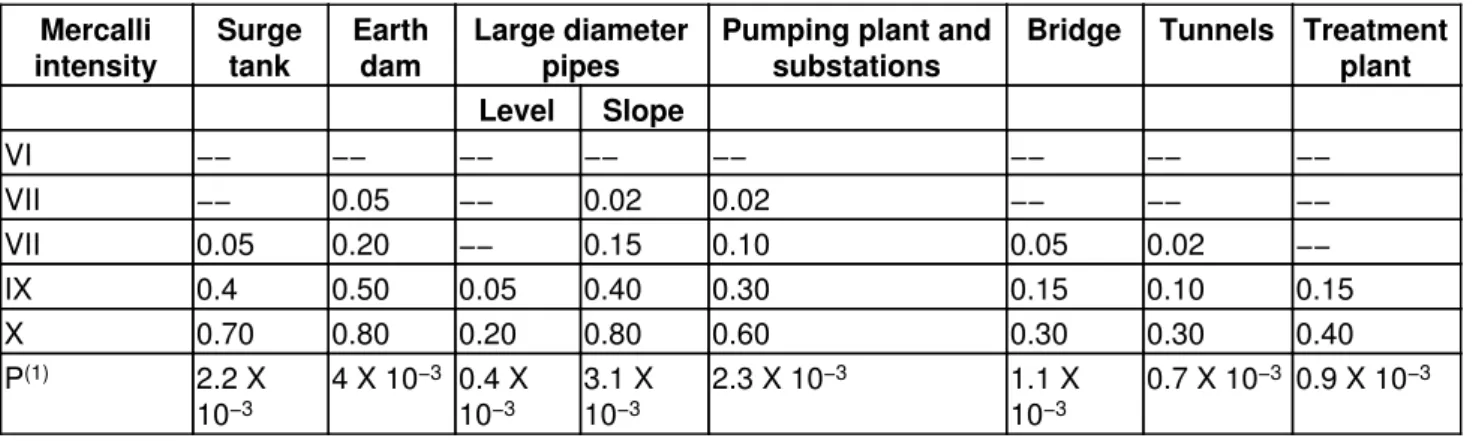
Once a natural phenomenon has occurred (e.g., earthquake, hurricane, flood, etc.) the component or system should be described in terms of one, and only one, of the four conditions listed above. Table 2.1 shows probabilities corresponding to severe damage and/or total loss for different levels of Mercalli intensity in eight elements that form part of a drinking water production and distribution system. The values of P (Er/Ii), where Er represents total ruin and Ii represents the five grades of Mercalli intensity (see Chapter 3 for a description of Mercalli intensity). This table combines analyses made regarding the expected response of the components of the system taking into consideration the design and construction criteria existing when the studies were conducted.
Table 2.1 Probability of levels of severe damage and/or ruin to a water supply and distribution system (earthquake occurring during dry season)
Mercalli intensity Surge tank Earth dam Large diameter pipes
Pumping plant and substations
Bridge Tunnels Treatment plant Level Slope VI −− −− −− −− −− −− −− −− VII −− 0.05 −− 0.02 0.02 −− −− −− VII 0.05 0.20 −− 0.15 0.10 0.05 0.02 −− IX 0.4 0.50 0.05 0.40 0.30 0.15 0.10 0.15 X 0.70 0.80 0.20 0.80 0.60 0.30 0.30 0.40 P(1) 2.2 X 10⁻³ 4 X 10⁻³ 0.4 X 10⁻³ 3.1 X 10⁻³ 2.3 X 10⁻³ 1.1 X 10⁻³ 0.7 X 10⁻³ 0.9 X 10⁻³
*Annual probability of severe damage and/or ruin occurring in an area 15 km south of the Caracas Valley.
Source: PAHO/WHO, Case Study. Vulnerabilidad de los sistemas de agua potable y alcantarillado frente a
When to Conduct Vulnerability Analysis
Vulnerability analysis should be carried out in institutions and infrastructure if the effects of natural disaster would cause an emergency situation or place demands on the system that would exceed response capacity. For example, businesses that produce or sell petroleum and its derivatives have established criteria for acceptable levels of social risk (see Figure 2.2). When a level of risk is not acceptable, engineering measures must be adopted to reduce that risk. These criteria should be adapted to apply to drinking water supply and sewerage systems.
Calculating Physical Vulnerability
General Scheme
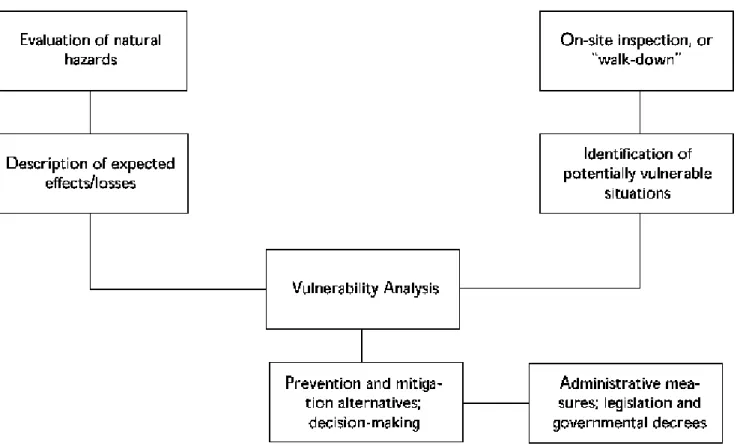
Figure 2.2 shows the general approach to evaluating vulnerability and mitigation measures. The so−called “walk−down,” or preliminary evaluation, corresponds to a Level−1 analysis and is based on site inspections and simple calculations. A Level−2 analysis requires a more rigorous examination. In either case, the results should be quantified to facilitate decision making by the responsible authorities.
Whether conducting a Level−1 or Level−2 analysis, certain results can be based on previously collected data. For example, the calculation of the number of breaks in pipelines by unit length can be based on existing data (see Annex 3). In many components, however, such data do not exist (such as in surge tanks, high dissipation towers, thin−wall differential tanks, or other components). In such cases, it is advisable to use the
methodology outlined in this document.
Figure 2.2 Diagram for vulnerability analysis and mitigation measures
Damage Probability Matrices
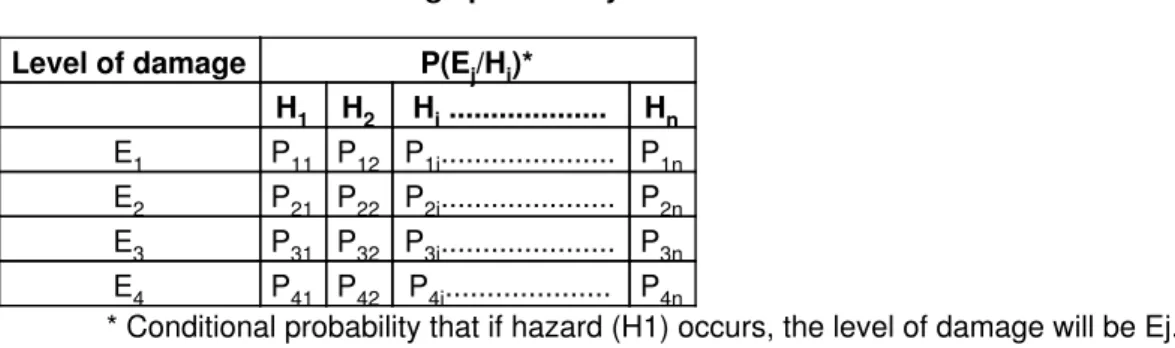
Damage probability matrices (described below) are helpful in quantifying results of the physical vulnerability analysis. Using Ej to represent a determined level of damage, the results of the vulnerability analysis can follow the format used in Table 2.2. For example, P42 represents the probability that if hazard H2 occurs, it
can be expected that the loss to the component described for that matrix will reach E4. For any phenomenon, i, the following condition applies:
(p1i + p2i+ p3i+p4i) = 100%.
Table 2.2 Format for the damage probability matrix Level of damage P(Ej/Hi)*
H1 H2 Hi ... Hn E1 P11 P12 P1i... P1n E2 P21 P22 P2i... P2n E3 P31 P32 P3i... P3n E4 P41 P42 P4i... P4n
* Conditional probability that if hazard (H1) occurs, the level of damage will be Ej.
System Vulnerability
Vulnerability analysis should be conducted by a team of professionals with extensive experience in the design, operation, maintenance, and repair of a system’s components.
The vulnerability detected in a system, whether physical, operational, or administrative, will be synthesized in matrices that record basic information to be used in the elaboration of the emergency and disaster mitigation and response plans. The matrices used to identify the strengths and weaknesses of the system are listed below (they are described in greater detail in Chapter 4).
• Matrix 1: Operation aspects (Matrix 1A for drinking water and Matrix 1B for sewerage systems)
• Matrix 2: Administrative aspects and response capability • Matrix 3: Physical aspects and impact on service
• Matrix 4: Emergency and mitigation measures (Matrix 4A f or administration and response capacity and Matrix 4B for physical aspects)
Figure 2.3 Criteria for acceptable levels of social risk
Necessary information includes: a detailed description of organizational and legal aspects; the availability of resources for emergency response; the characteristics of the zone where different components of the drinking water supply and sewerage system are located; the vulnerability of the physical components; and the
response capacity of the services.
Before beginning the study, the team should compile diagrams and plans; information on materials, dimensions, and volumes; and any other information that characterizes the system.
Matrices 1A and 1B − Operation Aspects
The operation aspects in Matrices 1A and 1 B refer to aspects of the performance of the system. Data for each component, e.g., flows, levels, pressure, and quality of service should be reviewed. For drinking water services, it is essential to know the capacity of the system, the amount supplied, the continuity of service, and quality of water. For sewerage systems, it is necessary to know the coverage, drainage capacity, and quality of effluents.
The description should be accompanied by diagrams showing how the system functions. It should also note different modes of operation and conditions of service because of seasonal variation. This information is included in both Matrix 1A and Matrix 1B (operation aspects for drinking water and sewerage systems, respectively).
Aspects relating to the capacity and continuity of service in components of the drinking water system include: intakes, pipelines, treatment plants, storage tanks, and the supply area, among others. This information will determine how the supply of drinking water will be affected by failure in one or several of the system components. For sewerage systems, the information is similar, with the main differences being in the conveyance, treatment plants, and final disposal of the waste water.
Also included in this matrix is information about how the water supply company communicates information and warnings about the emergency situations, failures in components of the system, and service restrictions affecting users. The information systems that the water service company may utilize include:
• Inter−institutional information and warning systems, such as systems connecting the water service company and civil defense agencies, meteorological institutes, geophysical institutes, among others, that provide warnings about the proximity or possibility of a specific natural phenomenon occurring. This information will facilitate decision making for water service company personnel.
• Information and warning systems within the company will identify defective performance of components through remote communication devices, and will instruct personnel on
emergency response procedures.
• Information for system users will be communicated using the mass media and news bulletins. This will alert users to conditions and restrictions in the delivery of drinking water and sewerage services following a disaster.
Matrix 2: Administration and Response
To evaluate limitations of the systems, it is important to know performance standards and available resources that could be used for water supply and disposal of waste water in emergency situations and in the
rehabilitation phase. This information will be compiled in Matrix 2 − Administration and Response. Ability to respond to a disaster can be determined by considering aspects of institutionalized disaster prevention, preparedness, and mitigation measures; operation and maintenance of the system; and the level of administrative support provided in the company.
The following information about institutional organization should be documented: (i) Existence of mitigation and emergency plans
(ii) Membership and responsibilities of the emergency committee (iii) Existence of a committee responsible for drafting the mitigation plan (iv) Evaluation of the warning and information system
(v) Inter−institutional coordination with energy and communications companies, municipal authorities, civil defense, and other institutions.
The system’s operation and maintenance have a direct influence on the vulnerability of the system and its components, and should be evaluated in terms of:
(i) Existence of suitable planning, operation, and maintenance programs that incorporate disaster prevention and mitigation measures;
(ii) Presence of personnel trained in disaster prevention and response; (iii) Availability of equipment, replacement parts, and machinery.
The water service company’s administration is responsible for facilitating prompt and efficient response in repairing damage to components of a system in case of disaster. The company should have administrative mechanisms that will allow, among other things:
(i) Expedient dispersal and management of funds and emergency supplies in emergency situations;
(ii) Logistical support for personnel, storage, and transportation;
measures.
Location can be the principal cause of vulnerability of components of the water system.
Matrix 3 − Physical Aspects and Impact on Service
In most cases, vulnerability of drinking water and sewerage systems to disasters is closely linked to weaknesses in the physical components of the system. Drinking water and sewerage systems are spread over large areas, composed of a variety of materials, and exposed to different types of hazards. Different types of hazards should be considered for each component depending on its location in the system and risks present in an area. Each hazard should be prioritized depending on its possible impact on the system. For example, intakes located at high altitudes could be more susceptible to strong rains and/or landslides, and less susceptible to earthquakes. To identify the areas of impact on the system, it is advisable to superimpose system diagrams over maps showing existing hazards.
To determine the level of service that can be provided during an emergency, it is important to estimate the time it will take to repair damage, what the system’s capacity will be following a disaster, and how damage will affect service in terms of quality, continuity, and quantity. This information, along with that relating to specific hazards should be entered in Matrix 3.
The incorrect selection of sites or design are the principal cause of system vulnerability
Matrices 4A and 4B − Mitigation and Emergency Measures
The desired outcome of vulnerability analysis is, logically, the application of prevention and mitigation measures to correct weaknesses revealed by the study. Technical recommendations and cost estimates to apply measures should form part of the analysis. Some mitigation measures will be technically complex and require additional studies on engineering designs and costs. Mitigation measures are applied to the most vulnerable components, whether found in operational, administrative, or physical elements. Information about these measures is presented in Matrices 4A and 4B.
Chapter 3. Natural Hazards and Their Impact on Water Systems
Introduction
Evaluation of hazards in the zone or region under study is essential for estimating the vulnerability and possible damage to components. The history of disasters in the region is valuable for such an evaluation. To evaluate earthquake hazards, one should have information on seismic sources and their mean rates of displacement, attenuation, variances, and design standards. Normally, seismic vulnerability analysis is carried out by a team of professionals with expertise in specific techniques for seismic risk analysis along with
personnel from the water supply company who are knowledgeable about the system components and their relative importance.
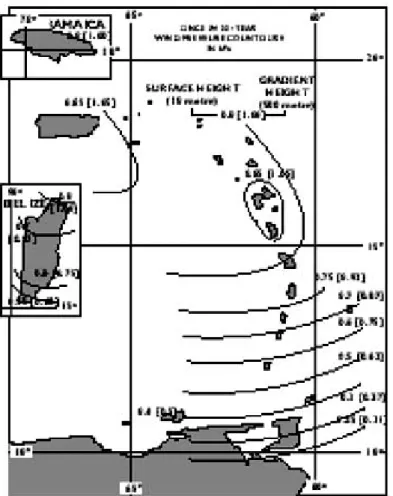
For hurricanes, evaluation is based on historic information which is often included in construction standards and codes. Figure 3.1 reproduces a map of hurricane wind pressure in the Eastern Caribbean that is included in the Caribbean Uniform Building Code (CUBiC). Hurricanes can cause major damage to structures exposed to flooding and high winds, and all companies in high−risk areas are obligated to be aware of the vulnerability level of their buildings, to formulate mitigation plans, and to be prepared for emergency situations.
While there are analytical models to determine precipitation and maximum flood levels, records on areas where flooding events have occurred are fundamental for analysis of this hazard. Floods associated with annual rainy seasons and phenomena such as El Niño in the Pacific pose high risk for contamination of water intake structures and pipelines located near water channels. Typically, the prediction of water levels in rivers and hydrologic risk to the system’s components is done by professionals from private consulting companies,
specialized institutes, universities, and professionals from the water service company. This information will help prioritize the implementation of mitigation measures and establish emergency procedures.
Figure 3.1 Map showing wind pressure in Eastern Caribbean (CARICOM, 1985)
To estimate the vulnerability of water delivery systems to volcanic eruptions, areas should be identified that may be impacted by eruption materials (primarily lava flows, gases, and ash), watercourses, and sites where landslides and avalanches might occur. Such documentation is usually available from seismology,
vulcanology, and meteorology institutes, as well as from civil defense or emergency response agencies. Structures exposed to lava flows, ashfalls, and land−slides suffer the greatest damage. In addition, treatment plants and metal structures such as tanks and valves can be damaged by ashfall and acid rain. A volcanic eruption that coincides with heavy rain can produce landslides or debris avalanches in waterways and extremely destructive floods.
Because these phenomena seriously impact on water services, all companies located in areas of risk must carry out in−depth studies of the vulnerability of their structures, implement mitigation plans, and have response mechanisms in place.
Characteristics of Hazards and Their Effects
The information presented in this section will assist in completing Matrix 3, Physical Aspects and Impact on Service (presented in Chapter 4). A description of the estimated damage in different components of systems is provided for each type of hazard. This is based on information gathered by the Economic Commission for Latin America and the Caribbean (1991)2 following selected disasters in the countries of the Americas.
2 Economic Commission for Latin America and the Caribbean, Manual para la estimación de
los efectos socioeconómicos de los desastres naturales, Santiago de Chi le, División de
Earthquakes
Information of various levels of complexity is available for seismic hazards, depending on the type of study needed. The most common data include:
• Evaluation of seismic hazard: This is based on the seismicity of the region, the seismogenic sources, the correlation of the attenuation and their variance, and the use of ad hoc algorithms of calculation.
Figure 3.2 Seismic zonation map of Venezuela (Covenin standard 1756–1982)
Table 3.1 Types of permanent land displacement due to earthquakes (after O’Rourke and McCaffrey, 1984)3
Designation Description
Fault Dislocation of adjacent parts of the earth crust, concentrated in relatively narrow fault zones. The main types of faults are strike−slip (lateral) faults, where blocks of crust move horizontally past one another; thrust (reverse) faults, which occur in response to compression, where blocks are pushed together; and normal faults, which occur in response to pulling or tension.
Liquefaction Temporary state of the soil, in which the resistance to shear stress is very small or nil. This is a characteristic of non−cohesive, saturated soils subjected to vibration. Associated displacement could include: lateral spreads over firm soil with angles under 5° (lateral spread), subsidence, or flotation effects. Lateral displacements can reach meters, even associated with slopes as small as 0.5° or 1°.4
Landslides Massive movement of earth on slopes owing to the inertial force of the earthquake. These can be rock falls and superficial landslides, or the displacement and rotation of large volumes of earth and rock in the case of deep faults.
Densification Reduction of volume caused by vibrations that compact non−cohesive, dry, or partially saturated soils.
Tectonic lift or subsidence
Changes in topography at the regional level associated with tectonic activity; generally distributed over large areas.
3 O’Rourke, T.D.; McCaffrey, M. (1984) Buried pipeline response to permanent earthquake
215−222.
4 For example, liquefaction and slides often occur during earthquakes on unconsolidated land
with steep slopes and fine soil that easily crumble. Pipelines should be installed in already populated areas, since a project manager will not have the opportunity to choose a location in relation to the geology of the zone. The best that can be done at the design stage is to ensure that there is an adequate distribution of valves and the most flexible possible piping, with the hope of reducing ruptures to a minimum when slides and liquefaction occur (PAHO/WHO, Manual sobre preparación de los servicios de agua potable y alcantarillado para afrontar situaciones de emergencia. Segunda parte − Identificación de posibles desastres y áreas de riesgo, page 19, 1990).
• Seismic risk zonation maps: Many countries have developed seismic zonation maps in accordance with specific application requirements, such as building design (see Figure 3.2), verification of high voltage equipment, bridge design, insurance or reinsurance policies, and others. These incorporate known effects of historic events. It is advisable to complement this information with maps that highlight active or potentially active faults and the quality and types of soils; these are also known as "neotechnical maps".
• Ground−shaking: Generally, ground−shaking, the predominant characteristics of the soil, the mean return time of a seismic event, and other important factors will be used for design and construction standards. If this information is unavailable, which may be the case in countries without building standards for seismic resistant design, sufficiently small excess probabilities should be chosen for the selection of maximum earth
displacements, or the intensity of the earthquake.
• Potentially unstable areas: It is not likely that this information will be available on zonation or microzonation maps. Nevertheless, it is important to have reliable information about areas of the system that are in (i) areas where liquefaction can occur, such as saturated deposits, generally found near rivers, old river deltas, and lake or coastal beaches; (ii) landfills or earthworks susceptible to lateral spreading; or (iii) natural or artificial slopes, which are potentially unstable under seismic activity. Table 3.1 describes types of permanent ground displacement resulting from earthquakes. Table 3.2 correlates different types of landslides and Mercalli intensity (Keefer, 1984).
Table 3.2 Thresholds of seismic intensity for different types of landslides Types of landslides or faults Threshold of seismic intensity Rock falls or slides and small soil slides
Sudden slides of blocks of soils, isolated cases
Closely spaced events in area, of low magnitude on the Richter scale (4–4.5) with Modified Mercalli Intensity (MMI) of VI or more
Sudden slides of blocks of rock, massive quantity of rock; lateral spread
Closely spaced events with magnitude of 5–5.5 on Richter scale; with MMI of VII or more
Rock or soil avalanches. Cracks and breaks in free wall of solid rock
Major landslides and massive slumps, frequent in areas with irregular topography
Richter magnitude of 6.5, with MMI of VIII or more MMI of IX or more
Widespread, massive landslides; possible blockage of rivers and formation of lakes
MMI of at least X
• Rupture length and permanent displacement of active faults: The Richter scale describes the total energy of the seismic waves radiating outwards from the earthquake as recorded by the amplitude of ground motion traces on seismographs. This scale of magnitude is directly related to the rupture length or surface area of the fault, maximum displacements, and the loss of bearing capacity. Table 3.3 is useful in determining average ranges of loss of bearing capacity in the rupture zones. The table establishes the relationship between Richter magnitudes, ranges of rupture lengths of geologic faults, and range of maximum displacement, which are valid for lateral faults with few deep foci (approximate depths of between 10 and 15 km). The permanent displacements associated with earthquakes, described in Table 3.3, are particularly problematic when they intercept tunnels, buried pipes, or building foundations.
• Tsunamis or tidal waves: These result from displacement of the ocean bed associated with large, shallow focus earthquakes. They can cause slides on the ocean floor as well as high waves that affect the landmass. Historically, extensive areas have been affected by this type of phenomenon in seismic zones of the
Measuring Earthquakes
One of the most commonly used scales to describe the effects of earthquakes is the Modified Mercalli Intensity scale (MMI), which measures effects felt by people and observed in structures, and the earth’s surface. A summarized version of the scale is presented in Table 3.4. The magnitude of an earthquake (M) is usually expressed using the Richter scale, which is a measure of the amplitude of the seismic wave, the moment magnitude, or measurement of the amount of energy released. It is estimated from seismograph recordings. Other types of scales incorporate information on the stability of slopes, the quality of buildings and installations, and height of tidal waves.
Calculating a System’s Physical Vulnerability
To calculate physical vulnerability of a system, potential hazards and seismic history are taken into account (see Annex 1 for examples of the effects of specific seismic events). Following are suggestions that should facilitate vulnerability calculations.
Table 3.3 Range of magnitudes, rupture length and maximum permanent displacement Range of Richter
magnitudes
Range of surface rupture lengths of the geologic fault (km) Range of permanent displacement (cm) 6.1 − 6.4 10 − 20 40 − 60 6.5 − 6.8 20 − 40 70 − 100 6.9 − 7.2 50 − 120 110 − 160 7.3 − 7.6 130 − 240 180 − 240
Vulnerability matrices based on statistical data: The “walkdown” inspection is a preliminary inspection of the system. The results, generally supported by simple calculations, can be synthesized in damage probability matrices, which are based on statistical information and/or the experience of those con−ducting the inspection.
Vulnerability matrices based on analytical studies: As discussed earlier, in the production, transport, and distribution of drinking water, as well as in sewerage systems, there are components for which there is very limited or no statistical information. This is the case for intake towers in large reservoirs or surge tanks. In such cases it is important to evaluate mathematical models and translate the results obtained to damage probability matrixes.
General Effects of Earthquakes
Depending on their magnitude, earthquakes can produce faults in rocks, in the subsoil, settlement of the ground surface, cave−ins, landslides, and mudslides.5 Vibration can also soften saturated soils(known as
liquefaction), reducing the capacity of structural resistance. Liquefaction, combined with seismic waves of the soil (produced by tectonic forces), can result in severe damage or total destruction to water system
components.6
5 Heavy rainfall can also produce cave−ins, landslides, and mudslides.
6 Later in this chapter is a list of the damages that could affect different parts of these
systems.
Table 3.4 Modified Mercalli Intensity (MMI) Scale (abbreviated) MMI Description
I Detected by sensitive instruments II Felt only by persons in resting position
III Vibrations described as those caused by a truck passing are felt inside buildings IV Movement of dishes, windows, lamps
V Dishes, windows, lamps break
VI Facades and chimneys fall, minor structural damage VII Considerable damage in poorly constructed buildings VIII Walls, monuments, chimneys fall
IX Movement in masonry building foundations, large cracks in the soil, pipes break
X Destruction of most masonry structures, large cracks in the earth, railroad ties bend, landslides and cave−ins occur
XI Few structures survive; bridges collapse
XII Total damage; presence of waves on earth surface; lines of sight and level distorted; objects thrown in the air
The degree of damage is usually related to:
• The magnitude and extent of the earthquake;
• The seismic−resistant design of the works, their construction quality, level of technology, maintenance, and condition at the time of the event;
• The characteristics of the soil where installations are located and of adjacent zones. It is possible that while structures resist the earthquake, a nearby landslide could cause damage. Another example of secondary effects would be flooding resulting from dam failure.
Most pipelines for drinking water, sewage, and storm water are placed underground and buried so that they are out of sight. Buried and surface structures perform differently in an earthquake.
Damage Caused by Earthquakes
a) Surface structures: It is usually possible to make a visual assessment of damage to surface structures immediately after impact. Structural resistance in these works depends on the relation between their rigidity and mass, whereas in buried pipes, it is not the mass, but ground deformation produced by an earthquake that is relevant.
i) Buildings, Warehouses, Dwellings, and Engine Houses: Buildings for administration, supply warehouses,
and housing for technicians, operators, and other staff, as well as various types of housing for machinery will suffer damage such as cracks and partial or total collapse. The level of damage will depend on the seismic resistant design and materials used in the construction of these works.
ii) Water Tanks: The mass determined by the volume of water stored can be very large, resulting in large
demand placed on tanks in an earthquake. If the tanks are elevated there is the additional risk that they will resonate with the vibration of the earthquake. The tendency of elevated structures to vibrate in sympathy with the ground frequency is greatest when they are built on large layers of unconsolidated deposits7. Besides the
effects of the earthquake on the tank, water oscillation and waves can bring additional risks, especially when interior baffle plates have not been designed. Depending on the quality of design, construction, and
maintenance of the tanks, combined with the magnitude of the earthquake and the response of the soil, damage can range from very minor to major, including collapse. Major damage may result if there is a high volume of runoff.
• Partially buried tanks. Partially buried tanks8 (including those for regulation or storage for cities and towns)
generally constructed of stonework, concrete, reinforced concrete, or other materials, can suffer damage such as:
• Cracks in the walls, floor, covering, or in areas where these elements meet, such as in the entrance or exit of pipes, which may require simple repairs or require total reconstruction;
• Partial cave−in of the cover, interior columns or part of the walls or floor, requiring either minimal repairs or total reconstruction;
• Elevated tanks. Elevated tanks9 of average or large size are usually constructed from steel or reinforced
concrete.
• Tanks supported by steel frames with adequate diagonal bracing perform well in earthquakes. Their most vulnerable point is where pipes (which form the supporting structure) penetrate the ground. However, different kinds of design, construction, and maintenance of steel tanks, combined with diverse earthquake magnitude and response of the supporting soil, can produce:
• Light damage, such as shear of the diagonal supports, which can be repaired or replaced quickly;
• Damage in the supporting structure and/or in the storage tank can vary from minor to very serious. The most severe damage will likely occur in the connection between the supporting structure and the pipes;
• Collapse of the structure.
• Concrete tanks can be affected by earthquakes in the following ways:
• Loss of exterior stucco. This is easily repaired although scaffolding may be required;
• Damage to pipes entering or leaving the tank or to superimposed elements such as access ladders. These elements do not compromise the structure and their repairs can range from slightly to moderately difficult; • Cracks in the supporting structure or storage tank which can occur in the areas of overlap of an excessive number of steel reinforcements, at points where the pipes cross the concrete walls, in the connection between the storage tank and support structure, or in the foundation of the support structure;
• Toppling or leaning of the structure, or foundation failure. This is usually of serious significance; • Collapse of the structure.
According to the UNDRO study (1982), the survival index of elevated reinforced concrete tanks is less than that of steel tanks, and the precautions for their construction are less clearly defined. Reinforced concrete structures can hide more damage than steel structures, so any damage that exceeds superficial loss of stucco should be examined by a specialist. What appear to be simple cracks can cause major problems when a subsequent earthquake occurs.
• Small elevated tanks. Small water storage tanks used for individual dwellings, small groups of houses, schools, small industry, etc., are built of a large variety of materials. The support structure may be built of wood, structural steel, reinforced concrete, etc. The tank may be of corrugated or smooth iron, asbestos cement, fiberglass, reinforced concrete, etc.
• Corrugated iron tanks collapse frequently during earthquakes, but experience shows that this is more often due to poor maintenance than to instability.
• Damage in the support structure and/or in the tank may require simple repairs, or if the structure collapses, require tank replacement. It may be possible to salvage part of the material from wooden and metal structures (except where there is corrosion).
iii) Dams and Reservoirs: Only dams and reservoirs for drinking water supplies are addressed here. Seismic
activity in reservoirs can cause large waves that will overtop the dam. Cave−ins or landslides falling into the reservoir can generate damaging “internal” tidal waves. Floods resulting from the rupture of a dam can have very serious and unpredictable consequences for populations located downstream from the dam.
• Rock−fill dams are more flexible than those of concrete and more resistant than earth dams. However, the clay or concrete used to make these dams water−tight can crack in an earthquake, resulting in leaks. Possible damage would include:
• Small, medium, or large cracks or leaks; • Collapse of reservoir embankments; • Total collapse of the dam.
• In earth dams, earthquakes cause failure of foundations, cracks in the core, landslides in the dams, waves in the reservoir causing landslides in the dykes, and overtopping or collapse of the core wall. Other damages include:
• Small leaks which should be immediately repaired to avoid the increase of erosion; • Accumulation of soil because of landslides, which may need to be dredged; • Collapse of the dam.
• Concrete dams can crack or the foundations can fail. As in all dams, there is the danger that waves will overtop the dam. Possible damage could include:
• Cracks or small leaks that should be repaired immediately;
• Cracks that would require the reservoir to be emptied for repair (implying loss of stored water);
• Accumulation of soil due to slides; • Collapse of the dam.
b) Earthquake Damage to Underground or Buried Works: Underground works include: • piping and conduits of drinking water, sewage, and storm water; chambers, valves and domestic installations;
• underground water intakes such as wells, drains, and galleries.
7 UNDRO, Prevención y mitigación de desastres, Vol. 8, Aspectos de saneamiento, 1982. 8 Included here are tanks for regulation or storage for cities and towns.
9 Included here are tanks for regulation or storage for cities and towns.
These works differ significantly from surface works since, for the most part, damage will not be visible, making actual damage assessment much slower and more labor intensive. For example, within 15 days of the Mexico City earthquake10, the major damage to the drinking water mains had been repaired, but months were
required to complete smaller repairs, and it was much more complex and time−consuming to repair the sewage and storm drain networks.
10 ECLAC, Daños causados por el movimiento telúrico en México y sus repercusiones sobre
la economía del país, October 1985.
Certain damage can affect the quantity and quality of water supplied.
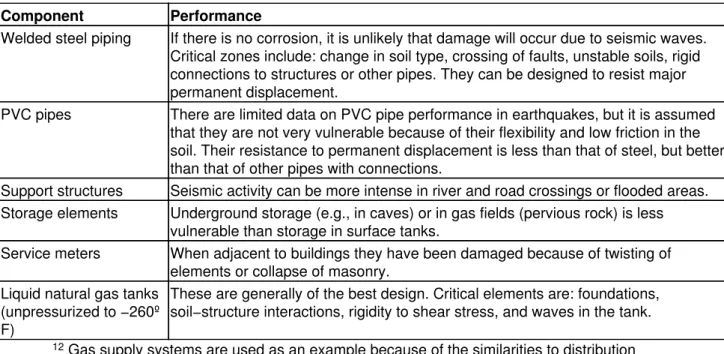
The earthquake exerts inertial force on above−ground structures, but buried structures such as pipes and rigid connections can be damaged as the earth undergoes deformation. Less damage can be expected in relatively more flexible pipelines (PVC or steel, for example) compared with rigid pipes such as compressed mortar, concrete, cast iron, and asbestos cement, especially if they have rigid joints.
i) Influence of Soil Type on Damage. In embankments built of infill, or in soft soils, earthquakes can break
buried pipes. Failures also occur in pipelines located in areas where there is a change of soil type, as in changes in density of natural fill.
The liquefaction of soil is one of the most damaging effects of the earthquakes since it reduces foundation support. A large part of damage to pipes in alluvial terrain or water saturated sand occurs because of liquefaction.
For example, in Japan, in an area of saturated sands, earthquake vibrations practically converted the soil into a liquid in which the pipes and chambers “floated”, causing major damage to the installations.
In many cases, construction materials are not adequate to resist seismic forces.
Large diameter pipes placed at a shallow level suffer more damage than those of smaller diameter, since they have less resistance to “Rayleigh waves” which are dispersed over the earth’s surface in a similar, though less obvious, way as waves of water. Another area of potential damage is in the proximity of pipes to buildings that collapse. The rupture of pipes that enter or leave buildings can wash out public net−work pipelines to which they are connected.
ii) Seismic Risk Maps Showing Ground Quality. Given the difficulty of locating damage in existing pipelines, a
review of seismic risk maps of the areas affected will show the most vulnerable areas, for example: • Areas with deep layers of soft soils, sands and sedimentary gravel, swamps and infilled areas (i.e., subsoils that do not absorb seismic vibrations as do hard rock);
• Areas with layers of loose sand that is saturated with water and other non−cohesive soil strata in which the soil can soften;
• Faults in the rock strata (pipelines that cross these faults can suffer damage).
iii) Locating Damage in Pipes:
• Damage to drinking water pipelines. Damage commonly produces water seepage in areas close to the breaks in the pipes or connections. To determine the magnitude and extent of damage and to make urgent repairs, it is necessary to excavate the lines to find the broken pipe. However, where there are highly permeable soils or low water pressure, it is possible that breaks will be detected only after service is restored. Some indications of this kind of damage are as follows:
initially discovered are repaired;
• Areas of a city or town that continue without water service or have lower pressure after repairs have been made. This might be due to damage in pipes feeding these zones, which should be identified and repaired. • Detecting leaks can be very time−consuming, especially if the necessary equipment and expertise are not locally available. It can be difficult to determine which leaks were caused by the earthquake and which existed before the event.
• Flow meters installed at appropriate points in the mains of the network can detect the existence of leaks.
• Damage to Sewage Pipes. Surface seepage of waste water can be indicative of an area of damage. However, since these are usually open channel flow pipelines, without pressure, there may be fewer visible leaks than in drinking water pipes where pressure can facilitate detection of damage. Manholes can facilitate the visual assessment in successive chambers to locate sections with leaks (by comparing the levels of waste water in neighboring
chambers). Breaks in the pipes, if they did not exist before, can be a product of the
earthquake. Where the drinking water supply is interrupted as a result of the disaster, there will be no return waste water. Normalization of the drinking water supply must occur before final inspection of the waste water system can take place.
• Storm−water Drainage System. If a disaster occurs during the rainy season, the review of this system would be similar to that discussed for the sewerage system. However, if it occurs in the dry season, a visual inspection of damage could be carried out by following waste water channels and major sewer mains, accessible sewer mains, if they exist, and by inspection of neighboring reaches from adjacent manholes.
iv) Risk of Contamination of the Drinking Water System. If pipes from the drinking water and waste water
systems break simultaneously, the waste water will penetrate the drinking water system (especially if there is a considerable volume of waste water spread on the ground). This occurs because pipes for drinking and waste water are usually built parallel to each other, along the same streets. In certain cases there is ground water that covers the drinking water and sewerage net−works. Ground water contaminated by breaks in the sewage system can infiltrate the drinking water system through broken joints . This is likely to occur if there is negative pressure as a result of breaks in the system or because of rationed drinking water.