Nova Southeastern University
NSUWorks
CEC Theses and Dissertations College of Engineering and Computing2017
Improved Detection for Advanced Polymorphic
Malware
James B. Fraley
Nova Southeastern University,[email protected]
This document is a product of extensive research conducted at the Nova Southeastern UniversityCollege of Engineering and Computing. For more information on research and degree programs at the NSU College of Engineering and Computing, please clickhere.
Follow this and additional works at:https://nsuworks.nova.edu/gscis_etd Part of theComputer Sciences Commons
Share Feedback About This Item
This Dissertation is brought to you by the College of Engineering and Computing at NSUWorks. It has been accepted for inclusion in CEC Theses and Dissertations by an authorized administrator of NSUWorks. For more information, please [email protected].
NSUWorks Citation
James B. Fraley. 2017.Improved Detection for Advanced Polymorphic Malware.Doctoral dissertation. Nova Southeastern University. Retrieved from NSUWorks, College of Engineering and Computing. (1008)
Improved Detection for Advanced Polymorphic Malware
by
James B. Fraley
A Dissertation Proposal submitted in partial fulfillment of the requirements for the degree of Doctor of Philosophy
in
Information Assurance
College of Engineering and Computing Nova Southeastern University
An Abstract of a Dissertation Submitted to Nova Southeastern University in Partial Fulfillment of the Requirements for the Degree of Doctor of Philosophy
Improved Detection for Advanced Polymorphic Malware
by James B. Fraley
May 2017
Malicious Software (malware) attacks across the internet are increasing at an alarming rate. Cyber-attacks have become increasingly more sophisticated and targeted. These targeted attacks are aimed at compromising networks, stealing personal financial information and removing sensitive data or disrupting operations. Current malware detection approaches work well for previously known signatures. However, malware developers utilize techniques to mutate and change software properties (signatures) to avoid and evade detection. Polymorphic malware is practically undetectable with signature-based defensive technologies. Today’s effective detection rate for polymorphic malware detection ranges from 68.75% to 81.25%. New
techniques are needed to improve malware detection rates. Improved detection of polymorphic malware can only be accomplished by extracting features beyond the signature realm. Targeted detection for polymorphic malware must rely upon extracting key features and characteristics for advanced analysis. Traditionally, malware researchers have relied on limited dimensional features such as behavior (dynamic) or source/execution code analysis (static). This study’s focus was to extract and evaluate a limited set of multidimensional topological data in order to improve detection for polymorphic malware. This study used multidimensional analysis (file properties, static and dynamic analysis) with machine learning algorithms to improve malware detection. This research demonstrated improved polymorphic malware detection can be achieved with machine learning. This study conducted a number of experiments using a standard
experimental testing protocol. This study utilized three advanced algorithms (Metabagging (MB), Instance Based k-Means (IBk) and Deep Learning Multi-Layer Perceptron) with a limited set of multidimensional data. Experimental results delivered detection results above 99.43%. In addition, the experiments delivered near zero false positives. The study’s approach was based on single case experimental design, a well-accepted protocol for progressive testing. The study constructed a prototype to automate feature extraction, assemble files for analysis, and analyze results through multiple clustering algorithms. The study performed an evaluation of large malware sample datasets to understand effectiveness across a wide range of malware. The study developed an integrated framework which automated feature extraction for multidimensional analysis. The feature extraction framework consisted of four modules: 1) a pre-process module that extracts and generates topological features based on static analysis of machine code and file characteristics, 2) a behavioral analysis module that extracts behavioral characteristics based on file execution (dynamic analysis), 3) an input file construction and submission module, and 4) a machine learning module that employs various advanced algorithms. As with most studies, careful attention was paid to false positive and false negative rates which reduce their overall detection accuracy and effectiveness. This study provided a novel approach to expand the malware body of knowledge and improve the detection for polymorphic malware targeting Microsoft operating systems.
iv
Acknowledgments
I would like to thank Professor James Cannady for providing guidance and leadership as the Chair of my dissertation committee. His brutal honesty has made me a better student and person. I will always look back fondly on his instruction, guidance and wisdom. I also want to thank Dr. Hughes and Dr. Liu for working diligently on my committee. Your comments and feedback served to build a better end-product and researcher. I also want to thank Dr. Ackerman and Dr. Seagull who provided guidance and inspiration early on in the process.
I would also like to thank David Wasson who provided technical guidance and helped me build an infrastructure to process literally hundreds of experimental models. He provided a sound technical advice and allowed me to test ideas that neither of us had ever tackled. Some for good reason. I am grateful that he took my calls and provided technical insights when things broke. He helped me breakthrough by answering questions, giving up his time and providing technical expertise when it was desperately needed.
I am very appreciative of my employer both McAfee and Intel. My journey was only made possible by the company’s support and encouragement. McAfee has been exceptionally supportive, and I have appreciated the support from my senior management. I also have been surrounded by exceptional colleagues at McAfee who have increased my knowledge in
information security by leaps and bounds. It has been my distinct honor to work and learn from all of you over the years.
I am so grateful to Theresa who partnered with me on my life journey. I thank her for inspiring, encouraging and fully supporting my academic journey. I appreciated her patience and
willingness to let me work some insane hours for a long time. I am grateful that my mother instilled a belief that anything is possible if you work hard enough. Jake and Dylan, I hope my hard work and dedication provides a good example for you as you begin your academic journey. Lastly, I appreciate my family’s support and encouragement (especially David Bressi)
v
List of Tables
Tables
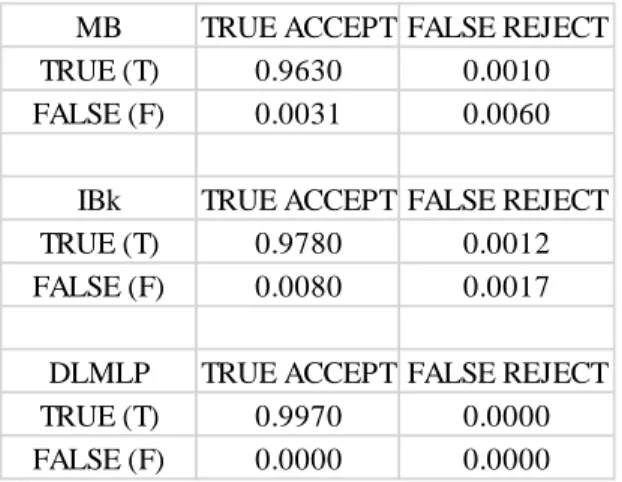
1. Advanced Detection Studies. Sources Used in Study 92 2. Confusion Matrix 125
3. Example Confusion Matrix 128
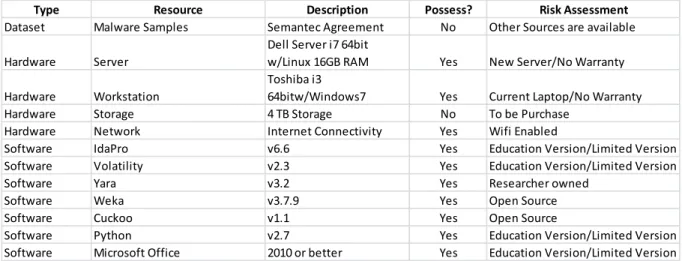
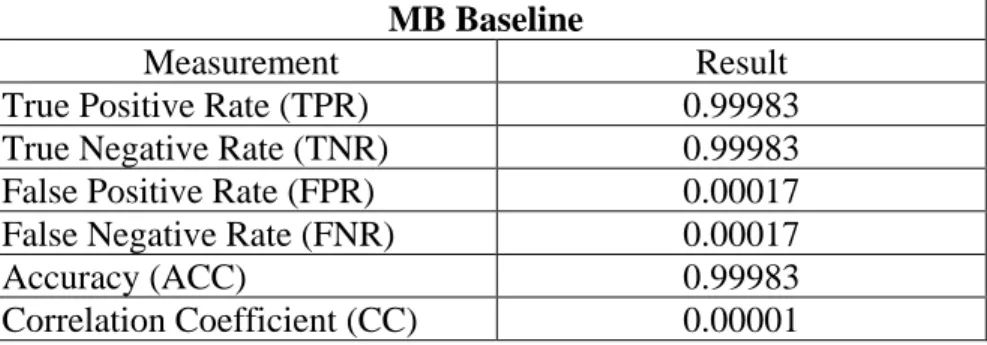
4. Example Unweighted Testing Results 128 5. Experimental Resource Requirements 134 6. MB Baseline Classification Results 144 7. MB Baseline Experimental Results 144
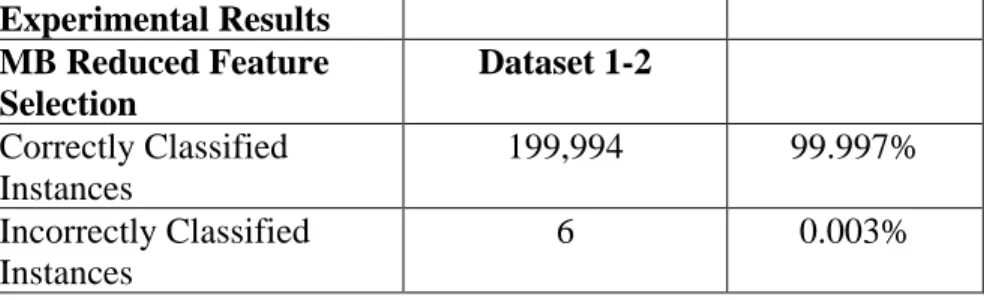
8. MB Reduced Feature Selection Classification Results 145 9. MB Reduced Feature Selection Experimental Results 145 10. MB Data Amplification Classification Results 145 11. MB Data Amplification Experimental Results 146 12. MB Experimental Results 147
13. IBK Baseline Classification Results 152 14. IBK Baseline Experimental Results 152
15. IBK Reduced Feature Selection Classification Results 152 16. IBK Reduced Feature Selection Experimental Results 153 17. IBK Data Amplification Classification Results 153
18. IBK Data Amplification Experimental Results 153 19. IBK Experimental Results 155
20. DLMLP Baseline Classification Results 160 21. DLMLP Baseline Experimental Results 160
22. DLMLP Reduced Feature Selection Classification Results 161 23. DLMLP Reduced Feature Selection Experimental Results 161 24. DLMLP Data Amplification Classification Results 161
25. DLMLP Data Amplification Experimental Results 162 26. DLMLP Experimental Results 163
vi
List of Figures
Figures
1. System Overview 101 2. ROC Results 124
3. Comparative Baseline Testing Results 129 4. ROC Analysis 130
5. MB Graph Results 146 6. IBk Graph Results 154 7. DLMLP Graph Results 162
vii Table of Contents Abstract ii Acknowledgements iii Approval/Signature Page iv List of Tables v List of Figures vi Chapters 1 Introduction 1 Background 1 Problem Statement 10 Dissertation Goal 11
Research Questions and/or Hypotheses 14 Relevance and Significance 16
Barriers and Issues 18
Assumptions, Limitations and Delimitations: 20
Summary 23
Definition of Terms 25 List of Acronyms 31
2 Review of the Literature 33 Overview of Topics 33
Synthesis of Current Literature 39 Research Methods 77
Gaps in Current Literature 81
Strengths and Weaknesses of Current Studies 85 Similar Research Methods 87
Summary 93 3 Methodology 94 Overview 94 Research Design 96 Research Procedures 97 Prototype Environment 100 Threats to Validity 108 Sample 121 Data Analysis 123
Data Formats for Results 127 Resource Requirements 130
viii
4 Results 136
Research Goals 136
Review of the Methodology 136 Experimental Outcomes 138 Data Analysis 163
Findings 166
Summary of Findings 167
5 Conclusions, Implications, Recommendations, and Summary 169 Conclusions 169
Implications 171 Recommendations 172 Summary 174
References 184
Appendix A – Advanced Detection Studies 191
Chapter 1
Introduction
BackgroundMalware (malicious software) represents a significant problem for today’s highly networked and distributed computer systems (Cesare & Xiang, 2010). In general, malware is used to represent a variety of annoying or hostile software programs specifically designed to access, interrupt or establish communication channels, and/or perform data exfiltration from compromised computer systems without the owner’s informed consent (Kumar, S., Rama Krishna, C., Aggarwal, N., Sehgal, R., & Chamotra, S., 2014). The ability to detect malware is a major challenge due to the proliferation and complexity for detecting malware across a wide range of endpoints throughout the enterprise (Qu & Hughes, 2013). The growth of malware threats continues to far exceed the security industry’s projections and estimates (Qu & Hughes, 2013). According to the McAfee Labs Threat Report (2014), the security company collected over approximately 235 million malware samples in the first quarter of 2014. In 2015, McAfee estimated that the company collected over 3 million new samples a day (McAfee, 2016). A majority of samples collect were detected by McAfee’s worldwide sensor network protecting computer systems and networks for both commercial and Government organizations (McAfee, 2014). These samples were collected based on the suspicious activity or behavior of the malware by typical network protection devices and security appliances (McAfee, 2014). The unprecedented growth of new malware increased by 174% for the same quarter from the previous year (2013) and exceeded an additional 100 million new
2
samples (McAfee, 2014). McAfee’s 2015 Threat Report stated that malware rose by 13% in first quarter (McAfee Labs, 2015). Advanced detection methods to detect new malware continues to be a major challenge for security researchers and commercial security companies given the growth and sophistication of malware (Qu & Hughes, 2013).
The ability to detect and classify malware provides a means to identify and stop the proliferation of malware across the network. Today’s detection relies upon signatures of known malware to identify malware at the network and host (Cesare & Xiang, 2011). Signature detection of advanced malware is complicated by polymorphism (Muhaya, Khan, & Xiang, 2011). However, signature detection alone does not provide adequate protection for networks and end points from polymorphic malware. The McAfee Threat Report (2016) stated that on average the security saw almost 40 million new malware samples in each quarter for 2015.
In order to understand the malware threat landscape – it is helpful to understand the various types of malware and the motivational factors driving malware development. Malware is often developed for a specific purpose to attack or disrupt a specific target or environment (Richardson, 2011). Typically malware aims to steal information,
compromise sensitive networks, and establish launch points for future attacks (Brenner, 2008; Chu, Holt, & Ahn, 2010; Wall, 2012) . The term “malware” includes viruses, Trojan programs and other malicious tools installed on hosts or endpoints to automate some type of compromise that may lead to more sophisticated or complex intrusions (Brenner, 2008; Richardson, 2011; Wall, 2012). Another type of malware – botnets extends this capability and combines multiple aspects of existing malware into a single
3
program enabling hackers to form a network of infected computers world-wide (Bächer, Holz, Kotter, & Wicherski, 2005). Botnets can provide a foothold to create a number of attacks ranging from the distribution of spam, denial of service attacks, and advanced network scanning (Bächer et al., 2005). There has been significant research involved with malware and role it plays in cybercrimes and the financial impact attacks play on organizations (Bächer et al., 2005; Wall, 2012). Additional research has been involved with the social factors that influence the creation, distribution, and use of malware in the hacker community (Chu et al., 2010). Sophisticated malware enables hackers to sell access or steal information from their botnets across the world (Bächer et al., 2005). Botnets have revolutionized attacks on infrastructures and has advanced the targeted attack on organizations (Chu et al., 2010). Hackers have established forums and Internet Relay Chat (IRC) to sell and distribute malicious software, stolen data, and hacking tools that enable less skilled malware developers to gain direct access to advanced malware services (Chu et al., 2010).
Ransomware has become major malware challenge within the last few years (McAfee Labs Threats Report, 2016). Ransomware better known as “scareware” has become quite popular with cyber criminals (Kharraz, Robertson, Balzarotti, Bilge, & Kirda, 2015). Most ransomware is polymorphic in nature (McAfee Labs Threats Report, 2016). Ransomware malware and the criminals operating the malware see to take
advantage of people’s fear of releasing private information, losing critical data, or facing irreversible hardware damage (Kharraz et al., 2015). In most cases ransomware locks or encrypts the victims’ computers until they make a payment to unlock or re-gain access to their data (Kharraz et al., 2015). Ransomware has been on the malware landscape for over 10 years, however the volume of these attacks has dramatically increased over the
4
last few years - 500% in 2013, 550% in 2014 and nearly 600% in 2015 according to Kaspersky’s Threat Report (2016). The Crypto locker ransomware has been detected on over 750,000 computers in the United States (Gostev, Unuchek, Garnaeva, Makrushin, & Ivanov, 2016). Ransomware attacks have migrated from individuals to organizations such as healthcare/hospitals and local governments. Once such ransomware case involved an entire police department who had to pay the ransom in order to unlock or to decrypt the departments document repository (Gostev et al., 2016). This has led to new energy for detecting polymorphic ransomware and has mobilized many of the leading security vendors to share findings because of the levels of sophistication and the current ineffective defensive techniques (Gostev et al., 2016).
In order to improve detection advances in malware classification and detection are needed to provide better end-point protection. Malware detection has traditionally been largely signature-based (Qu & Hughes, 2013). These signatures are based on the hashing of the malware files, executables or binaries (Sulaiman, Ramamoorthy, Mukkamala, & Sung, 2005). Detection is then based on the a-priori signature or hash of the complete binary or partial characteristics of byte sequences of known malware samples (Wüchner, Ochoa, & Pretschner, 2014). Security vendors collect, analyze and create extensive repositories of malware signatures that are used for detection within anti-virus and other security protection. Signature-based detection continues to be one of the main tools used for detection on commercial anti-virus (Wüchner et al., 2014). However, signature based detection suffers from several major limitations. The first major limitation is speed. New malware released into the wild will not be detected until the signature is captured by some security mechanism and the executable/binary analyzed. In reality, once the file/binary has been captured it can take weeks for one of the many security vendors to
5
publish the malicious reputation for a specific file. Unfortunately, polymorphic malware can be developed and distributed via the internet across the world in minutes and hours (Mandiant Research, 2014). Polymorphic malware can then self-generate new signatures in order to appear to security devices as a new file. These new signatures will need time to be discovered, analyzed (determined malicious or benign) and released by commercial security vendors for protection (Szor, 2005). Signature-based defense will always suffer a time gap between the release of a new or unknown malware types, determination of maliciousness by the security community and signatures for the corresponding malware (Wüchner et al., 2014). Unfortunately, it is during this time gap that the malware goes undetected, reaches the intended targets and propagates itself throughout compromised networks.
Malware developers understand the time gap and exploit malware determination frequency cycle referred to as “catch, analyze, deploy” (Wüchner et al., 2014). The challenge for malware researchers is to shorten this gap or approach the problem from a different perspective (Cesare, Xiang, & Zhou, 2007). The second limitation of signature-based detection is polymorphism. Polymorphic malware is an umbrella term used to refer both polymorphic and metamorphic malware (Campo-Giralte, Jimenez-Peris, & Patino-Martinez, 2009). Polymorphic and metamorphic malware exploit the malware frequency determination cycle by dynamically creating a new executable and changing its signature. By changing the signature, most current defensive technologies ignore the executable as it has a new identity. The new executable will have a new signature and evade existing signature detection (Cesare, Xiang, & Zhou, 2013). Malware developers use the new signature to propagate and infect a large number of hosts (Wüchner et al.,
6
2014). The detection of malware is increasingly more difficult over time due to the sophistication of the malware programs (Guri, Kedma, & Sela, 2013). Previous
polymorphic detection rates using advanced classification range from 68.75% to 81.25% (Amos, Turner, & White, 2013). These detection rates used Bayes and Multilayer Perceptron techniques to establish a baseline for effective detection of various types of polymorphic malware (Amos et al., 2013).
Malware researchers have developed techniques to break the polymorphic malware executable into segments and attempt pattern matching on malware segments (David & Yahav, 2013). This approach has been extremely helpful as malware
developers tend to re-use and share functions (Rekdal & Bloemerus, 2013). However, advanced malware developers understanding this approach employ other techniques to protect code from being analyzed by encrypting segments of execution code and leveraging other obfuscation techniques to avoid sub-function signature development (Campo-Giralte et al., 2009). Malware developers design malware to invade, self-mutate and propagate malware throughout the infected network using advanced techniques that are generally used one-time making the research very difficult (Bossert, Hiet, & Inria, 2014). Detection of advanced malware grows increasingly more difficult because of the sophistication and concealment of the executable. Malware detection and classification research methods must be advanced in order to detect new types of malware. Advanced malware analysis methodologies need to be developed in order to improve detection and classification the evolving nature of polymorphic malware.
Identification of malicious or benign programs (files, portable executables, etc.) must involve new discovery techniques and leveraging several types of advanced analysis
7
to identify malware (Cesare & Xiang, 2013). There are typically two types of advanced analysis – static and dynamic. Static analysis never executes the malware, but rather decodes the compiled code into human readable segments (Sulaiman et al., 2005). Dynamic analysis is typically conducted via a platform referred to as a “sandbox”. The sandbox provides an environment to execute the program and captures each sequence of the runtime behavior (Cesare & Xiang, 2014). Both analysis tools are extremely helpful during malware analysis as researchers are able to understand how the program executes and what functions are actually executed by the malware (Sulaiman et al., 2005). Static and dynamic analysis allows researchers to evaluate and determine the intent of the malware programs and the potential targeted environment. Researchers can then classify malware into families of malware based on the results from static and dynamic analysis. The ability for advanced analysis to produce classification and signature detection provides a means to perform advanced detection.
Advanced detection relies on feature extraction of the malware being analyzed (Qu & Hughes, 2013). Recent malware research has divided detection into two tasks: malware classification and malware detection (Qu & Hughes, 2013). Classification of malware enables researchers to understand the family of malware and generally the intent of the attacker (Qu & Hughes, 2013). Detection involves the identification of novel instances of malware and detecting copies or variants of known malware (Qu & Hughes, 2013). Both classification and detection requires feature extraction of the malware binary and class features associated with the malware (Cesare & Xiang, 2013). Detection of new malware relies heavily on statistical machine learning (Qu & Hughes, 2013). Searching for malware variants uses the concept of similarity searching to query a
8
database of known malware types and functions (Qu & Hughes, 2013). Similarity queries or nearest neighbor searches relies upon techniques within machine learning or referred to as instance-based learning (Yerima, Sezer, McWilliams, & Muttik, 2013). Instance-based learning utilizes inherent distance functions within machine learning to highlight similarity or dissimilarity between objects (Yerima et al., 2013) . These search
algorithms use distance functions and develop mathematical metrics for various searches and are much more efficient than traditional database queries (Yerima et al., 2013).
Traditional research and commercial malware detection systems have relied upon static string signature searching techniques to classify and detect malware (Cesare & Xiang, 2011). This type of search relies upon capturing sections of malware executable code that uniquely identifies the malware (Cesare & Xiang, 2011). String signature searching performs well from a query performance and produces low false positive results. Therefore, string searching is heavily utilized in real-time systems for malware detection (Cesare, Xiang, & Zhou, 2013). Unfortunately, string signature searching performs poorly when searching for polymorphic malware variants. Poor string search performance for polymorphic malware variants is due to the closely related but non-identical signatures (Cesare et al., 2013). Polymorphic malware variants have similar properties but the malware changes between instances causes ineffective searches. Additional research needs to be performed in order to find advanced search techniques for polymorphic and metamorphic malware.
The advancement in functionality and behavior of computer malware can be categorized into five distinct generations (Noreen, Murtaza, Shafiq, & Farooq, 2009). The first-generation malware was quite simple, i.e., they caused infection by simply
9
attaching themselves to the code sections of benign executables (Noreen et al., 2009). The malware in second generation had some additional functionality such as self –
replication (Noreen et al., 2009). The malware of third generation had stealth capabilities that make this type more difficult to detect for signature-based detection (Noreen et al., 2009). The malware belonging to the fourth generation uses armoring techniques to protect the code from static analysis (Noreen et al., 2009). Finally, the malware of the current generation use polymorphic techniques to encrypt functions and obfuscate their code with every replication (Noreen et al., 2009). Most of today’s polymorphic malware utilizes armoring and obfuscating protections to hide and propagate themselves across the environment.
The development and analysis of today’s malware requires experienced programmers. The development of malware requires years of experience due to the sophistication and nature of the programming. Therefore, malware developers have “malware creation engines”, which generate different versions of malware in order to re-use logic and functions through and a complex set of algorithms (Noreen et al., 2009). The malware creation engines use various techniques such as compression, function insertion and instruction substitution to develop a new variant (Noreen et al., 2009). However, these variants can be discovered through static and dynamic analysis as they have the same functionality and semantics (Noreen et al., 2009). Thus, polymorphic and metamorphic malware retains similar functionality and executable code as it replicates itself. These functions and code base can essentially provide genetic markers for detection (Pfeffer, Call, & Chamberlain, 2012).
10
The goal of polymorphic and metamorphic malware is to dynamically generate new versions of malware in order to evade signature detection techniques (Qu & Hughes, 2013). Today’s malware is capable of mutating or creating copies of itself making it very difficult for signature-based detection to be effective (Qu & Hughes, 2013). Therefore, malware research must consider new techniques to identify and detect malware variants to improve endpoint or host security (Qu & Hughes, 2013).
Problem Statement
There is currently no single method to effectively detect polymorphic malware at the host or end-point. Advanced malware is spreading across the enterprise through internet downloads, email attachments and malicious hyperlinks, and mobile devices/hosts and is a major challenge for system-owners and cyber-security
professionals (Campo-Giralte et al., 2009). Signature-based defense approaches such as anti-virus software do not provide adequate protection from polymorphic malware (Campo-Giralte et al., 2009). According to McAfee’s report (2016), the security vendor collects over 3 million new samples of malware per day. Due to the overwhelming number of new and advanced malware, new detection techniques are needed to discover advanced malware and must be researched to provide improved detection (Borojerdi & Abadi, 2013). New detection methods must be relied upon to examine untrusted
programs and prevent malware from causing damage and disruption to computer systems (Cesare & Xiang, 2013). Better detection malware detection methods may prevent the proliferation of end-point infections. Identifying and preventing malware from executing improves overall system security and represents significant cost avoidance savings for organizations (Qu & Hughes, 2013). New malware research must provide new detection
11
techniques to identify and classify today’s sophisticated malware (Qu & Hughes, 2013). The research must also understand the sophistication of today’s malware and the evolving nature of targeted malware attacks in the future (Mandiant Research, 2014).
This research focused on developing improved detection rates using various machine learning cluster algorithms with a limited set of multidimensional topological features. As part of the study, the research developed a feature extraction methodology, developed a prototype environment and leveraged a testing protocol to better understand advanced clustering algorithm performance and feature weighting to improve detection for host or endpoint protection.
Dissertation Goal
The goal for the research was to develop an experimental prototype system to provide improved detection for polymorphic malware. The prototype system utilized various feature extraction methodologies for all types of samples. These features were assembled and evaluated with advanced clustering algorithms within machine learning to deliver improved detection. This study quantitatively examined and prototyped various techniques to test the theory that machine learning with advanced clustering can provide improved detection for polymorphic malware. This study is grounded in previous quantitative experiments that leverage supervised and unsupervised machine learning for malware research (Boro, et al., 2012; Pradesh, 2014). Further, previous research
provided a basis for various feature extraction techniques and feature isolation models to enhance malware detection for previous research using machine learning (Chaumette, et al., 2011; Devesa, et al., 2010). This study extends previous malware detection
12
extraction. The feature extraction methodology used to assemble the multidimensional topological data and became the input (dataset) for machine learning. Based on the research of nearly 40 related and recent malware studies, it is believed that this is the first study to evaluate the multidimensional topological features (file properties, static analysis and dynamic analysis) using advanced clustering algorithms. Ultimately, the detection of polymorphic malware was the focus and emphasis for the study. Current literature offers detection rates for polymorphic detection using advanced classifiers range from 68.75% to 81.25% (Amos et al., 2013). The study developed deliver detection rates of 99.43% well above 81.25% with better than acceptable accuracy rates.
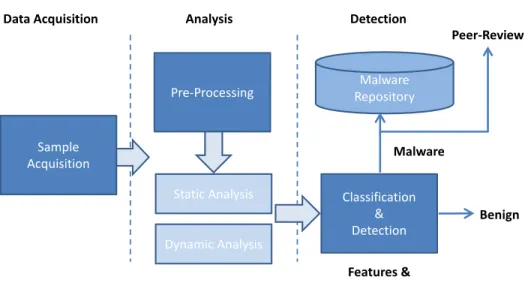
As part of the study, a feature extraction methodology used an integrated analysis environment to perform feature extraction from all samples (malware, benign and
unknown) samples as input for machine learning. The feature extraction methodology constructed produced a rich dataset for each sample. Feature extraction was achieved through static analysis and dynamic analysis. This multidimensional topologic approach delivered the unique dataset for each sample used for polymorphic malware detection.
The study evaluated detection rates for three advanced clustering algorithms using machine learning within WEKA. The clustering algorithms used for this studying
included: 1) Advanced Ensemble Classification (Bootstrap Aggregating (Meta Bagging (MB)), 2) Instance Based k-Nearest Neighbor (IBk) and 3) Deep Learning Multi-Layer Perceptron (DLMLP). The study demonstrated improved malware detection based on advanced cluster analysis using multidimensional topological data that delivered true positive detection rates above the established baseline range of 68.75% to 81.25% for polymorphic malware (Amos et al., 2013). Additionally, the research delivered improved
13
false positive rates well beyond the range 15.86% to 33.79% established by the same study (Amos et al., 2013). The ability to achieve these goals was based on developing an environment to analyze, extract, assemble and classify the malware.
The Instance Based k-Nearest Neighbor (IBk) algorithm was chosen to replace LSH as the algorithm improves upon the “locality” aspects of the clustering algorithm. The IBk is a k-nearest-neighbor classifier that utilizes a similar distance metric used in the LSH algorithm. The calculated Euclidean distance function is used by IBk as a critical search parameter within the algorithm (Manikandan, Ramyachitra, Kalaivani, & Ranjani Rani, 2016). The IBk algorithm was selected as it provided newer techniques for clustering outcomes.
The Deep Learning Multilevel Perceptron (DLMLP) clustering algorithm was selected to replace the BP algorithm. Recent literature discussed the benefits of DLMLP over BP as it improves upon the dimensions of belief for training and test datasets (Gruber, Cammerer, Hoydis, & Brink, 2017). The main idea in replacing the BP algorithm with DLMLP was recently presented by Gruber et al. (2017). New research has found that artificial neural networks (ANN) can leverage belief propagation for clustering or classification but do so inefficiently (Gruber et al., 2017). ANN’s build networks of neurons, share information between neurons and propagate results
throughout the network using weights or beliefs (Gruber et al., 2017). This approach to propagation is done so inefficiently as it is done many times throughout the entire
network (Gruber et al., 2017). A more efficient way to achieve similar or better results is to establish shallow neural networks and combine other algorithms to achieve similar propagation (Gruber et al., 2017). The goal was to utilize the DLMLP algorithm for
14
improved detection. Given that the goal of this research was to establish new detection using advanced algorithms. DLMLP was selected for model efficiencies and to leverage nascent algorithms that improved upon other algorithms.
Research Questions and/or Hypotheses
This study quantitatively examined and prototyped various techniques to test the theory that machine learning with advanced clustering can provide improved detection for polymorphic malware. Therefore, the research question was - Can machine learning utilizing clustering algorithms with multidimensional topological feature extraction deliver improved detection for polymorphic malware? The research did in fact deliver improved malware detection given multidimensional topological data extracted from static analysis, dynamic analysis and file properties. This study developed an
experimental prototype that analyzed over 1M samples using MB, IBk and DLMLP. These samples were used to evaluate polymorphic malware detection using machine learning with advanced clustering.
Previous results suggested that various cluster algorithms could deliver impressive detection results with limited datasets (Fraley & Figueroa, 2016). Initial research demonstrated various clustering algorithms produced impressive detection rates with machine learning for smaller datasets. This study analyzed much larger datasets. Each algorithm was allocated a dataset containing 200,000 samples containing known malware, known benign and unknown or undetermined files. Earlier demonstration results produced well above the 81.25% for a small dataset (Fraley & Figueroa, 2016). The research produced detection rates for MB, IBk and DLMLP that exceeded 99.99%.
15
Feature extraction was accomplished using both static and dynamic analysis become the inputs for machine learning. The multidimensional topological data
contained file features, static analysis features and dynamic analysis features for input for the experimental research model to demonstrate improved detection (Liu, Chen, & Guan, 2012; Tamersoy, Roundy, & Chau, 2014). These features were utilized with machine learning with advanced clustering algorithms to produce the achieved detection rates.
Based on the research of nearly 40 related and recent malware studies, it is
believed that this is the first study to evaluate the combination of topological features (file properties, static analysis and dynamic analysis) with machine learning using advanced clustering. Most studies use either static or dynamic analysis. Ultimately, the focus of the study was to demonstrate improved detection rates for malware using
multidimensional topological features with machine learning utilizing larger datasets. It is important to note that polymorphic malware has the ability to change behavior and execute different embedded functions over time (Campo-Giralte et al., 2009). Therefore, detection of polymorphic malware becomes more difficult and baseline detection rates range from 68.75% to 81.25% (Amos et al., 2013). Using this approach, the study was able to produce detection rates for MB, IBk and DLMLP that exceeded 99.999%.
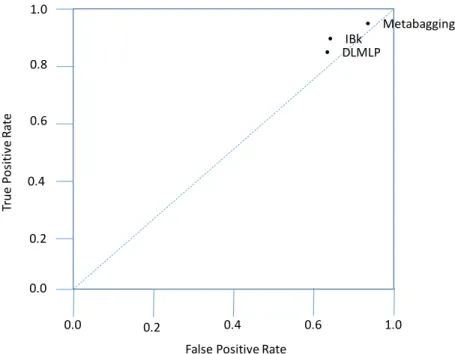
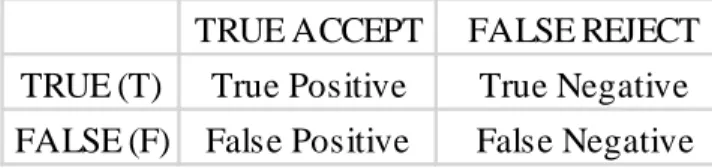
This study developed a prototype to quantitatively evaluate malware detection effectiveness and accuracy. Accuracy can be expressed as the Number of correct assessments divided by the Number of all assessments. Effective detection rates were evaluated using standard statistical measures such as True Positive Rate (TPR), False Positive Rates (FPR), True Negative Rate (TNR) and False Negative Rate (FNR). Using these statistical measures allowed deeper understanding for the various detection rates.
16
The focus of the experimental prototype was to evaluate detection rates for the various clustering algorithms given the various features, weighting of the features and the advanced cluster algorithms used with a series of machine learning tests. There are a number of statistical measures to be utilized to evaluate malware detection performance. Sensitivity and Specificity are two standard measures that evaluate effective detection rate (Kolter & Maloof, 2006). Sensitivity and Specificity statistical measures have been used to evaluate malware detection performance for a number of previous malware detection experiments (Kolter & Maloof, 2006). This analysis is provided later in the report.
Relevance and Significance
There is currently no single method to identify and detect polymorphic malware at an endpoint. Advanced malware affects almost every organization, business and
government entity connected to a network and internet (Pramono & Suhardi, 2015). Traditional signature-based detection systems are ineffective due to the dynamic nature of polymorphic malware (Cesare et al., 2013). Polymorphic malware can be delivered through a number of distribution channels: email, embedded files, program updates, and internet web sites (Cesare et al., 2007). Major security companies spend billions of dollars to solve general malware issues (McAfee, 2014). The detection of polymorphic malware is more difficult because of the sophistication of the malware programs (Guri et al., 2013). Polymorphic malware developers continue to advance malicious programs to evade or avoid detection by security protection devices (Qu & Hughes, 2013). There is no single answer for detecting polymorphic and metamorphic malware. However, researching polymorphic malware may provide greater insight into classes of malware
17
and effective detection techniques for various classes. Malware research continues to be needed in order to provide details regarding the evolving nature of polymorphic malware.
Many of today’s cyber-criminal activities on the internet can be directly attributed to malware or malicious programs (Ulrich Bayer, Kirda, & Kruegel, 2010). Malware comes in different sizes and shapes – Trojans, viruses, bots, etc. and give miscreants a wide range of possibilities for achieving nefarious activities (Ulrich Bayer et al., 2010). As a result, security companies see a huge number of new malware samples each day – McAfee estimates at least 30 per second according their most recent report (McAfee, 2014). Globally speaking, in 2014, cybercrime is estimated to cost businesses more than $400 billion a year (McAfee Labs, 2015). Other experts believe that a $400 billion estimate is conservative and the total cost of cybercrime in 2014 could have approached nearly $600 billion worldwide (McAfee Labs, 2015). The rate of growth for cost impact has soared from $56 billion in 2004 to today’s $400 billion estimate (Schneidewind, 2010; McAfee Labs, 2015). In 2011, the Federal Bureau of Investigation (FBI) reported that on average, companies that report a network breach have lost an average of $150,000 per incident (Richardson, 2011). Data breaches today are estimated to cost US
businesses at least $200 billion (McAfee Labs, 2015). Many of these breaches have been attributed to unauthorized money transfers and account hijacking on mobile devices (A. Sharma & Sahay, 2014). Being able to detect and identify malware infections can deny hackers financial reward, improve security and reduce the organizational cost of mitigating these infections.
This research was built upon the current knowledge base for polymorphic malware research by improving detection through machine learning. This research developed an experimental approach to improve advanced detection by leveraging
18
multidimensional feature extraction for three advanced clustering algorithms using machine learning. By utilizing this experimental approach, this research extends the body of knowledge for detection of polymorphic malware. By achieving improved detection rates for polymorphic malware there is the potential to reduce the financial impact on businesses worldwide.
Barriers and Issues
There were a number barriers and issues with the experimental research. The first and most imposing issue is obtaining the malware data set. In order to perform this research, the malware data set needed to contain representative samples of contemporary polymorphic malware. These data sets are usually collected by large security commercial organizations and are shared with partners for a fee. The researcher was able to obtain a sufficient sample datasets for known malware, known benign and a collection of
unknown samples. The researcher was able to secure over 2 million total samples in order to develop each of the sample datasets. The collection consisted of 1,009,108 known malware samples, 756,322 known benign samples and 748,976 unknown files. In addition, the researcher ensured that known malware samples in the dataset were
targeting Microsoft operating systems. Obtaining the collection of samples required and consumed a significant amount of time, a number of transportable drives and long data transfer times.
The second issue is that in addition to the malware data, the expanded data set must contain representative non-malware and unknown samples. The non-malware data set must be included as part of the research in order to evaluate the effectiveness of detection. A number of vendors were able to share a large amount of the benign files. In
19
particular, Virus Total provided 90% of the 756,322 known benign samples. Unknown samples also needed to be included as part of the study. A number of vendors were able to share “undetermined” or “unknown” samples as part of this study. Virus Total and Malwarebytes provided unknown files samples for this study. Contemporary
non-malware has characteristics and behaviors that protect intellectual property of commercial software. These non-malware behaviors and characteristics are often mimicked by malware developers in order to bypass detection. This research evaluated known malware, known benign and unknown samples in order to evaluate overall detection effectiveness (False Positives and False Negatives). Initially, it was thought that the benign samples and unknown samples would be more difficult to obtain than the malware samples. This was not the case, the malware samples targeting Microsoft operating systems were much more difficult to obtain.
A related dataset issue was storing and securing the experimental dataset. The objective of the research is to analyze millions of samples in order to evaluate efficacy and validate the proposed detection approach. The study required over 2 million samples. It was expected that the storage for malware and non-malware samples would not exceed 1 TB. However, this was underestimated. Malware samples are typically stored in a .zip compressed file format with a password. In many cases, vendors who share samples also used the Unix TAR command to ship compressed files (30-35 GB for 15 Tarballs). This limited the network bandwidth and storage needed for these files. However, the uncompressed files consumed over 1.3 TB of hard drive storage.
Once the various test data sets had been pseudo-randomly generated, the feature extraction process would simply use the unique id (file hash) associated with the sample
20
for feature extraction. As a separate process, selected files needed to be unzipped and password supplied in order to access the sample. Additional unique identifiers were developed as many of the files had a mixture of MD5, SHA1 and SHA256 hashes. All files obtained, known malware, known benign and unknown files were stored in a secure and protected repository. The secure storage of malware data set was needed to ensure non-detonation within the experimental storage environment. The malware samples were kept in a state such that the malware did not detonate or infect the analysis
platform/environment while stored.
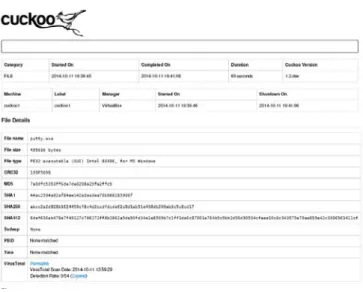
Lastly, the software tools required for the prototype environment did have represent some challenges. Sufficient software and hardware computing resources had been acquired prior to beginning study. However, the open source version of Cuckoo had several new features as part of the new release. Installing the new release presented some major challenges. In addition, previous versions of Cuckoo processed samples in a different fashion and produced automatic dynamic analysis reports. The upgraded version of Cuckoo provided some advanced features that were more suitable for this study. Online resources were used to eventually assist with installing and configuring Cuckoo using the Ubuntu operating system (Kolo, 2016). Details regarding installation dependencies, networking and configuring VirtualBox is provided in Appendix A (Kolo, 2016). Managing the overall analysis environment was somewhat challenging but achievable. Difficulties with installing Cuckoo impacted schedule by a few weeks.
Assumptions, Limitations and Delimitations:
There were a number of assumptions, limitations and delimitations with the research conducted. Each of these areas are discussed in detail below.
21
Assumptions
There were a limited number of assumptions for this study. The first assumption was that the dataset collected from across the malware repositories represent the malware population from across the internet. The population of malware selected was malware captured relatively recently. Secondly, there was no determination made regarding the genetic relationships for the polymorphic malware samples used for the study. In other words, some samples may be related but the study assumes that these relationships do not matter for the purpose of detection. Lastly, it was assumed that the samples collected and maintained in a secure .zip container does not disturb or alter the malware sample itself. The .zip container is a common industry protection mechanism that protects working environments from malware outbreaks. All malware was secured and stored in a .zip file format in order to protect the prototype environment. It is believed that these
assumptions were minimal and did not affect the research outcomes.
Limitations
This study included malware samples from various communities of interest for malware research including Symantec, Virus Total, contagio, Virus Sign, and VxHeaven. There was a limitation regarding collecting samples across these available sites. The limitation for this study was that only polymorphic samples with dates within the last eighteen months was used for detection research from these sites. Therefore, the sample set may not be representative for older malware or other malware sites. The purpose of study was to evaluate detection for current malware. Older samples may have value but more recent malware will have more value. Collecting samples from multiple sites and
22
then performing random selection should provide the needed sampling technique for generalizability.
Delimitations
Delimitations provide boundaries for the research or study (R. Yin, 2015). Delimitations include topics or areas that the study chose to intentionally exclude from consideration. For the purpose of this study, the three clustering algorithms have been selected due to demonstrated detection results from previous studies (Alam, Horspool, & Traore, 2013; Murphy, Weiss, & Jordan, 1999; Tamersoy et al., 2014). There are most certainly other advanced clustering algorithms that could have been used for this study. However, the intent of this research was to demonstrate that detection can be improved by adding a combination features from file properties, static and dynamic analysis. The proposed research expands current detection body of knowledge by using proven clustering algorithms with the expanded features (static, dynamic and file properties) leveraging the machine learning environment. Other delimitations include selecting only malware samples specifically targeting the Microsoft operating systems. Malware targeting other operating systems was not a consideration for this study. However, there were a limited number of samples collected that were not targeting Microsoft operating systems across the community (Symantec, Virus Total, contagio, Virus Sign, and VxHeaven). Non-Microsoft malware samples collected were minimal. Non-Microsoft malware samples were discarded prior to random selection. Microsoft targeting malware is believed to represent a majority of the targeted polymorphic malware (Ahmadi,
Ulyanov, Semenov, Trofimov, & Giacinto, 2016) Therefore, this study focused on only samples targeting Microsoft.
23 Summary
Malware represents some of the most serious security concerns for today’s Internet. Security breaches and cyber-attacks can be directly attributed to malware or multi-stage cyber-attacks. Malware can compromise networks and computers in the form of botnets, viruses, worms, ransomware and advanced persistent threats (APTs). These cyber-attacks are launched using targeted and advanced malware techniques to steal personal, proprietary of financial information. The high number of attacks and the associated negative notoriety make malware one of the most popular areas for advanced research. Much of today’s advanced research has been concentrated on developing techniques to collect, study, and mitigate malware. This research focused on detecting “real” malware and samples found “live” on the internet. As improved detection becomes a reality – mitigation or elimination of malware for end-points can be greatly enhanced. Unfortunately, current host-based detection approaches that leverage signature-based detection is largely ineffective for new polymorphic malware. Polymorphic malware avoids or evades signature detection by using advanced obfuscation or encryption techniques. This research set out to address these
shortcomings, new research was conducted to develop dynamic detection approaches to identify potential malware threats. This study proposed a novel malware detection approach that provided improved detection for polymorphic malware. The research should enhance and compliment traditional end-point detection approaches. This study’s approach extracted key features from file properties, static and dynamic analysis and through advanced cluster analysis determined the likelihood of files (samples) to be benign (good) or malicious (bad). The proposed approach analyzed the malware
24
function calls and the inclusion of dynamic libraries. The research conducted leveraged this information through machine learning to improve detection. In order to better
understand the malware threat landscape, a review of past research literature and previous malware studies is provided next.
25 Definition of Terms
Advanced Persistent Threat: A deliberately slow-moving cyber-attack that is applied quietly to compromise information systems.
Anomaly detection: The search for network connections which do not conform to an expected normal traffic.
Bot: A term short for robot. Criminals distribute malicious software that can turn a computer into a bot. When this occurs, a computer can perform automated tasks over the Internet without one’s awareness.
Botnet: Criminals use bots to infect large numbers of computers. These computers form a network, or a botnet. Criminals use botnets to send out spam email messages, spread viruses, attack computers and servers, and commit other kinds of fraud.
Bring Your Own Device (BYOD): Mobile devices that are personally owned, not a corporate asset.
Clustering: Method that organizes objects with similarities into one cluster, and
objects with dissimilarities into other clusters.
Crimeware: Tools that drive hackers’ attacks and fuel the black market (e.g., bots,
Viruses, Trojan, spyware, adware, etc.)
Cryptocurrency: A digital medium of exchange that uses encryption to secure the
26
Cyber Attack: An attack, via cyberspace, that targets an enterprise’s use of cyberspace for the purpose of disrupting, destroying, or maliciously controlling a computer environment/infrastructure; destroying the integrity of the data; or stealing controlled information.
Data Breach: An organization’s unauthorized or unintentional exposure,
disclosure, or loss of sensitive PI, such as social security numbers; financial information, such as credit card numbers; date of birth; or mother’s maiden name.
Data Breach: An organization’s unauthorized or unintentional exposure,
disclosure, or loss of sensitive PI, which can include PII, such as social security numbers;
or financial information, such as credit card numbers.
Data Security Incident: A violation or imminent threat of violation of a computer
security policy, acceptable use policy, or standard security practice
Denial of Service (DoS): The prevention of authorized access to resources or the
delaying of time-critical operations.
Detection Rate: The percentage of the number of intrusion instances detected by the system over the total number of intrusion instances present in the test set.
Distributed Denial of Service (DDoS): An approach whereby the hacker attempts to make a service unavailable to its intended users by draining system or networking
27
False Alarm Rate: The percentage of the total number of incorrectly classified normal instances over the total number of instances.
Hacker: Unauthorized user who attempts to or gains access to an information system.
Indicators of Compromise (IOCs): Pieces of forensic data, such as data found in
system log entries or files, that identify potentially malicious activity on a system or
network.
Intrusion Detection System (IDS): Hardware or software that gathers and analyzes
information from various areas within a computer or a network to identify possible
security breaches, which include both intrusions and misuse.
Intrusion Prevention System (IPS): Systems that can detect and attempt to stop an intrusive activity, ideally before it reaches its target.
Malicious Code: Software or firmware intended to perform an unauthorized process that will have an adverse impact on the confidentiality, integrity, or availability of an information system.
Malware: Programs or executables targeted to infect a user’s device. When successful, the hacker is able to control the user’s device, which may lead to data loss or escalation in the hacker’s privileges on the information system.
Mobile Device: Smart phones, tablets, portable cartridge/disk-based, removable
28
flash memory cards/drives that contain nonvolatile memory; NIST, 2013d, 2013e).
Personal Information: Information from individuals that can uniquely identify a
specific person.
Personal Identifiable Information (PII): Information that can be used to distinguish or trace an individual’s identity, such as his or her name, social security
number, or biometric records, alone, or when combined with other personal or identifying
information that is linked to a specific individual, such as date and place of birth or
mother’s maiden name.
Privileged Account: An information system account with approved authorizations of a privileged user.
Privileged User: A user that is authorized to perform security relevant functions on a computer server that ordinary users are not authorized to perform (NIST, 2013e).
Ransomware: A type of malware that encrypts files and prevents the user from
accessing data until the user pays a certain amount of money (ransom) to decrypt the files
Rootkit: A set of tools used by an attacker after gaining root-level access to a host to conceal the attacker’s activities on the host and permit the attacker to maintain the access through covert means.
Security Event: Any observable security occurrence in a system network.
Security Incident: A violation or imminent threat of violation of a computer security policy, acceptable use policy, or standard security practice. These include
29
an accessed occurrence that actually or potentially jeopardizes the confidentiality,
integrity, or availability of an information system or the information that the system
processes, stores, or transmits.
Security Information and Event Management (SIEM) Tool: Application that provides the ability to gather security data from information system components and present that data as actionable information via a single interface.
Spyware: Software that is secretly or surreptitiously installed on an information
system to gather information on individuals or organizations without their knowledge.
Testing Phase: A detection phase in which the distance (e.g. Euclidean distance)
between each test instance and the normal cluster’s centroid is measured to determine
whether or not that instance is normal.
Training phase: A period in which a normal profile is built and or updated.
Trojan: A computer program that appears to have a useful function, but also
has a hidden and potentially malicious function that evades security mechanisms,
sometimes by exploiting legitimate authorizations of a system entity that invokes the
program.
Unauthorized User: A user who accesses a resource that he or she is not authorized to use.
30
Virtualization: Hiding the discrepancy between the virtual and physical allocation of information technology resources.
Virtual Machine: A separate logical instance of resources for a user or application
that in reality is shared physical hardware.
Virus: A type of malicious software program that infects computer system programs, data or operating system files and is capable of replicating itself to other systems.
Worm: A self-replicating, self-propagating, self-contained program that uses
31 List of Acronyms
ACC: Accuracy
API: Application Programming Interface
BP: Belief Propagation
CC: Correlation Coefficient
C&C: Command and Control
DLMLP: Deep Learning Multi-Layer Perceptron
FNR: False Negative Rate
FPR: False Positive Rate
GUI: Graphical User Interface
LSH: Locality Sensitive Hashing
IBk: Instance Based k-Nearest Neighbor
MB: Meta Bagging or Advanced Ensemble Classification (Bootstrap Aggregating (Meta Bagging)
ML: Machine Learning
ROC: Receiver Operating Characteristic curve (or ROC curve.)
SDK: Software Development Kit
SCED: Single Case Experimental Design
32
SVM: Support Vector Machine
TNR: True Negative Rate
33
Chapter 2
Review of the Literature
Overview of TopicsNew malware development techniques render current signature protections for polymorphic malware practically useless from a timeliness perspective (Rodríguez-Gómez, Maciá-Fernández, & García-Teodoro, 2013). Being able to detect polymorphic, metamorphic and zero-day malware requires advanced detection techniques that provide rapid adaptation, scalability and produce low false positive rates (Borojerdi & Abadi, 2013). There are numerous research studies that offer attractive alternatives for detecting polymorphic and metamorphic malware. Given the security issues concerning malware, it is not surprising that a majority of the today’s security research is focused on
developing enhanced detection using techniques that collect, study, and mitigate
malicious code (Kolbitsch et al., 2009). Some studies are focused on botnets and botnet networks, others are focused the infected executables from websites and others study behavioral aspect of Windows and mobile devices (Seigneur & Kölndorfer, 2013). There are other studies who strictly look at the Windows API or system calls (Ye, Wang, Li, Ye, & Jiang, 2008). New research attempts to capture a comprehensive snapshot of malicious behaviors and activities in order to classify the malware sample in question (Cesare & Xiang, 2013). The crucial aspect for this and other malware research is to understand the significance of the malware problem, investigate new ways to detect the multitude of malware types and then benchmark those results against the current
approaches. An overview of malware and the various aspects of malware are presented next.
34
Malware is software or a set of programs whose sole purpose is to damage, disrupt or steal information from computer systems or networks (Kauranen & Makinen, 1990). Malware is often a broader term that includes viruses, worms, Trojans, botnets, backdoors, exploits, etc. The most well-known type of malware is a virus. The term “virus” was initially used by Fred Cohen in 1983 while conducting research for his dissertation at the University of Southern California (Cohen, 1985). The fundamental reason for creating such software or set of program is to create chaos, disrupt business or seek financial motives by harming computer systems (Kauranen & Makinen, 1990). The creation of various types of malware has launched an entire commercial industry known as “anti-virus software” with revenues skyrocketing to several billion dollars (Noreen et al., 2009). Malware has been a major threat to computer and networks since the early 1990s (Noreen et al., 2009). However, the malware sophistication has significantly improved since the 1980’s when Fred Cohen coined the term. Cohen’s virus-based
research would propel numerous other researchers and discovery of “classes” of malware.
Another type of malware is something referred to as a Worm. A Worm is defined as a type of malware that exploits vulnerabilities of unpatched systems with
self-propagation means to spread pervasively throughout a network (Weaver, Paxson,
Staniford, & Cunningham, 2003). Nazario (2004) describes worms as having the ability to take advantage of system vulnerabilities that enable propagation via a network and allows the execution of arbitrary code on a remote system. Largescale worm outbreaks have decreased significantly since the early 2000s. Panda Security (2014) report that Worm malware account for approximately 6% of all malware infections in the first quarter of 2013. Zero-day worms are still today a real concern for system and security
35
professionals. Zero-day worm attacks still represent a real threat to organizations due to the lack of detection and the availability of high speed networks (Kaur & Singh, 2014). Organizations that have highly interconnected networks are susceptible to such worm malware attacks and should be a major concern for Internet users (Kaur & Singh, 2014). Worms also can deliver other types of malware such as Trojans.
Trojans invade systems and reside within the system in order to execute commands or instruction given by external threat actors (Gordon & Chess, 1998). Trojans enable threat actors to take control of compromised systems (K. Chen, Zhang, & Lian, 2013). Trojans conceal themselves inside computer system with the hopes of not being discovered. Some Trojans are active soon after being installed. Other types of Trojans wait for an instruction or some condition to be satisfied before executing (K. Chen et al., 2013). After receiving remote instructions, Trojans can transact and receive commands in order to disrupt computer operations, gather and exfiltrate sensitive
information or attempt to gain access and privileges on host computer systems (Gordon & Chess, 1998). Trojans tend to be detected readily by signature-based detection such as anti-virus and other end-point protection software. However, systems are still susceptible to new Trojans attacks if user awareness and system hygiene are not addressed (K. Chen et al., 2013). Zero-day attacks taking advantage of system vulnerabilities are still real possibilities. However, systems policies requiring analysis of first time run executables make this type of attack less possible.
Botnets represent one of the greatest infrastructure threat to the Internet (Barakat & Khattab, 2010). For years, the research community has investigated and described the impending issues and proposed countermeasures for disarming this capable adversary.
36
Botnets is typically a term to describe a network of infected end-hosts that become bots under the control of a bot master (Barakat & Khattab, 2010). The bot master represents known controls from a human or prescribed operations known as a bot-master. Cyber criminals and adversaries use botnets to launch Denial of Service (DOS) attacks, Distributed Denial of Service (DDoS) attacks and aid in the propagation polymorphic across the enterprise (Li, Duan, Liu, & Wu, 2010). Detection for bots come in the form in the form of monitoring for abnormal network, memory and system behavior.
Unfortunately, botnet malware can remain dormant for long periods of time and become active for a short period of time for a special purpose (J. Zhang et al., 2011). Unless systems are closely monitored, botnet malware has completed execution before notification and remediation action could be taken (Rodrigues, 2011).
Backdoors represent a malware mechanism that allows attackers surreptitious access to a computer systems (Y. Zhang & Paxson, 2000). Backdoors have existed for many years and were initially designed into operating systems in order to facilitate access by system administrators (Bohra, Neamtiu, Gallard, Sultan, & Iftodet, 2004). Today’s systems are supposed to be free of backdoors that facilitate unauthorized access to the computer systems (K. Chen et al., 2013). Typically, malware backdoors embed
themselves into systems and networks in order to provide a means of repeatable access for external attackers. Backdoors can exist for both interactive and non-interactive services on systems (K. Chen et al., 2013). Interactive services simply run commands or carry out instructions on the compromised system (Y. Zhang & Paxson, 2000). Non-interactive services include services such as relaying email spam or file transfer services for data to be exfiltrated outside the organization (Y. Zhang & Paxson, 2000). Backdoors
37
are very difficult if not impossible to detect and they take advantage of authorized services, ports and protocols.
Taking advantage of flaws within a computer system, network or mobile platform requires that a vulnerability exist and attackers have the means to exploit a weakness (Ritchey & Ammann, 2000). Malware exploits target these vulnerabilities and seek to gain access to and somehow compromise the system or network (Rodrigues, 2011). Computer systems, networks and mobile devices will always have some underlying vulnerability. System designers and developers try to minimize the exposure of such weaknesses (Ritchey & Ammann, 2000). System and network vulnerabilities may be introduced by other activities such as system integration, system operations and
maintenance or poor system or network hygiene (Kim & Hong, 2014). However, today’s connectivity to networks make malware exploits more possible as attackers take
advantage of network connectivity to probe and understand system vulnerabilities. Malware exploits target networks, servers and applications in order to disrupt operations or steal information for financial gain (Alam, Horspool, & Traore, 2014). The detection for malware exploits is even more difficult as they appear to simply be using standard network and authorized system calls.
Ransom Malware or “Ransomware” has become quite prevalent over the past few years. Ransomware has also become known as scareware as cyber criminals use the malware to prey on the fears of infected computer users by stealing or encrypting user data (Kharraz et al., 2015). Ransomware preys on people’s fear of losing control of personal or private information, losing access to highly critical or sensitive data or damaging hardware such that access is no longer possible (Kharraz et al., 2015). Certain