
Il costo dell’intervento chirurgico in laparoscopia con l’Activity Based Costing
63
0
0
Full text
(2) Working Paper n. 03-2010. Lino Cinquini*, Cristina Campanale* * Laboratorio Management e Sanità (MeS) - Scuola Superiore Sant'Anna di Pisa. Corresponding Author’s address: Laboratorio Management e Sanità - Scuola Superiore Sant'Anna, via S. Francesco, 18 56127 PISA – Italy tel. (39 +) 050 88 3871/3878/3864 fax: (39 +) 050 883890 Email: [email protected] web site: http://www.meslab.sssup.it/_sito/. Acknowledgments The authors want to thank the participants to the 33rd EEA Annual Conference, held in Instabul, for their useful suggestions.. Please quote this way: Cinquini L., Campanale C. (2010), “Integrative-Interactive Model of Management Accounting and Control in Healthcare organizations: evidence from a qualitative research“, Working Paper n. 201003 of Laboratorio Management e Sanità - Scuola Superiore Sant’Anna di Pisa.
(3) Working Paper n. 03-2010. INTEGRATIVE-INTERACTIVE MODEL OF MANAGEMENT ACCOUNTING AND CONTROL IN HEALTHCARE ORGANIZATIONS: EVIDENCE FROM A QUALITATIVE RESEARCH Lino Cinquini, Cristina Campanale. Abstract The purpose of this research is to analyze the role of the Management Control System (MCS) and of the Management Accounting System (MAS) in healthcare (HC) organizations. It aims at studying if and how managerial considerations affect the clinical culture. Results are based on the findings of a research developed within 12 Local Health Authorities (Aziende Sanitarie Locali LHAs) and 4 Teaching Hospital (Aziende Ospedaliere Universitarie THs) in Italian Tuscany Region and address the possibility to develop an alternative model from those of accountingization or legitimation proposed in literature to understand the role of these systems in healthcare. Results highlight that the economic language may assume a great importance in clinicians’ decision making and penetrates into clinical culture. Most important factor affecting results is the development of an alliance between controllers and clinicians, based trust and collaboration. The paper is a contribution to the literature about the role of MCS and MAS in healthcare and it is developed within the schemes traced by Habermas and refined by Laughlin and by Broadbent and Laughlin. The original value stands on the individuation of a model where the “integrative interactive” management model is able to penetrate clinical discourse and the conditions at which it can be developed.. Classification JEL: M40, M41. Keywords: Management Accounting Change, Management Control Change, Healthcare Accounting, Professional organization, accountinization, legitimation, Habermas.
(4) Cinquini L., Campanale C.. Index Index ...................................................................................................4 1.. Introduction ..................................................................................5. The theoretical model .........................................................................8 The research context ........................................................................ 16 The health care sector in Italy ........................................................ 16 The Tuscan Health Care Regional System .................................... 18 The key role of the PMS developed in Tuscan HC System and its impact on LHA Management Control System (MCS) and Management Accounting Systems (MAS) ...................................... 21 Other main changes: LHA Network and budget constraints and their impact on MAS and MCS ............................................................... 25 The research methodology ............................................................... 28 Findings ............................................................................................ 32 The role of the budgetary system in the clinical decision making processes ....................................................................................... 33 The role of cost information in the clinical decision making processes ....................................................................................... 37 Factors affecting the quality of MCS and MAS tools effects ........... 40 Discussion and concluding remarks ................................................. 50 References ....................................................................................... 60.
(5) Integrative-Interactive Model of Management Accounting and Control in Healthcare organizations: evidence from a qualitative research. 1. Introduction1 In most European countries healthcare organizations have been facing with the so-called New Public Management Reforms (NPM). Elements of these reforms could be ascribable to the application of private sector principles to the public sector, and healthcare sector has been involved as well. Many studies reported the impact of. NPM. reforms on managerial tools used by healthcare organizations in order to manage performance. Tools as Management Control Systems (MCS) and Management Accounting Systems (MAS) are assuming a growing importance. Apart the progressive introduction of MCS and MAS in healthcare organization, the use of these instruments in the clinical decision making system is the real challenge that Healthcare Organizations have to face in order to get benefits in terms of higher efficiency and effectiveness of their activity. Since the birth of modern medicine to recent sophisticated techniques, healthcare system has been facing with rising costs, but in a context of limited resources the pressure for a greater efficiency is growing and information from managerial tools are assuming an increasing importance in the decision making process. This topic is particularly critical because of the complex nature of these organizations. In fact they. are characterized by a duality: a. clinical staff that demands services and an administrative staff. that. provides support services to the clinical staff (Mintzberg, 1983; Harris and West,1925; Jacobs et al., 2004). Clinical and administrative staff have different attitudes in the decision making process: clinicians ground their decision on their experience and expertise, while administrative are driven by efficiency evaluations. In other words, clinicians and administrative belong to two different layers that are loosely coupled (Weick, 1976): they are linked each other but each. 1. A previous version of this paper has been presented to the 33rd EEA conferenceInstanbul.
(6) Cinquini L., Campanale C.. retains their own professional identity and have few elements in common. They represent different blocks in the complex health care organization. This situation impacts also on the instruments and systems used to measure results and control. Clinicians work on their experience and expertise and their activities are difficult to be measured by formal systems such as MCS and MAS; their measures reflect efficiency objectives derived from the private sector principles, which basically answer to the requirements of economic and financial results appointed by central government or regional authorities, depending on the governance mechanism of the health care system, and are not aligned with the core of clinical activities. In a situation where formal systems reflect mainly political and governmental requirements, there is the risk that clinicians react in a defensive manner to the introduction of formal systems for the control of their behaviours and performances. For example they could start to consider MCS and MAS as mere formalism to be performed, while avoiding their use for managerial purposes. For example, some authors described how the budgetary system could have become a fashion (Kurunmaki et al., 2003) or a mere external evidence of the adherence to a central plan (Pettersen, 1995), thus creating an hypocritical system (Brunsson, 1989) and losing its original function. This research is a contribution to a deeper understanding of how MCS and MAS may have an impact on the clinical decision making system and how these systems and their tools are going to change in order to affect to a certain extent the clinicians’culture. In particular, through the development of the research in the field setting, we will analyze whether these tools have been internalized in clinicians’ culture, if they are used in the daily decision making and how the process of definition of tools and the context could impact on findings..
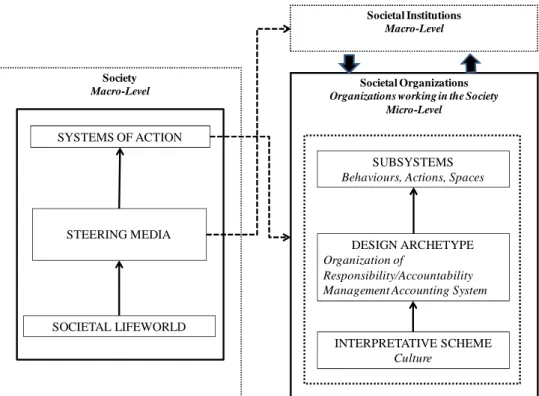
(7) Integrative-Interactive Model of Management Accounting and Control in Healthcare organizations: evidence from a qualitative research. These issues are explored through a qualitative analysis developed within 12 LHAs and 4 THs in the Italian setting.. The. interpretation of the role of accounting in healthcare organizations is grounded on the model developed by Habermas (1987) at the societal level and adapted to the level of organizations by Laughlin (1991) and by Broadbent and Laughlin (2005).. Within this theory changes in. organizations can be observed as an interaction between tangible and intangible elements of organizations (internal environment) and between organizations and society (external environment), showing how the MAS and MCS play a role in the interaction of these elements. With refer to healthcare organizations this scheme has been applied in previous research by Broadbent et al. (1991) and, more recently, by Kurunmaki et al. (2003) and by Agrizzi (2009), to interpret the impact of change in the external context on the use of managerial tools in hospitals. Findings of our research support the idea that MCS and MAS are be able to absorb new principles proposed by the external environment and transfer them to clinicians’ culture. Findings underline that elements such as trust, communication, integration should be taken into account in the design, development and use of managerial tools. The remainder of the paper is organized as follows. First the components of the conceptual framework of the research are explored: the view of society traced by Habermas and refined by Laughlin (1987,1991) and by Broadbent and Laughlin (2005) and the concepts of legitimation role versus accountingization role of MAS. Afterwards, the context of the research in this study is described, i.e. the evolution of Italian and Tuscany Region healthcare sector and the diffusion of MCS and MAS . Then the methodology and the method. are explained and. supported. The study has been carried on within a broader research project, whose aim was to support the introduction of innovation in MCS and MCS used by LHAs..
(8) Cinquini L., Campanale C.. The first part of the broad research project dealt with the exploration of the current situation in terms of use of managerial tools by physiciansand the main problems faced. This research describes the findings of this first part of the broad research project. The adopted qualitative interpretative approach is documented by data collected with interviews, questionnaires and documents analysis.. Then findings are. described and linked to the theoretical framework explored in the first part. At the end discussion and final conclusions are provided.. The theoretical model Habermas’ social theory society (1987), developed and refined by Broadbent et al. (1991), Laughlin (1987, 1991) and Broadbent and Laughlin (2005), represents a valuable contribution; it addresses the complexity of healthcare organisations and the interactions of both internal elements of the organisation and the organisation with the external environment. Habermas models society as the combination of three elements: lifeworld, systems of actions and steering media. Lifeworld is a cultural space that articulates the culture of individuals, society and personality. Culture is the stock of knowledge that individuals use to interpret and understand things in the world. Society concerns the order through which individuals regulate their membership in a social group. Personality concerns competencies that make a subject capable of speaking and acting and asserting his/her identity. Lifeworld is not static but rather evolves according to the three components of culture, society and personality. Systems of action in this model of society are the organisations working within that society: they are the tangible expressions of the less tangible lifeworld and are guided by the lifeworld itself. Systems of actions emerge when the lifeworld becomes increasingly complex and begins to require a tangible expression. Here, Habermas introduces the third element, the steering media, which are mechanisms—such as power systems—that steer the.
(9) Integrative-Interactive Model of Management Accounting and Control in Healthcare organizations: evidence from a qualitative research. communication and interaction between lifeworld and systems. Examples of steering media are governments or laws. Steering media play a role in assuring that systems of actions reflect the lifeworld. When the complexity of the systems of actions increases (due, as in the example of Habermas, to the growth of capitalism) there is the risk that steering media fail to guide the relationship between lifeworld and systems; consequently, these two elements became differentiated and decoupled. In this situation, there is the possibility that the steering media start to follow the systems of actions and not the lifeworld, thus causing the systems of actions to influence or colonise the lifeworld. The model of society outlined by Habermas creates some difficulties in practical application because it does not provide a tangible description of the functioning of a society nor does it apply at a factual organisational level. In particular, two kinds of problems arise: first, it remains difficult to analyse the interaction between societal institutions (i.e., government) and societal organisations (i.e., corporations); second, there are difficulties in understanding changes in organisations and their causes. In an attempt to overcome these limitations, Laughlin (1991), Broadbent et al. (1991) and Broadbent and Laughlin (2005) refined this model to study more deeply the interaction between organisations and environment. They introduced two refinements. First, steering media, as defined by Habermas, are considered as “societal institutions” (e.g., government), while systems of actions, as defined by Habermas, are considered as the “societal organisations” (e.g., corporations, local health authorities, schools and universities). Societal institutions try to steer and influence societal organisations and societal organisations are basically the expression of a societal lifeworld. As a consequence of this refinement, the Habermas scheme facilitates interpretation of the dynamic interactions among organisations in society: it helps to make the Habermas model more applicable to reality and to tracing the relations between “societal institutions” and “societal organisations”.
(10) Cinquini L., Campanale C.. and, in this way, the mechanisms of the interactions between “systems” and “lifeworld”. The second refinement adapts the model of society proposed by Habermas to the context of societal organisations. Broadbent and Laughlin argue that every societal organisation has its own lifeworld, systems and steering media. They call these elements respectively interpretative scheme, subsystems and design archetype, where design archetype balances and makes coherent interpretative schemes and subsystems. Examples of design archetypes are MAS and MCS. In the healthcare sector, for example, the interpretative scheme could be the clinicians’ culture, based on the values described in the previous section; design archetypes could be represented by the MCS, MAS, rules and system of responsibilities; subsystems would be represented by behaviours, actions, spaces, technologies etc. This refinement opens the model to the possibility that the internal colonisation of lifeworld/interpretative scheme could arise not only at a societal but also at an organisational level (Figure 1). Societal Institutions Macro-Level. Society Macro-Level. Societal Organizations Organizations working in the Society Micro-Level. SYSTEMS OF ACTION SUBSYSTEMS Behaviours, Actions, Spaces. STEERING MEDIA. DESIGN ARCHETYPE Organization of Responsibility/Accountability Management Accounting System. SOCIETAL LIFEWORLD INTERPRETATIVE SCHEME Culture. Habermas framework. Broadbent and Laughlin framework. Figure 1- Comparison and links between the framework of interaction between external environment and internal elements of the organization [Adapted by Broadbent and Laughlin (2005) and Laughlin (1991)] and Habermas’ framework of Society.
(11) Integrative-Interactive Model of Management Accounting and Control in Healthcare organizations: evidence from a qualitative research. The study of the design archetypes MCS and MAS—as elements able to absorb influences from the external environment and to transfer these external influences to the interpretative scheme—is an interesting topic. In this respect, MCS and MCS each play a role in supporting organisational coherence and are not simply technical works or a mapping of a reality independent of the accountants: they are subjective practices opened to adjustment and negotiation. The way in which knowledge is represented influences the mode of reasoning and controls the definition of social and organisational reality, making accounting able to create a new ontology of facts by reframing an organisation in economic terms (Power and Laughlin, 1992). This means that there is no independent reality that MCS and MAS simply represent: they are, on the contrary, implicated in creating this reality. For example, in defining objectives the MCS tool constituted by the budgetary system delineates “what you must be accountable for”, thus influencing broader questions of accountability. To describe the ability of MCS and MAS to influence the interpretative scheme/culture of an organisation, it is important to consider the coherence between the elements of the organisation and the external environment required for the equilibrium of the whole organisation (Miller and Friesen, 1984; Mintzberg, 1989). When there is an equilibrium between these elements, the organisation tends toward inertia. This means that its internal arrangements tend to be stable and resistant to change (Laughlin, 1991, Miller and Friesen, 1984). This inertia can be interrupted only by an environmental disturbance (Laughlin, 1991), which means some external uncontrollable factors that require a change in the organisation. From this perspective, we can study how these societal institutions (i.e., governments) try to influence societal organisations. In particular, we can observe which elements of societal organisations, e.g., subsystems, design archetype and interpretative scheme, are influenced by societal institutions and how they interact with each other in the process of change..
(12) Cinquini L., Campanale C.. Two kinds of changes can follow societal institutions’ attempts to influence the societal organisations: morphostasis (first-order change) and morphogenesis (second-order change) (Smith, 1982; Robb, 1988; Laughlin, 1991). Within these changes affecting the organisation, two specific phenomena describe the ability of MCS and MAS to influence the interpretative scheme/culture: legitimation or accountingisation (Power and Laughlin, 1992). We will now deploy these last two concepts in considering the two aforementioned extremes of change. Morphostatis occurs when the change in the organisation affects design archetype or subsystems but does not really affect the core of the organisation; there is a reluctance of the organisation to accept the change and a tendency to return to the pre-existing situation. This change does not affect the interpretative scheme of the organisation. In the healthcare sector, morphostatis could occur when the government (societal institutions) assigns to LHAs (societal organisations) goals that are politically oriented and that do not answer real health requirements. The societal organisations could react by modifying subsystems of behaviours and actions, for example, by introducing specific programs addressed to the achievement of governmental goals. To influence and control actions, the organisation may then modify the design archetype MCS and in particular the budgetary system by introducing specific goals. Obviously, in this situation subsystems and design archetypes do not reflect the current culture (or interpretative scheme). If we focus on the role of the budgetary system in these conditions, it produces a distorted reaction: the interpretative scheme, to protect itself from the colonising effect of external environment and subsystems, reacts in a defensive manner and starts to use the budgetary system only as a formality rather than for managerial purposes. Thus, there is the perception that the budgetary systems is able to modify systems of actions and to make the interpretative scheme coherent with subsystems. This is only an appearance of equilibrium: the budgetary systems answers only to political requirements and its capability for.
(13) Integrative-Interactive Model of Management Accounting and Control in Healthcare organizations: evidence from a qualitative research. supporting management control is prejudiced. In this situation, the budgetary system assumes the prevailing role of “a ritual” (Ouchi, 1977). In this case, two separate and parallel systems coexist: the clinical-decisions. system,. controlling. and. evaluating. clinical. performance in a non formalised and invisible manner, and the budgetary system that formally controls the achievement of objectives assigned by the government rather than linked to clinical performance. The consequence is that there are internal inconsistencies in the system as a whole. This incongruence contributes to create tensions between formal control systems and tools and the professional autonomy (Scott, 1966): professionals recognise formal devices as inappropriate to represent their actual work and this gives them the pretext to increasingly claim their autonomy. MCS and MAS lose their function of supporting the daily decision making and shift toward the function of external instruments for political decisions (Wildawsky, 1975) of financing. The definition of objectives and measures become only a formal attainment. Lapsley, in 1994, addressed this process as “myth and ceremony” (Lapsley, 1994). MCS and MAS continue to document and record facts, but they act ex post facto as “historians” with the objective of justifying or “legitimating” additional funding: this precludes the possibility of using information in decision-making processes. The effect produced by MCS and MAS in this situation is defined as Legitimation: these tools are used to project a defensive shield to justify clinical spending and request additional expenditures (Kurunmaki et al., 2003). In this case, the organisation becomes decoupled (Weick, 1976): MAS provides its own rules for efficiency and cost control, whereas professionals act free from these rules based on their own goals and professional judgements. In contrast, morphogenesis (second-order change) is a change that penetrates deeply into the core of the organisation and brings a permanent modification of the organisation. This change affects the.
(14) Cinquini L., Campanale C.. interpretative scheme of the organisation. Morphogenesis can occur through a (1) colonisation or (2) evolution. They both bring about deep change in the interpretative scheme but, whereas colonisation is a sort of forced change of individuals, evolution is chosen by individuals freely and without compulsion (Laughlin, 1991). Colonisation is the more frequent phenomena compared to evolution. In case of morphogenesis, societal institutions are able to provoke changes in all the elements of the organisations including interpretative schemes. In the healthcare sector, a coherence in the whole organisation is possible if the external environment is able to modify subsystems and, through the budgetary systems, also the interpretative scheme. In this case, governmental goals, as expressed in the budgetary systems, penetrate into the interpretative scheme. Within morphogenetic changes, the capacity of MCS and MAS to modify the interpretative scheme could cause a more specific phenomena termed accountingisation (Power and Laughlin (1992), defined as the penetration of managerial and accounting information and of calculative processes into culture and thus into the core processes of the organisation (the interpretative scheme). Decoupling persists under accountingisation because decisions are primarily informed by medical considerations but managerial and economic concerns assume a central role in the clinical discourse. The concept of accountingisation is close to that of the hybridisation of medical professionals (Kurunmaki, 2004). This concept has been introduced when analysing the experience of Finland during the reforms that affected the healthcare sector there in 1980: traditional systems, designed only to provide information to the government, were considered inadequate and were replaced with a complex system designed to assist managerial tasks by putting medical decisions into a network of financial calculation and accountability. In this way, clinical autonomy. was. preserved. but. also. integrated. accountability, which could alter decision making.. with. financial.
(15) Integrative-Interactive Model of Management Accounting and Control in Healthcare organizations: evidence from a qualitative research. Focusing on MCS and MAS as design archetypes, understanding their ability to colonise the interpretative scheme determining the phenomena. of. Accountingisation. or. Legitimation. requires. the. consideration of several issues. To colonise the interpretative scheme, the controllers, in the definition of management accounting tools, cannot be only “specialists without vision” but should instead extend their calculus beyond all phenomena of the organisation. In healthcare, one may determine the cost of a treatment, but how can we represent other aspects of the treatment (e.g., quality, outcome or patient satisfaction)? The accountant would succeed in colonising the way of thinking if they can find a way to represent the actual work of organisations. For example, they can represent the costs of care necessary after the treatment or the costs of a second treatment needed if the first one did not yield the expected results or they can map and represent clinical pathways and relative costs. In other words, if MCS and MAS are able to capture clinical reality and to reframe it in managerial and economic terms they then become able to influence and colonise clinical decisions. This is the meaning of “the capacity of MCS and MAS to capture professional understanding and reframe it in accounting terms”. The context of HC has been an object of research in this respect and the evidence has shown the extent to which the domain of clinical action has become influenced by accounting initiatives despite complex forms of resistance (Preston et al., 1990). In the light of the aforementioned framework and categories proposed to interpret the role of MCS and MAS in the healthcare settings we are going to analyse the role of these systems and tools within the context of the Italian HC system in the following parts of the paper. We will refer in general to Broadbent and Laughlin (2005) and Laughlin (1991) to explain changes in organisations, and specifically to Kurunmaki et al. (2003) for the role of the design archetypes MCS and MAS in the promotion of changes in the healthcare context..
(16) Cinquini L., Campanale C.. The research context The health care sector in Italy The Italian national health system (Servizio Sanitario Nazionale: SSN) was issued by the “Institution of the National Health Care Service Act” of 1978 (Marcon and Panozzo, 1998; Jacobs et al, 2004). The primary objective of this reform was the achievement of equal rights in healthcare for all citizens. The previous system, born in 1960, was characterized by a fragmented coverage of the mutual insurance associations where only workers were covered. Within this reform, the Ministry of Health, through the National Health Plan and the National Health Fund, established the legal, financial and operational context of healthcare. Within this context, activities were decentralized to Regions and LHAs which run health care services. This structure promoted the policy of diffused supply of health services . LHAs have progressively become accountable for their spending with the aim to promote efficiency but, despite decentralization, the management of health services has continued to be much influenced by politicians. In fact the Ministry of Health had constraints defined by the Treasure and LHAs were driven by Local Governments. Prices were used only to regulate transaction between purchasers and providers of healthcare services and costing practices were rarely performed. Funding was based on demand-oriented criteria (such as capitation) and on. ex post. arrangements to cover deficits (such as ex post actual expenditure) and not on activities performed (Fattore and Torbica, 2006). In this context there was no role for cost accounting – if implemented - as an instrument for the management of services, but only as an instrument for funding requirement. In 1990 the Italian government faced with a growing public deficit, rising to a large extent from health care system. This debt was influenced by the growing expenditures, the technological innovation, the increase in the demand of services and the increase of elder population..
(17) Integrative-Interactive Model of Management Accounting and Control in Healthcare organizations: evidence from a qualitative research. In this condition the government promoted a set of reforms whose objective was to improve efficiency and quality, encouraging also the participation and the empowerment of citizens.. Some elements of. these reforms were the decentralization of government functions with a devolution of decision making process to local government, the patients’ freedom of choice of their HC providers with a creation of a sort of internal market competition and a distinction between hospital care and outpatient care (Marconi, 1997). A perspective method of payment was adopted: the DRGs (Diagnosis Related Groups). It was based on a fixed prospective payment and shifted substantial cost risk to hospitals (Evans et al., 1997) creating the need for more sophisticated approaches to hospital budgeting and costing (Kerschner, Rooney, 1987). DRGs tariffs were based on a full cost approach and were determined in order to cover most of hospital costs including overhead. These reforms attempted to subordinate the public sector to the private sector operational models in order to guarantee greater efficiency of services providers (Kurunmaki, 1999). While, previously the emphasis was on political compliance, reforms of the nineties put emphasis on performance and results. A fundamental distinction of responsibility was set: politicians were responsible for policies and goal setting while managers were responsible for the administration and accountable for achieving results. Under this scheme salary of managers should vary according to performance (Marconi, 1997). Accountability for clinical results and for resources consumption operated principally with respect to citizens who finance the system through taxation. In response to the requirements for efficiency in the delivery of care, expressed by the policy makers, managerial processes and tools such as MCS and MAS started to have place for the promotion of efficiency through the provision of information for the daily decision making process..
(18) Cinquini L., Campanale C.. The present organization of Italian Healthcare System sees twenty-one Italian regions - and therefore 21 HC regional systems,while at the local level there are the 228 LHAs with a relatively high level of decentralization to the regional and to the local level: the state still maintains a predominant role in the provision of health care and continues to provide a coordination of all 21 Regional Healthcare Systems, but within National direction, Regions are quite free to choose the organizations of their services and are accountable for the efficiency and for the effectiveness of the health care delivery (Abernethy, Vagnoni, 2004). Each LHA runs three kind of services - acute care (Hospital), primary care (Cure primarie) and public health (Prevenzione) – as a unique trust. There are also teaching hospitals which are independent.. The Tuscan Health Care Regional System This study was developed in one Italian Region (Tuscany) and it analysed all LHAs and all THs of this region. This study was undertaken within a broader research project with the aim of supporting controllers in the introduction of managerial innovation. In the Tuscany Region, there are 12 LHAs and 4 THs (we will use the term LHA for both when speaking in general terms). Every LHA is managed by a CEO, with a high level of delegation to the CFO for administrative activities and to the Sanitary Manager for clinical activities. Every LHA in Tuscany provides three kinds of services: hospitals (each LHA may have more than one hospital), primary care and public health. All services are characterised by a high level of delegation of the decisional power. Hospitals are usually managed by a Hospital Manager, and Public Health Services have their own manager: both are doctors. At the primary-care level, there is the highest level of decentralisation because these kinds of services require a finely divided distribution over a given territory; LHAs are divided into zones (on average, each LHA has three.
(19) Integrative-Interactive Model of Management Accounting and Control in Healthcare organizations: evidence from a qualitative research. zones), each zone with its own responsible person (who is also a doctor). Decentralisation of the decisional power is linked to accountability for results. An LHA’s level of accountability is usually organised as follows. The lower level of accountability is represented by a medical doctor in charge of units/specialities, e.g., gynaecology or orthopaedics. These units/specialities are then grouped into departments based on their natures, i.e., surgical specialities or medical specialities. Every department is managed by a medical doctor who coordinates all units within the department and is accountable for the performance of the whole. Department heads have general performance goals for their departments, whereas unit heads have more specific goals related to the general goals assigned to their department head. Both departments and unit heads must achieve both managerial and clinical goals; therefore, they are “managers” and they are responsible for the performance of their whole department/unit. The controllers' office is usually composed of two or three people with specific competencies: there are usually controllers who are dedicated to the budgetary system and controllers dedicated to the accounting system. In each LHA, there is one controller’s office that supports all the LHAs (Hospital, Primary Care and Public Health). Their rise is quite recent in the Tuscan; their average age is around 10 years. The Regional Government is supported by several institutions in the management of all LHAs: the Management and Health Laboratory, belonging to a public university (Scuola Superiore Sant’Anna - Pisa), which provides support in performance evaluation and improvement; the Regional Health Agency, which provides mainly epidemiological indications; and other specific institutions or groups of professionals, i.e., groups supporting the quality of public health activities. Within the framework of the aforementioned national reforms, the Tuscan Regional Authority has introduced reforms and innovations oriented toward the promotion of higher efficiency, effectiveness and.
(20) Cinquini L., Campanale C.. quality over the whole system. The Tuscany Health System has consequently shifted from an annual operating loss of about 25 million euro to a savings of 96 million euro from 2000 to 2010. Considering that health expenses represent 70% of the entire regional budget, an efficient management of healthcare services influences the economy of the whole region. These reforms have coincided with a change in the direction of the management of the Regional healthcare in Tuscany. The new regional healthcare system initiated a revision process for the Tuscany Healthcare System with the aim of improving the efficiency of the whole system while maintaining high-quality services and without increasing taxation. The main points of his program were: (1) promotion of a meritocratic system for health managers; (2) performance evaluation; (3) accountability for the economic impact of decisions; and (4) promotion of research. Regarding the first point, the promotion of a meritocratic system, the need to enrol all employees (from the top management to the lower levels) by considering professionalism and capabilities rather than political compliance was particularly emphasised and practiced. Regarding the second point, performance evaluation, a Regional Performance Measurement System (PMS) was designed and implemented through a joint venture with the Management and Health Laboratory. The aim was to evaluate and compare the performances of all LHAs in the Tuscany Region. We describe this system in more depth below. Regarding the third point, accountability for the economic impact of decisions, a limit was set for the annual budget increase for LHAs: limitations in the availability of additional funding were introduced and these limitations were translated to all lower levels of accountability (the heads of hospitals, departments and units). Regarding the fourth point, research, higher investments in research were promoted with the aim of improving quality of care. In the pursuit of higher efficiency for all administrative activities, the Regional Government also grouped. LHAs into networks called.
(21) Integrative-Interactive Model of Management Accounting and Control in Healthcare organizations: evidence from a qualitative research. Area Vasta. Among the aforementioned reforms, the institution of a Regional PMS, the institution of LHA networks and the introduction of greater budget constraints have heavily impacted the managerial tools used by LHAs for controlling and managing performance, thus promoting improvements in MCS and MAS.. The key role of the PMS developed in Tuscan HC System and its impact on LHA Management Control System (MCS) and Management Accounting Systems (MAS) The Regional PMS was formally implemented in 2004 with the support of the Management and Health Laboratory (Nuti et al., 2009). The system compares the performances of all LHAs and THs considering several perspectives: population health, Regional policy targets, quality of care, patient satisfaction, staff/employee satisfaction, efficiency and financial performance. The system is dynamic and evolving in time, and indicators were defined and are updated through a bottom-up. approach. that. requires. the. direct. involvement. of. professionals. The system initially measured mainly hospital performance because, at its introduction in 2004, hospitals were considered the most important service and the available information systems (at both local and Regional levels) contained reliable data mainly about hospital activities. Conversely, the importance of primary care and public health were not sufficiently emphasised, and the collection of data (again at both local and Regional levels) related to their activities was not as systematic as it was for hospitals. Clinicians showed some resistance to the new PMS in the first period (three years) of its introduction, during which clinicians reacted to the. introduction. with. somewhat. obstructive. behaviour.. The. obstructionism began in the initial phases of the definition of indicators, in which they were actively involved. In fact, during this phase they tried to delay the introduction of indicators as much as possible by continuously requiring a large number of small changes in the way.
(22) Cinquini L., Campanale C.. indicators were calculated. Moreover, once the indicators were approved, they continued to demand many exceptions to the indicators; they criticised the rationale of the indicators and their ability to represent certain phenomena, the way indicators were calculated and the actual capacity of indicators to represent reality. The cause of this resistance can be ascribed to cultural issues and to the inability of LHA to use a local control system to act on performance monitored by the Regional PMS. First, cultural resistance was raised because the introduction of this system put greater attention on performance evaluation than before. The system increased the visibility of actions and in some ways limited the autonomy of clinicians. Second, the approach that controllers used in the alignment of internal MCS to the Regional PMS was a mere replication of the Regional PMS indicators, split into their internal budgetary systems, and little work was applied to develop internal systems better able to manage the determinants (drivers) of outputs and indicators. In this way, they increased the pressure felt by clinicians without really supporting them in the management of their performance. In 2006, the Regional Government linked some performance indicators measured by the Regional PMS to the reward system for CEOs, thus continuing to increase the emphasis on performance evaluation. In the last five to six years, the Regional Government has started to pay increasing attention to primary care and public health services as suitable, less expensive and, in many cases, more effective alternatives to hospital care. The rationale for this change was to reserve for the hospital only acute care, leaving the treatment of chronic disease and the disease prevention to the other services. This new emphasis could be observed in innovations and changes introduced by the Regional Government from 2008 (Cinquini and Vainieri, 2008). In 2008, the Regional Government introduced a specific section of the Regional PMS with indicators measuring Public Health performance and introduced a standardised and systematic system for.
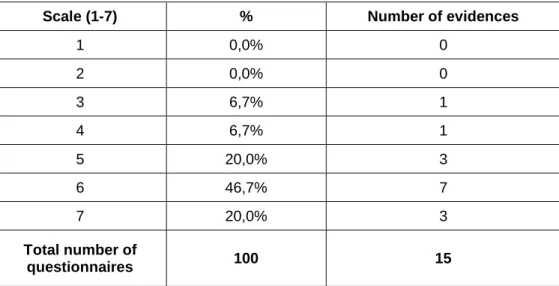
(23) Integrative-Interactive Model of Management Accounting and Control in Healthcare organizations: evidence from a qualitative research. the measurement of activities performed by Public Health Services. In 2009, the Regional PMS was extended to the evaluation of every Zone Manager, thus introducing the evaluation of Primary Care. In this case, the system has also faced many difficulties in the collection of reliable data and in the definition of indicators. Also in 2009, the Regional PMS was made available to all citizens on the web. This advance made citizens aware of the performance ratings of all the LHAs, thus giving them an informed choice of which LHA to select. This created additional pressure on performance improvement and increased competition between LHAs. All these changes put high stress on the need to improve the MCS and MAS used by LHAs to better manage performance. These improvements can be articulated in terms of (1) the capacity of an MCS to measure and manage the determinants of outputs measured by the PMS; (2) the ability of controllers to support clinicians and to promote a culture of measurement; and (3) an increase in the use of the MCS and MAS as a set of processes and tools for the support of clinical decision making. As evidenced by the findings of this research, much work was done by controllers in these years in terms of points (2) and (3). The results of a brief survey performed in the first part of 2010 showed that, after the introduction of the PMS, controllers have worked to raise the awareness of doctors related to the issue of performance measurement but less has been done on point (1). We sent 16 questionnaires (12 to LHAs and 4 to THs), and we received 15 compiled questionnaires (11 from LHAs and 4 from THs). Respondents were asked to answer on a scale of 1-7, where 1 means “very little” and 7 means “very much”. Table 1 lists the results of their answers to the question “To what extent do your budget indicators correspond to Regional PMS indicators?”. The results underscore that most of the LHAs continue to replicate PMS indicators on their Budgetary System..
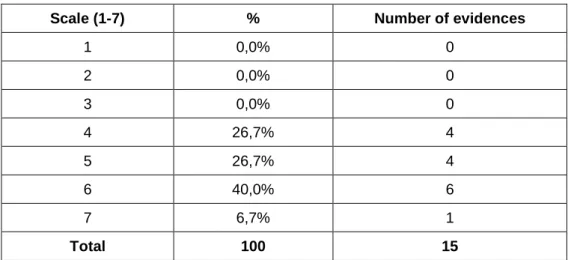
(24) Cinquini L., Campanale C.. Scale (1-7). %. Number of evidences. 1. 0,0%. 0. 2. 0,0%. 0. 3. 6,7%. 1. 4. 6,7%. 1. 5. 20,0%. 3. 6. 46,7%. 7. 7. 20,0%. 3. Total number of questionnaires. 100. 15. Table 1- Answer to the question “To what extent your budget indicators correspond to Regional PMS indicators?” 1= very little; 7= very much. Simultaneously, the impact on the culture of clinicians has been high. Controllers have worked hard to promote the culture of measurement. The results of this questionnaire show that the impact on the behaviours and the awareness of doctors has increased. Table 2 lists the answers to the question “To what extent are specific actions taken to improve the performance specified in the Regional PMS?”. Scale (1-7) 1 2 3 4 5 6 7 Total number of questionnaires. % 0,0% 0,0% 0,0% 6,7% 26,7% 46,7% 20,0%. Number of evidences 0 0 0 1 4 7 3. 100. 15. Table 2 – “To what extent specific actions are activated in order to improve the performance represented in the Regional PMS?” 1= very little; 7= very much. Table 3 provides results we get at the question “To what extent you have used the Regional PMS as a lever to increase accountability and responsibility for clinical activities?”.
(25) Integrative-Interactive Model of Management Accounting and Control in Healthcare organizations: evidence from a qualitative research. Scale (1-7). %. Number of evidences. 1. 0,0%. 0. 2. 0,0%. 0. 3. 0,0%. 0. 4. 26,7%. 4. 5. 26,7%. 4. 6. 40,0%. 6. 7. 6,7%. 1. Total. 100. 15. Table 3 - “To what extent you have used the Regional PMS as a lever to increase accountability and responsibility for clinical activities?” 1= very little; 7= very much. Other main changes: LHA Network and budget constraints and their impact on MAS and MCS In 2002, the Regional Government introduced a new territorial level for the management of outsourced administrative activities of the LHAs, called the Area Vasta. Three Area Vasta were instituted: Northwest, Central and Southeast, corresponding to their geographical locations. Each Area Vasta consists of a network of LHAs that manage their technical, administrative and purchasing activities in an integrated way. The aim was to optimise these activities by taking advantage of synergies coming from the integration of LHA, for example, the possibility to take advantage of higher economies of scale in purchasing goods and services. The task of managing these activities was assigned to new organisations called Estav. The introduction of Area Vasta and Estav for the optimisation of administrative and technical activities has required integration and coordination between LHAs and Estav. In this respect, the challenge for MCSs is to be able to represent and support this integration. For example, the MCSs of LHAs should be able to support measuring and controlling the achievement of goals that are in the interest of the whole.
(26) Cinquini L., Campanale C.. Area Vasta and not only in the interest of a single LHA. In terms of impact on clinicians’ decision making, the goals of the whole Area Vasta could represent another limitation of their autonomy. For example, in decisions regarding the purchasing of drugs and medical devices they must take into account the requirements of other LHAs and the goals of the Area Vasta. On the other side of the equation, limitations set by the Regional Government for the provision of continuous additional funding presented a great challenge for the MAS of LHA organisations. Before the rise of severe budget constraints, MAS was mainly used as a tool for the recording of expenses at the end of the year and for the identification of the need for resources in financial terms and not as a tool for supporting decision making and control. The Regional Government started to define the amount of funding to assign to LHAs at the beginning of each year; as a consequence, LHAs had to manage activities within that financial constraint. This change stressed the need to begin using cost information systematically for decision making. This change involved both doctors and controllers. The impact on doctors was in terms of increasing accountability for consumed resources and in terms of the need to improve their awareness of the economic impact of their decisions. The impact on controllers lay in their ability to develop tools aligned with clinicians’ attitudes and able to affect the clinical decision-making system. In 2008, the Regional Government also introduced organisational innovations in pursuit of a better work organisation and a higher accountability for all operators. An example is the new organisation of hospitals by intensity of care (rather than by specialities). The main steps of the HC reform are summarised in Figure 2..
(27) Integrative-Interactive Model of Management Accounting and Control in Healthcare organizations: evidence from a qualitative research. Regional Reforms (Change in HC Regional System). Introduction of PMS linked to the PMS for Public Health PMS for Primay care Regional PMS for Reward System for LHA activities - LHA level activities - Zone level hospital activities- LHA level Regional PMS available for LHA and Regional Government on the web. Regional PMS. Regional PMS available for citizens on the web. Area Vasta. Institution of Area Vasta. Budget constraints. Budget contraints 2000. 2002. 2004. 2006. 2008. 2009. 2010. Budget constraints Increasing accountability for clinicians. Need to develop tools aligned with clinicians' attitudes and able to impact on their decisions according with LHA goals Challenges for MCS and MAS in LHAs. Area Vasta. Higher limitation for clinicians' decision making Need of integrate MCS. Regional PMS. Capacity of MCS to measure and manage determinants of outputs measured by the PMS. Ability of controllers to support clinicians and to promote the culture of measurement . Increase in the use of the MCS and MAS as a set of a tools processes and tools able to support the clinical decision making. Figure 2- The timeline of the reform in the HC Systems of Tuscany Region and the impact on MCSs and MASs. According with the previously described scheme of Laughlin (1991), the introduction of the National and Regional reforms constituted “disturbances” that required a change response in the organisations in terms of a higher attention to efficiency, cost control and more generally on performance measurement. Many changes have occurred to meet these new requirements, involving both subsystems and design archetypes. These initiatives have often been developed by controllers with the involvement of clinicians. The introduction of changes in tangible elements such as organisational changes, the optimisation of spaces, investments in technologies and the introduction of more sophisticated MCS, MAS and information systems has occurred in recent years to answer the growing need for information for decision making and for performance control. Apart from changes affecting tangible elements, cultural issues have also been evident. The new organisation of responsibility and the innovation in managerial tools and processes, such as MAS and MCS, support the provision of detailed and timely information processing. However, information only becomes useful when used in the decisionmaking process; otherwise, it becomes only an ex post facto registration of facts and occurrences, with limited managerial utility. For.
(28) Cinquini L., Campanale C.. this reason, the use of information for managerial purposes implies a cultural change and, more generally, a change in the interpretative scheme. Previously, the Regional Government and consequently healthcare organisations paid a limited attention to the evaluation of performance and to the cost of services, clinicians are now accountable for the achievement of goals defined at the beginning of the year and for the consumption of resources. In the Tuscan experience, the growing attention to the measurement of both clinical and economic results has implied a certain decrease in power and autonomy of physicians and has not been without difficulties but it has promoted a process of change in the culture. This process has been as aligned with the attitudes of clinicians as much as possible and has been characterised by gradualism in the process and by the high involvement of clinicians in the process of change. Moreover, to promote higher conscience about management issues, specific recurrent education courses for clinicians have been instituted by the Regional Government. Their attendance is compulsory during the career of doctors in charge of units or departments in their LHA. In this way, there is the possibility to integrate clinical culture with a certain degree of financial competence and accountability and to combine accounting skills with clinical knowledge (Kurunmaki, 2004); in Tuscany, this process has been gradual and it is still in progress.. The research methodology The study has been carried out during nine months in twelve LHAs and four THs (we will use LHA for both when speaking in general terms) within Tuscany Region in Italy. The study has been carried on within a broader research project, carried on by the Management and Health Laboratory, whose aim was to support the introduction of innovation in MCS and MAS used by LHAs. The first part of the project dealt with the study of the current situation in terms of use of managerial tools by doctors and main.
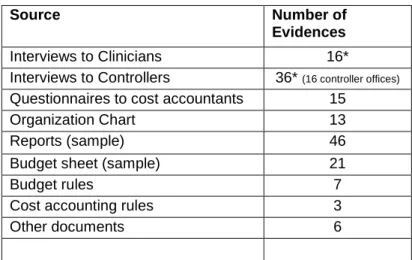
(29) Integrative-Interactive Model of Management Accounting and Control in Healthcare organizations: evidence from a qualitative research. problems faced. The research we are going to describe is based on interviews and documental sources. Interview data was gathered by means of semi-structured interviews carried out on two distinct groups: (a) clinical staff at different decision making levels, (b) controllers. Regarding the first group, we analyzed clinicians at all hierarchical levels: sanitary managers, department managers, unit managers and nurses not in charge a specific unit.Findings are therefore based on the perception of clinicians and controllers. About one month before the beginning of the study a first presentation of the research project took place and participants to the research and top managers of the LHAs were invited. In that meeting the objectives of the project were presented and the arranged plan for the following months shared. Interviews were conducted on a set of specific topics regarding mainly the MCS. Also the use of the MAS, in terms of the use of cost information in the clinical decision making system, has been investigated. The objective of interviews was to gain knowledge about how MCS and MAS have been changing in recent years in order to answer to the described changing environment. In particular we asked about the approach used in the adaptation of tools and control processes to the changing environment and about the promotion of an higher integration of these tools with the clinicians requirements. Particular attention in the interviews has been put in understanding the approach used to increase the clinicians’ awareness of managerial concern and to promote changes in the culture of clinicians toward a more managerial approach to the daily decision making. These aspects have been. examined considering the perspective of clinicians (the. users of information) and the perspective of controllers (the providers of information). Suggestions about questions to ask during interviews came from researches reported by Abernethy and. Stoelwinder ( 1995, 1990),. Kurunmaki , (2004), Lecci and Longo (2004)..
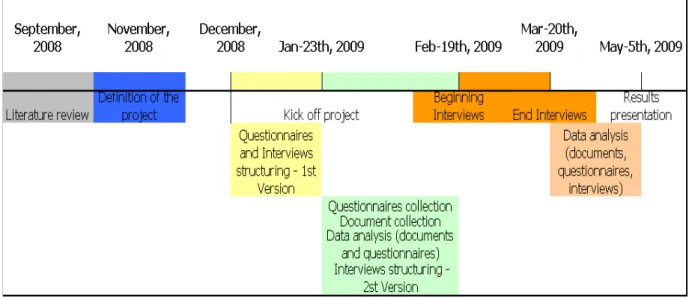
(30) Cinquini L., Campanale C.. Each interview lasted on average from forty minutes to one hour and forty minutes. In total, 16. clinicians and 36. controllers. were interviewed.. Clinicians comprises 6 sanitary managers or heads of hospitals, 2 heads of departments, 3 heads of units, in charge of a speciality (i.e.: orthopaedics, genecology, internal medicine etc.) and accountable for performances and resources consumption in their LHA, hospital, department or unit, and 5 nurses with managerial responsibility. Nurses are responsible for the quality of assistance provided to patients, but not for resources consumption because they have not formally assigned resources, even if they actually manage low cost drugs, consumables etc. In this way we collected information both from the higher levels and from the lower levels of the LHA organizations. Controllers usually belong to an office composed by two or three people, each with specific competences: costs, indicators etc. The number of controllers interviewed is quite high, if compared to the number of clinicians. It could be a limitation in the study, however we should take into account that usually for each LHA all the controllers’ office members participated to the interview in order to give a broad view of the topics we asked (budget and accounting). Considering this peculiarity, we actually interviewed not 36 controllers but 16 controller offices (corresponding to the number of LHA and THs considered), thus re-equilibrating our source of data. All interviews were audio taped and transcribed. Results were presented and shared during a workshop where participants had the opportunity to discuss and validate findings (Ryan et al., 2002). Timing and description of steps are shown in Figure 3..
(31) Integrative-Interactive Model of Management Accounting and Control in Healthcare organizations: evidence from a qualitative research. Figure 3 – Development of the research. Data from interviews were supplemented by other sources collected. Results of interviews, in some cases, could be explained by considering also some peculiarities emerging from the other sources. In other cases additional information could allow a better understanding of insights coming from interviews and were important to assess the validity of results (Ryan et al., 2002). Moreover these data gained before interviews gave some useful insights for the conduction of interviews. A brief description of the additional sources follows. The first source came from short questionnaires sent to controllers. The objective of questionnaires was to gain a general overview about the position of controller’s office within the organization and about principal activities they perform. The second source came from documents analysis and concerned organizational charts, reports currently in use and examples of budget sheets..
(32) Cinquini L., Campanale C.. Table 1 summarizes the sources used in the research. Source. Number of Evidences. Interviews to Clinicians Interviews to Controllers Questionnaires to cost accountants Organization Chart Reports (sample). 16* 36* (16 controller offices) 15 13 46. Budget sheet (sample) Budget rules Cost accounting rules Other documents •. 21 7 3 6. Duration: 1 hour on average each. Table 4 – Source of research data collected. Findings In this study, we considered the budgetary system, which is the main MCS tool used by all LHAs. We also considered MAS tools, in terms of instruments used for the evaluation of the cost of services. In this respect, LHAs in Tuscany use a wide variety of tools for the evaluation of the cost of services depending on the specific decisions they support. We will describe these tools in next sections. The budgetary system and MAS tools in Tuscany LHAs are tightly integrated to provide a broad picture of performances. They also integrate data from the clinical information system that provides information about clinical activities (e.g., number of surgeries, number of treatments and number of exams). The budgetary system is a broad, complex and interactive system that integrates information about resource consumption provided by MAS tools and about activities performed provided by information systems. This system aims to drive all the organisation towards the achievement of defined goals. Data are expressed both in absolute and in relative terms (i.e., indicators). The budget consists of: (a) a document at the beginning of the year where goals—both in terms of.
(33) Integrative-Interactive Model of Management Accounting and Control in Healthcare organizations: evidence from a qualitative research. resources and activities—are assigned to all individuals in charge of a department or a unit and of (b) periodic reports during the year and at the year’s end, where the achievement of objectives is verified by the recording of actual information. “Ad hoc” reports are also provided on the basis of specific information requirements. MAS tools are specifically dedicated to the elaboration of cost information. This information feeds the budgetary system and addresses specific information requirements that support certain decisions, such as new investments. The findings of the current study are described in this section with respect to the following topics: a) The role of the budgetary system, as the main MCS device, in clinical decision-making processes b) The role of cost information, provided by MAS tools, in clinical decisionmaking processes c) The main factors affecting the results. The topics are analysed considering the perceptions of both controllers and clinicians. While the interviews were conducted separately (except in two cases), we found a congruence between the two perspectives. This finding suggests the existence of a systematic flow of communication between the two parties in all the hospitals of the Regional system.. The role of the budgetary system in the clinical decision making processes A managerial use of the budgetary system implies its day-to-day use; at the beginning of the year, the budgetary system provides goals to be achieved and aims at driving decision-making processes. The reports underlying goal achievement are also distributed during the year (monthly or bimonthly) and at the end of the year. In particular, the reports at the end of the year underline the achievement of goals assigned at the beginning, while periodic reports underline the trends; by considering performances at certain times, they make it possible to forecast performances achievable by the end of the year. In this respect, periodic reports are useful for managerial purposes because.
(34) Cinquini L., Campanale C.. they suggest the adjustments required to meet the assigned goals; these are linked to assigned resources and the achievement of goals is also verified with respect to resource consumption. Periodic and final reports are discussed during specific meetings in which both controllers and clinicians participate; the objective is to discuss the results and understand if there is a need to adjust behaviours. The perception of management accountants is that the clinicians’ attention to budget reports, as instruments for the management of their activities, is growing, as described in the following comment. “….They try to understand what it is wrong….where and when they can improve, they don’t act only in a defensively manner. They work hardly in order to improve their performance. They usually ask suggestions to controllers in order to understand data and how they can improve” (Controller, Teaching Hospital 1) “During the year the periodic reports are analyzed, underlining gaps between actual results and budget goals: usually we (controllers) analyze results together with medical doctors and try to understand why we have got a certain result, for example if we see that there is an higher cost of a certain drug, he (the medical doctor) has to explain why he is using a certain drug and not another.” (Controller, LHA 11) There is high attention paid to the achievement of goals and bad performance can bring negative consequences: loss of a manager’s reputation, the possibility of shifting a manager to another position or a lack of economic incentives. All employees must achieve their assigned goals and they cannot spend more than the allocated resources. The budget thus cannot be used as a legitimating device: a revision of goals or an increase of the assigned resources is possible only if there are valid justifications; otherwise, mangers must find ways to adjust their behaviour. For example, there is the possibility of asking for additional funding if the possibility to invest money in new technologies or personnel might contribute to improvements in the quality and the efficiency (for example, saving time or other resources) of treatments. Every new investment must be deeply documented and a list of possible providers must be assembled..
(35) Integrative-Interactive Model of Management Accounting and Control in Healthcare organizations: evidence from a qualitative research. In the Tuscany Region, there is also a strong pressure by the Regional Government for the containment of expenses. In a context of limited resources, it is not possible to cover a budget deficit with additional resources: LHAs must perform ordinary activities with the available resources, while additional resources could be requested if new investments are justified and documented. The increasing requirement for a higher accountability among clinicians has been a strong cultural change, but it has been characterised by gradualism in implementation. First, during recent years, there has been a gradual increase in accountability at all levels (from department heads to of unit heads) and now the involvement of nurses is also in progress. Second, goal achievement is required for more than one year, with the possibility of verifying the trend at the end of every year; third, low-level constraints have been imposed in the first years of the implementation of the budgetary system. Gradualism fits well with the complexity of these settings, and this approach has allowed for acceptance by clinicians. Also in the study by Kurunmaki et al. (2003) authors suggested that the pressure from the external environment and the and manner of implementation of reforms are factors influencing the process of accountingisation. However, deeper insights emerge from the clinicians’ interviews. They perceived that the penetration of budget language into clinical discourse is happening, but they argue that there are some classes of clinicians that have not yet perceived the potential of the budget. They argue that the budget is completely disseminated and accepted by department heads but not by unit heads or other doctors and nurses without organisational responsibility. The likely reason is the limited involvement of unit heads and nurses in the negotiation of departmental goals and the absence of a direct relationship with the top management in budget negotiations. The following comments by the sanitary manager of Teaching Hospital 4 and by a unit head in LHA 12 provide a picture of the current situation in those settings..
(36) Cinquini L., Campanale C.. “The budgetary tool arrives to the Head of Departments, because they negotiate resources directly with the CEO and the CFO, but not to heads of units and other medical doctors and nurses. Even if usually the head of department, before negotiation of departmental goals, shares goals with his collaborators, they (collaborators) don’t really participate to the negotiation with the top management, so they are not completely involved yet. As they don’t feel involved they are reluctant to use the budgetary system for the decision making” (Sanitary Manager, Teaching hospital 4) “We perceive the Budgetary Process as a top down process. We can’t say that goals are imposed, but we perceive that some goals, especially goals based on Regional Government requirements, are inadequate to support the improvement of our activity. Sometimes goals are focused on issues that are not relevant for the improvement of the core activity of our unit, and other more relevant problems are missed” (Head of Unit, LHA 12) In a situation where only the department head negotiates the budget with the top management, while unit heads negotiate the budget within. the. department. without. a. direct. involvement. with. top. management, the department head should play the role of the promoter of the transmission of the budget goals, for example, by increasing the involvement of unit heads in the decisions concerning the whole department and by organising frequent meetings with all individuals in the department. The superior in this situation should overcome the involvement problems derived from the absence of a direct participation of unit heads and nurses in the negotiations with the top management. However, some initiatives aimed at increasing involvement at all levels can be addressed. For example, the top management of LHA 7 requires the organisation of almost four meetings per year between the head of the department and his staff for the discussion of budget objectives. Other initiatives are on promoting the dissemination of the budgetary. system. goals.. For. example,. an. intensification. of. communication and the promotion of a direct involvement of all individuals at all levels is in process in LHA9..
(37) Integrative-Interactive Model of Management Accounting and Control in Healthcare organizations: evidence from a qualitative research. “We are aware that the instrument (budget) is already diffused within heads of department, while we are working on the intensification of the flow of communication between the head of department and his collaborators. The objective is to make all clinicians aware that the budgetary system has to be used to all level of the organization. In order to promote this process we negotiate objectives not only with the head of department but also with the lower organizational level “(Controller, LHA 9) These initiatives are particularly important to benefit from the distribution of values of the budgetary system. In fact, the performance of the whole department is a result of the collaboration of all individuals. For this reason, their involvement is required.. The role of cost information in the clinical decision making processes A set of questions in the interviews was aimed at analysing the role of information provided by the MAS tools in the decision-making process. Sanitary managers use cost information about support daily decisions about assigning resources and improving the efficiency of clinical pathways. Several comments describing the use of that information are quoted in the following comments “Our controllers provide us all information we need in our decision making process. We know exactly what a department does and how much it consumes, or the opening and the closing hours of the operation room….we use (that information) for resource assignment …to separate wheat from the chaff …..I decide also the resource consumption on the base of how a department works: for example my surgical department works very well and if it asked me a flying camel I would buy it…” (Sanitary Manager, LHA 1) In some cases, cost information also supports strategic decisions. An example is the opening or the closing of a ward. This decision requires the estimation of the bed-utilisation rate to determine if there is an unused capacity. When this rate is quite high it may be necessary, for the efficiency of the whole hospital, to close that ward even if this decision, at first glance, might create some resistance in the health managers..
(38) Cinquini L., Campanale C.. Another interesting analysis is linked to the evaluation of the cost of ancillary services and the opportunity to buy them from external providers (i.e., make or buy). Examples here include laboratory exams or the transport of the patient within the structure. From the interviews, it emerged that this kind of evaluation is quite rare; however, these are appreciated when developed in a collaboration between clinicians and accountants. A clinician’s comment describes this situation: “This year we will close a ward because there is a low occupancy rate of beds….this will allow to use these beds for other objectives…This has been possible, because a deep analysis has been developed within a team composed by clinicians and controllers” (Sanitary Manager, LHA 1) For sanitary managers and department heads, the attention to costs in the recent years has been increasing even if the nature of a decoupled organisation persists and the economic discourse does not affect their core professional behaviour. The cost of treatment is not a limitation if the treatment is necessary for the health of the patient, but the. attention. on. the. organisational. aspects. is. high,. so. the. appropriateness of treatments and consequently the possible reduction of waste must be considered. The following sentences support this perception. “When we have to decide about a treatment we consider both clinical and economic issues. However if the treatment is actually necessary even if expensive, we usually decide to buy it. Then, in order to save money we try to manage other costs, for example a reduction of the length of stay to the number of day actually necessary, or we try to increase the productivity of personnel and machineries”. (Sanitary Manager, LHA 12) “I don’t consider the cost for single patient. For each patient I do everything is necessary for his health and costs don’t influence my decision. Also my superior has never limited my decisions in this sense. Costs are perceived important at organizational level, and as a part of the whole chain. For example I put attention to other organizational aspects, for example: support services, correct use of medical and surgical devices and appropriate requirement of diagnostic treatment.” (Clinical Head of Department, LHA 12).
Figure

+5
Outline
The role of the budgetary system in the clinical decision making processes
The role of cost information in the clinical decision making processes
Factors affecting the quality of MCS and MAS tools effects The findings of this research underline a growing attention to
Discussion and concluding remarks
Related documents