American University in Cairo American University in Cairo
AUC Knowledge Fountain
AUC Knowledge Fountain
Theses and Dissertations
6-1-2016
The relationship between performance evaluation systems and
The relationship between performance evaluation systems and
motivation: A case study from three NGOs in Egypt.
motivation: A case study from three NGOs in Egypt.
Heba AloushFollow this and additional works at: https://fount.aucegypt.edu/etds
Recommended Citation Recommended Citation
APA Citation
Aloush, H. (2016).The relationship between performance evaluation systems and motivation: A case study from three NGOs in Egypt. [Master’s thesis, the American University in Cairo]. AUC Knowledge Fountain.
https://fount.aucegypt.edu/etds/237
MLA Citation
Aloush, Heba. The relationship between performance evaluation systems and motivation: A case study from three NGOs in Egypt.. 2016. American University in Cairo, Master's thesis. AUC Knowledge Fountain. https://fount.aucegypt.edu/etds/237
This Thesis is brought to you for free and open access by AUC Knowledge Fountain. It has been accepted for inclusion in Theses and Dissertations by an authorized administrator of AUC Knowledge Fountain. For more information, please contact [email protected].
The American University in Cairo
School of Global Affairs and Public Policy
THE RELATIONSHIP BETWEEN PERFORMANCE EVALUATION
SYSTEMS AND MOTIVATION
A CASE STUDY FROM THREE NGOs IN EGYPT
A Thesis Submitted to
Public Policy and Administration Department
In partial fulfillment of the requirements for
The degree of Master of Public Policy and Administration (MPPA)
By
Heba Magdy Abdel Monem Aloush
I
ACKNOWLEDGMENTS
I would like to avail this opportunity to express my gratitude debt to those who have greatly contributed to complete my degree. First, I would like to express my sincere gratitude to Dr. Shahjahan Bhuiyan who inspired me throughout my study at the AUC and helped me to choose my specialization in the Human Resources Management (HRM) and then supported me with the knowledge and motivation to write this piece of research. Second, I would like to thank my husband who encouraged me all the way long. Third, a great appreciation goes to the three participating NGOs, CARE International, Save the Children, and Misr el Kheir (MEK), who allowed me to explore their organizations and supported me with all the needed information and resources.
II
The American University in Cairo School of Global Affairs and Public Policy Department of Public Policy and Administration
THE RELATIONSHIP BETWEEN PERFORMANCE EVALUATION SYSTEMS AND MOTIVATION
A CASE STUDY FROM THREE NGOs IN EGYPT
Heba Magdy Abdel Monem Aloush Supervised by Professor Shahjahan Bhuiyan
ABSRTRACT
The main objective of this research is to measure the relationship between Performance Evaluation System (PES) in the NGO sector in Egypt and the employees’ motivational level. Additionally, the research will explore the employees’ perceptions of the PES in the NGO sector in Egypt. The study was conducted over three NGOs; CARE International, Save the Children, and the Misr El Kheir. Both qualitative and quantitative methods have been used to answer the main research question and to evaluate the PES in the three organizations in addition to the evaluation of the motivators and the PES challenges from the employees’ perspectives. The study uses questionnaires and semi-structured interviews as data collection tools. A total of 133 respondents participated in the questionnaire and 12 employees were interviewed to comment on various aspects of the PES process. The study adopted Herzberg motivational theory and Maslow hierarchy of needs theory to examine the relationship between PES and motivation.
The research came up with a number of findings. The most prominent one is the importance of the intrinsic factors in motivating the employees as well as the importance of activating a rewarding system that is related to the PES outcomes. Also, it was noted there are prerequisites for effective PES which if exist, the PES will be more effective. For example the multi rater technique is one of those prerequisite that can increase the objectivity of the PES process.
III
Employees have different challenges with the PES implementation like lacking knowledge of the evaluation system, struggling with the ambiguity of the rating scale or the evaluation form itself.
IV
List of Figures and Tables
Figure 1: Gender Analysis...30
Figure 2: Employees’ Distribution...31
Figure 3: Age...33
Figure 4: Frequency...34
Figure 5: PES Value...36
Figure 6: Goal Setting...37
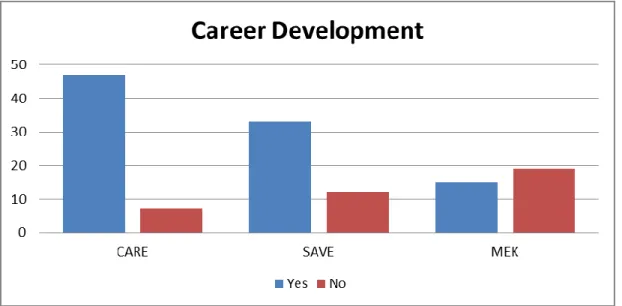
Figure 7: Career Development...38
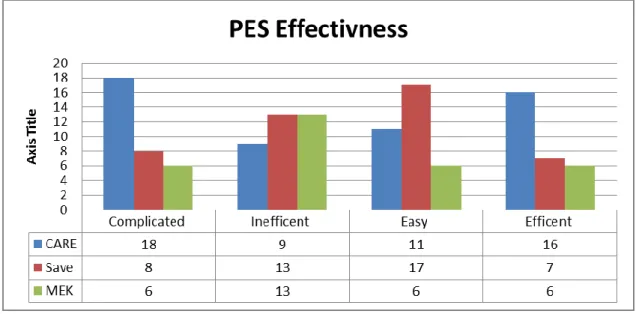
Figure 8: PES Effectiveness...40
Figure 9: PES Review Frequency...41
Figure 10: Performance Review between Theory and Practice...42
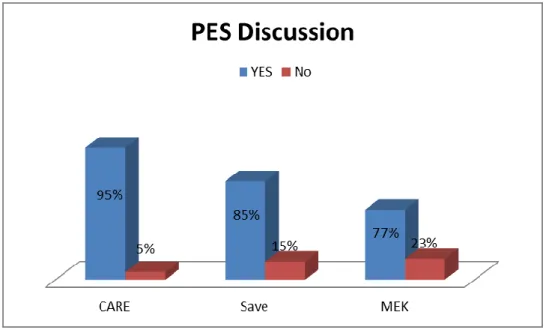
Figure 11: PES Discussion...43
Figure 12: Individual Performance Review...44
Figure 13: Manager Capabilities...45
Figure 14: Appraiser Recognition...46
Figure 15: Appraiser as a Motivator...47
Figure 16: Colleagues Appreciation...48
Figure 17: PES Multi Rating...49
Figure 18: Managing By Objectives (MBO)...51
Figure 19: Rating Scale...52
Figure 20: PES & Motivation...53
Figure 21: PES & Financial Reward...54
Figure 22: PES & Career Development...56
Figure 23: Motivators...57
V
List of Acronyms
HRM Human Resources Management PES Performance Evaluation System
SHRM Strategic Human Resources Management NGO Non-Governmental Organization
AMO Ability, Motivation and Opportunity Theory ERG Existence, Relatedness and Growth Theory PM Performance Management
GED Gender, Equity and Diversity MEK Misr El Kheir Foundation
VI
TABLE OF CONTENTS
1. Introduction ………... 1
1.1.Background of the Research Problem...1
1.2. The Non-Governmental Organization (NGO ) Sector...3
1.3.Statement of the research problem...5
1.4.Research Question ...6 1.5.Research Objectives...8 1.6.Conceptual Model...9 1.7.Research Variables...10 1.8.Research Significance...9 1.9.Conclusion...10 2. Literature Review...11 2.1Introduction...11
2.2PES Trends and Importance...12
2.3PES in the Middle East...13
2.4PES Types and Steps...15
2.5PES Challenges...16
2.5.1 The Impact of Appraiser on Staff Motivation...17
2.5.2 PES Linked to Pay or Bonus “ Performance Related Pay”...19
2.6PES Methods...20
2.6.1 Rating Scales Method...20
2.6.2 Check List Method ...21
2.6.3 Force Choice Method...21
2.6.4 MBO (Appraisal By Results Method)...22
2.6.5 Assessment Centers Method...22
2.6.6 360 Degree Appraisal...23
2.7Performance Evaluation and Motivation...23
2.7.1 Theories of Motivation...24
VII
2.7.1.2ERG Theory Clay Alderfer (Hierarchy of needs)...24
2.7.1.3Herzberg Motivator Hygiene...25
2.8Concluding Summary ...25
3 Research Methodology...26
3.1Introduction...26
3.2Research Design and Methodology...26
3.3Population and Sampling Design...27
3.3.1 Population...27
3.3.2 Data collection and confidentiality ...27
3.3.3 Data Analysis Method...28
3.4The research Limitation...28
3.5Concluding Summary...29
4 Analysis and Findings ...30
1. Gender Analysis...30
2. Employees Distribution...31
3. Age...32
4. Appraisal Frequency Per Year...33
5. PES Value...35
6. Goals Setting through PES...36
7. Career Development...38
8. PES Effectiveness...39
9. PES Review Frequency...40
10.Performance Review: Theory and Practice...41
11.PES Discussion...43
12.Performance Review impact...44
13.Manager Capabilities...45
14.Appraiser Recognition ...46
15.Appraiser as a Motivator...47
16.Peers...48
VIII
18.MBO (Management by Objectives)...50
19.Rating Scale Ambiguity...52
20.PES and Motivation...53
21.PES and Financial Reward ...54
22.PES and Career Development...55
23.Motivators ...56
24.PES Challenges...57
5. Findings and Recommendations...60
References...67
1
CHAPTER ONE INTRODUCTION
1.1 Background of the Research Problem
Human Resource Management (HRM) includes a number of activities starting from recruitment and selection, compensation and benefits, training and development ending with performance management. All of these activities are being performed in light of clear rules and policies with the overall objective of developing the human resources and increasing the employer’s success (Safdar, 2011). Amos and Ristow (2004)found that performance management could be effective only if there are clear strategic objectives for the organizations. This integrated HR strategy represents a network of human resource processes, geared towards the achievement of business goals and introduces links of performance to sourcing, staffing, development, rewards, recognition, and employee relations.
Joan Pynes (2009) argues that the Strategic Human Resources Management (SHRM) is gradually becoming an integral part of management in the nonprofit sector and its application became a
sine qua non. Performance Evaluation is one of the most important tools in the SHRM. Needless to mention that it is a complicated process and is commonly used in the public, private and NGO sectors. HRM practice is usually designed to assess the employees’ performance in light of the employers’ strategic goals, vision and work standards. Traditionally, performance evaluation was firstly introduced in the private sector then it moved to be an essential part of the human resources (HR) departments in public and NGO sectors. In the last 50 years companies have given a greater attention to the Performance Evaluation System (PES) as one of the most important factors that lead to better employee management (Lee, 1985; Eberhardt and Pooyan, 1988; & Ferris et al., 2008).
2
The PESs has main five objectives which are; control, continuity, formality, information and motivation. Companies also consider (PES) as a tool of Monitoring and Evaluation (M&E) ‘where performance is measured, performance improves’ (McConkie, 1979: 33) this as well has a positive impact on increasing the motivational level of the employees. Thus, PES is considered an effective tool as it leads to win-win results for both the employer and the employee.
The constraints towards achieving this successful partnership are the effectiveness and the efficiency of the used performance evaluation tool in any entity. Currently, stakeholders in public and non-profit organizations place a greater attention towards accountability, which is represented through performance management. Accordingly, many organizations have started to reevaluate their performance evaluation system as employees are the most important resources and assets.
Motivation is the desire that urges people to act or react. Rainey (2003) believes that the definition of motivation is too simple, however, the measurement of such a behavior or the reasons that led to its increase or decrease is very complex. This study further notes that “motivation is an umbrella concept that serves as an overreaching theme for research on a variety of related topics, including organizational identification and commitment, leadership practices, job involvement and characteristics of work goals”. Theories on Motivation had been discussed in many published studies; it is categorized into two main factors; extrinsic and intrinsic. Extrinsic motivation is a result of the indirect satisfaction that the individual reaches to. Financial rewards, job stability and working environment are some examples of extrinsic motivators while the intrinsic motivators are associated with the higher needs of the human level such as Job satisfaction, ethics, self-actualization and accomplishment. (Pynes, 2009, p.218)
Boxall and Purcell (2003) have developed one of the HRM most important theories; theory of performance, AMO theory. The theory indicates that (P) Performance should be driven by three main factors which are Ability (A), Motivation (M) and Opportunity (O) to take part in management. It was found that employees perform more effectively when they are equipped with the needed skills and abilities (the know-how) and they excel when they are motivated and given an opportunity to share their expressions and contribute in the management of their organizations.
3
The most famous theories that tackle motivation are Maslow hierarchy of needs (1954), Existence, Relatedness and Growth (ERG) theory which is a development of Maslow’s theory and the legendary Motivator Hygiene Theory by Frederick Herzberg (1964, 1968) who concluded that people are categorized into two groups; the first is referred to as hygiene while the second are motivators. Batt (2002) argues that employees’ behavior in their organizations play an important role in boosting the organizations and the employee’s performance organizational, he also highlighted that the organization’s structure should be linked to the Performance Management (PM) strategy.
After considering most of the motivation theories, it was found that Herzberg's Motivation theory and Maslow hierarchy of needs are the most relevant theories to this study. Herzberg classified motivators into Hygiene and motivators (1) hygiene factors (if inadequate these determine levels of worker dissatisfaction): supervision, interpersonal relations, work conditions, salary and job security (2) motivator factors (these determine the level of worker motivation and satisfaction): achievement, the work itself, recognition, responsibility, advancement and growth.
1.2 The Non-Governmental Organization (NGO) Sector
In a zoomed look over the NGO sector that has been introduced to Egypt in the middle of the 19th century, it was found that there is a continuous rise in the growth of this sector in Egypt.
This means that great numbers of NGOs are operating in Egypt through thousands of employees. Accordingly, there was a need to organize the flow of work within those bodies through applying the HRM best practices.
Nowadays, the PES is seen as a strategic partner for HR integration with the overall vision, mission of the organization in an attempt to help in assessing the performance of the employees (Behri et al, 2008). Also, PES is considered one of the HR best tools as it helps in motivating the employee, which is positively reflected on the success of the employer. In Egypt, there is a need to assess the different PESs that are used in the NGOs, local and international, in order to have a clearer picture on the validity of the used tool and whether it is achieving its main important objective which is boosting motivation. In this regard, organizations need motivated employees
4
to get things done in NGOs. This study will measure the impact of PES on 3 leading NGOs in Egypt; CARE, Save the Children, and Misr El Kheir. The three NGOs are operating in various governorates in Egypt for the common goal of alleviating poverty through developmental projects.
CARE Egypt is part of CARE International, and has been serving individuals, communities and local associations in the poorest regions of Egypt since 1954. CARE began work in Egypt with a nationwide school-feeding program. Today, CARE's work is focused primarily on Upper Egypt, where it works closely through a rights-based approach with the poor and marginalized, civil society, and government institutions to improve livelihoods on a sustainable basis. In addition to its headquarters located in Cairo, the organization has field offices operating in five governorates; Assuit, Beni Suef, El- Minya, Sohag, and Qena additionally, CARE implements projects in Giza, El obour, El Sharkeya, Alexandria, Kafr El Sheik and Damietta. CARE Egypt works on four main development areas; women’s rights, girl’s education, agriculture and natural resources, and good governance through local participatory processes. CARE Egypt is strongly committed to the mobilization of different development stakeholders, including local communities, NGOs, academic and research institutions, governmental entities, and the corporate sector.
Save the Children has been operating in Egypt since 1982, and implements programs throughout the country, including Cairo, the capital. Their mandate is to directly addresses the needs and rights of children, their families and communities, guided by the Convention on the Rights of the Child (CRC) and the Millennium Development Goals (MDGs).Supporting both communities’ and the government’s development priorities, Save the Children’s program in Egypt follows a “life-cycle approach”, addressing the needs of specific age groups in a holistic way. They combine health, protection, and education interventions for infants and young children 0-4 years old, for school-aged children 6-12, for in- and out-of-school adolescents 12-18 years. With youth and families, we work to increase employability skills, and link better prepared young people to safe jobs, thus increasing household income and reducing poverty. Save the Children’s programs target the vulnerable and marginalized - such as illiterate girls, street children, and low-income mothers, while building the capacity of partners to improve the conditions of children in need,
5
and ensure they achieve their rights. Save the Children works in 13 governorates, mostly in and along the Nile Basin, with one office in Cairo and one in Assiut.
MEK Foundation was established in 2007 and registered as a not-for-profit organization working in the sustainable development. MEK aims at improving the living conditions of Egyptian communities through sustainable programs. MEK Focuses on health, education, social solidarity, scientific research, and aspects of life (sports, arts, and culture). MEK has wide exposure all over Egypt; it has 5 branches in Cairo,1 in Alexanderia, 1 in El Mansoura and 1 in El Fayoum while it has 11 sub offices in El Fayoum, Beni Sweif, El Menia,Assuit, Sohag, Qena,Aswan, Sinai, El Mansoura,Luxor and Marsa Matrouh.
In most of the developing countries, NGOs work in a stressful environment because of the lack of resources, this is a demotivating factor for the NGO workers. In a review over the NGO sector in the low income countries, it was found that employees are highly motivated by recognition, career promotion, learning and financial rewards. Correspondingly, many studies found that there are major motivational challenges for NGO workers in the low income countries (Rainey, 2003). As Egypt is one of the low income countries in North Africa, it is worth to measure the impact of the PES on the employees’ motivational level in the NGO sector in Egypt
1.3Statement of the research problem
Theoretical and empirical literature had shown a relationship between the PES as one of the HRM tool and the employees’ motivation level. Some studies had tested the impact of PES on employees in the west however there is limitation in exploring the NGO sector in the Middle East in general and in Egypt in specific. In general, very few numbers of researches have been conducted to measure the effectiveness of the PES in the NGO and its relationship with the motivational level of the employees. It is believed that the PES is not as effective as expected since very important prerequisites which affect the final results are always ignored in previous research. It is important for the effective PES to include the essential prerequisites of an effective
6
PES such as the multi rating, self-assessment techniques, goal setting, career development plan and mid-Year review. The nonexistence of some of the PES essential prerequisites can definitely affect the rating decision and adversely impact the validity of the process (Dash et al, 2008). Performance evaluations eliminate the gaps between the expectations of both employers and the employees. Moreover, it provides a unified and qualified management process for organizations to measure the performance of both the employees and the employer. Therefore, improving employee’s performance by using PES is a way to improve organizational performance. Therefore, in this study an attempt has been made to investigate the relationship between PES and employees’ motivational level and to what extent PES can improve the motivational level of employees.
Therefore, it is essential to conduct such a research on the NGO sector in Egypt, to better understand employees' experiences and perceptions of performance management and evaluation system so that a completed and comprehensive performance system could be built up. Moreover, it is important for employees and managers to understand that a strong PES is the key determinant of an organization's long-term success or failure. If employees are not happy or do not accept the adapted PES, they are likely to be unwilling to take an active part in the process because they do not see any value of it. As a result, the organizational performance and employees’ motivational level would decrease due to the inefficient employee performance. Consequently, this research attempts to measure the relationship between the PES and employee’s motivation using a survey on three NGOs in Egypt.
1.4Research Question
The main question of this this research is “what is the relationship between PES on and the motivational level of the employees in the NGO sector in Egypt.
The study will explore this through conducting a comparative study on three international NGOs in Egypt: CARE International, Save the Children, and Misr El Kheir. To further answer the main research questions, the following sub-questions are constructed:
7
What are the essential prerequisites of an effective PES?
What are the factors of motivation?
What are the PES challenges in the NGO sector in Egypt?
In the Egyptian NGOs & INGOs, is the adopted performance evaluation tool linked to salary increase or promotion?
How do employees perceive PES?
Does the PES in the NGO sector meet the employees’ expectations?
What is the impact of the appraiser on the Employees’ motivational level?
1.5Research Objectives
This study aims at exploring the PES in the NGO sector in Egypt and measuring whether there is a positive relationship between PES and motivation or not.
First Objective: To assess whether the evaluation system which is being used in the three selected NGOs is a competent tool or not. The determinants of the evaluation competency are the presence of the below mentioned prerequisites (Pynes, 2009):
- SMART1 Objectives
- Individual - Career Development Plan - Frequent Performance Review
- Multi Rater Feedback
- Supervisor and Subordinate Awareness of PES - Mutual and Clear Knowledge of Rating scale - Employee Self-Assessment
Second Objective: To measures the relationship between PES and employees’ motivational level. Maslow and Herzberg theories on motivation constructed the model used to assess the efficiency of PES. Since motivation is one of the objectives of PES and since applying the
8
Hygiene factors and motivation agents appropriately should lead to having motivated employees. This study will test the effectiveness of the PES by assessing some of the motivation factors (Hygiene and Motivation). In other words, this study will test whether the employees are motivated or not by measuring their acceptance of the working conditions, salary, personal life balance, work relationship, security, responsibility level, self-actualization, professional growth and recognition
Third Objective: To provide recommendation for HR practitioners and policy makers in NGOs in Egypt on the best PES model along with the highest motivators according to the Egyptian employees with the goal of enhancing the overall evaluation process and alleviating its challenges.
9
1.6Conceptual Model
The research aims at examining the relationship between PES and Employees’ motivation. This research is trying to prove that when the prerequisites for effective PES exist, there is a greater probability that there will be a positive impact on employees’ motivation. Motivation factors are derived from Herzberg and Maslow theories on motivation. Herzberg believes that people get motivated and satisfied when they got appreciated and when they reach to their self-actualization. Also, Maslow had highlighted that people has main five needs; physiological, safety, belonging, esteem and self-actualization. Thus, the need for financial reward can help in achieving safety and protection.
10
1.7Research Variables
This study will assess the PES quality in three NGOs along with measuring the relationship between PES and employees’ motivation level. The independent variables in this study is the effective PES prerequisites, PES challenges as they are the causes while the dependent variable is the employee motivation since it is the expected outcome of an effective PES. The dependent variable; Employee Motivation will be tested through the below sub-variables:
- Recognition and Appreciation - Rewarding Pay/ Merit Increase - Self Actualization/ Satisfaction - Work Nature & conditions
1.8Research Significance
This topic is highly important nowadays since the NGO sector is rapidly growing in Egypt and the tendency to join the NGO field is accordingly increasing within the Egyptian youth population. Personally, I am interested in exploring this topic as it is one of the core areas of my current job and it is not given the appropriate level of research in the context of NGOs in Egypt. Working as an Organizational Development Officer for reputed INGOs in Egypt has given me the exposure to see the impact of the performance evaluation tool and how employees perceive it differently.
The researcher has observed that different employees are motivated by different factors. This is why the researcher has decided to test the efficiency of this HRM tool in relation to the motivational impact that it makes over the employees. The study will examine three NGOs, their
11
selection added more importance to the research as it is tackling three of the most important NGOs in Egypt. . The three selected NGOs are considered some of the effective NGOs in Egypt in terms of impact, vision, employees and exposure. As per the Global journal report on 2013, CARE International was ranked the 7th among the best 100 INGO in the world. Additionally, as
per the NGO aid map report on 2015, Save the Children has been awarded by the Bill and Melinda Gates foundation as a globally recognized leader in born and children health for its projects in the developing countries. David, (2015) assures that MEK is one of the best operating NGO in Egypt in the areas of health, Education, Scientific research, and social solidarity, Furthermore, due to MEK’s expansion, it has now opened two offices in USA and UK so that they can provide funding for the projects in Egypt
In sum, the culture of the PES was initially developed by the private sector which is generally created for increasing profit, while the nature of the NGO field is completely different as it is driven by non-profit. Thus, it is worth to dig in the PES used in those NGOs and to assess the differences and to what extent it’s motivational this topic would be interesting and meaningful for any organization because the performances of employees have a significant relationship to the organizational performance. Also, understanding how HRM practices influence employee performance could help organizations in setting up a better management system, and finally increase employees’ motivational level.
1.9Conclusion
This chapter discussed the background and statement of the research problem followed by research questions, conceptual model, and study objectives. It also introduced research variables. The next chapter will discuss PES relevant theoretical and empirical literature along with the Theories of Motivation.
12
CHAPTER TWO LITERATURE REVIEW
2.1Introduction
Over the past decade, employers along with researchers had been considered with the formulation and the impact of the PES. It is commonly believed that performance evaluations boost motivation and lead to better results (Giangreco et al., 2010). PES is a tool that is often used to systematically evaluate employees in terms of performance; the process of the performance evaluation should guarantee equity fairness and lead to the important outcome which is motivation.
The introduction of the performance management system started by the end of 1980 due to the emergence of HRM. By that time there was an understanding to shift from the top down evaluation to the upward evaluation (Dwivedi, 2004). Performance evaluation is defined as “the process of identifying, evaluating and developing the work performance of the employee in the organization, so that organizational goals and objectives are effectively achieved while, at the same time, benefiting employees in terms of recognition, receiving feedback, and offering career guidance”(Lansbury, 1988, p.52).
There has been a gradual movement to link the Performance Evaluation (PE) as one of the HRM best practices to the employees’ motivational level. However, there is other group of scholars such as Wright (2004) and Banks et al. (1985), who consider the PES as a non-vital pillar in the HRM science as they see it as a falsified tool. Evaluation of employee performance is a vital component in improving the excellence of the work and increases employees’ motivation to perform well, it is essential to provide employees with frequent performance review so they can
13
be aware of their strengths and areas of development. The main intentions of Performance Evaluation System are to reward the employee who achieves the organizational SMART goals and to determine which goals are not achieved yet along with providing alternative plans to achieve the non - met goals (Sahout et al., 2013).
2.2PES Trends and Importance
Although PES is a very common tool in the SHRM, there is a debate on the effectiveness of the PES as sometimes it creates tension in the organization because employees are reluctant to go through the (PES) process (Wright, 2004): “It is widely believed that performance evaluation is prone to bias, that they do not demonstrate high levels of accuracy, and that they are not readily accepted by users” (Banks and Roberson, 1985: 128).
Banks and Roberson, (1985) believe that PES is to some extent affected by the level of subjectivity mainly in terms of behavior evaluations. However, most literature had defined five main logics behind the importance of PES and they are control, continuity, formality, information and motivation.
First Logic is Control: Managers consider PES as a tool to use in controlling the staff that helps both the rater and the ratee2 in setting clear achievable objectives. The PES is used now as a
trend to shift from the notion of task accomplishment towards the overall goal of the organization. The PES gives a constructive support in achieving control as it calls for setting SMART objectives with a clear guidelines and time frame (Coates, 2004).
Second logic is Continuity: Price (2007) believed that continuity is a crucial factor because it helps in building systematic mechanism that helps in diffusing two concepts; work and an organizational culture and value their importance in the performance evaluation that’s how employees can sense that being evaluated by others is in an important part of the job. Nonetheless, having a continuous feedback on performance is a healthy tool to improve the
2 Ratee is the person whose performance is evaluated; the rate is the individual who assesses the performance of others.
14
performance and increase motivation as it reduces the gap between the expectation of the manager and the employee (Eberhardt and Pooyan, 1988). Wright (2004) believes that if the PES is not designed smartly it will fail in achieving the goal of continuity that’s why HR practitioners need to pay more attention to the effectiveness of the used PES.
Third logic is Formality: the formal evaluation system guarantees fairness and justice for actors, raters and rate. There is a contrast relationship between the rater and the ratee in terms of formality. For example, the ratee formality raises the clearness of both the expectations and the objectives, whereas the rater formality declines the chance of misjudgments and extreme personal preference (Woehr, 1992). This is why Kanaan (2005) believes that the PES is highly needed in organizations which have massive number of personnel and operation as it will be the only tool to guarantee fair judgement. It is well-known that the Western culture highly trusts its systems. On the contrary, Osland et al. (2007) assure that the presence of system do not always minimize misuse or corruption.
Fourth logic is Information: Despite of the fact that the PES is a hectic process on the different involved parties, it has countless benefits. One of the benefits is information management and analysis. If the organizations systematically keep the outcome of PES on yearly basis this can create a transparent and effective information exchange between the organization and the employees (Baruch and Harel, 1993; Baruch, 1996). Furthermore, it will facilitate the PES comparative analysis.
Fifth logic is motivation: PES responds to the logic of motivation. Mullins (2007) highlighted the impact of the feedback motivator. He also added that both positive and negative feedback is useful. The positive feedback is both a form of self-actualization and recognition which drives the motivation wheels faster while the negative, the feedback is a golden opportunity as it sets guideline for career and performance development (Osland et al., 2007). The obstacle lies in the scarcity of resources, if there is no additional financial resource, this can slow down the development process of an employee (Khoury and Analoui, 2004).
15
In a study conducted by Gingerco et al. (2010) examined the PES logic in the western culture and compared this to the presence of the PES in the Middle East area which has totally different characteristics. The study assumed that the five main logics behind the existence of the PES in the culture; control, continuity, formality, information and motivation cannot be the same in the eastern culture.
However, the study found that the ME is achieving the first goal of PES control For example, the PES is used in the ME as a tool of control, in many organizations the yearly evaluation is an essential component which is aligned with control, the control of the authority (Management) over the employees. PES is of great value because organizations in the ME are more into the bureaucratic approach (Hofstede, 1991). Also, it was found that the ME culture has a greater tendency than the western culture towards collective performance, on the contrary the western culture values the individual performance more (Zaharna, 1996). Both Ali (1996 ) and Gingerco et al. (2010) agreed that that the level of globalization is less in the East when compared to the West. Also, the eastern culture has an emergent economy and its society is distressed and has lower business dynamics and culture.
In the context of ME, employers believe that PES is important cause it enriches the theme of
continuity (Khoury and Analoui, 2004; Kanan, 2005) most of them relate this to the importance of continuous development of employees within the organization as well as the importance of increasing their satisfaction level. In addition, there is a tendency to develop the leadership and managerial skills of the employees to sustain continuity and success. While in the ME the importance of formalization is related to the esteem of the process including figurative formalities and customs (Zaharna, 1996).
In the ME, the technology, of information management is less central than in the Western context. However, Khoury and Analoui (2004) has an interesting experience in using PES to respond to information, the dean of information department in a public university of Palestine has effectively used the PES as a tool of communication channel with all the employees in the University. Accordingly, this resulted in increasing the trust in the PES usages also the employees (raters and ratees) became more self-mindful of the mutual expectations. In the ME,
16
the limited financial resources shrink the possibly of career development especially for the low performing employees (Najeh and Kara-Zaitri, 2007)
Overall, literature on the ME had suggested some constraints on applying the PES five logics. Ozbilgin and Healy (2003) consider some of ME areas as non-stabilized in terms of economy and politics or having an excessive control from the inside authorities like Libya and Syria, Thus the internal control is not very feasible. Also, for countries that are under attack like Palestine that cannot adopt continuity, while it has a very short sighted future. Similarly, for Lebanon, Syria and Libya, it is very hard to call for PES formality in areas where unpredictable events can arise anytime as they distress societies. Syria also suffers from a monolithic system that shrinks the opportunity for information management. Finally, generally PES does not lead to motivation because it is hard to dedicate a financial resource for tangible signs of recognition like bonuses or incentives (Giangreco et al., 2010).
2.4PES Types and Steps
There are three general approaches to performance evaluations; absolute, comparative and goal setting. Absolute method depends on evaluating the employee without consulting or listening to other raters/employees. This method is commonly used for setting development areas. Comparative method evaluates the employee in comparison to his/her colleagues of the same group/ unit. This method is commonly used in evaluating employees in probation periods in the same position, level and grade. The last method is the goal setting one which is more comprehensive and complete. In this scenario, the ratee is evaluated by his rater based on pre- set objectives that were aligned with specific timeframes, resources and deliverables (Deming, 1986).
Batt (2002) believes that there are four primary steps that should be followed in the performance evaluation process. The first step is to create the job description of every function in the organization; the job description is the guideline that outlines the employee’s responsibilities of the job. The second step is setting the needed competencies of the job and determining the performance indicators and this could be measured through various tools such as raking scales,
17
360 degree evaluation, productivity measurement and Management by Objectives (MBO). The third step is to compare the actual employee performance against the set - objectives and standards of the job. The final step is evaluating the performance based on a pre-defined rating scale.
2.5PES Challenges
Rao (2004) illustrated that an effective PES should highlight the key performance areas (KPAs) which are the main accountabilities of the employee’s role, furthermore there should be a section for the annual development plan of the employee; the plan should focus on developing both the skills and the behavior in light of the organization’s goals and strategy.
Moreover, PES should be conducted at least twice per year so the employee can have a mirror of his mid-year performance. Milliman et al. (1994) mentioned that the PES is a motivational tool that assesses the employee from different perspective this is why in recent years the 360 degree appraisal or the multi-rater assessment has become very popular. It includes assessors from different work relations as the assessor could be a supervisor, subordinates, and colleagues, internal and external customers. Roberts (2003) has emphasized on the significance of employee participation in the evaluation process as this add intrinsic motivational value to the employee as well as using it as an opportunity to listen to the employee’s voice. Intrinsic rewards are part of the job itself, it could symbolize in a challenging task, new skill or competency to be learned or higher level of responsibility. While the extrinsic rewards are more of a situation that increases the employee’s level of satisfaction and motivation, the situation could be represented in a salary increase, bonus or incentives.
There is a common and widespread disappointment in the efficacy of performance evaluation system as one of the most important HR functions.
Literature showed that employees (ratee) are usually dissatisfied with the process for a number of reasons. First, they complain about the unclear guidelines of the rating criteria which either lead
18
to unfair final rating or non- neutral rating that is based on the manager’s preference towards one employee over another. Second, many employees showed their discontent as they feel that they are evaluated on a collective effort not individual effort in other words, management evaluates neither the results nor the effort done to reach towards such a result. Third, employees sometimes tend to consider their supervisors either as unprepared to evaluate direct subordinates and this occurs in the case of first time manager or junior manager or as biased and stereotyped raters. Fourth, the PES is not linked with effective pay system or training plans. Fifth, some employees distrust the evaluation system as they believe it is a tool for the unfair layoff or dismissal (Pynes, 2009).
2.5.1 The Impact of Appraiser on Staff Motivation
There are multiple opinions on the choice of the evaluators but the fairness of the evaluation process is a stark determining factor. Thus, the decision of using multi raters is the most common technique to avoid un-justice performance evaluation. Traditionally, the evaluation process was done through the direct supervisor only. By time, it was found that the multi-raters method gives a better evaluation of employee performance. So, the current trend is to involve in the evaluation process different raters who interact with the employee on different levels (peers, clients and subordinates) (Vasset, Marnburg and Furunes, 2011).
Nowadays, distant management plays an important role in many organizations. You could be working in a country and your supervisor is located in a totally different country or could be in the same country but in a different building or different governorate. Virtual teams, Internet- linked offices, telecommuting, and other factors cause supervisors not to be in constant touch with their employees, unlike the situation 20 or 30 years ago. Thus, sometimes the supervisor does not have enough time to fully evaluate all his subordinates. That’s why using other evaluators can be more effective and realistic such as peers or clients. (Shaw et al., 2008)
Employees have multiple coworkers or peers who interact with them on frequent basis; they could be very much affected by the ratee’s action either positively or negatively. Peers are usually capable of assessing each other’s in terms of competencies; communication, negotiation
19
and team building (Ohabunwa, 2009). Nonetheless, using subordinates in the evaluation process is a very important variable as it helps in evaluating the ratee from different dimensions and it gives an objective feedback on the people management skills of this ratee potential missteps of people who control other employees in the organization. The only disadvantage of using subordinates evaluations is that it could be biased especially from subordinates who could have been disciplined recently by their managers or if they have personal conflict with their direct supervisors. On the other hand, subordinates may exaggerate or minimize the capabilities of their supervisors if they are not fully aware of their managers’ job technicalities and duties. Another crucial issue with the subordinates evaluation is the confidentiality as the used tool should be highly confidential or anonymous so the evaluator can trust the system and avoid any misuse of his ratings (Jayawarna, et al., 2007).
Self-assessment is also another evaluation tool. Basically, most of the employees assess themselves whether they are asked or not. The self-assessment is the base of the discussion around the performance review where the rater and the ratee challenge each other. Often, employees are asked to set their yearly objectives then to validate them with their direct supervisors. (Ichniowski and Shaw, 2009). Most of the research evidences showed that employees tends to either underestimate or inflate their professional skills and competencies, the literature also showed that people with little knowledge of their job tend to exaggerate their abilities and vice- versa (Holzer, 2007).
Customers could be asked to participate in the performance evaluation process as one of the raters. Customers in the NGO sector could be colleagues from within the organization, beneficiaries, donors or partners. Customer evaluation is crucial if the ratee’s main task is providing services thus it is important to know how the employees interact with them. Also, internal customers are as important as the external ones, in many organizations, there are conflicts between the departments, service providers and service recipients (Lowe and Vodanovich, 2005). There are some challenges for the customer evaluation; he could be not fully aware with the rating scale of the evaluation and accordingly provide a misleading rating. Bias could be another problem. But it is undeniable that participating the customers in the employee’s evaluation process is a positive tool to enhance the ratee’s areas of development (Jones and Wright, 2007).
20
2.5.2 PES Linked to Pay or Bonus “ Performance Related Pay”
Literature have shown that appraisee get more motivated towards the adapted PES if the evaluation process lead to financial rewards. Cunneen (2006) defined the performance related pay as an effective a remuneration method that enhances the employees and link the performance to a merit increase and it lead to main three outcomes:
a) Motivating the employees in the workplace b) Highlighting the importance of the PES process
c) Prevailing a fair rewarding system within the organization as the reward is gifted to the good performers.
Practically, the organization that links its PES to a rewarding pay system, it provides its employees with a chance to expand the organization’s effectiveness, productivity and overall performance (Garavan, 2001).
On the other side, Chandra (2006) and Selvarajan (2006) have noted that that the majority of the management evaluators are either not well trained on the performance evaluation tool as they do not consider the ethical aspect of the job performance and just focus on the business objectives. PES is criticized because it is seen by employees as a false degree of measurement which lays the result of the poor performance only on the employees. Many employees or ratee see that the PES is a prolonged process that has no added value. Another drawback that had been widely discussed in most of the PES is the vagueness of the scoring matrix as it is usually hard to differentiate between the employees who should score good or very good so there must be clear guidelines that differentiate between the ratings and to set clear indicators for every score (Deming, 1986).
21
On the contrary, accurate PESs are capable of providing the management team with the essential information for setting strategic plans and taking vital decisions. Performance evaluation is the milestone through which it can be decided who should stay in the organization, who should leave and what kind of succession plans are needed for every caliber. Similarly, employees should be informed about the goals and the objectives of the organization and how can they contribute in achieving these goals. It is a must to fully grasp the rating guidelines which they will be judged upon, this role is always done through the direct supervisors and he/she should communicate to their subordinates what are their strengths and what are their areas of development along with plans to improve such areas. The development plans could include internal or external trainings, delegating, mentoring and on job training. Such plans should be set with specific timeframes for accountability and commitment from both sides (Pynes, 2009)
In most organizations, the direct supervisor is the one who conducts the evaluations of his subordinates since he/she is the one who has direct supervision and monitoring over the employees’ performance, tasks completion or tardiness as well as he is the one who can judge the quality of the submitted technical deliverables. Theoretical and practical evidences that had proved it is inefficient to depend on one evaluation source for many reasons. First, supervisors usually work in locations apart from their subordinates and this does not allow them to have accurate observations on them all the time. Second, employees should be evaluated on different dimensional levels which is very hard to be grasped or fully seen through one person only. That’s why the implementation of the 360/ multi-rater degree evaluation became commonly used in many organizations (Coggburn, 1998).
Selvarajan (2006) defined that many organizations face challenges with the performance evaluation process which lead to prevailing a demotivating spirit among the employees. The demotivation is a result of a number of variables such as the PES poor design, lack of knowledge on the importance of the PES in the organization, the ineffectiveness of the process, the non-neutralism of the grading system.
2.6PES Methods
22
The rating scale is a scoring bar that places the employee performance based on his scores that are linked to his performance on a specific rating. Usually, the rating range is between Excellent and Poor or Exceeding Expectations (EE) or Below Expectations (BE). The rating is not only based on the job performance of the employee, however, other factors contribute to the performance evaluation and other competencies based on the job level (Okeyo, Mathooko and Sitati, 2012). Rainey (2013) believes that the value of fairness is accomplished when there is a comparison strategy within the workforce; this technique helps in giving a clearer picture of the employee’s skills and competencies. The disadvantage of this technique is that it is not applicable on all job functions.
2.6.2 Check List Method
In this method, the rater (direct supervisor) fills in a form that is usually designed by the HR department in the format of “Yes” or “No” questions. In this method, the evaluation process is done jointly by the Rater and the HR department since the rater clicks either Yes or No then the HR calculates the final scores. This process is categorized by its easiness in terms of administration, standardization and it has an economic nature, however, its disadvantages are bigger as it does not limit the rater’s biasness, it also uses improper weight to all the method components and it is not individualized (Caruth and Humphreys, 2008).
2.6.3 Force Choice Method
This method is slightly similar to the check list method. The evaluation process is divided between the rater and the HR. It usually includes a set of statements that are either true or false and the evaluator has to choose one of the answers (Denby, 2010). The advantage of this method is highlighted through applying the factor of fairness as it does not give a great chance for the rater to be biased or unfair to the employee. Additionally, it allows the direct supervisor analysis
23
to compare and analyze the performance of the employees of his/her departments strictly, the method entails that there are a standard distribution manner that should be followed. For example, the percentage of the excellent employees in this department should not exceed 20%, very good employees should not exceed 40% of the total population, 20% should be placed in the average category and not more than 10% in the below average category. The pitfall of this method is that it is found to be ineffective if there is a trend to equip certain departments with all the good employees and discards the rest of the departments. Accordingly, good employees of key departments score unsatisfying rating and relatively poor employees of idlers’ divisions’ get good rating (Jayawarna et al., 2007).
2.6.4 MBO (Appraisal By Results Method)
Peter Drucker was the first to introduce the MBOs technique as one of the PES effective methods in 1950. This method depends on measuring the employees’ performance through examining the achievement of his job objectives’ and how those objectives are turned into results (Newman, Thanacoody and Hui, 2012). The objectives should be set jointly by the employee and his/her direct supervisor at the beginning of the employee’s assignments. Once the objectives are set, the employee turns to be his/her self - auditor; in other words, he does not wait for others to highlight his areas of strengths or development. They are expected to monitor their own development and progress (Porter, 2008). The MBO approach is a distinguished method because it overcomes the common challenge of expecting the needed skills and traits that an employee should be evaluated upon. This approach focuses on the results only. So, if the employee met the set objectives and reflected them into measurable outcomes, he should be considered a meeting expectations ratee (Qureshi at al., 2007).
24
Both Qureshi et al. (2007) and Porter (2008) agreed that assessment centers is one of the best evaluation tools; it consists of a team of certified assessors that participate in the evaluation process for a number of employees. The evaluation process depends on observing the behaviors of the employees through a number of exercise, simulation activities, role plays and sample work groups that are similar to the actual job of the ratees (employees). Professional assessment centers can evaluate and forecast the performance of the employees, it does not consider the past performance that’s why it is seen as the best evaluating tool. Furthermore, the tests help in taking the effective decisions in the hiring and the promotion process. This assessment tool could be a bit costly if conducted on a large number of employees (Scott, Clotheir and Spriegel, 2007).
2.6.6 360 Degree Appraisal
The 360 Degree Assessment (Multi-rater process) is a way of gathering feedback from various sources such as peers, direct reports, external clients, partners, and the feedback is used to give managers and employees’ information and feedback that will help in identifying every one’s competencies. The information helps the manager give a well-balanced assessment of performance in the year-end review process. Feedback plays an important role in development and learning. The raters evaluate their colleagues in term of competencies and skills and how far they are applying the organization’s values and strategic vision. According to McEvoy (1990), this technique is found to be very effective as it measures interpersonal skills, customer satisfaction, communication skills, stress and anger management as well as team building skills. The only disadvantage of this tool is that it needs to equally weight the raters and not to ignore some of the constituents and needs good skills form the manager so he can communicate with those raters and evaluate their responses objectively. This step usually consumes time and effort from manager if done manually (Ohabunwa, 2009).
25
Motivation and PES are closely related and aligned. Performance management is the evaluation tool that assesses the performance of employees which should accordingly lead to increasing the motivational level of the employees if it is effectively implemented. To a certain extent, it could be a result of adapting a good PES in an organization. Recognition of the employees’ efforts is reflected through PES; it is commonly known that societal appreciation in a strategic aviator to any ratee. Other incentives play role in the motivational level such as the financial reward, working conditions as well as the intrinsic motivation (Jose, 2011).
Many theories on motivation have been developed over the years. Krietner (1995) has defined motivation from a physiological perspective, as a tool that directs human behavior. This study also considered motivation as the indicator of the organization’s health, the more the employees are motivated, the more the company achieves.
2.7.1 Theories of Motivation
2.7.1.1Maslow Hierarchy of Needs
According to Maslow (1954), human beings have different needs which are divided between physiological, physical and materialistic needs He also assured that the human needs should be addressed in the same order as placed in the theory pyramid. Maslow separated the needs in five categories. The lowest level of needs is the Physiological then the Safety ones then the Belongings needs. However the higher need for the Human being is the self-Actualization needs followed by the Esteem Needs. He argued that the lowest needs must be met first so the person can reach to the higher needs accordingly. In other words, human should be secured physiologically and biologically so he can gradually reach to achieving the self-actualization needs
26
Clay Alderfr simplified Maslow’s Hierarchy of Needs and it is called ERG which is Existence- Relatedness-Growth. This theory’s main objective is that there is no such hierarchy of any needs and all needs are considered to be equal. All needs are equal motivators.
2.7.1.3Herzberg Motivator Hygiene
After considering most of the motivation theories, it was found that Herzberg's Motivation Theory is the most relevant one to this study. Herzberg classified motivation into Hygiene and motivators (1) hygiene factors (if inadequate these determine levels of worker dissatisfaction): supervision, interpersonal relations, work conditions, salary and job security (2) motivator factors (these determine the level of worker motivation and satisfaction): achievement, the work itself, recognition, responsibility, advancement and growth. Additionally, Herzberg had classified the motivator and the hygiene needs into two main categories; satisfiers and dissatisfies. Satisfiers are linked the work nature including the employees’ commitment growth and feeling of recognition. While the dissatisfies are the factors that are linked to the job but the employee does not have a full authority on them such as policies, procedures, pay and benefits in addition to the relationship with coworkers and supervisors (Herzberg, 1966).
2.8Concluding Summary
This chapter provided a summary of the PES. Moreover, this chapter also discusses PM, PES trends, types and methods along with the role of performance evaluation to enhance the employees’ motivation. The next chapter discusses the research methodology, design and limitation.
27
CHAPTER THREE RESEARCH METHODOLOGY 3.1Introduction
This chapter discusses the research methodologies of the study and the steps taken to conduct the research. The chapter is divided into four sections. The first section addresses the research design of the study. The methods of the research are discussed in the second section of the research. Methodologies and data collection are articulated in the third section. The fourth section briefly discusses the study limitations.
3.2Research Design and Methodology
The study aims at examining the relationship between PES and employee’s motivational level, as well as the influence of PES prerequisites and the challenges of performance appraisal system in the NGO sector in Egypt. The study uses both qualitative and quantitative methods; the study implemented the qualitative and the quantitative approach in order to measure the impact of the independent variables over the dependent by Churchill (2002).. The mix between the qualitative and the quantitative design allowed the researcher to minimize biases that could be a result of applying qualitative research method only. This design was appropriate because it gave conclusive results among the research variables. The independent variables included: the
28
performance evaluation prerequisites and the challenges in appraising. The dependent variable was the employee motivation.
The primary resource of data was a questionnaire distributed among the employees of the three NGOs then it was followed with some semi-structured interviews with random personnel. The questionnaire contained number of multiple choice questions related to assessing the employees level of motivation, the survey tackled issues such as PES prerequisites, appraiser effect and PES challenges.
While the semi-structured interviews/in-depth interviews backed up the results shown from the statistical data as it elaborated more on the understanding of some meanings, beliefs and experience, which are better, understood through qualitative data. For participating in the questionnaire, there was one criterion that was presented clearly to the questionnaire participants; the employees who can participate in the questionnaire should be full-time employees who had completed at least one year service in the organization to be able to assess the PES of their respective organization. The questionnaire was crafted to reflect the Motivator Hygiene Theory and Maslow theory of needs.
3.3Population and Sampling Design
3.3.1 Population
Cooper and Schilndler (2006) described population as the pool of the participating groups through which the data is gathered. The population of interest consists of 133 employees from the three participating NGOs noted earlier. The selections of the three NGOs came after a careful examination of the NGO sector in Egypt. The three selected NGO are considered some of the most effective NGOs in Egypt in terms of impact, vision, employees and exposure. CARE International was ranked the 7th among the best 100 INGO in the world. Additionally, as per the
NGO aid map report on 2015, Save the Children has been awarded by the Bill and Melinda Gates foundation as a globally recognized leader in born and children health for its projects in
29
the developing countries. David, (2015) assures that MEK is one of the best operating NGO in Egypt in the areas of health, Education, Scientific research, and social solidarity, Furthermore, due to MEK’s expansion, it has now opened two offices in USA and UK so that they can provide funding for the projects in Egypt
3.3.2 Data collection and confidentiality
The human resources directors in these three organizations were the main focal points through which the questionnaire were either distributed manually or sent electronically. Participating in the questionnaire were voluntary, however, it was often sent from the HR representative to the employees with a note on its importance to the organization as it was seen as tool of evaluating the current PES in the contributing NGOs. The questionnaire was the primary resource of data, it consisted of 24 multiple choice questions that tackled the relationship between the dependent and the independent variables of the study. The purpose of the study and the questionnaire was made very clear to all the participants. The questionnaire was anonymous; participants were not asked to share any data that reveals their identity. After collecting the questionnaire results, interviews were conducted with 12 employees in CARE, Save the children and MEK. The interviewees were not always asked the same questions as it was a semi-structured interview. The answers of the interviewees helped in better analyzing the questionnaire results and it gave the researcher deep insights on the main variables of the study like Appraiser roles, PES challenges and prerequisites
3.3.3 Data Analysis Method
The questionnaire was formulated using Google forms application which is Excel based that helped in providing the needed analysis. Further analyses were conducted using the Excel different functions. The data were presented using tables, charts and pies in order to give relatively a clear picture of the research findings at a glance.
30
The study was intended to cover four NGOs, two international NGOs and two local NGOs. But due to accessibility issues, the fourth NGO could not participate effectively in the questionnaire. The fourth NGO was Nahdet El Mahrousa but seven participants only had answered the questionnaire that’s why it was excluded from the study as this level of contribution will not allow the researcher to build solid analysis on the PES used and on its impact over the employees’ motivational level. Also, the study aimed at getting 50 replies on the questionnaire from every organization, so the data collection was relatively easier and smooth in CARE but the researcher failed to reach to this target in Save the children and MEK. From Save the children, 45 replies were received and from MEK 34 replies were received but the replies of the questionnaire supported by the outcomes of the interviews. Four interviewees from every organization participated in a semi- structured in interviews. Additionally, there is another limitation that needs to be highlighted; the research findings are limited to the case study and it cannot be generalized.
3.5Concluding Summary
In this chapter, the research methodology, design and data collection methods and analysis were presented. In chapter four, data analysis and discussions will be presented.
31
CHAPTER FOUR ANALYSIS & FINDINGS 4. Introduction
In this chapter, the analyses of the questionnaire are provided. The analyses will include the demographic trend in the three NGOs, the participants’ evaluations of the PES, rater quality and their perception of motivation and how they are affected by the PES.
32
Figure 1: Gender Analysis
As shown in Figure 1, the number of respondents in CARE is the highest then followed by Save the Children and the lowest number of respondents is at MEK. In reality, the percentage of the employees in CARE are almost equal in terms of gender balance, it is 49:51% females to males. However, it was clear from the survey that the female respondents from CARE were much more interested in participating in the questionnaire than the male employees. From CARE, 67% of the respondents were females while 33% were males. In Save the Children, 60% of the employees were males while 40% were females. In MEK, 65% were males and 35% were females. Accordingly, the survey respondents from both Save the Children and MEK showed that the males were more interested in answering the survey. This is logical since the male population in both organizations is to some extent dominant.
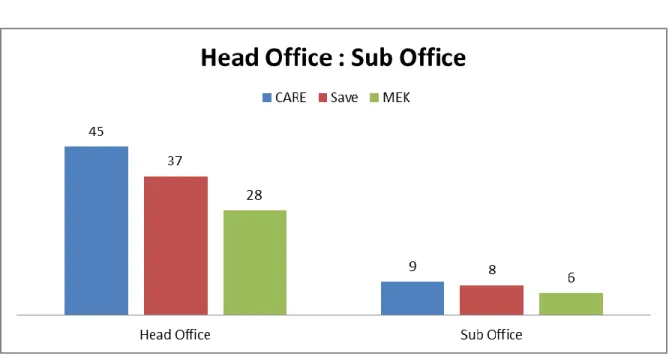
2. Employees Distribution
Figure 2: Employees Distribution
The three organizations work in different governorates all over Egypt. Currently, Save the Children works in 13 governorates, mostly in and along the Nile Basin, with one office in Cairo