CGM
graph
/CGM
lib
: Implementing and Testing
CGM Graph Algorithms on PC Clusters
Albert Chan and Frank Dehne
School of Computer Science, Carleton University, Ottawa, Canada http://www.scs.carleton.ca/∼achan andhttp://www.dehne.net
Abstract. In this paper, we present CGMgraph, the first integrated library of parallel graph methods for PC clusters based on CGM algo-rithms. CGMgraphimplements parallel methods for various graph prob-lems. Our implementations of deterministic list ranking, Euler tour, con-nected components, spanning forest, and bipartite graph detection are, to our knowledge, the first efficient implementations for PC clusters. Our library also includes CGMlib, a library of basic CGM tools such as sort-ing, prefix sum, one to all broadcast, all to one gather,h-Relation, all to all broadcast, array balancing, and CGM partitioning. Both libraries are available for download athttp://cgm.dehne.net.
1
Introduction
Parallel graph algorithms have been extensively studied in the literature (see e.g. [15] for a survey). However, most of the published parallel graph algorithms have traditionally been designed for the theoretical PRAM model. Following some previous experimental results for the MASPAR and Cray [14, 6, 18, 17, 11], parallel graph algorithms for more “PC cluster like” parallel models like the BSP [19] and CGM [7, 8] have been presented in [12, 1–4, 9, 10]. In this paper,
we present CGMgraph, the first integrated library ofCGM methods for various
graph problems including list ranking, Euler tour, connected components, span-ning forest, and bipartite graph detection. Our library also includes a library
CGMlib ofbasic CGM tools that are necessary for parallel graph methods as
well as many other CGM algorithms: sorting, prefix sum, one to all broadcast,
all to one gather, h-Relation, all to all broadcast, array balancing, and CGM
partitioning. In comparison with [12], CGMgraph implements both a
random-ized as well as a deterministic list ranking method. Our experimental results for randomized list ranking are similar to the ones reported in [12]. Our implementa-tions ofdeterministic list ranking, Euler tour, connected components, spanning forest, and bipartite graph detection are, to our knowledge, the first efficient implementations for PC clusters. Both libraries are available for download at
http://cgm.dehne.net. We demonstrate the performance of our methods on two different cluster architectures: a gigabit connected high performance PC cluster and a network ofworkstations. Our experiments show that our library provides good parallel speedup and scalability on both platforms. The commu-nication overhead is, in most cases, small and does not grow significantly with
an increasing number ofprocessors. This is a very important feature ofCGM algorithms which makes them very efficient in practice.
2
Library Overview and Experimental Setup
Figure 1 illustrates the general use ofCGMlib and CGMgraph as well as the
class hierarchy ofthe main classes. Note that all classes in CGMgraph, except
EulerNode, are independent. Both libraries require an underlying
communica-tion library such as MPI or PVM. CGMlibprovides a classCommwhich interfaces
with the underlying communication library. It provides an interface for all
com-munication operations used by CGMlib and CGMgraph and thereby hides the
details ofthe communication library from the user.
The performance of our library was evaluated on two parallel platforms:
THOG, and ULTRA. The THOG cluster consists of p = 64 nodes, each with
two Xeon processors. The nodes are oftwo different generations, with processors at 1.7 or 2.0GHz, 1.0 or 1.5GB RAM, and 60GB disk storage. The nodes are interconnected via a Cisco 6509 switch using Gigabit ethernet. The operating
system is Linux Red Hat 7.1 together with LAM-MPI version 6.5.6. TheULTRA
platform is a network of workstations consisting ofp= 10 Sun Sparc Ultra 10.
The processor speed is 440MHz. Each processor has 256MB RAM. The nodes are interconnected via 100Mb Switched Fast Ethernet. The operating system is Sun OS 5.7 and LAM-MPI version 6.3.2.
All times reported in the remainder ofthis paper are wall clock times in seconds. Each data point in the diagrams represents the average ofthree
exper-iments (on different random test data ofthe same size) for CGMgraph and ten
experiments for CGMlib. The input data sets for our tests consisted of randomly
created test data. For inputs consisting oflists or graphs, we generated random lists or graphs as follows. For random linked lists, we first created an arbitrary linked list and then permuted it over the processors via random permutations. For random graphs, we created a set ofnodes and then added random edges. Un-fortunately, different test data sizes had to be chosen for the different platforms
because ofthe smaller memory capacity ofULTRA.
3
CGMlib: Basic Infrastructure and Utilities
3.1 CGM Communication OperationsThe basic library, called CGMlib, provides basic functionality for CGM
commu-nication. An interface, Comm, defines the basic communication operations such
as
• oneToAllBCast(int source, CommObjectList &data): Broadcast the list
datafrom processor numbersourceto all processors.
• allToOneGather(int target, CommObjectList &data): Gather the lists
• hRelation(CommObjectList &data, int *ns): Perf orm anh-Relation on
the listsdatausing the integer arraynsto indicate for each processor which
list objects are to be sent to which processor.
• allToAllBCast(CommObjectList &data): Every processor broadcasts its
listdatato all other processors.
• arrayBalancing(CommObjectList &data, int expectedN=-1): Shift the
list elements between the listsdatasuch that every processor contains the
same number ofelements.
• partitionCGM(int groupId): Partition the CGM into groups indicated by
groupId. All subsequent communication operations, such as the ones listed above, operate within the respective processor’s group only.
• unPartitionCGM(): Undo the previous partition operation.
All communication operations in CGMlibsend and receive lists oftypeComm
ObjectList. A Comm ObjectList is a list of CommObjectelements. The Comm Objectinterface defines the operations which every object that is to be sent or received has to support.
3.2 CGM Utilities
• Parallel Prefix Sum:
calculatePrefixSum (CommObjectList &result, CommObjectList &data).
• Parallel Sorting:sort(CommObjectList &data)using the deterministic
par-allel sample sort methods in [5] and [16].
• Request System for exchanging data requests between processors: The CGMlib
provides methods sendRequests(...)and sendResponses(...)for
rout-ing the requests from their senders to their destinations and returnrout-ing the responses to the senders, respectively.
• Other CGM Utilities: A classCGMTimers(with six timers measureing
com-putation time, communication time, and total time, both in wall clock time and CPU ticks) and other utilities including a parallel random number gen-erator.
3.3 Performance Evaluation
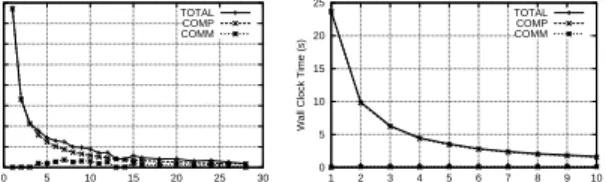
Figure 2 shows the performance of our prefix sum implementation, and Figure 3 shows the performance of our parallel sort implementation. For our prefix sum implementation, we observe that all experiments show a close to zero
communi-cation time, except for some noise onTHOG. The prefix sum method
communi-cates only very few data items. The total wall clock time and computation time
curves in all four diagrams are similar to 1/p. For our parallel sort
implementa-tion, we observe a small fixed communication time, essentially independent ofp.
This is easily explained by the fact that the parallel sort uses of a fixed number
of h-Relation operations, independent of p. Most ofthe total wall clock time
is spent on local computation which consists mainly oflocal sorts ofn/p data.
Therefore, the curves for the local computation and the total parallel wall clock
4
CGMgraph: Parallel Graph Algorithms Utilizing the
CGM Model
CGMgraphprovides a list ranking methodrankTheList(ObjList<Node> &nodes,
...) which implements a randomized method as well as a deterministic method
[15, 9]. The input to the list ranking method is a linear linked list where Tthe
pointer is stored as the index ofthe next node. CGMgraphalso provides a method
getEulerTour(ObjList <Vertex> &r, ...)for Euler tour traversal of a forest [9]. The forest is represented by a list ofvertices, a list ofedges and a list ofroots.
The input to the Euler tour method is a forest which is stored as follows:ris a
set ofvertices that represents the roots ofthe trees,vis the input set ofvertices,
eis the input set ofedges, andeulerNodesis the output data ofthe method. We
implemented the connected component method described in [9]. The method also
provides immediately a spanning forest of the given graph. CGMgraphprovides
a method findConnectedComponents(Graph &g, Comm *comm) for connected
component computation and a methodfindSpanningForest(Graph &g, ...)
for the calculation of the spanning forest of a graph. The input to the above two methods is a graph represented as a list ofvertices and a list ofedges. We also
im-plemented the bipartite graph detection algorithm described in [3]. CGMgraph
provides a method isBipartiteGraph(Graph &g, Comm *comm) for detecting
whether a graph is a bipartite graph. As in the case ofconnected component and spanning forest, the input is a graph represented as a list of vertices and a list ofedges.
4.1 Performance Evaluation
In the following, we present the results of our experiment. For each operation,
we measured the performance on THOGwith n= 10,000,000 and onULTRA
withn= 100,000.
Figure 4 shows the performance of the deterministic list ranking algorithm. Again, we observe that for both machines, the communication time is a small, essentially fixed, portion ofthe total time. The deterministic list ranking requires
betweenclogpand 2clogp h-Relation operations. With logpin the range [1,5],
we expect between c and 10c h-Relation operations. Since the deterministic
algorithm is more involved and incurs larger constants, c may be around 10
which would imply a range of[10,100] for the number ofh-Relation operations.
We measured usually around 20 h-Relation operations. The number is fairly
stable, independent of p, which shows again that logp has little influence on
the measured communication time. The small increases forp= 4,8,16 are due
to the fact that that the number of h-Relation operations grows with logp,
which gets incremented by 1 when p reaches a power of2. In summary, since
the communication time is only a small fixed value and the computation time
is dominating and similar to 1/p, the entire measured wall clock time is similar
to 1/p. Figure 5 shows the performance of the Euler tour algorithm onTHOG
and ULTRA. Our implementation uses the deterministic list ranking method for the Euler tour computation. Not surprisingly, the performance is essentially
the same as for deterministic list ranking. Due to the fact that all tree edges need to be duplicated, the data size increases by a factor of three (original plus two copies). This is the reason why we could execute the Euler tour method on
THOGforn= 10,000,000 only withp≥10.
Figure 6 shows the performance of the connected components algorithm on
THOG and ULTRA. Figure 7 shows the performance of the spanning forest
algorithm onTHOG, andULTRA. The only difference between the two methods
is that the spanning forest algorithm has to create the spanning forests after the connected components have been identified. Therefore, the times shown in Figures 6 and 7 are very similar. Again, we observe that for both machines, the communication time is a small, essentially fixed, portion ofthe total time. The
connected component method uses deterministic list ranking. It requires clogp
h-Relation operations with logp in the range [1,5]. The communication time
observed is fairly stable, independent ofp, which shows that the logpfactor has
little influence on the measured communication time. The entire measured wall
clock time is dominated by the computation time and similar to 1/p.
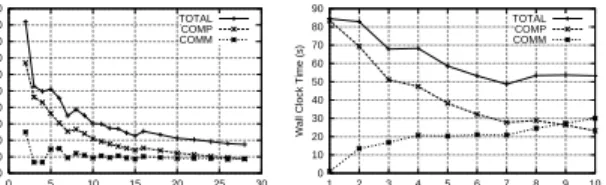
Figure 8 shows the performance of the bipartite graph detection algorithm
onTHOG, andULTRA. The results mirror the fact that the algorithm is
essen-tially a combination ofEuler tour traversal and spanning forest computation. The curves are similar to the former but the amount of communication time is now larger, representing the sum ofthe two. This effect is particularly strong on
ULTRA which has the weakest network. Here, the logpin the number ofcom-munication rounds actually leads to a steadily increasing comofcom-munication time
which, forp= 9 starts to dominate the computation time. However, forTHOG
andCGM1, the effect is much smaller. For these machines, the communication
time is still essentially fixed over the entire range ofvalues ofp. The computation
time is similar to 1/pand determines the shape ofthe curves for the entire wall
clock time. The computation and communication times become equal for larger
pbut only because ofthe decrease in computation time.
5
Future Work
Both, CGMlib and CGMgraph are currently in beta state. Despite extensive
work on performance tuning, there are still many possibilities for fine-tuning the code in order to obtain further improved performance. Of course, adding
more parallel graph algorithm implementations to CGMgraph is an important
task for the near future. Other possible extensions include porting CGMlib and
CGMgraph to other communication libraries, e.g. PVM and OpenMP. We also
plan to integrate CGMliband CGMgraph with other libraries, in particular the
LEDA library [13].
References
1. P. Bose, A. Chan, F. Dehne, and M. Latzel. Coarse Grained Parallel Maximum Matching in Convex Bipartite Graphs. In 13th International Parallel Processing
2. E. Cacere, A. Chan, F. Dehne, and G. Prencipe. Coarse Grained Parallel Al-gorithms for Detecting Convex Bipartite Graphs. In 26th Workshop on
Graph-Theoretic Concepts in Computer Science (WG 2000), volume 1928 ofLecture Notes
in Computer Science, pages 83–94. Springer, 2000.
3. E. Caceres, A. Chan, F. Dehne, and G. Prencipe. Coarse Grained Parallel Al-gorithms for Detecting Convex Bipartite Graphs. In 26th Workshop on
Graph-Theoretic Concepts in Computer Science (WG 2000), volume 1928 of Springer
Lecture Notes in Computer Science, pages 83–94, 2000.
4. E. Caceres, A. Chan, F. Dehne, and S. W. Song. Coarse Grained Parallel Graph Planarity Testing. In International Conference on Parallel and Distributed
Pro-cessing Techniques and Applications (PDPTA 2000). CSREA Press, 2000.
5. A. Chan and F. Dehne. A Note on Coarse Grained Parallel Integer Sorting.Parallel
Processing Letters, 9(4):533–538., 1999.
6. S. Dascal and U. Vishkin. Experiments with List Ranking on Explicit Multi-Threaded (XMT) Instruction Parallelism. In3rd Workshop on Algorithms
Engi-neering (WAE-99), volume 1668 ofLecture Notes in Computer Science, page 43 ff,
1999.
7. F. Dehne. Guest Editor’s Introduction, Special Issue on Coarse Grained Parallel Algorithms. Algorithmica, 24(3/4):173–176, 1999.
8. F. Dehne, A. Fabri, and A. Rau-Chaplin. Scalable Parallel Geometric Algorithms for Coarse Grained Multicomputers. In ACM Symposium on Computational
Ge-ometry, pages 298–307, 1993.
9. F. Dehne, A. Ferreira, E. Caceres, S. W. Song, and A. Roncato. Efficient Parallel Graph Algorithms for Coarse Grained Multicomputers and BSP. Algorithmica, 33(2):183–200, 2002.
10. F. Dehne and S. W. Song. Randomized Parallel List Ranking for Distributed Memory Multiprocessors. In Asian Computer Science Conference (ASIAN ’96), volume 1179 ofLecture Notes in Computer Science, pages 1–10. Springer, 1996. 11. T. Hsu, V. Ramachandran, and N. Dean. Parallel Implementation of Algorithms
for Finding Connected Components in Graphs. InAMS/DIMACS Parallel
Imple-mentation Challenge Workshop III, 1997.
12. Isabelle Gurin Lassous, Jens Gustedt, and Michel Morvan. Feasability, Portability, Predictability and Efficiency : Four Ambitious Goals for the Design and Implemen-tation of Parallel Coarse Grained Graph Algorithms. Technical Report RR-3885, INRIA, http://www.inria.fr/rrrt/rr-3885.html.
13. LEDA library. http://www.algorithmic-solutions.com/.
14. Margaret Reid-Miller. List Ranking and List Scan on the Cray C-90. In ACM
Symposium on Parallel Algorithms and Architectures, pages 104–113, 1994.
15. J. Reif, editor. Synthesis of Parallel Algorithms. Morgan and Kaufmatin Publish-ers, 1993.
16. H. Shi and J. Schaeffer. Parallel Sorting by Regular Sampling.Journal of Parallel
and Distributed Computing, 14:361–372, 1992.
17. Jop F. Sibeyn. List Ranking on Meshes. Acta Informatica, 35(7):543–566, 1998. 18. Jop F. Sibeyn, Frank Guillaume, and Tillmann Seidel. Practical Parallel List
Ranking. Journal of Parallel and Distributed Computing, 56(2):156–180, 1999. 19. L. Valiant. A Bridging Model for Parallel Computation. Communications of the
cgmgraph
cgmlib
mpi pvm
Physical Network ...
CGM Graph Algorithms Other CGM Algorithms
Comm MPIComm Sortor IntegerSortor HeapSortor CommObject Response Request SimpleCommObject BasicCommObject ObjList CommObjectList CGMlib CGMgraph Node EulerNode Vertex Edge ListRanker EulerTourer ConnectedComponents BPGD
Fig. 1.Overview of CGMliband CGMgraph
0 0.5 1 1.5 2 2.5 3 3.5 4 0 5 10 15 20 25 30
Wall Clock Time (s)
Number of Processors (p) Parallel Prefix Sum on thog (n = 5000000)
TOTAL COMP COMM 0 0.05 0.1 0.15 0.2 0.25 0.3 0.35 1 2 3 4 5 6 7 8 9 10
Wall Clock Time (s)
Number of Processors (p) Parallel Prefix Sum on ultra (n = 100000)
TOTAL COMP COMM
Fig. 2.Performance of our prefix sum implementation onTHOGandULTRA
0 50 100 150 200 250 300 350 400 0 5 10 15 20 25 30
Wall Clock Time (s)
Number of Processors (p) Parallel Heap Sort on thog (n = 5000000)
TOTAL COMP COMM 0 5 10 15 20 25 1 2 3 4 5 6 7 8 9 10
Wall Clock Time (s)
Number of Processors (p) Parallel Heap Sort on ultra (n = 100000)
TOTAL COMP COMM
Fig. 3.Performance of our parallel sort implementation onTHOGandULTRA
0 500 1000 1500 2000 2500 0 5 10 15 20 25 30
Wall Clock Time (s)
Number of Processors (p) Deterministic List Ranking on thog (n = 10000000)
TOTAL COMP COMM 0 10 20 30 40 50 60 70 1 2 3 4 5 6 7 8 9 10
Wall Clock Time (s)
Number of Processors (p) Deterministic List Ranking on ultra (n = 100000)
TOTAL COMP COMM
0 500 1000 1500 2000 2500 3000 3500 0 5 10 15 20 25 30
Wall Clock Time (s)
Number of Processors (p) Euler Tour on thog (n = 5000000)
TOTAL COMP COMM 0 50 100 150 200 250 1 2 3 4 5 6 7 8 9 10
Wall Clock Time (s)
Number of Processors (p) Euler Tour on ultra (n = 100000)
TOTAL COMP COMM
Fig. 5.Performance of the Euler tour algorithm onTHOGandULTRA
0 200 400 600 800 1000 1200 1400 1600 0 5 10 15 20 25 30
Wall Clock Time (s)
Number of Processors (p) Connected Components on thog (n = 10000000)
TOTAL COMP COMM 0 10 20 30 40 50 60 1 2 3 4 5 6 7 8 9 10
Wall Clock Time (s)
Number of Processors (p) Connected Components on ultra (n = 100000)
TOTAL COMP COMM
Fig. 6.Performance of the connected components algorithm onTHOGandULTRA
0 200 400 600 800 1000 1200 1400 1600 0 5 10 15 20 25 30
Wall Clock Time (s)
Number of Processors (p) Spanning Forest on thog (n = 10000000)
TOTAL COMP COMM 0 10 20 30 40 50 60 70 1 2 3 4 5 6 7 8 9 10
Wall Clock Time (s)
Number of Processors (p) Spanning Forest on ultra (n = 100000)
TOTAL COMP COMM
Fig. 7.Performance of the spanning forest algorithm onTHOGandULTRA
0 200 400 600 800 1000 1200 1400 1600 1800 2000 0 5 10 15 20 25 30
Wall Clock Time (s)
Number of Processors (p) Bipartite Graph Detection on thog (n = 10000000)
TOTAL COMP COMM 0 10 20 30 40 50 60 70 80 90 1 2 3 4 5 6 7 8 9 10
Wall Clock Time (s)
Number of Processors (p) Bipartite Graph Detection on ultra (n = 100000)
TOTAL COMP COMM