THE INFLUENCE OF SCHOOL INSPECTION ON CHANGING
TEACHERS’ PRACTICES IN PRIMARY SCHOOLS IN BABATI DISTRICT, MANYARA REGION
ASELLA ALPHONCE GOBORE
A DISSERTATION SUBMITTED IN PARTIAL FULFILLMENT OF THE REQUIREMENTS FOR THE DEGREE OF MASTER OF EDUCATION IN ADMINISTRATION, PLANNING AND POLICY STUDIES OF THE OPEN
UNIVERSITY OF TANZANIA 2017
ii
CERTIFICATION
The undersigned certifies that he has read and hereby recommends for acceptance by the Open University of Tanzania a dissertation titled “The Influence of School Inspection in Changing Teachers’ Practices in Primary Schools in Babati District, Manyara Region”, in partial fulfillment of the requirement for the degree of Master Education in Administration, Planning and Policy Studies of the Open University of Tanzania. ………..……… Dr. Cosmas B. F. Mnyanyi (Supervisor) ………..……… Signature
iii
COPYRIGHT
No part of this dissertation may be reproduced, stored in a retrieval system or transmitted in any form or by any means, except for research or private study, critical scholarly review without written permission from the author or Directorate of postgraduate studies on behalf of the Open University of Tanzania.
iv
DECLARATION
I, Asella Alphonce Gobore, do hereby declare that this dissertation report is my own original work and that has not been submitted by anyone for a master degree or its equivalent in any higher learning institution.
……….……… Signature
……… Date
v
DEDICATION
To my father Alphonce Kijogo Gobore and my mother Asteria Mmbanga who always felt proud of educating the girl child. Grace and Glory, I particularly say to you that you should love “education” to mirror your mum‟s academic endeavors for your successful and brighter future.
vi
ACKNOWLEDGEMENT
I wish to express my sincere gratitude to a few. First, and foremost, I wish to register my particular gratitude to the Almighty God my sustainer and protection to enable me accomplish this research report.
My sincere thanks are to be directed to my husband, George Haule for granting me a financial support to pursue my studies. Without his support and considering my position as School Inspector, I must declare that it could be impossible for me to participate in this Masters programme. Also I thank him for the words of encouragement he gave me to work hard together with positive regard. I will always appreciate your support husband. Indeed, I just want to let you know that you have made it possible.
I deeply owe a special word of thanks to my supervisor Dr. Cosmas B. F. Mnyanyi, for his tirelessly support, devotion of his time and enthusiasm to read my work again and again. Even in a very time when he was mostly needed for other duties, he read the manuscript without reservation. His sharp, trained eye and constructive comments invaluably enabled this work to be in a present form.
I wish to thank all my respondents in Babati District Council namely; the District Chief Inspector of Schools Mr. Abdallah Sulle, the District Education Officer Ms. Mary Mohele, School Inspectors and Ward Education Coordinators/Officers in Babati District Council. Also, my thanks are to be directed to all the head teachers and teachers in Migungani, Bermi, Bacho, Bulkeri, Maganjwa and Kakoi primary schools. Their cooperation and consent to participate in this study enabled this report to be a success.
vii
ABSTRACT
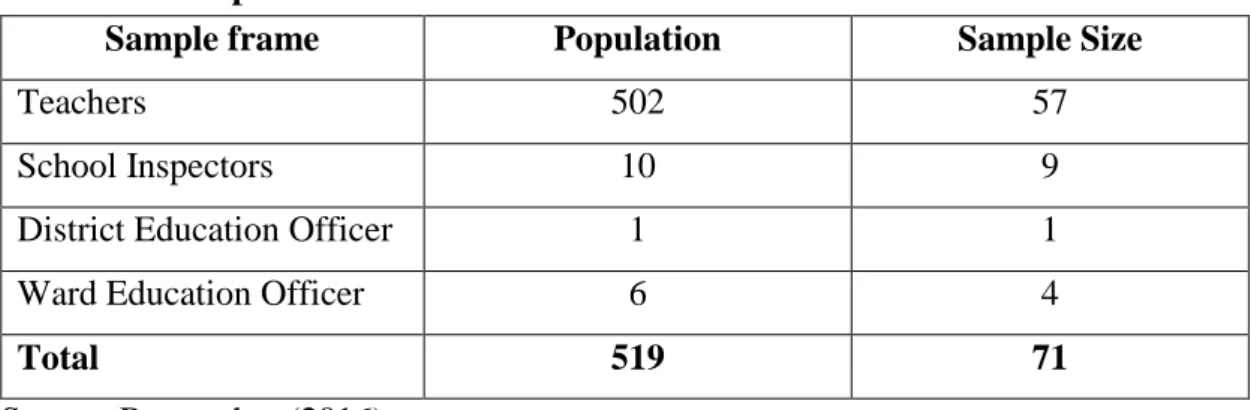
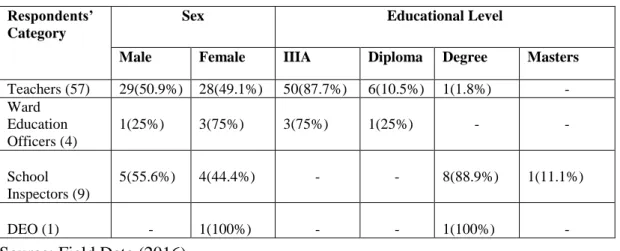
The study investigated the influence of school inspection on changing teachers‟ practices in Babati District Council, Manyara Region, in Tanzania. The specific objectives of this study were; (i) to examine school inspectors views on the role of school inspection on teaching and learning in primary schools, ii) to explore the views of teachers on contribution of school inspections in improving teaching and learning process in primary schools, iii) to find out the frequency of school inspection in schools in relation with learners‟ performance and iv) to determine how best school inspections should be carried out as to have a positive effect on teaching and learning. A total of 71 respondents participated in the study including 57 classroom teachers, four ward education officers, nine school inspectors and one District Education Officer. The findings indicated that school inspection plays a potential role towards changing teachers‟ practices and that advice and feedback given through inspection reports were useful for making improvements in their work performance. The study further revealed that, school inspectors judged the performance of the schools basing on schemes of work; lesson plans and pupils‟ exercise books, whereas classroom observations were not effectively carried out. Since this study concentrated on the influence of primary school inspection on teaching and learning, it did not go further to investigate the extent to which the inspection findings and recommendations are implemented. Thus, it is recommended that there should be further research to examine the extent to which the district education officer makes use of school inspection reports and recommendations.
viii TABLE OF CONTENTS CERTIFICATION ... ii COPYRIGHT ... iii DECLARATION ... iv DEDICATION ... v ACKNOWLEDGEMENT ... vi ABSTRACT ... vii
LIST OF TABLES ... xiii
LIST OF FIGURES ... xiv
LIST OF APPENDICES ... xv
LIST OF ABBREVIATIONS ... xvi
CHAPTER ONE ... 1
INTRODUCTION AND BACKGROUND TO THE STUDY ... 1
1.1 Introduction ... 1
1.2 Background to the Study ... 1
1.3 Statement of the Research Problem ... 6
1.4 The General Objective of the Study ... 7
1.4.1 Specific Objectives ... 7
1.4.2 Research questions ... 8
1.5 Significance of the Study ... 8
1.6 Limitation of the Study ... 9
ix
CHAPTER TWO ... 10
LITERATURE REVIEW ... 10
2.1 Introduction ... 10
2.2 Theories of School Inspection/Supervision ... 10
2.2.1 Scientific Management Theory ... 10
2.2.2 Human Relations Theory ... 15
2.2.3 Critical Theory ... 18
2.3 What is School Inspection? ... 21
2.4 School Inspection in Other Countries ... 22
2.5 Why School Inspections in Tanzania? ... 24
2.6 The Role of School Inspection in Improving Teaching and Learning ... 29
2.6.1 Inspection Role and Classroom Observation ... 29
2.6.2 Professional Support for Teachers ... 31
2.6.3 Advisory Role ... 32
2.6.4 Providing Feedback ... 33
2.7 Empirical Literature Review ... 35
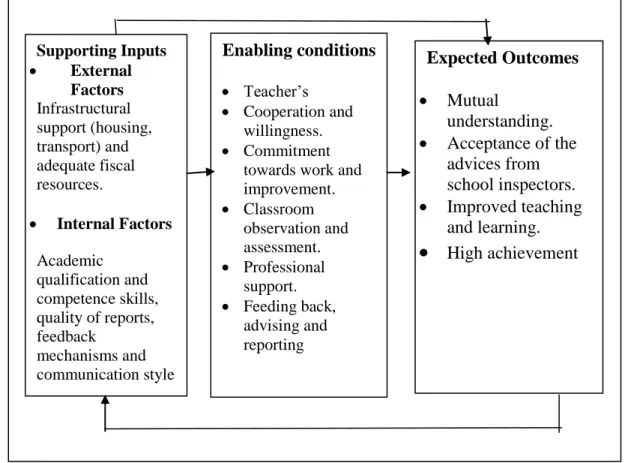
2.8 Research Gap ... 36 2.9 Conceptual Framework ... 37 2.9.1 External Factors ... 37 2.9.2 Internal Factors ... 38 2.9.3 Enabling Conditions ... 39 2.9.4 Expected Outcomes ... 40
x CHAPTER THREE ... 42 RESEARCH METHODOLOGY ... 42 3.1 Introduction ... 42 3.2 Research Approach ... 42 3.3 Research Design ... 44 3.4 Study Area ... 45 3.5 Population ... 46
3.6 Sample Selection and Sample Size ... 46
3.7 Data Collection Methods ... 47
3.7.1 Interview Guide (Individual Intensive Interviews with Key Informants) ... 47
3.7.2 Questionnaires ... 48
3.7.3 Focus Group Discussion ... 49
3.7.4 Documentary Review ... 49
3.8 Validation and Reliability of Instruments ... 50
3.9 Ethical Issues ... 51
3.10 Data Analysis Procedure ... 52
CHAPTER FOUR ... 53
DATA PRESENTATION, ANALYSIS AND DISCUSSION... 53
4.1 Introduction ... 53
4.2 Participants‟ Characteristics ... 54
4.2.1 Sex Information and Educational Level ... 55
4.2.2 Teachers‟ Educational Level and Experience ... 56
4.2.3 Ward Education Officers‟ Educational Level and Experience ... 58
xi
4.3 School Inspection Contribution on Teachers‟ Work Performance ... 62
4.3.1 Improvement on Teaching and Learning ... 62
4.3.2 Professional Support ... 64
4.3.3 School Inspection Feedback/Reports ... 65
4.4 Teachers‟ Views towards School Inspections ... 67
4.4.1 Information before Visiting the School ... 68
4.4.2 Classroom Observation ... 69
4.4.3 School Inspectors Opportunity to Talk with Pupils ... 70
4.4.4 Tension during School Inspection ... 71
4.5 School Inspection Organization Impact on Teaching and Learning ... 72
4.5.1 School Inspection Visits ... 73
4.5.2 Communication Style ... 75
4.5.3 School Inspectors‟ Working Conditions ... 76
4.6 Emerging Themes ... 78
4.6.1 Frequent Curriculum Changes ... 78
4.6.2 Managing Large Class Sizes ... 79
4.7 Discussion of Findings ... 80
4.7.1 Importance of Educational Level and Experience in Offering Inspection Services ... 80
4.7.2 Teachers‟ Perceptions of Support ... 82
4.7.3 Inspection Reports and Implementation of Recommendations ... 84
4.7.4 Inspection Visits and Classroom Observations ... 87
4.7.5 Problematic Issues for School Inspectors ... 90
xii
4.7.7 Curriculum Changes and Classroom Congestion ... 94
CHAPTER FIVE ... 97
SUMMARY, CONCLUSION AND RECOMMENDATION ... 97
5.1 Introduction ... 97
5.2 Summary of Major Research Findings ... 97
5.3 Conclusion ... 103
5.4 Recommendations ... 104
5.4.1 Recommendation for Action ... 104
5.4.2 Recommendation for Policy ... 106
5.4.3 Recommendation for Further Research ... 107
REFERENCES ... 109
xiii
LIST OF TABLES
Table 3.1: Sample Size ... 47
Table 4.1: Respondents‟ Gender Information and Educational Level ... 55
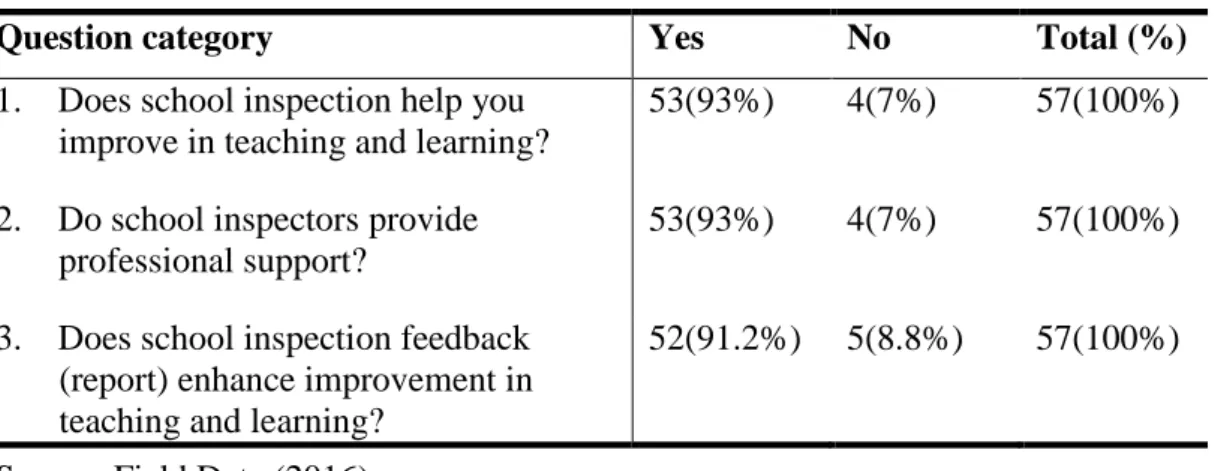
Table 4.2: School Inspection for Improvement of Teaching and Learning ... 63
xiv
LIST OF FIGURES
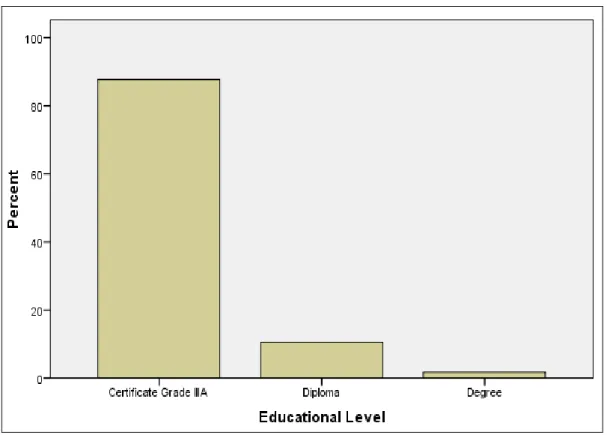
Figure 4.1: Teachers‟ Educational Level ... 57
Figure 4.2: Teachers‟ Work Experience ... 57
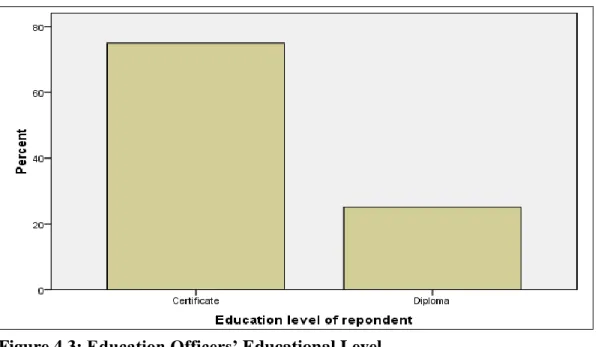
Figure 4.3: Education Officers‟ Educational Level ... 58
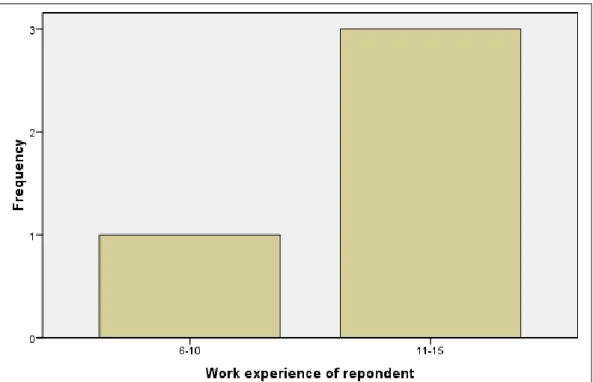
Figure 4.4: Ward Education Officers‟ Work Experience ... 59
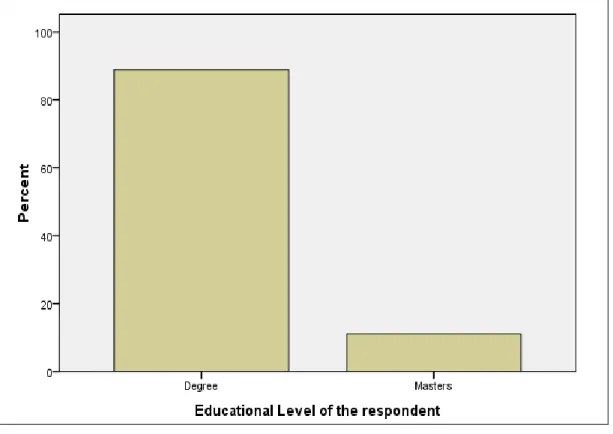
Figure 4.5: School Inspectors‟ Educational Level ... 60
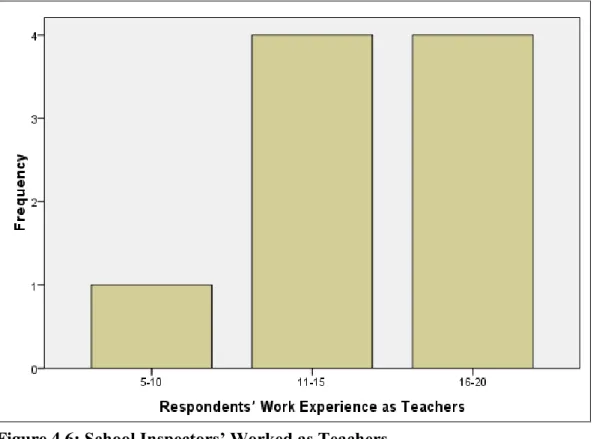
Figure 4.6: School Inspectors‟ Worked as Teachers ... 61
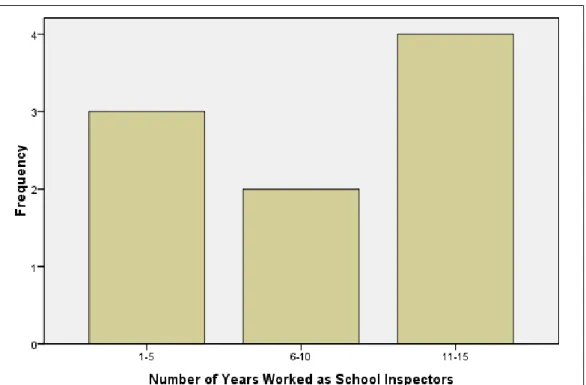
Figure 4.7: School Inspectors‟ Work Experience ... 62
Figure 4.8: School Inspectors‟ School Visits Per Academic Year... 73
xv
LIST OF APPENDICES
Appendix A: Questionnaire for Classroom teachers ... 120
Appendix B: Interview Guide for Head Teachers... 123
Appendix C: Ward Education Officer‟s Interview Guide ... 125
Appendix D: Interview Guide for District Inspector of Schools ... 126
Appendix E: Interview Guide for District Chief Inspector of Schools ... 127
Appendix F: Interview Guide for District Education Officer ... 128
Appendix G: Focus Group Discussion ... 129
Appendix H: Research Clearance from the Open University of Tanzania ... 130
Appendix I: Permission to Conduct Research from Inspectorate Department ... 131
Appendix J: Number of Teachers and Pupils in Selected Primary Schools in Babati District Council ... 132
xvi
LIST OF ABBREVIATIONS
ASCD Association for Supervision and Curriculum Development CSEE Certificate of secondary Education examination
DAM Democratic Administration Movement DCIS District Chief Inspector of Schools DEO District Education Officer
DRC Democratic Republic of Congo HMCI Her Majesty Chief Inspector HMI Her Majesty Inspectorate MDGs Millennium Development Goals MoEC Ministry of Education and Culture
MoEST Ministry of Education, Science and Technology NCLB No Child Left Behind
OFSTED Office of Standards in Education
PEDP Primary Education Development Programme PSLE Primary School Leaving Examination SPSS Statistical Package for Social sciences TETP Tanzania Education and Training Policy
UNESCO United Nations Educational Scientific and Cultural Organisation
UK United Kingdom
USA United States of America WEO Ward Education Officer
1
CHAPTER ONE
INTRODUCTION AND BACKGROUND TO THE STUDY
1.1 Introduction
This chapter presents the background information of the study. It is organized into sub-sections as follows: - background to the study, statement of the research problem, research objectives, research questions, significance of the study, limitation of the study, and the last section is delimitation of the study.
1.2 Background to the Study
School inspection as a form of accountability started being practiced way back in the 18th century (Neave, 1987). In this case, school inspection is a practices that supports the government and the stakeholders on understanding aspects in which the goals of education are attained and aspects that need to be improved in any education institution. In Tanzania school inspectorate department is charged with the responsibility to evaluate school performance in agreed criteria of assessment and report to the education stakeholders.
In any development process, education plays an important role in people‟s lives as it enlightens man to be able to understand his surroundings and solve problems facing him. In Tanzania there are different levels of education, which includes primary, secondary, and university education which all aim at providing knowledge and relevant skills. In fact, education is very important in all aspects of human existence in general and survival in particular (Education and Training Policy MOEC, 1995). It
2
is a process that empowers people to manage their lives and to contribute effectively to all aspects of socio-economic development.
High quality and relevant education prepares young people to participate meaningfully in their own development in their immediate communities, country and the world at large. Therefore, governments all over the world strive to educate the citizen and to a developing country like Tanzania, it is the tool to alleviate poverty as it is stipulated in the Development Vision of 2025 (Education and Training Policy MOEC, 2005).
External evaluation in education through school inspection by national governments in the world is not new in the education system. It is stated that the first school inspection or school supervision originated from France under Napoleon‟s regime at the end of 18th century (Grauwe, 2007). Later, the idea spread to other European countries in the 19th century (Wilcox, 2000; Grauwe, 2007). In the United Kingdom (UK), the first inspection services were carried out by Her Majesty‟s Inspectorate (HMI) in 1839 (Learmonth, 2000; Wilcox, 2000). School inspection, was conceived as one of the forms of accountability in education (Neave, 1987).
Other forms of accountability in education include the market choice as practiced in United States, UK, Australia and New Zealand. Also, the school voucher system in America, Chile, Colombia, and in England (Friedman, 2005; Lee & Wong, 2002). Accountability in its literal meaning denotes the obligation that one part gives an account on the work performed to the other (Wilcox, 2000). The underlying idea towards accountability in education is to make the providers of education
3
accountable to the people who pay for the education of their children (the taxpayers) (Neave, 1987; Ehren & Visscher, 2006; Davis & White, 2001; Richards, 2001; Sergiovanni & Starratt, 2007).
In England and Wales for example, accountability of teachers was engineered through payment by results (Neave, 1987; Hoyle & Wallace, 2005). This implies that, teachers‟ salary was based on performance of the pupils in the national examinations especially in 1870s (Neave, 1987; Levin, 1991). The idea behind this practice was to make teachers more committed towards the task of educating the pupils and contributing greatly towards their school achievements and excellencies. In recent years, in America, the idea of accountability in education has been connected with the No Child Left Behind (NCLB) policy. The initiative has been thought to facilitate and ensure proper policy implementation and to make teachers more sensitive to every pupil‟s learning needs (Sergiovanni & Starratt, 2007).
Moreover, in some countries such as England and Wales and in the Netherlands, the school inspectorate, together with regional/district educational administrative units, are the organs that have been vested power and authority in making decisions in education (Neave, 1987). This is due to the belief that accountability in education through school inspection may facilitate the attainment of the desired outcomes and, at the same time satisfy the parents with regard to the type of education provided for their children (Levin, 1989; Neave, 1987).
In many African countries establishment of school inspection services accompanied the introduction of formal public education (Grauwe, 2007). Many of the developing
4
countries expanded the inspection services after independence. Also, the increased number of schools accompanied with a relatively slower growth in number of supervisor/inspection officers (Grauwe, 2007).
Essentially, there are three main premises that are put forward in both developed and developing counties regarding establishment of school inspections as external evaluation in education. First, it is argued that school inspection is the central frame through which the government can monitor and ensure the quality of education provided in the society. Second, it is also argued that there is no way that the governments can ensure the implementation of national goals and objectives in absence of external evaluation as the counter balance of teachers‟ accountability in teaching and learning. Third, it is further argued that for countries to prepare a competitive workforce to meet the challenges emerging due to globalization processes, school inspection as external control in education is indispensable and inevitable (Wilcox, 2000; Hoyle & Wallace, 2005; Neave, 1987; Davis & White, 2001; Chapman, 2001b; Mathew & Smith, 1995; Learmonth, 2000).
Clearly, therefore, inspections are seen as playing essential roles in monitoring quality in teaching and learning. The point of departure in this study is; to what extent school inspection in Tanzania has indeed impacted upon teaching and learning? In Tanzania, the communities and the news from the media tend to blame the school inspectors upon the decline of the quality of education in schools. When pupils fail in the national examination results, the society blames the school inspectors suggesting that they did not do their job properly or that too long a period has lapsed between inspections (See for example, Mwananchi News Paper of 19th
5
January 2009 on the poor performance of the Primary School Leaving Examination (PSLE) in 2008). On the other hand, when many pupils pass in the national examination results, all the praises have been directed towards the head teacher and the teachers that they are competent in the key areas.
In this case, the core functions of school are teaching and learning (Collie & Taylor, 2004; Doerr, 2004; Coates, James & Baldwin, 2005; Hoyle & Wallace, 2005; Lopez, 2007). Studies that have been carried out in relation to school inspection and school improvements mostly in England and Wales, The Netherlands and in some African countries, however, portray conflict thinking. Some studies have argued that school inspectors simply find faults thus there have been many inspection visits in schools but, with no or little impact on teaching and learning (Earley, 1998; Nkinyangi, 2006; Ehren & Visscher, 2006). Others, contend that school inspection is a mechanism that press unnecessary additional burden upon the teachers while, teachers themselves know what to do in their career and that emphasis has been on accountability at the expense of professional growth (Webb & Vulliamy, 1996; Chapman, 2001b; Richards, 2001). Some studies have further argued that school inspection brings about tension and fear to teachers and it diverts their concentration from teaching as their core role to record keeping in order to impress their supervisors/superiors (Webb, Vulliamy, Hakkinen & Hamalainen 1998; Ehren & Adrie, 2006; Webb & Vulliamy, 1996; Hargreaves, 1995; Brimblecombe, Ormston & Shaw, 1995). It is on these grounds that this study intends to examine the impact of school inspection on teaching and learning in Tanzania specifically at primary school level; and it aim to find out what was the experience of the teachers?
6
1.3 Statement of the Research Problem
The general function of the School Inspectorate is to ensure adherence to set policy, laws, regulations and standards of education in the school system of Tanzania. There are representatives of the inspectorate up to the district level. The Chief Inspector of Schools reports to the Commissioner of Education and is supported by four sections; namely management, basic education, secondary education and teacher education.
Academic performance of pupils in primary schools has received much attention of late in the Tanzanian educational system. It is relevant to understand that the so – called academic performance of primary school pupil is a Canker worm that has eaten deep into the fabrics of our primary schools today. However, in environment where such a situation is found, conflict and anarchy dictate the tone of relationship between pupils, the teachers for a smooth and effective school management.
The major concern is; in this globalization era, when the individual‟s competence skills in the labour market (knowledge based economy) are demanded than ever (Levin, 1991; Downey, Frase & Petters, 1994; Daun & Siminou, 2005; Woodhall, 2004; Ball, 2004; Galabawa, 2005; Sergiovanni & Starratt, 2007), what kind of education should be provided in the Tanzanian society? It is registered that education should prepare pupils to meet daily life and future challenges. Education provided should also help the pupils think for themselves, be able to analyze, reason and communicate effectively (Nkinyangi, 2006). Indeed, the education provided during the compulsory period of schooling should help the individual pupil acquire the knowledge and skills essential for full participation in their society as adults.
7
Academic excellence has been on the decline, this appears to be more pronounced in the primary schools. Poor academic performance has constituted a big problem not only for schools but the dynamic Tanzania society. The primary schools in Babati district Council have been faced with the problem, which is mostly reflected in Primary School Leaving Examination Results from 2013 to 2015.
The question therefore is; what is the factor that is responsible for fallen standard and poor academic performance of pupils in primary school? Is the fault entirely that of teachers, pupils or school inspectors or all of them? Or is it because teachers are no longer putting in much commitment as before? Or is it because school inspectors do not visit schools frequently? Or is it in teachers‟ method of teaching and interaction with pupils? The present study therefore sought to investigate the influence of school inspection on changing teachers‟ practices in primary schools in Babati Distict Council.
1.4 The General Objective of the Study
The general objective of the study was to investigate the influence of school inspection on improving teaching and learning in Tanzanian primary schools.
1.4.1 Specific Objectives
(i) To examine school inspectors views on the influence of school inspection on teaching and learning in primary schools.
(ii) To explore the views of teachers on the contribution of school inspections in improving teaching and learning process in primary schools.
8
(iii) To find out the frequency of school inspection in schools in relation with learners‟ performance.
(iv) To determine how best school inspections should be carried out as to have a positive effect on teaching and learning.
1.4.2 Research questions
(i) What are the views of school inspectors on the role of school inspection on teaching and learning in primary schools?
(ii) What are the teachers‟ views on the contribution of school inspection in improving teaching and learning process in primary schools?
(iii) Does the frequency of school inspection in schools improve the learners‟ performance?
(iv) How best should school inspection be carried out as to have a positive effect on teaching and learning?
1.5 Significance of the Study
This study is expected to provide valuable information to the school inspectors on how they can best support teachers especially in relation to teaching and learning and provision of the empirical evidence on the role/ contribution of school inspection on teaching and learning in Tanzania. Also this study will notify the educational policymakers and planners so that they see the need for the external evaluation in education and provide knowledge on school inspection that will possibly enhance the government to inject resources towards the inspectorate so as to monitor the provision of quality education in the Tanzanian society. Lastly, the study will contribute to the already available literature and serve as reference for other
9
researches in relation to school inspection and the contribution it has on teaching and learning in Tanzania.
1.6 Limitation of the Study
This study was conducted for only two months, which was a very short time for meaningful findings. Also, the issue of accessibility of the participants was a problem because some of the participants were out of their offices due to other responsibilities. Thus, the researcher had to attend the same office several times, and some were in hurry to the extent that they spent few minutes responding to the interview which might have affected the provision of useful data for this study. In addition, one of the school inspectors was out of the office for other duties.
The most challenging issue was doing the interview for a beginner researcher. The challenge was how to keep on track at the same time taking notes. So, with the interviews the researcher, therefore, had to record the main points as some of the interviewees were so talkative hence became very difficult to take in-depth notes.
1.7 Delimitation of the Study
This study was basically qualitative in nature and it was confined in Babati District Council within public primary schools. It involved few primary schools leaving aside many other primary schools within the district. Also, privately owned primary schools were not included in this study. This implies that the findings of this study may not be replicated and generalized to other part of the region and in Tanzania at large. Again, the study mainly concentrated on the influence of school inspection on improving teaching and learning and not on school improvement in general.
10
CHAPTER TWO LITERATURE REVIEW
2.1 Introduction
This chapter deals with the comparison of different theoretical frameworks. The chapter also provides other forms of accountability in education specifically the market choice, voucher system and decentralization in education. Then it provides an explanation on what is school inspection before the provision of some examples of school inspection systems in other countries such as England and Wales, The Netherlands, Finland, Norway, Sweden, Botswana and Zimbabwe. The chapter further discusses why Tanzania needs school inspection based on significance outlined in chapter one, followed by the role of school inspection for the mission of improvement in teaching and learning.
2.2 Theories of School Inspection/Supervision
As noted earlier, school inspection is essentially regarded as a process of external evaluation in the educational system. This section discusses in some depth the theories behind school inspection. It will begin with Scientific Management theory followed by Human Relations theory. The section will end up with a discussion of Critical theory.
2.2.1 Scientific Management Theory
School inspection as external evaluation in education has a long history in the world and it can be traced back to the 18th century in European countries (Grauwe, 2007). However, School inspection as an organ of quality assurance in education, gained its
11
strengths in connection to the introduction of Classical Management Theories. These include; the Scientific Management in 1880s by Fredrick Winston Taylor, Administrative Management in 1940s by Henri Fayol and Bureaucratic Management in 1920s by Max Weber (Wertheim, 2007; Sergiovanni & Starratt, 2007). All of these management thoughts were concerned on how to manage work and organizations more efficiently. Of the importance of Scientific Management theory in school inspection will be given more details.
Scientific Management theory was developed by Fredrick Taylor an American Engineer, in his book „The Principles of Scientific Management (1911)‟. Sometimes it is known as Taylorism/Taylor system of management. It is the theory of management that analyses and synthesizes work flow process in improving labour productivity (Halk, Candoli & Ray, 1998; Hoyle & Wallace 2005; Wertheim, 2007).
The main legacy of Taylor‟s work was the optimistic assumption that, there could be one best way of leading or managing that will save both time and financial resources (Hoyle & Wallace, 2005). Management was blamed by Taylor for industrial inefficiency and allowing workers to rely on the rule of thumb rather than scientific methods (Hoyle & Wallace, 2005). Taylor believed that decision based upon tradition and rules of thumb should be replaced by precise procedures developed after careful study of an individual at work.
The main argument was that human beings by their nature, and in this case, workers, are lazy and dislike work especially when working in groups. Workers as human beings will deliberately plan to do as little as they safely can. Also, because they
12
have little desire for responsibility they would prefer to be directed (Halk et al., 1998; Hoyle & Wallace, 2005; Wertheim, 2007). Taylor felt that the secret to Scientific Management was the compliance of workers and that they did not need autonomy or freedom of thought but instead their role was simply to follow the directions of their superiors (Sergiovanni & Starratt, 1993; Welsh & McGinn, 1999; Hoyle & Wallace, 2005). From that strand, according to Hoyle and Wallace (2005). Taylor suggested the use of Scientific Management with four strategic and systematic approaches to maximize individual productivity.
(i) Application of time-and-motion science is required for comprehensive job specification broken down into standardized units.
(ii) Workers are to be carefully selected and trained in order to carry out each unit to replace a rule of thumb.
(iii) Motivate workers by more pay through a bonus scheme based upon earlier analysis. A supervisor is responsible for monitoring workers‟ performance, training, and ensuring the adherence to the stipulated work conducts.
(iv) Managers are to plan and control the work process. Workers should do as they are told to do otherwise, their wages are to be lowered or they are dismissed.
It has been indicated that the application of Scientific Management in education in the USA started during 1920s (Hoyle & Wallace, 2005). The model was first used in connection with school inspection in early 1980s where there was a mild renaissance of interest in supervisory activities in education (Sergiovanni & Starratt, 2007). The Scientific Management concept was carried over to school supervision/inspection when teachers were viewed as the key implementers of the highly refined curriculum
13
and teaching system (Sergiovanni & Starratt, 2007; Hoyce & Wallace, 2005). It has been argued that many states in US began to mandate the increased creation of policies in supervision and evaluation of teachers (Sergiovanni & Starratt, 1993; 2007; Hoyle & Wallace, 2005). At national level the Association for Supervision and Curriculum Development (ASCD) started to place stronger emphasis on school supervision and the quality of literature on that field expanded (Sergiovanni & Starratt, 2007). Training of Head teachers, principals and supervisors were trained in supervision techniques and there was an introduction of the instructional leadership (Sergiovanni & Starratt, 2007; Hoyle & Wallace, 2005). Supervision ranked higher on the agendas of both state policy makers and local school administrators. By 1998 a massive growth of supervision was witnessed and its critical point of evolution was reached. Supervision appeared to be everything in the American educational system.
Moreover, classroom supervision and observation were introduced as approaches for teachers‟ evaluation together with performance appraisal scheme based on specific targets (Sergiovanni & Starratt, 1993; Hoyle & Wallace, 2005). The idea behind introduction of close supervision practice was to ensure that teachers were teaching the way they were supposed to and they carefully followed the approved teaching protocol and guidelines (Sergiovanni & Starratt, 2007). For example, they were needed to prepare the schemes of work extracted from the syllabus and prepare the lesson plans that followed the scheme of work. Teachers had to follow the pre-determined objectives and goals of education stated in the national curriculum. School inspectors were to make sure that teachers followed these arrangements for effective teaching and learning. According to Sergiovanni & Starratt, control,
14
accountability and efficiency with the clear cut manager-subordinate relationships are the watchwords of Scientific Management.
In UK it was conceived that well-managed school would be the vehicle through which external specification of curriculum could be implemented (Hoyle & Wallace, 2005). Taylor‟s theory of Scientific Management was made explicit. The UK government focused its attention into the studying of the science of the job (Hoyle & Wallace, 2005). It has been said that, this has been the reason for the expansion of leadership and management in Her Majesty Inspection (HMI) survey reports. More recently, the emphasis has been pressed on OFSTED inspections and reports on school leadership and management (Hoyle & Wallace, 2005; Ehren & Visscher, 2006:2008).
According to Hoyle and Wallace (2005) in UK, there had been the specification of national standards and refined curriculum. Also, there had been an annual increment of salary for teachers‟ equivalent to bonus subjected to the conditions upon satisfactory performance. Accordingly, those who have developed expertise and judged through appraisal to have achieved outcomes are entitled to a salary within an upper pay range. Moreover, according to Ehren and Visscher, (2006; 2008), in UK schools have to demonstrate how the recommendations given by the school inspectors are to be implemented including the preparation of strategic action plans.
Scientific Management theory, however, has been criticized for concentrating on efficiency while ignoring its impact on effectiveness (Hoyle & Wallace, 2005). Major criticism came from Human Relations theorists in 1930s. Human Relations
15
greatly criticized the stand point of Scientific Management for treating human beings as machines and for its value-laden aspects (Richards, 2001b; Sergiovanni & Starratt, 2007; Wertheim, 2007). Taylor‟s system of management was concerned solely with means, to let things done but killing workers‟ creativity as they had to follow what other people plan and decide.
Moreover, it has been criticized for the possibility of one best way to achieve efficiency and the validity of adopting a particular method for achieving it (Hoyle & Wallace, 2005). It has been criticized as well for diverting teachers‟ attention from teaching, as their core function, to extensive record keeping (Hoyle & Wallace, 2005). Despite these weaknesses, however, according to Sergiovanni & Starratt (2007) the basic premises and precepts of Scientific Management theory are still thought to attract many policy makers, administrators and supervisors.
2.2.2 Human Relations Theory
Human Relations theory had its origins in the Democratic Administration Movement (DAM) most notably by the work of Elton Mayo in 1930s in his classic research study at the Western Electronic Hawthorne plant. Elton Mayo was a social philosopher and professor of business administration at Harvard University (Sergiovanni & Starratt, 1993; 2007). Mayo believed that the productivity of workers could increase by meeting their social needs at work and by promoting their interaction between them. According to Mayo, workers need to be treated decently and should be involved in decision-making processes (Sergiovanni & Starratt, 1993; 2007). Human relations theory assumes that people will be committed to work, if the
16
work conditions are favourable. Also, they can be self-directed and creative at work if properly motivated. People as human beings have their own thinking and they view the world in different ways (Druker, 1991). Accordingly, the need for recognition, security and a sense of belonging is more important in determining workers‟ morale and productivity (Druker, 1991; Sergiovanni & Starratt, 2007).
A worker is a person whose attitudes and effectiveness are conditioned by social demands from both inside and outside the work plant (Druker, 1991; Sergiovanni & Starratt, 2007). A person who deals with people should understand that there is always a social aspect to life. Workers know a great deal about the work they are doing. If a leader wants to address productivity and quality, then she/he should ask them what they think could be the best way to do the job (Druker, 1991). Workers‟ knowledge of their job is the starting point for improved productivity, quality and performance. Thus, in making and moving things, partnership with the responsible worker is the best way to increase productivity (Druker, 1991).
In education and schooling processes, teachers are regarded as whole persons in their own right rather than as packages of energy, skills and aptitudes to be utilized by administrators and school inspectors (Sergiovanni & Starrat, 1993; 2007). School inspectors need to create a feeling of satisfaction among teachers by showing interest in them as people (Sergiovanni & Starratt, 1993; 2007). It is assumed that a satisfied teacher would work harder and would be easier to work with (Sergiovanni & Starrratt, 1993; 2007). Teachers know better about their strengths and weaknesses whilst the school inspector is simply there as a facilitator for supporting the teacher
17
for better performance. For that reason, teachers need to participate in the evaluation process and so school inspection methods and its objectives should make teachers feel that they are important and useful to a particular school. There is a need as well to create the „personal feelings‟ and „comfortable relationship‟ between teachers and school inspectors (Sergiovanni & Starratt, 2007:16).
Human Relations theorists, however, are not free from criticism due to their emphasis on winning friends (Sergiovanni & Starratt, 1993; 2007; Wertheim, 2007) an attempt to influence people as the means of manipulating individuals to comply with what one wants them to do. Also, Human relations promised much but delivered little coupled with misunderstandings as to how this approach could work (Sergiovanni & Starratt, 1993; 2007) since not everything needs a democratic approach. Accordingly, Human Relation theorists are also criticized for concentrating on a single aspect like the social environment to influence high productivity (Druker, 1991).
They forget other factors like salary level, culture, individual interest in work, and the structure of the organization that can all have a great deal of influence over worker‟s creativity and productivity (Gaynor, 1998). Moreover, the advocates of Human relations theory have been criticized on the issue of laissez-faire supervision (Sergiovanni & Starratt, 1993; 2007; Wertheim, 2007) in which they let people do things in whatever ways they would wish to, which can, in fact, also lead to under-productivity. Like Scientific Management theory, Human Relations theory though has some weaknesses it is still widely advocated and practiced today (Sergiovanni &
18
Starratt, 1993) in supervision/school inspection systems in different countries including Tanzania.
2.2.3 Critical Theory
This study draws upon Critical theory since it advocates freedom and emancipation process. It also gives more voice to teachers as the key players and implementers of the curriculum. Critical theory is used to refer to the work of a group of sociopolitical analysts emanated from the Frankfurt School. Some of the members of this group include Adorno, Marcuse and more recently, Habermas who is regarded as the father of Critical theory (Tripp, 1992; Maclsaac, 1996). Critical theory is a philosophical approach or position that attempts to question and challenge what is claimed to be the established knowledge (Syque, 2007). The philosophical foundations that deal with establishment of knowledge are referred to as epistemological and ontological orientations. Epistemological position can be conceived as the way of constructing acceptable knowledge (Bryman, 2004).
When natural science mode is employed in the study of social phenomena it is referred to as positivism. Positivism is an epistemological position that employs the natural sciences to the study of social reality (Bryman, 2004). Critical theory rejects the positivists‟ view of rationality, objectivity and truth (Carr & Kemmis, 1986). It calls the educational theory to accept the need to employ interpretative categories in different phenomena. It also identifies and exposes theoretical accounts to make members of the society aware of how they may eliminate or overcome their problems (Carr & Kemmis, 1986). While Positivists consider human beings to be
19
value free, Interpretivists as an alternative to positivists contend that there should be a respect and difference between people and the objects of the natural science (Bryman, 2004). Critical theory is featured by the claim that educational status should be determined by the ways it relates to practice (Carr & Kemmis, 1986).
Ontological position on the other hand, explains whether truth or reality is external to an actor/individual (Objectivism) or internal to an individual (constructivists) (Bryman, 2004). Objectivism as a philosophical position explains that social phenomena that confront human beings are external beyond their control. It considers an organization as a tangible object with rules and regulations, and standardized procedures to get things done (Bryman, 2004). Critical theory invites constructivists and social scientists to grasp the subjective meaning of the social action. Human being should be seen and conceived as unique with unique feelings and she/he is able to mould the world in which she/he lives (Carr & Kemmis, 1986; Bryman, 2004; Cohen, 2007). The main argument is that people in a certain culture, political and economic have control of their lives which can be achieved through emancipation process (Tripp, 1992; Maclsaac, 1996). Emancipation to Tripp refers to a process whereby oppressed and exploited people become sufficiently empowered to transform their circumstances for themselves by themselves. Moreover, Critical Theory is regarded as emancipatory knowledge since it identifies self-knowledge or self-reflection (Carr & Kemmis, 1986; Tripp, 1992; Maclsaac, 1992).
Similarly, Critical theory is emancipatory process in a sense that, it creates self-awareness for one to recognize the correct reasons for her/his problem Knowledge is socially constructed rather than accumulation of subjectively neutral objective facts
20
(Maclsaac, 1992). As such, knowledge gained by self-awareness through reflection lead to a transformed consciousness and hence, not knowledge for knowledge‟s sake (Tripp, 1992). This also involves the process whereby one sees her/his roles and the societal expectations form her/him. According to Maclsaac (1996) social knowledge is governed by binding consensual norms which defines reciprocal expectations about behavior between individuals.
In the school inspection system, teachers are regarded as people with free will and with total freedom (Maclsaac, 1996; Tripp, 1992). They are considered to be conscious about their strengths and weaknesses (Druker, 1991). When school inspectors recognize that teachers are free entities with their own thinking, their role as school inspectors is to facilitate the teaching and learning process and not dictate what should be done by the teacher. Teachers are to be encouraged to reflect on their teaching and learning practice in order to discern their areas of weaknesses and try to find the solutions of the problems that face them in teaching and learning (Tripp, 1992).
Critical theory aims at understanding peoples‟ values and uses the meaning they make rather than super-imposed solutions to the problems (Maclsaac, 1992). By understanding that there is no readymade solution to the problems makes teachers more creative and imaginative which can enhance high achievement of the pupils in schools (Carr & Kemmis, 1986). This reciprocal relationship between teachers and school inspectors is what will create mutual understanding for the betterment of the pupils and facilitation of their academic excellences in schools (Maclsaac, 1996; Leew, 2002).
21
However, Critical theory faces the shortcomings that individual freedom has limitations. Human beings cannot be left free without some degrees of control. Some individuals as human beings tend to misuse the freedom they have. As Scientific Management theory puts forward, a teacher cannot be left free to do whatever she/he wishes to do. Some rules and regulations are to be applicable with a mixture of humanity (Sergiovanni & Starrat, 1993: 2007) if the national goals and objectives have to be achieved.
2.3 What is School Inspection?
School inspection as a concept has been defined in different ways by different persons. It has been sometimes used interchangeably with school supervision. Richards (2001:656) for example, defines the term school inspection as the process of „observing work in schools, collecting evidences from a variety of other sources and reporting the judgments‟. To Richards, school inspectors are not simply equivalent to the value-free cameras and video recorders that randomly provide snapshots of schools and classrooms. They need to interpret and not just report activities as not everything found in the school during inspection is necessarily inspected and reported. Richards, thus, stresses that only the main features that are deemed relevant to the educational industry are to be examined.
Wilcox (2000:15) on his side defines inspection as the process of „assessing the quality and/or performance of the institutional services, programmes or projects by those (inspectors) who are not directly involved in them‟. The definition indicates that school inspection is an external system of educational evaluation, and in reality school inspectors have no direct control of the teachers but they influence their
22
accountability to their work performance through the publication of the school inspection reports (Ehren & Visscher, 2006).
School inspection is an essential instrument of the government, and in particular of the Ministry of Education, which can use it to ensure that performance in schools is improving. Its impact, however, depends on how it is done, and whether the results are used as a tool to drive improvement of school performance. In general terms, school inspection can be viewed as the process of assessing, examining, collecting information, and analyzing the performance of schools, so as to see if it meets the educational standards that the government intends to achieve through its educational system. As argued by Richards (2001b) school inspection involves making evaluations about the significance and value of what is observed, collected and reported. It is not simply a means of judging a school‟s compliance with government objectives or directives in any direct way. In this case, school inspection should be developmental and not judgmental (Dimmock & Walker, 2005; Wilcox, 2000). It means that it should help the teacher to improve and not just pinpointing his/her weaknesses.
2.4 School Inspection in Other Countries
As stated earlier, school inspection as external evaluation in education has been a feature of many governments of the world. In this study only few countries are selected so as to illustrate how other countries different from Tanzania organize school inspections. This based on the view that lessons can be drawn from one country to another. This study concentrated on England and Wales, The Netherlands,
23
Finland, Norway and Sweden from the developed world and Botswana and Zimbabwe for the African countries.
The term school inspection is still used in different countries like England and Wales, the Netherlands, Lesotho, Senegal and Tanzania with the reflection of compliance monitoring of education provided in the society (Grauwe, 2007). Indeed, since school inspection has become more related to offering advices to teachers that can stimulate their creativity, the terminology have been changing in various countries over time. Some countries prefer to adopt the term supervision over that of inspection. As indicated by Grauwe some countries have even developed more specific nomenclature in the position of school inspector. For example, Malawi uses Education Methods Advisor, Uganda Teacher Development Advisor and Mali “animateur pedagogique” (Grauwe, 2007: 710) meaning the Education Advisor.
Webb et al., (1998) found in their study in England and Finland that during inspection teachers were under stress and busy with implementation of action plans and school inspection policies to impress their bosses so as to avoid the criticisms from them. Also, the same was found in England and Wales based on the study by Webb and Vulliamy (1996) where teachers were busy reviewing and updating the documents to be assessed positively. The studies by Hargreaves (1995); Brimblecombe, Ormston and Shaw (1995) also found that teachers had been working under additional stress because of increasing accountability demands. In this study the experienced tension and fear was viewed to be partly due to irresponsibility of the teacher and threats that are accompanied with school inspection. In normal circumstances, school inspectors report on the strengths and weaknesses of every
24
individual work performance, which later is used to judge the performance of the school.
2.5 Why School Inspections in Tanzania?
As outlined earlier in the first chapter, this section is an extension of the discussion in some depth on why Tanzania needs school inspection. The major concern is; in this globalization era, when the individual‟s competence skills in the labour market (knowledge based economy) are demanded than ever (Levin, 1991; Downey, Frase & Petters, 1994; Daun & Siminou, 2005; Woolhall, 2004; Ball, 2004; Galabawa, 2005; Sergiovanni & Starratt, 2007), what kind of education should be provided in the Tanzanian society? It is registered that education should prepare pupils to meet daily life and future challenges. Education provided should also help the pupils think for themselves, be able to analyze, reason and communicate effectively (Nkinyangi, 2006). Indeed, the education provided during the compulsory period of schooling should help the individual pupil acquire the knowledge and skills essential for full participation in their society as adults. Although primary education around the world and in Tanzania in particular, is not enough to make individual child compete in the labour market, it is argued, in this study, at least, that primary education is a place where the pupil is prepared for handling future challenges including a solid foundation for her/his further studies.
In addition, pupils are not a tabula rasa. They have the potential to think and evaluate, and they have their own way of viewing things (Samel & Sadovnik, 1999). They know for sure who is a good teacher and who is a bad teacher (Rogers & Freiberg, 1994). If one wants to understand what is taking place in a school should
25
ask the pupils. They know a great deal upon their learning and they can be a great source of valuable information regarding their teaching and learning and how it can be improved. School inspectors should find an opportunity to talk with the pupils to discern the perceived problems in their learning. Even though there have been some improvements in classroom construction due to the introduction of PEDP (Nkumbi, Warioba & Komba, 2006) there is a congestion problem of pupils in classrooms in Babati District Council. This is a great deal of negative impact upon the quality of the support given to the pupil. In a congested classroom the teacher cannot pay attention to an individual pupil learning problem. If the quality of teaching and learning is to be improved, then pupil‟ numbers in the classroom should be controlled. This can be achieved by constructing more classrooms and training more teachers with the mechanism of making sure that those teachers are retained and do not leave the profession (Galabawa 1993, Gaynor 1998). Again, the provision of information before school visits (Grauwe, 2007) should be maintained so as to create mutual understanding between the teacher and the school inspector.
Payment of allowances for leave and payment of their salaries on time and other incentives may make them more committed towards their work (Gaynor, 1998; Lexow & Smith, 2002). This in turn will also attract more qualified individuals and enhance the improvement in teaching and learning. As observed by Omari (1995) teachers‟ morale has been low due to low payment and delayed salaries. Also, Omari adds that teaching has been a last resort in choices for careers and further education in Tanzania due to the problems indicated above. Research findings in Nigeria and Tanzania also indicated the problem of teachers‟ absenteeism (Galabawa, 1993;
26
Gaynor, 1995, Lexow & Smith, 2002). This too, indicates continual shortages of teachers in Tanzania that have negative effects on the quality of education provided in the society.
Wilcox (2000) stresses the importance of school inspectors to demonstrate competence skills level in a subject area for them to be able to support teachers on how to teach a particular topic. To re-quote Wilcox says: „the good inspector should have appropriate qualification and experience. A hard-pressed teacher of Mathematics is unlikely to take seriously the judgments of an inspector that she/he suspects as having no academic qualification in the subject and little or no experience in teaching it‟ (Wilcox, 2000).
In many countries of the world including Tanzania, school inspection is a major way in which schools are held accountable (Richards, 2001; Hargreaves, 1995; Sergiovanni & Starratt, 2007). As Gaynor (1998) observed, recommendations without actions are meaningless. As observed by (Glickman et al., 1998, Goodlad, 1984) it has been unfortunate that the teacher, a key implementer of the curriculum, has been often left aside and neglected in issues related to curriculum changes. A System Thinking approach as advocated by Omari (1995) and Cummings and Lunsford (1996) should be adopted to focus on a whole system rather than supporting one part while the other part suffers. It has been the efforts towards making education provided to meet societal needs including the challenges of the MDGs. Indeed, as noted earlier school inspection has been regarded as a mechanism through which the government can ensure how financial resources injected in education produce desired outcomes (Levin, 1989; 1991; Neave, 1987; Learmonth,
27
2000). In The Netherlands for example, school inspectors are basically allowed to take actions when the school does not comply with the legal regulations and national standards (Ehren & Visscher, 2008).
Wilcox (2000), Chapman (2001a) and Grauwe (2007) argue that school inspection would seem to dictate and control the policy and practice in education for the foreseeable future in many countries of the world. This has been the case because of a greater concern for communities, and the quality of education provided in order to meet the needs of a global market economy, whereas knowledge-based skills control the play-ground of competition (Friedman, 2005; Hoyle & Wallace, 2005; Sergiovanni & Starratt, 2007).
Ehren and Visscher (2006) argued that despite the fact that school inspectors do not have direct control over the teaching and learning process, they provide potential information that can be employed in improving education delivery. If the recommendations and the school inspection reports are not worked upon then it is useless to visit schools, and indeed it demoralizes the school inspectors upon their work performance. As stated earlier, school inspectorate department in many developing countries including Tanzania is under resourced (Gaynor, 1998). Also, as it has been argued by Earley (1998) it might make the school inspectors lose their credibility and respect from the teachers as in most cases teachers may not be in a position to make changes that school inspectors recommend.
School inspection has been proved to be the major means through which the government can monitor the quality of education provided in the society (Wilcox,
28
2000; Learmonth, 2000; Hoyle & Wallace, 2005) school inspection department should receive proper attention. It is argued and acknowledged that, a district education officer who works upon the school inspection reports might be very effective in her/his work performance.
This is because school inspectors make visits in schools and collect first-hand information on what are the perceived problems that in one way or another may affect the work of the teacher. By working on those inspection reports, the district education officer might be touching the very problems that confront teachers in their day-to-day work performance.
According to Coombe, Kelly and Carr-Hill (2006) teaching and learning is what ultimately make a difference in the mind of the pupil and thus affecting knowledge, skills, attitudes and the capacity of young people to contribute to the contemporary society. From this perspective then, the role of educational policy in Tanzania should be to provide guidance, resources and accountability to support high quality of teaching and learning in the country. Can school inspection in Tanzania aid this end?
Is it viable and economically sound for Tanzanian poor nation to employ school inspection? Here are some reasons for school inspection all over the world and in Tanzania in particular. School Inspection for Enhancing Quality of Education Provided, School Inspection for Better Informed Government on Education Practices, Reinforcing the Responsibility and Accountability in Education, Controlling the Environment in which Education is provided, Tracking the Educational Goals and Objectives, and Maximizing the Potential of Pupils.
29
2.6 The Role of School Inspection in Improving Teaching and Learning This section discussed the role of school inspection in improving teaching and learning. It also discussed four main roles as follows; inspection role and classroom observation, professional support, advisory role and provision of feedback.
2.6.1 Inspection Role and Classroom Observation
School inspectors are expected to provide a continuous monitoring, reviewing and assessing the attainment and progress of pupils (Nkinyangi, 2006). Just as teaching and learning activities are the teachers‟ core functions, school inspectors‟ core function is to inspect the schools.
It is meaningless for inspectors to visit the school, without checking what is going on in classrooms setting. School inspectors are to ensure that teachers are doing their job and that pupils are receiving what they are supposed to acquire as learning experiences. Learmonth (2000:6) contends „we have the responsibility to provide all children with best possible education and school inspection is an important source of information about how successfully this aim is being achieved‟. Learmonth believes that school inspection is both a tool for accountability and as a powerful force for school improvements.
The area of concern of school inspectors should be on teaching and learning and direct classroom observation in order to witness how learning is operationalised (Matthew & Smith, 1995; Chapman, 2001b). But, this should be done with care as school inspectors cannot change teachers just for two or three days of their stay in school inspections.
30
More importantly, for school inspections as an external evaluation in education to work properly it should be supplemented by internal school evaluations (self-evaluation). As argued by Webb et al., (1998), MacBeath and Martimore, (2001) and Ehren et al., (2005) self-evaluation is what will to a great extent facilitate teachers to know themselves better upon their strengths and weaknesses. This is the reason why scholars like Hargreaves (1995), Learmonth (2000) and Wilcox (2000) suggest the combination of both external and internal evaluation.
While external school evaluation will provide some benchmarks and criteria for teacher to measure their own progress in teaching and learning, internal evaluation enhances identification of teachers‟ weaknesses for them to improve in teaching and learning (MacBeath, 2006). As suggested by Nkinyangi (2006) improvement in teaching and learning should be the prime goal of school evaluation and not a mere mistake finding exercise that aims at capitalizing upon teachers‟ weak points.
Parents and the tax payers all over the world would like to see the value of money invested in the education of their children (Neave, 1987; Levin, 1991). As Castells (1996) contends, we live in an age when there is great optimism about the power of education to influence the well-being of individual and nations. Accordingly, parents see education as a valuable asset for their children own lives so that they build an understanding of their place in the world. Garrison (1997) considers teaching and learning as the major means through which teachers can fulfill the obligations of a caring profession, to bestow value on pupils and recognize their pupils‟ unique dreams and best future possibilities. Garrison adds that teachers should help the pupils to actualize their unique potential and actualize their best position in the
31
society. For this reason, accountability in education through school inspection is viewed to be the means towards an end.
Moreover, helping teachers in teaching a specific topic/subject is what gives the value-added of school inspection in school improvement (MacBeath & Martimore, 2001; Wilcox, 2000; Ehren, Leeuw & Scheerens, 2005; Ehren & Visscher, 2008). This means that, teachers need school inspections that enable them to solve specific problems in teaching and learning. As argued by Wilcox (2000), the acceptability of school inspectors by teachers will largely depend upon their competence level in their subject areas and the extent to which they can demonstrate their skills level in teaching. Also, it is what will make their impact on teaching and learning for improvements in pupils‟ achievements. Coombe et al., (2006) contend that teachers need to promote critical thinking that will enhance pupils to apply the acquired knowledge in their daily life. For this to be possible monitoring pupils‟ understanding in the classroom setting and professional support should be the major practice of the school inspectors if at all their impact on teaching and learning is to be achieved.
2.6.2 Professional Support for Teachers
School inspectors, in whichever education system, and in the Tanzanian education system in particular, are expected to provide professional support to teachers. They are also supposed to ensure that teachers use different teaching and learning approaches appropriate to the Tanzanian pupils‟ needs. Moreover, they are to develop pupils‟ knowledge, understanding and skills in all curriculum areas (Nkinyangi, 2006). But, to what extent school inspectors are competent enough in all
32
curriculum matters? This is a big challenge to them. In addition, they need to encourage pupils to develop a positive attitude towards learning. In this regard, as stated earlier, pupils should be encouraged to learn how to learn (Lomax, 1996; Coombe et al., 2006). The other challenge is to see the extent to which school inspectors have the opportunity to talk with pupils. The process may encourage the pupils to learn so as to unfold their fullest potentiality rather than concentrating too much upon teachers. Since learning involves pupils then talking with them too may reveal some of the ways in which their learning could be improved.
However, as observed by Nkinyangi (2006) school inspectors and quality assurance bodies have been limited in terms of professional support to teachers. To Nkinyangi, quality assurance officers go about their duties as fault finders, seeking to find mistakes rather than checking if there are problems affecting curriculum implementation and suggesting the way to overcome them. Also, Nolan and Hoover (2005) contend that many school inspectors tend to emphasize accountability at the expense of professional growth which results in poor or marginal teacher performance. It is the role of school inspectors in Tanzania that they become facilitators and supportive e entities in the curriculum implementation and not concentrating on the weak points of teachers without supporting them on how to solve problems.
2.6.3 Advisory Role
Various studies like that of Collie & Taylor, (2004), Coates et al., (2005), Doerr, (2004) and Lopez, 2007) suggest the need for school inspectors to encourage the staff to build a team work spirit so as the core function of the school to be realized.