The Nelson Mandela African Institution of Science and Technology http://dspace.nm-aist.ac.tz
Materials, Energy, Water and Environmental Sciences Masters Theses and Dissertations [MEWES]
2020-02
Effect of elevated temperature on
properties of neem seed husk ash concrete
Mwilongo, Kizito P.
NM-AISThttps://dspace.nm-aist.ac.tz/handle/20.500.12479/973
EFFECT OF ELEVATED TEMPERATURE ON PROPERTIES OF
NEEM SEED HUSK ASH CONCRETE
Kizito P. Mwilongo
A Dissertation Submitted in Partial Fulfillment of the Requirement for the Degree of Master’s in Materials Science and Engineering of the Nelson Mandela African
Institution of Science and Technology
Arusha, Tanzania
i
ABSTRACT
High temperature rise mostly caused by fire is currently becoming a threat that endangers concrete’s structural performance for buildings and the safety of dwellers. The behavior of concrete after fire subjection has been of much interest for structural materials design purposes. This study investigated the physical properties and the compressive strength of cement - neem seed husk ash blended concrete exposed to elevated temperatures. The neem seed husk ash was produced by calcining neem seed husks at 800 ℃ for 6 hours and then sieved through the 125 μm sieve. The cement – neem seed husk ash blended concrete was made by partially replacing cement with 3%, 5%, 7% and 10% of neem seed husk ash. The strength of concrete employed is M25. One hundred and fifty concrete cubes of 150 mm sizes were formed and appropriately cured by immersing in water for 7 and 28 days. The cured concrete cube samples were then exposed to and through targeted different levels of temperature; 25 ℃, 200 ℃, 400 ℃, 600 ℃ and 800 ℃, retained for 3 hours in an electric furnace. It was observed that an optimal replacement of cement by 5% of neem seed husk ash yields concrete with improved fire resistance. The experimental results indicate that the compressive strength of the blended concrete (with 5% of neem seed husk ash) exposed to temperatures up to 400 ℃ is 21.3% and 23.8% better than the normal concrete at 7 and 28 curing days respectively. Surface cracks and spalling are noticeable at 600 ℃ for all samples considered in this study.
Keywords: Neem seed husk ash, Concrete, Elevated temperature, Spalling, Mass loss, Compressive strength.
ii
DECLARATION
I, KIZITO P. MWILONGO do hereby declare to the Senate of The Nelson Mandela
African Institution of Science and Technology that this dissertation is my own original work and that it has neither been submitted nor being concurrently submitted for degree award in any other institution.
____________________________________ ________________
Name and signature of candidate Date
The above declaration is confirmed
________________________________________ _________________
Name and signature of supervisor 1 Date
________________________________________ _________________
iii
COPYRIGHT
This dissertation is copyright material protected under the Berne Convention, the Copyright Act of 1999 and other international and national enactments, in that behalf, on intellectual property. It must not be reproduced by any means, in full or in part, except for short extracts in fair dealing; for researcher private study, critical scholarly review or discourse with an acknowledgement, without a written permission of the Deputy Vice Chancellor for Academic, Research and Innovation, on behalf of both the author and The Nelson Mandela African Institution of Science and Technology.
iv
CERTIFICATION
The undersigned certifies that they have read and hereby recommend for acceptance by The Nelson Mandela African Institution of Science and Technology a dissertation entitled; Effect of Elevated Temperature on Properties of Neem Seed Husk Ash Concrete in partial fulfillment of the requirement for the degree of Master’s in Materials Science and Engineering of The Nelson Mandela African Institution of Science and Technology.
Principal supervisor
Dr. Yusufu Abeid Chande Jande
………. ……….. Signature Date Co-supervisor Dr. Revocatus L. Machunda ………. ……….. Signature Date
v
ACKNOWLEDGEMENT
It has been by the grace of God that I have managed to reach this far in my research work. Though most of the influential people are not declared here, I extend my heartfelt appreciation to my family and all who facilitated me to successfully accomplish this research work. May the Almighty God bless the works of their hands.
I humbly appreciate the African Development Bank (AfDB) P-Z1-IA0-016 with grant No. 2100155032816, for offering a full sponsorship for the two years of my studies. I will honor the trust by devoting my time to practicing and promoting science-related carriers to the upcoming generation to realize their contribution.
I express my special thanks and appreciation to Dr. Yusufu A. C. Jande and Dr. Revocatus L. Machunda my supervisors, who took their time to guide me in developing my proposal, carrying out the experimentations as well as writing my manuscript and dissertation as products of this research. The academic and professional inputs from them strengthened me in this academic journey.
I am delighted to give my sincere thanks to Dr. Stephen A. Ntoga my mentor and technical advisor for his tireless efforts in providing some inputs in this study; my fellow students Mr. Amosi Makoye, Mr. Siliacus Salvatory and Ms. Lucia Petro to mention but few, for their support towards this achievement.
I wish also to give my heartfelt appreciation to all teaching and non-teaching staff members, Building Materials Laboratory, Civil Engineering and planning departments in Arusha Technical Collage, Tanzania Atomic Energy Commission (TAEC), University of Dar es Salaam, Lake Cement Ltd for allowing us to access their labs during the materials characterization and experimentation phase of this study.
vi
DEDICATION
The work is dedicated to the Department of Civil Engineering and the Built Environment of the Saint Augustine University of Tanzania (SAUT).
vii TABLE OF CONTENTS ABSTRACT ... i DECLARATION ... ii COPYRIGHT ... iii CERTIFICATION ... iv ACKNOWLEDGEMENT ...v DEDICATION ... vi
TABLE OF CONTENTS ... vii
LIST OF TABLES ... xi
LIST OF FIGURES ... xii
LIST OF APPENDICES ...xiv
LIST OF ABBREVIATIONS AND SYMBOLS ... xv
CHAPTER ONE ...1
INTRODUCTION ...1
1.1 Background of the Problem ...1
1.2 Statement of the Problem ...3
1.3 Rationale of the Study ...3
1.4 Objectives ...4
1.4.1 General Objective ...4
1.4.2 Specific Objectives ...4
viii
1.6 Significance of the Study ...4
1.7 Delineation of the Study ...5
CHAPTER TWO ...6
LITERATURE REVIEW ...6
2.1 Materials for Concrete...6
2.1.1 Cementitious Binders ...6
2.1.2 Hydration of Cement ...6
2.1.3 Pozzolanic Reaction ...7
2.1.4 Concrete Aggregates ...8
2.1.5 Water ... 11
2.2 Properties of Concrete at High Temperatures ... 12
2.3 Mechanical and Physical Properties ... 13
2.4 Properties of Concrete containing Neem Seed Husk Ash ... 14
2.5 Concrete containing Fly Ash at Elevated Temperatures ... 14
CHAPTER THREE ... 17
MATERIALS AND METHODS ... 17
3.1 General Overview ... 17
3.2 Materials ... 17
3.2.1 Cement ... 17
3.2.2 Coarse Aggregates ... 18
ix
3.2.4 Water ... 20
3.2.5 Neem Seed Husk Ash ... 20
3.3 Experimental Procedures ... 20
3.3.1 Preparation of Neem Seed Husk Ash ... 20
3.3.2 Characterization of Neem Seem Husk Ash ... 21
3.3.3 Properties of Aggregates ... 21
3.3.4 Mix Design Methods for Concrete ... 23
3.3.5 Concrete Mix Proportions ... 24
3.3.6 Production of Concrete ... 24
3.3.7 Workability of Concrete ... 25
3.3.8 Preparation of Concrete Specimens ... 27
3.3.9 Thermal Treatment... 27
3.3.10 Testing Program... 28
CHAPTER FOUR ... 30
RESULTS AND DISCUSSION ... 30
4.1 Properties of Aggregates ... 30
4.2 Production of Neem Seed Husk Ash... 31
4.2.1 Thermogravimetric Analysis ... 31
4.2.2 Characterization of Neem Seed Husk Ash ... 32
4.2.3 Gradation of Neem Seed Husk Ash ... 34
x
4.4 Properties of Hardened Concrete ... 35
4.4.1 Physical Characteristics with Temperature Rise ... 35
4.4.2 Spalling and Mass Loss ... 37
4.4.3 Residual Compressive Strength ... 39
CHAPTER FIVE ... 46
CONCLUSION AND RECOMMENDATIONS ... 46
5.1 Conclusion ... 46
5.2 Recommendations ... 47
REFERENCES ... 49
xi
LIST OF TABLES
Table 1: ASTM C618 Chemical Requirements ...7
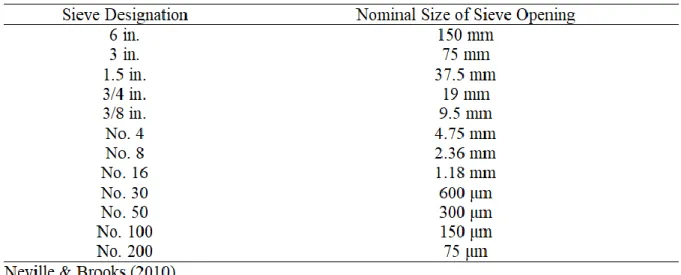
Table 2: Commonly used sieve designation and the corresponding opening size ... 10
Table 3: Chemical composition of cement ... 18
Table 4: The designed concrete mix proportions ... 24
Table 5: Measured properties of aggregates ... 30
Table 6: XRF and BET results ... 33
Table 7: Physical characteristics of concrete mixes at elevated temperatures ... 36
Table 8: Residual compressive strength for the 7 and 28 days cured concrete samples ... 40
Table 9: Approximate compressive strengths (N/mm2) of concrete mixes made with a free water/cement ratio of 0.5 ... 61
Table 10: Approximate free-water contents (kg/m3) for various levels of workability ... 64
xii
LIST OF FIGURES
Figure 1: Five types of aggregate gradation (Neville & Brooks, 2010) ... 10
Figure 2: Coarse aggregates ... 19
Figure 3: Fine aggregates ... 19
Figure 4: The NSHA used in this study ... 20
Figure 5: The NSHA produced at different calcination temperatures ... 21
Figure 6: Concrete production ... 25
Figure 7: Slump testing: (a) temping (b) surface leveling (c) slumping (d) slump measurement ... 26
Figure 8: Sample preparation: (a) molds; (b) casting; (c) demolding; and (d) curing ... 27
Figure 9: Thermal treatment for concrete cubes: (a) heating, and (b) cooled sample ... 28
Figure 10: Compressive strength testing machine ... 29
Figure 11: Particle size distribution of the used aggregates ... 31
Figure 12: The TGA curve for the neem seed husks ... 32
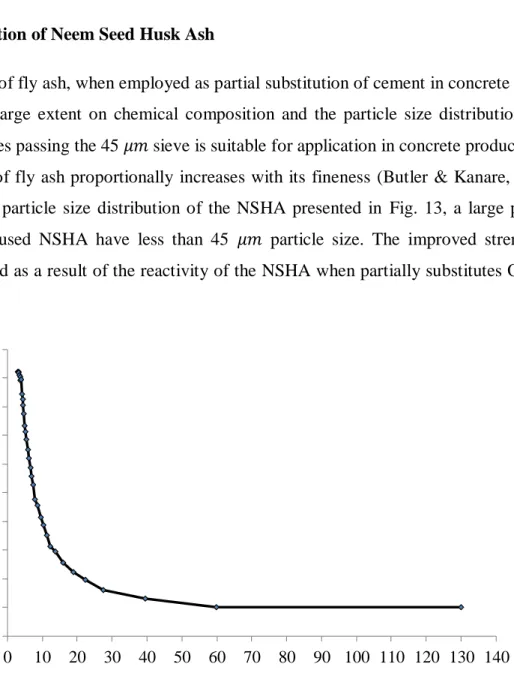
Figure 13: Particle size distribution of NSHA ... 34
Figure 14: Slump values for all concrete batches ... 35
Figure 15: Mass loss versus temperature for OPC and NSHA concrete cured for 7 days ... 38
Figure 16: Mass loss versus temperature for OPC and NSHA concrete cured for 28 days ... 39
Figure 17: Residual compressive strength versus temperature for the 7 days cured concrete ... 41
Figure 18: The ratio of residual compressive strength for the 7 days cured concrete ... 42
xiii
Figure 20: The ratio of residual compressive strength for the 28 days cured concrete ... 44 Figure 21: Relationship between standard deviation and characteristic strength; BSI (1986)
– Fig. 3 ... 62 Figure 22: Relationship between compressive strength and free-water/cement ratio BSI
(1986) – Fig. 4 ... 63 Figure 23: Estimated wet density of fully compacted concrete; BSI (1986) – Fig. 5 ... 66 Figure 24: Recommended proportions of fine aggregate according to percentage passing a
xiv
LIST OF APPENDICES
Appendix 1: Preparation of NSHA ... 57
Appendix 2: Moisture content and bulk density of aggregates ... 58
Appendix 3: Water absorption and the specific gravity of aggregates ... 59
Appendix 4: Particle size distribution of aggregates ... 60
xv
LIST OF ABBREVIATIONS AND SYMBOLS
AD Air Dry
ASTM American Society for Testing and Materials
BET Brunauer-Emmett-Teller C2S Dicalcium Silicate C3A Tricalcium Aluminate C3S Tricalcium Silicate C4AF Tetracalcium Aluminoferrite C-H Calcium Hydroxide
C-S-H Calcium Silicate Hydrates
DTA Differential Thermal Analysis
𝐺𝑠 Specific Gravity
LoI Loss on Ignition
NSHA Neem Seed Husk Ash
OD Oven-Dry
OPC Ordinary Portland Cement
PFA Pulverized Fly Ash
POFA Palm Oil Fuel Ash
RHA Rice Husk Ash
SCBA Sugar Cane Bagasse Ash
xvi
SSD Saturated Surface Dry
TGA Thermogravimetric Analysis
1
CHAPTER ONE INTRODUCTION
1.1 Background of the Problem
Concrete is a composite building material comprised of coarse and fine aggregates glued together with cement paste which upon hardening results in the desired structure. It is a material of choice for applications that require high-temperature-resistant materials (Abid, Hou, Zheng & Hussain, 2017). However, concrete structures can only serve the intended purpose provided that the threshold point is not exceeded upon exposing them to elevated temperatures like in case of fire accidents (Parthasarathi, Saraf, Prakash & Satyanarayanan, 2019).
The current development of infrastructures due to urbanization consumes about 11 billion tons of concrete yearly and is likely to exceed 18 billion tons by the year 2050 (Naqi & Jang, 2019). This implies that its raw materials, more particularly cement are highly consumed. It is reported that in every ton of ordinary Portland cement (OPC) manufactured nearly 900 kg of CO2 is also produced contributing to about 7% of the entire CO2 emissions worldwide
(Turner & Collins, 2013). Hence, the issue of materials sustainability and environmental pollution accelerated by the concrete industry need to be addressed. Many researchers of our century have been looking for eco-friendly materials that can partially or totally substitute cement in the mix with the aim of handling the raised concern on depletion of raw materials, atmospheric pollution, global warming and waste disposal (Khaliq & Mujeeb, 2019). However, such replacement should result in improved strength and durability properties of concrete.
Currently, pozzolans from agro-wastes and industrial wastes have been of much interest in the field of building materials as they contribute to blended cement concrete with superior properties parallel to the reduction of the aforementioned environmental problems (Ismail, Ismail & Muhammad, 2011). With the growing interest in looking for eco-friendly building materials, researchers found a need for assessing the potential use of ash from agricultural wastes. Several studies have been performed to assess the properties of blended concrete at normal and elevated temperatures utilizing rice husk ash (Haloob, 2011; Gursel, Maryman & Ostertag, 2016; Mboya, King’ondu, Njau & Mrema, 2017), palm oil fuel ash (Tangchirapat,
2
Saeting, Jaturapitakkul, Kiattikomol & Siripanichgorn, 2007; Awal & Shehu, 2015), and sugar cane bagasse ash (Bahurudeen, Kanraj, Dev & Santhanam, 2015; Gar, Suresh & Bindiganavile, 2017) as admixtures in concrete production. The blended concrete was observed to have better performance than normal concrete resulting from the presence of amorphous silica in the aforementioned synthetic pozzolanic materials (Aprianti, Shafigh, Bahri & Farahani, 2015; Khaliq & Mujeeb, 2019). Therefore, studies need to be done to look for more materials with good properties which can result in sustainable and improved concrete products. For example, the increasing world's demand for fuel has led more researchers to look for biodiesel from neem seeds which also produce a large number of wastes (Ali, Mashud, Rubel & Ahmad, 2013). These wastes have a potential application as eco-friendly building materials since neem seed husk ash (NSHA) has good pozzolanic properties and can partially substitute cement in normal strength concrete (Musa & Ejeh, 2012; Musa, 2014; Ibiwoye & Naalla, 2017; Raheem & Ibiwoye, 2018). However, materials used in concrete structures must meet certified fire-resisting constraints as stipulated by the assorted standards subject to the intended structural purpose (EN, 2002).
Meanwhile, there are complications on the fire endurance ability of traditional concrete by itself due to dissimilar thermal characteristics of the components forming the composite material, porosity and moisture content (Ismail et al., 2011). However, structural products from OPC are generally considered as mold fire-resisting materials that can still perform suitably even after a long time of exposure (Savva, Manita & Sideris, 2005). According to Khoury (1992) with careful selection of materials, we can retain the compressive strength of conventional concrete without substantial loss up to around 550 ℃ - 600 ℃ temperature rise. However, for exposures exceeding 200 °C, concrete’s internal stresses are high enough to cause cracking and notable damages which eventually leads to decreased compressive strength. It is, therefore, essential to examine the properties of blended concrete to have a clear knowledge of the emerging materials before they are incorporated in concrete production. Since many factors like age of concrete, the inclusion of pozzolanic materials and type of aggregates used (Hager, 2013) all together influence the strength and macro properties of concrete at raised temperatures; it is, therefore, important to examine the residual compressive strength for concrete under such exposures for structural safety (Owaid, Hamid & Taha, 2016). A good number of available studies concentrated on assessing the influence of exposure time, the methods of cooling and loading behaviors on
3
the mechanical properties of concrete incorporating the processed pozzolanic materials from agro wastes like rice husk ash (Wang, Meng & Wang, 2017; Umasabor & Okovido, 2018), palm oil fuel ash (Ismail et al., 2011), bamboo ash (Ishak et al., 2019), and sugar cane bagasse ash (Gar et al., 2017) subjected to elevated temperatures. Unlike previous studies, this study intends to investigate the residual compressive strength and physical response of blended cement concrete containing NSHA as pozzolanic materials after exposure to elevated temperatures up to 800 ℃. A comparison is then made on residual strength and physical properties of NSHA concrete with those of the conventional concrete.
1.2 Statement of the Problem
Properties of composite materials like concrete under different environments are complex due to dissimilar properties of individual constituent materials. However, concrete produced with the application of some admixtures has shown to behave differently under varying exposure conditions. Synthetic pozzolanic materials from agro-wastes have acquired great attention from many researchers in our time. The growing interest in producing biodiesel from neem seeds has led to the accumulation of biowastes which has been proven to be a suitable concrete admixture. There are some studies which investigated the properties of concrete containing NSHA at ordinary temperatures (Musa, 2013; Ibiwoye & Naalla, 2017; Raheem & Ibiwoye, 2018). However, no information is available on the properties of NSHA concrete at elevated temperatures. The current study, therefore, aims at providing experimental results of some physical and mechanical properties of NSHA concrete exposed to high temperatures up to 800 °C.
1.3 Rationale of the Study
The current challenges facing the world like global warming, depletion of raw materials and environmental pollution originating from industrial activities need alternative eco-friendly materials. With the advancement in technology, fire accidents are reported to be a threat to structures like buildings. The structural integrity of concrete elements deteriorates when exposed to high temperatures (Chen, Li & Chen, 2009; Morsy, Alsayed & Aqel, 2010). There is, therefore, a need to examine the behavior of concrete that incorporates emerging materials at elevated temperatures to have a clear knowledge of their response before they are fully applied in construction to ensure the safety of the occupants.
4
1.4 Objectives
1.4.1 General Objective
The current study mainly aims at investigating the properties of neem seed husk ash concrete exposed to elevated temperatures.
1.4.2 Specific Objectives
i. To select and proportion the concrete ingredients.
ii. To assess the suitable conditions for neem seed husk ash production from neem seed husks.
iii. To assess the physical and mechanical properties of neem seed husk ash concrete exposed to high temperatures (up to 800 °C).
1.5 Research Questions
i. What are the properties of concrete ingredients to be used for design purposes? ii. What is the optimum calcination temperature of neem seed husks for NSHA
production?
iii. What is the maximum safe temperature to which the structural concrete containing NSHA can still possess the desirable physical and mechanical properties to carry the design load?
1.6 Significance of the Study
Generally, all engineering structures are designed for safety and economic factors. It is, therefore, necessary to have a clear understanding of all construction materials before they are recommended for applications. This study aimed at providing knowledge on the behavior of NSHA concrete when exposed to elevated temperatures. A clear understanding of NSHA materials in concrete will attract their application in the construction industry thereby producing concrete products with superior properties as well as controlling environmental pollution.
5
1.7 Delineation of the Study
The study was based on the experimental investigation of the properties of concrete containing the NSHA (as mineral admixture) exposed to elevated temperatures. The first part of this experimental work concentrated on producing the NSHA from neem seed husks, agricultural wastes in a lab-scale by calcining them using an electric furnace. Thermogravimetric analysis (TGA) was done on the neem seed husks sample to determine the suitable range of calcination temperatures. Based on the TGA results, different temperatures were considered for the production of NSHA, from which elemental analysis justified the optimal calcination temperature to produce NSHA with maximum pozzolanic activity. The second part of this study was investigating the properties of concrete containing NSHA subjected to elevated temperatures. A fixed heating rate of 10 ℃/min using an electric furnace was adopted and the samples were allowed to cool within the furnace. Physical characteristics (surface cracks and spalling) of the heated samples were visually assessed. The masses of all samples were recorded before and after thermal treatment from which the mass loss was calculated. The compressive strength was determined from the concrete samples for each batch considered.
6
CHAPTER TWO
2 LITERATURE REVIEW
2.1 Materials for Concrete
2.1.1 Cementitious Binders
Binders can be classified depending on their composition as either organic or inorganic. The organic binders can easily be burnt and hence are not suitable for structures that need to withstand fire. Good examples of common organic binders used are polymer and asphalt. However, inorganic binders normally comprise of various natural minerals. They occur in two different forms as those which may harden in water (hydraulic cement) and the ones which don’t need water in the hardening process to gain strength (hydraulic cement) as in case of lime and gypsum. The two categories of inorganic cement mainly differ in composition; hydraulic cement comprises silicate matters (clayey impurities). Portland cement (PC), hydraulic lime, and pozzolan cement are examples of hydraulic cement. Most of the civil engineering applications over many years make use of hydraulic cement. The OPC consists of the following main chemical components; tricalcium silicate (C3S);
tricalcium aluminate (C3A); dicalcium silicate (C2S); and tetracalcium aluminoferrite
(C4AF) (Kurdowski, 2014). About 68 to 75% of PC is occupied by C3S and C2S. Hence, PC
can then be described as a material that blends CaO and SiO2 in a ratio that results in
calcium silicate which will react chemically with water at standard temperature and pressure (Gambhir, 2013).
2.1.2 Hydration of Cement
The process by which the main compounds of cement chemically react with water to yield calcium silicate hydrate (C-S-H) gel and calcium hydroxide (CH) is termed as hydration. Various solid phases are formed when the main cement minerals hydrate at different rates. The phases formed are the ones influencing the strength of the formed cement paste (Gartner, Young, Damidot & Jawed, 2002). The hydration process of the calcium silicate minerals present in the OPC highly influences the strength of formed cement paste. The early concrete strength is an outcome of the hydration of C3S, which is the most plentiful
7
but substantially contribute to their mature age paste strength (Gambhir, 2013). The hydration of both C3S and C2S yields the same products which are the C-S-H gel phase and
CH as presented in equations (1) and (2) (Scrivener, Juilland & Monteiro, 2015). However, the free lime (CH) produced by C2S is relatively less because of less solubility of C2S
leading to a slow rate of hydration reaction compared to C3S.
2C S3 6H C S H 3CH (1)
2C S2 4H C S H CH (2)
2.1.3 Pozzolanic Reaction
Pozzolans are either natural or manmade alumino-silicate materials which can be applied in mortar mixtures as a replacement of cement. These materials can react with calcium hydroxide (free lime) yielded in the hydration of cement under the moistured condition to produce a highly cementitious reaction product, C-S-H gel, at ordinary temperatures. Silica fume and fly ashes are the commonly applied pozzolans in novel Portland cement. Ashes from the combustion of agro-wastes have shown to have good pozzolanic properties and are highly recommended for application (Aprianti et al., 2015). The principal chemical components are the oxides of silicon and aluminium metals. Some chemical requirements are necessary for pozzolans to be considered as supplementary cementitious material as specified by part C618 of the American Society for Testing and Materials (ASTM) as indicated in Table 1.
Table 1:ASTM C618 Chemical Requirements
Class
N F C
Silicon dioxide (SiO2) plus aluminum oxide (Al2O3)
plus iron oxide (Fe2O3), min %
70 70 50
Sulfur trioxide (SO3), max, % 4.0 5.0 5.0
Moisture content, max, % 3.0 3.0 3.0
Loss on Ignition (LoI), max, % 10.0 6.0 6.0
The free lime produced as shown in the equation (1) does not participate much in the development of cement paste strength. Moreover, Ca(OH)2 is prone to leaching from the
8
hydrated cement paste, thus negatively affecting the durability of concrete. The silicon dioxide from the pozzolans react with Ca(OH)2 to yield C-S-H gel, the principal binding
agent in cement. This manner is described in equation (3) (Shetty, 2000; Kurdowski, 2014).
Ca OH
2 SiO2 H O2 C S H gel (3)The benefit of using these materials is that they result in green cement products at a relatively low cost. Pozzolans can substitute clinkers in the cement production phase thereby reducing CO2 emissions (Gambhir, 2013).
2.1.4 Concrete Aggregates
The properties of both fresh and hardened concrete highly depend on aggregates used as they compose a skeleton of concrete. For the normal concrete about three-quarters of its volume constitute aggregates. They actively affect concrete’s performance through their physical, thermal and in some cases chemical properties (Shetty, 2000).
i. Effect of Aggregates
Aggregates as the basic unit of concrete are responsible for producing a dimensionally stable, durable, workable, elastic and cost-effective concrete. Among other features; the shape and texture of aggregates affect the properties of concrete. Aggregates’ shape influences the workability property of concrete whereas the surface texture affects the strength of concrete through the aggregates-matrix bond. Generally, crushed aggregates are more preferred than the uncrushed ones as they are characterized by having particles with angular rough surface textures which result in a low workable but higher strength concrete (Gambhir, 2013).
ii. Classification of Aggregates
Aggregates can be classified depending on the source, size, and unit weight. According to their size, aggregates of either source or unit weight are classified either as coarse aggregates (CA) or fine aggregates (FA). The retained aggregates on a 4.75 mm sieve are classified as CA and their size ranges from 5 to 150 mm. However, for structural applications employing the normal concrete CA having a maximum size of about 25 mm is recommended whereas no more than 150 mm size can be applied for mass concrete in dams and deep foundation
9
applications. The fine aggregates are the particles which freely pass through a 4.75 mm sieve and predominately retained on a 75 μm sieve (EN, 1992).
iii. Moisture Conditions
This property describes the extent of water existing on the surface and in the pores of the aggregates. Four conditions of moisture exist as oven-dry (OD), air dry (AD), saturated surface dry (SSD) and wet. The OD is found by driving all pore water to attain a constant weight by maintaining them at a temperature of 110 ℃ in an oven. Air dry describes a state at which the pores are partially filled with water for aggregates kept in an ambient environment. The properties need to be determined as aggregates existing in either the OD or AD state they will take up water in the process of concrete making until they get saturated. Saturated surface dry describes a state in which the pores available in the aggregate are totally occupied with water while the surface remains dry. The coarse aggregates are submerged for 24 hours in water and then dried by wrapping the surface using a wet cloth. In designing the concrete mix, SSD is considered as the standard index since at the mixing stage water is neither absorbed nor given out by aggregates. Aggregates in wet conditions are characterized by pores filled with water and water films on their surfaces. They are likely to add up water in the system during the process of producing concrete (Gambhir, 2013).
iv. Grading of Aggregates
The workability of fresh concrete is highly influenced by the number of voids among aggregate particles that need to be filled up with an equivalent volume of cement paste (Neville & Brooks, 2010). Sieve analysis is usually done to obtain the aggregates’ grading curve for proper selection of the suitable aggregates to be used. Table 2 presents the commonly used sieves.
10
Table 2:Commonly used sieve designation and the corresponding opening size
The standard curves describing the aggregates’ size distribution are explained in Fig. 1. The dense and well-graded types represent a smooth distribution with a wide range of sizes, and they are suitable for concrete production. They describe coarse and fine aggregates respectively.
Figure 1: Five types of aggregate gradation (Neville & Brooks, 2010)
Gap graded distribution indicates the absence of certain intermediary size as characterized by a region that is nearly horizontally flat along the curve. In a uniformly distributed grading, only certain size ranges dominate the largest part of the materials, as indicated by a nearly vertical curve at the size which dominates. However, in open grading voids between aggregates are relatively large as the undersized aggregates overshadow the bulk and may
11
easily be dislocated by a small opening. Such materials are not recommended for construction activities as they result in weak concrete (Neville & Brooks, 2010; Gambhir, 2013).
v. Fineness Modulus
The general description aggregates basing on how coarse or fine they are, the idea of a fineness modulus is utilized. The equation 4 defines the fineness modulus (FM).
cummulative retained percentage on specified sieve
100s
FM
(4)A series of sieves from 6 in to No. 100 as described in Table 2 are specifically used for calculating the fineness modulus of aggregates. The value of fineness modulus should lie between 2.3 and 3.1 for fine aggregates. Coarse materials will be indicated by a larger number whereas fine materials will be described by a small number. Low fineness modulus requires more paste to become workable. The fineness modulus is, therefore, necessary to be determined for the fine aggregates to be used in the proportioning phase as the concrete’s workability will highly be influenced by it (Duggal, 2008).
2.1.5 Water
Water is an essential ingredient of concrete that usually occupies 15 to 25% by volume of a properly designed concrete mixture (Gambhir, 2013; Kurdowski, 2014). It is responsible for producing the chosen properties of the fresh as well as the hardened concrete state. In the concrete production process, water plays a vital role in mixing, curing and washing the aggregates as described below:
i. Mixing Water
It is the amount of water which interacts with cement, and affects the slump value of concrete; it also controls the long term properties of concrete (strength and durability). Water will only be considered suitable for concrete production if it is free from chemical contaminations and safe for human consumption (Gambhir, 2013). It is meant to perform three main functions: firstly it initiates the hydration reaction of cement to produce the hydration products which provide the binding; secondly, it also contributes to a workable
12
fresh concrete mixture by lubricating the ingredients involved to produce concrete; and finally, it acquires the required gap within the paste for the improvement of hydration products (Li, 2011). Practically, the quantity of water necessary for satisfactory workability exceeds that required for full cement hydration.
ii. Water for Curing of Concrete
Due to comparatively short contact time between the curing water and the concrete, water required in this case has fewer restrictions than for the case of mixing water. For this purpose, water containing organic and inorganic matters, acids and chlorides may be used particularly when minor discoloration on the surface of the concrete is not objectionable. However, the impurities must be within acceptable limits (Kurdowski, 2014).
iii. Water for Washing Aggregate
Aggregates for concrete production are washed to remove all organic and clayey materials coated on their surfaces, which when left might interrupt the bonding behavior with the cement paste. Water which is free from materials that can generate detrimental films or coats on the surfaces of aggregate particles is considered suitable for washing the aggregates (Duggal, 2008).
2.2 Properties of Concrete at High Temperatures
The response of concrete structures, when exposed to fire, depends on the mechanical, thermal, and deformation behavior of concrete. Such properties vary considerably with temperature, chemical composition and the features of ingredients used in producing the concrete mix batch, heating rate and some other conditions of the surrounding environment (Kodur, 2014). As pointed out earlier, concrete is considered advantageous among other construction materials as it possesses good fire-resistant properties despite being not a refractory material. The fire resistance behavior of concrete is governed by its capacity to endure heat and the later action of water with no strength loss, its thermal conductivity and its coefficient of thermal expansion (Kong, Huang, Corr, Yang & Shah, 2018). The concrete is stable in terms of strength at temperatures up to about 250 °C; however, a definite strength loss occurs at temperatures greater than 300 °C. Normally 70 – 80% of a matured cement paste is occupied by layered C-S-H gel whereas 20% is occupied by the portlandite
13
(Ca(OH)2), and some other chemical compounds. According to Horszczaruk, Sikora,
Cendrowski and Mijowska (2017), there is a significant amount of free lime (Ca(OH)2) in
hydrated mature concrete from which its water gets lost for temperatures beyond 400 °C. Daniel and Sanjayan (2010) observed the decomposition of portlandite between 450 °C and 550 °C temperature rise. Such decomposition results in the production of calcium oxide (CaO). The C-S-H phases of the hardened concrete decompose at temperatures ranging between 600 °C and 700 °C to form C2S. Apart from the temperature and pressure,
decomposition also depends on the amount of SiO2 available in the limestone. Concrete
melts at temperatures above 1200 °C and up to 1300 °C (Khoury, 2000).
2.3 Mechanical and Physical Properties
Concrete’s behavior in fire is dependent on its constituents and mix proportions. The failure in concrete structures subjected to fire differs depending on the type of fire, the system of loading and the nature of the structure. Failure might happen from either loss of tensile, bond, torsional, and compressive strength or concrete spalling (Ma, Guo, Zhao, Lin & He, 2015). At elevated temperatures, the mechanical properties that govern the fire resistance of concrete elements are the compressive and tensile strength, modulus of elasticity, and the stress-strain response of ingredient materials. Unlike most of the materials, the thermal properties of concrete (a composite material) are complicated because not only are characterized by different properties of the constituent materials, but their properties are also determined by the moisture and porosity (Kodur, 2014).
All mechanical and physical properties of concrete are affected by high-temperature exposures. The compressive strength is of principal interest in designing concrete fire-resistant structures. At ambient temperature, the compressive strength of concrete is influenced by the water/cement ratio, curing conditions, type and size of aggregates, types of admixtures, type of stress and the transition zone of the aggregate-paste interface (Mehta & Monteiro, 2017). However, the compressive strength at high temperatures depends on the strength measured at ambient temperature, heating rate, and binders (like silica fume, fly ash, and slag) in the batch mix.
Although the tensile strength is governed by nearly similar factors as compressive strength, concrete is generally proven to be weak in tension. For the normal strength concrete, the
14
tensile strength is only 10% of its compressive strength and is further reduced for high strength concrete; hence the cracks can easily propagate in concrete under tensile loads. Although the tensile strength of concrete is habitually neglected in calculating the strength at room and high temperatures, the property is crucial in cases where there is a circumstance of fire-induced spalling in concrete structural elements (Rashad, 2015).
2.4 Properties of Concrete containing Neem Seed Husk Ash
The thermal analysis study done by Musa (2014) on cement paste showed similar thermogravimetric and differential thermal analysis (TGA/DTA) curves for the control (0%) and cement partially substituted with up to 25% of NSHA produced at 600 °C calcination temperature. He observed improvement in strength when 5% of NSHA replaced cement. This gives a justification for the participation NSHA in the hydration progression of the system.
Musa and Ejeh (2012) in another study showed the existence of a synergic effect by NSHA on mortar strength and they recommended its application in the cement-sand mortar. In another study; Ejeh, Abubakar, Ocholi and Nurudeen (2014) experimentally studied the influence of NSHA on strength properties of concrete partially replaced by up to 25% of NSHA. Slump increase was observed at 5% and 10% replacements followed by a decrease in the slump at 15%, 20% and 25% replacements.
In their study, Ibiwoye and Naalla (2017) examined the impact of NSHA on the workability of concrete. Neem seed husk ash substituted cement at 5%, 10%, 15%, 20% and 25% by weight and the workability tests were done for each ratio. The slump values of NSHA concrete decreased from 5.50 mm to 10.00 mm at 0% and 25% respectively.
2.5 Concrete containing Fly Ash at Elevated Temperatures
Xu, Wong, Poon and Anson (2001) did an investigation on the residual properties of pulverized fly ash (PFA) and they noticed an improvement in compressive strength for exposures after 250 ℃, which probably resulted from the hardening due to drying of cement paste and further hydration of cementitious materials. The inclusion of PFA improved the fire resistance as portrayed by a comparatively greater residual compressive strength of PFA concrete over plain concrete when subjected to temperatures of 450 °C and 650 °C.
15
Potha, Shobha and Rambabu (2004) investigated the influence of heat exposure on flexural strength using M28, M33 and M35 concrete grades with 10%, 20% and 30% of fly ash partially substituting cement. The samples were subjected to 100 °C, 200 °C and 250 °C retained for 1 h, 2 h and 3 h in an electric oven. The concrete specimens containing up to 20% fly ash content performed better than those with no fly ash.
Arioz (2007) studied the physical and mechanical properties of different concrete combinations prepared by OPC, crushed limestone, and river gravel. The loss in weight and compressive strength for the samples exposed to temperature ranges between 200 °C and 1200 °C were determined. The experimental results showed a substantial reduction in the weight of specimens as temperature increased, and it was well-defined further than 800 °C. A relative decrease in concrete’s strength was also observed upon increasing the exposure temperature and was more prominent for samples having river gravel aggregate.
Awal and Shehu (2015) presented the experimental results from their study on the functioning behavior of concrete having high volume palm oil fuel ash subjected to extreme temperatures of 200 °C, 400 °C, 600 °C and 800 °C in an electric furnace retained for 1 hour for each targeted ultimate temperature. Higher weight loss, residual compressive strength and the ultrasonic pulse velocity of concrete were observed at higher temperatures. The concrete containing ash performed satisfactorily at high temperatures.
Gar at el. (2017) examined the potential application of sugar cane bagasse ash (SCBA) in concrete exposed to maintained elevated temperatures. In their study, the prepared concrete samples were exposed to and through 300 °C, 400 °C and 500 °C and retained for 2 hours in each of the selected temperatures. The residual strength of heated samples was assessed and judged against the non-heated samples in terms of their performance. The findings strongly suggest that the application of SCBA as a pozzolanic admixture imparts high-temperature resistance when used in concrete.
Wang et al. (2017) experimented the influence of rice husk ash (RHA) on strength and temperature endurance of concrete. The compressive strength tested at assorted temperatures with different amounts of RHA replacing cement. Rice husk ash was observed to improve strength and temperature resistance by 50% more than the conventional concrete at 800 °C.
16
Based on the aforementioned facts on the behavior of concrete when exposed to elevated temperatures, this study will focus on assessing the physical properties and the compressive strength of normal concrete strength incorporated with NSHA subjected to and through targeted temperatures.
17
CHAPTER THREE
3 MATERIALS AND METHODS
3.1 General Overview
This chapter provides the detailed properties of the material and the test procedures that were utilized in this study. Tables and figures are provided to better describe the methodology used.
3.2 Materials
3.2.1 Cement
The locally available ordinary Portland cement type II (Twiga plus) class 42.5 N conforming to Tanzanian standard TZS727:2002 in accordance with the British standard, BS 12:1996 13 was purchased in the city (Arusha) and was used in this study to attain early strength concrete. Type II cement is produced by obtaining particles that are finer than type I cement. The finer particles provide more surface area thus allowing more hydration to occur on the surfaces. Table 3 illustrates the mineralogical composition of the cement utilized in this study.
18 Table 3:Chemical composition of cement
3.2.2 Coarse Aggregates
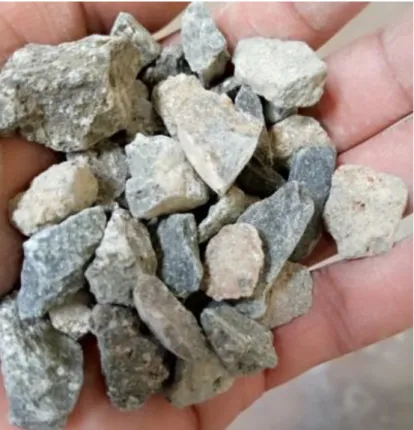
Crushed aggregates with the wide-ranging sizes to a maximum of 20 mm were employed as coarse aggregates. They were locally purchased from Kerai Construction Company, operating within the city (Arusha). Figure 2 provides a visual explanation of the aggregates used.
Chemical properties Cement (%)
SiO2 17.4 CaO 57.4 Al2O3 4.9 Fe2O3 3.0 MgO 0.5 SO3 2.7 Loss on Ignition 9.9
Blaine-specific surface area (m2/kg) 431
Initial setting time (minutes) 147
19 Figure 2:Coarse aggregates
3.2.3 Fine Aggregates
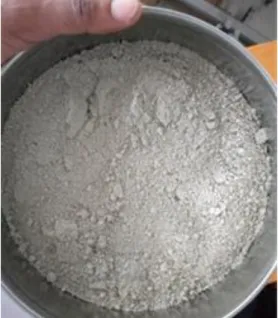
The locally accessible natural river sand obtained from within Arusha city was used as fine aggregates with utmost 4.75 mm size. Figure 3 gives a visual explanation of the sand used.
20
3.2.4 Water
Drinking water was used for mixing the concrete. This water contains dissolved solids less than 1000 parts per million.
3.2.5 Neem Seed Husk Ash
The NSHA locally produced in the laboratory was used as the mineral admixture. Figure 4 provides a visual description of the NSHA investigated in this study.
Figure 4:The NSHA used in this study
3.3 Experimental Procedures
3.3.1 Preparation of Neem Seed Husk Ash
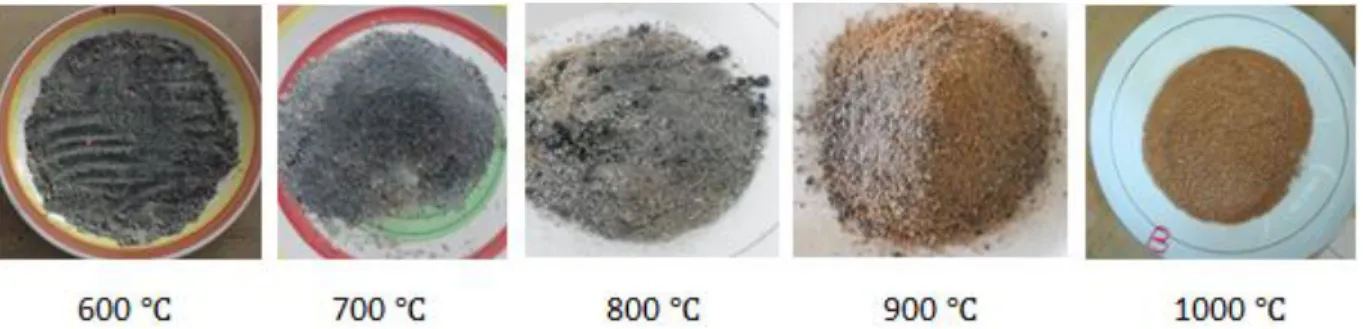
The neem seed husks with a moisture content of 1.8% were locally collected from Singida, the central region of Tanzania and were oven-dried at 110 ℃ for six hours then ground to a small size ranging between 0.07 mm and 10 mm before calcining. The NSHA was obtained by calcining the neem seed husk in an electric furnace at 10 ℃/min heating rate to temperatures ranging from 600 ℃ to 1000 ℃ as determined by thermogravimetric analysis of neem seed husks. The ashes produced at each temperature are shown in Fig. 5. They were detained for six hours in each of the targeted temperatures followed by grinding and sieving through 125 μm sieve. The heating regimes were adopted from the previous study which
21
assessed the pozzolanic activity of palm oil waste ash in response to calcination temperatures and retention time (Altwair, Johari & Hashim, 2011).
Figure 5:TheNSHA produced at different calcination temperatures
3.3.2 Characterization of Neem Seem Husk Ash
X-ray fluorescence (XRF) was used to determine the chemical composition of NSHA while the calculation of the specific surface area was done using the Brunauer-Emmett-Teller (BET) method from nitrogen adsorption-desorption studies.
3.3.3Properties of Aggregates
In concrete mix design, some properties of aggregates need to be determined in the first place since they are inputs for having the proportions of ingredients required to produce the desired properties of fresh and hardened concrete’s state. The water holding capacity, specific gravity, amount of moisture present, and fineness modulus are essential and were calculated as described below;
i. Moisture Content
It is referred to as the extent of water existing within the aggregates expressed as a percentage of the dry mass of aggregates. Such a quantity of water gets accumulated in the pores of aggregates and can easily be removed through drying in an oven with an utmost temperature of 110 ℃. Guided by the BS 1377: Part 2: 1990, equation (5) was employed to compute the moisture content;
2 3 3 1 100% m m w m m (5)
22
Whereas 𝑚1 is the measured mass of the container (g); 𝑚2 is the measured mass of the wet
soil plus the container (g); and 𝑚3 is the measured mass of the dry soil plus the container (g).
ii. Water Absorption
This property provides an impression on the core assembly of aggregate. Aggregates with higher absorption values are highly spongy in nature and are mostly deemed unsuitable, except when proven to be satisfactory through testing their strength, resistance to impact loads and hardness. Water absorption (𝑤𝑎𝑏) was determined from the laboratory tests and computed equation (6) as per BS 812-2:1995; whereby 𝑤1 is the air measured weight of saturated aggregates (g), and 𝑤2 is the air measured weight of oven dried aggregates (g).
1 2 2 100% ab w w w w (6)
iii. Specific Gravity
Specific gravity (𝐺𝑠) is expressed as “the ratio of the weight of aggregate to the weight of an equal volume of water”. The 𝐺𝑠 test is usually performed to evaluate their quality of strength properties. In this study, it was determined using the pycnometer and calculated using equation (7) in accordance with ASTM C128-07a.
4 1
2
13 2
– – s W G W W W W W (7)Where; W1 is the weight of pycnometer in the air (g), W2 is the weight of aggregates and
pycnometer (g), W3 is the weight of aggregates, pycnometer, and water (g) and W4 is the
weight of water and pycnometer in the air (g).
iv. Sieve Analysis
The particle size distributions for both the fine and coarse aggregates were obtained through sieving the aggregates using sieves specified in Table 2. The following procedures were adopted;
23
b. A set of selected sieves were arranged to start with the largest sieve size and then air-cooled samples were sieved through.
c. The sieves were shaken individually over a clean tray for about three minutes until no further particles went through. The sieves were shaken in frequently varying directions and motions to ensure a constant movement of materials over the sieve. d. Blocks of fine materials were fragmented by light pressure using fingers against the
sieve sides. The openings in the sieve underside were freed up using a soft brush. e. The materials retained per sieve including those cleaned from the mesh were
weighed after a complete sieving process.
The sieve analysis results were then utilized to calculate the fineness modulus as per the equation (4) described in the previous chapter.
3.3.4 Mix Design Methods for Concrete
The proportioning and the mixing of concrete ingredients were done as per BS 1881 - 125:1986 (BSI, 1986) for all concrete series. The process involved the essential steps which are highlighted as follows:
i. The target mean strength was estimated as a function of the specified characteristic strength based on the required quality control level.
ii. The water/cement ratio was chosen as a function of the estimated target mean strength and examined for the required durability.
iii. Selecting the content of water for the expected workability.
iv. From the selected water/cement ratio and the determined water content, the content of cement content was then determined and checked for the water requirements. v. Percentages of coarse and fine aggregates were relatively selected based on their
determined properties.
24
vii. The compressive strength from the trial mix was tested and appropriate modifications were made to attain the ultimate mix composition.
3.3.5 Concrete Mix Proportions
The targeted concrete strength used was 25 MPa for the 28 days of curing, and the slump of 60 – 180 mm was used. The maximum nominal size of aggregate selected was 20 mm. The measured properties of aggregates presented in Table 5 were employed to obtain the mix proportions for the concrete materials. Earlier studies suggest that up to 10% replacement of cement by NSHA offers the optimum performance (Musa, 2013; Ejeh, Abubakar, Ocholi & Nurudeen, 2014; Raheem & Ibiwoye, 2018). The blended concrete mixes used in this study were prepared by substituting cement contents by various percentages of NSHA. The descriptions of the assorted mix proportions used are summarized in Table 4.The ratios of the concrete ingredients (cement: fine aggregates: coarse aggregates) based on the quantities obtained through the concrete mix design process can now be presented as 1:1.3:3. The detailed procedures for obtaining the mix proportions as per BS 8110 are illustrated in Appendix 5.
Table 4: The designed concrete mix proportions Components
(kg/m3)
Percent of OPC replacement (wt. %)
0 3 5 7 10 Cement 410 397.7 389.5 381.3 369 NSHA 0 12.3 20.5 28.7 41 Sand 530 530 530 530 530 Aggregates 1260 1260 1260 1260 1260 Water 205 205 205 205 205 3.3.6 Production of Concrete
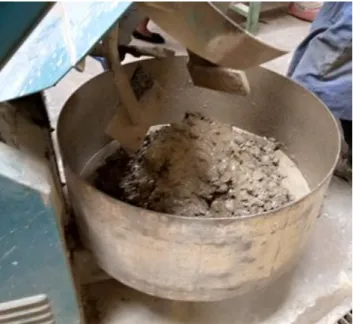
Guided by the British standard of concrete mixing (BSI, 1986), the concrete blends were prepared using an electric concrete mixer as displayed in Fig. 6. The weighed aggregates (fine and coarse) were put into the concrete mixer and moisturized in advance before adding water to their saturation. Afterward, water was added with the addition of cement together with the NSHA and thoroughly mixed for 3 minutes. Concrete was prepared by partially
25
substituting cement by NSHA. Five series of test specimen were considered in this research; one series of specimens of normal strength concrete (with 0% NSHA) and four series of specimens of cement-NSHA concrete with replacements of cement by 3%, 5%, 7% and 10% NSHA. The produced fresh concrete was then tested for workability before casting.
Figure 6:Concrete production
3.3.7 Workability of Concrete
Workability is the property that defines the easiness and homogeneity by which freshly mixed concrete or mortar can be transported, cast, compacted, and finished. The desired final properties of concrete in the hardened state are very much dependent on the workability of the fresh concrete. It also affects the labor costs in placing and compacting. Basing on the flow type produced by concrete during the test, test methods for workability are commonly classified as the Slump Test, Compacting Factor Test, Vee Bee Consistometer Test, and Flow Table Test. The slump method test was utilized to ascertain the empirical values of the workability of concrete produced in this study. The test is common due to the easiness in using the apparatus and the procedures are simple to follow. The apparatus comprises of slump cone, a measurement scale and a rod for tamping. The height of the cone is 300 mm with diameters measured as 200 mm and 100 mm for the base and top openings respectively.
26
The fundamental steps applied in testing for slump as stipulated by BIS: 1199-1959 are: i. The apparatii were washed before carrying out the test to reduce the friction of
concrete against their surfaces.
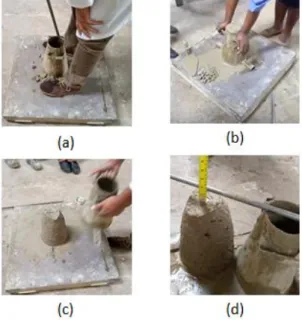
Figure 7: Slump testing: (a) temping (b) surface leveling (c) slumping (d) slump measurement
ii. The cone’s base was rested on a flat surface and then filled with concrete in approximately three equal layers before testing for its workability.
iii. Every concrete layer was temped 25 times using a 16 mm standard diameter steel rod with a curvy end as visually described in Fig. 7(a).
iv. The upper surface of the filled mold was then leveled through rolling the trowel as shown in Fig. 7(b).
v. Throughout the whole process, the mold was steadily restrained against its base through its handles and brazed foot - rests over the mold to ensure that no movement due to the pouring of concrete.
vi. Instantly after leveling the filled concrete, the cone was gently and carefully lifted perpendicularly, the unsupported concrete was then allowed to fall as illustrated in Fig. 7(c).
27
vii. The slump is the decreased central height measured from the slumped concrete as referred to the mold’s height.
viii. The slump value was then measured by laying the scale just beside the slumped concrete as shown in Fig. 7(d).
3.3.8 Preparation of Concrete Specimens
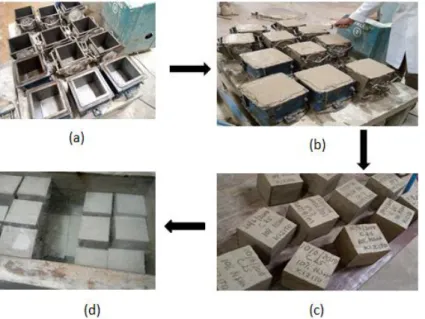
Standard concrete cubes with a size of 150 mm were used. One hundred and fifty cubes were cast from which three cubes in each series were subjected to each of the selected temperature exposures. The cast specimens were left under room temperature of 25 ± 3 ℃ to set. After 24 hours, the concrete specimens were demolded and then cured by submerging in water under identical temperature conditions. For the targeted ages (7 and 28 days), the samples were removed from the water and exposed for 24 hours to naturally dry under laboratory environmental conditions before beginning the process of subjecting them to higher temperature treatment. Figure 8 provides a pictorial description of the concrete samples preparation process.
Figure 8:Sample preparation: (a) molds; (b) casting; (c) demolding; and (d) curing
3.3.9 Thermal Treatment
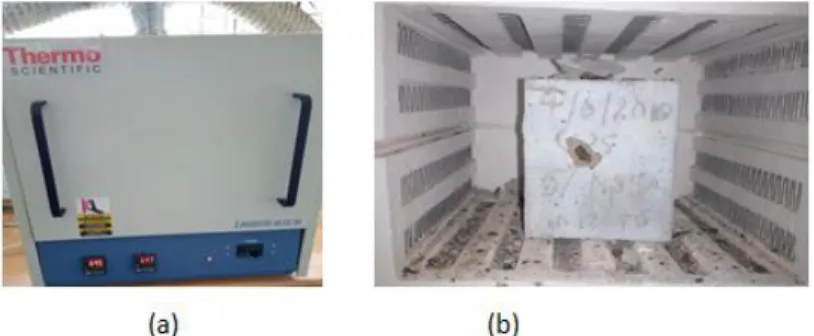
The cured concrete samples were subjected to a range of controlled temperatures using thermostat electric furnace to the chosen different levels of temperature (200 °C, 400 °C, 600 °C and 800 °C). The temperature was set to gradually rise at 10 ℃/min, a methodology
28
similar to an earlier study (Chen at al., 2009), and the samples retained for a period of 3 hours in each target temperature as shown in Fig. 9(a). To avoid cracking due to temperature gradient, the heated cubes were cooled with a constant natural rate of fall of temperature within the furnace to room temperature. The cooled samples as in Fig. 9(b) were then considered for residual strength testing.
Figure 9: Thermal treatment for concrete cubes: (a) heating, and (b) cooled sample
3.3.10 Testing Program
The mass loss of concrete was assessed by weighing digitally the samples by means of electronic balance which is ± 0.1 g accurate. All specimens other than the control samples were weighed before firing (𝑀𝑖𝑛𝑖𝑡𝑖𝑎𝑙) and the control samples were tested with no heat application. After cooling, samples were reweighed (𝑀ℎ𝑒𝑎𝑡𝑒𝑑) and assessed for any spalling resulting from thermal treatment. The measured weights were then employed in determining the overall mass loss (𝑀𝑙𝑜𝑠𝑠) at each temperature using equation (8) (Owaid et al., 2016).
initial heated loss initial M M M M (8) Their residual compressive strength was then determined using the compressive strength testing machine with a full load capability of 3000 kN with a loading scale of 5 kN for every division as demonstrated in Fig. 10. The concrete samples were compressively crushed at a 100 kN/min loading rate. The crushing loads were obtained by loading the samples to failure as described by BS EN 12390-3 (BSI, 2009).
29 Figure 10: Compressive strength testing machine
The compressive strength (𝑓𝑐) was computed as the function of the crushing load, F (N) and the cross-section area of the concrete cubes, A (mm2) using the equation (9). The reported ultimate compressive strengths were calculated as the average of the three individual cubes in each series considered.
fc F A
30
CHAPTER FOUR
4 RESULTS AND DISCUSSION
4.1 Properties of Aggregates
The necessary properties of aggregates were determined in the laboratory as per BS 882:1992 (EN, 1992) as described in Appendices 2, 3 and 4. The determined properties are inputs in the concrete mix designing process. Table 5 portrays the measured properties of aggregates that were used in this experimental study.
Table 5: Measured properties of aggregates
Properties Coarse aggregates Fine aggregates
Water absorption (%) 1.65 1.89
Specific gravity 3.12 2.77
Bulk density (kg/m3) 1465 1590
Moisture content (%) 3.48 4.99
Fineness modulus 3.18 2.16
Due to its importance in concrete strength, the specific gravity of aggregates ranging from about 2.5 to 3.0 is recommended (Neville & Brooks, 2010). Materials with higher values of specific gravity are generally believed to have higher strength. The specific gravity of 3.12 and 2.77 for coarse and fine aggregates respectively used in this study agree with the requirement and hence are suitable for concrete production. The amount of water held in aggregates provides an indication of the porosity level. Water absorption measures aggregates’ ability to resist weathering and frost actions. Moisture content determines the amount of water accumulated in the pores of aggregate. In concrete production, moisture content gives an amount to be reduced whereas the water absorption value gives the extent of additional water needed.
Grading of the used aggregates was done by sieving through a set of sieves described in Table 2. The distribution of particle sizes of the used aggregates is shown in Fig. 11. The well-graded curves obtained indicate that the aggregates meet the criteria for their use in concrete production as it was afore-described.
31
Figure 11: Particle size distribution of the used aggregates
4.2 Production of Neem Seed Husk Ash
The NSHA was produced in the laboratory from the neem seed husks. Preliminary analysis to select suitable calcination temperatures was done followed by the characterization of the ashes to assess their suitability as supplementary cementitious materials (SCMs).
4.2.1 Thermogravimetric Analysis
The thermogravimetric analysis (TGA) of neem seed husks provides the basis for the decision of calcination temperatures to be considered. From Fig. 12 it is evident that calcining the neem seed husks beyond 500 ℃ may result in decomposition of organic contents to a large extent thereby yielding metallic oxides which can be considered as essential additives in concrete production. The previous study by Adebisi et al. (2019) also recommended that the calcination temperature of greater than 500 ℃ is suitable to extract silica from Maize Stalk, Sugarcane Bagasse, and Cassava Periderm. Such an observation agrees with the findings of the current study.
30 40 50 60 70 80 90 100 0.01 0.1 1 10 100 P er ce n ta g e pa ss in g ( % ) Particle size (mm)
32 Figure 12: The TGA curve for the neem seed husks
4.2.2 Characterization of Neem Seed Husk Ash
The X-ray fluorescence (XRF) and BET characterizations were done on NSHA samples, and the results are displayed in Table 6. The elemental compositions and the specific surface area are studied as the function of calcination temperatures.
0 100 200 300 400 500 600 700 800 900 -8 -7 -6 -5 -4 -3 -2 -1 0 1 weight (mg) Temperature (°C)
33 Table 6:XRF and BET results
Sample Name NSHA-600 NSHA-700 NSHA-800 NSHA-900 NSHA-1000
SiO2 (%) 33.53 34.1 45.23 41.74 37.46 Al2O3 (%) 20.47 21.59 22.59 21.05 21.89 Fe2O3 (%) 2.41 2.29 3.4 2.31 2.42 CaO (%) 2.58 2.65 2.56 2.38 2.96 MgO (%) 3.00 2.95 3.32 2.57 3.11 K2O (%) 2.71 2.35 2.73 1.95 2.68 Na2O (%) 0.23 0.24 0.22 0.26 0.26 SO3 (%) 0.76 0.65 0.84 0.48 0.64 Cl (%) 0.18 0.09 0.16 0.03 0.09 LoI (%) 5.30 5.30 5.63 4.67 5.72 (SiO2 + Al2O3 + Fe2O3)% 56.41 57.98 71.22 65.1 61.77 Blaine-Surface Area (m2/kg) 490 410 544 216 352
For the neem seed husks considered in this investigation, calcination temperatures ranging from 600 °C – 1000 °C were studied against the properties of the produced ashes. The pozzolanic activity is determined largely by the aluminosilicate content in the material, that is, (SiO2 + Al2O3 + Fe2O3)%. From the results, NSHA-800 has shown a larger pozzolanic
activity value (71.2%) and is categorized as class F fly ash which is suitable for applications as pozzolanic materials in concrete. The pozzolanic activity was observed to decrease for calcination temperature beyond 800 °C, such a decrease may be due to crystallization of the SiO2 and development of cristobalite similar to the observation by Soares et al. (2014). The
surface area also decreases for higher calcination temperatures (above 800 °C) which might be initiated by the agglomeration of the NSHA particles. The extreme acceptable loss on ignition for class F and C fly ash specified by ASTM C618 is 6%. The loss on ignition for NSHA produced is less than 6%, clearly meeting the requirement specified by ASTM C618.