University of Huddersfield Repository
Leftesi, AbdulghaniThe Diffusion of Management Accounting Practices in Developing Countries: Evidence from Libya Original Citation
Leftesi, Abdulghani (2008) The Diffusion of Management Accounting Practices in Developing Countries: Evidence from Libya. Doctoral thesis, University of Huddersfield.
This version is available at http://eprints.hud.ac.uk/6220/
The University Repository is a digital collection of the research output of the University, available on Open Access. Copyright and Moral Rights for the items on this site are retained by the individual author and/or other copyright owners. Users may access full items free of charge; copies of full text items generally can be reproduced, displayed or performed and given to third parties in any format or medium for personal research or study, educational or not-for-profit purposes without prior permission or charge, provided:
• The authors, title and full bibliographic details is credited in any copy; • A hyperlink and/or URL is included for the original metadata page; and • The content is not changed in any way.
For more information, including our policy and submission procedure, please contact the Repository Team at: [email protected].
The Diffusion of
Management Accounting Practices
in Developing Countries:
Evidence from Libya
Abdulghani Leftesi
A Thesis Submitted to the University of Huddersfield in
Partial Fulfilment of the Requirements for the Degree of
Doctor of Philosophy
The University of Huddersfield
University of Huddersfield Business School
Department of Accountancy
The Diffusion of
Management Accounting Practices
in Developing Countries:
Evidence from Libya
Abdulghani Leftesi
Ph.D.
Abstract
The transition in Libya from a planned economy to a market economy, which commenced in the late 1980s, has resulted in fundamental changes such as the restructuring of state-owed enterprises, a noticeable growth in foreign direct investment, and an emerging private sector. These changes put immediate pressure on accounting practice to change to meet the demands of the new business environment.
Based on the findings of a questionnaire-based survey, supplemented by interview
data, this study explores the state of „traditional‟ and „advanced‟ management
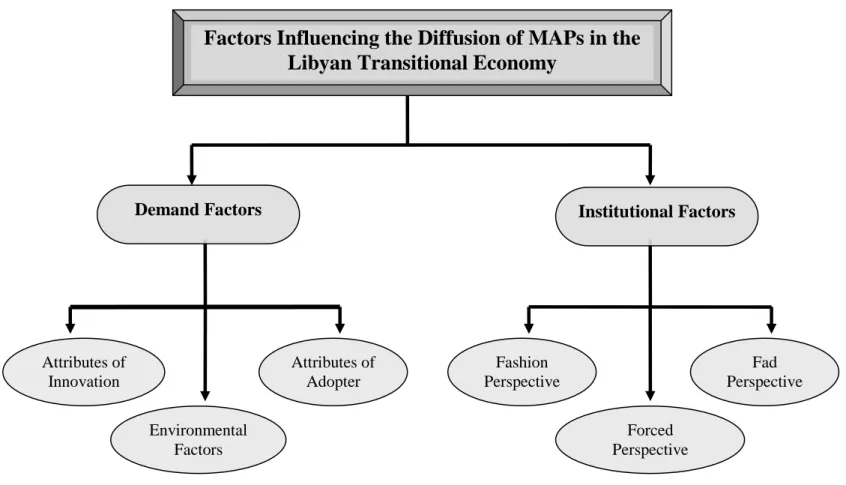
accounting practices (MAPs) of a mix of 81 large and medium size Libyan manufacturing companies from different industrial sectors. In addition, drawing off the existing literature on new institutional sociology and innovation diffusion theories, a model is developed and forms the basis for investigating and evaluating the factors that influence the development and change of MAPs in Libyan companies. This investigation is underlined with thorough statistical inference resulting from applying factor analysis and simple and multiple regression to the survey data as appropriate. The data collected from 10 interviews are quantified and analysed to provide more insight into MAPs in the responding companies.
Although the responding companies have reported using most of the MAPs surveyed, the adoption rates of theses practices are noticeably lower than the adoption rates of MAPs usually found in the management accounting literature. The findings also seem to confirm those of recent studies in other countries about the
popularity of „traditional‟ practices over the much acclaimed „advanced‟ ones. However, respondents not only claim to derive higher benefits from „traditional‟
MAPs than from „advanced‟ MAPs, but they also express their intention to place greater emphasis on the former in the future. Thus, this study questions the exaggeration in the criticism of traditional MAPs that characterised the obsolescence campaign initially led by Kaplan (1986) and Johnson and Kaplan (1987) and the acclaimed superiority of the so-called „advanced‟ MAPs.
While it is surprising to find that none of the environmental factors examined in this study (e.g. uncertainty and market competition) seems to have an important impact on MAPs diffusion, factors related to attributes of innovation (e.g. the availability of resources, the availability of training, top management support and company size) do however have a significant positive impact on the diffusion of MAPs in these Libyan manufacturing companies. Institutional factors, especially those related to the fashion perspective (e.g. use of consultants) and the fad perspective (e.g. being in a joint venture with a foreign partner) appear to also be essential in facilitating diffusion. This research concludes that the demand side perspective, which dominates the literature on innovation diffusion, is not adequate on its own and, therefore, the supply side and the institutional environment are also important factors in explaining the diffusion of MAPs.
Finally the main limitations of this study are outlined and opportunities for future
research are discussed, particularly in relation to this study‟s findings about the need
to reconsider the usefulness of traditional MAPs and also the need for a multiple perspective approach for studying the diffusion of MAPs.
Table of Contents
Abstract……….... 3 List of Tables……….. 9 List of Figures……… 12 Acknowledgments……… 13 Chapter One Introduction 1.1 Introduction………... 16 1.2 Background………... 161.3 Research Rationale and Significance………... 17
1.4 Theoretical Considerations……… 20
1.5 Research Aim and Objectives………... 22
1.6 Research Methodology……….. 23
1.7 Structure of the Thesis………... 24
Chapter Two A Critical Review of the Contextual and Theoretical Considerations of the Management Accounting Diffusion Literature 2.1 Introduction……….. 27
2.2 An Overview of the Libyan Context of this Study ………. 27
2.2.1 The Political Environment ………... 27
2.2.2 The Economic Context………... 29
2.2.3 The Accounting Profession………... 33
2.3 Management Accounting Lag……….. 36
2.4 The Gap Between Theory and Practice in Management Accounting…….. 38
2.5 Diffusion of Innovation Theory………... 42
2.5.1 Definitional and Critical Considerations………... 42
2.5.2 Perspectives on Organizational Innovation………... 45
2.6 Criticism of Diffusion of Innovation Theory Literature……….. 49
2.7 Alternative Perspectives in Explaining Diffusion of Innovation…………. 50
2.7.1 Institutional Theory………... 50
2.7.2 Abrahamson‟s (1991) Framework………. 56
2.7.3 The Supply Side of the Diffusion of Innovation………... 60
Chapter Three
Review of Empirical Studies of Management Accounting Practices (MAPs) Diffusion
3.1 Introduction………... 64
3.2 The Adoption of Advanced MAPs in Developed Countries………. 64
3.3 The Adoption of Advanced MAPs in Less Developed Countries………… 71
3.4 The Adoption, Benefits, and Future Emphasis of MAPs……….. 74
3.5 Factors Influencing MAPs Diffusion……… 77
3.6 Factors Influencing MAPs Diffusion in Less Developed Countries………. 82
3.7 Limitations of Previous Studies……… 90
3.8 Summary and Conclusions…..………. 92
Chapter Four The Research Framework and Research Hypotheses 4.1 Introduction………... 94
4.2 Discussion and the Research Theoretical Framework……….. 94
4.3 Research Hypotheses………... 100
4.3.1 The Availability of Resources………... 100
4.3.2 The Availability of Training………... 101
4.3.3 The Availability of Top Management Support………... 101
4.3.4 Size………. 102 4.3.5 Vertical Differentiation………... 103 4.3.6 Formalization………... 104 4.3.7 Centralization………. 105 4.3.8 Business Strategy………... 106 4.3.9 Environmental Uncertainty……… 107 4.3.10 Market Competition………... 108 4.3.11 Use of Consultants………... 110 4.3.12 Knowledge Resources……… 110 4.3.13 Joint Ventures………... 111 4.4 Summary………... 112 Chapter Five Research Methodology 5.1 Introduction………... 114 5.2 Research Objectives………... 114
5.4 The Research Methodology……….………. 120
5.5 The Research Type……… 123
5.6 Research Methods of Data Collection………... 124
5.6.1 Questionnaire………... 126
5.6.2 Interviews………. 128
5.7 Research Population……….. 129
5.8 Research Sample and Respondents………... 130
5.9 Questionnaire Construction and Pre-testing………... 130
5.9.1 Question Design, Wording and Layout………... 131
5.9.2 Questions Type and Format………. 132
5.9.3 Questionnaire Pre-testing………. 134
5.10 The Translation of the Questionnaire……… 136
5.11 Content and Sources of the Final Version of the Questionnaire…... 137
5.12 Administration of the Questionnaires and the Interviews………. 142
5.13 Reliability and Validity... 146
5.13.1 Reliability……… 147
5.13.2 Validity……… 149
5.14 Methods used in Data Analysis...………... 153
5.14.1 Quantitative Data Analysis………... 153
5.14.2 Qualitative Data Analysis………... 156
5.15 Summary………... 158
Chapter Six Descriptive Analysis of Current Management Accounting Practices (MAPs) in Manufacturing Companies in Libya 6.1 Introduction………... 160
6.2 General Information about the Respondents…...……….. 160
6.3 General Information about the Responding Companies…………... 163
6.4 Current MAPs Used………... 169
6.5 The Extent of Benefits Received from MAPs………... 178
6.6 The Adoption of New MAPs in the Past………... 183
6.7 The Likelihood of MAPs Adoption in the Future………. 188
6.8 Discussion of the State of MAPs………... 192
6.9 Discussion of the State of Advanced MAPs………... 197
6.10 The Respondents‟ Satisfaction with MAPs Used………. 202
Chapter Seven Exploratory Data Analysis
7.1 Introduction………... 207
7.2 The Respondents‟ Perception of the Factors Influencing the Decision to Adopt Management Accounting Practices (MAPs)……….. 208 7.2.1 Factors Influencing the Decision to Adopt New MAPs……... 208
7.2.2 Factors Impeding the Adoption of Advanced MAPs…... 217
7.3 Interview Data Analysis………... 225
7.3.1 Factors that Influence the Adoption of New MAPs………... 226
7.3.2 Factors that Impede the Adoption of Advanced MAPs... 229
7.4 Summary………... 232
Chapter Eight Hypotheses Testing and Related Statistical Data Analysis 8.1 Introduction ………..……… 234
8.2 Measuring the Research Variables ………... 234
8.3 Descriptive Statistics for the Research Variables………... 237
8.4 Data Analysis Related to the Demand Side of Management Accounting Practices (MAPs) Diffusion ………. 242 8.4.1 Attributes of Adopter (Organizational Factors)………. 244
8.4.2 Environmental Factors………... 253
8.5 The Overall Fit of the Regression Model………... 256
8.6 Data Analysis Regarding Institutional Factors……….. 258
8.6.1 Fashion Factors………... 259
8.6.2 Fad Factors………. 263
8.6.3 Forced Factors……….... 265
8.7 Summary and Conclusions …..………... 267
Chapter Nine Conclusions 9.1 Introduction………... 269
9.2 Summary and Discussion of the Research Findings………. 270
9.2.1 The Findings of the Descriptive Statistics……….. 270 9.2.2 Findings Related to the Factors Influencing the Diffusion of
Western Management Accounting Practices (MAPs)………
9.2.3 Findings Relating to the Factors Impeding the Diffusion of
Advanced MAPs……… 280
9.3 Contribution to Knowledge………... 281
9.4 Limitations and Future Research ……….. 284
References………... 287
Appendices Appendix A Questionnaire Covering Letter……… 307
Appendix B Research Questionnaire………... 308
Appendix C Questionnaire Supporting Letter………. 317
List of Tables
2.1 Diffusion of Innovations Streams………... 45
3.1 ABC adoption in UK companies (%)……….. 65
3.2 Summary of Studies of MAPs in Developing Countries……… 89
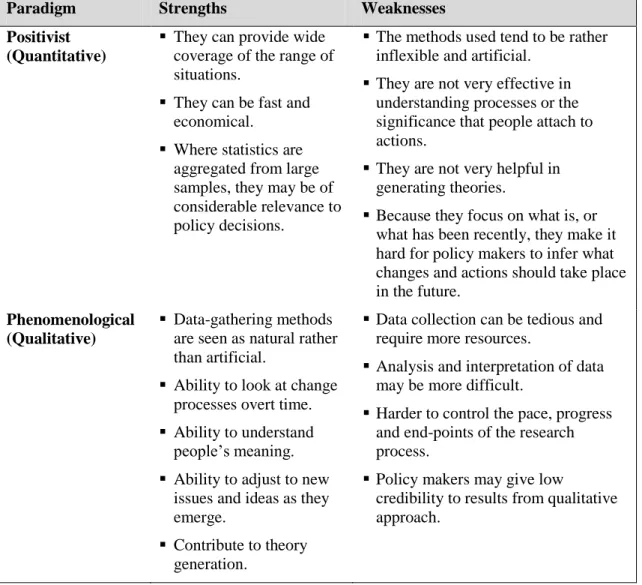
5.1 Implications of Positivism and Social Constructionism (Phenomenological) Paradigms………... 117 5.2 Strengths and Weaknesses of Positivistic and Phenomenological Paradigms……… 118 5.3 Analysis of the Questionnaire Response Rate………. 144
5.4 Reliability Test Results………... 148
5.5 Chi-Square Test Comparing Ownership of Respondents and Non-Respondents……… 151 5.6 Chi-Square Test Comparing the Industrial Sector of Respondents and Non-Respondents……… 151 5.7 Mann-Whitney U test Comparing Size of Respondents and Non-Respondents……… 151 6.1 Respondents‟ Job Title……… 161
6.2 Respondents‟ Experience in Current Position………. 161
6.3 Respondents‟ Experience with their Companies………... 162
6.4 Respondents‟ Experience in Finance and Accounting……… 162
6.5 Respondents Qualification……….. 162
6.6 Age of Companies………... 163
6.7 Number of Employees………. 163
6.8 Companies‟ Industry Type……….. 164
6.9 Years Joint Venture Companies Were Formed………... 166
6.10 Percentage that Foreign Partner has in Joint Venture Companies…….. 166
6.11 Privatized Companies……….. 167
6.12 Year in which Companies were Privatized………. 167
6.13 Level of Manufacturing Process Automation………. 167
6.14 Number of Advanced Production Methods Adopted……….. 168
6.15 Adoption of Advanced Production Methods………... 168
6.16 MAPs Currently Used………. 170
6. 17 Current Use of MAPs Relating to Product Cost Systems………... 173
6. 18 Current Use of MAPs Relating to Decision Support Systems………… 174
6.19 Current Use of MAPs Relating to Planning……… 175 6.20 Current Use of MAPs Relating to Control and Performance
Evaluation………
6.21 The Extent of Benefits Received from MAPs………. 179 6.22 The Extent of Benefits Received from MAPs Relating to Product Cost
Systems………
180 6.23 The Extent of Benefits Received from MAPs Relating to Decision
Support Systems……….
181 6.24 The Extent of Benefits Received from MAPs Relating to Planning…... 181 6.25 The Extent of Benefits Received from MAPs Relating to Control and
Performance Evaluation………..
182 6.26 Number of MAPs Introduced in the Last Five Years……….. 183 6.27 MAPs Adoption in the Past………. 184 6.28 Past Adoption of MAPs Related to Product Cost Systems………. 185 6.29 Past Adoption of MAPs Related to Decision Support Systems……….. 186 6.30 Past Adoption of MAPs Related to Planning……….. 187 6.31 Past Adoption of MAPs Related Control and Performance Evaluation.. 187 6.32 Table The Likelihood of MAPs Adoption in the Next 5 Years……….. 189 6.33 Future Adoption of MAPs Relating to Product Cost Systems………… 190 6.34 Future Adoption of MAPs Relating to Decision Support Systems……. 190 6.35 Future Adoption of MAPs Relating to Planning………. 191 6.36 Future Adoption of MAPs Relating to Control and Performance
Evaluation………
192 6.37 Current Use, Benefits, and Future Adoption of MAPs Related to
Product Cost Systems……….. 193
6.38 Current Use, Benefits, and Future Adoption MAPs Related to Decision Support Systems………...
194 6.39 Current Use, Benefits, and Future Adoption of MAPs Related to
Planning………...
195 6.40 Current Use, Benefits, and Future Adoption of MAPs Related to
Control and Performance Evaluation……….. 196 6.41 The Adoption, Extent of Benefits, and Future Adoption of Advanced
MAPs………...
198 6.42 Companies‟ Position Regarding Advanced MAPs………. 199 6.43 Correlation between the Adoption of advanced MAPs and the
Adoption of Advanced Manufacturing Techniques……… 201 6.44 The Respondents‟ Satisfaction with MAPs………. 202 6.45 Correlation between Respondents‟ Satisfaction and the Future
Adoption of MAPs……….. 203 7.1 The Importance of Motivations Influencing the Decision to Adopt
New MAPs………..
210 7.2 The Importance of Each Factor in the Decision to Adopt New MAPs... 211 7.3 KMO and Bartlett's Test……….. 213
7.4 Total Variance Explained by Each Factor………... 214
7.5 Rotated Component Matrix………. 216
7.6 The Barriers to the Adoption of Advanced MAPs……….. 218
7.7 The Importance of Each Factor in Impeding the Adoption of Advanced MAPs………. 219 7.8 Factors Influencing the Diffusion of Management Accounting Innovation According to Askarany‟s study (2000)………. 220
7.9 The KMO and Bartlett's Test……….. 222
7.10 The Total Variance Explained by the Factors………. 222
7.11 The Rotated Component (Factor) Matrix……… 224
7.12 Factors that Facilitate the Adoption of New MAPs……… 227
7.13 Barriers of Adoption of New MAPs………... 228
7.14 Factors that Impede the Adoption of Advanced MAPs……….. 230
7.15 Suggestions to Overcome the Diffusion Barriers of Advanced MAPs... 231
8.1 Descriptive Statistics for the Research Variables………... 238
8.2 Correlation between the Independent Variables………. 241
8.3 Simple Regression Results Regarding Demand Factors………. 244
8.4 Multiple Regression for the Independent Variable Influencing MAPs Diffusion……….. 257 8.5 Summary of the Findings of Simple Regression Regarding Institutional Factors………. 258 8.6 The Importance of Fashion Factors on Diffusion of MAPs……… 260
8.7 The Use of Information Sources Related to Accounting Innovation….. 262
8.8 The Importance of Fad Factors on Diffusion of MAPs……….. 264
8.9 The Importance of Forced Factors on the Diffusion of MAPs………... 266 9.1 Summary of Research Hypotheses Relating to Factors Influencing the
Diffusion of MAPs……….
List of Figures
2.1 Number of Foreign Investments Since 2000………... 31
2.2 Percentage of Foreign Investments by Sector………. 32
2.3 Stages of Innovation Process in an Organization……… 48
2.4 Theoretical Perspectives Explaining the Diffusion and Rejection of Administrative Technologies……….. 56
4.1 The Research Theoretical Framework……… 99
6.1 Company Ownership Type……….. 165
8.1 The Histogram of the Dependent Variable ……… 239
Acknowledgments
Many people have given me their support during this study and without whom I could not have completed this research. However, I would like to specially acknowledge:
My supervision team, my director of studies Dr. Messaoud Mehafdi for guiding and reviewing my work throughout the period of this study. He has helped me to think sharper to shape appropriate ideas into research, and this has had a great influence on me as a researcher; and also my second supervisor Professor Chris Cowton for his valuable advice and comments during different stages of this study. I am indebted for their kindness, encouragement and patience.
Dr. Jonathan Blacktop (School of Human and Health Sciences), Dr. Graham Worsdale (Associate Dean, Business School), and Linda Pryce (Business School, now retired), for their kindness and useful advice on the statistical methods used in this research.
The Libyan Government, particularly the General Committee of Higher Education and the Elmergib University for giving me this chance and sponsoring me to study for a Doctorate at University of Huddersfield Business School.
All the 81 manufacturing companies in Libya who participated in the questionnaire survey and interviewees for willingly finding the time to complete the questionnaire, answer additional queries to clarify some issues further and giving me valuable insights into their management accounting practices during interviews. Also, all the other people who gave me enormous assistance, particularly during the period I spent in Libya to gather the data for this research. Without the generous help of all these people, data collection would have been difficult, if not impossible.
All my family and friends for their continuous support and encouragement throughout the few years that this research has taken to complete. Also, I would like to extend my deepest appreciation to my brother Mahmud for his continued assistance.
To
My Mother
My Wife Raba
My Sons
Abdulaziz
Ahmed and
Abdulbari
Chapter One
Introduction
1.1 Introduction……….. 16
1.2 Background………... 16
1.3 Research Rationale and Significance……….. 17
1.4 Theoretical Considerations……….. 20
1.5 Research Aim and Objectives………. 22
1.6 Research Methodology………. 23
1.1 Introduction
The aim of this chapter is to provide a general introduction to the thesis. It begins in sections 1.2 and 1.3 with the background and the motivation for undertaking the study. The related theories are highlighted in section 1.4, followed in section 1.5 by the research aim and objectives. The research methodology is presented in section 1.6. Finally, the structure of the thesis is outlined in section 1.7.
1.2 Background
In recent years, the advance of competition, production environment technology and business environment has brought into being significant challenges for managers and pressures on management accounting to change. Some argue that if management accounting is to maintain its relevance, it needs to meet the changes in management information needs corresponding to these significant changes.
One of the most popular criticisms of management accounting in the last two decades has been that its traditional tools such as standard costing, variance analysis,
budgeting, and cost volume profit analysis are no longer adequate to today‟s
manufacturing companies (Kaplan, 1984, 1986; Johnson and Kaplan, 1987; Cooper and Kaplan, 1991; Ashton et al., 1995). Other writers recognise the existence of a ‘gap’ between theoretical models, which suggest how management accounting should be done, and management accounting practices (MAPs) (Scapens, 1985; Edwards and Emmanuel, 1990; Drury et al., 1993; Ashton et al., 1995; Drury, 1996).
Anthony (1989) criticised the claims by researchers that a specific management accounting technique is widely (or not) used where there is no statistical evidence to prove that. He further argued that there was a need for survey information concerning the use of MAPs, as information about MAPs is very poor and that almost all related information is anecdotal. Also Drury (1998) claimed further empirical studies are required to provide a detailed description and evaluation of these new systems and factors that influence change.
Management accounting researchers have responded to these concerns with survey-based studies of MAPs. Examples include studies from the UK (Drury et al., 1993 and Abdel-Kader and Luther, 2006), USA (Green and Amenkhienan, 1992), Australia (Chenhall and Langfield-Smith, 1998a), New Zealand (Waldron, 2005), and Finland (Hyvonen, 2005). Moreover, some researchers have been interested in comparing MAPs between countries. Examples include a study by Wijewardena and Zoysa (1999) comparing MAPs in Australia and Japan and a study by Luther and Longden (2001) who compared MAPs between South Africa and the UK.
The common findings from these surveys are that traditional MAPs are sill popular even outweighing advanced techniques in claimed benefits. This has raised the questions whether it is premature to assume that traditional management accounting techniques lack relevance - as was claimed by Kaplan (1986) and Johnson and Kaplan (1987) - and the conditions necessary to effectively adopt recently developed techniques (Chenhall and Langfield-Smith, 1998a). Furthermore, the „gap‟ between theory and practice in management accounting seems to arise from comparing between MAPs and optimal models – usually based on neoclassical economic theory
– in simple production settings that do not relate to problems faced by practitioners; hence the view that research should focus more closely on studying observed practice by drawing off organisation, social and economic theory (Scapens, 1991; Scapens, 1994; Drury and Tayles, 1995; Burns and Scapens, 2000).
1.3 Research Rationale and Significance
Although much attention has been paid to the relevance of MAPs (Drury et al., 1993), there still exists a lack of knowledge concerning the current state of MAPs, especially in less developed countries (Joshi, 2001; Lin and Yu, 2002; Waweru et al., 2004; Van Triest and Elshahat, 2007). In a market economy under construction as is now the case in Libya, the importance of studying management accounting cannot be emphasised enough. Firms in these countries offer a unique opportunity for researchers to study the evolution of MAPs in a relatively short period of time (Anderson and Lanen, 1999).
Currently, there is a growing interest in management accounting in emerging and transitional economies whether in Europe (Haldma and Laats, 2002; Szychta, 2002),
Asia (Joshi, 2001, O‟Connor et al., 2004) or Africa (Lather and Langden, 2000;
Waweru et al., 2004; Van Triest and Elshahat, 2007). These studies indicate that, despite the tremendous social, political and economic changes affecting businesses in these countries, traditional MAPs remain the most common.
Moreover, there are certain differences in the adoption of and the benefits from MAPs between the industrialized world and the less-developed countries. For instance, Luther and Longden (2001) concluded that the benefits derived from MAPs in South Africa differ from the U.K. equivalents and the factors that influence management accounting change in South Africa are different from those which
influence it in the U.K. They also found support for Hopper (2000)‟s argument that
MAPs are not universally uniform and cannot be understood without reference to the importance of political, cultural and economic factors in countries. They noted that
Despite the influence of widely selling textbooks and other quick diffusion agents, management accounting practice is not universally uniform. (Luther and Longden, 2001, p. 315)
Similarly, Hopper et al. (2004) argued that management accounting in less developed countries can not be understood without referring to broader socioeconomic factors such as poverty, an incomplete set of state institutions, and weak markets. Moreover, Luther and Longden (2001), Haldma and Laats (2002) identify new factors that are more related to transitional and emerging economies such as the legal accounting environment and shortage of qualified accountants.
Other researchers argued that despite the fact that economic shock (such as the deregulation of governmental control and the increase in market pressures) in emerging and transitional economies is a necessary condition to stimulus for the diffusion of Western MAPs in these countries, they are not sufficient. They indicate that the mimetic institutional isomorphism and the diffusion of innovation literature, particularly the performance gap argument, are appropriate for explaining the diffusion of accounting innovations in developing countries (Firth, 1996; Lin and Yu, 2002; Wu et al., 2007).
This leads to questions about the factors (both impetus and impediment) that affect the diffusion of MAPs in developing countries, whether Western MAPs have been adopted in less developed countries, and the feasibility of advanced MAPs diffusion to less developed countries.
In the Libyan case, the transition from a planned economy to a market economy, which commenced in the late 1980s, has resulted in fundamental changes such as the restructuring and privatising of state-owed enterprises, a noticeable growth in foreign direct investment, and an emerging private sector. Prior to the transition period companies were predominantly owned, controlled and supervised by government institutions. These changes put immediate pressure on accounting practice to change to meet the demands of the new business environment.
The accounting profession in Libya is still in its infancy and its main emphasis is on preparing external financial reports and external auditing which is mainly imposed by the laws rather than driven by the desire to provide useful information to potential users (Bait-El-Mal et al., 1973; Kilani, 1988; Buzied, 1998).
Despite the environmental factors in Libya which are significantly different from those in the UK and the US, the Libyan accounting education system and accounting profession have been developed towards the accounting environment and the private sector of the UK and US. In this respect, it has been argued that the factors which have influenced the adoption of accounting practices (including MAPs) in Libya are multinational companies, especially in the oil sector, international accounting firms (mainly from the UK and the US), the accounting education system which relies on British and American texts, the accountants from other countries, and the Libyan accountants educated overseas (Bait-El-Mal et al., 1973; Bakar, 1997; Buzied, 1998; Saleh, 2001; Mahmud and Russell, 2003). Thus, the diffusion of Western accounting practices in Libya can be linked to two key mechanisms: foreign companies, especially the oil companies operating in Libya and the Libyan accounting education system.
The rapid developments and changes in the Libyan economy and its increasing integration with the global economy, make it an excellent site for the investigation of
the important aspects of the Western MAPs diffusion and the responsiveness (or not) of management accounting to its environment. Therefore, this is a good opportunity to undertake research on MAPs in Libyan companies in the context described above. The study is restricted to manufacturing companies; service sector companies raise their own particular issues and require separate in-depth studies.
1.4 Theoretical Considerations
In trying to understand MAPs, researchers of management accounting change have used a variety of explanatory frameworks, including contingency theory, agency theory and, more recently, the two related theories of innovation diffusion and institutionalisation. Of particular relevance to this research are innovation diffusion and institutional theories which are seen as very promising for understanding organisational change and the diffusion of innovation in emerging environments (see Tolbert and Zucker, 1983; Abrahamson, 1991; Scapens, 1994; Scott, 1995; Haunschild and Miner, 1997; Chua and Petty, 1999; Hage, 1999; Davis and Marquis, 2005).
According to Bjornenak (1997), diffusion is the process whereby the innovation is spread or disseminated. The common criterion accepted for the idea and practice to be considered as an innovation is that the idea or the practice is perceived as new by the unit of adoption (Hage and Aiken, 1970; Zaltman et at., 1973; Daft and Becker, 1978; Hage, 1980; Damanpour, 1991; Zammuto and O‟Connor, 1992).
Researchers have attempted to investigate the factors that influence the diffusion of innovation by trying to answer questions on what the attributes are for early and late adopters and why some innovations are being widely adopted more than others. Many attempts have been made to classify the factors which influence the diffusion of innovation through the literature (e.g. Kwon and Zmud, 1987; Anderson, 1995; Rogers, 1995, 2003; Askarany, 2003). For instance, Rogers (1995, 2003) classified these factors into: attribute of innovations, the type of innovation decision, the nature of communication channels, the nature of social systems, and the extent of change
developed a model that classified the factors influencing the diffusion of innovation into: attributes of innovation, attributes of adopters and attributes of social systems which include all the influential factors that could not be related to the other two groups of factors. He also supports the claim made by Rogers (1995, 2003) that the characteristics of innovation are the most important influencing factors on innovation diffusion.
However, some have argued that most of the studies on the diffusion of innovation are based on a pro-innovation perspective, which assumes that innovations are
adopted as a result of an organization‟s demand where the adoption of innovation
decision is guided only by rational decision- making (Zaltman at al., 1973; Downs and Mohr, 1976; Kimberly, 1981; Van de Ven, 1986; Nicholson, 1990; Abrahamson, 1991, 1996; Rogers, 1995, 2003). However, this perspective underestimates the effect of the suppliers of innovations in its diffusion (Brown, 1981; Clark, 1984).
Various researchers have paid attention to diffusion of innovation in connection with a new institutional sociology theory (e.g. Scott, 1995; Haunschild and Miner, 1997; Chua and Petty, 1999; Howorth et al., 2002). The new institutional sociology theory
suggests that firms within a „field‟ adapt their management practices (including MAPs) to gain legitimacy and ensure survival. Organisations must be responsive to external demands/pressures and expectations in order to survive (DiMaggio and Powell, 1983; Oliver, 1991). This theory seeks to explain why organisations in the same field look similar and the pressures that shape organisations.
Central to the new institutional sociology perspective is the notion of „isomorphism‟ or the process that forces organisational similarity. Institutional isomorphism takes three forms: coercive, normative and mimetic (DiMaggio and Powell, 1983). Examples of coercive isomorphism (or pressures) are governmental mandates and financial reporting requirements. Normative pressures are associated with professionalisation and derived primarily from education and professional networks. Mimetic pressures arise from standard responses to uncertainty which is a powerful force that encourages companies to imitate the more successful or the leaders in their field. Organisations may model themselves on others when organisations‟ technologies are poorly understood or when goals are ambiguous. Thus as a result of
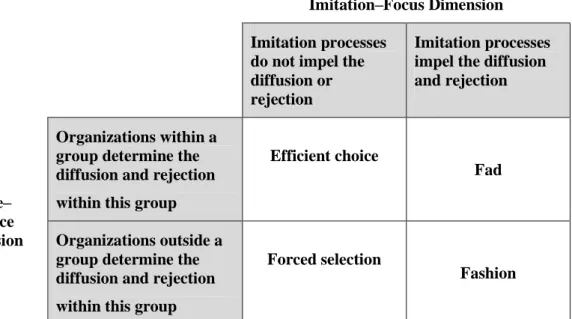
institutional operations and pressures, MAPs will diffuse across organisations when they operate in the same environment, making organisations exhibit MAP similarity. In this context, Granlund and Lukka (1998) argue that MAPs tend towards homogenization within the industrialized world, although there are still notable differences in MAPs at micro level between countries, due to cultural or government regulations. Building on new institutional sociology theory, they identify the factors directing MAPs towards convergence or divergence to include both economic (e.g. market competition) and institutional perspectives (coercive pressures, normative pressures, and mimetic). In addition, an interesting alternative perspective in explaining diffusion of innovation that seems close to new institutional sociology theory is offered by Abrahamson (1991) who developed three additional perspectives to the efficient-choice perspective; they are the forced selection perspective, the fad perspective, and the fashion perspective. These alternative models will be discussed in detail in the next chapter.
1.5 Research Aim and Objectives
The main aim of this research is to investigate the state of management accounting in economic transition conditions in one of the less developed countries, namely Libya. To achieve this, the research has the following four objectives:
1. To explore the current use of MAPs in Libyan manufacturing companies during the economic transition period, the extent of benefits these companies gain from using such practices and the level of satisfaction of their current use.
2. To explore the extent of change in using MAPs by Libyan manufacturing companies during the period of investigation and to determine the priorities for the adoption of MAPs in the future.
3. To identify the factors influencing the diffusion of Western MAPs in Libyan manufacturing companies over the period of transition.
4. To identify the factors impeding the diffusion of advanced MAPs in the course of the transitional economy in Libya.
1.6 Research Methodology
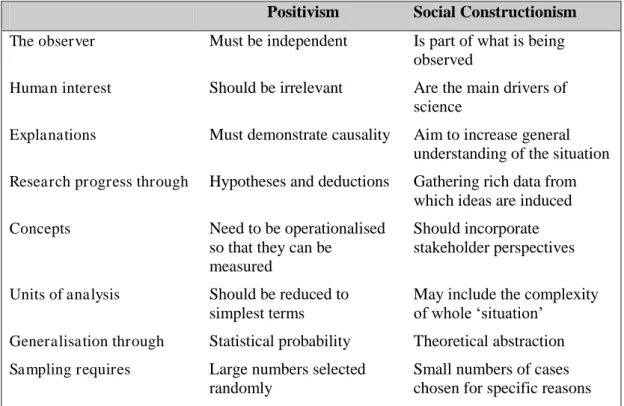
For the design of this research it is decided to adopt a pragmatic approach, using both positivistic and phenomenological paradigms. Each paradigm has strengths and weaknesses and using both paradigms would maximise the advantages and minimise the disadvantages of each one. In addition, consistent with this choice, the research objectives and, based on the recommendation of using a triangulation of methods (e.g. Collis and Hussey, 2003; Bryman and Bell, 2007; Saunders et al., 2007), this research adopts a mixed methods approach. The dominant method is quantitative; it relies on data collection using a self-administered questionnaire to Libyan manufacturing companies. This is supplemented by a qualitative method in the form of in-depth interviews.
A pilot study was done prior to the distribution of the final version of the questionnaire. The final version was developed after several drafts which benefited from constructive feedback received as result of different procedures of pre-testing. A total of 154 questionnaires were distributed personally and only 81 questionnaires were returned usable, giving a response rate of 62.79%. The reliability of a measure in terms of its stability and consistency was tested through the parallel test and
Cronbach‟s coefficient alpha and all the scales in the questionnaire were considered
as reliable. Also an external and an internal validity were established in this research.
Based on its stated objectives, this research can be described as a descriptive, explanatory and exploratory type of research. The part of the research related to the first two objectives, which is to explore the state of MAPs in Libyan manufacturing companies, can be classified as descriptive. The part of the research that deals with objectives three and four, which is to identify the factors that influence the diffusion of Western MAPs in the course of the transitional economy in Libya, can be classified as exploratory and explanatory.
Descriptive statistics in terms of means and frequency were mainly used to meet the descriptive objectives. Factor analysis as well as simple and multiple regression were used to test the research hypotheses and meet the exploratory and explanatory objectives. In addition, the qualitative data gained from interviews were analysed
using frequencies and percentages, and the quoted statements where appropriate were used to support the data analysis.
1.7 Structure of the Thesis
In addition to this chapter, the thesis comprises eight further chapters. Chapter Two provides an overview of the literature related to the research interests. It shows the development of management accounting systems and the main criticisms levelled at traditional techniques. The chapter also provides insights into the diffusion of MAPs through the lens of the theory of innovation diffusion. The chapter discusses the alternative perspectives in explaining the diffusion of innovation, such as the supply side of diffusion and the new institutional sociology theory.
Chapter Three presents a summary of the previous empirical research studies that are relevant to this study. The adoption rates of advanced MAPs in developed and developing countries are presented together with summary of current adoption, the extent of benefits, and future emphasis on traditional and advanced MAPs. In addition, the chapter discusses the studies of MAPs in developing countries in detail and focuses on previous empirical studies related to the factors influencing the adoption of management accounting innovation. The chapter concludes with a summary of the limitations of the previous studies.
Chapter Four draws off the preceding chapters to discuss and to build the research framework. In this chapter the research hypotheses are formulated.
Chapter Five describes the research methodology. It provides the justifications for the philosophy chosen and the methodology adopted to achieve the research objectives. In addition, this chapter provides detailed information on the design and testing of the survey questionnaire, the content of the final version, and its translation. The chapter also explains how the questionnaire was administered, how the interviews were conducted, and how the reliability and validity of the research instruments were established. The chapter ends with a discussion of the statistical methods used in this research.
Chapters Six, Seven and Eight present the data analysis and discussion of the findings. Chapter Six is concerned with the descriptive analysis of the research results which seeks to meet the first and the second objectives of this research (listed in section 1.3). The data in this chapter show the current use of, the extent of benefits gained from, and the future emphasis on MAPs in Libyan manufacturing companies.
The respondents‟ satisfaction levels with current MAPs and the state of advanced
MAPs are shown in this chapter as well.
In Chapter Seven, factor analysis is used to analyse the respondents‟ points of view regarding the factors that influence the adoption of Western MAPs and the barriers to the diffusion of advanced MAPs. The interview data are then analysed in this chapter.
The testing of the research hypotheses is carried out in Chapter Eight where simple and multiple regression analysis are used. The results of both regression analysis and the analysis of interview data are presented and interpreted. The data analysis in this chapter and that in chapter Seven are used to meet the third and fourth objectives of this research.
Finally, Chapter Nine summarises the major findings of this study, discusses the contributions of this research to knowledge and its limitations as well as identifies the areas for future research.
Chapter Two
A Critical Review of the Contextual
and Theoretical Considerations of
the Management Accounting
Diffusion Literature
2.1 Introduction………. 27
2.2 An Overview of the Libyan Context of this Study ………. 27 2.2.1 The Political Environment ………... 27
2.2.2 The Economic Context………... 29
2.2.3 The Accounting Profession……… 33
2.3 Management Accounting Lag……… 36
2.4 The Gap Between Theory and Practice in Management Accounting 38
2.5 Diffusion of Innovation Theory……….. 42
2.5.1 Definitional and Critical Considerations………. 42 2.5.2 Perspectives on Organisational Innovation………. 45 2.6 Criticism of Diffusion of Innovation Theory Literature……….. 49 2.7 Alternative Perspectives in Explaining Diffusion of Innovation……. 50 2.7.1 Institutional Theory………... 50 2.7.2 Abrahamson’s(1991) Framework……… 56 2.7.3 The Supply Side of the Diffusion of Innovation……….. 60
2.1 Introduction
This chapter is aimed at presenting a broad literature review related to the main issues in this research. It starts with an overview of the Libyan context that underpins this study. The chapter then provides a summary of the “accounting lag” and the need for management accounting change. This is followed by a discussion of the
perceived “gap” between theory and practice in management accounting. The
diffusion of innovation theory is then outlined and the criticisms of the classic diffusion of innovation theory are explained. Next, the chapter provides alternative explanations to diffusion of innovation, which is offered by the new institutional sociology theory and the supply side of diffusion perspectives.
2.2 An Overview of the Libyan Context of this Study
The Libyan context of this study is summarised in terms of the three key aspects of the political environment, the economic context, and the education profession.
2.2.1 The Political Environment
Historically, Libya had been subjected to occupation by foreign powers; with the Phoenicians setting a colonisation trend that saw the Greeks, the Romans, the Ottomans and more recently the Italians taking turns in occupying the country. The
Ottoman Empire‟s occupation was the longest from 1551-1911, followed by the Italian occupation until their defeat in the Second World War. Following the War, Britain was responsible for the Northern part of the country (Tripolitania and Cyrenaica), while the southern part (Fezzan) was controlled by the French. British and French occupation continued up to the declaration of Libyan independence by the United Nations on the 24th of December 1951.
The years following the independence witnessed the introduction of development plans, which were aimed at developing especially the agriculture and education systems. The United Nations agreed to sponsor the development plans, with an
additional substantial funding by the UK and the U.S, as they wanted to maintain and use the military bases in Libya (Fisher, 1985). Despite these plans, until the discovery of oil in 1959, Libya remained as one of the poorest countries in the world, heavily dependent on agriculture and foreign aid (Higgins, 1968; Farely, 1971; Wright, 1981). It was described by many economists, including Benjamin Higgins, who worked as an economic adviser to Libya, led the three United Nations technical assistance teams and made study-tours of Libya in 1950-1951, as a discouraging economy to both Libyans and foreigners (Higgins, 1968; Bait-El-Mal et al., 1973; Wright, 1981; Kilani, 1988).
The discovery of the oil was a key turning point; Libya had become a wealthy country that no longer needed to depend on outside aid and influence (e.g. UN, UK). Furthermore, the country introduced economic and social development plans that not only relied on oil export but also directed oil revenues to developing different sectors, especially towards establishing heavy industries and agriculture in order to attain the diversification of production, self-sufficiency and exports growth and improving the education as well (Agnaia, 1996).
In 1969, Colonel Muammar Al Gadhafi led a revolution that brought about the
“Libyan Arab Republic”. Gadhafi, who is referred to as "the leader of the revolution" in Libya produced his “Third Universal Theory” in the 1970s, better known as the
“Green Book”, which consists of three parts namely the Solution of the Problem of Democracy; the Solution of the Economic Problem; and the Social basis of the Third Universal Theory. It proposed an alternative to communism and capitalism and it integrated Islamic values and Arab culture with social, economic and political reforms.
These polices have greatly affected the political and economic environments in Libya. The State controlled both the production and service sectors by nationalising all the private companies, although joint ventures took place between the State and some of the petroleum sector companies and heavy industries companies. Thus, the private sector and multinational companies have been largely absent except as a joint venture with the Libyan State. Moreover, after the revolution any remaining US and UK military bases as well as remnants of the Italian administration were ended.
In the following years, the deterioration in the political relationship between the Libyan government and the West, especially the US, culminated in a ban on the import of Libyan oil and the export to Libya of U.S. oil industry technology in 1982 and the UN economic sanctions in 1992. This situation caused political and economic isolation of Libya for most of the 1990s. Since the start of the 2000s relations with the West have been gradually normalizing, ending the UN embargo in 2003, and the US embargo in 2004.
2.2.2 The Economic Context
Libya is Africa‟s major oil producer and one of Europe‟s biggest North African oil
suppliers. Prior to the discovery of oil in 1959, agriculture was the primary sector. After the discovery of oil the Libyan economy grew rapidly as the country became richer, which attracted many international companies to operate in different sectors,
specially the oil sector. The country‟s economy has become dependent on foreign oil
companies predominantly from the UK and the US (Bait-El-Mal et al., 1973) and other international companies operating in different sectors such as banking, where four out of five bank branches belong to foreign banks (Bozied, 1998).
To improve the national economy the government implemented different development plans funded by the oil revenue. One important aim was to reduce the
country‟s dependence on the oil sector and achieve a greater degree of self -sufficiency and self reliance. Thus, the emphasis was given to the industrial sector in non-oil sectors over the last three decades. However, the oil sector was the main
drive of the country‟s economy, with the contribution of oil to GDP over 50% in the
1970s and early 1980s. As a result there was a great interest in developing the non-oil industrial sectors, which increased significantly, contributing over 70% of GDP in the late 1980s and early 1990s (Ahmed and Gao, 2004). Nevertheless, the country still faced a great difficulty in being unable to produce enough capital goods and
consumer goods to achieve „self sufficiency‟ and „self-reliance‟ (Agnaia, 1996). During the period 1951-1969 (i.e. from the independence to the revolution), the Libyan economic system was mainly capitalist. Private ownership existed with
minimum governmental interference. Since the revolution in 1969, the country has changed from capitalism to socialism.
The socialist philosophy that Libya adopted since the revolution affected largely the ownership of a business and its objectives. The State ownership structure of businesses started in the early 1970s, and in the 1980s both production and service sectors became owned, controlled and supervised by government institutions. The government has total authority over, for example, imports or exports of a company
and even the company‟s location. In addition, according to the socio-economic development target of the country, the main objective of such enterprises is to offer services and goods to the public rather than to make a profit (Ahmed and Gao, 2004).
The domination of the State over economic activities has resulted in a number of problems such as the misuse of economic resources, lower productivity levels, higher production costs, lower quality, weak control in the public sector and lower return on capital (Alqadhafi, 2002). The lower productivity levels, higher production costs, and lower quality problems could be attributed to the lack of adequate economic and technical studies for establishing some industries, a shortage of training programmes, a lack of attention to cost accounting systems, the elaboration of appropriate budgets, bureaucracy, and centralisation of management (Alqadhafi, 2002).
From the late 1980s, a number of laws and resolutions were issued by the government in order to enhance economic development and to move the country from a centrally controlled economy to a liberalized economy by encouraging the private sector to emerge again and foreign investments. These include Act number 8 in 1988, Act number 9 in 1992 and Act number 5 in 1997. The introduction of the private sector was launched by issuing Act number 8 in 1988, which allowed the private ownership of economic activities, whereas Act number 9 in 1992 was aimed at enhancing and regulating the private sector activities in all the dimensions of the economy, namely agriculture, industry, commerce, tourism, transport and finance including an open door policy for the privatisation of a number of public-sector companies. According to Alsharif (2002) about 10,250 collective-ownership companies were established in different sectors between 1993 and 1997 (Alsharif, 2002). Similarly, Act number 5 in 1997 was aimed at encouraging foreign capital
investments within the overall policy of the State and the targets of economic and social developments. As a result, some foreign companies have resumed operating in Libya in the 1990s and early 2000s.
According to Act 5 in 1997, the Libyan Foreign Investment Board (LFIB) was established to attract foreign investment into Libya within a socialist framework of economic and social development. This Act and the subsequent amendments made to it in 2003 were aimed at promoting foreign investment through a partnership (joint venture) between Libyan and foreign capital in different sectors such as industry, health, agriculture, and tourism. The law embodied in this Act is there to enable the transfer of modern technologies, the technical advancement of human resources in Libya, the diversification of sources of income, and the promotion of national products to be able to gain access to international markets.
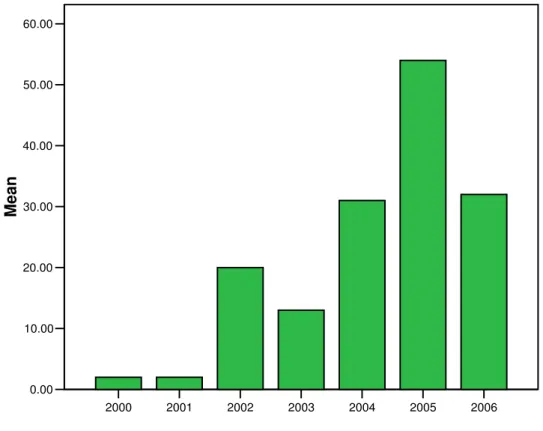
2000 2001 2002 2003 2004 2005 2006 0.00 10.00 20.00 30.00 40.00 50.00 60.00 Mean
Industry Heath Service Agriculture Tourism Others Figure 2.2 The Percentage of Foreign Investments by Sectors
As can be seen from Figure 2.1 there has been a significant increase in foreign investments in Libya since 2000. In addition, it is clear from Figure 2.2 that the vast majority of foreign investment was in manufacturing, as it represents 64.49 per cent of the total foreign investments.1
Libya in its intention to liberate the economy has started to implement the privatisation plan; to this end a General Board of Ownership of Public Companies and Economical units (GBOT) was established by resolution number 198 in 2000. This organization has the responsibility for overseeing the transfer of public companies and the ownership of economic units to the private sector. The GBOT is expected to achieve the privatisation of 361 State-owned enterprises by the end of 2008 in a three-stage plan that started on 1/1/2004. By the end 2006 only 69 state-owned firms were privatised2.
With these developments and changes such as the increase in foreign direct investment, the emergence of the private sector and the privatization of the public sector, there has been a need for change in the accounting systems in general and the management accounting systems in particular to provide managers with relevant information to make their decisions.
1 LFIB report (2006) 2
2.2.3 The Accounting Profession
The accounting profession in Libya is still in its infancy with its main responsibility for the preparation of external financial reports and auditing which are the requirements imposed by the law (Bait-El-Mal et al., 1973; Kilani, 1988; Buzied, 1998). For instance, the Libyan Commercial Code (LCC), which was issued in 1953, requires companies to prepare an annual report, including an income statement and a balance sheet. Hence there is less emphasis on producing information for internal managerial use.
Moreover, there are no accounting principles or auditing standards in Libya (Bait-El-Mal et al., 1973; Kilani, 1988; Bakar, 1997; Buzied, 1998). In the absence of these principles and standards, companies in different industries or even in the same industry applied different accounting principles, rules, methods and procedures. As a result, the choice of accounting standards, methods and techniques is left entirely to
the interests of each company‟s accountants, managers and auditors in accordance with their education background (Kilani, 1988; Buzied, 1998).
In this respect, the Libyan Accountants and Auditors Association (LAAA) was established in June 1975 with the aim of organizing and improving the conditions of the accounting profession and raising the standards of accountants and auditors professionally, academically, culturally and politically and of organizing and participating in conferences and seminars related to accounting. Some argued that the LAAA has failed to achieve its objectives of holding and participating in activities such as research, conference, seminars, continued education and training programmes, following recent developments in the profession through accounting publications to improve the status of the profession and accordingly its members (Bakar, 1997; Ahmed and Gao, 2004; Mahmud and Russell, 2003).
Factors that have influenced the development of the Libyan accounting profession include the presence of foreign companies and international accounting firms in Libya (mainly from the UK and the US), the introduction of an accounting education based on UK and US textbooks, accountants from other countries and Libyan
accountants educated in other countries (Bait-El-Mal et al., 1973; Bakar, 1997; Buzied, 1998; Mahmud and Russell, 2003).
According to Bait-El-Mal et al. (1973) and Buzied (1998), the foreign companies
that came to Libya after the country‟s independence, particularly from the UK and
the US, contributed to the development of accounting in Libya through the transfer of accounting knowledge and practice from their countries of origin to Libyan personnel. In addition, the external auditing of these companies was carried out by international accounting firms that operated in Libya. Thus, local companies that deal with these foreign companies have made considerable improvements in their accounting systems. In this respect, Saleh (2001) stated that Western accounting practices were diffused to Libya through oil companies especially from the UK and
the US to Libya‟s oil companies, and then to non-oil companies as employees move in and out of the oil sector. This pattern continued even after the nationalisation laws of the late 1960s as there were no laws or regulations to ban Western accounting practices (Buzied, 1998).
Furthermore, the accounting education programmes were initially influenced by British education programmes, and most of the textbooks used were British or were Arabic books either translated from English or published by Arabian researchers who had been educated in UK universities before they came to Libya to teach. Since 1976 American accounting education began to have an influence and gradually overtook the British system, and many Libyan academic staff who had graduated in the USA came back to teach in Libya (Bait-El-Mal et al., 1973; Kilani, 1988; Bakar, 1997). However, both programmes focused heavily on financial accounting topics, in particular on external reporting, taxation and external auditing aspects, whereas management accounting and cost accounting were given inadequate attention (Kilani, 1988; Buzied, 1998; Ahmed and Gao, 2004).
Despite the environmental factors in Libya being significantly different from those in the UK and the US, the Libyan accounting education system and the accounting profession have been developed toward the accounting environment of the private sector of the UK and US, which are irrelevant for a developing country like Libya where most economic activities are controlled by the State - the main user of
accounting information - and the country‟s emerging capital market (Kilani, 1988; Buzied, 1998; Ahmed and Gao, 2004). In this respect, Ahmed and Gao (2004, p. 377) state that
Examining the syllabuses of the accounting programme, it seems that most of the subjects are based on accounting concepts and principles from the West; and that they cover many concepts either not known in Libya or which are interpreted differently there (e.g., profit, interest, cost of capital, market value, prudence, materiality, substance over form, realization). It is also apparent that the syllabuses do not cover some areas or subjects that are considered to be directly related to the characteristics of Libya. Three important omissions in our view are accounting under Islamic Shari‟a, accounting for the enterprises
managed by people‟s committees, and the application and practice of
accounting and auditing in the context of state (social) accountability.
Ahmed and Gao also draw attention to some problematic issues related to the accounting education system in Libya such as the shortage of qualified accounting educators, the disparities between academic teaching and professional training in the accounting curricula, and the inadequate accounting research effort.
Mahmud and Russell (2003) identified a number of barriers to the development of accounting education and practice in the Libyan context, the most impeding factors being the lack of active professional societies and inadequate public understanding of the role of accounting. Other factors were related to the outdated accounting curricula and syllabi and the lack of modern textbooks in Arabic. They also argued that Libya needs a strategic plan to modernise both its accounting education and practice by making the modern texts more relevant to the Libyan business and social environment.
Therefore, the diffusion of Western management accounting practices (MAPs) in Libya can be considered as the result of two mechanisms: foreign companies, especially oil companies, and the accounting education system. In order to put the diffusion of Western MAPs to Libyan companies into a clear perspective, the following sections provide a critical review of the management accounting literature, highlighting the perceived management accounting lag and the gap between theory and practice. Alternative explanations of MAPs diffusion are also presented and discussed.
2.3 Management Accounting Lag
Management accounting techniques are now expected to serve managers‟ needs in a business environment with a continually increasing diversity of products, local and foreign competition and complexity of manufacturing processes. The early management accounting procedures were perceived to be simple; however, they played a key role in providing managers with information about the efficiency and profitability of internal processes.
According to Kaplan (1984), Johnson and Kaplan (1987) and Johnson (1990) traditional management accounting techniques were developed in the late 1800s and early 1900s and, by 1925, most of the MAPs used in the mid-1980s had been developed. These techniques include variable costing, full costing, standard costing, budgeting, transfer pricing, break-even analysis, residual income and variance analysis.
With competition, diversity of products and the complexity of manufacturing processes on the increase since the 1920s, there have been some criticisms concerning traditional MAPs in the last four decades. A number of researchers claimed the obsolescence of existing management accounting systems (e.g. Kaplan, 1984, 1986; Johnson and Kaplan, 1987; Cooper and Kaplan, 1991 and Ashton et al., 1995). They argued that these traditional management accounting techniques were no longer adequate to provide relevant information to management operations and
managers‟ needs as a result of these changes.
Kaplan (1984) in particular claimed that there had been little management accounting innovation since 1925, and that the data produced by management accounting systems reflected external reporting requirements far more than they did based on the reality of the new manufacturing environment. He argued that the manufacturing environment now is very different from what it was before; therefore, different management accounting techniques were required in terms of evaluating both financial and non-financial aspects of manufacturing performance. In addition, Kaplan (1986) indicated that for management accounting systems to provide relevant
information for managerial decisions and control they must change in response to any change in manufacturing processes. Moreover, he stated that
Yet when manufacturing operations change, the last and most difficult component to change is the accounting system. (p. 194)
Also in answering why management accounting systems lagged so far behind the speed of change in manufacturing operations, he indicated that the most important explanation was top management unawareness of the need for such changes in management accounting systems.
One of the most popular publications regarding the criticisms of traditional management accounting techniques is the book by Johnson and Kaplan (1987), Relevance Lost: the rise and fall of management accounting. In this book, they posited that management accounting information was
Too late, too aggregated and too distorted to be relevant for manager‟s planning and control‟ decisions. (p. 1)
They observed that, despite the fact that product lines expanded, production technology changed, product life cycles shortened, global competitive conditions shifted and the most important advances in information technology occurred, organisations were still fixated on the cost systems and management reporting methods of the 1920s. In addition, they questioned why researchers did not play a more active role to improve the art of management accounting system design.
In addition, Johnson and Kaplan (1987) summarised the consequences of stagnation in management accounting in three items. Firstly, management accounting reports did not offer much help to operating managers in their attempt to reduce costs and improve productivity by not focusing on providing timely and detailed information. Secondly, the reports failed to provide more accurate product costs, as costs were being allocated by simplistic measures, usually direct labour based, which do not represent actual product cost. As a result of this inadequate measurement, the information produced could only misguide decisions such as product pricing and product mix. Finally, more attention was paid by managers to short-term reporting